



Futures Trading APIs: Connecting Your Code Directly to the Exchange
Overview #
Futures Trading APIs: Connecting Your Code Directly to the Exchange
Every trading platform you've ever used is an API client with a pretty face. NinjaTrader, Sierra Chart, MultiCharts, TradingView — they all connect to the same underlying infrastructure: market data feeds and order routing systems provided by companies like Rithmic, CQG, and Trading Technologies. When you click "Buy 1 ES," your platform translates that click into an API call, sends it through a connection layer, and the order reaches the exchange.
The question is whether the platform's interpretation of your intent — its order routing logic, its latency characteristics, its limitations on what you can automate — serves your trading well enough. For many traders, it does. But when you need custom execution logic, faster reaction times, multi-leg strategies that span instruments, or just the ability to build exactly the trading system you envision without platform constraints, you need to work with the APIs directly.
Here's what that environment actually looks like, what each API can and can't do, and how to build a system that connects your code to the exchange.
The Infrastructure Stack: What Sits Between Your Code and the CME #
Before choosing an API, understand the stack your orders travel through.
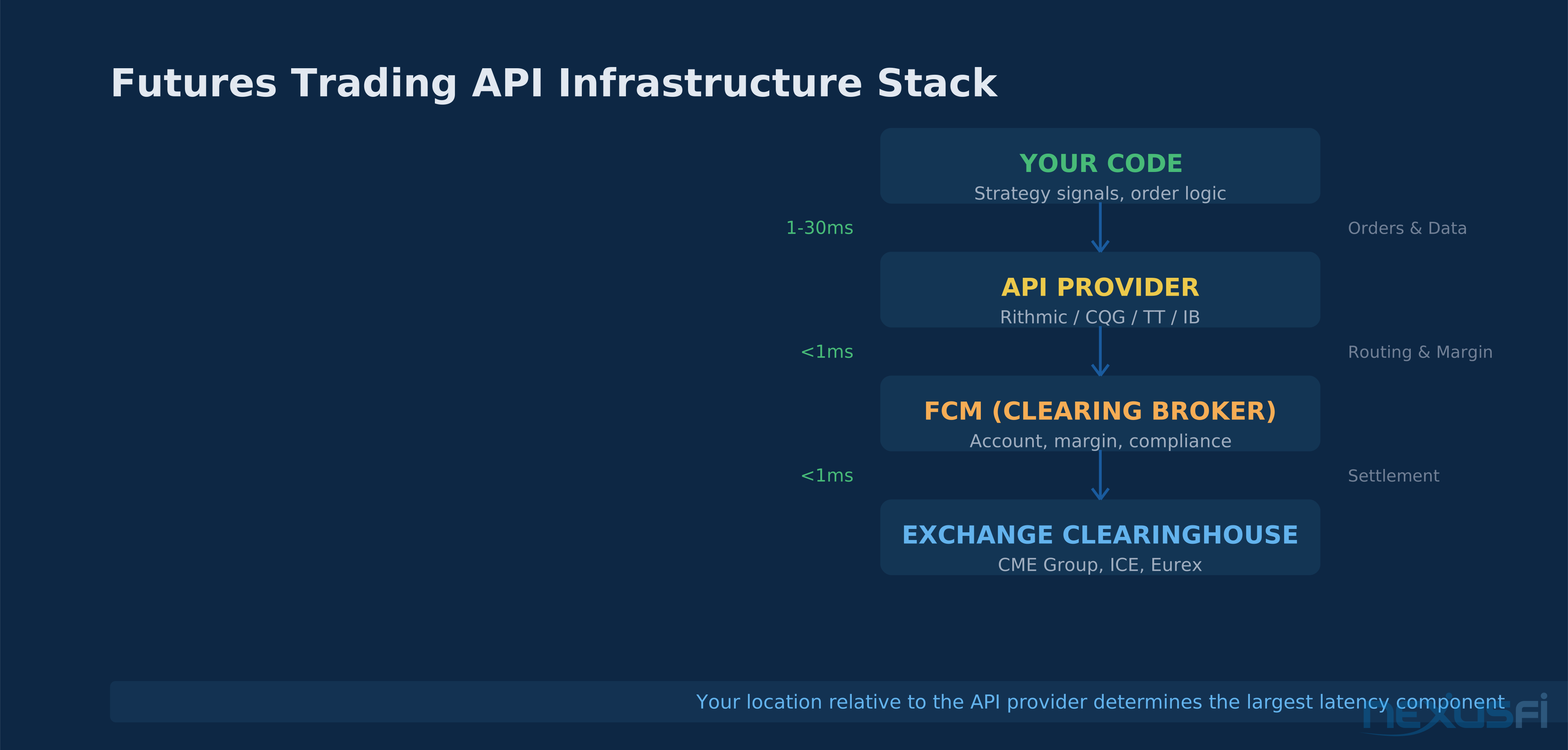
Your code generates a trading signal and constructs an order. That order goes to an order routing and market data provider — the technology layer that maintains exchange connections. The major providers for futures are Rithmic, CQG, and Trading Technologies (TT). These providers connect to Futures Commission Merchants (FCMs) — the regulated entities that actually carry your account and clear your trades. The FCM submits your order to the exchange clearinghouse (CME Group, ICE, Eurex), which matches it.
Every retail futures trader has this chain, whether they realize it or not. When you use NinjaTrader with a Rithmic connection, your platform talks to Rithmic's servers, which route to your FCM, which routes to CME. Understanding this chain matters because it determines where latency accumulates, where failures can occur, and which API you actually need to connect to.
As one NexusFi member explains about the connection architecture: "It doesn't just give you a data feed, it passes your trades on to the exchange and returns the trade results. It also handles position tracking, margin, P&L calculations." The API provider is not merely a data pipe — it's a complete trading infrastructure layer.
The Major Futures Trading APIs #
Rithmic API (R | API+) #
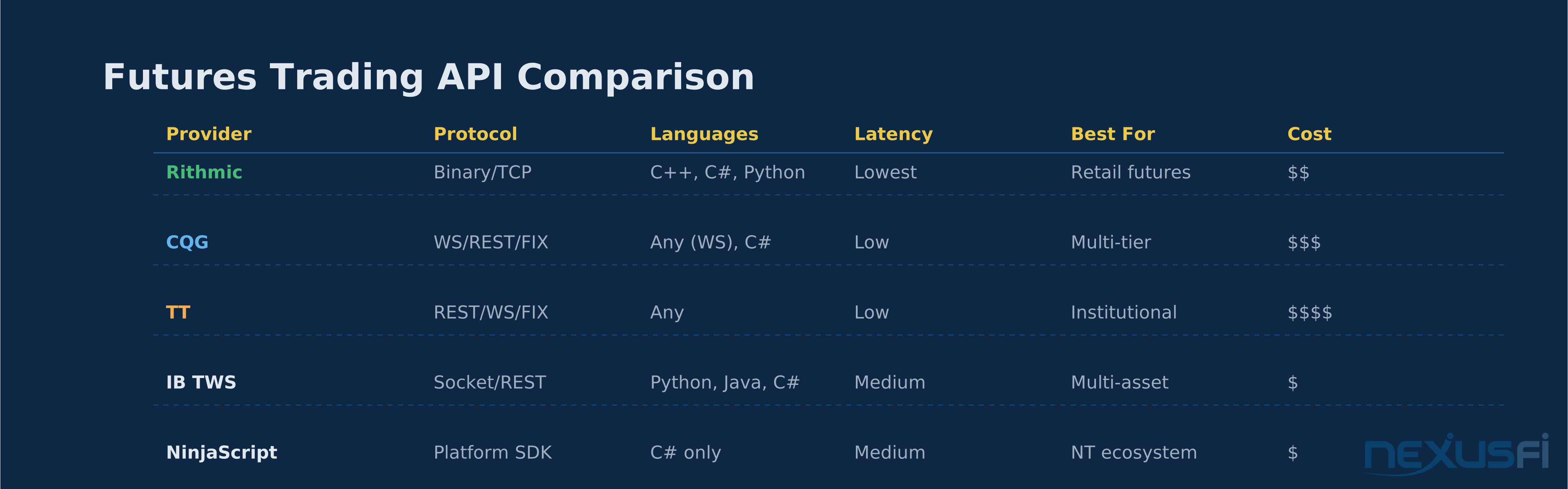
Rithmic is the dominant market data and order routing provider for retail futures traders, especially those using NinjaTrader, Bookmap, and other popular platforms. Their API suite — known as R | API+ — provides direct programmatic access to the same infrastructure.
Protocol: Proprietary binary protocol over TCP/SSL. This isn't REST or FIX — it's Rithmic's custom wire format, optimized for low-latency market data delivery. You work with their SDK libraries rather than raw socket programming.
Languages: C++ (primary, lowest latency), C# (.NET), Python (via ctypes/wrapper). The C++ API is what Rithmic considers the "gold standard" for performance-critical applications. The C# API is well-documented and popular with NinjaTrader ecosystem developers. Python wrappers exist but add latency — suitable for research and strategy prototyping, less ideal for production microsecond-sensitive execution.
Market Data: Tick-by-tick data with exchange timestamps, depth of market (full book or top-of-book), time and sales. Data arrives via callbacks — your code registers handlers that fire when new ticks arrive. For the ES (E-mini S&P 500), expect 50,000+ ticks during active sessions.
Order Management: Full order lifecycle support — submit, modify, cancel, with real-time fill notifications. Supports all standard order types: market, limit, stop-market, stop-limit. OCO (one-cancels-other) groups, bracket orders, and conditional orders are handled at the server level, meaning they persist even if your connection drops.
Getting Access: You need an account with an introducing broker that supports Rithmic (Optimus Futures, AMP Futures, Stage 5 Trading, etc.). API access typically requires requesting it from your broker. One NexusFi member describes the process: getting "API access to Rithmic Test and Paper Trading platforms very quickly. After testing for a few days, I got API access to live trading."
Strengths: Industry-standard for retail futures, extensive broker support, server-managed orders (survive disconnection), well-documented C++ and C# SDKs.
Limitations: Proprietary protocol (no standard REST/FIX interface), separate data and trading connections (you can lose one without the other), licensing fees for production use.
CQG API #
CQG (Continuum, previously known as CQG) provides a competing market data and order routing infrastructure used by many futures brokers including NinjaTrader Brokerage and Tradovate.
Protocol Options: CQG offers multiple API tiers:
- CQG Web API (WebSocket/REST): The most accessible entry point. JSON-based protocol over WebSocket for real-time data and order management. Suitable for web applications and lower-frequency strategies.
- CQG Integrated Client (COM/Desktop API): Desktop integration API that connects through CQG's Windows application. Used by platforms like Sierra Chart.
- CQG FIX API: Standard FIX 4.2/4.4 protocol for institutional-grade connectivity. Higher barrier to entry but industry-standard protocol.
Languages: The Web API works with any language that supports WebSocket (Python, JavaScript, C#, Java, Go, Rust — literally anything). The desktop API is COM-based (Windows/C#/C++ only). The FIX API uses standard FIX libraries available in all major languages.
Market Data: Real-time and historical data, depth of market, aggregated and tick-level. CQG's historical data service is especially strong — you can pull years of intraday data programmatically.
Latency Profile: CQG's data center operations are co-located in Chicago (Aurora) and connected directly to CME's matching engines. As noted by NexusFi traders measuring latency, CQG infrastructure at key data centers delivers 1-2ms round-trip times for properly hosted applications.
Strengths: Multiple API tiers for different needs, strong historical data, FIX protocol option for institutional compatibility, WebSocket API is language-agnostic.
Limitations: Pricing can be complex (per-connection and per-exchange fees), the desktop API requires Windows, data fees are separate from API access.
Trading Technologies (TT) API #
Trading Technologies (known as TT) is the institutional-grade platform provider. Their API access is aimed at professional trading operations, market makers, and algorithmic trading firms.
Protocol: REST API for order management, WebSocket for real-time market data, FIX for institutional connectivity.
Key Feature: TT's ADL (Algo Design Lab) provides a visual programming environment for building execution algorithms without writing code. For developers who do write code, the REST/WebSocket API provides full access to TT's infrastructure.
Strengths: Professional-grade infrastructure, co-location options, ADL for visual algo building, excellent spread trading support.
Limitations: Higher cost structure than Rithmic or CQG, more oriented toward institutional and professional users, steeper onboarding process.
Interactive Brokers API (TWS API) #
IB's Trader Workstation API is the most widely used trading API globally, though it's not exclusive to futures. It provides access to IB's multi-asset infrastructure across equities, options, futures, forex, and more.
Protocol: Socket-based proprietary protocol with official client libraries. IB also offers a REST-based API through their Client Portal.
Languages: Java (reference implementation), Python (ibapi), C++, C#. The Python library is the most popular for retail algo development.
Futures-Specific Considerations: IB's API handles futures contracts differently than dedicated futures providers. Contract specifications, rollover handling, and market data subscriptions all require understanding IB's unique contract identification system (conId). One NexusFi member noted the complexities when IB temporarily halted futures trading in IRA accounts — the API-level implications of such policy changes are something developers must handle.
Strengths: Multi-asset coverage (trade everything from one API), well-documented, massive developer community, free market data for many instruments with a funded account.
Limitations: Higher latency than Rithmic/CQG for futures-specific execution, TWS gateway must be running (unless using Client Portal API), occasional connectivity issues during high-volume periods, data pacing rules limit request frequency.
NinjaTrader Connect / NinjaScript #
NinjaTrader provides two development approaches:
NinjaScript: C# development within NinjaTrader's framework. You write strategy and indicator code that runs inside NinjaTrader's execution environment. This isn't a standalone API — it's a platform SDK. NinjaScript handles bar building, indicator calculation, and order management within NinjaTrader's managed lifecycle.
NinjaTrader Connect: External API access via a network connection to a running NinjaTrader instance. Allows any programming language to send orders through NinjaTrader.
When to use NinjaScript vs. a direct API: If your strategy logic is expressible within NinjaTrader's paradigm (bar-based events, standard order types, single-instrument focus), NinjaScript is simpler and handles infrastructure for you. If you need multi-exchange arbitrage, non-standard event processing, or want to avoid the NinjaTrader runtime entirely, go directly to Rithmic or CQG.
API Protocol Types: FIX vs. REST vs. Proprietary #
Understanding protocol types helps you choose the right API for your use case.
FIX (Financial Information Exchange) #
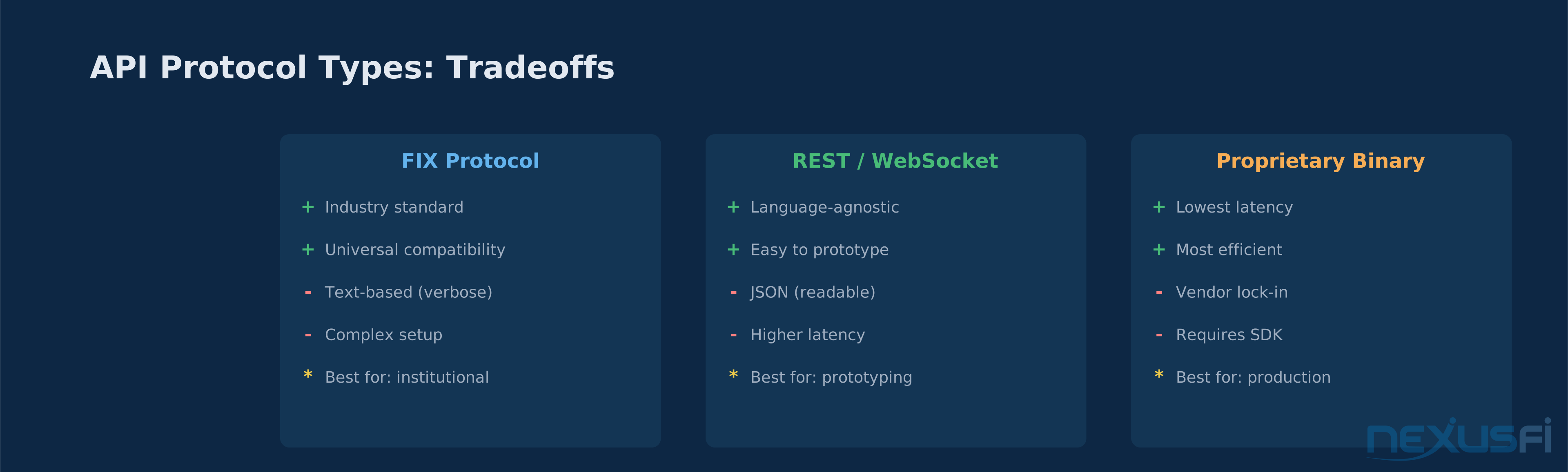
FIX is the industry standard protocol for trading communication. Developed in 1992, it's used by virtually every exchange, broker, and institutional trading system globally. FIX messages are tag-value pairs (e.g., 35=D for a new order, 35=8 for an execution report).
Advantages: Universal standard, any FIX-compliant system can connect to any other, extensive tooling and libraries (QuickFIX for C++/Java/Python/.NET).
Disadvantages: Verbose wire format (text-based), higher overhead than binary protocols, connection setup requires careful session configuration (SenderCompID, TargetCompID, heartbeat intervals).
Best for: Institutional connectivity, multi-broker routing, connecting to systems that only speak FIX.
REST / WebSocket #
Modern web-based protocols. REST for request-response operations (submit order, check position), WebSocket for streaming data (market data, order updates).
Advantages: Language-agnostic (HTTP and WebSocket are universal), easy to prototype and debug, JSON payloads are human-readable.
Disadvantages: Higher latency than binary protocols (HTTP overhead, JSON parsing), WebSocket connections require keep-alive management.
Best for: Strategy prototyping, web-based trading interfaces, lower-frequency strategies where microsecond latency doesn't matter.
Proprietary Binary #
Custom wire formats used by Rithmic, CQG (native), and others. Designed for minimum overhead and maximum throughput.
Advantages: Lowest possible latency, most efficient bandwidth usage, features tightly coupled to provider's infrastructure.
Disadvantages: Vendor lock-in, only works with that specific provider, requires their SDK.
Best for: Production execution where latency matters, high-frequency market data consumption, systems that will stay with one provider long-term.
VPS and Infrastructure: Where Your Code Runs Matters #
Your API code's physical location relative to the exchange and your order routing provider has measurable impact on execution quality. This isn't theoretical — NexusFi traders have measured the differences extensively.
The Latency Geography #
CME Group's matching engines are in Aurora, Illinois (about 35 miles west of Chicago). Rithmic, CQG, and TT all maintain infrastructure in Chicago-area data centers (primarily the Cermak Building at 350 E. Cermak Road, Equinix CH2/CH3 in Chicago, and the CME co-location facility in Aurora).
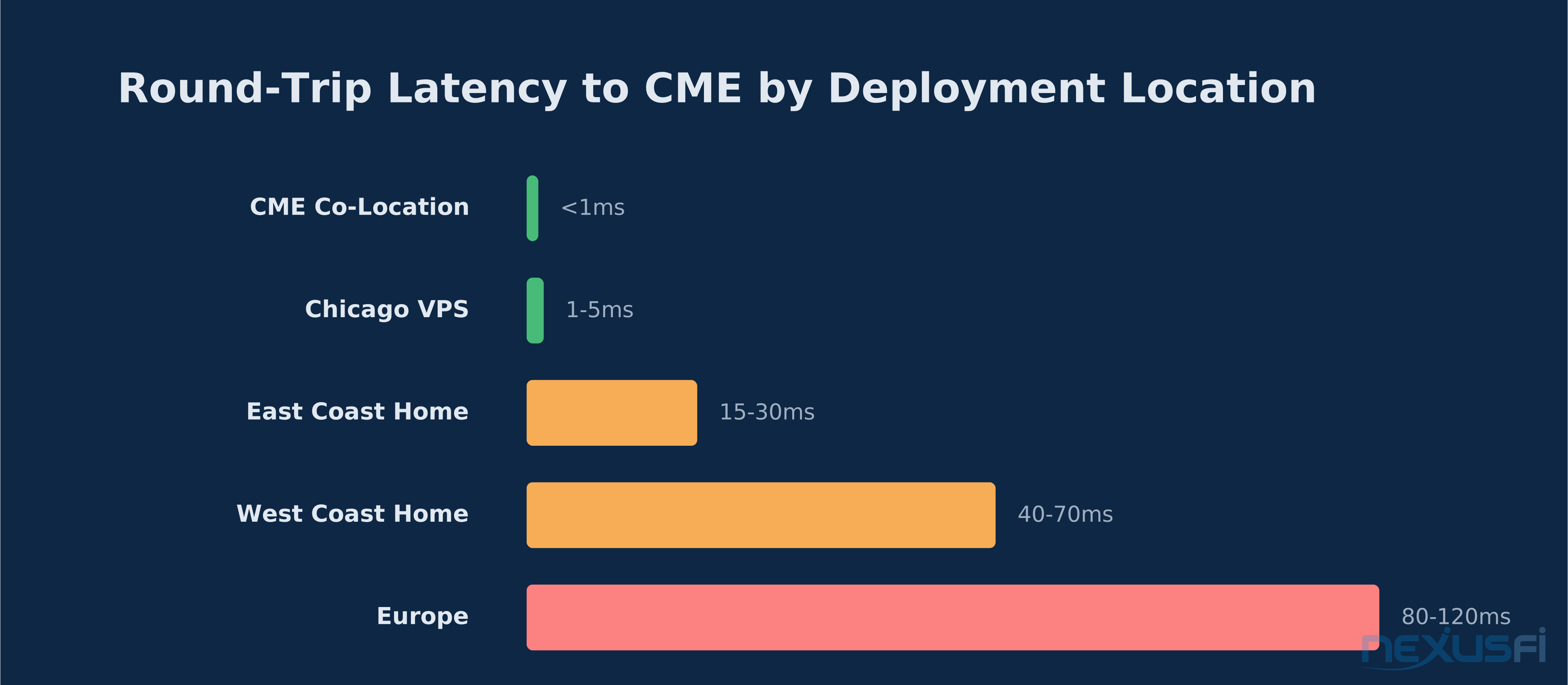
From a home connection (say, New York): Expect 15-30ms round-trip to Chicago-based servers. From the West Coast: 40-70ms. From Europe: 80-120ms.
From a Chicago VPS: 1-5ms round-trip to exchange infrastructure. Some NexusFi members report sub-2ms pings to CQG servers from properly located Chicago VPS instances.
As one experienced NexusFi member explains: "If you wish to run automated strategies on fast tick based charts for US traded futures, then you will never be happy with a European based server, but should opt for a US based VPS." Another quantifies the impact: "When your software generates an order it sends that order to Rithmic, and Rithmic sends it to the exchange — and you're talking single digit millisecond latency for the entire round trip."
VPS Selection Criteria #
Location: Chicago. Specifically, data centers on or near the Cermak corridor, or in Aurora near CME. This is non-negotiable for latency-sensitive automated strategies.
CPU: Trading workloads are often single-threaded and latency-sensitive. A VPS with a high single-core clock speed (3.5GHz+) and dedicated CPU cores is more valuable than many slow cores.
Memory: 4-8GB minimum for a single strategy running on one instrument. Market data buffering, order book maintenance, and historical data caching all consume memory. Budget 16GB+ if running multiple strategies or instruments.
Network: Look for providers offering direct connectivity to financial networks. Measured ping times to your order routing provider (Rithmic, CQG) are the metric that matters — not advertised bandwidth.
Reliability: Your VPS must stay up when markets are open. As one NexusFi member warns about shared hosting: "On most VPS they tend to oversubscribe putting too many people on one server. This can lead to many issues. If not done right someone else on your server can cause the whole server to go down."
Cost Range: Budget VPS options start around $10-20/month but come with shared resources and potential latency spikes. Dedicated trading servers in Chicago data centers run $50-150/month. Co-location at CME's facility starts at several thousand per month — this is for institutional operations.
Architecture Pattern: Separating Strategy from Execution #
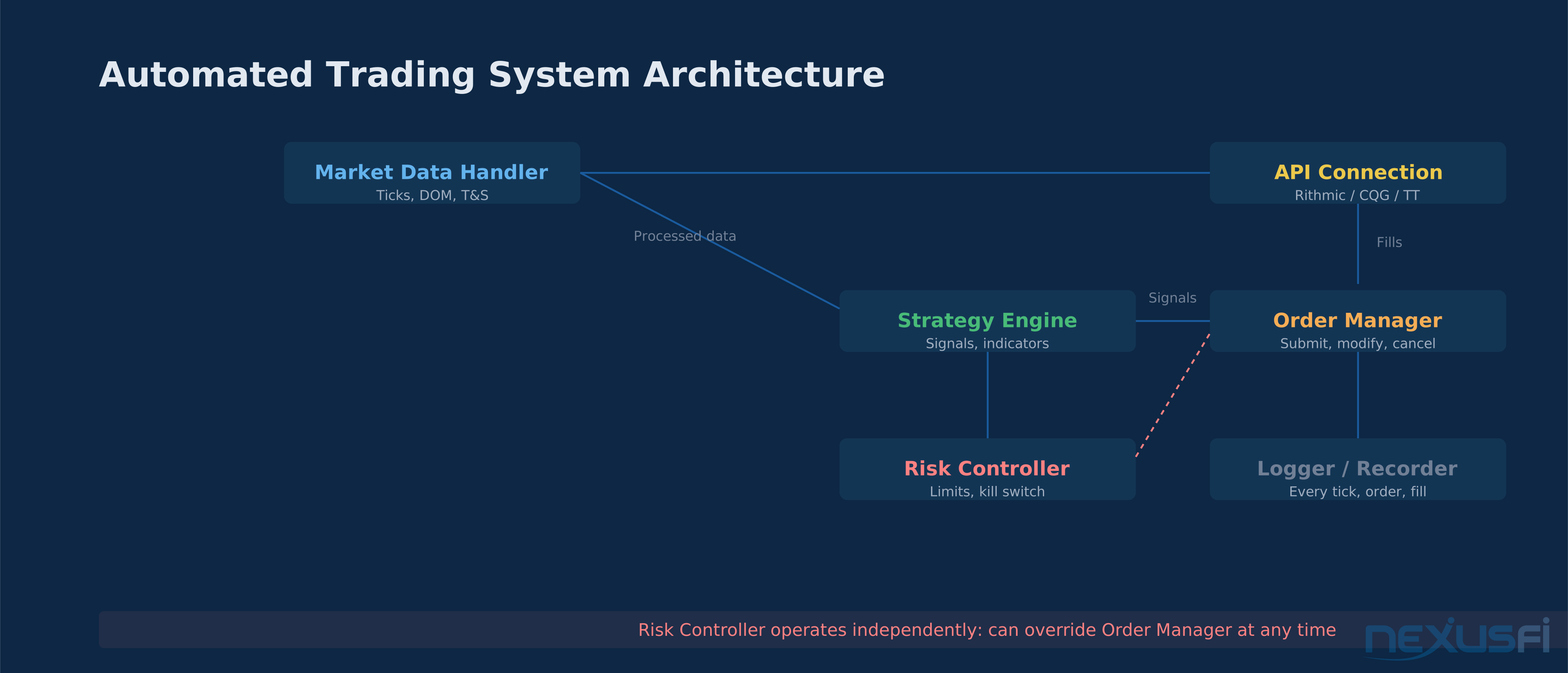
A strong automated trading system separates concerns:
- Market Data Handler: Receives and processes tick data from the API. Maintains the order book, calculates indicators, builds bars. This component must be fast — it processes every tick.
- Strategy Engine: Consumes processed market data and generates signals. This is your trading logic. It can run at whatever speed your strategy requires — tick-by-tick, bar-by-bar, or on timers.
- Order Manager: Translates strategy signals into API order calls. Handles order state tracking, modification, cancellation, and fill processing. Implements risk checks (position limits, max order size, daily loss limits).
- Risk Controller: Independent layer that monitors positions, P&L, and order flow. Can shut down trading if predefined limits are breached. This must operate independently of the strategy engine.
- Logger/Recorder: Captures every market data tick, every signal, every order, and every fill with timestamps. Essential for debugging and post-trade analysis.
This separation means if your strategy engine crashes, the order manager can still manage open positions (flatten, maintain stops). If the market data handler has a gap, the risk controller can pause trading until data quality is confirmed.
Programming Language Selection #
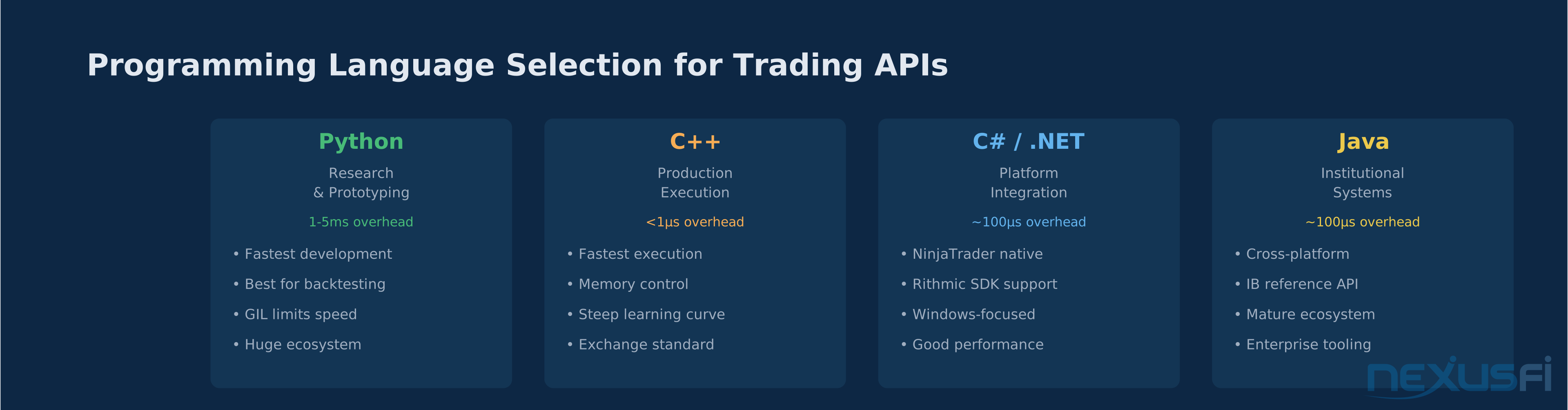
Python #
Best for: Strategy research, backtesting, prototyping, lower-frequency strategies (rebalancing, swing trading, end-of-day systems).
Libraries: ibapi (Interactive Brokers), various Rithmic wrapper libraries, WebSocket libraries for CQG Web API, pandas for data analysis, numpy for calculations.
Latency reality: Python's Global Interpreter Lock (GIL) and interpreted nature add latency. Expect 1-5ms of pure processing overhead per tick in Python versus microseconds in C++. For strategies that trade on daily bars or even 5-minute bars, this doesn't matter. For tick-by-tick scalping where you compete against other algorithms, it does.
C++ / C #
Best for: Production execution engines, market data processing, latency-sensitive strategies.
Libraries: QuickFIX (FIX protocol), Rithmic R | API+ native SDK, Boost.Asio for networking, custom binary parsers.
Latency reality: Sub-microsecond processing per tick is achievable. C++ is what the exchange matching engines themselves are written in. If you need the fastest possible execution, C++ is the default choice. The development cost is higher — memory management, compilation, debugging are all more complex than managed languages.
C# / .NET #
Best for: Windows-based trading systems, NinjaTrader/NinjaScript development, Rithmic C# SDK usage.
Libraries: Rithmic .NET SDK, QuickFIX/N (.NET FIX implementation), NinjaTrader NinjaScript framework.
Latency reality: Between Python and C++ — the .NET runtime adds some overhead but JIT compilation produces efficient native code. Perfectly suitable for most retail trading strategies. The NinjaTrader ecosystem is heavily C#, making it the natural choice if you're extending NinjaTrader.
Java #
Best for: Cross-platform trading systems, institutional environments, FIX connectivity.
Libraries: QuickFIX/J, IB TWS API (reference implementation is Java), Apache Camel for messaging.
Latency reality: Similar to C# — JIT-compiled, garbage-collected, but mature and fast. Many institutional trading systems run on Java. Low-latency Java frameworks (Aeron, Chronicle) can achieve near-C++ performance.
Authentication, Security, and Session Management #
Connection Security #
All modern futures trading APIs use encrypted connections (TLS/SSL). Never transmit credentials or orders over unencrypted connections. API keys, passwords, and session tokens must be stored securely — never in source code, never in version control.
Session Management #
Trading API connections are stateful. You establish a session, authenticate, subscribe to data, and maintain the connection via heartbeat messages. If your connection drops:
- Server-managed orders survive: Most APIs (Rithmic, CQG, TT) maintain your working orders on their servers. A disconnection doesn't cancel your stops.
- Market data subscriptions must be re-established: You typically need to re-subscribe to instruments after reconnecting.
- Position state must be reconciled: On reconnect, query your current positions before resuming trading. Your local state may be stale.
Fail-Safe Requirements #
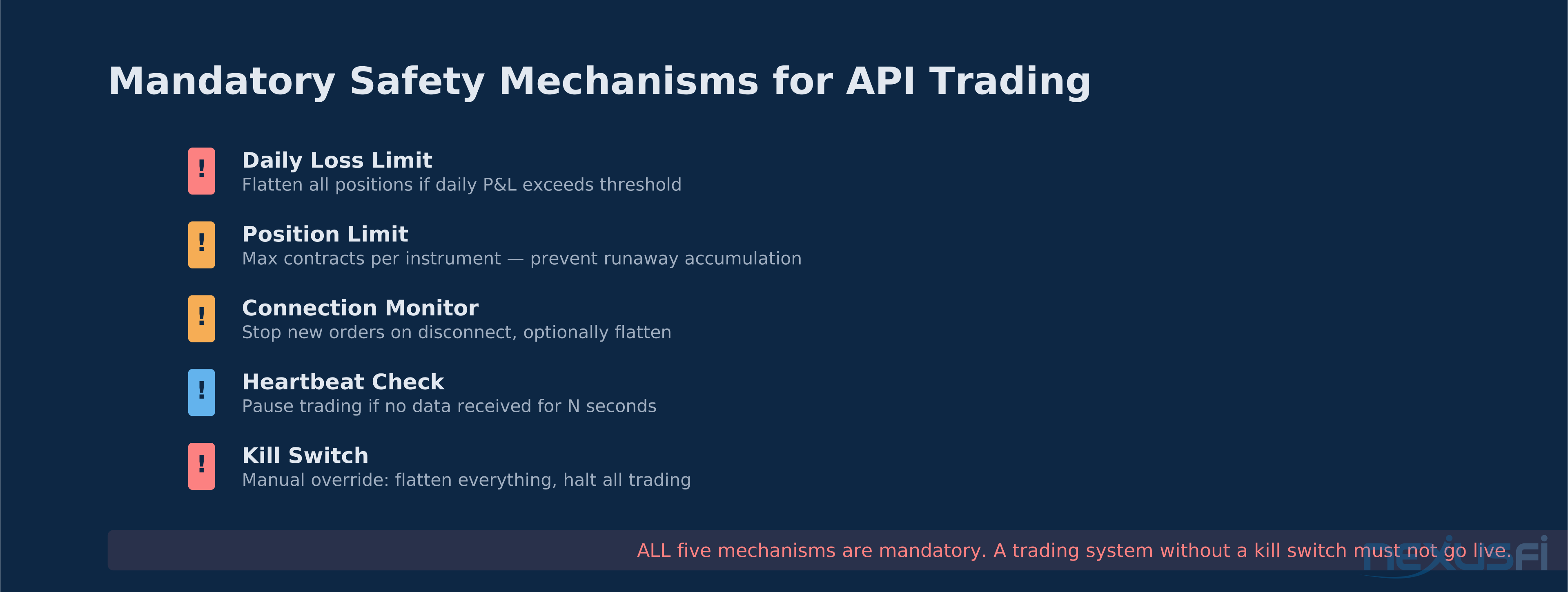
Never deploy a trading system without these safety mechanisms:
- Daily loss limit: If cumulative daily P&L exceeds a threshold, flatten all positions and stop trading.
- Position limit: Maximum number of contracts per instrument.
- Connection monitoring: If the API connection drops, immediately stop sending new orders. Optionally flatten positions via a separate emergency connection.
- Heartbeat monitoring: If you stop receiving data for more than N seconds, assume a feed problem and stop trading.
- Kill switch: A manual override that immediately flattens everything and halts all automated trading. This is not optional.
Common Pitfalls #
Not handling partial fills: A limit order for 10 contracts might fill 3, then 4, then 3 across multiple messages. Your order manager must handle partial fill sequences correctly.
Ignoring exchange trading halts: Circuit breakers and daily limits can halt trading. Your system must recognize and handle trading halt conditions gracefully.
Assuming data integrity: Market data feeds can have gaps, duplicates, or out-of-order messages. Build sanity checks: is this tick within a reasonable range? Is the timestamp sequential? Is the bid below the ask?
Testing only in simulation: Simulated trading environments don't accurately reproduce real market conditions — slippage, partial fills, queue position, and rejection rates all differ in live markets. Transition from sim to live with small size first.
Neglecting reconnection logic: Network connections fail. Servers restart. Your code must handle graceful reconnection, state reconciliation, and recovery — automatically, without human intervention, during market hours.
Getting Started: The Practical Path #
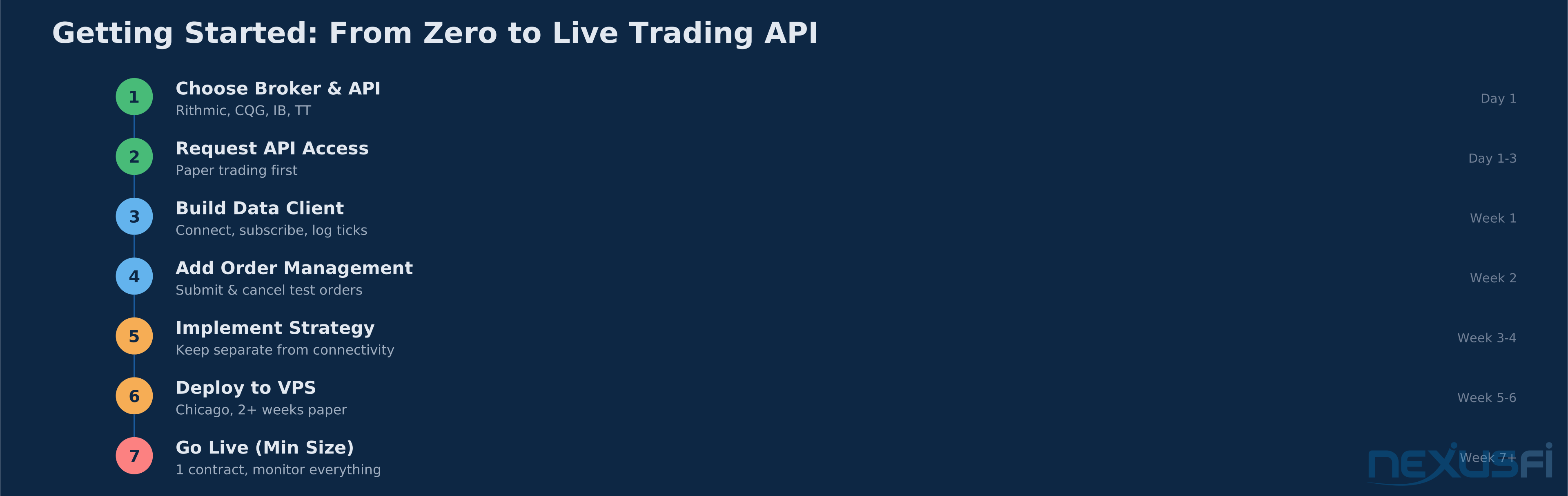
Step 1: Choose your broker and determine which API provider they support (Rithmic, CQG, or both). This determines your API options.
Step 2: Request API access. Most brokers provide paper trading API access for development. Start there — never develop against live accounts.
Step 3: Build a minimal market data client. Connect, authenticate, subscribe to one instrument (ES, for example), and log every tick to a file. This exercise teaches you the connection lifecycle, data format, and event handling pattern.
Step 4: Add order management. Submit a limit order well away from the market, verify you see the order acknowledgment, then cancel it. This confirms your order routing works end-to-end.
Step 5: Implement your strategy logic on top of the data and order infrastructure. Keep the strategy separate from the connectivity layer — you want to be able to swap APIs or add new ones without rewriting your strategy.
Step 6: Deploy to a VPS. Run your system in paper trading mode on a Chicago-based VPS for at least two weeks, monitoring stability, reconnection behavior, and data quality.
Step 7: Go live with minimum size. One contract, one instrument. Monitor every fill, every rejection, every disconnect. Only scale up after confirming real-market behavior matches your expectations.
The API is infrastructure. Like your account structure and your broker choice, it determines the boundaries of what's possible. Getting the infrastructure right means your trading logic can focus on what matters: finding and executing edge.
Knowledge Map
Prerequisites
Understand these firstGo Deeper
Build on this knowledgeReferences This Article
Articles that build on this topicCitations
- — Rithmic vs AMP/CQG (2011) 👍 4“Hi. I also came to optimus from interactive brokers as I am working on some high frequency stat-arb trading algorithms.”
- — Which the best faster VPS to retail (2022) 👍 8“Your software (or you) creates an order, that order has to get to the exchange matching engine. How it gets there is called 'order routing'. Example A. You live in Chicago and trade from home using Software ABC.”
- — How to measure data feed latencies between continents? (2014) 👍 9“Koepisch: If you wish to run automated strategies on fast tick based charts for US traded futures or stocks, then you will never be happy with a European based server, but should opt for a US based VPS. Let me explain the reasons.”
- — please suggest a trading platform with API access (2019) 👍 2“I thought of posting an update as my transition to new platform is completed after I started this thread. I searched around a bit more for different platforms with API access and decided to go with Rithmic API platform and Optimus Futures for IB.”
- — Rithmic Data/Brokerage Status (2026)“Steven723, Here's the key thing that'll save you a lot of headaches going forward -- Rithmic uses separate connections for market data and order routing. You can be getting perfectly clean data while the trading side is completely down.”
- — Recommended Windows VPS for NinjaTrader 8. For $7-$12 /month. PiVPS? CheapWindowsVPS? (2021) 👍 4“Hey sorry that I'm a little late to this thread. I can 100% vouch for the VPS from ninjamobiletrader.com (not affiliated, just a happy customer...”
- — Commerical Network Services VPS (2013) 👍 4“manten808 VPS and Dedicated servers are great when using an automated strat. But some things to consider. Where is your server located and what kind of ping are you getting to exchanges. You can get sub ms if located in Chicago to the CME.”
- — Automated trading on VPS (2011) 👍 3“Many options have been discussed. sam028 offers a service to NexusFi (formerly BMT) members for around $50/mo, with a 1ms ping to Zen Fire. You can also get your own dedicated server in Chicago for around $100/mo or $150/mo.”