



Interest Rate Risk Management for Futures Portfolios: DV01, Duration, and the Equity-Bond Correlation Breakdown
Overview #
In 2022, a portfolio running a textbook 60/40 equity-bond allocation lost 18% — the worst year since 2008. The equity sleeve was down. The bond sleeve was also down. Hard. ZN fell 16.8%. ZB collapsed 31.5%. The hedge didn't hedge. This is the correlation breakdown problem, and if you're trading futures portfolios in a rising-rate environment without understanding DV01, it will find you.
This article covers the mechanics of interest rate risk in futures portfolios — specifically how to measure it, size against it, and manage it when the Fed is hiking. The core tools are DV01 (dollar value of a basis point), contract selection between ZN and ZB, and a disciplined framework for managing equity-bond correlation breakdowns.
This is not portfolio theory. It's operational risk management for traders holding Treasury futures or running multi-asset portfolios where rate risk is a live variable. The 2022 cycle demonstrated that treating bonds as a static "offset to equity" is a way to lose twice. What follows is how to avoid that.
Related: For foundational position sizing frameworks, see Position Sizing for Futures Trading and Volatility-Based Position Sizing. For portfolio-wide rate exposure management across multiple correlated positions, see Correlation-Adjusted Position Sizing.
Key Concepts #
- DV01 (Dollar Value of 01) -- The change in portfolio value for a 1 basis point (0.01%) move in the relevant yield. Also called BPV (Basis Point Value). The core unit for measuring rate risk in futures portfolios.
- Basis Point (bp) -- 1/100th of one percent. 100 bps = 1%. If the 10-year yield moves from 4.25% to 4.50%, that's a 25 bp move.
- ZN -- CME 10-Year U.S. Treasury Note futures. Notional value ~$100,000. The primary intermediate-duration rate instrument for most futures traders.
- ZB -- CME 30-Year U.S. Treasury Bond futures. Notional value ~$100,000. Higher duration and convexity than ZN -- same yield shock hits ZB harder.
- CTD (Cheapest to Deliver) -- In Treasury futures, the short side delivers one of several eligible bonds. The cheapest bond to deliver is called the CTD. It changes as yields and curve shape shift, which causes the contract's effective DV01 to drift.
- Conversion Factor -- A standardized multiplier that adjusts for the coupon and maturity difference between the eligible delivery bonds and the futures contract's notional specification. Used to calculate DV01.
- Duration -- A measure of a bond's price sensitivity to yield changes. Modified duration of 7 means: a 1% yield change moves the price roughly 7% in the opposite direction.
- Equity-Bond Correlation -- The correlation between daily returns on equity indices and Treasury prices. Historically negative (stocks down → bonds up). Breaks down during inflation-driven tightening cycles.
- Term Premium -- The extra yield investors demand for holding long-duration bonds versus rolling short-term debt. Rising term premium reprices long-end bonds independently of Fed policy expectations.
- Key-Rate DV01 -- Portfolio DV01 broken into specific tenor buckets (2Y, 5Y, 10Y, 30Y). More precise than a single aggregate DV01 because it captures curve shape risk.
What DV01 Actually Measures -- and What It Doesn't #
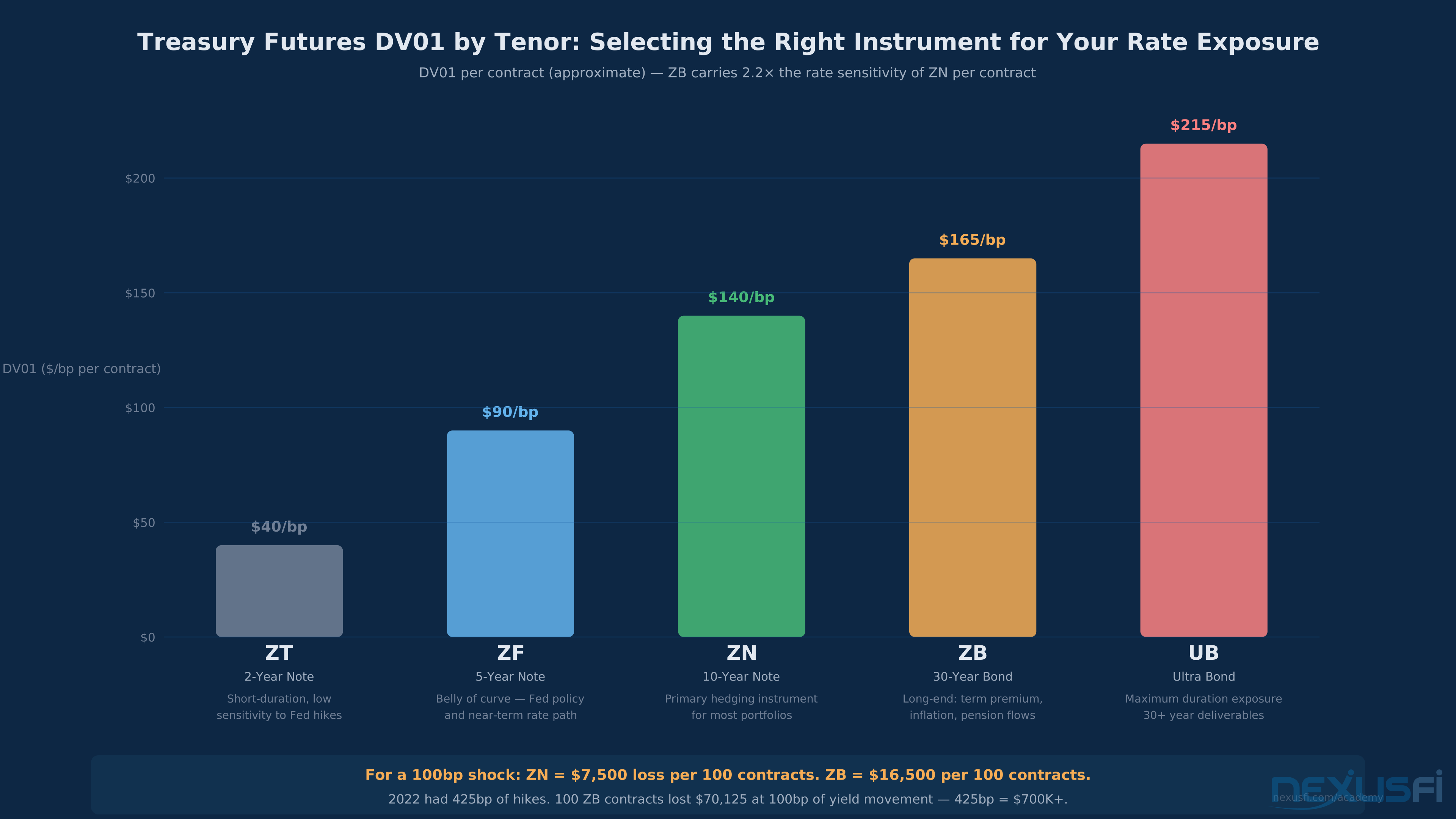
DV01 is straightforward: for every 1 basis point change in yield, how much does your position lose or gain in dollars? For ZN, the approximate DV01 is $75 per contract. For ZB, it's approximately $165 per contract. If you're long 100 ZN contracts and the 10-year yield rises 10 bps, you've lost roughly $75,000.
The math:
Position P&L = Number of Contracts × DV01 × Yield Change (in bps)

100 ZN × $75/bp × -10 bps = -$75,000
Scale it up: 100 bps of rate increase (a full 1%) against a 200-contract ZN position produces a $1,500,000 drawdown. Not theoretical. That's 2022 territory, and traders who sized positions based on notional value rather than DV01 exposure had no idea what was sitting in their book.
Here's what DV01 does NOT tell you:
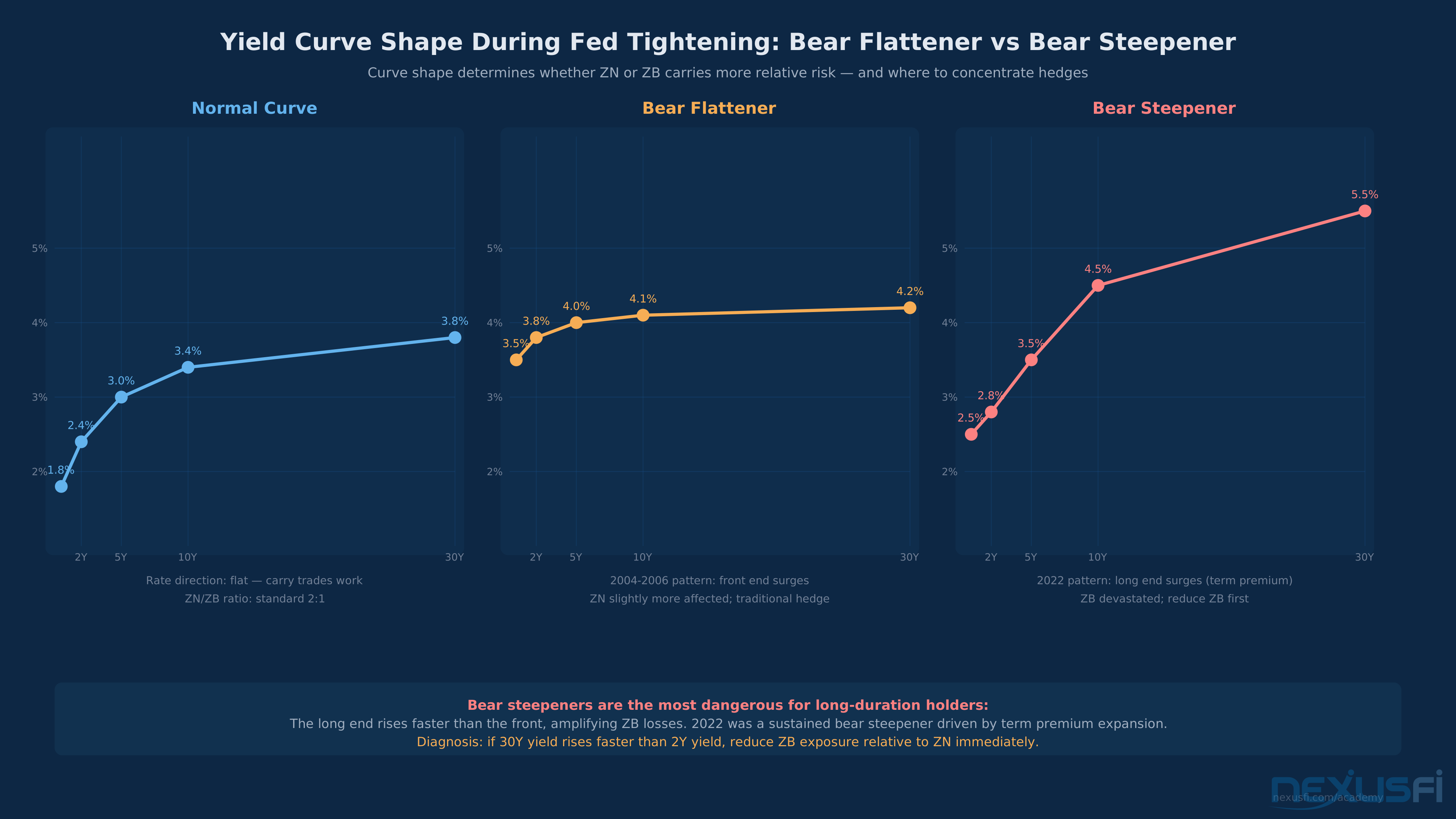
- It doesn't account for curve shape changes. A parallel shift of the yield curve is clean. A bear flattener (front end rises more than the long end) or a bear steepener (long end rises more) hits ZN and ZB differently. DV01 assumes parallel shifts unless you're using key-rate DV01.
- It doesn't capture CTD switching risk. The DV01 of a futures contract is not constant -- it depends on which bond is cheapest to deliver, and that can change without warning.
- It doesn't account for convexity. Convexity is the second-order rate risk. For large yield moves, the linear DV01 approximation breaks down. ZB has more convexity than ZN -- which means ZB's actual loss on a 200 bp yield shock is worse than DV01 × 200 suggests.
For active traders, a working DV01 framework handles the first two. Convexity becomes material primarily in extreme scenarios, and its impact is worth understanding even if you don't hedge it directly.
ZN vs ZB: Same Direction, Very Different Exposure #
Both ZN and ZB move in the same direction when rates change — price falls when yields rise, price rises when yields fall. But the magnitude of that move is dramatically different.
The 2022 tightening cycle makes this concrete. The Fed raised rates 425 basis points in roughly 10 months — the fastest pace since the 1980s. The 10-year yield moved from 1.50% to 4.25%, a 275 bp shock. The 30-year yield moved similarly but with amplification at the long end.
Results:
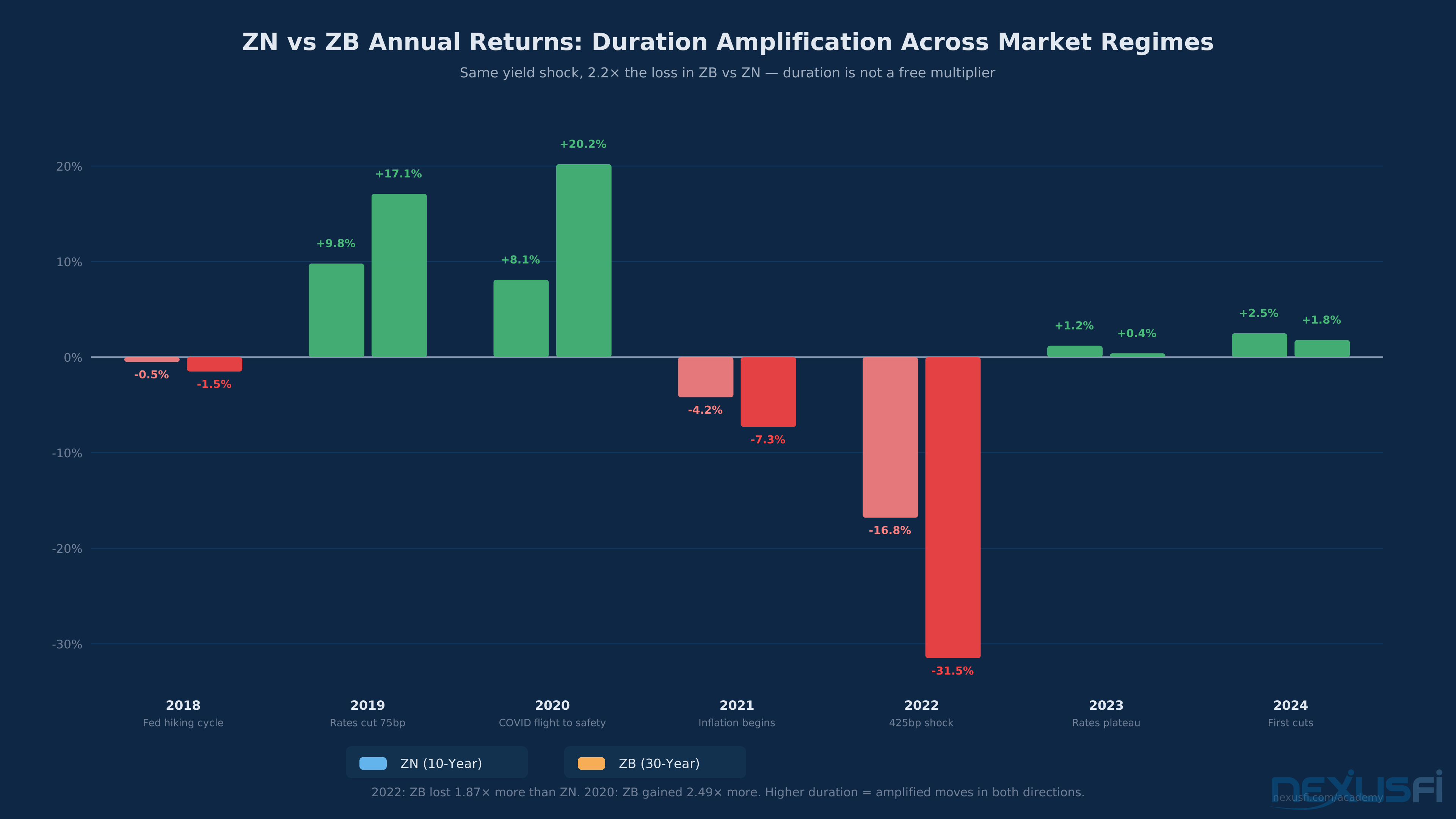
- ZN: -16.8% -- approximately $16,800 per contract from peak to trough
- ZB: -31.5% -- approximately $31,500 per contract, the worst year for U.S. Treasury bonds since 1788
ZB's larger drawdown comes from two sources: higher duration (it's a 30-year bond against a 10-year note) and higher convexity. The DV01 difference explains the starting point — ZB's $165/bp versus ZN's $75/bp means you're buying roughly 2.2x the rate sensitivity per contract with ZB.
Contract selection logic (see also: 10-Year Treasury Note (ZN) Futures and 30-Year Treasury Bond (ZB) Futures):
- Use ZN for intermediate-duration hedging, tactical rate trades around the 10-year tenor, and when your portfolio's main exposure is in the belly of the curve.
- Use ZB when your exposure is genuinely long-duration, when you're targeting long-end repricing specifically, or when you're running curve trades (long ZN / short ZB or vice versa).
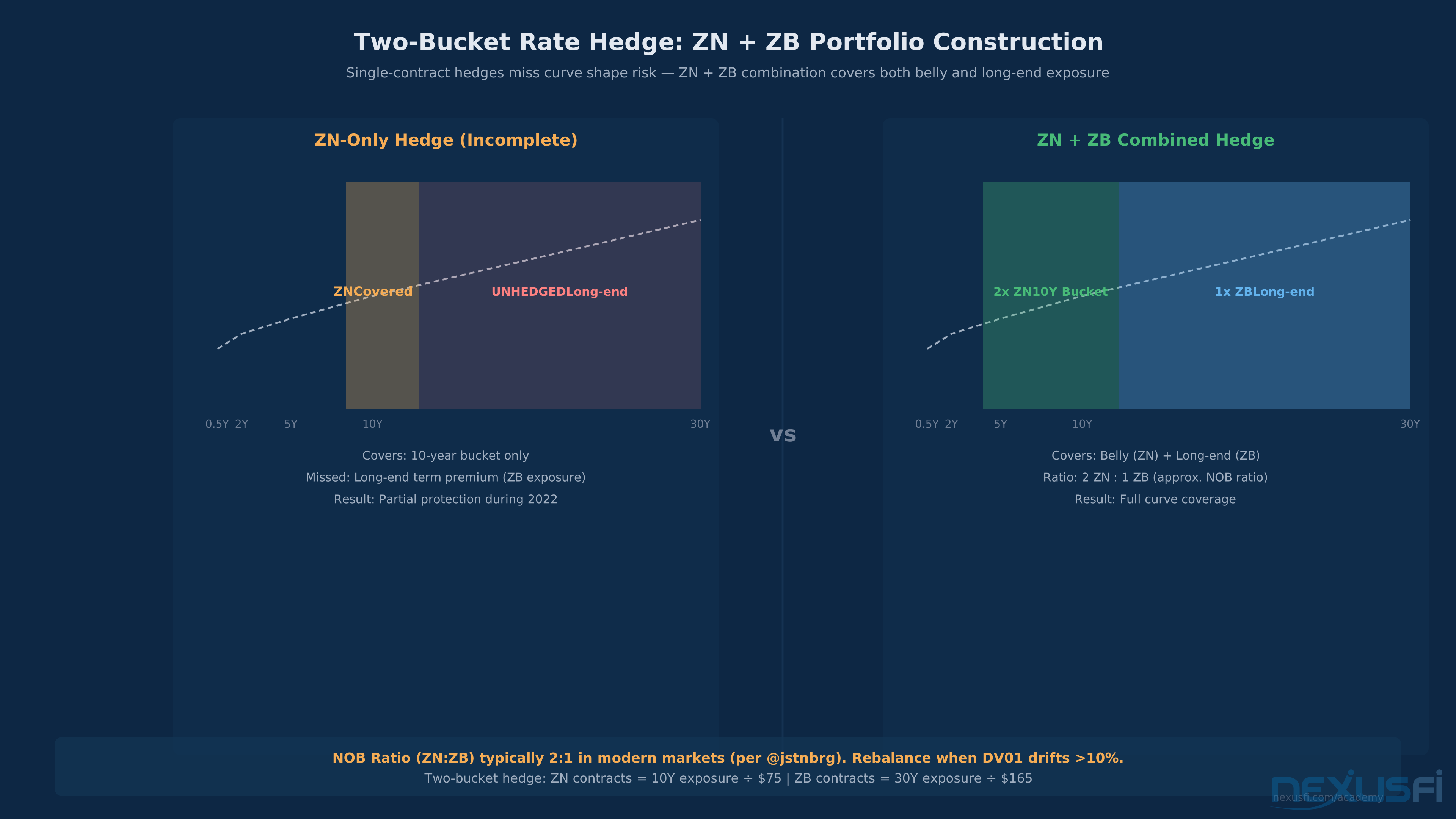
- Use both for more precise portfolio hedging -- a two-bucket hedge with ZN and ZB captures more curve risk than either alone.
One important point: using only ZN to hedge a portfolio with long-end exposure leaves duration risk on the table. And using only ZB to hedge intermediate exposure leaves you with a contract that's more reactive than your underlying risk — a hedge that overshoots.
Three Tightening Cycles: What the Data Shows #
Looking at Fed tightening cycles historically reveals a pattern that's uncomfortable but important to internalize: the bond hedge fails exactly when you need it most.
1994 -- The Surprise Tightening
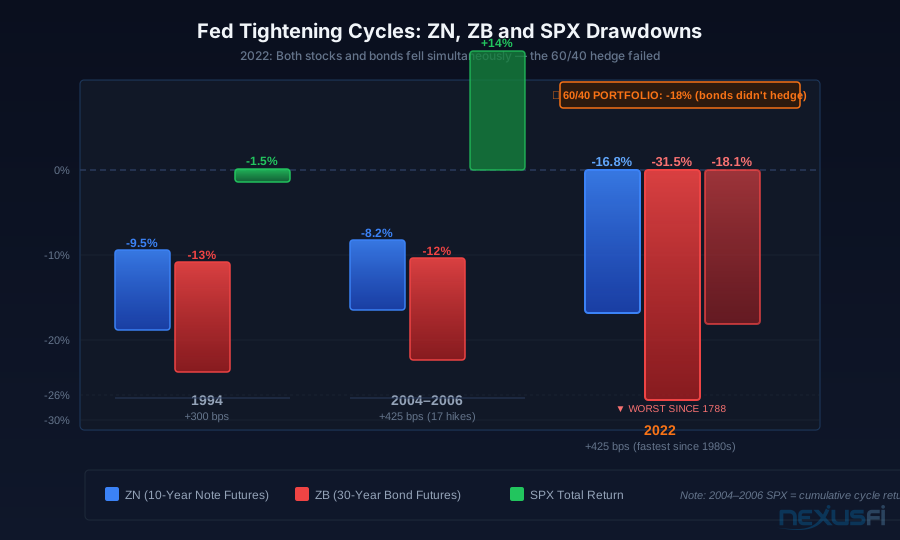
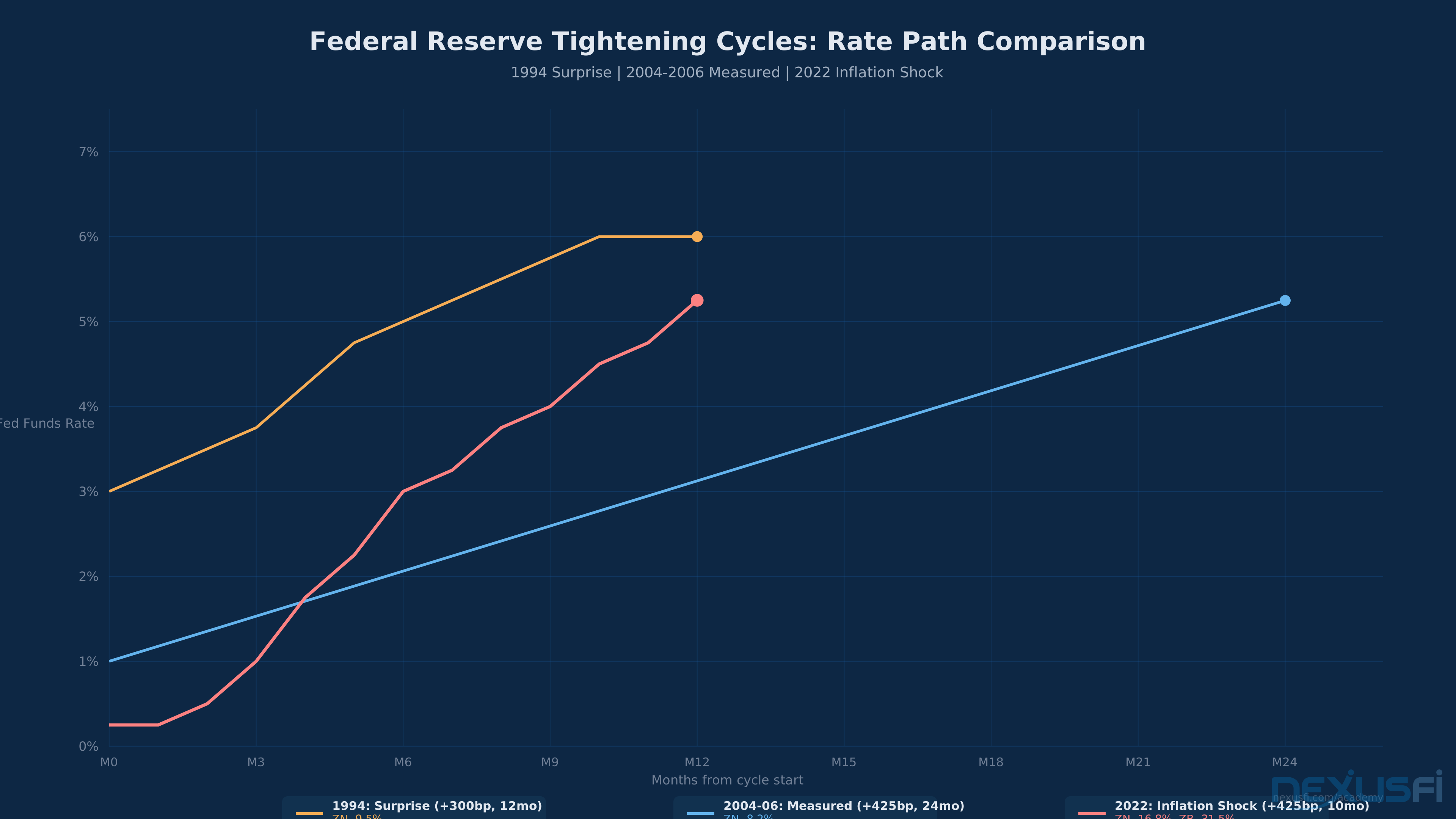
The Fed raised rates 300 bps over 10 months, from 3.00% to 6.00%. The 10-year yield moved from 5.75% to approximately 7.80% — a 205 bp shock. ZN equivalent losses ran roughly 9.5%. The S&P 500 ended the year basically flat at -1.5%, but the volatility was brutal. The equity-bond correlation shifted materially during the acute selling phase, with both assets under pressure simultaneously. Equity-bond correlation that had been modestly positive (around +0.15) shifted toward -0.45 — a period where bonds actually started functioning as partial hedges, but only after significant damage was done in the rapid repricing.
2004--2006 -- The Measured Tightening
The Fed raised 425 bps over 24 months — 17 consecutive 25 bp hikes at a "measured" pace. The 10-year yield moved from 3.80% to 5.25%, a 145 bp increase. ZN fell roughly 8.2% over the cycle. The S&P 500 was positive over this period. The critical distinction: the 2004 cycle was more gradual, with the Fed telegraphing every move. Equity-bond correlation remained more stable around -0.20. The hedge worked imperfectly but didn't completely break. This is what a "well-behaved" tightening cycle looks like — rare, in hindsight.
2022 -- The Inflation Shock
This is the case study that should reset every assumption about bond hedges. The Fed raised rates 425 bps in 10 months — the fastest pace since the 1980s. Critically, this was driven by inflation hitting 9% CPI, not a preemptive growth management move. The outcome:
- ZN: -16.8% for the year
- ZB: -31.5% -- worst year since 1788
- SPX: -18.1%
- Traditional 60/40 portfolio: approximately -18%
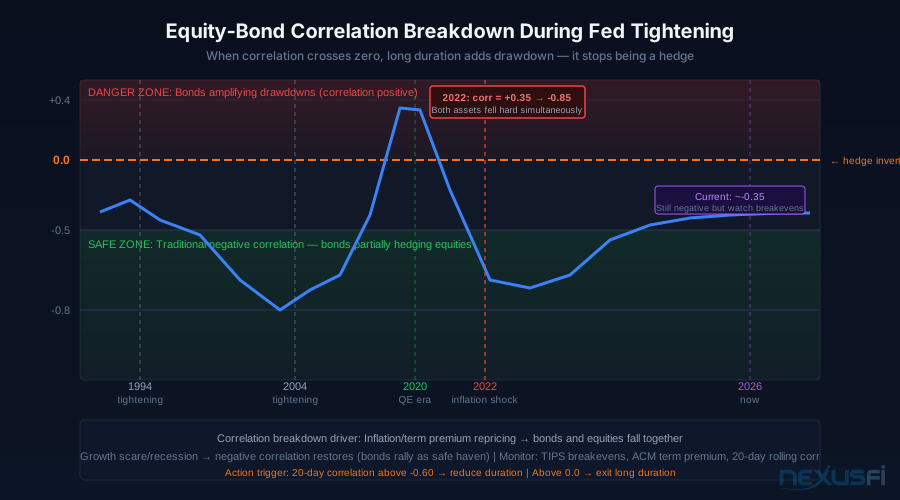
The equity-bond correlation shifted from +0.35 (2020-2021, pandemic era) to approximately -0.85 in Q2-Q3 2022 — both assets in freefall simultaneously. Bonds did not hedge equities. They amplified the drawdown. A $1M portfolio with 40% in bond funds lost money on both legs.
The driver is critical: 2022 was an inflation-repricing cycle, not a growth-scare cycle. When inflation expectations and term premium drive yields higher, bonds and equities sell off together. That's not a correlation breakdown in a statistical sense — it's the correlation behaving exactly as it should given the regime. The mistake is assuming the correlation regime from a growth-scare period (2000, 2008) holds during an inflation-driven tightening cycle.
As member @tigertrader observed in the NexusFi Treasury forum during a previous tightening cycle, "the traditional equity bond relationship has been somewhat perverted due to non-economic players who are still shedding treasury collateral." When the bond market is facing structural selling from both price-insensitive sellers and rate-sensitive hedgers simultaneously, the flight-to-safety mechanism breaks entirely.
2025--2026 -- The Current Environment
As of mid-2026, 18 of 19 Federal Reserve officials have projected rate hikes at the most recent meeting. Warsh, confirmed as the new Fed Chair, has been explicit about his inflation-first mandate. The equity-bond correlation has been running approximately -0.30 to -0.40 — still somewhat diversifying, but worth monitoring. The risk is that any acceleration in the hiking cycle, especially driven by persistent inflation rather than growth management, could push correlation toward the 2022 scenario.
The Correlation Breakdown: Why Your Bond Hedge Fails #
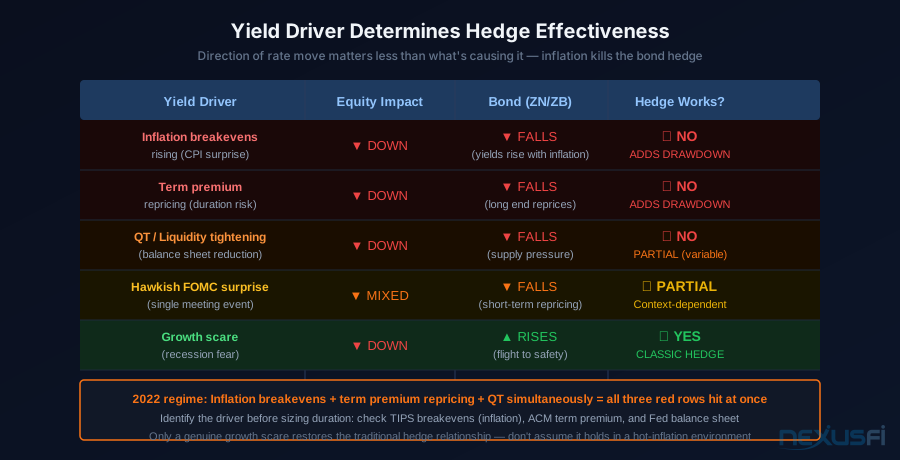
The equity-bond correlation breakdown is not random. It's mechanically predictable based on what's driving yields. This is the framework:
| Yield Driver | Equity Impact | Bond Impact | Correlation | Bond Hedge Works? |
|---|---|---|---|---|
| Inflation expectations rising | Negative | Negative (yields up) | Positive (breakdown) | No |
| Term premium repricing | Negative | Negative (yields up) | Positive (breakdown) | No |
| Growth scare / recession fear | Negative | Positive (flight to safety) | Negative (normal) | Yes |
| Liquidity tightening (QT) | Negative | Negative | Positive (breakdown) | No |
| Policy path hawkish surprise (single meeting) | Mixed | Negative | Unstable | Partial |
The 2008 financial crisis was a growth scare — bonds rallied hard as equities collapsed. ZB gained massively while the S&P lost 38%. The 2022 inflation shock was the opposite. The regime, not the direction of rate moves, determines whether your bond position hedges or hurts you.
How to identify the regime before position sizing:
- Check inflation breakevens. If the 10-year TIPS breakeven is widening, inflation expectations are the driver. Reduce long-duration positions.
- Check term premium. The ACM model (Federal Reserve Bank of New York) publishes term premium estimates. Rising term premium = long-end repricing independent of Fed policy expectations. Bonds won't hedge equities.
- Check the slope of the curve. Bear flatteners (front end rises faster) suggest growth concerns about the hiking cycle. Bear steepeners (long end rises faster) suggest term premium and inflation concerns. For duration hedges, bear steepeners are more dangerous.
- Monitor rolling 20-day correlation. When the 20-day rolling correlation between your equity exposure and ZN crosses above -0.60 (becomes less negative), the hedge is degrading. When it crosses zero, it has inverted.
Position Sizing with DV01: The Right Formula #
Most traders size Treasury futures positions based on notional value, maximum loss in dollar terms, or technical levels. None of these properly account for rate risk. The correct framework is DV01-based sizing, which directly links position size to the dollar impact of yield moves.
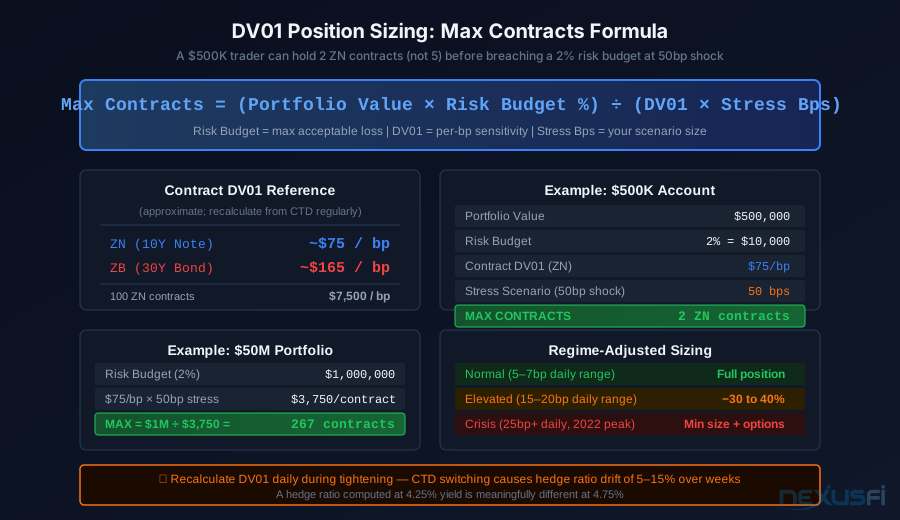
The Formula:
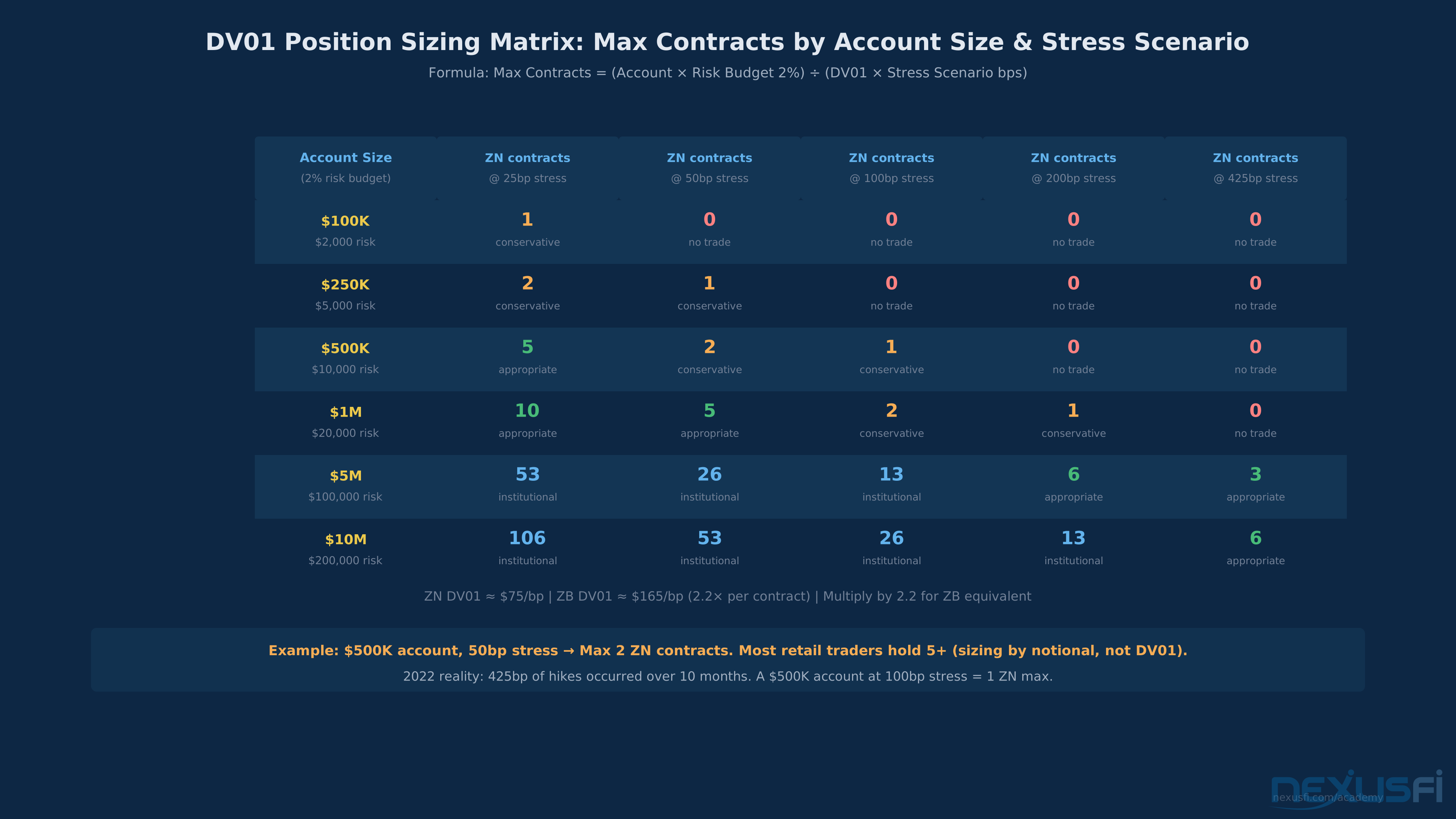
Max Contracts = (Portfolio Value × Risk Budget %) / (Contract DV01 × Expected BP Move)Worked Examples:
Example 1: Conservative sizing for a $500K account
Portfolio Value: $500,000
Risk Budget: 2% ($10,000 max loss)
Contract: ZN (DV01 ≈ $75/bp)
Stress Scenario: 50 bp yield shock (typical for a single FOMC cycle)
Max Contracts: $10,000 / ($75 × 50) = 2.67 → 2 contracts maximum
Example 2: Institutional-scale portfolio
Portfolio Value: $50,000,000
Risk Budget: 2% ($1,000,000 max loss)
Contract: ZN (DV01 ≈ $75/bp)
Stress Scenario: 50 bp yield shock
Max Contracts: $1,000,000 / ($75 × 50) = 267 ZN contracts
To put 267 contracts in perspective: that's a $26.7M notional position in 10-year Treasury futures. A 50 bp move in yields costs exactly $1,000,000. A 100 bp move (which happened repeatedly in 2022) costs $2,000,000 — twice the risk budget.
Key DV01 reference values:
- ZN (10-year): ~$75 per basis point per contract
- ZB (30-year): ~$165 per basis point per contract
- 100 ZN contracts: $7,500 per basis point of yield move
- 100 ZB contracts: $16,500 per basis point of yield move
Volatility adjustment: During tightening cycles, the daily range in 10-year yields expands dramatically. Normal market conditions produce 5--7 bp daily ranges. During acute Fed tightening, 15--20 bp days are common. In 2022, days with 25+ bp ranges occurred multiple times. If you're sizing for a 50 bp stress scenario but facing 25 bp intraday swings, your position is taking half its stress-scenario loss on a single bad day. Size so.
Volatility-adjusted sizing rule of thumb:
| Market Regime | Daily 10Y Range | Position Adjustment |
|---|---|---|
| Normal | 5--7 bps | Baseline |
| Elevated (early tightening) | 15--20 bps | Reduce by 30--40% |
| Crisis (2022 peak) | 25+ bps | Minimum size, options overlay |
CTD Risk: Why Your DV01 Drifts During Tightening #
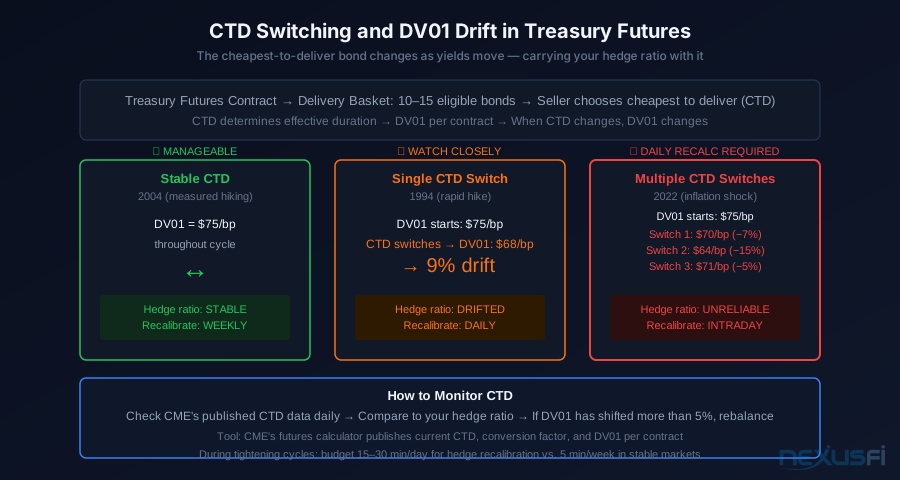
Here's something most retail traders don't know about Treasury futures: the DV01 of the contract is not constant. It changes as the cheapest-to-deliver bond shifts.
Treasury futures don't deliver a single specific bond. For a deeper treatment of how basis risk affects futures pricing, see Basis Risk in Futures Trading. They deliver one bond from a basket of eligible Treasury issues, all adjusted to a notional standard using conversion factors. The seller of the futures contract gets to choose which eligible bond to deliver — and they'll always choose the cheapest one. That's the CTD (cheapest to deliver).
As yields change and the curve reshapes, the relative cheapness of different eligible bonds shifts. The CTD can change. When it does, the effective duration — and thus DV01 — of the futures contract changes with it. This is CTD switching risk.
Practical implications:
- A hedge ratio you compute today may be stale in two weeks if the CTD switches.
- In volatile tightening environments, CTD switching happens more frequently.
- A static DV01 estimate ($75/bp for ZN) is an approximation. The actual value at any given moment depends on which bond is CTD and the current yield level.
- For precision hedging, compute DV01 fresh from CTD identification before each significant position addition or adjustment.
The practical fix for most traders isn't a CTD monitoring system — it's recalibration frequency. Recompute your hedge ratio daily during tightening cycles, not weekly. The extra 5 minutes prevents hedge slippage that can easily compound into significant P&L mismatches over a multi-week position.
As NexusFi member @Schnook noted in a Treasury spreads discussion on the 2s vs 10s spread, tracking DV01 ratios requires pulling "DV01 data straight from the CME" rather than relying on static approximations — meaning the ratios need to come from live contract data, not textbook estimates.
Multi-Bucket Hedging: Beyond Single-Contract Exposure #
A single-contract hedge (ZN-only or ZB-only) assumes your portfolio's rate exposure is concentrated at one point on the yield curve. For a broader overview of hedging strategies available to futures traders, see Hedging with Futures. For most real portfolios, that assumption is wrong.
If your equity positions carry embedded rate sensitivity (which most do — equity valuations are discounted cash flows, and the discount rate changes with the yield curve), that sensitivity is spread across multiple tenors. The belly of the curve (5--10 year) typically dominates for equity discount rate purposes, but long-end term premium affects risk premium and sector rotations separately.
A two-bucket hedge using both ZN and ZB is more strong:
- ZN covers the 10-year bucket -- the dominant driver for equity discount rates
- ZB covers the 30-year bucket -- term premium, pension/insurance flow, and inflation persistence
The NOB spread (ZN over ZB, or "notes over bonds") is the classic curve trade. In NexusFi's "How I Trade For a Living" journal, @jstnbrg describes the typical NOB ratio as approximately "3 ZN and short 2 ZB," noting the ratio changes with market conditions — typically around 2:1 in modern markets. This ratio captures the relative DV01 difference between the two contracts.
For pure hedging (not curve trading), the sizing becomes:
- Estimate your portfolio's key-rate DV01 exposure at the 10Y and 30Y tenors separately
- Size ZN to neutralize 10Y exposure:
ZN contracts = 10Y DV01 / $75 - Size ZB to neutralize 30Y exposure:
ZB contracts = 30Y DV01 / $165 - Run this as a two-legged hedge, rebalancing when DV01 drifts by more than 10%
This doesn't eliminate all curve risk — there are still 2Y, 5Y, and ultra-long exposures that ZN and ZB don't cover cleanly. But for most futures portfolios, a ZN/ZB two-bucket hedge dramatically reduces residual rate risk compared to a single-instrument approach.
Correlation Monitoring: The 20-Day Signal #
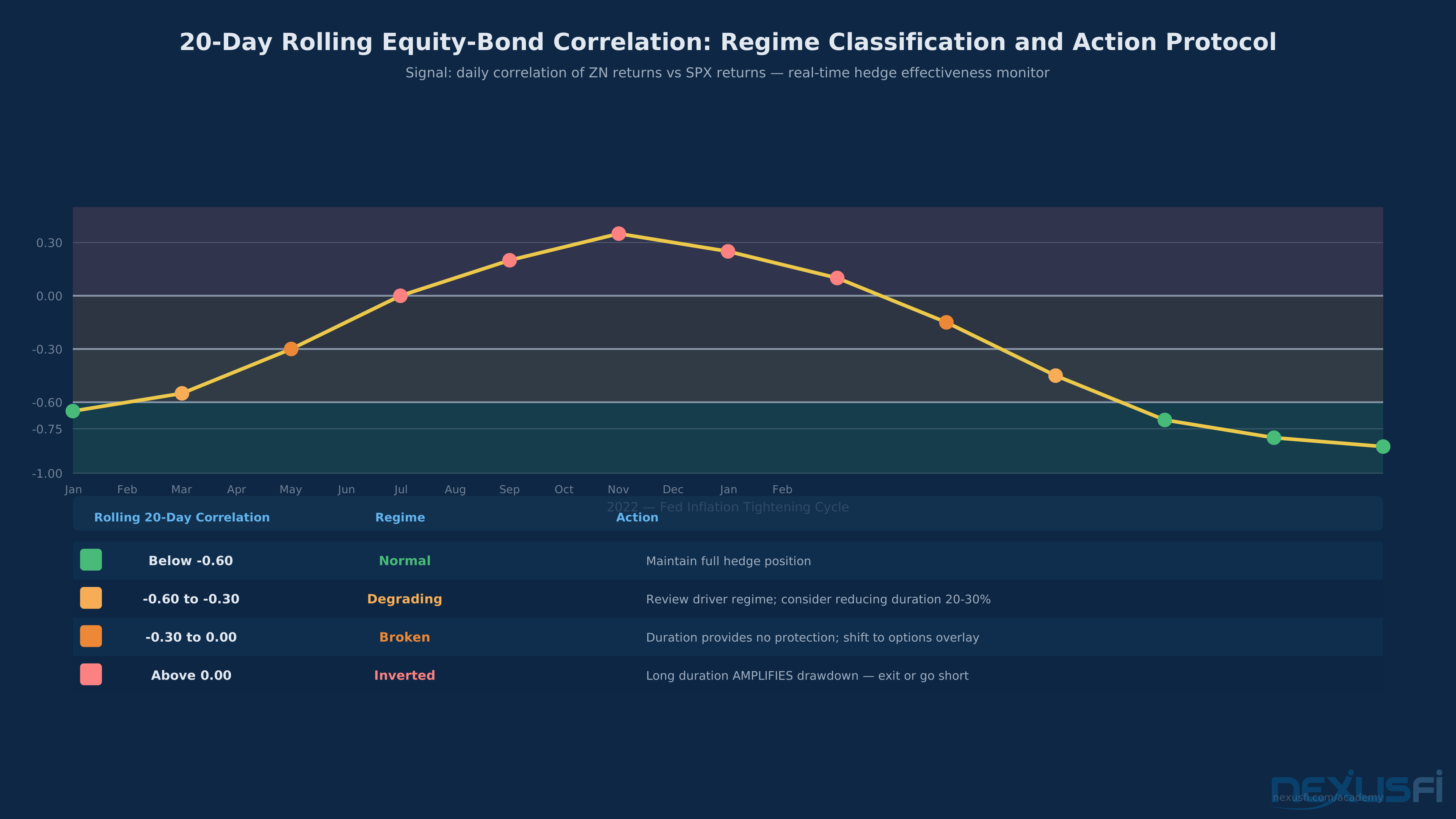
The rolling 20-day correlation between your equity exposure and ZN gives you a real-time signal of hedge effectiveness. For a complete treatment of correlation dynamics in portfolio risk, see Correlation and Portfolio Risk in Futures Trading and Regime-Adaptive Risk Management. Here's how to use it:
| Rolling 20-Day Correlation | Regime | Action |
|---|---|---|
| Below -0.60 | Normal -- bonds hedging well | Maintain full hedge |
| -0.60 to -0.30 | Degrading -- partial hedge | Review driver regime; consider reducing bond long/increasing short bias |
| -0.30 to 0.00 | Broken -- hedge is neutral | Long duration provides no protection; shift to options overlay or reduce duration to neutral |
| Above 0.00 | Inverted -- bonds hurting you | Duration hedge is amplifying drawdown; consider outright short ZN/ZB or exit long duration |
The 60-day rolling correlation is the regime identifier. The 20-day is the tactical signal. In practice: use the 60-day to understand what market you're in, and the 20-day to decide what to do today.
When the 20-day crosses above -0.60 during an active Fed tightening cycle, the question to ask is: what's driving yields right now? If the answer is inflation breakevens or term premium, you're in correlation breakdown territory. Reduce long-duration exposure immediately.
Tactical Rules for Tightening Cycles #
Rules derived from the historical cycle analysis:
Rule 1: Reduce duration by 30--40% when the Fed signals acceleration.
Not when they actually accelerate — when they signal it. The bond market prices Fed signals instantly. The worst ZN/ZB drawdowns in 2022 happened in the weeks after the Fed's hawkish pivot communications, not just on hike dates.
Rule 2: Never add to losing duration longs in the first 100 bp of tightening.
"Averaging down" in a rate move that's driven by structural repricing is different from averaging down in a mean-reversion context. Treasury selloffs during inflation cycles can persist for many months. The 2022 cycle produced 425 bp of hikes over 10 months — any "averaging into the dip" strategy got steamrolled repeatedly.
Regime Identification Checklist Before sizing any Treasury futures position during a tightening cycle: (1) Check 10-year TIPS breakeven — widening signals inflation driver. (2) Check NY Fed ACM term premium — rising signals long-end repricing. (3) Check 20-day rolling equity-bond correlation — above -0.60 means the hedge is degrading. All three inputs together determine whether your bond position hedges or amplifies portfolio risk.
Rule 3: Use curve trades instead of outright directional bets.
If you have a view on the pace or terminal rate of the hiking cycle, express it through curve trades (ZN vs ZB spread) rather than outright duration. Curve trades have lower notional risk and isolate specific views about the shape of the repricing rather than just the direction.
Rule 4: Separate rate-risk hedges from equity-risk hedges.
This is the critical protocol error from 2022. If you're holding long ZN/ZB to "hedge" your equity portfolio because they're negatively correlated, you're combining two separate problems into one hedge that fails exactly when both problems are active simultaneously. Rate risk and equity risk require separate instruments. Long duration is a rate-direction bet, not an equity hedge. When the regime doesn't support negative correlation, it becomes an additional risk, not a hedge.
Rule 5: Plan your roll before the delivery window opens.
Rolling Treasury futures near delivery can be expensive and creates temporary DV01 gaps. In volatile markets, roll basis can widen materially. Roll 5+ trading days before the first notice date, not the day before. Execute in tranches to minimize market impact and avoid accidentally changing DV01 exposure through the roll.
Practical Hedge Framework: Step by Step #
For a futures trader managing multi-asset exposure during an active tightening cycle:
Step 1: Measure current DV01 exposure.
Identify all positions with direct or indirect rate sensitivity. For Treasury futures, this is straightforward. For equity futures, estimate using historical regression: how much does your equity position move per 10 bp move in the 10-year yield? This gives you a "rate factor" that you can express in DV01 terms.
Step 2: Identify the current regime.
Check inflation breakevens (TIPS market), term premium (ACM model), and 20-day rolling equity-bond correlation. Classify as: inflation-driven (bonds won't hedge), growth-scare (bonds may hedge), or policy-path (mixed, use caution).
Step 3: Set hedge size using the DV01 formula.
Contracts = (Portfolio Value × Risk Budget %) / (DV01 per contract × Stress Scenario bps)
Use a realistic stress scenario for the current environment — not a historical average. In 2022, 50 bp moves in a single month were not unusual. Size for what's actually happening.
Step 4: Monitor and recalibrate daily.
During tightening cycles, recompute your hedge ratio daily. CTD can shift, DV01 drifts, and your underlying equity exposure changes with portfolio P&L. A hedge that was right Monday can be much off-balance by Friday during a volatile week.
Step 5: Set correlation triggers for regime change.
Define your exit rules in advance: if 20-day rolling equity-bond correlation crosses above -0.30, you reduce duration by 50%. If it crosses zero, you exit long duration entirely. Having these rules pre-defined prevents emotional decision-making during acute market stress.
Common Errors That Amplify Rate Risk #
The most expensive mistakes in Treasury futures risk management:
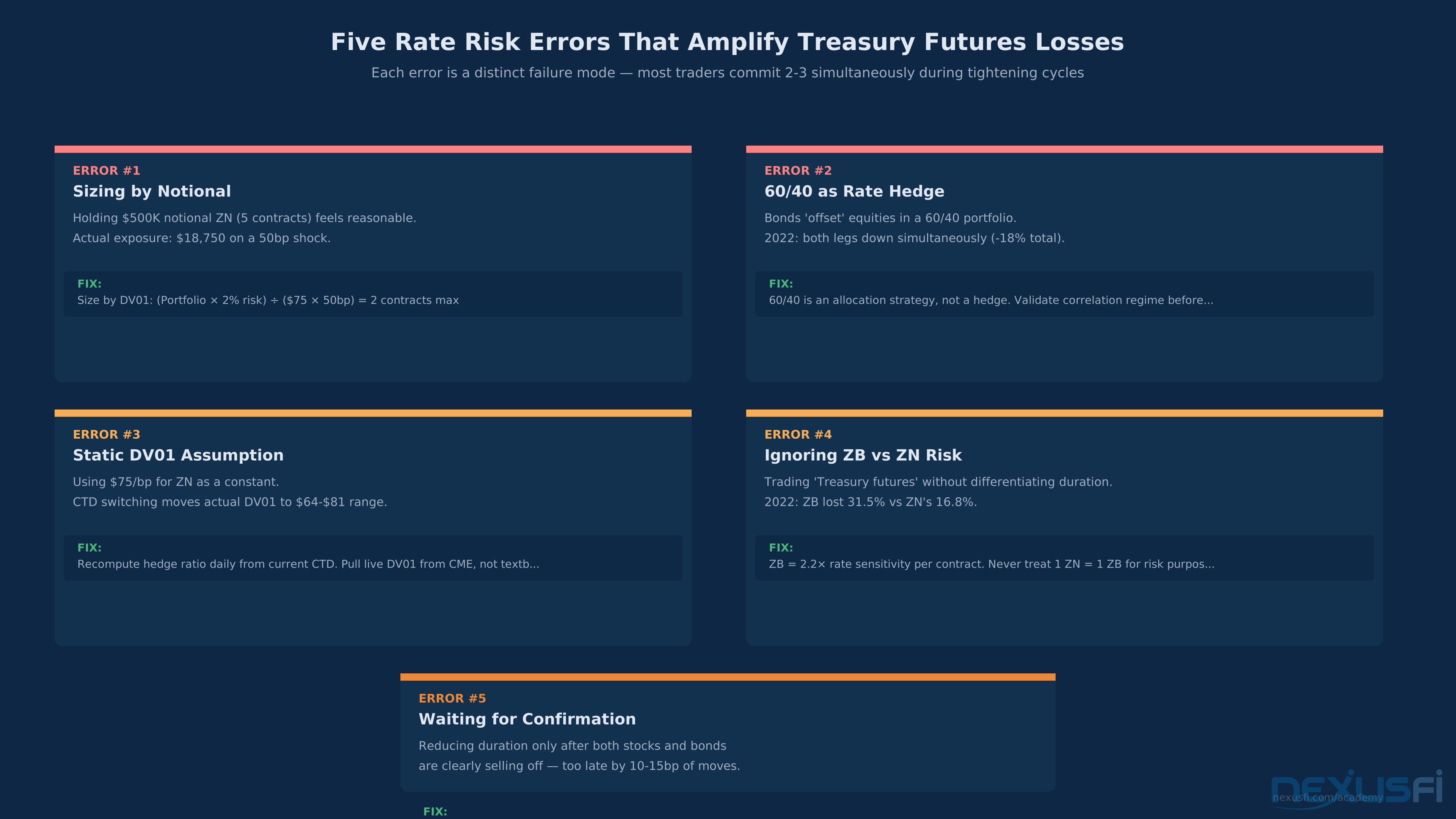
Sizing by notional instead of DV01. "I'm holding $500,000 notional in ZN, that feels reasonable." No — $500,000 notional is 5 ZN contracts at $100K each. A 50 bp yield spike costs you $18,750. Whether that's reasonable depends on your portfolio and risk budget, not the notional.
Treating the 60/40 model as a hedge. The 60/40 model was developed in and validated by a period of structurally declining inflation and interest rates (1982--2020). It is not a hedge framework; it's an allocation framework that happened to benefit from negative equity-bond correlation during that era. In rising-rate, rising-inflation regimes, it fails. 2022 proved this definitively.
Static DV01 assumptions. Using "$75/bp for ZN" as a permanent constant without updating for CTD changes leads to hedge ratio drift. In a 10-month tightening cycle with 275 bp of yield movement, the effective DV01 can change meaningfully. Recalibrate regularly.
Ignoring the long end separately. ZB in 2022 lost 31.5% — nearly twice the loss of ZN. Traders who hold long-end exposure (whether directly in ZB or through funds tracking long-duration indices) and size risk based on "Treasury futures" without distinguishing duration are systematically underestimating their actual exposure.
Waiting for confirmation before reducing exposure. By the time the correlation breakdown is obvious in daily data — both equities and bonds clearly selling off — significant damage is already done. The regime identification signals (breakevens, term premium, curve shape) lead the correlation breakdown in 2022. Monitor the drivers, not just the outcome.
Key Takeaways #
- DV01 is the correct unit for measuring and sizing Treasury futures exposure. Notional value tells you nothing useful about rate risk. ZN DV01 ≈ $75/bp; ZB DV01 ≈ $165/bp per contract.
- Contract DV01 is dynamic -- it drifts as CTD changes and the yield curve reshapes. Recompute at minimum daily during tightening cycles.
- ZB's higher duration and convexity means a given yield shock produces roughly 2x the dollar loss versus ZN. Size so, and don't use ZB where ZN exposure is what your portfolio actually requires.
- The 2022 cycle is the reference case for how catastrophically bond hedges can fail during inflation-driven tightening. ZN -16.8%, ZB -31.5%, SPX -18.1% -- the 60/40 portfolio lost 18%. Both legs down simultaneously.
- Equity-bond correlation breakdown is predictable: when inflation expectations and term premium drive yields, bonds don't hedge equities. When growth fear drives risk-off, bonds do. Know which regime you're in before sizing rate exposure.
- Monitor 20-day rolling correlation as the tactical trigger; 60-day as the regime identifier. When 20-day crosses -0.60, the hedge is degrading. When it crosses zero, it has inverted -- long duration is now adding risk, not reducing it.
- Use two-bucket hedging (ZN + ZB) for portfolios with spread exposure across the yield curve. Single-contract hedges leave curve shape risk unhedged.
- Rate risk and equity risk require separate hedge instruments. Never combine them into a single "the bonds will offset the stocks" logic during tightening cycles -- that assumption fails exactly when you need it most.
Knowledge Map
Prerequisites
Understand these firstGo Deeper
Build on this knowledgeReferences This Article
Articles that build on this topicCitations
- — 2s vs 10s (2022) 👍 3“I built a simple spreadsheet using DV01 data straight from the CME rather than relying on the textbook estimates -- the ratios shift with the CTD.”
- — How I Trade For a Living (2016) 👍 7“If you're long the NOB you might be long 3 ZN and short 2 ZB (I think now the ratio is more like 2:1, it changes). The ratio moves with market conditions.”
- — Spoo-nalysis ES e-mini futures S&P 500 (2015) 👍 4“The traditional equity bond relationship has been somewhat perverted due to non-economic players who are still shedding treasury collateral to raise cash -- the flight-to-safety mechanism breaks when structural sellers dominate.”
- — Spoo-nalysis ES e-mini futures S&P 500 (2013) 👍 7“The market has moved on from simply focusing on the timing of the first fed hike to considering the pace of the tightening and the terminal rate -- those two variables reshape the entire DV01 exposure calculus.”
- — FOUR more NEW MICRO's - Micro Treasury Yield Futures (2021) 👍 5“The 10yr note contract (ZN) currently has a DV01 of $81, so you'd need to sell 8 micro 10yr yield futures to match the same DV01 as long 1 ZN -- the dynamic nature of DV01 is exactly why static estimates mislead.”
- — Bund DV01 (2014) 👍 5“The DV01 of the CTD can be calculated with a simple bond calculator: once you have the conversion factor and the CTD's DV01 you can derive the futures DV01 -- the same methodology applies directly to ZN and ZB.”
- — ZB ZN (NOB) (2011) 👍 4“The NOB ratio has ranged from about 2:1 to 5:3 -- the latter being more common. If you are long the NOB 1:1 you are effectively short the market, which is why getting the ratio right matters as much as the direction.”
- — Spoo-nalysis ES e-mini futures S&P 500 (2012) 👍 14“Credit spread widening between bonds of different quality ratings is a de facto measure of risk -- it's a signal that rate exposure is being repriced independent of the overnight rate path.”
- — 2s vs 10s (2022) 👍 1“I've been trading treasury yield curves and treasury spreads for years -- always on longer timeframes for thematic reasons. The key is separating the rate direction view from the curve shape view.”
- — FOUR more NEW MICRO's - Micro Treasury Yield Futures (2021) 👍 15“Micro Treasury Yield futures are built on BrokerTec benchmarks from cash UST transactions -- giving traders a yield-denominated instrument that avoids the CTD complications of traditional Treasury futures.”
- — Adrian, Crump, and Moench Term Premium Model (ACM) (2013)