



Spread Trading in Futures Markets: Calendar Spreads, Crack Spreads, and the Relative Value Edge
Overview #
Spread trading is relative value trading. You're not betting on where crude oil goes — you're betting on the relationship between two contracts. Long one leg, short another, and your P&L comes from the differential changing in your favor. The outright price can rip $5 in either direction and your spread might move 20 cents.
That's the appeal: lower volatility, reduced margin, and a different kind of edge. Spreads respond to fundamentals — storage economics, refining margins, seasonal demand, yield curve expectations — in ways that outright price action doesn't always capture. Professional commodity desks have traded spreads for decades because the signal-to-noise ratio can be dramatically better than outrights.
But "lower risk" is the most dangerous phrase in spread trading. Calendar spreads in crude oil went to -$40 in April 2020. The spread that was "supposed to" mean-revert instead dislocated to levels nobody had ever seen. Lower margin doesn't mean lower risk — it means the exchange thinks the legs will move together. When they don't, you're in trouble with more contracts than you'd normally carry.
This article covers the core spread structures, execution mechanics, analysis framework, and risk management that separates informed spread traders from people who just like the margin reduction. If you're trading outrights and want to understand what the professionals on the other side of the curve are doing, this is your starting point.
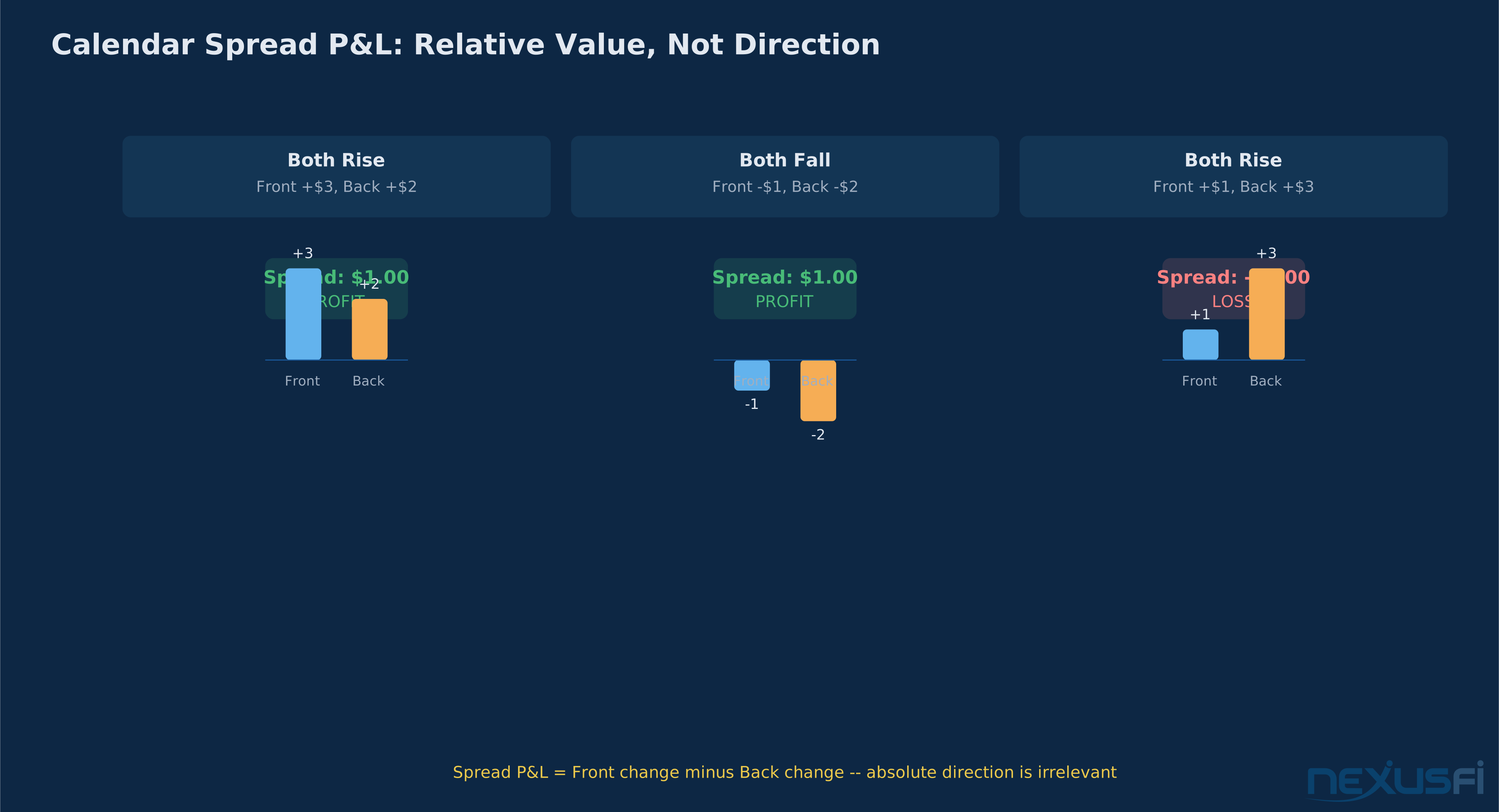
Every spread trade is a bet on a differential, not a direction. Get this wrong and nothing else in the article matters.
When you go long a calendar spread (long front month, short back month), you profit when the front month strengthens relative to the back month. Both contracts can fall — if the front falls less, you make money. Both can rise — if the front rises more, you make money. The absolute price is irrelevant. You're trading the slope of the forward curve.
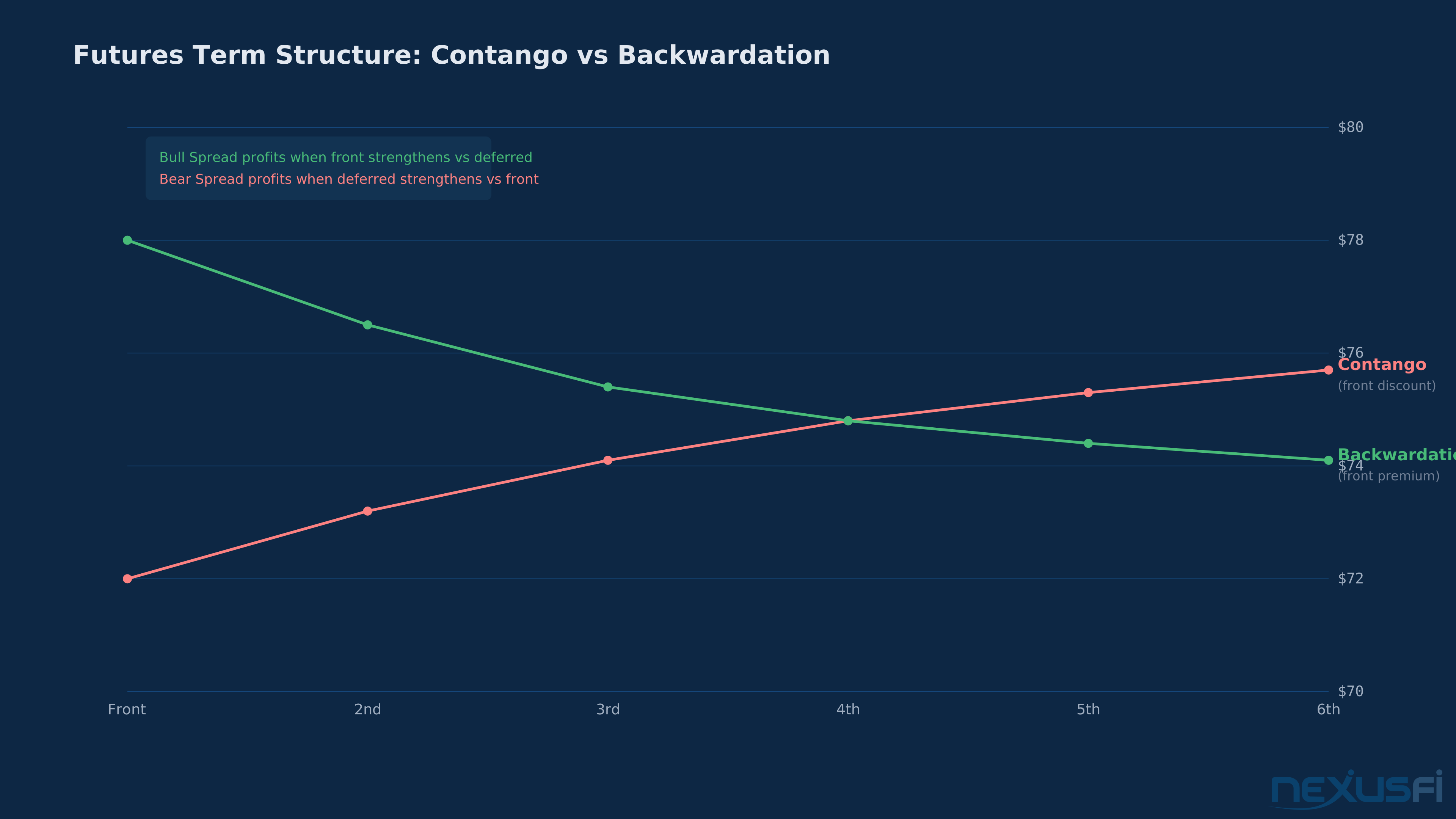
Sign convention matters. This article defines calendar spreads as Front minus Back. A positive spread means backwardation (front premium). A negative spread means contango (front discount). Bull spread = long the front, short the deferred. Bear spread = the reverse. Stick with one convention or you'll confuse yourself on every trade.
As @SMCJB explains, "There are two types of futures spreads, exchange listed spreads and non-exchange listed spreads. An exchange listed spread is where the exchange will execute the spread as a single trade, with no leg risk." [1] This distinction between exchange-traded and synthetic spreads drives everything from execution quality to margin treatment.
Calendar Spreads: Trading the Term Structure #
Calendar spreads (also called time spreads) are the bread and butter of spread trading. Same underlying, different delivery months. Long CL August, short CL October. Long ZC December, short ZC March. You're betting on how the term structure — the price relationship between contract months — will change.
Why the Term Structure Moves #
Three forces drive calendar spread prices:
Cost of carry. In normal markets, deferred contracts trade at a premium to nearby contracts because holding the physical commodity costs money — storage, insurance, financing. This creates contango (negative spread in our convention). The maximum contango is limited by full carry — the total cost of storing and financing the commodity from one delivery to the next. As @tigertrader notes, "Spreads will not trade past the cost of full carry, so you can put on bull spreads, and not have to worry about the spread going out on you." [2] That floor on contango is one of the few near-certainties in spread trading.
Supply/demand dynamics. When nearby supply tightens — inventory draws, production disruptions, seasonal demand spikes — the front month strengthens relative to deferred months. This creates backwardation (positive spread). The key insight: backwardation has no theoretical limit. During supply crises, front months can trade at enormous premiums.
Roll yield. Institutional traders who maintain continuous futures exposure must roll contracts at expiration. In contango markets, they sell the expiring (cheaper) contract and buy the next month (more expensive) — negative roll yield. In backwardation, the roll is positive. Spread traders can position to capture or avoid these roll economics.
Margin Advantage — and Its Trap #
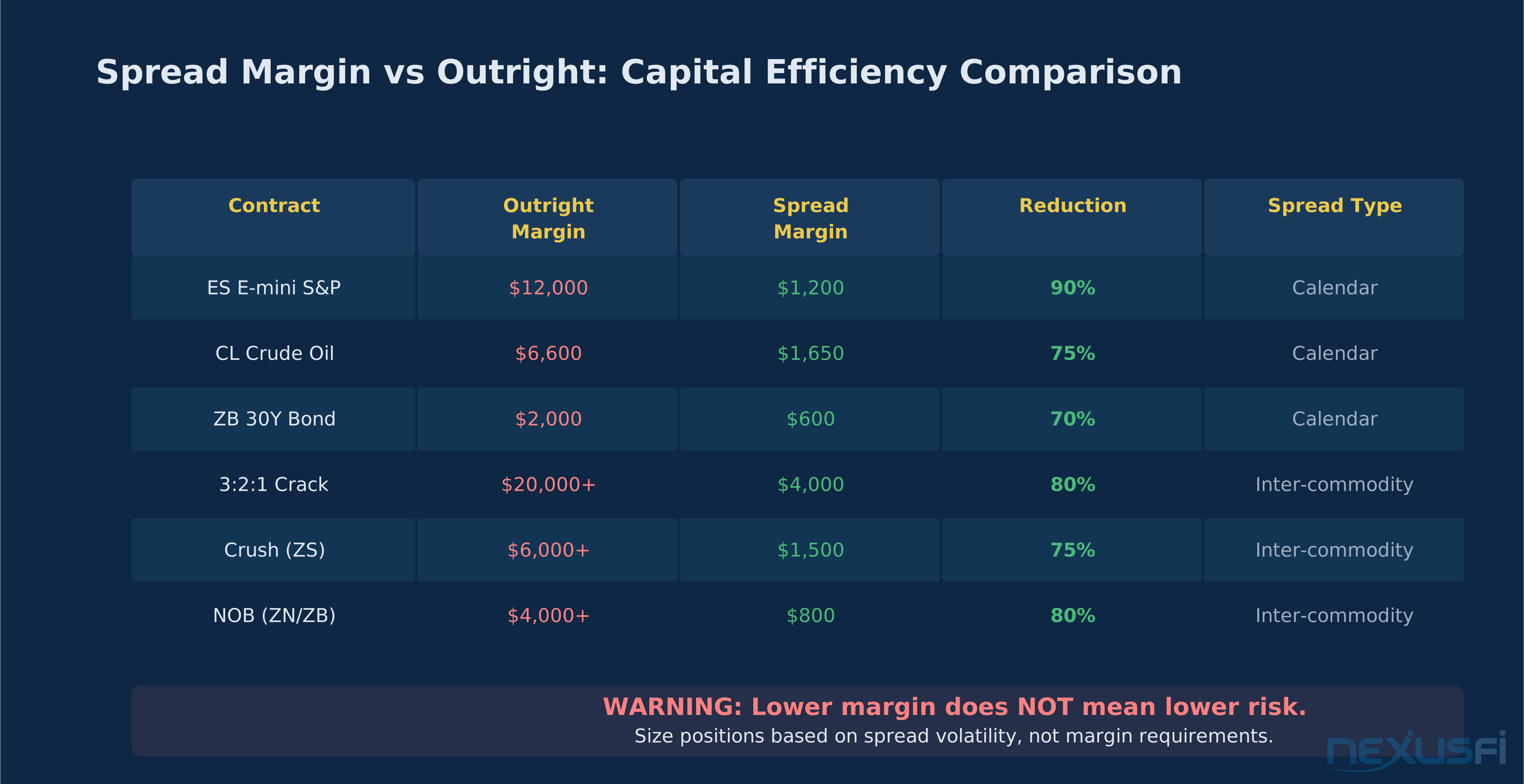
Calendar spread margin is typically 60-80% lower than outright margin. ES calendar spreads might require $1,200 vs $12,000 for an outright position. CL calendars run roughly $1,500-$2,500 vs $6,600+ outright. The exchange recognizes that when both legs are the same underlying, they'll usually move together, reducing net risk.
Here's the trap: traders see the low margin and size up. Instead of 2 ES outrights, they put on 20 ES calendar spreads. But the P&L per tick on the spread is the same $12.50 per point — you've just multiplied your contract count by 10x. When the spread moves against you, the losses stack up fast. And during dislocations, margin requirements can spike as the exchange recalculates correlation assumptions.
[3] Commission drag is a real edge-killer in tight spreads.
Trading the Calendar: Setup Framework #
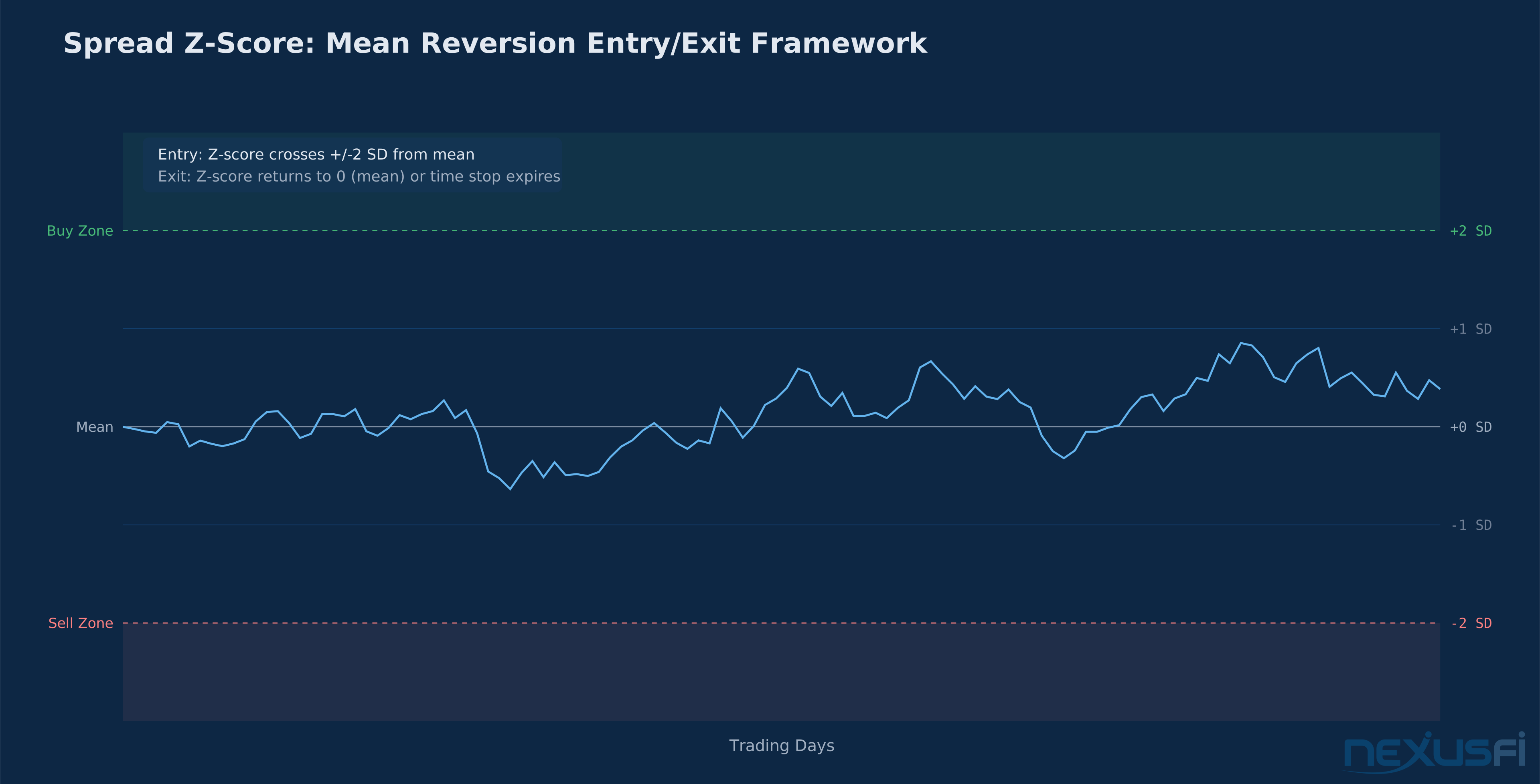
Mean-reversion entry. Calculate a rolling z-score of the spread over 20-60 days. Enter when the z-score exceeds 1.5-2.0 standard deviations from the mean. Target: reversion to z = 0. Stop: spread continues to 2.5-3.0 SD, or a fundamental trigger invalidates the mean-reversion thesis.
Trend-following entry. As @tigertrader describes, in uptrending markets "you will most likely be buying the spread when the market is trending up, and selling the spread, when the market is going lower. If the market pulls back in an up-trending market, and the spread widens, you would want to buy the spread, expecting it to resume its narrowing trend." [4]
Stop placement. Always stop on the spread value, never on one leg's price. Use 1.5-2x the spread's ATR (average true range calculated on the spread series, not the individual legs). A structural level on the spread chart — prior swing high or low — can also serve as invalidation.
When Calendar Spreads Fail #
Regime shifts. The 2020 crude oil storage crisis is the textbook example. CL calendar spreads dislocated from normal ranges of $0.50-$1.00 to -$40+ as physical storage filled completely. Mean-reversion models that worked for years blew up in days. Any calendar spread in a physically-delivered commodity carries regime-shift risk tied to storage economics.
Back-month illiquidity. The deferred leg of your spread might have thin order books. You can enter easily but find yourself unable to exit at a reasonable price. Check open interest on both legs before entry — a minimum of 5,000 contracts OI on each leg is a reasonable threshold.
Delivery mechanics. If you're holding the front month through First Notice Day, you risk being assigned delivery. Roll or exit 5-10 days before FND. This isn't optional — taking delivery of 1,000 barrels of crude oil is not how you want to learn about spread trading.
Inter-Commodity Spreads: Trading Processing Margins #
Inter-commodity spreads move beyond term structure into economic relationships between different but related commodities. These capture processing margins, substitution economics, and relative value across markets.
Crack Spreads (Energy) #
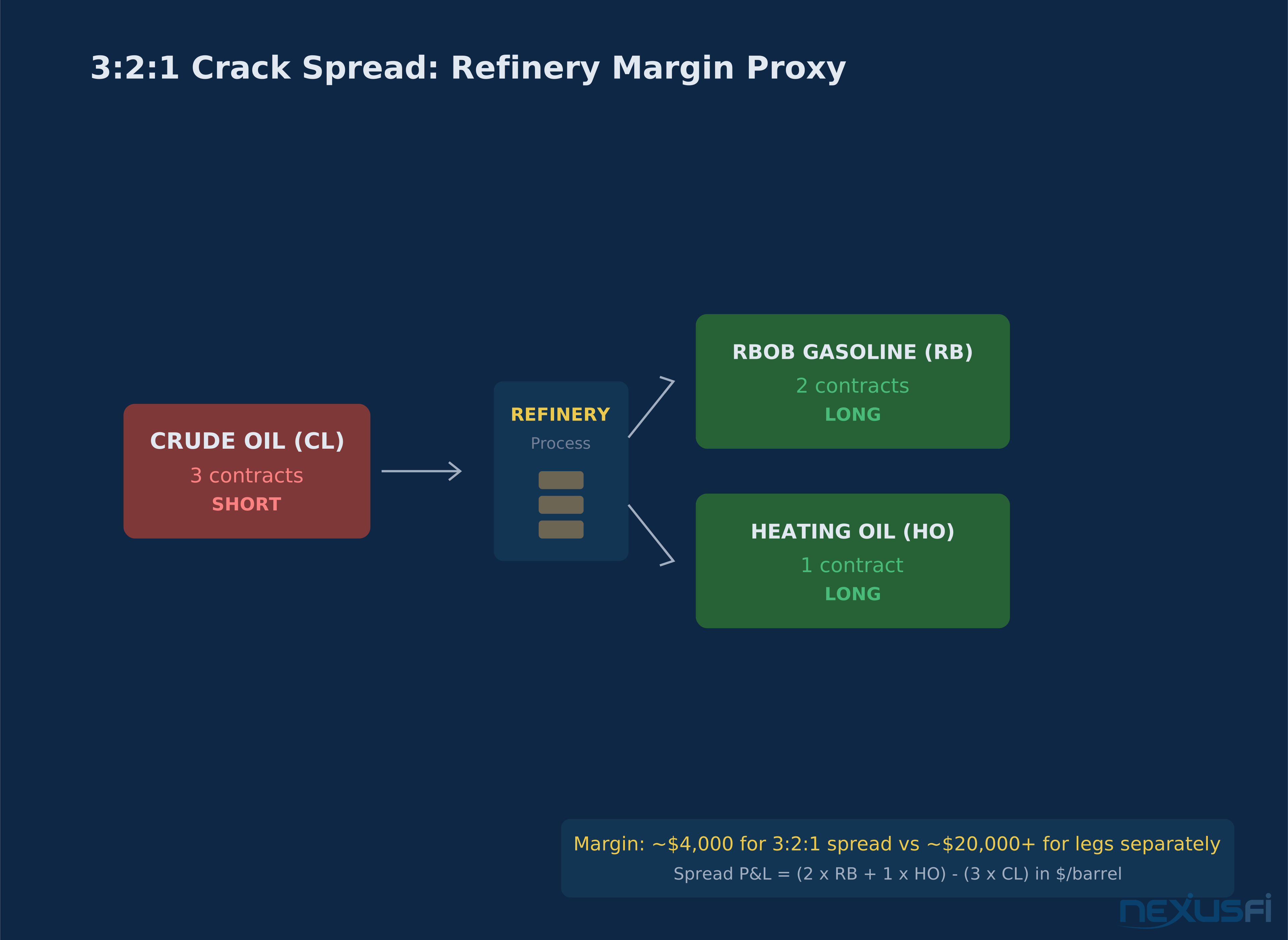
The crack spread approximates the refinery margin — the economic value of turning crude oil into refined products.
More complex structures include the 3:2:1 crack (3 crude vs 2 gasoline + 1 heating oil) and the 5:3:2 crack, which "give a better estimate of actual refiner margins, but are not tradable as exchange traded spreads." [5]
The 3:2:1 setup. Buy 2 RBOB (RB) + 1 Heating Oil (HO), sell 3 Crude Oil (CL). This approximates a typical US Gulf Coast refinery yield. Margin runs $3,000-$5,000 for the package vs $20,000+ for the individual legs. The spread is quoted in dollars per barrel.
When to trade it. Crack spreads widen seasonally — pre-summer as gasoline demand builds (Q2), and pre-winter as heating oil demand picks up (Q4). Entry when the crack falls below $10/barrel (historically compressed) with refinery utilization above 90% gives a structural bullish setup. Target: $15-18/barrel (seasonal average). Exit if utilization starts dropping — that's a demand signal, not a supply anomaly.
What kills the trade. Refinery outages spike cracks unpredictably because they reduce product supply without affecting crude demand. RVP specification changes for gasoline seasonally affect pricing. And crude quality differentials (heavy/light/sweet/sour) distort simple crack calculations that assume a single crude grade.
Crush Spreads (Agriculture) #
The crush spread captures soybean processing margins. Buy the outputs (soybean meal ZM + soybean oil ZL), sell the input (soybeans ZS). The standard ratio approximates physical yields: 1 bushel of soybeans produces roughly 11 pounds of meal and 9 pounds of oil.
The economics. Crush margins narrow during harvest (September-November) when new-crop soybeans flood the market, compressing the input cost. Margins widen during the growing season when supply uncertainty elevates soybean prices relative to product demand. Entry when the crush falls below $0.25/bushel (10th percentile historically), targeting $0.45-$0.55/bushel at the median. Hold period: 30-90 days.
Failure modes. China canceling soybean meal orders can collapse crush margins overnight. High natural gas prices compress margins because energy is a significant processing cost. Basis risk from delivery location differentials can make your P&L diverge from the "theoretical" crush.
NOB and TUT Spreads (Fixed Income) #
NOB (Notes Over Bonds): Long 10-Year Note (ZN), Short 30-Year Bond (ZB). This trades the 10s-30s yield curve slope. Long NOB profits from curve steepening — the 10-year yield falling relative to the 30-year, or the 30-year rising relative to the 10-year.
TUT (Tens Under Twos): Long 10-Year Note (ZN), Short 2-Year Note (ZT). This captures the 2s-10s curve slope and is heavily influenced by Fed rate expectations.
Margin: NOB spreads run roughly $600-$800 vs $2,000+ for outright positions. But rates spreads require DV01-neutral hedge ratios — you can't just trade 1:1 because the contracts have different durations. The 30-year bond moves more per basis point than the 10-year note.
What breaks: QE and QT distort natural curve relationships because central banks become the marginal buyer/seller at specific maturities. Mortgage convexity hedging flows can pin yield curve spreads at extremes for extended periods.
Execution: Spread Orders vs Legging #
How you enter and exit a spread matters more than most traders realize. The execution method determines your leg risk, margin treatment, and fill quality.
Exchange-Traded Spread Orders #
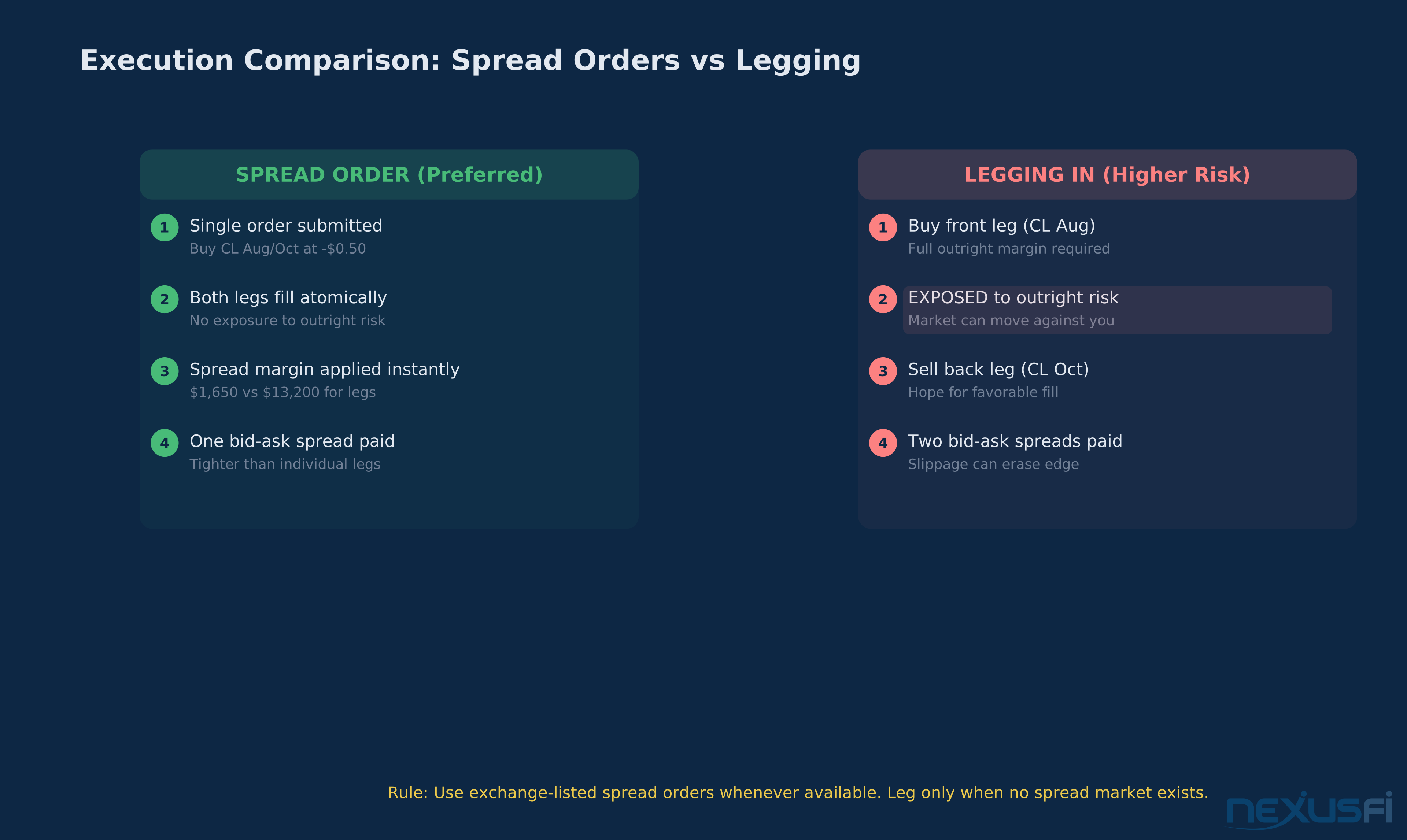
The CME and ICE list calendar spreads (and some inter-commodity spreads) as single tradeable instruments. When you buy "CL Aug/Oct at -$0.50," both legs execute atomically — you're filled on both or neither. The bid-ask on the exchange-traded spread is frequently tighter than the individual legs. Margin applies immediately as a spread position.
As @kevinkdog notes, "The CME offers 'exchange traded spreads' as a tradable symbol, which allows you to simultaneously sell June ES and buy Sep ES for example. Different fundamentals drive the differences in prices between contract months. Interest rates, cost of carry, etc. Stat arb algos typically keep these differences in check." [6]
Legging In: When You Have No Choice #
For non-exchange-listed spreads (Gold/Crude, ES/NQ, custom inter-commodity), you must leg in — execute each side independently. This means:
- Temporary outright exposure between fills
- Full outright margin until both legs are established
- Two bid-ask spreads paid instead of one
- Risk of adverse movement between legs
@SMCJB explains the professional solution: autospreader software from Trading Technologies or CQG that manages leg execution algorithmically. "For excellent fills you need to be running software on a machine very close to the matching engine... If your running the software on a machine at home, the latency in that communication path will cause you to get worse fills." [7] Retail traders without autospreader access should stick to exchange-listed spreads whenever possible.
Contingency rule: If only one leg fills within 30 seconds, flatten immediately. The spread edge you're trying to capture is small — eating a full-carry adverse move on one leg can wipe out weeks of expected spread P&L.
Spread Charts and Technical Analysis #
Spread charts plot the differential (Front minus Back, or weighted sum for inter-commodity) as a time series. Standard technical analysis tools work on spread charts, and in many cases work better than on outrights because spreads tend to mean-revert more reliably and trend more smoothly.
What Works on Spread Charts #
Bollinger Bands (20-day, 2 SD). Spreads touching the lower band in a historically mean-reverting pair signal potential entry. The bands capture the typical range of spread variation.
Z-score. The spread's distance from its rolling mean in standard deviation units. This is the single most important analytical tool for spread trading. A z-score beyond 2.0 on a historically mean-reverting spread is a high-probability reversion signal — with the critical caveat that it must be confirmed by fundamentals that support the reversion thesis.
Support and resistance. Spread charts form levels that hold across sessions. A CL calendar spread that bounced three times from -$0.80 creates a tradeable level.
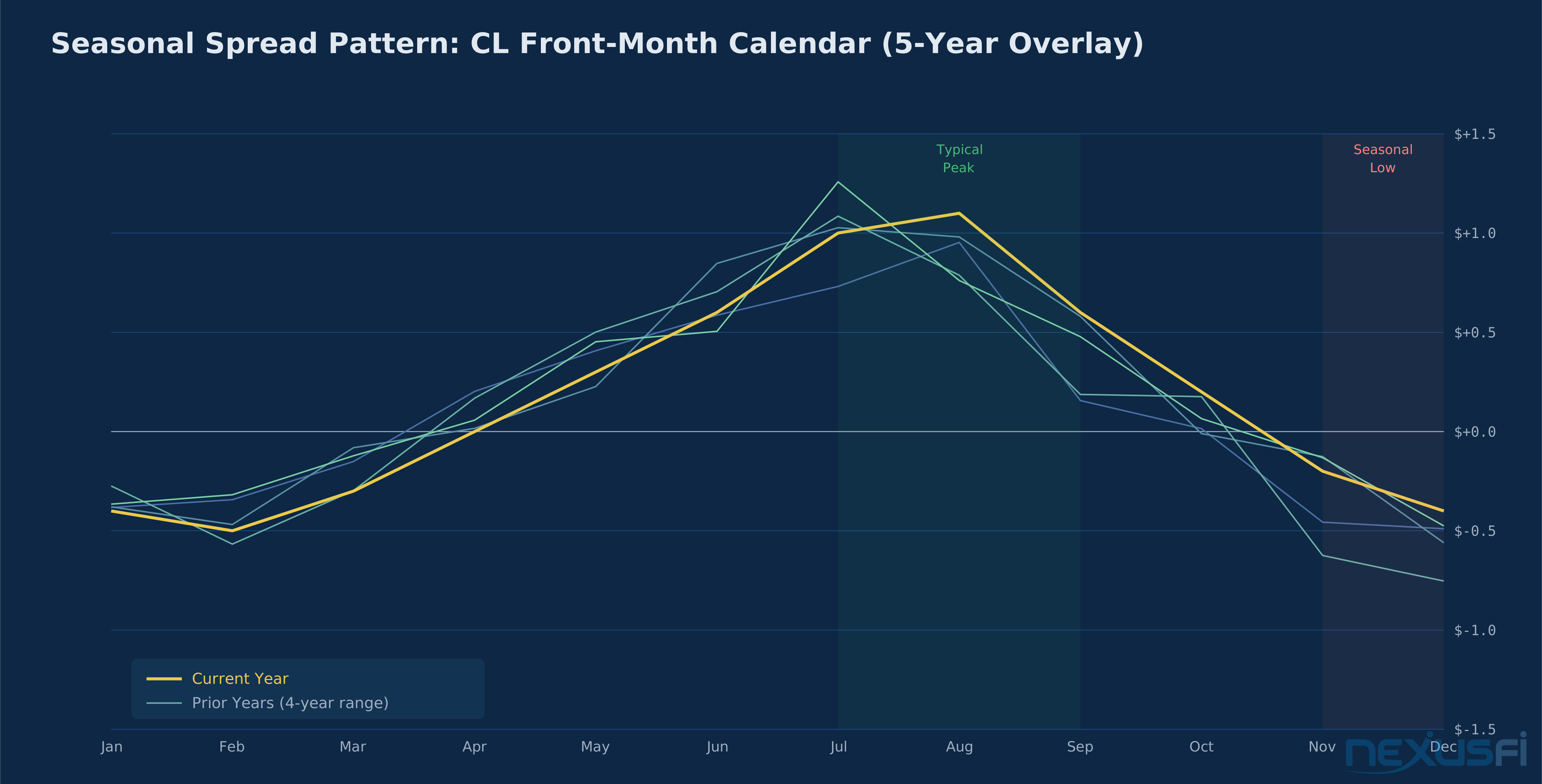
Seasonal overlays. Overlay the current year's spread against the previous 5-10 years. This reveals where the spread "should be" based on seasonal patterns. Deviations from the seasonal norm create trading opportunities when fundamentals support convergence.
What Doesn't Work #
Momentum indicators (RSI, MACD) are less reliable on spreads because spreads naturally mean-revert more than outrights. A "divergence" on a spread chart often just reflects normal term-structure dynamics, not a tradeable signal. Volume on spread charts requires careful interpretation — high volume in the exchange-traded spread shows conviction, but synthetic spread "volume" computed from leg volumes is misleading.
[8] Last trade times differ between legs — synthetic spread charts built from outright tick data contain phantom signals.
Seasonality in Spreads #
Spreads have more predictable seasonal patterns than outrights because they're driven by physical flows — harvest cycles, weather demand, refinery schedules — that repeat on calendar intervals. But "more predictable" doesn't mean "guaranteed."
Key Seasonal Patterns #
Natural Gas (NG) calendars. Winter months (Nov-Mar) trade at premiums to summer months because of heating demand. The spread typically widens into backwardation starting in August-September. Trade: long the November/March spread in August, exit by late October.
Grain calendars. Old-crop months (the last crop year's delivery) trade at premiums to new-crop months (next harvest delivery) during the growing season when supply uncertainty is highest. At harvest, new supply collapses the spread. The ZC July/December spread is the classic old-crop/new-crop expression.
Crack spreads. Q1 narrow (low gasoline demand), Q2 widening (summer driving season approaching), Q3 peak (summer demand), Q4 narrowing (demand declining). Enter long cracks 30-60 days before the expected seasonal move.
The Seasonal Trading Framework #
Entry: Enter 30-60 days before the typical seasonal move begins. Confirm with current supply/demand fundamentals — seasonality alone isn't a signal, it's a tailwind. Use a z-score filter to avoid entering when the spread has already moved seasonally (you're late).
Exit: Exit at the seasonal peak (not a calendar date — the peak varies year to year). Use a trailing stop once in profit to capture the full seasonal move while protecting gains.
Abandon: If the seasonal pattern doesn't materialize within the expected timeframe, exit. Don't fight a failed seasonal. As @Schnook notes, "In the physical commodity markets things like storage costs and seasonality play a big role in determining spread valuations, whereas in financial futures, especially rates products, considerations such as carry, financing costs, and the expected path of short-term interbank lending rates comes into play." [9] The driver matters — trade the seasonal only when the underlying economic logic supports it.
Risk Management for Spreads #
Spread risk management differs from outright risk management in fundamental ways. The correlation between legs is your friend when it holds and your enemy when it breaks.
Position Sizing #
Size based on spread volatility, not outright volatility and not headline margin.
Formula: Position Size = Max Dollar Risk / (Spread ATR x Dollar Value per Spread Point)
Example: Max risk $1,000 per trade. CL 2-month calendar spread ATR = $0.30/barrel. Dollar value = $10 per penny = $1,000 per dollar. Stop at 2x ATR = $0.60. Dollar risk per contract = $600. Maximum contracts = $1,000 / $600 = 1-2 contracts.
The key discipline: the margin might support 10 contracts, but the risk math says 1-2. Follow the risk math.
Stop Loss Placement #
Spread ATR stop. 1.5-2x the ATR of the spread series (not the legs). This adapts to current spread volatility.
Structural stop. Below prior support (for long spreads) or above prior resistance (for short spreads) on the spread chart.
Time stop. If the spread hasn't moved toward your target within the expected timeframe (especially important for seasonal trades), exit. Mean-reversion that takes too long often signals regime change.
Correlation stop. Monitor the rolling correlation between legs. If correlation drops below 0.80, the spread's risk profile has changed and your position sizing assumptions are invalid. Exit and reassess.
Portfolio-Level Risk #
Multiple spread positions often share common risk factors. Five different energy calendar spreads all respond to the same macro driver — global oil demand. Correlation clustering means your "diversified" spread portfolio might behave like a single concentrated bet during stress.
Rule of thumb: Count exposure to shared risk factors. If 60%+ of your spread portfolio moves on the same fundamental driver, you're concentrated, regardless of how many "different" spreads you hold.
Account Buffer #
Maintain at least 3x the exchange margin requirement in your account. During market stress, exchanges raise spread margins — sometimes by 2-3x overnight. If your account can't absorb the margin increase, you'll be liquidated at the worst possible time.
When Spread Trading Fails #
Dislocation Events #
April 2020, WTI crude. Storage at Cushing, Oklahoma filled completely. The May/June calendar spread — normally trading within a $1-$2 range — went to -$40 as the May contract collapsed to negative prices. Spread traders who sized on historical volatility and assumed mean-reversion got wiped out.
Correlation Breakdown #
Hurricane Katrina (2005) shut down Gulf Coast refineries without disrupting crude supply. Crack spreads exploded to unprecedented levels. The economic relationship between crude and refined products — normally stable — broke because supply and demand shocks hit the legs asymmetrically.
Execution Failure #
Legging into a spread during high volatility. One leg fills, the market moves, and the second leg fills 50 cents worse than intended. On a spread with $0.20 of expected edge, you've just turned a winner into a loser. This failure mode is entirely avoidable by using exchange-traded spread orders.
Over-Optimization #
Building a "perfect" spread strategy on historical data. As @kevinkdog warns, "I will say if you see a 'perfect' backtest, that sounds too good to be true. And 99 times out of 100, it usually is." [11] Spread backtesting is especially susceptible to data artifacts — synthetic spread prices constructed from individual leg prices contain timing differences that create phantom signals.
The Retail Cost Disadvantage #
@SMCJB quantifies this precisely: in CL 1-month calendar spreads, "commissions and slippage represent just 2.4% of the daily standard deviation for outrights, but for the spread, the cost is LESS than the spread's daily standard deviation itself." [3] Tight spreads with low daily ranges are structurally unprofitable for retail traders paying standard commissions. Wider spreads (3-month, 6-month, 12-month calendars) and inter-commodity spreads with larger daily ranges are more viable for retail cost structures.
Practical Application: Building a Spread Trading Plan #
Step 1: Choose your market. Energy and agricultural spreads have the richest fundamental drivers (storage, seasonality, processing margins). Financial spreads (ES calendars, NOB/TUT) are driven by rates and dividends — different skill set, different information edge.
Step 2: Choose your spread structure. Calendar spreads for term-structure trades. Crack/crush for processing margin trades. Butterflies (3-legged) for curve shape trades. Start with exchange-listed spreads only.
Step 3: Build your analytics. Spread chart with Bollinger Bands, z-score, and seasonal overlay. Rolling correlation between legs. ATR of the spread series. These four tools cover 90% of spread analysis.
Step 4: Define your edge. Are you trading mean-reversion (z-score extremes with fundamental support)? Trend-following (directional curve moves driven by supply/demand)? Seasonal (recurring calendar patterns)? Pick one and master it before combining approaches.
Step 5: Risk first. Size on spread volatility. Stop on spread levels. Monitor correlation. Maintain 3x margin buffer. Don't let the low margin trick you into oversizing.
As @kevinkdog observes, "Spread trading might have opportunity because so few people take the time to look at it, and learn about it." [12] The barrier to entry — complexity, data requirements, commission sensitivity — is also the moat. The traders who do the work to understand these instruments have fewer competitors on the other side.
Knowledge Map
Prerequisites
Understand these firstReferences This Article
Articles that build on this topicCitations
- — Spreads brokers? (2019) 👍 7“There are two types of futures spreads, exchange listed spreads and non-exchange listed spreads. An exchange listed spread is where the exchange will execute the spread as a single trade, with no leg risk.”
- — Spread Trading Futures (2011) 👍 7“Just like trading out-rights, you first have to consider what your trading strategy is going to be. Are you going to be trading with the trend, or are you going to be using a mean reversion strategy.”
- — Trading calendar spreads? (2016) 👍 5“Greetings Sailboat. I saw your message a few days ago but unfortunately was too busy to reply until now. Welcome to NexusFi You are correct there is very little futures spread trading discussion on NexusFi.”
- — Spread Trading Futures (2011) 👍 7“Just like trading out-rights, you first have to consider what your trading strategy is going to be. Are you going to be trading with the trend, or are you going to be using a mean reversion strategy.”
- — Crude Crack Spread and Soybeans Crush Spread Indicators (2023) 👍 4“Not a NT person but there are multiple crude oil crack spreads. The five most common, which are all 2 legged spreads and have exchange traded spreads available on both NYMEX and ICE are WTI-Heating OIl Crack - CL vs HO WTI-RBOB Crack - CL vs RB Brent...”
- — Low Latency Calendar Spread Trading (2023) 👍 3“Lots of people trade calendar spreads, more so in the grains and energies, where supply/demand shocks frequently change the prices of one month as opposed to another.”
- — Spreads brokers? (2019) 👍 7“There are two types of futures spreads, exchange listed spreads and non-exchange listed spreads. An exchange listed spread is where the exchange will execute the spread as a single trade, with no leg risk.”
- — Spread / Pairs Trading - the allure and the reality (2013) 👍 13“I have been swing trading calendar spreads for a number of years. I trade most of the ags, softs, energies, etc. Yes, you do have to get direction right for the trade to work.”
- — Buy or Sell Front Month and do opposite for Back Month (2020) 👍 5“Hey Woody What you're talking about is called calendar spread trading. There are actually many traders who focus exclusively on spreading.”
- — Spread / Pairs Trading - the allure and the reality (2013) 👍 13“I have been swing trading calendar spreads for a number of years. I trade most of the ags, softs, energies, etc. Yes, you do have to get direction right for the trade to work.”
- — Low Latency Calendar Spread Trading (2023) 👍 3“Lots of people trade calendar spreads, more so in the grains and energies, where supply/demand shocks frequently change the prices of one month as opposed to another.”
- — Spread / Pairs Trading - the allure and the reality (2013) 👍 13“I have been swing trading calendar spreads for a number of years. I trade most of the ags, softs, energies, etc. Yes, you do have to get direction right for the trade to work.”