



Correlation and Portfolio Risk in Futures Trading
Overview #
Here's a scenario most multi-instrument traders have lived through: you're long ES and long NQ, thinking you've got two separate positions. Then a risk-off event hits, and both positions move against you at the same speed, in the same direction, with the same ferocity. You didn't have two trades — you had one trade wearing two different costumes.
Correlation is the hidden variable that determines whether your "diversified" futures portfolio actually reduces risk or just multiplies it. Most traders understand the concept in theory — don't put all your eggs in one basket. But in futures, the basket itself can change shape. Correlations that measured +0.30 during calm markets can spike to +0.95 during a crisis, turning what looked like diversification into concentrated risk exactly when you need protection most.
This article covers how correlation works in futures markets, why it drives portfolio risk more than any individual position's volatility, how to measure and monitor it practically, and how to construct portfolios that genuinely distribute risk across different economic drivers. The math matters here, but the intuition matters more — you need to feel it in your P&L before a crisis teaches you the hard way.
The Core Framework: Correlation Is a Risk Relationship, Not a Diversification Score #
The first mistake traders make with correlation is treating it like a fixed property of two instruments. "ES and NQ are highly correlated." "CL and NG move together." "Bonds and stocks are inversely correlated." These statements are true on average and dangerous in practice, because correlation is regime-dependent — it changes based on what's driving markets right now.
As @josh explains in a detailed breakdown of ES/EUR correlation shifts, "It's really critical to ask 'why' with things like this. Why would they correlate? If you don't know that, then you will have no frame of reference when the correlation breaks down (and it will)." [1] This is the foundational insight: correlation isn't a number you look up — it's a relationship you understand through the economic drivers connecting two instruments.
Three properties define correlation in futures:
It's time-varying. A 30-day rolling correlation between ES and CL might read +0.15 in a quiet market and +0.70 during a global risk-off event. The number you measured last month may not apply today.
It's asymmetric. Correlations tend to spike during sell-offs and crises but revert during calm periods. As @tigertrader notes, "correlations tend to rise during most, but not all, crisis periods and fall back once the crisis has passed... correlations tend to rise during weak macro-economic conditions, and fall back when growth is strong... high correlations tend to be associated with high levels of volatility, and vice versa." [2]
It's factor-driven. Two instruments correlate because they share exposure to common risk factors — interest rates, USD strength, inflation expectations, growth sentiment. When one factor dominates (like "risk-on/risk-off" during a crisis), everything correlated to that factor moves together regardless of historical pairwise statistics.
Key Concepts #
Covariance and Portfolio Variance #
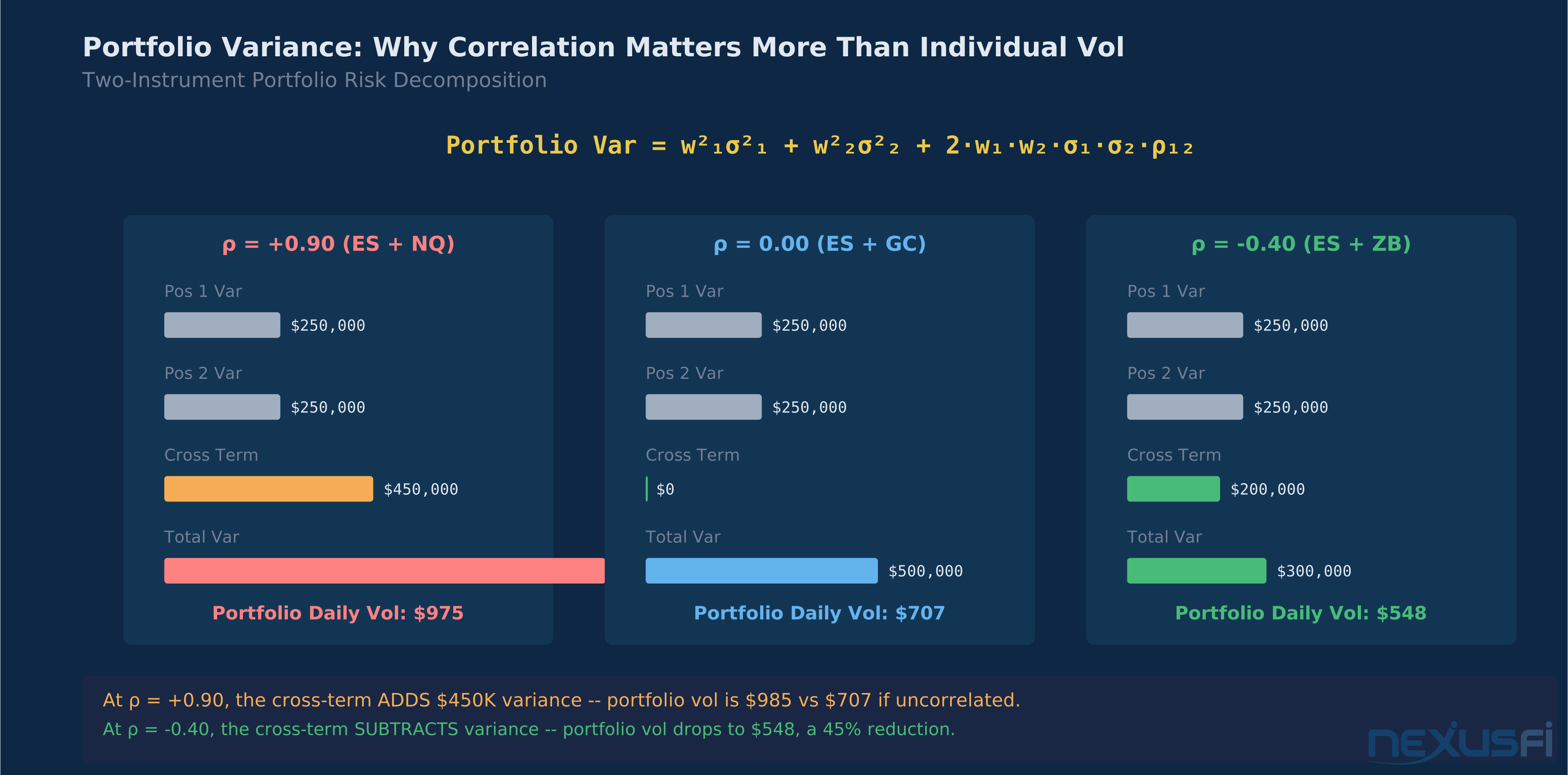
Individual position volatility doesn't determine portfolio risk — covariance does. The portfolio variance formula captures this:
Portfolio Variance = w₁²σ₁² + w₂²σ₂² + 2·w₁·w₂·σ₁·σ₂·ρ₁₂
The critical term is the last one — the cross-term containing the correlation coefficient (ρ). For two instruments, there's one cross-term. For five instruments, there are ten. As you add positions, the cross-terms dominate total portfolio risk. This means correlation between positions matters more than any single position's own volatility.
Correlation Regimes #
Markets operate in distinct correlation regimes driven by the dominant narrative. In a "rates regime," everything responds to Fed expectations — bonds, equities, gold, currencies all dance to the same beat. In a "growth regime," cyclical assets (equities, energy) decouple from defensive assets (bonds, gold). In a "liquidity crisis," correlations converge toward 1.0 as forced deleveraging hits all risk assets simultaneously.
The practical consequence: your portfolio's risk profile can change dramatically without you changing a single position. A portfolio that was genuinely diversified last week can become dangerously concentrated this week if the regime shifts.
Volatility Normalization #
One contract of ES is not equivalent to one contract of CL in risk terms. ES moves about $1,200 per day on average (at a $50 multiplier with an ADR of ~24 handles). CL moves about $1,400 per day (at a $1,000 multiplier with an ADR of ~$1.40). Trading "one of each" gives you roughly 54% of your combined daily P&L volatility coming from CL.
Volatility normalization — sizing positions so each contributes equal risk to the portfolio — is the prerequisite for meaningful correlation analysis. Without it, you're measuring correlation between positions of wildly different economic weight. For more on volatility-based sizing, see Average True Range (ATR).
When Diversification Fails: The Crisis Correlation Problem #
The most expensive lesson in correlation comes during crises — precisely when you need diversification most, it tends to disappear.
Why Correlations Spike #
During market stress, three forces drive correlations toward 1.0:
Systematic drivers overwhelm idiosyncratic factors. In calm markets, individual instrument fundamentals matter — corn responds to crop reports, crude to OPEC, ES to earnings. During a crisis, everything responds to one question: "Is this risk-on or risk-off?" Idiosyncratic structure compresses while the systematic factor dominates.
Forced deleveraging creates mechanical coupling. When a large participant faces margin calls, they sell whatever they can, not whatever makes fundamental sense. This creates simultaneous selling pressure across unrelated markets, mechanically increasing measured correlation.
Liquidity evaporates non-uniformly. Bid-ask spreads widen, stop clusters trigger cascading orders, and price gaps appear in less liquid contracts. See Liquidity in Futures Markets for how thin books amplify correlated moves.
The 2020 Case Study #
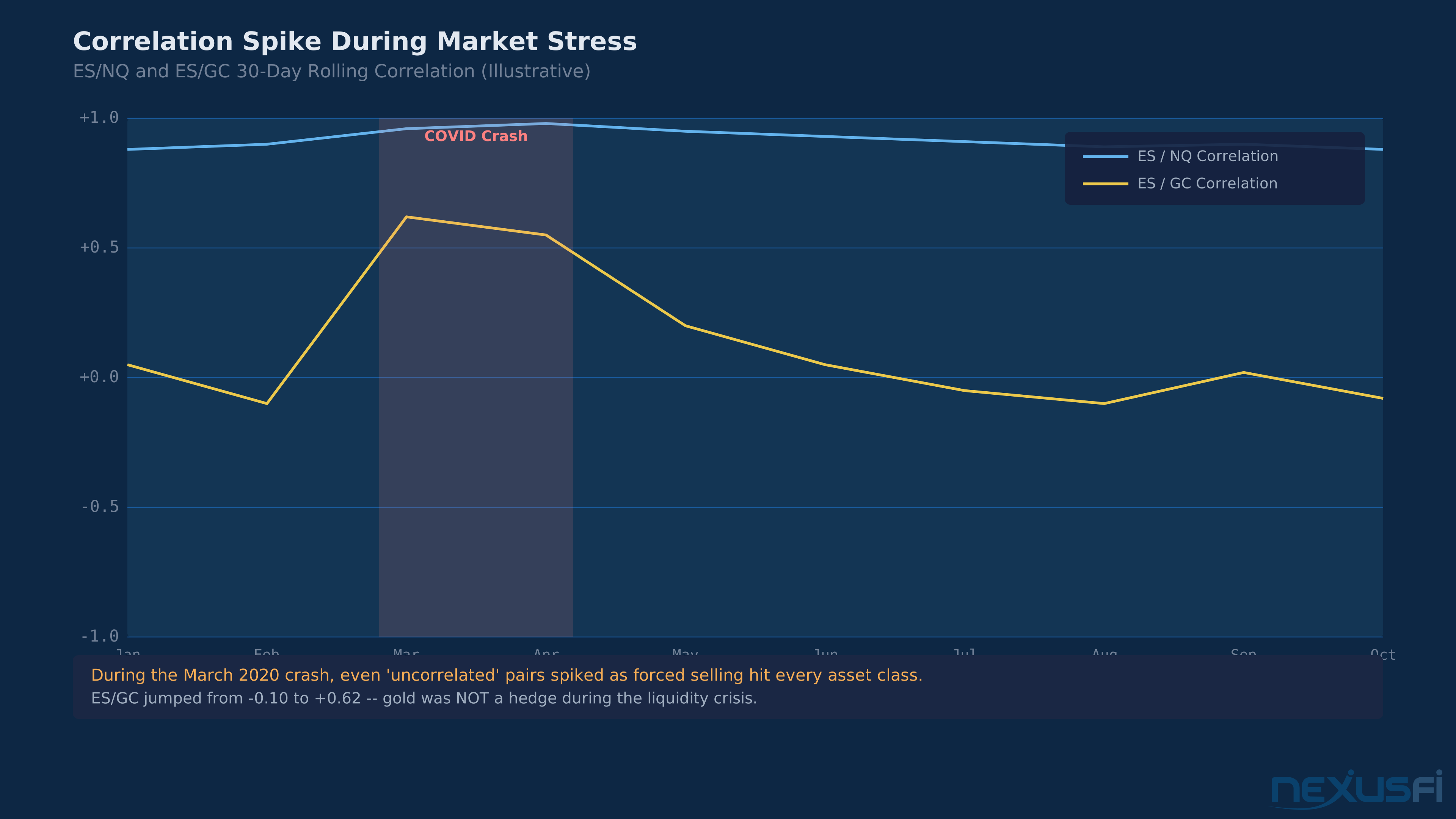
March 2020 demonstrated this perfectly. During the initial COVID crash, ES, NQ, CL, and even gold (a traditional "safe haven") sold off simultaneously. The 30-day rolling correlation between ES and GC, normally near zero or slightly negative, spiked above +0.60 as margin-call-driven liquidation hit every asset class. Traders who held long gold as a "hedge" against equity exposure found both sides of the trade losing money at the same time.
As @tigertrader observed during the March 2020 turmoil, "credit is the most damaged or dislocated of the markets right now... personally, spooz, gold, bonds, and occasionally beans, are enough for me." [3] Even experienced traders with diversified futures portfolios had to simplify during the correlation spike.
What This Means for Your Portfolio #
If you hold long ES and long NQ simultaneously, you don't have a diversified portfolio — you have a leveraged bet on U.S. large-cap equities. The correlation between ES and NQ runs above +0.90 in most environments and approaches +0.99 during sell-offs. As @KillerJukeBox notes, "the NQ and the ES aren't perfectly correlated, but it's a useful tool nonetheless" — treating them as a single risk unit for sizing purposes keeps you honest about actual exposure. [4]
The honest question: if both positions will move the same direction by similar magnitudes in any scenario that matters, why not just trade one with appropriate size?
Volatility-Normalized Position Sizing for Multi-Instrument Portfolios #
The foundation of correlation-aware risk management is ensuring each position contributes roughly equal risk before you even consider correlations. This starts with volatility normalization.
The Problem with "One Contract Each" #
The same logic applies across any futures basket. Here's a concrete example normalizing to $500 daily risk per instrument using 14-day ATR:
| Instrument | 14d ATR | Multiplier | Daily $ Risk (1 lot) | Contracts for $500 Risk |
|---|---|---|---|---|
| ES | 24 pts | $50 | $1,200 | 0.4 (round to 1 MES = $120) |
| NQ | 100 pts | $20 | $2,000 | 0.25 (round to 1 MNQ = $200) |
| CL | $1.40 | $1,000 | $1,400 | 0.36 (round to 1 MCL) |
| ZB | 0.75 pts | $1,000 | $750 | 0.67 (round to 1) |
| GC | $22 | $100 | $2,200 | 0.23 (round to 1 MGC) |
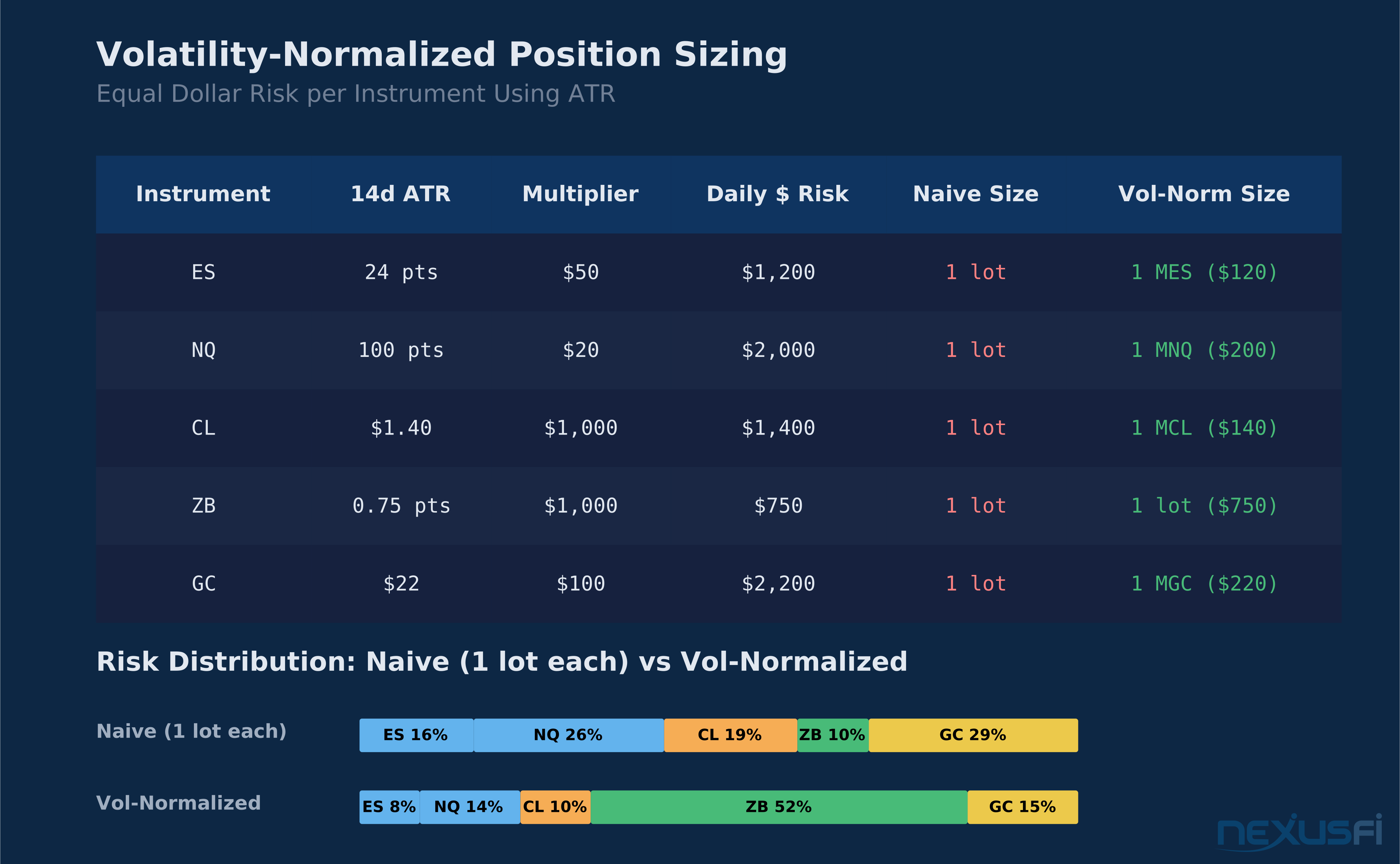
Without normalization, a "one lot of each" basket has over 50% of its total daily volatility coming from GC and CL. With normalization using micro contracts, you can equalize risk contributions.
The ATR Method #
The formula is straightforward:
Contracts = Target $ Risk / (ATR × Point Value)
Using 14-day ATR captures the current volatility regime. Recalculate weekly or when ATR changes by more than 20%. The Turtle traders used exactly this approach to normalize risk across dozens of futures contracts, and it remains the gold standard for multi-instrument sizing.
Adding the Correlation Dimension #
Volatility normalization gets you equal risk per position. The next step is adjusting for correlation between positions. If two positions are highly correlated (ρ > 0.70), their combined risk is much higher than if they were independent.
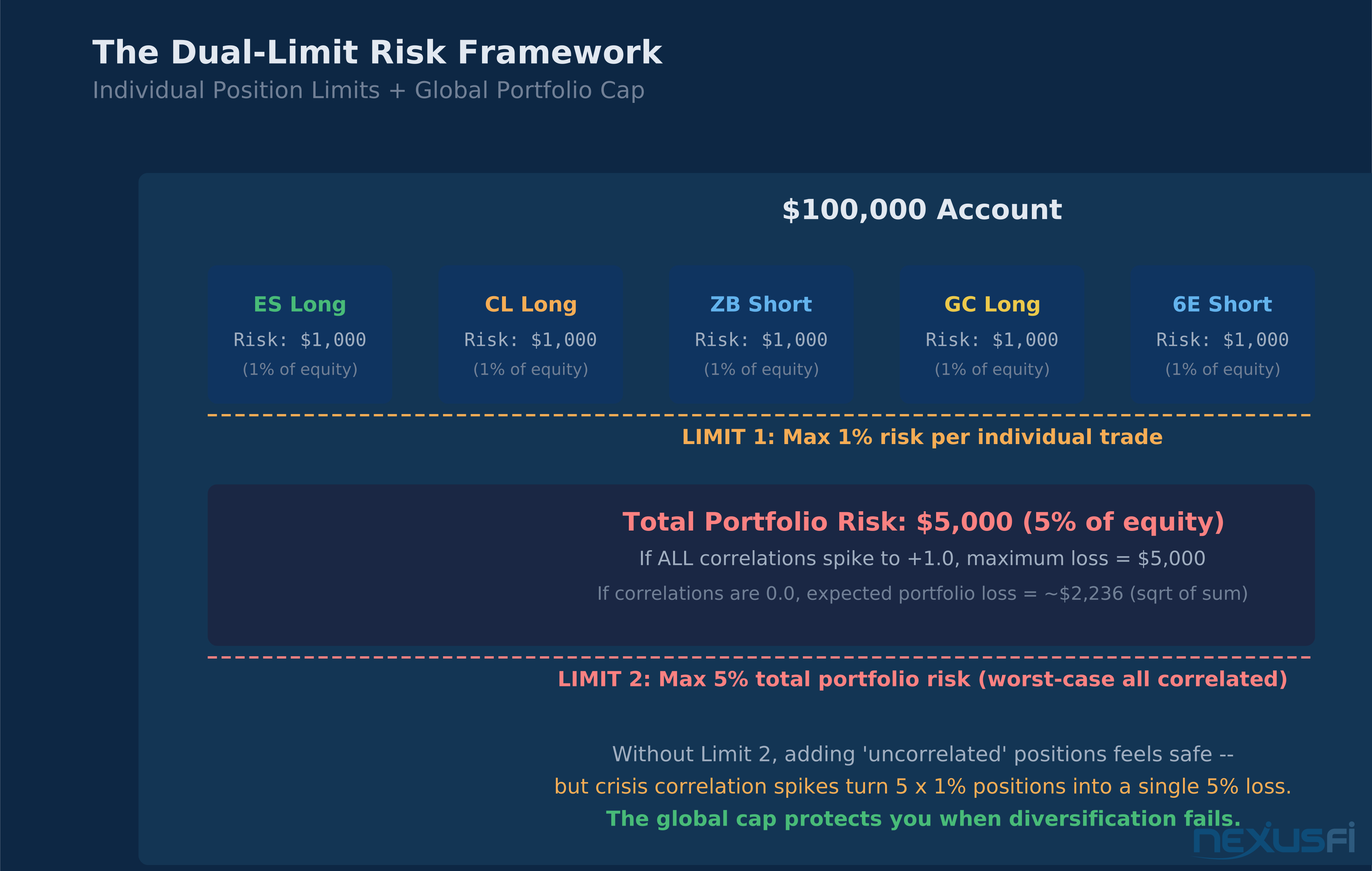
That dual-limit framework is the practical answer to correlation uncertainty: limit each individual position AND limit total portfolio exposure. The global cap catches the scenario where correlations spike and everything moves against you simultaneously.
Measuring and Monitoring Correlation in Practice #
Rolling Correlation Windows #
The standard approach is a rolling Pearson correlation calculated on daily returns. The key decision is window length:
- 10-day window: Responsive but noisy. Good for detecting regime changes quickly, but produces many false signals. As @josh notes, "The period of the correlation is like any statistic across a window: shorter is noisier but more up-to-date, longer is smoother but less up to date. I'll use a 10-day correlation here, since two weeks is long enough to be meaningful but short enough to be responsive." [1]
- 30-day window: The standard balance between responsiveness and stability. Catches meaningful correlation shifts within a month.
- 60-90 day window: Smooth and stable, useful for strategic allocation decisions. Too slow for tactical risk management.
For active futures traders, running both a 10-day and a 30-day rolling correlation side by side gives you the best picture — short-term for tactical alerts, longer-term for structural monitoring.
The Correlation Heatmap #
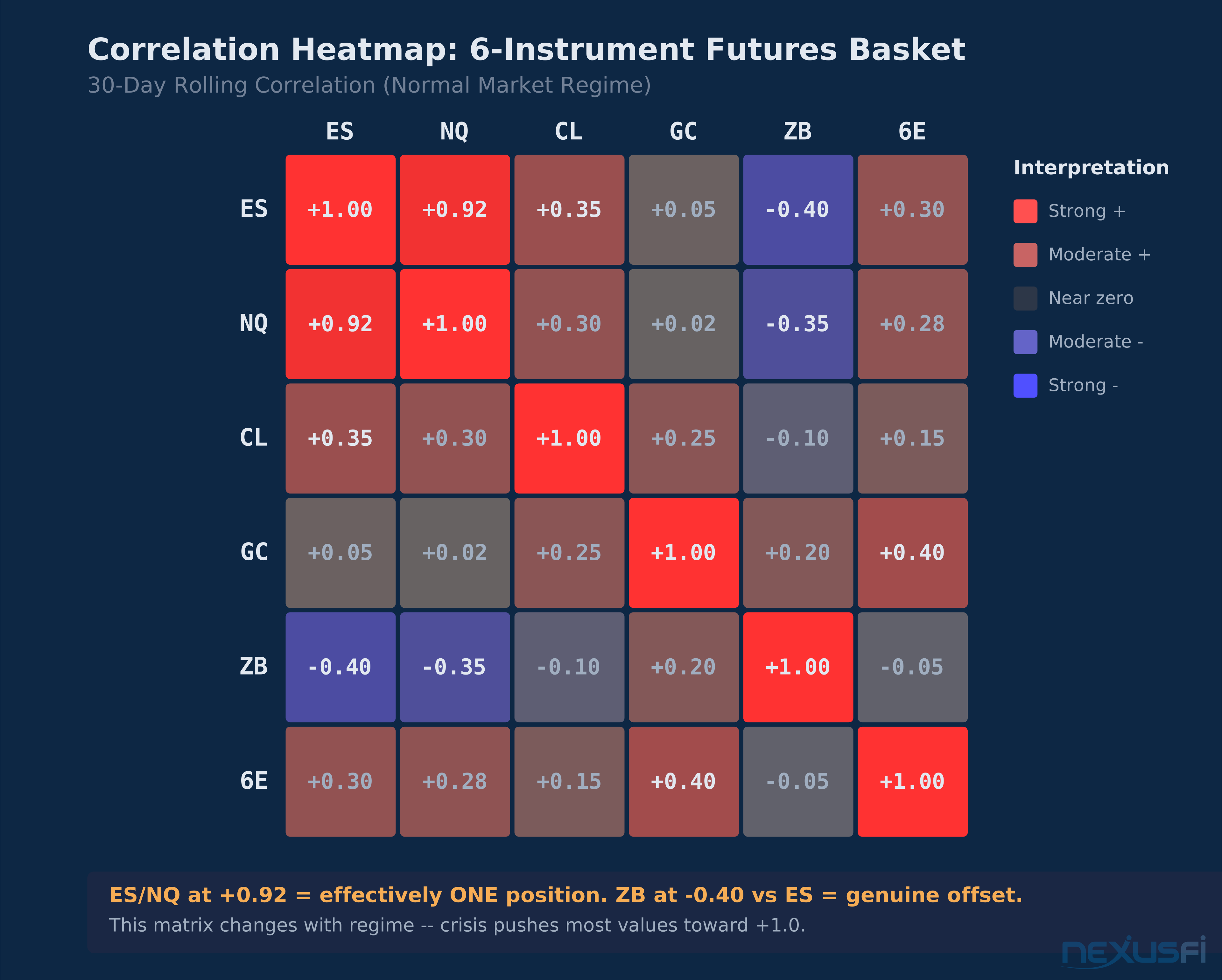
Build a daily correlation matrix covering your traded instruments. Color-code by strength: deep blue for strong negative (-0.70 to -1.0), white for near-zero (-0.20 to +0.20), deep red for strong positive (+0.70 to +1.0). This is your risk dashboard.
Key alert thresholds:
- Any pair crossing +0.70: Treat as a single risk unit for sizing
- Traditionally negative pair crossing zero: Hedge may be failing
- All pairs above +0.50: Portfolio-level correlation spike — reduce total exposure
Common Measurement Pitfalls #
Frequency mismatch: Don't measure daily correlation and apply it to intraday positions. Intraday correlation structures can differ substantially from daily.
Stale data during illiquid periods: Correlation measured on overnight or holiday-thin data is unreliable. Filter by liquid sessions only.
Outlier sensitivity: A single day with a massive move (like a limit-down circuit breaker) can dominate a short-window correlation estimate for weeks. Be aware when one observation is driving your numbers.
Building Less-Correlated Futures Portfolios #
The goal isn't zero correlation — that's both impossible and unnecessary. The goal is reducing shared factor exposure so your portfolio doesn't collapse into a single directional bet when it matters most.
Diversify by Economic Driver #
Group futures by their primary risk factor:
| Factor | Instruments | Behavior |
|---|---|---|
| Growth/equity risk | ES, NQ, RTY, YM | Rise with economic optimism |
| Interest rates | ZB, ZN, ZF, ZT | Rise when rates fall |
| Energy supply/demand | CL, NG, RB, HO | Driven by supply disruptions and demand |
| Precious metals | GC, SI | Inflation/crisis hedge, USD inverse |
| Agriculture | ZC, ZS, ZW, LE | Weather, seasonal, supply-specific |
| Currency | 6E, 6J, 6B | Rate differentials, trade flows |
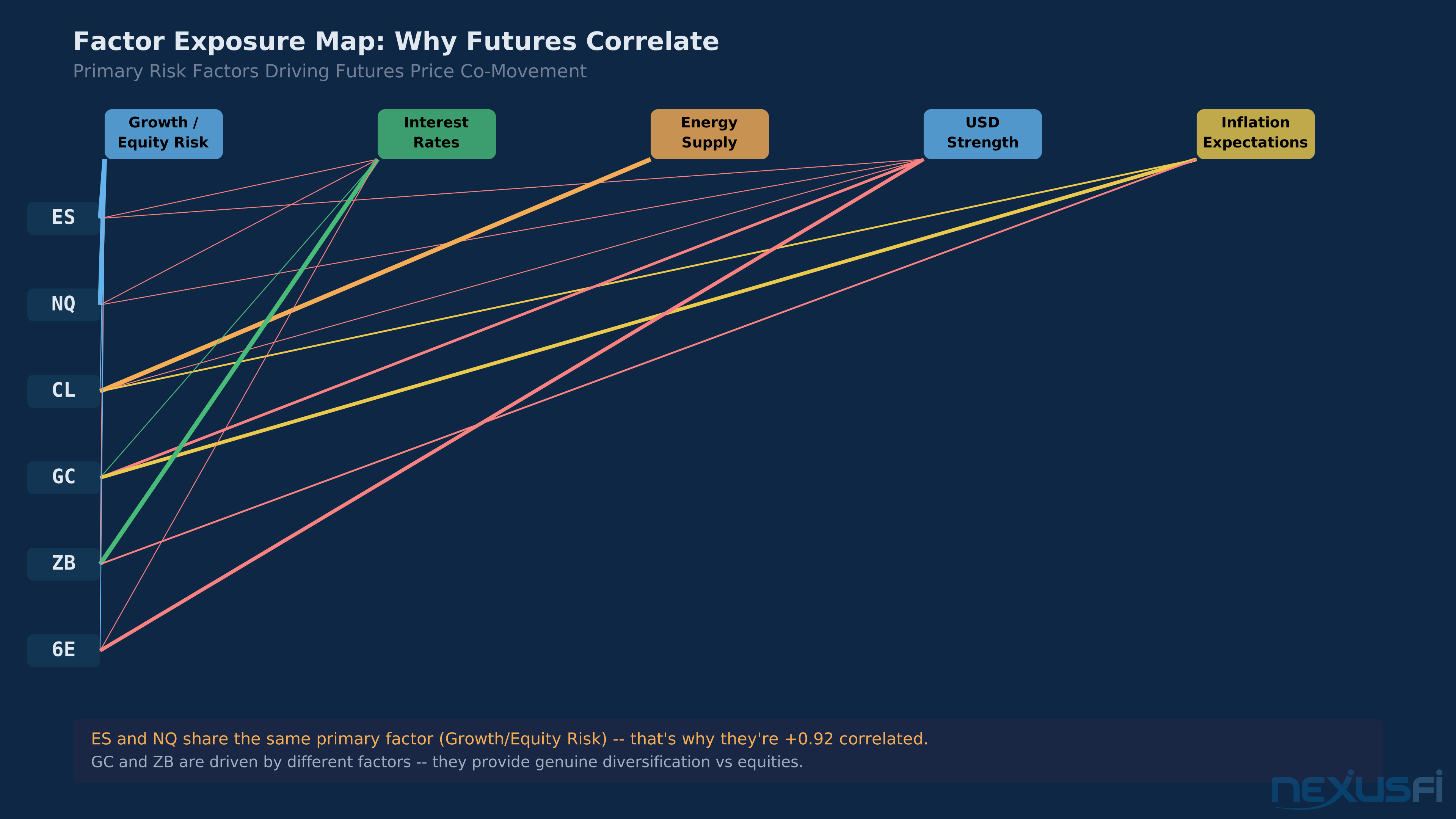
Holding one instrument from each group gives you genuine factor diversification. Holding ES, NQ, and RTY gives you three positions on the same factor.
After the August 2015 sell-off, this diversification limited his drawdown to 15% while concentrated traders experienced much worse: "One word: diversification." [8]
The Correlation of Drawdowns #
@Koepisch offers a practical refinement: instead of measuring correlation of returns, measure correlation of drawdowns. "I only measure the correlation of the DRAWDOWNS of every instrument. If the gains correlate — that's fine. Due to my pattern based approach my strategy don't depend from a trending or ranging market. If the backtested correlation of the drawdowns are too high I have 2 good options to incorporate the same risk: 1. Only use one instrument with full force or 2. use all instruments and split the position size." [9]
This is a sophisticated insight. Return correlation tells you how instruments move together on average. Drawdown correlation tells you how they lose money together — which is what actually destroys accounts. Two instruments with moderate return correlation (+0.40) might have very high drawdown correlation (+0.85) because they both get hit during the same type of market stress.
Practical Allocation Framework #
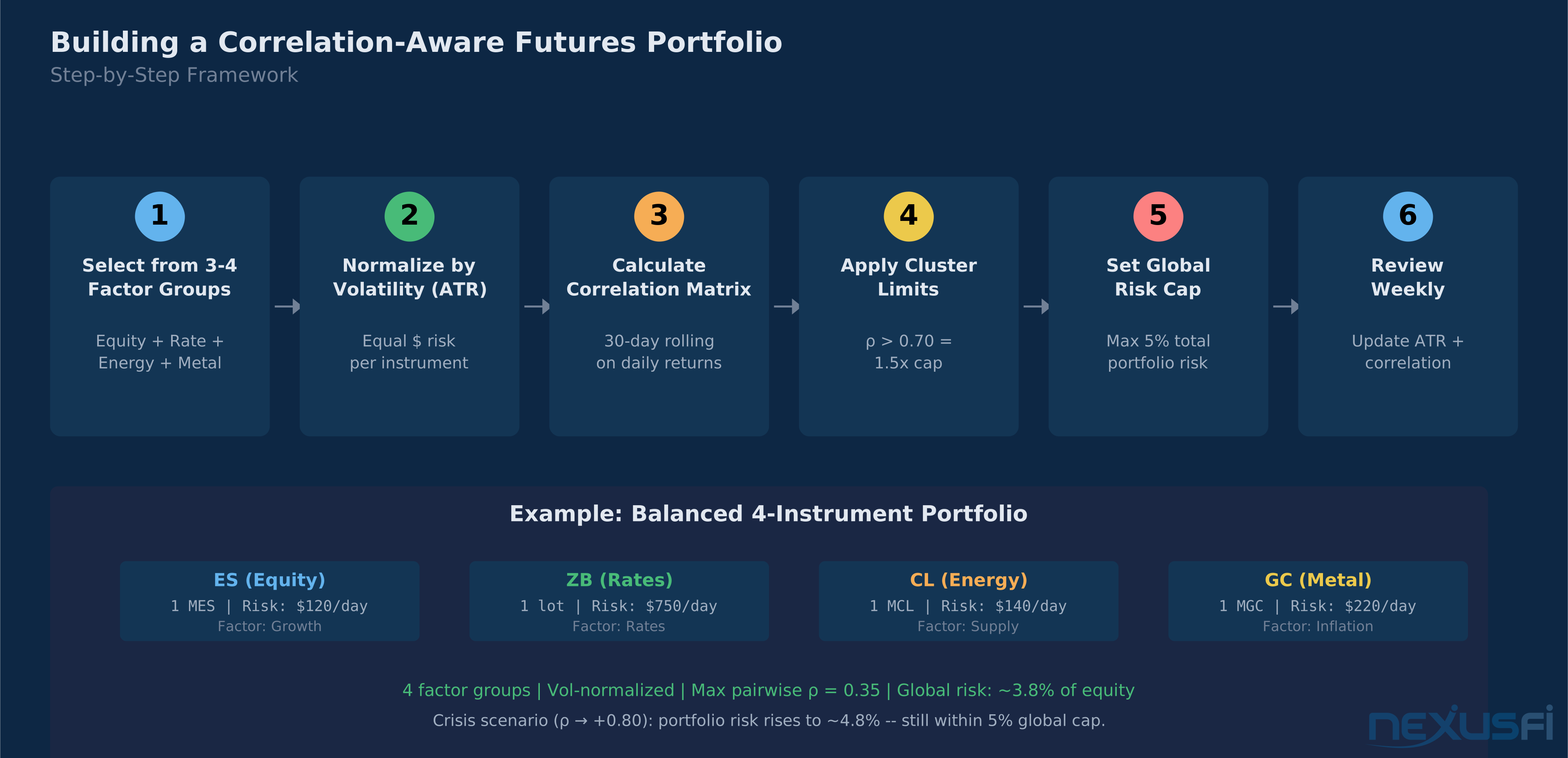
Here's a step-by-step framework for building a correlation-aware futures portfolio:
- Select instruments from at least 3-4 different factor groups. One equity index, one rate product, one energy, one metal or agriculture is a reasonable starting point.
- Normalize position sizes by volatility. Use the ATR method described above so each instrument contributes equal dollar risk.
- Calculate the current correlation matrix. Use 30-day rolling correlation on daily returns.
- Apply cluster limits. If two instruments have correlation > +0.70, treat them as a single cluster and cap their combined allocation at 1.5x a single position's risk (not 2x).
- Set a global risk cap. Total portfolio risk should not exceed 5% of account equity on any given day, assuming all positions move against you simultaneously. This is your crisis protection.
- Review weekly. Update ATR values, recalculate correlations, adjust position sizes. Correlation shifts faster than most traders realize.
Practical Application: Managing Correlation Day-to-Day #
The Pre-Trade Correlation Check #
Before adding any new position, check its correlation with your existing book. If you're already long ES and considering a long NQ position, you need to acknowledge that this roughly doubles your equity-index risk rather than adding a new uncorrelated exposure. If that's what you want, size so. If you want actual diversification, look at ZB (typically -0.30 to -0.50 vs ES in rate-focused regimes) or GC (typically near zero vs ES in non-crisis environments).
When Correlations Start to Spike #
Watch for these warning signs:
- VIX surging above 25: Risk-off correlation regime is likely engaging
- Multiple instruments hitting intraday extremes simultaneously: Forced deleveraging may be underway
- Your 10-day correlation matrix turning uniformly red: Everything is moving together — reduce total exposure
The response isn't necessarily to exit positions but to reduce total portfolio size. If your diversification assumption has broken down, your total risk is higher than you thought. Cut position sizes across the board until correlations normalize.
What This Article Doesn't Cover #
This article focuses on correlation as a risk tool for portfolio construction and monitoring. Several related topics deserve their own treatment:
- Advanced correlation methods (copulas, tail dependence, regime-switching models) go deeper into the statistics
- Stress testing portfolios with historical shock scenarios and Monte Carlo simulation
- Margin mechanics (SPAN, portfolio margining, cross-margining) and how exchanges handle correlated risk
- Spread trading (calendar spreads, inter-commodity spreads) which explicitly trades correlation relationships
For related Academy content, see Intermarket Analysis for how different markets influence each other, and Drawdown Management for protecting capital during correlated sell-offs.
Knowledge Map
Prerequisites
Understand these firstGo Deeper
Build on this knowledgeReferences This Article
Articles that build on this topicCitations
- — Spoo-nalysis ES e-mini futures S&P 500 (2022) 👍 11“It's really critical to ask 'why' with things like this. Why would they correlate? If you don't know that, then you will have no frame of reference when the correlation breaks down (and it will).”
- — Spoo-nalysis ES e-mini futures S&P 500 (2015) 👍 7“Correlations tend to rise during most, but not all, crisis periods and fall back once the crisis has passed.”
- — Spoo-nalysis ES e-mini futures S&P 500 (2020) 👍 9“Credit is the most damaged or dislocated of the markets right now... personally, spooz, gold, bonds, and occasionally beans, are enough for me.”
- — KillerJukeBox's micro e-mini journal (2019) 👍 1“The NQ and the ES aren't perfectly correlated, but it's a useful tool nonetheless.”
- — Comparing Index Futures (2015) 👍 3“Risk is based on volatility not on margin requirements. Position sizing should be based on risk, not margin requirement.”
- — Dynamic Trailing Stop and Profit using ATR (2015) 👍 4“The magic of ATR is that it allows us to normalise volatility across a wide range of instruments.”
- — Account size when trading multiple instruments (2011) 👍 5“From a practical point of view you need two limits -- the 2% limit per trade -- a second global limit for the maximum risk that you are willing to accept.”
- — Selling Options on Futures? (2015) 👍 13“One word: diversification. I normally aim for using approximately 40-50% of my margin... I try to limit my risk in any one market to 8-10%.”
- — Diversification while Trading Futures? (2013) 👍 2“I only measure the correlation of the DRAWDOWNS of every instrument. If the gains correlate -- that's fine.”