



TRON (TRX): The Stablecoin Superhighway and What Traders Need to Know
Overview #
TRON launched in 2017 with an ambitious pitch: decentralize the internet's content layer. Today, the content platform angle is largely forgotten. What TRON actually became is far more interesting — and more controversial.
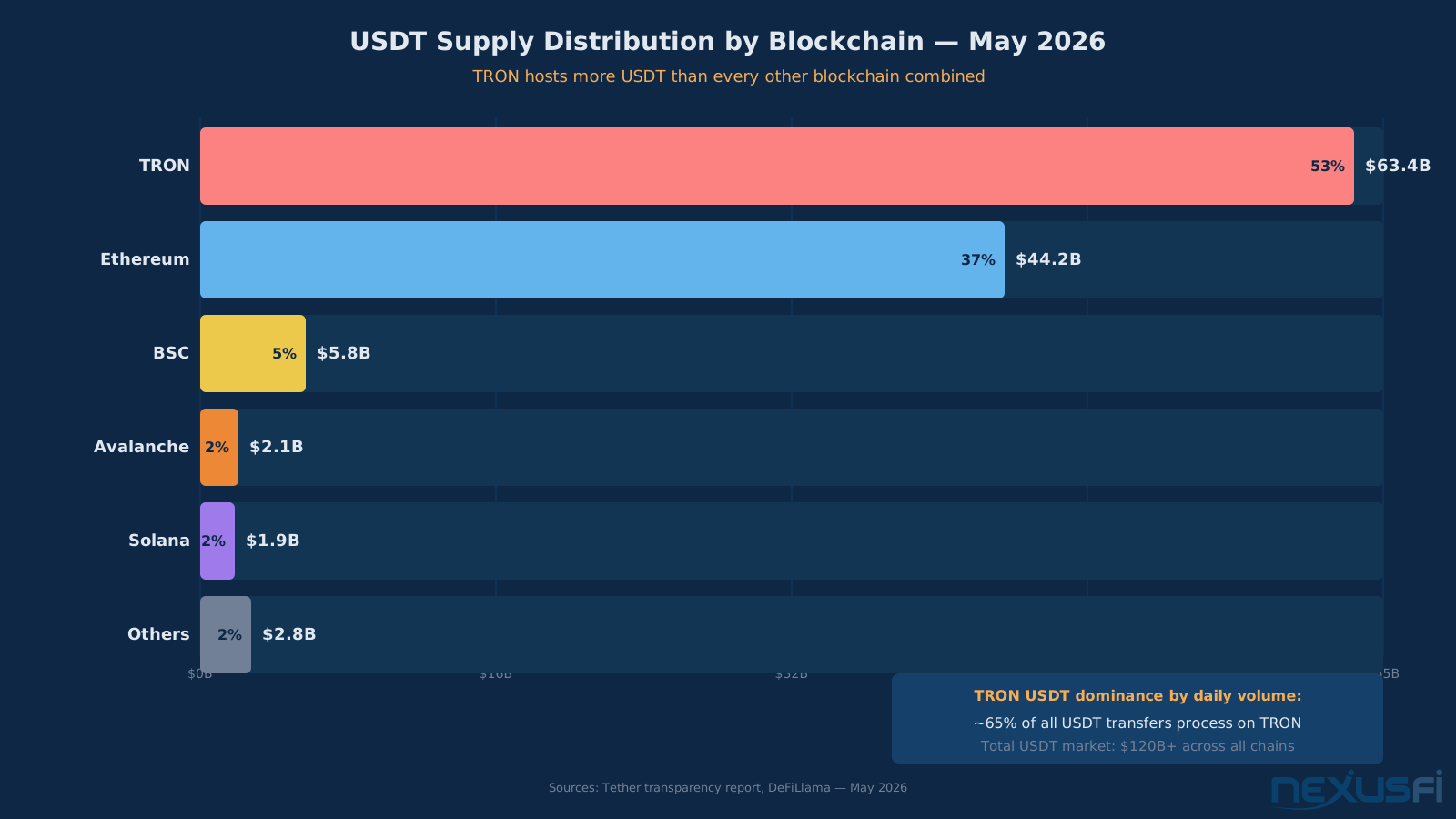
TRON is the world's largest USDT settlement network. More than $63 billion in Tether USDT sits on TRON, and roughly 65% of all USDT transfers globally happen here. When someone in Vietnam pays a supplier in China, when a Nigerian trader moves funds between exchanges, when an Argentinian saves dollars to hedge against peso inflation — the odds are roughly 2-in-3 that the transfer happens on TRON.
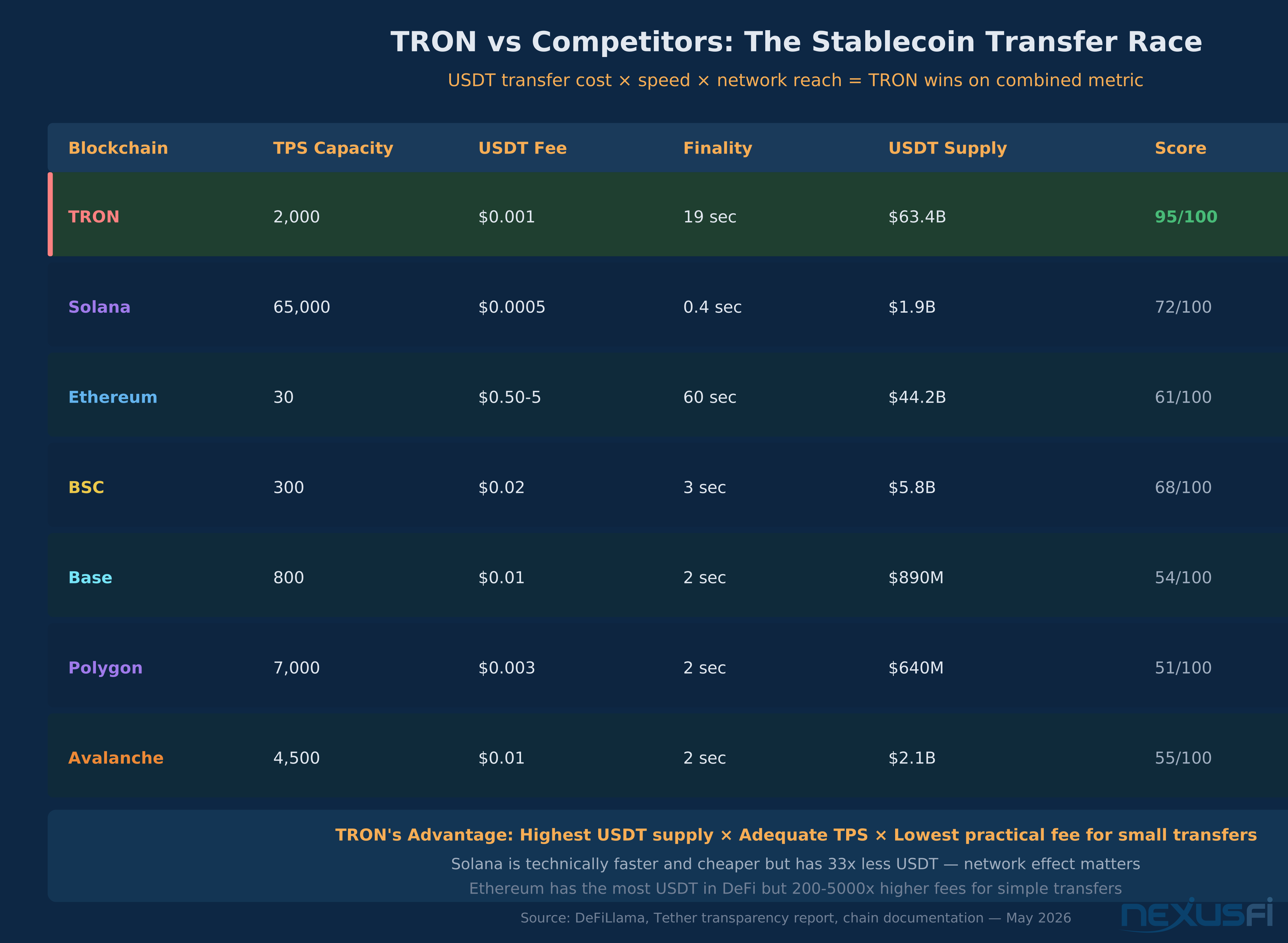
This is a genuinely important use case. TRON processes $10-15 billion in USDT transfers on typical days — more than Visa processes in many 24-hour periods. Near-zero fees and 19-second finality make it the cheapest, fastest major stablecoin rail on earth.
The tradeoff: TRON is also one of crypto's most controversial projects. Justin Sun, its founder, faces SEC charges for market manipulation, wash trading, and alleged bribery of celebrities. The network's 27 Super Representatives (block producers) create meaningful centralization. And the entire bull case depends on Tether keeping USDT on TRON rather than migrating to a competitor.
TRX trades around $0.10 in May 2026. That's a $9.8 billion market cap, ranking it in the top 20 by value. The question traders need to answer: is TRON's genuine utility priced in, underpriced, or already reflected in a valuation that assumes the regulatory and centralization risks never materialize?
@Fluid Fox captured the essential TRON trading reality in a NexusFi journal post during a major crypto drawdown: understanding volatility regimes is "key to surviving the bloodbaths" — advice that applies directly to TRX, which can fall 40%+ in a single week during crypto selloffs (NexusFi, 2021, 9 thanks).
This guide covers the mechanics — how DPoS works, what the energy model actually does, how USDT dominance translates into TRX demand, and how to size a TRX position given the unique risk profile.
What TRON Is: From Content Blockchain to USDT Powerhouse #
Justin Sun founded TRON in September 2017. The original whitepaper — later revealed to contain plagiarized sections from IPFS and Filecoin documentation — described a decentralized content platform where creators could publish and monetize without intermediaries like YouTube or Spotify.
The mainnet launched June 25, 2018. The content platform vision never gained traction. What happened instead was opportunistic and, in retrospect, brilliant: TRON positioned itself as the cheapest, fastest blockchain for USDT transfers.
Tether launched USDT on TRON (TRC-20 standard) in April 2019. This was the inflection point. USDT on Ethereum was expensive ($2-20 per transfer during congestion). USDT on TRON was pennies or free. The decision made itself for anyone doing high-frequency transfers.
By 2021, TRON had surpassed Ethereum in USDT supply. By 2023, it wasn't close — TRON held 55% of all USDT versus Ethereum's 37%. The gap has widened further as emerging market adoption accelerated.
The acquisition of BitTorrent in 2018 for $140 million added 100+ million users and the BTT token. The BitTorrent deal was criticized as a cash grab at the time, but it gave TRON a real user base and the P2P file-sharing infrastructure that became part of the ecosystem narrative.
@bobwest's framework from a NexusFi Bitcoin discussion — evaluating whether there is "real-world use for them outside of trading" — is the right lens for TRON. USDT transfers in emerging markets pass this test; the speculative ICO narrative of 2017-2018 did not (NexusFi, 2021, 8 thanks).
For traders, the key framing is this: TRON is not competing to be the "best" blockchain. It's competing to be the cheapest, most available USD transfer rail for the global unbanked and under-banked. That's a different race, and it's one TRON is currently winning.
Technical Architecture: DPoS, 27 Super Representatives, and the Energy Model #
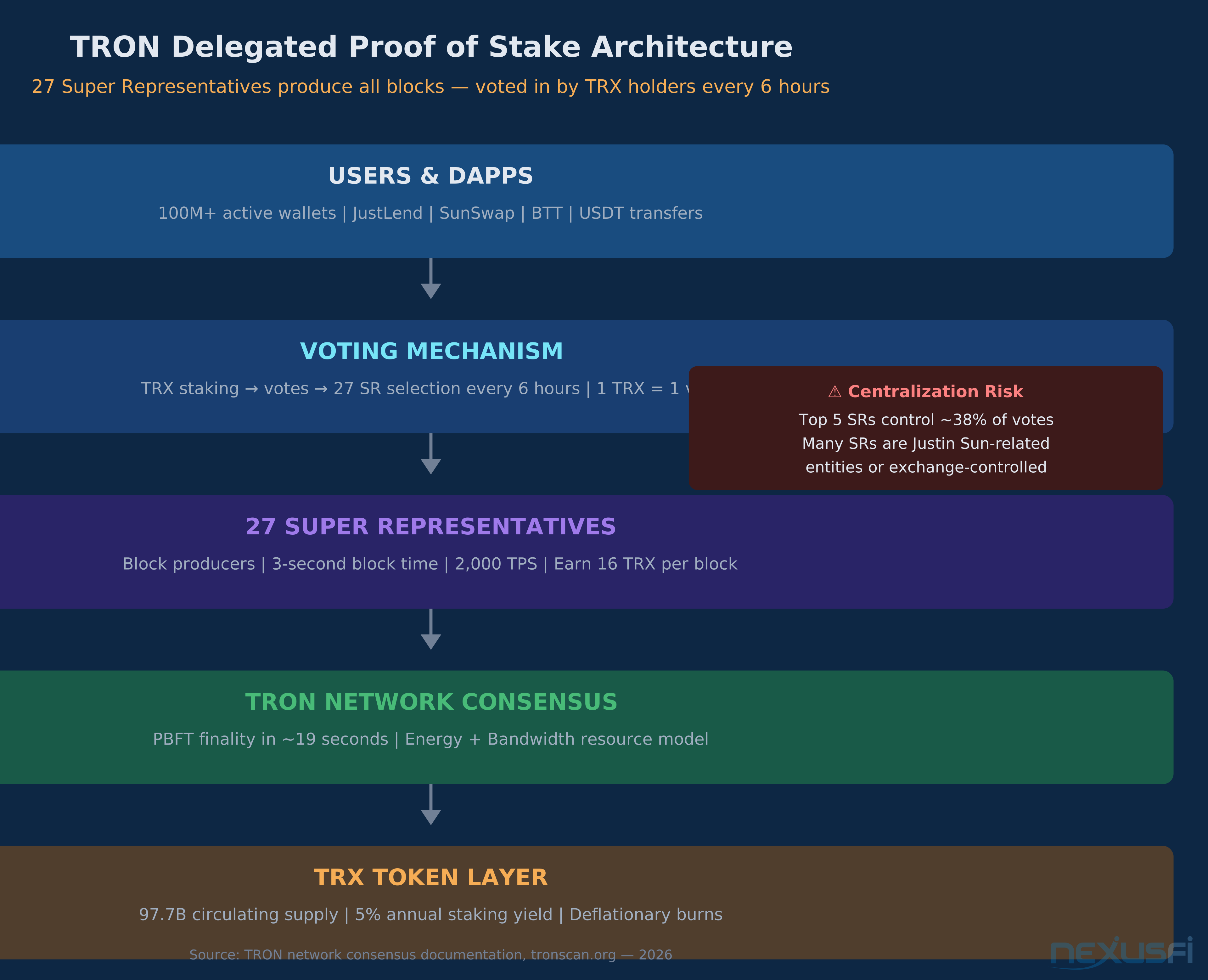
TRON uses Delegated Proof of Stake (DPoS) — a consensus mechanism where TRX holders vote for 27 Super Representatives who produce all blocks. Understanding DPoS is essential for understanding both TRON's performance and its centralization risk.
The 27 Super Representative system. Every 6 hours, TRX holders vote for SR candidates. Any TRX holder can become a candidate; the top 27 by votes become active SRs. SRs produce one block every 3 seconds and earn 16 TRX plus transaction fees per block. The next 200 candidates (called SR Partners) earn partial rewards without producing blocks. Voting is proportional: 1 TRX staked = 1 vote.
Performance specs. The 3-second block time and DPoS efficiency deliver approximately 2,000 transactions per second under normal conditions. PBFT-style finality confirmation takes ~19 seconds — 19 blocks of confirmation. This is leagues faster than Bitcoin (60 minutes) and much faster than Ethereum (12 seconds for soft finality, several minutes for high confidence).
The centralization tradeoff. 27 validators is an extremely small set. Most of these SRs are exchanges (Binance, Huobi, OKX all run SRs), large TRX holders, or entities associated with Justin Sun. The top 5 SRs control approximately 38% of total voting power. This is not theoretical centralization — it's structural. TRON trades decentralization for throughput, and it's been transparent (if not always emphasized) about this tradeoff.
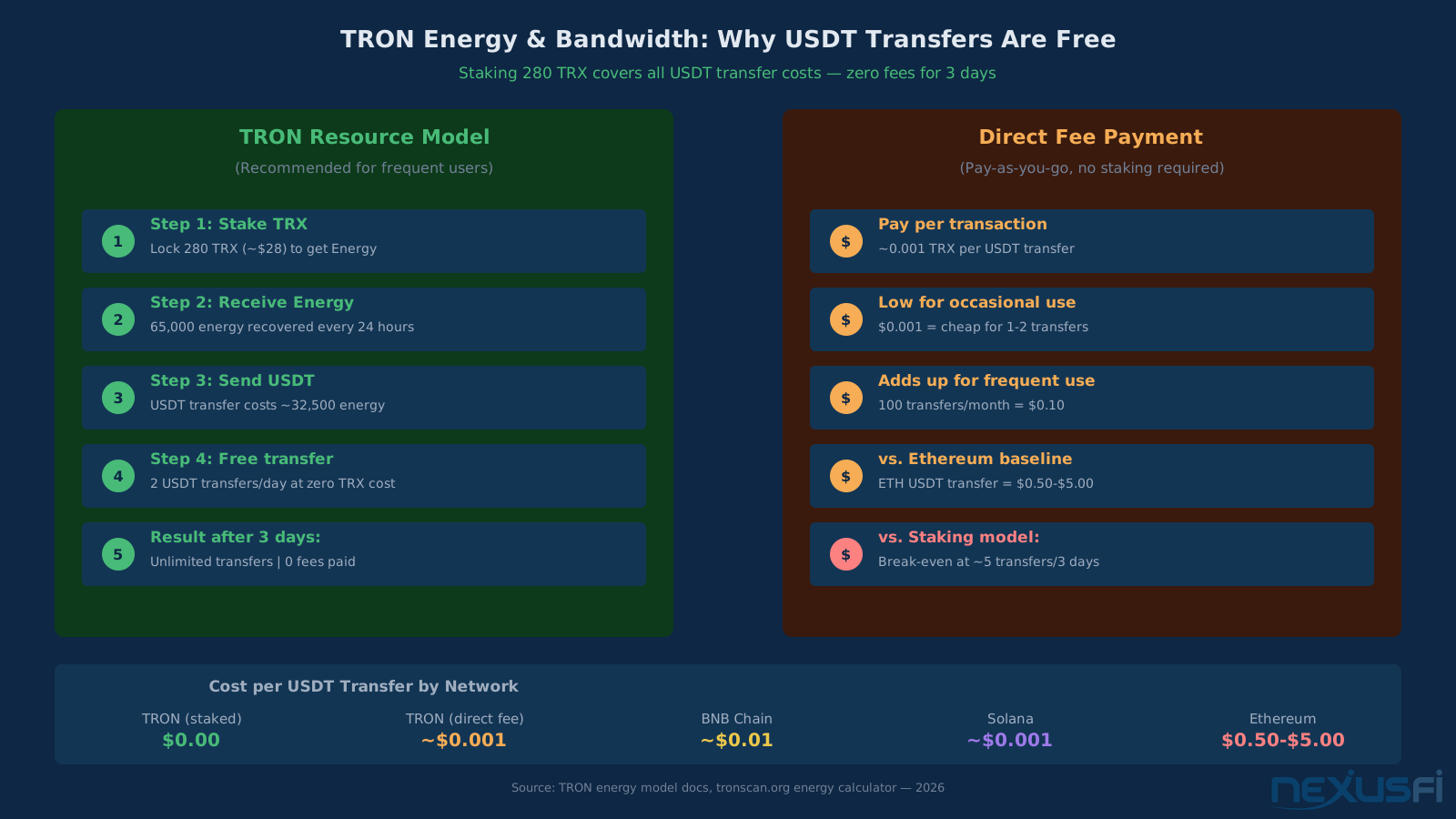
The Energy and Bandwidth model. Unlike Ethereum's gas fee system where every transaction costs ETH, TRON uses a resource model. Every account gets 1,500 bandwidth points per day for free — enough for simple TRX transfers. Executing smart contracts (like USDT transfers) requires Energy, which you either buy by burning TRX or generate by staking TRX.
Staking 280 TRX (~$28 at $0.10) generates roughly 65,000 energy per day. A USDT transfer costs approximately 32,500 energy. Result: 280 TRX staked = 2 free USDT transfers per day = 60 free USDT transfers per month. For someone doing frequent transfers, the staking model eliminates all transaction costs. For occasional users, the direct fee (~$0.001 per transfer) is still 200-500x cheaper than Ethereum.
TRON's Stablecoin Dominance: The Core Thesis #
The TRON bull case is, at its core, a USDT bull case. TRX demand is driven primarily by USDT transfer volume — not by DeFi activity, gaming, NFTs, or the original content platform pitch.
Here's how the demand link works: To send USDT on TRON frequently, you stake TRX to generate energy. To create a TRON wallet, you need a small TRX balance for bandwidth. When network congestion rises, users burn TRX directly to pay for energy rather than staking. Every USDT transfer that happens on TRON creates baseline TRX demand.
The scale is genuinely significant. Tether's transparency report shows $63+ billion USDT on TRON as of May 2026 — the largest USDT allocation of any blockchain. Daily transfer volume reaches $10-15 billion on active days. To put this in context: the Federal Reserve's Fedwire system processes about $4 trillion daily; TRON processes what many mid-sized central banks handle.
USDT on TRON vs Ethereum by use case. The chains serve different users. Ethereum USDT is primarily used by DeFi protocols, institutional settlement, and sophisticated crypto-native users. TRON USDT is used for point-to-point transfers, exchange deposits, and emerging market savings. This distinction matters: Ethereum USDT users are price-insensitive to $2-5 fees because they're moving large amounts. TRON USDT users are fee-sensitive because they're often moving $50-500 per transaction.
USDD: TRON's own stablecoin. In 2022, TRON launched USDD, an overcollateralized stablecoin backed by TRX, BTC, and USDT reserves managed by the TRON DAO Reserve. USDD briefly depegged during the May 2022 LUNA crisis, dropping to $0.97 before recovering. The TRON DAO deployed $2+ billion in reserves to defend the peg. The incident demonstrated both the risk and the resilience — TRON had reserves to defend, unlike Terra Luna which didn't.
As discussed in the Stablecoins Trading Guide, different stablecoin settlement networks create distinct risk profiles for traders — understanding which chain your USDT lives on is essential operational knowledge.
TRX Tokenomics: Supply, Burns, and Staking Yield #
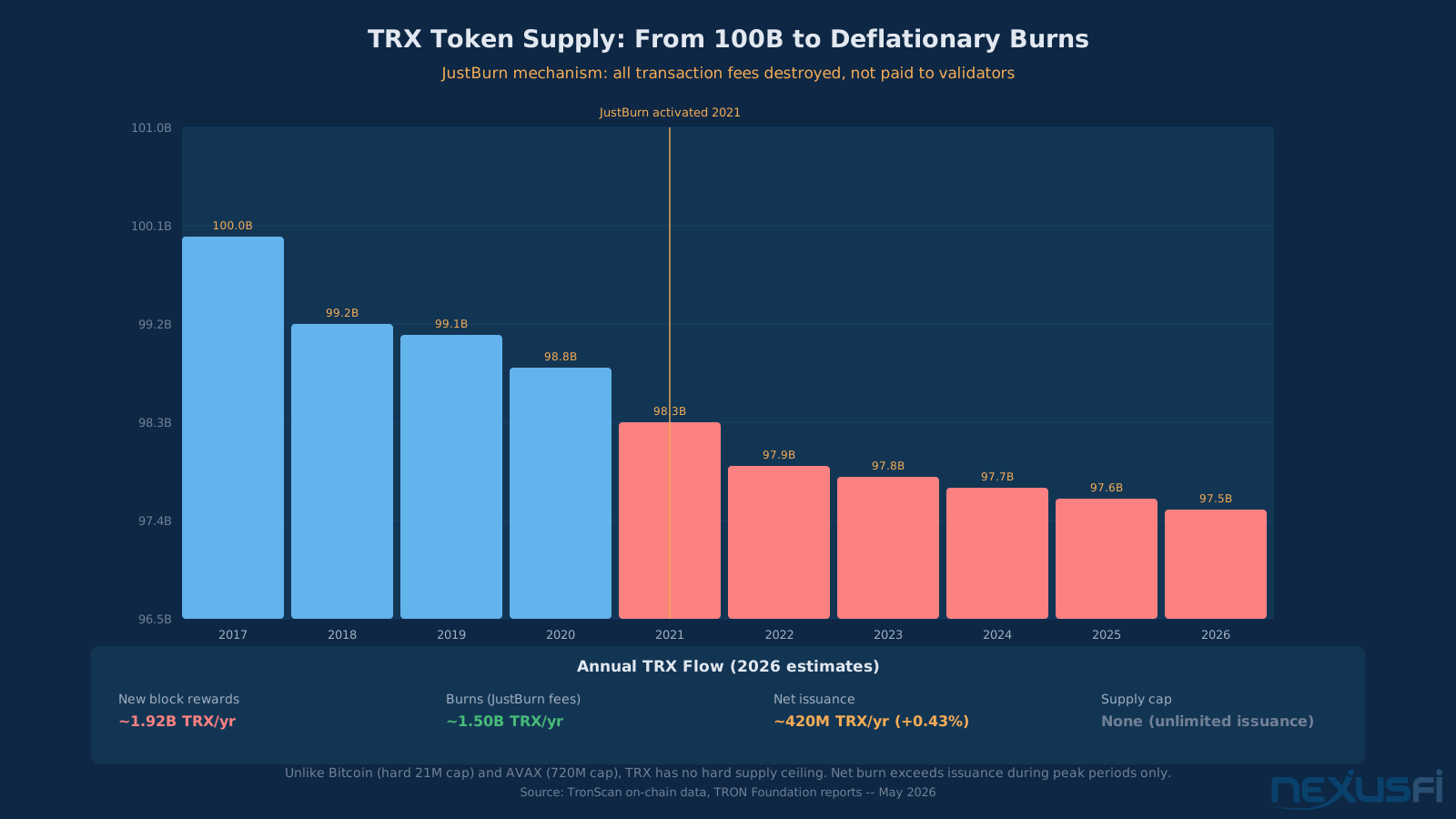
TRX launched with 100 billion tokens in 2017. Through a combination of burns, freezes, and issuance changes, the circulating supply as of May 2026 is approximately 97.7 billion TRX. This makes TRX one of the few major cryptocurrencies that is gently deflationary — TRON introduced net burn mechanisms in 2021.
JustBurn mechanism. All transaction fees on TRON are burned rather than paid to SRs (who instead earn fixed block rewards of 16 TRX). During periods of high network activity, burns can exceed new block reward issuance, making TRX net deflationary on those days. This mirrors Ethereum's EIP-1559 mechanism. During peak USDT transfer periods, daily burns can exceed 20 million TRX.
Staking yield. Staking TRX provides two benefits: energy for free transactions (see Architecture section) and voting power to earn SR rewards. Delegating TRX to an SR typically yields 4-6% APR, paid in TRX. This compares favorably to Ethereum staking (~4%) and Solana staking (~6%), with the key difference that TRX staking also unlocks free transfers — an operational benefit beyond pure yield.
Token distribution concerns. Justin Sun and the TRON Foundation hold an estimated 14% of TRX supply — approximately 13.7 billion TRX worth $1.37 billion at $0.10. This is a meaningful overhang. While large positions are common in early blockchain projects, Justin Sun's regulatory situation adds a specific risk: if Sun were forced to liquidate (settlements, penalties, or legal judgments), the market impact would be significant.
Supply cap and inflation. TRON has no hard supply cap — new TRX is issued as SR block rewards at approximately 1.92 billion TRX per year (27 SRs × 16 TRX per block × ~4,380 blocks per day × 365). At 97.7 billion circulating, this is ~2% annual inflation that is partially offset by burns. Net annual issuance runs roughly 0.5-1% in normal periods, making TRX mildly inflationary at the token level but not dramatically so.
TRX Price History: Three Distinct Trading Regimes #
TRX's price history breaks into three phases, each with different drivers and risk profiles.
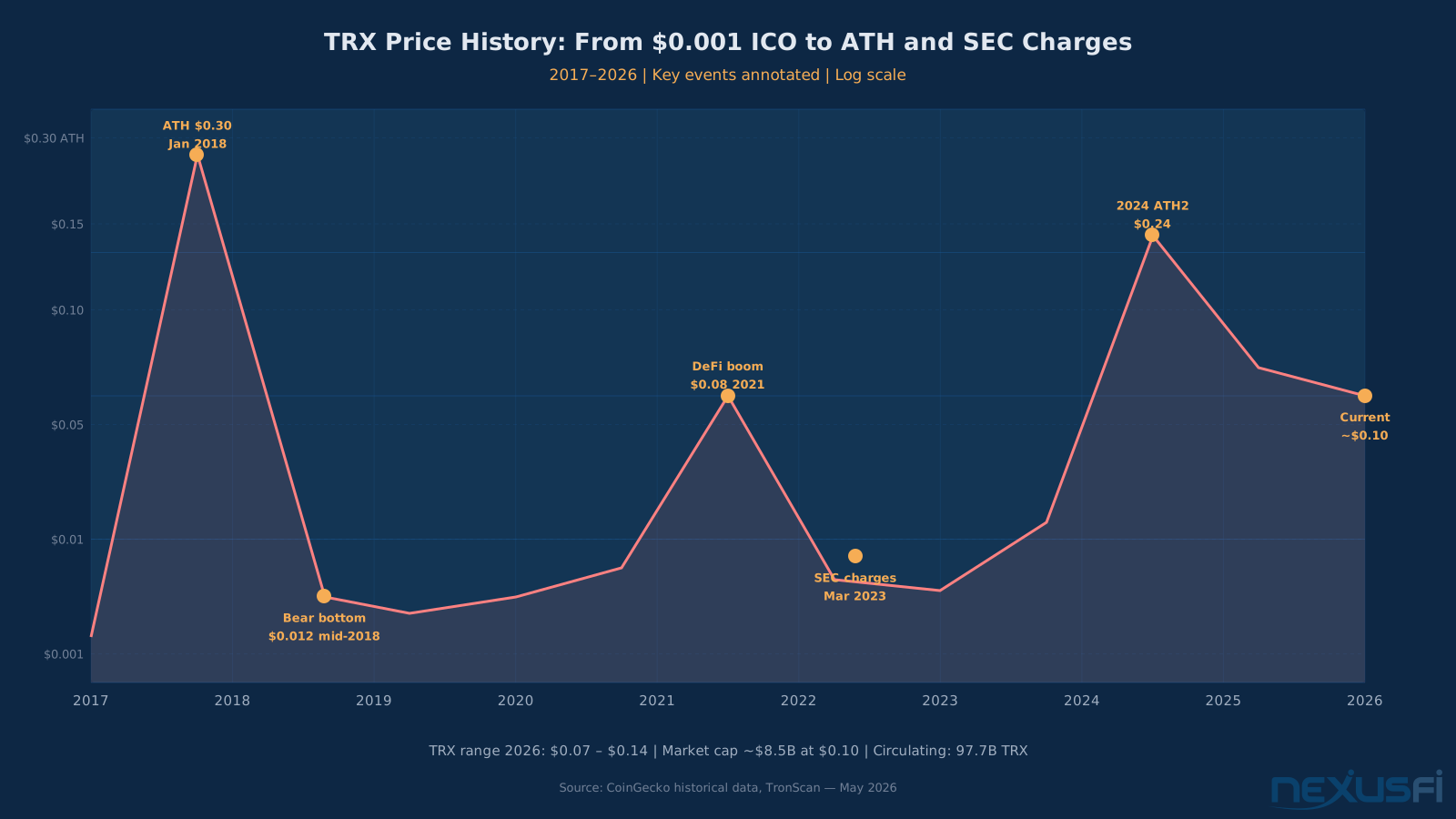
Phase 1: ICO Mania (2017-2018). TRX launched at the ICO price of $0.001 in August 2017. By January 4, 2018 — the peak of the ICO bubble — TRX hit $0.30. That's a 300x return in approximately 5 months. The trigger wasn't fundamental utility; it was narrative momentum, Justin Sun's aggressive marketing (including a staged announcement claiming a Alibaba partnership), and the general ICO mania that swept crypto in late 2017. The bear market that followed wiped 96% of peak value. By March 2018, TRX was at $0.03; by late 2018, it was below $0.012.
Phase 2: Utility Foundation (2019-2022). This is when TRON actually became TRON. USDT launched on TRON in April 2019. DeFi ecosystem (JustLend, SunSwap) launched in 2020-2021. The 2021 bull cycle pushed TRX to $0.18 — a strong recovery but still 40% below the 2018 ATH that was based on pure speculation rather than utility. The 2022 bear market brought TRX back to $0.05-0.07, but the USDT infrastructure held and continued growing through the bear.
Phase 3: Regulatory Cloud (2023-present). The SEC filed charges against Justin Sun in March 2023, alleging market manipulation, wash trading, and bribing celebrities including Lindsey Lohan, Soulja Boy, and others to promote TRX and BTT. TRX dropped 15% on the announcement but recovered faster than most expected — the USDT utility was already established enough that the network continued growing despite the charges. The 2024 bull cycle pushed TRX to a local high near $0.24 in late 2024. As of May 2026, TRX trades near $0.10.
The TRON Ecosystem: JustLend, SunSwap, BTT #
TRON's DeFi ecosystem is larger than most traders realize. Total value locked (TVL) on TRON regularly exceeds $8 billion, making it consistently one of the top five chains by locked value — ahead of Avalanche, Polygon, and most other well-known L1s.
JustLend ($4.2B TVL). TRON's dominant lending protocol. Users deposit TRX, USDT, USDC, BTC, or BTT to earn interest or borrow against collateral. USDT deposit yields typically run 4-7% APY — competitive with the best Ethereum lending alternatives. JustLend accounts for roughly half of all TRON DeFi TVL and is the primary reason institutional-scale capital stays on TRON beyond pure USDT transfers.
SunSwap ($1.8B TVL). TRON's primary AMM DEX, developed by the Sun.io team (associated with Justin Sun's projects). SunSwap V2 and V3 are Uniswap forks adapted for TRON. Trading volumes are significant — $200-500M daily during active markets. Liquidity mining incentives keep TVL relatively stable. For anyone needing to swap TRC-20 assets on-chain, SunSwap is the default.
USDD and the TRON DAO Reserve. The USDD overcollateralized stablecoin operates at roughly $740M supply, backed by $1.4B in reserve assets (BTC, USDT, TRX) held by the TRON DAO Reserve. The 190% collateralization ratio is conservative compared to similar protocols. USDD offers higher yields than USDT on TRON (7-12% in some pools) but carries additional smart contract and peg risk.
BitTorrent (BTT / BTTX). TRON acquired BitTorrent in 2018, integrating it into the ecosystem via the BTT token (now BTTX after redenomination). File sharers earn BTT by seeding files; downloaders pay BTT for faster speeds. With 140 million users, BitTorrent represents real-world token utility at scale — even if the economics remain modest. BTTX is separately traded and should not be confused with TRX for position sizing purposes.
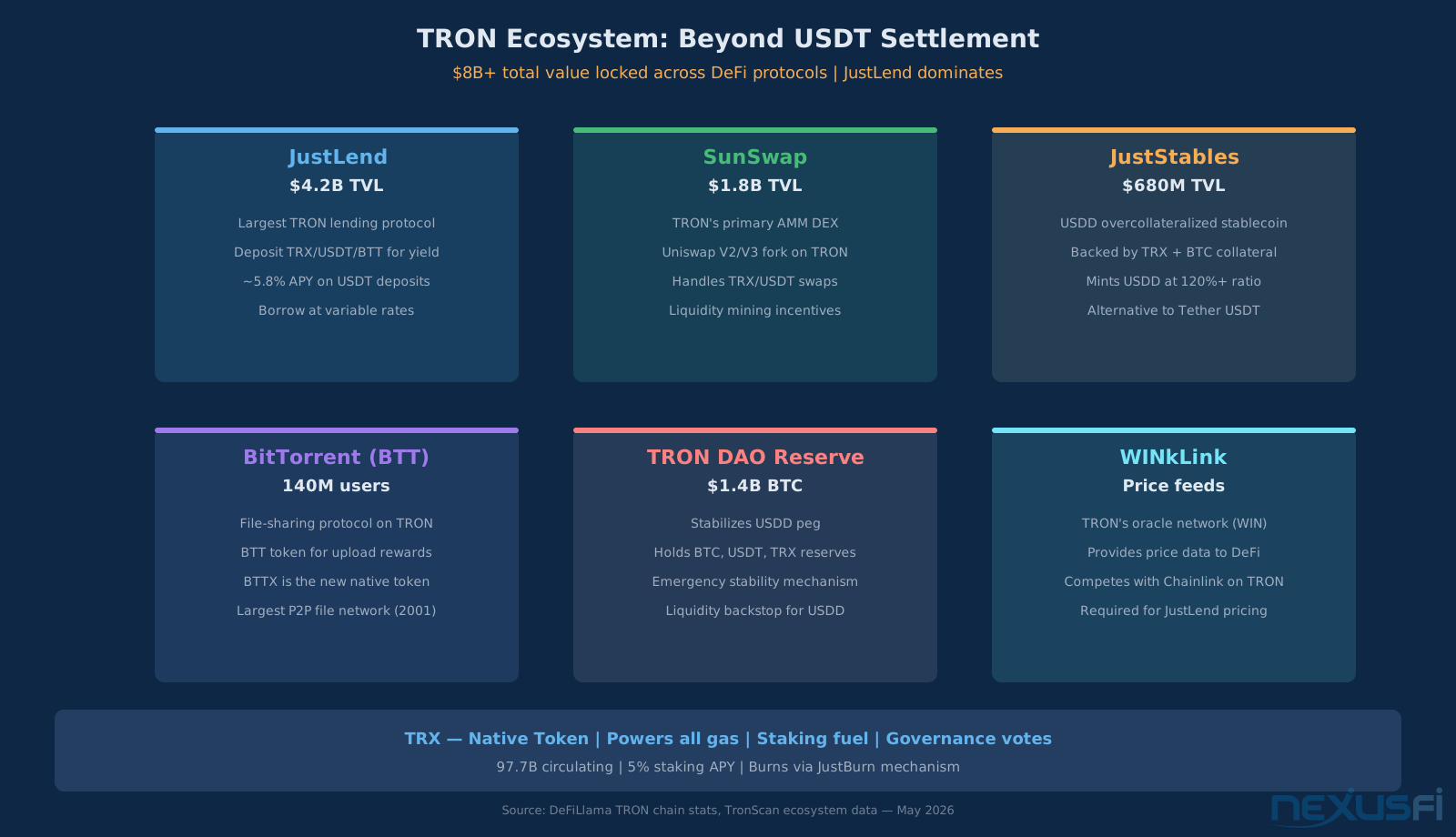
WINkLink (WIN). TRON's oracle network, providing price feeds to DeFi protocols. WIN is a separate token. WINkLink is functionally necessary for JustLend and SunSwap to operate with accurate price data — it's less prominent than Chainlink but fills the same infrastructure role for TRON.
For context on how TRON's DeFi compares to the broader environment, see the Cryptocurrency Trading Fundamentals overview and the dedicated Stablecoins Guide.
Developing World Adoption: TRON's Real-World Moat #
As @Miesto noted in a NexusFi Cryptocurrency forum discussion, blockchain technology's practical impact in markets like Africa depends on adoption infrastructure, not technical specifications alone — "fundamentals believing blockchain technology will have a major impact on diverse areas like Africa" is being realized through TRON USDT payment rails (NexusFi, 2021, 2 thanks).
The most underappreciated aspect of TRON's bull case is its emerging market adoption. TRON isn't winning in DeFi, gaming, or NFTs — it's winning in cross-border payments and dollar access for populations excluded from the traditional banking system.
Southeast Asia accounts for an estimated 42% of daily USDT-on-TRON volume. Vietnam and Cambodia lead in P2P dollar transfers between traders and merchants. The typical use case: a textile manufacturer in Cambodia receives payment in USDT from a buyer in China. The transfer costs $0.001 and settles in 19 seconds. The alternative — SWIFT wire transfer — costs $25-50 and takes 1-3 business days.
East Africa (Nigeria, Kenya, Tanzania) represents approximately 18% of volume, primarily remittances. A Nigerian worker sending dollars home from UAE uses TRON USDT to avoid Western Union's 8-12% fees. The USDT arrives in minutes; the recipient exchanges to naira at a local crypto shop or holds it as dollar savings against naira devaluation (which has exceeded 60% annually in recent years).
Latin America (Venezuela, Argentina, Brazil) accounts for 15% of volume. In Venezuela and Argentina specifically, TRON USDT functions as a shadow dollar savings account. With annual peso devaluation consistently above 100%, holding USDT on TRON is the rational store of value for anyone without a US bank account.
The key insight for traders: this adoption is structural, not speculative. It doesn't require a bull market to persist. Even during the 2022-2023 crypto winter when most DeFi usage collapsed, TRON USDT transfer volumes held up because the use cases (remittances, savings, trade payments) continued regardless of crypto sentiment.
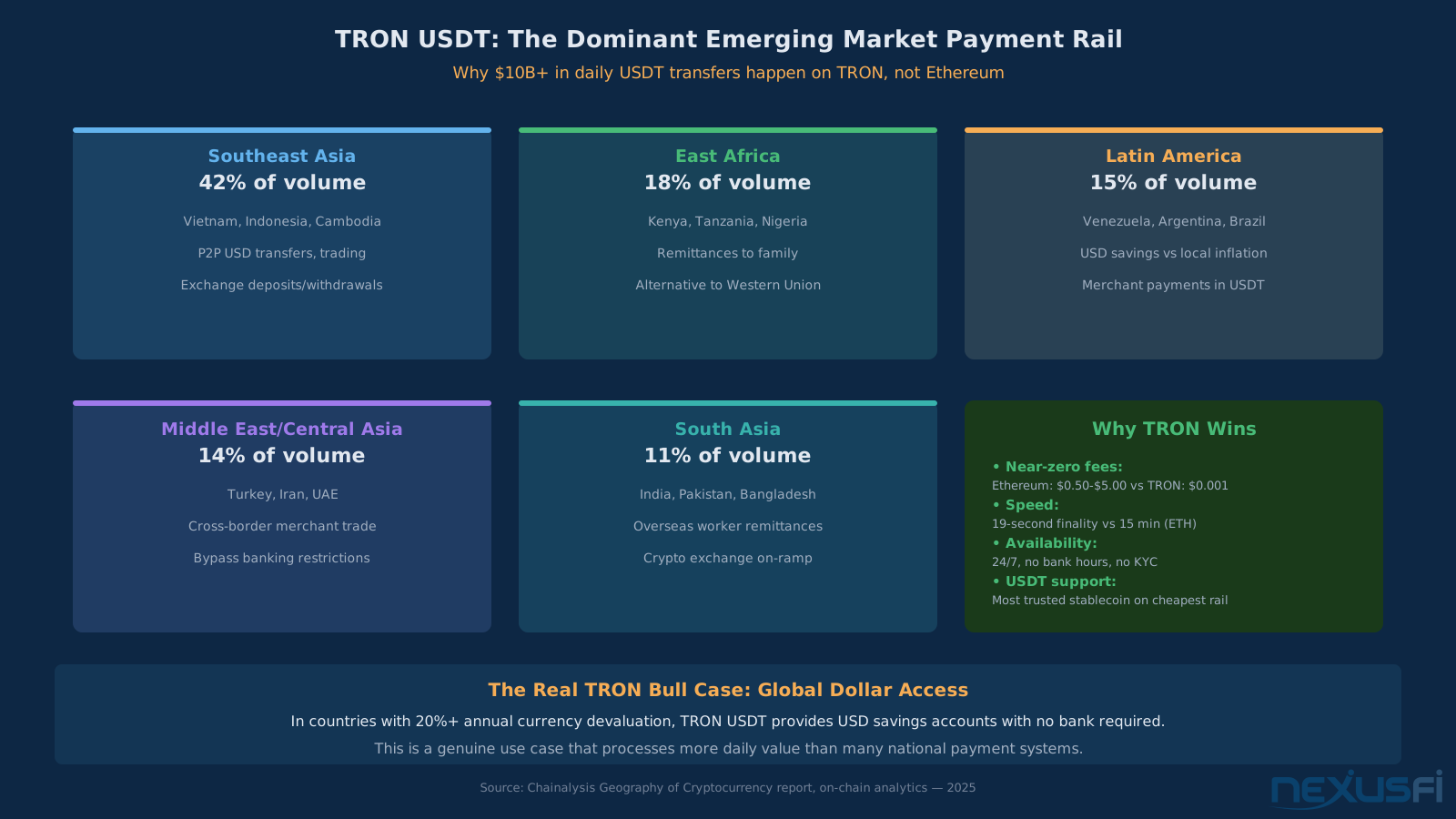
The emerging market USDT use case is TRON's strongest competitive moat. Network effects are powerful here — once payment networks standardize on TRON TRC-20, switching costs are high. This is different from DeFi TVL, which migrates to wherever yields are best.
What Drives TRX Price: Five Factors Ranked #
TRX price doesn't follow a simple story. Five distinct factors drive it, with different timeframes and predictability.
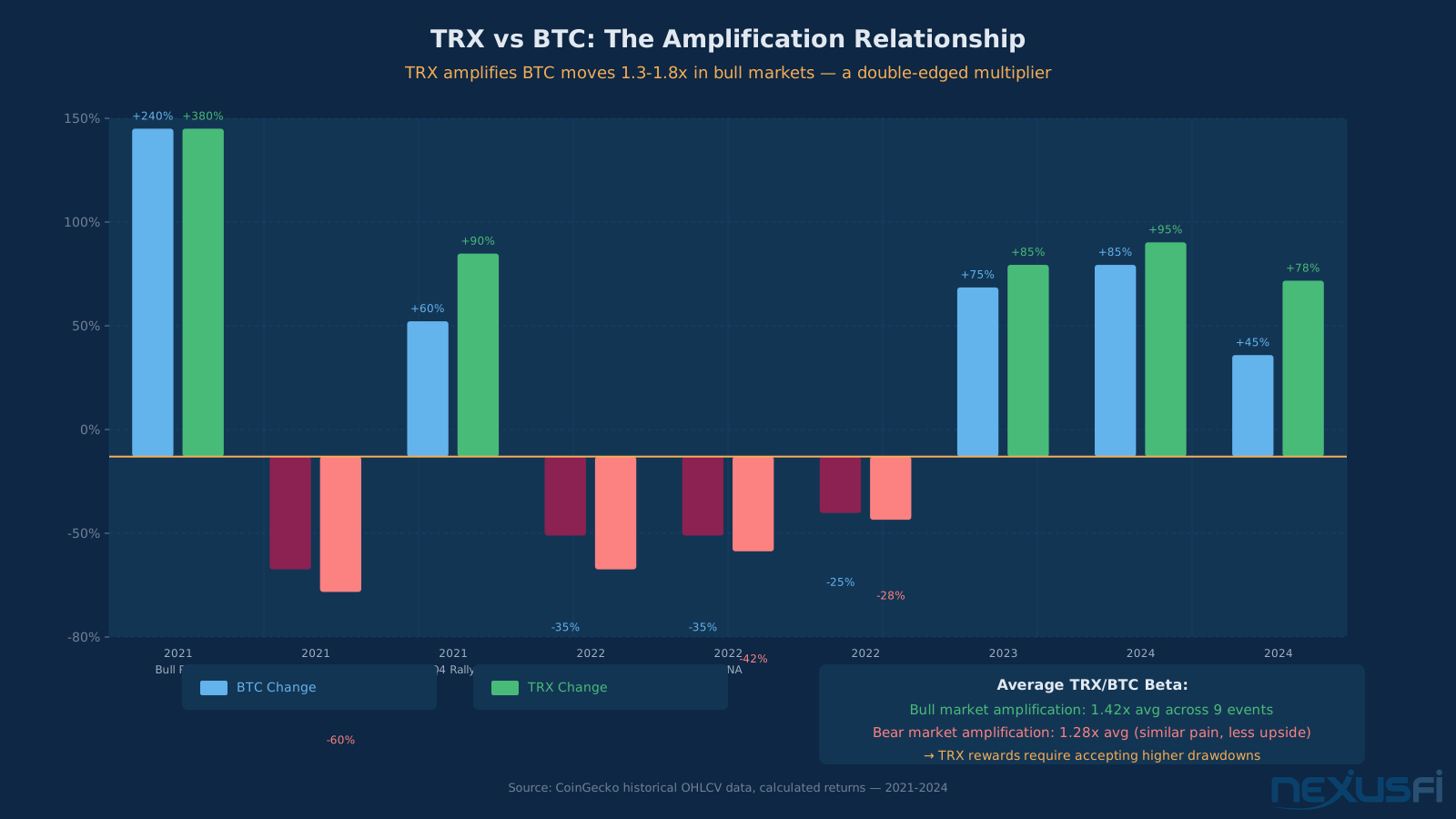
1. Bitcoin and crypto market correlation (most important, always active). TRX has a 0.75-0.85 correlation with BTC during major market moves. A 30% BTC rally typically produces a 40-60% TRX rally. A 40% BTC drawdown produces a 55-70% TRX drawdown. This dominates in the short term — no TRON-specific trigger overcomes a BTC bear market.
2. USDT transfer volume and network activity (medium-term fundamental). Rising on-chain USDT volumes increase energy demand, which increases TRX staking demand, which reduces liquid TRX supply. Watch TronScan's daily transaction count and USDT transfer volume. Sustained increases (>20% over 30 days) without corresponding TRX price moves can indicate setup for outperformance.
3. Justin Sun news and SEC case developments (event-driven, binary outcomes). The March 2023 SEC charges caused a 15% drop. Positive developments (settlement, case dismissal) could be a 20-40% trigger. Negative developments (criminal charges, major asset freezes) could be much worse. This is the headline risk to monitor weekly.
4. DeFi TVL and JustLend/SunSwap activity (lagging indicator). TRON DeFi TVL as a leading indicator is less reliable than for other chains because much of the TVL is USDT deposits (which don't fluctuate with TRX price). Monitor for absolute TVL changes at DeFiLlama — drops below $6B would signal ecosystem erosion.
5. Competitor chain USDT adoption (long-term existential). Solana, Base, and StarkNet have all launched improved USDT support. If Tether redistributes USDT allocation away from TRON, TRX demand falls structurally. This is a slow-moving risk but the most important long-term question for TRX holders.
How to Trade TRX: Spot, Staking, and Strategy #
As @tigertrader described in a NexusFi Psychology and Money Management discussion, "adding to the position allows you to maximize profits" when market direction confirms — a principle that applies directly to scaling into TRX positions when BTC trend and TRON network activity align (NexusFi, 2011, 8 thanks).
TRX is a liquid, widely available asset with meaningful derivative markets. The trading setup is more straightforward than many altcoins because the use case is well-established rather than speculative.
Spot trading venues. TRX is available on every major exchange: Binance (largest volume), Bybit, OKX, Coinbase, Kraken, and Huobi. Binance dominates with roughly 55-60% of spot volume. Spreads are tight (0.01-0.03%) at major venues. Avoid low-volume exchanges — TRX liquidity is concentrated and thin books on minor venues can cause significant slippage.
@mscholder framed the blockchain investment question well in a NexusFi Cryptocurrency forum thread: the technology "might possibly be similar to the launch of the internet" — meaning the infrastructure that wins will be determined by adoption patterns, not technical specifications alone. TRON's USDT network effect is exactly this kind of infrastructure moat (NexusFi, 2021, 7 thanks).
Perpetuals and futures. TRX perpetuals are available on Binance, Bybit, OKX, and dYdX. Standard leverage goes to 20x; some venues offer 50x (not recommended). Funding rates in bull markets run 0.03-0.08% per 8 hours — about 1-2% per week. For positions held longer than 5-7 days, spot consistently beats perps on cost due to funding.
Staking while holding. If you're holding TRX for 30+ days, not staking it is leaving 4-6% APR on the table. Staking options:
- Direct staking via TronLink wallet -- Lock TRX, vote for SRs, earn ~4-5% APR in TRX. Minimum: 1 TRX.
- Exchange staking (Binance, OKX) -- Flexible staking, immediate withdrawals, typically 2-4% APR. Less yield but fully liquid.
- JustLend deposits -- Deposit USDT on TRON for 5-7% APY. Indirect TRX exposure (you hold USDT but need TRX ecosystem to survive).
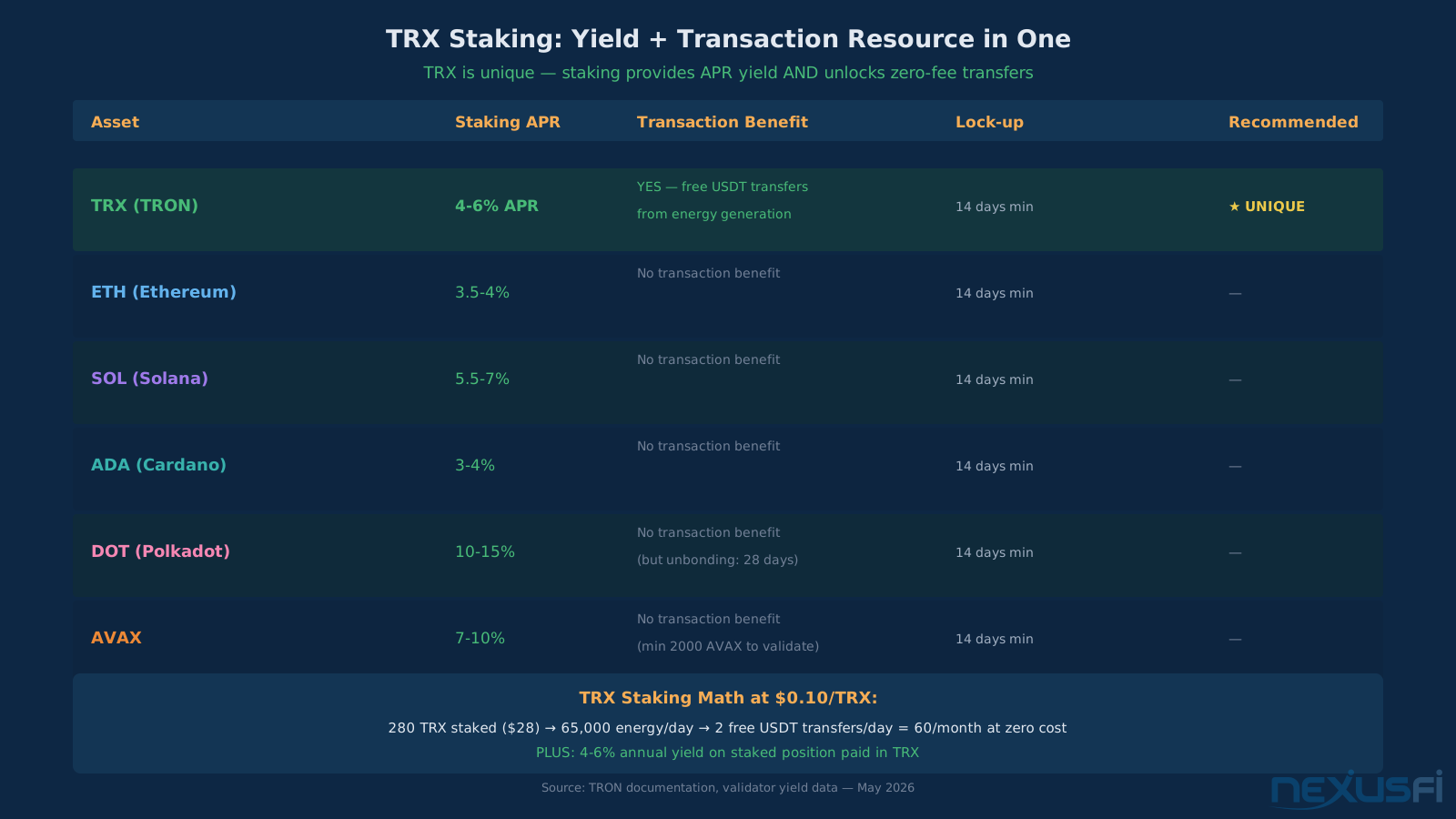
Staking via TronLink locks your TRX for the lock-up period (typically 14 days). If TRX drops 30% during a lock-up, you cannot exit. Size staked positions based on what you can hold through a drawdown.
@jamiej83 laid out the core principle in a NexusFi risk management discussion: position sizing requires two elements — "number of ticks risked" and "dollar amount risked" — both of which scale differently for TRX given its 70-80% annualized volatility (NexusFi, 2012, 18 thanks).
Position sizing for TRX. TRX's 70-80% annualized volatility requires careful sizing. At 2% account risk rule: with a $50,000 account, $9,000 max TRX notional with a 10% stop. Most traders hold too much TRX because $0.10/token feels "cheap" — but position size is determined by notional exposure and stop distance, not token price.
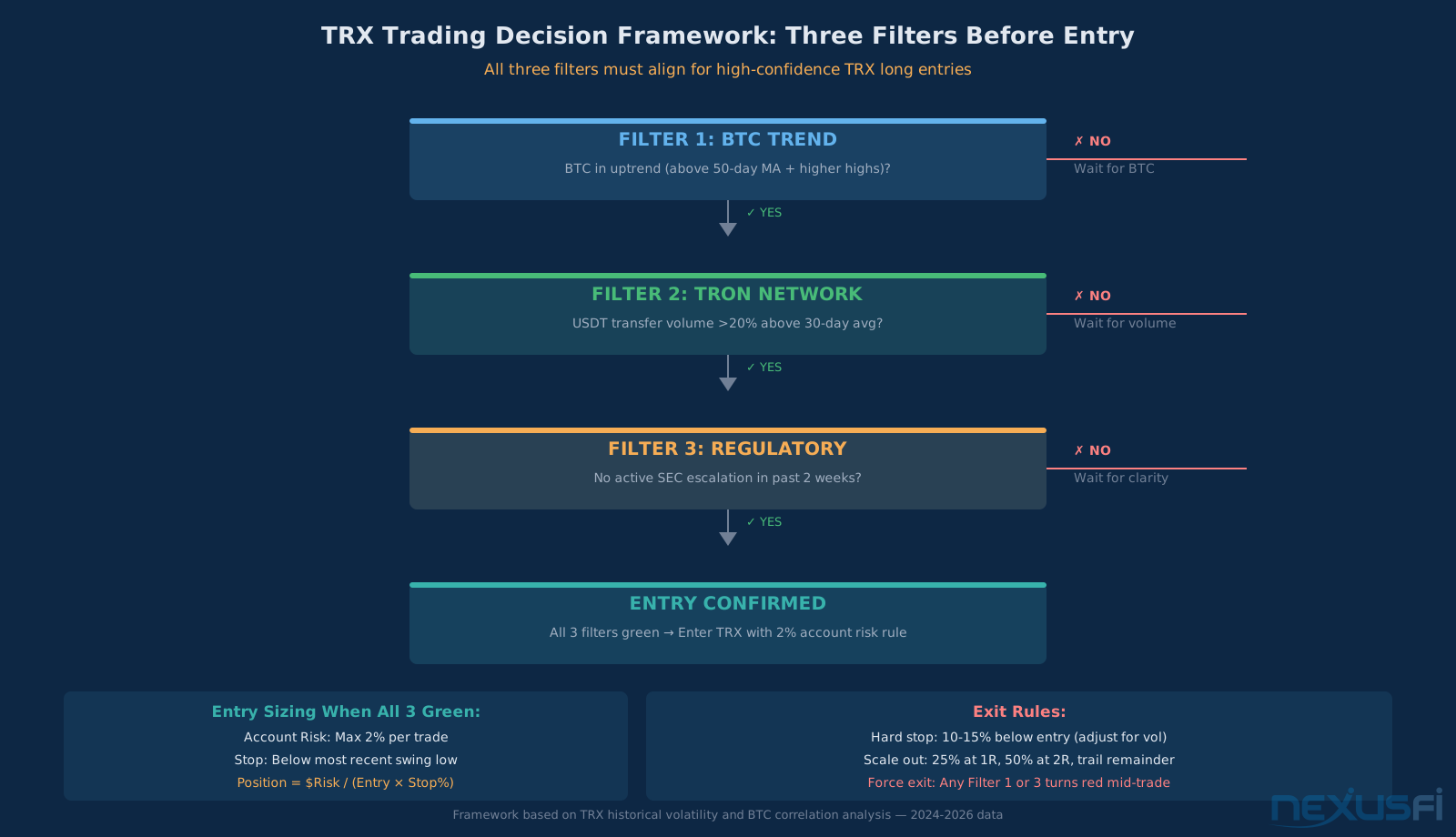
Entry approaches that work.
- BTC-correlated momentum entries: Enter TRX when BTC breaks a compression range to the upside. TRX amplifies BTC moves by 1.3-1.8x in bull markets. Use BTC as directional filter.
- Fundamental trigger positioning: USDT transfer volume increasing >25% month-over-month without TRX price response creates a setup. Energy demand rising with flat TRX price indicates institutional accumulation.
- Event-driven SEC plays: Any material SEC news creates a tradeable event. Position pre-announcement if court dates are known; manage via options if available.
For the broader context on crypto trading approaches, see Cryptocurrency Trading Fundamentals and Crypto Derivatives Trading.
Risk Factors: Where the TRON Thesis Breaks #
TRON has a unique risk profile compared to other major L1s. Most blockchain risks are generic (regulation, bear markets, competition). TRON has several specific risks that require separate analysis.
@SpeculatorSeth's early caution in a NexusFi Cryptocurrency forum post that "much of their movement is based purely on manipulation" proved prescient for TRON specifically — the SEC's 2023 charges documented exactly this, with wash trading schemes designed to artificially inflate TRX volumes (NexusFi, 2017, 3 thanks).
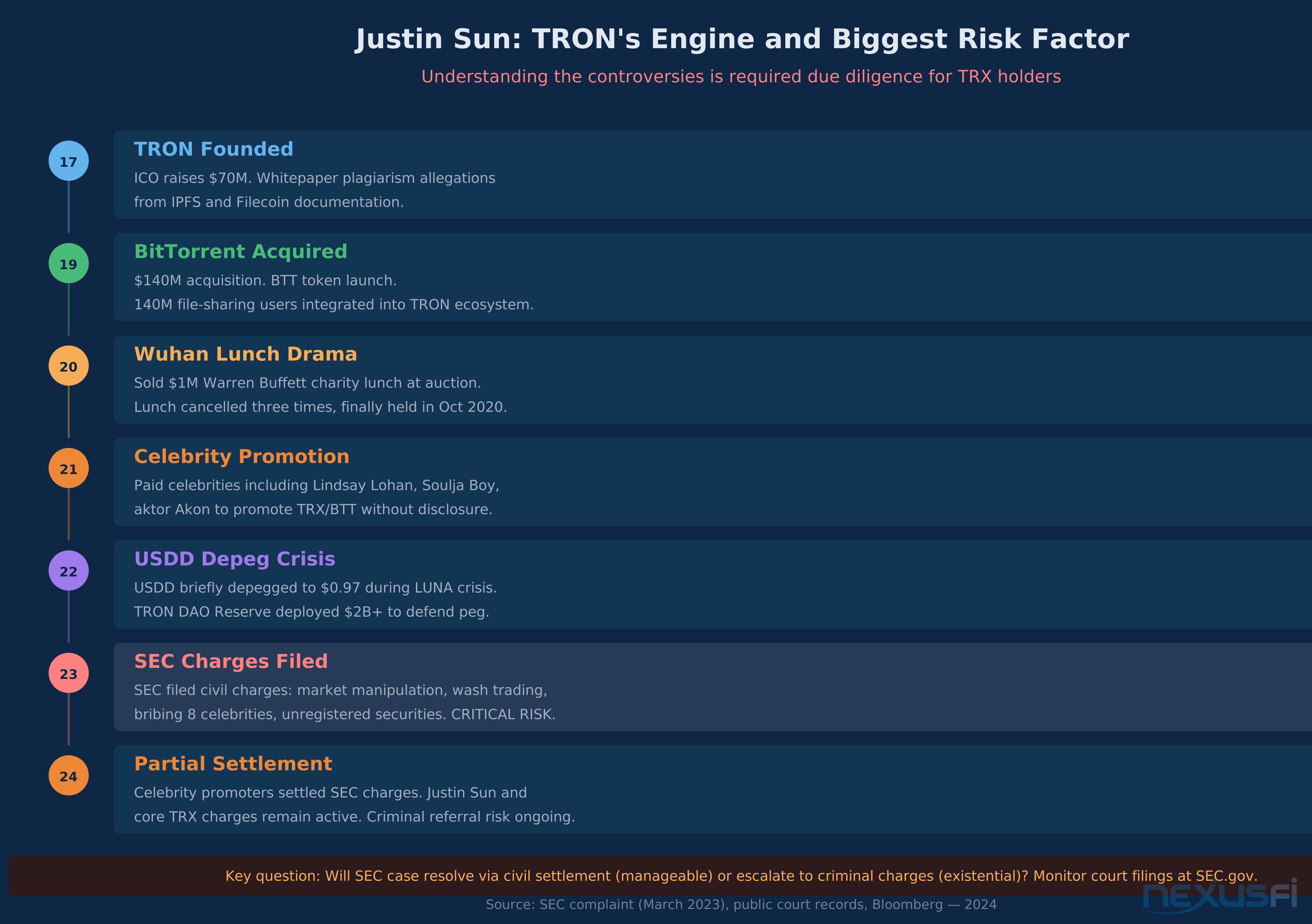
Justin Sun regulatory risk. The SEC filed charges in March 2023 alleging Sun orchestrated a scheme to artificially inflate TRX and BTT trading volume through wash trading, bribed eight celebrities to promote TRX without disclosing compensation, and operated TRX and BTT as unregistered securities. The civil case is significant; the more serious tail risk is criminal referral. If Sun faces criminal proceedings that result in asset freezes or forced liquidation of his TRX holdings (~13.7B TRX), the market impact would be severe. Sun settled portions of the celebrity-related allegations in early 2024, but the core manipulation charges remain active.
Centralization risk. 27 Super Representatives is genuinely centralized. The entities that control SR votes — exchanges, Justin Sun-affiliated accounts, wealthy TRX holders — could theoretically coordinate to alter the network. This isn't theoretical FUD; it's a design feature that TRON made explicitly to achieve throughput. Traders need to decide if this risk is already priced in (TRON's market cap is well below peers with stronger decentralization).
USDT migration risk. Tether decides where USDT lives. Currently, TRON is Tether's preferred high-volume transfer chain. But Tether has been diversifying — USDT is now also on Solana, Avalanche, Base, and StarkNet. If Tether redirects USDT growth away from TRON (better economics, regulatory pressure, technical reasons), TRX demand drops structurally. TRON doesn't control its own destiny here.
USDD depeg tail risk. The May 2022 depegging event was a warning. USDD is backed by collateral managed by TRON DAO Reserve, but the backing includes TRX itself. A severe TRX price decline reduces the value of TRX collateral, which could trigger a LUNA/UST-style death spiral if confidence breaks. The 190% collateralization ratio provides significant buffer, but LUNA appeared well-collateralized right until it wasn't.
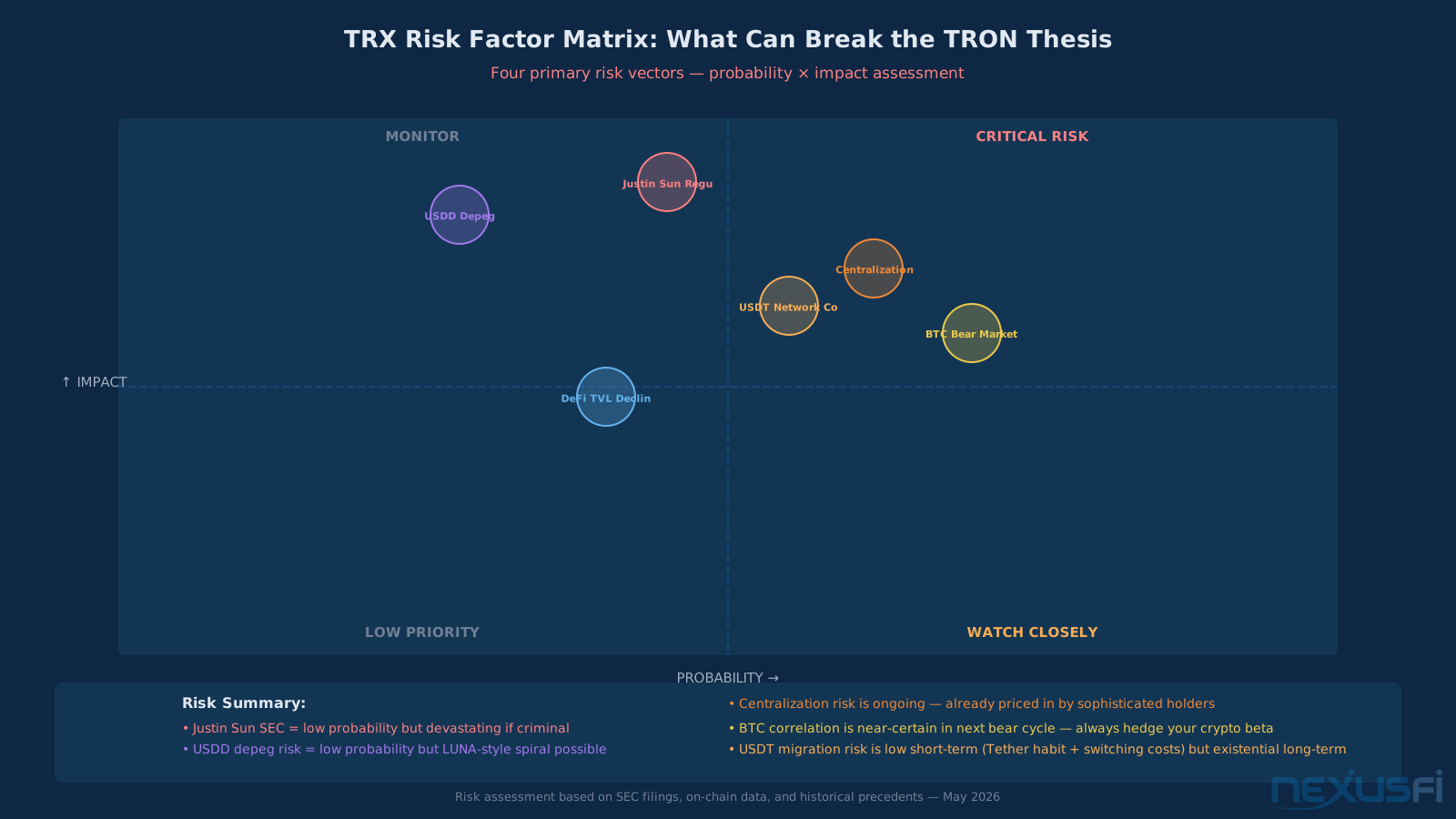
BTC correlation in bear markets. No utility argument saves TRX in a crypto bear market. The 0.75+ correlation means a 50% BTC drawdown produces 60-70% TRX drawdown. USDT transfer volumes staying high during a bear market is a positive fundamental signal, but price follows BTC macro first.
Never hold TRX as a "safe" crypto because it has real utility. Utility affects the long-term floor, not the short-term beta to BTC drawdowns. Size so and use stops as you would with any volatile asset.
The Bottom Line on Trading TRX #
TRON is a genuinely useful network running a controversial operation. The USDT transfer dominance is real, the emerging market adoption is structural, and the $8B+ DeFi ecosystem is larger than most traders appreciate. These are not narrative — they're on-chain facts verifiable on TronScan.
What's also real: Justin Sun's legal troubles, the 27-SR centralization, and the existential dependency on Tether's continued preference for TRON as its primary transfer chain. These risks aren't theoretical — they're specific, quantifiable, and ongoing.
TRX at $0.10 represents a market that has already partially discounted these risks. The 2018 ATH of $0.30 was pure speculation; TRX today has far more genuine utility than it did at that price. Whether that utility is worth the regulatory and centralization premium is a judgment call. The on-chain data is public. The SEC filings are public. The energy model and staking mechanics are understandable. This is a case where doing the primary research pays off.
For active traders: TRX is most cleanly traded as a BTC-correlated high-beta asset with specific event risk around SEC case developments. The energy model and USDT volume are useful for long-term fundamental conviction, not for short-term price prediction. Size for the volatility (70-80% annualized), not for the narrative.
Knowledge Map
Prerequisites
Understand these firstGo Deeper
Build on this knowledgeCitations
- — Killer Instinct and the Home Run Mentality (2011) 👍 8“Adding to the position allows you to maximize profits, but it is important that you are adjusting your position according to the market's price action.”
- — Concerning risk per trade sizing (2012) 👍 18“Position sizing has 2 key elements: 1) number of ticks risked and 2) dollar amount risked. DEFINE your risk without knowing your objectives.”
- — Michael Burry warns the Mother of All Crashes is coming (2021) 👍 2“No leverage and a time horizon of at least 5 years based fundamentals believing blockchain technology will have a major impact on diverse areas like Africa.”
- — Cryptocurrency poll (2017) 👍 3“Much of their movement is based purely on manipulation. Without the gift of hindsight, it is difficult to price an asset that derives its value purely from scarcity and perception.”
- — How much do you know about Bitcoin? (2021) 👍 8“I don't know that there is any real-world use for them outside of trading, other than as a store of value. But I do see growth in trading, which has already happened.”
- Tether Transparency — Tether USDT Distribution by Chain (2026)
- DeFiLlama — TRON Chain TVL and DeFi Analytics (2026)
- — Becoming A Better Trader (2021) 👍 9“It's not beyond me that me posting about cryptocurrency might be annoying to some of you. Just ignore me! Alright so it was a bloodbath in crypto -- understanding volatility regimes is key to surviving the bloodbaths.”
- — Bitcoin Futures by the CME (2017) 👍 3“We do not know today which cryptocurrency and blockchain will prevail in the long run. Consider also a fundamental view -- blockchain selection is not a solved problem.”
- — Cryptocurrencies 101 -- what I've learned so far (2021) 👍 7“Blockchain technology might possibly be similar to the launch of the internet than a repeat of the 1636-7 Dutch tulip bulb market -- the infrastructure matters more than any single asset built on it.”