



Credit Market Data for Futures Traders: HY Spreads, CDS, MOVE, and the Fixed Income Signals That Move ES and NQ
Credit Market Data for Futures Traders: HY Spreads, CDS, MOVE, and the Fixed Income Signals That Move ES and NQ
Overview #
Most futures traders watch price. Experienced futures traders also watch credit.
Credit markets — high-yield bonds, investment-grade corporate debt, credit default swaps, and rate volatility measures like the MOVE index — regularly price stress before equities do. That's not a coincidence. It's structural. Credit investors are focused on one thing: can this borrower pay back what it owes? They're naturally pessimistic, which makes them fast to move when conditions deteriorate. Equity investors are focused on upside. That optimism makes them slower to reprice risk.
The result is a consistent lead-lag relationship that futures traders can exploit. When high-yield spreads start widening, or HYG starts underperforming SPY, or MOVE spikes before equities budge — those are signals that credit is repricing risk equities haven't priced yet.
Understanding this doesn't require a Bloomberg terminal. What it requires is knowing what to watch, where to get the data, and how to read the signals. This article covers all three.
The topic matters regardless of whether you trade ES, NQ, or YM. Credit is the plumbing beneath the equity market. When the plumbing is clean, rallies hold. When the plumbing starts leaking, that's when the rallies that look strongest are actually the most dangerous.
The Leading Indicator Hierarchy #
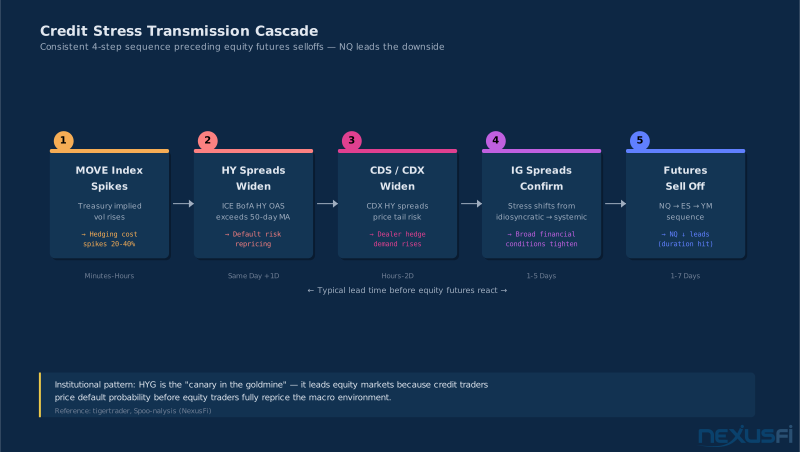
Credit stress doesn't hit equities all at once. It arrives in a consistent sequence that futures traders can track in real time.
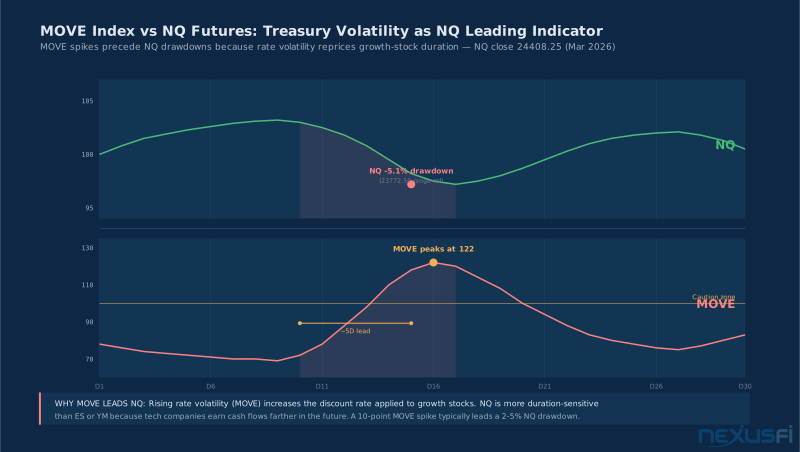
Step 1: MOVE Index spikes. The MOVE index measures implied volatility in Treasury options — basically, how nervous the bond market is about rate uncertainty. When the Fed is unpredictable or economic data is volatile, MOVE rises. This reprices the discount rate used to value future cash flows, hitting growth-heavy indices like NQ first.
Step 2: High-yield spreads widen. The ICE BofA High Yield OAS starts moving up, often within hours to a day after a MOVE spike. HY spreads reflect default risk expectations and risk appetite. When they widen, credit investors are demanding more compensation to hold junk debt — a signal they're getting nervous about growth and liquidity.
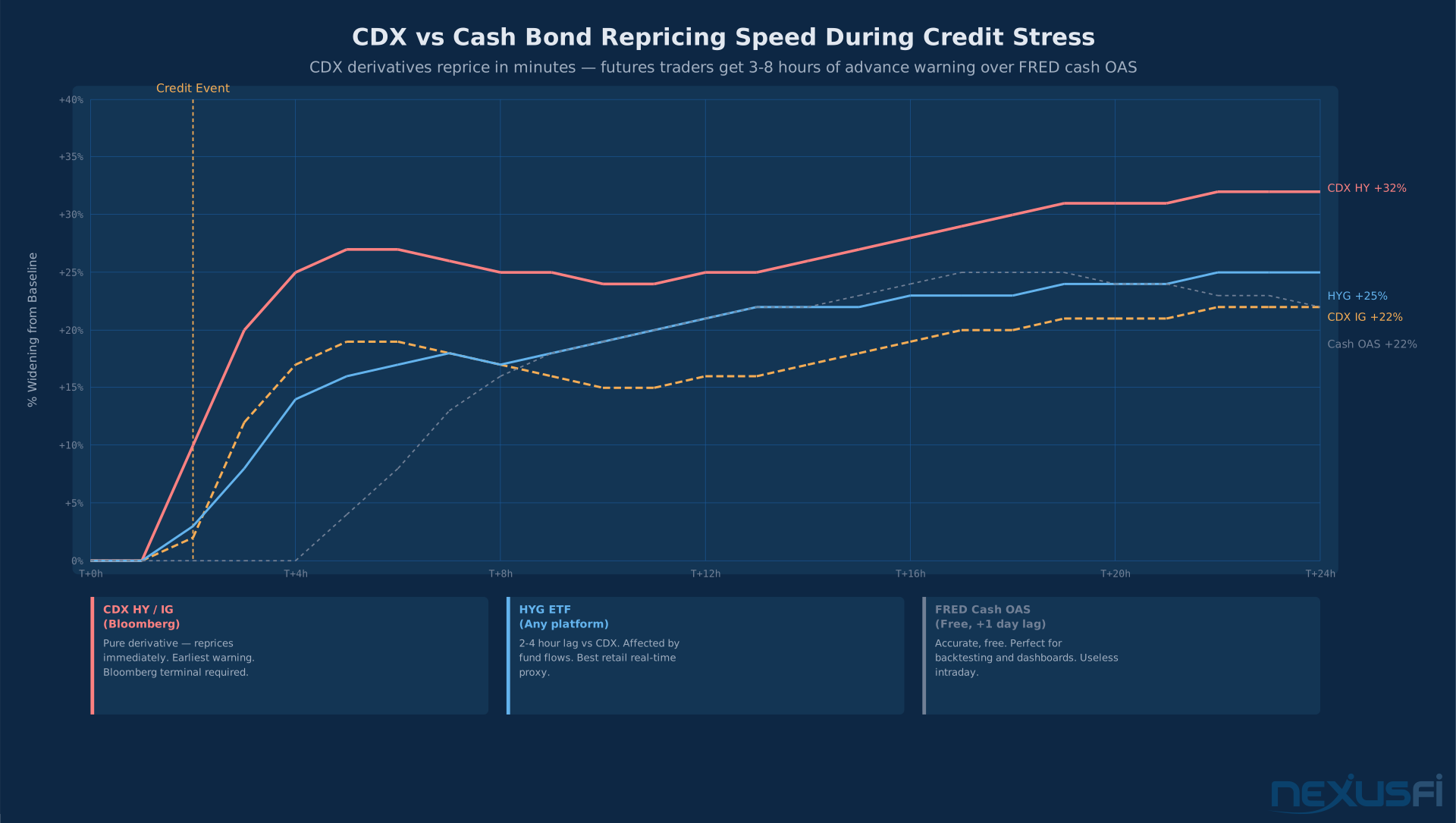
Step 3: CDS and CDX indices widen. Credit default swap indices (CDX HY, CDX IG) are often faster than cash bond markets to reprice because they're pure derivatives. CDX widening confirms that institutional desks are actively hedging default risk. Major bank CDS widening signals funding stress or systemic concern.
Step 4: Investment-grade spreads confirm. When IG spreads start widening after HY — especially widening together — the stress has become systemic rather than idiosyncratic. This is when equities typically can't hold.
Step 5: Equity futures sell off. NQ leads because it carries the most duration sensitivity. ES follows as the broad macro barometer. YM may initially hold up, but in true systemic stress, it catches down.
The lead time across this sequence varies — sometimes hours, sometimes days or weeks. What's remarkably consistent is the order. Knowing this sequence gives futures traders an informational edge that pure price-watchers don't have.
High-Yield Spreads: The Primary Signal #
High-yield spreads are the core credit signal for equity futures traders.
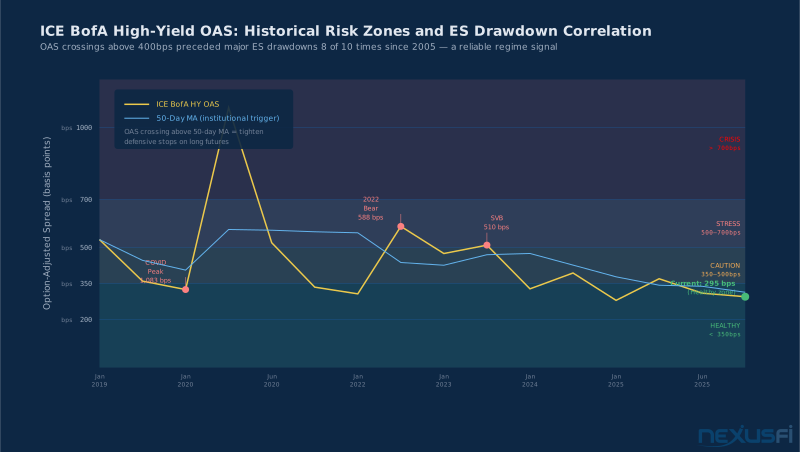
The ICE BofA US High Yield Option-Adjusted Spread (OAS) measures the yield premium that junk-rated corporate bonds pay above equivalent Treasury bonds, adjusted for embedded call options. When companies are healthy, investors are comfortable taking credit risk for a modest premium — maybe 300--350 basis points. When conditions deteriorate, that premium can surge to 500, 700, or even 1,000+ basis points.
For futures traders, the most actionable signal is momentum and rate-of-change, not absolute level. A spread moving from 350 to 390 bps in three days matters more than a spread sitting at 450 bps going nowhere. It's the velocity of spread movement that signals shifting risk appetite.
The 50-Day Moving Average Rule: When the ICE BofA HY OAS crosses above its 50-day moving average with momentum, institutional credit desks begin reducing equity beta. This happens before equity indices typically respond. Tigertrader documented this pattern repeatedly: "Keep an eye on high yield credit and credit spreads and on the $/yen — look for a correlation in credit to lead the market in either direction."
The 50-day moving average cross is your practical HY signal trigger. When HY OAS crosses above its 50-day MA and stays there for 2+ days, institutional credit desks begin reducing equity beta. Check FRED (BAMLH0A0HYM2) each morning — free data updated daily. Above +10% deviation from 50-day average means start reducing long exposure.
Historical HY OAS thresholds for context (not hard rules):
- Below 350 bps: Healthy risk appetite. Buy-the-dip works. Breakouts follow through.
- 350--500 bps: Caution. Rallies possible but less reliable.
- 500--700 bps: Stress environment. Equities vulnerable to trend days and gaps.
- Above 700 bps: Severe risk-off. Recessionary fear is being priced.
- Above 1,000 bps: Crisis-level. March 2020 briefly touched this zone.
The better methodology is Z-scores — measuring how stretched the spread is relative to its trailing 60-90 day mean and standard deviation. A Z-score above 2.0 (spread more than 2 standard deviations above its average) is the institutional warning level, regardless of absolute bps.
Free data access: The ICE BofA HY OAS is available on FRED (Federal Reserve Economic Data) under series code BAMLH0A0HYM2. This is daily data with a one-day lag — ideal for building dashboards and backtesting. For intraday access, you need Bloomberg or a data vendor.
The sentiment data universe has expanded, but HYG remains the most direct and liquid equity risk proxy from credit markets.
Investment-Grade Spreads: Breadth Confirmation #
High-yield spreads give you the first signal. Investment-grade spreads tell you how serious the stress has become.
The ICE BofA US Corporate Index OAS (FRED code: BAMLC0A0CM) measures spreads on investment-grade corporate debt — companies with BBB ratings and above. Because these are higher-quality borrowers, IG spreads are slower to move than HY.
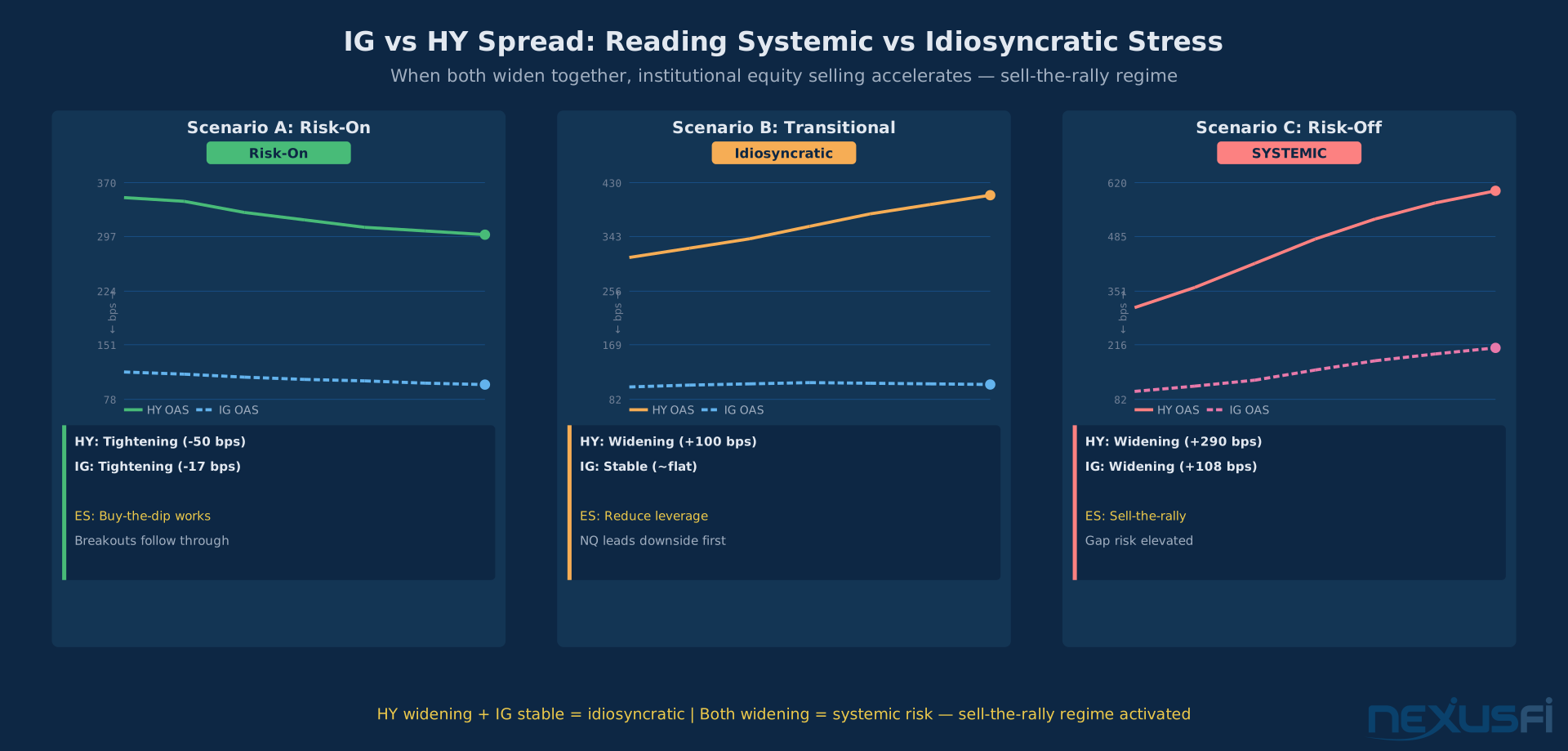
The critical distinction: HY widening while IG stays stable = sector-specific or growth concern. HY and IG widening together = systemic risk. When both are moving, financial conditions are broadly tightening and equities are most at risk.
Historical IG OAS ranges for context:
- Below 100--120 bps: Benign. Accommodative financial conditions.
- 120--160 bps: Watchful. Some stress but not alarming.
- 160--250 bps: Elevated. Equity headwinds increasing.
- Above 250--300 bps: Significant systemic concern.
The HY--IG differential (HY OAS minus IG OAS) is worth tracking as its own indicator. When it's compressing, credit quality differentiation is narrowing — typically risk-on. When it's expanding rapidly, markets are making sharper distinctions between creditworthy and distressed borrowers. That differentiation typically precedes equity volatility.
LQD (iShares Investment Grade Corporate Bond ETF) is the tradable IG proxy. Watch it relative to HYG.
CDS and CDX Indices: The Fastest Signals #
Credit default swaps are the fastest credit market instruments. Unlike cash bonds, which depend on secondary market liquidity, CDS are derivatives that can reprice immediately when new information arrives.
CDX Indices: CDX HY is an index of high-yield company CDS; CDX IG is an index of investment-grade company CDS. Both trade in basis points per year. CDX HY widening before cash bond spreads widen signals institutional desks hedging default risk before the cash market catches up.
Bank CDS: Financial sector CDS deserve special attention. When JPMorgan, Bank of America, Morgan Stanley, Goldman Sachs, and Citigroup CDS spreads widen simultaneously, it signals funding or counterparty risk concerns that can destabilize the entire equity market. March 2023's regional banking stress showed up in bank CDS before most equity traders reacted.
Single-name CDS: Tracking CDS on major players in energy, real estate, retail, or financials can give early warning of sector-specific stress that eventually bleeds into broader index futures. Energy sector CDS widening during crude oil selling can be a precursor to ES weakness.
CDX data typically requires Bloomberg or a derivatives data vendor. For retail futures traders, monitoring CDX movements through credit-focused news sources during market-moving sessions is a workable substitute.
The volatility data article covers related VIX and term structure signals. Credit signals and volatility signals reinforce each other when both are moving in the same direction.
MOVE Index: The Rate Volatility Link to NQ #
The MOVE index is to bonds what VIX is to equities: a measure of implied volatility derived from options prices. Specifically, MOVE measures the implied volatility of U.S. Treasury options across multiple maturities, weighted into a single "bond market fear gauge."
Why MOVE matters specifically for NQ: NQ is the most duration-sensitive major U.S. equity index because the Nasdaq-100 is dominated by large-cap technology companies that earn the bulk of their cash flows far in the future. A higher discount rate — which is what rising rate volatility signals — compresses the present value of those future earnings more aggressively than it does for value-oriented indices like YM.
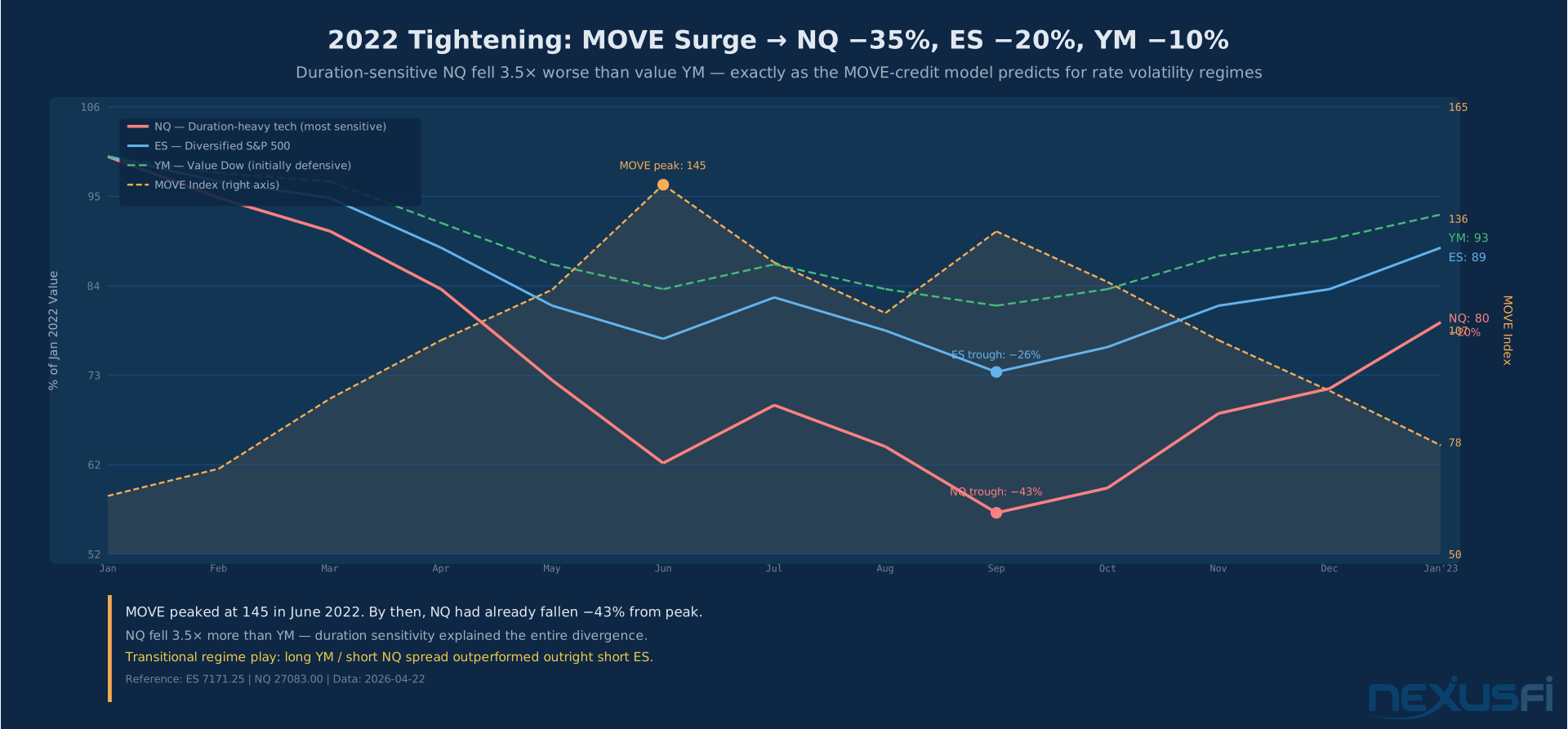
The 2022 market demonstrated this clearly. As MOVE surged during the Fed's aggressive rate hiking cycle, NQ fell approximately 35% while ES fell about 20% and YM fell roughly 10%. The duration sensitivity differential was entirely consistent with what the credit model predicts.
Practical MOVE thresholds:
- MOVE below 75-85: Subdued. Supportive for NQ longs.
- MOVE 85-100: Elevated. Monitor NQ positions.
- MOVE 100-120: Warning zone. Tighten stops on NQ longs.
- MOVE above 120: High alert. Consider reducing NQ exposure much.
These aren't magic numbers — they're regime indicators. A MOVE at 110 trending lower reads differently than a MOVE at 90 that just spiked from 60. Context and direction matter alongside absolute level.
MOVE above 100 is a concrete signal to stop adding NQ longs. In 2022, NQ fell 3.5x more than YM precisely because of duration sensitivity — NQ's cash flows are 3-5x longer duration than value-heavy YM. MOVE quantifies exactly how much rate uncertainty is being priced. When MOVE spikes, the math punishes NQ longs far more than any other major futures contract.
MOVE itself is a Bloomberg index. For retail traders, several platforms and financial media outlets report MOVE levels during volatile markets. Tracking MOVE alongside VIX gives a more complete vol picture — when both are rising simultaneously, the risk-off signal is much stronger than when only one is elevated.
TED Spread: Funding and Liquidity Stress #
The TED spread has a long history in credit market analysis. Originally defined as the difference between three-month LIBOR and three-month Treasury bill yields, it measured the premium banks charged each other to borrow versus the risk-free rate — a signal of interbank stress or counterparty risk.
CobblersAwls described the TED spread context in the STIR & Bond Spread Thread: "I'd like to start discussions on trading spreads and packs in the STIRs as well as how STIRs can be combined with Bonds to create spreads such as the TED spread."
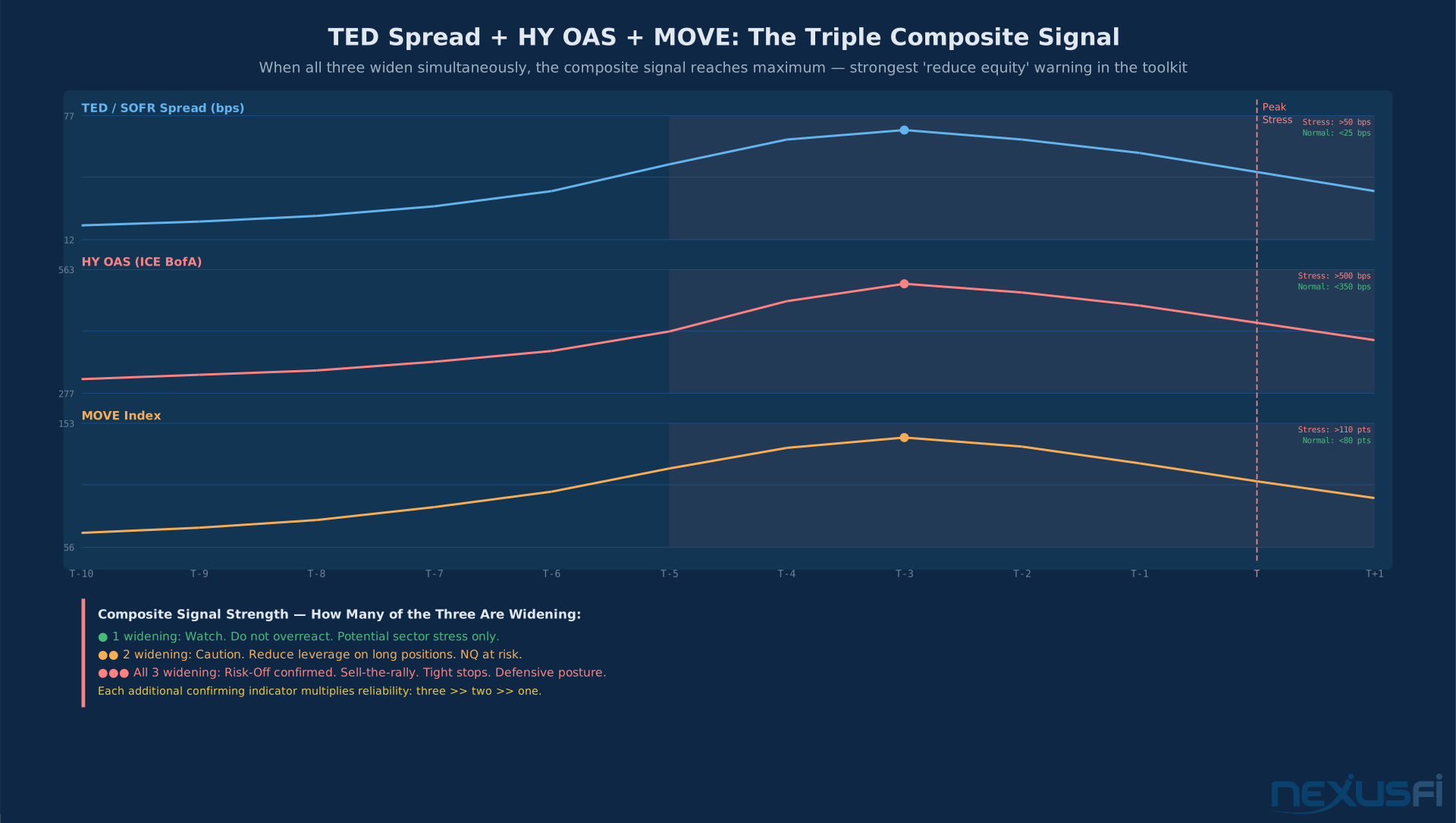
In isolation, TED movements aren't always meaningful for daily equity futures trading. But when TED, HY spreads, and MOVE are all moving in the same direction, the composite signal is among the strongest "reduce equity exposure" indicators available. Persistent TED widening combined with HY spread widening suggests that funding conditions are tightening at the same time risk appetite is deteriorating — a feedback loop that can accelerate equity selling.
FRED provides historical TED spread data and related SOFR/T-bill spread series. Bloomberg offers real-time SOFR-based funding spread monitoring.
Data Sources: Where to Get This Data #
FRED (Federal Reserve Economic Data) — Free
Key series: BAMLH0A0HYM2 (HY OAS), BAMLC0A0CM (IG OAS), BAMLC0A4CBBBEY (BBB OAS). Daily data with one-day lag — ideal for dashboards and backtesting. For live intraday, you need Bloomberg.
ETF Proxies — Real-Time, Any Platform
- HYG (iShares iBoxx $ High Yield Corporate Bond ETF) — most liquid HY proxy
- JNK (SPDR Bloomberg High Yield Bond ETF) — second most liquid HY proxy
- LQD (iShares iBoxx $ Investment Grade Corporate Bond ETF) — IG proxy
These are sentiment proxies, not pure spread instruments. HYG and JNK can be affected by fund flows, NAV premiums/discounts, and duration changes. For most futures traders, that's acceptable — you're gauging risk appetite, not replicating institutional spread calculations.
HYG/SPY ratio: One of the simplest and most effective credit-to-equity divergence signals. When this ratio is rising, credit outperforms equities — typically risk-on. When falling, credit is underperforming — caution for equity longs.
Bloomberg — Institutional Standard
Full suite: CDX HY/IG indices, MOVE, sector CDS, real-time OAS, cross-asset dashboards. For retail traders without Bloomberg, FRED plus HYG/JNK/LQD provides a workable credit dashboard at minimal cost.
The economic calendar data article covers the scheduled releases — Fed announcements, CPI, employment — that cause rapid credit spread movements.
Credit Regime Framework: Risk-On, Transitional, Risk-Off #
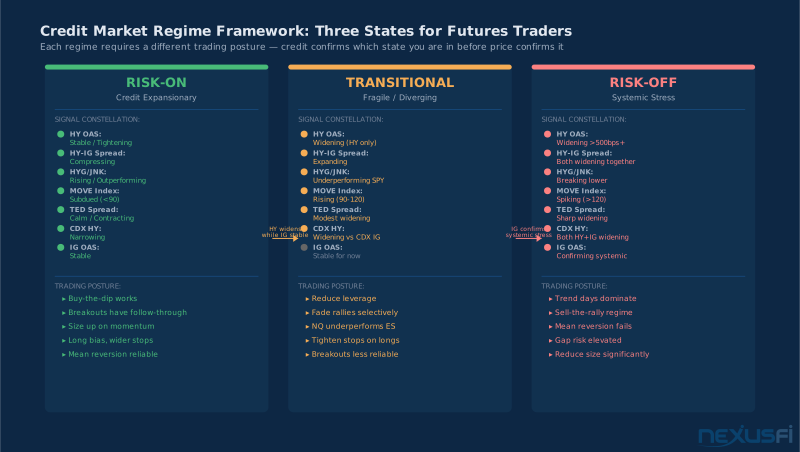
The most practical way to use credit signals is as a regime framework — classifying the macro environment and adjusting trading posture so.
Risk-On Regime
Signal constellation: HY OAS stable or tightening. HYG rising or outperforming SPY. HY-IG differential compressing. MOVE below 85. TED spread calm. CDX HY narrowing or stable.
Trading implications: Buy-the-dip setups work with higher reliability. Breakouts have better follow-through. Size up on momentum trades. Long bias with wider protective stops. Mean reversion from support is more reliable.
Transitional Regime
The most dangerous regime for equity longs — fragile and can tip quickly into risk-off without obvious warning.
Signal constellation: HY OAS beginning to widen (crossing above 50-day MA). HYG underperforming SPY while SPY still holds. HY-IG differential expanding. MOVE rising (85-110 range). CDS repricing in specific sectors. NQ underperforming ES by unusual margin.
Trading implications: Reduce leverage on long positions. Fade rallies more selectively. Tighten stops on existing longs. NQ will be the first to roll over. Breakout trades carry elevated failure risk.
Risk-Off / Systemic Stress Regime
Signal constellation: HY and IG both widening simultaneously. MOVE elevated and rising (above 110-120). TED/SOFR spread widening. Bank CDS widening across major institutions. HYG breaking lower with increasing velocity.
Trading implications: Trend days dominate — mean reversion setups fail. Sell-the-rally regime. Gap risk elevated. Reduce position sizing much. Correlations rise across ES/NQ/YM. Consider inverse or short positioning if your edge confirms.
In systemic Risk-Off regimes, mean reversion setups fail consistently. Every bounce is an opportunity to add short exposure, not reduce it. The regime identification must come before technical analysis, not after. "Support held last time" is the most dangerous mental model in a Risk-Off credit environment.
The transition from Risk-On → Transitional → Risk-Off is rarely linear. The signal quality improves when multiple indicators in the regime stack are aligned rather than just one or two.
Tigertrader documented these regime dynamics directly: "A divergence between VIX and domestic credit spreads appeared where credit spreads widened and the VIX remained flat. Both the VIX and... [credit] eventually confirmed" the move.
Threshold Methodology: Z-Scores Over Fixed Levels #
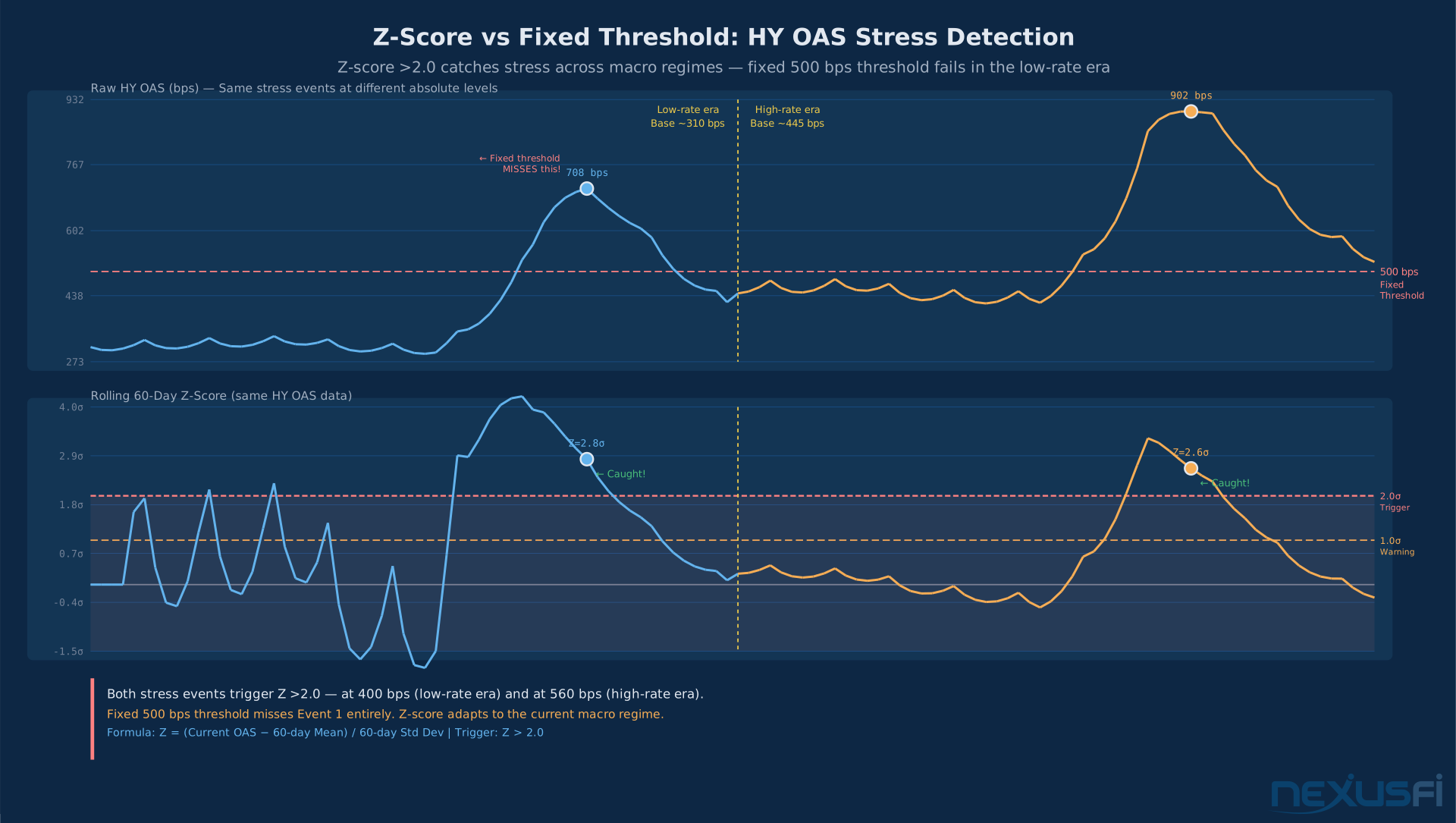
Fixed thresholds like "500 bps means stress" are useful mental models but unreliable in practice because credit spreads trade at different absolute levels across different macro environments.
In a low-rate, strong-growth environment, HY OAS at 350 bps might represent elevated stress. In a high-rate, recessionary environment, 350 bps might represent a relatively healthy credit market. The absolute level tells you less than the level relative to recent history.
The Z-Score Approach:
Z = (Current OAS − Mean OAS over 60-90 days) / Standard Deviation OAS over 60-90 days
Regime thresholds:
- Z-score below 0: Spreads below recent average — supportive for equities
- Z-score 0--1.0: Near average — neutral
- Z-score 1.0--2.0: Warning zone — spreads elevated vs recent history
- Z-score above 2.0: Risk-off signal — spreads much stretched
- Z-score above 2.5: Extreme — high probability of equity stress
This approach survives regime changes that break fixed-level rules. Build your credit dashboard to show not just the current spread level but also the 1-day, 5-day, and 20-day change as a percentage, and a rolling Z-score. The composite picture — level, momentum, and statistical stretch — is more reliable than any single data point.
The data quality and integrity article covers maintaining clean historical data series, which matters when computing rolling statistics.
The Bull Trap Signal #
This is the setup that credit market analysis was built to identify.
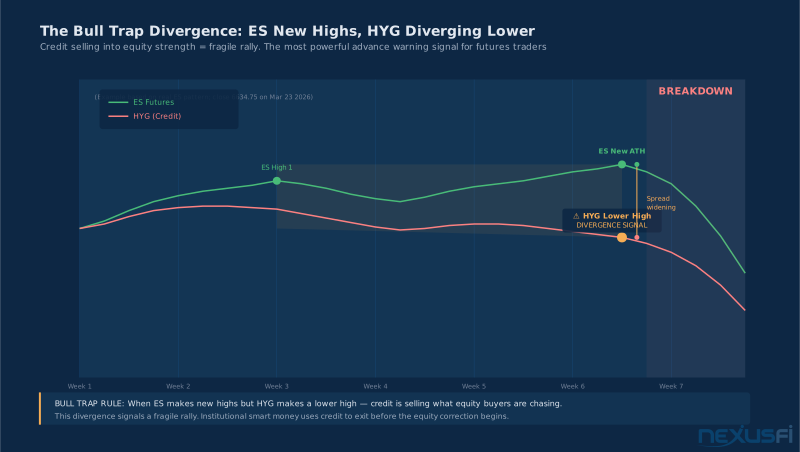
A bull trap occurs when an equity index makes a new high while credit markets fail to confirm. HYG makes a lower high. HY spreads don't tighten. MOVE starts quietly rising. Equity traders have chased the breakout — and then the rally fails.
This pattern appears because institutional credit desks are often faster to reprice risk than equity traders. When credit desks see deteriorating fundamentals, they reduce exposure. That shows up as spread widening and HYG underperformance. Meanwhile, equity markets, driven partly by retail flow and momentum, continue higher.
The non-confirmation is the signal.
Tigertrader documented the pattern in 2014 as it unfolded: watching credit spreads widen while VIX remained flat — a divergence signal that an equity correction was building beneath the surface calm.
How to use the bull trap signal:
- ES or NQ makes a new high or breaks above a key technical level
- Check HYG simultaneously — is it also at a new high, or making a lower high?
- Check HY OAS — is it tightening (confirming), or widening?
- Check MOVE — is it calm, or rising quietly?
- Check major bank CDS — are financials healthy, or quietly widening?
If 3 or more of these credit signals are diverging from the equity breakout, treat the breakout with extreme skepticism. The bull trap doesn't guarantee an immediate reversal — equity markets can remain irrational longer than credit signals stay negative. But as a regime filter for reducing position size and tightening stops during apparent breakouts, credit non-confirmation is one of the most reliable tools futures traders have.
The bull trap pattern is specifically dangerous because it catches momentum traders at the worst moment. ES breaking to new highs attracts breakout buyers. Options market makers delta-hedge upward, adding fuel. Retail FOMO in. Then credit rolls over and the structure collapses — with stops clustered at the same technical level. If HYG isn't confirming the equity breakout, don't chase it.
The most dangerous equity rallies are those that happen without credit confirmation.
Pre-Market Workflow: The Credit Macro Filter #
The credit macro filter is a pre-open routine that takes less than 5 minutes and defines your bias before the first tick of RTH.
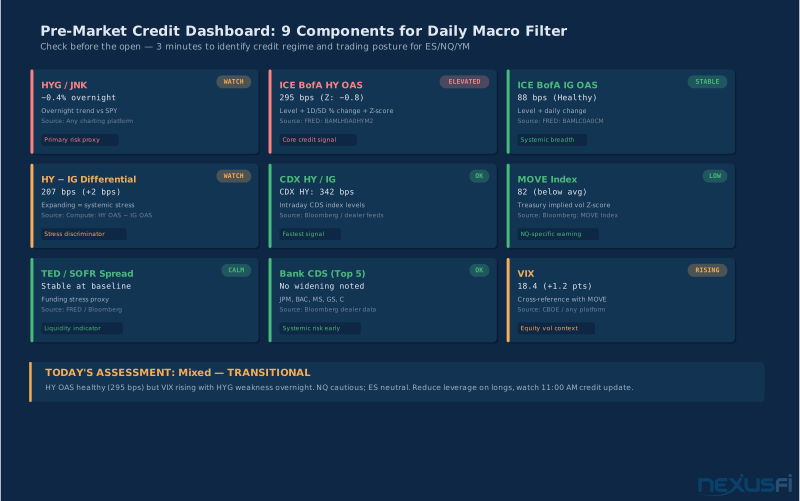
The 9-Component Dashboard:
- HYG/JNK overnight trend vs SPY overnight trend — are credit ETFs keeping pace with equity futures?
- ICE BofA HY OAS level + 1D/5D change + Z-score — FRED data, updated by 6 AM most trading days
- ICE BofA IG OAS level + change — breadth confirmation
- HY-IG differential — is stress HY-specific or systemic?
- CDX HY/IG spreads — fastest-moving institutional signal (Bloomberg or news sources)
- MOVE index level + Z-score — NQ-specific warning system
- TED/SOFR-equivalent spread — funding stress baseline
- Major bank CDS — JPM, BAC, MS, GS, C (via Bloomberg or news)
- VIX — equity vol cross-reference against MOVE
The Assessment Protocol:
After reviewing the dashboard, make three calls:
- What is the credit regime? (Risk-On / Transitional / Risk-Off)
- Which index is most exposed? (NQ if MOVE is elevated; ES if HY is widening; all if IG is confirming)
- What is today's posture? (Full size / Reduced size / Defensive)
Set up a morning spreadsheet with these 5 daily readings: HY OAS vs 50-day MA (FRED: BAMLH0A0HYM2), HYG vs SPY 5-day performance, MOVE index level and 5-day change, HYG/JNK overnight trend vs S&P futures, VIX vs prior close. Five minutes, every morning. Three or more readings in stress territory means reduce size for the session.
This doesn't replace your technical analysis. It sits above it as a macro filter. If credit says Risk-On, your technical buy setups get full allocation. If credit says Transitional, buy setups get reduced allocation and sell setups get more consideration. If credit says Risk-Off, your long trades need strong technical confirmation and tight stops.
The intermarket correlation data article provides the broader cross-asset context — crude oil, gold, dollar, and yield curve signals that complement the credit picture.
Sensitivity by Index: ES vs NQ vs YM #
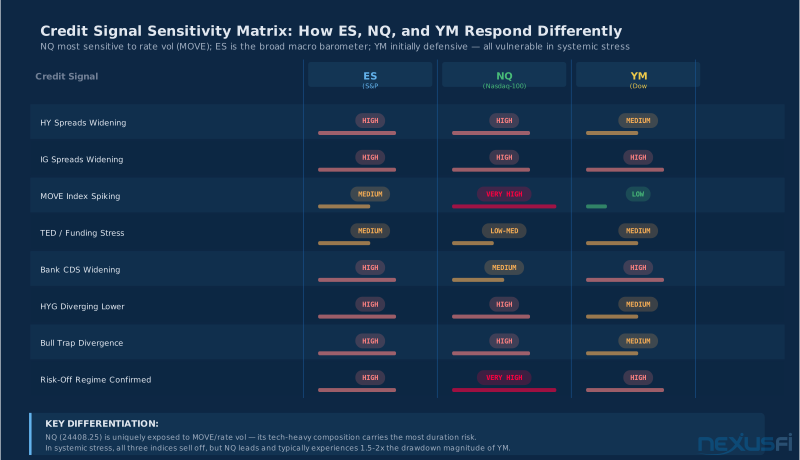
Credit signals don't move all three major U.S. equity index futures equally.
NQ (Nasdaq-100 Futures) is the most sensitive to credit and rate volatility signals. The Nasdaq-100's tech-heavy composition carries the most duration risk — these companies earn the bulk of their cash flows far in the future. The MOVE index is an especially powerful NQ signal because rate volatility directly reprices the discount rate applied to long-duration growth assets.
When MOVE spikes much, NQ underperforms ES by 1.5-2x in subsequent trading sessions. In systemic risk-off events, NQ typically experiences the deepest drawdowns of the three major indices.
ES (S&P 500 Futures) is the broadest credit signal barometer. Because the S&P 500 has significant sector diversification — including defensives like utilities, consumer staples, and healthcare — it's more balanced than NQ in its credit sensitivity. HY spread widening is an ES signal, but the relationship is less extreme. ES is where the overall macro credit regime shows up most directly.
YM (Dow Jones Futures) shows initial defensive characteristics in HY-specific stress because the Dow is weighted toward industrial, financial, and consumer companies that are less rate-sensitive than NQ's tech composition. In the early stages of credit stress — when HY is widening but IG is stable — YM sometimes holds up better.
However: in systemic risk-off events where IG joins HY, bank CDS are moving, and funding conditions are deteriorating — YM provides no meaningful protection. All three indices sell off together, with correlation approaching 1.0.
Practical implication: In transitional regimes, consider relative positioning — long YM/short NQ — rather than outright short exposure, if your directional bias is cautious. In full systemic risk-off, all three sell together and relative trades are less relevant.
Historical Case Studies #
Three episodes illustrate how the credit-to-equity transmission actually plays out.
March 2020: COVID-19 Credit Shock
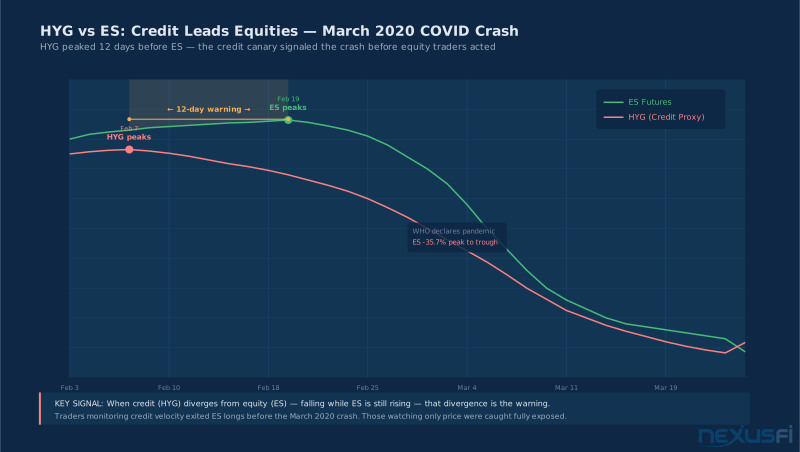
HYG peaked on February 7 — before the WHO declared a global health emergency and before most equity traders recognized the severity of the situation. ES continued making new all-time highs until February 19.
By the time ES peaked, HYG had already been declining for 12 trading days. Credit traders were selling risk into the equity rally. IG spreads were starting to widen. MOVE was quietly rising. The credit cascade was underway while equity futures were still making all-time highs.
When the equity correction finally began, it was violent — ES fell 35.7% from peak to trough by March 23. Traders monitoring credit velocity had a 12-trading-day warning before the equity break began.
2022 Tightening Cycle
The 2022 bear market was driven by rate repricing — and MOVE was the primary leading indicator. As the Fed began signaling aggressive rate hikes in early 2022, MOVE surged. This repriced the discount rate for long-duration growth assets, and NQ led the downside.
Over 2022, NQ fell approximately 35% while ES fell about 20% and YM fell roughly 10%. The MOVE-to-NQ relationship was textbook. HY spreads also widened much — from approximately 307 basis points (January 2022) to nearly 588 basis points by mid-year. The sequence was consistent: MOVE → HY OAS → NQ → ES → YM.
March 2023: Regional Banking Stress
The SVB collapse demonstrated how bank CDS can be the fastest early warning signal. Before most equity traders reacted, bank CDS were widening — signaling institutional credit desks were hedging financial sector default risk.
HY spreads reached approximately 510 basis points during peak stress, and ES/NQ experienced sharp intraday reversals with elevated gap risk and inconsistent follow-through on rallies. The resolution came when Fed intervention stabilized funding concerns — HY spreads compressed, bank CDS narrowed, and equity follow-through returned. The credit market led both the stress identification and the all-clear signal.
Key Caveats and Limitations #
Credit signals are powerful but not infallible.
ETF distortions: HYG and JNK can be affected by fund-specific factors during volatile periods — fund flows, NAV premiums/discounts, dealer hedging behavior. When HYG's price action seems inconsistent with credit fundamentals, cross-reference with actual OAS data from FRED.
Regime-specific reliability: Credit signals work best in fundamental stress environments — recession concerns, Fed policy uncertainty, major geopolitical events. In pure momentum-driven equity rallies (classic melt-ups), credit can lag equities for extended periods. They're regime identifiers, not precise entry/exit timing tools.
Calendar alignment: CDS pricing times versus cash bond settlement times can create apparent leads that are timing artifacts. CDX may show movement before it appears in cash bond spreads. Be cautious about attributing precise lead times to single-day observations.
Policy intervention: Central bank intervention can override credit signals quickly. The Fed's March 2020 corporate bond buying compressed HY spreads rapidly before economic conditions improved. In intervention-heavy environments, credit signals can be suppressed by policy tools rather than reflecting genuine fundamental improvement.
Single-indicator risk: Using only HYG without the broader credit stack leads to false signals. Always cross-reference with at least two or three additional credit signals before making regime calls.
Best used as regime filter: The credit dashboard is most effective when layered with existing analytical frameworks — technical levels, volume analysis, breadth indicators, and options market data. Credit defines the regime. Technical analysis identifies specific trades within that regime.
The options-derived data and fundamental data for commodity futures articles both feed into the broader macro picture that credit data helps contextualize.
The Bottom Line #
The credit-to-equity relationship is structural, not coincidental. Credit investors reprice risk before equity investors do — consistently, across cycles. The data is mostly free. The routine takes 5 minutes. The edge is watching what smart money watches before equity price action makes it obvious. Build the dashboard, run it daily, and use it as a regime filter above your technical analysis.
Credit markets give equities permission to move. When credit is healthy, equity rallies sustain. When credit is deteriorating, equity rallies fail — often faster than technical levels would suggest.
This isn't abstract macro theory. It's a practical edge implementable with mostly free data, a basic spreadsheet, and a daily 5-minute pre-market routine. FRED provides the OAS data. HYG and LQD are on every platform. MOVE readings are widely reported. The credit dashboard is buildable at basically zero incremental cost.
The discipline is the difference between traders who use this from those who don't. It's easier to watch ES and trade what's in front of you. It takes more cognitive effort to also check HYG, pull up HY OAS, and ask "is credit confirming this move?" But that extra 3-5 minutes pre-market, consistently applied, identifies bull traps before they spring and systemic stress events before they cascade.
Credit led the COVID crash by 12 days. Credit led the 2022 bear market's acceleration. Credit flashed the March 2023 banking stress before equity markets fully repriced. The signal isn't always this clean. But it's reliable enough to make credit market monitoring a core part of every serious futures trader's data stack.
Knowledge Map
Prerequisites
Understand these firstCitations
- — Spoo-nalysis ES e-mini futures S&P 500 (2015) 👍 25“HYG is often referred to as the canary in the goldmine because of its tendency to lead equity markets.”
- — Spoo-nalysis ES e-mini futures S&P 500 (2014) 👍 18“Keep an eye on high yield credit and credit spreads.”
- — Spoo-nalysis ES e-mini futures S&P 500 (2014) 👍 19“Divergence between VIX and domestic credit spreads where credit spreads widened and the VIX remained flat.”
- — Spoo-nalysis ES e-mini futures S&P 500 (2014) 👍 11“Credit-VIX divergence where credit widened while VIX remained flat.”
- — Spoo-nalysis ES e-mini futures S&P 500 (2020) 👍 14“I understand the market, but credit bears watching.”
- — STIR & Bond Spread Thread (2018) 👍 1“STIRs combined with Bonds to create spreads such as the TED spread.”
- — ICE BofA US High Yield Index OAS - FRED
- — ICE BofA US Corporate Index OAS - FRED
- — Spoo-nalysis ES e-mini futures S&P 500 (2018) 👍 8“Credit markets tend to be more forward-looking and systematic in their approach to risk pricing.”
- CME Group Education — Understanding Cross-Market Relationships (2023)