



Sentiment Data for Futures Trading: Reading Market Positioning, Volatility, and the Signals That Reveal What Other Traders Are Actually Doing
Overview #
Sentiment data in futures markets is not about feelings. It is about positioning, hedging demand, and leverage distribution — the measurable reality of where money is committed and what market participants are actually doing with risk capital, not what they say they're doing.
Most traders encounter sentiment through surface-level metrics: a bullish percentage reading here, a news-driven fear headline there. For futures traders, that framing misses what matters most. The useful questions are: Who is positioned and how crowded is the trade? Is hedging demand rising or falling? Are market internals confirming what price is showing? Are new participants entering a move, or is it driven by covering?
This article covers the six core data sources that experienced futures traders use to answer those questions — COT positioning, VIX and volatility term structure, put/call ratios and options skew, market internals (TICK and TRIN), open interest analysis, and signal normalization and combination. For each, the focus is on mechanics, thresholds, and practical application across the instruments NexusFi traders work with most: ES, NQ, CL, and GC.
Why Sentiment Is Different in Futures #
Equity traders often use sentiment as a crowd psychology indicator — how optimistic or pessimistic retail investors are. Futures trading requires a different frame.
Futures are zero-sum instruments. For every long contract, there is an exactly matching short. Net positioning tells you something about where risk is concentrated, but direction only matters in context. A heavily long managed money position in crude oil tells you one thing if price is rising on expanding open interest and quite another if price is stalling at resistance with shrinking volume.
Futures markets also have designated categories of participants. Commercials hedge real-world exposure. Managed money speculates for return. Non-reportable traders are smaller participants. These categories are reported in the weekly CFTC Commitment of Traders data — one of the most useful positioning datasets available to any financial trader.
The practical upshot: sentiment in futures is most useful as a regime filter and crowding detector, not as a standalone buy or sell signal. Every indicator in this article operates most effectively when it narrows the probability distribution of likely outcomes — when it tells you whether to be cautious about chasing, whether to size down, whether a breakout has participation behind it, or whether a setup has odds in its favor. Used correctly, sentiment data is a conditional probability tool. Used incorrectly, it generates opinions instead of decisions.
Indicator Families by Time Horizon #
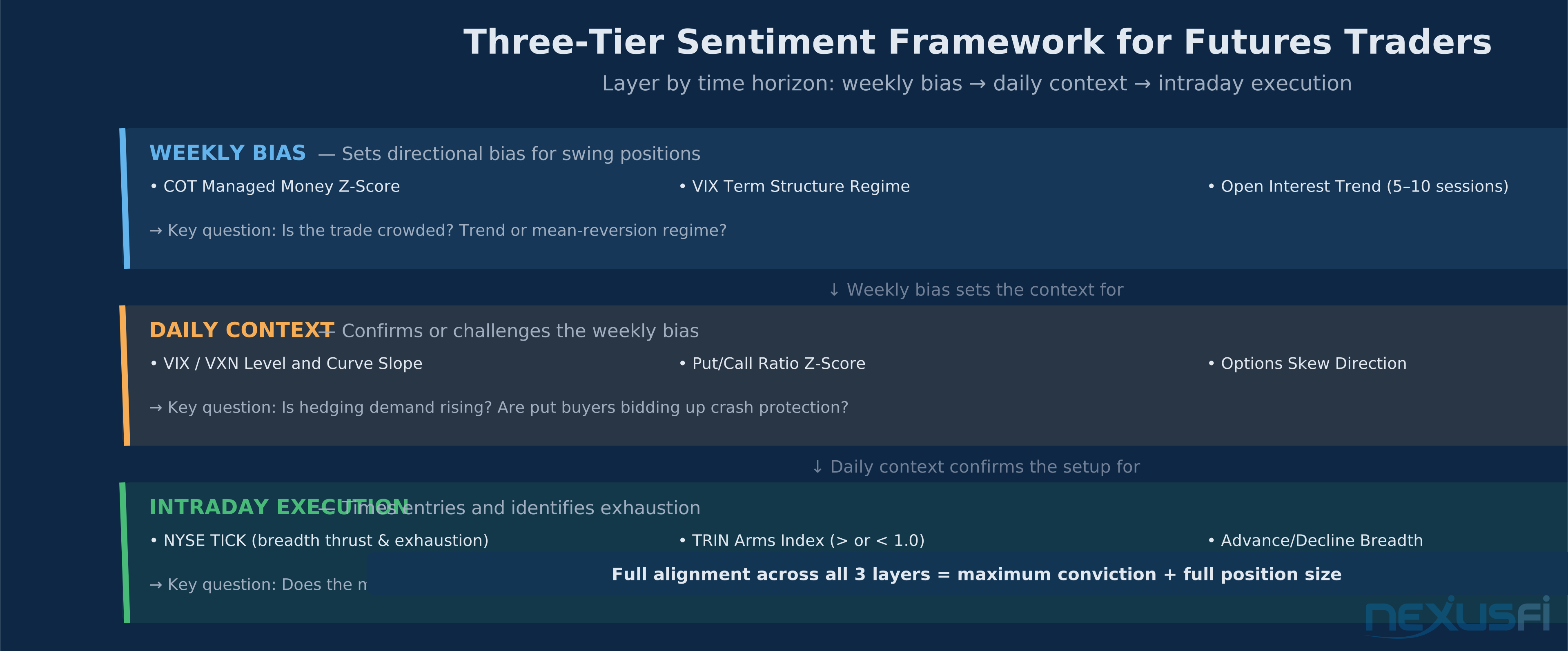
Different sentiment indicators update at different speeds and carry different predictive horizons. Mixing them without acknowledging this creates noise. The right architecture is layered:
Weekly/multi-week bias layer: COT positioning, open interest trend, VIX term structure regime. These move slowly and tell you about the medium-term backdrop for swing trading.
Daily context layer: VIX/VXN levels, put/call ratios, options skew. These update daily and reflect current hedging demand and speculative positioning in options markets.
Intraday execution layer: TICK, TRIN, advance/decline breadth. These are real-time and provide the tape-reading context for timing entries and exits.
A clean decision process uses the weekly layer to set bias, the daily layer to assess whether that bias is being supported or challenged, and the intraday layer to time execution within the confirmed bias. No single indicator overrides the others. All are inputs into a probability assessment, not commands.
COT: The Positioning Foundation #
The Commitment of Traders (COT) report is published by the CFTC every Friday afternoon, reflecting positioning data as of the prior Tuesday's close. It breaks down futures and options positions by three primary categories: commercials, non-commercials, and non-reportables.
Understanding the categories: Commercials are hedgers — producers, processors, users of the underlying commodity or financial instrument who are offsetting real-world exposure in futures. In crude oil (CL), this means refiners, producers, and airlines hedging jet fuel costs. In equity index futures (ES/NQ), commercials represent institutional entities with hedging rather than purely speculative intent.
Non-commercials include managed money: hedge funds, CTAs, and systematic trading operations whose purpose is speculative return. These are trend-followers and momentum traders. Their net positioning tells you where leveraged money has committed capital.
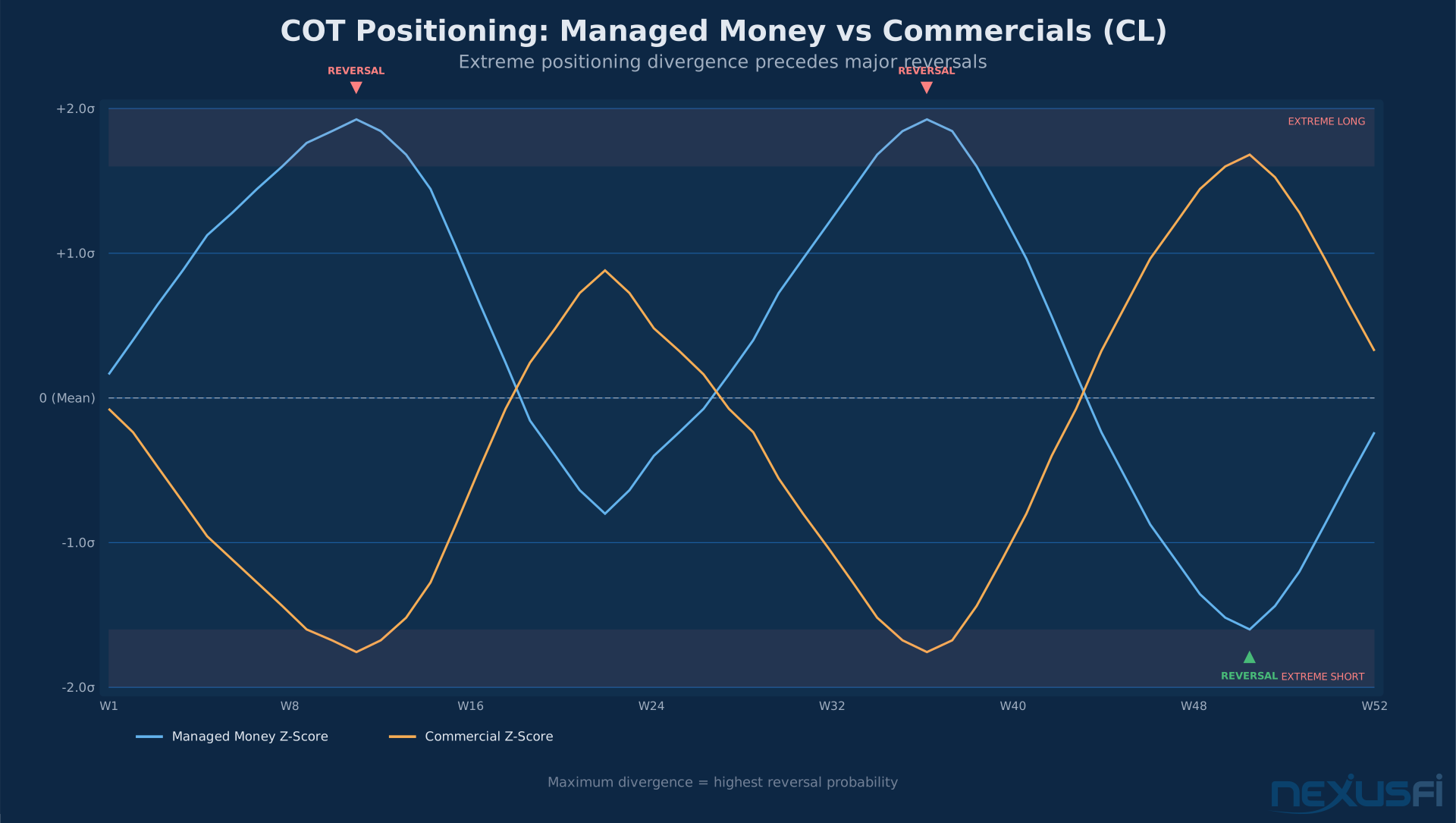
For sentiment analysis, the critical relationship is between managed money positioning and commercial positioning. When managed money net longs are at an extreme, commercials frequently sit on the opposite side — reflecting the natural tension between speculators reaching for momentum and hedgers with underlying exposure absorbing that flow.
How to read COT data: Raw contract numbers are not directly comparable across time because market size changes. The standard approach is normalization via z-scores:
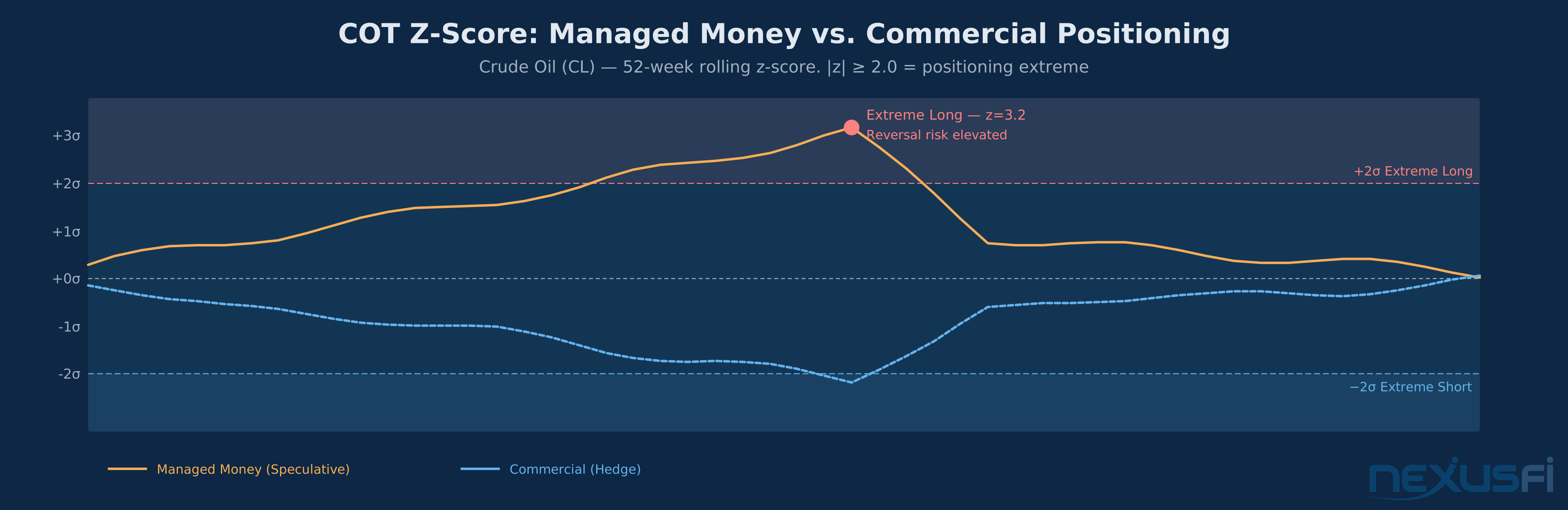
z = (current net positioning − historical mean) / historical standard deviationUsing a 52- to 104-week rolling window, z-scores identify where current positioning sits relative to recent history. Practical thresholds:
- |z| ≥ 1.5 = stretched positioning; the trade is becoming crowded
- |z| ≥ 2.0 = extreme positioning; reversal risk is elevated
The high-signal combination is managed money at z ≥ +2 while commercials are net short at z ≤ -1 (or vice versa for the bearish case). That divergence — speculators all leaning one way, hedgers leaning the other — is one of the most reliable positioning extremes in futures markets.
Reporting lag adjustment: COT data is 3-5 days stale by publication. Treat it as a multi-week regime indicator, not a same-day trigger — when price has moved substantially since the data cut, reduce the weight you assign to the reading.
VIX and Volatility Term Structure #
The VIX measures the implied volatility of the S&P 500 options complex. For futures traders, it is not a fear gauge — it is a pricing of expected volatility and insurance demand over the next 30 days. The distinction matters because fear and insurance demand are related but not identical. You can have rising insurance demand (VIX rising) while price is still grinding higher, which is a warning signal, not a panic signal.
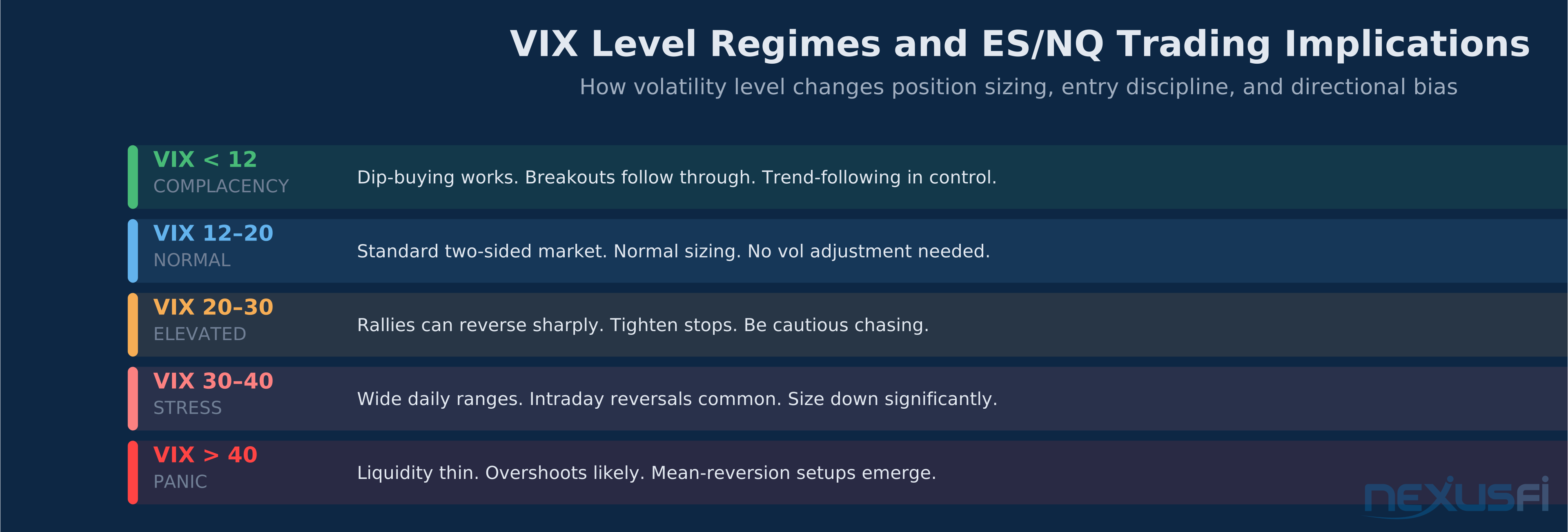
VIX levels: Rough regime guide for ES/NQ traders:
- VIX below 12-15: Complacent regime. Implied volatility is suppressed. Breakouts tend to follow through.
- VIX 15-25: Normal-to-elevated. This is most of the time.
- VIX above 25-30: Elevated stress. Risk premiums are expanding.
- VIX above 30: Stress regime. Intraday ranges expand, trend days become more common, and dip-buying becomes less mechanical.
- VIX above 40: Panic regime. Liquidity thins, correlations spike, and mean-reversion setups become more frequent as volatility overshoots.
For NQ traders, watch VXN (the Nasdaq 100 equivalent of VIX). Technology is duration-sensitive, and NQ often leads broader market volatility moves. VXN above VIX by an unusual margin signals that tech-specific hedging demand is elevated.
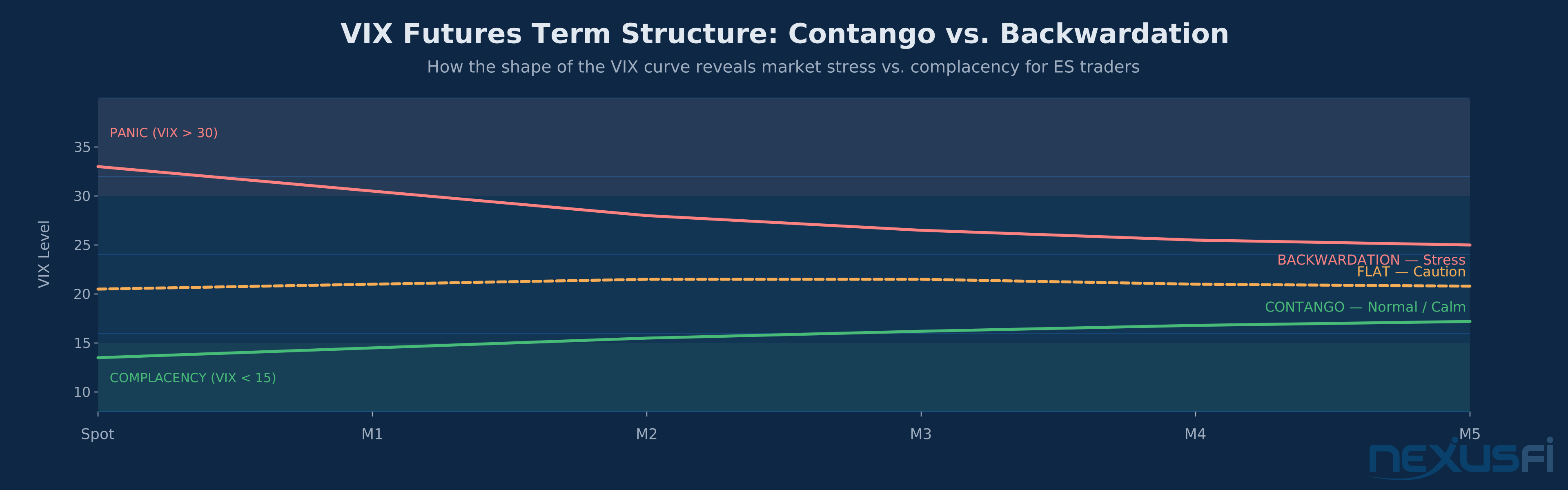
Volatility term structure: The term structure compares near-term and longer-dated volatility expectations. The VIX futures curve (VX1, VX2, VX3...) reveals whether fear is immediate or persistent.
Contango: Near-term VIX futures are priced lower than further-dated contracts. This is the normal, calm-market structure. Traders rolling short VIX positions benefit from this structure; it indicates the market is not pricing immediate risk.
Backwardation: Near-term VIX futures are priced higher than further-dated contracts. This indicates urgent, front-loaded hedging demand. Markets anticipate near-term volatility that exceeds longer-term expectations. Backwardation typically occurs during acute market stress.
Why this matters for ES: A VIX curve that flips from contango to flat or backwardation is often a leading indicator of sustained selling. When tigertrader noted in the Spoo-nalysis thread that the VIX curve had moved from backwardation to contango in late 2022, he was identifying the structural improvement in the risk backdrop before the price confirmation came. That is the value of term structure monitoring — it captures the shift in hedging urgency before it shows up clearly in price.
Regime-based trading application:
- Low VIX + steep contango: Dip-buyers are likely to step in. Avoid aggressive shorting of weakness unless other indicators align.
- Rising VIX with curve flattening: Rallies become suspect. Look for confirmation from breadth and OI before chasing.
- VIX rising while ES is still making marginal new highs: Classic distribution warning. Insurance demand is building under a price structure that looks constructive — but institutional hedgers are telling a different story.
Put/Call Ratios and Options Skew #
Put/call ratios measure the relative demand for downside protection versus upside exposure in options markets. For futures traders focused on ES and NQ, the most useful metric is SPX or NDX options activity — these reflect institutional hedging behavior rather than retail speculation.
Distinguishing meaningful signals: The equity-only put/call ratio (tracking single-stock options) is dominated by retail activity and hedging noise from individual equity positions. The index put/call ratio (SPX/NDX options) is driven by institutional portfolio managers, dealers, and algorithmic hedging programs. For futures traders, the index options data is the relevant signal.
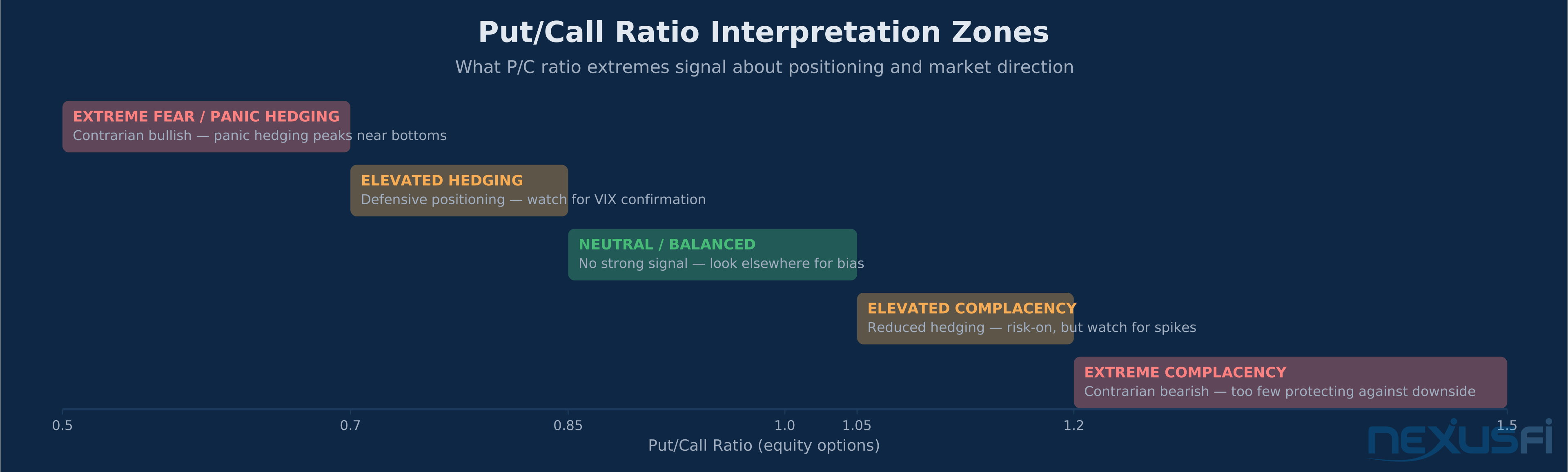
Put/call ratio mechanics: The basic interpretation is that a high ratio (more puts than calls) indicates bearish positioning or hedging demand. A low ratio indicates complacent or bullish positioning. But absolute values are provider-dependent and can vary based on product mix. The strong approach is percentile or z-score normalization:
- z ≥ +1.5 = elevated put demand relative to recent history
- z ≥ +2.0 = extreme hedging demand; potential contrarian signal
- z ≤ -1.5 = unusual call dominance; complacency risk
The critical nuance: high put/call at an extreme can be either bearish confirmation (smart money positioning defensively) or a contrarian bullish signal (panic hedging that will unwind). The right interpretation depends on context — specifically whether breadth internals are confirming breakdown or holding steady.
Options skew: Skew is the premium that the market pays for OTM put protection relative to ATM options. It reveals asymmetric demand — how much more expensive it is to buy crash insurance versus upside optionality.
When skew steepens while price is stable, it signals that institutional investors are buying downside protection quietly — the surface of the market looks calm, but the options market is pricing in tail risk. When skew flattens, protection demand is declining and complacency is rising.
Institutional hedging floors: One of the most practically useful applications for ES traders is identifying where institutions have concentrated put protection. Large open interest at specific strikes can create dealer positioning effects — dealers who sold those puts have to hedge their exposure, which creates buying support near put-heavy strikes as price approaches. Conversely, if dealers are short gamma (long puts), they will amplify moves, not cushion them. This is why tracking put activity near round numbers and prior highs/lows has edge in ES.
The critical skill with put/call ratios is distinguishing which regime you're in — whether extremes are confirming directional pressure or signaling a contrarian opportunity.
As tigertrader noted in the Spoo-nalysis thread, when you observe bearish divergences in equity-only put/call ratios relative to price, that breadth failure often precedes corrective moves that the price structure alone doesn't yet reveal.
Market Internals: TICK and TRIN #
Market internals are real-time breadth measures that tell you whether the move in price is being supported by broad participation or driven by a narrow set of stocks or sectors. For ES and NQ traders, these are intraday tools — not swing indicators.
As NexusFi member Fat Tails explained in a detailed discussion on NYSE $TICK AND $ADD: unlike the usual bunch of indicators derived from price, the TICK, ADD, and TRIN use information from a different source entirely — that independence from price-derived signals is exactly what produces their edge.
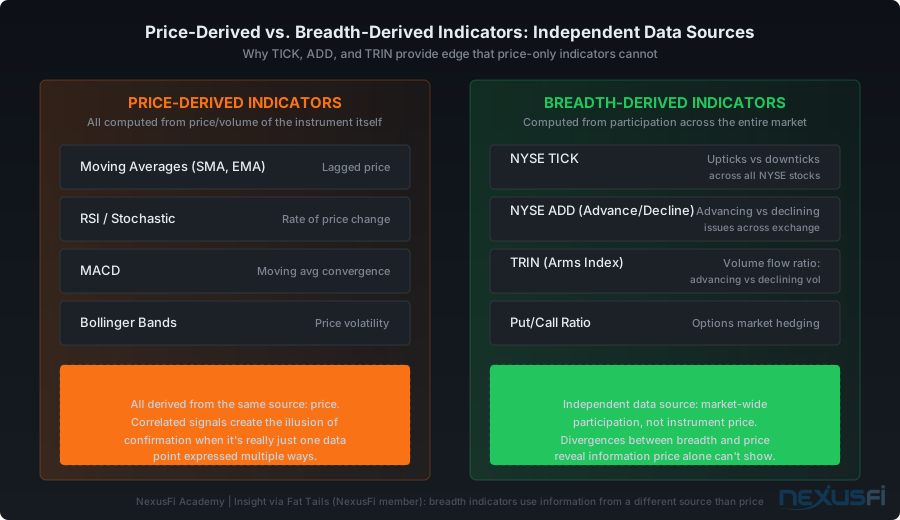
TICK mechanics: NYSE TICK measures the number of stocks trading on an uptick minus the number trading on a downtick at any given moment. A positive TICK means more stocks are ticking up; negative means more are ticking down.
Common intraday reference levels:
- +800 to +1000: Strong upside breadth thrust
- +1200 to +1500+: Extreme positive breadth; potential exhaustion
- -800 to -1000: Significant selling breadth
- -1200 to -1500+: Extreme negative breadth; potential capitulation or exhaustion
The TICK is most useful at the extremes — not the middle readings. A TICK of +500 tells you relatively little. A TICK that prints +1500 and then fails to sustain is telling you something specific about the quality of the buying.
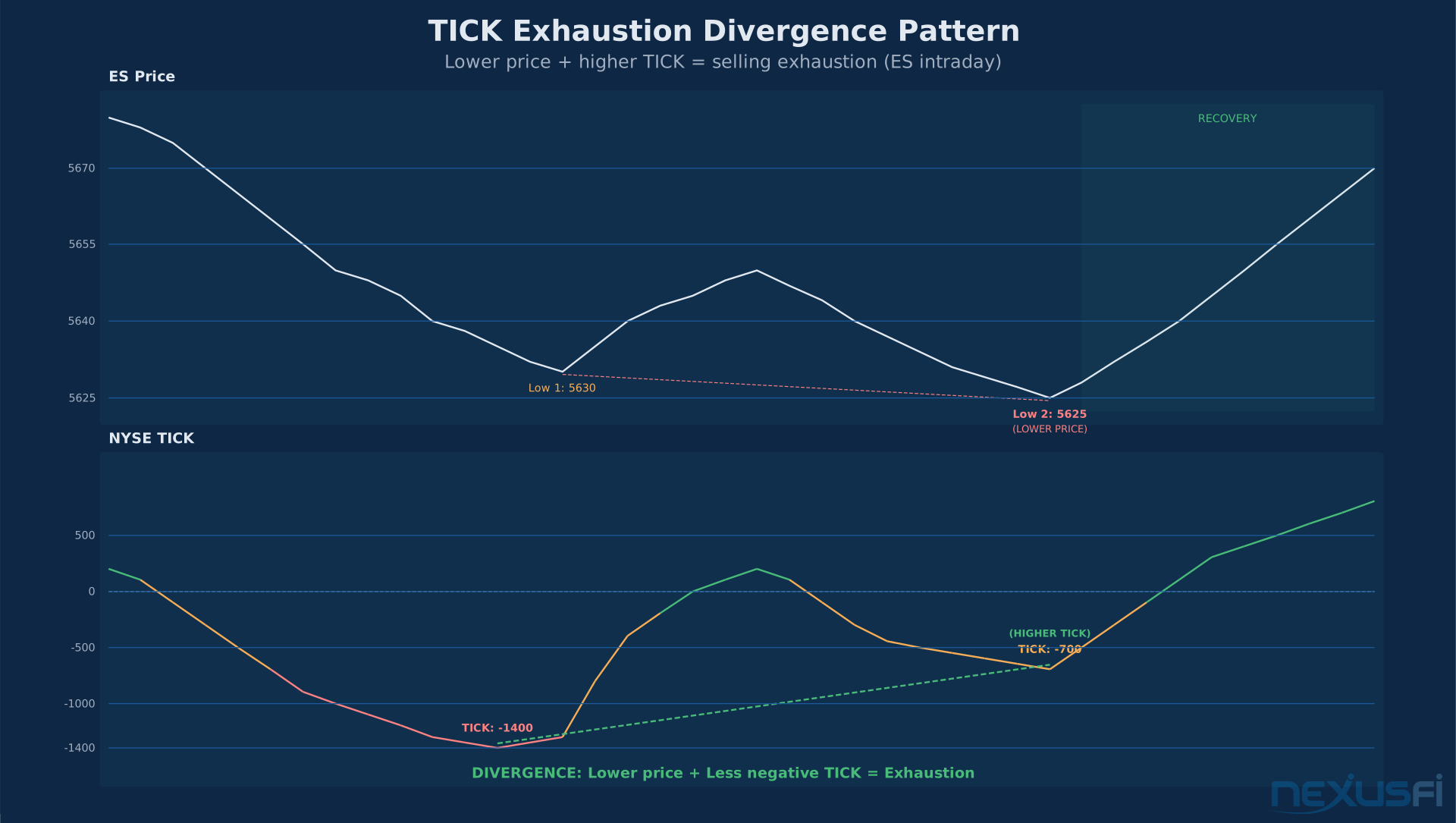
TICK exhaustion for ES scalpers: The exhaustion setup is one of the most discussed patterns among NexusFi's Elite Circle traders. The structure is:
- ES sells off sharply; TICK prints a large negative extreme, say -1200 to -1500
- ES makes a marginal new low, but on this second approach, TICK only reaches -650 to -700
- The lower price with the less negative TICK = selling exhaustion; fewer stocks are participating in the new low
This divergence — lower price, higher TICK — is a scalp long signal back toward VWAP or the session's prior value area. The stop is placed below the marginal new low. The target is the high-volume node or VWAP rejection level overhead.
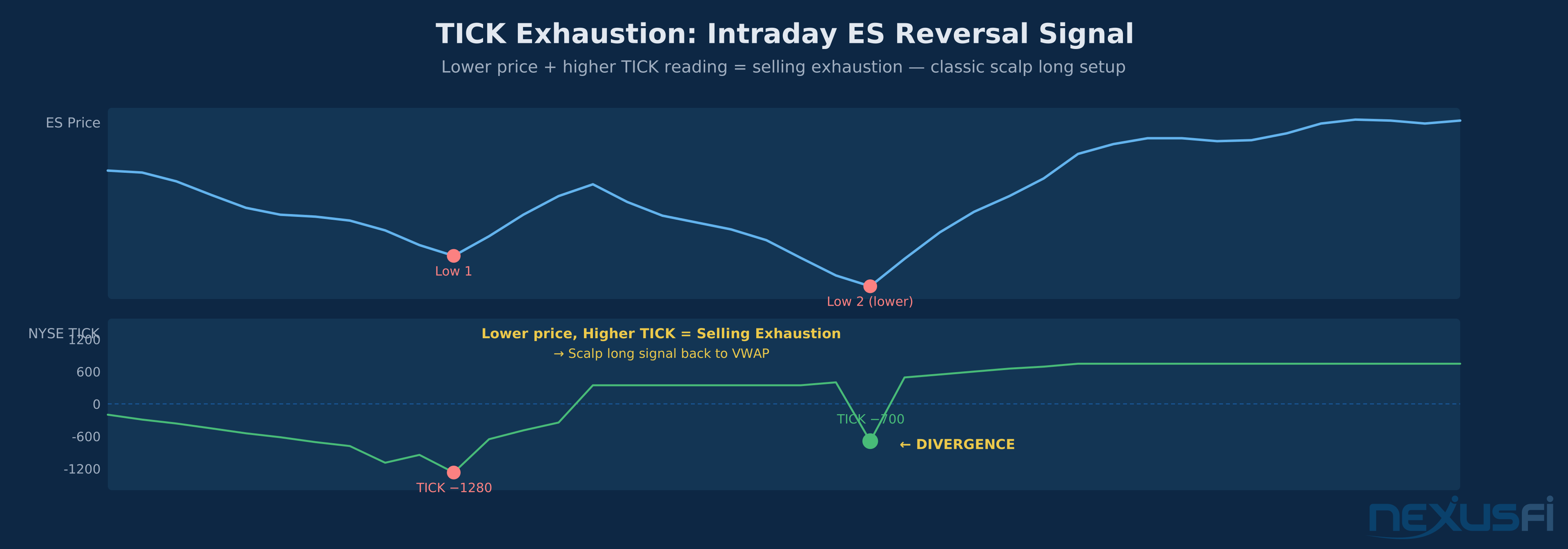
NexusFi member rahulgopi has documented this pattern extensively in the Spoo-nalysis thread, noting that spotting exhaustion using TICK requires patience — you're looking specifically for the divergence between price and breadth, not just an extreme TICK reading in isolation. A TICK of -1000 with price still moving lower aggressively is not exhaustion; it's breadth confirmation.
TRIN (Arms Index): TRIN compares the ratio of advancing to declining issues against the ratio of advancing to declining volume. The formula creates a value that tells you whether volume is flowing toward winners or losers:
- TRIN ≈ 1.0: Balanced
- TRIN < 1.0 (especially < 0.7): Volume disproportionately flowing into advancing stocks; buying pressure
- TRIN > 1.0 (especially > 1.5): Volume disproportionately into declining stocks; selling pressure; potential capitulation
A TRIN spike above 1.5-2.0 during a sharp ES selloff often indicates panic selling and can be a mean-reversion entry signal when combined with TICK exhaustion divergence.
Breadth confirmation for breakouts: If ES breaks above prior day high, the move is more credible when accompanied by:
- TICK persistently positive (mostly above 0, with regular thrusts above +500)
- TRIN staying below 1.0
- Advance/decline breadth expanding
If ES breaks out but TICK quickly fades to flat or negative and TRIN rises, you're likely looking at a stop-run or covering-driven pop rather than a genuine breakout with new participation behind it.
Inletcap described this in the Elite ES Day Trading Analysis thread: the combination of internals gives you a "fuel check" — is there sufficient participation behind the move to expect follow-through, or are you likely to see the tape reverse at the first sign of resistance?
Open Interest: Futures-Specific Participation Data #
Open interest is the total number of outstanding contracts in a futures market. Unlike volume, which counts every trade, open interest only changes when a new contract is created (both buyer and seller are new to the market) or when an existing contract is closed. It is a purely futures-specific data point with no direct equity market equivalent.
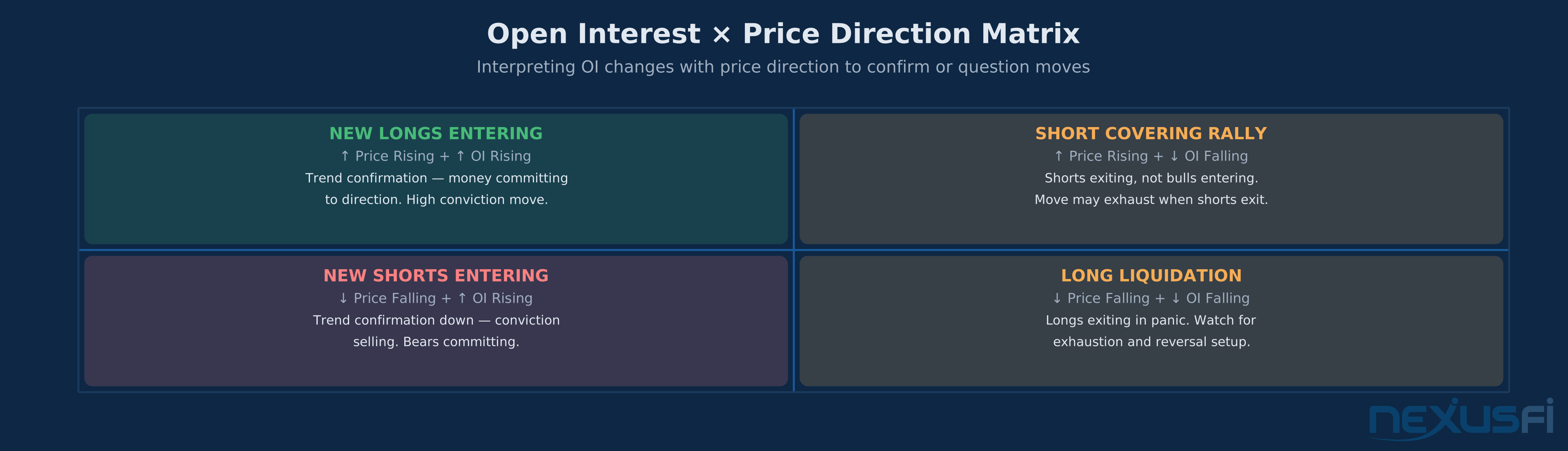
The four interpretations: Combining price direction with open interest change reveals the character of the move:
| Price | OI | Interpretation |
|---|---|---|
| Rising | Rising | Trend confirmation — new money entering in the direction of the move |
| Falling | Rising | Distribution — new shorts (or trapped longs) accumulating |
| Rising | Falling | Short covering — durable if it transitions to new buying, suspicious if it doesn't |
| Falling | Falling | Long liquidation — often approaching exhaustion, potential stabilization |
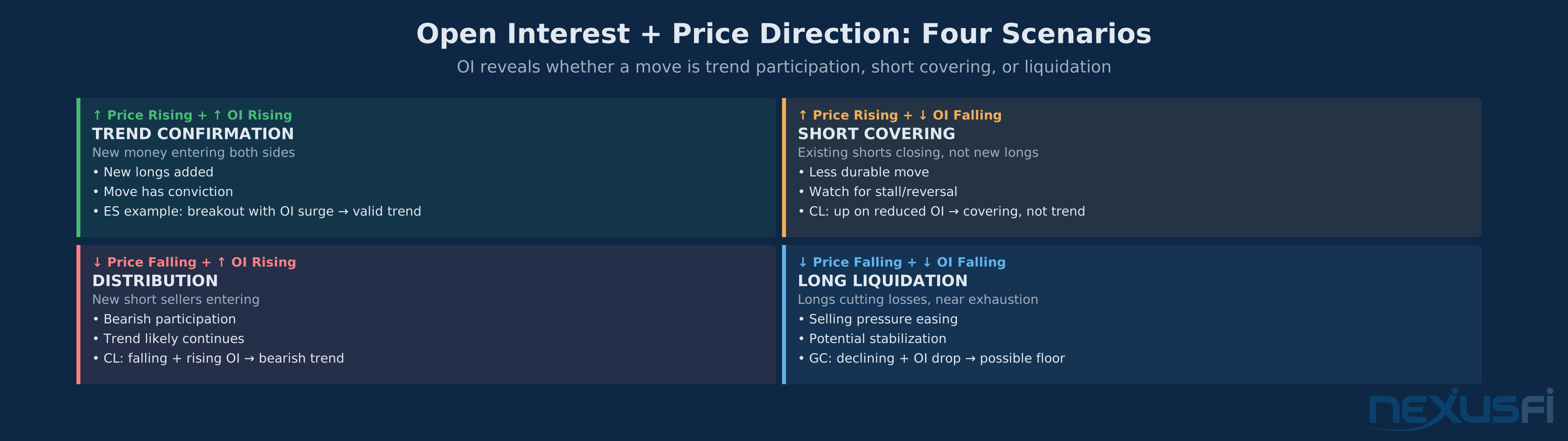
Why this matters: In futures, rising OI means both a new buyer and seller committed capital to opposing views — at the core different from moves driven by covering. Equity markets lack this structural participation signal.
Application to ES and NQ: An ES breakout above a key resistance level means more on a day when open interest is rising than on a day when it's flat or falling. Rising OI with the breakout says new capital is flowing in on the long side, and an equal amount of new short capital is also entering — creating a genuine two-sided market at higher prices. A breakout with falling OI says existing shorts are covering but new buyers aren't showing up in size, which is a warning about durability.
Application to CL: Crude oil OI analysis is especially valuable because the market can experience large, structural position-building by commercial hedgers. A crude rally accompanied by rising OI over multiple sessions is different from a crude rally driven by short covering into a supply headline. The first has new committed capital behind it; the second is a mechanical unwind.
When CL is rising and OI is expanding, look for the price stalling point — when OI starts to flatten or reverse while price is still at highs, that often signals that the new buyers who drove the expansion are done, and the short-sellers who originally ceded ground are now willing to try again. This asymmetry sets up well for fade setups at extended resistance levels.
Application to GC: Gold often sees OI expansion during sustained macro-driven moves. When GC is rising with consistently expanding OI over a multi-week period, the trend has new market participants behind it — not just covering. That's a qualitatively different trend than one driven by short covering alone.
Normalizing and Combining Sentiment Signals #
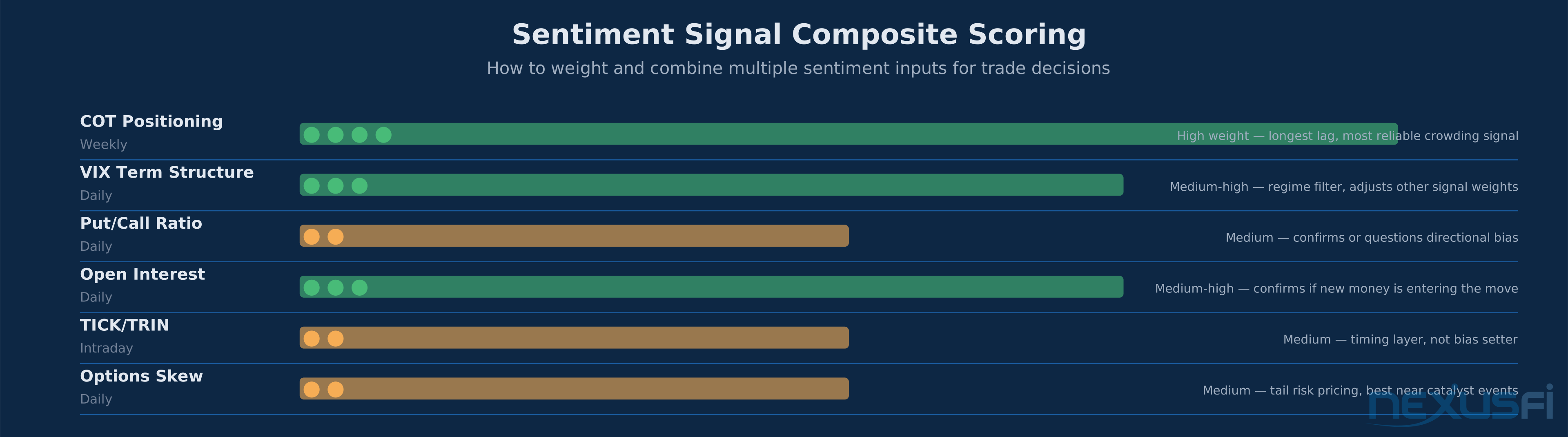
Each indicator measures a different dimension of positioning and participation; combining them requires a framework that prevents stale data from overriding real-time signals and prevents single-indicator extremes from generating false conviction.
Z-score normalization: The standard method is z-scores applied to each series. For COT, use a 52- to 104-week rolling window. For put/call ratios, 60 to 250 trading sessions. For VIX, a rolling window appropriate to your trading horizon.
The z-score transforms each indicator to a common scale: how many standard deviations is the current reading from historical mean? This allows you to compare a COT reading to a put/call reading to a VIX reading on equal footing.
Applying z-scores across tiers: Each layer of the indicator framework above gets its own normalization window — 52-104 weeks for weekly indicators (COT, OI, term structure), 60-250 sessions for daily (VIX, put/call, skew), and session norms for intraday (TICK, TRIN, breadth) plus volume profile and VWAP as additional execution-layer context.
Scenario: Late-cycle equity rally with thinning participation — ES is grinding higher near all-time highs after a 4-month advance. Your weekly check shows COT managed money at z = +1.8 — not yet extreme but approaching crowded territory. VIX sits at 14 with the curve in steep contango, so the daily layer shows no hedging urgency. Put/call is subdued. OI has risen steadily alongside price. So far, the backdrop supports buying dips. But during the session, TICK starts printing weak positive readings on new highs — rallies reach +600 but can't sustain +800, and each push to marginal new session highs comes with flatter breadth. The intraday layer is diverging from the supportive weekly and daily backdrop. The right response isn't to flip short — it's to tighten stops on existing longs, reduce new position sizes, and require stronger breadth confirmation before adding. All three layers are telling you something, but the real-time layer is the one eroding first.
Scenario: Post-selloff crude oil recovery with structural positioning shift — CL has dropped 15% over three weeks on demand fears. COT shows managed money net longs have collapsed to z = -1.9 — speculative selling is largely exhausted. Commercials have covered a meaningful chunk of their hedges, reducing their usual short positioning. OI has been falling alongside price — classic long liquidation, not new short-selling. Then price bases for three sessions near a major support level, and for the first time in the decline, OI ticks up. That OI flip is the structural signal: new capital is entering on the long side while the speculative community is already washed out. A price-based entry — break above the 3-day range, or a failed retest of the low — now has multi-layer backing. The weekly positioning says "selling is done," the daily OI shift says "new money is arriving," and the price action provides the trigger.
Sentiment as permission structure: Supportive multi-layer backdrop → be aggressive on confirmed setups. Contradictory layers → trade smaller, accept fewer setups. All layers bearish → stop looking for longs, only fade weak rallies.
Instrument Playbooks #
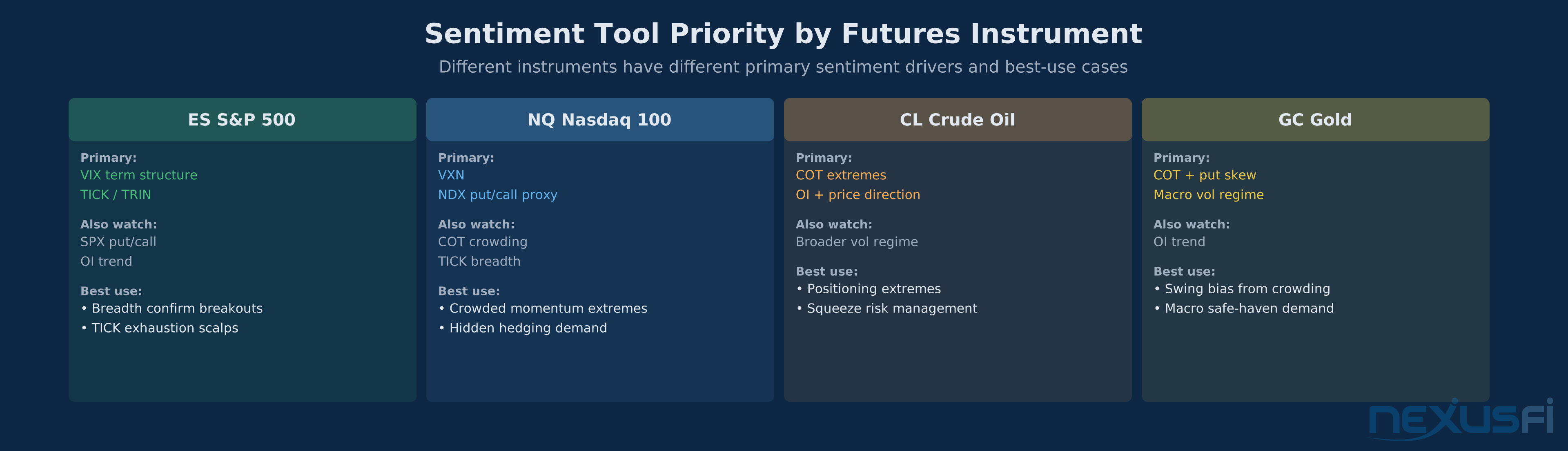
Each instrument responds to a different indicator hierarchy. The decision matrix below maps primary signals per instrument — refer to each indicator's dedicated section above for full mechanics and thresholds.
| Instrument | Primary Indicators (ranked) | Bullish Signal Cluster | Bearish Signal Cluster |
|---|---|---|---|
| ES | VIX term structure, TICK/TRIN, SPX P/C, OI | Low VIX + steep contango + rising OI on advances + TICK sustaining above +500 | Curve flattening + COT z ≥ +2 + TICK diverging on highs + OI expanding on selloffs |
| NQ | VXN, NDX P/C, TICK, COT crowding | VXN low and stable + TICK confirming breakouts + moderate COT | VXN rising above VIX spread + weak TICK on rallies + COT extreme + rising skew |
| CL | COT extremes, OI + price, vol regime | Managed money z ≤ -2 + OI rising on recovery + price base forming | Managed money z ≥ +2 + commercial z ≤ -1.5 + OI declining at highs + price stalling |
| GC | COT, skew/put demand, OI, macro vol | COT extreme short + real rates falling + VIX rising + OI expanding | COT extreme long + real rates rising + OI stalling on new highs |
Practical workflow: ES/NQ day traders run the table top-to-bottom before each session — weekly COT check sets bias, daily VIX and put/call set context, intraday TICK and TRIN confirm or deny execution. CL/GC swing traders start from COT z-scores for both managed money and commercials, watch the multi-day OI trend for structural shifts, then enter on price-based triggers where positioning confirms the setup.
Limitations and Pitfalls #
Sentiment Is Not Timing: An extreme COT z-score can persist for weeks or months before resolving. Crowded positioning means the trade is vulnerable if a trigger emerges — not that it's about to reverse. The price-based trigger still determines the entry. Sentiment narrows the probability distribution; it doesn't replace the setup.
Lag is real: COT is 3-5 days stale by publication. In a fast-moving market, the positioning snapshot can be meaningfully outdated. Never treat weekly positioning data as confirming intraday setups. It sets the backdrop; it doesn't call the entry.
Regime dependence: Sentiment indicators work differently in trending versus mean-reverting regimes. In a strong trend, COT extremes can persist. Contrarian signals that work in range-bound markets generate losses in strong trends. The VIX regime is a useful guide: steep contango often accompanies trends where contrarian positioning is less effective; backwardation often accompanies regimes where mean-reversion has more edge.
The inversion problem: High put/call ratios can be bullish (panic hedging unwinds) or bearish (smart money positioning defensively). TICK exhaustion setups can fail if the underlying trend is strong enough to ignore breadth. OI rising on a selloff can mean distribution or can mean commercial hedging activity that is bullish for the underlying. None of these indicators has a single fixed interpretation — context always matters.
Don't overfit thresholds: Z-score thresholds (1.5, 2.0) and VIX bands are approximations, not rules — periodically recalibrate as market regimes shift.
TICK and TRIN are equity proxies: The NYSE TICK reflects equity market breadth, which correlates strongly with ES and NQ but is not a perfect proxy. In regimes dominated by a few large-cap stocks (which describes much of recent equity market action), breadth can diverge from price in ways that generate repeated false exhaustion signals. NexusFi member josh noted this explicitly: in markets dominated by a handful of mega-cap names, relying heavily on breadth measures requires caution because the index can move on very narrow participation.
The Five-Minute Pre-Trade Sentiment Scan #
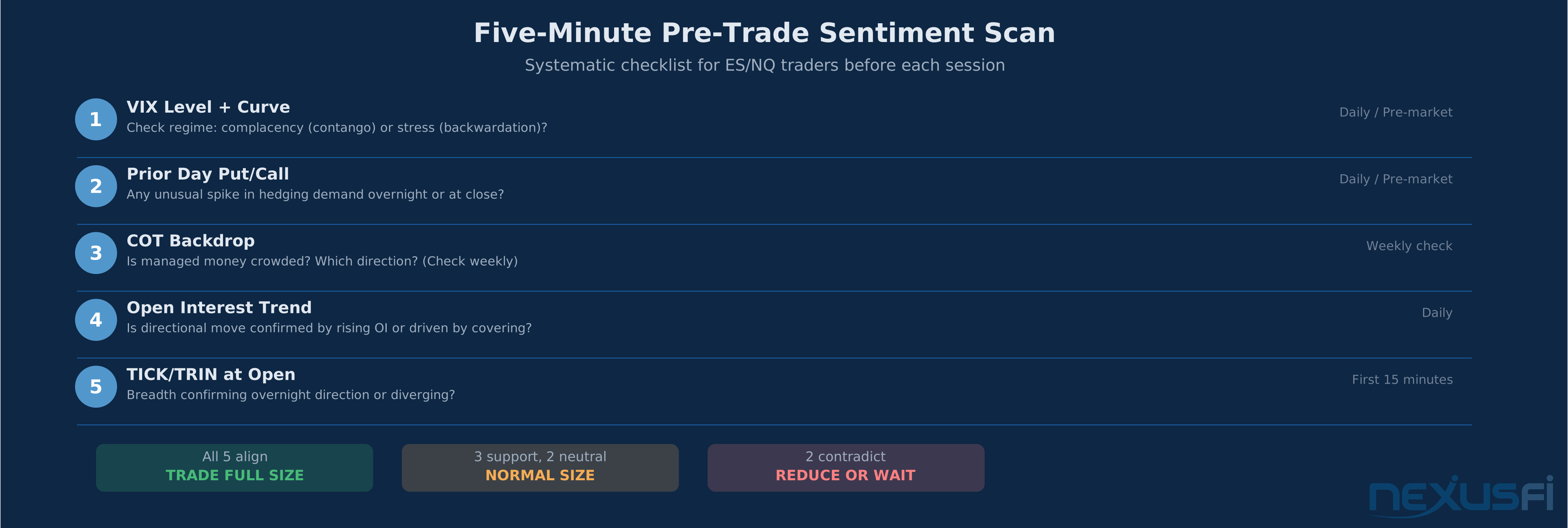
A practical pre-session checklist for ES/NQ traders:
- VIX level and curve: What's the regime? (Complacency/contango vs. stress/backwardation)
- Prior day put/call: Any unusual spike in hedging demand overnight?
- COT backdrop (check once per week, not daily): Is managed money crowded? In which direction?
- OI trend: Is the recent directional move confirmed by rising OI or driven by covering?
- Market internals at open: Are TICK and TRIN confirming the overnight direction, or diverging?
If all five align with your setup direction, trade full size. If three support and two are neutral, trade normal size. If two or more actively contradict your bias, take a reduced position or wait for confirmation.
Sentiment data doesn't replace price analysis. It filters it — improving the quality of setups you take and reducing the frequency of trades you should avoid.
Knowledge Map
Prerequisites
Understand these firstReferences This Article
Articles that build on this topicCitations
- — Spoo-nalysis ES e-mini futures S&P 500 (2026) 👍 25“Analyzing positioning across the full derivatives complex -- including VIX futures options -- reveals structural information about market participant behavior that price action alone can't provide.”
- — Spoo-nalysis ES e-mini futures S&P 500 (2021) 👍 18“VIX curve had moved from backwardation to contango in late 2022, identifying the structural improvement in the risk backdrop before the price confirmation came.”
- — Spoo-nalysis ES e-mini futures S&P 500 (2022) 👍 8“In markets dominated by a handful of mega-cap names, relying heavily on breadth measures requires caution because the index can move on very narrow participation.”
- — Spoo-nalysis ES e-mini futures S&P 500 (2022) 👍 30“Nice visual of how /vx term structure has gone from backwardation to contango. Red line is current term structure, and yellow line is the term structure 1 month ago.”
- — Spoo-nalysis ES e-mini futures S&P 500 (2022) 👍 22“Put/Call ratio is simply the number of puts traded vs the number of calls traded. The ratio can help identify sentiment extremes and potential reversals.”
- — Spoo-nalysis ES e-mini futures S&P 500 (2021) 👍 12“TICK is one of the main data points I use to identify and trade range days. Usually, such days will turn difficult to trade unless the range is identified early on.”
- — Spoo-nalysis ES e-mini futures S&P 500 (2022) 👍 15“TICK divergence on these new highs -- going to ease into some shorts in ES here. TICK exhaustion divergence is a clear warning signal when price extends without breadth confirmation.”
- — Spoo-nalysis ES e-mini futures S&P 500 (2022) 👍 20“Downward bias in $TICK is to be expected due to its extreme high opening. 20-day $TICK positive extremes tell you the prior distribution of market breadth momentum.”
- — Spoo-nalysis ES e-mini futures S&P 500 (2022) 👍 35“Primary sentiment indicators: $TICK, VIX, MOVE, VIX term structure, $CPC put/call, Bonds, Dollar, Most Shorted Index. These together tell you whether the risk backdrop supports the trade.”
- — Spoo-nalysis ES e-mini futures S&P 500 (2023) 👍 18“This is simply a reaction to positioning and sentiment. When everyone is positioned one way, the market is vulnerable to the opposite reaction on any catalyst.”
- — NYSE $TICK AND $ADD (2011) 👍 21“Watching market breadth indicators in parallel with index futures produces a real edge. Unlike the usual bunch of indicators, which is derived from price, the TICK, ADD and TRIN use information from a different source.”
- — Elite ES Day Trading Analysis (2016) 👍 55“A home for Elite Member ES Traders to post their Intraday and Day Trade analysis -- using market internals, breadth, and positioning data as the fuel check for whether moves have participation behind them.”
- — Commitments of Traders Reports (2026)
- — VIX Index Methodology (2026)