



Intermarket Correlation Data for Futures Trading: Reading Cross-Asset Relationships to Trade ES, NQ, CL, and Beyond
Overview #
Every significant move in futures markets has an intermarket fingerprint. Learning to read it means the difference between trading with the flow and getting crushed by it.
When the dollar surges risk-off, GC and CL often drop. When JPY strengthens without a clear trigger, something systemic is usually brewing. When credit spreads widen while ES is still holding bid — that divergence doesn't resolve in equities' favor. These aren't coincidences. They're the signature patterns of capital flowing between asset classes, and every serious futures trader needs to understand how to read them.
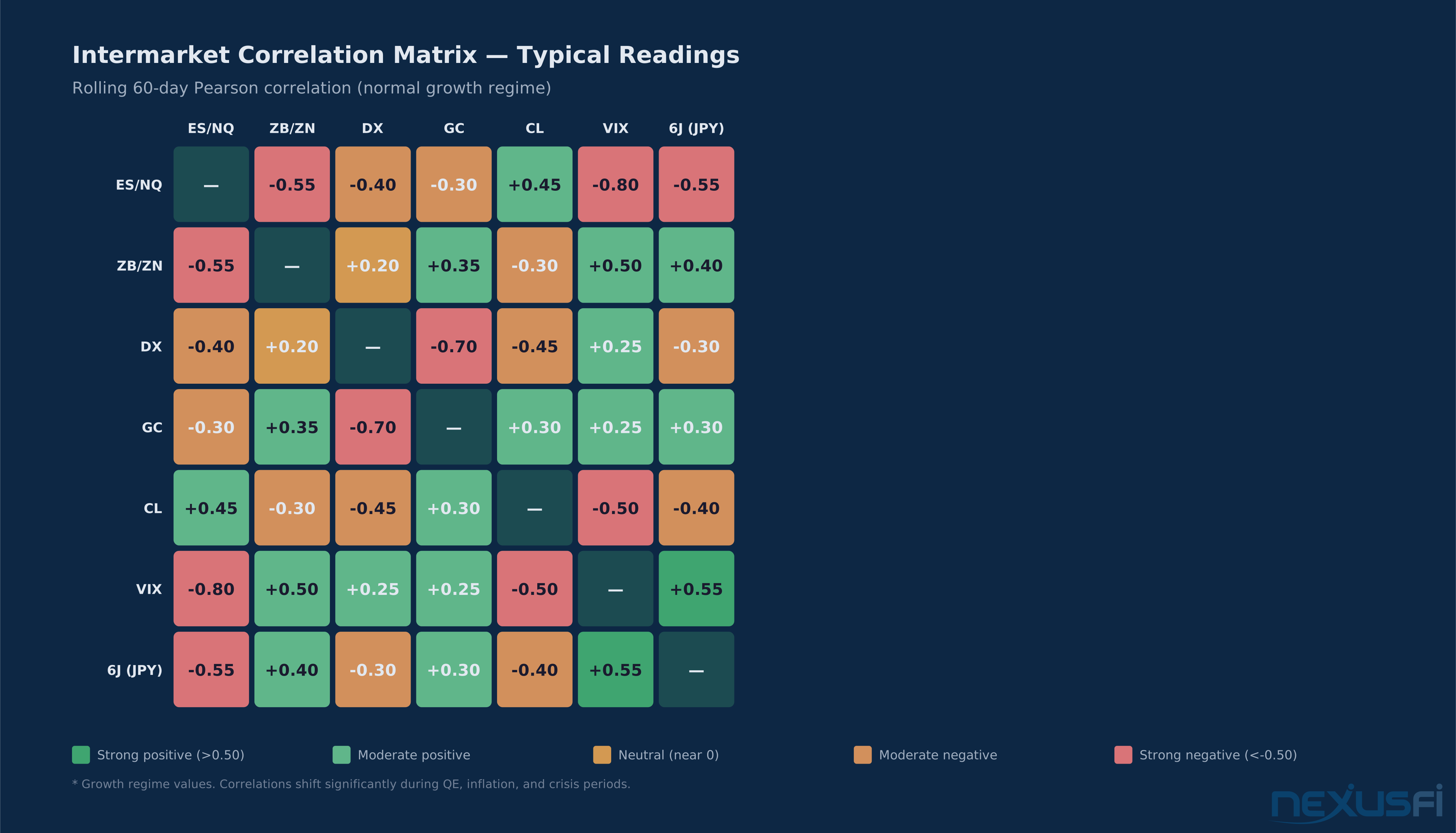
Intermarket correlation data measures the statistical relationship between two or more futures contracts (or tradeable proxies), expressed as a Pearson correlation coefficient ranging from -1.0 (perfectly inverse) to +1.0 (perfectly synchronized). A 60-day rolling coefficient of -0.75 between DX and GC means the dollar and gold move in opposite directions about 75% of the time over that window. A reading near 0.0 means the relationship is weak or noise.
The practical value isn't in the number itself — it's in what shifts in that number tell you about the current regime. This article teaches what intermarket correlation data is, where to get it, how to compute it, and how futures traders use it to filter decisions and avoid trading against the macro flow.
Intermarket correlation doesn't predict direction. It tells you whether the macro environment supports the trade you're already considering. Use it to confirm, filter, or abandon — not to generate signals from scratch.
The Six Core Pairs Every Futures Trader Must Know #
There's no shortage of possible intermarket relationships to track. Most traders who try to monitor everything end up understanding nothing. The professional approach: master the six pairs that govern risk-on/risk-off behavior across the major futures markets, then layer in context as needed.
1. Equities vs. Bonds: ES/NQ vs. ZB/ZN #
The most watched relationship in all of futures. The standard pattern: when Treasury yields rise (bond prices fall, ZB/ZN declines), equity indices like ES and NQ tend to fall — especially NQ, which is heavy in duration-sensitive growth names. When yields fall (ZB/ZN rallies), equities often benefit.
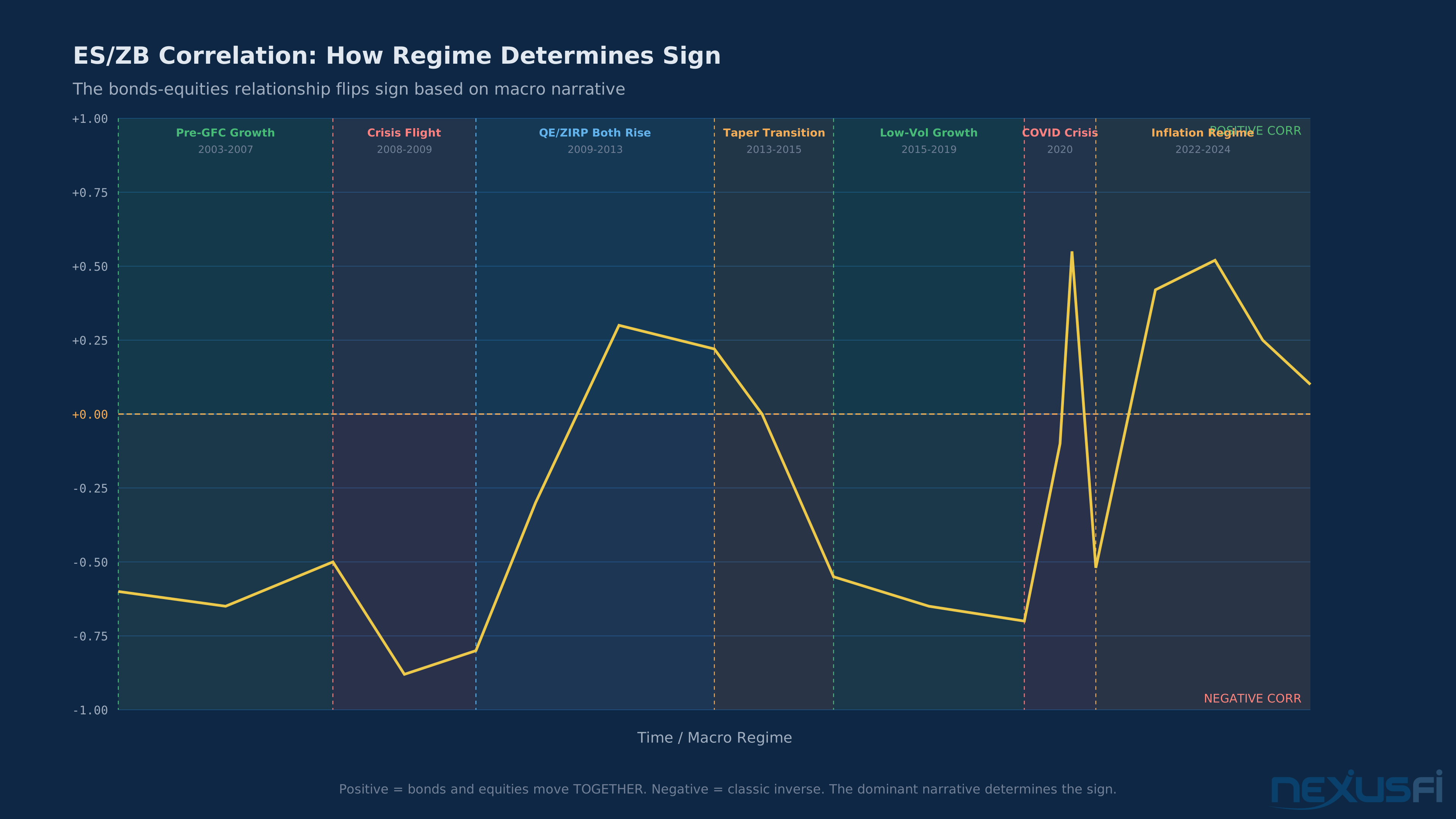
But here's where most traders get it wrong: the sign of this relationship depends entirely on why yields are moving.
- Yields rising on strong growth expectations: equities may rally alongside (stocks pricing in better earnings). Positive correlation between ZB and ES.
- Yields rising from inflation fear: equities typically fall (higher discount rate compresses valuations). Negative correlation.
- Yields falling from recession fear: equities fall too, as bonds serve as a flight-to-safety destination.
- Yields falling as Fed eases pre-emptively: equities rally on improved liquidity conditions.
This relationship is the most misused in retail trading. Traders learn "bonds and stocks move opposite" and get blindsided when they don't. The sign can flip completely based on the macro narrative of the week. Knowing the textbook relationship is not enough — you need to know what's driving the bond market right now.

2. Dollar vs. Commodities: DX vs. GC and CL #
All major commodity futures are denominated in USD. When the dollar strengthens, those commodities become more expensive for foreign buyers — demand softens, prices typically fall. The relationship is most consistent and reliable for gold (GC): DX up, GC down. It's less reliable for crude oil (CL), where supply shocks, geopolitical events, and OPEC policy regularly override the currency effect.
The working model for most regimes:
- DX surging risk-off: GC tends to drop 0.8-1.5% for every 1% DX move (approximate, varies by regime)
- DX surging risk-off: CL tends to fall, but with weaker and less predictable magnitude
- When oil and the dollar both rise together: supply shock or domestic demand narrative is overriding the currency relationship — take note, because this signals a correlation breakdown
3. VIX vs. Equities: VIX vs. ES/NQ #
The most reliable of the six pairs. VIX (CBOE Volatility Index, measuring 30-day implied volatility on SPX options) maintains a strong, consistent negative correlation with ES — approximately -0.75 to -0.85 on 60-day rolling basis during normal regimes.
The practical read: VIX above 20 entering a session signals elevated tail risk, which means mean-reversion setups are less reliable and breakout setups carry more underlying uncertainty. VIX spiking during an ES rally? That's a divergence worth noting — options buyers are hedging against something the price action isn't pricing in yet.
VIX above 30 changes the character of every trade. Correlations between ES and other instruments become less predictive because liquidity stress alters normal price relationships. Reduce size, widen stops, and don't expect historical intermarket patterns to hold during high-VIX regimes.
4. Credit Spreads vs. Equities: The Credit Canary #
No direct futures contract represents credit spreads, but experienced ES traders watch them as leading indicators for equity stress. The relationship: when spreads between junk bonds and Treasuries widen, market participants are pricing in elevated default risk — and equities typically follow credit down within sessions to weeks.
Practical monitoring tools:
- HYG/IEF ratio: ratio of the high-yield bond ETF to intermediate Treasury ETF — a falling ratio signals credit stress migrating into equity territory
- TED spread (3-month LIBOR minus T-bill): historically, spikes above 0.5% signal banking system stress. The TED spread widening before 2008 was one of the clearest advance warnings available.
- CDX Investment Grade / High Yield indices: institutional standard for real-time credit spread tracking
5. Currency Carry vs. Risk Sentiment: AUDJPY, 6J, 6E #
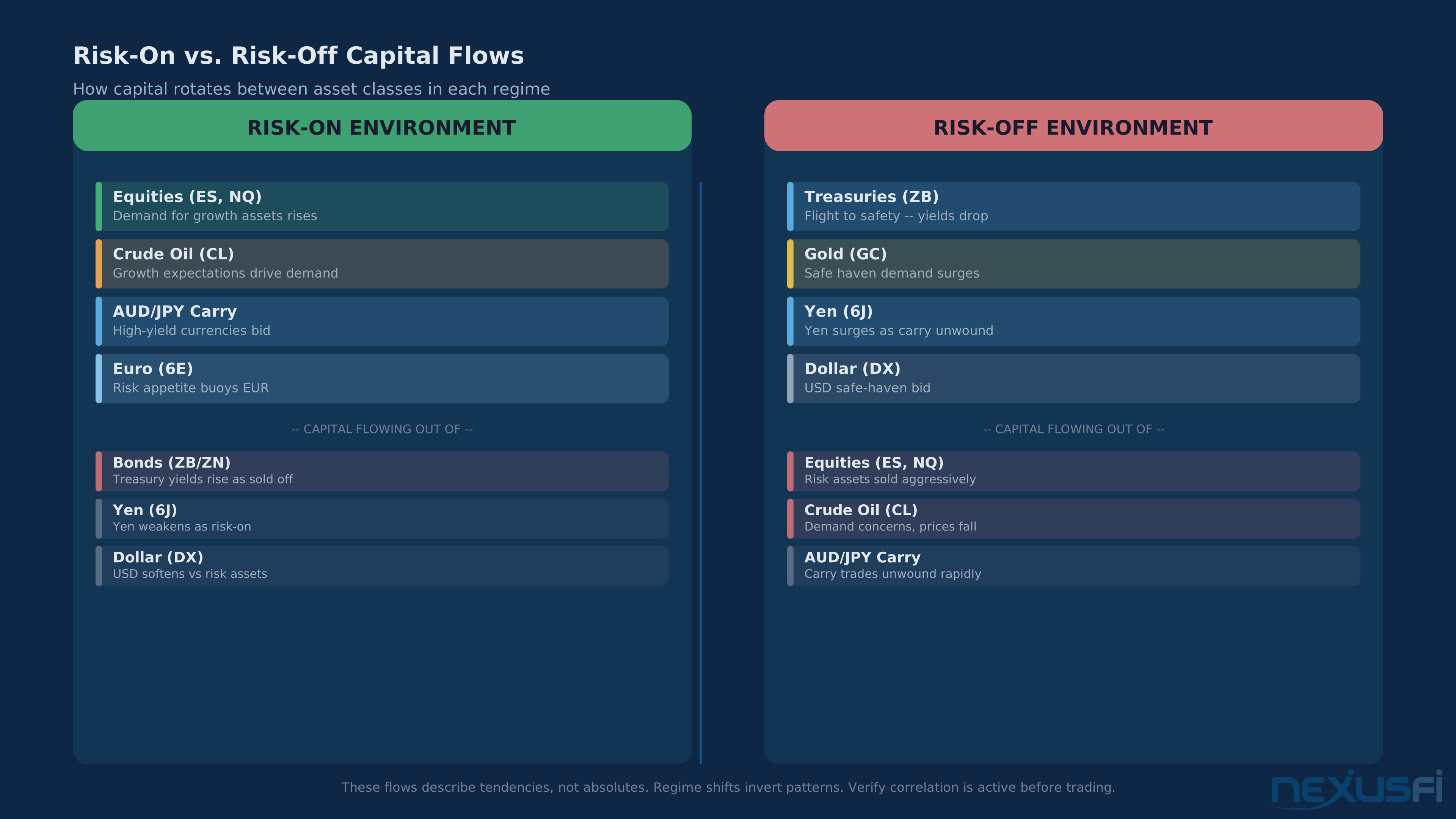
Carry trades borrow low-yield currencies (JPY, CHF) and buy high-yield currencies (AUD, MXN, etc.). When risk appetite is healthy, these positions are maintained — AUD/JPY rises, USD/JPY rises. When risk appetite collapses, carry trades get unwound fast: JPY surges (6J futures rise), high-yield currencies crater, and equity indices typically decline alongside the unwind.
The yen (6J) is the cleanest real-time signal for ES traders:
- 6J rallying sharply in pre-market: safe-haven demand, negative for ES gap-open
- 6J falling while ES is flat: risk appetite recovering, potential tailwind for equities
- Sharp yen surge overnight with no identifiable trigger: often precedes a significant ES gap down at the open
The EUR (6E) relationship to equities is more narrative-dependent. During inflation/rate-differential regimes (2022-2023), 6E and ES showed positive correlation — both responding to the same rate story. During growth-concern regimes, the relationship weakens.

6. Oil vs. Equities: CL vs. ES/NQ #
The CL/ES relationship is the most regime-dependent of all six pairs. During normal growth cycles, rising oil signals demand expansion — CL and ES can move together (positive correlation). But when oil spikes from a supply disruption, the sign flips: higher oil crushes margins and consumer spending, dragging equities lower.
The decision framework:
- CL rising on demand narrative (global growth, inventory draws, manufacturing expansion): correlates positively with ES — don't fight either
- CL rising on supply shock (OPEC cuts, sanctions, geopolitical disruptions): correlates negatively with ES — higher oil is headwind to equities
- CL collapsing: ambiguous — could be demand destruction (bearish for ES) or supply glut (neutral to ES)
When you see CL surge while ES is flat or declining, that's a supply shock signal, not a growth signal. The equity impact will be negative on a lag. 
The six core pairs: ES/NQ vs. ZB/ZN, DX vs. GC, VIX vs. ES, credit spreads vs. equities, 6J (carry) vs. ES, and CL vs. ES. Each pair has a typical direction — and regime conditions that flip it. Master the typical behavior AND the regime conditions, not just the textbook relationship.
Where to Find Intermarket Correlation Data #
Enterprise Platforms #
Bloomberg Terminal is the institutional standard. The CORR function generates rolling correlation matrices between any set of tickers, fully customizable by time period and return methodology. If you have Bloomberg access, it's the most reliable source for clean, institutional-grade correlation data with full historical depth.
Refinitiv (LSEG Eikon/Workspace) provides comparable functionality for firms using that ecosystem.
Professional and Intermediate #
TradingView is the most accessible option for independent traders. Use the spread notation — ES1!/ZN1! plotted as a ratio or difference shows the real-time relationship between contracts. TradingView's built-in correlation coefficient indicator (or community scripts) computes rolling Pearson correlation between any two symbols. Best used for hypothesis generation and visual inspection — validate statistical conclusions with dedicated analysis tools.
Koyfin provides institutional-quality cross-asset correlation matrices at a fraction of Bloomberg cost, and is especially useful for longer-term relationship analysis and regime scanning.
Platform-Native Tools #
NinjaTrader and Sierra Chart both support custom indicators that compute rolling correlation coefficients between two data series. A simple 60-bar Pearson correlation study, displayed as a separate indicator panel below the main chart, lets you monitor in real-time whether the relationship driving your trade thesis is holding or degrading. Build this once and it runs continuously.
Free Data Sources #
- FRED (Federal Reserve Economic Data): Yield curve data, TED spread, credit spreads, policy rates. Free, reliable, full historical depth.
- CBOE website: VIX history back to 1993. Download historical VIX closes for regime and backtesting analysis.
- CME Group: Free futures settlement prices for all major contracts.
- Barchart / Investing.com: Free daily OHLC data for building correlation studies.
Always compute correlation using log returns (ln of price_t divided by price_t-1), not raw prices. Price series are non-stationary and produce spurious correlations. Returns are stationary and produce meaningful statistical relationships. This is the most common technical error in trader-built correlation tools.

How Correlation Degrades: The Regime Problem #
The most dangerous misconception in intermarket analysis: treating correlation as permanent structure.
Correlation between any two futures contracts is regime-dependent. It describes the relationship during a specific macro environment. When that environment changes, the correlation may weaken, flip entirely, or become random noise. Traders who memorize the textbook relationships and apply them across all conditions consistently get surprised.
Regime Type 1: Growth-Dominated Environments #
When markets primarily price macroeconomic growth trajectories, the classical relationships hold with moderate reliability: bonds and stocks move inversely, dollar strength weighs on commodities, carry trades express risk appetite cleanly. These are the textbook correlations — and they work, in this regime.
Regime Type 2: Inflation-Dominated Environments #
When inflation becomes the dominant narrative, the equities/bonds relationship often breaks. Rising yields may not pull equities down — they can co-move if inflation is demand-pull (growing economy generating pricing power). Or both yields and equities can fall simultaneously if inflation is cost-push (supply shock hurting growth and margins). The correlation becomes context-dependent and often unreliable as a filter.
The 2022-2023 period was the clearest modern example: yields and equities moved together in ways that defied the classical framework for extended periods, driven by the inflation narrative that made both asset classes react to the same data (CPI prints, FOMC language).
Regime Type 3: Central Bank Intervention (QE/ZIRP) #
During quantitative easing periods, traditional correlations were distorted by non-economic buyers absorbing bond supply. Both bonds AND equities rallied together as liquidity was injected. Dollar correlations shifted. The flight to safety mechanism was partially short-circuited.
The correlation between individual stocks in the SPX hit 86% in 2011 during the height of RORO dominance — meaning 86% of stock-level returns were explained by a single risk-on/off factor. That's not a normal environment for intermarket analysis.
Regime Type 4: Liquidity Crisis #
In true dislocations (March 2020, September 2008), correlations spike toward +1.0 across virtually all risk assets simultaneously. When liquidity dries up and margin calls force selling, portfolio managers sell what they can, not what they want to. Gold, equities, and commodities fall together. The diversification benefits of intermarket relationships evaporate precisely when you need them most.
In the first 72 hours of the March 2020 crash, the classical risk-off playbook (long bonds, long gold, short equities) failed. Gold dropped alongside equities as liquidity was king. Portfolio managers liquidated across the board regardless of asset class. Correlations normalized after the acute phase — but by then, the damage was done for traders who expected classical patterns to hold in the chaos.
Detecting Regime Shifts with Rolling Windows #
The practical method: compute rolling correlation with three different windows simultaneously (20-day, 60-day, 120-day). When all three align, the relationship is stable and trustworthy. When the shorter windows diverge much from the longer windows, you're likely in a regime transition — reduce reliance on that correlation pair until realignment occurs.
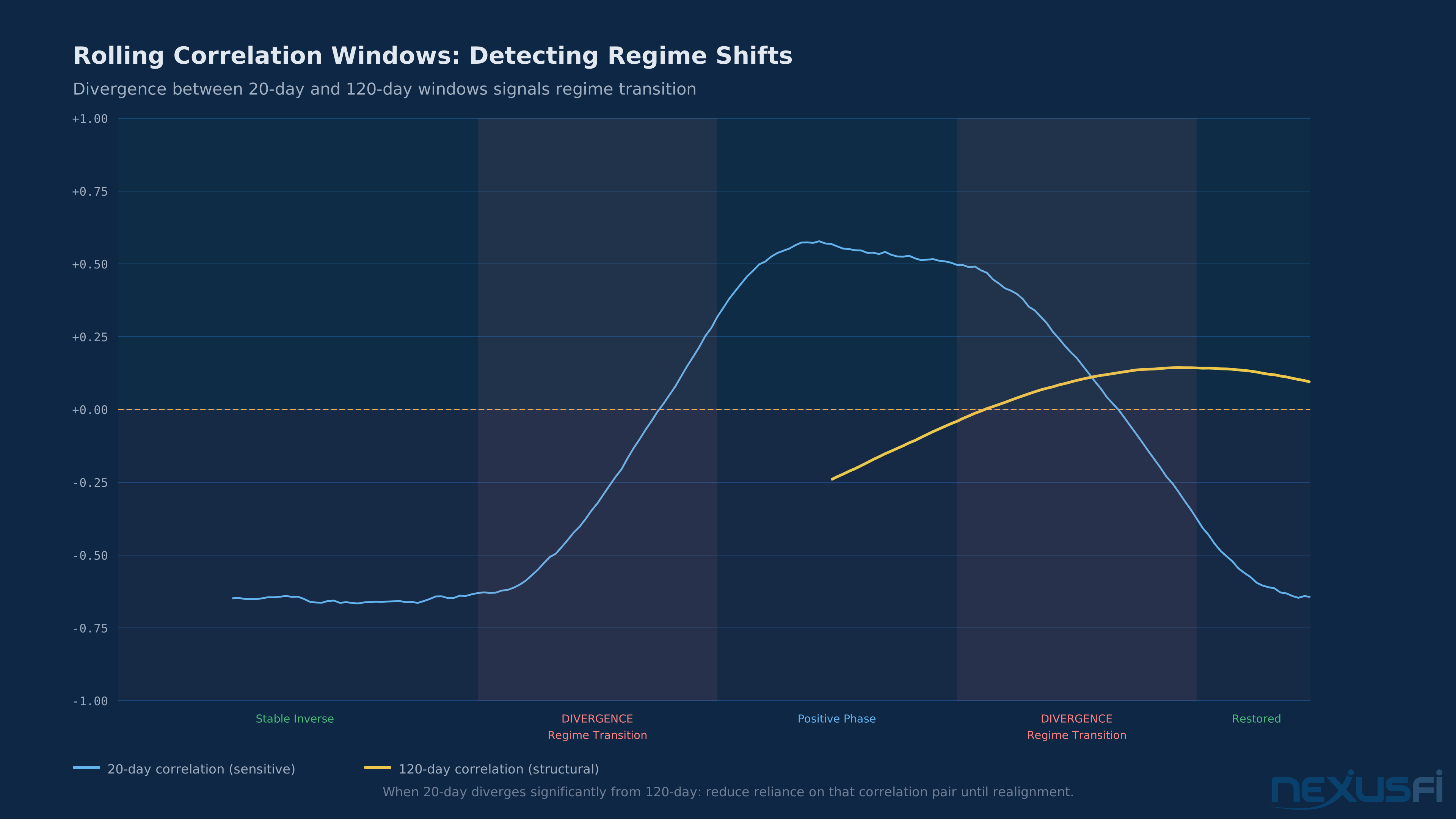
A correlation that ran at -0.70 for six months and is now reading -0.15 on the 20-day window tells you something changed. Figure out what before using that relationship to filter the next trade.
Practical Application Framework: Filter, Don't Trigger #
The cardinal rule of intermarket correlation in live trading: use it as a filter, not a signal generator.
Correlation data doesn't tell you when to enter. It tells you whether the macro environment supports or undermines the trade you're already considering. Here's what that looks like in practice:

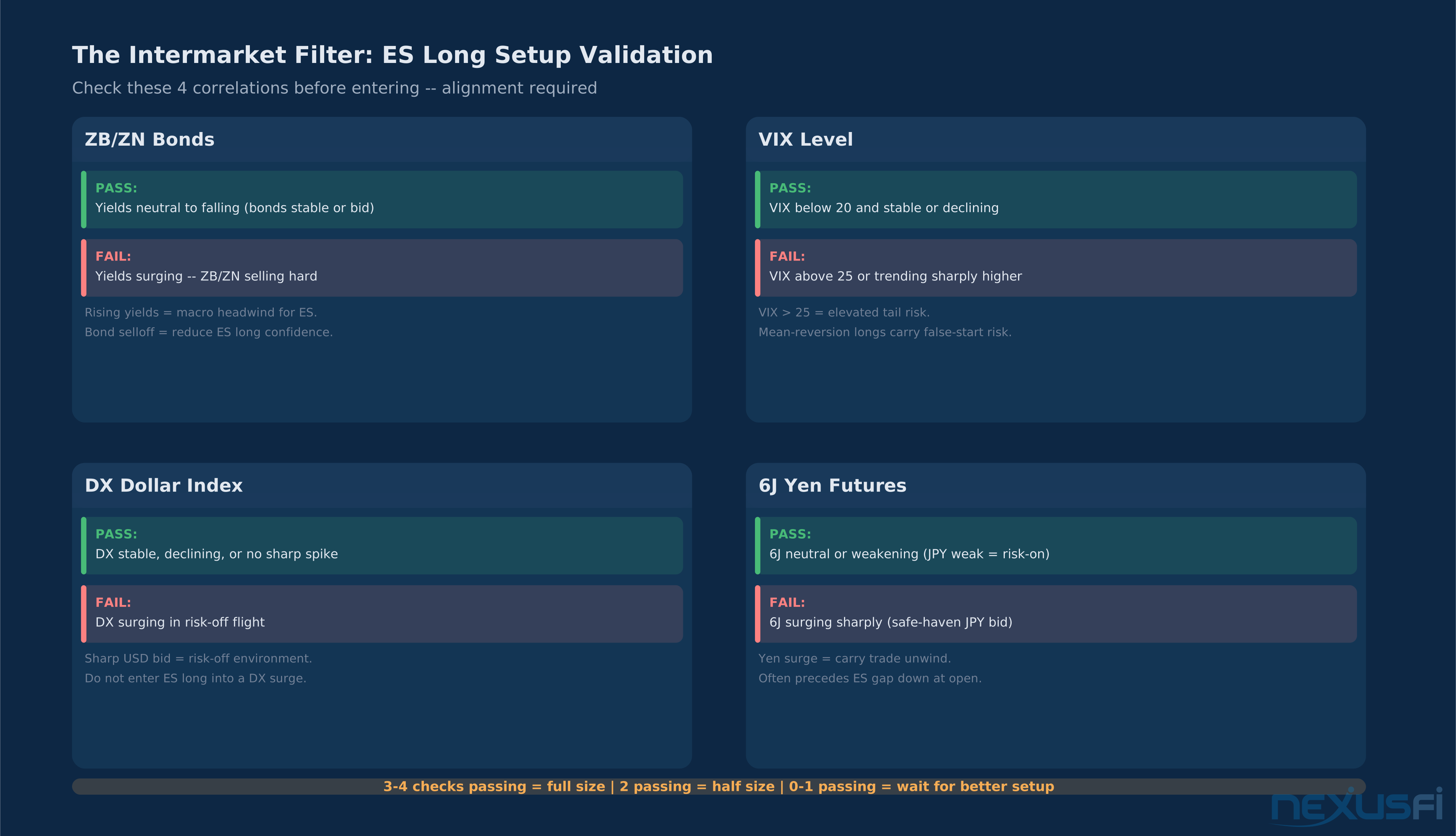
Scenario 1: Planning a long ES at value area support.
Before pulling the trigger, run through these four checks:
- Is ZB/ZN neutral to bid? (yields not surging) — PASS
- Is VIX below 20 and not spiking? — PASS
- Is DX stable or declining? (no risk-off dollar surge) — PASS
- Is 6J neutral or weakening? (no yen safe-haven surge) — PASS
Four-for-four: the macro environment supports the long. Two or fewer passing: reduce size much or wait for a cleaner setup.
Scenario 2: Sharp 6J move during overnight session.
6J surging +0.8% in Asian session with no identifiable economic release — safe-haven demand, risk appetite deteriorating. Hold off on pre-market ES long setups until you understand what's driving the yen.
Scenario 3: CL surging hard premarket, ES flat.
Ask first: is this supply-driven or demand-driven? If geopolitical supply squeeze: that's a headwind for ES margins, don't fade ES flatness as a long setup. If demand-driven (China manufacturing data beat): may be tailwind for ES, existing long bias maintained.
The Three-Relationship Rule #
Professional intermarket analysts at major trading firms have specialists dedicated to single asset class relationships. For independent futures traders managing their own book, three is the functional maximum before analysis becomes counterproductive and distracts from execution.
ES/NQ traders: Monitor ZB/ZN (rates confirmation), VIX (volatility regime), and one currency signal (6J for yen as real-time risk-off sensor).
CL traders: Monitor DX (dollar relationship), ES (demand proxy), and crude curve structure (front-month vs. deferred spread as supply/demand balance within the oil market itself).
GC traders: Monitor DX (primary driver), real yields (TIPS-derived — the actual mechanical driver of gold beyond mere dollar moves), and credit spreads or VIX as stress proxies.
@Fat Tails from NexusFi sums it up well: for ES specifically, focus on TICK, TRIN, VIX, other index futures (YM, NQ), the dollar index (DX), and bonds (ZB/ZN). That's already six inputs. Master those before expanding. Complexity scales linearly with distraction.
The Divergence Signal: When Breaks Are More Valuable Than Confirms #
Experienced intermarket analysts often find more actionable value in correlation breaks than in correlation confirmations. When a market moves contrary to its historically correlated pair, that divergence signals a thematic shift — the dominant narrative has changed, and positioning built on the old narrative is vulnerable.
Classic example: ES rallies strongly while ZB/ZN also rallies (normally these move inversely). This pattern occurred repeatedly during the QE era and signaled policy-driven liquidity lift — a regime where traditional risk-off/risk-on dynamics were partially suspended and both asset classes were beneficiaries of the same monetary policy flow. Recognizing this in 2012-2015 meant not shorting equities into bond strength based on the classical framework.
Another example: DX surges while GC also surges (normally inverse). This signals flight to safety in dollar-denominated assets — both benefiting from risk aversion but through different mechanisms. Geopolitical shock driving dollar demand AND gold demand simultaneously.
When two markets that should be inversely correlated move in the same direction, that's not an error in your analysis — it's a regime signal. The divergence tells you something changed in the macro narrative before the headlines catch up.
Continuous Contracts and Data Quality #
For any multi-week or multi-month correlation study, data quality matters more than most traders appreciate.
Continuous contract rolls introduce noise. When futures roll from front-month to next-month, price discontinuities create artificial spikes in return series. Use back-adjusted continuous contracts for any study longer than a single contract cycle. CME Group and most data vendors provide back-adjusted continuous series — verify which method (rollback adjustment vs. ratio adjustment) your platform uses, as they produce different historical levels.
Market hours alignment is critical. ES trades nearly 24 hours a day. If you're correlating ES against a market that has defined trading hours (like some currency crosses or specific equity indices), ensure your timestamp methodology is consistent. Comparing ES settlement at 4:15 PM Eastern to ZB settlement at 3:00 PM Eastern introduces a 75-minute timing mismatch — small but relevant in busy sessions.
Liquidity tiers affect microstructure. ES and ZB are among the most liquid futures globally. Correlation computed between them and a thinly-traded contract will be noisier due to microstructure differences in fill timing, bid-ask spreads, and market-maker behavior. The correlation is real but harder to measure cleanly.
Correlation has a natural lag. Credit markets often lead equity markets by 1-5 sessions during stress events. If you compute contemporaneous correlation, you might miss the leading signal entirely. Testing lagged correlation — today's ES return versus yesterday's credit spread change — can reveal timing structure that contemporaneous analysis misses.
The equity-bond relationship was described by @tigertrader as being somewhat perverted during the post-QE unwinding, when non-economic players were shedding treasury collateral to raise dollars for reasons unrelated to traditional risk appetite. Risk parity funds, central banks, and forced liquidations can drive correlations in directions that have nothing to do with the macro narrative. When correlations move in ways that defy all narrative explanation, institutional flow is usually the answer.
Practical Considerations #
Start with daily data, not intraday. Rolling correlation on daily returns is more stable, easier to interpret, and sufficient for position-level decision making. Intraday correlation is noisier, more susceptible to microstructure effects, and harder to act on quickly enough to be useful for most traders.
Monitor, don't improve. The goal of intermarket correlation tracking is to stay aware of the macro environment's relationship to your instrument — not to build a quantitative system where correlation coefficients generate systematic entries and exits. That's a different project with different requirements.
Keep a correlation log. When you observe a significant correlation break, note it: date, which pair broke, what the apparent cause was, and how long before it normalized. Over time, this log becomes a pattern library for identifying future regime shifts faster.
The community matters. NexusFi's Spoo-nalysis thread by @tigertrader has tracked intermarket correlation in real-time for over a decade, with specific analysis of when relationships hold and when they break. That kind of lived, annotated market history turns abstract correlation theory into practical pattern recognition.
Knowledge Map
Prerequisites
Understand these firstGo Deeper
Build on this knowledgeReferences This Article
Articles that build on this topicCitations
- — Correlations and Inverse correlation ES (2015) 👍 11“USDJPY down is bearish for the ES. AUDJPY up is bullish for ES due to risk-on sentiment with a carry trade. Focus on understanding what is causing each instrument to move.”
- — Spoo-nalysis ES e-mini futures S&P 500 (2012) 👍 14“When spreads widen between bonds with different quality ratings it implies that the market is factoring more risk of default. Narrowing credit spreads imply risk on and a bullish implication to equities.”
- — Spoo-nalysis ES e-mini futures S&P 500 (2015) 👍 17“Lower bond yields should encourage investors into equities -- but when investors begin to question fundamental underpinnings, they shift away from riskier assets toward safety.”
- — Spoo-nalysis ES e-mini futures S&P 500 (2022) 👍 11“It's really critical to ask why with things like this. Why would they correlate? If you don't know that, you will have no frame of reference when the correlation breaks down.”
- — Spoo-nalysis ES e-mini futures S&P 500 (2014) 👍 8“During a risk-on/off regime, different assets move in unison regardless of their individual fundamentals. Highly correlated markets make it difficult to achieve diversification.”
- — Intermarket Analysis Resources? (2010) 👍 3“For trading ES, focus on: TICK and TRIN, the option market (put/call ratio, VIX), other index futures (YM, NQ), the dollar index (DX), and interest rates (bonds).”
- — Spoo-nalysis ES e-mini futures S&P 500 (2015) 👍 44“Whether one looks at swap, credit, or TED spreads as a barometer of systemic risk, they all tell us that financial institutions are not afraid to transact business in the current environment.”
- — Spoo-nalysis ES e-mini futures S&P 500 (2015) 👍 14“The traditional equity bond relationship has been somewhat perverted due to non-economic players who are still shedding treasury collateral to raise dollars for non-investment reasons.”
- — How I Trade For a Living (2016) 👍 24“Bonds tend to move inversely of the ES -- I inverted the bond chart so it tells me market sentiment relative to ES. These intermarket charts are some of my favorite tools for confirming trades.”
- — Spoo-nalysis ES e-mini futures S&P 500 (2014) 👍 17“Traders look at cross asset correlations on an inter-market and intra-market basis, to gain insights into capital flows so that they can better anticipate moves and define risk.”
- — Spoo-nalysis ES e-mini futures S&P 500 (2015) 👍 20“When you start to see a deviation in normal asset class relationships, where one or more instruments decouple, it is usually a precursor to a change in trend.”