



Volatility Data for Futures Trading: VIX, Realized Volatility, and the Risk Metrics Serious Traders Track
Overview #
Volatility data is the market's pricing of uncertainty — and every futures trader needs to understand it, not just options traders.
Most traders focus on price. Professional traders also watch what price is expected to do, how uncertain that expectation is, and whether the market's fear is rising or falling. That's what volatility data provides: a quantified measure of risk that tells you how to size positions, when to reduce exposure, and what the market collectively believes about near-term distributional risk.
There are two at the core different types of volatility data — realized volatility, which measures what actually happened, and implied volatility, which measures what the market expects to happen. The gap between them is where structural edge lives. When implied volatility consistently exceeds realized volatility (which it does roughly 80% of the time), option sellers earn a structural premium. When realized spikes far beyond what was implied, the market was caught off-guard — often a regime shift that every futures trader should have seen coming in the term structure data.
This article covers the full environment: data types, data sources, how to read the term structure, how to identify volatility regimes, and how to put it all to practical use in ES, NQ, CL, and GC futures trading.
The Two Core Data Types: Realized vs. Implied #
Every volatility concept traces back to one of two at the core different data categories.
Realized Volatility #
Realized volatility (RV), also called historical volatility (HV), is backward-looking. It answers the question: how much did this instrument actually move? The standard calculation is the annualized standard deviation of daily log returns:
HV (annualized) = StdDev(daily log returns) × sqrt(252)
Common lookback windows:
- 20 days (roughly one month) — most responsive to recent conditions, used for position sizing
- 60 days (roughly three months) — medium-term view, smooths out short spikes
- 252 days (one full year) — full-cycle context, the baseline for regime detection
The annualization factor converts daily standard deviation into an annual percentage, which lets you directly compare realized vol to implied vol — both are expressed in the same units.
Typical realized vol thresholds for ES/NQ (annualized):
- Low vol: 10-15%
- Normal: 15-22%
- High: 22-30%
- Crisis: above 30%
For CL (crude oil), normal realized vol sits around 25-40%. For GC (gold), normal is roughly 12-18%. These numbers aren't fixed — use percentile-based comparisons against the instrument's own history for regime decisions.
Why every futures trader needs this: Realized vol tells you what stop distances are statistically meaningful. A 20-day HV of 15% in ES implies a daily standard deviation of roughly 0.95% (15 divided by sqrt(252)). A stop placed 0.3% from your entry is sitting inside one daily standard deviation — it's getting swept by noise, not hit by being wrong.
Implied Volatility #
Implied volatility (IV) is forward-looking. It's derived from option prices by working backwards through a pricing model (typically Black-Scholes). Given the option's market price, strike, time to expiry, and risk-free rate, the only unknown is the volatility assumption that makes the model match the market. Solve for that, and you have implied volatility — the market's collective bet on future realized vol, plus a risk premium.
Realized vol is the rearview mirror. Implied vol is the windshield. Both belong in your premarket routine. [^1]
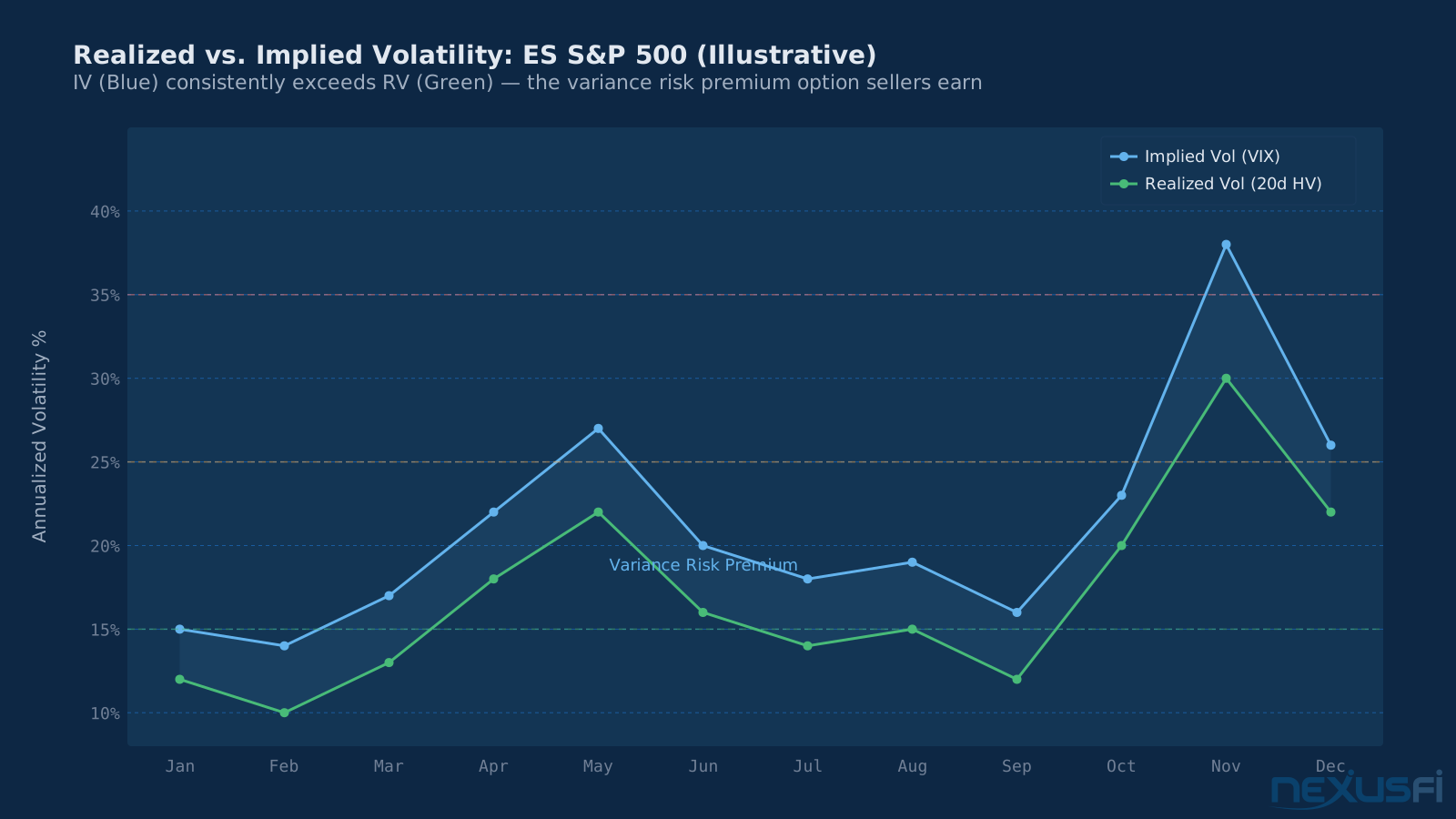
As @josh clarifies in the NexusFi Elite Journals, a VIX of 20 means an annualized implied volatility of 20% based on the next 30 days of SPX option pricing. Divide VIX by 15.87 (or 16 for quick math) to get the expected daily percentage move. VIX 20 implies roughly 1.26% daily — about 50 ES points at current prices. VIX 40 implies 2.52% daily — roughly 100 ES points. [^2]
This is why even futures-only traders who never touch an options contract need to know how to read VIX.
The VIX Family: What Exists and What's Tradeable #
The VIX Index Itself #
The VIX (CBOE Volatility Index) is the market's benchmark measure of expected 30-day implied volatility for the S&P 500. It's constructed from a broad strip of out-of-the-money SPX options across multiple strikes — not from any single option — using a model-free methodology that captures the full implied volatility surface.
VIX is quoted as an annualized percentage. Key levels:
- Below 15: low-vol regime, historical complacency territory
- 15-25: normal operating range for most market conditions
- 25-35: elevated stress, increased hedging demand
- Above 35: crisis territory — rare but significant when it happens
The VIX index is not directly tradeable. You cannot buy or sell spot VIX. That distinction trips up a lot of traders who look at VIX charts and think about VIX trades.
VX Futures — The Tradeable Version #
VX futures (ticker: /VX) trade at the CBOE and settle to the VIX index at expiration. They are the directly tradeable form of volatility, with their own term structure — each monthly contract has its own price, which may be above or below spot VIX.
Critical to understand: VX futures don't track spot VIX one-for-one. When spot VIX spikes from 15 to 35, the front-month VX futures might move from 17 to 28 — not the same size move, because the market already had some stress premium priced in. The further out the contract, the less it moves with spot.
As @tigertrader analyzed the structure: VIX ETN products like VXX continuously roll from front-month to second-month VX futures, selling the near-term and buying the deferred. In persistent contango, this roll bleeds value daily — buying higher and selling lower with every roll. The systematic short-vol community profits from this structure in stable regimes. [^3]
For ES and NQ traders, VX futures serve primarily as a leading indicator and risk gauge, not a primary trading product. The term structure — not the VIX level alone — is the signal.
The Sector VIX Indices #
The CBOE produces asset-class volatility indices beyond equities:
- VXN: Expected 30-day vol for the Nasdaq-100. Typically runs higher than VIX due to NQ's larger intraday percentage moves.
- OVX: Crude Oil Volatility Index — implied vol context for CL futures.
- GVZ: Gold Volatility Index — context for GC futures.
- TYVIX / VXTYN: Treasury volatility for rate-sensitive futures (ZN, ZB).
These give futures traders cross-asset volatility context. When VIX is low but OVX is elevated, stress is energy-specific. When all spike simultaneously, you're in broad macro stress — a different risk regime for every futures product.
Track at least three volatility measures as part of your premarket routine: VIX (equity risk), the VX term structure slope (stress direction), and whichever sector vol index is relevant to your primary market. Together they take five minutes and provide more risk information than most price-based indicators combined.
Volatility Term Structure: The Most Important Vol Signal for Futures Traders #
The term structure of volatility plots VX futures prices (or implied volatility) across different expiration dates. It shows how the market's fear is distributed across time — and it's one of the most reliable early-warning systems for significant market moves.
Contango (The Normal State) #
In calm, stable markets, the volatility term structure slopes upward — deferred contracts price higher than near-term contracts. This is contango in volatility, and it's the baseline expected state. The logic: uncertainty naturally increases over longer time horizons. The market expects more can go wrong over six months than over one month.
A typical contango structure in VX futures: front month at 16, second month at 18, third month at 20. The gap between consecutive contracts — the "vol carry" — represents the price of rolling from near to far. Option sellers in contango environments systematically earn that roll premium.
Backwardation (The Stress Signal) #
When near-term fear exceeds long-term fear, the curve inverts. Front-month VX futures price above deferred contracts. This is backwardation — and it is a blinking red hazard light, not a curiosity to observe passively.
Backwardation tells you the market believes a near-term risk is acute and expected to resolve. It doesn't guarantee a crash — but it means the sharpest money in the market is pricing much more near-term pain than long-term pain. Something is wrong.
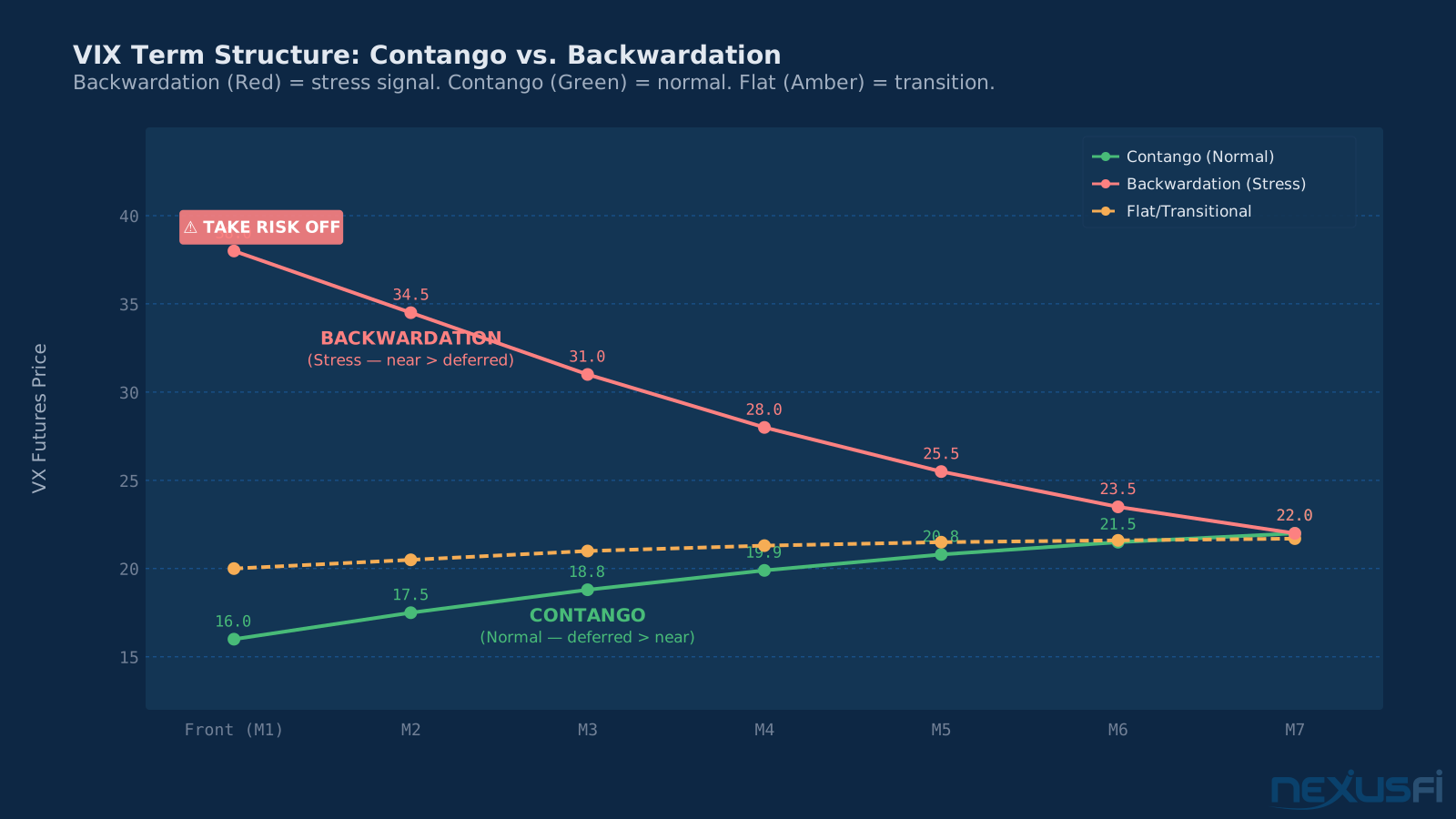
That backwardation signal came three weeks before the COVID crash hit price charts.
@suko in the VIX and Volatility General Discussion thread: "Do not look at VIX in isolation. Wrap it in the context of the VIX futures term structure, and then you have a potent forecasting indicator. Learn to read that term structure. It tells you what the sharp money sees happening at various points out into the future. When it goes into backwardation, take risk off." [^4]
VIX backwardation is a position-sizing and risk management trigger, not just an observation. When the VIX term structure moves from contango to backwardation, experienced ES and NQ traders reduce leverage immediately — not after the first big down day. The move into backwardation often precedes the visible price decline by days or weeks. Waiting for price confirmation means waiting until the damage has started.
Reading the Curve Practically #
You don't need institutional infrastructure to track the VIX term structure. The site vixcentral.com provides a clean daily visualization of VX futures prices across contract months. Building a premarket check of this data takes two minutes and provides risk management information that the majority of price-chart-only traders completely miss.
Practical threshold for action: When front-month VX futures price above second-month VX futures by more than one VIX point, you're in meaningful backwardation. Reduce ES/NQ exposure and widen profit targets. When it normalizes back to contango for two or more consecutive weeks, begin restoring baseline exposure — gradually, not all at once.
Implied Volatility Surfaces and Skew #
For traders who want to go deeper than VIX, the IV surface provides a complete picture of how options are priced across both strikes and expirations. This data reveals where fear is concentrated — not just how much total fear exists.
What the Surface Shows #
The IV surface is a matrix: strike prices (expressed as deltas) on one axis, expiration dates on the other, and implied volatility as the third dimension. Together they show:
- Whether the market fears downside more than upside (and by how much)
- How specific event risk is priced into particular expirations
- Where the market's expectations shift as you move from near-term to long-dated options
Equity Skew: The Persistent Left Lean #
Equity index options (ES, NQ) consistently show a left skew — out-of-the-money puts are much more expensive than equidistant out-of-the-money calls. This reflects the persistent institutional demand for downside protection.
The standard quantitative measure is the 25-delta risk reversal: the IV of the 25-delta put minus the IV of the 25-delta call. For ES options under normal conditions, this number is typically negative 3 to 5 points — puts cost more than equivalent calls.
As @tigertrader analyzed the structural mechanism: large institutions write calls against long equity positions (reducing their effective cost basis) and sell puts for premium. This creates systematic supply and demand that steepens the skew in stable regimes and has at the core changed how market shocks are transmitted since 2012. [^5] When the gamma dealers who bought those puts get long enough delta, they become systematic buyers of every dip — which partially explains why markets mean-revert more reliably in low-vol environments.
When skew steepens sharply — OTM puts becoming much more expensive relative to historical norms — it signals heightened hedging demand and often precedes or confirms a bearish break. When skew collapses (both puts and calls relatively cheap), the market has reached unusual complacency.
Commodity Skew: A Different Animal #
CL and GC don't have the same persistent left skew as equity indices. Crude oil can show right skew — OTM calls more expensive than OTM puts — during supply-shock environments when the market is pricing spike risk more than collapse risk. Gold skew depends heavily on the macro environment, shifting with USD liquidity conditions and real rate expectations.
For futures traders: monitoring skew tells you where the market's tail risk is being priced, which affects execution. In a steep ES put-skew environment, downside moves tend to overshoot — stops placed "safely" below support may be closer to the distribution's center than they appear on a price chart.
Skew data reveals where institutions are hedging — not necessarily where price will move. A steep left skew in ES doesn't predict a crash. It tells you crash insurance is expensive, which means dealers who sold that insurance are systematically buying dips to hedge their short-delta exposure. Understanding the mechanism is the difference between volatility data use from volatility indicator worship.
Accessing Surface Data #
Thinkorswim's "Analyze" tab provides reasonable real-time IV surface visualization for index options, free with a funded account. For systematic analysis and backtesting, CBOE DataShop provides historical options data, but building a proper surface from it requires significant data processing work.
Professional services like ORATS and Volatility Institute provide cleaned, point-in-time surfaces ready for systematic analysis. The "point-in-time" designation is non-negotiable for backtesting: using today's volatility surface to evaluate what "would have happened" in 2019 creates look-ahead bias that can invalidate an entire research project.
Data Sources: Where to Get Volatility Information #
Exchange and CBOE Data (The Gold Standard) #
CBOE Website: Free historical VIX data, VX futures settlements, VXN, OVX, GVZ, and the full CBOE index methodology documentation. Start here.
CBOE DataShop: Institutional-grade historical options data for custom IV surface construction. Provides the most granular raw material — actual option prices by strike and expiry across history. Requires significant data cleaning and surface construction work, but produces the most accurate results.
VX Futures from CME/CBOE: Real-time and end-of-day settlement prices for VX futures term structure analysis. Available directly from the exchange or through data vendors.
For commodity volatility, OVX and GVZ data is available from CBOE at no cost for the index-level values.
Broker and Platform Data #
Most active futures trading platforms provide some volatility data:
- Thinkorswim: Strong IV surface visualization in the Analyze tab. Free with a funded account. Historical IV data depth is limited.
- TradingView: Historical volatility studies are built in (HV calculations). VIX charting. No surface or skew data.
- Sierra Chart: Requires a CBOE data subscription for full options data integration.
The limitation with broker data is historical depth. Meaningful vol regime analysis requires years of data — which most broker platforms don't make easily accessible for backtesting.
Professional and Alternative Sources #
For systematic traders building vol-regime detection:
- ORATS: Cleaned, point-in-time implied volatility surfaces with significant historical depth. Widely used for systematic backtesting.
- Refinitiv / Bloomberg: Institutional-grade volatility datasets via API. Enterprise pricing.
- QuoteMedia, Intrinio: Mid-tier vendors with vol data feeds at more accessible price points.
- Oxford-Man Institute: Publishes realized volatility datasets for global equity futures — free, research-grade, useful for building vol regime baselines.
Data Quality Parameters to Verify #
Before relying on any volatility data source, confirm: sampling frequency (end-of-day vs. intraday), session handling (RTH-only vs. all-session — overnight ES vol is at the core different from RTH), ATM definition (spot-closest strike vs. delta=0.5), and calendar conventions (calendar days vs. trading days for expiration counting). These choices produce meaningfully different numbers — inconsistency between sources corrupts regime analysis.
Volatility Regimes: The Framework That Changes Everything #
A volatility regime is a persistent state in market behavior where realized vol levels shift, correlation structures change, and standard model assumptions break down. Identifying which regime you're in matters more than optimizing entry signals — because the same setup performs completely differently in a 12% annualized vol environment vs. a 35% annualized vol environment.
The Two-Factor Regime Identification Framework #
Strong regime identification uses two inputs in combination:
Factor 1 — Realized vol level: How much is actually happening?
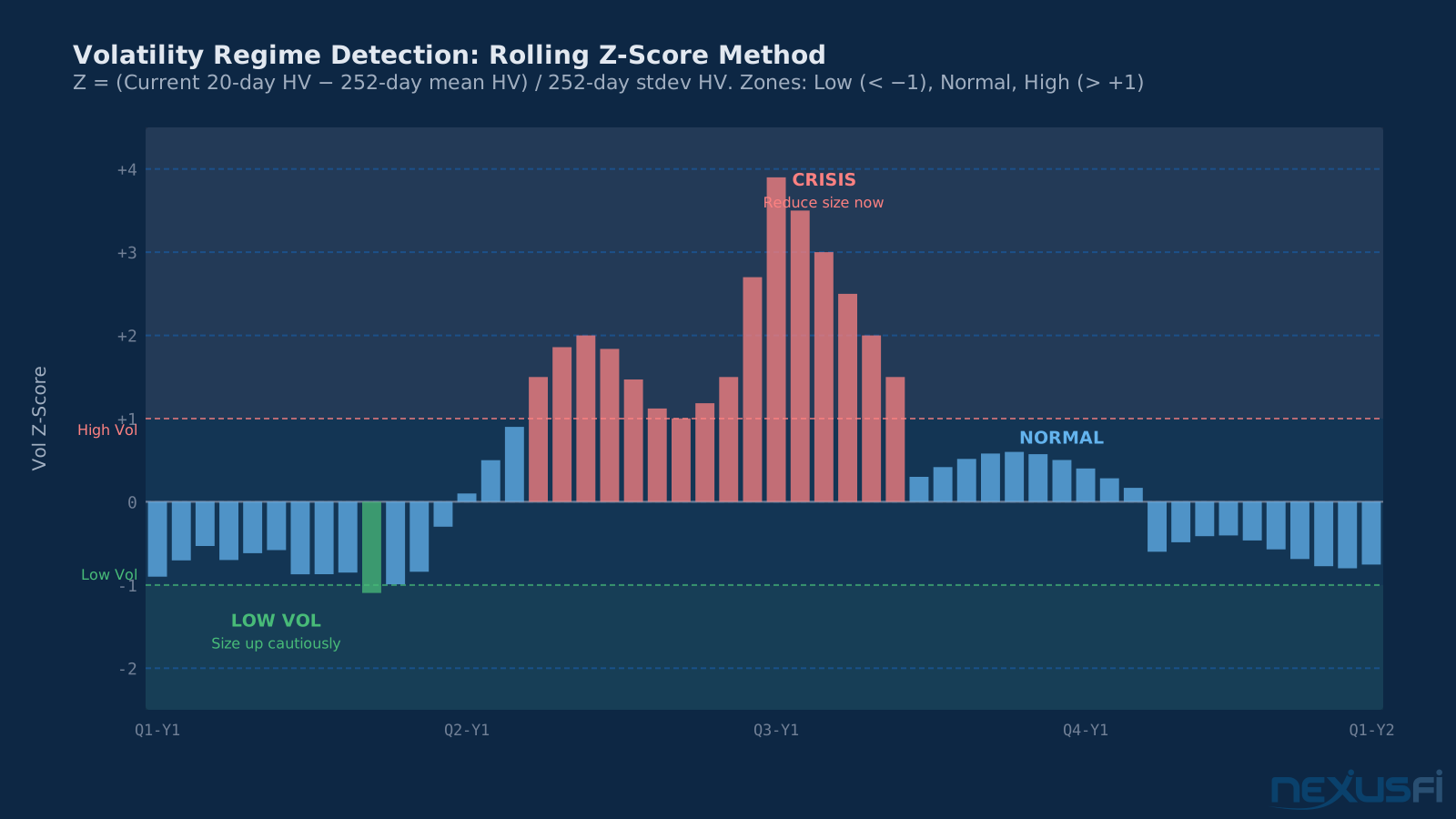
The rolling Z-score approach is more strong than fixed thresholds:
Z = (Current 20-day HV - 252-day mean HV) / 252-day standard deviation of HV
Z > +1.0: High-vol regime Z between -1.0 and +1.0: Normal vol regime Z < -1.0: Low-vol regime
Fixed thresholds like "VIX below 15 = low vol" are period-dependent and can mislead after extended high-vol periods raise the historical baseline. The Z-score adapts automatically.
Factor 2 — Term structure state: What is the market pricing for the future?
Combine realized vol Z-score with term structure to confirm regime:
- High Z-score + backwardation = crisis mode (double confirmation)
- High Z-score + contango returning = stress fading, recovery beginning
- Low Z-score + steep contango = complacency, regime shift risk growing
- Low Z-score + backwardation = near-term event risk in otherwise calm market
The Four Regime States and What They Mean for Futures Trading #
Low Vol + Contango (green bars, upward-sloping curve): The grind-up environment. Trend-following systems underperform — ranges are small and mean reversion dominates. Premium-selling strategies work well. Position size can be cautiously increased, but be aware that regime shifts are asymmetric: vol spikes up faster than it fades. Don't get caught overleveraged at a regime transition.
High Vol + Backwardation (red bars, inverted curve): Crisis mode. Every systematic strategy gets stress-tested simultaneously. Reduce contract size dramatically — this is not the regime to add to losing positions or "buy the dip." Wait for the term structure to normalize before restoring exposure.
High Vol + Contango (normalizing): Post-crisis recovery. Realized vol is still elevated but the term structure has normalized — fear is fading. Mean reversion starts working again. Begin re-building exposure, but gradually. The 20-day HV lookback means your realized vol measure will stay elevated for weeks after the crisis event ends.
Low Vol + Backwardation (rare): Near-term event risk in an otherwise calm market. Usually event-specific — upcoming FOMC, geopolitical uncertainty, scheduled major data release. Reduce vol-sensitive positions ahead of the event, restore after resolution.
The regime determines the strategy, not vice versa. Trading the same system in a low-vol grind as you'd trade it in a crisis breakdown is how accounts get destroyed. Check vol regime as part of your daily process, not just when markets move big.
Regime Failure Modes #
Regime lag: The 20-day lookback means realized vol is always reflecting the past month. In sharp regime transitions (Feb 2020, March 2020, Aug 2015), the Z-score can read "normal" for the first several days of a crisis while the market is already moving into backwardation. The term structure leads; realized vol lags. Always check both — the term structure signal is earlier.
False readings in thin-liquidity periods: December, August, and major holiday weeks can show temporarily low realized vol simply because trading volume is thin and price moves are muted. A low-vol Z-score in late December doesn't mean it's safe to max-size heading into January. Cross-reference with VX futures open interest and options volume to confirm whether the low vol is structural or thin-market.
Practical Applications for Futures Traders #
Volatility-Adjusted Position Sizing #
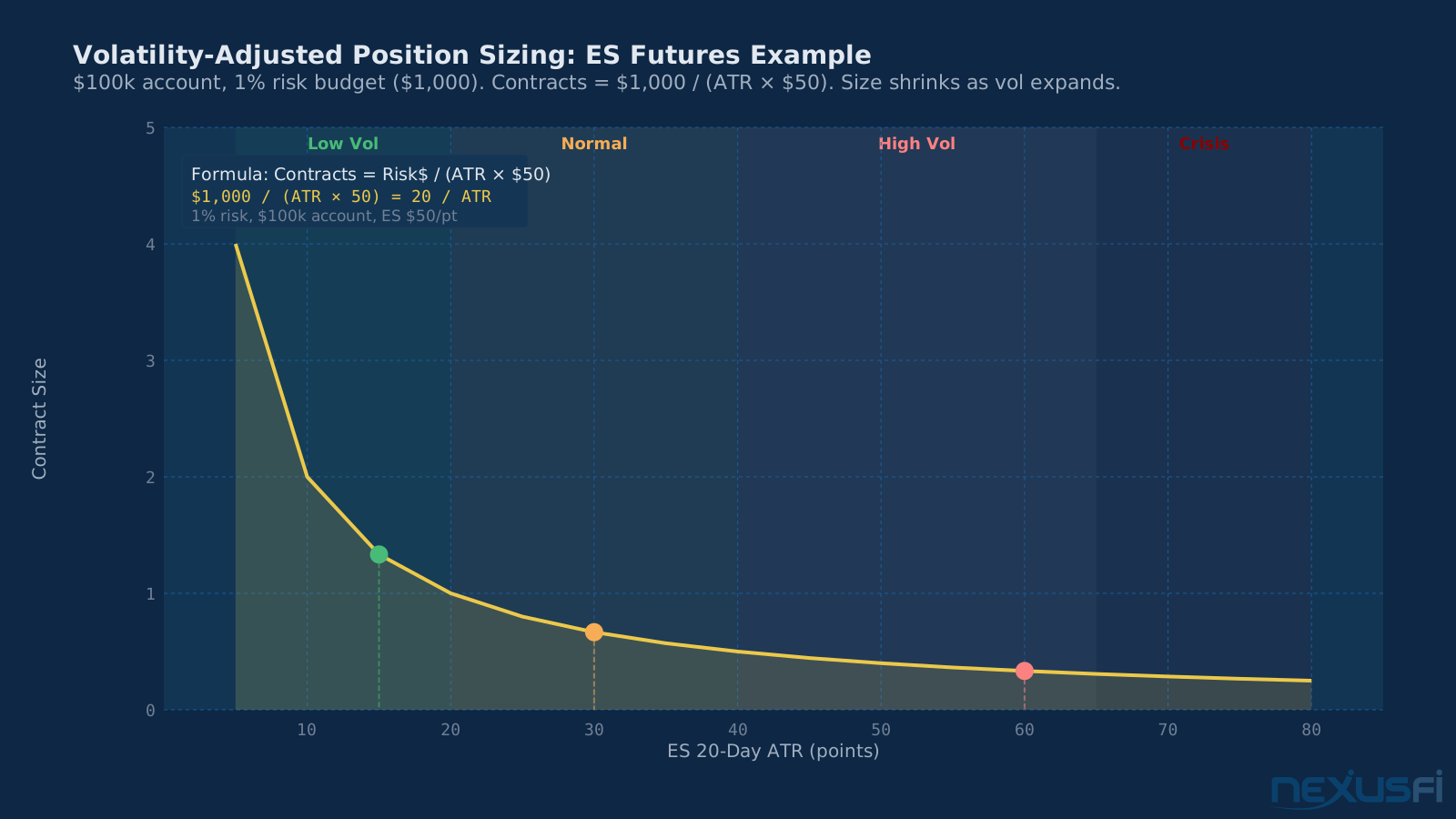
The most direct application of vol data for futures traders: size your contracts based on actual volatility, not fixed lot counts. This keeps daily P&L volatility roughly constant across different market regimes.
Basic formula:
Contracts = (Account Risk % × Portfolio Value) / (Point Value × ATR(20) × sqrt(Holding Period Days))
Example for ES: $100k account, 1% risk budget, ATR(20) = 60 points, intraday trade (1 day):
Contracts = (0.01 × 100,000) / (50 × 60 × 1) = 1,000 / 3,000 = 0.33 contracts → 0 (floor)
Same setup with ATR(20) = 15 points (low vol period):
Contracts = (0.01 × 100,000) / (50 × 15 × 1) = 1,000 / 750 = 1.3 contracts → 1 contract
The formula automatically reduces size when volatility expands and increases it when volatility compresses.
[^6] This is money management that adapts to market conditions in real time rather than waiting for a drawdown to force a size reduction.
For a more sophisticated approach, use the hybrid method: take the minimum of the RV-based sizing and the IV-based sizing. If implied vol suggests larger future moves than recent realized vol, size down to the IV-derived level. This prevents getting caught overleveraged going into known event risk — FOMC, NFP, major earnings — when the market is already pricing elevated near-term vol.
Hybrid vol-adjusted position sizing:
RV sizing: Contracts = Risk$ / (ATR_20d × PointValue) IV sizing: Contracts = Risk$ / ((VIX/sqrt(252)) × UnderlyingPrice × PointValue) Active size = min(RV sizing, IV sizing)
Use the more conservative estimate — the market often knows something the realized vol hasn't caught up with yet.
IV Rank for Entry and Exit Context #
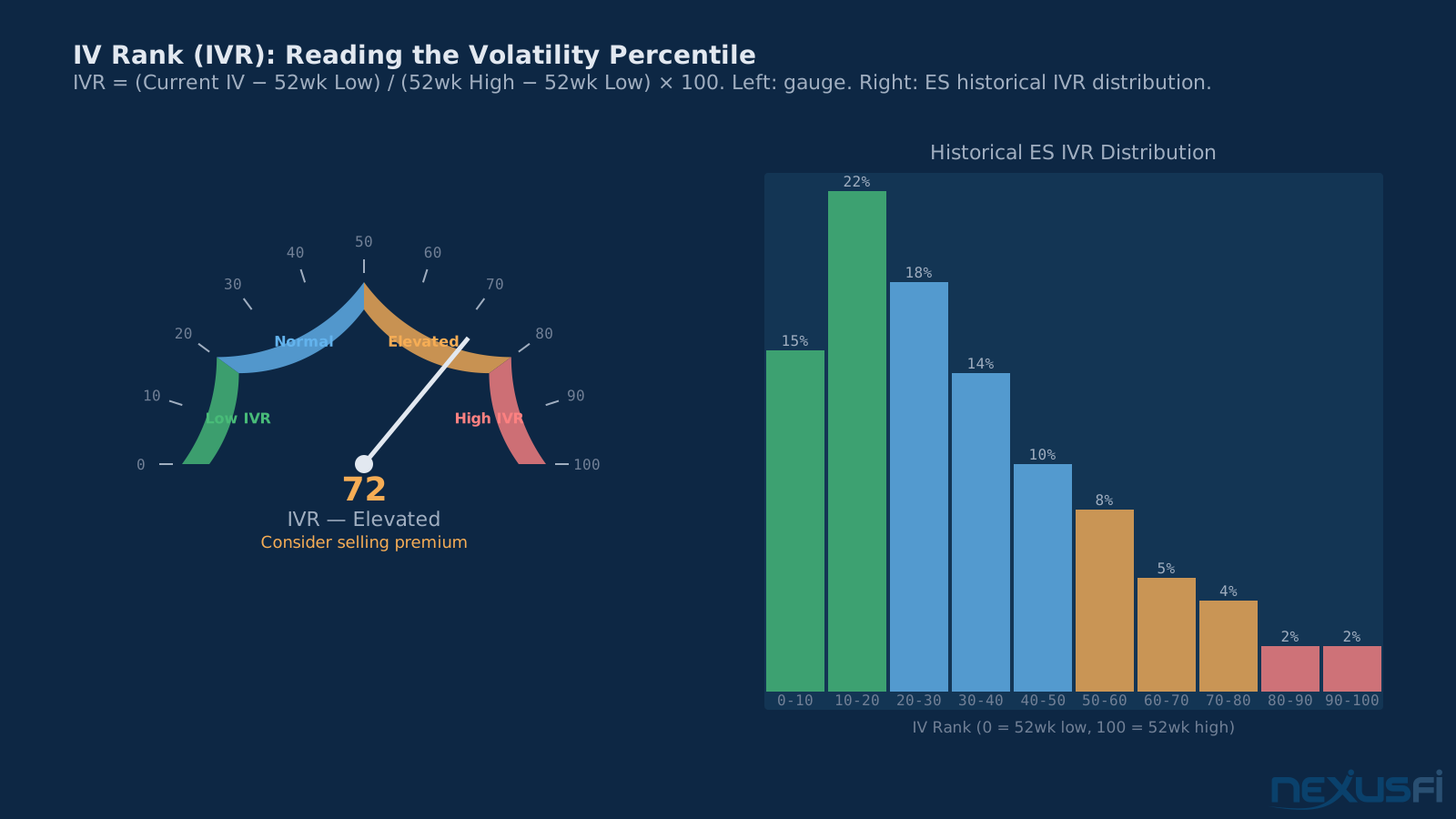
IV Rank (IVR) measures where current implied volatility sits within its 52-week range:
IVR = (Current IV - 52-week Low IV) / (52-week High IV - 52-week Low IV) × 100
IVR above 80: Options are historically expensive. For futures traders, this signals an environment where you're paying a high premium for options-based protection — and where near-term volatility has likely already spiked. Entering directional futures trades in this environment means buying into elevated volatility, where any normalization works against the position.
IVR below 20: Options are historically cheap. This is an environment where implied vol is compressing and a breakout often follows. For futures, IVR below 20 is a context signal that the current calm may not last — don't get lulled into oversized positions just because recent moves have been small.
Predictive Signals from Vol Data #
Volatility data is not directional — it doesn't tell you whether ES goes up or down. But it carries genuine predictive information about the distribution of future moves:
Price/VIX divergences: When ES makes a new high while VIX simultaneously makes a higher low (failing to make a new low with the price rally), upside momentum is degrading. The rally is happening with increasing implied cost of protection, not decreasing — a structural warning that often precedes corrections by days to weeks.
Extreme vol compression: When 10-day realized HV drops to the bottom 5th percentile of its historical range, a high-volatility breakout is statistically likely in the next 10-20 trading days. This compression pattern is most reliable in CL ahead of OPEC meetings and scheduled inventory reports, and in ES ahead of prolonged Fed-driven calm periods that precede policy pivots.
Skew extremes as contrarian signals: A violently steep ES put skew — OTM puts dramatically more expensive than historical norms — can indicate capitulation selling. When everyone who wants to hedge has already hedged, the marginal hedger leaves the market, and the supply/demand imbalance can snap back sharply. Steep skew alone is not a buy signal, but it's a meaningful component of a contrarian setup.
[^7] The variance risk premium is persistent and structural. Understanding it doesn't tell you when the next crisis comes — but it tells you which side of that premium you want to systematically be on over time.
One critical failure mode: treating the VIX-implied daily range as a price target. VIX 20 implies a daily standard deviation of 1.26% in ES — roughly 50 points. This is a probabilistic distribution parameter, not a daily target. On any given day, ES might move 0.3% or 3.0%. The vol estimate tells you about the average behavior over many days, not what today will produce. Sizing stops and targets based on "VIX says 40 points" as if it's a daily prediction is a reliable way to get chopped up.
When Vol Data Fails and Common Traps #
The Post-Spike Sizing Lag #
After a sharp vol spike, systematic sizing models take weeks to recover to full position size because realized vol remains elevated long after the stress event ends. A crisis-level vol reading from a one-week event takes months to fade from a 252-day lookback. During that period, you'll be trading half-size in a recovering market that's generating excellent setups.
Mitigation: use exponential weighting on realized vol calculations (EWMA with lambda around 0.94 gives roughly equivalent weight to 2-3 weeks rather than 12 months), or use the term structure as the regime exit signal — if contango has been restored for two or more weeks, it's reasonable to begin re-scaling even if longer-dated realized vol is still elevated.
The Contango Complacency Trap #
When the VIX term structure is in extreme contango — front month at 11, back month at 18 — the curve is so steep that any normalization means a violent repricing. This happens at market tops when complacency is highest. Not a sell signal by itself, but a clear signal to tighten stops and reduce tail exposure. Don't confuse stable with safe.
Citations #
[^1]: @suko | VIX and Volatility General Discussion | Emini and Emicro Index | https://nexusfi.com/showthread.php?t=52734&p=796008#post796008 (thanks: 12) [^2]: @josh | Just another trading journal: PA, Wyckoff & Trends | Elite Trading Journals | https://nexusfi.com/showthread.php?t=44136&p=879430#post879430 (thanks: 10) [^3]: @tigertrader | Spoo-nalysis ES e-mini futures S&P 500 | The Elite Circle | https://nexusfi.com/showthread.php?t=13452&p=413758#post413758 (thanks: 7) [^4]: @suko | Spoo-nalysis ES e-mini futures S&P 500 | The Elite Circle | https://nexusfi.com/showthread.php?t=13452&p=785046#post785046 (thanks: 8) [^5]: @tigertrader | Spoo-nalysis ES e-mini futures S&P 500 | The Elite Circle | https://nexusfi.com/showthread.php?t=13452&p=800491#post800491 (thanks: 18) [^6]: @cclsys | Number of ES futures contracts? | Psychology and Money Management | https://nexusfi.com/showthread.php?t=1777&p=18176#post18176 (thanks: 2) [^7]: @josh | Spoo-nalysis ES e-mini futures S&P 500 | The Elite Circle | https://nexusfi.com/showthread.php?t=13452&p=427467#post427467 (thanks: 16)
Knowledge Map
Go Deeper
Build on this knowledgeReferences This Article
Articles that build on this topicCitations
- — VIX and Volatility General Discussion (2020) 👍 12“Options prices and VIX are probability -- they are sentiment that look to the future. What smart money is betting will happen.”
- — Just another trading journal: PA, Wyckoff & Trends (2023) 👍 10“A VIX of 20 means: there is an implied volatility of 20% up or down in the next year, based on the next 30 days of SPX option pricing.”
- — Spoo-nalysis ES e-mini futures S&P 500 (2014) 👍 7“The short volatility community profits from the steep contango structure via selling vol and rolling positions into cheaper contracts.”
- — Spoo-nalysis ES e-mini futures S&P 500 (2020) 👍 8“When you see backwardation in a melt-up market, something is wrong -- it's a blinking red hazard light.”
- — Spoo-nalysis ES e-mini futures S&P 500 (2020) 👍 18“Higher volatility follows market declines, and market declines follow higher volatility. This legacy dynamic was transformed after 2012 when large institutions moved from being tail hedgers to call overwriting and put underwriting.”
- — Number of ES futures contracts? (2009) 👍 2“When the ATR narrows you will be putting on more contracts. When it expands, less contracts.”
- — Spoo-nalysis ES e-mini futures S&P 500 (2014) 👍 16“Except in a few cases, volatility that's implied is greater than volatility that actually occurs. Even when VIX is low, it's still usually higher than realized volatility.”
- CBOE — CBOE Volatility Index Methodology (2024)
- — Master Homework and Statistics Thread (2019) 👍 9“The WVF is a very simple indicator that's supposed to roughly replicate expected volatility (hence the name). There are actually several formulations of the indicator. The one I'm going to be using is the following: [CODE]WVF = 100*(max(close,22) - close)/max(close,22)[/CODE] Other formula”
- — Salao's Journal (2025) 👍 8“[B]March 10, 2023[/B] [IMG]https://nexusfi.com/attachment.php?attachmentid=330276[/IMG] [IMG]https://nexusfi.com/attachment.php?attachmentid=330273[/IMG] * This morning we got unemployment data which brought a good amount of trading to the market. We got a huge print on the 5m chart when the”
- — Salao's Journal (2025) 👍 8“[MENTION=63362]Narcissus[/MENTION]! Not a journal hijack :sarcastic:...thank you for the excellent post and sharing your gap studies! I did similar gap studies about a year ago, but the extent of my research was limited by my sad python skills at the time. The gist of what I've learned from my pr”