



Fundamental Data for Commodity Futures: Government Reports, Supply/Demand Numbers, and the Releases That Move Markets
Overview #
Commodity futures are the most fundamental-data-driven asset class in the markets. Full stop. Stock traders argue about whether earnings matter or whether price already reflects everything. Commodity traders don't have that argument — the supply/demand balance IS the price, and when that balance shifts, futures move hard and fast.
Understanding fundamental data for commodity futures means knowing which reports move which markets, how big a surprise needs to be before it matters, and how to translate a storage number or an ending-stocks revision into a trade. This article covers exactly that: the government and industry reports that move crude oil, natural gas, grains, and metals, plus the calendar, the playbooks, and the workflow for integrating fundamental data into daily trading.
The reports covered here don't replace technical analysis. They're the reason technical levels break or hold. A support level that sits right below a bearish EIA inventory print is a very different trade from the same support level on a quiet session. Fundamental data tells you what kind of day it is.
Key Concepts #
Fundamental data refers to supply, demand, inventory, and production statistics that describe the physical market for a commodity. Unlike technical indicators derived from price and volume, fundamental data comes from real-world measurements — how many barrels of crude oil are sitting in Cushing storage tanks, how many bushels of corn are projected to be left unsold at the end of the marketing year, how many drilling rigs are operating across the United States this week.
Consensus estimate is the market's pre-release expectation for a data point, compiled from surveys of analysts, banks, and trading firms. Bloomberg, Reuters, and specialist services like Platts publish consensus estimates for major commodity reports. The consensus is the number the market has already priced in. The actual release creates value only through deviation from this expectation.
Supply/demand balance is the net position between total supply (production plus beginning inventories plus imports) and total demand (consumption plus exports). When supply exceeds demand, inventories build. When demand exceeds supply, inventories draw. The balance determines whether inventories are trending tighter (bullish) or looser (bearish), and the rate of change is what drives price direction over weeks and months.
Ending stocks is the projected inventory level at the end of a marketing year or storage cycle. In grain markets, it's the USDA's estimate of how many bushels of corn, soybeans, or wheat will remain unsold when the next crop year begins. Low ending stocks mean any supply disruption hits a market with no buffer — prices get volatile fast. High ending stocks mean the market can absorb bad news without breaking higher.
Inventory surprise is the deviation between the actual reported inventory number and the consensus estimate. A crude oil build of 4.2 million barrels when the consensus expected a build of 1.8 million is a surprise of 2.4 million barrels to the bearish side. Inventory surprises are the primary driver of intraday volatility on report days.
Report premium is the implied volatility priced into options and futures in the days before a major report release. Traders buy options to hedge or speculate on the release, which elevates premium above historical norms. After the report, implied volatility collapses — this is the "vol crush" that makes long premium strategies on report days a losing game for most traders.
Unlike technical indicators derived from price and volume, fundamental data comes from real-world measurements — how many barrels of crude oil are sitting in Cushing storage tanks, how many bushels of corn are projected to be left unsold at the end of the marketing year, how many drilling rigs are operating across the United States this week.
Calendar spread is the simultaneous purchase and sale of the same commodity futures contract in two different delivery months. Calendar spreads capture the forward curve structure (contango vs. backwardation) rather than the absolute price level. When supply tightens, near-term contracts strengthen relative to deferred contracts.
Forward curve is the series of prices for futures contracts across all listed delivery months. A market in contango has deferred months priced higher than near-term months, reflecting storage costs and comfortable supply. A market in backwardation has near-term months priced above deferred, signaling tight nearby supply. Fundamental data releases shift the curve's structure, not just the absolute price level.
The Reports That Move Markets #
EIA Weekly Petroleum Status Report #
The Energy Information Administration's Weekly Petroleum Status Report is the single most-traded piece of economic data in commodity futures. Every Wednesday at 10:30 AM ET, the EIA releases complete petroleum inventory data that moves crude oil futures (CL), heating oil (HO), and RBOB gasoline (RB) within seconds of publication.
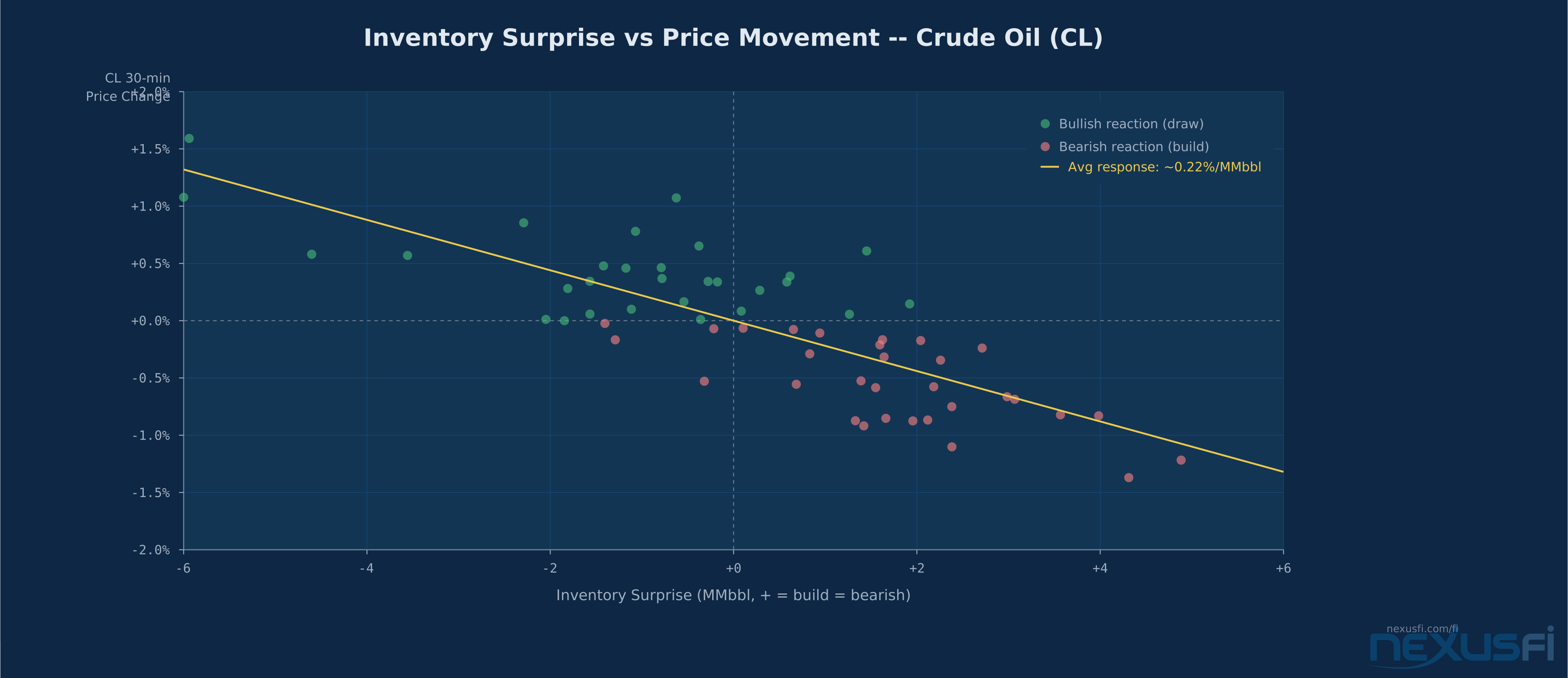
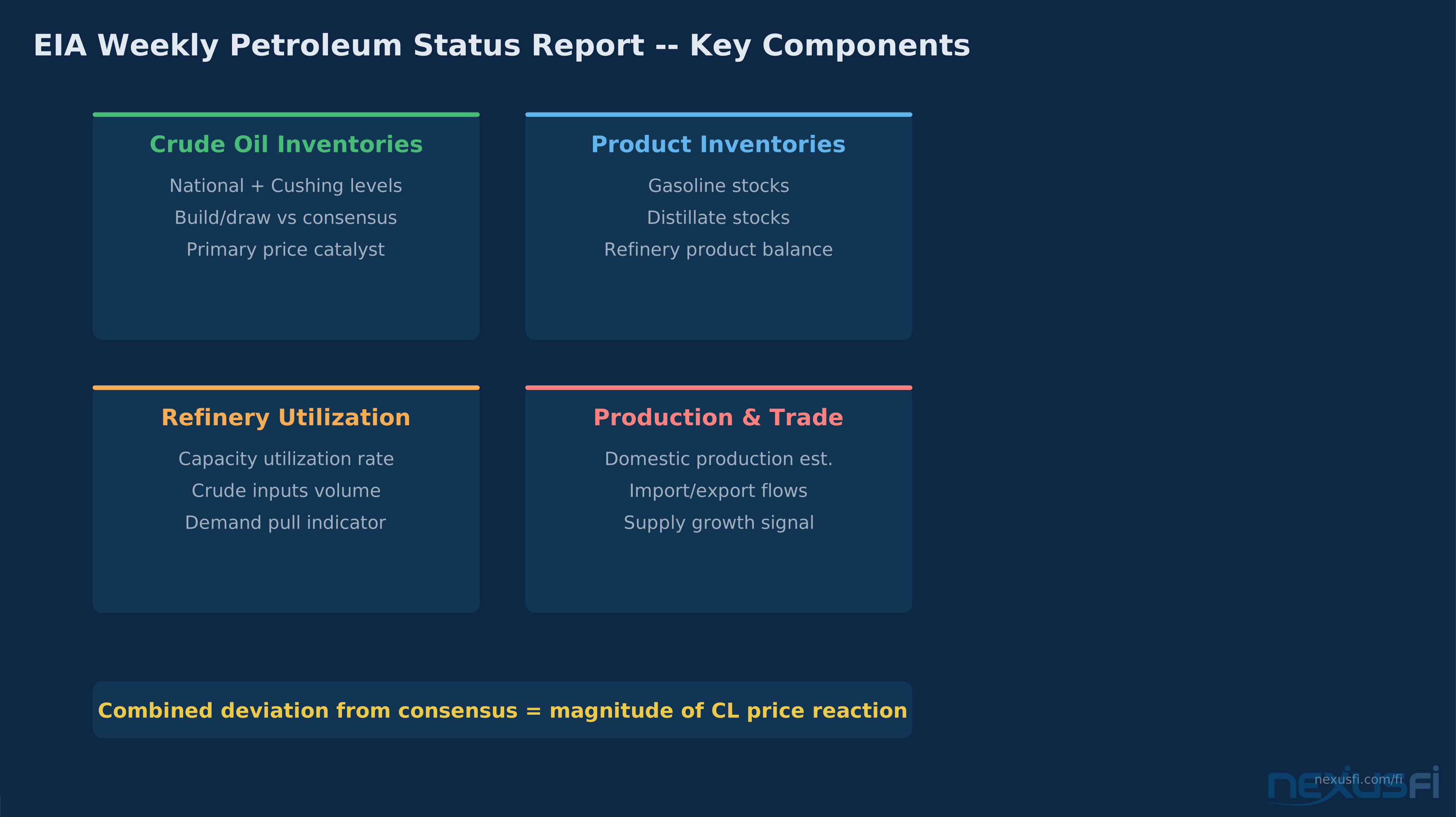
The report covers crude oil inventories at the national level and specifically at Cushing, Oklahoma (the NYMEX delivery hub), petroleum product inventories (gasoline, distillates), domestic production estimates, refinery utilization rates, and import/export flows. Each of these components matters, but the headline crude inventory build or draw versus consensus drives the first 30-minute reaction.
The math on inventory surprises: a deviation of 2 million barrels from consensus moves CL roughly 0.50 to 1.50% in the first 30 minutes, depending on market conditions, positioning, and the macro backdrop. That's $0.50 to $1.50 per barrel on a roughly $70-$80 barrel. On a standard 1,000-barrel CL contract, that's $500 to $1,500 in 30 minutes.
What matters beyond the headline: Cushing stocks deserve separate attention. When Cushing inventories are low relative to operational minimums (roughly 20-25 million barrels), nearby CL prices get extremely volatile because physical delivery is constrained. The April 2020 negative price event had multiple causes, but historically low Cushing stocks combined with futures expiration mechanics was central to the chaos.
Refinery utilization tells you about demand pull. When refineries are running at 92-93% capacity and crude builds are still happening, the market reads that as a supply glut that refinery demand can't absorb. When utilization drops to 85% for maintenance season and draws slow, that's temporary. When utilization is high and you're still seeing large builds, that's a structural concern.
Data reliability: The EIA's weekly estimates carry revision risk of approximately 1 to 1.5 million barrels in subsequent weeks. A bearish 3-million-barrel build that gets revised to 1.5 million next week can reverse a multi-day selloff. Traders who fade initial reactions often cite historical revision patterns as part of their rationale.
EIA Natural Gas Storage Report #
The EIA Natural Gas Weekly Storage Report drops every Thursday at 10:30 AM ET and reports working gas in storage — the volume of natural gas held in underground storage facilities across three U.S. regions (East, Midwest, South/Central). The market reacts to the weekly build or draw versus both the consensus estimate and the five-year seasonal average.
The formula for reading the release: compare the actual number to consensus, then compare the year-over-year surplus or deficit to understand how the underlying supply/demand balance is trending. A storage build of 68 Bcf against a consensus of 71 Bcf is a bullish 3 Bcf surprise — but if total storage is sitting 15% above the five-year average, that bullish read has a ceiling.
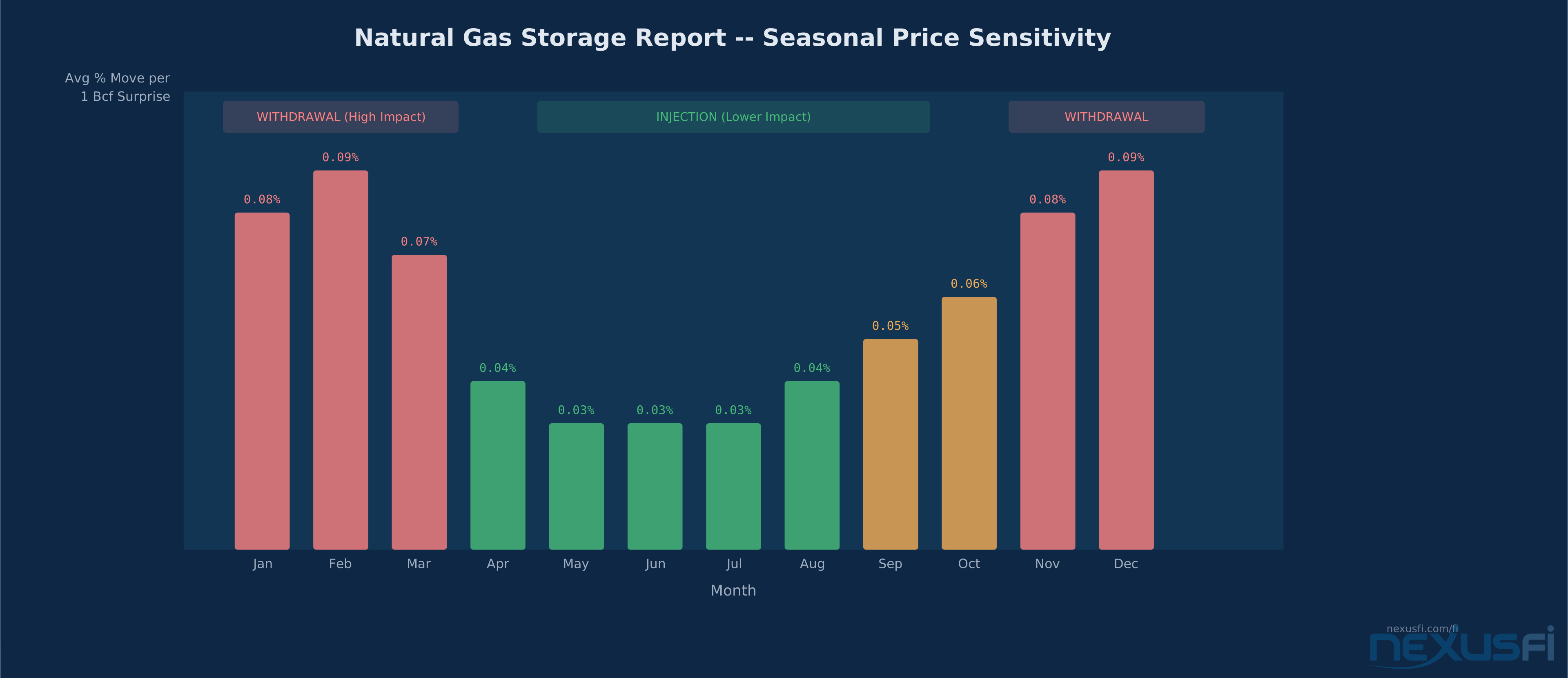
Price sensitivity: each 1 Bcf deviation from consensus moves front-month Natural Gas (NG) roughly 0.50% in the immediate aftermath. A 5 Bcf surprise is worth approximately 2.5% in the first 30 minutes. Winter reports carry 2 to 3 times the price impact of summer reports because withdrawal season is what matters for heating demand.
Winter vs. summer reports are not equivalent instruments. During withdrawal season (roughly November through March), every storage number is a real-time gauge of whether the country will run out of gas before spring. The seasonal context is everything for natural gas fundamentals.
Weather is the co-driver. The weekly storage number tells you what happened. Weather forecasts tell you what's going to happen to demand. Natural gas traders run their own models using Heating Degree Days (HDD) and Cooling Degree Days (CDD) to generate private consensus estimates before the report.
WASDE — World Agricultural Supply and Demand Estimates #
The WASDE report is the most important monthly data release in grain and oilseed markets. Published by the USDA around the 10th to 12th of each month at 12:00 PM ET, the WASDE provides global supply, demand, trade, and ending stocks projections for corn, soybeans, wheat, cotton, rice, sorghum, and key oilseed products.
The WASDE is the fundamental anchor for grain futures (ZC, ZS, ZW) and provides the framework that cash markets, basis traders, and commercial hedgers use to price physical grain.
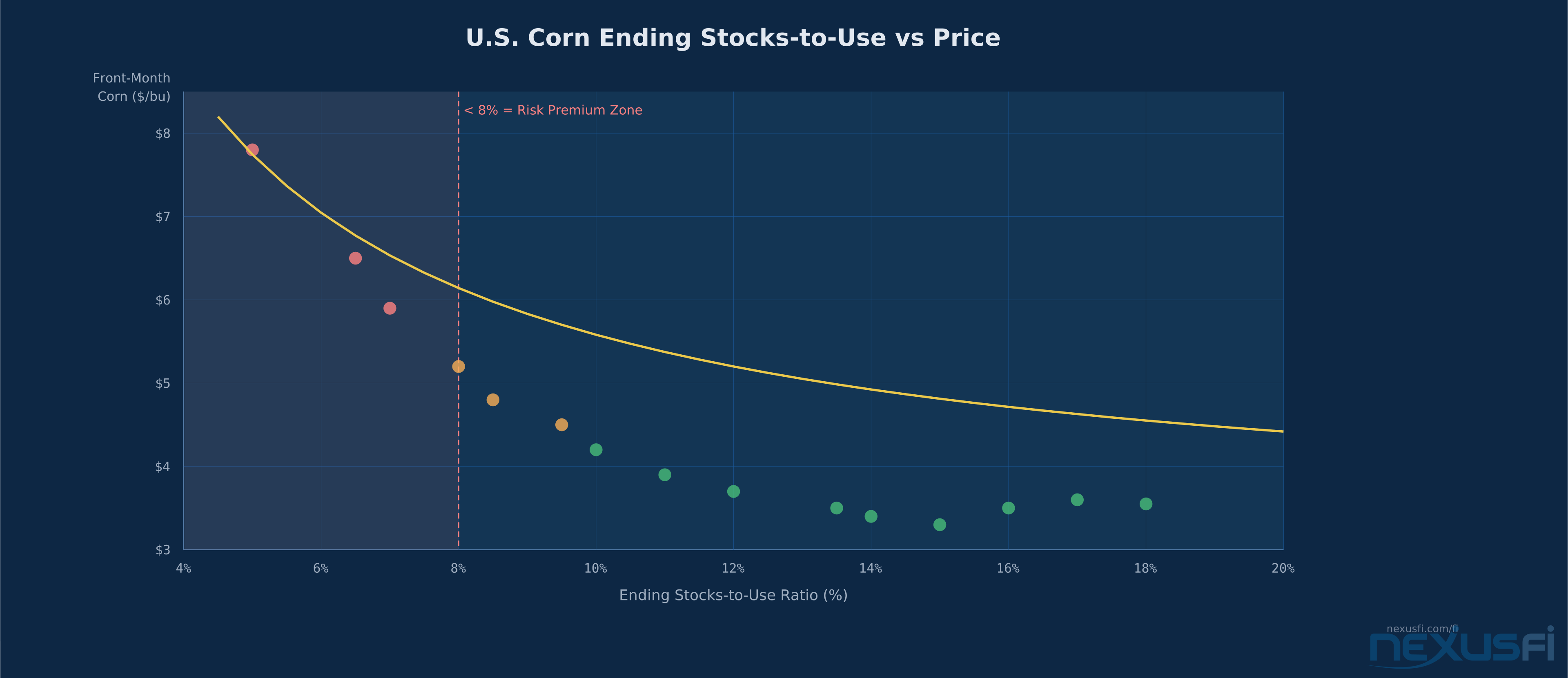
What the market focuses on: U.S. and world corn ending stocks, U.S. soybean ending stocks, and global wheat ending stocks. The ending stocks-to-use ratio — stocks divided by annual consumption — is the metric that most directly links to price level. When U.S. corn stocks-to-use falls below 8%, the market historically prices in a risk premium worth $1 per bushel or more over the crop year.
The surprise threshold: Monthly WASDE surprises of more than 50 million bushels in U.S. corn ending stocks (roughly 5% of a forecast) drive corn price moves of 3 to 7% over the following 2 to 4 weeks. The WASDE sets direction for weeks, not hours. Initial reactions are sometimes wrong — the market overshoots the first reaction 40 to 50% of the time in the first 30 minutes.
The August WASDE is the most important annual release: It's the first estimate based on actual crop conditions rather than planting intentions and trend yields. The August 2012 WASDE cut corn yield estimates by 2.4 bushels per acre amid drought, contributing to corn hitting all-time highs above $8 per bushel.
USDA Crop Progress and Production Reports #
During the growing season, the USDA publishes weekly Crop Progress reports every Monday at 4:00 PM ET. The key metric is the Good/Excellent (G/E) condition rating — the percentage of the crop rated Good or Excellent by USDA crop reporters.
The market watches G/E ratings because they correlate with final yield outcomes. The July pollination stress window is the highest-stakes period: corn in poor condition during pollination has dramatically lower yield potential. A drop from 65% G/E to 55% G/E in a single week during pollination is meaningful. The same drop in September is not.
Each 1 percentage point change in G/E is worth approximately 1-3 cents per bushel in immediate corn futures reaction, with the multiple highest during July.
Quarterly Grain Stocks reports, published four times per year, measure actual inventory levels. The June 1 stocks estimate for corn is especially important because it can reveal if demand estimates in the WASDE are too high or low.
API Weekly Statistical Bulletin #
The American Petroleum Institute releases its weekly oil inventory estimate every Tuesday at approximately 4:30 PM ET. Unlike the EIA's government survey, the API compiles data from member company reports.
The API is the preview for Wednesday's EIA release. It leads the official data by roughly 18 hours. When API and EIA consistently correlate, traders gain conviction. When they diverge — API shows a 3-million-barrel draw while EIA shows a 1-million-barrel build — the EIA gets priority.
Baker Hughes Rig Count #
Every Friday at 1:00 PM ET, Baker Hughes publishes the weekly count of active drilling rigs operating in the United States. This is not a short-term trading trigger — it's a supply outlook tool with a 3 to 6 month lead time.
A rig is drilled, cased, completed, and connected to infrastructure before production begins. The average shale well takes 3 to 6 months from spud to first oil. When rig count drops sharply, the resulting production decline shows up in supply statistics months later.
Watch the basin-specific breakdown: Permian Basin rig count is the most important single number because the Permian accounts for roughly 45-50% of U.S. crude production growth. A sustained Permian rig count above 300 signals continued production growth. Below 200 signals meaningful supply reduction within 6 months.
COT Reports — Commitment of Traders #
The CFTC releases Commitment of Traders data every Friday at 3:30 PM ET, reflecting positions as of the prior Tuesday close — a 3 to 4 day lag. The report breaks down open interest by trader category: commercial hedgers, non-commercial large speculators, and small non-reportable traders.
Correct use: positioning and crowding filter, not a timing tool. When non-commercial net long positions reach historical extremes, it signals crowded positioning vulnerable to reversal. It doesn't tell you when the reversal starts.
The Release Calendar #
| Day | Time (ET) | Report | Markets | Frequency |
|---|---|---|---|---|
| Monday | 4:00 PM | USDA Crop Progress | ZC, ZS, ZW | Weekly (growing season) |
| Tuesday | ~4:30 PM | API Statistical Bulletin | CL, HO, RB | Weekly |
| Wednesday | 10:30 AM | EIA Petroleum Status | CL, HO, RB | Weekly |
| Thursday | 10:30 AM | EIA Natural Gas Storage | NG | Weekly |
| Friday | 1:00 PM | Baker Hughes Rig Count | CL, NG | Weekly |
| Friday | 3:30 PM | CFTC COT Reports | All commodities | Weekly |
| ~10th-12th monthly | 12:00 PM | USDA WASDE | ZC, ZS, ZW | Monthly |
| ~10th-12th monthly | 12:00 PM | USDA Crop Production | ZC, ZS, ZW | Monthly (growing season) |
| Quarterly | 12:00 PM | USDA Grain Stocks | ZC, ZS, ZW | Quarterly |
| Late March | 12:00 PM | USDA Prospective Plantings | ZC, ZS, ZW | Annual |
How Traders Use Fundamental Data #
The Consensus Surprise Framework #
The actual number doesn't move markets. The deviation from what the market expected does. This distinction is the core framework for trading report releases.
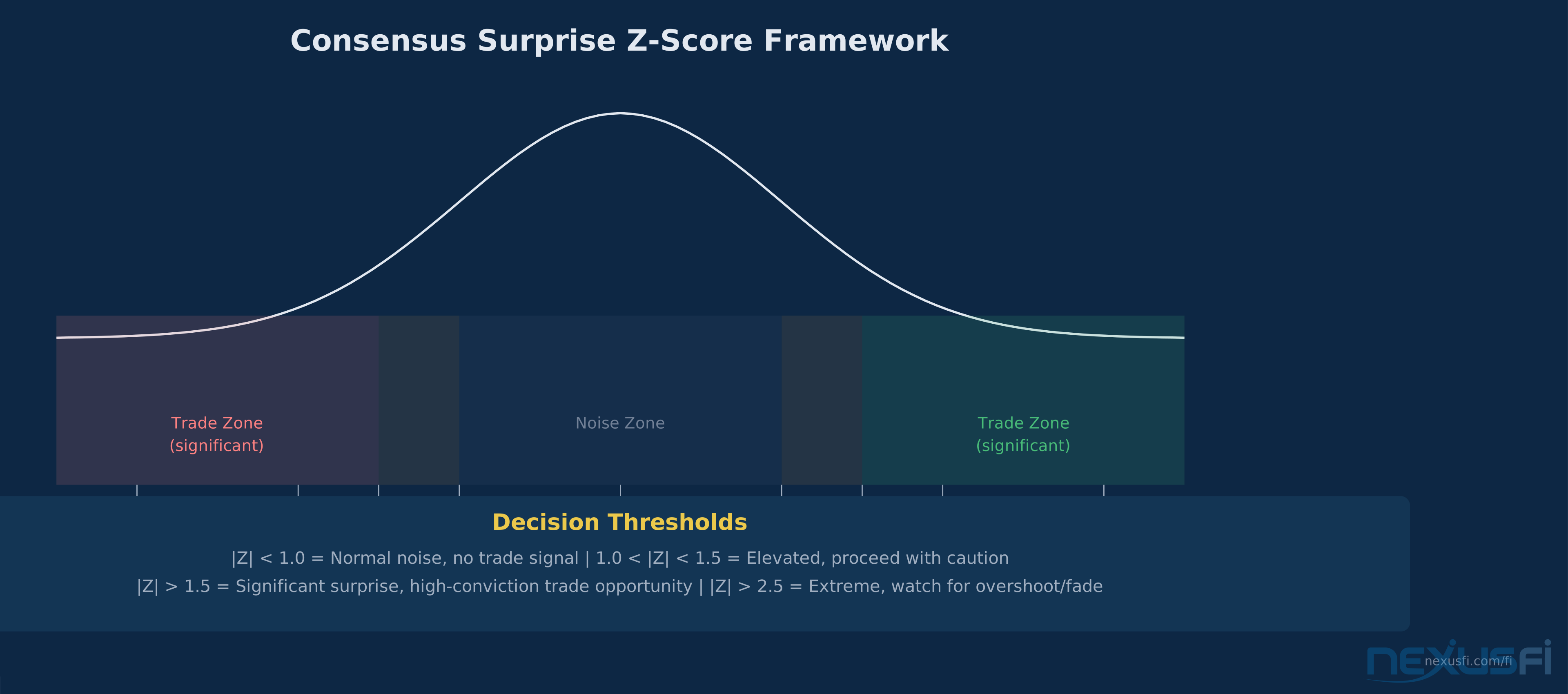
Before any major release, build your own expectation. Don't use the published consensus blindly. The Bloomberg or Reuters survey consensus represents the average of dealer estimates, which can lag sophisticated private models.
The steps:
- Collect consensus from Bloomberg, Reuters, or specialized services. Note the range of estimates, not just the average.
- Calculate the historical standard deviation of surprises for that report over the past 12-24 months. For EIA crude, this runs roughly 1.5 to 2.5 million barrels. For natural gas storage, roughly 8 to 15 Bcf.
- Express the actual surprise as a Z-score: (actual minus consensus) divided by historical standard deviation. A Z-score above 1.5 or below -1.5 is a significant surprise. Below 1.0 in either direction is within normal noise.
- Calibrate your expected price move: multiply the Z-score by the average price response per unit of surprise. For crude oil, roughly $0.50-0.75 per 1 MMbbl surprise. For natural gas, roughly $0.05 per 1 Bcf surprise.
This framework gives you a pre-release probability distribution for price outcomes. You know your edge range before the number drops.
Translating Data Into Supply/Demand Context #
Crude oil: The weekly inventory change is the sum of domestic production plus imports minus exports minus refinery throughput. A large crude build combined with high refinery utilization means production and imports exceeded even strong refinery demand — a structural bearish signal. A large build with low refinery utilization is likely seasonal and temporary.
Natural gas: The storage build or draw reflects the net of domestic production plus LNG imports minus exports minus consumption. Since the U.S. became a major LNG exporter, high export volumes reduce domestic storage builds and provide sustained fundamental support.
Grains: The WASDE's ending stocks revision is the key number. Calculate the implied stocks-to-use ratio change: a 100-million-bushel reduction in corn ending stocks on annual usage of 14.5 billion bushels is a 0.7 percentage point reduction in stocks-to-use — historically meaningful.
Metals: No single report dominates. Metals are driven by macro (industrial production, PMI, China manufacturing activity, interest rate expectations) combined with exchange-tracked inventory changes (LME, COMEX, SHFE warehouse stocks).
Choosing the Right Trade Expression #
Outright futures work when you have strong directional conviction from a clear inventory surprise. Risk: macro can override the fundamental read temporarily.
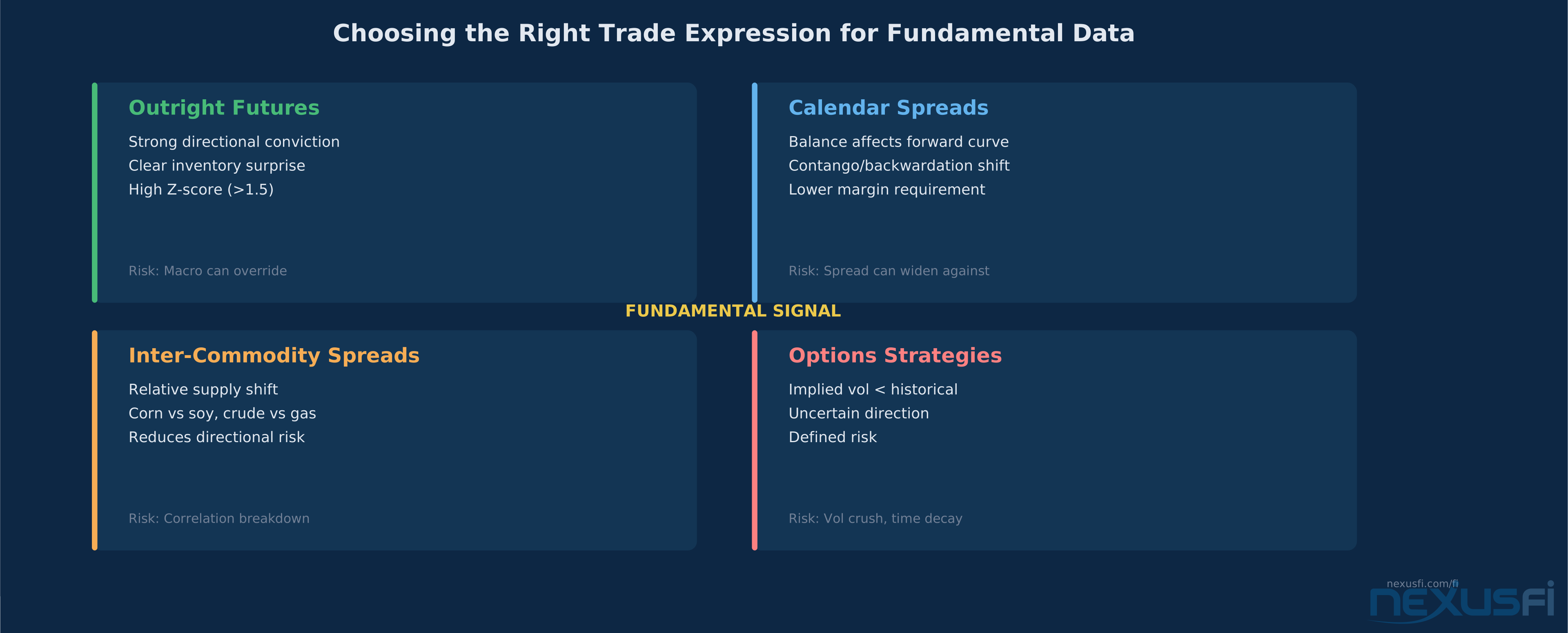
Calendar spreads work when the fundamental signal is about the supply/demand balance rather than the absolute price level. Lower margin and less exposure to macro.
Inter-commodity spreads (corn vs. soybeans, crude vs. natural gas) work when your signal is about relative supply between related commodities.
Options strategies work when historical implied volatility before the report is lower than the realized volatility after similar releases. Compare implied vol to historical realized vol of post-release sessions.
Asset-Specific Playbooks #
Crude Oil #
The EIA Wednesday report is the primary trading event. The API Tuesday release is the preview. Know the consensus, know your private estimate, set your exposure limit for the release window.
Immediate reaction (0-5 minutes): The market responds to the headline crude inventory number first. Give it 2-3 minutes for the initial reactions to set direction.
First 30 minutes: The market digests the components. If the components support the headline, the move extends. If they contradict it, the move stalls or reverses.
Calendar spreads in crude: The CL front-month to 6-month spread is a cleaner fundamental signal than the outright price. When supply is tightening, this spread moves from contango toward flat or backwardation before the outright price fully reflects the change.
Natural Gas #
Natural gas is the most weather-dependent commodity futures market. The Thursday storage report is the scheduled trigger, but daily weather forecast updates move the market throughout the week.
Front-month NG spreads are more efficient than outright positions for capturing storage-driven moves. Seasonal context is the most important framework — October and November injection-season-ending reports hit harder than June and July.
European natural gas markets (TTF, NBP) have become increasingly correlated with U.S. Henry Hub since the 2021-2022 global LNG supply crunch.
Grains #
The WASDE ending stocks revision is the foundation. Don't trade grain weekly reports in isolation from the broader WASDE context.
Post-release fades are common: the initial 30-minute reaction overshoots roughly 40 to 50% of the time. Traders who understand the components find better entries in the 30-to-60-minute window after initial volatility settles.
Corn vs. soybean spreads are efficient for trading relative WASDE surprises. The June 30 Planted Acreage report is the single annual grain report with the most potential for market-moving surprises.
Metals #
No single government report dominates precious or base metals. LME warehouse inventories, COMEX open interest, and SHFE metal inventories are the closest analog to crude oil's EIA data. Macro data (ISM Manufacturing PMI, Chinese NBS PMI) are the primary demand drivers for base metals.
Gold and silver are monetary metals — Fed rate decisions, real interest rate expectations, and dollar strength dominate their fundamental picture. The 10-year TIPS yield has an inverse relationship with gold prices that is among the tightest macro-fundamental linkages in commodity markets.
Common Strategies Around Report Releases #
Gap-and-Run #
When a report delivers a major surprise — a Z-score above 1.5 — the market can enter a gap-and-run mode where the initial move extends for 30 to 60 minutes without meaningful retracement. Enter in the direction of the surprise within the first 2-3 minutes. Stop at the pre-release price level, because a reversal through that level signals the initial reading was wrong.
Fade the Shock #
Roughly 40 to 50% of major report reactions overshoot in the first 30 minutes. Wait for the initial reaction to exceed a threshold (based on historical post-release realized volatility) and then fade back toward the pre-release level. Don't fade a 5+ standard deviation inventory shock — those moves don't mean-revert in 30 minutes.
Calendar Spread Expression #
When a report reveals a change in the forward curve balance, calendar spreads are the cleaner trade. Buy near-term and sell deferred (bull spread) when supply is tightening. Sell near-term and buy deferred (bear spread) when supply is building. Lower margin, less macro exposure.
Volatility Straddle #
If the at-the-money straddle on CL expiring in 2 days costs $0.80 per barrel and historical EIA report days show realized moves averaging $1.10, the straddle has positive edge. The risk: you need the realized move to exceed $0.80 — not just be directionally correct — to profit.
COT-Filtered Trend Following #
Use COT data as a position size filter for existing trend signals. When non-commercial speculators are at historically extreme long positions, reduce size on new longs and expand size on shorts. At 90th percentile positioning, cut standard size by half. At 10th percentile, size up by 50%.
Historical Reliability #
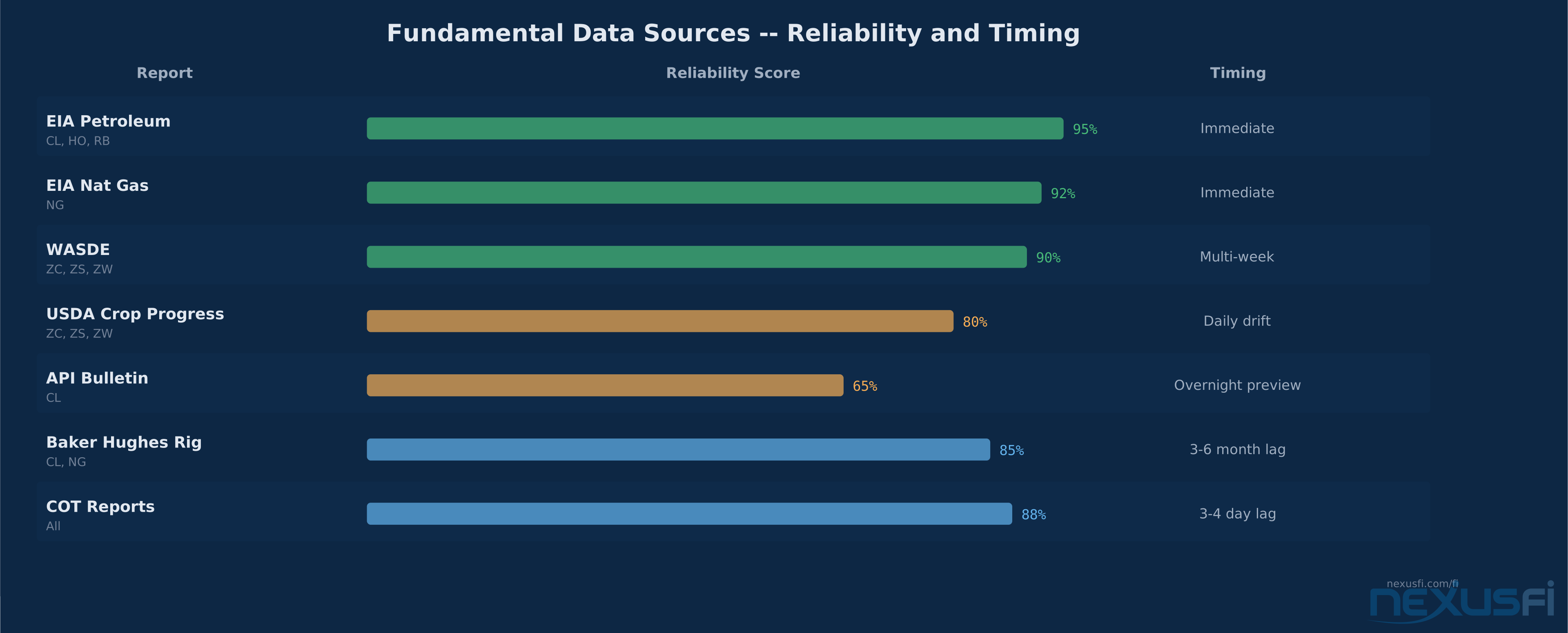
| Report | Reliability | Typical Error | Revision Risk | Best Use |
|---|---|---|---|---|
| EIA Petroleum | Very high | +/- 1.5 MMbbl | Moderate | Primary intraday CL trigger |
| EIA Natural Gas | Very high | +/- 5-10 Bcf | Low | Primary intraday NG trigger |
| WASDE | Very high | 50-200M bu corn | Low | Multi-week directional bias |
| USDA Crop Progress | High | 1-3% G/E shift | N/A | Growing season monitor |
| API Bulletin | Moderate | 1-5 MMbbl vs EIA | N/A | Directional pre-signal |
| Baker Hughes Rig | High | +/- 5 rigs/week | Low | 3-6 month supply outlook |
| COT Reports | High | N/A (exact data) | 3-4 day lag | Crowding filter |
Building Your Fundamental Data Workflow #
A good fundamental data workflow doesn't require Bloomberg terminal access. It requires a consistent process.
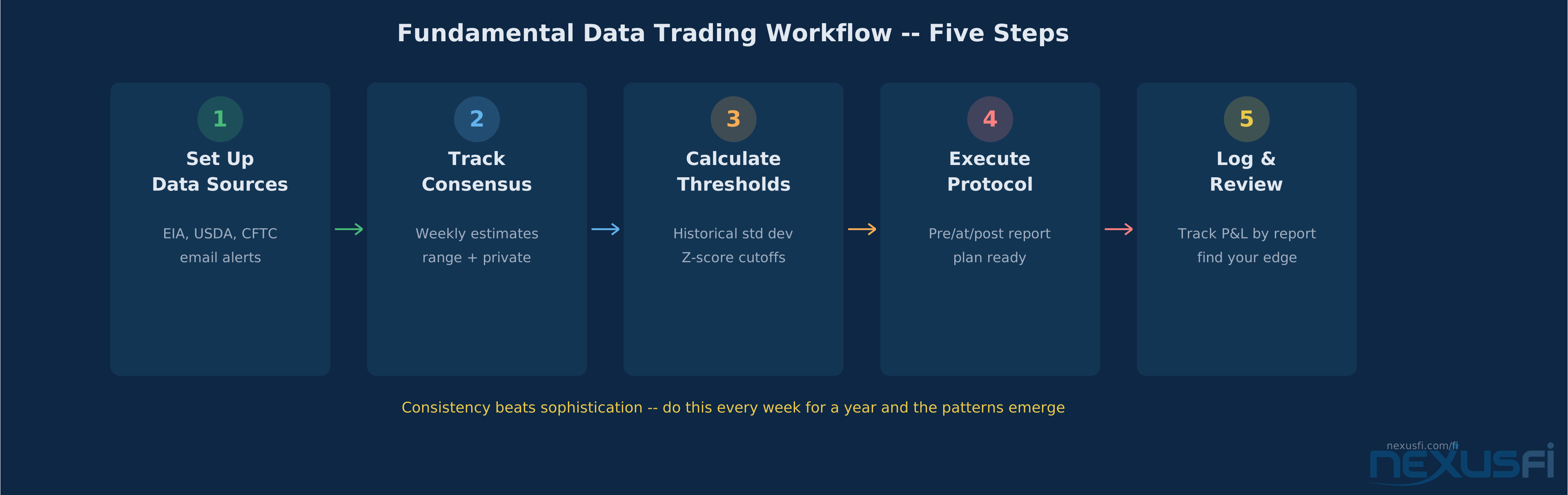
Step 1: Set up your data sources. For energy: bookmark the EIA's website directly (eia.gov). For grains: bookmark the USDA's NASS release schedule (nass.usda.gov). For COT: use the CFTC's free data portal (cftc.gov/MarketReports/CommitmentsofTraders/). Sign up for email release notifications on all of them.
Step 2: Build weekly consensus tracking. Each week before Wednesday (petroleum) and Thursday (natural gas), note the published consensus estimate, the prior 4-week average actual vs. consensus deviation, the seasonal adjustment for this week, and your own estimate if you run a model. For WASDE months, add the pre-release survey consensus a day before release.
Step 3: Establish surprise thresholds. Calculate the historical standard deviation of surprises over the past 12-24 months. Crude oil: approximately 2.5 million barrels. Natural gas: approximately 10-12 Bcf. WASDE corn ending stocks: approximately 80-100 million bushels. A 1.5-sigma or larger surprise is meaningful.
Step 4: Define your report-day protocol. Before the report: set position, know your pre-report bias, know your maximum exposure. At the report: read the headline, calculate the surprise immediately, have your plan ready before the number drops. After: give 2-3 minutes for algo reactions, then evaluate whether components support or contradict the headline.
Step 5: Maintain a report trade log. For every report trade, log the consensus estimate, your private estimate, the actual release, the surprise Z-score, entry, exit, P&L, and notes. Over 20 to 30 trades, patterns emerge — you'll discover which reports you read accurately, which expression works better, and whether you're better at trading the initial reaction or the subsequent session.
Knowledge Map
Prerequisites
Understand these firstReferences This Article
Articles that build on this topicCitations
- — Trading natural gas futures (2021) 👍 6“I think too many are making too much of the current Europe NG inventory levels. The sky high 2019/2020 winter Europe NG inventory levels is making expectations too high for what is needed.”
- — $5,000 Live trading account challenge - CL & ES (2017) 👍 6“How I trade EIA releases I thought I'll also share my approach of inventory days as these can be and most of time are the most volatile days during a CL trading week. As stated before, I never hold positions going into the release anymore.”
- — Commitment of traders (2010) 👍 5“Commitment of Trader is extremely useful, as it shows the market positions of different groups of traders. You want to know what the other's are doing. Extreme readings of the COT figure can be used as a sentiment indicator for countertrades.”
- — Spoo-nalysis ES e-mini futures S&P 500 (2021) 👍 8“I'm a big fan of COT data, but the commercials positioning in just one index paints a very incomplete picture.”
- — COT Report? (2022) 👍 3“I've really only studied the Gold disaggregated full report, so I'm unsure if what I've learned of the COT report is transferable to other commodity reports. I suspect all the reports are similar, but I don't know for sure. So caveat emptor. :becky:.”