



Free & Low-Cost Futures Market Data: The Complete Stack for Every Budget
Overview #
Data is the raw material of every trading decision. And for most retail futures traders, the first question isn't "which data is best" but "do I actually need to pay for this?" The answer is more practical than the industry usually admits: free data is genuinely useful, broker-bundled data covers most retail needs for almost nothing, and dedicated professional feeds are only necessary for specific trading approaches.
The data industry has a vested interest in making you believe you need the most expensive option. The trading community at NexusFi has spent years figuring out the real cost-benefit breakdown, and the conclusions are more practical than the vendor marketing suggests. @Rrrracer distilled what many experienced traders know:
This guide covers the full environment: genuinely free sources, broker-bundled options that provide professional-grade execution data for almost nothing, and when you actually need a dedicated paid feed. The goal is to match your data spend to your strategy — not to maximize data vendor revenue.
The Data Hierarchy: Three Tiers, Three Purposes #
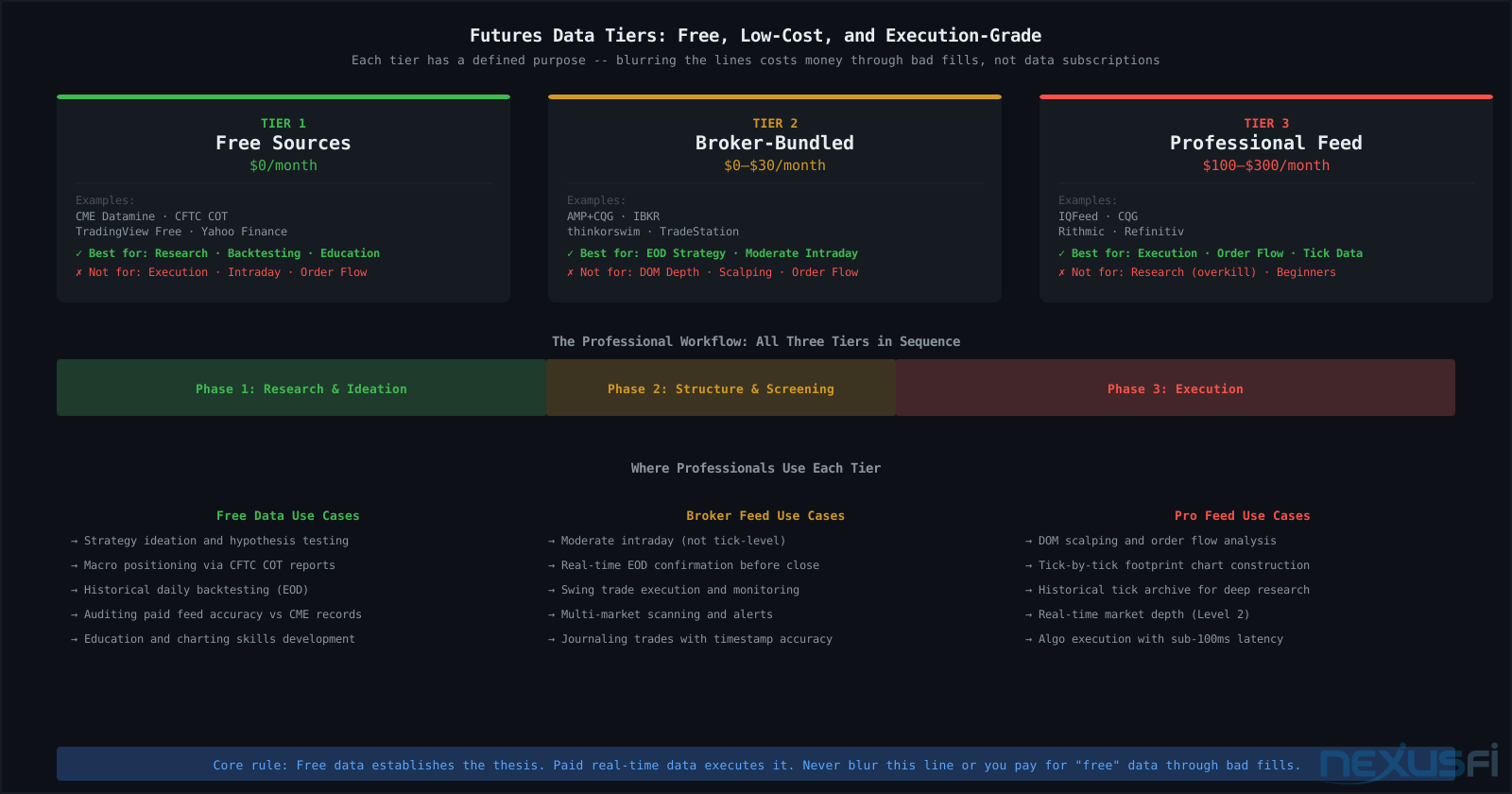
Every data source in the futures world falls into one of three tiers, and each tier has a defined purpose. Mixing them — using free delayed data for live execution, or paying professional rates for EOD research — is where traders make expensive mistakes.
Tier 1: Free Sources ($0/month) — These are genuinely free, no subscription required: CME Datamine, CFTC COT reports, TradingView's free plan, Barchart's free tier, and Yahoo Finance. The universal characteristic is that they're either delayed (10-15 minutes for intraday) or end-of-day only. Use them for research, backtesting, strategy ideation, and education. They are completely unusable for live intraday execution.
Tier 2: Broker-Bundled Data ($0-30/month) — This is the hidden gem of the retail data environment. Major futures brokers bundle real-time exchange-direct data with their accounts at minimal or no cost. AMP Futures provides CME Level 1 real-time data for $3/month. thinkorswim provides real-time Level 2 (DOM) for free with a funded account. TradeStation includes real-time futures data at no cost. This tier handles the vast majority of retail intraday trading needs at negligible cost.
Tier 3: Professional Feed ($100-300+/month) — Dedicated standalone data services like DTN IQFeed, CQG, and Rithmic. These provide the highest-fidelity data: unfiltered real-time ticks, 120-day historical tick archives, full DOM depth, and exchange-direct connections. The cost is justified for order flow traders, systematic strategies requiring tick archives, and multi-platform setups. For discretionary day traders who aren't doing DOM scalping, Tier 2 usually suffices.
The $3/month AMP+CQG Level 1 bundle is the single most cost-effective legitimate data upgrade a retail futures trader can make. One slightly better entry per week typically covers the cost many times over.
Genuinely Free Sources: What You Actually Get #
Not all "free" data is equal. Two free sources are genuinely professional-grade tools that experienced traders use in production. The rest are useful discovery and visualization layers — valuable for ideas, but not for decisions you're putting capital behind.
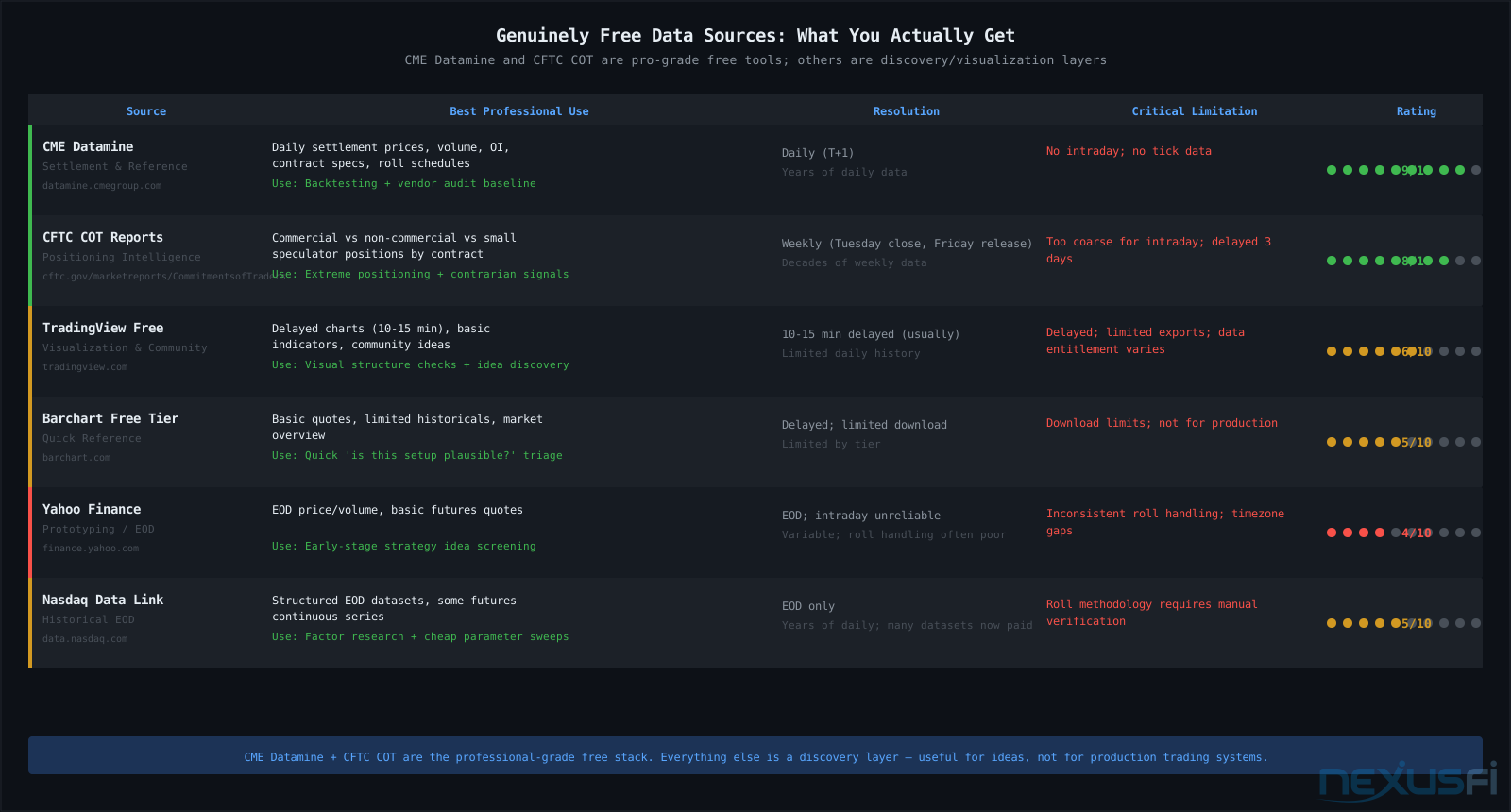
CME Datamine (9/10 for Research)
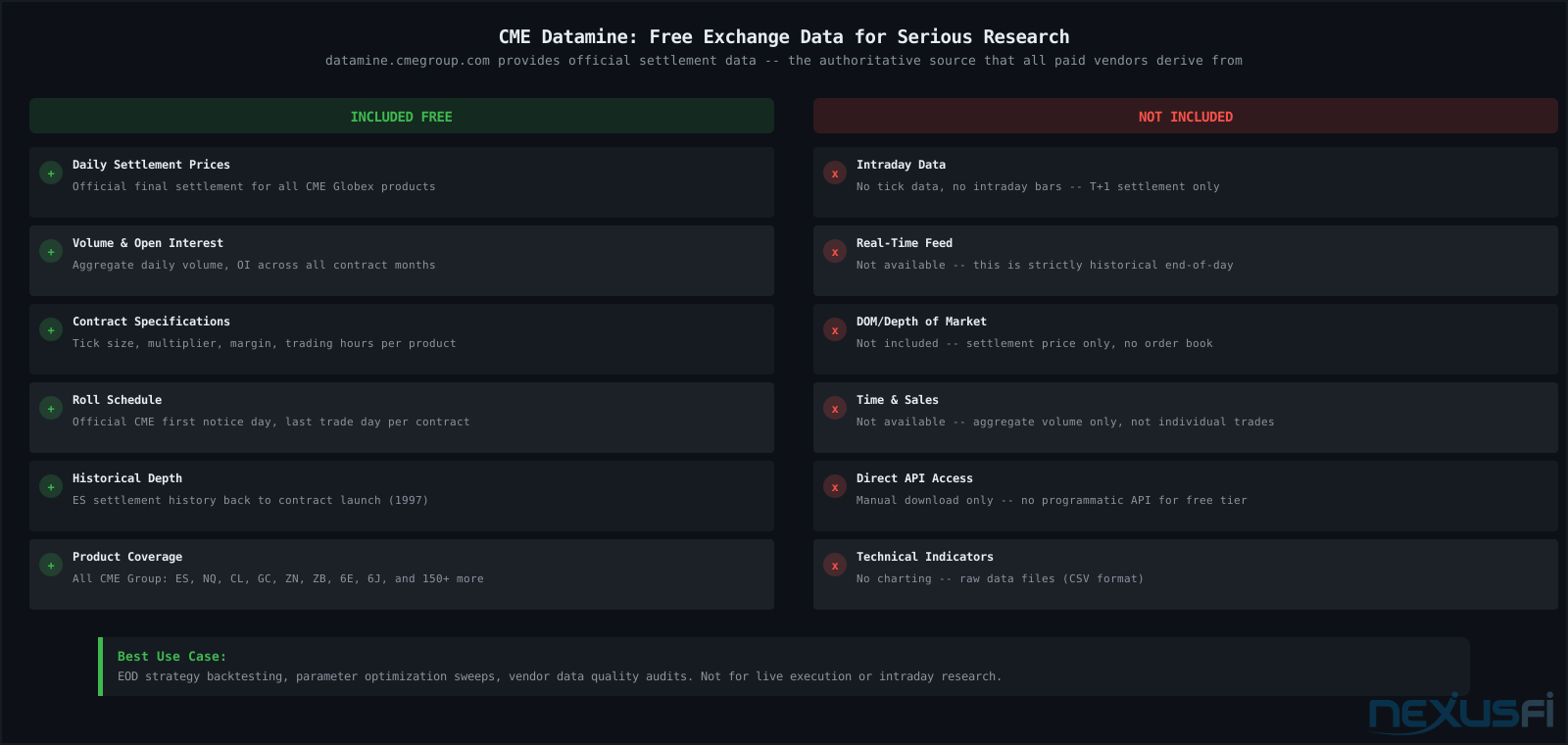
CME Datamine (datamine.cmegroup.com) is the official CME Group historical data service. The free tier provides daily settlement prices, volume, open interest, contract specifications, and roll schedules for all CME Globex products — ES, NQ, CL, GC, ZN, ZB, and everything else traded on the exchange.
What makes CME Datamine uniquely valuable as a free tool is its authoritative accuracy. This is the exchange's own data — it's what every paid data vendor is derived from and validated against. Professionals use CME Datamine in two key ways: as a backtesting foundation for EOD and daily strategies, and as a quality-control baseline to audit paid data vendors. If your paid terminal's historical settlement prices differ from CME Datamine records, your vendor has inferior data.
The limitation is straightforward: CME Datamine provides T+1 settlement data. There is no intraday data, no tick data, no DOM history. It's a research and validation tool, not an execution tool.
CFTC Commitments of Traders (COT) Reports (8/10 for Positioning)
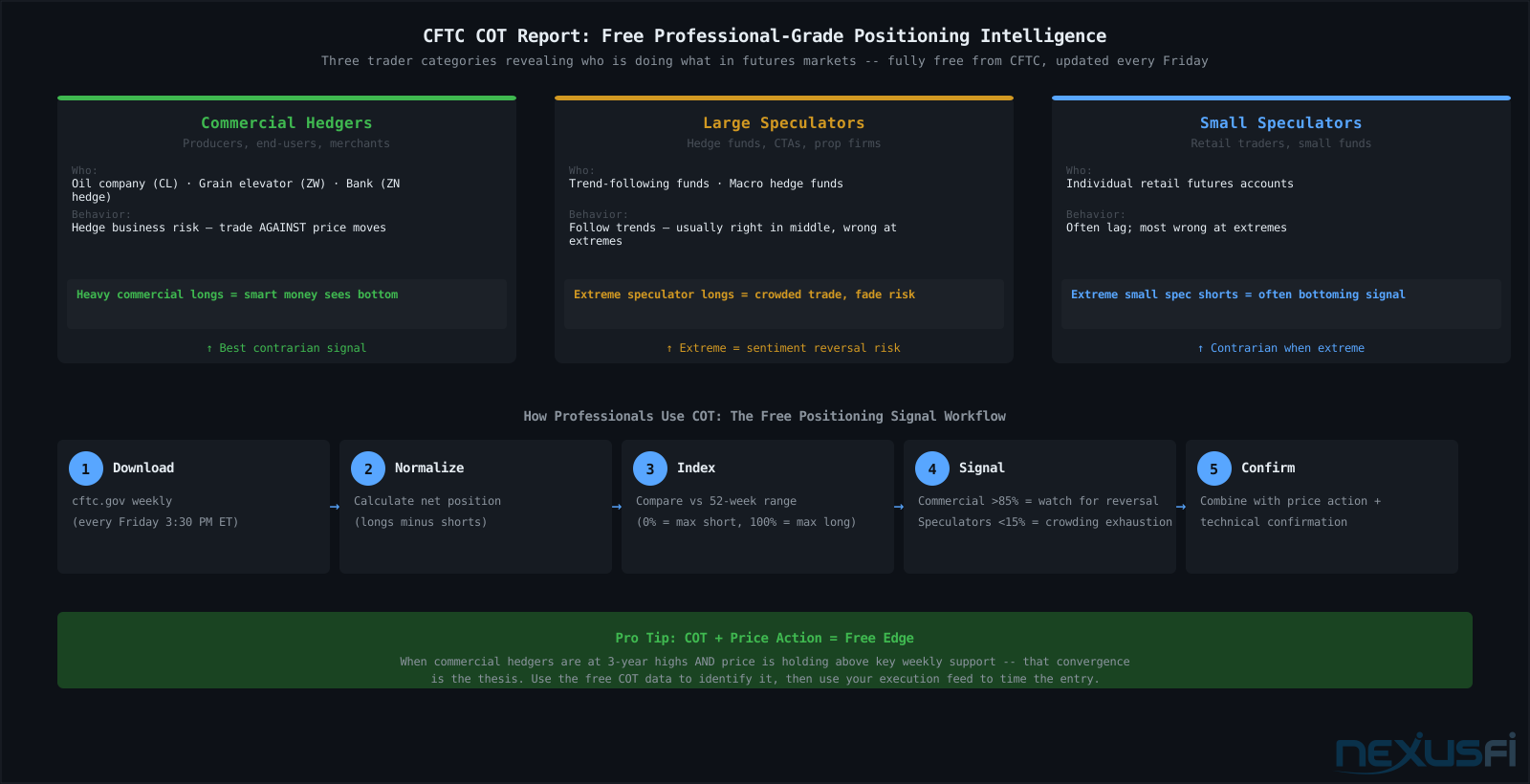
The CFTC publishes Commitments of Traders reports every Friday, reflecting positions as of the previous Tuesday's close. This is free, fully official government data, available at cftc.gov — and it provides genuinely professional-grade intelligence that institutional traders track closely.
COT data breaks down aggregate futures positions into three categories: Commercial Hedgers (producers and end-users hedging business risk), Large Speculators (hedge funds, CTAs, systematic funds), and Small Speculators (retail and small fund activity). Each category's positioning reveals different market information.
The professional use of COT isn't to trade the data directly — it's to identify extreme positioning that suggests crowding or smart-money accumulation. When commercial hedgers (who hedge business risk and tend to be right at extremes) show historically high net long positioning while large speculators are at or near record shorts, that divergence has historically preceded reversals in commodity markets. @aventeren documented how to bring COT data into NinjaTrader for systematic analysis:
COT has three meaningful limitations. First, it's delayed three days (Tuesday positions, Friday release). Second, the sampling frequency is weekly — too coarse for any intraday analysis. Third, it's purely a positioning indicator; it tells you where traders are positioned, not when the position will change. Combine it with price structure analysis, not use it as a standalone signal.
TradingView Free Plan (6/10 for Visualization)
TradingView's free plan provides delayed futures charts (typically 10-15 minutes for US futures, varies by exchange entitlement), a large indicator library, and access to the community's published ideas. As a visualization and discovery tool, it's excellent. As an execution data source, it's completely unsuitable.
The free plan is valuable for learning price structure, building visual intuition about market behavior, and finding trade ideas from the community. The delay means you're seeing what happened 15 minutes ago — which is fine for studying past setups, understanding how support/resistance worked, and building pattern recognition. It's not fine for any live decision that depends on where price is right now.
Barchart Free Tier and Yahoo Finance (4-5/10 for Triage)
Barchart's free tier provides basic quotes and limited historical data. Yahoo Finance provides EOD price/volume for futures contracts. Both are useful for rapid prototyping — the "is this concept even plausible before I spend real time on it?" question.
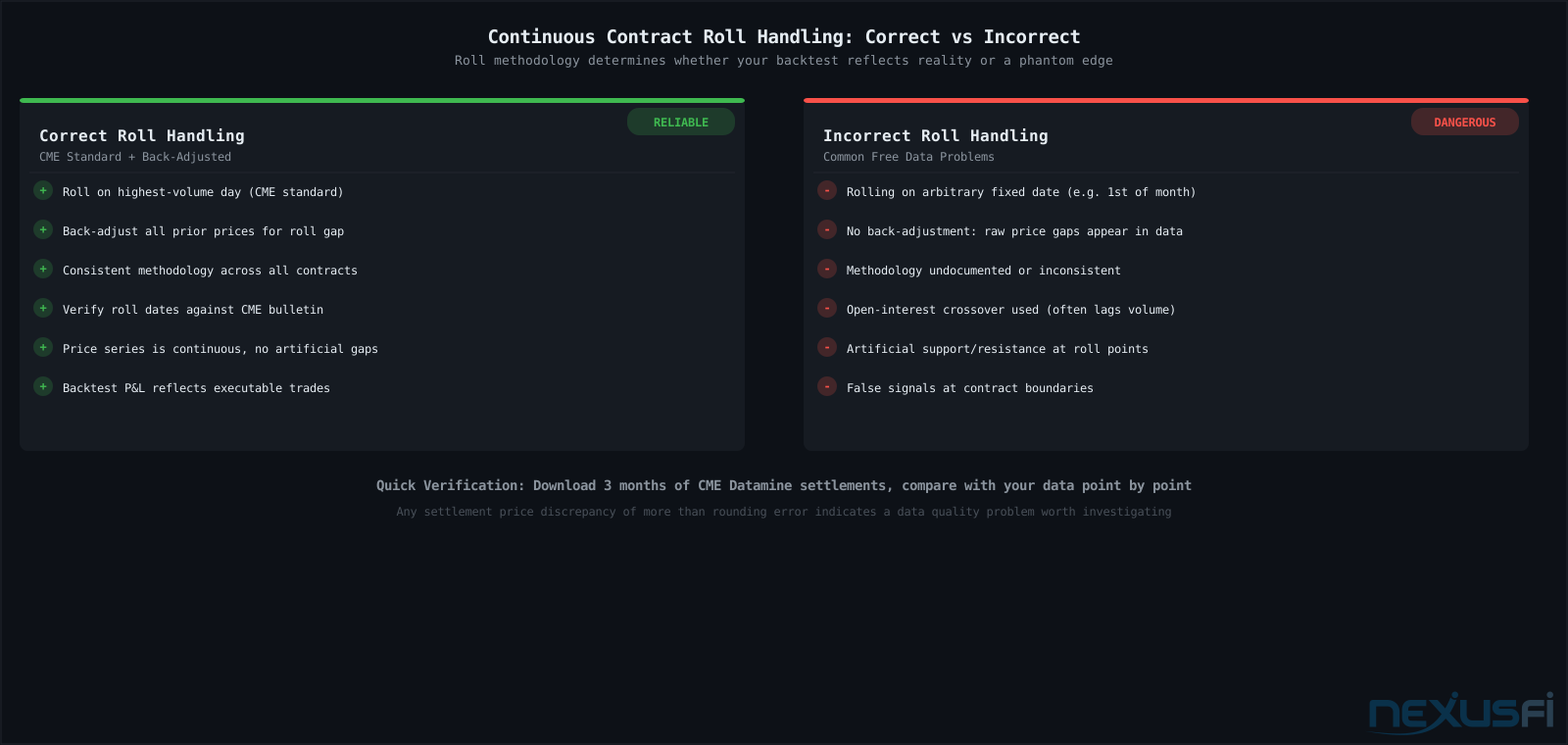
Yahoo Finance's main problem for futures work is inconsistent contract roll handling. Continuous futures series require careful construction (accounting for roll gaps), and Yahoo's methodology is often opaque and sometimes incorrect. Before using any Yahoo historical data for backtesting, manually verify the roll points against CME settlement records. Multiple NexusFi members have encountered strategies that backtested profitably on Yahoo data but failed on clean exchange data, specifically because of this roll inconsistency.
Nasdaq Data Link (formerly Quandl) (5/10 for Factor Research)
Nasdaq Data Link hosts structured historical datasets from multiple sources, including several futures-related EOD series. Many were previously free but have shifted to paid tiers over the years. The remaining free datasets are useful for factor research and parameter sweeps — running broad backtests across parameters before committing to deeper analysis on paid data.
The same caution applies as with Yahoo: verify roll methodology manually. The difference from exchange-provided data varies by dataset, and some series require significant preprocessing to be usable for production research.
Broker-Bundled Data: Real-Time for Minimal Cost #
The most underappreciated category in retail data is broker-bundled feeds. Several major futures brokers provide real-time, exchange-direct market data as part of their account offering — at costs ranging from free to a few dollars per month. For most retail day traders who aren't doing tick-level order flow analysis, this is all they need for execution.
AMP Futures + CQG: The Value Standard
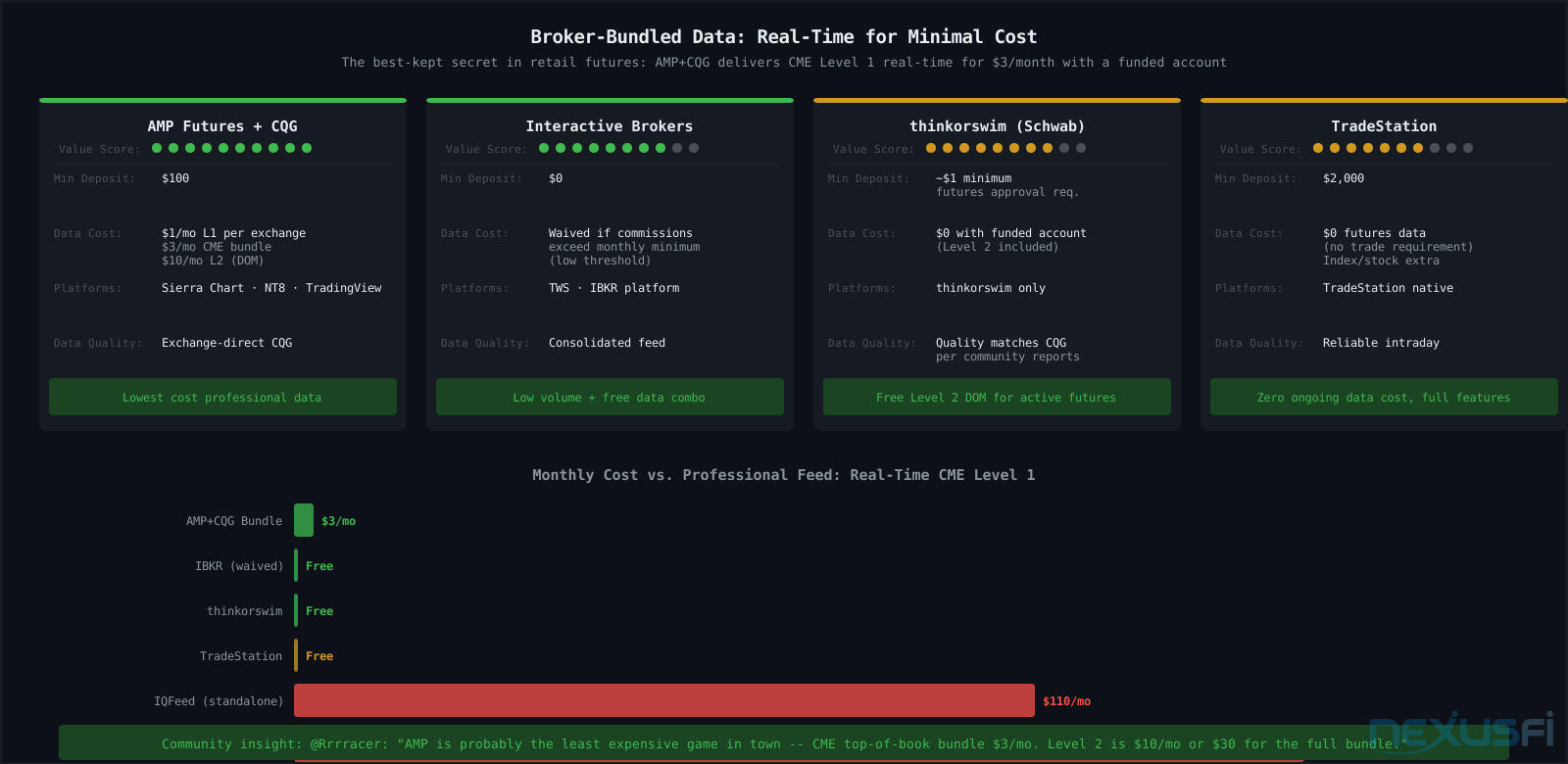
AMP Futures (ampfutures.com) is consistently cited in the NexusFi community as the lowest-cost professional data option available. Their data comes through CQG's infrastructure — the same exchange-direct connectivity used by institutional traders. The CME Level 1 bundle (top-of-book across CME, CBOT, COMEX, and NYMEX) costs $3/month. Individual exchange Level 1 is $1/month. Full DOM Level 2 adds $10/month or $30/month for the full bundle.
@Kefkas Laugh described what many AMP users find: the data quality is identical to more expensive standalone services:
AMP's data feed integrates with Sierra Chart, NinjaTrader 8, and TradingView, making it compatible with the most common retail trading platforms. For traders who want professional-quality data without paying standalone data service rates, AMP+CQG at $3/month for the CME bundle is the market's value leader.
Interactive Brokers: Data Waived with Active Trading
Interactive Brokers waives most data feed fees when your monthly commissions exceed a modest minimum threshold — typically easy to reach with regular futures trading. The specific waiver structure changes periodically, so verify current terms at ibkr.com, but the principle is consistent: active IBKR customers often pay nothing for their data beyond exchange fees embedded in commissions.
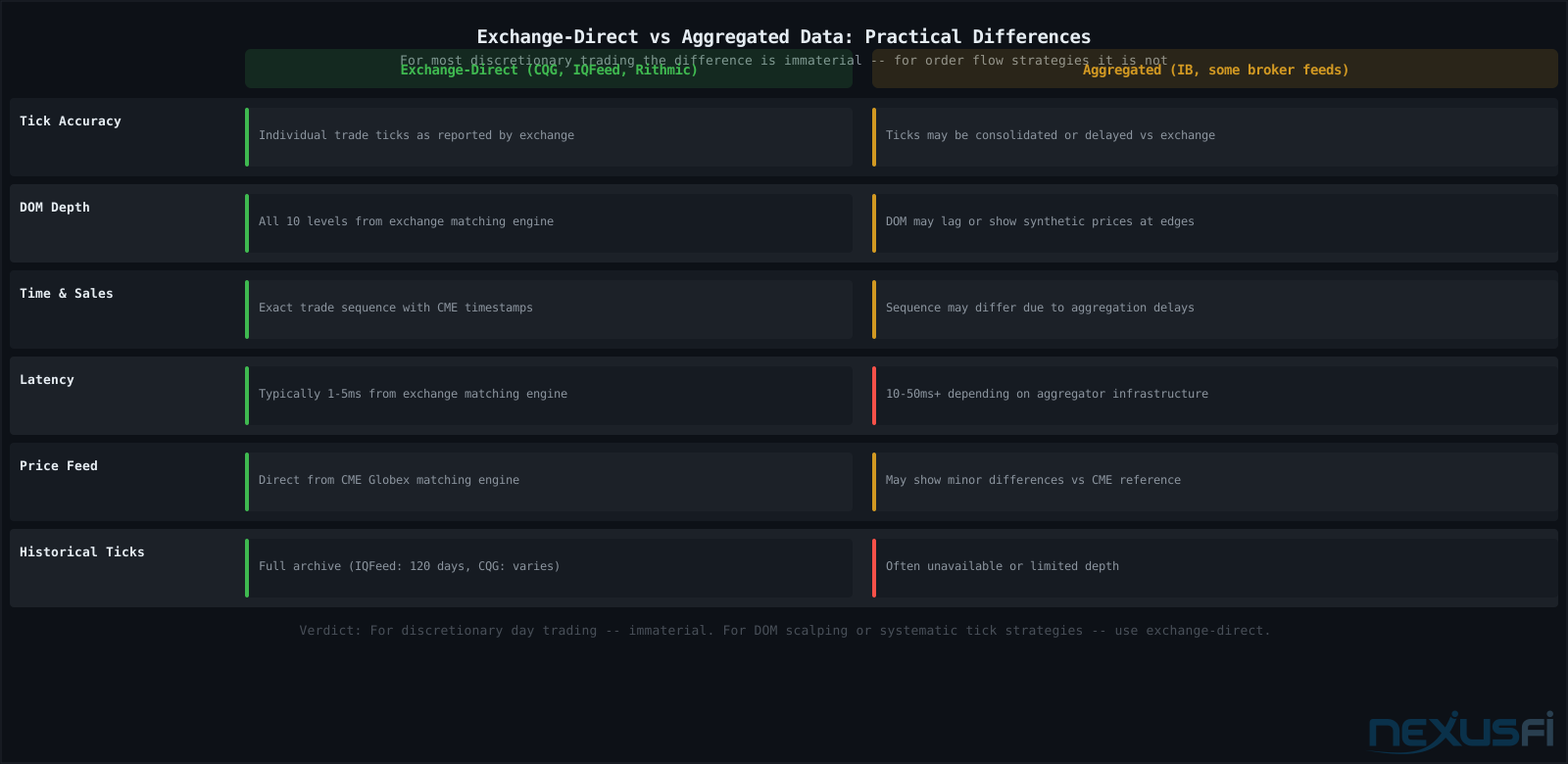
IBKR's data is aggregated (not always exchange-direct at the trade level), which can create minor pricing discrepancies versus CQG or Rithmic. For most discretionary trading, this difference is irrelevant. For systematic strategies that depend on precise tick-level accuracy, verify IBKR's data quality for your specific instrument and timeframe before committing to it for production.
thinkorswim (TD Ameritrade / Schwab): Free Level 2 Included
thinkorswim — the professional-grade platform from TD Ameritrade now operating under Charles Schwab — provides real-time Level 2 (DOM) data with a funded futures account. @trending2020 found this surprising when comparing costs:
Volume and tick differences are worth noting. thinkorswim's tick data can differ slightly from CQG-based feeds due to how trades are consolidated and timestamped. For most discretionary trading this is immaterial. For strategies that explicitly depend on tick count or require maximum tick-level fidelity (footprint charts, order flow indicators), verify independently before relying on it.
The key limitation: thinkorswim data is only accessible within the thinkorswim platform itself. You can't route thinkorswim data to NinjaTrader or Sierra Chart. If your trading workflow is platform-agnostic or you need multi-platform data, you'll need a different solution.
TradeStation: Real-Time Data with No Ongoing Cost
TradeStation provides real-time futures data with a funded account, with no ongoing data fee for futures beyond exchange fees built into commissions. @ZCars described the setup:
TradeStation's commission rates are higher than discount futures brokers like AMP, so it's not the optimal choice if you trade frequently. For lower-frequency traders who want zero data overhead and don't mind slightly higher commissions, it works well. Like thinkorswim, TradeStation data is typically accessible only within TradeStation's native platform.
Delayed vs. Real-Time: What You Actually Lose #
The standard explanation for why you need real-time data is "you'll see old prices." That's technically true but undersells the real problem. For intraday trading, delayed data doesn't just give you stale prices — it eliminates the entire auction process from your view.
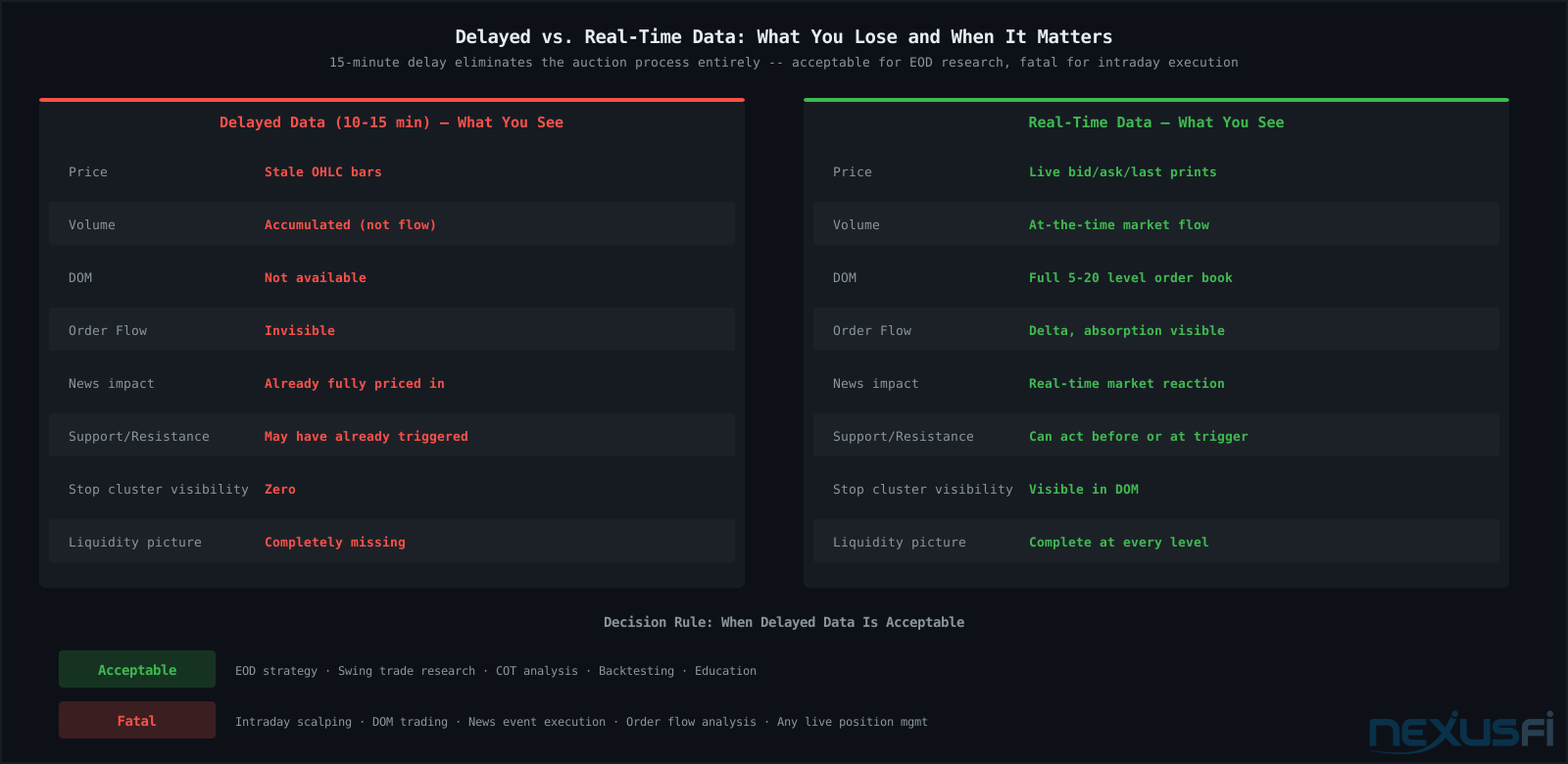
When you're looking at data that's 15 minutes old, you're not just seeing a price that's 15 ticks away from where the market is. You're seeing a price that has already incorporated whatever news, order flow imbalances, or structural changes happened in those 15 minutes. Support levels have already been tested and held or broken. Stops have already been triggered. Institutional orders have already been filled or cancelled. You're looking at a completed chapter of market history and trying to make decisions as though it's live.
When Delayed Data Is Acceptable
Delayed data has a legitimate domain: any analysis that doesn't depend on the current state of the market. Daily bar strategies, swing trade research, COT analysis, historical backtesting, and educational study all work fine on delayed or EOD data. The delay is irrelevant because you're not making time-sensitive decisions.
EOD traders running daily bar strategies can operate entirely on CME Datamine settlement data — which is not just delayed but end-of-day final settlement. This is the correct data for daily strategy backtesting and research. The $0 cost of CME Datamine is appropriate for the use case.
When Delayed Data Is Fatal
Any trading that requires you to react to current market conditions cannot use delayed data. This includes all intraday strategies, stop management during live positions, news event trading, and any execution that depends on DOM or order flow. In fast market conditions — FOMC announcements, CPI prints, news events — 15 minutes of delay means you're acting on information that was invalidated by a market-moving event you couldn't see in time.
The cost of "free" data for intraday trading isn't the zero-dollar subscription price. It's the execution cost of acting on stale information: entries taken at prices that have already moved against you, stops set at levels that have already been hit, and filled orders at prices disconnected from the real market. For active day traders, this hidden cost typically exceeds the cost of a professional data subscription within the first few weeks.
The test: can you make a live decision based on this data without knowing it is delayed? If yes (EOD strategy), free is fine. If no (any intraday strategy), you need real-time data. The cost of getting this wrong is measured in fills, not subscriptions.
The Professional Hybrid Workflow #
Experienced traders don't choose between free data and paid data — they use both, for different purposes, in a structured workflow. Understanding this workflow is the key to maximizing data value while minimizing data cost.
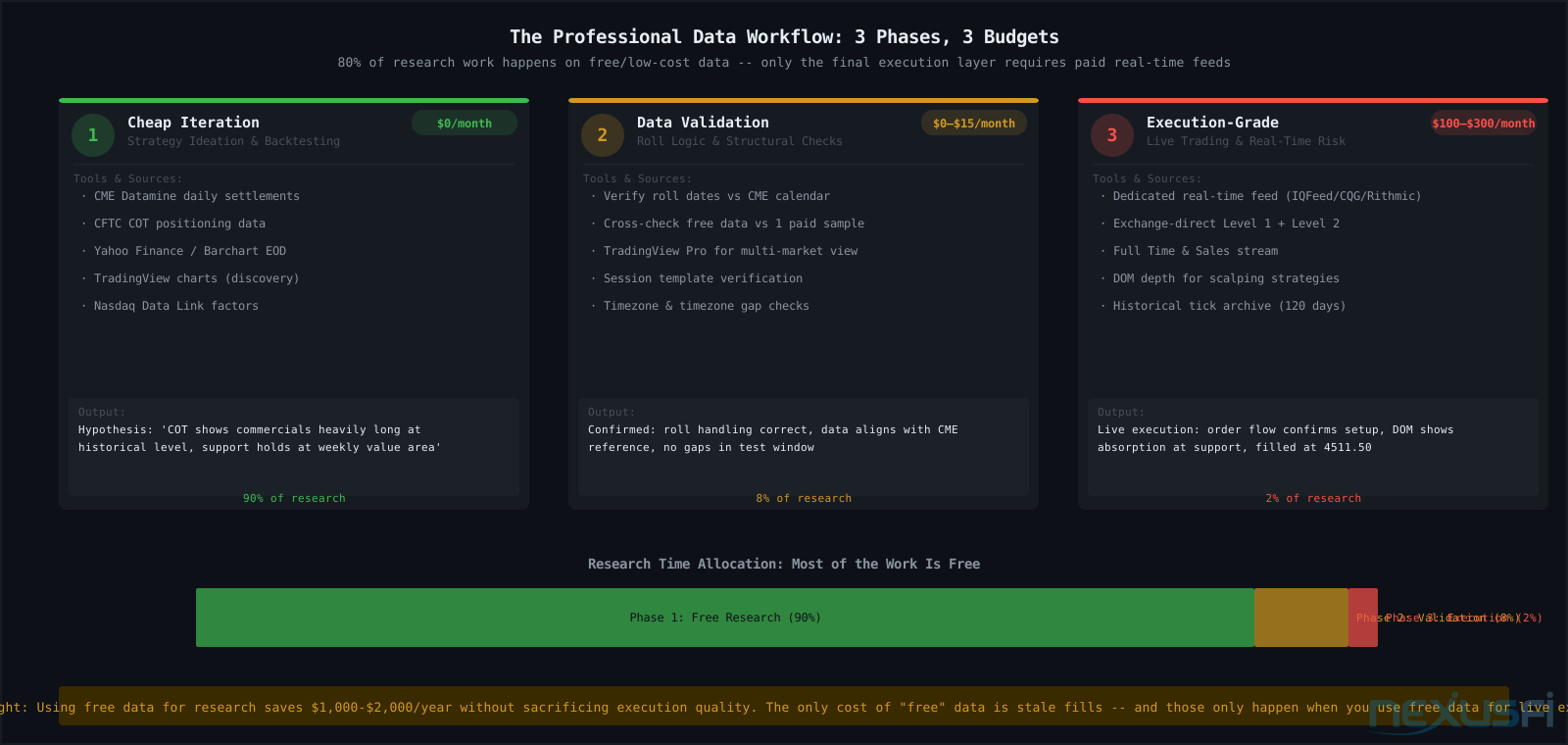
Phase 1: Cheap Iteration ($0/month)
This is where 90% of real research work happens, and it can be done entirely on free data. The goal is hypothesis generation and rough validation: "Does this concept have any edge before I spend significant time or money investigating further?"
Use CME Datamine for EOD backtesting. Use CFTC COT data to identify positioning extremes for the instruments in your strategy. Use TradingView or Barchart for visual chart review. Use Nasdaq Data Link for factor research. The data is delayed or EOD, but for this phase that doesn't matter — you're looking for patterns in historical data, not making live decisions.
The key output of Phase 1 is a hypothesis: "When commercial hedgers in crude oil are at 3-year net long highs AND weekly price holds above the 52-week prior year open, there's a directional bias over the next 4-6 weeks." This thesis is built on free data and costs nothing to generate.
Phase 2: Data Validation ($0-15/month)
Before committing to a strategy with real capital, validate that the data you used for research is clean. This phase costs almost nothing but prevents expensive surprises in production.
Verify contract roll handling: your continuous contract series should roll at the correct CME-specified dates, with correct back-adjustment methodology. Compare your backtest data against CME Datamine settlement records for at least 3-6 months of the test window. Cross-check session boundaries and timezone assignments for Globex instruments. If you're using TradingView Pro (~$15/month), multi-market monitoring becomes easier here.
The goal is to confirm: "The data I used to generate my hypothesis accurately reflects what actually happened in the market." Roll errors, timezone mismatches, and data gaps are surprisingly common in free and even some paid datasets — and they systematically bias backtest results.
Phase 3: Execution-Grade Production ($100-300/month)
The smallest phase by time but the most important by money: live execution. Here you need real-time, exchange-direct data. For most day traders, this means a broker-bundled feed (AMP+CQG at $3/month, thinkorswim free with account, or TradeStation bundled). For order flow traders, scalpers, and systematic strategies requiring tick archives, this means a dedicated service like IQFeed, CQG, or Rithmic.
The thesis you developed in Phase 1 defines your entry conditions. The data validation of Phase 2 confirms your research is clean. Phase 3 is about executing the thesis with precise, real-time information. The free data established what to look for. The paid data tells you when you're seeing it, right now.
Building Your Data Stack by Trader Type #
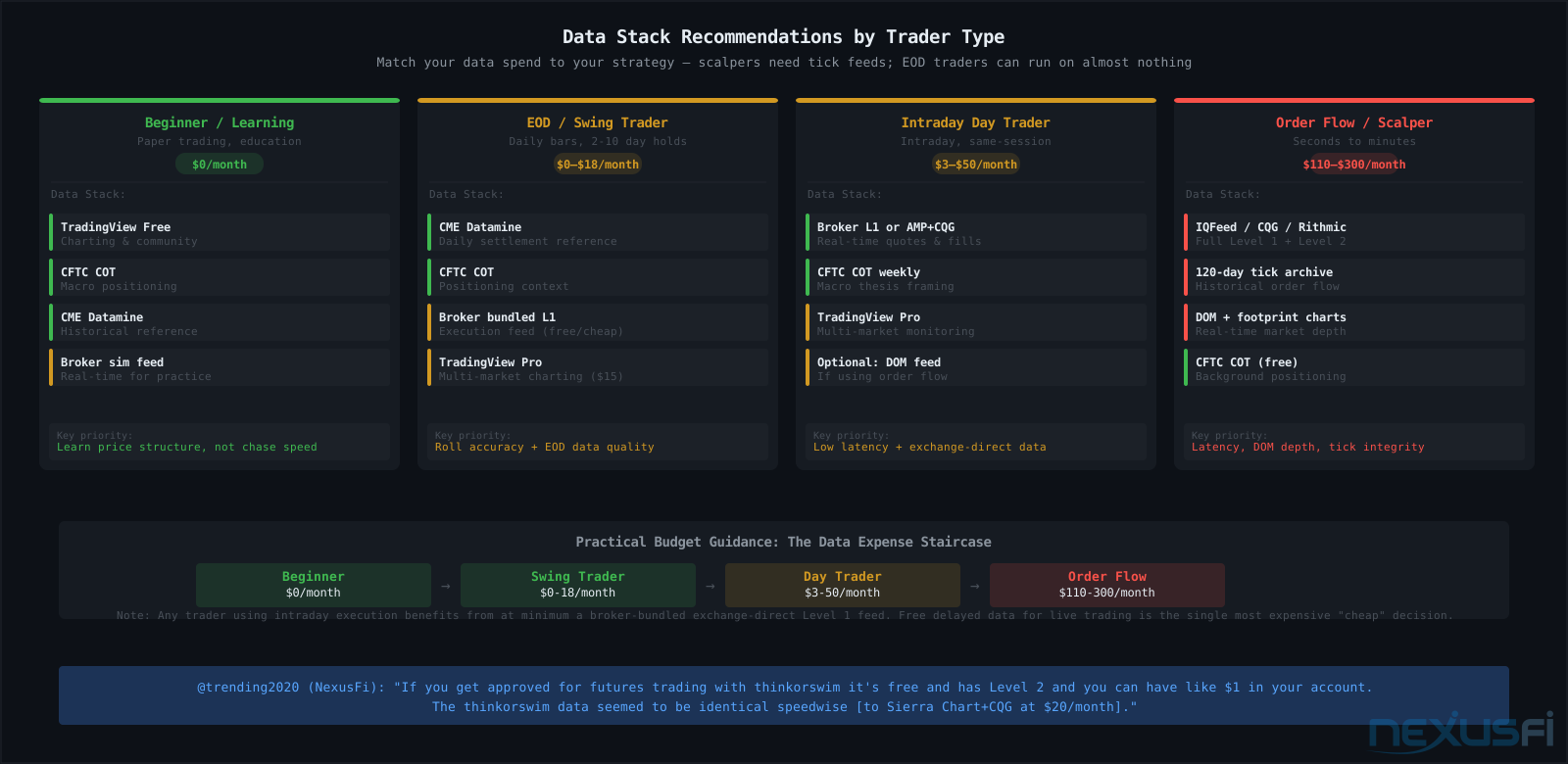
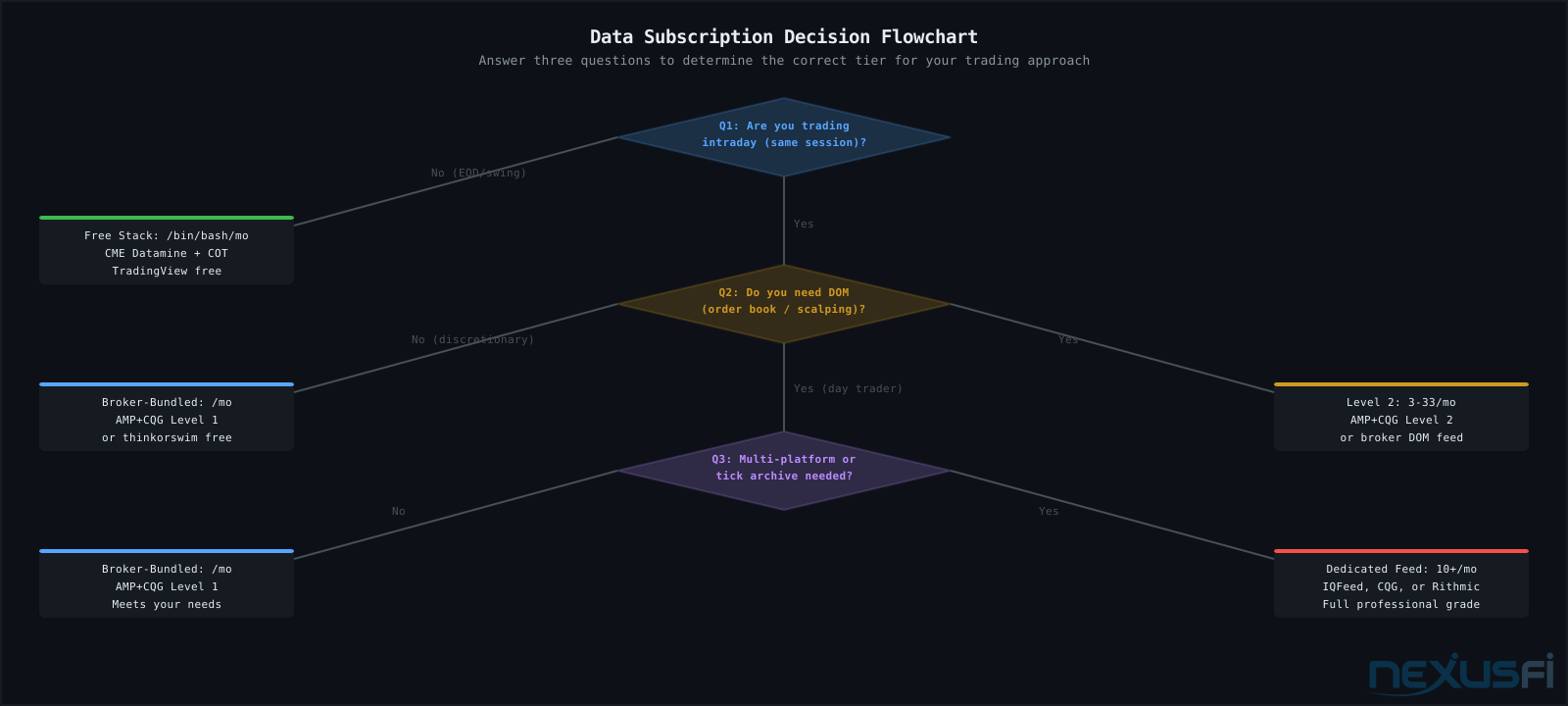
The right data stack is the one that matches your trading approach. Overpaying for data is a real cost. Underpaying (using delayed data for live execution) is a larger hidden cost. The goal is to match the tier to the strategy.
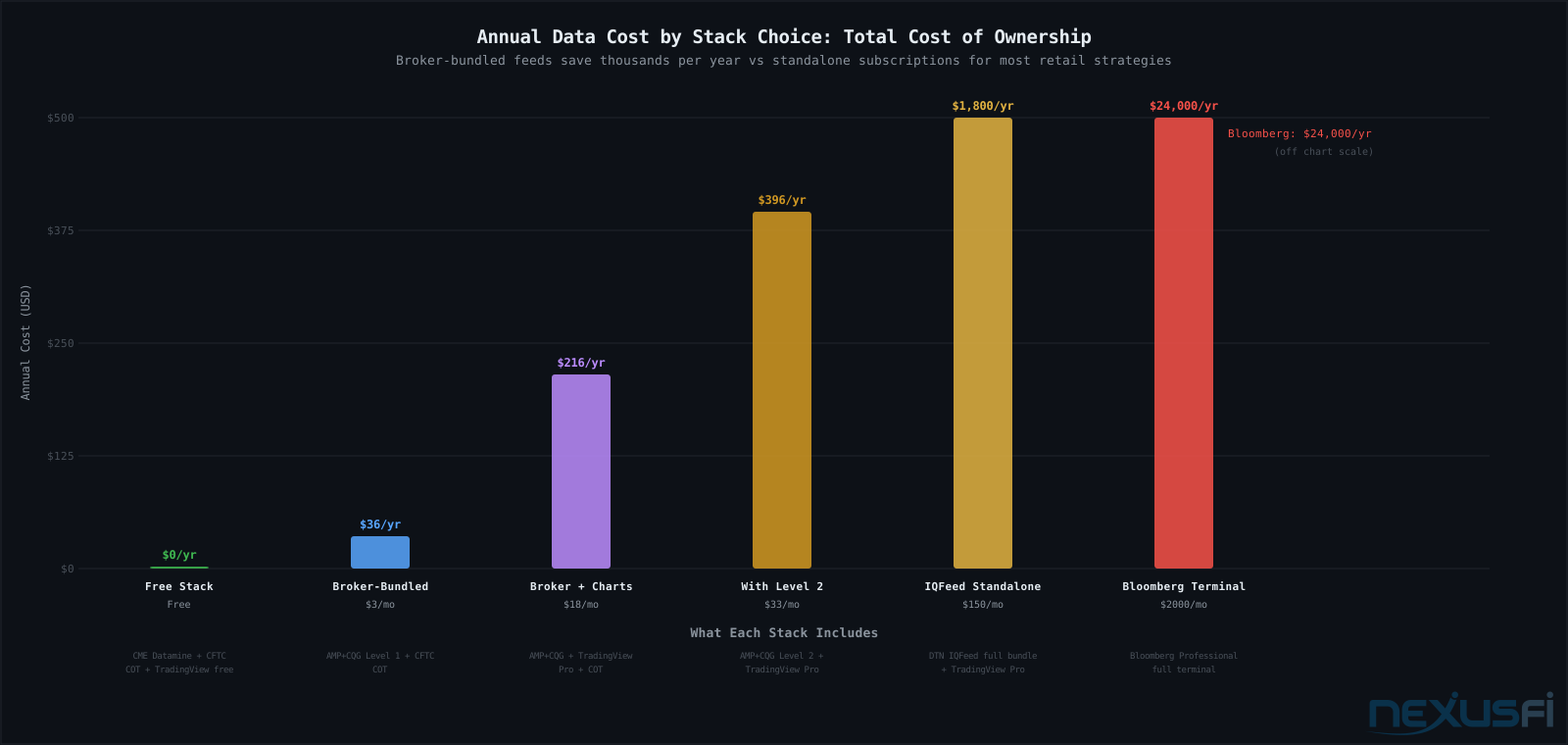 /year to Bloomberg Terminal at ,000/year, with broker-bundled at /year and full Level 2 at 6/year" loading="lazy" width="800" height="450" style="max-width:100%;height:auto;" class="academy-lightbox-trigger">
, AMP+CQG Level 1 , Broker+Charts 6, With Level 2 6, IQFeed Standalone ,800, Bloomberg ,000+. Broker-bundled saves thousands vs standalone for most retail strategies.
/year to Bloomberg Terminal at ,000/year, with broker-bundled at /year and full Level 2 at 6/year" loading="lazy" width="800" height="450" style="max-width:100%;height:auto;" class="academy-lightbox-trigger">
, AMP+CQG Level 1 , Broker+Charts 6, With Level 2 6, IQFeed Standalone ,800, Bloomberg ,000+. Broker-bundled saves thousands vs standalone for most retail strategies.Beginner and Learning Phase: $0/Month
If you're in the learning phase — studying price structure, understanding futures mechanics, doing paper trading — you don't need to spend anything on data. The free stack covers everything you need:
- TradingView free plan for charting and community education
- CFTC COT reports to understand institutional positioning
- CME Datamine for historical settlement data and contract specs
- Broker simulation feed for real-time practice (most brokers provide this with paper accounts)
Don't pay for professional data until you're trading live. The learning value isn't in the data quality — it's in developing pattern recognition and discipline. A delayed chart is fine for that purpose.
EOD / Swing Trader: $0-18/Month
Daily bar and swing strategies don't need intraday real-time data for research, but they do need accurate execution feeds for actual entries and exits. The appropriate stack:
- CME Datamine for daily strategy backtesting and historical reference
- CFTC COT for macro positioning context and timing
- Broker-bundled real-time Level 1 for execution feed (free with most brokers)
- TradingView Pro (~$15/month) for multi-market charting and alerts if needed
Total data cost: $0-18/month. This provides a complete professional-grade swing trading stack at minimal cost. The free macro sources (CME + CFTC) do 80% of the research work. The broker-bundled feed handles execution.
Intraday Day Trader: $3-50/Month
Day traders need real-time intraday data for both research and execution, but most discretionary day traders don't need tick-level order flow archives. The appropriate stack:
- AMP+CQG ($3/month for CME Level 1 bundle) or equivalent broker feed
- CFTC COT data weekly for macro thesis framing
- TradingView Pro ($15/month) for multi-market view and alerts
- DOM Level 2 ($10/month additional at AMP) only if your strategy explicitly uses DOM
Total data cost: $3-28/month for Level 1; $13-38/month with Level 2. This covers the full day trading workflow at a fraction of standalone professional feed costs, with exchange-direct CQG data quality for the execution layer.
Order Flow / Scalper: $110-300+/Month
If your strategy depends on DOM-based scalping, footprint chart analysis, or systematic tick-level order flow signals, you need a dedicated professional feed with full Level 2, tick data, and historical tick archives. This is the one category where broker-bundled data is genuinely insufficient:
- DTN IQFeed, CQG, or Rithmic for full exchange-direct real-time data
- Level 2 market depth (DOM) across relevant exchanges
- 120-day historical tick archive (IQFeed provides this)
- CFTC COT data (free) for background positioning context
Total data cost: $110-300+/month. For this strategy type, the data cost is a cost of doing business — an order flow edge that depends on precise tick data and DOM information cannot exist without the data quality that makes those signals reliable. See the DTN IQFeed Setup Guide for the complete configuration workflow.
Using Free Data to Audit Paid Vendors #
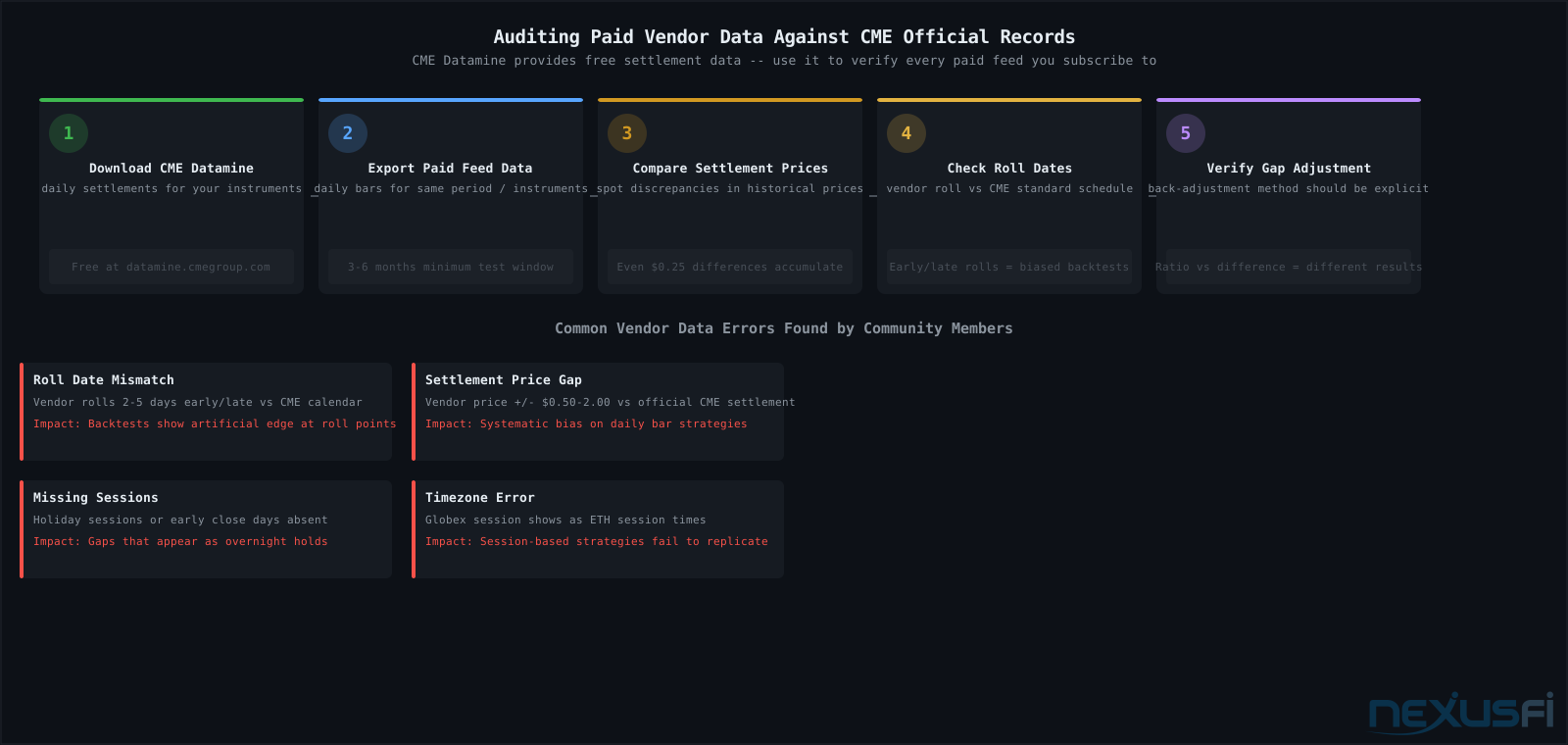
One of the most valuable applications of free data is something most retail traders never think about: using CME Datamine's official settlement records to audit the accuracy of your paid data vendor's historical data.
Data vendor errors in historical settlement prices are more common than the industry acknowledges. Errors in roll handling, adjustment methodology, and session boundaries can cause systematic backtest bias. A strategy that backtests profitably on vendor data with roll errors may not have any edge at all on clean exchange data.
The verification process is straightforward: download 3-6 months of daily settlement data from CME Datamine for your primary trading instruments. Compare settlement prices, volumes, and open interest against your paid vendor's daily bar data for the same period. Any discrepancies worth investigating fall into three categories: different roll dates (vendor may roll earlier or later than CME standard), back-adjustment differences (the method for adjusting historical prices for roll gaps varies), and data gaps or errors (missing sessions, incorrect prices).
If your paid vendor's data deviates meaningfully from CME's official settlement records in these categories, it affects every backtest you've run on that data. This is a professional-grade use of completely free information that most retail traders overlook.
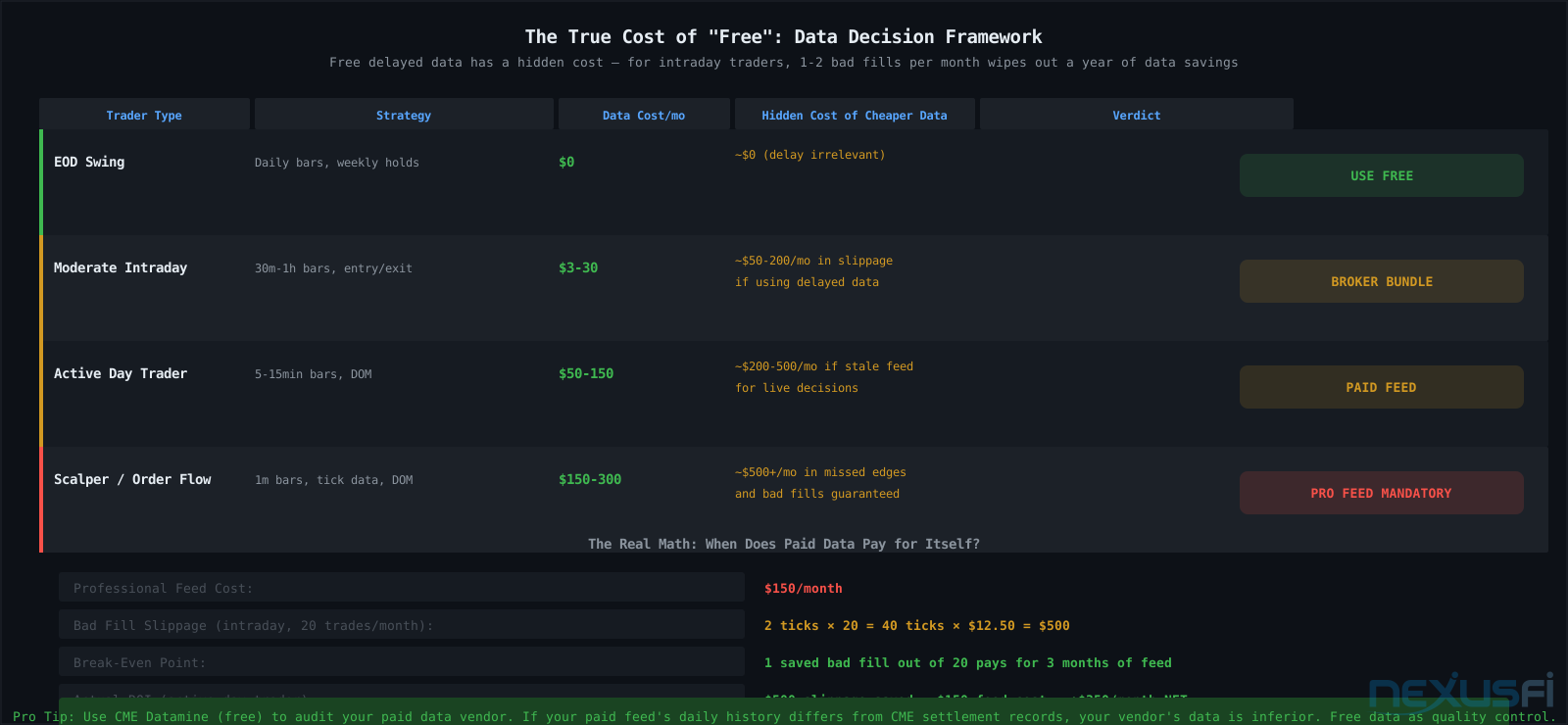
Free delayed data for live intraday execution is not a cost-saving measure — it is a guaranteed cost. The delay does not just give you stale prices; it eliminates the entire live auction process from your view. The result shows up in your fills, not your data bill.
Common Data Mistakes and How to Avoid Them #
Using delayed data for intraday execution. The most expensive mistake. Free data looks the same as paid data visually — same chart, same candlesticks. The 15-minute delay isn't visible until you try to act on it and the market is already somewhere different. The cost: missed entries at your intended price, stops set at levels that have already been hit, and filled orders at prices disconnected from the actual market. Even for moderately active day traders, this hidden cost exceeds the cost of a professional data subscription within weeks.
Assuming all real-time data is equivalent. Exchange-direct data (CQG, IQFeed, Rithmic) and aggregated data (many broker feeds, some third-party services) are not the same. Aggregated feeds can contain synthetic pricing that doesn't reflect what actually occurred at the exchange. For order flow traders who analyze Time & Sales and DOM, the difference is material. For EOD and discretionary swing traders, it rarely matters.
Ignoring contract roll handling in free data. Yahoo Finance, Barchart, and even some paid services handle continuous futures contract construction inconsistently. If your strategy uses a continuous series that crosses roll dates, verify the roll methodology. Common errors: rolling on open interest crossover instead of volume crossover, failing to back-adjust for roll gap, or using the wrong front month during the roll window.
Paying for data you don't use. Level 2 market depth costs $10-30/month per exchange on top of Level 1 fees. If your strategy doesn't explicitly read DOM or use order flow signals, Level 1 is sufficient. Start with Level 1. Add Level 2 only when you have a specific, tested reason for it.
Over-relying on COT as a standalone signal. CFTC COT data is valuable for context — it tells you where traders are positioned, not when the position will change. It's a background condition, not an entry trigger. The edge is combining extreme positioning with price structure confirmation, not using COT readings in isolation. Many traders have sold commodity rallies because COT showed extreme speculator longs, only to watch the rally continue for months before reversing. COT sets the thesis; price structure and timing signals execute it.
Practical Starting Point #
Most traders reading this guide can build a complete professional data stack for under $20/month. The key decisions are simple: if you're trading EOD or swing strategies, CME Datamine (free) plus a broker-bundled execution feed covers everything. If you're day trading, AMP+CQG at $3/month for CME Level 1 provides professional-quality real-time data at basically no cost. If you're scalping or trading order flow, a dedicated feed like IQFeed is necessary and worth it.
The underlying principle: free data does 90% of the research work, and that research work is where most trading edges are found. Paid real-time data handles the final 10% — the execution layer where bad fills are costly. Match the data tier to the decision type, not to what sounds most professional.
For deeper exploration of professional data feeds once your strategy outgrows broker-bundled data, see the complete comparison in DTN IQFeed Setup and Configuration Guide. For understanding how to interpret the Level 1 and Level 2 tiers in detail, see Level 1 vs Level 2 Market Data. For historical data research beyond free sources, see Historical Market Data for Futures Trading.
Knowledge Map
Go Deeper
Build on this knowledgeCitations
- — Quickest/Cheapest way to a live futures data feed (2020) 👍 4“AMP is probably the least expensive game in town. In the US at least, if you don't need market depth for DOM trading, you can get level 1 top-of-book CQG data for indices and currencies for $1/month. The full CME top of book bundle is $3/mo. If you need level 2, then it's $10/mo or $30 for the full bundle.”
- — Advice using free futures data (2019) 👍 2“TradeStation offers a futures account that is virtually free. The RT fees are higher but there's no requirement to trade. I think initial $2000 deposit is needed. It costs me a few dollars in realtime index and stock data fees per month but all my futures data including market depth is free.”
- — cheapest future broker to access data feed (2023) 👍 2“IBKR waives many data feed charges IF your commissions exceed a certain amount per month (its really not that much). Most data feed costs are not set by the broker but rather the provider and about the same everywhere. Im running AMP+tradingview now and very happy thus far. I only trade futures and buy the CME bundle which is only $3/month (CQG).”
- — Cheapest combination for FX futures data? (2020) 👍 2“If you get approved for futures trading with think or swim its free and has lvl 2 and you can have like $1 in your account. The thinkorswim data seemed to be identical speedwise and the same except volume/tick differences.”
- — Commitment of Traders (COT) Report: NinjaTrader Tools and Discussion (2014) 👍 10“I've been working on figuring out a way to bring the free CFTC COT data into NT, which doesn't offer the COT data via the standard data feeds. The CFTC provides this data for free on their website.”
- — Commitment of Traders (COT) Report: NinjaTrader Tools and Discussion (2014) 👍 4“Given that NT Brokerage's stock data feed does not contain an instrument for Commitment of Trader's (COT) data, third party COT tools can import the free CFTC data directly into NinjaTrader for use as an indicator.”
- — Quickest/Cheapest way to a live futures data feed (2020) 👍 3“CME rules require you to either have a funded broker account or to pay the professional fee to access live CME data. Most brokers only want a hundred bucks as a minimum. That's your only realistic option after perhaps a few free demo trials.”
- — CME market data Top of Book subscription is available (2015) 👍 7“CME market data subscriptions are now available at a Top of Book level. Top of Book is only $1/month per exchange or $3/month for the bundle of all CME exchanges vs $5/$15 for Level 2. For newbies, receiving Top of Book data has no effect on tick, volume, range or other charts.”
- — CME emini data (2019) 👍 5“All futures data is supplied by CME, the futures exchange, no matter how it gets to you. If you are using IB, the data started out from CME and is sent to you through IB. There's no CME data connection that is a better deal than IQFeed or IB or whatever -- you always have the CME fee, then whatever else you have.”
- — CME with full dept of market data fee (2021) 👍 1“The currencies are all on one exchange, the CME, so around $11 a month for full depth as a non-professional. Cheapest way is open an account with a broker that has no non-activity fee, deposit the minimum balance, then pay your data fee and you have the charts.”
- — NT 8 Futures Micro Contracts and Data feeds (2019) 👍 2“Brokers generally provide data feeds either free or for small fees. Don't make expensive decisions too quickly. The CME data fee with an account is much smaller: $5 per exchange or $15 for a bundle of all four exchanges.”