



Futures Data Feed Technologies: CQG, Rithmic, and the Infrastructure Behind Every Tick
Overview #
Overview #
Every price tick on your chart, every update in the DOM, every trade on your time and sales — all of it travels through a data feed before it reaches your screen. The feed technology you're connected to determines how fast that data arrives, how deep your order book goes, how much historical tick data you can pull, and what it costs you every month. For discretionary chart traders, the differences are subtle. For scalpers and order flow traders, they're everything.
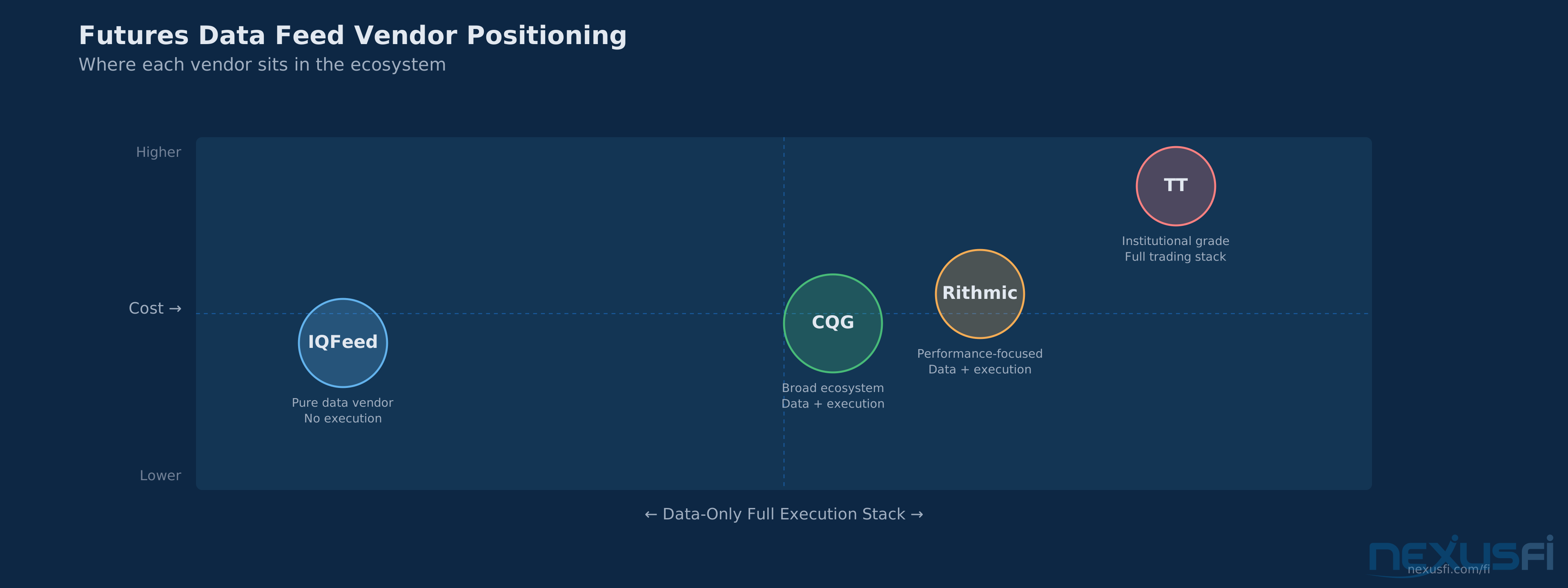
In futures, your data feed isn't just a chart source — it's an infrastructure layer that often bundles market data delivery with execution routing. The four names you'll encounter most are CQG, Rithmic, TT (Trading Technologies), and IQFeed. Each sits at a different point in the ecosystem, optimized for different use cases, and paired with different brokers and platforms. Understanding what each one actually does — and doesn't do — is the difference between paying for infrastructure that fits your trading and paying for infrastructure that fights it.
This article explains how exchange data reaches your platform, what separates the major feed technologies, and how to evaluate which one fits the way you trade. It doesn't cover broker selection, strategy design, or how to interpret market data for trading decisions — those are separate topics linked at the bottom.
How Exchange Data Reaches Your Platform #
The path from exchange to your screen follows a consistent chain, but each link in that chain matters:
Exchange → Data Vendor/Network → Broker Infrastructure → Trading Platform → Your Screen
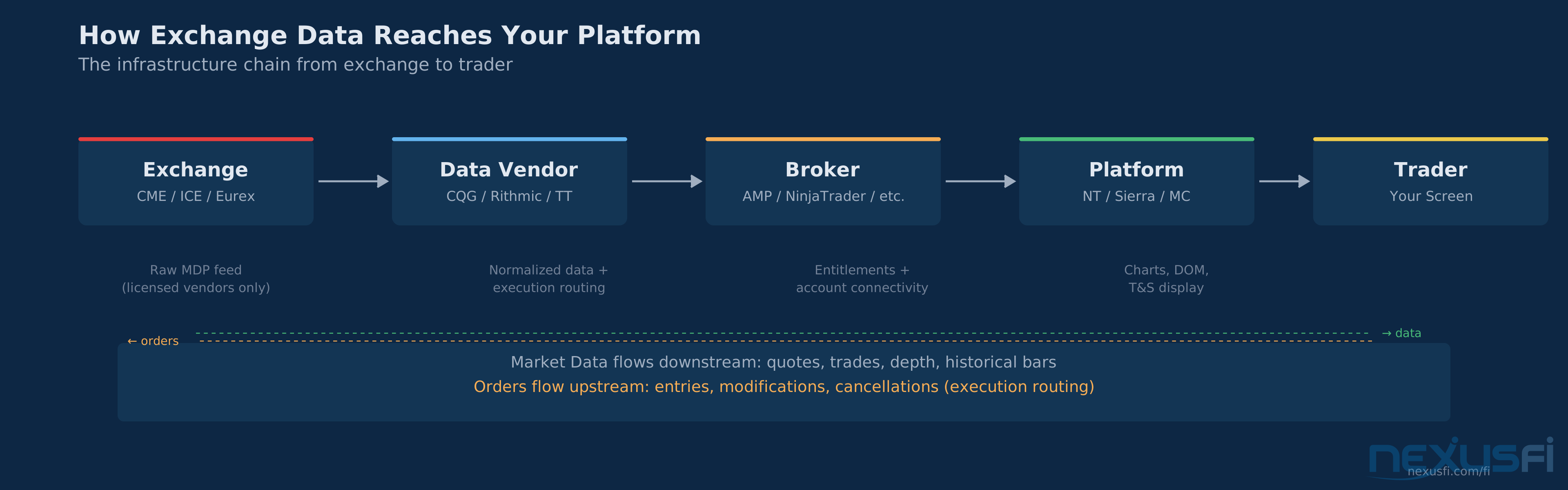
At the exchange level, CME Group (which operates CME, CBOT, NYMEX, and COMEX) broadcasts market data through its Market Data Platform (MDP). This raw data includes trade messages, order book updates, instrument definitions, and settlement prices. The exchange doesn't send data directly to retail traders — it distributes through licensed vendors and networks.
Data vendors like CQG and Rithmic receive this raw feed, normalize it, add their own infrastructure (server networks, APIs, historical databases), and redistribute it to brokers and platforms. Some vendors also provide execution routing — meaning your orders travel back through the same infrastructure that delivers your data. Others, like IQFeed, are pure data vendors with no execution component.
Your broker sits in the middle. The broker licenses one or more feed technologies and makes them available to you. AMP Futures, for instance, offers both CQG and Rithmic connections. Your choice of broker determines which feeds are available, and sometimes the cost differs depending on which feed you select through a given broker.
The trading platform is the final link. NinjaTrader, Sierra Chart, MultiCharts, Jigsaw Daytradr — each connects to specific feed vendors via their APIs. Not every platform supports every feed. Sierra Chart works with CQG, Rithmic, and its own Denali feed. NinjaTrader supports CQG (via Continuum) and Rithmic. Your platform choice constrains your feed options, and vice versa.
The Major Feed Technologies #
CQG (Continuum)
CQG has been in the futures data business since 1980. It's the broadest ecosystem in the space — more brokers offer CQG connectivity than any other feed, and more platforms support it. CQG provides both market data and execution routing through its Continuum gateway, which is the version most retail and active traders encounter.
CQG's strengths are stability, broad instrument coverage (including international exchanges like Eurex, HKEX, JPX, and SGX), and 30 days of historical tick data. It shows 10 price levels of depth per side on most CME products — the standard CME depth subscription. Round-trip routing costs through many brokers sit around $0.20 per contract, making it one of the cheaper options on a per-trade basis.
The tradeoffs: CQG doesn't provide Market By Order (MBO) data, so you can't see individual orders in the book — only aggregated price levels. Some traders report lag or pausing during high-volatility events like Fed announcements. As @DavidHP described after testing both feeds side by side, "When connected to CQG I get a lot of pausing and spurts of data and freezing. When connected to Rithmic none of that exists." [1] Your mileage will vary based on your broker's infrastructure and your network path, but this is a pattern that shows up in community reports.
Rithmic
Rithmic is the performance-oriented alternative. Built specifically for low-latency futures trading, Rithmic is the feed most associated with active scalpers, DOM traders, and prop firms. Its architecture prioritizes speed and data granularity over breadth of coverage.
Rithmic's standout feature is Market By Order (MBO) data — instead of seeing aggregated volume at each price level, you can see individual orders in the book. This matters for order flow traders doing cumulative delta analysis, spoofing detection, or liquidity research. Rithmic also provides more depth levels (20+ per side on some products), though as @Jigsaw Trading notes, "professionals are not looking at depth 100 levels out. It is a sales pitch used out there at the moment but I've yet to hear of a single tangible value of more than 20 levels." [2]
Rithmic's weaknesses: historical tick data is limited to roughly 1 day (compared to CQG's 30 days). International exchange coverage is narrower. Per-trade routing fees are typically higher — around $0.50 round-trip through most brokers versus CQG's $0.20. And there's a monthly connectivity fee (around $25) on top of exchange data fees. [3]
On reliability, Rithmic has a strong reputation for consistent streaming during volatile events.
TT (Trading Technologies)
TT occupies a different tier. It's an institutional-grade execution and data platform used heavily by professional trading desks, market makers, and CTAs. TT isn't just a data feed — it's a full trading ecosystem with its own front-end, order management, risk controls, and execution algorithms.
For retail or active independent traders, TT is less commonly encountered directly. You'll interact with TT infrastructure through brokers that use it for execution routing (many do at the clearing level). TT's data is generally reliable and widely trusted by professionals, though @Jigsaw Trading points out that TT "is a bit less accurate in matching the 'side' a trade occurred" compared to CQG and Rithmic. [2]
TT's cost structure reflects its institutional positioning — it's much more expensive than CQG or Rithmic for individual traders and is typically accessed through broker arrangements rather than direct retail subscriptions.
IQFeed (DTN)
IQFeed stands apart from CQG, Rithmic, and TT because it's a pure data vendor — no execution routing. You can't place orders through IQFeed. What it does provide is clean, reliable market data for charting, research, and backtesting across futures, equities, options, and forex.
IQFeed's value shows up in specific use cases: traders who want data independence from their broker, researchers who need deep historical data, and multi-platform setups where charting and execution are handled by different connections. Many traders maintain an IQFeed subscription alongside their primary CQG or Rithmic connection — IQFeed for charts and analysis, the broker-integrated feed for execution.
Since IQFeed doesn't route orders, it doesn't carry the per-trade routing fees that CQG and Rithmic charge. It has its own monthly subscription cost plus exchange data fees.
What Actually Differs: The Technical Reality #
Depth of Market
This is one of the most practical differences between feeds. CQG provides 10 price levels of depth per side on CME products — this is the standard CME depth-of-market subscription. Rithmic provides 20+ levels when you subscribe to full Market By Order data. @qsceszwasdx, who has traded on both, summarized it: "Rithmic Pros: Have MBO and can see all order book. CQG Cons: No MBO data. Market Depth only have 10 level." [3]
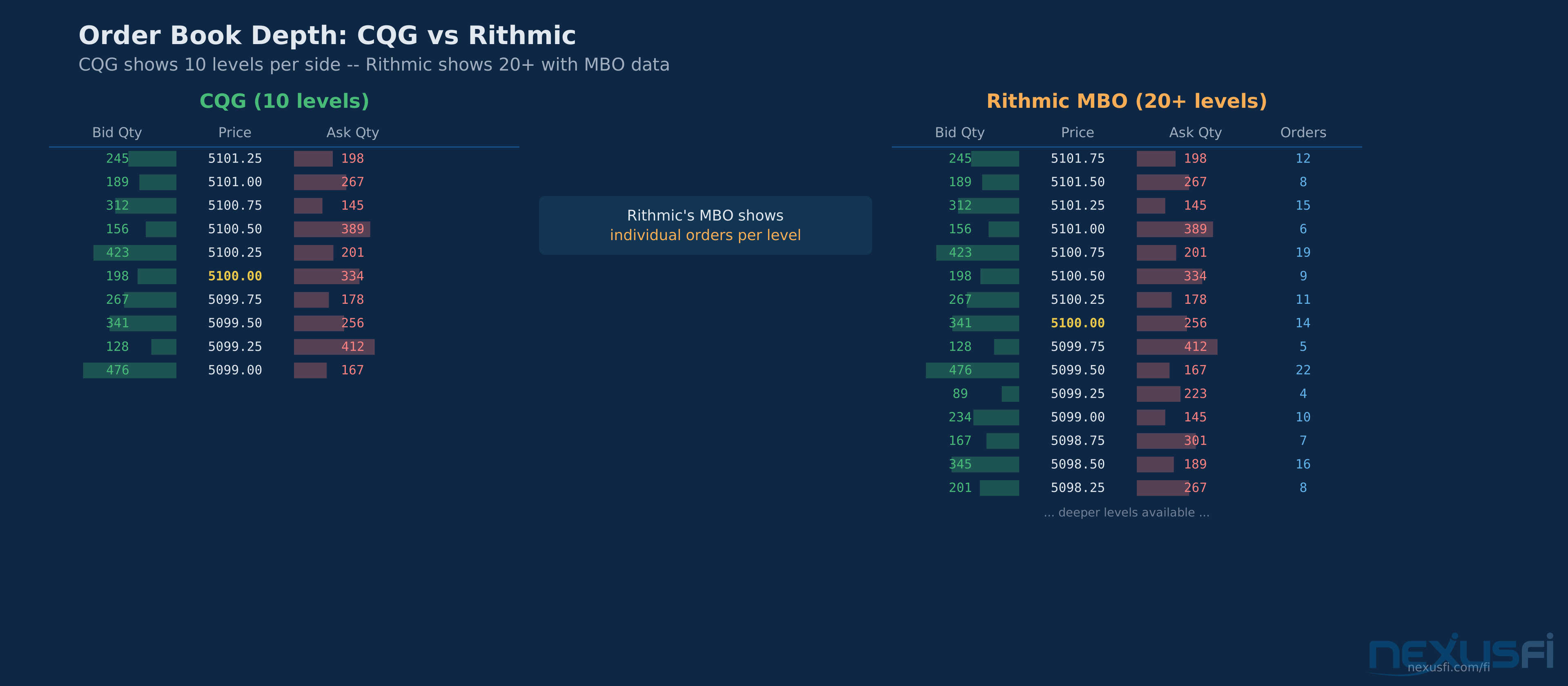
Does depth beyond 10 levels matter? For most discretionary traders — no. The liquidity 50 ticks away from price in ES is noise. But for algorithmic traders building order book models, or order flow traders tracking large resting orders, the extra visibility has value. For the average scalper or chart trader, 10 levels is sufficient.
Latency
Latency differences between CQG and Rithmic are real but small in absolute terms — typically single-digit milliseconds in most retail setups. For traders using mouse-click execution or standard DOM entry, this difference is invisible. For automated strategies or ultra-active scalpers co-located near CME's data center in Aurora, Illinois, the gap matters more.
The bigger latency variable is your network path — the distance between your computer (or VPS) and the vendor's servers. A trader on a residential internet connection in Europe will experience far more latency variation from network routing than from the feed technology itself. If latency is genuinely critical to your strategy, the infrastructure decisions (VPS location, network quality) matter more than the feed choice.
Historical Data
CQG provides approximately 30 days of historical tick data and supports continuous contract charts through most platforms. Rithmic historically provides only about 1 day of tick history, which is a significant limitation for backtesting and research. [3]
Sierra Chart's Denali feed (a separate option from CQG and Rithmic within that platform) offers the deepest historical archive, including tick data for expired contracts. For traders whose workflow depends on historical analysis, this is a meaningful differentiator.
Reliability During Volatility
Data feed reliability during high-volatility events — FOMC announcements, NFP releases, limit moves — is where the rubber meets the road. Community experience across NexusFi suggests Rithmic handles burst traffic more consistently, while some CQG users report pausing or orange "suboptimal connection" status during extreme data spikes. [1]
However, your mileage depends heavily on your broker's infrastructure, your platform's data handling, and your network. A CQG connection through one broker may behave differently than CQG through another. The feed vendor provides the data — but the broker's server infrastructure, load balancing, and network topology all affect what you actually experience.
Exchange Data Fees and Entitlements #
Market data isn't free. CME Group charges exchange data fees that apply regardless of which feed vendor you use. These fees are the same whether you're on CQG, Rithmic, or TT — they're set by the exchange, not the vendor.
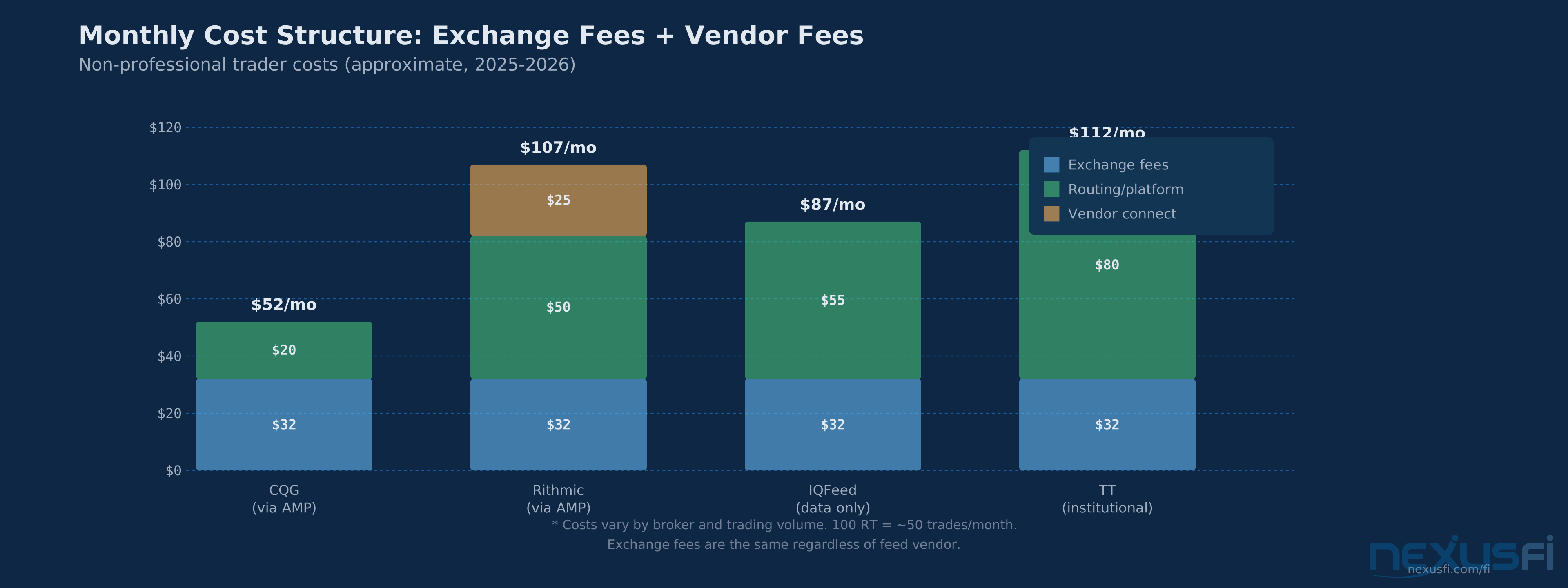
For non-professional traders (retail individuals not trading for a firm), the CME Group bundle covering all four exchanges (CME, CBOT, NYMEX, COMEX) runs approximately $31-35 per month for top-of-book data. Full depth-of-market adds additional cost per exchange. [5]
Professional traders face dramatically higher fees. Professional real-time data runs approximately $105-130 per month per exchange per device. As @SMCJB documented when CME raised fees in 2022, "Pro data fees are going up from $110 to $114.60 per exchange." [5] For a professional who needs data from all four CME exchanges, that's over $450/month in exchange fees alone — before vendor or broker charges.
On top of exchange fees, you'll pay vendor-specific charges: CQG's routing fees ($0.10-0.20/side through most brokers), Rithmic's connectivity fee (~$25/month) plus routing fees ($0.25-0.50/side), IQFeed's monthly subscription, or TT's institutional pricing. Your broker may bundle, subsidize, or pass through these costs differently.
The professional vs. non-professional classification is determined by how you trade, not just how you self-identify. If you're trading for a firm, managing other people's money, or providing trading advice for compensation, exchanges consider you professional. Prop firm funded accounts often trigger professional classification — a surprise cost for many newly funded traders. [6]
Choosing a Feed by Trading Style #
The "best" feed doesn't exist in the abstract — it depends on what you trade and how you trade it.
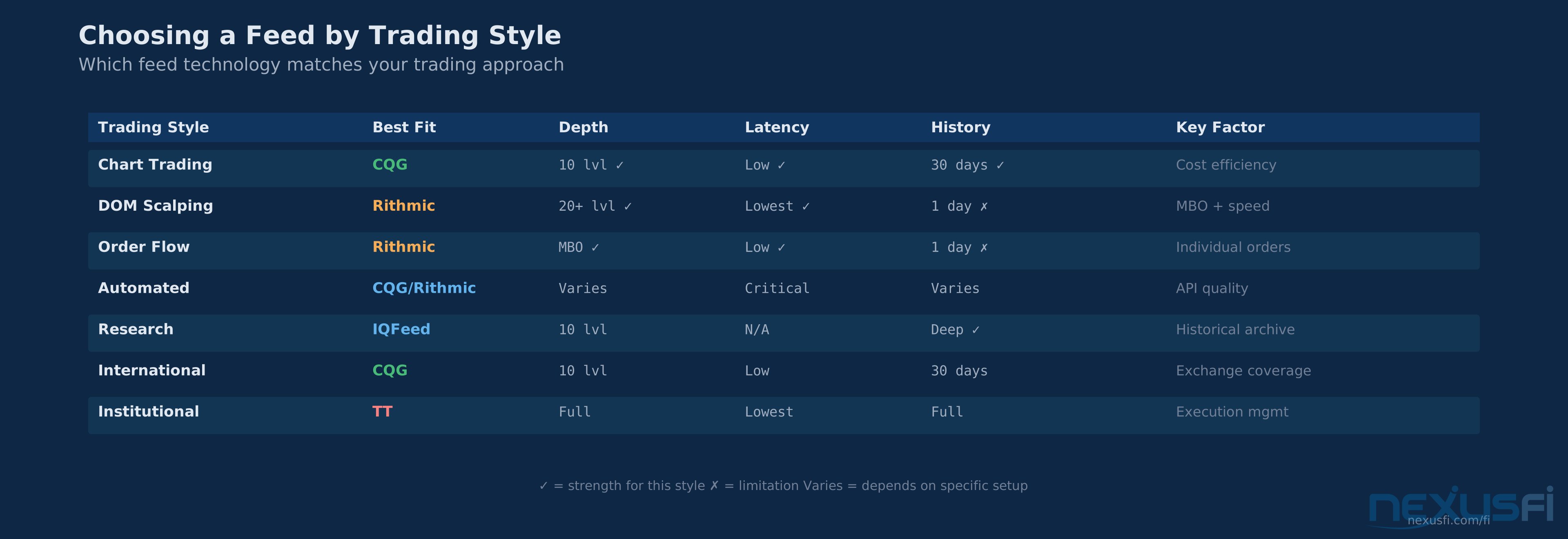
Discretionary chart traders who enter via DOM or chart orders and hold positions for minutes to hours: CQG through your preferred broker is probably the most cost-effective choice. 10 levels of depth is sufficient, historical data supports your chart analysis, and per-trade costs are lower. The ecosystem compatibility is broadest.
DOM scalpers and order flow traders who read the tape, track delta, and execute dozens of trades per session: Rithmic's MBO data and low-latency architecture are worth the premium. The ability to see individual orders — not just aggregated levels — provides genuine analytical value for this style. The extra routing cost is a business expense, not a luxury.
Automated and systematic traders need to evaluate API quality, message throughput limits, historical data availability, and reconnection behavior. CQG's API is mature and well-documented. Rithmic's API is performance-focused. TT's APIs are institutional-grade but priced so. The right choice depends on whether your algo needs MBO data, how latency-sensitive your strategy is, and which API your platform supports.
Researchers and backtesting-focused traders benefit from IQFeed or Denali for their deeper historical archives. If your primary activity is analysis rather than active execution, a pure data vendor gives you cleaner separation between research and trading infrastructure.
International futures traders who trade Eurex, HKEX, SGX, or other non-CME venues should note that CQG has the broadest international coverage. Rithmic is primarily focused on CME Group products. [3]
What This Article Doesn't Cover #
This article explains how futures data feeds work and how they differ. It doesn't cover:
- Broker selection -- commissions, margin requirements, customer service, and account types are separate decisions that overlap with but aren't determined by feed choice. See How to Choose a Futures Broker.
- How to read market data -- interpreting delta, volume, depth, and order flow for trading decisions is covered in Order Flow Analysis and Depth of Market (DOM).
- Platform-specific behavior -- the same feed can look different across platforms due to charting engines, session templates, and data handling. Platform comparisons are in Futures Trading Platforms.
- Market data for general trading concepts -- what L1 vs L2 data means, how tick data differs from bar data, and other foundational concepts are in Market Data for Futures Trading and Level 1 vs Level 2 Market Data.
Knowledge Map
Go Deeper
Build on this knowledgeReferences This Article
Articles that build on this topicCitations
- — Rithmic vs. CQG Question (2014) 👍 6“When connected to CQG I get a lot of pausing and spurts of data and freezing. When connected to Rithmic none of that exists.”
- — reliable datafeed for jigsaw trading (2018) 👍 3“CQG, Rithmic & GAIN are all good. Bear in mind that the most popular feed out there - TT - is a bit less accurate in matching the side a trade occurred.”
- — Rithmic independent of broker possible? (2021) 👍 3“Rithmic Pros: Have MBO and can see all order book. CQG Cons: No MBO data. Market Depth only have 10 level.”
- — Continuum by CQG (2014) 👍 2“Rithmic rarely gets disconnects during trading hours and if it does usually reconnects right away.”
- — 2022 CME Group Market Data Fees Increase (2021) 👍 7“The CME Bundle for Non-Pro's is going up from $30 to $31.25. Pro data fees are going up from $110 to $114.60 per exchange.”
- — Data feeds and execution - CQG, Rithmic, Tradovate (and more?) (2020) 👍 3“CQG: solid all-round solution with cheap round-turn fees of $0.20, shows 10 price levels. Rithmic: highly reliable but expensive at $0.50 round-turn fees, shows entire order book.”