



Cumulative Delta in Futures Trading: Reading the Running Order Flow Story Behind Every Price Move
This fundamental tension — that CVD tracks aggressive flow while passive orders move price — has deep academic roots. O'Hara's foundational work on market microstructure established that price discovery is driven by the interaction between informed/aggressive order flow and resting liquidity, not by the aggressive flow alone. Hasbrouck's empirical analysis of order flow information content showed that the price impact of a trade depends as much on what the trade signals about future flow as on the trade's own size.
-- Maurel O'Hara, The Microstructure of Financial Markets (Cambridge, 2009); Joel Hasbrouck, Empirical Market Microstructure (Wiley, 2007)der Flow Story Behind Every Price Move
Most traders look at price. Order flow traders look at who is moving it and whether their conviction is building or collapsing. Cumulative delta is the tool that makes that conviction visible.
It doesn't predict price — nothing does reliably. What it does is show you when the aggression behind a move is weakening before price confirms the reversal. That early warning, properly contextualized, is why serious ES and NQ traders treat cumulative delta as a non-negotiable part of their toolkit.
Overview #
Cumulative delta (CD) is the running total of net aggressive buying versus selling pressure across a trading session. It's calculated by continuously summing the difference between buy-initiated volume (market orders lifting the offer) and sell-initiated volume (market orders hitting the bid).
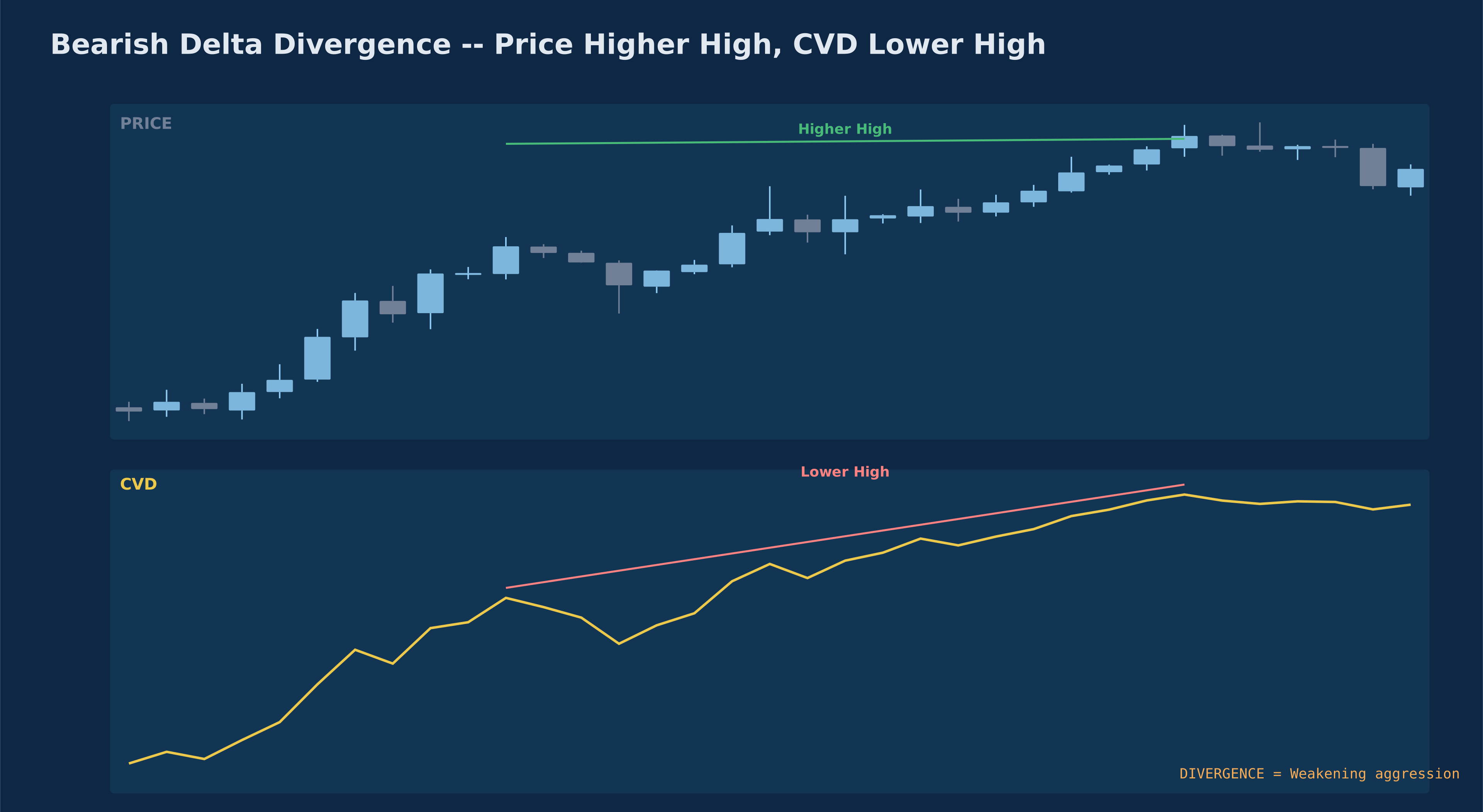
The result is a line on your chart that tells you whether net aggression is trending, diverging from price, or exhausting at extremes. When price makes a new high but cumulative delta fails to confirm — buyers are losing conviction at the highs. When price grinds to new lows but cumulative delta forms a higher low — sellers are running out of aggression at the lows.
These divergences are the primary actionable signal. But they only become entries when paired with structural context, footprint validation, and a clear trigger. Raw divergence alone is noise.
Cumulative delta is available in Sierra Chart (the most popular implementation among NexusFi members), Jigsaw Depth and Sales, NinjaTrader via order flow add-ons, and ATAS. The calculation is identical across platforms but the visual presentation varies — some show it as a separate panel below price, others integrate it directly with footprint charts. The mechanics are platform-agnostic; the edge is the same.
Key Concepts #
Delta: The Snapshot #
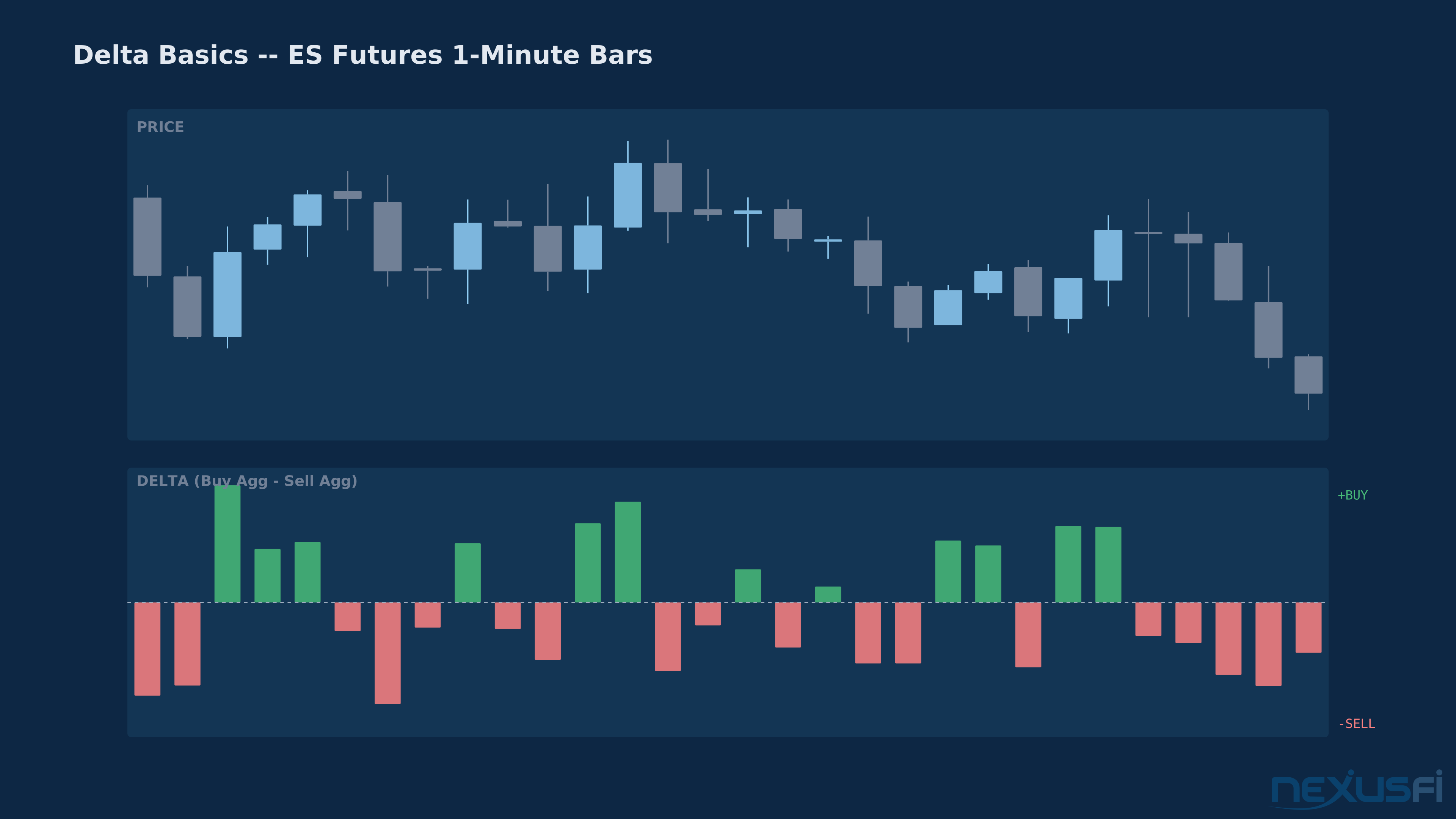
Delta is the net buy-sell imbalance at a single bar, price level, or discrete time window.
- Positive delta: more aggressive market buyers than sellers during that period
- Negative delta: more aggressive market sellers than buyers
- Near-zero delta: roughly equal aggression in both directions
On a footprint chart, you see delta calculated at each price level within a bar — showing exactly where buyers and sellers were most active. On a standard candlestick chart, delta typically appears as a single number per bar.
Delta is a snapshot. It tells you what happened during one specific interval.
"The sign comes from the exchange tape. On exchanges with an
isBuyerMakerflag per trade: if false, the buyer was the taker and the trade signs positive; if true, the seller was the taker and the trade signs negative. This is textbook math, standard across microstructure practitioners." This exchange-level classification is the cleanest method — though many retail platforms approximate it using the tick rule (price ≥ prior tick = buy, price < prior tick = sell), which introduces classification errors that compound over time.-- TickDistill, "What Is Cumulative Volume Delta (CVD) and How Do You Read It?" (2026)
Cumulative Delta: The Running Story #
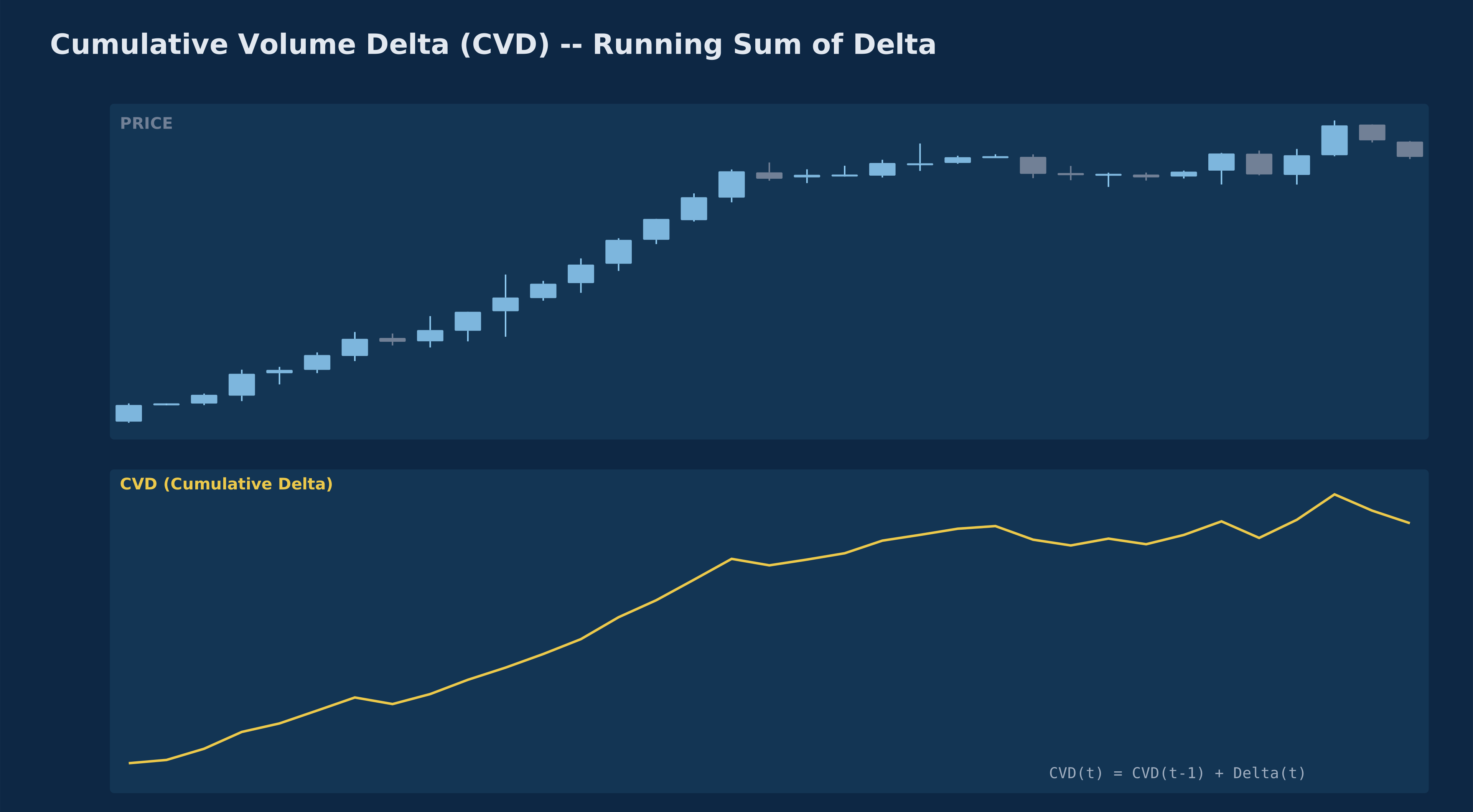
Cumulative delta is the path-dependent accumulation of those snapshots over time. The formula is straightforward: CD at time t equals CD at time t-1 plus delta at time t.
What this creates is a historical record of whether net aggression has been persisting (trending CD) or reversing (diverging CD). A single negative delta bar might mean nothing. Five consecutive negative delta bars while price holds steady means sellers are controlling the tape.
The key distinction, from djkiwi — one of NexusFi's most cited order flow researchers — is that delta without benchmarking is incomplete:
"Delta as an absolute number is worthless. The correct approach is benchmarking delta against historical percentiles for the specific instrument, time of day, and market condition."
-- @djkiwi, NexusFi: Cumulative Delta Volume Trading (6 thanks)
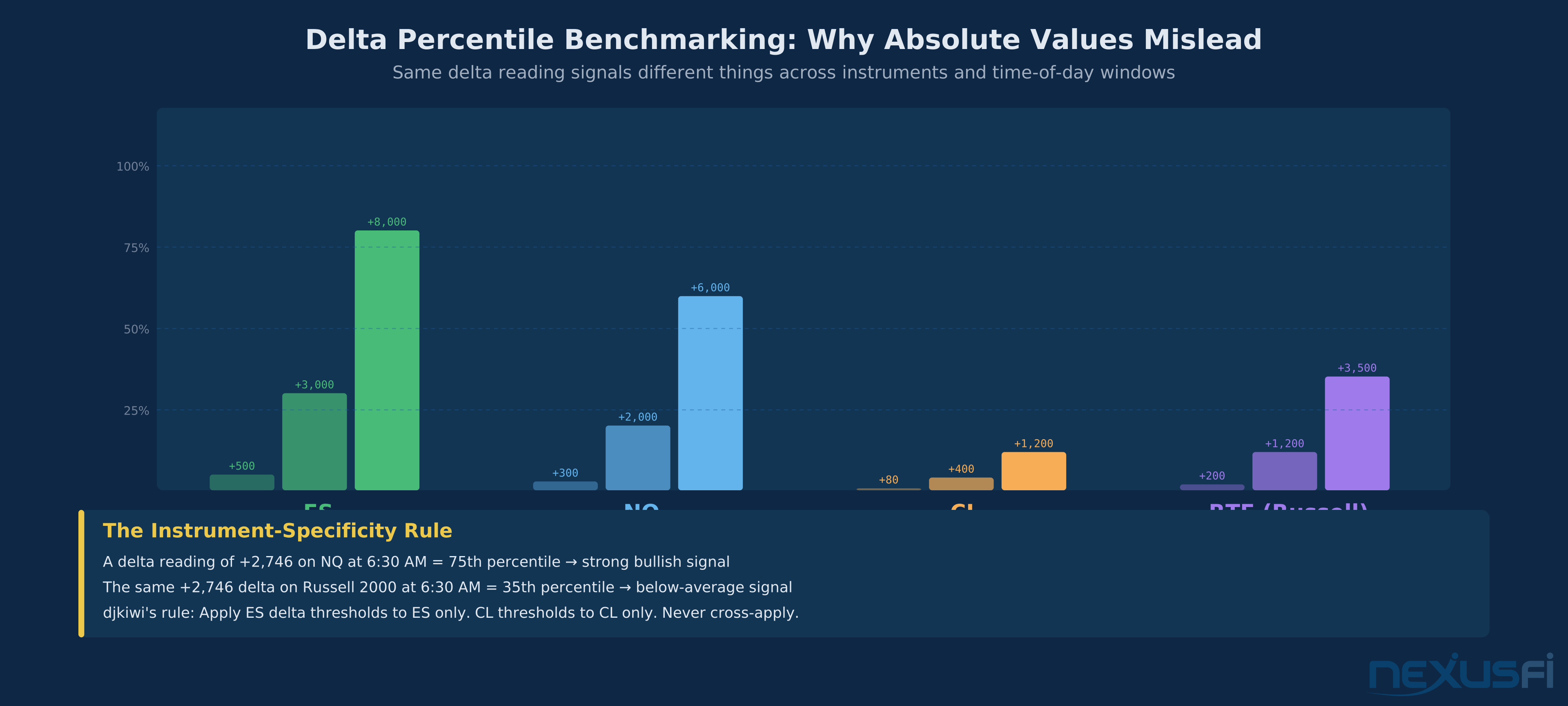
This benchmarking insight separates sophisticated CD users from beginners. A delta reading of +2,746 on NQ at 6:30 AM might represent the 75th percentile of historical values for that time window — a strong bullish signal. The same number on Russell 2000 futures might only be the 35th percentile. Context and relative strength matter as much as the raw number.
Why "Buy" Volume Can Produce Falling Prices #
Here is where most new traders get confused — and why josh, a long-time Elite Circle contributor, wrote his most-cited post on the subject:
"Cumulative delta gives an accurate picture of inventory IF AND ONLY IF each market participant goes from flat to flat using only one order type — which never happens."
-- @josh, NexusFi: Cumulative Delta Volume Trading (16 thanks)
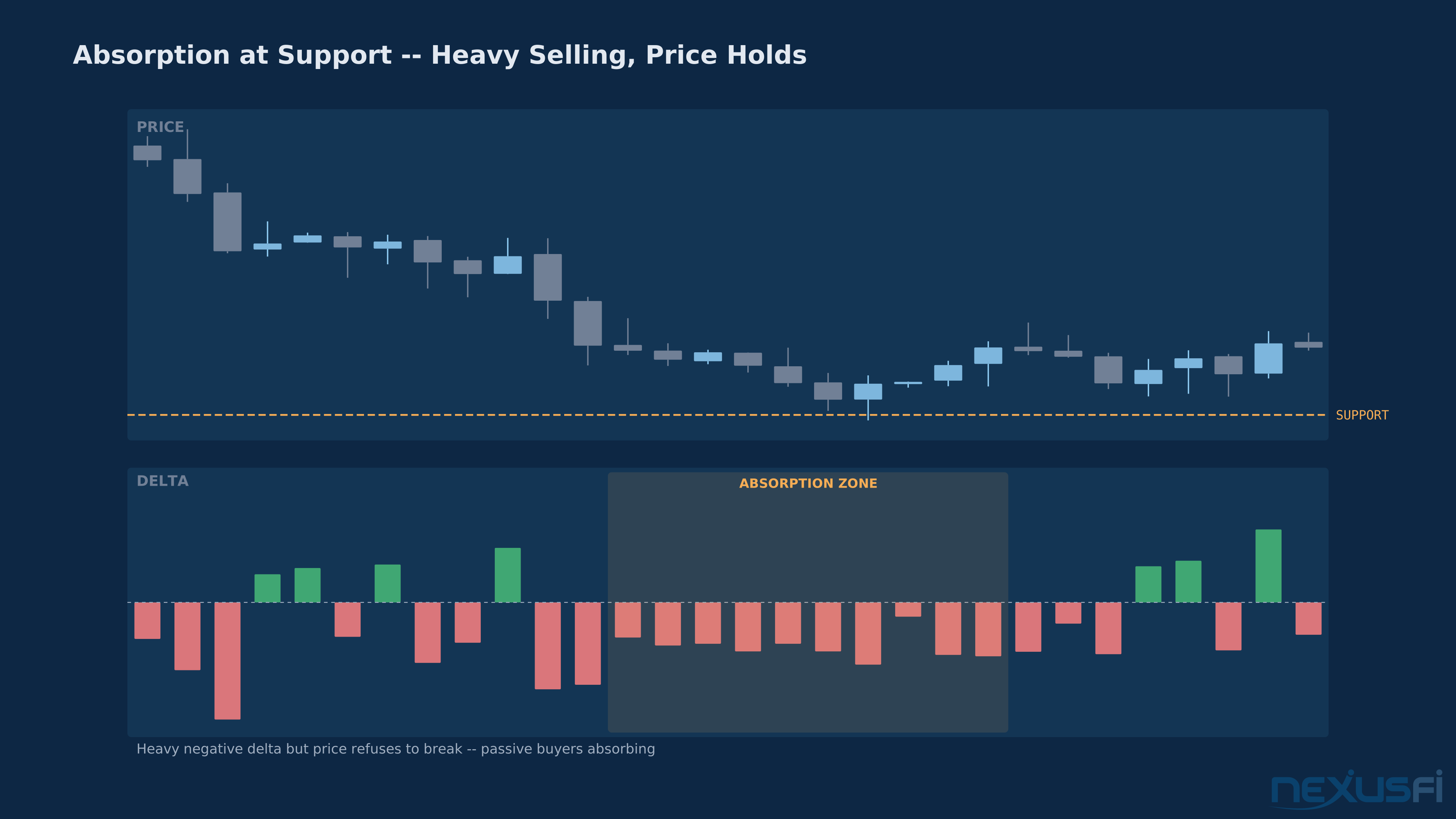
The mechanics explain why: a single large passive buyer can absorb 10 aggressive sellers through limit orders on the bid. Each of those sellers hits the bid (negative delta). But price rises throughout the session because the limit buyer keeps raising his bid. Final cumulative delta: deeply negative. Price: up much.
WoodyFox ran this experiment explicitly in a 2022 thread, using an 11-participant scenario to show exactly why positive CD on a down day or negative CD on an up day isn't a flaw in the data — it's a feature:
"Cumulative delta does not have directional bias in plotted form — you must understand what it is telling you in terms of who is trading and how."
-- @WoodyFox, NexusFi: Cumulative Delta (7 thanks)
Negative CD on a rising market means large passive (limit order) buyers were absorbing aggressive sellers. That's bullish inventory-building behavior, not distribution. The aggression appears bearish in the delta. The meaning is bullish.
How to Read Cumulative Delta #
The Four Alignment States #
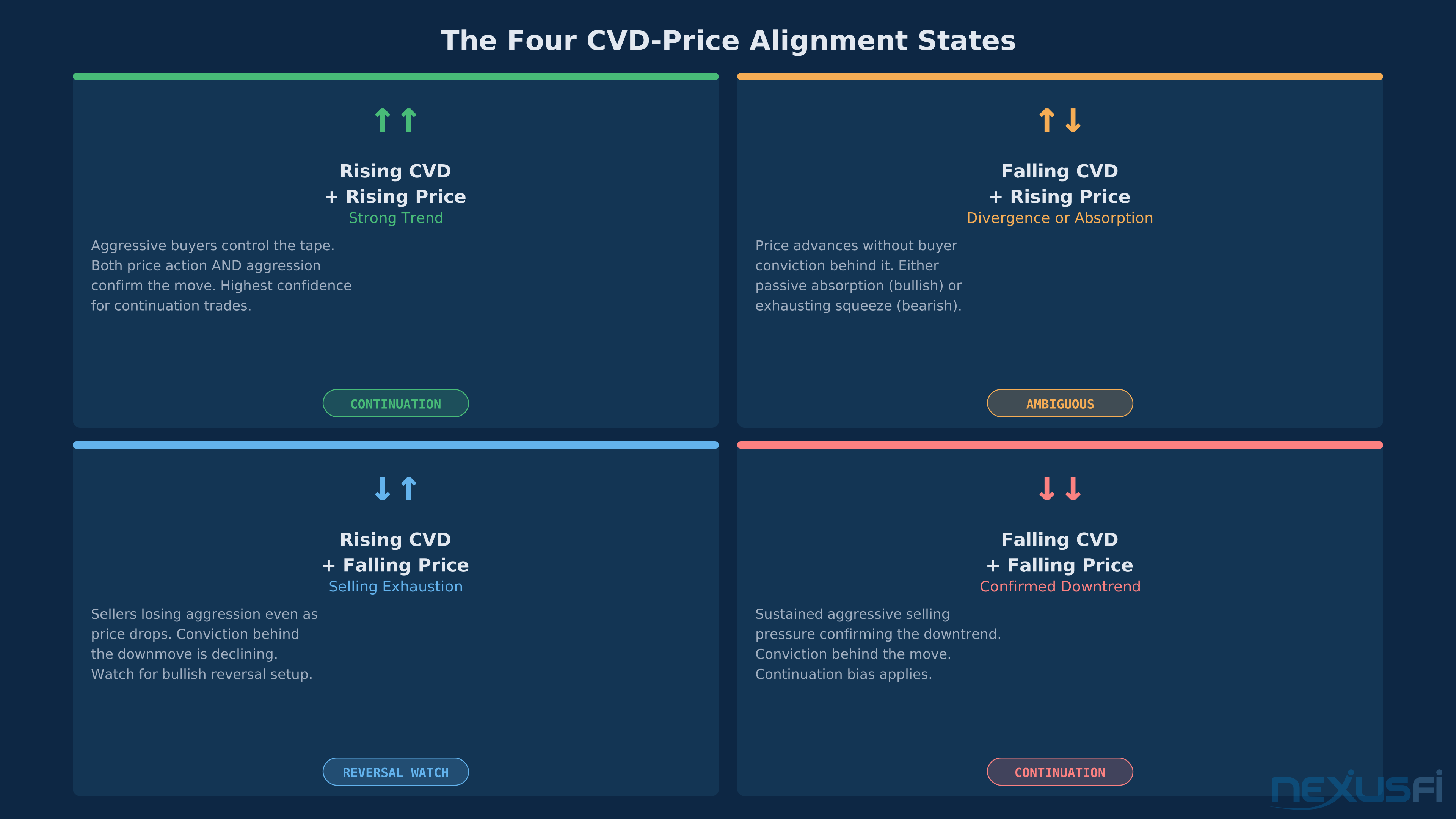
Rising CD + rising price: buyers consistently more aggressive — healthy trend with aggression support. Trust the move.
Falling CD + rising price: price is advancing without aggressive buyer conviction behind it. Either passive limit buyers are absorbing sellers (bullish interpretation) or the rally is a short-covering squeeze without real demand (bearish when it exhausts). Context determines which.
Rising CD + falling price: selling is losing aggression even as price drops — sellers are exhausting. Watch for bullish reversal setup.
Falling CD + falling price: sustained aggressive selling pressure confirming the downtrend. Continuation bias.
What to Focus On #
Slope direction: Is CD trending, flat, or reversing? A CD line that made a sequence of higher highs alongside price, then starts making lower highs while price continues higher — that shift matters before price confirms it.
Divergence versus price: The primary signal. Price makes a new extreme that CD doesn't confirm.
CD turning points: Higher lows and lower highs in CD, especially when they precede similar turning points in price.
CD breakouts: When CD breaks above a prior swing high, it often corresponds to sustained momentum. Conversely, CD failing to break a prior high while price does is the bearish divergence setup.
Speed of CD movement: Rapid spikes suggest panic buying or panic selling. Slow slope changes are more sustainable. djkiwi's research on ES distinguishes between bars that form in under 5 minutes (panic, high aggression) versus bars that take 20+ minutes (measured accumulation or distribution, lower aggression).
Divergence Setups: When CD Tells You Before Price Does #
The Bullish CD Divergence Setup #
Setup conditions:
- Price makes a lower low (or fails to confirm a breakdown)
- Cumulative delta makes a higher low — selling aggression is weakening
- Footprint shows bid absorption or reduced sell pressure at the probe zone
What it means: Sellers are "paying the spread" with market orders, but their conviction is declining. Either aggressive shorts are running out of size, or passive limit buyers are absorbing the selling without giving up price. Both scenarios point to exhaustion of the bearish thesis.
Entry trigger: Reclaim of a microstructure high — the previous swing high before the divergence, or the breakdown of the consolidation after the CD higher low forms. Don't enter on the divergence. Enter on the reclaim.
Stop placement: Below the swing low where the divergence formed. If price makes a new low after the CD has made its higher low, the divergence is invalidated.
Silvester17, who maintains one of NexusFi's most detailed order flow threads, adds a powerful refinement to this setup:
"A bar with aggressive selling (negative delta) but price closes higher — especially powerful when max delta = 0 (the entire bar never printed a positive delta value), combined with a high delta finish."
-- @Silvester17, NexusFi: GOMI MP & Orderflow (24 thanks)
A bar where the entire range of delta never went positive — yet price still closed higher — is a setup where sellers had complete directional control on the tape and still couldn't push price down. That's serious selling exhaustion.
The Bearish CD Divergence Setup #
Setup conditions:
- Price makes a higher high
- Cumulative delta makes a lower high — buying aggression is exhausting at the highs
- Footprint shows failed lift attempts or overhead absorption
What it means: Buyers are spending market orders to push price higher, but the rate of that spending is declining. Either size is running out or passive sellers are absorbing the buy flow without price getting away. When the buying exhausts, shorts can push hard because overhead sellers don't need to work to defend — they just sit on limit offers.
Entry trigger: Breakdown of the post-divergence consolidation, or a decisive reclaim failure where price attempts to recover the high but CD fails to follow.
Stop placement: Above the swing high where the divergence formed.
tigertrader documented one of the clearest examples of this setup in NexusFi history — a classic short on ES at exactly the point where multiple frameworks converged:
"New price high at 1179 with negative cumulative delta — behavioral incongruence. The bar before the engulfing candle showed positive delta but price could only move up 1 tick, then reversed into strong selling = failed auction."
-- @tigertrader, NexusFi: Classic Delta Divergence (5 thanks)
The 1179 level was also the bottom of prior day's value area, the top of the opening range, and the VWAP level. Delta divergence alone doesn't make a trade — structural confluence transforms it into a conviction entry.
Breakout Confirmation (The Opposite Direction) #
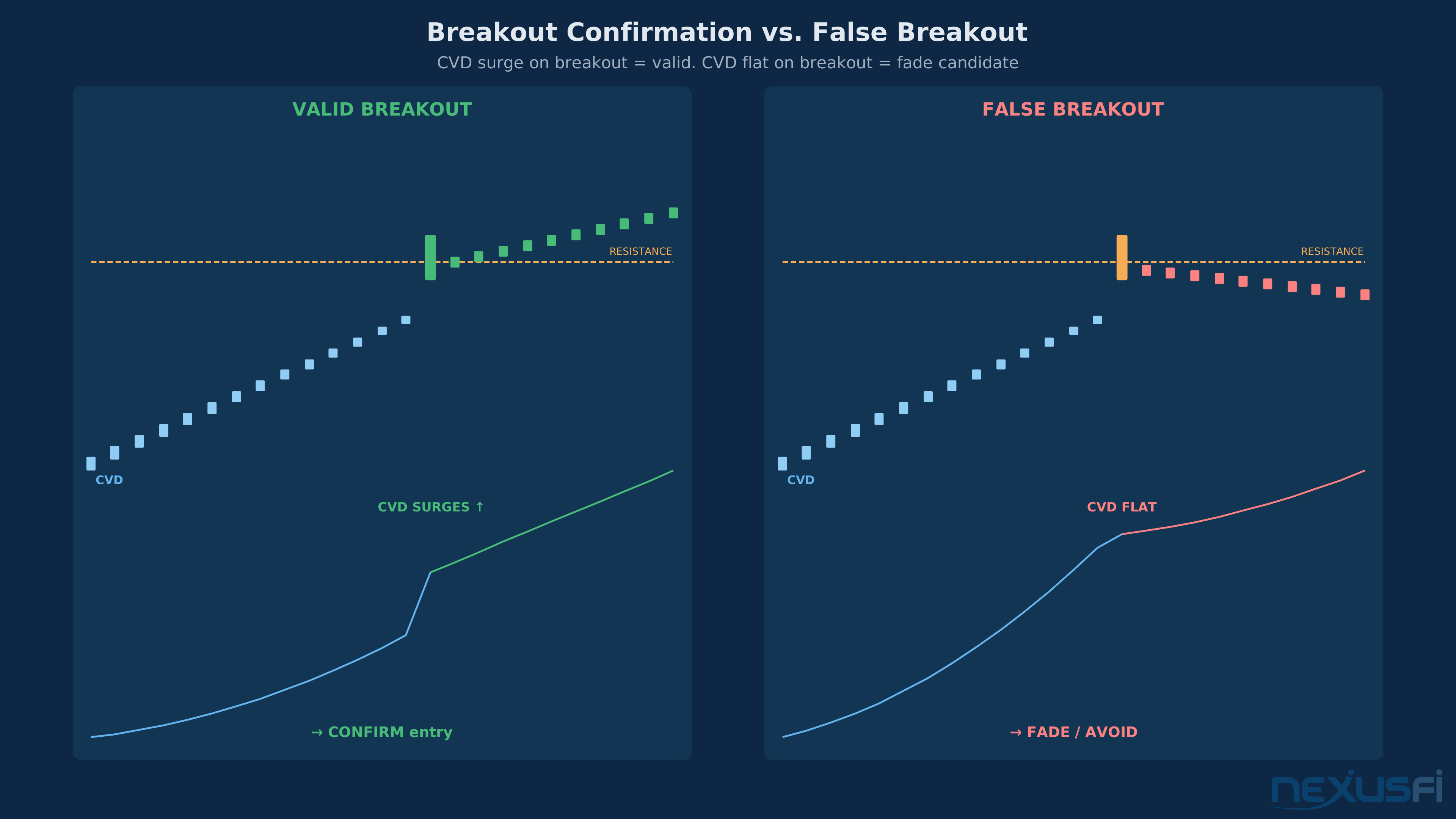
Divergence gets most of the attention, but cumulative delta is equally useful for confirming valid breakouts. In a range-bound market, a price breakout above range resistance accompanied by a sharp CD surge — CD making a new high alongside price — is much more reliable than a breakout on flat or declining CD.
If price breaks out but CD doesn't participate, the breakout is a candidate for failure. Wait for CD confirmation before committing.
Footprint Chart Integration #
Footprint charts show bid and ask volume at each individual price level within a bar. When combined with cumulative delta, you get both the "what" (the overall net aggression picture) and the "where" (the specific price levels where that aggression is concentrating or failing).
What to look for:
Stacked imbalances: Multiple consecutive price levels showing heavily lopsided bid-to-ask ratios (e.g., 300%+ buy vs. sell imbalance stacked three levels deep at support) validate a bullish divergence setup. The passive buyers aren't just accepting price — they're aggressively defending a level.
Ask-side absorption during sell attempts: Sellers hit the market, pushing delta negative. But at a specific price level, the asks keep refilling — aggressive sells are being absorbed by passive limit buyers. This is the mechanism behind WoodyFox's negative-CD-on-rising-market scenario.
Failed push patterns: Price attempts to break a high, aggressive buys lift the offer, but delta on those bars comes in well below historical averages for breakout bars. Buyers are "trying" but not succeeding. Jigsaw Trading described this dynamic on a real ES session:
"Large concentrated volume at 87.50/87.75 = sellers defending that area; when those sellers eventually get 'run over,' it forces a fast run for the exits."
-- @Jigsaw Trading, NexusFi: ES Footprint Charts at the Hard Right Edge (20 thanks)
The footprint gives you the specific level to watch. The cumulative delta tells you the broader aggression trend that level exists within.
Inventory Neutralization: The Most Reliable Setup Type #
djkiwi built an explicit hierarchy of cumulative delta setups ranked by reliability, and the most powerful one is the least discussed: inventory neutralization.
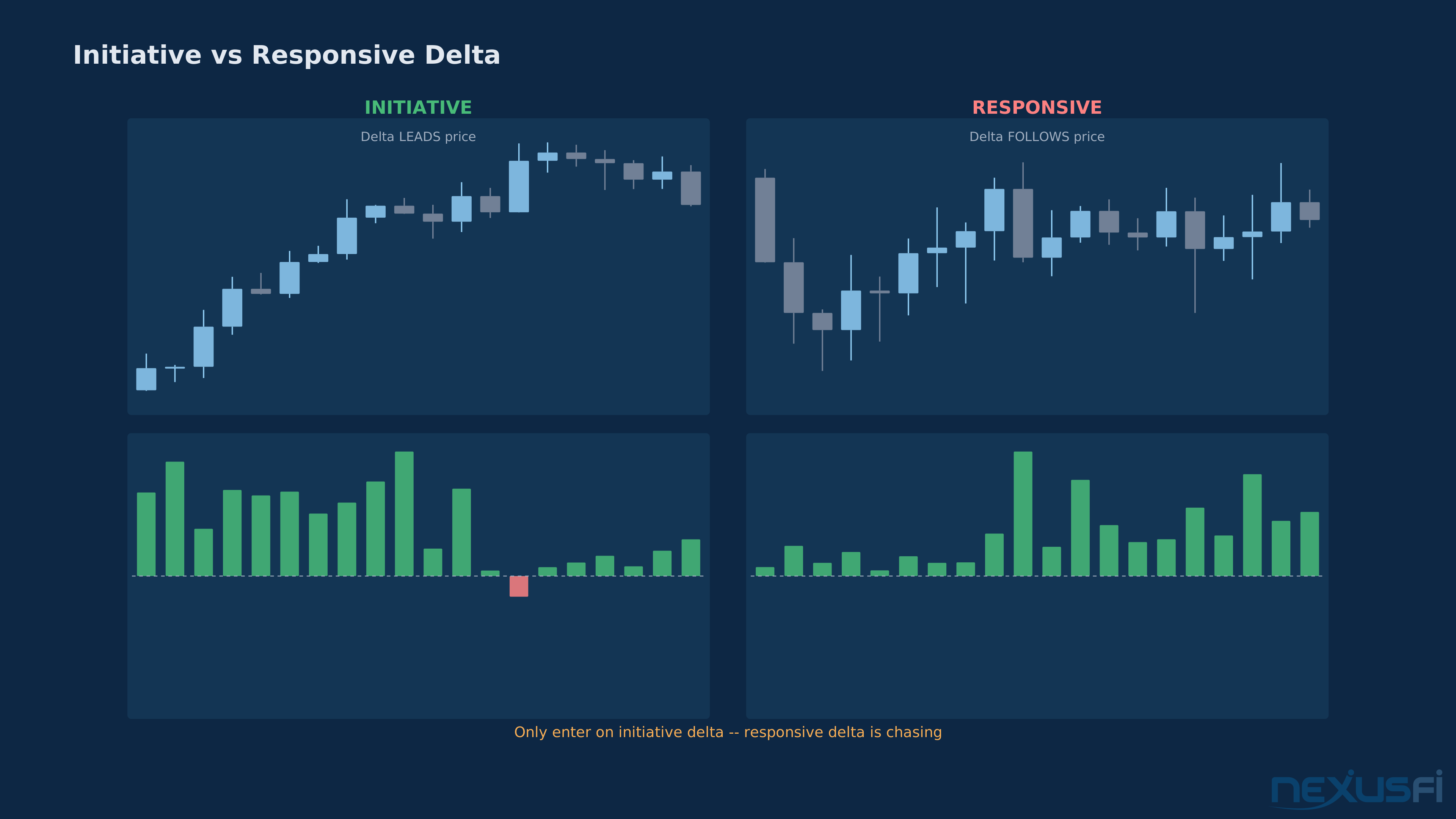
The premise: large players build positions over multiple sessions. A hedge fund that went net short Thursday carries that short inventory into Friday. As they cover that short, cumulative delta from their covering activity registers as buying pressure — but it's mechanical covering, not directional conviction.
The setup: when you can observe a prior session's net long or short inventory being completely neutralized (cumulative delta returning to approximately flat relative to the prior session's starting point), that neutralization often precedes a sharp move in the direction of the new inventory bias.
djkiwi documented this on ES: short inventory built on one day, then completely neutralized at 12:45 PM the following session — immediately after which price "dropped like a brick." The same pattern appeared on Russell futures: long inventory built on May 23rd, neutralized the following session, then sharp lift.
"There is no doubt in my mind the smart money is watching these imbalances the same as us."
-- @djkiwi, NexusFi: Cumulative Delta Volume Trading (10 thanks)
Neutralization setups are more reliable than standard divergences because the mechanical covering pressure that neutralizes the inventory is exhaustible — when it runs out, price reacts cleanly. Regular divergences involve ongoing conviction battles where either side might reassert. Neutralization setups represent completion of a process.
Market-Specific Applications #
ES (S&P 500 E-mini) #
ES is the primary instrument where cumulative delta methodology developed on NexusFi. Most of djkiwi's documented work uses ES as the primary example.
Key behaviors:
- RTH reliability: CD signals during Regular Trading Hours (9:30 AM--4:00 PM ET) are more reliable than overnight. Overnight sessions have thinner liquidity; large orders have outsized CD impact without corresponding price significance.
- Value area integration: CD divergences at value area high (VAH) and value area low (VAL) are much more powerful than random divergences. The structural level gives the divergence context; the divergence gives the structural level confirmation.
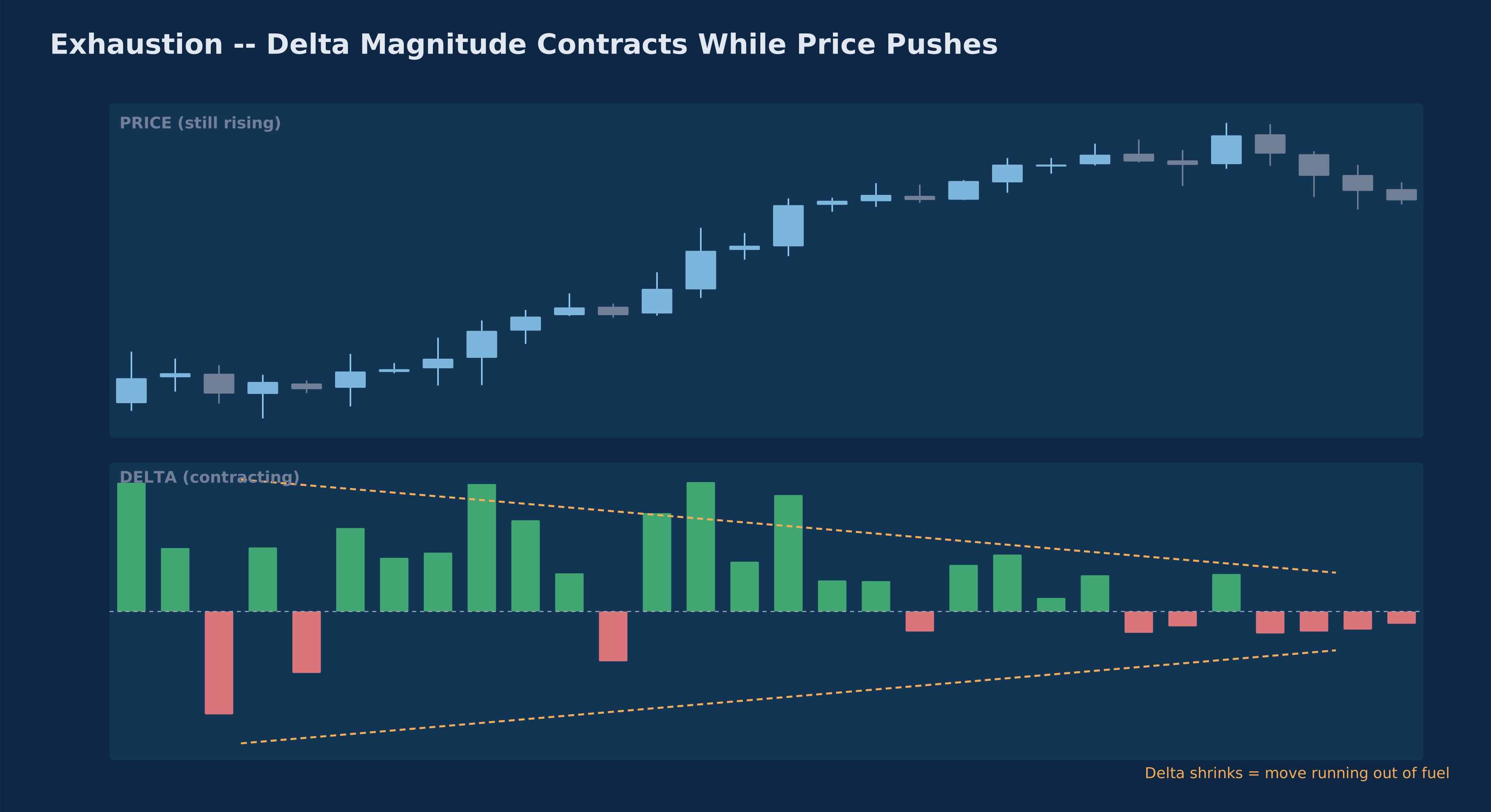
- CD flattening during price grinds: When ES grinds steadily higher in a low-volatility session while cumulative delta flattens or rolls slightly lower, mean reversion is likely approaching. The grind is passive liquidity absorption, not conviction buying.
djkiwi's five-phase ES session model establishes that bars forming in under 5 minutes with near-zero delta highs represent "suicide region" — don't take longs at any price support because selling aggression is so intense that support levels won't hold. Bars taking 20+ minutes to form represent measured accumulation/distribution where structural levels become meaningful again.
NQ (Nasdaq 100 E-mini) #
NQ is higher beta than ES and more algorithmically driven. Cumulative delta in NQ shows sharper, shorter-lived divergences — large tech positions are concentrated and when they move, they move fast.
Key behaviors:
- Divergences are shorter-lived: What would be a multi-hour divergence on ES might resolve in 20-30 minutes on NQ. The trigger entry must be quicker.
- Breakout confirmation matters more: NQ algorithmic buyers move fast on genuine breakouts. CD spikes on resistance breaks are the signal to confirm entry rather than wait for divergence.
- Relative strength comparison: djkiwi's benchmarking approach shines here — comparing NQ cumulative delta percentile against ES delta percentile on equivalent timeframes identifies which instrument is seeing stronger institutional flow. Trade the stronger instrument long, the weaker short.
CL (Crude Oil) #
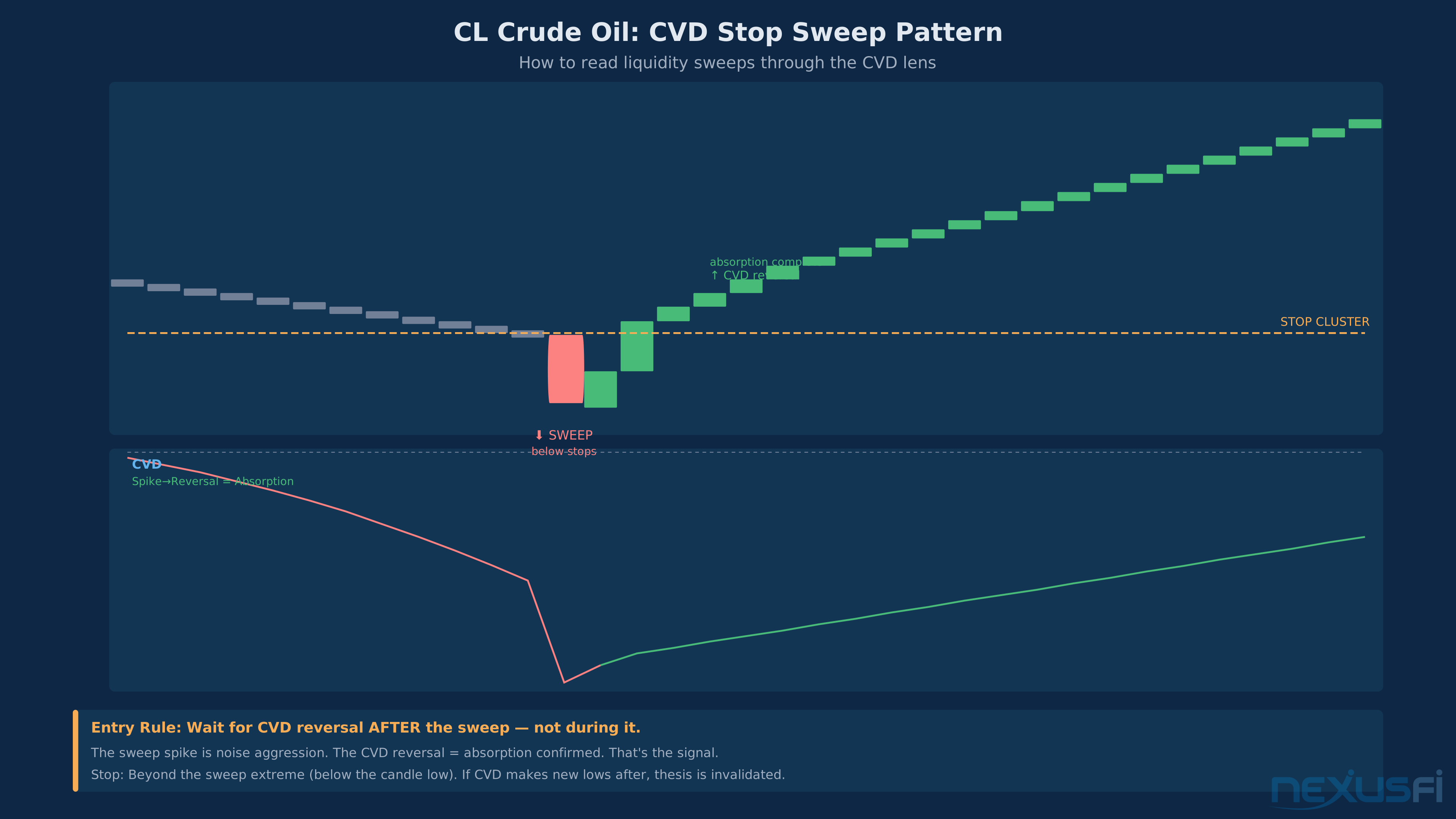
CL is highly event-driven and reacts to supply/demand shocks with sharper volatility than equity index futures. Cumulative delta is most useful for identifying liquidity sweeps — moments when large orders intentionally blow through stop clusters to accumulate positions at better prices.
Key behaviors:
- Stop sweeps: When CL wipes through a well-known stop-loss cluster (below a recent low, above a recent high), watch for a sharp CD spike in the direction of the sweep followed by rapid CD reversal. The reversal is the absorption signal — the sweep was not directional, it was accumulation.
- Entry rule: After a CL liquidity sweep, wait for CD to reverse (showing absorption is complete) before entering against the sweep direction. Entering during the sweep is trying to catch a falling knife with a wind machine pointed at you.
- News event behavior: CL CD spikes on inventory reports (EIA Wednesday 10:30 AM) are often not actionable until the initial spike exhausts. The first 60-120 seconds of a CL news reaction represent noise aggression; the CD structure that forms after the initial volatility is more reliable.
Benchmarking Delta: The Percentile Approach #
One of the most practical innovations in NexusFi's order flow methodology is djkiwi's percentile benchmarking system. Rather than looking at absolute delta values, you build statistical tables of historical delta readings for each instrument, segmented by time of day and market condition (net long vs. net short environment).
A delta reading at the 75th percentile for that instrument/time window is a genuinely strong signal. A delta reading at the 35th percentile is not.
The instrument-specificity rule is absolute: djkiwi's framework built separate delta tables for ES, NQ, CL, and TF. Applying ES parameters to CL would be, in djkiwi's words, "worthless." Each instrument has different typical volatility, different institutional participant profiles, and different time-of-day patterns. The benchmarks must be instrument-specific.
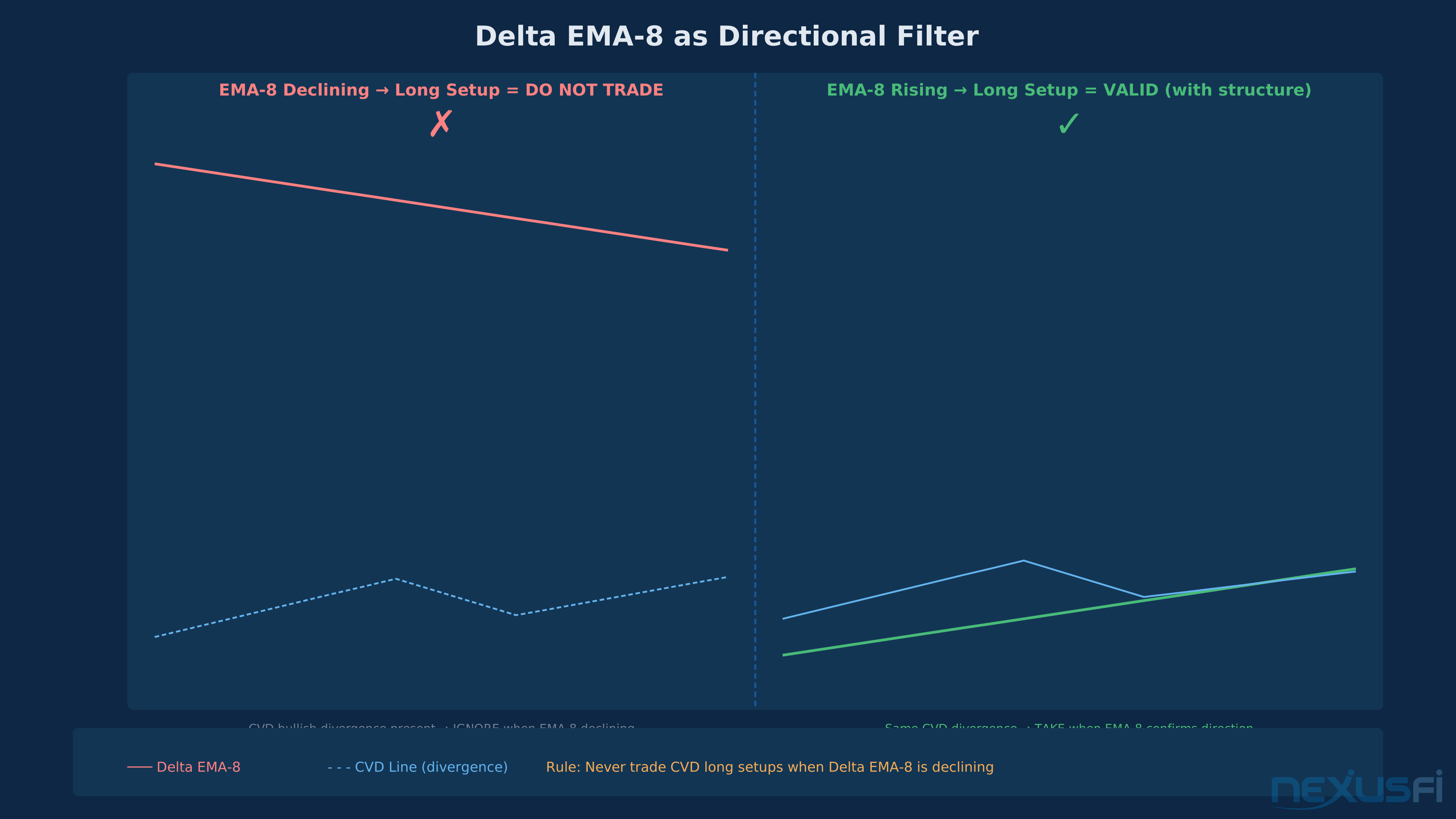
The Delta EMA-8 acts as a directional filter: never trade against the current direction of the Delta EMA-8. If the Delta EMA-8 is declining, CD divergences generating long setups need additional confirmation before entry.
Delta resistance: How far is current cumulative delta from its historical resistance level, expressed as a percentage? When CD is approaching a prior historical extreme, the probability of reversal or stall increases. This applies the concept of price levels — which traders understand well — to the order flow dimension.
One practical application of benchmarking is djkiwi's tail pullback study — taking positions on the tail of bars after sustained directional delta, using the historical percentile to confirm the signal has statistical significance rather than noise:
"The study focuses on taking trades on tail pullbacks using delta as a filter. I often noticed 'price drift' after some fairly steady buying or selling resulting in some potential opportunities buying on the tail of the bar instead of bar close."
-- @djkiwi, NexusFi: Cumulative Delta Volume Trading (15 thanks)
Common Pitfalls #
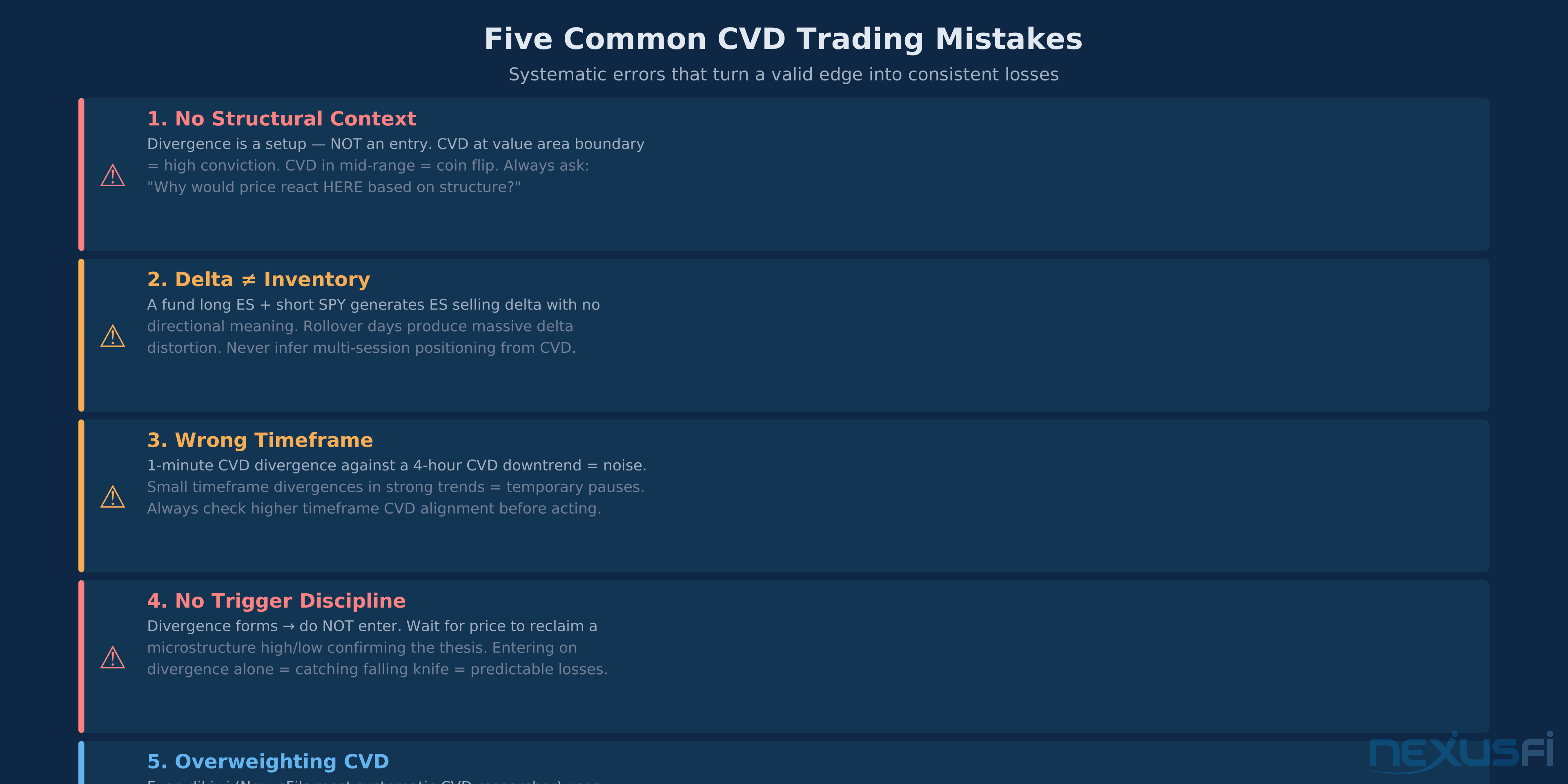
1. Trading Divergence Without Structural Context #
Divergence is not a standalone entry signal. Silvester17, after documenting dozens of setups, wrote the warning explicitly:
"All of the above setups should NEVER be taken blindly. There are days you'll get countless delta divergences and many will result in a loss. Without considering other factors those divergences become unreliable."
-- @Silvester17, NexusFi: GOMI MP & Orderflow (24 thanks)
Every reliable CD divergence trade has a structural location — value area boundary, prior day high/low, VWAP band, opening range level. The divergence at a structural level is compelling. The divergence in the middle of a range with no confluence is a coin flip.
2. Using CD as an Inventory or Positioning Tool #
This is josh's core warning and it's worth repeating: delta is not inventory. A fund can be long ES and short SPY simultaneously. The long-ES selling that appears in ES delta tells you nothing about net positioning because you don't see the SPY side of the trade. Rollover days are especially distorted — funds rolling their positions between contract months generate massive delta activity that has no directional significance.
Use CD as a short-term momentum indicator within a session. Do not infer multi-session positioning from cumulative delta.
3. Wrong Timeframe #
djkiwi's research is explicit: delta on small timeframes is "less conclusive." The optimal application is on higher timeframe charts targeting 50-100 tick moves. Analyzing 1-minute CD divergences against a strong 4-hour trend produces false signals constantly. The 1-minute chart might show a bullish CD divergence while the 4-hour chart CD is in a strong downtrend — the divergence on the smaller timeframe is a temporary pause, not a reversal.
Always check whether the higher-timeframe CD trend is aligned before acting on a shorter-timeframe divergence.
One structural limitation compounds this problem: trade classification is imperfect. Most retail platforms derive delta from the tick rule — comparing each trade price to the prior tick to infer aggressor side. This method misclassifies trades near the spread and breaks down entirely on fast markets or with thin volume. Harris catalogued these classification errors extensively in Trading and Exchanges, noting that the error rate varies by instrument, volatility regime, and time of day. Before trusting a delta reading, traders should understand how their platform classifies trades and acknowledge that some percentage of bars will have systematically biased delta due to classification artifacts.
-- Larry Harris, Trading and Exchanges: Market Microstructure for Practitioners (Oxford, 2003)
4. Ignoring the Trigger Requirement #
Divergence is the setup. The trigger is the entry. These are different things.
A bullish divergence forms — price at a new low, CD at a higher low. The setup is present. But you don't enter here; you wait for price to reclaim a microstructure high, confirming that buying pressure has begun to push price. The trigger is the reclaim. Without it, price can remain at the low and continue lower while CD catches up.
Many traders see the divergence and jump in, then watch in frustration as price grinds sideways or continues the original direction for another 20 minutes. The trigger discipline separates the setup identification phase from the execution phase.
5. Overweighting Single Signals #
Even djkiwi, who built some of the most systematic delta methodology on NexusFi, explicitly demoted delta to a secondary tool:
"Delta has now become a secondary decision support tool for djkiwi, with volume profile as the primary tool."
-- @djkiwi, NexusFi: Cumulative Delta Volume Trading (9 thanks)
Cumulative delta is powerful. It is not sufficient. The best implementations treat it as one component among structure, levels, volume profile, and risk management. When everything aligns — the structural level says "this is where price should react," volume profile says "this is where value is," and cumulative delta says "aggression is exhausting here" — conviction is high. When only CD says something and nothing else does, treat the signal with skepticism.
Building Your Workflow #
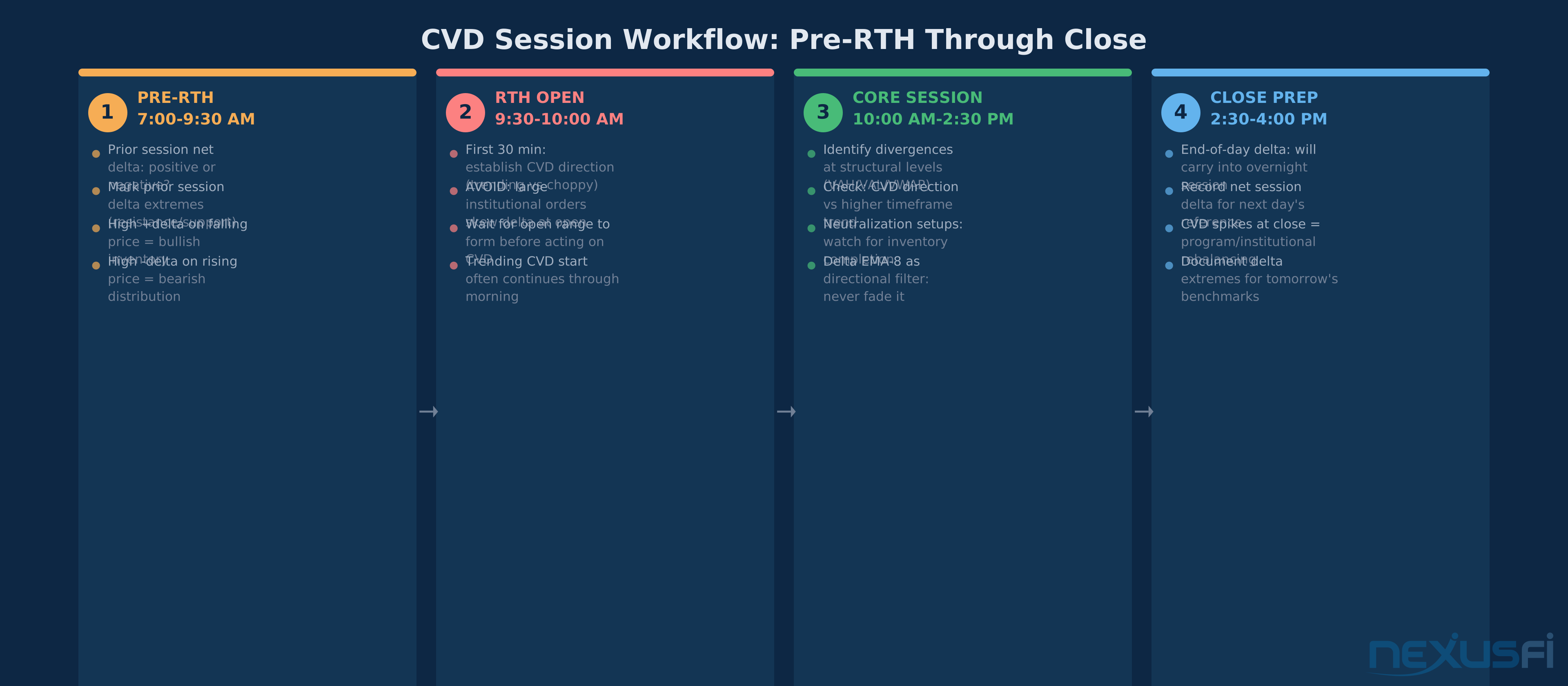
Session Preparation #
Before RTH opens, establish two reference points for the day:
- Prior session cumulative delta: Was yesterday a net positive or negative delta session? High positive delta on a declining price session = large passive buyers absorbed aggressive sellers overnight — potential bullish inventory buildup.
- Session high/low delta levels: Where did CD reach its extremes? When today's CD approaches yesterday's delta resistance, expect a potential stall or reversal.
Intraday Sequence #
- Identify structural levels first: Value area, prior session high/low, VWAP, opening range. Mark them before you look at delta.
- Watch CD direction: In the first 30 minutes of RTH, establish whether CD is trending, flat, or choppy. A trending start often continues.
- Identify divergences in context: When price approaches a structural level, check whether CD confirms or diverges. Divergence at structure = high-conviction setup.
- Wait for trigger: Mark the microstructure level (typically the most recent swing high/low before the divergence) that constitutes the trigger. Don't act until that level is taken.
- Enter with defined risk: Stop goes beyond the divergence extreme. If the thesis is correct, price should not revisit that level after the trigger fires.
- Monitor CD during the trade: If you're long and CD starts rolling over with no corresponding price strength, re-evaluate. The aggression picture should be improving if the setup is working.
Exit Mechanics #
CD is useful for exits as well as entries. When you're long and price is rising with aligned CD — stay in. When price reaches a prior structural level and CD starts diverging (rising price, CD flattening or declining) — consider taking profit or tightening stops. The aggression is telling you the upside move is losing conviction.
What Cumulative Delta Doesn't Do #
Predict price: CD tells you about aggression. Passive liquidity moves price. The best CD signal can be overwhelmed by a large limit order sitting at a key level.
Work equally well in all conditions: During the RTH open (9:30-10:00 AM), large institutional orders skew delta heavily without providing clean signals. During news events, the initial 60-120 seconds of delta are typically noise. Thin overnight sessions distort CD with small orders having outsized impact.
Survive rollover days: When large funds roll positions between contract months, the resulting delta activity has no directional meaning. Know your rollover dates.
Replace volume profile: CD and volume profile work better together than either does alone. Volume profile tells you where participants agreed on price in the past (structural reference). CD tells you whether current aggression is building, maintaining, or exhausting. The combination — structural levels from profile, aggression validation from CD — is more powerful than either independently.
Knowledge Map
Prerequisites
Understand these firstGo Deeper
Build on this knowledgeReferences This Article
Articles that build on this topicCitations
- — Cumulative Delta Volume Trading (2012) 👍 6“Delta as an absolute number is worthless. The correct approach is benchmarking delta against historical percentiles for the specific instrument, time of day, and market condition.”
- — Cumulative Delta Volume Trading (2014) 👍 16“Cumulative delta gives an accurate picture of inventory IF AND ONLY IF each market participant goes from flat to flat using only one order type.”
- — Cumulative Delta (2022) 👍 7“Cumulative delta does not have directional bias in plotted form -- you must understand what it is telling you in terms of who is trading and how.”
- — GOMI MP and Orderflow (2016) 👍 24“A bar with aggressive selling (negative delta) but price closes higher -- especially powerful when max delta = 0 combined with a high delta finish.”
- — Classic Delta Divergence (2010) 👍 5“New price high at 1179 with negative cumulative delta -- behavioral incongruence.”
- — ES Footprints Charts at the Hard Right Edge (2013) 👍 20“Large concentrated volume at 87.50/87.75 = sellers defending that area; when those sellers eventually get run over, it forces a fast run for the exits.”
- — Cumulative Delta Volume Trading (2012) 👍 10“There is no doubt in my mind the smart money is watching these imbalances the same as us.”
- — Cumulative Delta Volume Trading (2012) 👍 9“Delta has now become a secondary decision support tool for djkiwi, with volume profile as the primary tool.”
- — Cumulative Delta Volume Trading (2013) 👍 15“The study focuses on putting trades on tail pullbacks using delta as a filter. Price drift after fairly steady buying or selling results in opportunities buying on the tail of the bar.”
- NinjaTrader — What is Cumulative Delta in Order Flow Trading? (2021)
- FuturesIndicators — Delta, Cumulative Delta, and Min/Max Delta (2026)
- Pietro Di Lernia — Order Flow Analysis: How to Read the Order Book for Trading (2026)