



Rolling Options Positions on Futures: The Complete Guide to Position Adjustment, Strike Selection, and Roll Economics
Overview #
Rolling an options position on futures is one of the most misunderstood risk management tools in the active trader's toolkit. Ask five traders what "rolling" means and you'll get five different answers — most of which miss the point. Rolling isn't a way to avoid a loss. It isn't a free reset. It's an active trade adjustment with real costs, new Greek exposure, and a different probability structure than your original position. Do it right and you preserve a valid trade through a temporary setback. Do it wrong and you just bought yourself a slower, more expensive way to lose.
This guide covers the complete mechanical process of rolling futures options positions: what changes when you roll, how to execute it cleanly, how to evaluate whether rolling beats exiting, and how each major futures product (ES, NQ, CL, GC) has its own roll dynamics that generic options education never mentions.
What Rolling Means Mechanically #
Rolling a futures option means closing an existing option position and simultaneously opening a new one — usually with a different expiration, different strike, or both. That's it mechanically. What matters is everything that changes as a result.
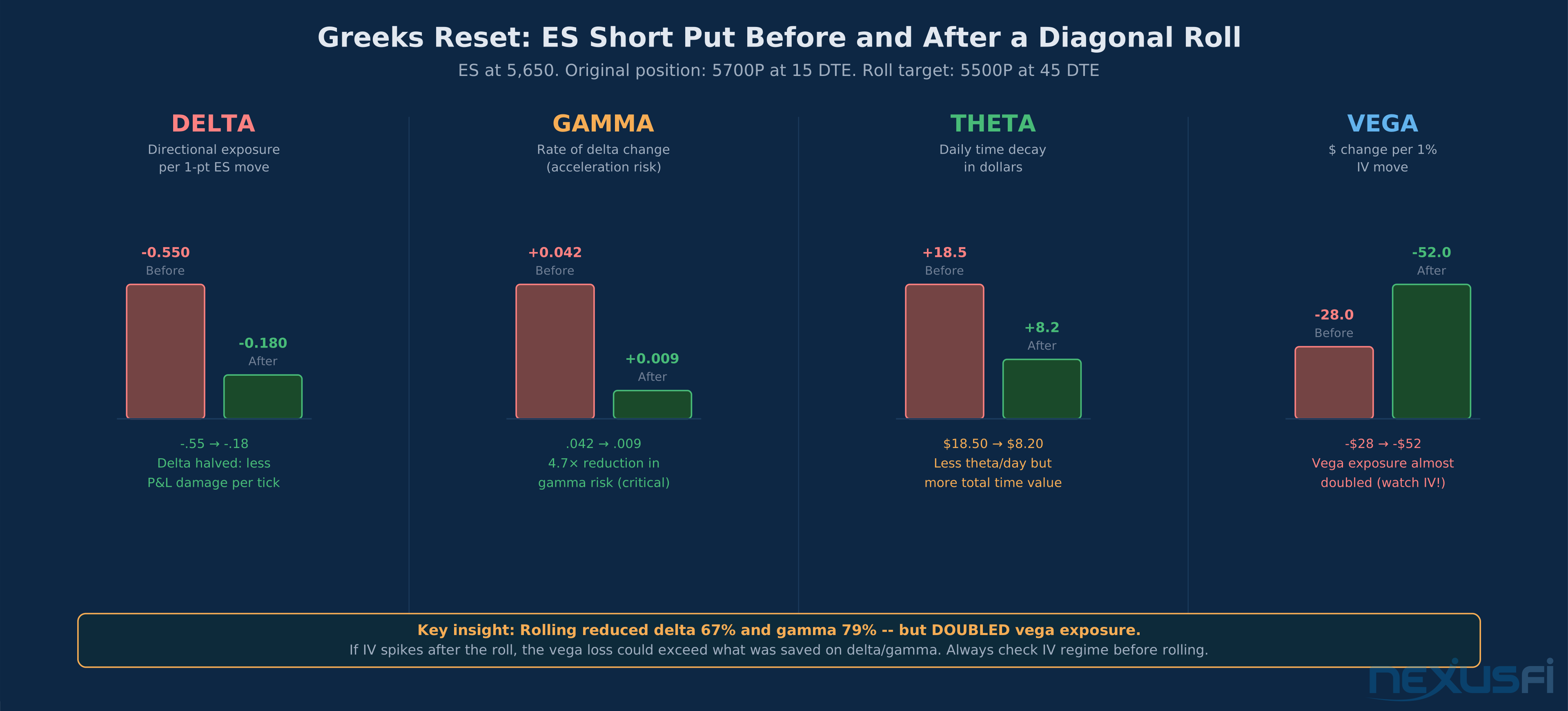
The new position will have a different delta (your directional exposure changes), different gamma (your acceleration risk changes), different theta (your daily time decay income changes), and different vega (your exposure to IV moves changes). Every roll is a trade, not a tweak.
Execution matters here. The preferred approach is a single combo order — one multi-leg order that closes the old position and opens the new one simultaneously. This avoids legging risk (the risk that the market moves between your first and second fill, making the roll more expensive than anticipated). Most CME Globex brokers support combo/spread orders. The NexusFi rollover discussion covers how volume-based roll timing intersects with options expiration management. Use them. Legging in a roll on a volatile day is how small adjustments become large problems.
A roll is NOT the same as doing nothing. The moment you decide to hold through a challenged option and not roll, you're making an active decision to accept increasing delta and gamma exposure as expiration approaches. That's a choice with consequences — often the right one — but it's a choice, not a default.

Types of Rolls #
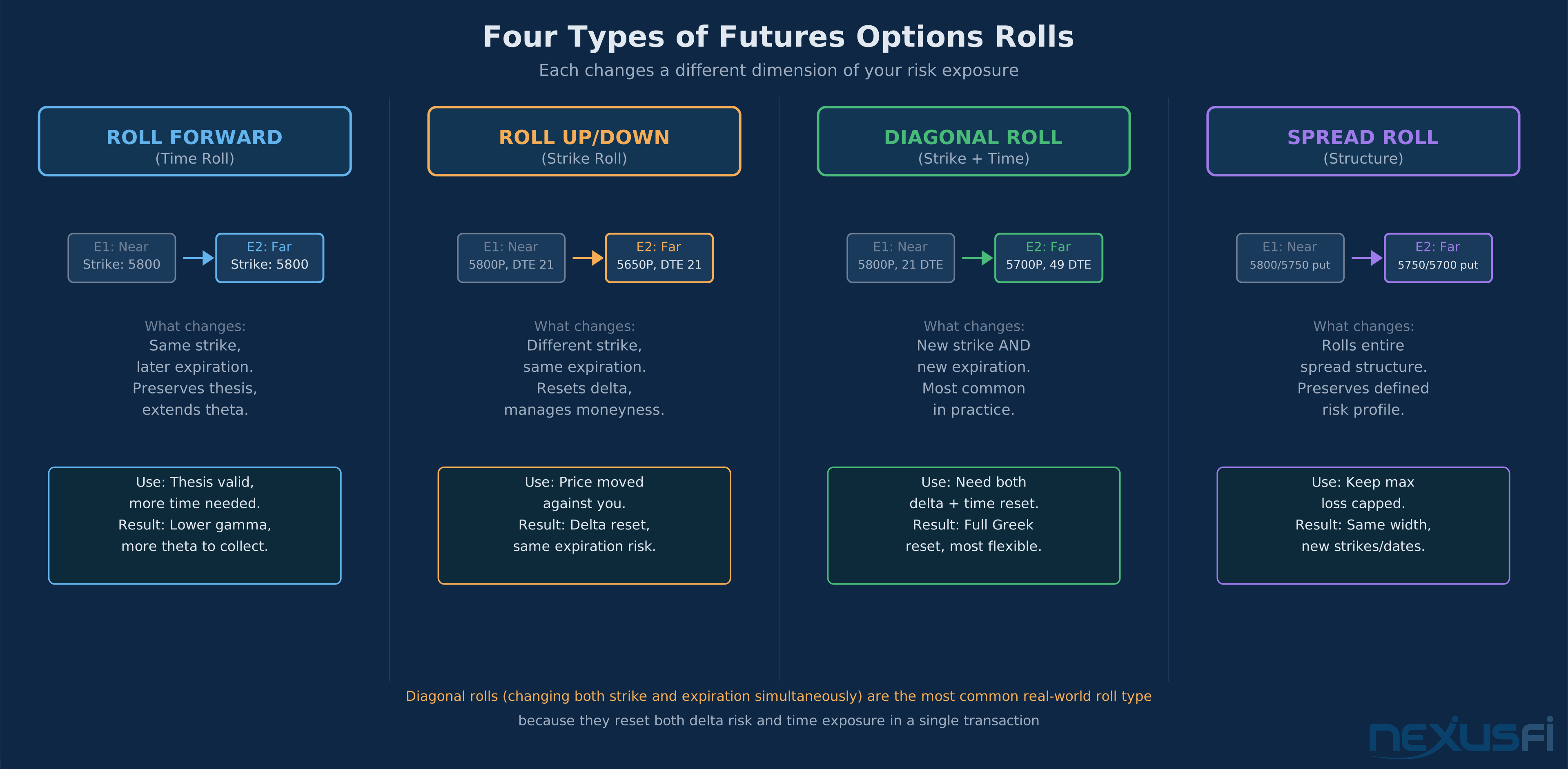
Four distinct roll types cover virtually every adjustment scenario a futures options trader will face:
Forward-in-Time (Calendar) Roll
You move to a later expiration while keeping the same strike. The purpose is almost always to reduce near-term gamma risk while maintaining the same directional thesis. If you sold an ES 5400P at 30 DTE and the market has moved toward 5450, rolling forward to a 5400P at 60 DTE gives you more time for the market to recover while dramatically reducing gamma exposure. The cost is that you're committing more capital for longer — a trade-off worth making when the thesis still holds.
Strike Roll (Up or Down)
Same expiration, different strike. Used when you need to reset your delta exposure without extending time commitment. Rolling a short call from 5900 to 6100 (roll up) moves you farther from spot and resets delta from 0.35 to 0.10. Rolling a short put from 5400 to 5200 (roll down) creates more distance from the threatened strike. The risk is that you're still facing the same expiration date with its associated gamma — you've bought distance but not time.
Diagonal Roll
Changes both strike and expiration simultaneously. This is the most common real-world roll type because it addresses both problems at once: a position that's gotten too close to spot AND has too little time remaining. Moving from a 5400P at 15 DTE to a 5200P at 45 DTE resets both your delta AND your gamma exposure. The typical diagonal roll extends 3-6 weeks in time and moves 100-200 points in strike on ES. As @cch31 described in the NexusFi options thread: "I may switch units between puts and calls to retain net extrinsic (roll for credit), or roll for duration on a one-sided basis."
Spread Roll
Rolling an entire spread structure — both legs — to preserve its risk-defined characteristics. If you're short a 5400/5350 put spread (sold the 5400P, bought the 5350P), rolling it means closing both legs and opening a new spread, typically with the same width at lower strikes and/or a later expiration. Rolling only one leg of a spread doesn't roll the position — it transforms it into a different risk structure entirely. Keep the width constant unless you have a specific reason to change your max-loss profile.

The Core Rolling Workflow #
Rolling without a process is guessing. The five-step workflow below (which can be partially automated) converts rolling from a reactive panic trade into a deliberate risk management action:
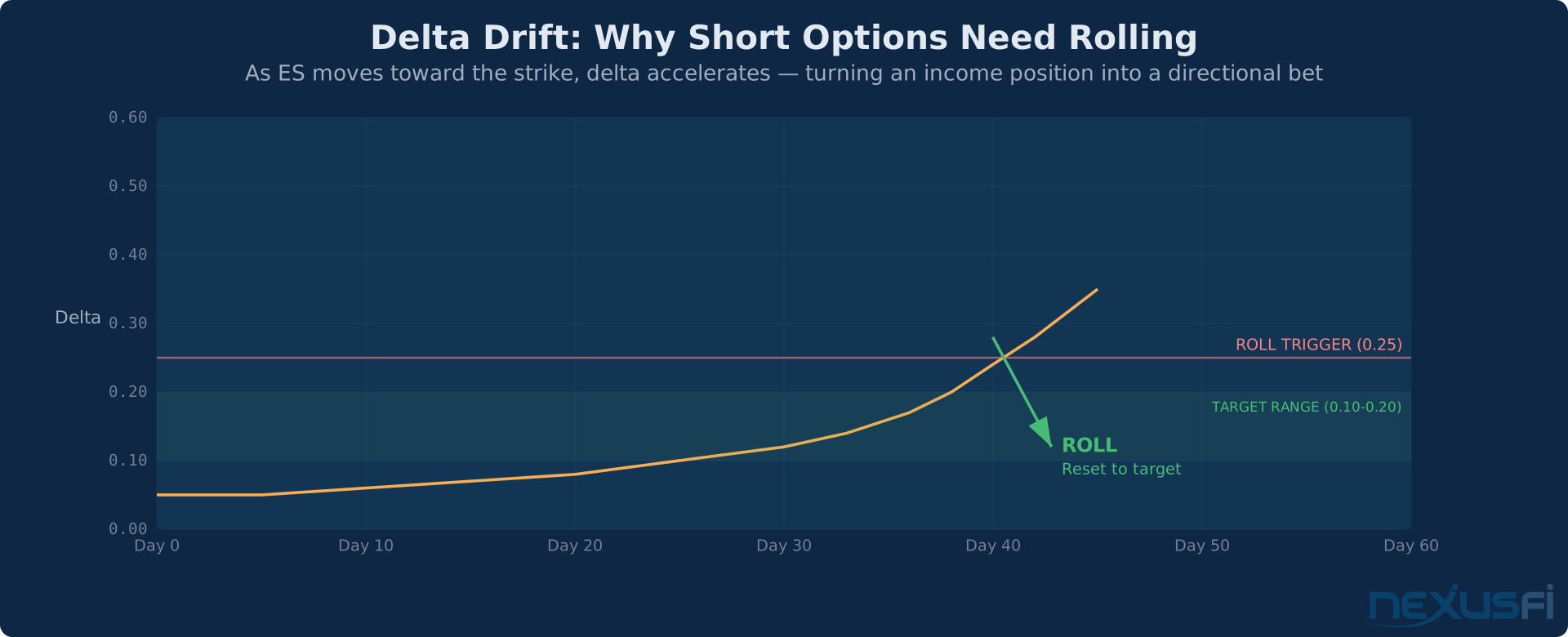
Step 1: Define your roll trigger before entering the original trade. The best time to decide when you'll roll is before you're in a challenged position. Common triggers: delta exceeds 0.25 on a short option, the position has moved against you by 150% of original credit, or DTE drops below a threshold (21 for quarterly contracts, 7 for weeklies). Whatever your rules are, they should be pre-defined — not invented while you're watching your P&L drop.
Step 2: Choose the new expiration. Standard practice is to roll out 30-45 days from the trigger date. If you're rolling at 20 DTE, you're targeting a new expiration at 45-65 DTE. This puts you back in the "sweet spot" of theta decay while keeping gamma at manageable levels. Don't roll to the next weekly if it only has 7 days — you'll just be back in the same spot in a week.
Step 3: Select the new strike using delta targeting. Choose a strike that puts your new position back in your target delta range. For premium sellers, that's typically 0.10-0.20 delta on short options. For hedgers, it's wherever your hedge is needed. Avoid selecting strikes purely by technical analysis without checking the Greek math — the option that "looks right on the chart" may have a delta you don't want.
Step 4: Execute as a single combo order. Enter the close and open as one transaction. Most platforms support this. On CME Globex, the strategy/spread order type allows you to specify both legs with a limit on the net debit or credit. Getting a quality fill on the combo matters more than saving 10 cents on one leg — the legging risk on volatile days far exceeds any theoretical improvement from leg-by-leg execution.
Step 5: Record the roll economics and Greek changes. After the fill, note the net credit or debit, the new delta, gamma, and theta, and the new breakeven. This data becomes your reference for the next management decision. Traders who don't track roll economics are flying blind when the next adjustment is needed.
Rolling Covered Calls on Futures #
A covered call on futures means you're long the underlying futures contract and short a call option against it. Rolling the call doesn't change your futures position — it only changes the call side of the structure.
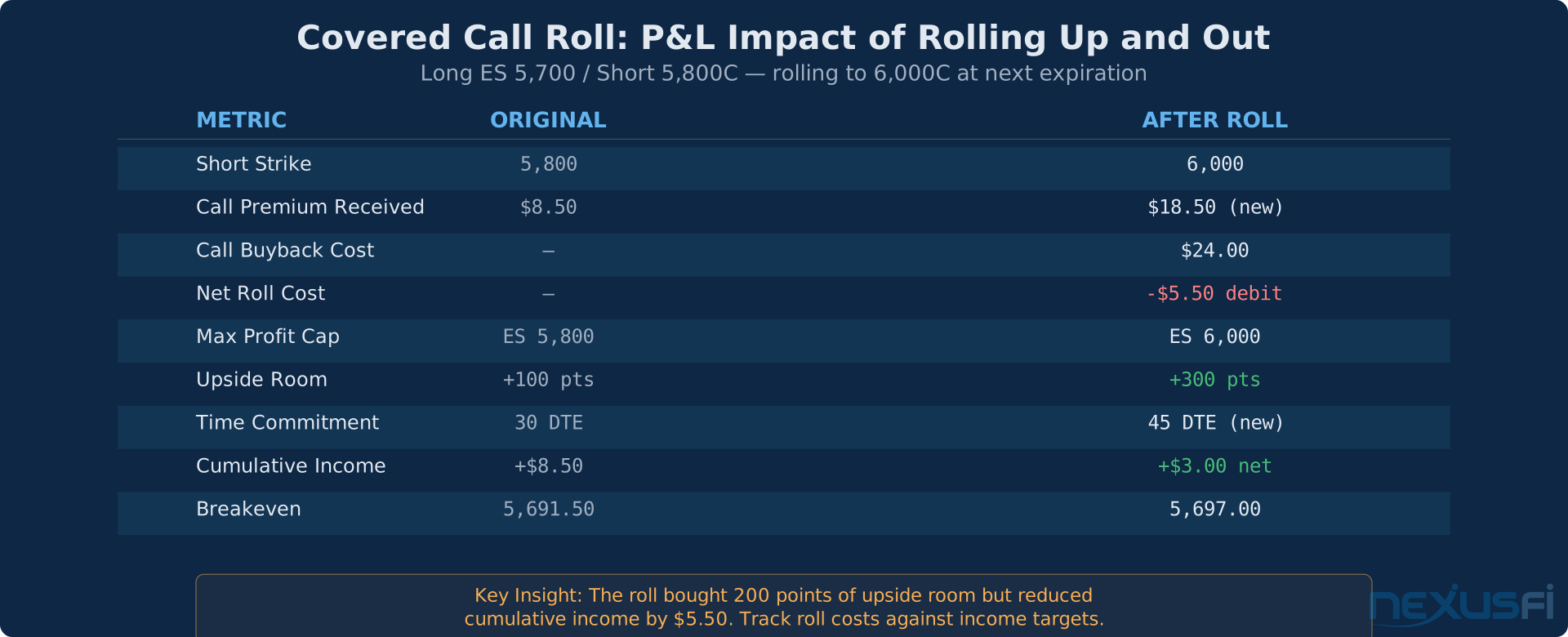
The typical scenario: you're long ES at 5,700 and sold an ES 5,800C for $8.50. ES rallies to 5,820 and your call is now worth $24.00. You have several choices: let it get exercised (the call holder exercises, you deliver a short futures at 5,800 — giving up the upside above 5,800), buy back the call for a loss, or roll up and out.
Rolling up and out means buying back the 5,800C at $24.00 and selling a 6,000C at the next expiration for $18.50. You're paying a $5.50 debit to roll, but you've now raised your covered upside from 5,800 to 6,000 and given yourself more time. If ES keeps rallying past 6,000, you'll face the same choice again. If it consolidates, the new call decays profitably.
The risk that most tutorials skip: after rolling the call, your net futures exposure has changed. You're still long futures with no cap below 6,000 (which is fine) but you've paid out $5.50 in roll costs that reduces your total income from the position. After enough rolls, you can end up with a covered call that's barely profitable even on a large underlying move. Track your cumulative roll costs against your original income target.
Rolling Short Puts on Futures #
Short put rolling is where most of the documented community experience lives. The mechanics are straightforward — buy back the challenged put, sell a new put at a lower strike and/or later expiration — but the decision about when to roll versus when to exit is where judgment separates winning traders from account blowups.
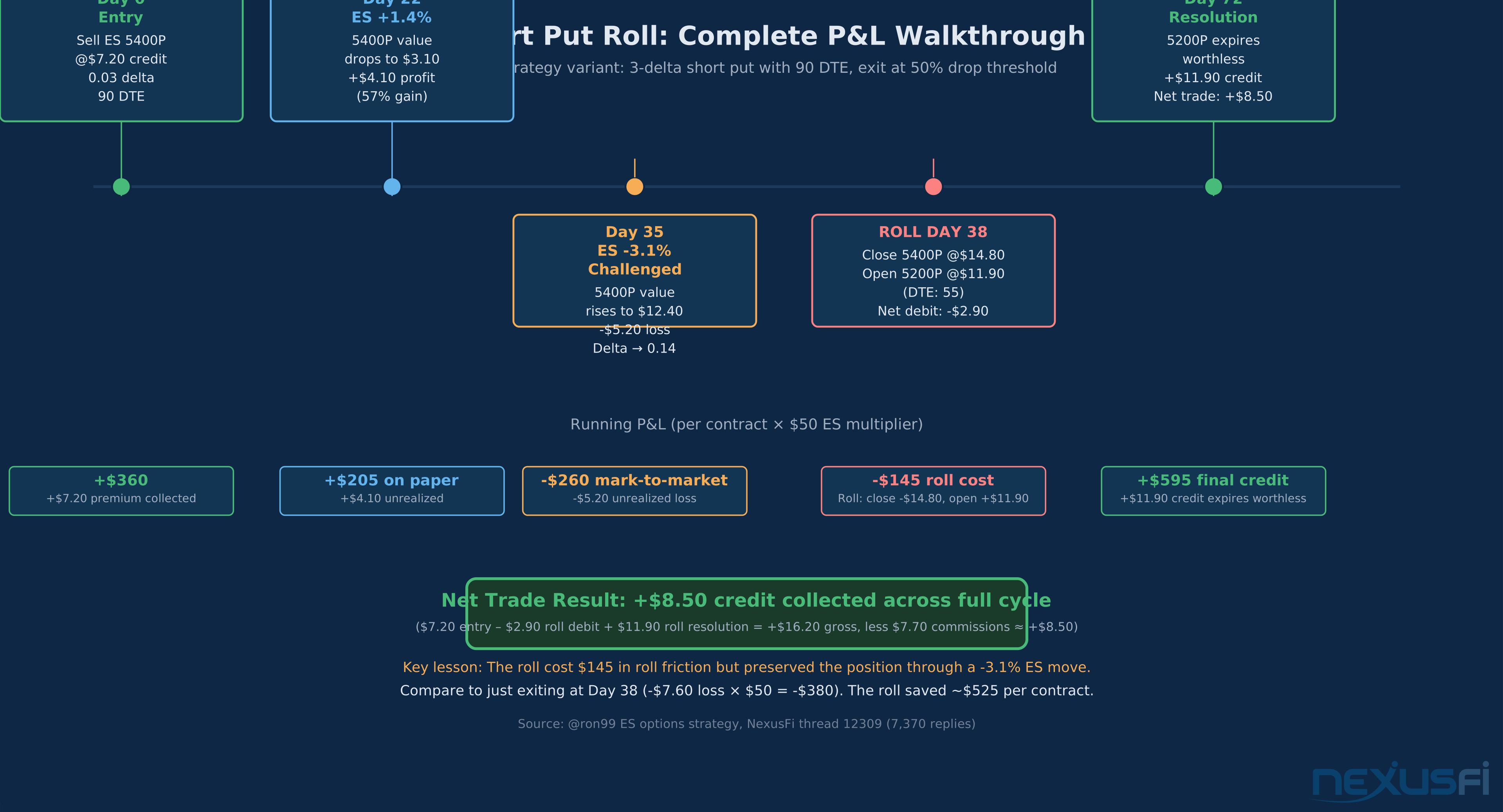
@ron99 documented the practical results in the NexusFi "Selling Options on Futures?" thread — a legendary 7,370-reply discussion. His ES strategy used 90+ DTE puts at 0.03 delta with a 50% drop exit rule. As ron99 shared:
What's notable about that result is the exit discipline: exit when the option hit the 50% loss threshold, not roll. The strategy succeeded partly because it didn't roll through challenges — it took the loss and re-entered on fresh terms.
That said, rolling does work in specific circumstances. @Narnar documented an ES trade during the February 2018 correction: "If we were to roll this position on 20180205 to EWK8 DTE 115 to obtain greater than $600 credit, we would close the above position and sell EWK8p2200(-1)p1800(+2) with $710 credit and IM = $510. This new position reduced the margin requirement from $971.50 to $510 — almost 50% reduction in margin requirement." The roll did two things: collected additional credit and cut the margin requirement nearly in half, preserving buying power for other trades.

Strike Selection Framework #
The correct framework for choosing roll strikes is delta-first, not technical-level-first. Here's the distinction: selecting a strike because "5,200 is a major support level" is technical analysis. Selecting a strike because "I want my new short put to have a 0.12 delta matching my income strategy parameters" is Greek management. The second approach produces consistent, measurable results. The first is correlation masquerading as methodology.
Delta targeting for short options: Premium income strategies typically target 0.10-0.20 delta on entry and roll to maintain that range when positions drift. @SMCJB analyzed the math in the NexusFi options thread: "somebody who is trying to collect theta regardless of price direction would be interested in selling options with low deltas and high theta — options as close as possible to the bottom left of the delta/theta scatter plot." That scatter plot insight explains why 3-5 delta options at 90 DTE dominate the successful NexusFi strategies — they maximize theta relative to the delta exposure you're accepting.
Strike distance rule of thumb: On ES, a 0.10-delta put at 45 DTE is typically 5-7% below spot. A 0.20-delta put is typically 3-5% below spot. When rolling, you want the new strike to put you back in this range — not necessarily at a "round number" or "technical support."
What NOT to use for strike selection: IV rank alone, chart patterns, or gut feel about "where ES won't go." These can supplement delta targeting but shouldn't replace it. IV rank tells you whether selling is relatively expensive or cheap (use it to size, not to pick strikes). Chart patterns are noise at the strike selection granularity.
Roll Economics: Credit vs Debit #

Whether a roll produces net credit or net debit depends on where your position sits relative to the current market. Understanding the math prevents the common mistake of celebrating a "credit roll" that actually worsens your risk-reward profile.
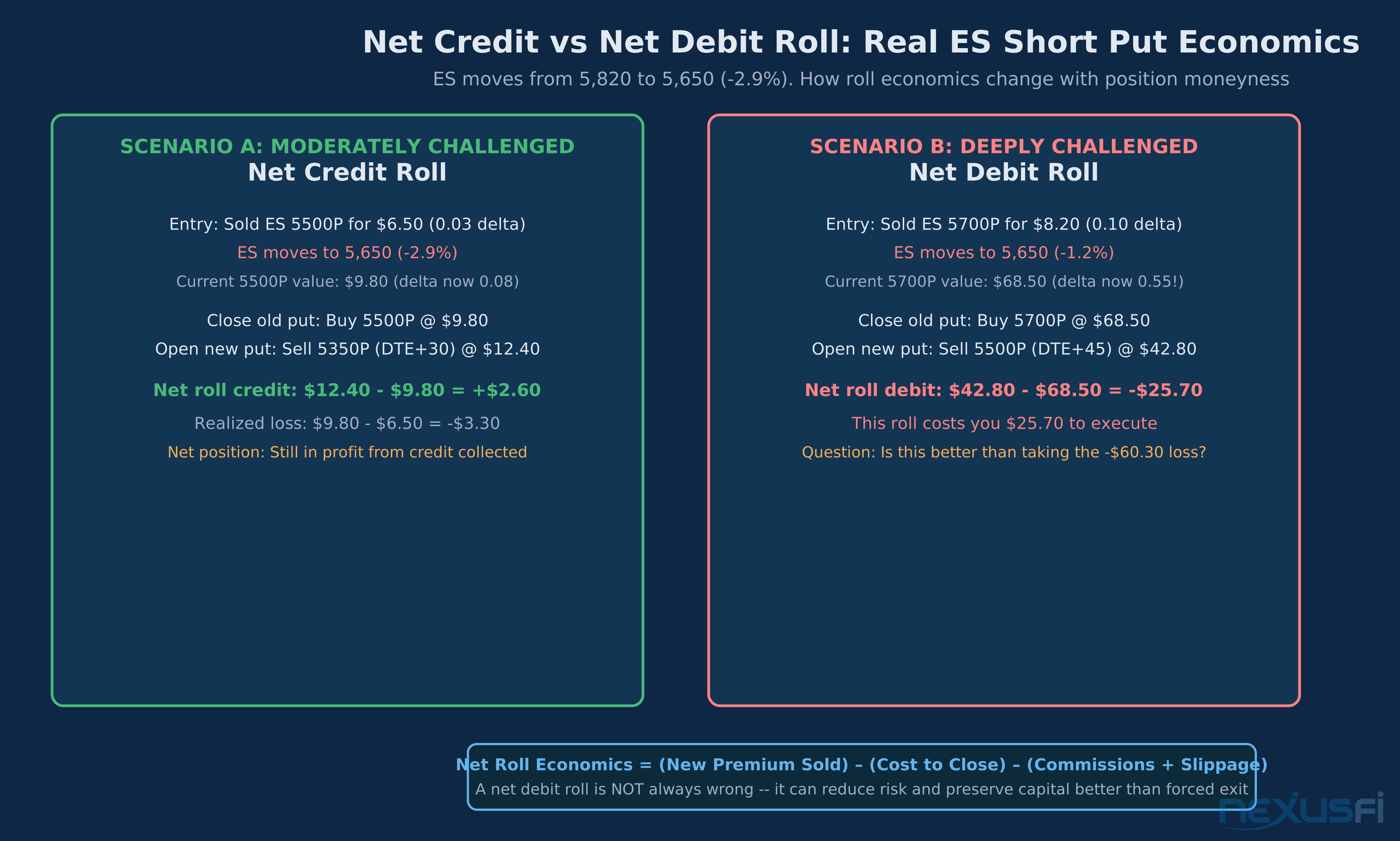
Net credit roll: You receive more premium from opening the new position than you pay to close the old one. This happens when rolling to a later expiration (where options have more time value) and/or moving to a strike that's far enough OTM that the new option's premium exceeds your close cost. Net credit rolls are generally favorable — you're getting paid to adjust.
Net debit roll: You pay more to close than you receive from opening. This happens when rolling a deeply challenged position — your current option is expensive to close because it has significant intrinsic value, and the replacement option can't match that cost. A debit roll isn't automatically bad. If you're paying $15 to close a $28 intrinsic-value option and opening a new option for $12, you're crystallizing a real loss but moving to a position with better risk characteristics. The question is whether that trade is better than simply exiting the whole position.
The formula: Net Roll = (New premium received) - (Cost to close old position) - (Commissions and slippage). Always include slippage in your calculation. On a challenged position where the bid-ask spread has widened, slippage on a combo order can easily be $1.50-$3.00 per leg.
The key evaluation question: does the new position offer better expected value than closing entirely? Not "did I collect a credit" — that's emotionally satisfying but strategically irrelevant. The metric is: new position's risk/reward profile vs zero (closed).
Greeks Management Through Rolling #

The four Greeks behave differently through rolls, and understanding each prevents surprises:
Delta: Rolling reduces delta on challenged short options by moving the strike farther from spot and/or extending time (further-dated options have lower delta than near-dated options at the same distance from spot). This is usually the primary reason to roll — delta creep. When your 0.05 delta put has drifted to 0.35, the position is making big directional bets you didn't sign up for. Rolling resets this.
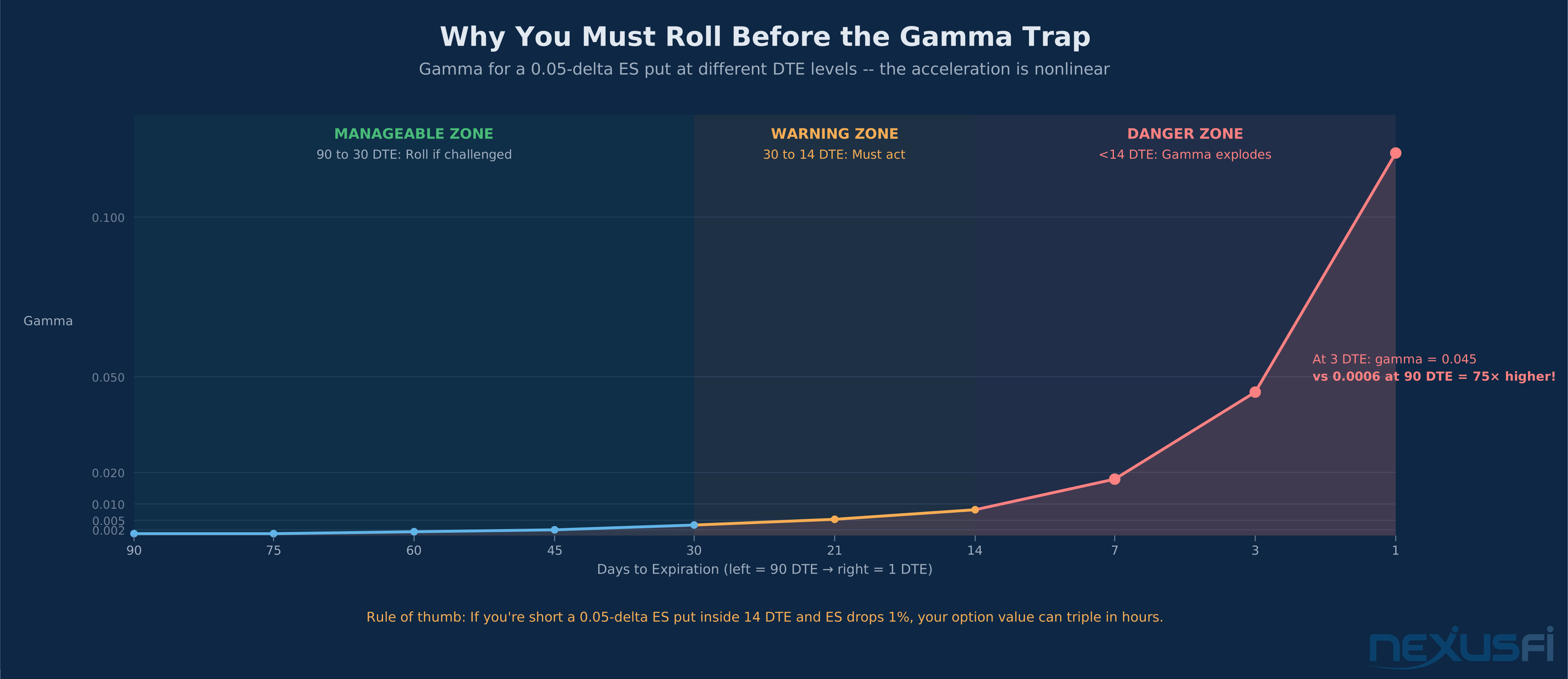
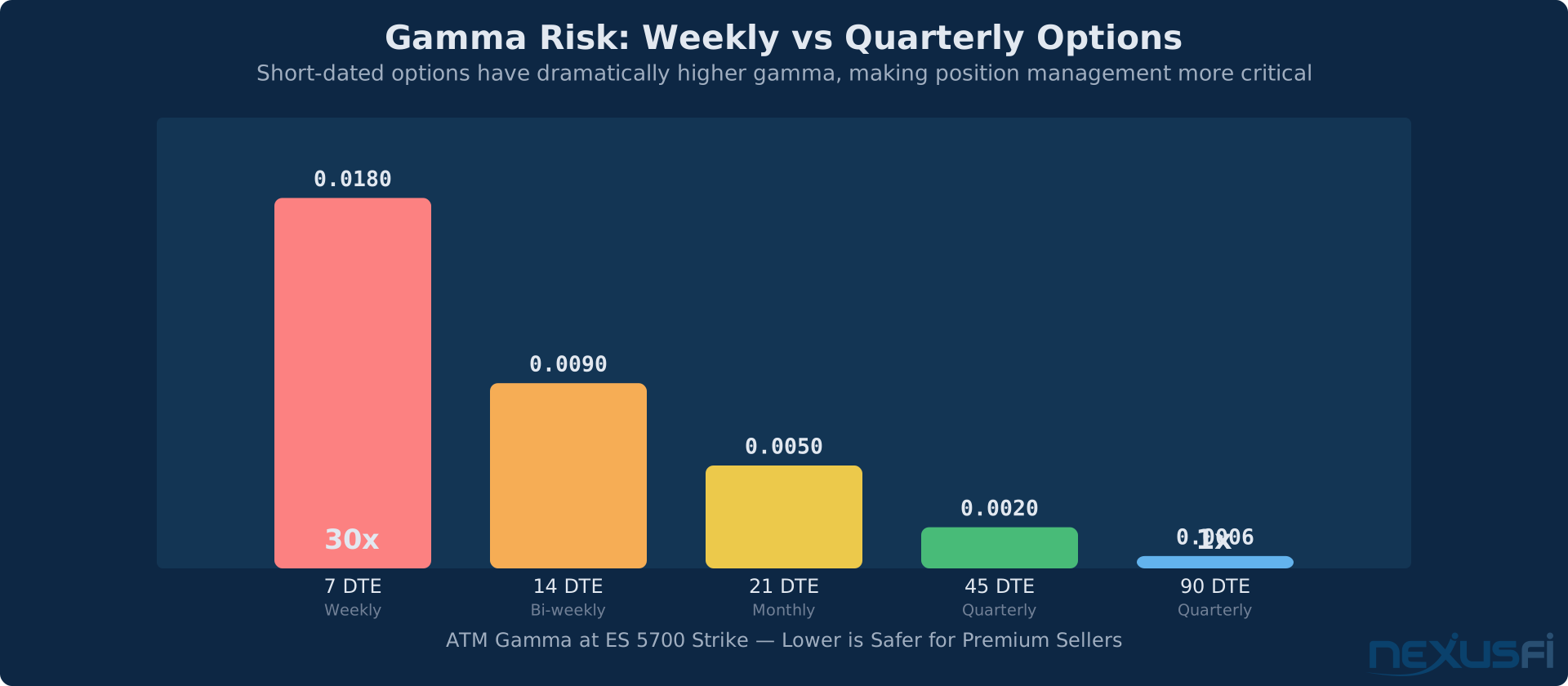
Gamma: Gamma is the risk most retail traders underestimate. Near expiration, gamma for at-the-money and near-the-money options becomes enormous. A 0.05-delta ES put at 90 DTE has gamma of roughly 0.0006. The same strike at 7 DTE might have gamma of 0.018 — 30 times higher. That means a 10-point move in ES will change the delta of the 7 DTE option 30 times more than the 90 DTE option. Rolling forward dramatically reduces this exposure. Inside 14 DTE on a challenged position, gamma becomes the dominant risk factor — ignore it at your peril.
Theta: Short options collect theta daily. Rolling typically re-establishes a theta collection position, though at a lower daily rate (further-dated options have lower daily theta). The total theta over the new position's life is usually higher than if you'd held the original. The trade-off is time commitment — you're collecting for longer.
Vega: This is the often-overlooked risk that changes dramatically when rolling to longer-dated options. Further-dated options have much higher vega than near-dated ones. If you roll from a 15 DTE position to a 45 DTE position, your vega exposure might nearly double. That means a 5% IV spike (which happens routinely around Fed meetings and CPI prints) has twice the impact on your position after the roll. Never roll into higher vega exposure during an elevated IV environment — you're buying expensive insurance at the worst possible time.
Decision Framework: Roll or Close? #

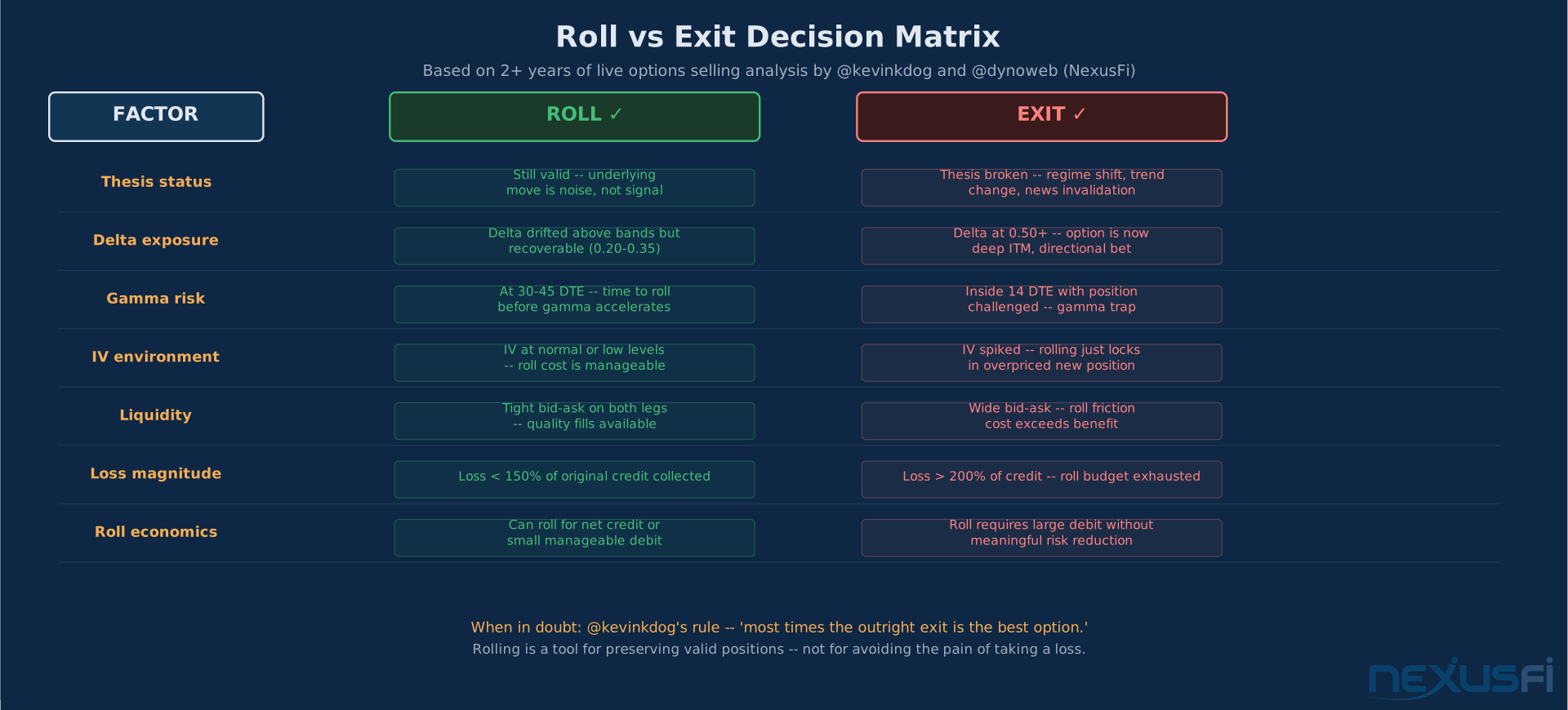
The honest answer, documented across thousands of posts in the NexusFi options thread, is that rolling is the right choice less often than traders think. @kevinkdog, after two-plus years of live options selling across ES, GC, and soybeans:
That's not a universal condemnation of rolling — it's a warning against using rolling as emotional loss avoidance. The cases where rolling demonstrably works:
Roll when: the underlying move is within expected volatility (1-2 standard deviations for the time frame), your thesis hasn't changed, delta has drifted above target but the position isn't deeply inverted, and you can execute at reasonable bid-ask spreads. @dynoweb's strangle management on /CL demonstrates this:
That's disciplined adjustment, not hope-based rolling.
Exit when: the move has invalidated your thesis (trend continuation, structural regime change), the option is deeply ITM with large intrinsic value, the roll would produce a net debit larger than your original credit, or you've already rolled once and the position is still challenged. @Harvard16 learned this the hard way with NG calls:
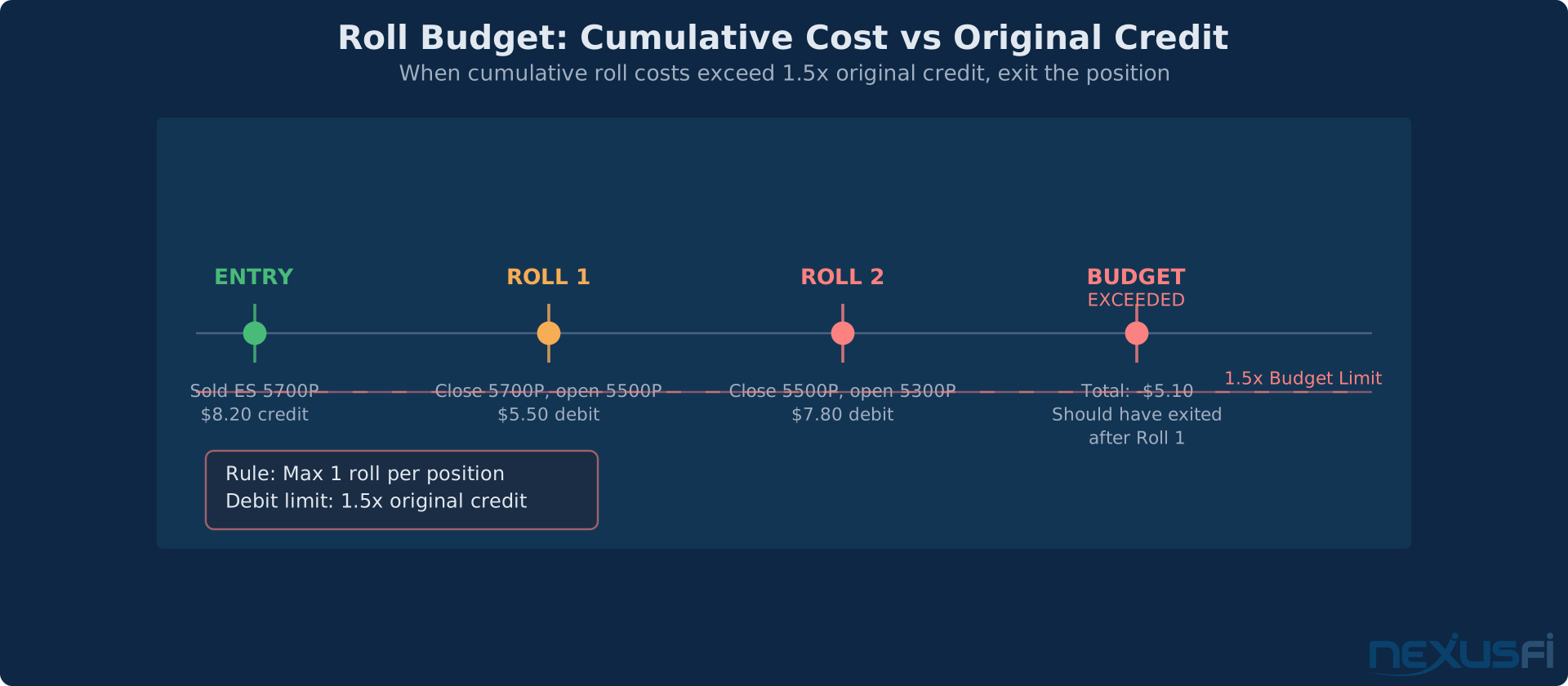
Define your maximum roll budget before entering any position. Most experienced NexusFi traders set it at one roll maximum per position, with a debit limit of 1.5x original credit.
The "Roll Budget" concept: Before entering any position, define your maximum roll budget. Most experienced NexusFi traders set it at: one roll maximum per position, with a debit limit of 1.5× original credit. If the second roll is needed, that's a signal to exit. Allowing unlimited rolls is how traders end up with calendar ladders of losing positions across every expiration — a portfolio of bad trades instead of one manageable exit. (For a structured approach to multi-product selling, see the Academy guide on building a diversified options selling portfolio.)

Expiration Management: Weekly vs Quarterly #
Weekly and quarterly futures options have at the core different gamma profiles, which means rolling strategy differs between them.
Weekly options (Monday/Wednesday expiration on ES/NQ, including 0DTE): Theta burns fast, but gamma is extremely high for at-the-money positions. A short weekly that gets ATM on Thursday can experience 5× the gamma of the same position at 30 DTE. Weeklies should be managed or rolled earlier and more proactively — don't wait for the "feels dangerous" signal you'd use with a monthly. Target rolling at 3-5 DTE if the position is within 1% of the strike, earlier if the market is trending.
Monthly/quarterly options (standard CME expirations): More time to manage, lower gamma until the final two weeks. The standard NexusFi management approach — roll at 21 DTE or when delta exceeds target — works well for these. The bigger risk with quarterly options is vega: they're much more sensitive to IV changes, so an IV spike from a macro event can damage a monthly position even if the underlying price holds steady.
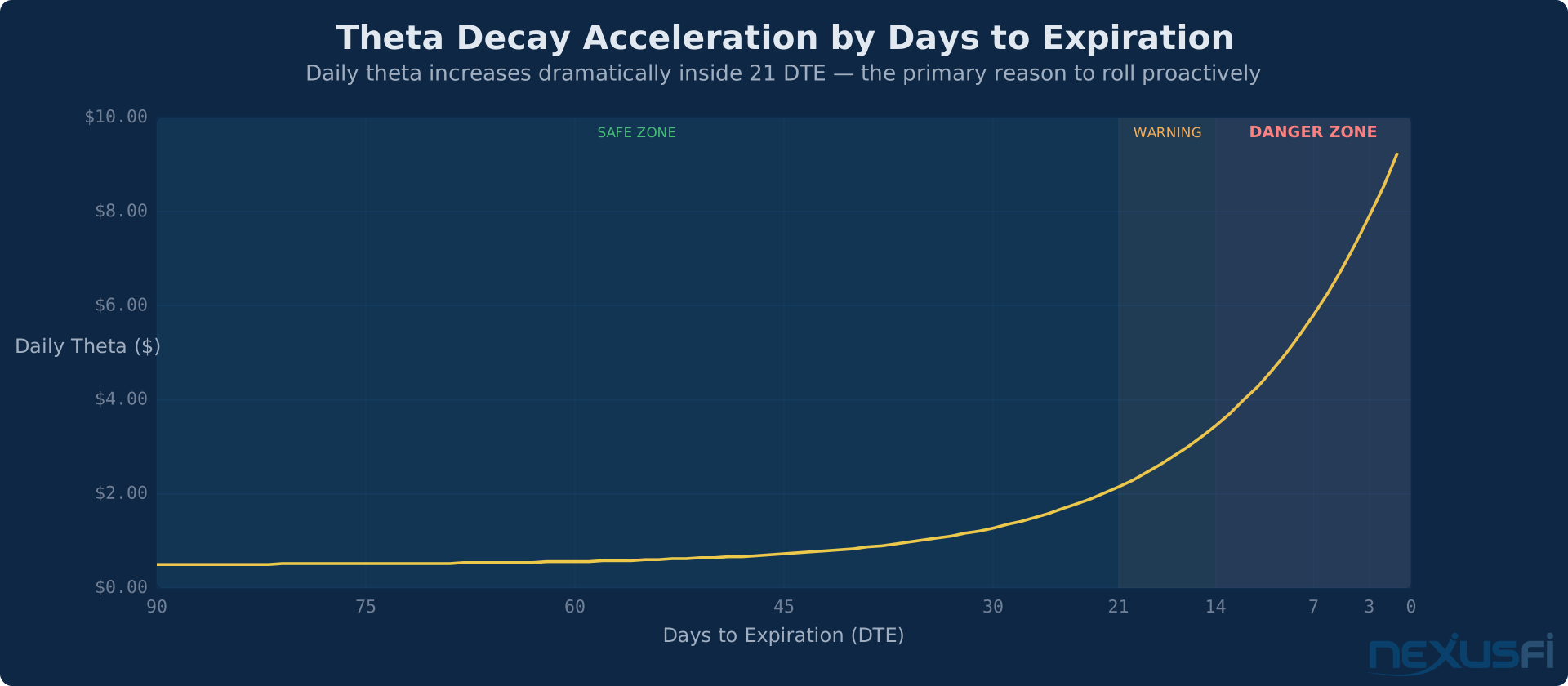
The DTE sweet spot: Most professional premium sellers target 45-90 DTE entries and roll or close around 21 DTE. Inside 21 DTE, gamma risk starts accelerating meaningfully. Inside 14 DTE, gamma is the dominant risk factor. The 7 DTE "expiration trap" — where your position is still out-of-the-money but a single bad day can put it in-the-money — is where most account damage happens for traders who don't roll proactively.

Product-Specific Notes: ES, NQ, CL, GC #

Generic options education treats all futures options identically. They're not. Each product has different volatility characteristics, different term structure dynamics, and different execution considerations that change how you manage rolls.
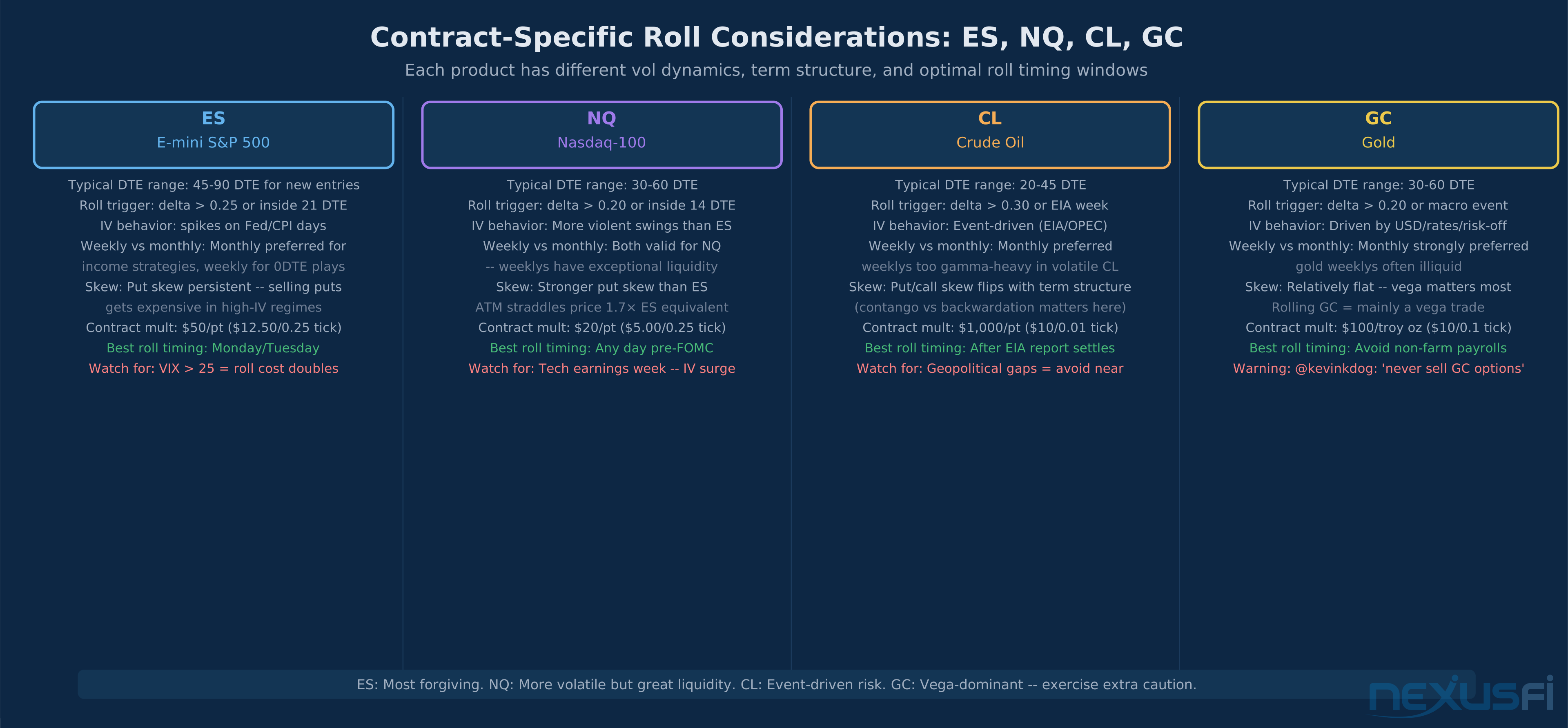
ES (E-mini S&P 500): The most liquid futures options market. Weekly expirations every Monday, Wednesday, and Friday. Persistent put skew means rolling put positions is relatively more expensive in high-IV environments (puts are pricier). Roll timing around Fed meetings and CPI prints matters — IV can spike 30-50% on event days. Monthly ES options have excellent two-way liquidity throughout the session. Roll trigger: delta above 0.25 or inside 21 DTE.
NQ (E-mini Nasdaq-100): Higher ATM IV than ES — typically 1.3-1.7× ES IV — which means larger premium on entries but more expensive rolls when challenged. NQ moves roughly 1.5× ES on directional moves, so a challenged NQ position deteriorates faster. The higher IV creates more time value to sell on rolls, which can make debit rolls less common. Weekly NQ options are highly liquid and often preferred for tactical positions.
CL (WTI Crude Oil): The most event-driven of the major futures options markets. EIA inventory reports every Wednesday morning can move CL 2-3% in minutes. Rolling around EIA week requires either excellent timing or accepting wider bid-ask spreads. CL's term structure (contango vs backwardation) affects roll economics — in steep contango, rolling to the next month may involve switching underlying futures months, which changes your basis exposure. @dynoweb's experience with CL: "When my strangle in /CL was being crushed during this big move down, I sold a /CL contract to give me enough negative delta. I did it this way versus buying back my short puts because there was so much extrinsic value on my existing short puts."
GC (Gold): Macro-sensitive and vega-dominated. Gold IV responds to real yields, dollar strength, and risk-off events — often uncorrelated with equity market IV. Rolling GC positions is primarily a vega management exercise: you're managing your exposure to macro uncertainty rather than directional movement. Monthly options are the practical choice — GC weekly options often have wide bid-ask spreads that make roll execution expensive. The cautionary note from @kevinkdog stands: gold's sensitivity to unexpected macro events makes it among the more dangerous products for naked short option strategies.
Worked P&L Scenarios #
Scenario 1: ES Short Put Roll -- Small Adjustment, Credit Outcome
Entry: Sold ES 5400P @ $6.50, delta 0.03, 90 DTE. ES at 5,820. Cost to carry: $325 (6.5 × $50 multiplier).
Day 38: ES falls to 5,650. 5400P now worth $9.80, delta 0.08. Position underwater by $3.30 × $50 = -$165.
Roll decision: Thesis intact, delta still below 0.10, DTE = 52 remaining. Roll is optional but position is manageable. Roll forward: Close 5400P @ $9.80, open 5400P at 60 DTE @ $14.20.
Net credit: $14.20 - $9.80 = +$4.40. New position: Same strike, more time, lower gamma. Position now shows +$1.10 credit net ($6.50 original - $3.30 loss + $4.40 roll credit = +$7.70 total credit, minus $0.60 commissions).
Scenario 2: ES Short Put Roll -- Large Loss, Thesis Intact
Entry: Sold ES 5700P @ $8.20, delta 0.10, 60 DTE. ES at 5,820.
Day 12: ES falls to 5,650. 5700P now worth $68.50, delta 0.55. Position underwater by $60.30 × $50 = -$3,015.
The roll math: Close 5700P @ $68.50, open 5500P (DTE+45) @ $42.80. Net debit: -$25.70 × $50 = -$1,285.
Total position cost if rolled: $1,285 + $300 original credit = $985 net cost (vs $3,015 if just exiting). New position: 5500P at 45 DTE, delta 0.22. Better risk profile but commitment to 45 more days of exposure.
Exit decision: The thesis is the key variable. If ES's move to 5,650 is a trend break, exit and take the $3,015 loss. If it's a temporary shock with mean-reversion probable, rolling to 5500P reduces risk and allows recovery. There's no mechanical answer — only an informed judgment call.
Scenario 3: When Rolling Makes Things Worse -- The Cautionary Example
A trader sells CL short puts at 0.05 delta. CL gaps down on OPEC news. They roll down and out. CL continues lower. They roll again. After two rolls, they've collected $0.90 in total credits but have a position with $18.00 in cumulative debit exposure, a margin requirement triple the original, and a vega position that bleeds $500/day when CL IV stays elevated. This is the "roll budget exceeded" scenario — the second roll was the signal to exit. The first roll might have been defensible. The second one was loss avoidance masquerading as risk management.


Common Failure Modes #
Rolling without a thesis check: The moment ES falls 2% doesn't automatically mean you should roll your short puts. It means you should check whether your original thesis — that ES would stay above your put strike — is still valid. Rolling a technically-violated thesis just delays the inevitable.
Ignoring portfolio-level Greeks: Individual position Greeks don't tell you whether rolling is the right call — your total portfolio delta and vega do. If rolling your ES put would push your total portfolio delta to -0.40 (net short market), that's a different decision than if your portfolio is delta-neutral. Manage the book, not the individual position in isolation.
Rolling into spiked IV: When IV spikes on an event (Fed, CPI, geopolitical), the cost of rolling jumps because both the old option's time value and the new option's premium are inflated. Rolling into a 30+ VIX environment often means paying 2-3× normal roll friction. Better to wait 1-2 days for IV to normalize if the position isn't at immediate risk.
Incremental rolling: Rolling 20-30 points at a time in small steps, as @Harvard16 described in the NG scenario, is one of the most expensive patterns in options selling. Each small roll costs commissions and bid-ask slippage. Three small rolls cost three times as much as one decisive roll to safety. When rolling, roll decisively to a strike that solves the problem — not just moves slightly away from trouble.
Exceeding the roll budget: One roll per position with a debit limit of 1.5× original credit is the practical maximum for most income strategies. Positions that need two rolls are telling you something about the trade — usually that the original entry was wrong or the market has structurally changed.

Roll Execution Checklist #
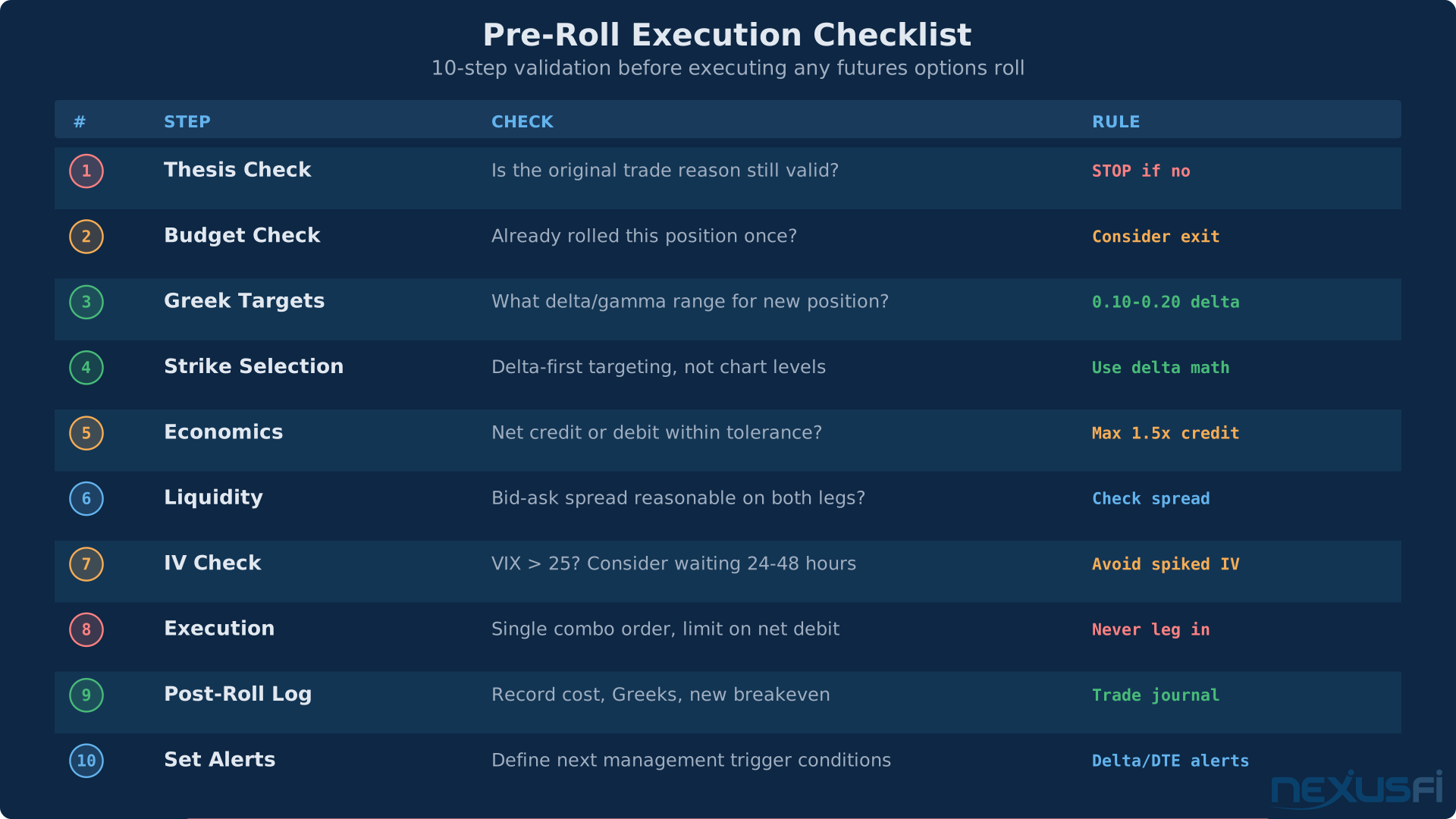
Run through this before executing any roll on a futures options position:
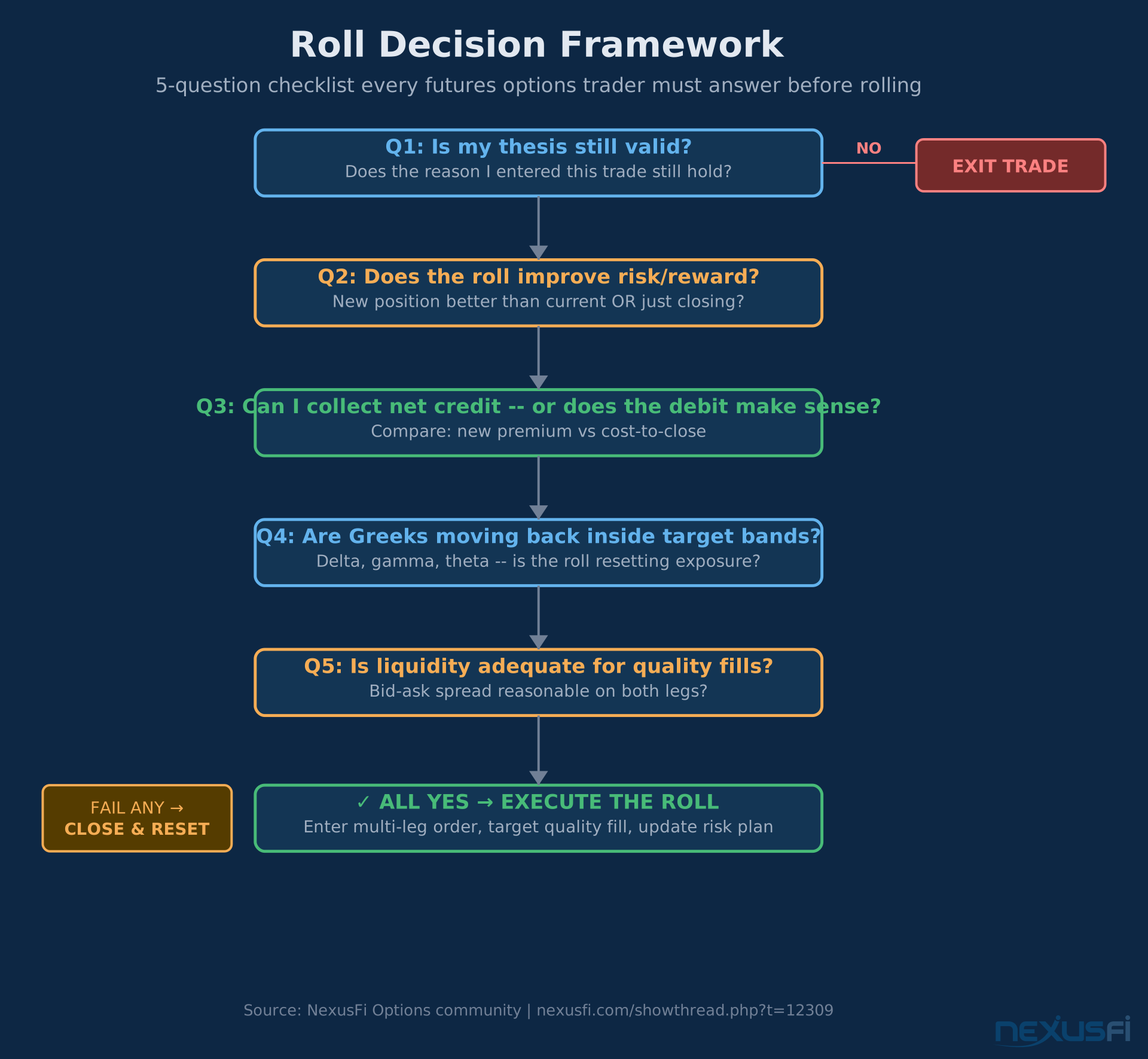
1. Thesis check: Is the reason I entered this trade still valid? (If no — exit, don't roll)
2. Budget check: Have I already rolled this position once? (If yes — seriously consider exiting)
3. Greek targets: What delta/gamma range am I targeting for the new position?
4. Strike selection: Using delta targeting, what's the specific strike that meets my target?
5. Economics: What is the net credit or debit on this roll? Is it within my tolerance?
6. Liquidity check: Is the bid-ask spread on both legs reasonable right now?
7. IV check: Is IV elevated? If VIX > 25 on ES, consider waiting 24-48 hours for IV to normalize
8. Execution: Enter as single combo/spread order, set limit on net debit/credit, don't leg
9. Post-roll: Record the roll cost, new Greeks, and new breakeven in your trade log
10. Set new alerts: Define the conditions that would trigger another management decision on this position
Rolling is a skill that takes time to develop — not because the mechanics are complex, but because knowing when to roll versus when to exit requires accurate self-assessment of why you entered the trade and whether the reason still holds. The traders in the NexusFi "Selling Options on Futures?" thread who documented their results over thousands of trades converge on the same answer: rolling works when it serves a genuine risk management purpose, and fails when it serves an emotional one.

Knowledge Map
Prerequisites
Understand these firstReferences This Article
Articles that build on this topicCitations
- — Selling Options on Futures? (2015) 👍 21“I ran a real life backtest of my new ES strategy starting on 1/1/2013. I started with $100,000. I picked an ES put that was 90+ DTE and as close to 0.0300 delta.”
- — Selling Options on Futures? (2015) 👍 35“I sell around 0.0300 deltas at 90-110 DTE and buy back when premium is 50% gone. I keep 3 times the initial margin in reserve.”
- — Selling Options on Futures? (2013) 👍 9“I have found that trying to delay/mitigate a loss, whether by rolling the position, selling more at a lower strike, buying opposite options have all been WORSE in the long run.”
- — Selling Options on Futures? (2019) 👍 8“I usually sell strangles in /6E, /CL, /GC, /ZW, /ZC, /ZS, /NG. Typically they are 30-60 DTE with short strikes at 10 delta.”
- — Selling Options on Futures? (2013) 👍 4“Rolling up in small increments just prolonged the pain. Instead of rolling up 20-30c I rolled way out, into the next month.”
- — Rollover Days - some Quick Facts about (2009) 👍 22“Rollover is 8 days before expiration for most futures contracts from the CME and CBOT.”
- — Contract Rollover, and what to do when (2015) 👍 4“You cannot leave your position open because the contract expires. Therefore you have to close it out or roll it forward.”
- — Selling Options on Futures? (2016) 👍 2“During an earlier trade I opened a single position with 50 contracts and decided the position was too large and would need to be split up.”
- — Selling Options on Futures? (2017) 👍 10“The best strategy proposed so far for safe returns is 1 short ES put at -5 delta and 2 long ES puts at -1.5 delta with 6x IM.”
- — Diversified Option Selling Portfolio (2017) 👍 5“With a strangle I tend to roll the untested side when the tested side is about 200% down.”
- — Selling Options on Futures? (2013) 👍 15“I followed their 200% rule, which means I would exit a losing position when the premium I sold for doubles at the close of trading.”
- — Selling Options on Futures? (2018) 👍 9“I wanted to see how the ES strategy, selling 2 puts 90-120 DTE that have a delta of -3.00 while buying 3 puts with a delta of -1.00 would have worked during the large decrease.”