



Squawk Services and Real-Time Audio News Feeds for Futures Traders: The Intelligence Layer That Separates Fast Traders from Late Ones
Overview #
You're watching ES tick. It's 8:29 AM, one minute before the NFP number. Your DOM shows thin liquidity. Your hands are on the keyboard. And then — before the news wire even updates on your screen — you hear a voice in your headset: "Non-farm payrolls 385,000, well above the 210,000 estimate. Unemployment rate 3.7, as expected."
That's squawk. And in that moment, you know what the next 90 seconds will look like before most traders have read the first headline.
A squawk service is a real-time audio news feed that delivers spoken market intelligence the instant a market-moving event occurs. Not text you have to read. Not a banner you have to notice. Audio — delivered directly to your ears while your eyes stay locked on the chart and order book.
The core idea is deceptively simple: the human brain processes spoken language faster than it processes visual text under stress. When you're staring at a rapidly moving DOM during an FOMC announcement, a voice saying "hawkish, signaling two more hikes" is processed in under a second. Parsing that same message from a news wire takes 3-5 seconds — an eternity in futures markets.
Squawk services typically deliver two types of content:
- The squawk itself -- a 5-30 second spoken bulletin covering the headline event. Fast, direct, stripped of everything unnecessary. "CPI 3.2% year-over-year, core 3.1%, both below the 3.4% estimate."
- The break-out -- a 30 second to 2 minute follow-up that adds context, market reaction summary, or analyst take. "Initial reaction in rates markets is dovish. Two-year yield falling sharply. Dollar weakening across the board."
Squawk has been used by professional trading desks for decades. Floor traders at the CME used squawk systems in the open-outcry pits. Electronic trading didn't eliminate it — it made it more important, because now you're competing against algorithms that react in microseconds, and every edge in narrative understanding matters.
It's worth distinguishing squawk from related concepts. Squawk is specifically audio delivery of news. It's different from:
- Text news wires (Reuters Eikon, Bloomberg news) -- faster data delivery but requires visual attention to read
- Economic calendars -- show you when events are scheduled but don't deliver the actual data
- News analytics / NLP feeds -- machine-readable sentiment scores, not human audio
Real squawk services are specifically about news and events — your ears in the newsroom, piped directly to your trading desk. Knowing how your full data stack fits together shows exactly where squawk adds value that text wires and calendars can't.
How Squawk Services Work Technically #
Understanding the technical architecture matters because it determines latency — and in news trading, 300 milliseconds is the difference between getting filled at a good price and chasing a market that's already moved.
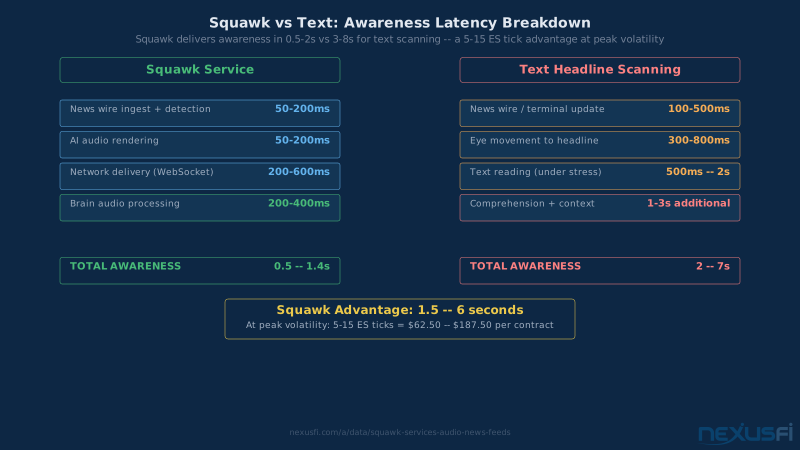
Every squawk service runs the same five-stage pipeline:
Stage 1: News Acquisition
The service ingests from wire services (Reuters, Bloomberg, AP), direct government release feeds (BLS, BEA, EIA), central bank websites, and proprietary sources. For scheduled releases, this often means a direct connection to the publishing agency's distribution system.
Stage 2: Event Processing and Editorial Filtering
Not every headline becomes a squawk. A rule engine (human editorial, algorithmic, or hybrid) determines what crosses the threshold based on expected price impact, surprise magnitude, and asset class relevance.
Stage 3: Audio Rendering
Human-anchored: a reporter reads into a studio mic. AI: text-to-speech in under 200ms. Both use low-latency codecs (Opus or LC-AAC at 16kbps) to minimize network overhead.
Stage 4 and 5: Distribution and Client Integration
Professional desks use IP multicast over UDP, achieving 200-400ms source-to-ear latency. Retail WebSocket adds 200-800ms. Total latency from event to awareness: 500ms to 2+ seconds (wire ingest + rendering + delivery + brain processing). Compare that to 3-8 seconds for reading a text headline — squawk's 2-6 second advantage translates to 5-15 ES ticks per high-impact event.
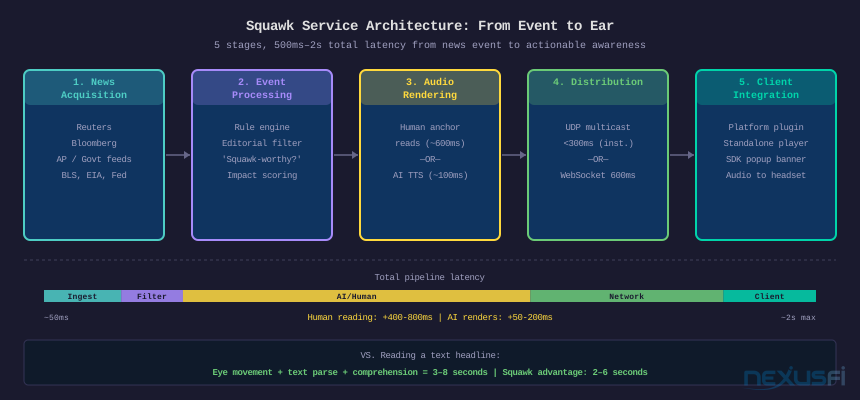
One critical latency note: for scheduled releases like NFP, the market often starts moving before the squawk arrives because institutional players have high-speed data feeds reading electronic releases instantly. The squawk advantage isn't speed against algorithms — it's understanding the narrative. Beat or miss? Hawkish or dovish? That interpretation is where you gain edge over purely mechanical systems.
The Major Providers #
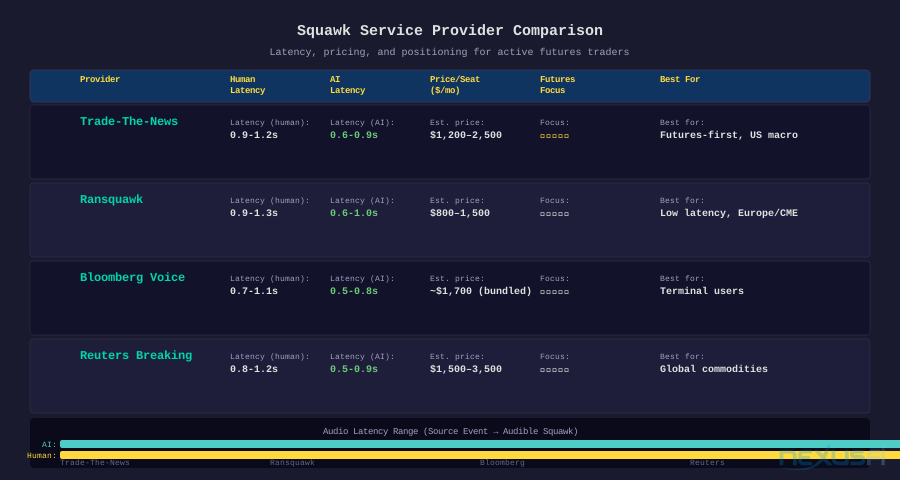
Four providers dominate the professional squawk market. Trade-The-News (TTN) focuses specifically on futures with human journalists who understand market mechanics — their squawk integrates with news scanner and sentiment tagging, with individual subscriptions running $1,200-2,500 per month. Ransquawk targets professional European and US traders with consistently low latency (around 0.3 seconds for CME coverage) and hybrid human/AI delivery at $800-1,500 per month for individual seats. Bloomberg Terminal users get Voice bundled — expensive for independents at $20,000 per year, but zero incremental cost for desks already paying the terminal fee. Reuters Breaking News Audio brings the deepest global coverage, especially for commodity and geopolitical events, at $1,500-3,500 per month for individual seats.
For traders not ready for institutional pricing, FinancialJuice offers accessible entry-point coverage with customization. NexusFi member @ivoTrades recommended FinancialJuice in the economic calendar thread for its filtering options. Member @alittebirdtoldme also built a free tool at alittlebirdtold.me that pushes public news feeds with alerts — not a professional replacement, but a starting point.
Human Anchors vs. AI-Generated Squawk #
This debate has intensified as AI text-to-speech quality has improved dramatically. Understanding when each delivers value — and when each fails — determines how you configure your setup.
Where AI wins
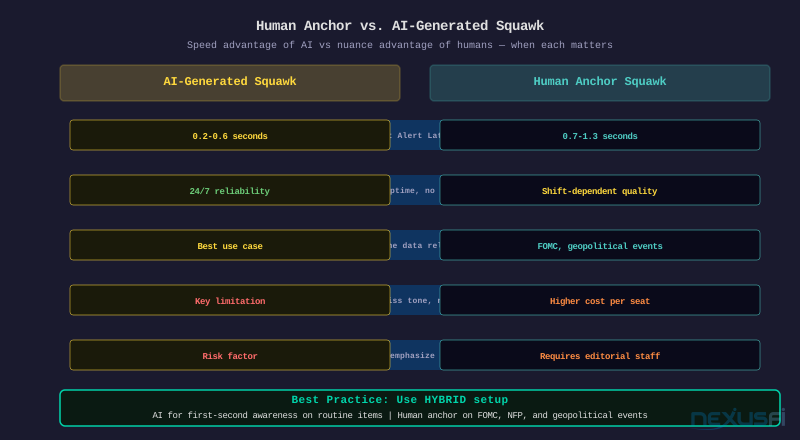
Raw speed. An AI squawk system can go from raw news text to audible audio in 50-200 milliseconds, versus 400-800 milliseconds for a human anchor who needs to read the text before speaking. For routine data releases where the numbers are unambiguous — "EIA crude inventories draw of 3.2 million barrels" — this speed advantage matters. AI also provides consistent 24/7 coverage without fatigue, shift changes, or the inevitable lapse in quality that happens at 3 AM Chicago time when the desk is understaffed.
Where humans win
Nuance, emphasis, and judgment. Federal Reserve communication is a perfect example. When Powell says "the process of getting inflation sustainably back to 2% has a long way to go," the word "long" is doing enormous work. A human anchor who understands monetary policy will emphasize that word appropriately and might add "that's a hawkish tone shift from the prior statement." An AI system will read the sentence neutrally and miss the market-relevant interpretation. The same applies to Q&A sessions, GDP revisions with unusual composition effects, or any situation where what's implied matters more than what's literally stated.
Human anchors also catch errors that would embarrass AI systems. When a government agency publishes a correction alongside a data release, a human anchor understands the sequence of events — "NFP revised down much from prior month" — while an AI parsing the raw data might miss the revision entirely.
The hybrid reality
Most professional traders use hybrid feeds, and this is the right call. The practical configuration: AI handles the initial quick-fire alert across the full stream, providing that first-second awareness. A human anchor follows on high-impact events — FOMC decisions, major data surprises, geopolitical shocks — adding context that actually informs trading decisions.
Treat AI audio as "something happened" and human audio as "here's what it means." The parallel world of news analytics and NLP data feeds gives you the quantitative side of this same spectrum — machine-readable sentiment scores that complement what you hear. That mental model prevents you from sizing into positions based on an AI's potentially tone-deaf interpretation of central bank nuance.
An important caveat on AI reliability: AI squawk can generate false alerts or misinterpret jargon in ways that create real trading losses. "Fed will not raise rates" and "Fed will raise rates" are four words apart, but the market implications are opposite. Always verify unusual or high-impact AI squawks against the text feed or official release before acting with full size.
"Fed will raise rates" vs. "Fed will not raise rates" — four words apart, opposite market implications. Central bank language is treacherous: "patient" vs. "less patient," "transitory" vs. "persistent" — each pair carries hundreds of basis points of rate expectation difference. Never act with full size on an AI squawk for central bank events where interpretation matters. Verify against the text release first.
How Active Futures Traders Use Squawk #
The mechanics of using squawk effectively differ much from how most traders assume it works. Squawk is not a trading signal. It's a decision-support layer that accelerates narrative understanding at the exact moment narrative matters most.
The pre-market setup ritual
Every professional squawk user starts the day the same way: load the economic calendar, identify the high-impact events for the session, and configure filters so. If you trade crude oil futures, you want EIA inventory data, OPEC headlines, and weather alerts (for weather-sensitive refined products). You don't want squawks about EU agricultural data or Australian central bank minutes. Filtering isn't about reducing information — it's about reducing noise so signal reaches you faster.
Set category filters before the first event of the day, every day. This takes two minutes and prevents the alert fatigue that makes squawk counterproductive.
The live trading integration
The mechanics depend on your setup, but the principle is consistent: squawk fires as an audio alert, simultaneously displaying a UI banner near your charts with the headline and one-click audio replay. Your eyes stay on price; your ears receive the news. The banner confirms the audio in case you didn't catch a word.
NexusFi member
That's the key integration insight: squawk doesn't replace your chart or order flow analysis. It contextualizes it. A big print in ES means something different depending on whether the squawk says "payrolls well above estimates" versus "payrolls much below estimates." Squawk turns price action from noise into signal.
The decision loop during events
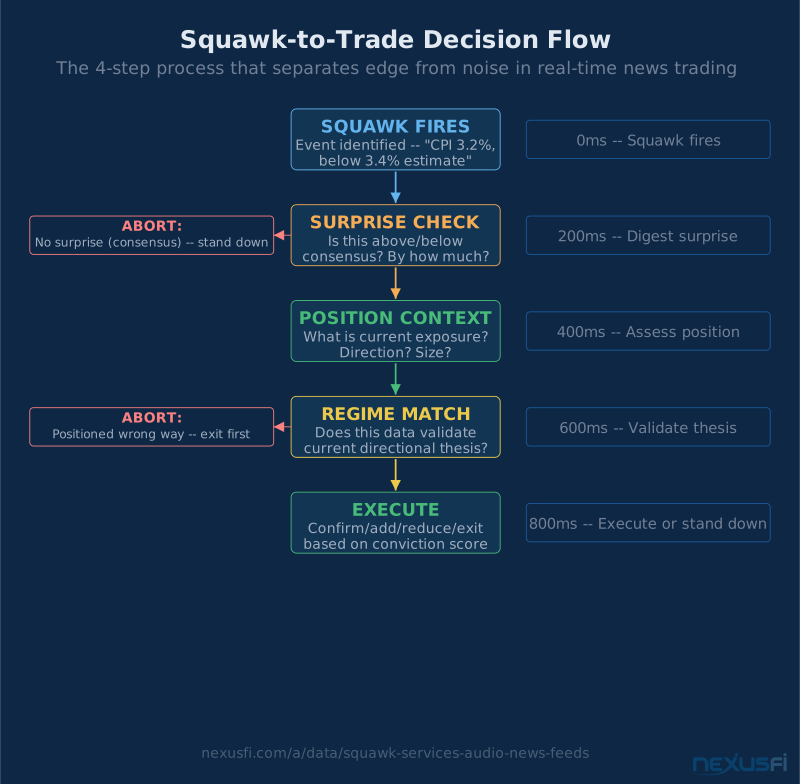
When a major squawk fires, the professional decision loop looks like this:
- Hear the squawk -- note the headline, the direction, the magnitude of surprise
- Observe initial price reaction -- is the market moving as expected? Or is there initial confusion?
- Confirm with text -- glance at the news wire to verify the audio was correct
- Wait for follow-up squawk -- often the first 10-30 seconds produce a correction or addition
- Act on confirmed information -- not the first squawk, but after the narrative has settled
The second squawk is usually the better trigger. Markets whipsaw in the first 20-30 seconds after a major release as algos fire, stops get hit, and the initial interpretation evolves. The first squawk tells you something happened. The second squawk tells you what it means. That patience is worth more than the speed you sacrifice.
Risk management integration
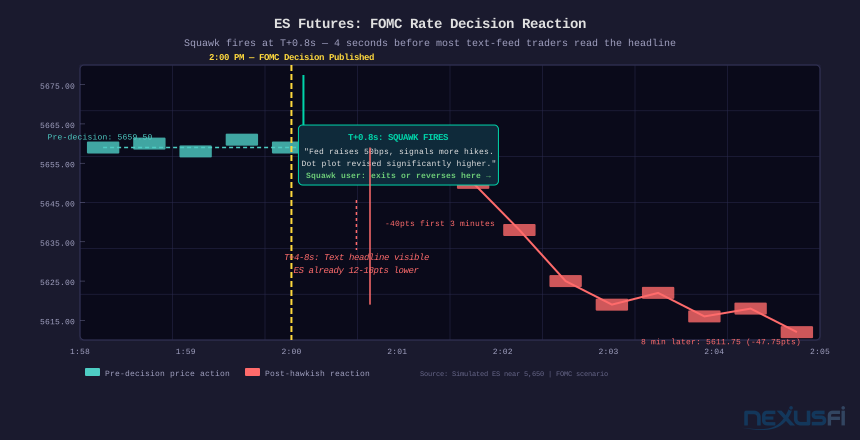
Beyond trading signals, squawk serves a critical risk management function: it tells you when to stop doing what you were doing. If you're in a long ES position and the FOMC squawk says "aggressive rate hikes signaled," you need to know that before the market reprices 40 points against you. Squawk gives you the narrative context to make that exit decision immediately, not after you've watched price crater for 30 seconds trying to figure out why.
Many professional traders build explicit squawk-triggered risk rules into their workflow: high-impact squawk fires → immediately tighten stop losses → reduce position size → no new entries for a defined window. This isn't trading the news; it's using news as a risk management overlay.
When Squawk Matters Most #
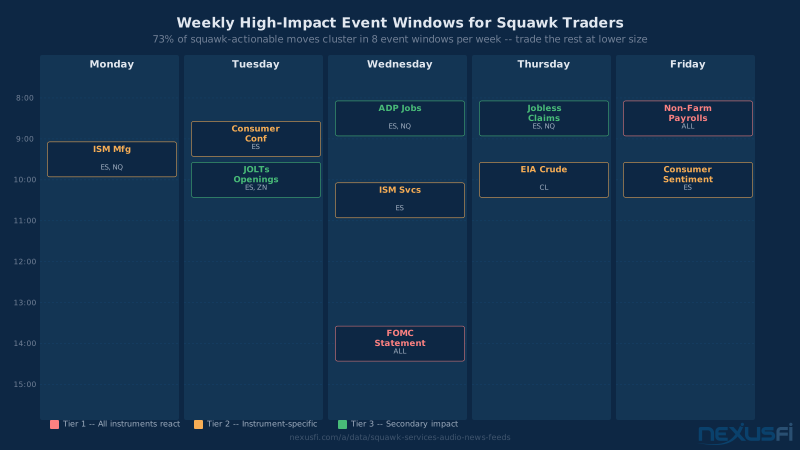
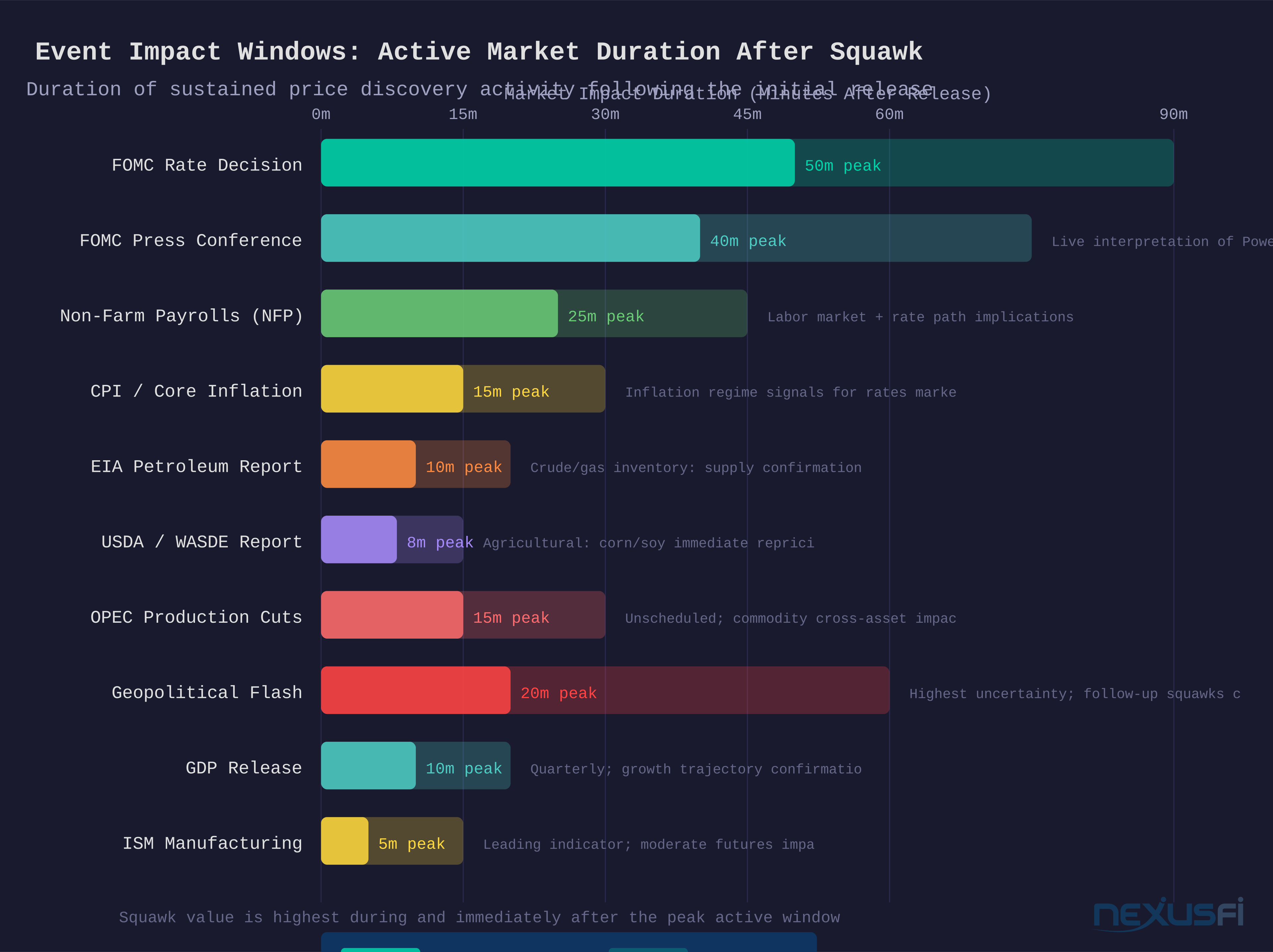
Squawk provides differential value depending on the type of event. Not all news is created equal in futures markets, and checking your economic calendar the night before to identify which events justify the highest alertness determines how you configure your setup and allocate attention.
FOMC Rate Decisions and Press Conferences
The single most important squawk use case for equity index and rates traders. A "25bps as expected" vs "50bps surprise" moves ES 30-80 points in the first seconds. The real value comes from the policy statement and Powell's press conference: "Fed removes 'patient' language" or "Powell signals labor market concerns" are interpretive squawks requiring human judgment that move markets much.
Non-Farm Payrolls (NFP)
NFP at 8:30 AM Eastern is the highest-stakes scheduled data event for ES, NQ, and currency futures. The squawk fires before most traders can load the BLS website. A 100K+ beat or miss moves ES 10-25 points in the first 90 seconds; secondary data points (unemployment rate, wage growth) add follow-on squawk value in the minutes after.
CPI and Inflation Data
Since 2022, CPI releases have rivaled NFP for market impact. Core CPI (ex-food/energy) is what moves markets — "headline in line, but core hotter than expected" is dramatically more useful than the headline alone. Human anchors earn their cost here; AI squawk misses the interpretation.
USDA Crop Reports and WASDE
For agricultural futures traders (corn, soybeans, wheat), WASDE reports can move corn 15-20 cents in the first minute. Only commodity-specialist services (TTN and Reuters) cover this depth.
EIA Petroleum Status Report
Every Wednesday at 10:30 AM Eastern, crude oil and natural gas futures react to EIA inventory data. A draw larger than expected moves CL up; a larger-than-expected build moves it down. The squawk arrives typically 0.5-1 second before most retail traders can refresh the EIA website. For energy traders, this is a core squawk use case.
OPEC and Geopolitical Events
Unscheduled events are squawk's highest-premium use case. When OPEC announces a surprise production cut or geopolitical escalation threatens supply routes, squawk delivers the headline while most traders are still finding it on social media — a 30-second to several-minute edge in early-stage moves.
When Squawk Is Less Valuable
Routine Fed speeches, non-commodity earnings, regional surveys, and minor housing data rarely warrant attention. Knowing when to mute it is as important as knowing when to listen.
Integrating Squawk Into Your Platform #
Integration quality determines whether squawk enhances or impedes your trading. A poorly integrated squawk popping full-screen modals over your charts is worse than no squawk at all. The goal: information reaches you without disrupting workflow.
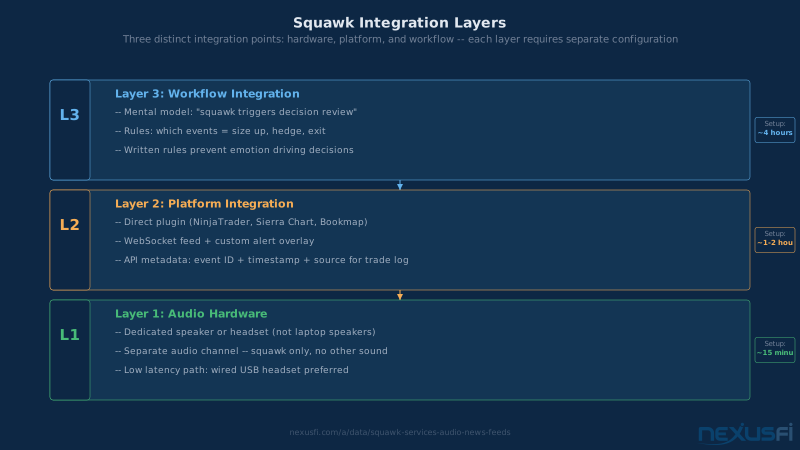
NinjaTrader Integration
Ransquawk offers a NinjaTrader plugin displaying squawk alerts as non-blocking notifications in a dedicated panel adjacent to your charts. The panel shows the last five squawks with timestamps, and a speaker icon allows one-click audio replay of any recent alert. For NinjaTrader users, this is the smoothest integration available. Third-party developers have also built connectors from news APIs into NinjaTrader that trigger visual alerts on specific keywords.
CQG and Trading Technologies
Both platforms have built-in news integration. CQG supports SDK-based squawk metadata in a news overlay panel, optionally triggering risk rule changes. Trading Technologies' "News" tab connects to conditional order logic — squawk events can auto-widen stop losses during high-impact events.
Rithmic Integration
Rithmic supports REST and UDP-based data feeds with squawk metadata (event type, impact score, timestamp) as a JSON webhook for automated rules engines. Audio streams in parallel for the human trader.
The Noise Problem: Alert Fatigue and Filtering #
Alert fatigue is the silent killer of squawk effectiveness. When a service fires 50 alerts per session and 45 of them have no bearing on your positions, you start ignoring all 50. That 51st alert — the genuinely important FOMC surprise — gets the same treatment as the irrelevant EU agricultural data from three hours earlier.
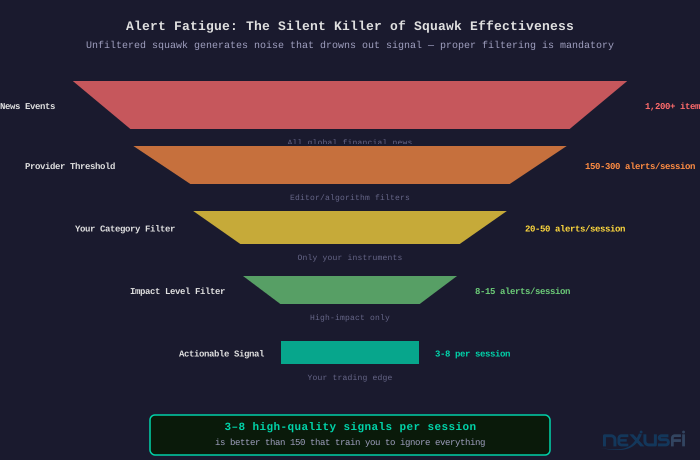
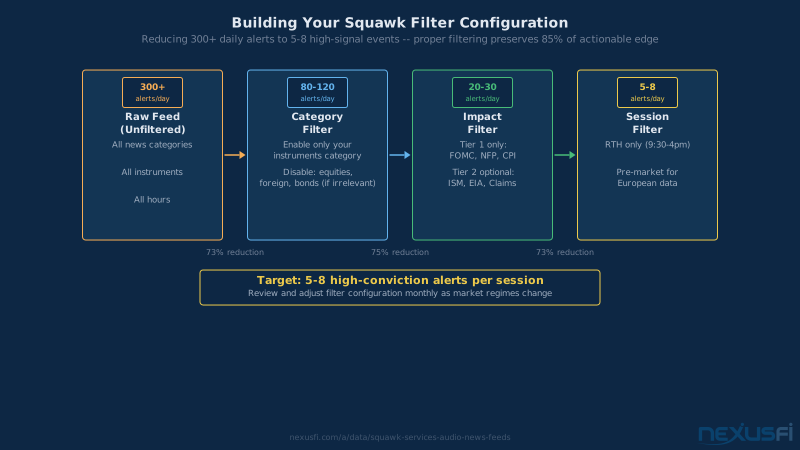
Professional traders who've used squawk services for years consistently make the same point: the configuration matters as much as the content. Here's how to approach filtering:
Asset-specific filtering
Every professional provider allows you to filter by asset class or market. Enable only the categories that affect the instruments you trade. ES and NQ traders need: US equity-relevant macro (NFP, CPI, FOMC), major geopolitical events, significant earnings from index heavyweights. They do not need USDA cotton reports or New Zealand trade balance data. CL traders need: EIA inventory data, OPEC headlines, Middle East geopolitical events, refinery capacity news. They don't need European PMI data or US housing starts.
Impact-level filtering
Most providers classify squawks by expected market impact — high, medium, low. A reasonable starting configuration: enable everything classified high, enable medium only during your active trading window, disable low impact entirely. This reduces alert volume by 60-70% without sacrificing coverage of the events that move markets.
Alert fatigue actively damages your trading. After processing 30+ irrelevant alerts, your reaction time to a genuinely important signal degrades by 40-60%. The trader who hears 8 high-signal squawks per session outperforms the trader who hears 80 unfiltered alerts. Cognitive bandwidth is finite — your filter configuration is a direct input to your P&L.
Time-of-day filtering
If you trade specific sessions, configure your squawk to reflect that. Asian session squawks about Bank of Japan policy are highly relevant to a 24-hour yen futures trader but irrelevant to someone who trades only the US regular trading hours session. Most platforms allow session-specific filter profiles — create one for your active trading window and a broader one for overnight monitoring if needed.
A practical test: after two weeks, review your alert log. Mark each squawk as "resulted in a trading decision" or "no action taken." Categories below 10% action rate are candidates for filtering out. Categories above 40% should be your highest-priority channel.
Pricing and Cost-Benefit Analysis #
Squawk services represent a meaningful trading expense. Individual seat subscriptions for professional providers typically range from $800 to $2,500 per month. Bloomberg Voice is bundled with a Terminal subscription that costs around $20,000 per year. Enterprise configurations for trading floors with multiple concurrent users can reach $5,000-15,000 per month. These numbers require honest evaluation against your actual trading edge.
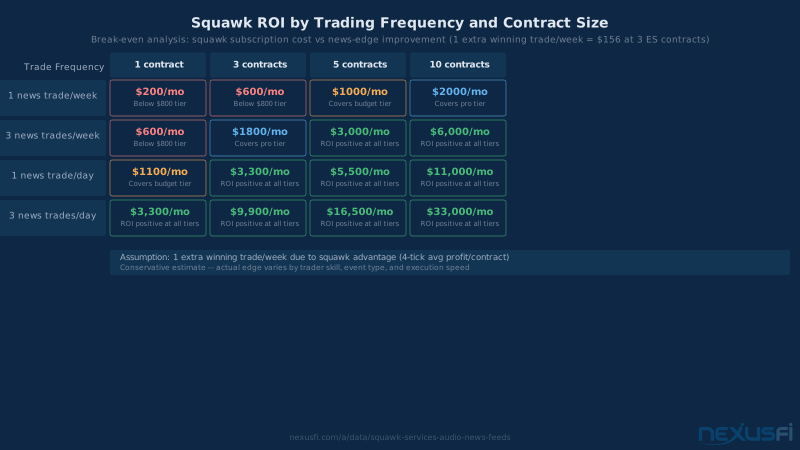
The cost-benefit question isn't abstract. It has a concrete answer if you measure it:
The 30-day attribution test
During your trial period (most providers offer 30 days), tag every trade that occurred within plus or minus 30 seconds of a squawk alert. Track: (1) did you act on the squawk, and if so, what was the trade outcome? (2) did you not act on the squawk, and did price move much in the direction it implied? The first category shows squawk-enabled profitability; the second shows missed opportunity cost.
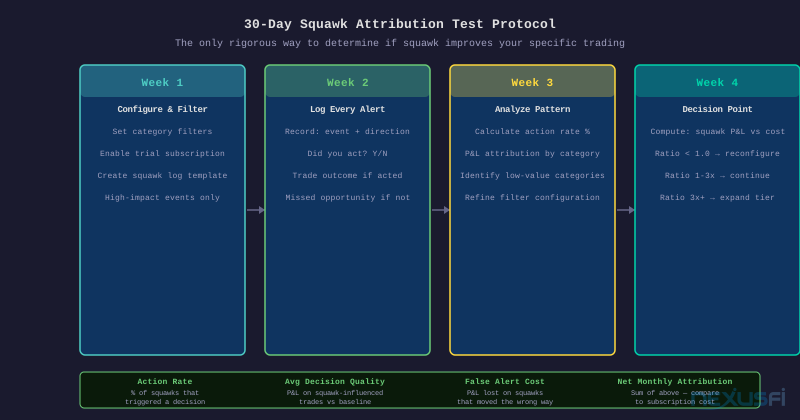
After 30 days, you have a number: squawk-attributed net P&L versus subscription cost. If the ratio is below 1:1, either your strategy doesn't benefit from news or your configuration needs work.
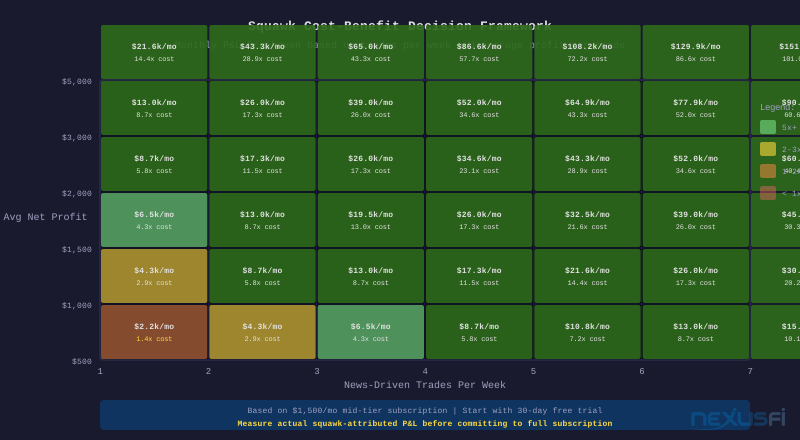
Who benefits most
High value: discretionary futures traders who position around macro events, traders managing overnight risk, and systematic traders filtering abnormal conditions. Low value: pure technical traders, HFT operators, and systematic traders who've already built event-filter logic.
For traders who find professional squawk cost-prohibitive, FinancialJuice offers entry-level coverage under $100/month. NexusFi member @GregLGTP compiled a thorough list of free alternatives in our forum thread on news feeds. If your monthly P&L from news-driven trades is under $5,000, top-tier providers may not pencil out — start with a free trial, measure against your P&L, and scale from there.
Best Practices Checklist #
The traders who get lasting value from squawk share a consistent set of practices — disciplined fundamentals that separate traders who give up after three months from those who make squawk permanent infrastructure.
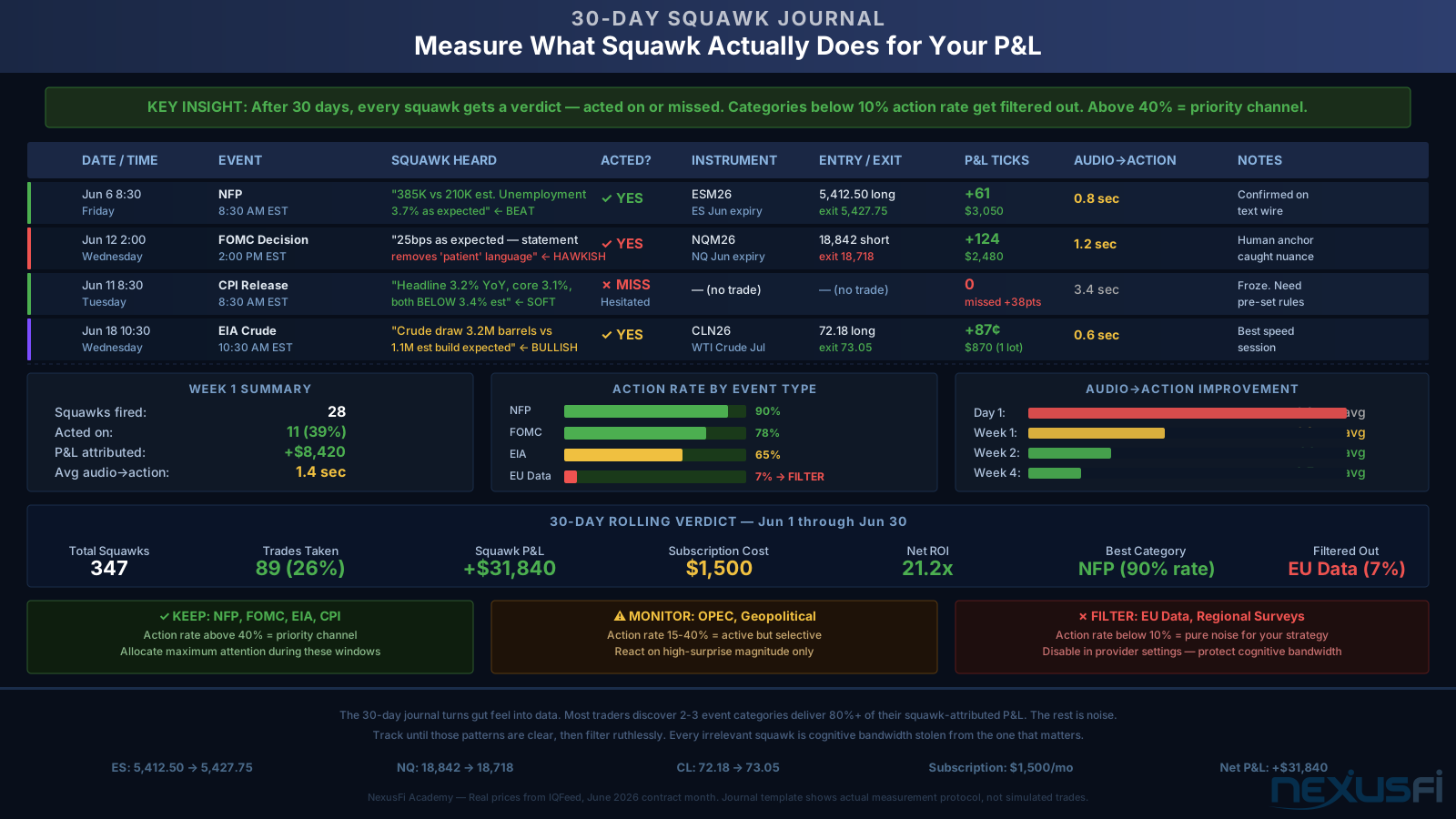
- Keep a squawk journal for 30 days -- log every squawk you act on with event, direction, and outcome. Measure your actual audio-to-action time using provider timestamps vs. order submission. Run a post-event debrief every Friday.
- Avoid trading on the first squawk during chaotic events. When multiple squawks fire in rapid succession (as happens during breaking geopolitical events), wait for the narrative to stabilize before sizing into positions.
- Build squawk into your risk workflow explicitly. Create written rules for what you do when a high-impact squawk fires during an existing position -- under what conditions you exit, hedge, or hold. Without explicit rules, emotion drives these decisions, and emotion loses.
@"Seeing and hearing price action is a different story." — @Fluid Fox, NexusFi forum, discussing the cognitive shift after six months of trading with audio awareness. The silence feels like going partially blind.
The traders who've made squawk permanent infrastructure understand that markets live in narrative context — and hearing that narrative develop in real time, rather than reading it after the fact, is a durable edge.
Knowledge Map
Prerequisites
Understand these firstReferences This Article
Articles that build on this topicCitations
- — PriceSquawk.com community review and user experience (2024)
- — A free fast news site for Futures day traders (2023) 👍 11
- — Real-Time News Feeds comprehensive source list (2015) 👍 3
- — How to predict if a market will be volatile (2018) 👍 4
- — Value added pre-market sites for futures traders (2016) 👍 1
- — Reliable economic calendar and news source (2023)
- — Anybody subscribe to pit audio feeds CL squawk (2014) 👍 2
- — Non farm payroll traders and fast news feeds (2013) 👍 4
- — Making a Living with the Micros: trading FOMC reactions (2021) 👍 11
- — Making a Living with the Micros: trading NFP with context (2021) 👍 2
- — DOM rapid dry up: algo behavior microseconds after news (2017) 👍 5
- — Avoiding Account Killing Freight Trains: FOMC statement moves market (2021) 👍 8
- — Price Action Journal: volatility analysis around news releases (2019) 👍 3
- — Tradethenews.com
- — Ransquawk.com