



Earnings Calendar Data for Equity Index Futures: How Big Tech Reports Move ES and NQ
Every futures trader learns about macro events
The mechanics are simple. Earnings don't affect ES and NQ equally. NQ is structurally more sensitive because it's concentrated in the names reporting. ES has enough sector diversity to blunt individual prints. But when NVDA reports a blowout quarter or MSFT guides down on cloud growth, NQ moves first, fast, and hard
This article breaks down the full picture: how index weights translate earnings into futures moves, the data sources you actually need, the volatility mechanics (IV crush vs IV expansion), how to read pre-earnings setups, and what to do when the report hits. Including position sizing. Including risk controls. Including the stuff most traders skip because it's less exciting than the trade itself.
Overview #
What you'll learn:
- How Big Tech earnings transmit into ES and NQ futures through index weighting mechanics
- The implied volatility cycle around earnings and how to tell IV crush from IV expansion before the event
- Where to source earnings calendar data and how to build a "trader's earnings map"
- Pre-earnings drift patterns and the conditions that make them tradeable vs dangerous
- Post-earnings gap taxonomy: gap-and-go, gap fade, and the whipsaw that kills both
- NQ-ES spread strategies for capturing tech outperformance or underperformance
- Risk controls for position sizing when the expected daily range triples overnight
Key concepts defined:
- Implied volatility (IV): The market's forward-looking expectation of price movement embedded in options pricing. Rises into events, compresses after.
- IV crush: The sharp drop in implied volatility immediately after an earnings announcement once the event uncertainty resolves.
- IV expansion: When actual post-earnings volatility exceeds what options had priced in
- Post-earnings announcement drift (PEAD): The tendency for prices to continue drifting in the direction of an earnings surprise for 60-90 days after the announcement.
- Sector cascade: The sequencing pattern of earnings season
- Earnings avalanche: The clustering of multiple mega-cap reports in a short window, compounding index-level volatility beyond any single print.
- NQ-ES spread: A relative value strategy using the ratio between NQ and ES futures to bet on tech outperformance or underperformance versus the broader market.

How Big Tech Moves the Nasdaq (NQ Weight Mechanics) #
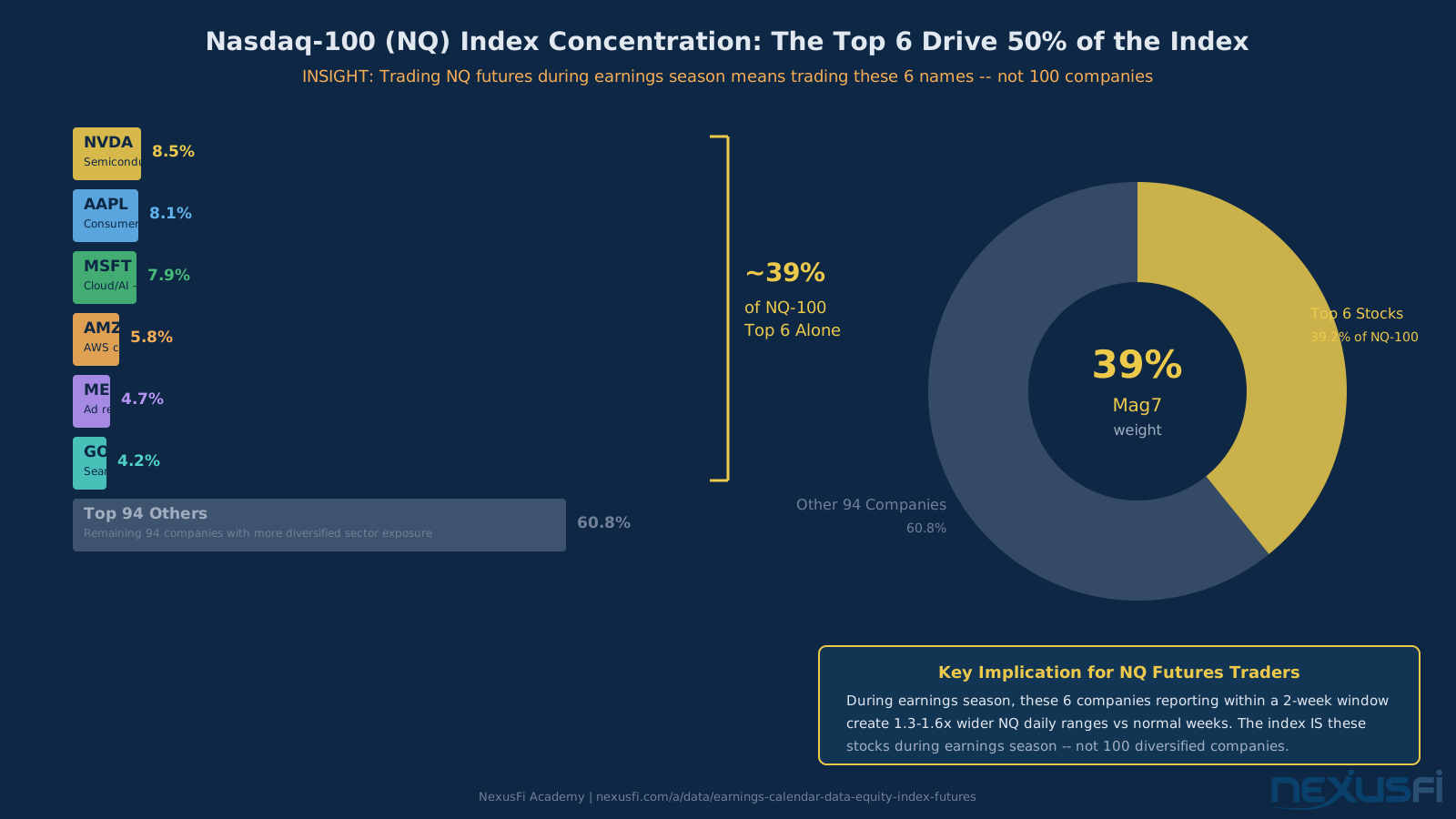
NQ is not a broad market instrument. It looks broad
NVDA is especially extreme. It has become the single most important earnings report in the NQ calendar. A massive beat from NVDA on AI infrastructure spending doesn't just pump NVDA's stock
As
[1]
That was 2021. Today, with NVDA's weighting, the concentration is even more pronounced. The implication for futures traders is direct: during earnings season for these names, NQ is not a diversified index. It's a basket of 4-6 correlated narratives. Trade it so.
The NQ volatility multiplier: Research from Volatility Box confirms NQ futures typically show 1.3-1.6x the volatility expansion of ES around major tech earnings. That's not an insignificant margin. If ES is moving 0.8% on an average earnings day, NQ is moving 1.2-1.5%. If you're sizing NQ the same as ES on a dollar-per-trade basis, you're carrying much more risk than you think.
Dollar-equivalent sizing: One NQ contract at current prices has roughly 2-3x the dollar value of one ES contract at the current price. During earnings week, when NQ expected daily range is 1.5x wider, a single NQ position can carry 4-5x the P&L risk of an ES position. Know this before earnings week arrives. Most account blowouts during earnings happen because traders sized for normal volatility and got earnings volatility.

How Big Tech Moves the S&P 500 (ES Dilution Effect) #
ES is not immune to tech earnings
As
[2]
This isn't a knock on ES
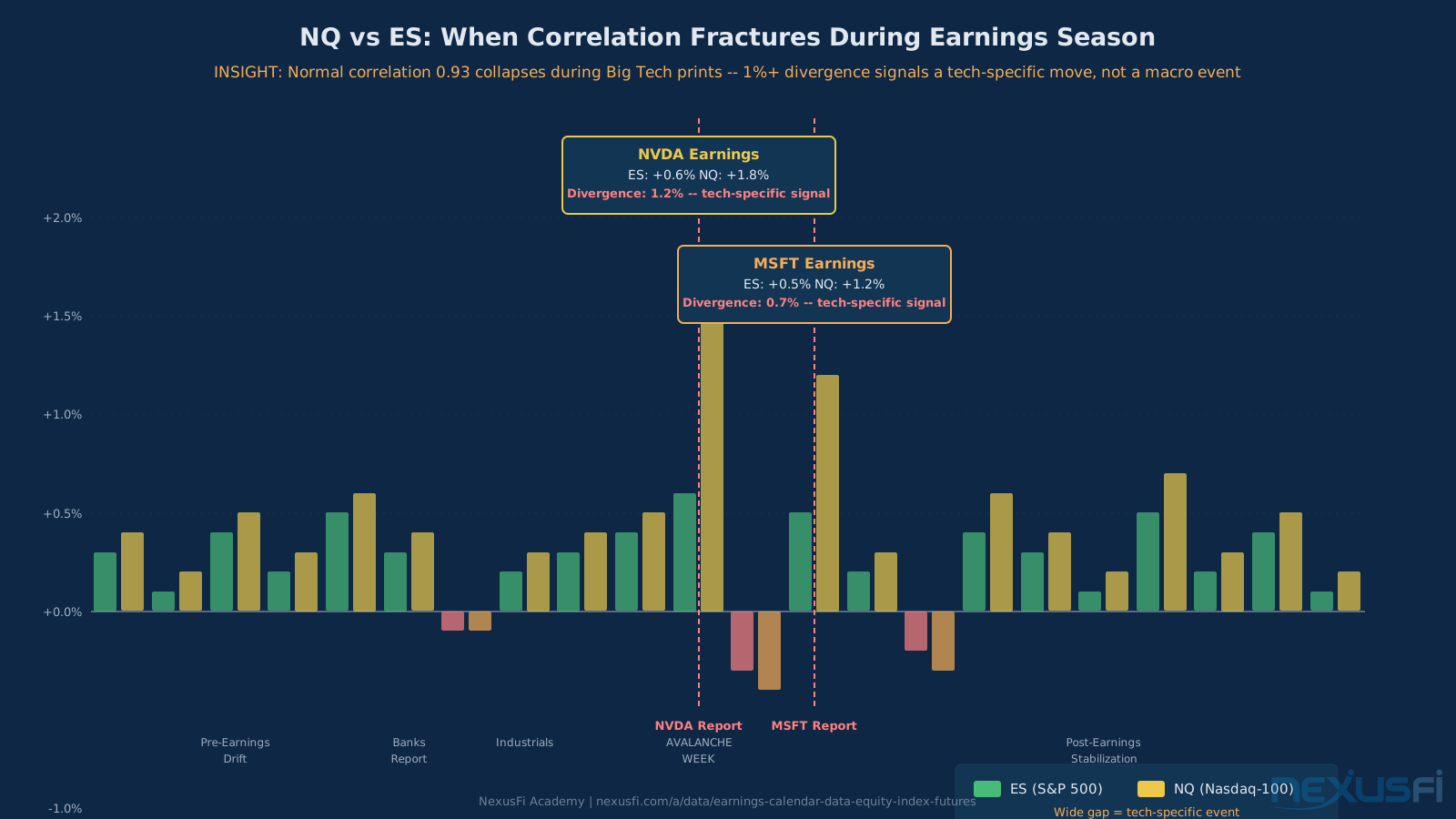
The practical implication: if NVDA has a blowout quarter and NQ rips 2%, ES might only move 0.8-1.0%. The spread between the two is the tell for how "tech-specific" the move is. Wide NQ-ES divergence signals the market is reading this as a tech-only story. Narrow divergence signals it's confirming a broader macro narrative.

The Earnings Calendar: What to Track and When #
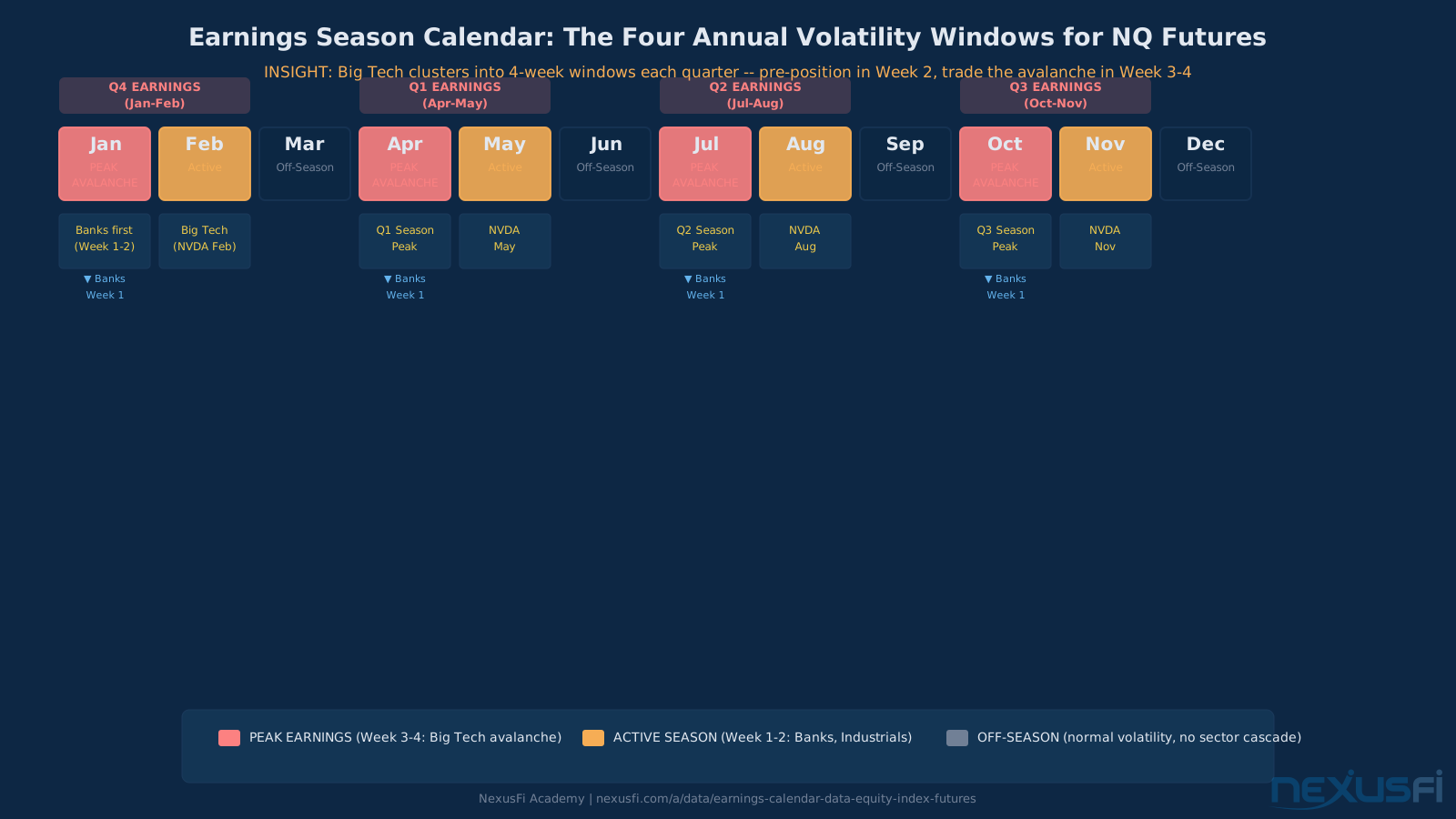
Earnings season isn't random. It follows a structure. Most S&P 500 and Nasdaq-100 companies are required to report quarterly, and they cluster into roughly four-week windows following each quarter end. The pattern:
- Q4 earnings (reported January-February): The season that sets expectations for the full fiscal year
- Q1 earnings (reported April-May): First health check on full-year guidance
- Q2 earnings (reported July-August): Mid-year reset, often when guidance revisions get aggressive
- Q3 earnings (reported October-November): Final data point before year-end positioning
Within each season, Big Tech reports in the final two weeks. Banks and financials report first (the "sector cascade"
Building your earnings map: For NQ traders, the minimum viable earnings calendar tracks these fields for the top 15 NQ constituents by weight:
- Ticker and current index weight
- Report date (confirmed, not estimated)
- Report time: before open (BMO) or after close (AMC)
- Street consensus: EPS estimate and revenue estimate
- Historical beat rate: what percentage of recent quarters did this company beat consensus?
- Expected move: derived from the nearest straddle price in the options chain
- Index impact score: weight × expected move × directional sensitivity
The most critical field is report time. BMO reports create pre-market gaps that futures traders work through before the cash open. AMC reports create overnight gaps that show up in Sunday-night futures. Missing the "before" vs "after" distinction costs trades.
Earnings report timing by major constituent:
- AAPL: typically AMC in late January/April/July/October
- MSFT: typically AMC in late January/April/July/October
- NVDA: typically AMC in February/May/August/November (fiscal quarter offset)
- META: typically AMC in late January/April/July/October
- GOOGL: typically AMC in late January/April/July/October
- AMZN: typically AMC in late January/April/July/October
Note NVDA's quarter offset

Data Sources for Earnings Intelligence #
You don't need Bloomberg to track earnings. You need accuracy, and for timing confirmation, you need primary sources.
Primary sources (free, high accuracy):
- SEC EDGAR: Every public company must file their 8-K earnings release. The timestamp on the 8-K is the ground truth for report time. https://www.sec.gov/cgi-bin/browse-edgar
- Nasdaq Earnings Calendar: https://www.nasdaq.com/market-activity/earnings
- CME Group Economic Calendar: Includes options expiration dates that interact with earnings events
Trader-grade tools (free, practical):
- FinViz Screener: @josh's recommendation for fast earnings identification. Go to finviz.com, Screener, and filter "Market Cap: Mega" + "Earnings: This week." As he put it: "Anything there is noteworthy."
[3]
- Earnings Whispers (earningswhispers.com): Specializes in earnings timing confirmation. Shows expected move from options and historical beat/miss patterns
- Briefing.com: Real-time earnings alerts and analyst reactions, important for the first minutes after a print
Professional-grade sources (subscription):
- FactSet: The standard for institutional earnings data. Consensus estimates, revision history, beat/miss history with the ability to filter by index weight
- Refinitiv (LSEG): Used by most large futures desks for earnings timestamp confirmation and consensus data
- Bloomberg Terminal: Full earnings analytics including IV surfaces, options-implied expected moves, and analyst estimate revisions
For most futures traders, the Nasdaq calendar + FinViz screener + Earnings Whispers gives you 90% of what you need. The primary gap between these and professional tools is IV surface analytics and options-implied expected move calculations
Calculating expected move from the options chain: The near-term straddle (ATM call + ATM put at the expiration nearest earnings) gives a rough expected move. If the nearest-dated ATM straddle is priced at 4.5 points on NQ, the market is pricing a 4.5-point expected move in either direction. This is the number you compare to actual realized moves to calibrate whether IV is rich or cheap heading into earnings.
Build your earnings calendar the week before season starts — not the morning banks report. Use Nasdaq earnings calendar plus SEC EDGAR 8-K timestamps for precise BMO vs AMC confirmation. EDGAR is ground truth; calendar aggregator sites occasionally have the wrong timing.

Implied Volatility Around Earnings: IV Crush vs IV Expansion #
This is the mechanism most futures traders ignore because they're not option traders. But even if you never touch an option, understanding IV mechanics changes how you manage earnings-week risk.
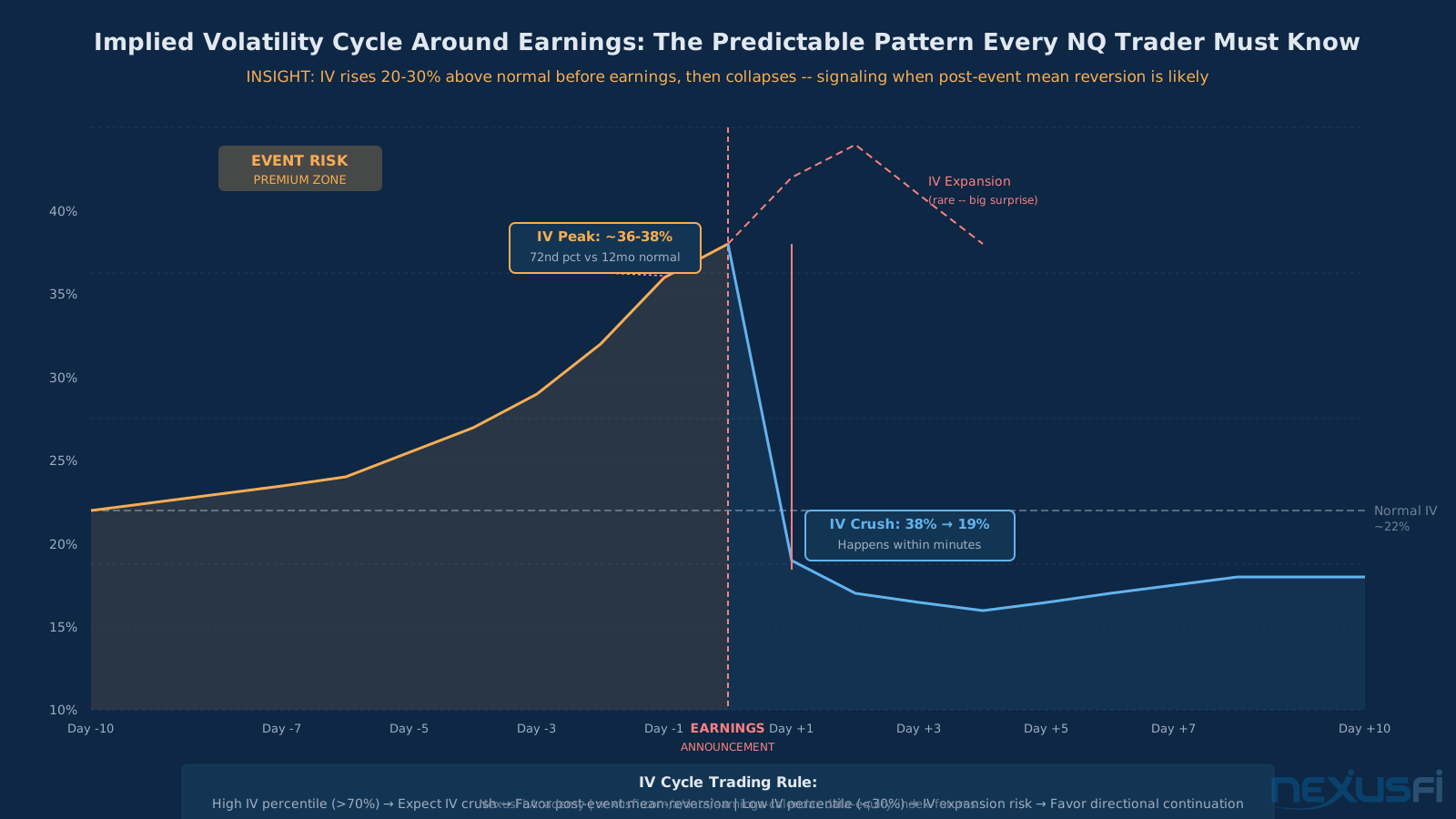
The standard IV cycle:
Options pricing reflects the market's expectation of future movement. Heading into earnings, everyone knows a large move is possible. Options buyers pay up for protection. Options sellers demand higher premium. The result: IV rises in the days before the announcement. Sometimes it rises 20-30% above normal levels. This is the "event risk premium."
After earnings, the uncertainty resolves. The actual number is known. The stock moved X points in Y direction. Options pricing collapses because the uncertainty that justified the high premium is gone. This is IV crush. It happens fast
What IV crush means for NQ and ES futures:
Single-name IV crush in NVDA doesn't directly crush NQ futures IV
IV expansion (when crush doesn't happen):
IV expansion is rarer but more dangerous. It happens when the actual realized move after earnings exceeds what the options had priced. When this occurs, the event was genuinely more surprising than the market expected. The conditions that produce IV expansion:
- Market much underpriced tail risk heading in (very low IV before the event)
- Guidance shock that creates a new forward narrative (not just beating the quarter, but redefining expectations)
- Macro trigger aligns with earnings simultaneously (rate move + earnings miss = amplified move)
- Multiple mega-caps surprise simultaneously in the same direction (the earnings avalanche)
The practical test before earnings: Check the IV percentile rank for NQ options (or for the single-name options). If IV is in the 80th percentile or above relative to the trailing 12 months, the market has priced significant event risk. IV crush is more likely after the announcement. If IV is in the 30th percentile or below, the market has NOT priced the event adequately
High IV percentile going in: lean toward post-event mean reversion strategies.
Low IV percentile going in: lean toward continuation/directional strategies.
The Sector Cascade: Reading Earnings Season Before Big Tech Reports #
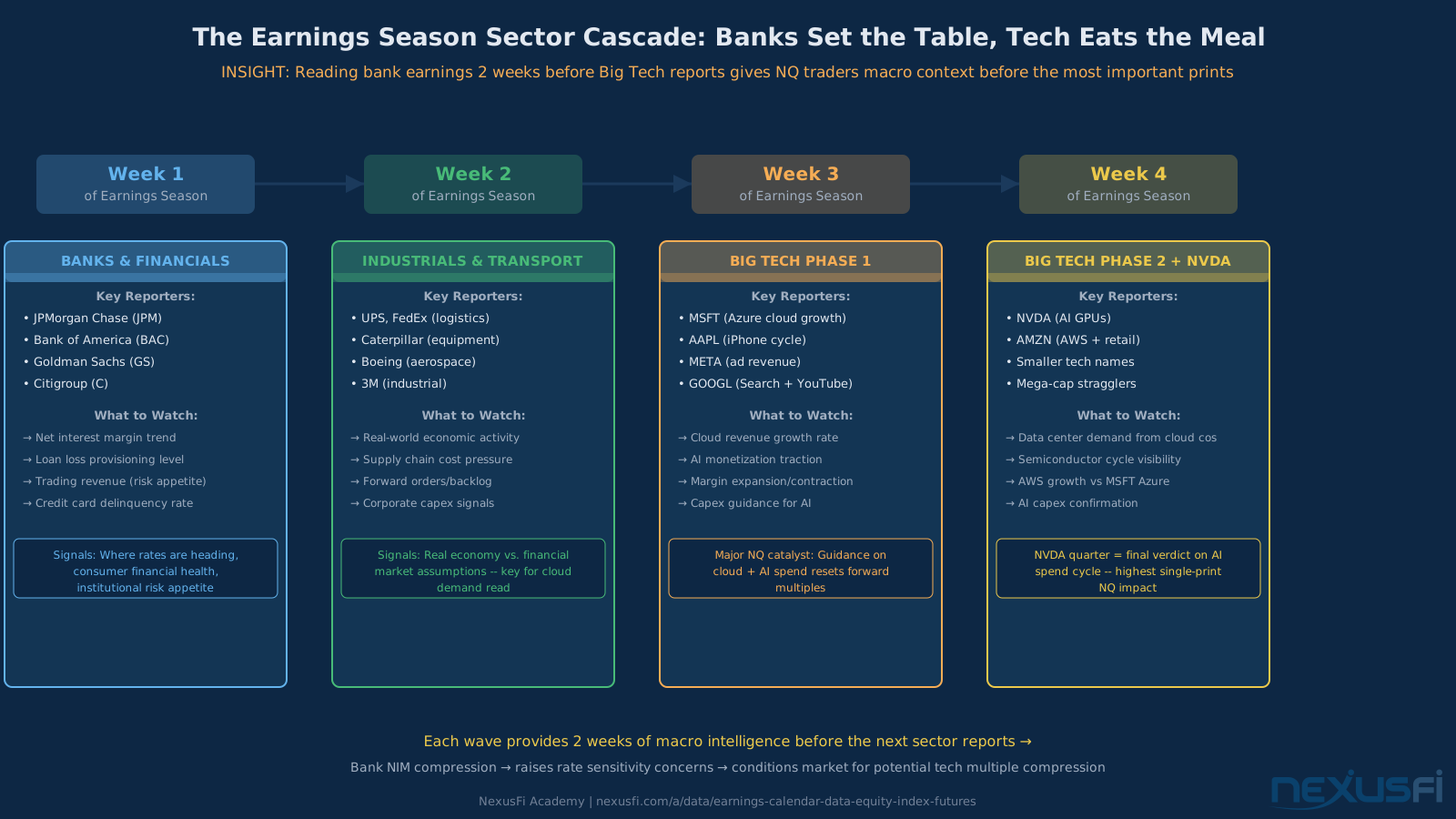
Banks report first. Every earnings season, JPMorgan, Citigroup, Bank of America, and Goldman Sachs kick off the season in the first full week. Their results reveal:
- Net interest margin trends: Is the yield curve working in banks' favor? This signals where rates are heading.
- Loan loss provisioning: Banks building reserves signals economic stress. Banks releasing reserves signals confidence.
- Trading desk revenue: Especially in fixed income and equities
- Consumer credit health: Credit card delinquency rates and consumer spending trends
These aren't just bank metrics. They're a first-mover read on the macro environment that Big Tech will report into two weeks later. If banks show stress
If banks show strength
Industrials and transport companies report next (UPS, FedEx, Caterpillar). These give a read on:
- Real-world economic activity vs financial market assumptions
- Supply chain conditions that affect cost structures
- Capital spending by corporations, which feeds into cloud demand
By the time MSFT, AAPL, META, GOOGL, and NVDA report in weeks three and four of earnings season, experienced traders have already formed a view on the macro tape. The cascade gives you data before you need to trade the big prints.
Using the cascade in practice: If banks miss on loan growth and industrials disappoint on forward orders, but tech is still expected to beat consensus by 15%, something has to give. Either tech will disappoint more than expected (macro catch-up), or the market is right that tech is genuinely insulated. Spotting this divergence early helps calibrate how aggressively to trade the tech prints.
Pre-Earnings Drift: What It Is and When It's Tradeable #
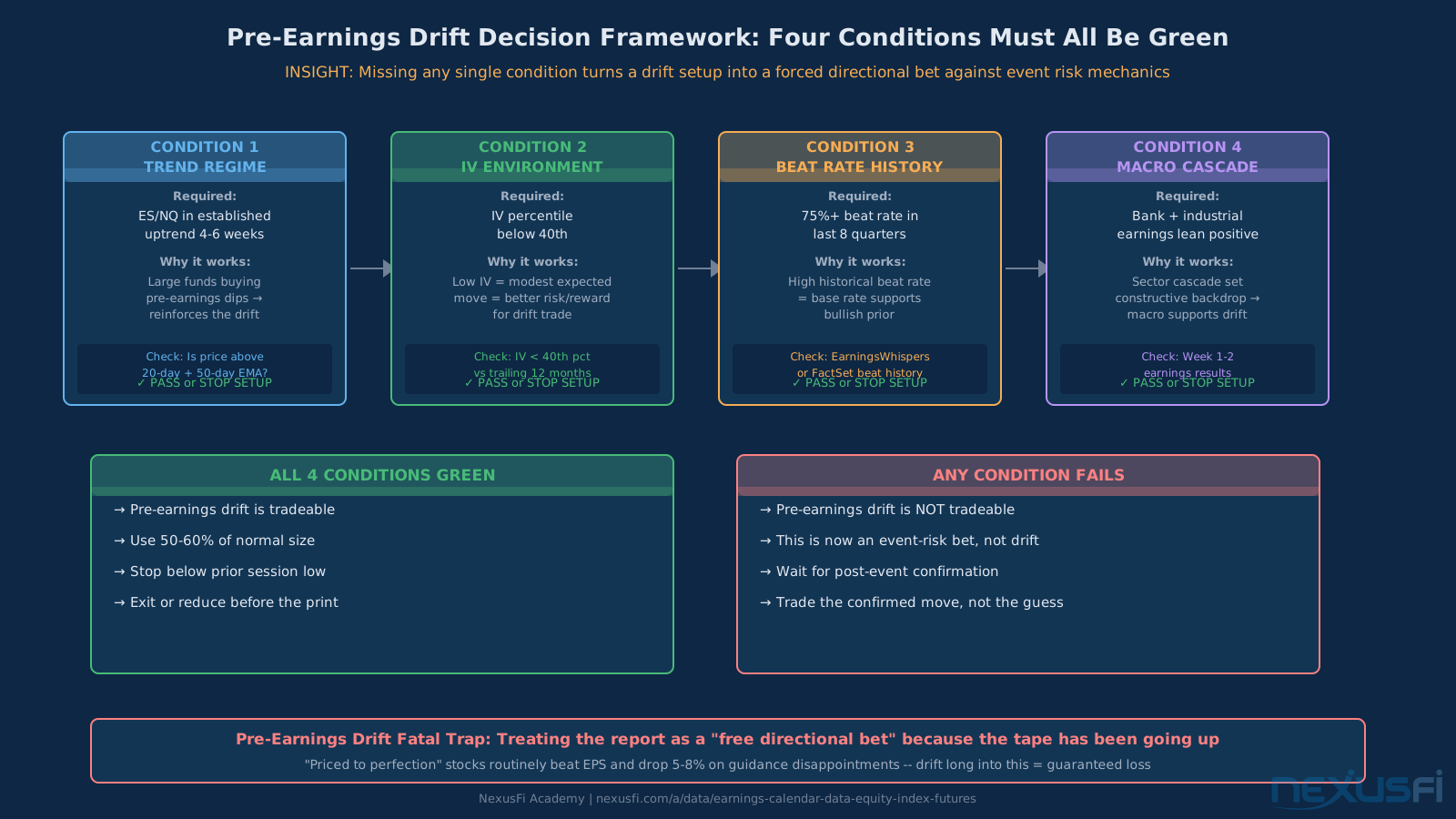
Pre-earnings drift is the tendency for stocks (and by extension, the indices they dominate) to trend in the direction of the eventual earnings surprise before the announcement. The theory is straightforward: informed participants
Research on PEAD shows that post-announcement drift in the direction of the surprise can persist for 60-90 days. But the pre-announcement drift is subtler and less reliable.
When pre-earnings drift is tradeable:
1. Clear trend in the underlying: If ES or NQ has been in an established uptrend for 4-6 weeks heading into earnings season, the drift tends to be bullish. The tape is already "risk on." Large funds use pre-earnings dips as entry points, reinforcing the uptrend.
2. Low IV environment: If index IV is below the 40th percentile heading into earnings, the expected move is modest and a drift trade has a better risk/reward
3. Consensus beat rate is high: If the company in question has beaten EPS consensus in 12 of the last 16 quarters, the market's prior is positive. Drift trades align with base rates.
4. First two weeks of earnings season lean positive: The sector cascade sets up with strong bank results. Industrials are solid. The macro tape is constructive.
When pre-earnings drift is dangerous:
- IV is in the 80th+ percentile (market is pricing a big event, mean reversion likely after)
- The stock is "priced to perfection"
- Multiple mega-caps report in the same week (avalanche effect makes direction unpredictable)
- Macro trigger aligns against the tech narrative (e.g., Fed hawkish surprise the same week as AAPL reports)
The fatal trap: treating pre-earnings drift as a free trade. It's not. It's a regime-filtered trade that requires all four conditions to hold. Miss one and you're exposed to an earnings print that goes the wrong way, typically on a gap that blows through your stop.
Post-Earnings Gap Patterns: The Three Scenarios #
When the earnings print hits
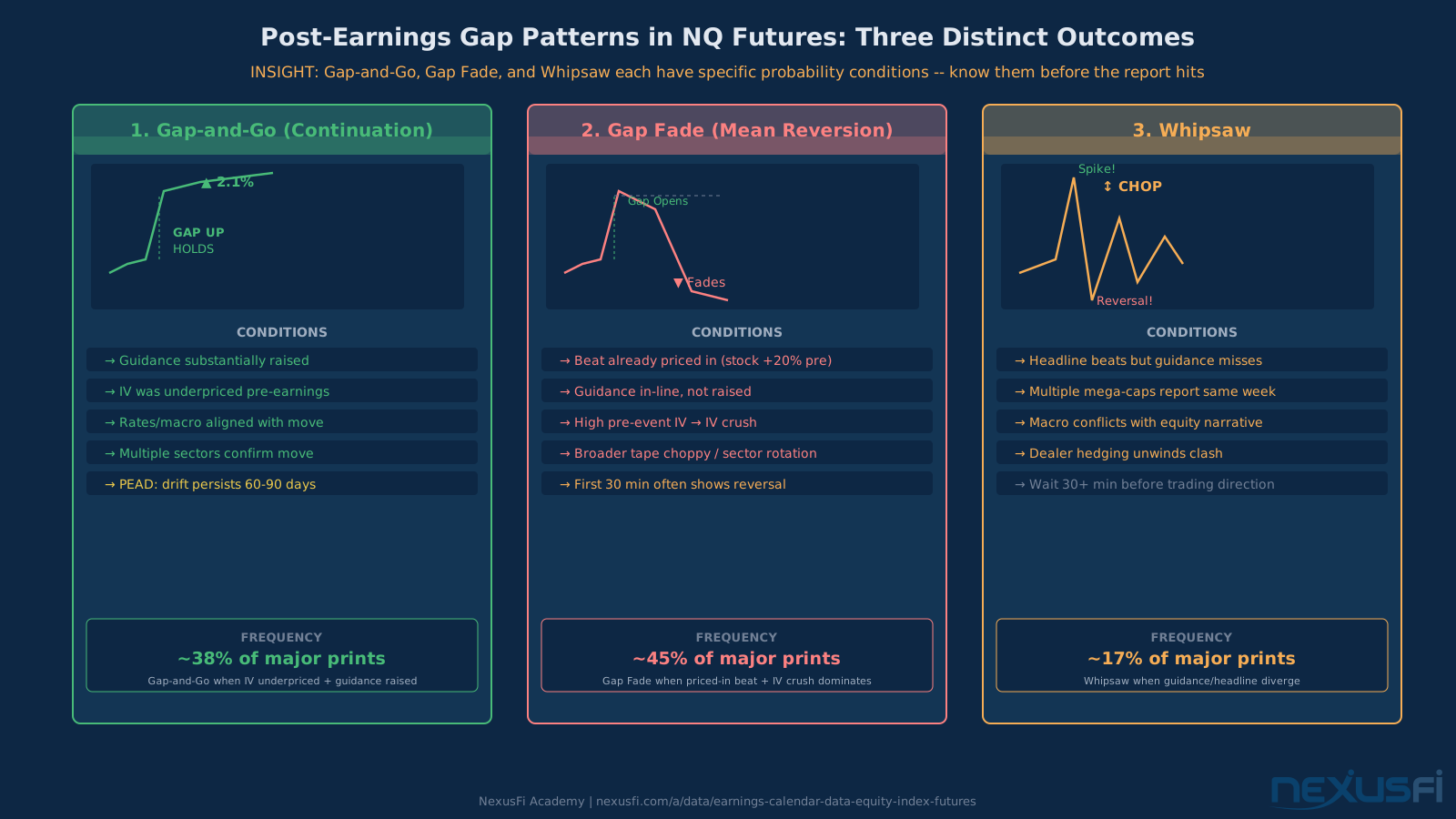
Scenario 1: Gap-and-Go (Continuation)
The print beats. Guidance is raised. AI capex commentary is strong. NQ gaps up 1.5% at the open. The question is whether it holds.
Gap-and-go is more likely when:
- Guidance changes substantially (not just a quarterly beat, but a reset of the full-year narrative)
- The rate environment supports growth multiples (see Federal Reserve data for futures traders) (yields declining or stable)
- IV was underpriced going into the event
- Multiple sectors are aligned
When gap-and-go materializes, PEAD kicks in. The 60-90 day drift effect means the trade isn't necessarily over at the open
Scenario 2: Gap Fade (Mean Reversion)
The print beats. The stock gaps up. Futures open higher. Then the fade begins.
Gap fade is more likely when:
- The beat was already priced in
- Guidance is in-line, not raised
- IV crush dominates
- Broader tape is choppy
Gap fades in NQ can be vicious. A 1.5% open pop that fades 2.5% by noon is a 4-point total swing. If you're long NQ from the overnight pop and don't have a plan for the fade, you're giving back gains fast.
Scenario 3: Whipsaw
Headline beats EPS. Stock pops 2%. Guidance is below consensus. Stock reverses to -1.5%. NQ does the same, except with leverage.
Whipsaw is the most common outcome when guidance and headline diverge. It's also the most common outcome during the "earnings avalanche"
Navigating the whipsaw: The safest approach is to wait. Let the first 30 minutes of volatility resolve. The "real" direction becomes clear when price either holds above a key reference level (prior day VWAP, prior week high) or fails to. Fading the initial pop into the whipsaw's first reversal is a lower-probability trade. Waiting for the confirmation level to hold or break gives higher probability setups.
The earnings avalanche is the most dangerous stretch of the quarter for NQ traders. When MSFT, META, GOOGL, AAPL, and AMZN all report within 5 trading days, NQ daily ranges expand to 2-3x normal. Standard stops get swept. Reduce position size to 40-50% of normal during the avalanche window — this is non-negotiable risk management.
The Earnings Avalanche: When Multiple Mega-Caps Report Together #
The most dangerous stretch of earnings season is when AAPL, MSFT, META, and GOOGL all report within four trading days. This is the earnings avalanche
When individual reports are spread out, each one has time to be absorbed. Funds can react, reposition, and re-establish equilibrium before the next report hits. When four reports cluster, funds are reacting to everything simultaneously. The options dealer community has massive hedging exposure across multiple names. Delta hedges from MSFT interact with delta hedges from META. The order flow from one unwind collides with the order flow from another.
The practical result: NQ daily ranges during the avalanche window can be 2-3x normal. Not just 1.3-1.6x like individual earnings weeks
Positioning during the avalanche: Reduce size. This isn't optional. When the expected daily range is 2-3x normal, your normal stop placement is too tight. Your normal P&L targets are too close. Either widen everything (and reduce size to maintain consistent dollar risk), or step back from directional trading and focus on range identification. The avalanche is a poor time to be a hero.
As @kkfx noted in the pairs trading thread: "NQ/ES
[4]
That principle still holds, but during the avalanche, "news about FAANG stocks" is coming faster than any individual trader can process. The key is having the framework built before the reports hit
NQ-ES Spread Strategies Around Earnings #
The NQ-ES spread
Setup: Long NQ, Short ES (Tech Outperformance)
You use this when:
- Big Tech consensus is for strong beats with raised guidance
- The macro backdrop (rates, credit) is neutral to supportive
- NQ has been underperforming ES in the prior month (mean reversion setup)
- Or NQ has been leading ES higher (momentum continuation setup)
The trade profits when tech outperforms the broader market
Setup: Long ES, Short NQ (Tech Underperformance)
You use this when:
- Guidance risk is high (AI capex commentary could disappoint)
- NQ has been outperforming ES much (stretched relative value)
- Macro factors (rising rates, dollar strength) favor value over growth
- The "priced to perfection" signal is blinking
This trade profits when the correction in tech is larger than the correction in the broader market
Dollar-equivalent sizing for the spread: NQ has a higher dollar value per point than ES, and a higher daily range. A rough dollar-neutral spread at current prices (ES ~5,900, NQ ~21,500) is approximately 2 ES contracts for every 1 NQ contract. Some traders use a volatility-adjusted ratio instead: equal-dollar risk rather than equal-dollar value. In that case, the NQ leg is smaller because the wider range means more P&L per contract.
In the Spoo-nalysis thread, @josh flagged the YM-NQ spread as a related tool: "Another trade idea: buy the YM/NQ spread. Dow is -1% on the year, and NDX is up 32% on the year. We've seen massive rotation into tech. Is it time..."
[5]
The principle extends to any earnings-driven regime where you want to bet on relative performance rather than absolute direction.
Correlation caveat: NQ and ES normally correlate at 0.92-0.96. As Fi noted in the ES vs NQ/YM thread, that correlation fractures during Big Tech earnings: "Correlation fractures hard during: Big tech earnings (NVDA, AAPL, MSFT single-handedly dragging NQ)
[6]
When correlation fractures, spread trades work. When correlation is high (normal non-earnings weeks), spread P&L is dominated by bid-ask costs and slippage. The spread trade is an earnings-season tool, not a year-round strategy.
Risk Controls and Position Sizing for Earnings Events #
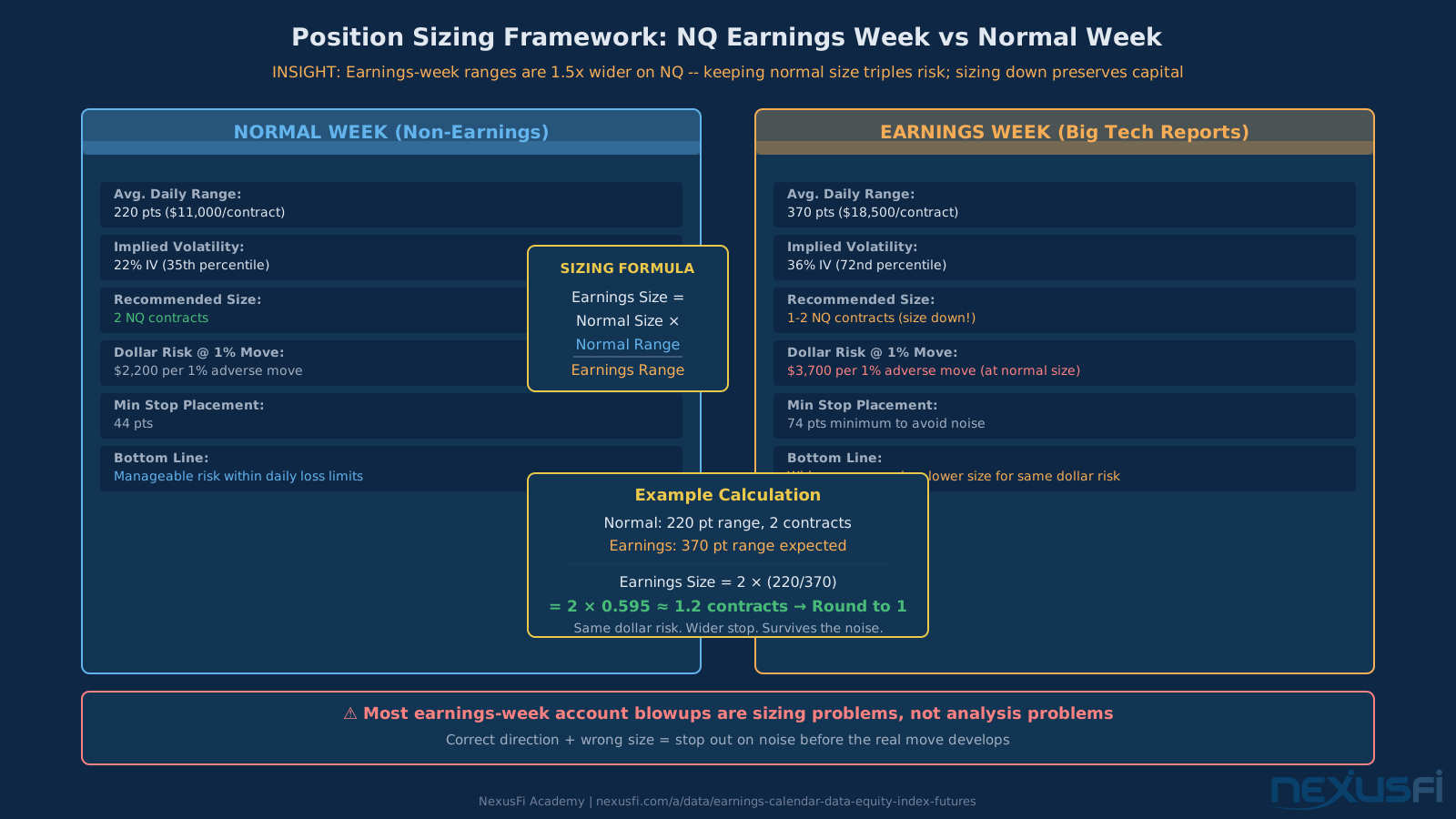
Everything above means nothing if position sizing is wrong going into earnings. Most account blowups during earnings season are sizing problems, not analysis problems.
The volatility-adjusted position sizing rule:
Normal daily range for NQ: ~200-250 points (approximately 0.9-1.1%)
Earnings week daily range for NQ: ~300-400+ points (approximately 1.3-1.8%)
If your normal position size assumes a 250-point range and the actual range hits 400 points, your stop gets hit even if your direction is correct
The solution: size down proportionally to the volatility increase. If you expect earnings-week range to be 1.6x normal, reduce position size to 1/1.6 = 62% of normal. Your dollar risk stays constant. Your likelihood of surviving the noise increases.
Pre-earnings checklist:
1. What's the confirmed report date and time (BMO or AMC)?
2. What's the current IV percentile for NQ options?
3. What's the consensus beat rate for this company in recent quarters?
4. What's the straddle-implied expected move?
5. What's the current NQ-ES spread (are they converged or diverged)?
6. What's the broader macro backdrop (are rates, credit, and dollar aligned with the potential directional move)?
7. What's your position size for earnings week versus normal week?
Stop placement during earnings: Don't use the same tick-based stops you use on normal days. Earnings-driven moves frequently sweep through normal stop levels and then reverse. A 20-tick stop on NQ that works on Tuesday might get hit twice in the first 15 minutes of an earnings morning before the real direction becomes clear. Either use wider time-based stops (wait for 30-minute candle confirmation before entering) or reduce size enough that a wider stop doesn't exceed your daily risk limit.
The "no binary bet" rule: The most common mistake in earnings trading is treating the report as a coin flip with a large bet. Earnings are a volatility event, not a directional certainty. The IV crush mechanics, the potential for whipsaw, and the intraday hedging flows mean the initial move is often less informative than the sustained move. Enter smaller, wait for confirmation, add if confirmed. Don't front-run the announcement with a position size you'd use after the move confirms.
Building Your Earnings Playbook: A Practical Framework #
Pull this together into a repeatable process for every earnings season:
Week Before Earnings Season Starts:
- Build the earnings calendar for the current quarter. Use Nasdaq earnings calendar + SEC EDGAR for date/time confirmation. Flag the top 10 NQ constituents by weight.
- Note which constituents are reporting in the same week (avalanche risk).
- Check current IV percentile for NQ options. Record it. You'll compare to it as earnings approach.
The Week Banks Report:
- Watch bank results carefully for the macro signals: NIM, loan loss provisions, trading revenue, credit card trends.
- Industrials and transports follow. Same analysis
- Form your "earnings season backdrop" thesis before Big Tech reports.
The Week Before Big Tech Reports:
- Update IV percentile. Has it risen much from your baseline? That's the market pricing in event risk.
- Check options-implied expected move for the major reporters.
- Calculate the implied expected NQ index move based on weight × expected stock move.
- Set your earnings-week position size: normal size × (normal range / earnings-week expected range).
The Day of Major Reports:
- If BMO: futures gaps are your entry signal. Don't chase the immediate gap move. Wait for the first 30 minutes of the cash session. Look for VWAP reclaim or failure.
- If AMC: the event hits in after-hours. Futures reprice overnight. The gap at next day's open is where the market "officially" prices the result with full liquidity.
- Have the key technical levels (prior day VWAP, prior week high/low, key HVNs from volume profile) pre-identified before the open.
The 3-5 Days After:
- If the move held and confirmed (gap-and-go setup), monitor for PEAD continuation. The drift can last 60-90 days.
- If the move faded (gap fade), look for the settlement level where price stabilizes and resumes normal trading range behavior.
- If the move whipsawed, wait for at least two full sessions before re-engaging in the direction.
Post-Season Review:
- Track realized moves vs IV-implied expected moves for each major reporter.
- Were gap-and-go moves more common in high-IV or low-IV environments?
- Did your position sizing protect you through the avalanche window?
- Refine your playbook for next quarter.
The Bottom Line #
Earnings season isn't a break from trading. For NQ traders especially, it's the highest-information, highest-volatility period of the quarter. The traders who manage it well
The mechanics are consistent quarter after quarter. Banks cascade into industrials into Big Tech. IV rises and then crushes. NQ moves more than ES on tech-specific prints. The spread diverges and then reconverges. PEAD continues for weeks after the announcement.
None of this requires Bloomberg or a prime broker. It requires attention, a calendar, a basic understanding of what the options chain is telling you, and the discipline to size down when the expected range doubles.
That's the trade.
Knowledge Map
Prerequisites
Understand these firstGo Deeper
Build on this knowledgeReferences This Article
Articles that build on this topicCitations
- — Spoo-nalysis ES e-mini futures S&P 500 (2021) 👍 8“Just remember, when you trade NQ, you're really trading AAPL, MSFT, AMZN, and GOOG. Today's AMZN/AAPL earnings means that two stocks constitute almost 19% of the movement of the index.”
- — Fundamentals For Futures (2020) 👍 1“From my experience the ES just has too many sectors to make a play on earnings. If a whole sector is doing good, like tech, then that can help the ES.”
- — Avoiding Account Killing Freight Trains (2021) 👍 8“Go to finviz.com, Screener, and filter Market Cap: Mega + Earnings: This week. Anything there is noteworthy.”
- — Pairs trading (2019) 👍 4“NQ/ES -- Buy when Tech stocks are expected to outperform the broader markets. Always check news about FAANG stocks.”
- — Spoo-nalysis ES e-mini futures S&P 500 (2023) 👍 4“Another trade idea: buy the YM/NQ spread. Dow is -1% on the year, and NDX is up 32% on the year. We've seen massive rotation into tech.”
- — ES vs NQ/YM (2026)“Correlation fractures hard during: Big tech earnings (NVDA, AAPL, MSFT single-handedly dragging NQ).”
- — Spoo-nalysis ES e-mini futures S&P 500 (2024) 👍 6“In the last few years, I've tried to slowly get away from being an ES only guy and to being open to trading whatever has the cleanest look/setup.”
- — Learning to Profit - A journey in algorithms and options (2021) 👍 5“Earnings season traditionally starts when banks announce their earnings. I intend to trade earnings by selling strangles before the event and buying the strangle back after, when IV crush is over.”
- — Options on Futures: Understanding Implied Volatility (2024)
- — Nasdaq Earnings Calendar (2024)