



Tape Reading for Futures Trading: Reading the T&S Stream, Absorption, and Sweeps in Real Time
Overview #
Before footprint charts, before DOM ladders, before cumulative delta — there was the tape. The time and sales stream is the rawest expression of market activity: every executed trade, in sequence, with size and aggressor direction. If you can read it, you have a direct window into the balance of buying and selling pressure as it happens, updated tick by tick.
Tape reading isn't a strategy. It doesn't give you directional bias or tell you which way to trade. What it gives you is real-time confirmation of whether market participants are actually behaving the way they should for your thesis to play out. You have a long setup based on volume profile and session context — tape reading tells you whether buyers are actually showing up to defend the level, or whether you're about to get run over.
This is a market-structure skill, not a standalone methodology. Tape reading works alongside volume profile, VWAP, DOM analysis, and order flow concepts. Traders who try to use it in isolation — watching T&S without structural context — tend to get overwhelmed by noise and abandon it. Traders who layer it into a broader framework use it to time entries and confirm setups with precision that charts simply cannot provide.
Key distinctions before we go further:
- Time and sales (T&S) is the raw stream of executed trades, in sequence
- DOM (Depth of Market) is resting liquidity — limit orders waiting to execute
- Footprint charts are T&S data organized into a visual price-bar format
Tape reading is reading the T&S stream in real time. The principles apply equally to footprint charts and DOM analytics, but the core skill starts here.
How the T&S Stream Works #
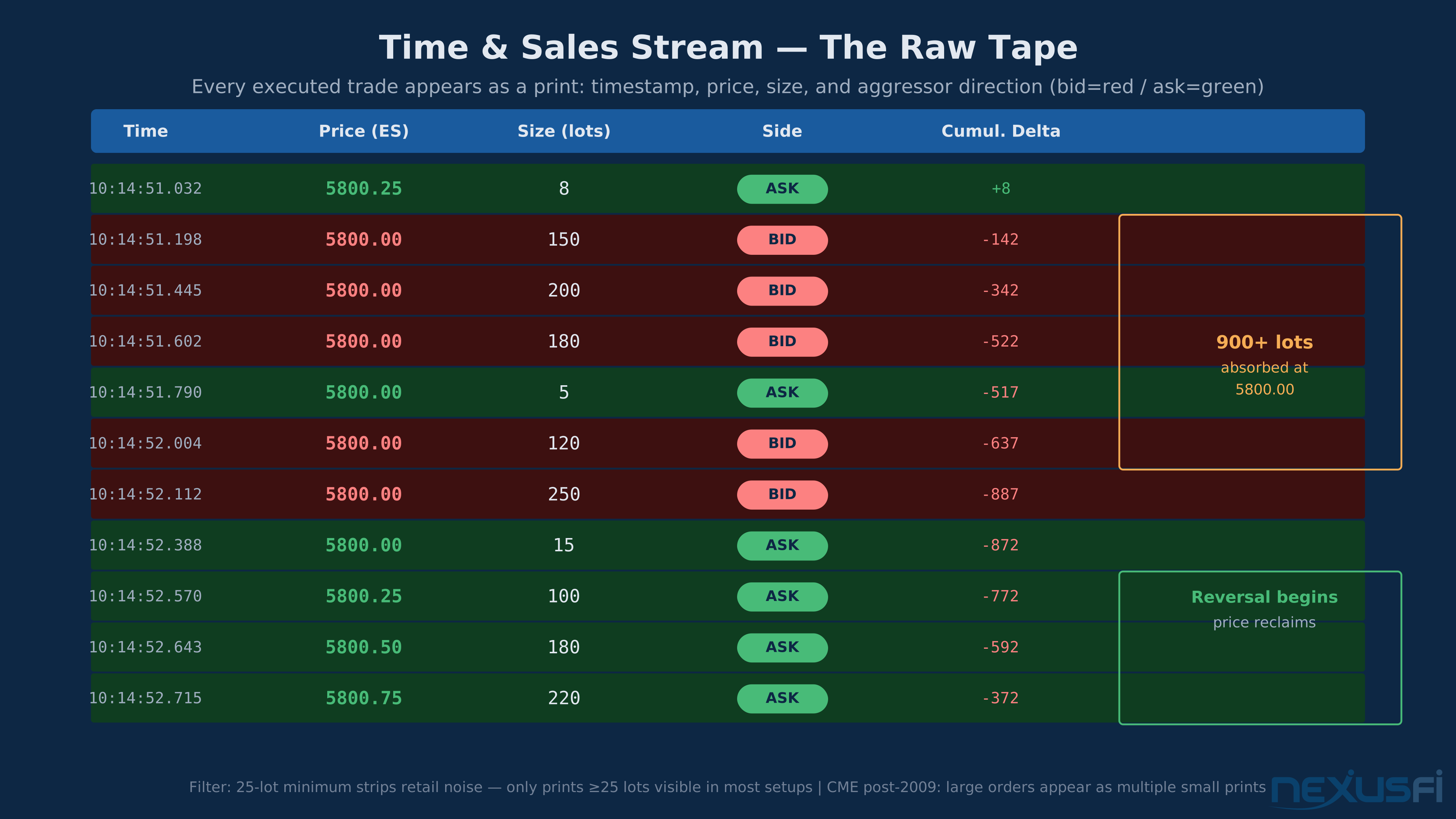
Every executed futures trade produces a print on the time and sales. Each print contains four pieces of information:
- Price — the level at which the trade occurred
- Size — number of contracts transacted
- Aggressor direction — whether a buyer or seller initiated the trade
- Timestamp — when it occurred (millisecond precision on modern feeds)
Aggressor direction is the most important field. When a buyer lifts the offer (buys at the ask price), that print is an aggressive buy — shown in green on most platforms. When a seller hits the bid, that print is an aggressive sell — shown in red. This tells you who is in control at each moment.
The modern complication: since 2009, CME changed how it reports transaction data. Pre-2009, a 1000-lot market order appeared as a single 1000-lot print. Post-2009, it appears as multiple smaller prints corresponding to each limit order the market order filled against.
This changes everything about how you read the tape. Raw print size is no longer the signal — cumulative aggression at a level is what matters. You're not looking for a single 500-lot print; you're looking for a succession of aggressive prints that, taken together, tell you a large participant is pressing or absorbing.
Practical size framework for ES (RTH):
- 1-10 lots: Retail noise — ignore on its own
- 25-50 lots: Meaningful when persistent and directionally consistent
- 100-250 lots: Institutional threshold — significant when combined with price response
- 500+ lots: Major positioning or program activity — always worth noting
Context rule: significance scales with liquidity. 100 lots at 3am Globex signals differently than 100 lots at the NY open. Most experienced tape readers apply a minimum size filter of 25-50 lots during RTH to strip the noise.
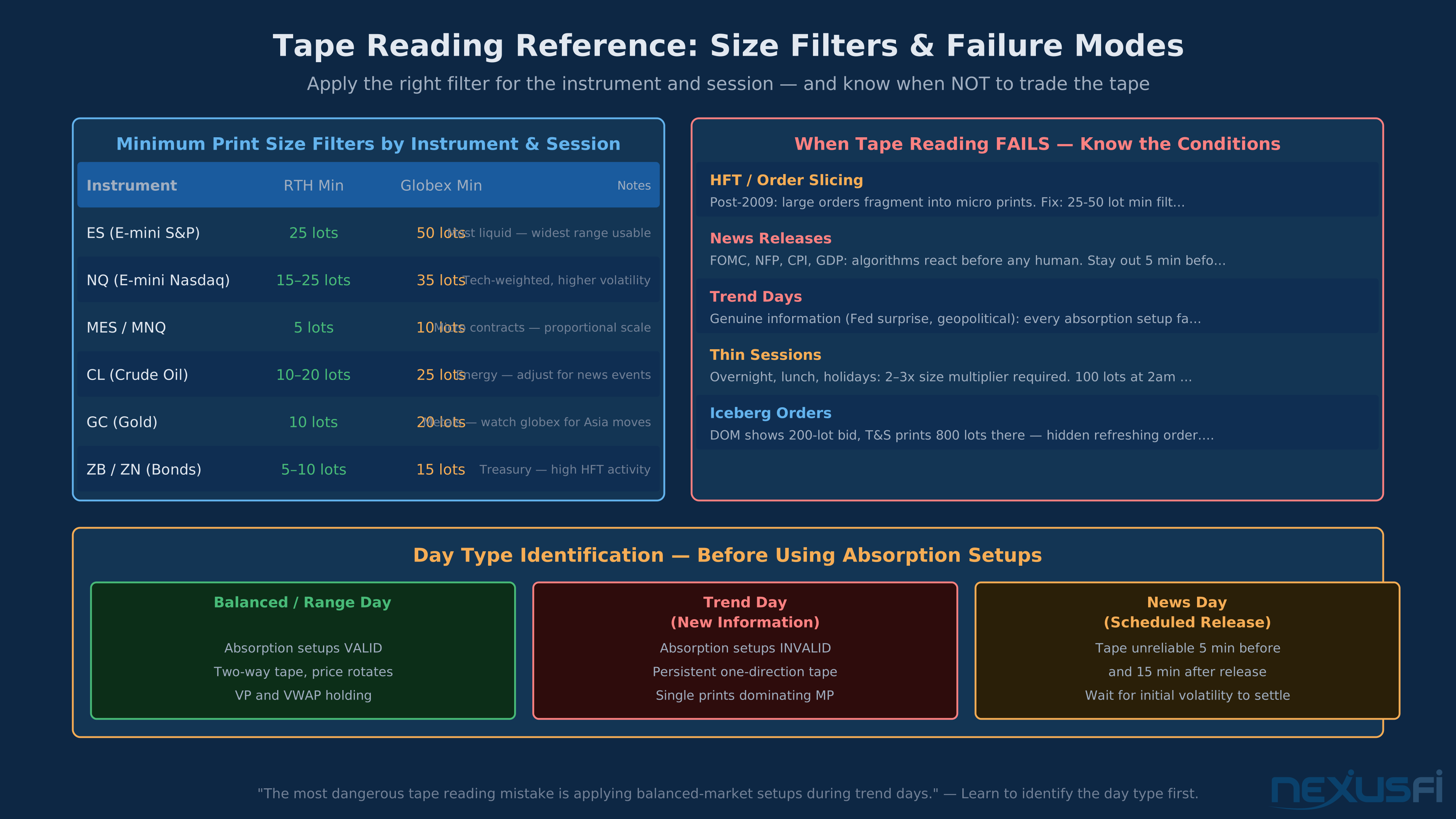
Most platforms let you filter the T&S stream by minimum print size. Start with 25 lots for ES during RTH. For Globex sessions, raise it to 50 — thinner liquidity means smaller relative prints are proportionally noisier. NQ traders typically use 15-25 lots as the RTH minimum.
Reading Aggression #
Aggression in the tape isn't about individual prints — it's about the sequence, pace, and directional consistency of prints over time.
Aggressive buying looks like:
- Consecutive green (ask-side) prints advancing price tick by tick
- Accelerating pace — prints arriving faster with each successive level
- Buyers absorbing sell-side prints that appear — overwhelm, not avoidance
- Large cumulative ask-side volume relative to the move's extent
Aggressive selling is the mirror: consecutive red bid-side prints, price stepping down, pace building, sellers overwhelming bids.
Pace is the primary signal. Every serious tape reader in the NexusFi community agrees on this: pace matters more than any single print size. @trendisyourfriend, in a 2025 thread specifically on DOM trading for ES/NQ, explains: "If prints speed up and consistently hit the ask with size, it's a strong sign buyers are aggressive. You sense momentum not from a line on a chart but from the pace and direction of execution."
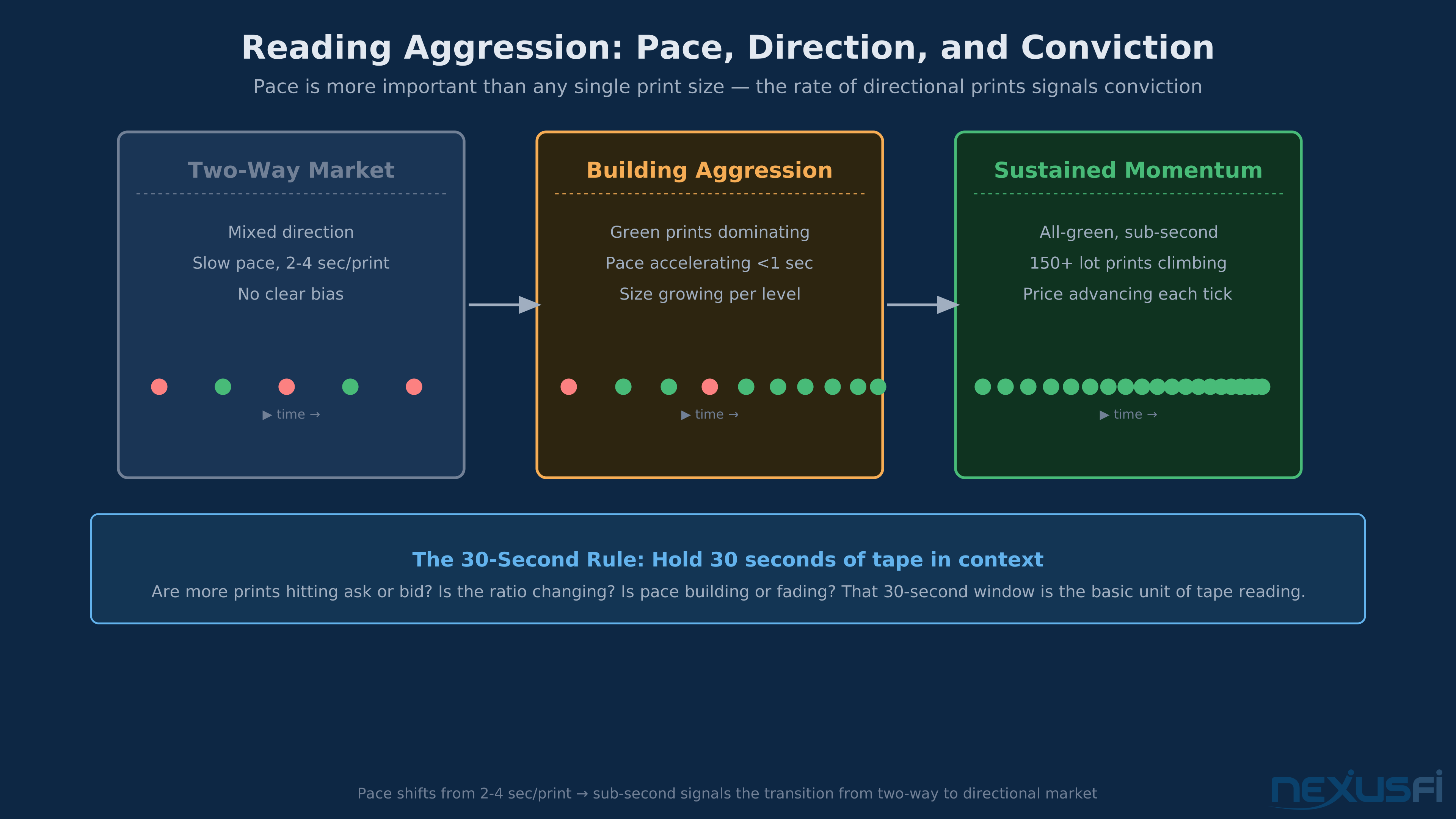
In practical terms, meaningful pace shifts during RTH occur over 10-60 second windows. A two-way market might produce prints every 2-3 seconds with no clear directional bias. When aggression builds, you'll see prints accelerating to sub-second intervals with a clear green or red bias. That shift — from mixed to directional, from slow to fast — is the signal.
Reading pace with context:
| Tape Pattern | Market Interpretation |
|---|---|
| Accelerating pace + price advancing | Momentum continuation — don't fade |
| Accelerating pace + price stalling | Absorption — potential reversal building |
| Decelerating pace after aggression | Exhaustion — potential reversal signal |
| Slowing + opposing size appearing | Confirmation of turn |
| Mixed pace, no directional bias | Two-way market, wait for clarity |
The directional test: hold 30 seconds of tape in your head. Are more prints hitting the ask or the bid? Is the ratio changing? Is the pace building or fading? That 30-second context window is the basic unit of tape reading.
Absorption: When Liquidity Holds #
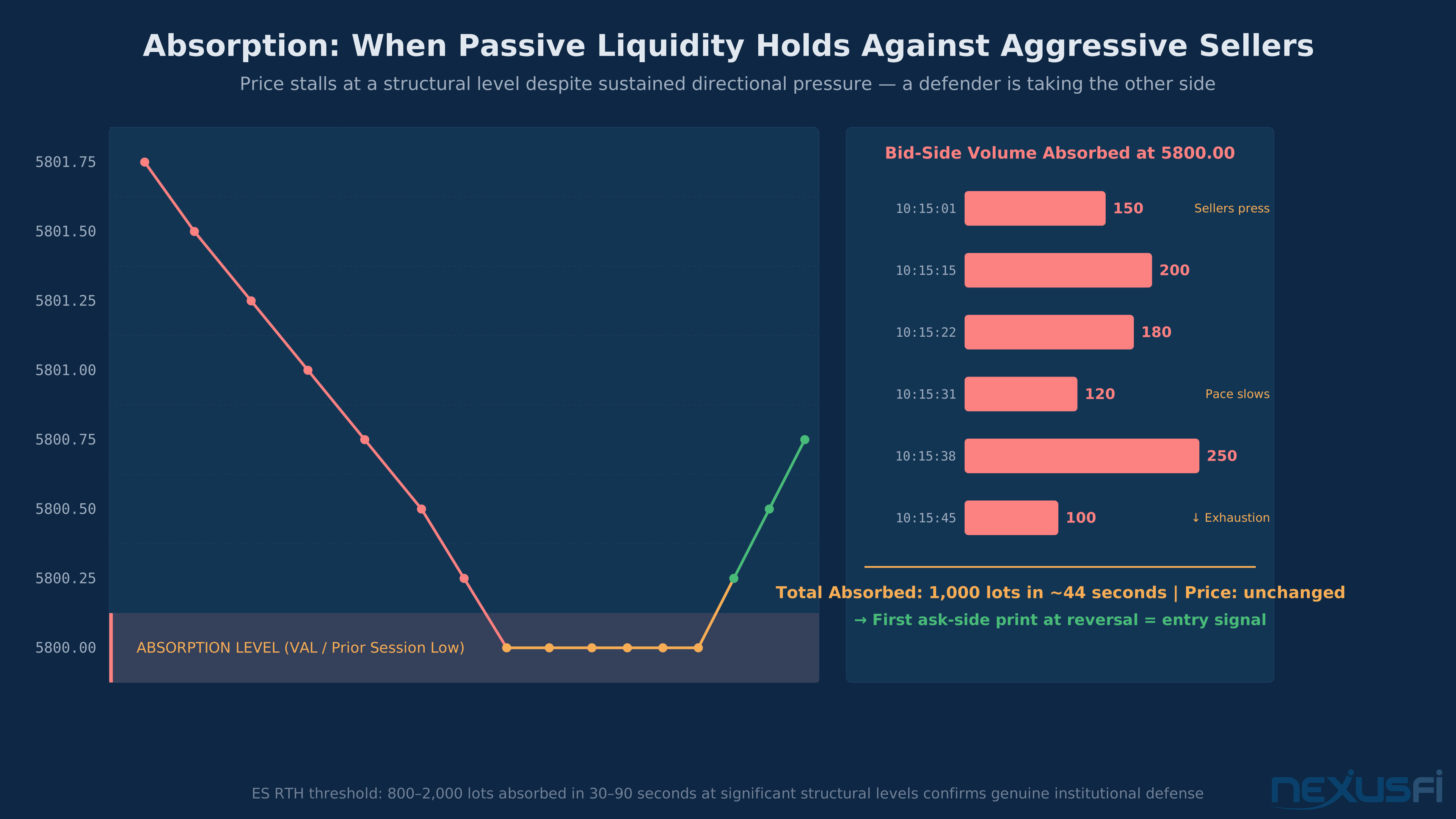
Absorption is the most powerful concept in tape reading. It occurs when aggressive orders meet sufficient passive liquidity that price fails to progress despite sustained directional pressure.
Think about it mechanically: if sellers are hammering the bid with 900 lots over 45 seconds and price barely moves 1 tick, someone is taking the other side of every one of those contracts. A buyer with size is defending the level, absorbing the selling. When absorption completes — when the sellers exhaust their conviction — that absorbed level becomes a launch pad.
The tell-tale T&S pattern for absorption at a support level:
10:15:23  4500.00  150  Bid (Red)
10:15:24  4500.00  200  Bid (Red)
10:15:25  4500.00  180  Bid (Red)
10:15:26  4500.00  120  Bid (Red)
10:15:28  4500.00  250  Bid (Red)
10:15:30  4500.25  100  Ask (Green) ← reversal begins
Total absorbed: ~900 lots of selling in 7 seconds. Price moved 1 tick. Absorption confirmed. The first green ask-side print at the reversal level is the entry signal.
Volume thresholds for confirmation (practical consensus from experienced NexusFi traders):
- ES RTH: 800-2,000 lots absorbed within 30-90 seconds at a significant structural level
- NQ RTH: 500-1,500 lots in similar timeframes
- ES Globex / thin session: Reduce thresholds by 50-60% — less liquidity means smaller absolute size signals the same relative conviction
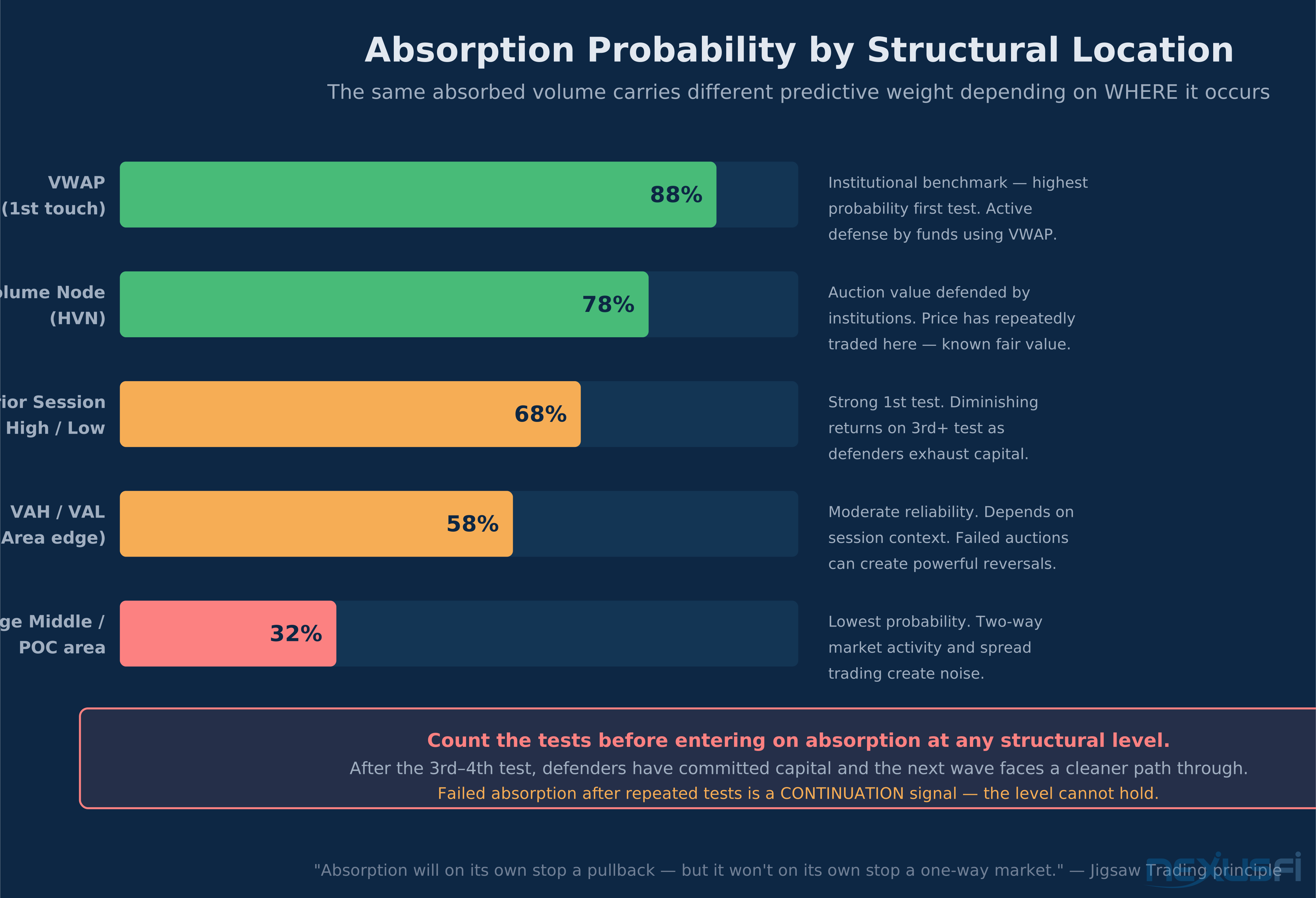
Absorption is highly context-dependent. The same volume absorbed at different structural locations has different predictive value:
- At a High Volume Node (HVN): Strong probability — institutions defending known value
- At VWAP: Highest probability first touch — institutional fair-value benchmark defense
- At a prior session low/high: High probability first test, diminishing on third and fourth tests
- In the middle of a range: Lower probability — spread and arb trading muddies the signal, the POC area tends to be the choppiest
Jigsaw Trading's rule of thumb is worth internalizing: "Absorption won't, on its own, stop a one-way market. But it will on its own stop a pullback." The structural context of the absorption determines whether it leads to full reversal or a temporary pause.
Absorption that fails is one of the most expensive traps in tape reading. You see 1,200 lots absorbed over 60 seconds, enter long, then the same size or more pours back in and price breaks. This happens most often at exhausted key levels — after the third or fourth test, defenders have already committed capital and the next wave of aggression has a cleaner path through. Count the tests before entering on absorption at any structural level.
Failed absorption has its own predictive power. If absorption develops but then original aggression resumes with larger size than the initial wave, that failed absorption is a continuation signal — the level couldn't hold, and the next directional move should be more committed than the first.
Sweeps: Liquidity Grabbed, Not Accepted #
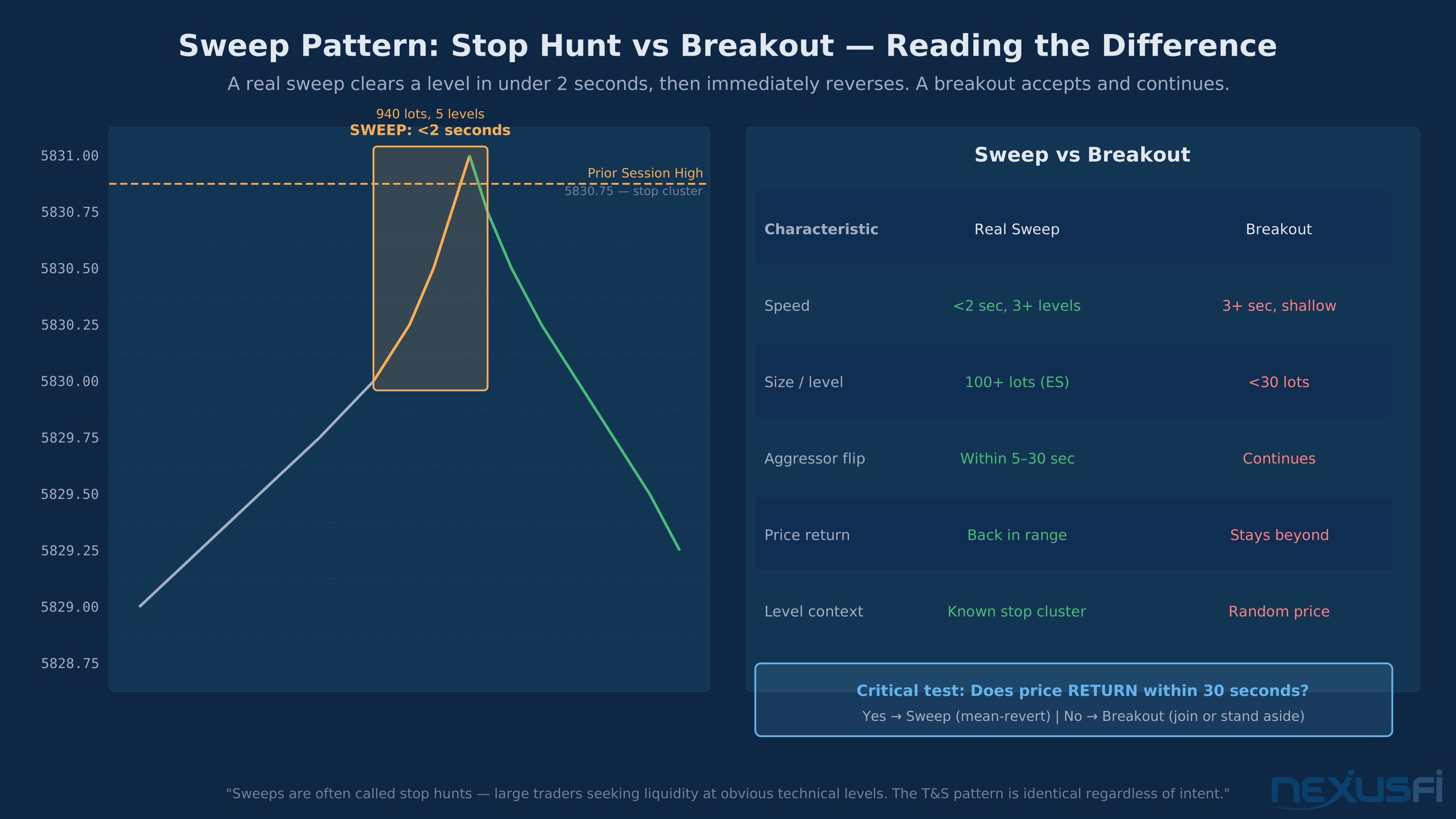
A sweep is a rapid move through a price level that clears resting stop orders or limit orders, then reverses because the liquidity was grabbed — not because the market genuinely accepted that price as fair value.
Sweeps happen at predictable locations:
- Prior session highs and lows (obvious stop clusters)
- DOM clusters of resting limit orders at round numbers
- VWAP extensions and standard deviation bands
- Previous day settlement and open prices
What a bullish sweep looks like on T&S:
10:30:15  4530.00  180  Ask (Green)
10:30:15  4530.25  200  Ask (Green)
10:30:16  4530.50  150  Ask (Green)
10:30:16  4530.75  220  Ask (Green)
10:30:16  4531.00  190  Ask (Green)
10:30:17  4530.75  150  Bid (Red) ← immediate reversal
Five levels cleared in under 2 seconds (940 lots), then immediate bid-side prints as the move reverses. This is a bullish sweep — shorts who had stops above the prior high got taken out, the liquidity was consumed, and now there's no overhead supply.
Distinguishing real sweeps from noise:
| Characteristic | Real Sweep | Noise/Breakout |
|---|---|---|
| Speed | Under 2 seconds, 3+ levels | 3+ seconds, shallow |
| Size per level | 100+ lots (ES) | Under 30 lots |
| Aggressor flip | Reverses within 5-30 seconds | Continues or stops randomly |
| Price return | Back into prior range | Doesn't return |
| Level context | At known stop cluster | Random price |
The critical test for a sweep: price returns to (or through) the swept level within 30 seconds. If it doesn't return — if price accepts beyond the swept level with continued aggression — it wasn't a sweep. It was a breakout. Misidentifying breakouts as sweeps and fading them is a reliable way to lose money.
Sweeps are often called "stop hunts" — a term implying deliberate manipulation by large players. The structural reality is more practical: large traders needing to enter or exit positions use sweep moves to access liquidity that clusters at obvious technical levels. Whether intentional targeting or order flow seeking available liquidity, the T&S pattern is identical and the trading response is the same.
Three Actionable Setups #
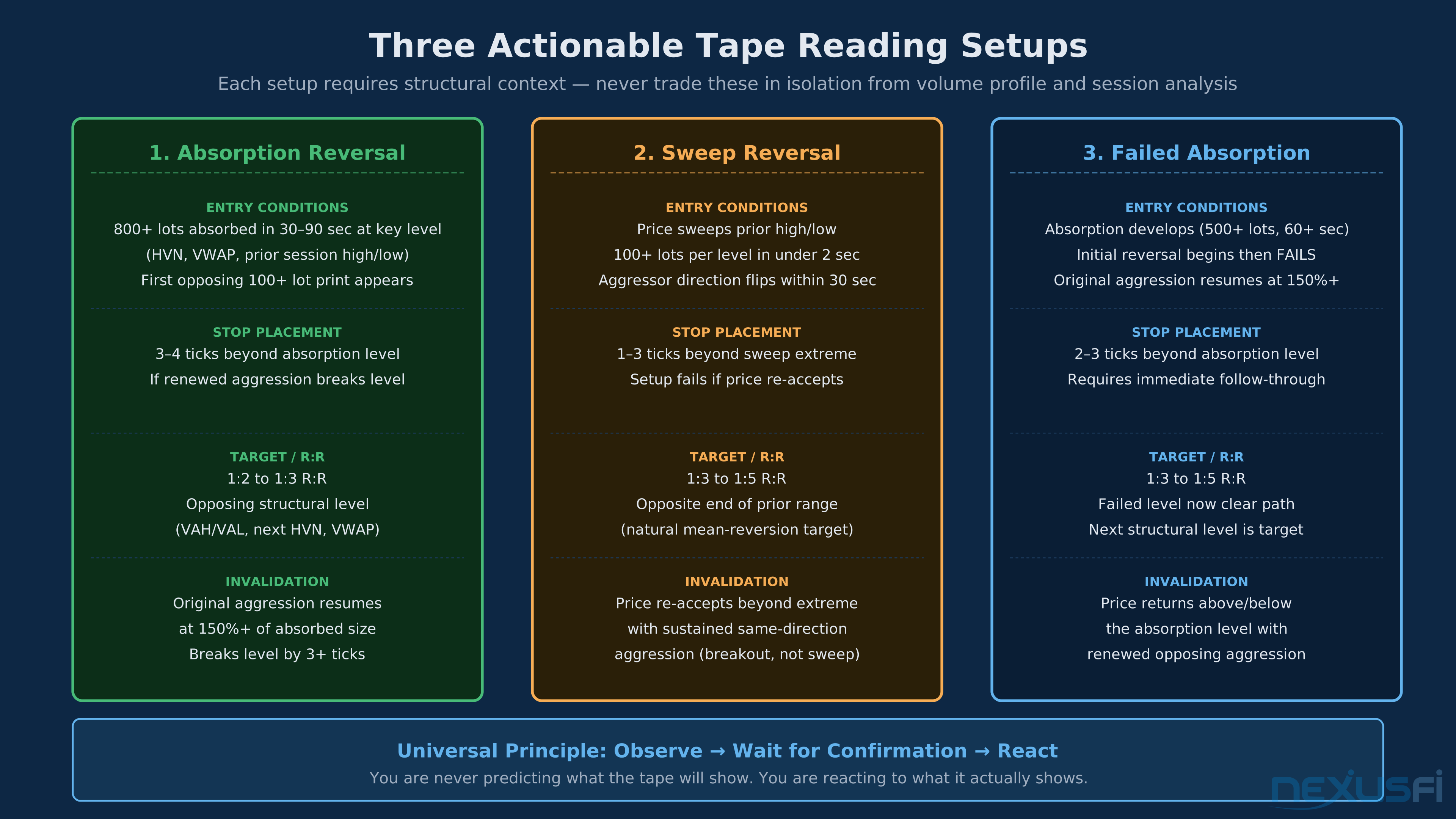
Tape reading produces three high-probability setups that experienced order flow traders use repeatedly. Each requires structural context — don't trade these in isolation.
Setup 1: Absorption Reversal #
Entry conditions:
- Price tests a key structural level (HVN, VWAP, prior session high/low)
- 800+ lots absorbed over 30-90 seconds without breakdown (ES RTH)
- Aggression pace slows; first opposing 100+ lot print appears at the level
Confirmation: Price reclaims 1-2 ticks in reversal direction with multiple confirming prints within 5-15 seconds.
Stop: 3-4 ticks beyond the absorption level. If that level breaks with renewed aggression, the setup is wrong.
Invalidation: Original aggression resumes with larger size (150%+ of average absorption size); price pushes through by 3+ ticks with accelerating pace.
Risk-reward: 1:2 to 1:3 typical. Target the opposing structural level (VAH/VAL edge, next HVN, VWAP from the other side).
Setup 2: Sweep Reversal (Mean Reversion) #
Entry conditions:
- Price sweeps beyond prior high/low with 100+ lots per level in under 2 seconds
- Aggressor direction flips within 5-30 seconds
- Price begins returning toward the pre-sweep range
Confirmation: Counter-trend prints of 25+ lots appear; swept level fails to be reclaimed on first attempt.
Stop: 1-3 ticks beyond the sweep extreme. The setup is invalidated if price re-accepts beyond the extreme.
Invalidation: Price re-accepts beyond the swept level with sustained same-direction aggression. You missed a breakout, not a sweep.
Risk-reward: 1:3 to 1:5 typical. The natural target is the opposite end of the prior range.
Setup 3: Failed Absorption Continuation #
Entry conditions:
- Absorption develops at a structural level (500+ lots, 60+ seconds of price stalling)
- Initial reversal begins but fails within 10 seconds
- Original aggression resumes at 150%+ of the absorbed size
Confirmation: Price breaks through the absorption level; pace accelerates; follow-through prints arrive at each new level.
Stop: 2-3 ticks beyond the absorption level. The setup requires immediate follow-through — if price stalls again, exit.
Invalidation: Price returns above (for shorts) or below (for longs) the absorption level with renewed opposing aggression.
Risk-reward: 1:3 to 1:5 typical. The failed absorption tells you the level wasn't strong enough, and the next move should be impulsive.
All three setups share a common structure: observe what the tape says about conviction at a level, wait for the tape to confirm the outcome, then trade the confirmation. You are never trying to predict what the tape will show — you are reacting to what it actually shows.
When Tape Reading Fails #
Tape reading produces false signals in predictable circumstances. Knowing the failure modes is as important as knowing the setups.
HFT noise and order slicing. The 2009 CME reporting change fragmented large orders into multiple small prints. HFT activity adds rapid micro-lot trading that floods the stream with noise. The fix: apply a 25-50 lot minimum filter and measure cumulative directional pressure over 30-second windows, not individual print size.
Algorithmic iceberg orders. Large institutions use iceberg execution — showing only a fraction of an order at a time, refreshing after each fill. This creates the visual appearance of persistent limit-order defense when the order is actually being executed directionally. Tell: DOM shows a 200-lot resting bid, but T&S has printed 800 lots at that price. There's a hidden refreshing bid, which confirms institutional interest at that level.
News releases. During FOMC, NFP, CPI, GDP, and other Tier 1 releases, tape behavior becomes regime-changed. Initial prints are often misleading as algorithmic systems react faster than any human can read. Stay out 5 minutes before and 15 minutes after any major release. The tape during news is not the same tape you are learning to read.
Thin sessions. Overnight Globex, the noon ET lunch hour, and holiday sessions all have proportionally different liquidity profiles. 100 lots at 2am Globex has the significance of 500 lots at the NYSE open. Either apply a 2-3x size multiplier for your filter thresholds, or reduce trading during thin sessions entirely.
One-way trend days. On days driven by genuine new information (Fed surprises, geopolitical shocks), the absorption setups that work in balanced, range-bound markets will fail repeatedly. Every level appears to absorb briefly, then price continues. Learn to identify trend day structure early — persistent aggression in one direction during the initial balance period, expanding single prints in market profile, and TICK extremes that don't normalize. On genuine trend days, buy pullbacks and sell breakdowns. Save the absorption reversals for balanced days.
The most dangerous tape reading mistake is applying balanced-market setups during trend days. You can lose on three or four consecutive well-developed absorption setups that all fail. Identify the day type first — check opening range expansion relative to the initial balance, check market internals, check whether overnight context is carrying through. Then decide whether absorption setups are valid.
Integration: Where Tape Fits in the Stack #
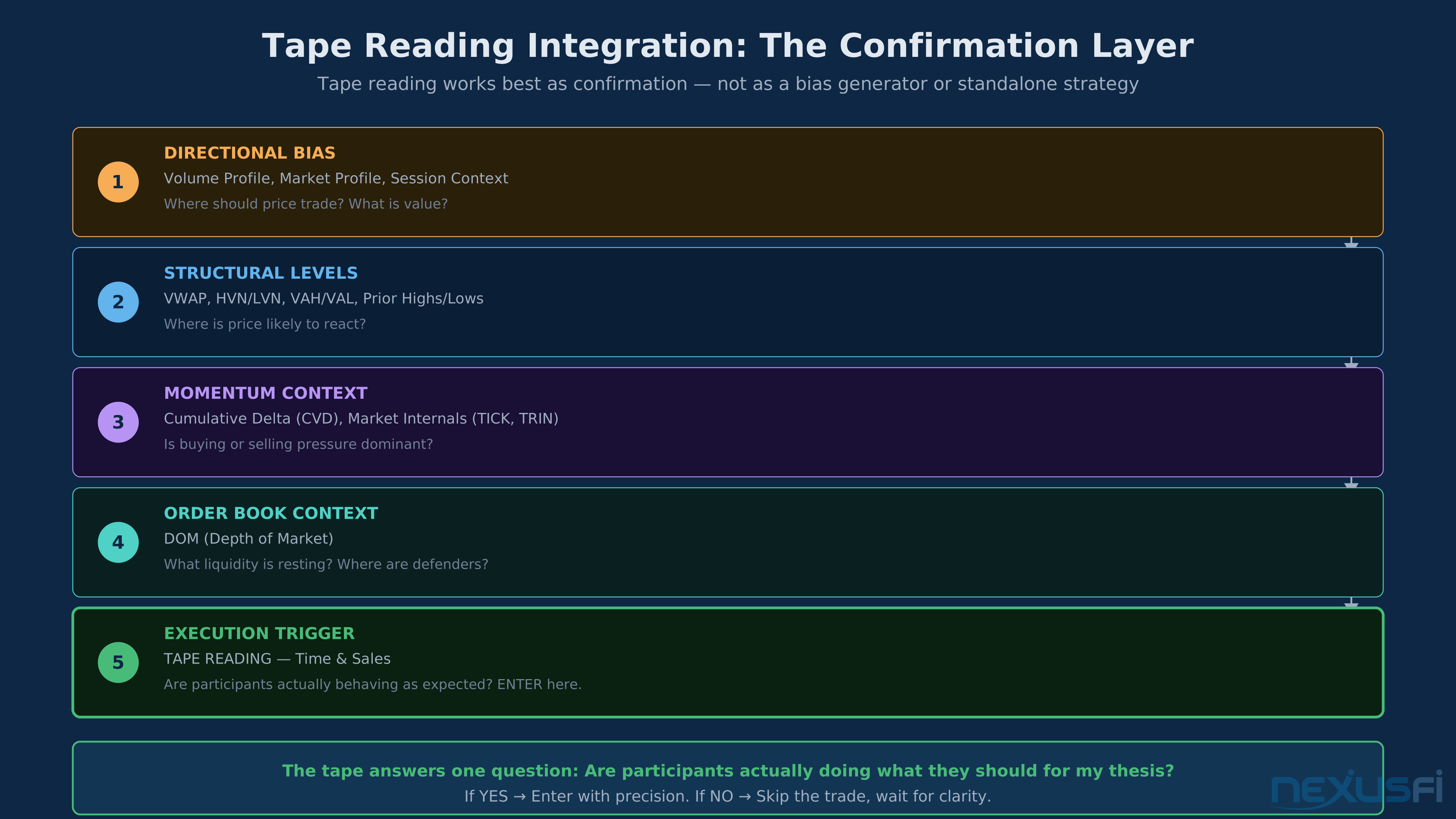
Tape reading works best as a confirmation layer — not a bias generator, not a standalone strategy.
With Volume Profile: POC and Value Area edges are the highest-probability absorption locations. When price approaches a significant HVN and 1,000+ lots are absorbed, the combination of structural confluence and tape confirmation creates a high-conviction entry. @josh, in the Elite Circle's Spoo-nalysis thread, observes: "It is very very rare for a big print to be the high or low of a move — selling interest was clearly there at the low, and no excess had been made. Instead, it had to stab a few more times, put in a decent excess, before it could really bounce well." Auction theory and tape read together.
With VWAP: The first VWAP touch of the day has the highest absorption probability. Institutions treat VWAP as a benchmark and actively defend positions around it. When tape shows 1,200+ lots absorbed at VWAP during the first RTH hour, that's among the clearest institutional defense signals in order flow trading.
With DOM: Tape shows what executed; DOM shows what is waiting. Absorption confirmed by DOM queue replenishment — resting bids rebuilding after being hit — is stronger than tape alone. Watch for iceberg behavior: DOM shows 200 lots but T&S has printed 1,500 at that level. There's a refreshing hidden bid, which confirms genuine institutional size.
With Cumulative Delta: Delta divergences become actionable when tape confirms the reversal. ES makes a higher price but cumulative delta makes a lower reading (bearish divergence), and simultaneously a 300-lot aggressive sell print appears — that combination is an entry signal, not a "watch for weakness" observation.
With Market Internals: When NYSE TICK is above +800 and the ES tape is showing consistent ask-side aggression, those signals reinforce each other. When TICK diverges from tape — TICK positive but ES tape shows sell-side absorption forming at VWAP — something is about to resolve. Divergence between internals and tape often precedes the most reliable tape signals.
Practical Application: The Learning Path #
The learning curve for tape reading is steep. The information density is high, signals are fast, and noise is significant.
Start with slow markets: Globex sessions between 6-8pm ET have lower volume and slower tape. This gives you time to observe absorption and sweep patterns without RTH pace overwhelming pattern recognition.
Filter aggressively first: Set minimum print size to 25 lots (ES) and hide everything smaller. This alone eliminates 70% of visual noise. NQ traders: start at 15 lots.
Build vocabulary before building strategy: Spend two weeks just labeling what you see. "That was absorption." "That was a sweep." "That was HFT noise." Build the classification vocabulary before looking for setups.
Practice in market replay: Most platforms with replay allow T&S replay at real speed. Thirty minutes per day in replay specifically watching tape behavior at key levels accelerates the learning curve faster than live observation.
Layer tape onto existing structure: Before using tape as a trigger, use it as confirmation. You have a long setup from structure analysis — does the tape confirm buyers are defending the level? If yes, take the trade. If not, skip it. Learn what "yes" looks like before trading on it.
Track your reads: Keep a session log. "I saw absorption at VAL at 10:15 — expected reversal, got reversal." "I saw what I thought was a sweep at 11:30 — price continued, was actually breakout." Pattern recognition develops from reviewing these logs as much as from live observation.
Knowledge Map
Prerequisites
Understand these firstGo Deeper
Build on this knowledgeReferences This Article
Articles that build on this topicCitations
- — My Thesis on Tape Reading (2013) 👍 26“In order to successfully read the tape size is the only thing that matters -- not what 100 five-lot traders are doing. The real size, the size that moves the market. To me, it's all about where large size steps up to buy or sell the market, and the context of what has happened preceding it. The tape can tell you if fading or playing the breakout of a high is more likely.”
- — Tape is my shape (tape reading, time and sales) (2011) 👍 9“Since 2009, large prints are no longer relevant on the T&S of any CME market. Someone can hit the market with a 1000 lot order and you'll see prints of 10,20,3,4,5,100,220,34,66 etc.”
- — Tape is my shape (tape reading, time and sales) (2012) 👍 10“Price moves down to a point. Sellers keep selling; the total number of contracts in sell market orders is larger than that of buy market orders. Price however, is no longer moving down. This is absorption on the bid. The bids are absorbing the sell market orders.”
- — For DOM based traders. (ES/NQ) (2025) 👍 6“If prints speed up and consistently hit the ask with size, it's a strong sign buyers are aggressive. You sense momentum not from a line on a chart but from the pace and direction of execution.”
- — Spoo-nalysis ES e-mini futures S&P 500 (2015) 👍 12“It is very very rare for a big print to be the high or low of a move -- selling interest was clearly there at the low, and no excess had been made. Instead, it had to stab a few more times, put in a decent excess, before it could really bounce well.”
- — Tape is my shape (tape reading, time and sales) (2011) 👍 9“Breakouts supported by big prints and fast running tape. Sometimes it is a light speed. Rejections reversals are quite different. There may be big prints, but tape will move slowly or push and brake. All situations are not 100% but have some % of probability.”
- — Stop Hunts -- Are they really what the name entails? Or is there more to them? (2019) 👍 7“I find the best way to think about a stop hunt is to call them liquidity sweeps. Large traders need large areas of liquidity (stops) to close positions at a profit without causing a big reversal in price. The liquidity are stops.”