



Price Limits, Circuit Breakers, and Trading Halts: How Futures Markets Freeze When Chaos Hits
Overview #
Every futures trader will face a market halt. The question is whether they've prepared for it.
When markets move fast enough to trigger circuit breakers or price limits, the rules of the game change — and change fast. Orders that were working get frozen. Positions you can't exit. Margin calls hitting accounts that had comfortable buffers 20 minutes ago. The traders who understand exactly how these mechanisms work before they trigger are the ones who survive with their accounts intact.
This isn't theoretical. During March 2020, ES limit-down conditions happened multiple times in a single week. Energy traders watched CL drop $7 in 30 seconds before dynamic circuit breakers froze the market. Corn has gone locked limit up for days on USDA reports that shocked the market. These events are rare — until they're not.
The Three Mechanisms You Need to Understand #
Before anything else: price limits, circuit breakers, and trading halts are not the same thing. Traders confuse them constantly. Getting them wrong costs money.
They're different mechanisms with different rules, different markets, and different trading consequences.
Here's how they break down:
Equity Index Circuit Breakers (Static) #
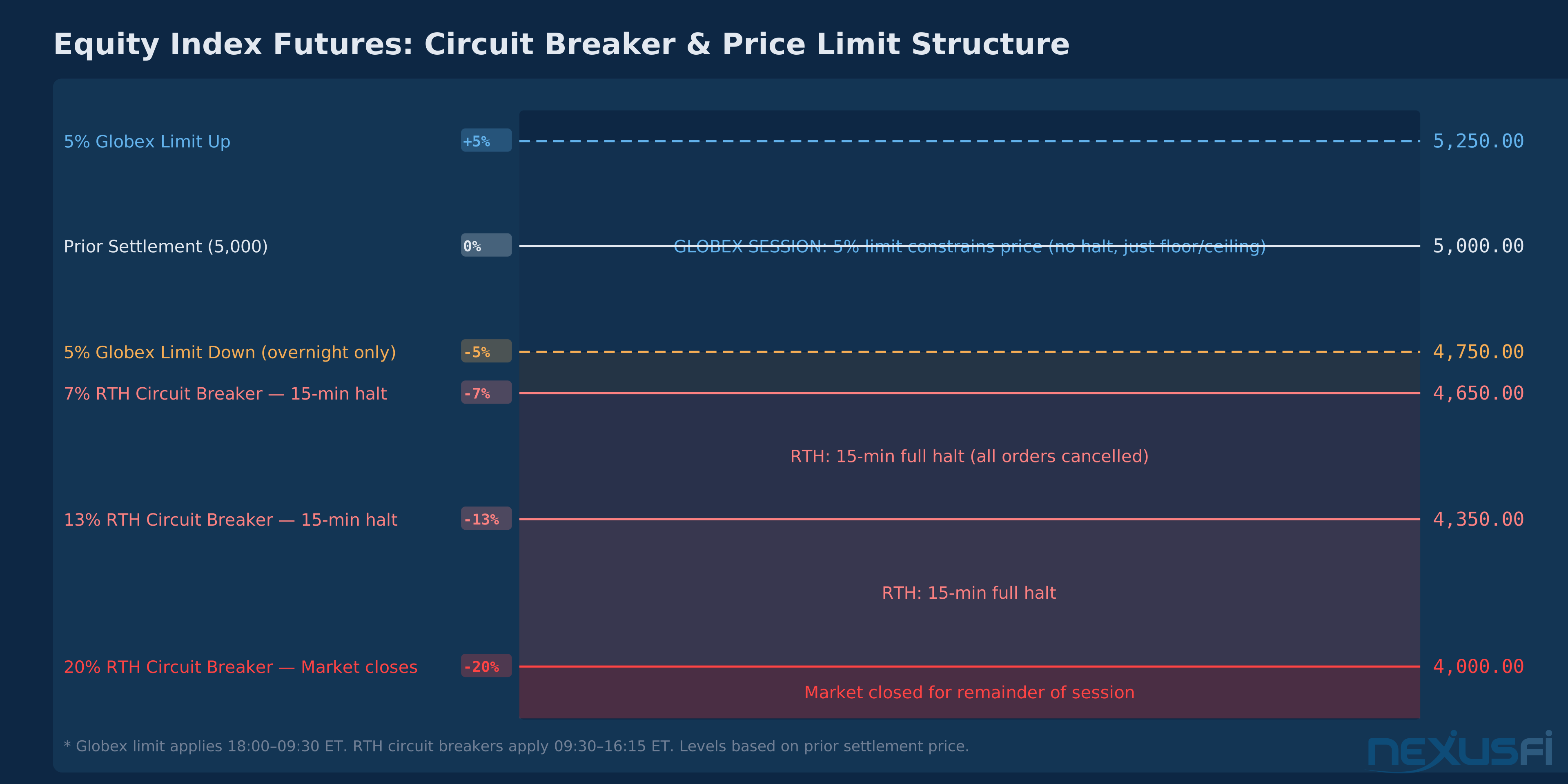
These are the mechanisms most traders have heard of: the 7%, 13%, and 20% circuit breakers for equity index futures. They apply during Regular Trading Hours (RTH) only — when the NYSE is open.
The trigger is the S&P 500 cash index, not the futures contract itself. When the SPX drops 7% from the prior day's closing price, all CME equity index futures halt for a mandatory 15-minute pause. Trade stops completely — no orders accepted, no fills, nothing. When the halt lifts, you're back to normal trading.
The levels cascade:
- 7% decline: 15-minute halt. Applies if hit before 3:25 PM ET. After 3:25 PM, trading continues through the close.
- 13% decline: Another 15-minute halt. Same time-of-day rule.
- 20% decline: Market closes for the rest of the day. No trading until the next session.
These numbers get updated periodically. During the July 2015 NYSE technical outage, CME temporarily reduced the daily price limit from 7% to 5% — an example of how the mechanisms themselves can be adjusted in real time by regulators.
What's critical to understand: during the 15-minute halt, all open orders are cancelled on most platforms. When trading resumes, your GTC stops and targets don't automatically restore. Check your platform's specific behavior before you're in a live halt situation.
Overnight Limit Up/Limit Down (Globex Session) #
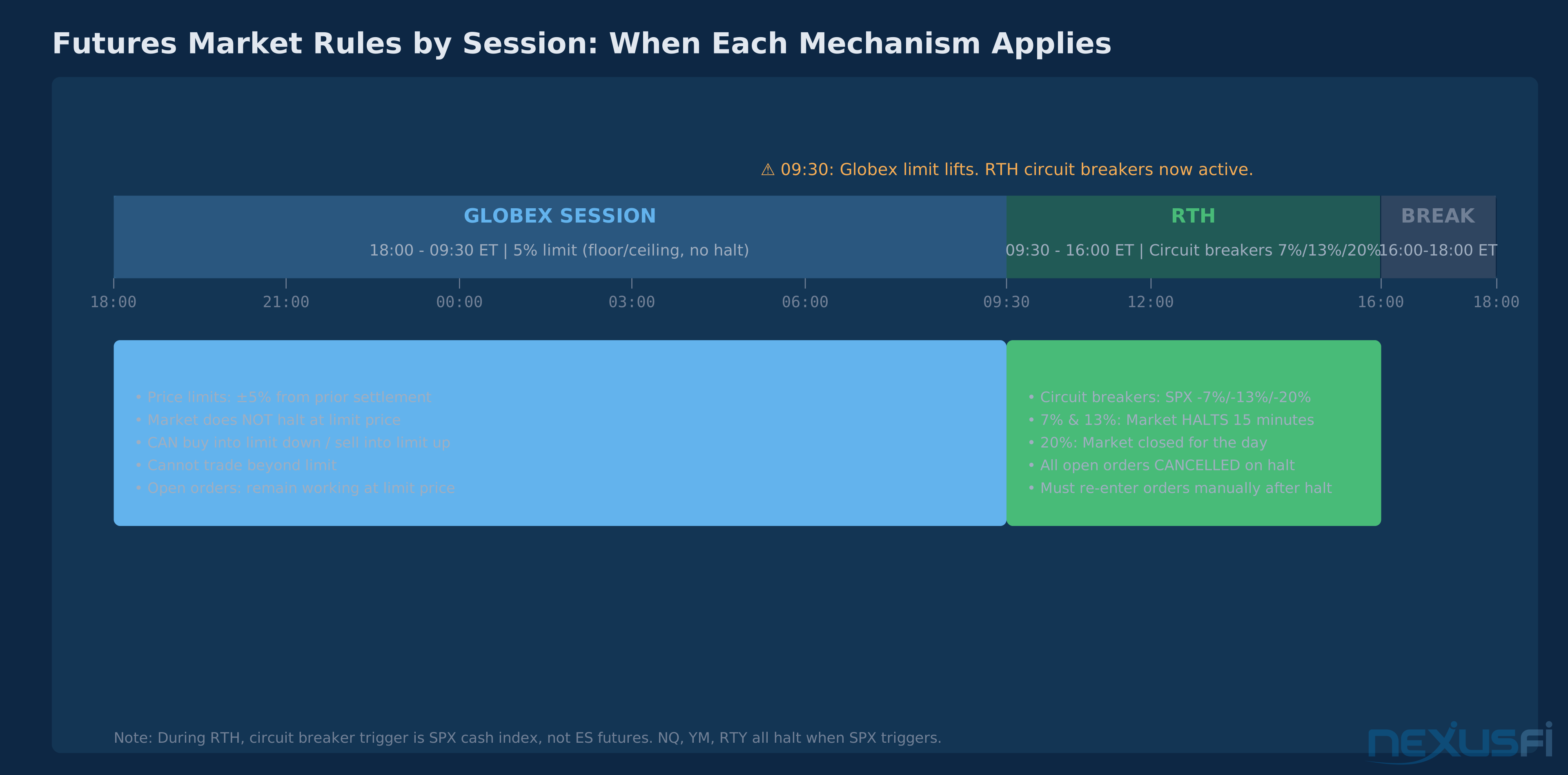
This is where traders get confused most often. Limit up/limit down for equity index futures applies specifically during the Globex electronic session — from the 6:00 PM ET open until the 9:30 AM ET cash open.
The current limit is 5% in either direction for ES (S&P 500 E-mini), NQ (Nasdaq 100 E-mini), and other equity index contracts. This is measured from the prior day's settlement price.
When the market hits the 5% limit during Globex:
- Prices cannot trade beyond the limit. The market is "limit up" or "limit down."
- You CAN still trade at or inside the limit price. A limit down condition means you can buy — you just can't sell lower than the limit price.
- The market does NOT halt. This is the key confusion. Unlike RTH circuit breakers, hitting the Globex limit doesn't freeze the market — it creates a price ceiling/floor.
And
The exchange margin requirements reflect this — margin is set approximately at the size of a limit move, providing a buffer against the maximum overnight loss.
Dynamic Circuit Breakers (Energy Markets) #
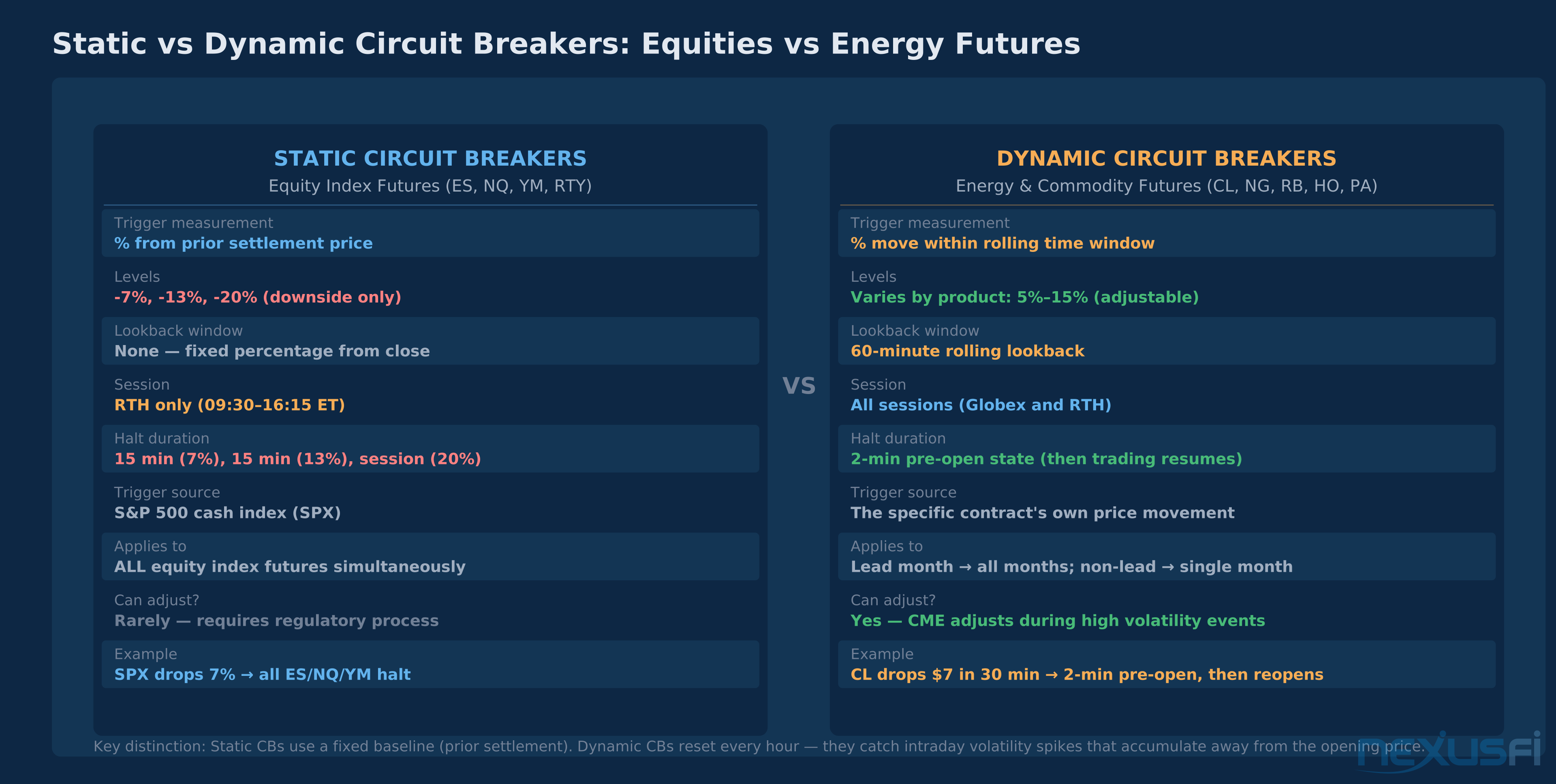
Energy futures — crude oil (CL), natural gas (NG), RBOB Gasoline (RB), Heating Oil (HO) — use a completely different system called Dynamic Circuit Breakers (DCBs). Unlike the static percentage levels used for equity index futures, DCBs are based on recent price movement using a rolling lookback window.
The CME's DCB system monitors price movement over the most recent 60-minute period. If price moves beyond the DCB threshold within that window, it triggers — regardless of where the market opened that day. This makes energy circuit breakers more responsive to intraday volatility than equity circuit breakers.
When a DCB triggers in a lead month (primary contract):
- All associated contract markets immediately transition into a two-minute pre-open state
- The pre-open allows order entry but no matching
- At the end of two minutes, matching resumes at the new price
If the trigger is in a non-primary month, only that specific contract reserves — other months keep trading.
The CME can and does adjust DCB thresholds in response to market conditions. During March 2020 and again during the 2022 energy crisis (when crude oil dropped $7 in 30 seconds), CME increased DCB limits for RBOB Gasoline and Heating Oil from 7% to 15% to accommodate the extreme volatility.
Different products, different rules. Know which market you're in.
Agricultural Price Limits (Fixed Dollar) #
Agricultural futures — corn (ZC), soybeans (ZS), wheat (ZW), and others — use fixed-dollar daily price limits, not percentages. These limits are measured from the prior settlement price.
Current limits (as of 2026, subject to exchange changes):
- Corn (ZC): approximately $0.25/bushel per day (expandable)
- Soybeans (ZS): approximately $0.70/bushel per day (expandable)
- Wheat (ZW): approximately $0.40/bushel per day (expandable)
These limits are expandable: if a market closes at or near the limit for multiple consecutive days, the exchange typically increases the limit for subsequent sessions. This prevents markets from being permanently locked when a genuine fundamental price shift is underway.
The agricultural limit structure creates unique trading conditions. As @Fat Tails detailed with historical precision in the NexusFi Traders Hideout: in 2012, corn hit limits six times — three triggered by USDA reports, two by drought fears. USDA crop reports are the primary ignition source for agricultural limit moves, because they can instantly reprice the supply/demand balance.
Agricultural limits can lock for multiple consecutive sessions. If you're short corn when a USDA report announces a severe supply shortfall, you may be unable to cover for days. Never size agricultural positions as if a single limit move is the worst case — the worst case is consecutive days of locked limits, each adding to an already-unrealizable loss.
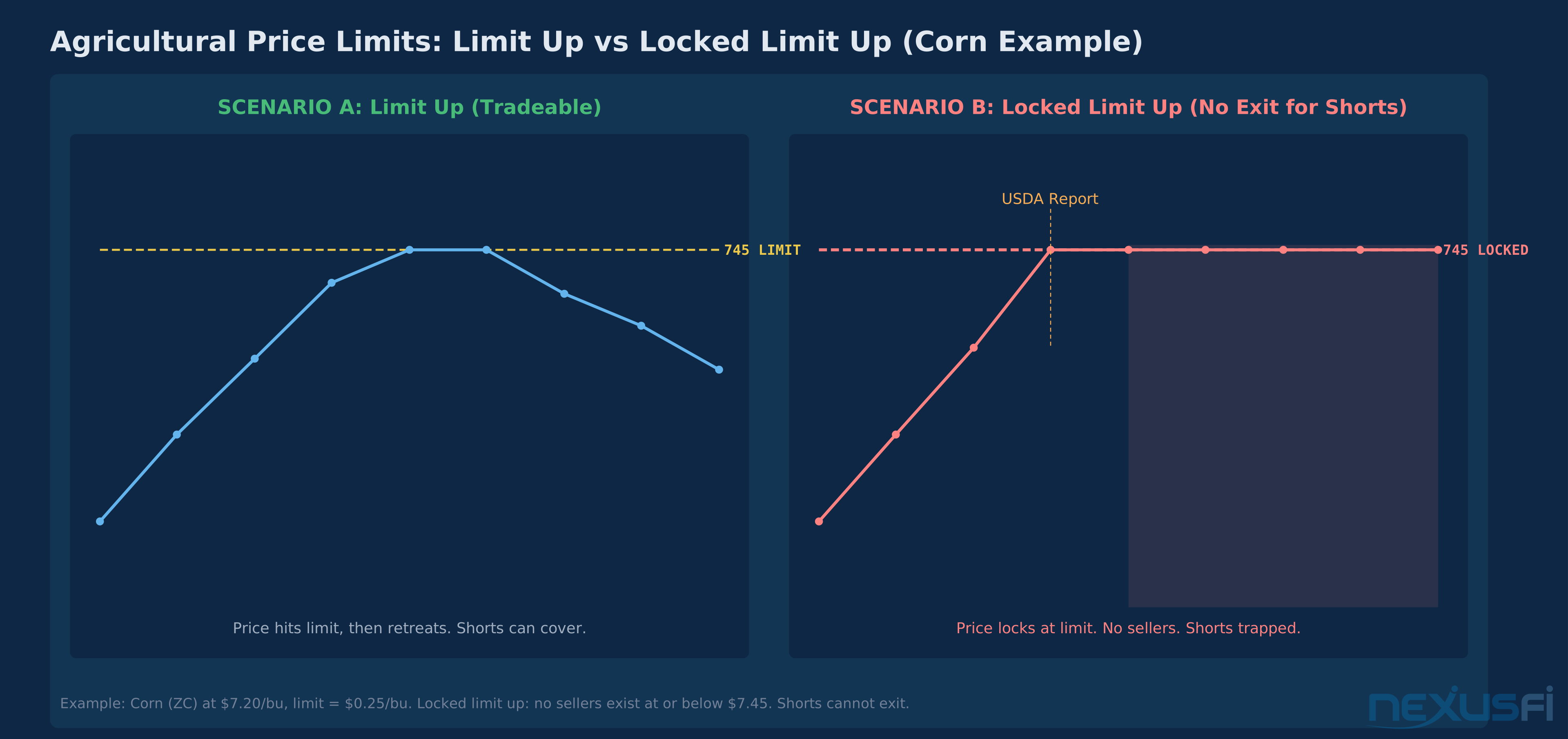
Lock Limit: the worst outcome. A limit move and a locked limit are different. In a limit move, the market touches the limit price but then retraces — some sellers emerge, some shorts cover. In a locked limit, no one is willing to trade away from the limit price because the expected fair value is well beyond it. The result, as
As @Fat Tails further clarified the distinction: when the market is "limit up", you can always sell at that price — you'll find buyers. But you cannot buy contracts, because no one will sell at or below the limit price. And in a locked limit, the entire session passes with basically no transactions. Shorts are trapped. Position sizing for agricultural markets must account for this possibility.
What Actually Happens to Your Account During a Halt #
This is where theory meets the profit-and-loss statement.
Open Orders #
Most platforms cancel all open orders when an RTH circuit breaker triggers. When the 15-minute halt lifts and trading resumes, your working orders — stops, targets, OCOs — are gone. You have to re-enter them manually at whatever price the market has moved to. In a volatile market, 15 minutes is enough time for the price to move substantially, and your stop that was $2 away might be $5 away when trading resumes.
Check your specific platform's halt behavior. Some platforms queue orders but don't execute until trading resumes. Others cancel everything. This is not a detail to discover during a live halt.
Positions You Can't Exit #
The most psychologically brutal scenario: you're short, the market goes limit up, and you can't cover because no one will sell. You watch the price locked at the limit, knowing the fair value is higher, knowing you're losing, and knowing there's literally nothing you can do until the next session.
This is why @Fat Tails gave this advice: "take into account that a position can move against you more than a limit move (40 cents for corn), before you will be able to get out. Take into account that lock limit moves may inflict psychological pain on you, as you will be unable to exit your position and clear your head."
The practical prescription: "Make a worst case scenario based on the most adverse occurrences over the last 10 years and prepare so. In particular, adjust position sizing in a way that you will survive a limit move."
Margin and Forced Liquidation #
Brokers respond to extreme volatility by raising intraday margin requirements — sometimes dramatically. During the COVID crash in March 2020, brokers that had been offering $500 intraday margin on ES raised requirements to 5x or more, basically eliminating the leverage that day traders had been using.
If your account is below the raised margin requirement, your broker can — and will — liquidate your position. During volatile markets with wide spreads and reduced liquidity, that forced liquidation may occur at much worse prices than the quoted last trade.
For overnight holders, @josh explained the protection built into margin: "The exchange-mandated margin you must provide per M2K contract is $650. This means that the exchange is confident that during the downtime, the M2K is not likely to gap more than $650/$5 => 130 points. Not surprisingly, this is about 6%, which relates to the limit down protection."
Once cash opens, however, the protection of the Globex limit is gone. During RTH, the 7%/13%/20% circuit breakers apply — and if your position crosses a circuit breaker level and the halt triggers, you're sitting in a frozen market with no ability to exit. When trading resumes, the market may gap further.
The margin requirement for any futures contract is calibrated to cover a full limit move. This is not coincidence — it's the exchange's acknowledgment that in extreme conditions, your broker could be stuck with the full limit-move loss on your position. The overnight margin IS the limit move buffer. Don't fight it by using discount brokers offering margins below exchange minimums.
When These Mechanisms Fail (and How They Can Hurt You) #
The Cascade Problem #
Circuit breakers don't always stabilize markets — sometimes they accelerate the panic. When a 7% halt triggers, traders know the next level is 13%. The 15-minute pause gives everyone time to decide whether to sell immediately when trading resumes rather than wait for a potential 13% halt. This can create a selling rush at the open after the halt lifts.
During March 2020, ES hit the 7% circuit breaker level three separate times across different sessions. The halts provided temporary pauses, but didn't prevent the market from continuing lower in subsequent sessions. Circuit breakers are designed to prevent flash crash dynamics, not to stop sustained trends.
The Options vs. Futures Divide #
Here's something many futures traders don't know: when futures are locked limit, options on those futures may continue to trade. This is a critical survival tool when you're trapped in a locked commodity position.
The options market can still be used to offset your risk even when the underlying is frozen.
This requires pre-planning. Buying options as insurance after you're already locked is too late — the premiums spike, and you may not be able to get filled. Traders who hold agricultural positions through major USDA reports often carry protective options before the report, not after.
For equity futures holders,
The Liquidity Disappears Before the Halt #
In practice, liquidity typically collapses before circuit breakers or price limits trigger formally. As prices approach the limit level, market makers pull their quotes. Bid-ask spreads widen from fractions of a point to multiple points. Getting filled at a reasonable price becomes impossible even when technically trading is still occurring.
For ES traders: as the market approaches a 5% limit down level during Globex, the depth of market thins dramatically. The bids disappear. You may still be able to place a sell order at market, but the fill will be well below the quoted price because there's no depth to absorb the order. By the time the limit formally engages, you've already experienced the worst of the liquidity crunch.
The effective trading halt begins before the formal halt. Watch DOM depth as markets approach limit levels — when you see bids evaporating 30-50 points from the limit in ES, you're already in limit-down conditions in terms of practical liquidity. Don't wait for the formal trigger to realize exits are impaired.
Practical Application: Trading Around These Mechanisms #
Know Your Numbers Before Every Session #
Before trading ES, NQ, CL, NG, ZC, or any other contract with price limits, know the current limit levels. These change. Agricultural limits expand. DCBs for energy get adjusted during volatile periods. The specific percentages and dollar amounts you memorized last year may not apply today.
For equity index futures:
- Calculate the RTH circuit breaker levels from the prior close at session open
- Note the Globex limit level before Sunday open when holding positions over the weekend
- Know at exactly which SPX level the 7%, 13%, and 20% halts trigger
For energy and agricultural:
- Check CME's price limit page before entering positions during high-volatility periods
- Understand whether your specific contract uses static limits, dynamic circuit breakers, or fixed-dollar limits
Calculate the RTH circuit breaker trigger prices every morning before the open. For ES at a prior close of 5,000: 7% = 4,650, 13% = 4,350, 20% = 4,000. Write these down. When fast markets hit, you won't have time to calculate — you need to already know where the halt triggers.
Position Sizing for the Worst Case #
The correct framework for trading markets with price limits is to size every position as if you might be forced to hold it through a full limit move with no ability to exit. This doesn't mean you're predicting a limit move — it means your maximum acceptable loss scenario includes one.
For ES: a 5% overnight limit move on 2 contracts at a 5,000 price level is $5,000 per contract, or $10,000 total from a single night. If that loss would destroy your account or push you below minimum margin, you're over-leveraged for overnight positions.
For corn: a single locked limit day at $0.25 per bushel on 5,000 bushels per contract is $1,250. Three consecutive locked limit days is $3,750 per contract. If you're holding 5 contracts through an uncertain USDA report, you need $18,750 of risk capacity for the tail event. Most traders don't have that.
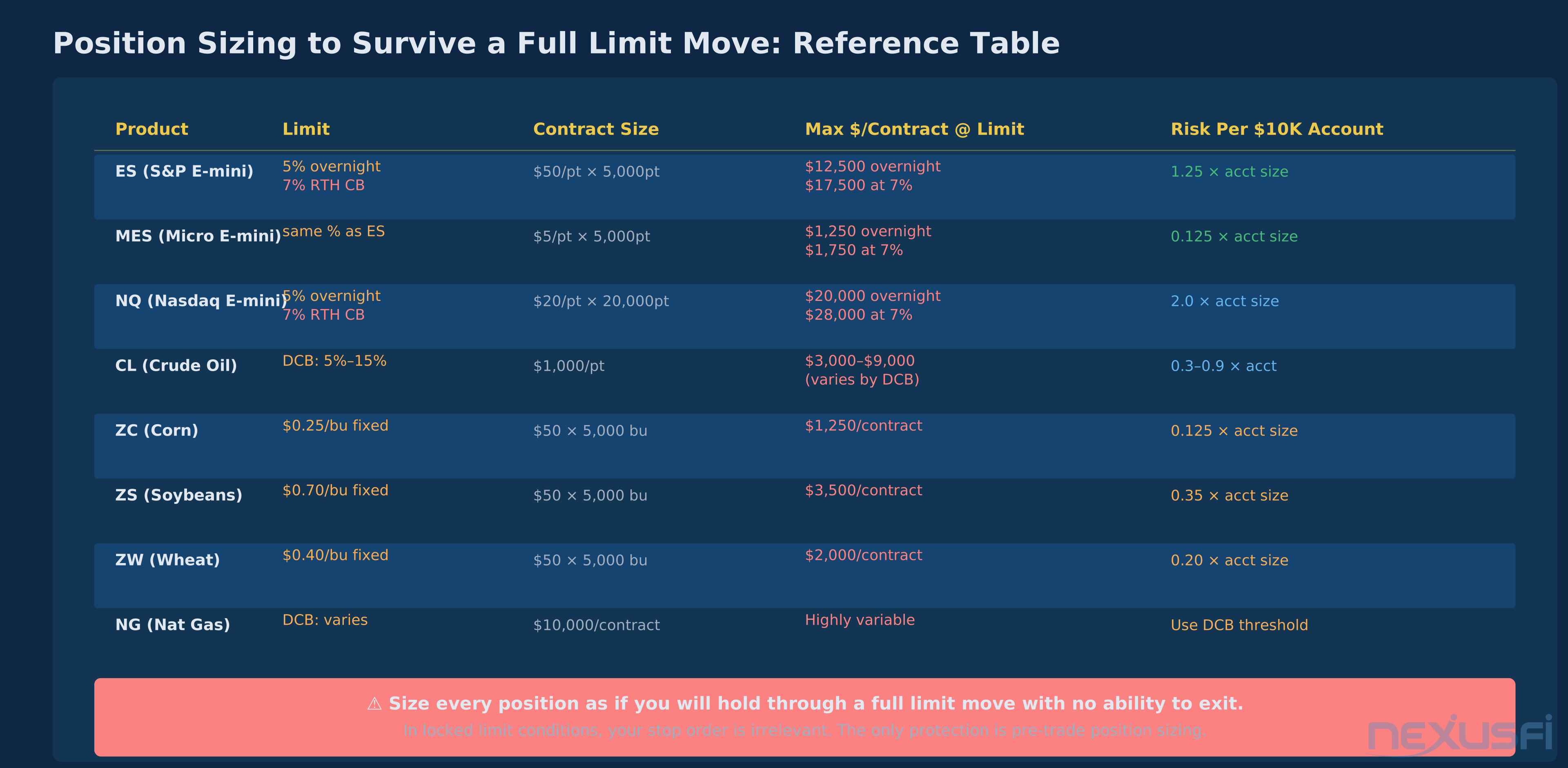
Price limits don't protect you from loss — they protect you from executing at prices worse than the limit. Your P&L still moves in real time as prices approach the limit. The limit just freezes your ability to cut the loss. The only real protection is pre-trade position sizing.
The Pre-Report Protocol for Agricultural Traders #
USDA crop reports — the Crop Production report, WASDE (World Agricultural Supply and Demand Estimates), and Grain Stocks — are the primary triggers for limit moves in corn, soybeans, and wheat. Most are released at 12:00 PM ET. Some are released at 8:30 AM ET.
Before any major USDA release:
- Check the current limit levels
- Decide your maximum position size given the worst-case limit scenario
- If holding through the report, consider protective options to hedge tail risk
- Have your broker's emergency contact information ready in case you need to call directly during a halt
The market can move to the limit and lock within seconds of a surprise report. You will not have time to react after the release — your pre-report preparation is everything.
Broker Behavior During Extreme Volatility #
Not all brokers handle halts and limit conditions identically. Know your broker's specific policies:
- Margin requirement increases: Some brokers adjust intraday margins dynamically during volatile conditions. Positions that were within limits at session open may be subject to forced liquidation if margins double intraday.
- Order handling during halts: Confirm whether your broker cancels working orders during circuit breaker halts or holds them in queue.
- Globex limit behavior: Understand whether your platform allows order entry at the limit price or slightly inside it.
- Emergency trading: Know the direct phone number for your broker's trading desk. Platforms crash during market crises. If you can't get electronic access during a halt or limit condition, a phone call to the desk is your backup.
Historical Context: When These Mechanisms Were Tested #
March 2020: The COVID Crash #
March 2020 was the stress test for every circuit breaker mechanism in existence. ES hit 5% limit down in Globex multiple times in a single week. RTH circuit breakers triggered on multiple sessions, halting equity index trading for 15-minute intervals. During the March 9 session,
The sequence of events that week was: Sunday Globex limit down to Monday RTH circuit breaker to Tuesday Globex limit down again to repeated cycle. Traders who understood these were different mechanisms and knew how each worked had a clear edge. Traders who confused limit down with a trading halt got caught on the wrong side of positions that were still tradeable — just not in one direction.
2022 Energy Crisis #
When Russia invaded Ukraine in February 2022, crude oil price movements became violent enough to test energy dynamic circuit breakers repeatedly.
The CME's DCB system engaged, the market went into pre-open state, and when it reopened, prices continued moving. This is the practical reality: circuit breakers pause a market, they don't stop a trend.
Agricultural History: Consecutive Locked Limits #
The 2012 drought in the U.S. Corn Belt produced multiple locked limit events. June 2012 drought fears drove corn locked limit up. The pattern: USDA report to immediate move to limit to no sellers to locked at limit all session to next day's open with new, higher limit to repeat. Traders short corn through those events had no exit for days. Position sizing — specifically the recognition that you might need to hold a losing position for multiple sessions — was the only protection.
Knowledge Map
Prerequisites
Understand these firstGo Deeper
Build on this knowledgeReferences This Article
Articles that build on this topicCitations
- — Limit Up Limit Down Question (2013) 👍 11“Make a worst case scenario based on the most adverse occurrences over the last 10 years and prepare accordingly.”
- — What is a limit move?! (2010) 👍 8“Lock Limit is a situation which develops in the futures market when the natural clearing market price is beyond the daily limit and trading essentially halts.”
- — Spoo-nalysis ES e-mini futures S&P 500 (2020) 👍 4“Circuit breakers and trading halts are not the same as limit up/down.”
- — Holding futures overnight (2021) 👍 4“Limit down in equity index futures is 5%. This means that on the Sunday open, if WW3 has erupted, you can not be down more than 5% from Friday's close.”
- — Spoo-nalysis ES e-mini futures S&P 500 (2020) 👍 4“Prices can't trade lower until RTH open, but anyone with big enough balls can BUY into the limit down.”
- — CME Globex | Dynamic Circuit Breakers (2020) 👍 6“CME Group increased the Dynamic Circuit Breaker Levels... RBOB Gasoline Futures (RB) from 7% to 15%, Heating Oil (HO) Futures from 7% to 15%.”
- — Spoo-nalysis ES e-mini futures S&P 500 (2020) 👍 5“ES and NQ are limit down (5%) in response this evening. ES Circuit Breaker triggers: 7% = 2546.50, 13% = 2382.00, 20% = 2190.00.”
- — Spoo-nalysis ES e-mini futures S&P 500 (2022) 👍 8“Unlike the static circuit breakers used for equities, NYMEX energy markets use a dynamic circuit breaker.”
- — Limit Up Limit Down Question (2013) 👍 4“One idea for locked limit situations is an option in the other direction to get partial protection.”
- — Limit Up Limit Down Question (2013) 👍 4“When the market is limit up, you can always sell at that price. But you cannot buy contracts. The lock limit may continue for several days.”
- — The Limit Down (2020) 👍 3“The firms are wanting you to have more margin because they will be stuck with your trades and your losses.”
- — Holding futures overnight (2021) 👍 2“There is no way the Sunday open could create losses greater than the maintenance margin, as that margin is greater than the losses incurred from a limit up/down move.”