



Options on Futures: How Exercise, Assignment, and Settlement Actually Work at the Exchange Level
Overview #
Options on futures are a different beast from equity options. Not incrementally different — at the core different. The underlying isn't a stock that gets delivered into your account at expiration. The underlying is a leveraged, daily-marked futures position. When you exercise an options on futures contract, the exchange doesn't give you shares. It creates or assigns a futures position — a contract with its own margin requirements, daily settlement, and potentially a delivery mechanism downstream.
Most traders who come from equity options backgrounds miss this. They treat options on futures like regular options with a funny ticker. Then expiration week arrives and they end up with unexpected futures exposure, unexpected margin calls, or both.
This article covers the exchange-level mechanics — what happens between when you hold the option and when the clearinghouse settles the books. That means exercise style, the assignment process, automatic exercise thresholds, serial vs quarterly months, the critical timing gaps between last-trade and exercise deadlines, PIN risk, SPAN margin behavior near expiry, and how the CME and ICE handle settlement. This is the operational layer that most options education completely skips.
If you trade options on ES, NQ, CL, ZB, 6E, or any other futures — this is mandatory reading before you take a position into expiration week.
Key Concepts #
Exercise: The act of converting an options on futures contract into a futures position. The holder of the option invokes their right to buy (call) or sell (put) the underlying futures at the strike price.
Assignment: The obligation side of exercise. When an option holder exercises, the exchange (through the clearinghouse) assigns the obligation to an option writer. The writer receives the opposite futures position.
Automatic exercise: A clearinghouse rule that triggers exercise without the holder's active instruction when an option is sufficiently in-the-money at expiration.
Do-not-exercise instruction: An explicit instruction a holder can submit to prevent automatic exercise, even when the option is ITM.
PIN risk: The danger of ending up with an unexpected futures position (or no position when you expected one) because the underlying settled near your strike and you couldn't predict which side of the automatic exercise threshold you'd land on.
SPAN margin: The Standard Portfolio Analysis of Risk margin framework used by CME and other exchanges for futures and options on futures. It's scenario-based, not flat-rate.
Serial month: An option expiry that falls between the standard quarterly futures delivery months. For ES options, quarterly months are March/June/September/December. Serials are January, February, April, May, and so on.
Quarterly month: An option expiry aligned with the standard futures quarterly delivery cycle.
Expiration vs last trading day: These are not the same thing. An option can stop trading before the exchange-defined expiration or exercise deadline. Check both dates.
Settlement reference price: The exchange-official price used to calculate whether an option finishes ITM or OTM at expiration. This is not necessarily the last traded price.
How Exercise Creates a Futures Position #
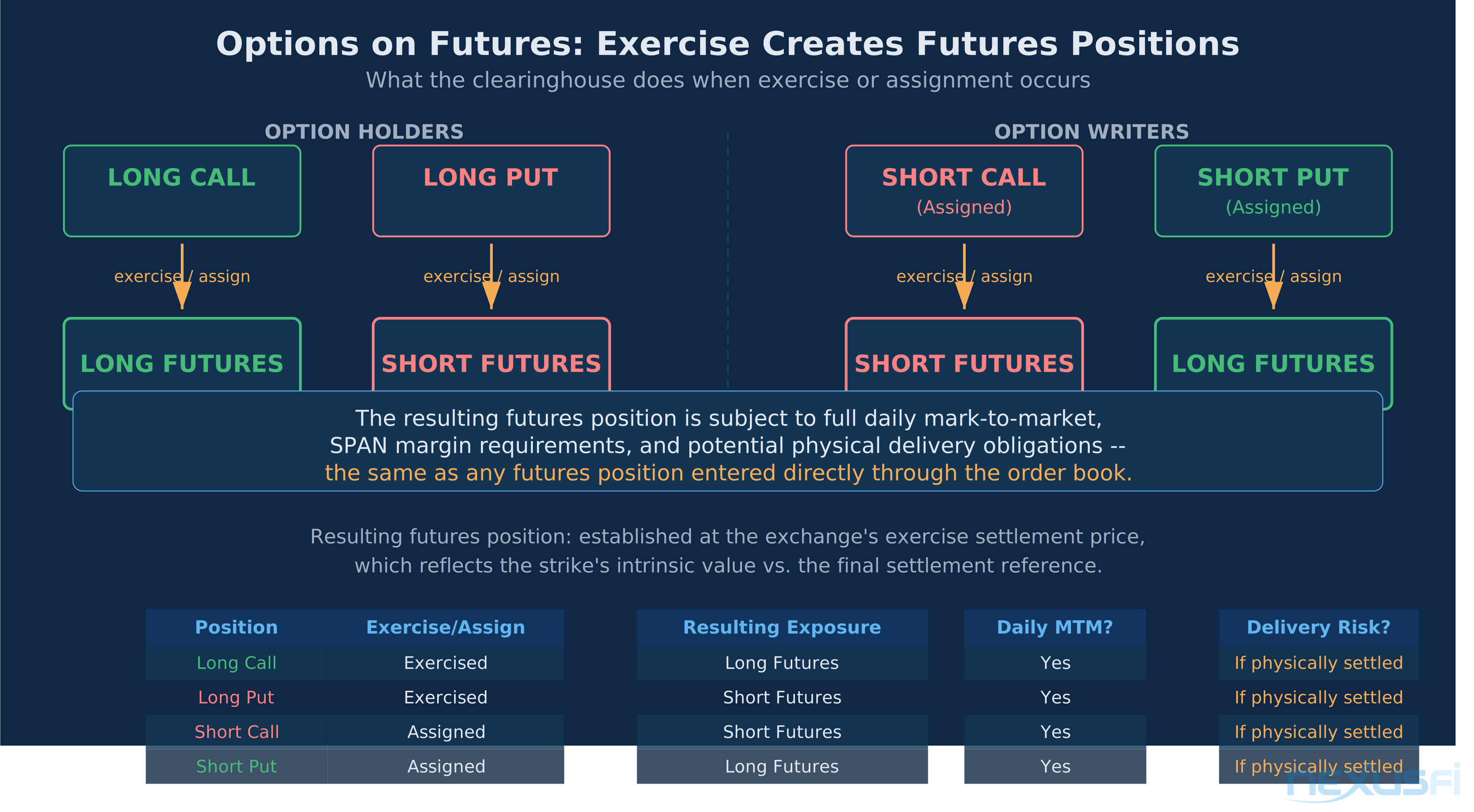
This is the core mechanical fact that distinguishes options on futures from everything else. When you exercise or are assigned on an options on futures contract, you don't receive stock, cash, or the physical commodity. You receive a futures position.
Here's exactly how it works:
Long call exercised — You hold a long call at strike K. You exercise (or it's auto-exercised). Result: you are long the underlying futures contract at strike K. The clearinghouse establishes that position in your account, and daily mark-to-market from the futures exchange settlement begins immediately.
Long put exercised — You hold a long put at strike K. Exercise result: you are short the underlying futures at strike K.
Short call assigned — You sold a call at strike K. An option holder on the other side exercises. Result: you are assigned a short futures position at strike K.
Short put assigned — You sold a put at strike K. Exercise/assignment result: you are long futures at strike K.
The futures position that appears in your account is subject to the same margin requirements and daily P&L treatment as any other futures position. If the underlying is a physically deliverable futures (crude oil, corn, bonds) and you hold that futures position into the delivery window, you may face delivery obligations. Most traders avoid this by offsetting the resulting futures position quickly, but it's not automatic.
The clearinghouse doesn't care how you ended up with the futures position. It treats the assigned position identically to one you put on directly through the order book.
What 'at strike K' means in practice: When the exchange processes exercise, the resulting futures position is typically established at the settlement reference price, with the strike's intrinsic value reflected in the account's cash position. The exact accounting varies by product spec, but the economic outcome is equivalent to acquiring the futures at the strike price.
For a $50/point contract like the ES, a call at 5100 exercised when the underlying settled at 5110 would result in a long ES futures position with $500 of intrinsic value credited to the account, because 10 points * $50 = $500. The position's daily mark-to-market then begins from the settlement price.
American vs European Style -- What the Specs Actually Say #
Here's where equity options traders get confused: the terms 'American' and 'European' don't mean the same thing in futures options as they do in equity options.
American-style options on futures can be exercised on any business day before expiration. European-style can only be exercised at expiration. But the critical operational reality is:
Early exercise is almost never economically rational for American-style futures options.
Why? Because unlike equity options where early exercise can be justified by dividends or special circumstances, futures don't pay dividends. The time value of an option is almost always positive, meaning you can usually do better by selling the option than by exercising it early. The only exceptions involve deep in-the-money options where the bid-ask spread is wider than the remaining time value — a rare condition.
The practical consequence: regardless of whether a specific futures option is technically American-style, the dominant operational event is expiration. Exercise mechanics matter at expiration.
The CME reality: CME lists both styles depending on the product. Most equity index options on futures (ES, NQ, SP) are American-style. Many short-dated weekly options introduced in recent years are European. Rates options have their own conventions. Energy options vary. Check the contract specifications — not generic guides, the actual CME product reference sheet for that specific contract code.
The ICE reality: ICE-listed options on futures are often European-style for major products. Again, verify per contract.
The search for a universal rule here fails. The correct approach is to check the exercise style for every contract you trade before entering a position, because it determines your assignment exposure and the operational procedures you need to follow at expiration.
One consistent theme across all futures options: even American-style contracts see minimal early exercise activity in practice. The expiration event is where the real risk concentrates. Plan around that.
Serial vs Quarterly Option Months #
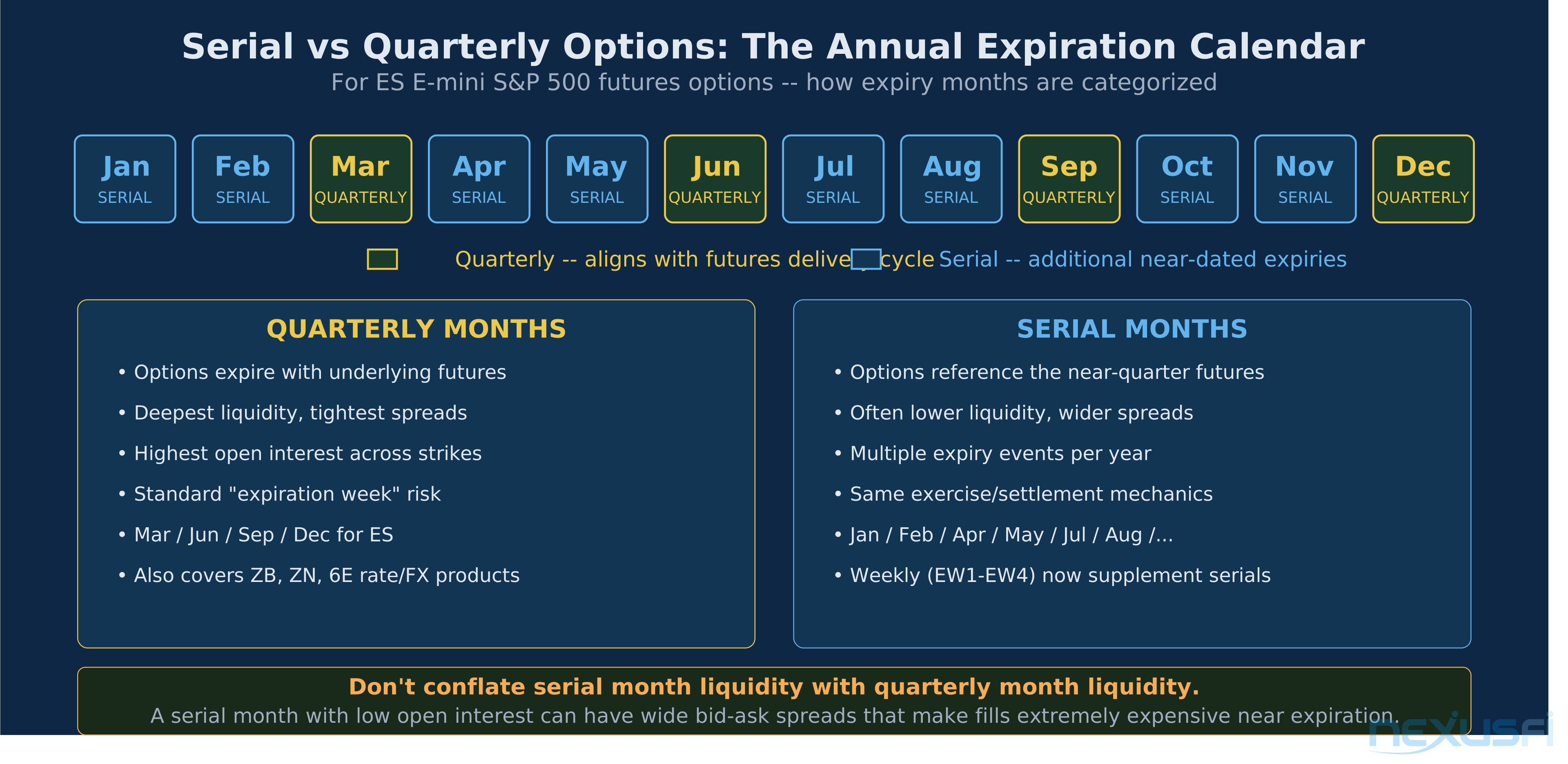
The standard quarterly cycle for most major futures is March, June, September, December. For ES (E-mini S&P 500) futures, options are available in these quarterly months and also in serial months — January, February, April, May, July, August, October, November.
Why this matters operationally:
Serial months expire while the underlying futures is still the near-quarter contract. A January ES option expires with the March ES futures still active and months from its own delivery. A March ES option expires right as the quarterly futures itself expires, creating tighter coupling between the option expiration and the futures rollover.
Liquidity differences are real. Quarterly options tend to have deeper order books, tighter spreads, and more open interest than serial months. If you're hedging or trading size, the liquidity in a serial month may be materially worse than you'd expect based on the underlying's volume.
Hedging complexity with serials: A serial month option may not cover the same underlying contract that a quarterly month covers after a roll. If you're using options to hedge a futures position, the month you're in matters for which futures expiry your option references.
The EW expiry code at CME: For ES specifically, CME introduced weekly options designated EW1, EW2, EW3, EW4 (week 1 through 4 of the month) and EW5 (fifth week). As @SMCJB noted in the NexusFi Options thread, 'the three serial months will get replaced with three week3 options,' which was part of CME's restructuring of near-dated expiries to provide more weekly granularity. @ron99 explained the original quarterly-vs-serial distinction clearly: 'The Mar, Jun, Sep & Dec are the quarterly contracts. Options on those months are open as long as the futures are open. The other months are called serial months.'
The proliferation of expiration dates — monthly serials, quarterly, and now weekly — means more PIN-risk events per year and more operational complexity for anyone trading multiple series simultaneously.
Last Trading Day, Expiration, and Exercise Deadlines #
This is one of the most dangerous areas of operational confusion in options on futures, and it bites traders every year.
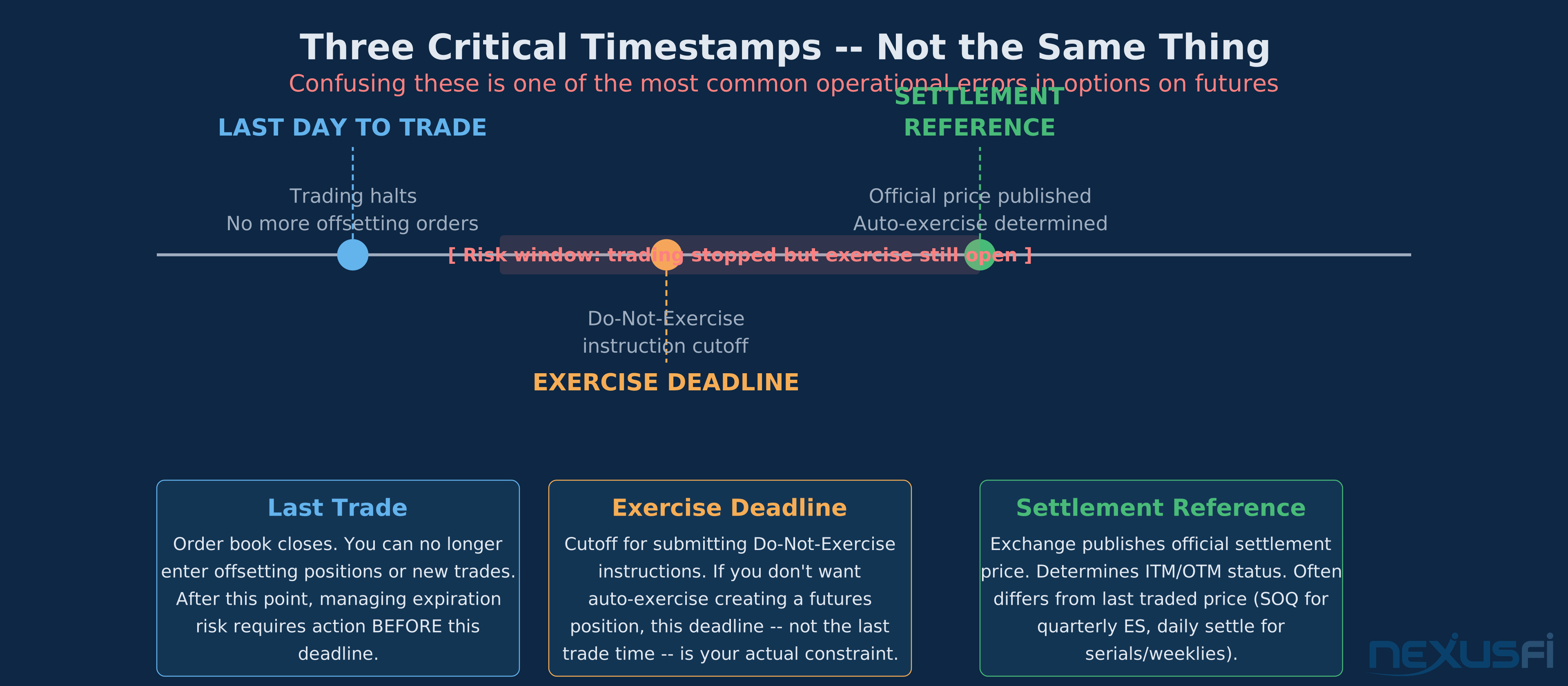
Three distinct events, three distinct timestamps:
- Last trading day — The last date and time you can enter offsetting orders or trade the option in the market. After this, the order book closes.
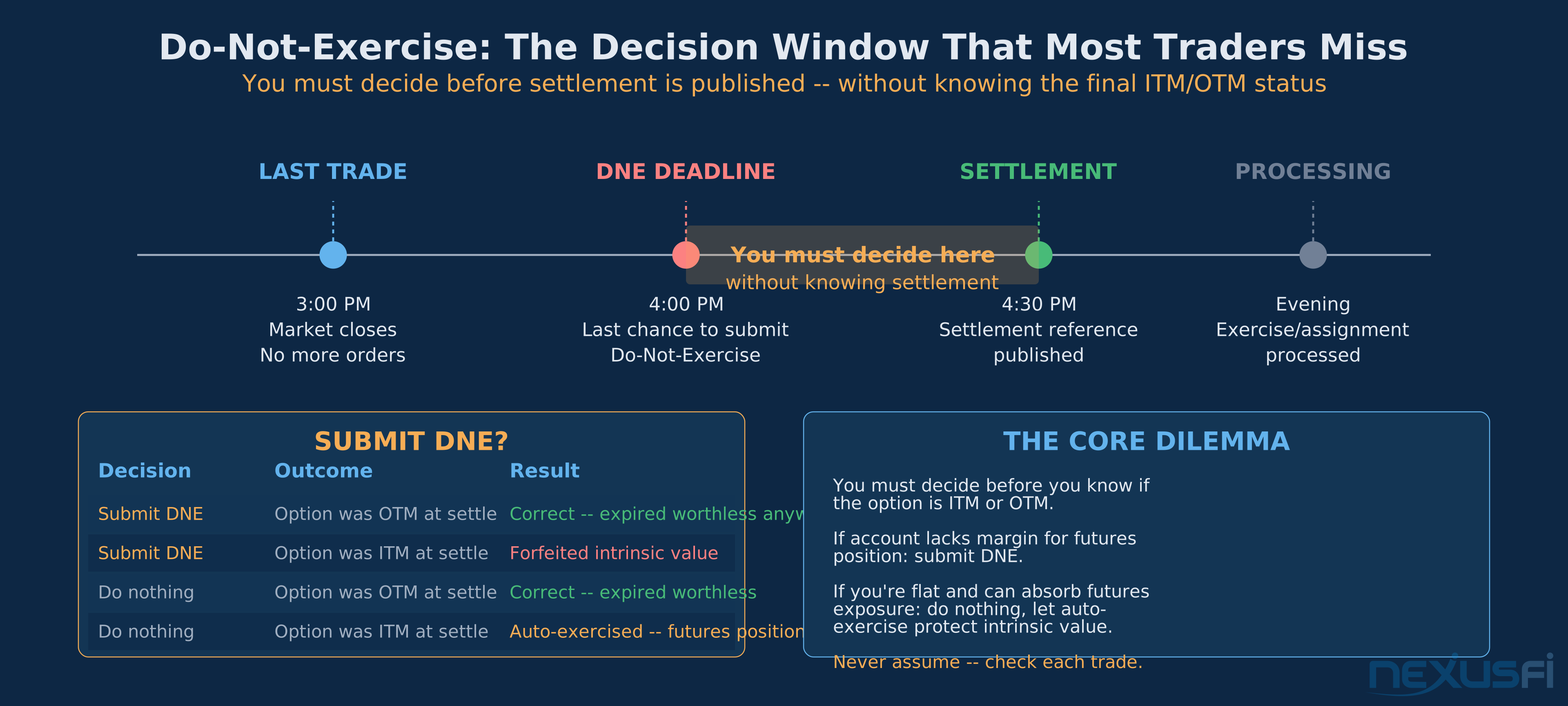
- Exercise deadline — The cutoff by which you must submit exercise intentions or do-not-exercise instructions. This can be the same as last trading day, or it can be different. For some products, the exercise deadline extends into the evening after trading stops.
- Settlement reference determination — The time at which the exchange calculates the official settlement price that determines whether the option finishes ITM or OTM. This can occur during or after the trading session.
Why they diverge: Exchange operations need time to process clearing instructions. If trading stops at 3:00 PM but the final settlement price is a closing auction price at 3:15 PM, and exercise decisions must be submitted by 4:00 PM, you have a window where trading has stopped, settlement hasn't been published, and your exercise window is still open. Managing risk in that window requires understanding the exact timeline.
The common mistake: Traders assume 'last day to trade' means 'last day to decide about exercise.' This leads to missed do-not-exercise instructions, unexpected automatic exercise, and options that should have been closed before expiration still sitting on the books at settlement.
How to protect yourself: Before trading any options on futures series, pull up the product specification on the CME or ICE website. Find the exact times for: last day of trading, exercise declaration deadline (for holders), and when the settlement reference price is published. Build those into your trading plan before you put on the position — not the night before expiration.
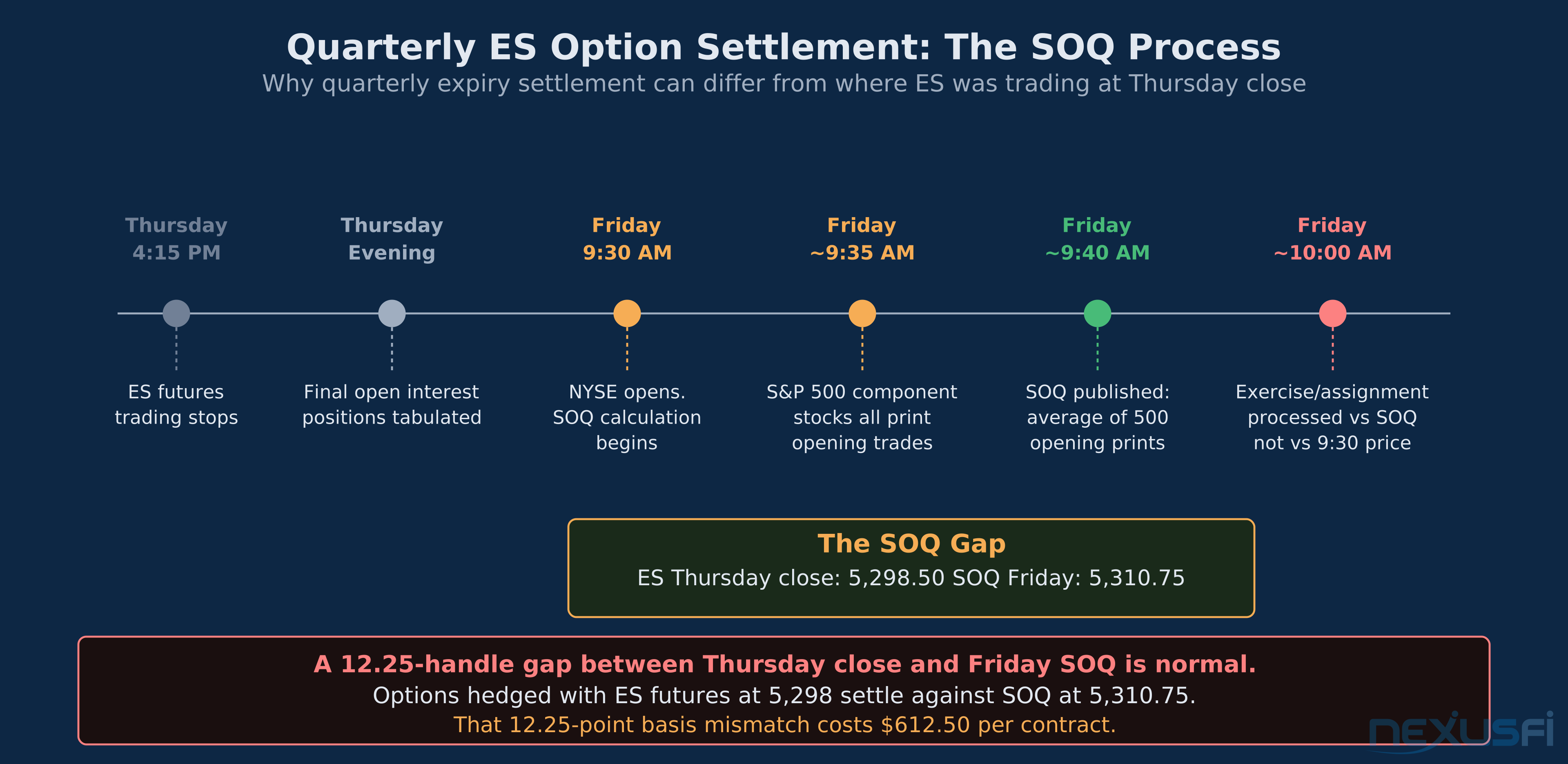
For quarterly ES options, the settlement reference is a Special Opening Quotation (SOQ) calculated from the opening prints of the 500 S&P component stocks. This calculation can produce a settlement that differs from where ES was trading at the prior close, sometimes by 10 or more handles. Any hedge you built based on the prior close price may be mismatched against the actual settlement. The SOQ has produced settlement prices that catch traders completely by surprise, especially on volatile Friday expiration mornings.
Automatic Exercise Thresholds #
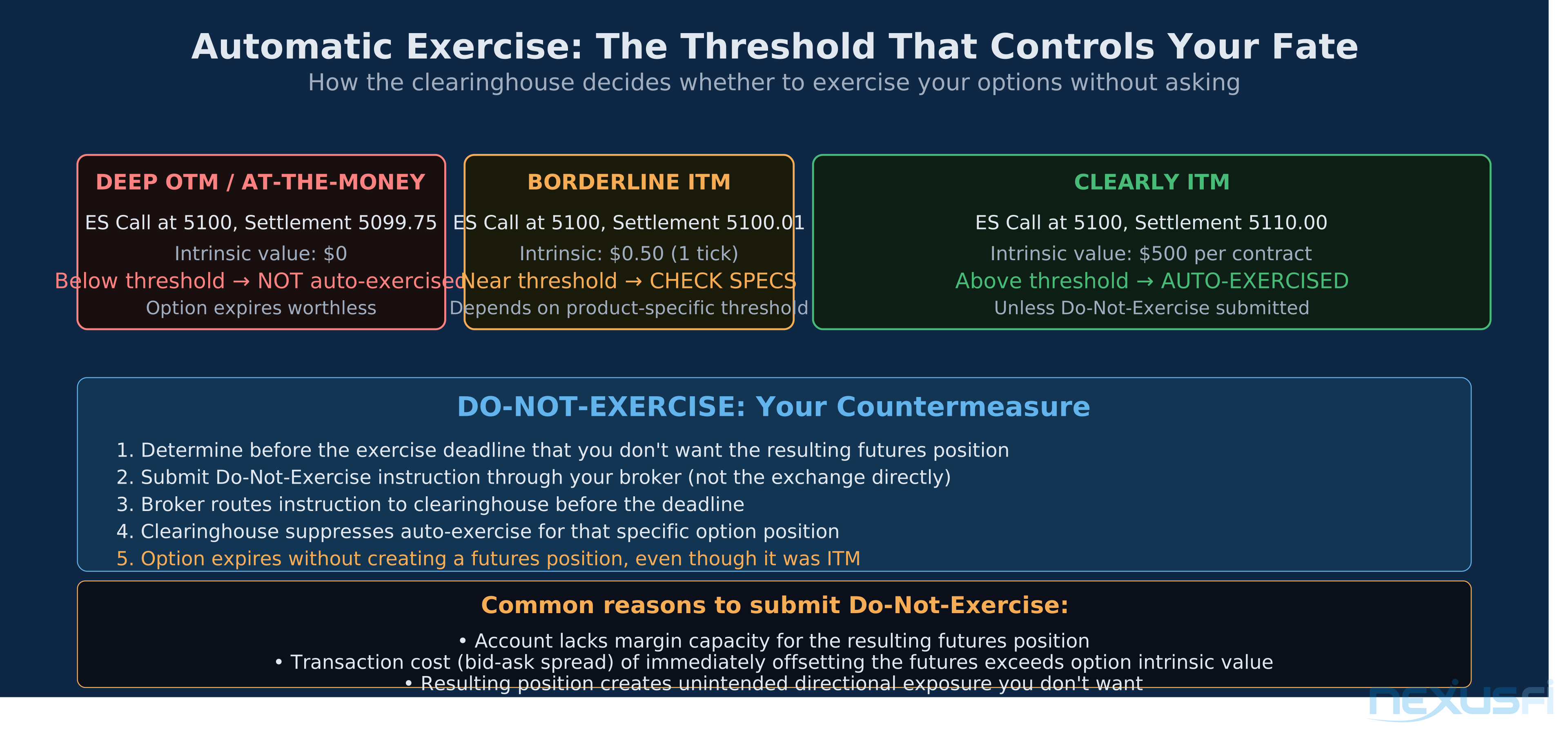
Most major exchanges apply an automatic exercise rule at expiration. The concept: if your option finishes in-the-money by more than a defined threshold, the clearinghouse exercises it automatically, without any action from the holder.
Why this exists: It prevents valuable options from expiring worthless because the holder simply didn't submit an exercise instruction. Automatic exercise protects holders who might not realize their option finished ITM.
The threshold itself: The exact threshold is product-specific and can change. For CME products, the threshold is typically a small dollar amount. If your option's intrinsic value at expiration exceeds this threshold, automatic exercise occurs unless you've submitted a do-not-exercise instruction.
Do-not-exercise instructions: If an option is auto-exercised but you don't want the resulting futures position, you need to submit a do-not-exercise instruction through your broker before the exercise deadline. Your broker routes this to the clearinghouse. The instruction prevents conversion of that specific option position into a futures position.
When you'd use do-not-exercise:
- Your option is slightly ITM but you've already hedged, and adding the futures position would create a net exposure you don't want.
- The commission and slippage on entering and immediately exiting the resulting futures position exceeds the option's intrinsic value.
- Your account doesn't have sufficient margin to absorb the resulting futures position.
- You entered a spread where the short leg was assigned — managing the hedge means you may need to allow some legs to expire and instruct others.
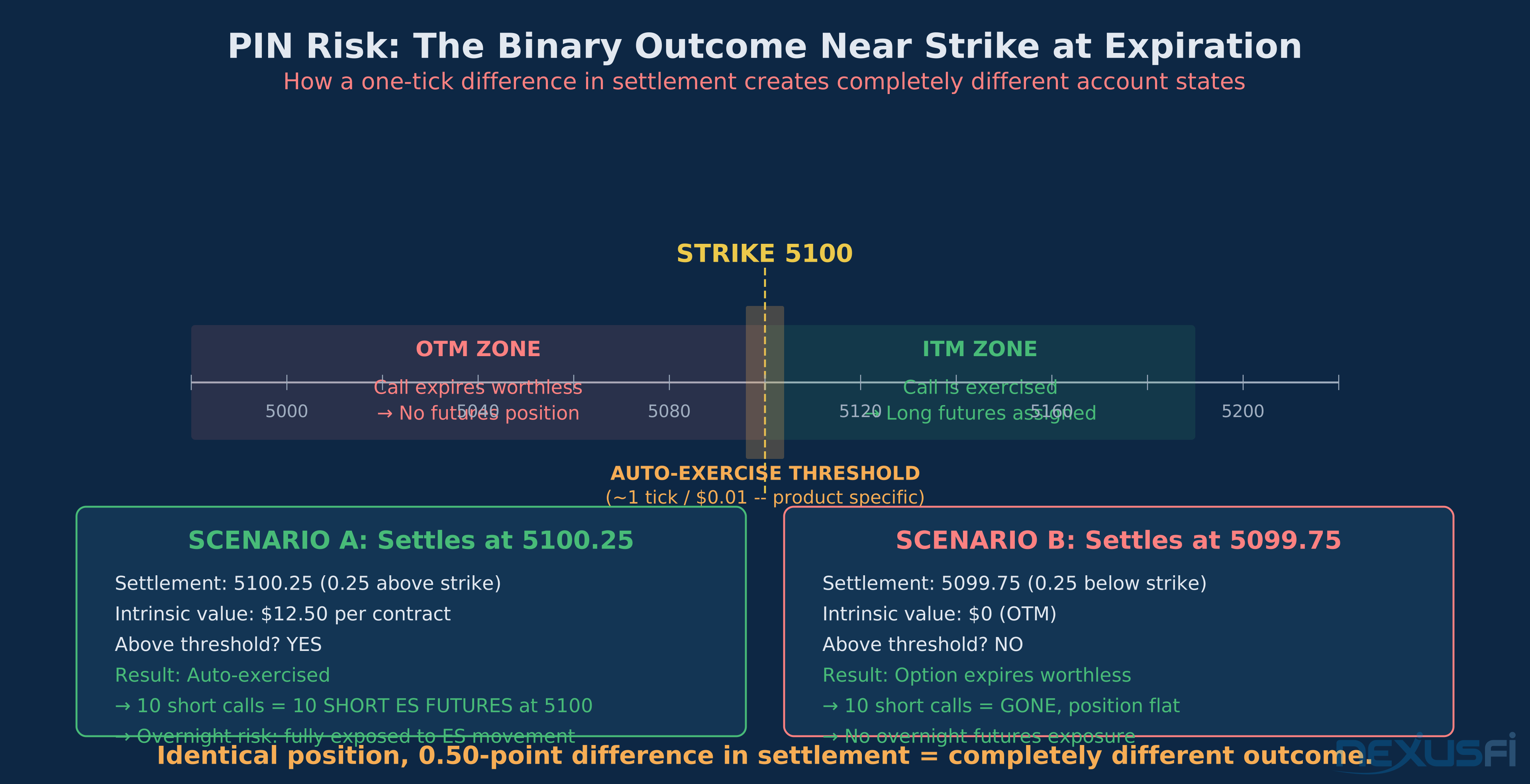
The binary nature of the threshold: This threshold creates a binary decision at a specific price level. Underlying settles at $5100.01 when your call strike is $5100.00 — auto-exercised. Underlying settles at $5099.99 — expires worthless. A tiny settlement difference produces completely different account states. This is exactly what creates PIN risk.
What you can't do after settlement: Once the exchange has published the settlement reference price and processed exercise/assignment, you can't retroactively submit do-not-exercise. The window closes at the exchange's stated deadline, which is typically before settlement is published. You're making your do-not-exercise decision under uncertainty about whether your option will even be ITM.
PIN Risk at Expiration #
PIN risk is the danger of the underlying futures settling near your option strike at expiration. The term comes from equity options where stocks famously 'pin' to heavily traded strike prices near expiration, but the mechanics in futures options are distinctly different and the consequences can be more severe.
Why futures PIN risk is different from equity PIN risk:
When an equity option is exercised, you receive stock — a liquid, easily managed position. When a futures option is exercised or assigned, you receive a leveraged futures position with daily mark-to-market and specific margin requirements. The resulting exposure can be far more volatile relative to the account size.
The scenario:
You're short 10 ES calls at 5100 strike with expiration tomorrow. ES futures settle at 5100.10 — ten ticks above your strike. Your calls are in-the-money. The auto-exercise threshold is crossed. All 10 calls are auto-exercised. You've been assigned 10 short ES futures at 5100. That's 10 contracts of significant futures notional suddenly in your account.
If you didn't plan for this, you may wake up with a futures position you didn't intend to hold. If the market gaps in globex, you've got adverse moves on positions you thought were expired.
The reverse scenario:
You're long 10 ES calls at 5100 as a hedge against a short ES futures position. ES settles at 5099.90 — just below your strike. Your calls expire worthless. The auto-exercise threshold wasn't reached. Your hedge evaporates, your short futures position is now unhedged, and if the market opens much higher, your hedge protection is gone.
How experienced traders manage PIN risk:
The standard approach is to close option positions before the final settlement window rather than carrying them into expiration. If you don't need the last few ticks of intrinsic value, the uncertainty of PIN risk isn't worth it.
As the NexusFi community documents extensively, this distinction between cash-settled index options (SPX, SPY) and futures-settled options (ES) catches traders by surprise regularly.
For short option positions near the money, dual-limbed hedging — maintaining enough futures exposure to be hedged regardless of whether the option is exercised — is the professional approach. You accept a slightly worse average outcome in exchange for eliminating the binary scenario risk. @datahogg noted in the NexusFi 'Pin Risk' thread that video resources on YouTube specifically address expiration-day handling for futures options and emphasize the need to understand the mechanics before trading.
For retail traders selling options on futures, the cleanest solution is simply to close positions before expiration when the market is near your strikes. The theoretical premium saved by holding to expiration rarely justifies the operational risk of PIN.
Short options on futures near your strike in expiration week are among the most operationally dangerous positions a retail trader can hold. PIN risk creates binary outcomes — unexpected assignment delivers leveraged futures exposure. Close positions before the final settlement window when the underlying is near your strikes.
SPAN Margin for Options on Futures #
SPAN — Standard Portfolio Analysis of Risk — is the margin framework developed by CME and now used by most major futures exchanges. It calculates margin requirements by stress-testing a portfolio across a defined set of scenarios and taking the worst-case loss.
For options on futures, SPAN is at the core different from what equity options traders are used to.
Equity options margin typically uses OCC-clearinghouse rules combined with broker-level portfolio margin or Regulation T rules. The margin is often a percentage of the underlying or the net premium, with specific rules for covered calls, married puts, and defined spreads.
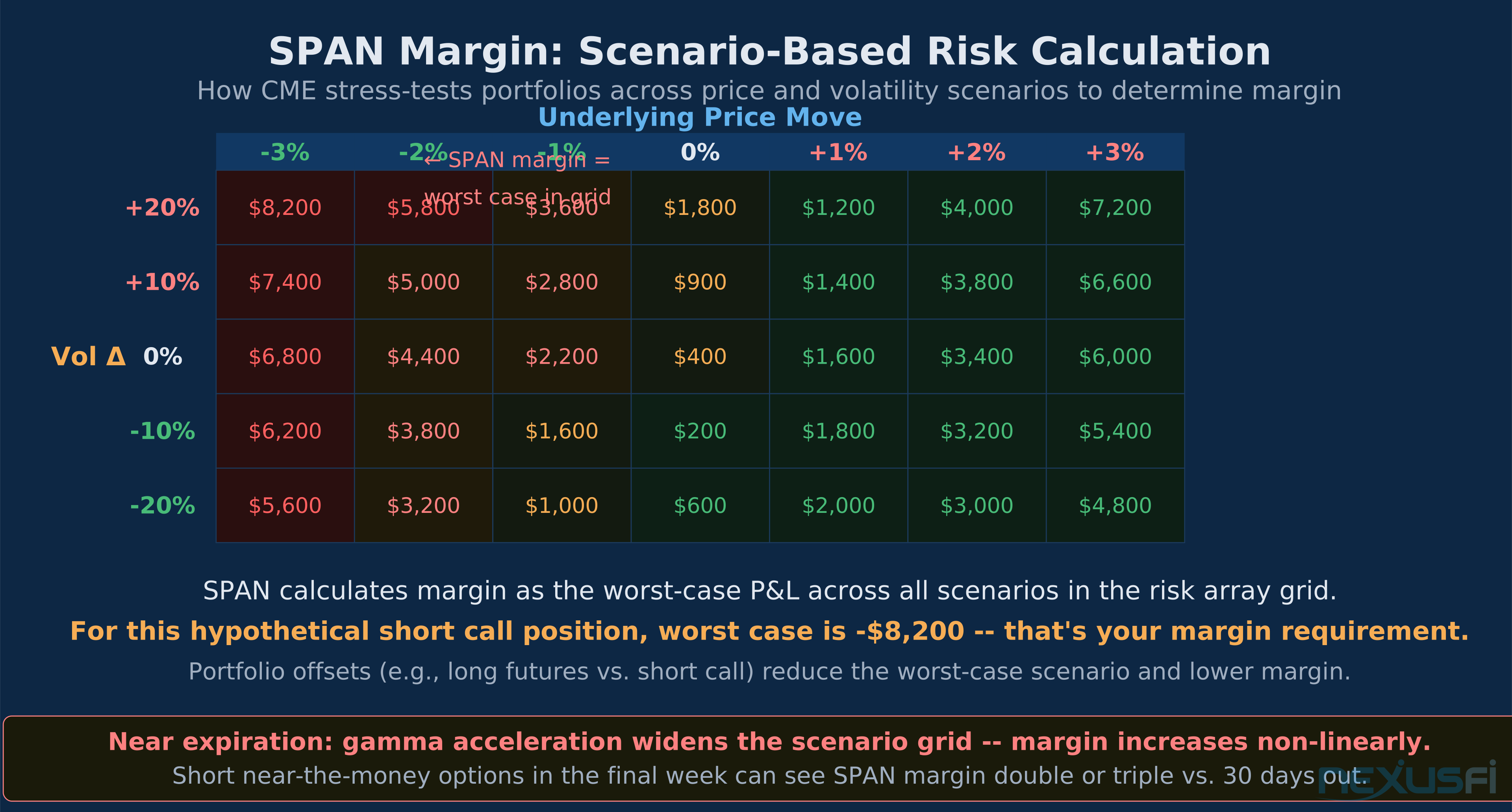
SPAN doesn't think in percentages. It thinks in scenarios. For every product in your portfolio, it defines a set of 'risk arrays' — combinations of underlying price moves and volatility changes. It then calculates the worst-case P&L across all those scenarios and requires you to hold enough margin to cover it.
What this means practically:
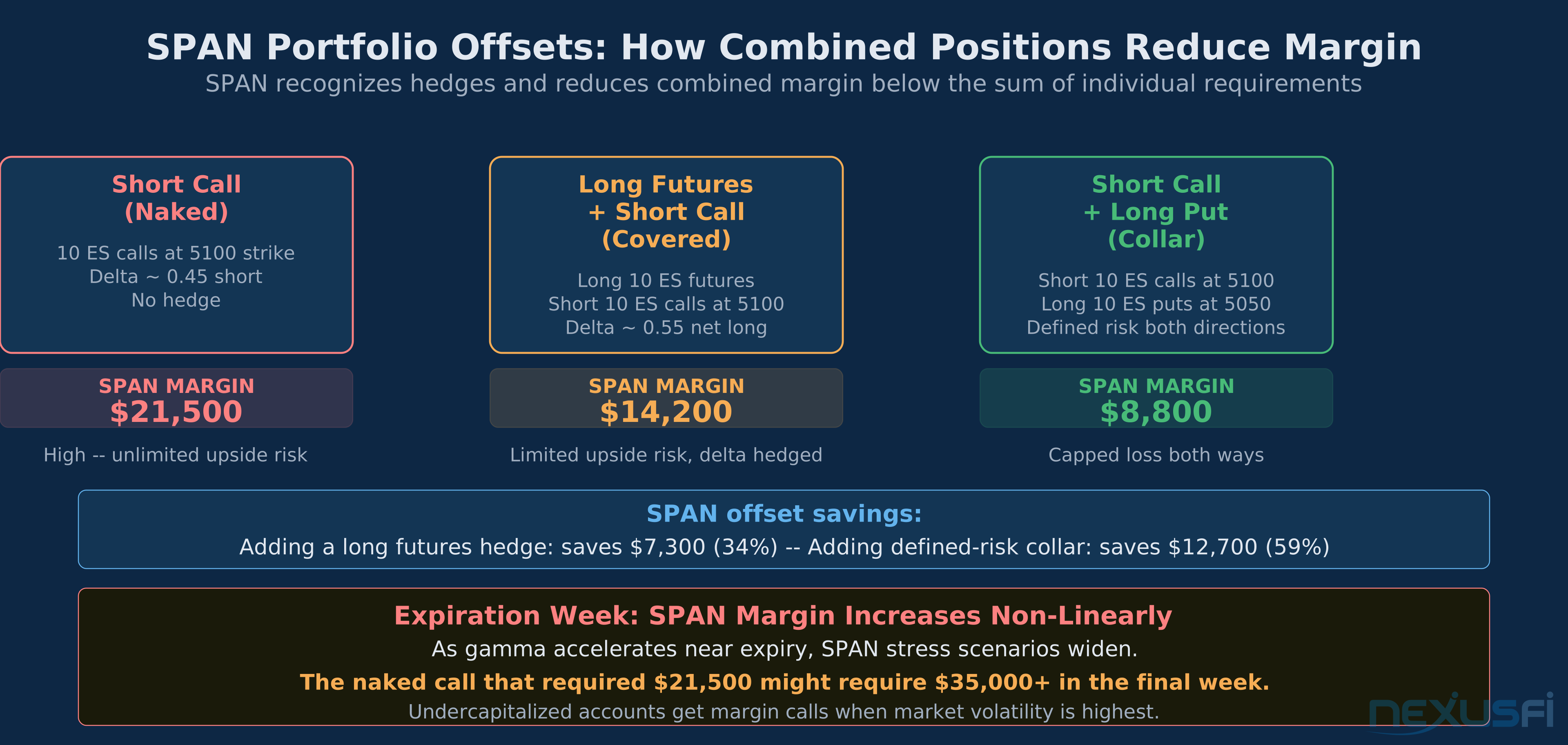
Offsets work in your favor. If you're long ES futures and short ES calls, SPAN recognizes that these positions partially offset each other. Your margin requirement for the combined position is less than the sum of the individual requirements. This is at the core different from equity options where covered calls receive specific treatment but broader portfolio offsets are less systematic.
Near-expiry gamma explosion is expensive. As an option approaches expiration near-the-money, gamma accelerates. Your short option position can move from a small delta to a large delta very quickly. SPAN stress tests capture this — your margin requirement increases as expiration approaches for short near-the-money options, sometimes dramatically. Traders see their margin requirement double or triple in the final week for near-the-money short positions.
Post-conversion margin jump. When a short option converts to a futures position via assignment, SPAN immediately treats it as a futures instrument. Futures carry higher margin than equivalent-delta options — the conversion can require significant additional capital.
Broker overlays add to SPAN. Most retail brokers apply house margin requirements that exceed SPAN minimums. During high volatility periods, brokers routinely increase these overlays. The base SPAN requirement is a floor, not a ceiling.
That level of daily tracking is standard practice for serious options sellers — SPAN is not a static number.
A critical practical implication: If you're holding short options into expiration week and the underlying is near your strike, your SPAN margin will be increasing. Plan your account size to handle this. Undercapitalized accounts get margin calls at exactly the wrong time — when the option is near-the-money and market volatility is already elevated.
Settlement Mechanics at CME and ICE #
The clearinghouse settlement process for options on futures follows a defined sequence. Understanding it helps you plan around the timing gaps described earlier.
CME settlement flow for options on futures:
- The underlying futures trading session ends and the exchange calculates the official settlement (or final settlement) reference price for that specific option expiration cycle. For quarterly expiries on equity index products, this is often a Special Opening Quotation (SOQ) — a calculated open price based on the opening prints of the component stocks. For serial months and weekly options, it's typically the settlement price of the underlying futures at the end of the regular trading session.
- Option intrinsic value is calculated: intrinsic value equals (underlying settlement minus call strike) for calls, (put strike minus underlying settlement) for puts. If intrinsic value exceeds zero and the automatic exercise threshold, exercise proceeds automatically.
- The clearinghouse processes all exercise/assignment pairs. For each exercised contract, it matches an option writer to receive assignment. The matching is random among writers with open short positions in that series.
- Resulting futures positions are reflected in clearing accounts. These typically appear by the next morning, though the exact timing depends on your broker's reporting cycle.
- The resulting futures positions are then subject to normal futures settlement beginning the following day — daily mark-to-market, margin calls if the position moves against you, and ultimately either offset via the order book or physical delivery if applicable.
ICE parallels and differences:
ICE uses similar principles — clearinghouse processing, reference price determination, automatic exercise rules — but the exact thresholds, timing windows, and settlement algorithms can differ by product. ICE Brent crude options have their own exercise rules that differ from CME crude oil options. Verify ICE-specific product specs — don't assume CME mechanics transfer.
The key insight about settlement price vs last traded price: The settlement reference price that determines option exercise is not necessarily the same as the last price you see on your trading platform before the market closes. It might be a calculated average, an auction price, or an opening quotation from a related market. This is most significant for equity index options where CME quarterly ES options use an SOQ calculation. Traders hedging with futures into the close might have a different reference than the settlement calculation determines, creating a basis risk at expiration that can be significant on volatile settlement days.
Delivery Options -- When the Chain Extends Beyond Exercise #
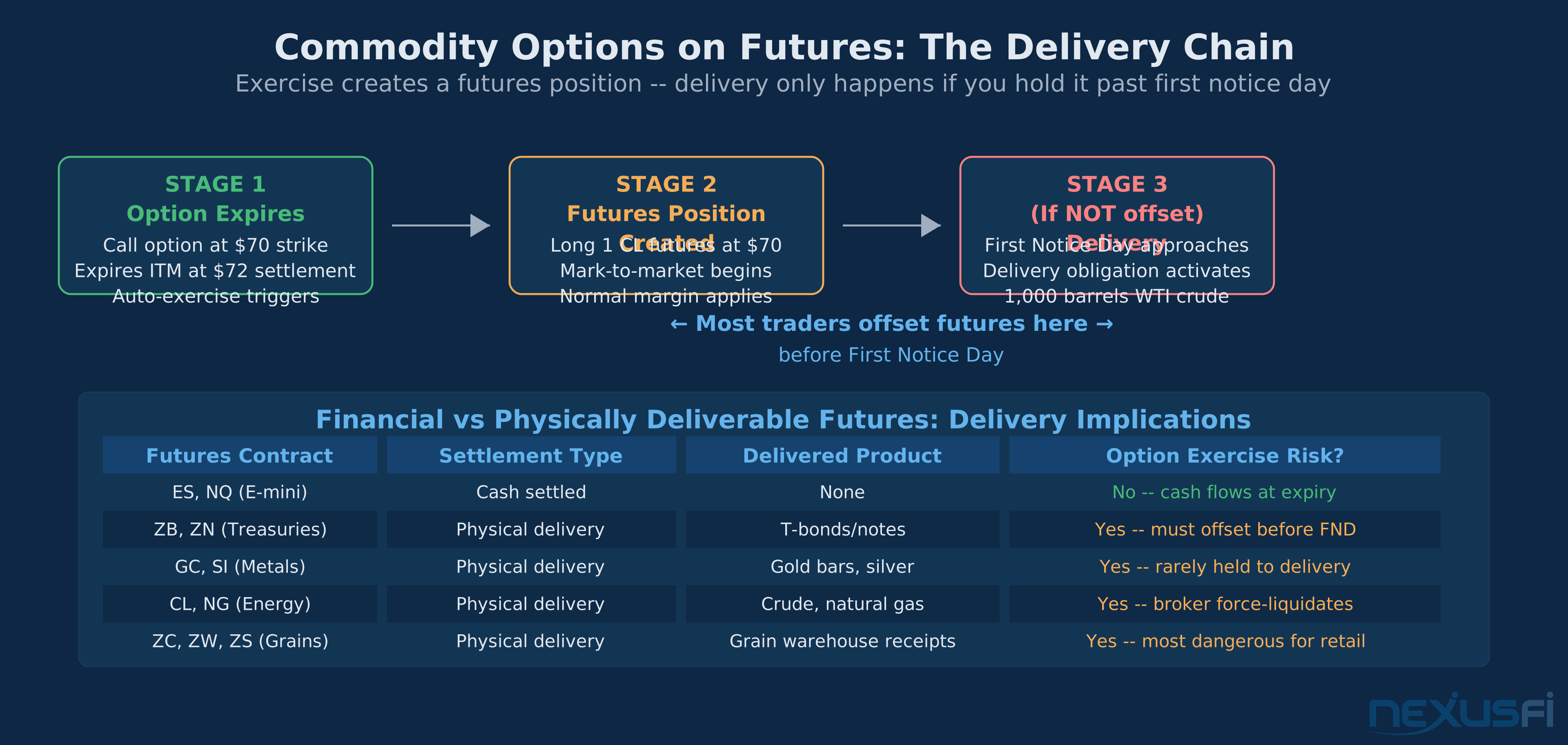
For most equity index and financial futures options (ES, NQ, ZB, ZN, 6E, etc.), delivery is a non-issue in practice. The underlying futures settle to cash — no physical delivery of anything — so when an option is exercised, the resulting futures position eventually settles to cash when the futures expires.
For physically deliverable commodities (CL crude oil, GC gold, ZC corn, ZW wheat, etc.), the chain is different:
Option exercise leads to futures position leads to potential physical delivery.
If you exercise a CL crude oil call option, you receive a long CL futures position. If you hold that futures position through first notice day without offsetting it, you may receive delivery notices and face the obligation to take physical delivery of crude oil. This is extremely rare for retail traders — most offset the futures position well before delivery — but the obligation exists.
First Notice Day is the critical date for physically deliverable futures. After first notice day, holders of long futures positions may receive delivery notices. For most retail traders, brokers force-liquidate positions before first notice day for exactly this reason. But the forced liquidation happens at market prices, which may be unfavorable if the market has moved against you.
The risk with options near quarterly expiration: A quarterly option that expires right when the underlying futures approaches its delivery period may leave you with a futures position that's close to first notice day, compressing the window between when you receive the position and when you need to offset it. Serial month options typically have more breathing room since the underlying futures hasn't reached its delivery period.
Where this actually bites traders: Agricultural options (corn, soybeans, wheat) and energy options (crude, natural gas) — where physical delivery is real. If you're trading options on these products and they're ITM going into expiration, the resulting futures position deserves immediate attention. Don't assume you can manage it later.
How This Differs from Equity Options #
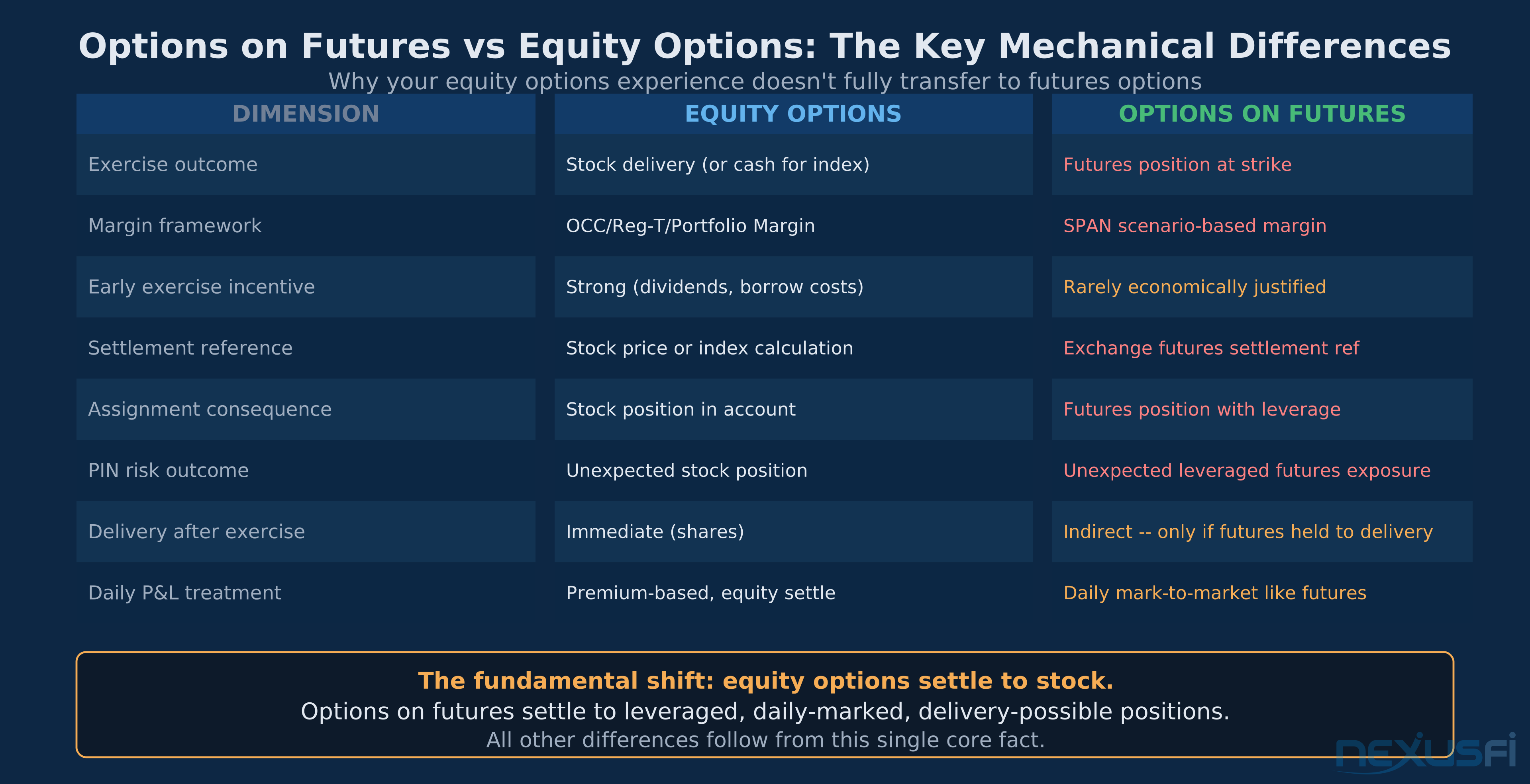
The comparison matters because many traders come from equities and bring incorrect mental models to futures options.
Exercise outcome:
Equity options: exercise delivers stock (or cash for index options like SPX/SPY). Options on futures: exercise creates a futures position.
This single difference cascades into most of the others.
Margin framework:
Equity options: OCC rules, Regulation T, or portfolio margin depending on account type. Generally based on premium multiples or strategy-specific rules. Options on futures: SPAN scenario-based margin that reflects actual derivatives risk. Portfolio offsets work more systematically. Near-expiry gamma is explicitly stress-tested.
Early exercise incentive:
Equity options: dividends create genuine American-style early exercise incentives for calls, and interest rates for deep ITM puts. Options on futures: almost never economically justified. The economics that create early exercise incentives in equities don't exist in the same way for futures.
Settlement reference:
Equity options: typically stock price at expiration or a defined calculation for index products. Options on futures: exchange-official futures settlement reference, which may be an opening calculation (SOQ), a VWAP window, or the daily settlement of the futures contract. This reference can differ from the last traded price in ways that matter for PIN risk management.
PIN consequence:
Equity options: unexpected stock position or unexpected absence of a stock position. Options on futures: unexpected futures position with leveraged mark-to-market and potential delivery exposure. The leverage amplifies the consequence substantially.
Delivery:
Equity options: assignment delivers or receives stock, settled through the standard equity clearing system. Options on futures: assignment creates a futures position. Physical delivery is downstream and only relevant if the futures is physically settled and you carry it to the delivery period.
@Bookworm's observation in the 'Index options vs futures options' thread on NexusFi captures the practical distinction precisely: 'ITM Non quarterly ES options expire into futures positions and there is pin risk to be aware of too.' The cash-settled SPX creates a clean cash flow. The futures-settled ES creates ongoing leveraged exposure.
Practical Checklist: Before You Hold Into Expiration #
Before carrying any options on futures position into expiration week, confirm:
1. Exercise style — American or European for this specific product (not the category, the specific contract code). Check CME or ICE product reference sheets directly.
2. Date/time landmarks — Three distinct timestamps: last day to trade, exercise declaration deadline, settlement reference publication time. These are not interchangeable.
3. Automatic exercise threshold — The exact ITM threshold in ticks or dollars. Know how many ticks in-the-money triggers auto-exercise for this contract.
4. Do-not-exercise availability — Does your broker support this instruction? What's the deadline? What's the submission process?
5. Settlement reference definition — Is it a daily settlement price, a SOQ, a VWAP window, or something else? For quarterly equity index options, the SOQ calculation can produce a settlement that differs meaningfully from where futures traded at the close.
6. Futures position timing — If assigned/exercised, when does the resulting futures position appear in your account? Plan your risk management around actual clearing timing.
7. Delivery obligations — For physically deliverable futures, know first notice day relative to option expiration.
8. SPAN margin — Know the margin requirement for the resulting futures position before expiration week.
9. Serial vs quarterly — Know which futures contract your option references. Serial months use the near-quarter futures.
Options on futures expire into leveraged futures positions, not stock or cash. Know your three timestamps (last trade, exercise deadline, settlement reference), your auto-exercise threshold, and whether your account can absorb the resulting futures position before expiration week begins.
Knowledge Map
Prerequisites
Understand these firstGo Deeper
Build on this knowledgeReferences This Article
Articles that build on this topicCitations
- — Pin Risk (2022) 👍 3“Anyone who trades options at any time should view one or both of these videos on YouTube. Pin risk for stocks and how it manifests at expiration. There are 90 min. after close of market on expiration day where an option could be exercised.”
- — Index options vs futures options (2020) 👍 4“ITM Non quarterly ES options expire into futures positions and there is pin risk to be aware of too. ITM SPX options expire as cash settlement but the AM options carry overnight.”
- — Selling Options on Futures? (2014) 👍 3“Traditionally options on Futures were only available monthly and for some contracts quarterly. More recently they have launched weekly options on some contracts.”
- — Selling Options on Futures? (2015) 👍 1“The Mar, Jun, Sep & Dec are the quarterly contracts. Options on those months are open as long as the futures are open. The other months are called serial months.”
- — Selling Options on Futures? (2016) 👍 6“So basically the three serial months will get replaced with three week3 options. So when Feb expires instead of adding May they add another week3 option.”
- — Selling Options on Futures? (2013) 👍 4“Tracking SPAN margins each night into a spreadsheet. A third sheet keeps the percent extra margin required by the broker for each commodity.”
- — Pin Risk (2022) 👍 1“When it comes to options on futures, like those on ES for example, the offerings alone are pretty large and it takes some work to understand what you are trading. Trading them without understanding pin risk can be dangerous.”
- CME Group — CME Globex Options on Futures Product Specifications (2024)
- CME Group — Understanding SPAN Margin (2024)
- — SC and Options on Micro-Emini Futures (2021) 👍 4“If you're long 3 MES and you're long 2 puts at expiration, you'll be long 1. But there's no need to do this -- you'd almost always simply close your hedge and adjust your position before expiration.”