



Delivery and Physical Settlement in Futures Markets: First Notice Day, the Delivery Process, and What Retail Traders Actually Need to Know
Overview #
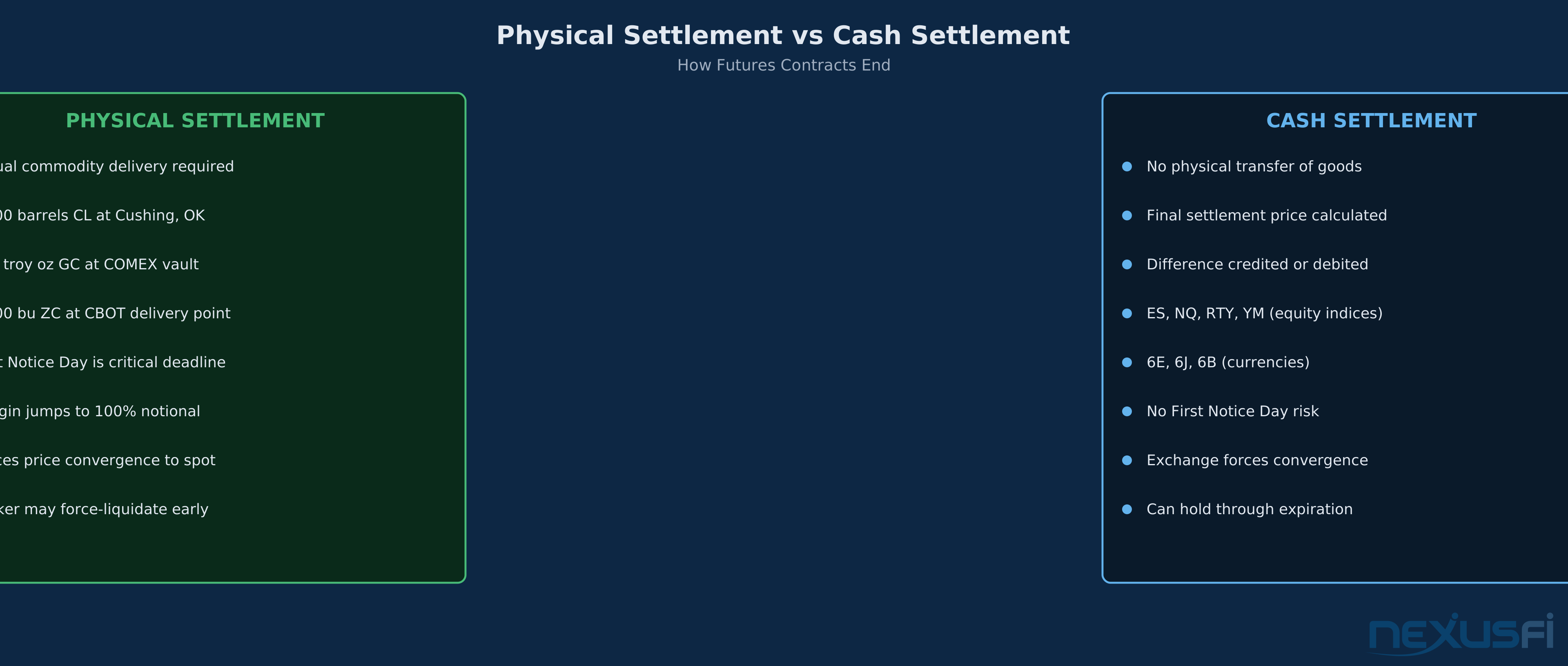
Every futures contract ends one of two ways: cash settlement or physical delivery. If you trade ES, NQ, or any equity index future, you'll never think about this
Understanding delivery isn't optional for commodity futures traders. Even if you never intend to take or make delivery
Physical Settlement vs Cash Settlement: The Two Ways Futures End #
Every futures contract specifies its settlement method in the contract specifications, and this single detail determines how you manage expiration.
Cash-settled contracts close at a final settlement price, and the difference between your entry and that price is credited or debited to your account. No goods change hands. The process is identical to the daily mark-to-market you already experience
Physically-settled contracts require the actual transfer of the underlying commodity. If you hold a long position in CL (WTI Crude Oil) through final settlement, someone is supposed to deliver 1,000 barrels of crude oil to a storage facility in Cushing, Oklahoma
The existence of physical delivery is what gives commodity futures their economic purpose. Without it, futures prices would disconnect from the physical market. The ability to deliver forces convergence
The Critical Dates: First Notice Day, Last Trading Day, and Why Order Matters #
Here's where retail traders get tripped up. There are two critical dates for physically deliverable contracts, and which one comes first varies by product.
Last Trading Day (LTD) is exactly what it sounds like
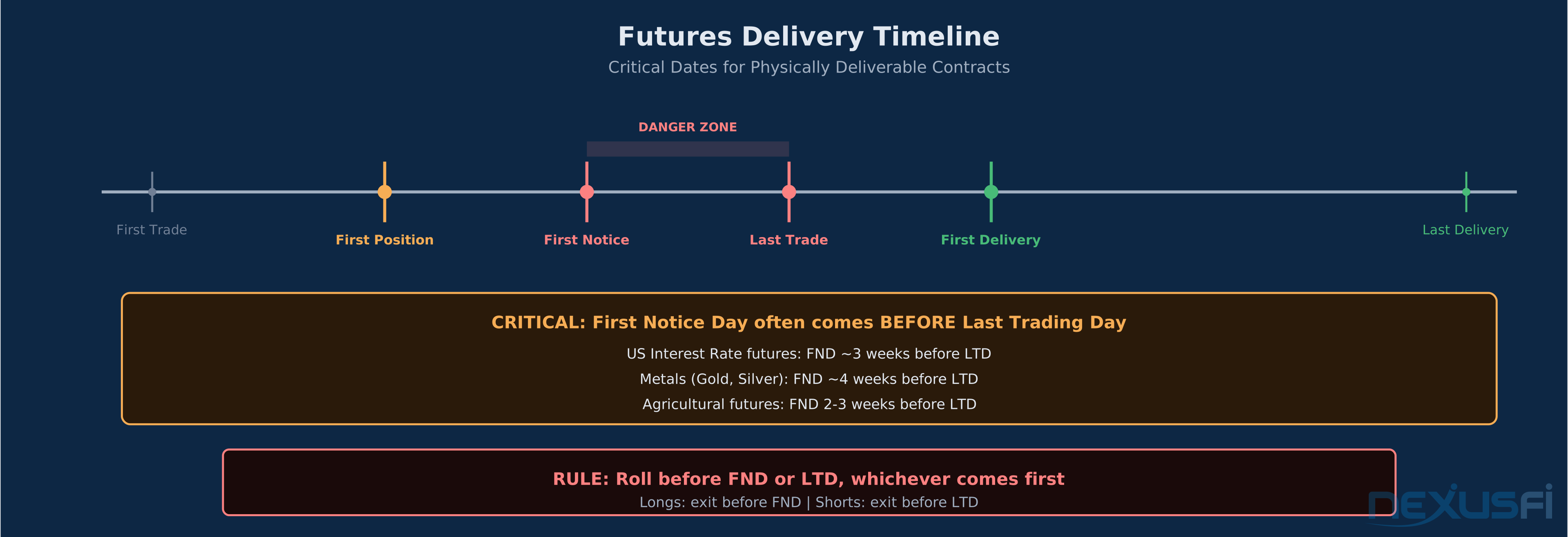
First Notice Day (FND) is the first date on which the exchange can notify holders of long positions that they've been assigned a delivery. This only applies to physically deliverable contracts. On this date, someone holding a short position files a delivery intent with the clearinghouse, and the clearinghouse assigns that delivery to a long position holder
Here's the critical detail that catches people: for many contracts, First Notice Day comes before the Last Trading Day. Sometimes weeks before.
A NexusFi community expert [laid this out clearly] [1]:
- US interest rate futures: First Notice Day is typically ~3 weeks before the Last Trading Day
- Metal futures (gold, silver): First Notice Day is typically ~4 weeks before the Last Trading Day
- Agricultural futures: First Notice Day is typically 2-3 weeks before the Last Trading Day
For crude oil (CL), the timeline is simpler
The rule is simple: roll your position before First Notice Day or Last Trading Day, whichever comes first.
If you hold a short position, you won't be assigned for delivery before LTD
The Delivery Process: From Intent to Transfer #
Physical delivery isn't instant. It follows a structured sequence managed by the exchange's clearinghouse:
Step 1: Position Day. The holder of a short position files a delivery intent with the clearinghouse, declaring they will deliver the underlying commodity. This happens between the First Position Date and Last Position Date.
Step 2: Notice Day. The clearinghouse matches the delivery intent with a long position holder and sends a delivery notice. The long position holder is now obligated to accept delivery. This happens between First Notice Day and Last Notice Day.
Step 3: Delivery Day. The actual transfer occurs. For crude oil, this means transferring title to oil stored at Cushing, Oklahoma. For gold, it means a warrant for metal in a COMEX vault. For grains, it means warehouse receipts at approved delivery points. This happens between First Delivery Day and Last Delivery Day.
The CME Group defines these dates precisely in their product calendars. For each contract month:
- First Trade Date → Last Trade Date (trading window)
- First Position Date → Last Position Date (shorts declare intent)
- First Notice Date → Last Notice Date (longs get assigned)
- First Delivery Date → Last Delivery Date (physical transfer)
What Happens If You Get Stuck: The $60,000 Surprise #
Let's say you're holding one long CL contract and somehow end up in the delivery process. Here's what happens, based on [detailed analysis from NexusFi's commodities forum] [2]:
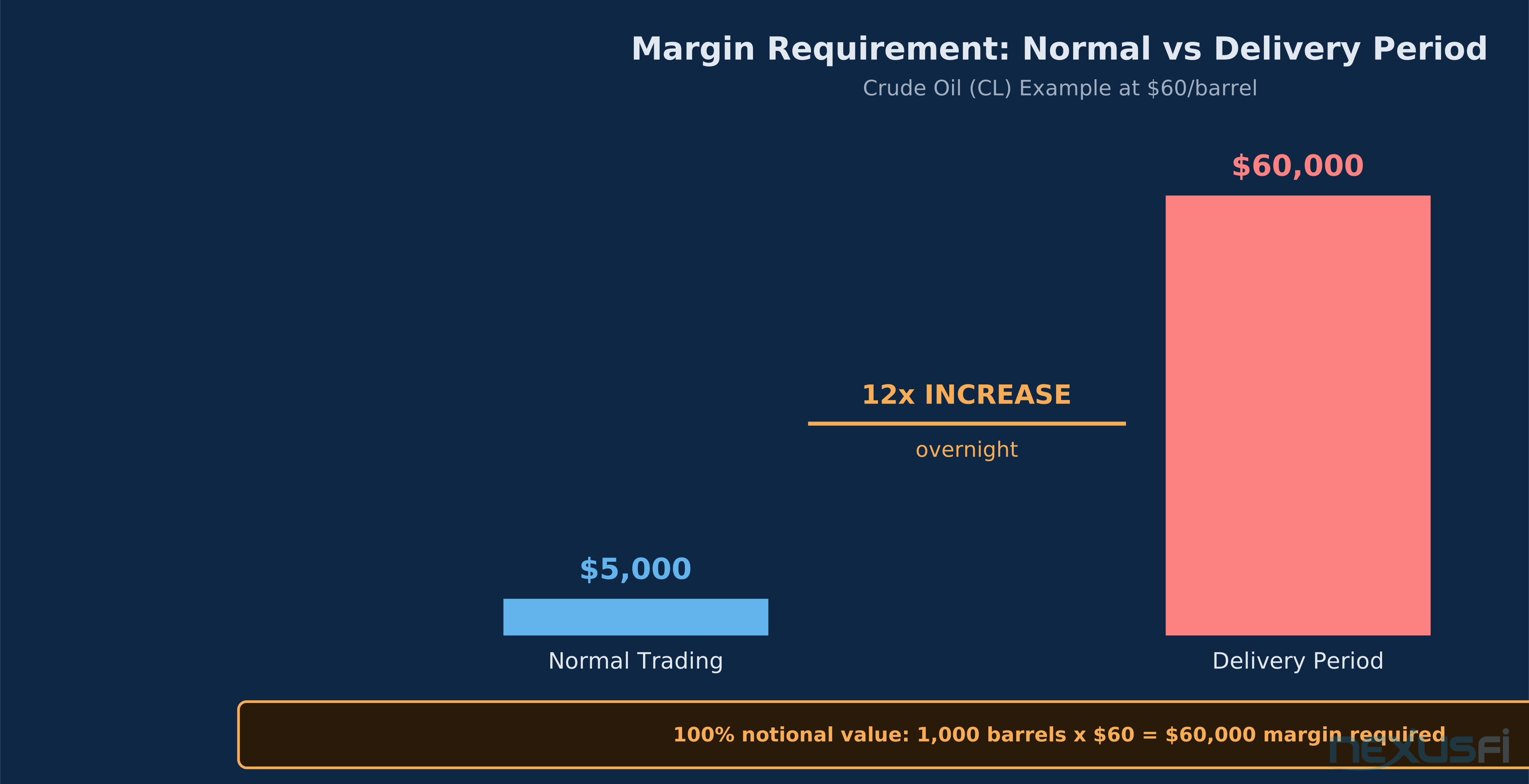
Margin explodes. Your maintenance margin on one CL contract might be $4,500-$6,000 during normal trading. The moment you enter the delivery process, you're margined at 100% of the notional value of the contract. At $60/barrel for 1,000 barrels, that's a $60,000 margin requirement
You need logistics in place. Taking delivery of crude oil means you need a storage contract at Cushing, Oklahoma. Taking delivery of gold means you need a warehouse contract at a COMEX-approved vault. Livestock futures require access to slaughterhouses. You can't just "receive" a commodity
Alternative Delivery Procedure (ADP) saves most people. In practice, most delivery situations
As one NexusFi trader with institutional experience [explained] [2]: "Even if you did it intentionally the requirement to post 'full notional value' makes it undesirable. Hence there is what is called an Alternative Delivery Procedure. This is where two matched counterparties agree to meet the delivery requirements outside of the exchange system."
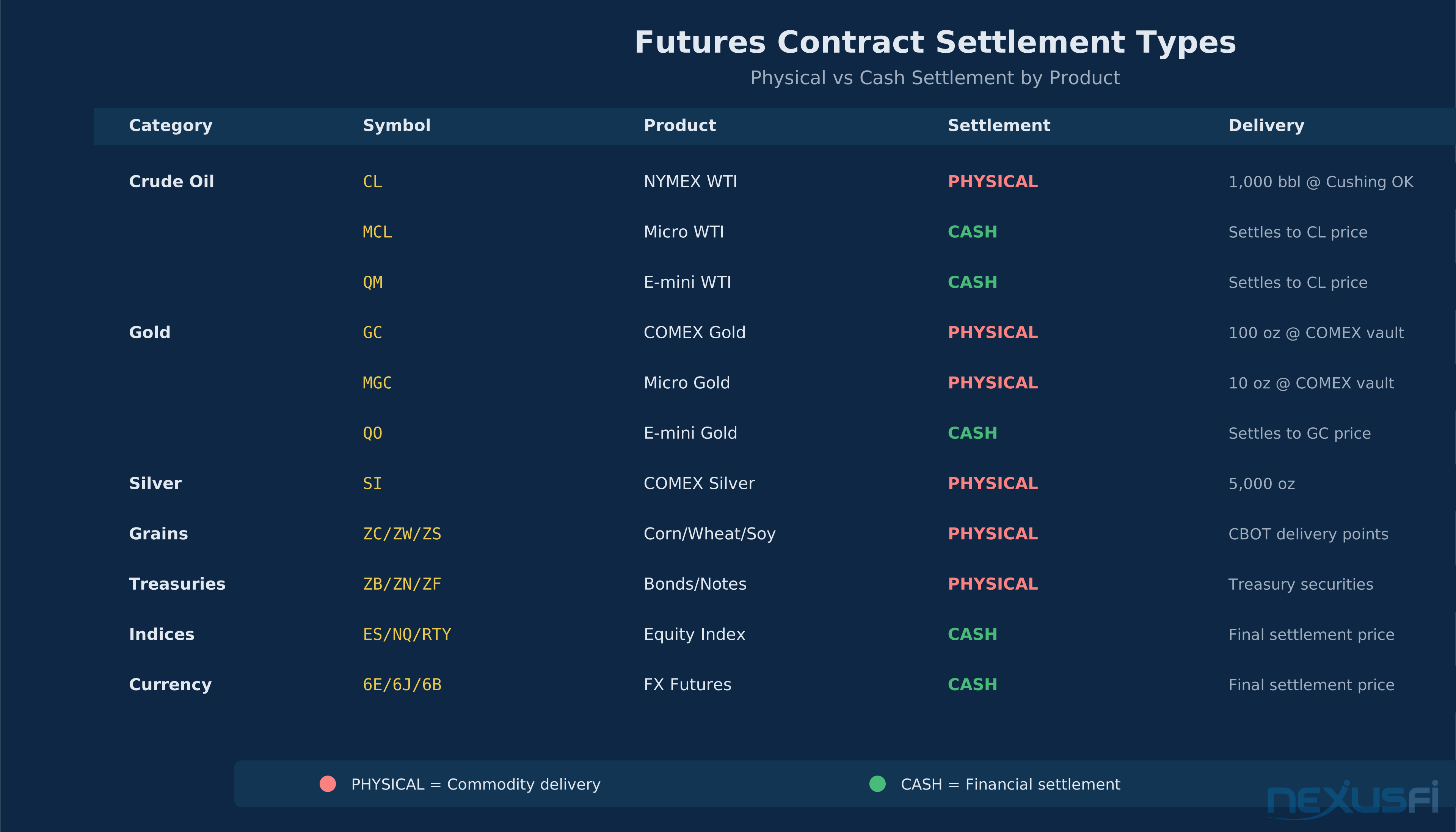
Which Contracts Are Physically Settled? A Practical Reference #
Not every version of a commodity contract is physically settled. The exchange often offers both physical and financial versions:
Crude Oil:
- CL (NYMEX WTI): Physically delivered
- MCL (Micro WTI): Cash settled against CL settlement price
- QM (E-mini WTI): Cash settled against CL settlement price
- ICE Brent: Cash settled (with EFP option)
Gold:
- GC (COMEX Gold): Physically delivered
- MGC (Micro Gold): Physically delivered
- QO (E-mini Gold): Cash settled against GC settlement price
Silver:
- SI (COMEX Silver): Physically delivered
- SIL (Micro Silver): Physically delivered
Grains:
- ZC (Corn), ZW (Wheat), ZS (Soybeans): All physically delivered at CBOT delivery points
Treasuries:
- ZB (30-Year Bond), ZN (10-Year Note), ZF (5-Year Note): Physically delivered
Equity Indices:
- ES, NQ, RTY, YM: All cash settled
Currencies:
- 6E, 6J, 6B, 6A: All cash settled
A [detailed breakdown on NexusFi] [4] noted the key distinction: "If your day trading, this is probably irrelevant to you. Just don't trade the physical contracts on the last day of trading. In reality you should probably be trading the contract with the most volume which means you will be switching to the next contract several days before the last day of trading."
How Brokers Handle Delivery Risk #
Your broker has zero interest in helping you take delivery of 5,000 bushels of corn. Retail brokers universally have close-out policies that force-liquidate positions in physically deliverable contracts well before FND or LTD.
The aggressiveness of this policy varies dramatically by broker type:
Retail-focused brokers (NinjaTrader Brokerage, Tradovate, most retail FCMs): Will auto-liquidate your position 1-5 business days before FND or LTD. You'll get warnings, then you'll get liquidated
Institutional/professional brokers (Advantage Futures, major FCMs): May send warnings but won't force-liquidate unless you fail to respond. As [one NexusFi community member with institutional experience noted] [5]: "With Advantage, several days before expiry or 1st delivery I will start getting automated messages notifying me of the pending expiry/delivery risk. If I still have a position on the day of expiration/day before 1st delivery date, risk will email me to ask my plans."
The key difference: retail brokers assume you don't want delivery and protect themselves by closing you out. Institutional brokers assume their clients might want delivery and communicate rather than force-liquidate.
If you trade seasonal spreads or strategies that hold positions into the delivery period, your broker choice matters enormously. A retail broker's forced close-out might happen days before you planned to exit, potentially at unfavorable prices.
Why Delivery Matters for Price Convergence #
Physical delivery isn't just a logistical curiosity
Consider what happens as a contract approaches expiration:
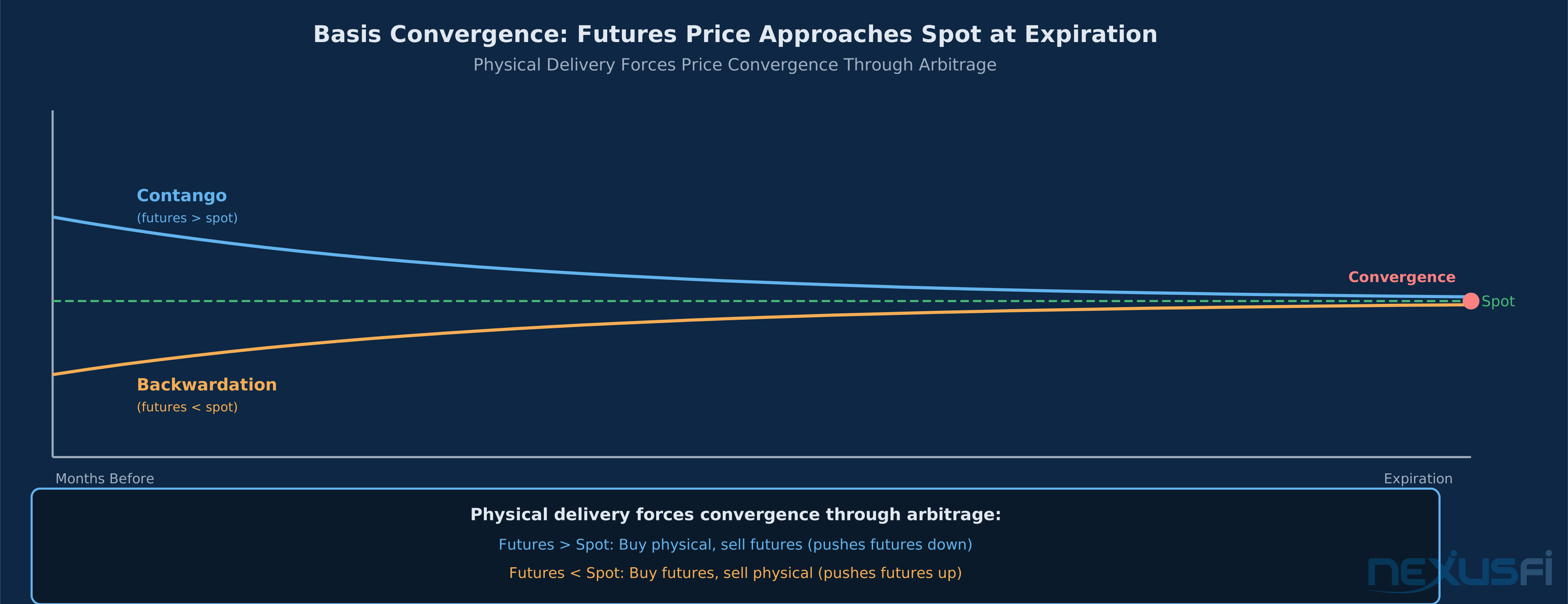
- If the futures price is much above spot, arbitrageurs buy the physical commodity and sell the futures contract, planning to deliver at expiration. This selling pressure pushes the futures price down.
- If the futures price is much below spot, arbitrageurs buy the futures contract and sell the physical commodity, planning to take delivery. This buying pressure pushes the futures price up.
This convergence process is called basis convergence, and it's why the basis (futures price minus spot price) narrows as expiration approaches. For cash-settled contracts, the exchange forces convergence mechanically by defining the settlement price relative to the cash market. For physically deliverable contracts, arbitrage does the work.
The delivery mechanism also creates some unique trading dynamics in the final days before FND:
Contango squeeze: When storage is expensive or in short supply, the cost of carrying a physical position into the delivery period can spike. Traders holding long positions who can't take delivery are forced to sell, sometimes creating sharp downward pressure.
Delivery squeeze: When physical supply is tight, shorts who can't deliver are forced to cover. This can create sharp upward moves as shorts compete for a limited number of contracts.
The infamous April 2020 WTI crude oil event
Calendar Spreads: The Clean Way to Roll #
If you're swing trading or holding positions across contract months, rolling via a calendar spread is cleaner than closing and re-entering:
Instead of selling your July CL contract and buying the August CL contract as two separate legs (exposing yourself to slippage on each side), you trade the July/August calendar spread as a single instrument. The exchange matches both legs simultaneously, eliminating execution risk on the spread.
Calendar spreads are available for most liquid futures contracts. Your platform likely lists them as "CL JUL25-AUG25" or similar notation. Spread commissions are often lower than two outright legs.
The timing of your roll matters. Most traders roll when volume in the new front month exceeds volume in the expiring contract
Practical Rules for Retail Traders #
- Know your contract's settlement method. Check the exchange's contract specs before trading any new product. Physical delivery changes everything about how you manage expiration.
- Track FND and LTD for every physically deliverable contract you trade. Put them in a calendar. Don't rely on memory.
- Roll before FND or LTD, whichever comes first. For longs, FND is the hard deadline. For shorts, LTD is the hard deadline. Don't cut it close.
- Understand your broker's close-out policy. Ask specifically: how many days before FND/LTD will they force-liquidate? This matters for swing trades and spreads.
- Don't assume your broker will save you. Most retail brokers will auto-liquidate, but execution timing and price are not guaranteed. Manage your own risk.
- Use the CME product calendar. Every contract's key dates are published in advance. Bookmark the CME product calendar for every product you trade.
- If you trade micros or e-minis, check settlement type. Micro Gold (MGC) is physically settled. Micro WTI (MCL) is cash settled. Don't assume all micros are the same.
- Calendar spreads for clean rolls. If you hold positions across months, use the spread instrument rather than two outright legs.
Physical delivery is the foundation that makes commodity futures work as a price discovery and hedging mechanism. You don't need to take delivery to benefit from understanding how it works. But you absolutely need to understand it to avoid being the person who gets a call from their broker asking where they'd like their 1,000 barrels of crude oil delivered.
Knowledge Map
Prerequisites
Understand these firstGo Deeper
Build on this knowledgeReferences This Article
Articles that build on this topicCitations
- — Futures Expirations Question (2013) 👍 7“MV007: I mostly agree with you, but not completely. Last Trading Day This applies to all futures contracts, including index futures and currency futures.”
- — What happens if your contract expires (2021) 👍 8“Late to the conversation but let me add my input. Lots of talk about expiration, make sure you check FIRST DELIVERY or FIRST NOTICE. For many contracts this is after expiration but for some contracts it is before.”
- — Contract Rollover, and what to do when (2015) 👍 4“There are already numerous threads, where this question has been discussed. Nevertheless I will try to give a short answer.”
- — Physical or Cash Settlement for day trades (2023) 👍 2“I'm not sure I understand your question (or maybe you didn't mean what you actually asked) The main NYMEX Crude Oil contract ("CL") is a physically delivered contract.”
- — Futures Close-Out Policy (2024) 👍 3“That's very surprising. In my limited experience the spread recommendation services tend to be months before expiry.”