



Brokerage for Options on Futures: Account Requirements, Margin Mechanics, and Platform Capabilities
Overview #
Most futures traders treat broker selection as a commodity choice. Commissions matter, execution quality matters, and after that, most FCMs are functionally equivalent for buying and selling ES contracts. Options on futures breaks that assumption completely.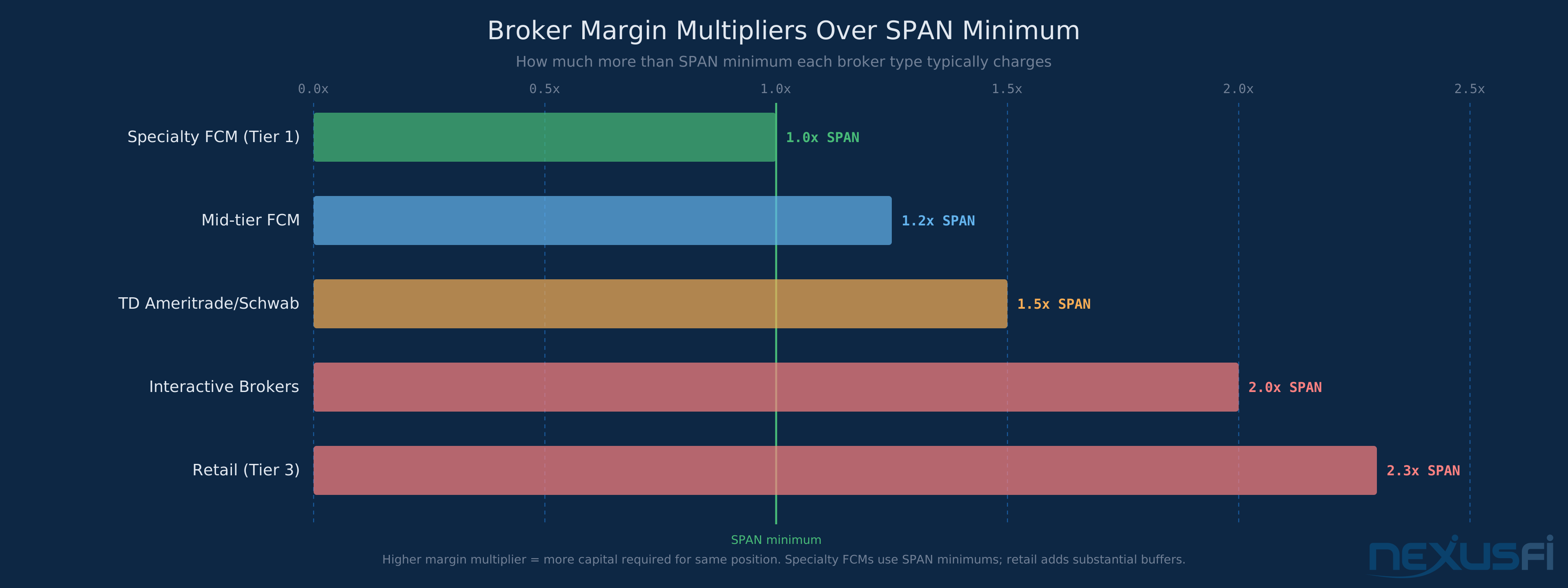
ns to your futures account, the broker filters down from dozens of viable choices to a handful. Many retail futures brokers don't allow naked option selling at all. The ones that do apply margin in ways that can destroy the economics of a strategy that looks solid on paper. The platform capabilities required to manage complex option positions often don't exist in typical futures-focused front ends. And the risk management protocols that futures traders rely on — stop orders, automated exits, after-hours risk alerts — don't translate from futures to options at all.
This isn't a minor administrative difference. The broker you choose determines what strategies you can execute, at what cost of capital, and how you can manage risk when a position moves against you. A trader who builds a short strangle strategy on ES futures options and then moves it to a broker with 2x SPAN margin requirements has cut their potential ROI nearly in half without changing a single trade decision.
Understanding how options on futures brokerage actually works — the approval process, the margin mechanics, the platform requirements, and where each breaks — is foundational knowledge before you place a single options trade.
The Broker Environment: Who Actually Allows Options on Futures #
Not all futures brokers are created equal for options trading, and the differences go well beyond commissions.
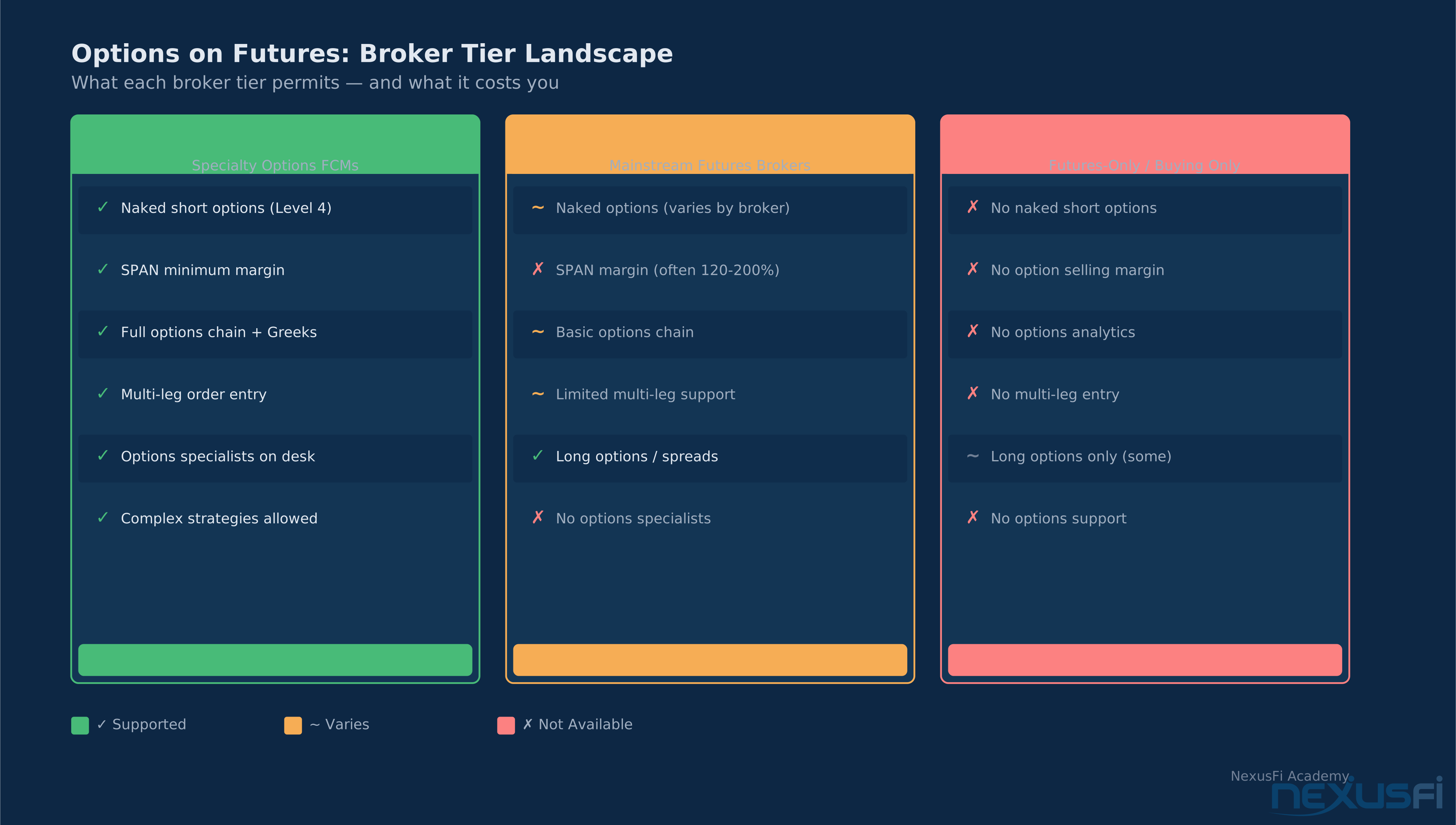
Tier 1: Full-service options + futures brokers. These firms actively market to options traders, maintain specialists with options expertise, apply SPAN minimum margins (or close to it), and provide platforms with proper options analytics. Boutique FCMs that specialize in commodity options fall here. They want your business and price so.
Tier 2: General futures brokers with limited options support. Most mainstream discount futures brokers fall into this category. They permit options trading at defined risk — long calls, long puts, credit spreads — but either prohibit or severely discourage naked option selling. They may technically offer the account type but apply margins so far above SPAN that the economics are punitive.
Tier 3: Futures-only brokers. These firms don't offer options on futures at all, or restrict options to buying only. Not relevant to option sellers.
The Tier 2 situation is the trap. A trader who opens an account, gets approved for options, and then discovers the broker charges 3x SPAN on naked positions has wasted the application process and locked capital into an account that can't be efficiently deployed.
The simplest filter before anything else: ask the broker directly whether they charge SPAN minimum margin for short futures options. If they can't answer clearly or say "it depends," treat that as a no.
Why do so many brokers avoid option sellers? The economics don't work for them.
The result: brokers that don't want option selling clients price them out rather than refuse them outright. If you see a broker charging 150-200% of SPAN for short commodity options, that's what's happening.
Account Approval and Trading Levels #
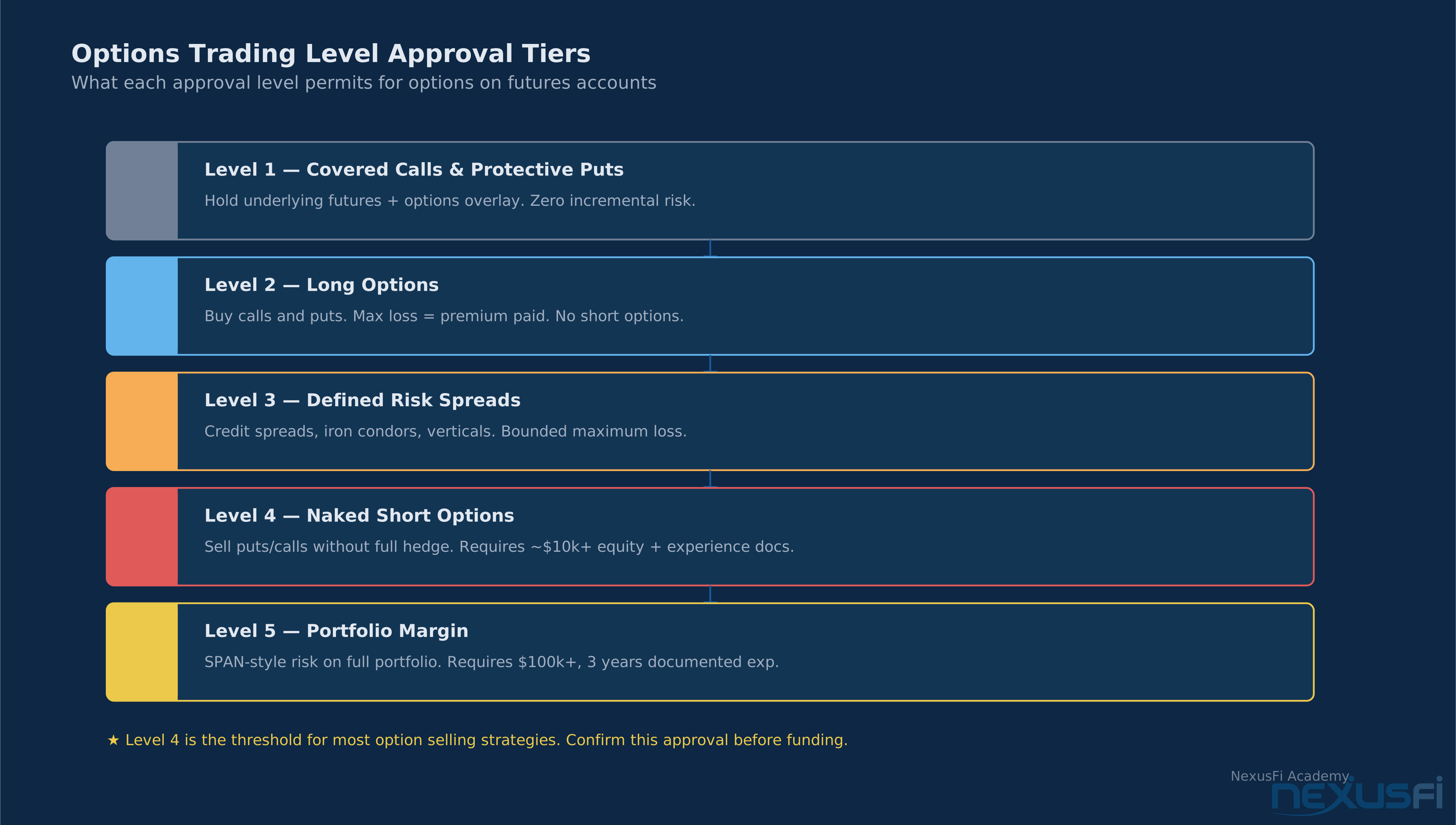
Options on futures accounts require explicit broker approval that doesn't come with a standard futures account opening. Every options-enabled broker uses a tier system — typically three to five levels — that gates which strategies you can execute.
Level 1 (most restricted): Covered calls and protective puts only. You already hold the underlying futures position. Zero incremental risk versus the futures position itself.
Level 2: Long options — buying calls and puts outright. No short options, no obligation taken on. Maximum loss is the premium paid.
Level 3: Spreads — defined-risk short options including credit spreads, iron condors, and covered positions. The maximum loss is defined at entry, which bounds the broker's risk.
Level 4: Naked short options — selling puts and calls without the full hedge. This is where margin friction starts. Most brokers require documented trading experience, a minimum account equity (often $5,000-$25,000), and explicit written sign-off. This is the level needed for the strategies most serious options-on-futures traders use.
Level 5 (most permissive): Portfolio margining. Rare, high-barrier, and not offered by most retail futures brokers. Portfolio margin applies SPAN-style risk logic to your entire portfolio, dramatically reducing margin for hedged positions. The benefit is significant; so are the requirements.
Portfolio margin requirements are not casual. As @ron99 documented based on broker disclosures: the minimums include $100,000 in account equity, three years of confirmed options trading experience, three months of recent documented trading history for review, an investment objective of "Speculation" on the account application, and prior approval for naked equity call writing and naked index put and call writing.
The trading level approval process typically involves:
- Account application listing investment objectives
- Net worth and income documentation
- Options trading experience questionnaire
- Written acknowledgment of options risks
Approval is not automatic. Brokers review applications individually and reserve the right to approve a lower level than requested. If you need Level 4 for your strategy but get approved for Level 3, you need either a different broker or a different strategy.
Account approval for a lower trading level than requested is common and not always disclosed upfront. If your strategy requires naked short options, confirm Level 4 approval explicitly before funding the account. Confirm it in writing, not from a marketing page. The approval level determines what you can trade, full stop.
SPAN Margin: The Foundation of Options on Futures Margining #
SPAN (Standard Portfolio Analysis of Risk) is the margin methodology developed by CME Group and used by the major futures exchanges. For options on futures, SPAN is the exchange-mandated minimum margin requirement — what the clearinghouse requires brokers to collect. To understand how SPAN fits into the broader futures margin framework, it's worth knowing that SPAN is itself a specific implementation of exchange-set initial margin requirements.
SPAN calculates margin using 16 predefined risk scenarios. Each scenario models a range of price moves combined with volatility changes in the underlying futures contract. The worst-case loss across those 16 scenarios determines the SPAN requirement for the position. The CME Group, which developed and maintains the SPAN system, documents the complete SPAN methodology including the 16 risk scenario framework and scanning ranges that form the basis of exchange-mandated margin requirements.
Hedged positions get inter-commodity and intra-commodity offsets — a short ES call partially offsets a short ES put in a strangle, reducing combined margin below the sum of individual legs. The key distinction: brokers set their own margin requirements at or above SPAN. No broker can offer margin below SPAN — that's the exchange rule, as established under CFTC Part 39 regulations governing derivatives clearing organization margin requirements. The CFTC Part 39 framework codifies the exchange-mandated SPAN floor that all FCMs must adhere to. But there is no cap on how much above SPAN a broker can go.
This is the number that varies enormously between brokers. As @CafeGrande's real-account comparison showed — applying PC-SPAN calculations to actual positions at multiple brokers simultaneously — Interactive Brokers' margin requirements for certain commodity options positions bore no recognizable relationship to SPAN minimums. For Crude Oil short positions in particular, the gap was described as "laughably large" compared to a traditional FCM charging rates close to SPAN. At IB, the same positions that worked profitably at one broker required multiples of the capital, destroying the ROI profile entirely.
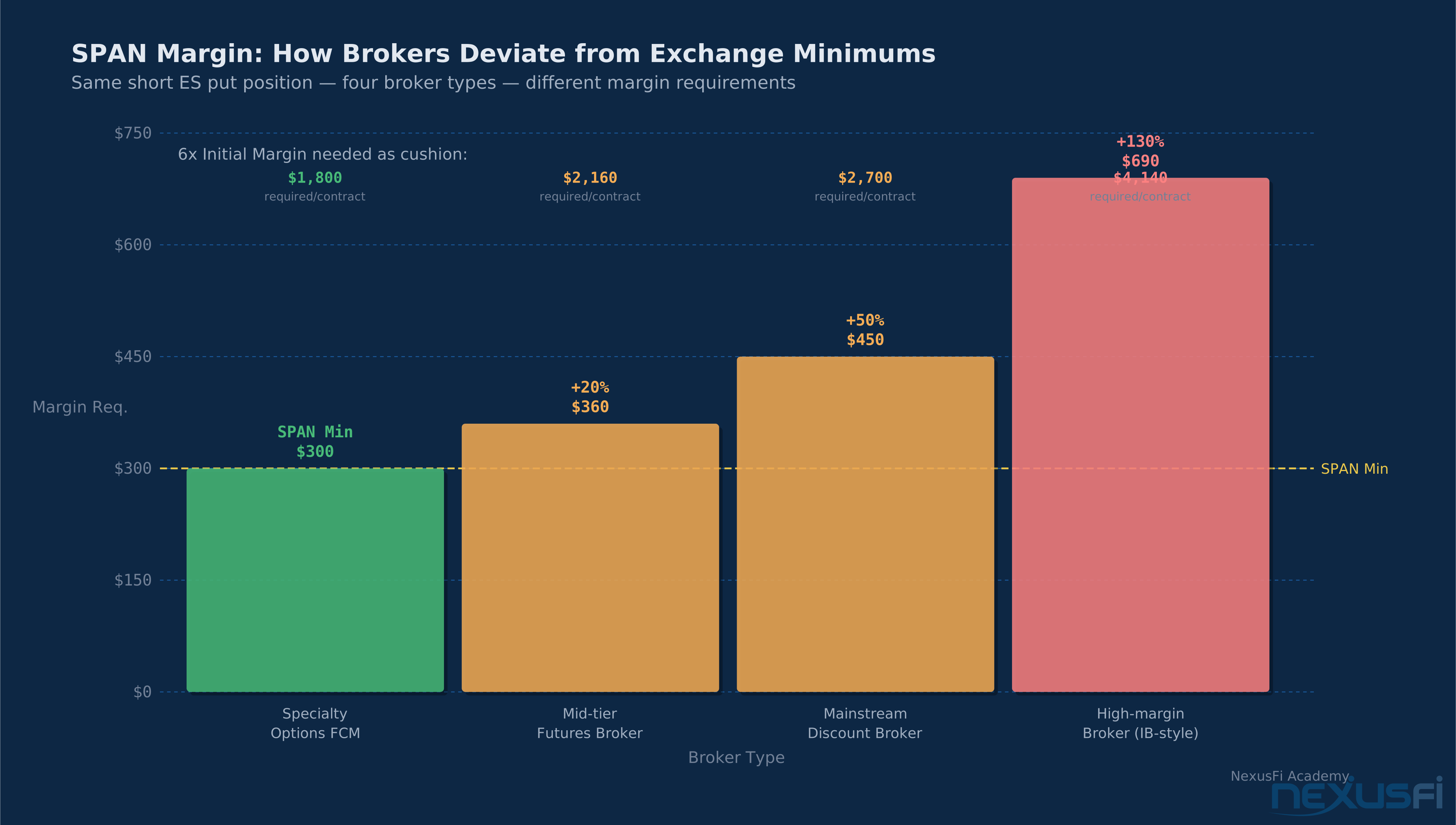
SPAN is the floor. Your broker determines the ceiling. The ceiling varies from "close to SPAN" at specialty options FCMs to "2-3x SPAN" at mainstream futures brokers that don't want this business. The difference is not cosmetic — it directly determines how many contracts you can run per dollar of capital.
The return impact of margin premiums is not trivial. As @ron99 calculated on a CL (Crude Oil) short put position: lower margin is more important than a few dollars more in commissions when selling options. His specific example: a broker charging 20% above SPAN minimum vs. a SPAN-minimum broker produced nearly 1% higher monthly ROI at the SPAN broker — equivalent to roughly 12% better annual ROI on the same strategy, for the same risk, just by broker choice. For the same capital deployed, the SPAN-minimum broker allowed six contracts where the higher-margin broker allowed five.
How Brokers Apply (and Deviate From) SPAN #
The margin environment across futures options brokers breaks into three patterns:
SPAN minimum or close: Specialty options FCMs and brokers who actively want options clients typically apply SPAN minimums or add a modest buffer in the 5-15% range. These are the brokers that treat option sellers as good business.
Flat multiplier above SPAN: Some brokers apply a blanket 20-50% premium over SPAN for short options. This is at least predictable and can be accounted for in position sizing.
Effectively prohibitive: Some brokers charge 2-3x SPAN or more, especially on individual commodity options. The account is technically available but the economics make it unworkable. These brokers are sending the business elsewhere without explicitly rejecting it.
The compounding problem during volatility: exchanges can raise SPAN requirements intraday during market stress, and brokers can add their own buffer on top.
This stacking effect — exchange SPAN spike plus broker buffer plus intraday mark-to-market on options that have widened dramatically — is what turns a manageable position into a forced liquidation during events like the August 2015 flash crash. The timeline compresses in a way that differs at the core from futures: futures can be liquidated in milliseconds at current bid, options buybacks require finding a counterparty at current market, which in a volatility spike is both slow and expensive.
Brokers can and do raise margin requirements intraday during volatility events, without advance notice. A position with comfortable cushion at market open can be on forced-liquidation status by mid-session if SPAN spikes and the broker applies their multiplier on top. This is not a hypothetical edge case — it happened repeatedly to option sellers in August 2015, February 2018, and March 2020.
Capital Cushion: The Real Risk Control Mechanism #
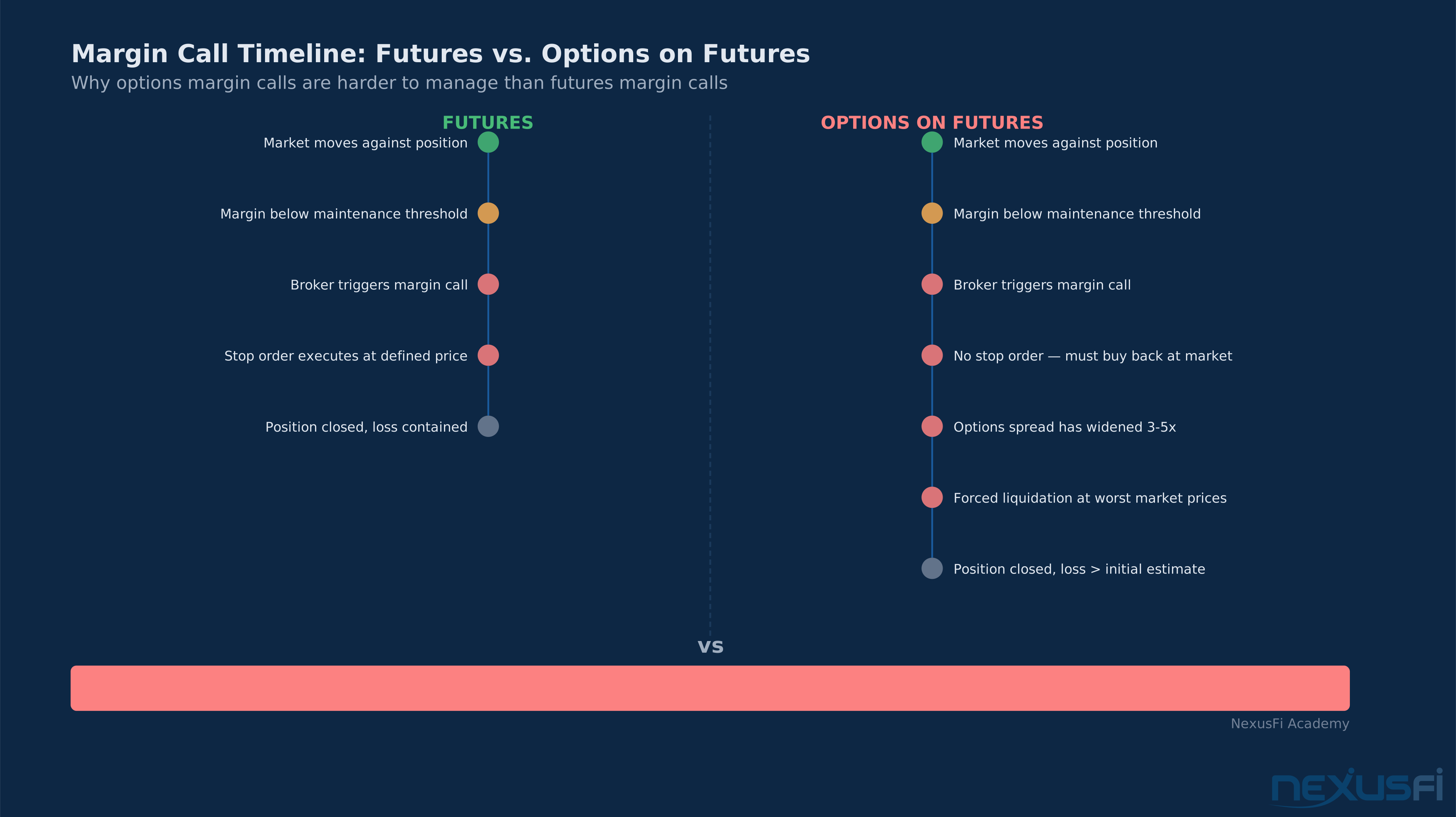
Stop orders don't work on futures options. This is a fundamental difference from futures trading that most traders learn about the wrong way.
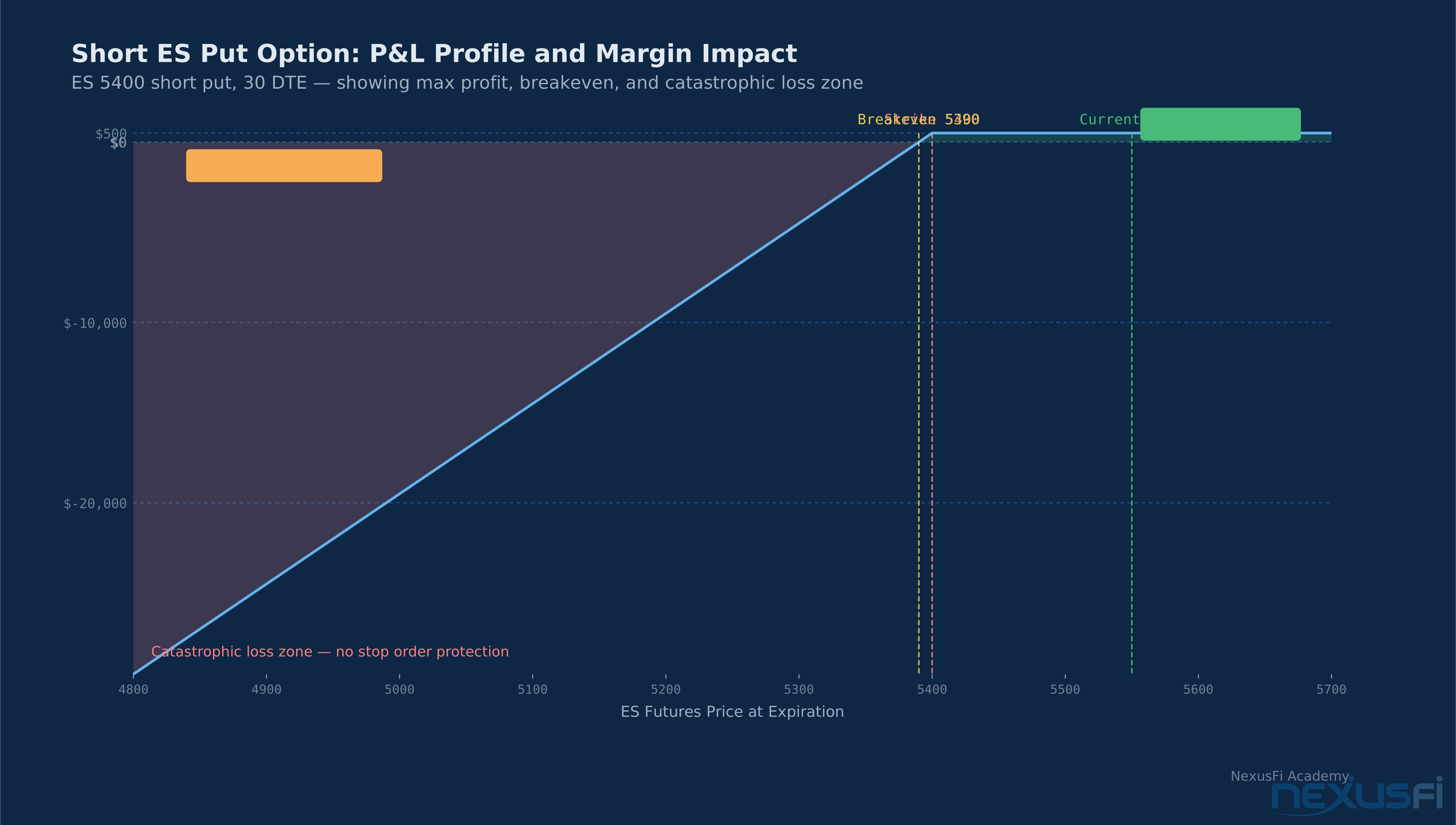
In futures, you set a stop at a specific price level and if the market reaches it, you're out. Options on futures have no equivalent. Electronic stops on options don't execute the same way — options are less liquid, bid/ask spreads widen dramatically under stress, and off-hours liquidity is often nonexistent. The stop order mechanism that futures traders rely on as the primary risk control simply doesn't exist for options.
@decarleytrading lays this out: "It is not possible to place stop orders on options on futures, so you must place mental stops and be quick to adjust or react. A rule of thumb is to at least adjust a position once you have lost as much as you originally collected for the option. For instance, if you sell an option for $500, and it is now worth $1,000, it is probably a good time to admit defeat."
This eliminates the automated exit as a risk control mechanism. In its place, the margin cushion becomes the primary protection. The amount of capital you hold relative to the initial margin requirement determines whether you survive a volatility event without forced liquidation at the worst possible moment.
And for the worst-case scenario analysis — entering a position the day before the August 2015 crash: "A naked 3 delta put sold on 20150817 would have needed 7xIM to ride out the 20150824 crash while having a 45% drawdown."
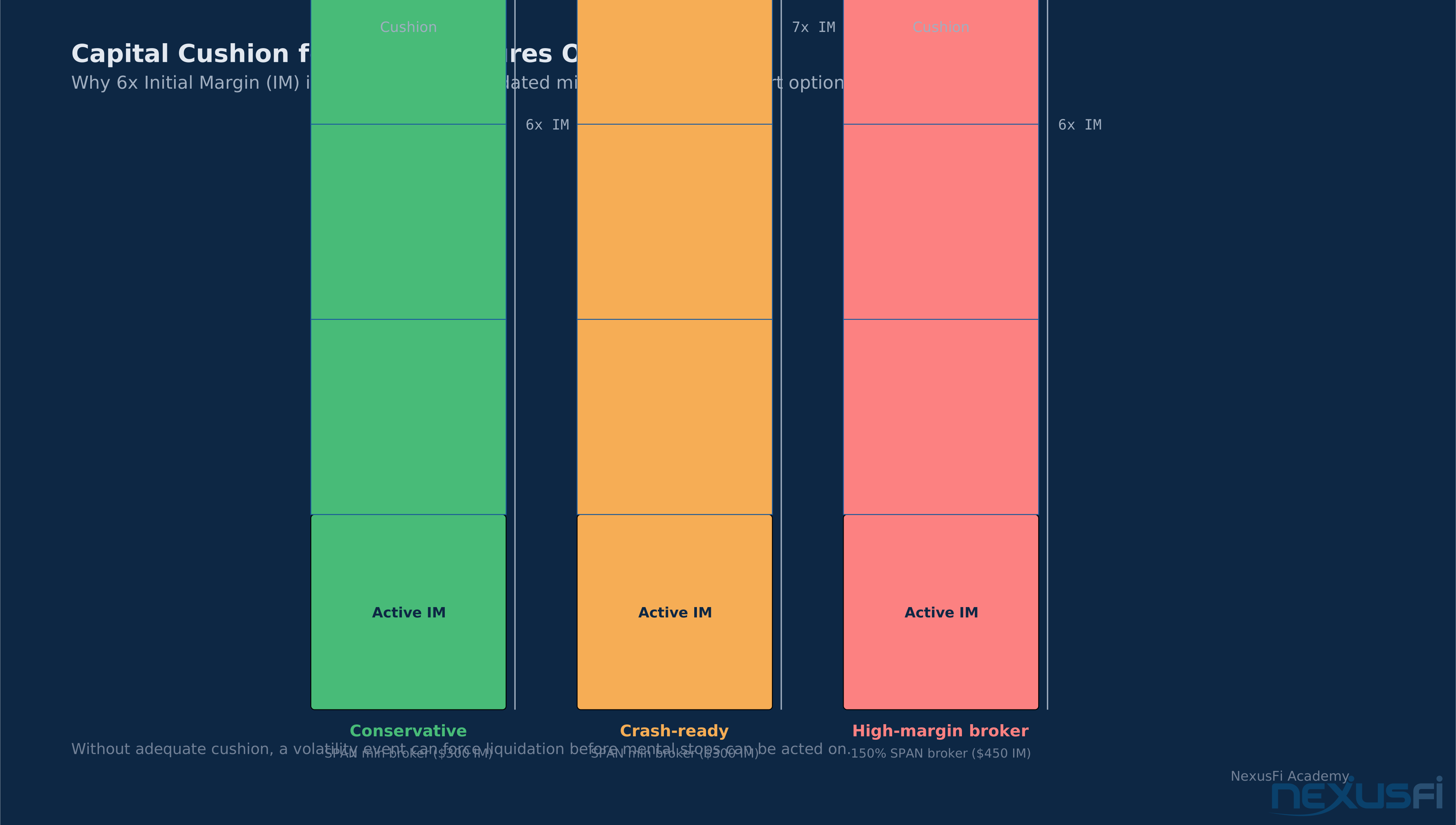
Capital cushion for naked short futures options (community-validated backtesting): Standard: 6x Initial Margin per contract Crash scenario: 7x IM per contract (to survive 2015-magnitude volatility events) Expected annual ROI at 6x IM: ~25% (4-year backtest, 3-delta ES puts) Expected annual ROI at 7x IM: ~22% (more conservative cushion, lower leverage)
The cushion requirement makes broker margin choice multiply in importance. If your target is 6x IM and the SPAN minimum is $300 per contract, you need $1,800 per contract. If your broker charges $450 (50% above SPAN), you need $2,700 per contract to maintain the same cushion — 50% more capital deployed per unit of risk, with proportionally lower returns.
This is why the NexusFi community consensus on broker selection for options sellers converges on SPAN margin as the primary selection criterion, ahead of commission rates. A broker charging $1.50 more per contract but using SPAN minimum margins will almost always produce better returns than a no-commission broker with 50% SPAN premium — because the margin math swamps the commission comparison at any meaningful position size.
Platform Capabilities: What Options Trading Actually Requires #
The platform requirements for options on futures trading go beyond what most futures-focused front ends provide.
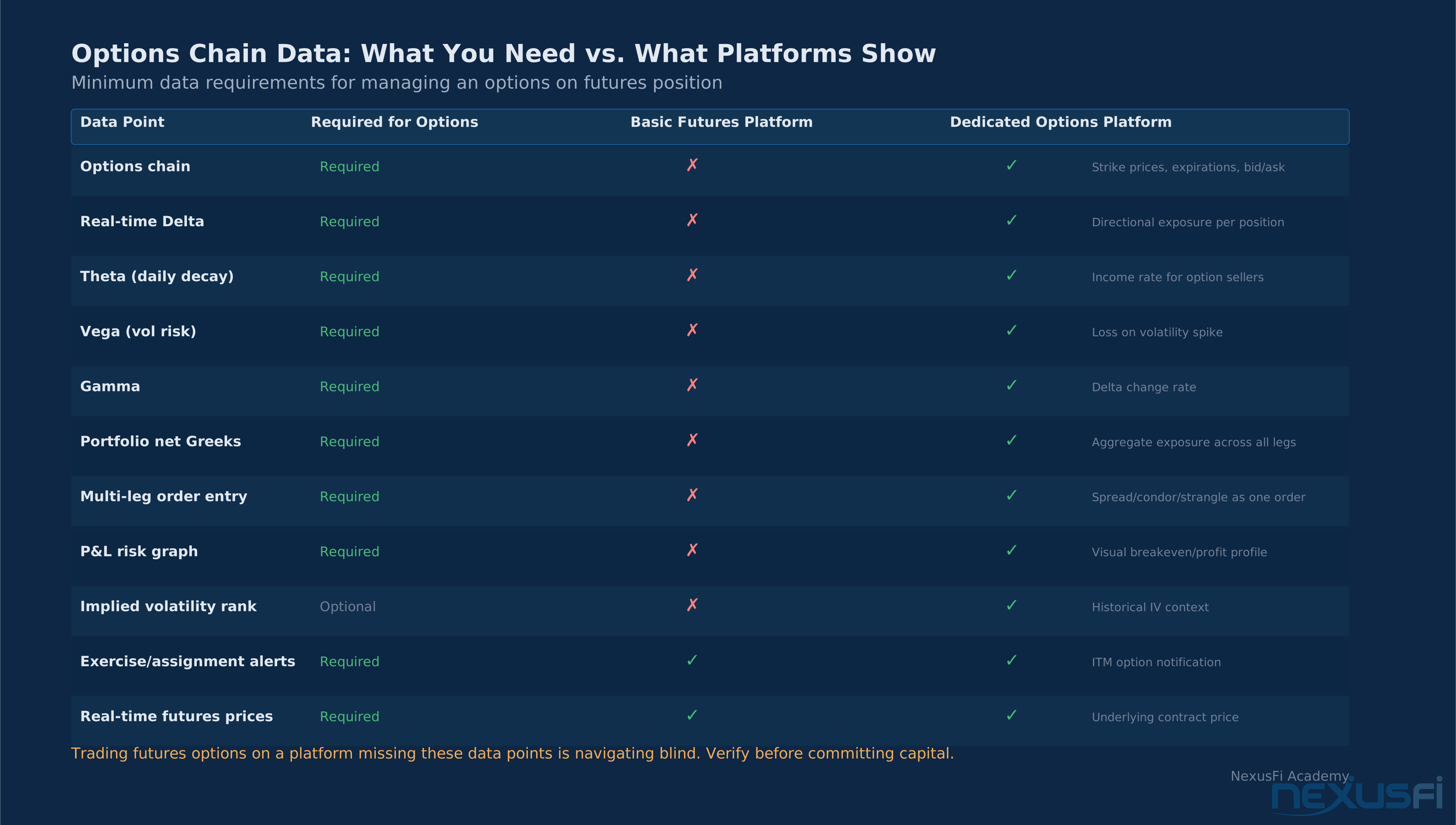
Options chain display: A real-time strike ladder showing bid/ask, delta, theta, vega, gamma, open interest, and implied volatility for each strike and expiration. Most dedicated options platforms do this well. Most futures-focused platforms show prices but not the Greeks that drive decision-making.
Position-level Greeks: The sum of Greeks across all open positions tells you your actual exposure. Net delta tells you directional risk. Net theta tells you daily time decay income. Net vega tells you volatility risk. Without these aggregated at the portfolio level in real time, you're guessing at your own risk profile.
Multi-leg order entry: Credit spreads, iron condors, strangles, and ratio spreads require simultaneous multi-leg entry. Legging into spreads one leg at a time introduces execution risk. Proper platforms have combination order tickets that route the entire spread as a single order with a net debit or credit.
Risk graph / P&L visualization: A visual diagram showing P&L at expiration across a range of underlying prices. Critical for verifying that a complex spread is positioned where you think it is — that the short strikes are at the right distance and the hedge legs are doing what you expect.
Expiration management: Futures options have specific expiration calendars that differ from equity options. Monthly options, weekly options (on ES and a few other products), and serial month options each have different DTE characteristics and settlement dates. The platform needs to display this clearly.
Exercise and assignment handling: American-style options on futures can be exercised before expiration, converting the option into a futures position at the strike price. Your platform and broker must handle this cleanly, including the automatic margin recalculation when the futures position appears. Settlement mechanics also differ: some options settle into the underlying futures contract, others (like ES weekly options) settle to cash.
When evaluating platforms for options on futures, look beyond basic price display — dedicated options analytics and DOM-based execution platforms provide the price ladder visibility needed for rapid position management, while footprint chart analysis adds the bid/ask volume context that informs entry timing for multi-leg spread strategies.
Before committing to a platform for options on futures, test the multi-leg order entry. Enter a strangle — a short call and short put simultaneously as a single order — on a paper trading account. If the platform requires entering each leg separately, or lacks a net credit display on the spread, that's a futures platform with options bolted on. Know what you're using before real capital is at stake.
When Options Brokerage Fails #
Understanding where the system breaks is as important as understanding how it works under normal conditions.
Forced liquidation of illiquid options: When a broker issues a margin call on a short options position, the options have to be bought back. In a fast, directional market where options have widened dramatically, the buyback cost can exceed the remaining account equity. Unlike futures that can be liquidated in milliseconds at current bid, options buybacks require finding a counterparty at current market. In a crisis, that market is slow and expensive.
Platform limitations in complex positions: Multi-leg orders that get partially filled create "legged" positions — one leg filled, others pending. Platform behavior in this scenario varies. Some platforms leave you holding naked exposure until the fill completes. Others automatically cancel unfilled legs, leaving you flat. Neither outcome is what you intended, and both require immediate manual intervention at exactly the moment when markets are moving fastest.
After-hours margin recalculation: Futures options can expire on different schedules than the underlying futures contract. An option going deeply in-the-money in overnight trading can trigger margin requirements that the broker calculates at the next mark-to-market cycle. If you're not monitoring, the broker's automated system takes over — which means forced liquidation at whatever price exists at that moment.
Intraday margin raises: During high-volatility sessions, some brokers recalculate margin requirements in real time. A position that was within limits at the open can be on forced-liquidation status by mid-session if the underlying moves hard and implied volatility spikes simultaneously. Both movements increase SPAN requirements, and the broker's premium multiplies on top.
Broker policy changes without notice: Brokers can change their options margin policies with minimal advance notice. Periods of market stress sometimes prompt brokers to temporarily increase margin requirements for all clients, or to restrict option selling to existing positions only.
The lack of stop orders on futures options means that broker-initiated forced liquidation is the backstop risk control. Unlike a stop order that executes at a predetermined price, broker liquidations execute at current market prices, which in a crisis are the worst possible prices. The only defense is adequate capital cushion established before the position is opened.
Choosing a Broker for Options on Futures: The Decision Framework #
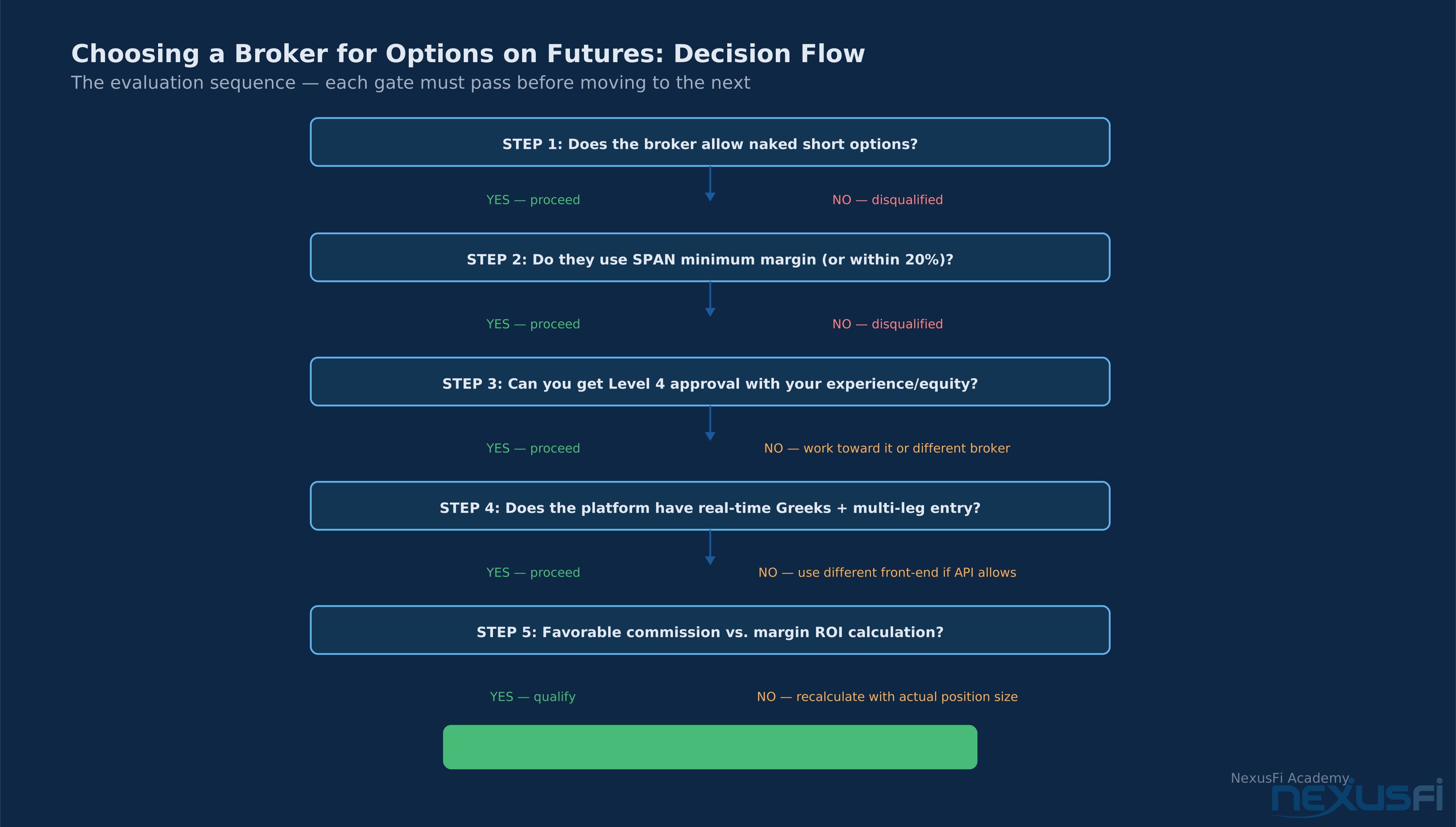
Does the broker allow naked short options? Confirm this explicitly, in writing. Don't assume from their marketing. Many brokers nominally offer "options on futures" but limit approval to defined-risk strategies only.
What margin model do they use for short options? Ask whether they apply SPAN minimum margins or add a buffer. Push for specific numbers — ask what margin they'd require on a specific short put 50 points OTM on ES at current market. That forces a real answer.
What trading level approval do you need, and can you get it? If you need Level 4, confirm they grant it and what it requires. Don't assume approval comes automatically with account opening.
Evaluate platform capabilities for your specific strategy. If you're running multi-leg spreads, test the order entry before committing capital. If you need real-time position Greeks, confirm they're available.
Assess the broker's margin call procedures. How much notice do they give before forced liquidation? Is it a same-day phone call, automated email, or no notice at all? What happens to your short position if the underlying moves sharply after-hours?
Run the commission vs. margin math for your position size. A broker charging $1.50 more per contract but using SPAN minimum margins will often produce better ROI than a commission-competitive broker with 20-50% SPAN premium. Calculate the math for your typical position size and holding period before assuming the cheaper commission broker is actually cheaper.
The options-on-futures broker selection sequence: First filter on whether naked options are allowed. Second filter on whether SPAN margin applies. Third filter on platform capabilities. Commissions come fourth. A SPAN-minimum broker with slightly higher commissions beats a zero-commission broker with 50% margin premium almost every time, because the margin cost swamps the commission comparison at any meaningful position size.
Knowledge Map
Go Deeper
Build on this knowledgeReferences This Article
Articles that build on this topicCitations
- — DeCarley Trading's Carley Garner (Senior Strategist/Broker) - Ask Me Anything (AMA) (2013) 👍 15“Option selling accounts are much more difficult to monitor for risk than futures trading accounts are. This is because options aren't liquid during off hours, stop orders aren't accepted on options.”
- — Selling Options on Futures? (2022) 👍 4“Interactive Brokers have an industry wide reputation for high margin requirements and a reputation for abrupt and aggressive liquidations for margin reasons.”
- — Selling Options on Futures? (2013) 👍 3“A minimum of $100,000 in account equity is required to be approved to use portfolio margin. Three years of confirmed options trading experience.”
- — Selling Options on Futures? (2013) 👍 5“Lower margin is more important than a few dollars more commissions when selling options. ROI will be higher with SPAN minimum margin and a few dollars more commissions.”
- — Selling Options on Futures? (2014) 👍 6“Interactive Brokers make you scratch your head. The gap between IB and PC-SPAN for Crude Oil is laughably large. They're all but saying, we don't want your business.”
- — Selling Options on Futures? (2018) 👍 5“Some brokerages will impose higher margins during times of excessive volatility and the exchanges also can raise margin requirements during these periods.”
- — Selling Options on Futures? (2017) 👍 5“To not have a losing option you needed to have 6xIM. The average yearly ROI for the 4 years was 25.3% per year.”
- — PC-SPAN (2018) 👍 4“You can see from this table how some brokers who don't use SPAN margining require 10-14k for these spread positions.”
- — Futures Margin Leniency (2023) 👍 3“You need a broker that uses SPAN minimums -- IB are notorious for NOT using SPAN mins. Shopping around for different brokers margin policies is essential for options sellers.”
- — SPAN Margin Requirements (2026)
- — Derivatives Clearing Organization Risk Management (2026)