



The Globex and Overnight Futures Session: Price Mechanics, Inventory, and the Data RTH Traders Must Track
The overnight session isn't a sideshow. It's where tomorrow's opening script gets written.
Overview #
Most retail futures traders treat the Globex session as background noise — something that happens while they're asleep and cleans itself up by 9:30 AM ET. That framing costs them money every week. The overnight session sets gaps, creates inventory imbalances, and carves out the key levels that the RTH session will test, fade, or extend. Ignoring it is like reading the last chapter of a book without knowing what happened in the first three.
This article covers how Globex operates mechanically, what drives price across the Asian and European trading phases, how to read overnight inventory, the statistical reality around overnight highs and lows, and the specific pre-market data points every RTH futures trader should be checking before 9:30 AM.
Key Specifications #
Globex is CME Group's electronic trading system — the infrastructure that keeps equity index, energy, metals, and interest rate futures trading almost 24 hours a day. Understanding the session boundaries is step one.
Standard Globex hours (CT):
- Sunday 5:00 PM — Friday 4:00 PM
- One-hour maintenance break: 4:00 PM — 5:00 PM CT daily
For ES and NQ (equity index futures), that's a 23-hour trading window, Sunday through Friday. CL, GC, and Treasury futures run similar hours. Agricultural contracts (corn, soybeans, wheat) trade shorter sessions — 8 or 9 hours a day — which makes their overnight dynamics entirely different from financials.
Volume characteristics: The overnight session is thin. For ES, the average overnight range runs roughly 7 points compared to 25+ points during RTH. As @redratsal summarized from Tom Busby's research in the "Overnight Session ES Trading" thread: "the night market will move only about seven points, on average, in a 16-hour period" — less than a third of the RTH session's movement in nearly three times the hours. You're not watching a smaller version of the day session. You're watching a different market with different participants, different drivers, and different rules of engagement.[^1]
The four instruments that matter most overnight:
- ES (S&P 500 E-mini): Most heavily traded, strongest global correlation
- NQ (Nasdaq-100 E-mini): Less overnight range than ES (fewer correlated global markets drive it)
- CL (Crude Oil): Heavy overnight activity tied to OPEC, Middle East, IEA data
- GC (Gold): Significant Asian session volume, major moves on dollar and geopolitical news
How It Works: Three Trading Phases #
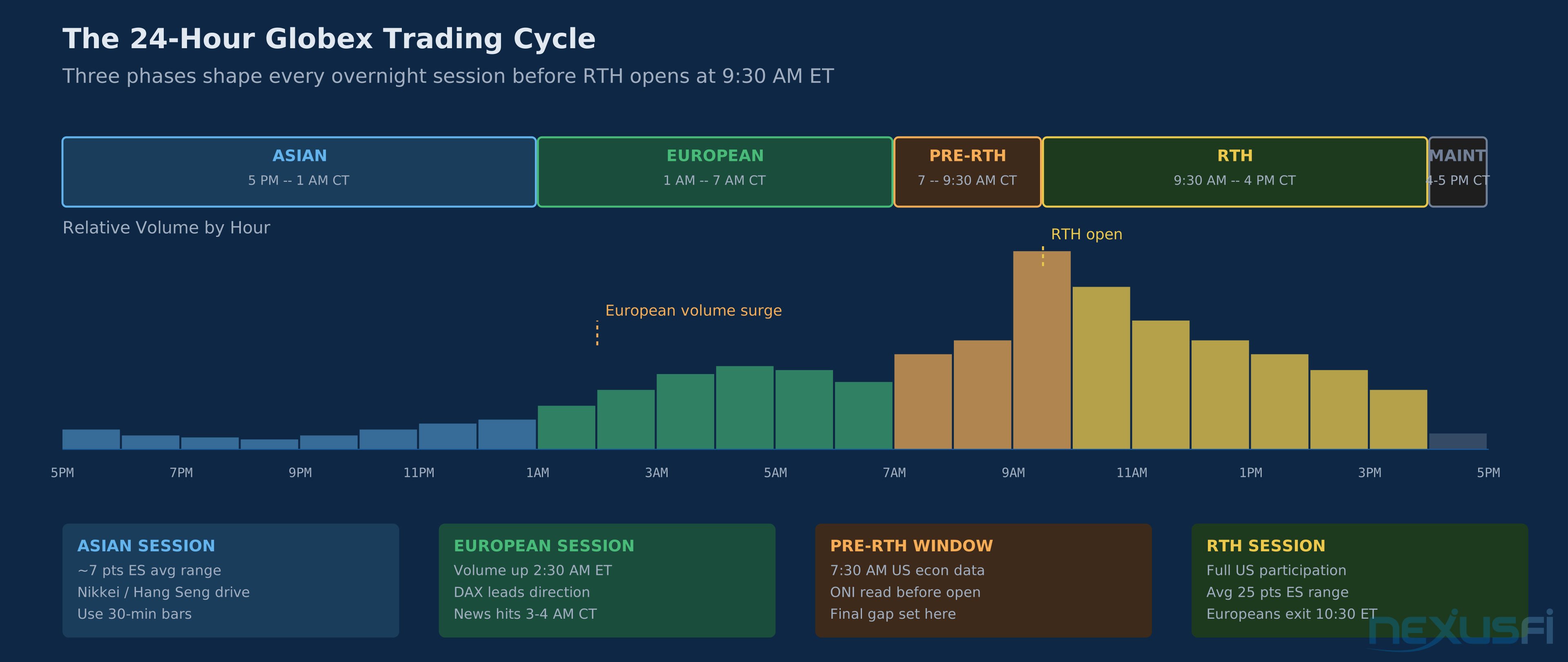
The Globex session doesn't function as one continuous market. It moves through three distinct phases, each dominated by different participants and driven by different information flows.
Phase 1: The Asian Session (5pm — ~1am CT) #
The first major market to open after the US close is the Nikkei 225 in Japan (around 3pm CT / 9pm Tokyo), followed by the Hang Seng in Hong Kong. These two exchanges drive the initial overnight direction for ES, NQ, and — via correlation — crude and metals.
When Tokyo has bad news, ES follows it lower. When the Hang Seng breaks out, ES catches a bid. The relationship isn't one-to-one, but the correlation is consistent enough that tracking Asian index performance gives real-time context for overnight price action.
The Asian session is characterized by the lowest volume and tightest movement of the 24-hour cycle. One- and five-minute bars become nearly useless — they look like noise. If you're watching overnight action during the Asian phase, use 30-minute bars to see meaningful structure. Even then, patience is the defining requirement. There will be nights when the market barely moves 2 points across 4 hours of Asian trading.
If you're trading the Asian session specifically, 30-minute bars are the minimum useful timeframe. Shorter bars produce nothing but noise at this volume level.
Phase 2: The European Session (1am CT — ~10:30am ET) #
This is where the overnight story gets written. DAX futures begin trading at 1am CT, with the German cash market opening at 2am CT. Volume in ES, NQ, and bonds picks up noticeably.
[^3]
Most European economic news hits between 3am and 4am CT. The ECB rate decisions, German manufacturing PMI, UK inflation data — these releases move European indices, which move ES and NQ. The period from 2am to 5am CT is where most of the meaningful overnight directional moves originate.
By the time US traders wake up and look at their charts, the overnight range is largely set. What they see as a "gap" at 9:30am was usually created during the European session overnight.
The European influence doesn't end at the US open. European traders don't disappear at 9:30 ET — they check out gradually around 10:30 to 11:00 AM ET. That's why the first session of the RTH day often goes from high participation (US + Europe overlapping) to lower participation mid-morning. @bobwest's analysis captured this precisely: "At about 10:30 to 11:00 ET, there's a noticeable decline as the Europeans check out."[^3]
Phase 3: The Pre-RTH Window (7am — 9:30am ET) #
This is the most actionable window for RTH traders who don't trade overnight. By 7am ET, you have:
- A clear overnight range (high, low, mid)
- An overnight inventory position (above or below settlement)
- A gap to prior RTH close
- European session performance data
At 7:30am ET, major US economic data hits — CPI, PPI, GDP, initial jobless claims, housing data. At 8:30am, NFP on Fridays. These can dramatically alter the gap and inventory picture. A long overnight inventory (price above settlement) gets confirmed or negated by 7:30am data. A confirmed long inventory with a bullish economic print is a different scenario than a long inventory that immediately reverses on weak data.
The hour between 8:30 and 9:30am ET is where sophisticated traders finalize their read before the open. The overnight story is now fully written.

Overnight Inventory: Reading the Imbalance Before the Bell #
Overnight inventory (ONI) is the single most important output of the overnight session for RTH traders. It's not complicated, but most traders who know the term don't use it systematically.
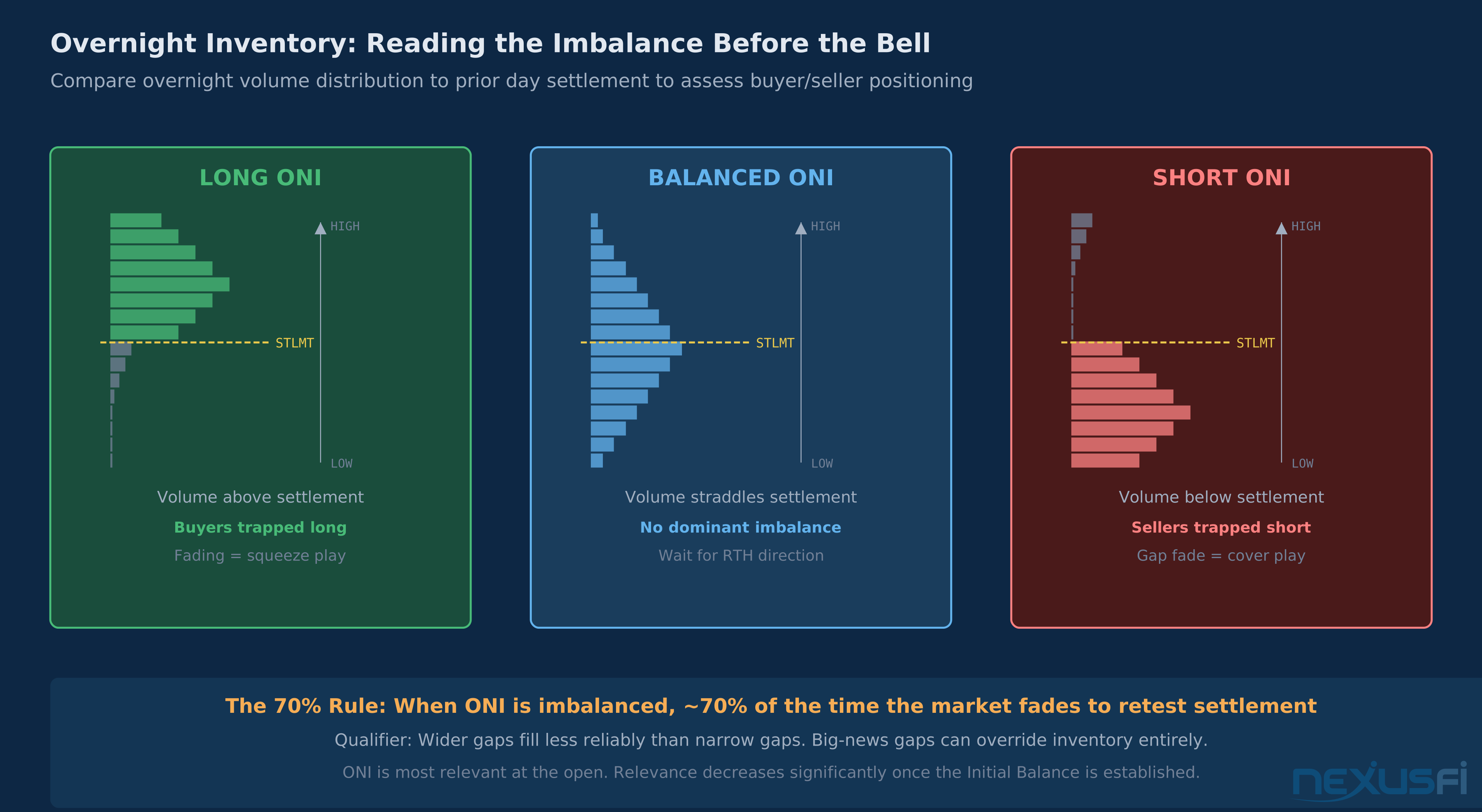
Definition: ONI measures whether buyers or sellers are sitting on an imbalanced position relative to the prior day's settlement price.
- Long overnight inventory: The majority of overnight volume traded ABOVE the settlement price. Buyers accumulated positions above settlement. They're sitting long and need the market to continue higher to profit.
- Short overnight inventory: Most overnight volume traded BELOW settlement. Sellers are positioned short.
- Balanced inventory: Volume is roughly distributed around settlement. No dominant imbalance.
As @matthew28 explained in the "How important is overnight inventory" thread: "If the majority of the overnight volume is above the Settlement then inventory is long and vice versa. If the volume is balanced around the Settlement the inventory is neutral."[^6]
Why ONI Matters for RTH #
When the market opens with a long overnight inventory and gaps up, buyers are already long — and potentially looking to take profit. The professional's interest is to fade the move and squeeze out the overnight longs. This creates a predictable dynamic at the open: fade the gap, retest settlement.
@forgiven's note in the "Start point for daily VWAP?" thread put a rough probability on it: "70% of the time the market maker will fade the imbalance and it will retest the settlement." He also added the important qualifier: "the wider the gap the less the % is it will fill."[^7]
A gap up with long inventory is a set-up to look for early selling pressure rather than blindly buying the open.[^8]
When ONI Interpretation Breaks Down #
ONI is most relevant at the RTH open. Its usefulness decreases rapidly once the first hour of active RTH trading has established an Initial Balance. @matthew28 is direct about this: "I tend to think once the first hour of the RTH session is done and you have an IB high and low to watch and an hour of actively traded volume has gone through, then the overnight levels have decreased a great deal in relevance."[^6]
Don't carry ONI as a primary signal through the rest of the RTH session. It's context for the open, not a session-long bias.
Long ONI with a gap-up doesn't automatically mean the market will sell off. Big-news gap-ups (Fed decisions, major earnings surprises, macro shocks) can blow through all inventory clearing and extend directionally. Always check what caused the gap before assuming a fade is the play.
The Overnight High and Low: Key Statistics #
The overnight high and low serve as magnets for RTH price action. FuturesTrader71 (Morad Askar) shared specific data from his research in his AMA thread: "96% of 1,400 days sampled in ES, the day session touched or broke the overnight high OR low. 27% of the time, it touched or broke both."[^5]
This has direct implications for how you set targets and read auction behavior.
The single-side test (96%): In 19 out of 20 trading days, RTH will at minimum test one side of the overnight range. The overnight high and overnight low are not arbitrary numbers — they're reliable targets with statistical weight behind them.
The double-side test (27%): On roughly one in four days, RTH will sweep both the overnight high AND the overnight low. When this happens, the market is often in a narrow, range-bound condition — the overnight didn't generate enough range to absorb RTH auction activity.
The NQ difference: @FuturesTrader71 noted that NQ's behavior diverges from ES overnight because "the NQ either doesn't track the Asian/European indices as well as the ES does so it doesn't get much range overnight and is so easily broken." If you're trading NQ, expect the overnight range to be a less reliable boundary than on ES.[^5]
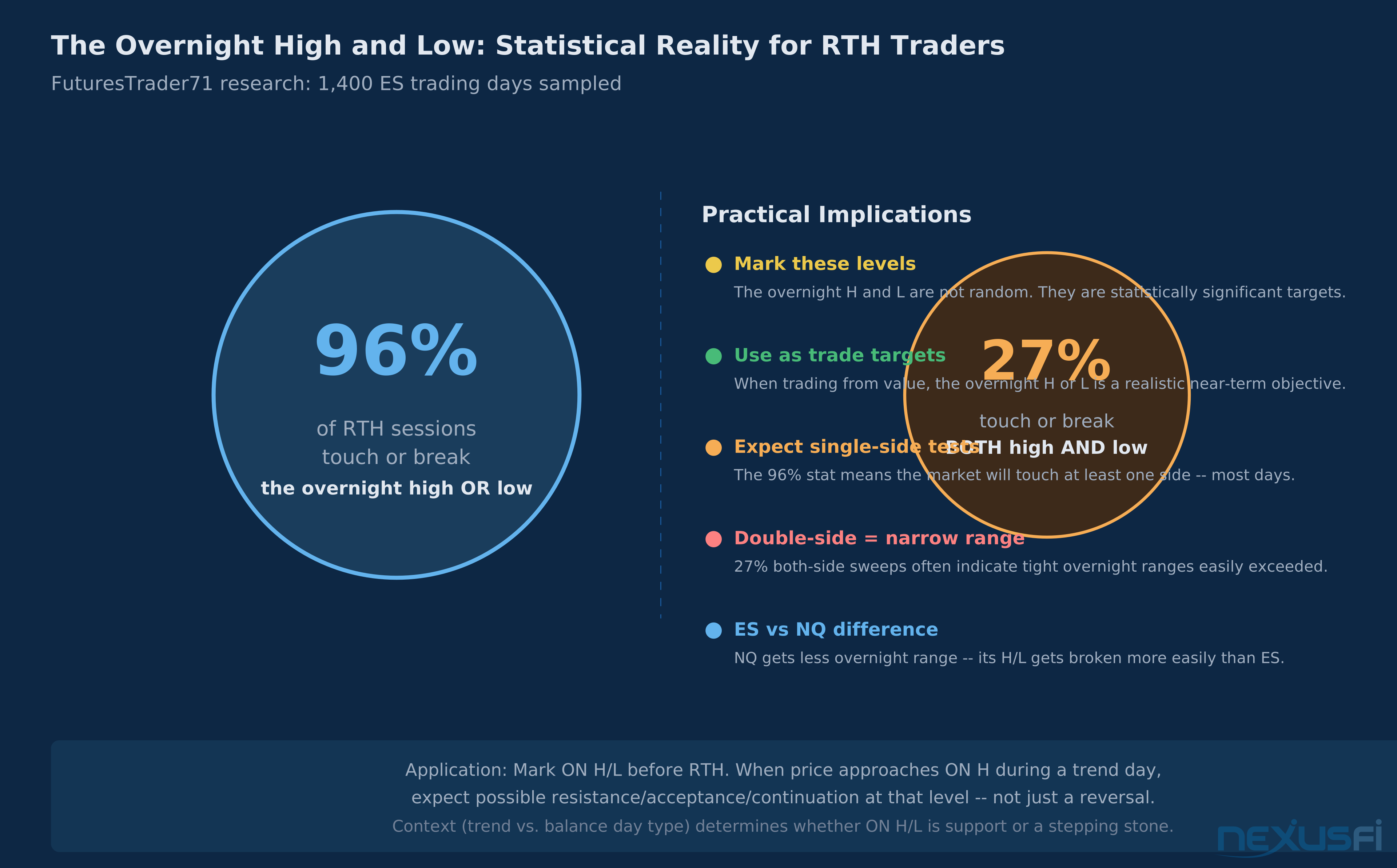
Mark the overnight high and low on your chart before RTH opens. In 96% of sessions, price will test at least one of them. Treating them as random levels misses the statistical weight they carry as potential targets and reversal zones.
Gap Analysis: From Overnight to RTH Open #
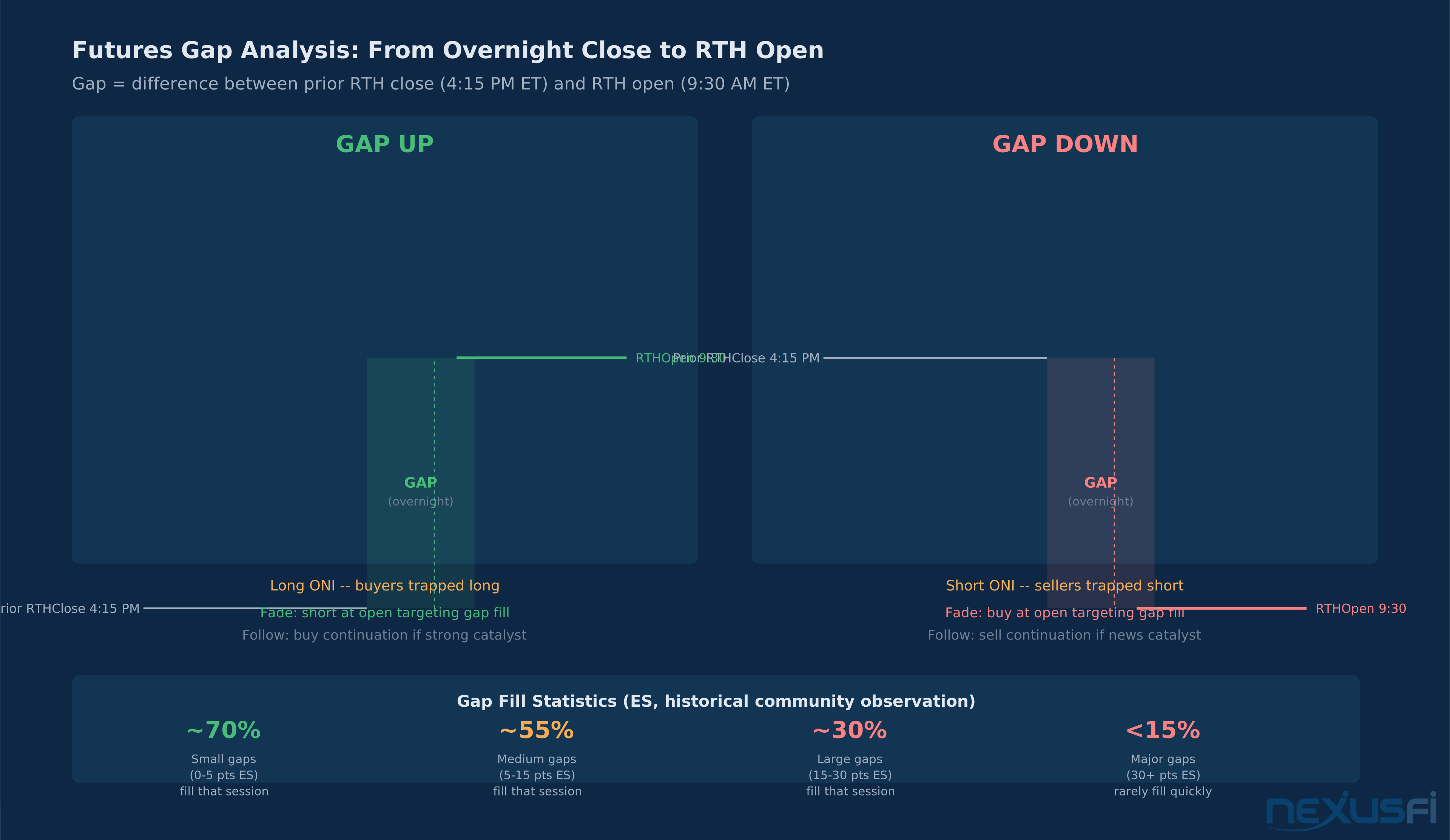
A gap in futures, for practical purposes, means the difference between the prior day's RTH close (4:15pm ET) and the current day's RTH open (9:30am ET). The overnight session runs continuously between those two points — but traders looking at RTH-only charts see it as empty space.
@thegapguy, a specialist in ES gap strategies, defines his approach: "I consider a gap in the context of the regular session / pit hours — the difference between the 9:30am ET open price and the prior session 4:15pm ET close price."[^4]
Gap classifications:
- Up gap: RTH opens above prior RTH close. Overnight buyers drove price higher.
- Down gap: RTH opens below prior RTH close. Overnight sellers dominated.
- Inside gap: RTH opens within prior RTH range. Small overnight movement, no meaningful gap.
Gap fill rates: The often-cited "70% of gaps fill" statistic is a rough guide with important qualifications. @forgiven's community observation adds precision: "The wider the gap the less the % is it will fill."[^7] A 2-point ES gap has a very different fill probability than a 30-point gap created by a Fed decision or major macro event.
The fade vs. follow decision: @thegapguy outlines the two primary gap trading postures:[^4]
- Fade: Trade against the overnight direction. Short up-gaps expecting a fill. Buy down-gaps expecting a fill.
- Follow: Trade with the overnight momentum. Buy up-gaps expecting continuation. Sell down-gaps.
The overnight inventory context tells you which posture has better odds. A large up-gap with long overnight inventory (everyone is already long, squeeze them) favors fading. A large up-gap after a meaningful trigger (CPI beat, surprise Fed comment) where overnight inventory is light favors following.
Neither is a mechanical rule. Both require reading the full context.
Practical Application: The Pre-RTH Checklist #
Here's the minimum information an RTH futures trader should collect before the 9:30am open:
1. Gap check What's the gap relative to prior RTH close? Is it meaningful (more than 3 points ES) or trivial?
2. Overnight inventory Is most overnight volume above or below settlement? Is inventory clearly long, clearly short, or balanced? Does the gap direction align with or contradict the inventory?
3. Overnight high and low Where did overnight price find its ceiling and floor? How far are they from the RTH open? Are they within easy reach or far away?
4. Economic data schedule Any releases between now and 9:30am? What did 7:30am data do to price? Did it confirm or negate the overnight setup?
5. Global market context DAX performance (proxy for European risk appetite), Asian index closes (Nikkei, Hang Seng), crude and gold direction (risk-on / risk-off signals).
6. Key overnight levels Overnight session's volume cluster or overnight POC (if using volume profile tools), any significant acceptance zones in the ON session.
This scan takes under five minutes with a decent setup. Skipping it means the first trade of the RTH session lacks critical context.
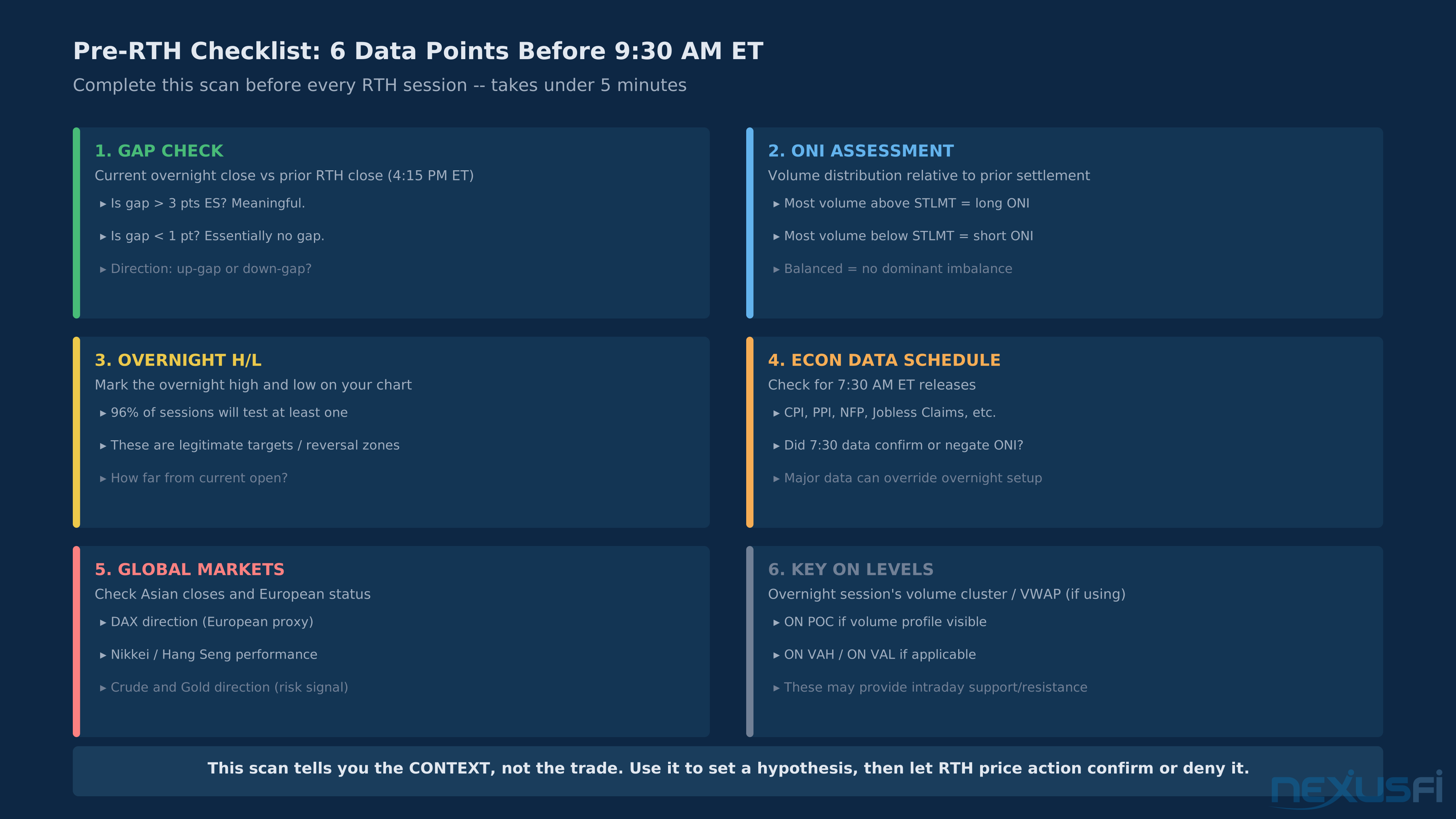
The pre-market scan sets a hypothesis, not a trade. Long ONI with a gap-up means "watch for early selling pressure or a squeeze." It does NOT mean "short immediately at 9:30." Let RTH price action confirm or deny the hypothesis before committing capital.
Session Chart Setup #
One practical but often overlooked point: the choice between ETH (electronic trading hours) and RTH-only charts changes what your indicators show.
[^2]
There's no universally correct answer. Some traders run an ETH chart alongside their RTH chart specifically to see overnight structure. Others trade RTH only but always glance at an ETH-based chart for context at the open. The key is knowing which session your chart is displaying and calibrating your analysis so.
What Globex Doesn't Tell You #
The overnight session carries real information, but it's lower-quality than RTH data. Volume is thin, spreads widen (especially in illiquid contracts), and large orders have disproportionate price impact. A single 500-lot order at 3am ET can move ES more than a 2,000-lot order at 10am ET.
This means:
- Overnight levels are real but less strong than RTH levels
- Overnight trends can be (and frequently are) reversed by RTH participation
- ONI should be held as a hypothesis, not a conviction
[^8] The overnight session gives you setup context. The prior RTH session gives you the dominant structural context.
Don't invert this priority.
Use the overnight session for context, not conviction. Mark the ON high, ON low, and settlement. Assess ONI. Note the gap. Then let RTH price action drive your actual trading decisions.
Knowledge Map
Prerequisites
Understand these firstGo Deeper
Build on this knowledgeReferences This Article
Articles that build on this topicCitations
- — Overnight Session ES Trading (2011) 👍 20“The night market will move only about seven points, on average, in a 16-hour period. Unlike the day market in the E-mini S&P, which has an average range of about 25 points.”
- — Correct Sessions for Your Charts (2010) 👍 25“Globex pivots are wider than floor pivots. This suggests that floor pivots might work better on narrow range days, while Globex pivots should do better on wide ranging days.”
- — Not Another PAT Journal (2020) 👍 5“You will see a reliable increase every morning at about 2:30 to 3:00 AM US Eastern Time. At about 10:30 to 11:00 ET, there's a noticeable decline as the Europeans check out.”
- — Emini gap fill strategy data, books? (2020) 👍 3“I consider a gap in the context of the regular session / pit hours -- the difference between the 9:30am ET open price and the prior session 4:15pm ET close price.”
- — AMA: FuturesTrader71 (FT71) / Morad Askar - Ask Me Anything (2014) 👍 5“96% of 1,400 days sampled in ES, the day session touched or broke the overnight high OR low. 27% of the time, it touched or broke both.”
- — How important is overnight inventory (2018) 👍 2“If the majority of the overnight volume is above the Settlement then inventory is long and vice versa. If the volume is balanced around the Settlement the inventory is neutral.”
- — Start point for daily VWAP? (2018) 👍 3“70% of the time the market maker will fade the imbalance and it will retest the settlement. The wider the gap the less the % is it will fill.”
- — Spoo-nalysis ES e-mini futures S&P 500 (2012) 👍 4“I put more weight on the previous RTH profile vs. the ON profile. I like to keep an eye on the ON profile just to get a feel for what has occurred but will often want to trade against it.”