



Futures Term Structure: Contango, Backwardation, and the Roll Yield Every Futures Trader Must Understand
Overview #
Overview #
Most traders watch the price of the front-month futures contract and call it a day. That works for day trading — but the moment you hold a position for more than a few weeks, or you're trying to figure out why a commodity ETF badly underperformed the underlying commodity, you've run headlong into term structure.
Term structure is the relationship between futures contracts of the same underlying but with different expiration dates. It tells you whether deferred contracts are more expensive than nearby ones (contango), or cheaper (backwardation). The shape of that curve isn't random — it's set by the laws of cost-of-carry arbitrage, bent by supply shocks and convenience yield, and it directly determines how much money you're leaving on the table — or collecting — every time you roll a position forward.
This article teaches you how to read the curve, why it's shaped the way it is, and what to do about it.
The Futures Curve: Reading the Terrain #
Think of the futures curve like a yield curve, but for a single commodity or index. On the x-axis: contract months, from the nearest expiration out through the longest-dated liquid contract. On the y-axis: price. The resulting shape tells you what the market expects — and what carry costs imply — for this underlying across time.
The starting point is spot — the cash or spot price of the underlying right now. For deliverable commodities like crude oil (CL) or corn (ZC), spot is the price for immediate physical delivery. For financially-settled indexes like the S&P 500, spot is the index level itself.
From spot outward, futures prices either rise (contango) or fall (backwardation). The spread between any two contract months is set by a tug-of-war between four forces:
- Storage costs -- Physical commodities cost money to store. Those costs get embedded into deferred prices.
- Financing costs (carry) -- To buy the underlying today and hold it until delivery, you need capital. The interest cost on that capital shows up as a premium in deferred contracts.
- Convenience yield -- Refineries, airlines, and other end-users pay a premium to have supply available right now, not three months out. That value gets subtracted from the fair value of deferred contracts, pushing them lower.
- Expected supply and demand shifts -- If the market expects tighter supply in three months, deferred contracts bid up. If it expects a glut, they weaken relative to spot.
The principle that holds the entire system together is convergence. At expiration, a futures contract must converge to the cash price of the underlying. If it didn't, traders could execute risk-free arbitrage.
— and the delivery mechanism enforces convergence. [2]
The difference between spot and futures at any moment is the basis: basis = cash price — futures price. When futures trade above spot, basis is negative. When futures trade below spot, basis is positive. Basis narrows to zero as expiration approaches — always, without exception.
Contango: Normal Markets and Why Futures Cost More Than Spot #
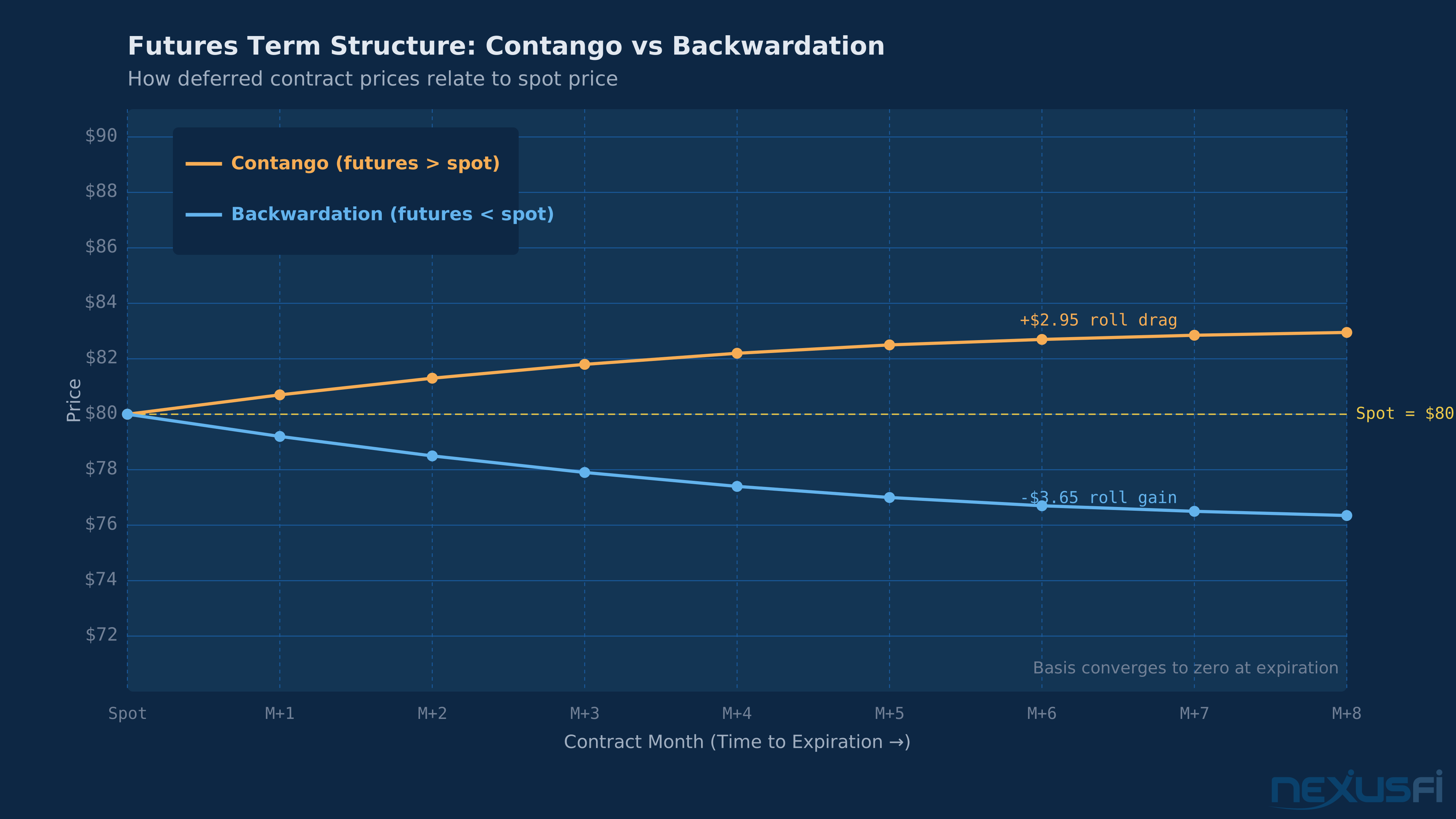
Contango is the normal state for most physical commodity markets: deferred futures prices are higher than spot. The front-month CL contract at $80, the next month at $80.60, contracts six months out at $82.50. The curve slopes upward.
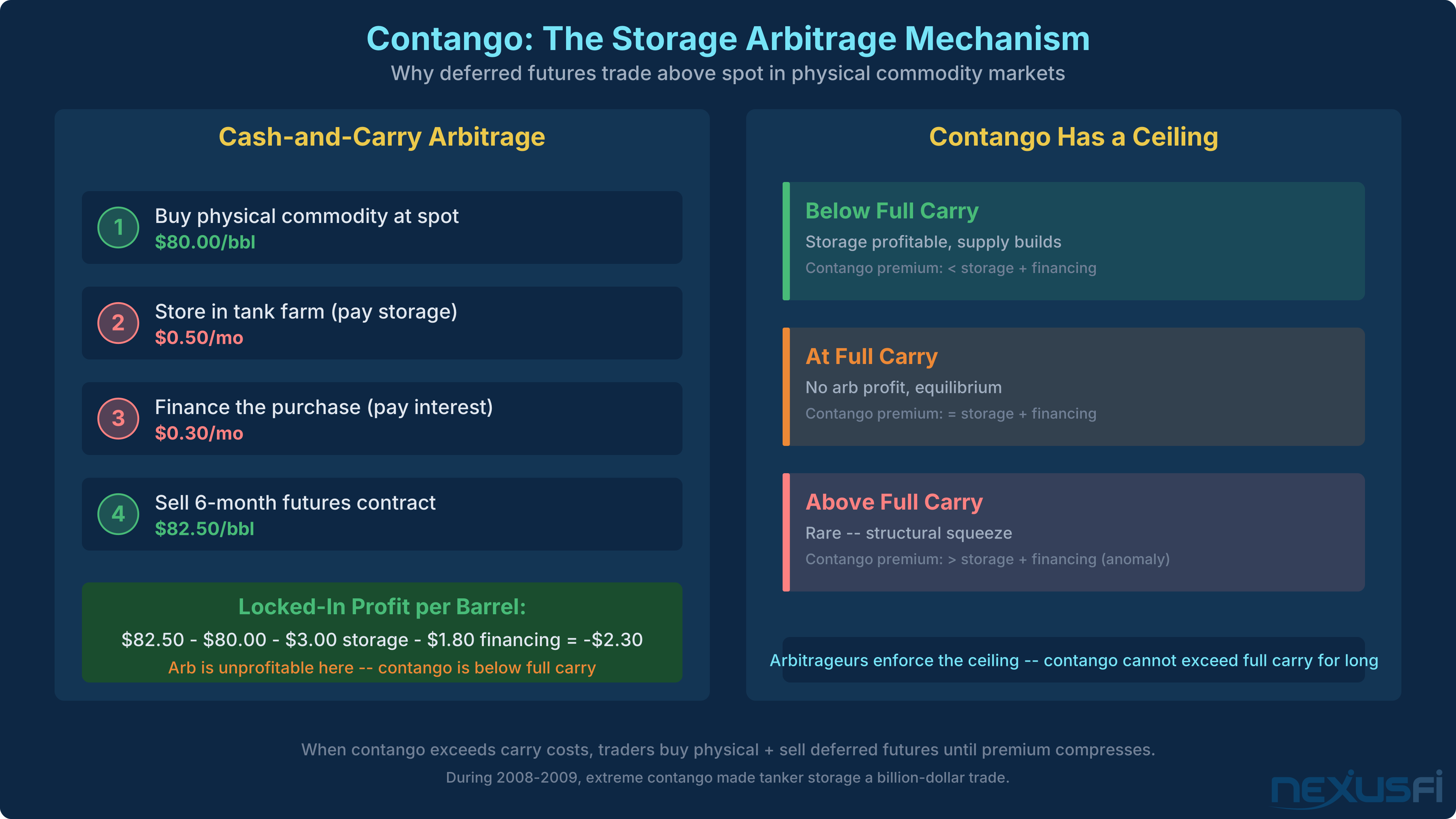
Why? Storage arbitrage. If you can buy crude at $80 today, put it in a tank farm, and sell a six-month futures contract at $82.50, you've locked in a known return. Traders execute that trade until the premium above spot no longer covers storage costs, financing costs, and insurance. At that point, contango "maxes out" at what's called full carry — the total cost to store and finance the physical commodity until delivery.
For financial futures without physical storage costs — equity indexes, interest rates — contango reflects pure financing. Buy the S&P 500 basket, finance it at 5%, and you need futures to trade at roughly a 5% annualized premium to spot to make you indifferent between holding the cash basket versus the futures contract. The moment futures offer more than that, arb traders step in and compress the spread.
Three carry levels matter:
- Contango below full carry -- Storage is still profitable if you own physical. More will be added. Deferred prices tend to soften as supply grows.
- Contango at full carry -- The curve fully prices storage -- no free money available. Commodities here are often under pressure from inventory builds.
- Contango above full carry (rare) -- Someone desperately wants deferred exposure. Possible manipulation or structural squeeze setup -- this breaks the normal mechanics.
During 2008-2009, crude oil's contango was so extreme that physical traders filled tanker ships with oil and sold deferred futures against it, locking in the storage premium.
What contango signals for traders: Long positions in contango markets bleed roll cost at every rollover. ETFs rolling monthly contracts forward pay the contango tax every 30 days. When the curve flattens — when contango narrows — it's often a bullish signal as supply tightens. A steepening contango signals oversupply building in inventory.
Backwardation: Inverted Markets and the Convenience Yield #
Backwardation is when deferred futures trade below spot. Front-month CL at $80, next month at $79.20, six months out at $76. The curve slopes downward.
This seems counterintuitive — why would you pay more for oil right now than for delivery in six months? Because having it NOW has value that having-it-later doesn't capture.
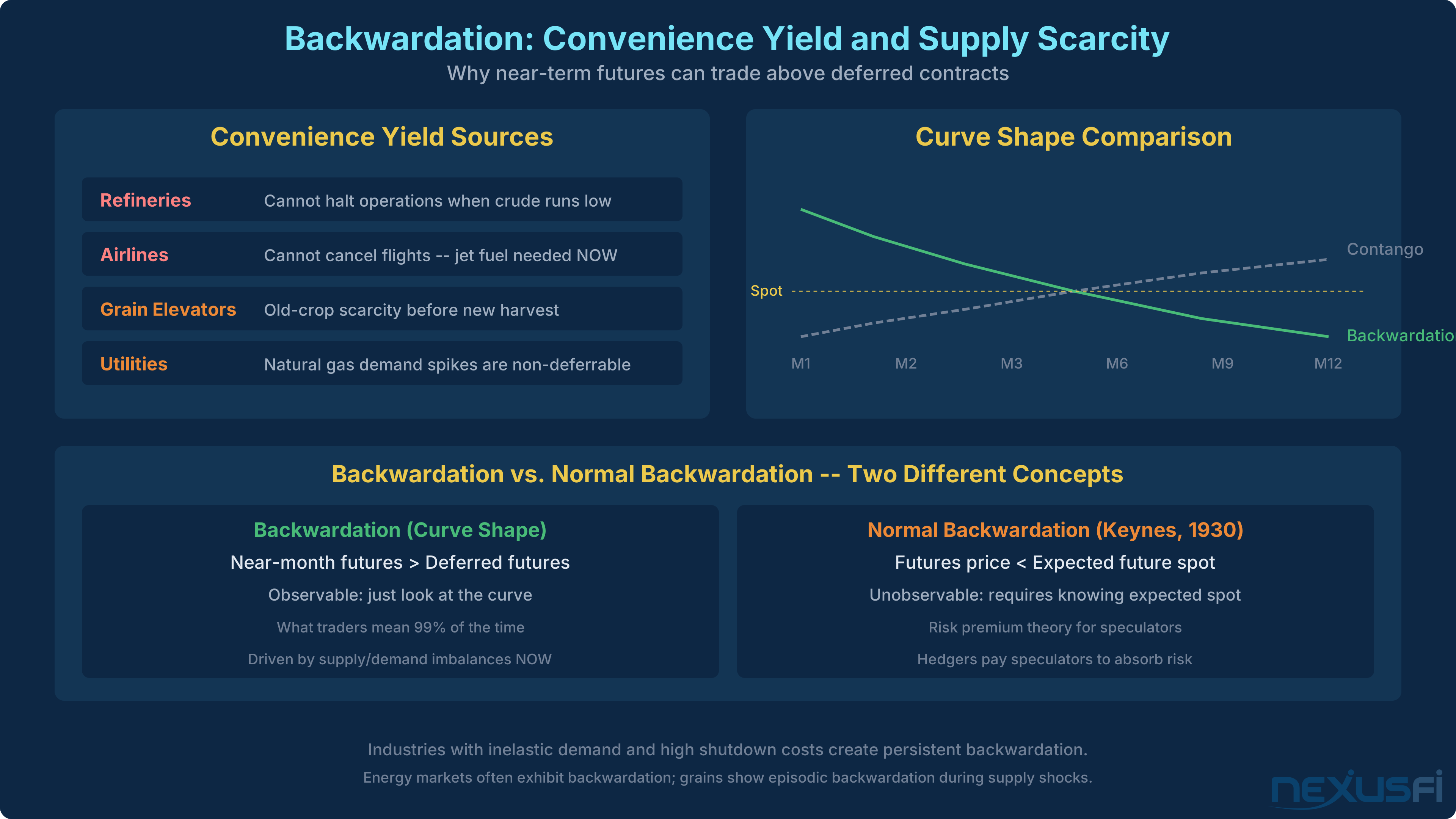
That value is the convenience yield — the economic benefit of having physical supply immediately available versus a promise of future delivery. Refineries can't stop production when crude inventory runs low. Airlines can't cancel flights because the jet fuel they need is three months away. Industries with inelastic, continuous demand pay a premium for near-term supply. That premium inverts the curve.
Backwardation is the market's signal for physical scarcity in the near term, or for demand levels that may not persist. Old-crop grain markets go into steep backwardation during supply shocks. CL inverts hard when OPEC cuts production or geopolitical disruptions threaten near-term supply.
Backwardation vs. normal backwardation — a distinction that trips up many traders. Backwardation (lowercase) just means the futures curve is inverted — nearby contracts trade above deferred ones. Normal backwardation is Keynes' original concept, articulated in his 1930 A Treatise on Money: futures prices are systematically below the expected future spot price, compensating speculators for absorbing the hedging pressure of commercial producers. [12] You can have backwardation without normal backwardation, and vice versa. Most trading discussions refer to the curve shape when they use the term.
What backwardation signals for traders: Long positions in backwardated markets earn positive roll yield — you roll from a higher-priced near contract into a cheaper deferred one. Strong backwardation often indicates at the core bullish conditions for the commodity. Watch for backwardation narrowing or flipping to contango as a potential bearish signal — the transition often front-runs the outright price move.
The Roll Yield: Where Long-Term Positions Win or Lose #
Here's where term structure moves from theory to money. When you hold futures beyond expiration, you must roll — sell the expiring contract and buy a deferred one. The roll yield is the profit or loss generated by that roll.
The math is blunt:
- In contango: You sell the cheap near contract and buy the more expensive deferred contract. You pay more for the same exposure. Roll yield is negative.
- In backwardation: You sell the expensive near contract and buy the cheaper deferred contract. You receive more than you pay. Roll yield is positive.
Roll yield is invisible on price charts. A commodity ETF in a persistently contangoed market can trail spot much — not from bad management, but from paying the curve tax at every monthly roll. The outright price and the instrument's realized return are at the core different things in a carry market.
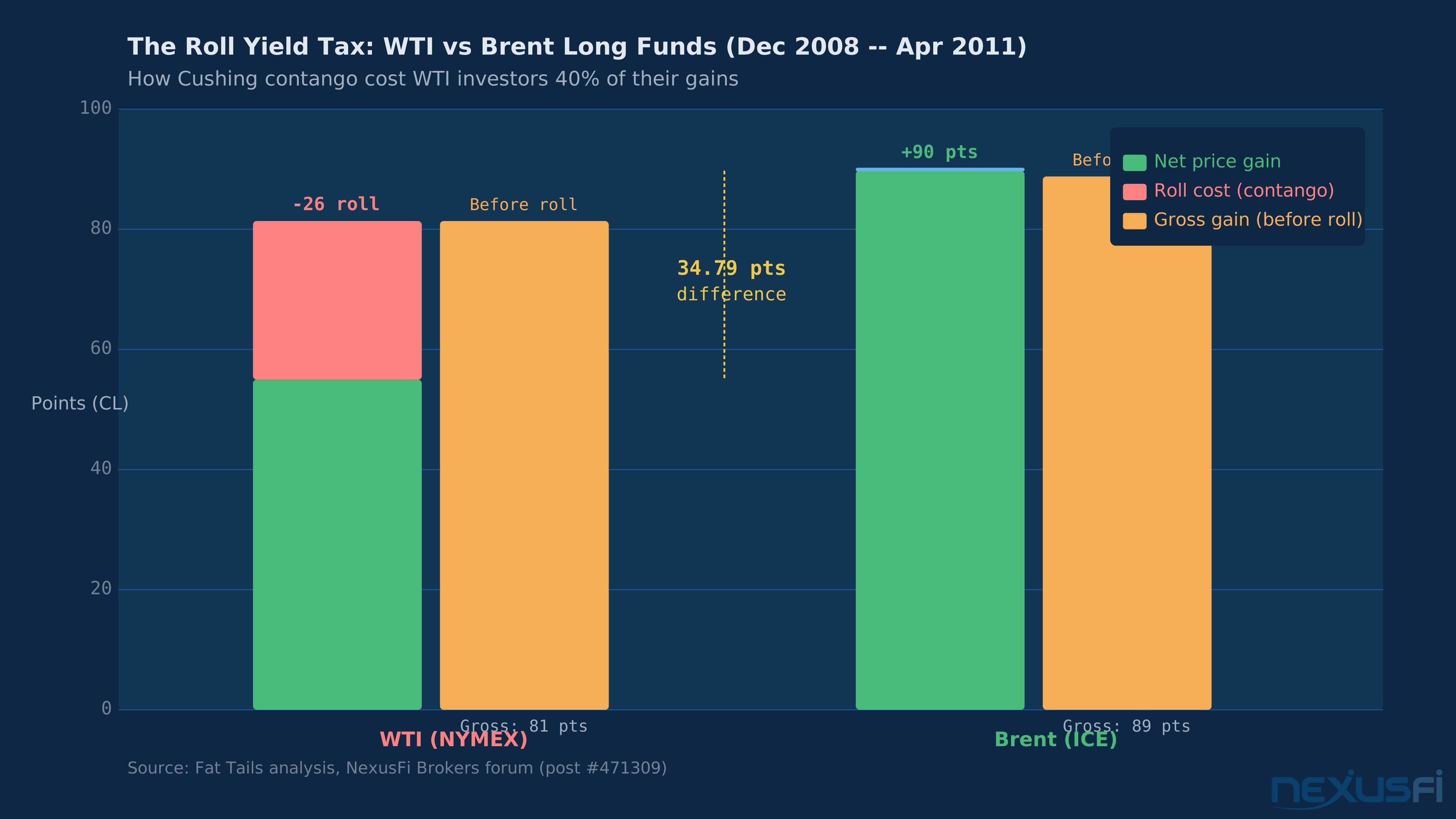
The scale of this effect shocks most retail traders the first time they see real data. @Fat Tails analyzed long-only crude oil fund performance from December 2008 to April 2011, a period when WTI (NYMEX) was in structural contango while Brent (ICE) was roughly flat to backwardated:
- WTI long fund: profit before roll cost = 81.38 points, minus 26.41 points lost to roll cost = net 54.97 points
- Brent long fund: profit before roll cost = 88.81 points, plus 1.38 points in roll gains = net 89.76 points
The Cushing contango cost WTI funds approximately 40% of their total gains for that period. [5] Same commodity, two different exchanges, dramatically different outcomes — because of term structure. Two investors both "long crude oil" over the same period made returns that differed by 63%.
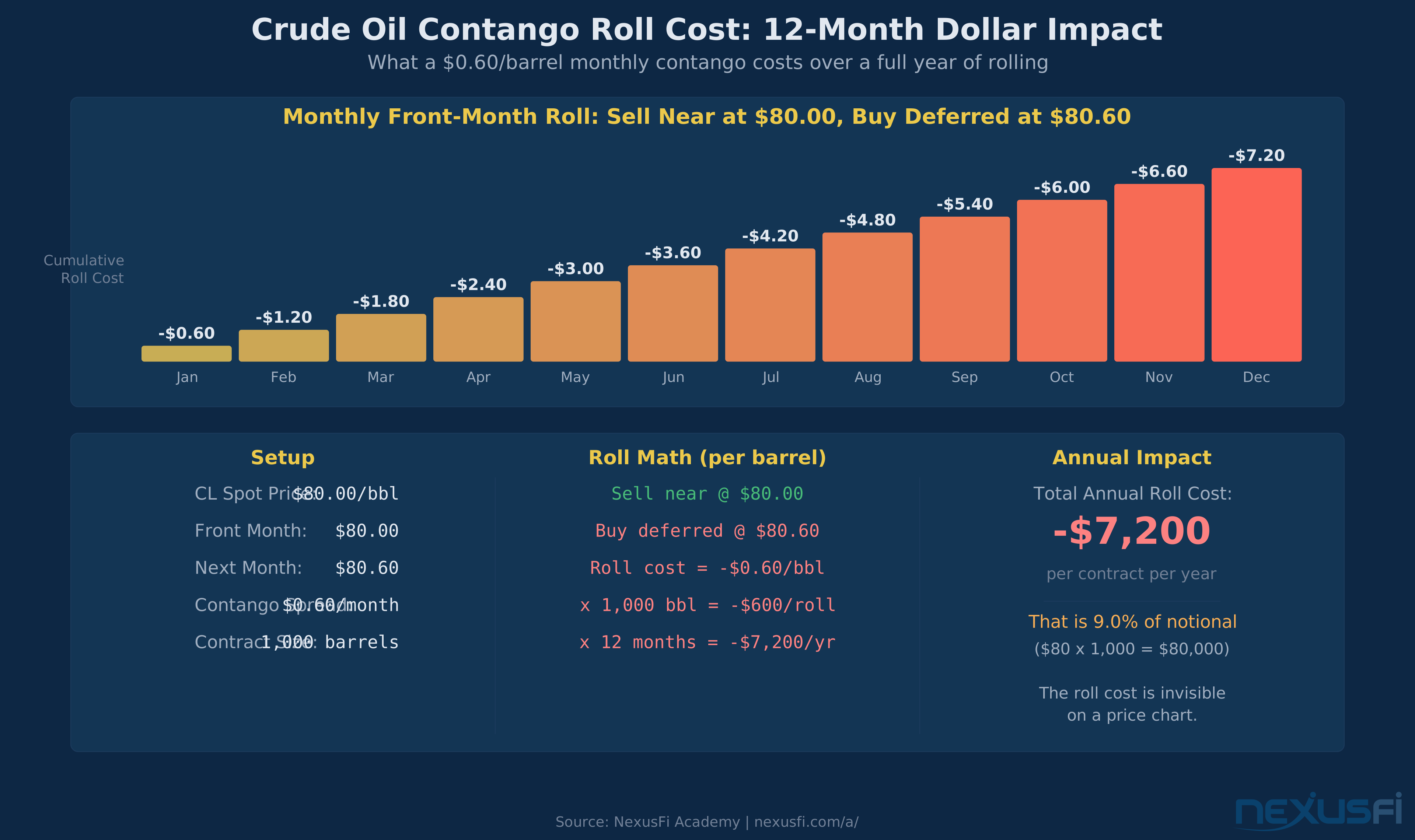
@SMCJB illustrated the USO vs USL comparison for retail traders: USO holds the front-month CL contract and rolls monthly. When CL is in contango, each monthly roll might cost ~$0.99 per barrel, reducing purchasing power by 3.2% per roll. Over a year in persistent contango, that's catastrophic drag. USL spreads exposure across 12 contracts and rolls each piece 1/12th at a time — the same monthly roll costs only 40% of what USO pays. [6]
The roll yield is one component of a three-part total return equation:
Total return = Spot price return + Roll yield + Interest income on margin
During the 24-year bond bull market (1981-2005), @tigertrader calculated that 73% of the total return from holding 10-year treasury futures came from positive roll yield in the backwardated futures curve — only 36% came from price appreciation as rates fell. [8] Traders who owned note futures weren't just catching the rate decline — they were collecting carry every time they rolled. For short treasury positions in that same environment, the negative roll yield erased more than the price gain, a brutal invisible tax on what seemed like a directionally-correct trade.
Practical roll timing: Most institutional traders roll physically-settled contracts 4-5 days before first notice day, and financially-settled contracts the day before last trading. Rolling too late on a deliverable contract creates forced delivery risk. Rolling too early means missing the last few days of liquidity in the nearby. For tight spreads, check the volume ratio between the near contract and the next — when the nearby drops below 50% of total open interest, the smart money has mostly rolled.
The Cost of Carry Model #
The fair value of a futures contract is set by cost of carry:
Futures Fair Value = Spot × (1 + r × t) + Storage costs — Convenience yield
Where r = risk-free interest rate, t = time to expiration, storage costs cover physical warehousing and insurance, and convenience yield equals the value of immediate possession. For financial futures without storage, the formula simplifies to the first two terms only. This cost-of-carry relationship — formalized in Hull's Options, Futures, and Other Derivatives as the no-arbitrage pricing framework — establishes hard bounds on the futures-spot spread: when futures deviate from fair value beyond transaction costs, cash-and-carry or reverse cash-and-carry arbitrage forces convergence. [11]

When futures trade at fair value, no arbitrage profit exists. When they deviate much, arbitrageurs step in. For equity index futures, the calculation is so straightforward that institutional desks run it continuously — this is "index arbitrage" or "program trading."
When ES futures deviate from fair value by more than transaction costs (~0.10 points), index arb traders buy the cheap side and sell the expensive side, forcing convergence within minutes. That's why ES doesn't drift far from fair value for long during normal market conditions.
What shifts fair value: Rising interest rates lift futures fair value relative to spot (financing is more expensive). Rising dividend yields lower futures fair value (cash index is more attractive). Supply shocks distort convenience yield for physical commodities, sometimes dramatically. Storage capacity constraints (when tanks are full) can break the contango ceiling because the arbitrage becomes physically impossible.
Term Structure by Market #
Term structure isn't generic — each market has its own structural drivers and persistent tendencies.
Equity Index Futures (ES, NQ, YM)
ES futures almost always trade at a discount to the S&P 500 cash index — they're in structural backwardation. The reason: dividend yields on S&P 500 index components exceed the cost of financing, especially since 2008 when near-zero interest rates made carry less valuable. You earn dividends by owning the cash basket, but get no dividends holding futures. That yield advantage for cash makes futures cheaper than spot.
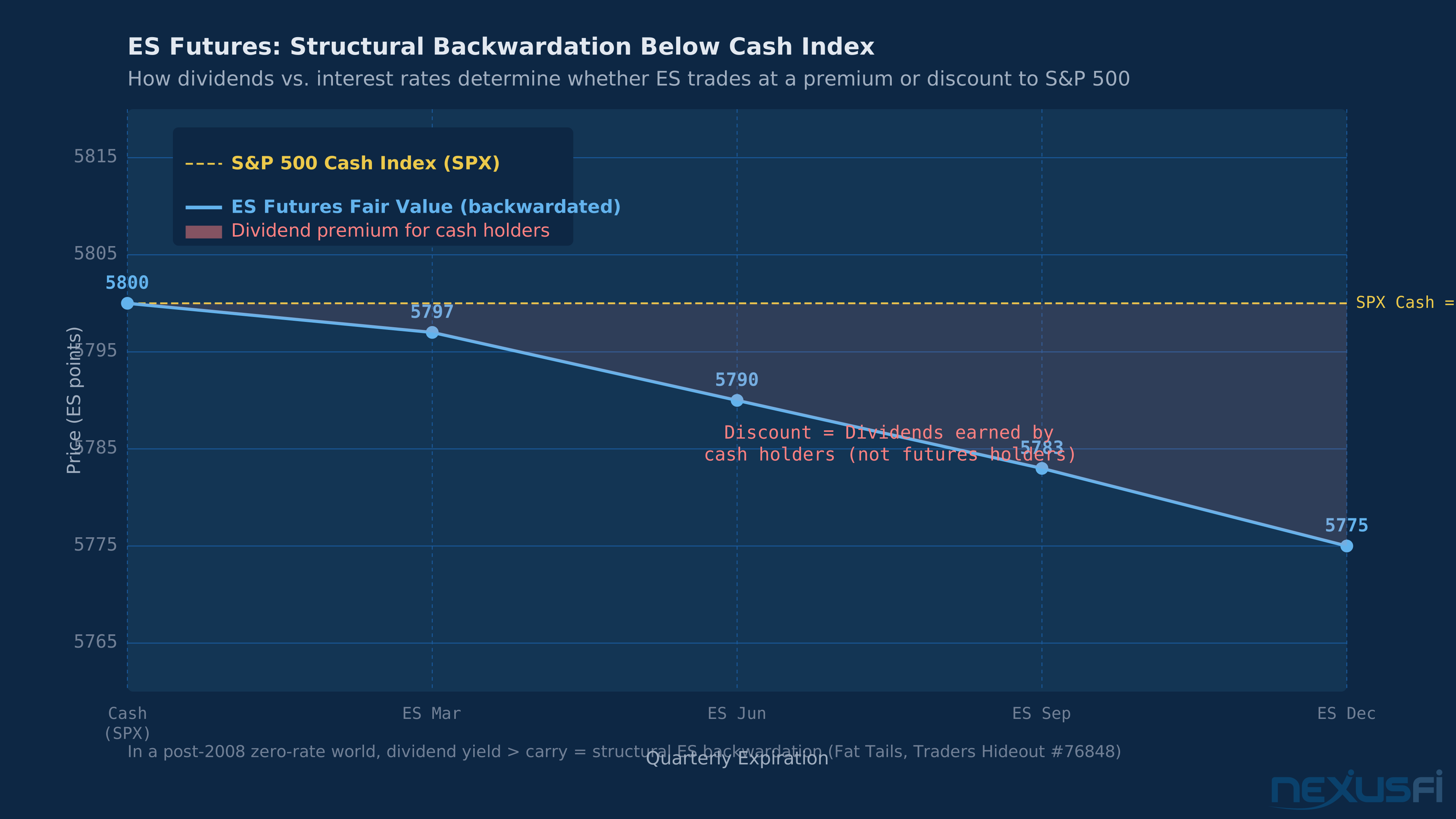
Contrast ES with FDAX (German DAX futures), a total-return index where dividends are reinvested. Because futures holders indirectly receive dividends through the index calculation, FDAX trades in contango rather than backwardation — a structural difference with real roll-yield implications.
When US interest rates rise above the S&P dividend yield, ES can move toward contango — a structural regime shift that changes the sign of the roll yield for equity index traders. Most of the time the roll cost for ES is small, but understanding the direction matters for position accounting.
Crude Oil (CL)
CL's term structure is the most watched in the commodity world, and it shifts constantly based on storage inventory and geopolitical conditions. The structural contango of 2008-2009 (when oil fell from $147 to $32) was so extreme that tankers became floating storage facilities. By contrast, when OPEC cuts production or supply disruptions hit, CL flips hard into backwardation.
[10] That read proved correct — CL dropped substantially further.
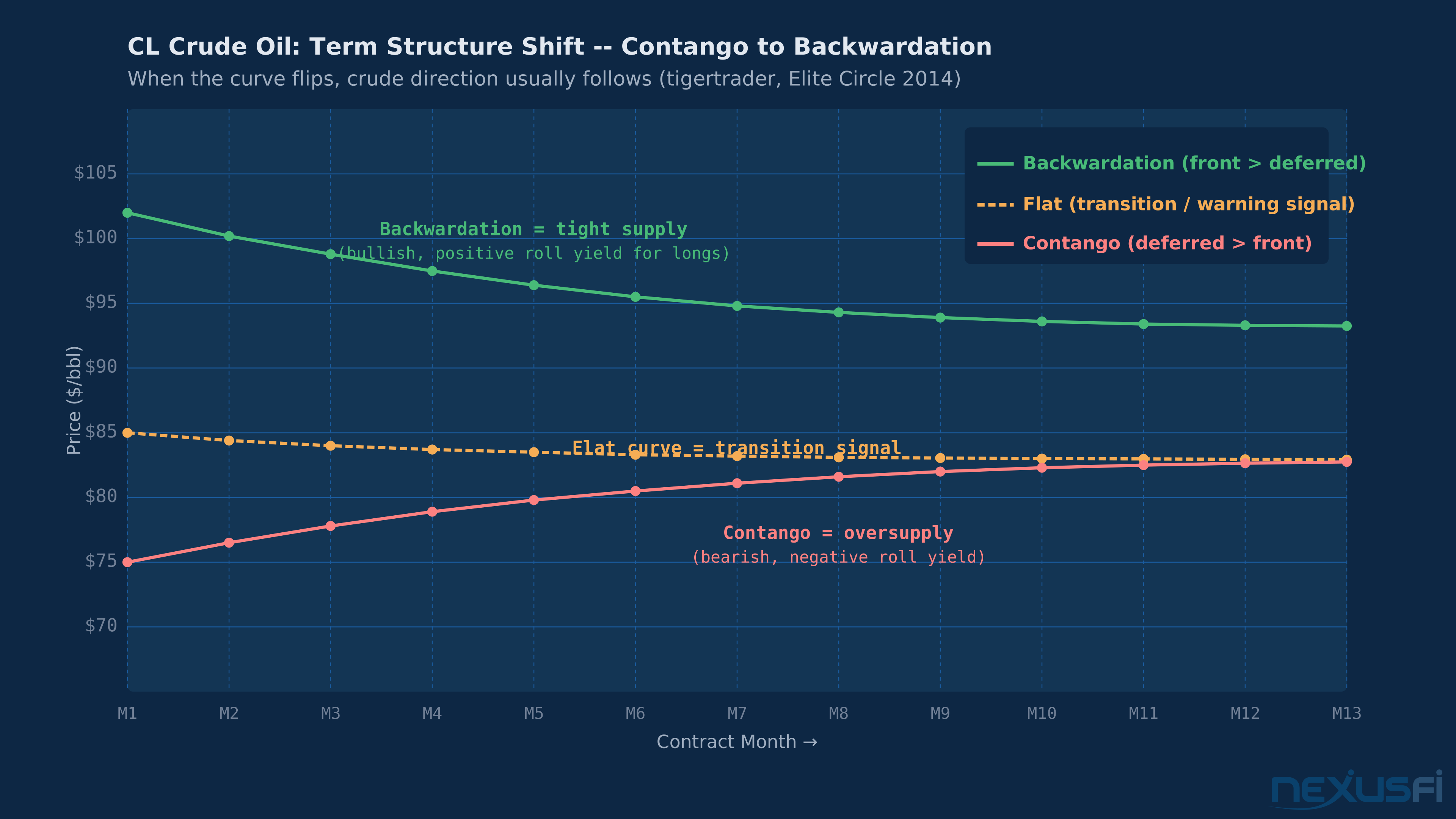
A unique complication for CL: the Cushing, Oklahoma delivery point creates "Cushing contango" — a structural premium in NYMEX WTI that doesn't equally affect ICE Brent. Physical access limitations at Cushing historically kept WTI in greater contango than Brent during oversupply periods, as
VIX Futures
VIX futures are almost always in steep contango — the curve slopes sharply upward from the front month through 8-9 months out. This reflects the mean-reverting nature of volatility: the VIX spikes during crises but tends to fall back to historical averages. The market prices deferred VIX contracts at a premium to current spot, expecting some return toward the mean. Research by Avellaneda and Papanicolaou in The Journal of Investment Strategies found that the most likely state for VIX constant-maturity futures is contango with spot VIX around 12% and long-term futures near 20% — confirming the structural persistence of this curve shape outside of crisis episodes. [13]
The practical consequence: VIX futures roll is one of the most punishing in financial markets. Products like VXX hold front-month VIX futures and lose money almost continuously just from rolling into more expensive deferred contracts.
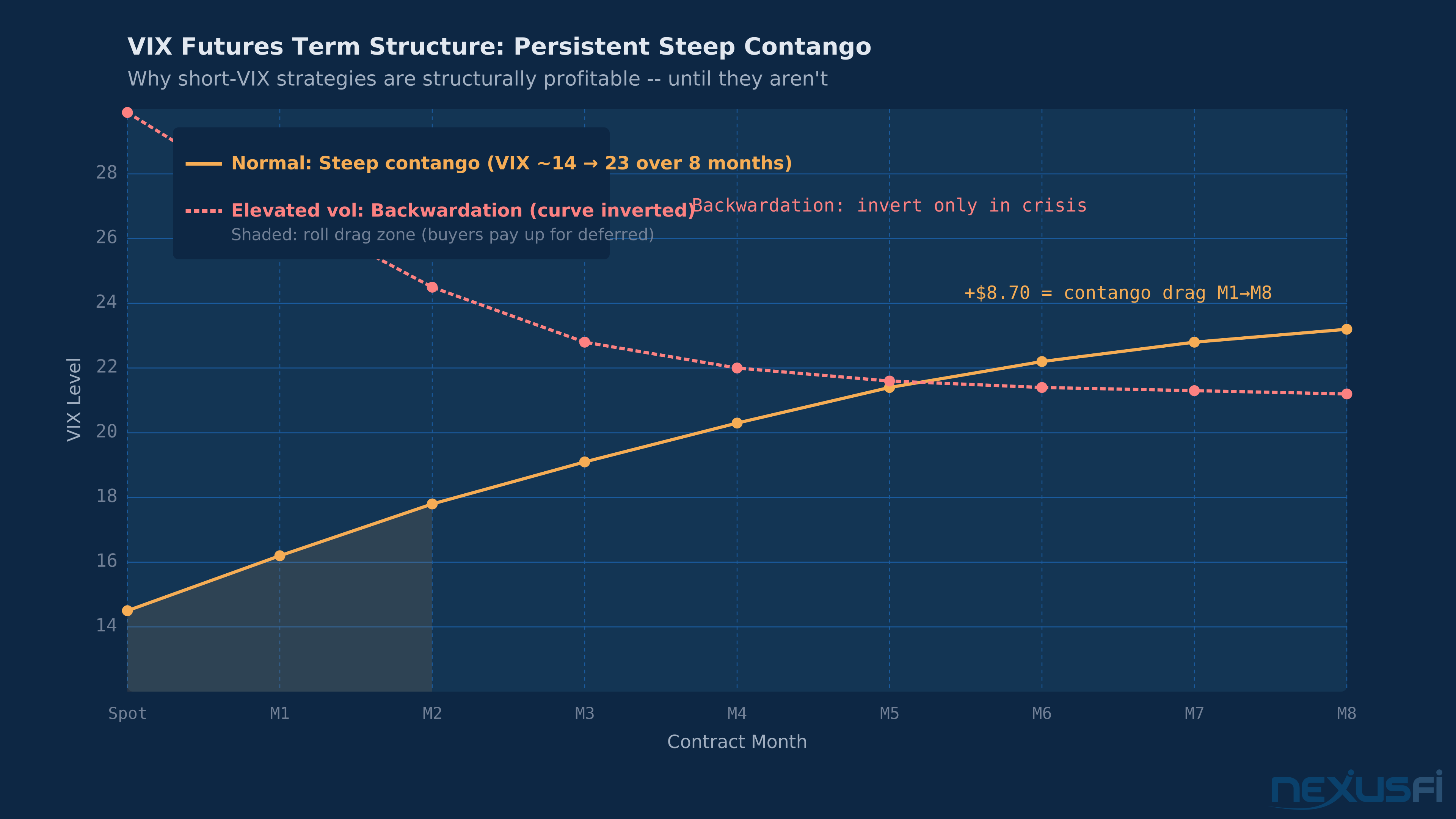
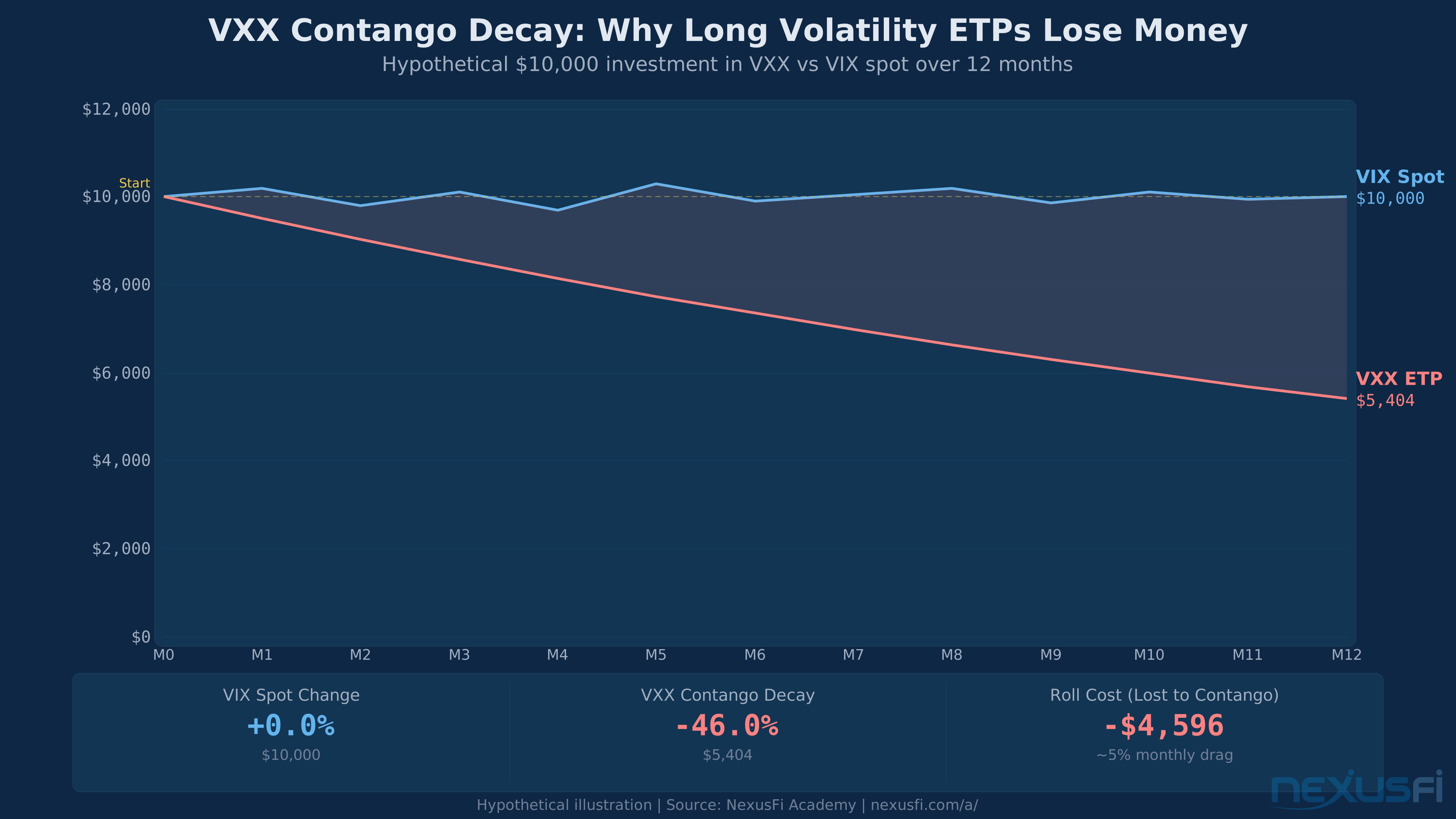
VIX futures invert into backwardation only during genuine market crisis — major selloffs when implied volatility on near-term options spikes dramatically above long-term expectations. That inversion is short-lived but can be violent for anyone holding short volatility positions through it.
Agricultural Futures (ZC, ZS, ZW)
Grains have the most complex term structure dynamics because of crop seasonality and the old-crop/new-crop split. The July corn contract (final old-crop delivery month) and the December contract (first new-crop delivery) are effectively different markets — different growing seasons, different supply situations, different carry dynamics. Don't assume continuity across that seasonal divide.
When drought hits the old crop, ZC July can be in steep backwardation (scarcity premium) while ZC December sits nearly flat or slightly contango (the new crop will relieve supply pressure).

The "full carry" concept matters intensely for grain traders. When the Dec-to-July corn spread reaches full carry (the maximum contango that covers all storage costs), that's a near-riskless bull spread opportunity.
Treasury Futures (ZB, ZN, ZF)
Treasury futures are almost always in backwardation — you roll long positions at positive carry because the nearby contract is more expensive than the deferred, reflecting the typical upward slope of the yield curve. During the 30-year bond bull market, the average 10-year note futures roll yield contributed approximately 73% of total long-only returns — the carry alone made holding note futures profitable even in flat-price stretches. For short positions, that positive carry works in reverse: you're fighting the roll every time you roll. In a normally-backwardated curve, short treasury positions face a structural headwind that compounds quietly over time. Size and duration matter.

Practical Applications for Futures Traders #
Reading the Curve as a Market Signal
The curve's shape and direction of change often front-run the outright price. When CL is in deep contango and that contango is narrowing, inventory is being drawn down — constructive for longs. When backwardation collapses, demand weakness often follows in the outright. Watch the calendar spread, not just the outright. A front-to-back ratio (front price / deferred price) above 1.0 = backwardation, below 1.0 = contango — tracking this over time gives a cleaner signal than most technical indicators on the outright.

Day Traders and the Curve
For pure day traders, term structure is largely irrelevant for intraday P&L.
[4] Where it does matter intraday: ES occasionally appears to "lag" the cash index at the open before arb traders close the gap. Knowing ES should trade at a specific fair-value discount to SPX — not exactly at cash — prevents misreading normal early-session behavior as unusual divergence.
Calendar Spread Trading
Some traders play term structure directly — buying the near month and selling a deferred month (or vice versa) to trade the curve shape rather than the outright direction. These trades carry lower margin requirements, reduced volatility, and less outright price exposure than outrights.
[9] Two-month calendar spreads still correlate much with the outright. Multi-leg butterfly spreads (buy near, sell 2x middle, buy deferred) reduce outright sensitivity at the cost of lower absolute P&L.

ETFs vs. Direct Futures Positions
USO rolls the front-month CL contract monthly, paying the contango tax every 30 days — typically 3-7% per year in persistent contango. A trader holding front-month CL can time their roll and execute at tighter spreads. For multi-month directional views, holding a deferred CL outright (no roll for 3-6 months) avoids the tax entirely. The tradeoff: deferred months have wider bid-ask spreads. That friction is usually still lower than repeated monthly contango payments.

Position Sizing Across Curve Risk
Scaling into positions across multiple expirations means you're carrying spread risk between expiries. Two contracts in different months don't have identical exposure — the spread between them can move against you even when the outright barely moves. Treat multi-expiry scaling as a portfolio of spread exposures, not a single position.
When Term Structure Fails as a Signal #
The curve is not omniscient. Understand the failure modes before trading off it.
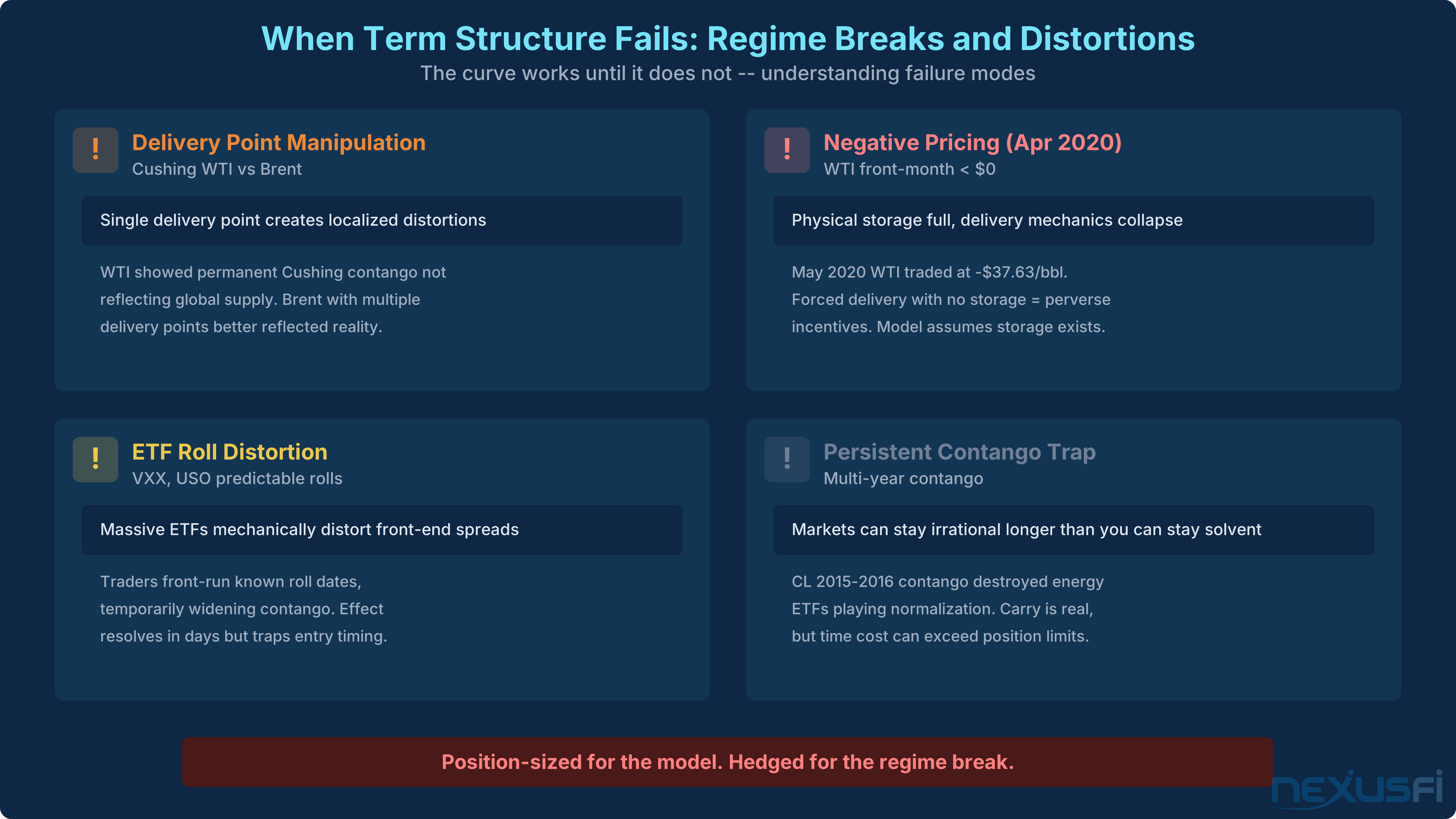
Manipulation and structural distortions: The Cushing delivery point created persistent artificial contango in WTI that didn't reflect true global supply conditions. Brent, with multiple delivery points, better reflected actual market balance. Any single-point delivery mechanism creates localized distortions.
Regime breaks: During COVID-19 in April 2020, WTI briefly traded negative. Physical storage was full, delivery mechanics created perverse incentives, and the term structure reflected operational crisis rather than fundamental value. The model works until it doesn't — regime breaks are precisely when positions built on term structure analysis blow up.
Convenience yield volatility: Convenience yield is difficult to quantify, especially for energy. It swings dramatically with geopolitical news, making backwardation signals misleading as entry timing tools. Steep backwardation means supply is tight now — whether that tightness persists or resolves is what drives P&L.
ETF distortion of front-end spreads: Massive futures ETFs — VXX rolling VIX, USO rolling CL — mechanically distort the front-end of the curve when they roll en masse on predictable schedules. Sophisticated traders front-run these known roll dates, temporarily widening contango spreads. That effect resolves within days but can trap traders who enter during the distortion peak.
Multi-year contango can persist: Markets can stay in deep contango longer than positions can withstand. Crude oil's 2015-2016 contango destroyed several energy ETFs that tried to play the normalization trade. The carry is real, but so is the time cost of waiting for a regime shift that may take quarters or years.
Knowledge Map
Go Deeper
Build on this knowledgeReferences This Article
Articles that build on this topicCitations
- — Reminiscences of a Bean Trader or Why These Ain't Yo Daddy's Beans No-Mo (2014) 👍 15“one of the most overlooked and misunderstood aspects of trading futures is the shape of the futures curve. yet, it is what intrinsically distinguishes futures from stocks, and both professional specs and hedgers are ever vigilant when it comes to scrutinizing term structure.”
- — futures-convergence to the physical market? (2015) 👍 8“Now imagine that the contract price for the futures contract is not converging to the price of the physical oil at expiry. arbitrage opportunities between physical oil and paper oil will make prices converge.”
- — Reminiscences of a Bean Trader or Why These Ain't Yo Daddy's Beans No-Mo (2014) 👍 15“more modern thinking attributes inverted markets or backwardation to 'convenience yield,' that is, the value of having supply at hand -- or the costs of unexpected supply interruption.”
- — Do you look at backwardation/contango when daytrading CL? (2011) 👍 3“please make sure to understand the difference between backwardation and normal backwardation. The latter refers to the futures price relative to the expected price of the commodity at expiry. I do not see a direct relationship between the structure of the forward curve and intraday prices.”
- — Changing rollover dates for CL (2015) 👍 6“The Cushing contango cost the long only funds that hedged via NYMEX about 40% of the total gain for that period.”
- — How to play a long term bullish view on oil? (2016) 👍 2“Under/Over performance is all about roll yield which is all a function of backwardation/contango. USL will have to roll 1/12th of their position, hence 704c/12 = 58.6c which is only 40% of the roll cost of USO.”
- — Futures Contract Specifications -- How long is the life of a contract? (2010) 👍 3“ES shows a nice backwardation, as the basis of the contract is negative. This is due to dividend expectations being higher than interest rates. ES therefore trades at a discount to the S&P 500 index.”
- — Spoo-nalysis ES e-mini futures S&P 500 (2014) 👍 21“during the 24 year bull market in treasury futures a buy-and-hold strategy would have earned a cumulative return of +109% (in the 10year). 36% of that return would have been from price appreciation... and 73% would have been from the roll yield (positive carry).”
- — Spread Trading Futures (2011) 👍 7“spreads will not trade past the cost of full carry, so you can put on bull spreads, and not have to worry about the spread going out on you. This was an extremely profitable, almost risk-free strategy.”
- — Spoo-nalysis ES e-mini futures S&P 500 (2014) 👍 3“what you are seeing is a narrowing of the backwardation in the term structure of CL futures, and perhaps, the market moving to contango. if crude oil spreads move into contango, crude oil is most likely headed lower still.”
- John C. Hull — Options, Futures, and Other Derivatives (11th Edition) (2022)
- John Maynard Keynes — A Treatise on Money, Vol. II: The Applied Theory of Money (1930)
- Marco Avellaneda and Andrew Papanicolaou — Statistics of VIX Futures and Their Applications to Trading Volatility Exchange-Traded Products (2018)