



Tick Size, Tick Value, and Contract Specifications: The Exchange-Level Details That Shape Every Futures Trade
Overview #
Get your tick value wrong on CL and a 50-tick move you expected to be $500 is actually $5,000 — a 10x error that can blow an account in a single trade. Mix up ticks and points on ES and your "small 10-unit stop" is either $125 or $500 depending on which one you meant. These aren't hypothetical scenarios — they're mistakes traders make every week when they skip the most fundamental math in futures.
Every futures contract trades on a price grid defined by three numbers: the tick size (minimum price increment), the tick value (dollar P&L per tick), and the contract multiplier (point value). Tick size shapes the minimum possible bid-ask spread. Tick value determines whether a 2-tick stop costs you $25 or $62.50. Contract specifications govern everything from margin requirements to settlement mechanics. Get these wrong, and your position sizing, risk calculations, and strategy backtests are all built on fiction.
Key Concepts #
Tick Size (Minimum Price Increment) #
The tick size is the smallest allowable price movement for a futures contract. It's enforced by the exchange at two levels: on the order book (every resting order must sit on a valid tick increment) and in the matching engine (executions can only occur at valid tick prices).
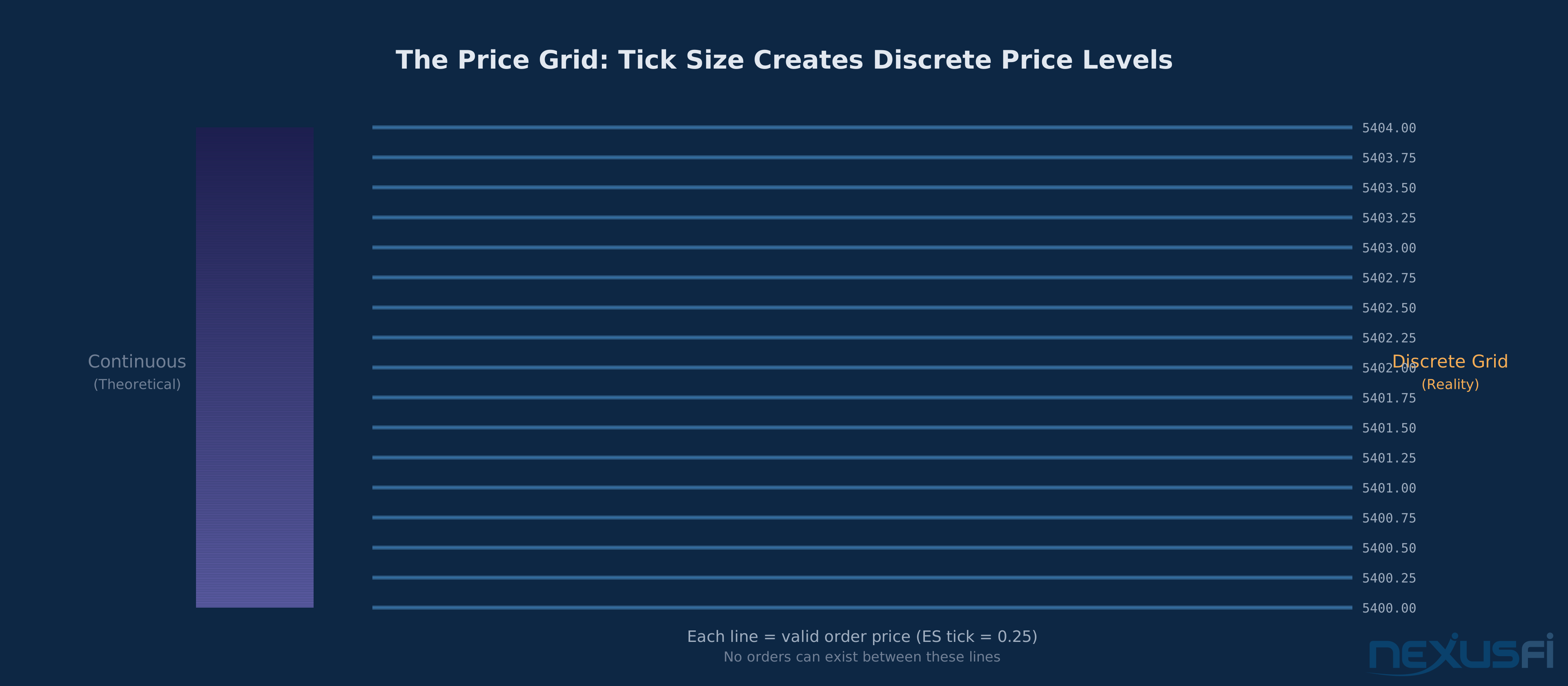
For ES (E-mini S&P 500), the tick size is 0.25 index points. Price moves from 5400.00 to 5400.25 to 5400.50 — never 5400.10 or 5400.37. For CL (Crude Oil), it's $0.01 per barrel. For ZB (30-Year Treasury Bond), it's 1/32 of a point.
Every contract has its own tick size, and it doesn't change by time of day or session. It's a fixed structural parameter set by the exchange.
Tick Value (Dollar P&L Per Minimum Move) #
Tick value tells you how much money you make or lose when price moves one tick in your direction or against you. The formula is direct:
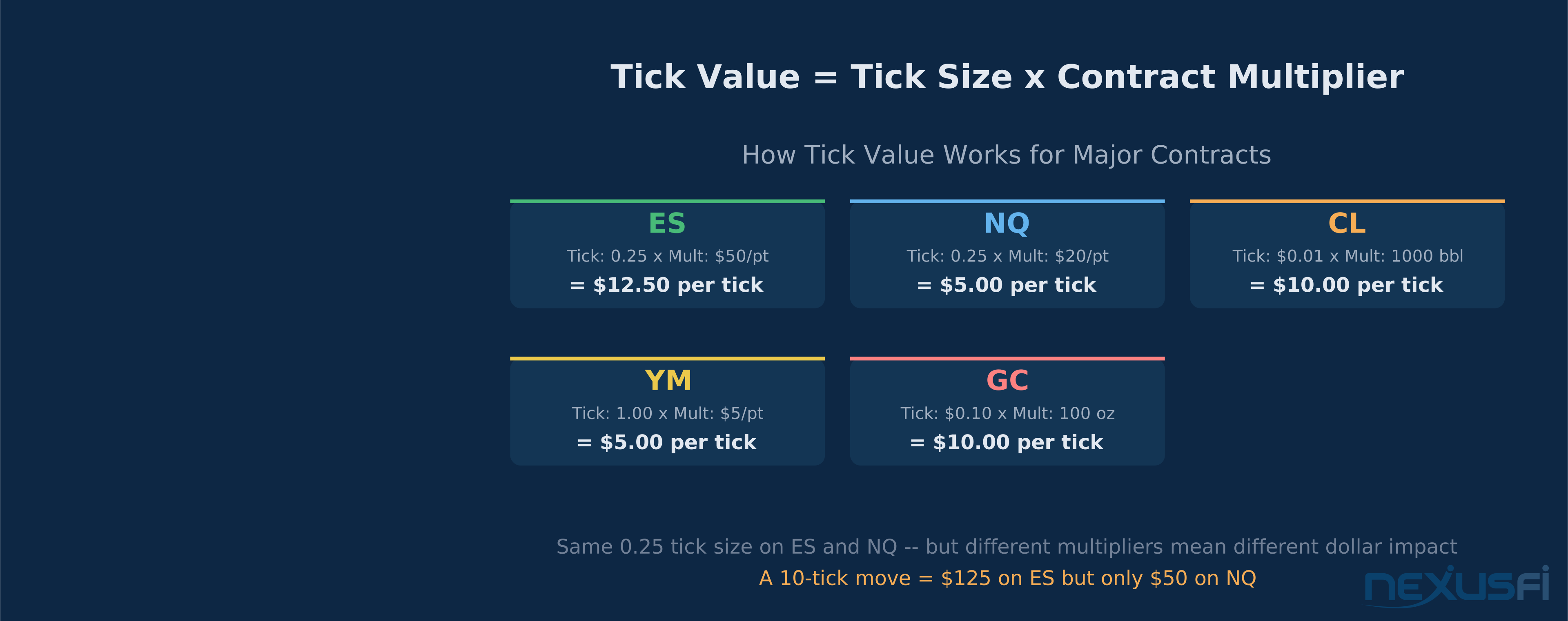
Tick Value = Tick Size x Contract Multiplier
For ES: 0.25 x $50 per point = $12.50 per tick For CL: $0.01 x 1,000 barrels = $10.00 per tick For NQ (E-mini Nasdaq): 0.25 x $20 per point = $5.00 per tick For YM (E-mini Dow): 1.0 x $5 per point = $5.00 per tick
As @Fat Tails explains on NexusFi: "The tick value can be calculated as tick value = tick size multiplier. For CL you will get: tick value = $0.01 1000 = $10."
Minimum tick movement vs 1 contract value (@gracepips)
Contract Multiplier (Point Value) #
The contract multiplier translates abstract price points into dollar amounts. ES has a $50 multiplier — one full index point equals $50. That means a move from 5400 to 5401 is $50 per contract, split across four ticks of $12.50 each.
MultiCharts, MultiCharts, MultiCharts... (@Big Mike)
The Price Grid #
The tick size creates what microstructure researchers call the "price grid" — a discrete lattice of valid prices. This grid has real consequences:
- Order book depth distributes across grid points (not continuously)
- Bid-ask spreads snap to integer multiples of the tick size
- Price discovery happens in jumps, not smooth curves
- Limit orders can only be placed on grid points
How Exchanges Set Contract Specifications #
Exchanges don't pick tick sizes randomly. CME, ICE, Eurex — they all calibrate specs through a multi-factor optimization process that balances competing objectives.
Design Factors That Affect Your Trading #
1. Price level and volatility shape tick granularity A $70 crude oil contract needs different granularity than a 5400-point index. The tick size represents a meaningful fraction of typical price movement — and that fraction determines how precisely you can place stops, targets, and limit orders. Contracts on higher-priced underlyings tend to have coarser ticks in absolute terms but finer ticks as a percentage of price.
2. Spread floors are set by tick size The minimum bid-ask spread is always at least one tick. When exchanges choose a tick size, they're setting the floor on your execution costs. A tick that's too coarse means you're overpaying on every trade. A tick that's too fine fragments the order book and can make fills less reliable.
3. Hedging precision depends on tick granularity If you're using futures to hedge a cash position, coarse tick increments create gaps between your hedge and the underlying. The tick size determines the minimum tracking error your hedge can achieve — and that error translates directly into P&L slippage on the hedge.
The Change Process #
When an exchange modifies tick size, it's a structured event — not a surprise. CME Group, for example, publishes advisory notices months in advance, specifies exact implementation dates (always aligned to a contract rollover or new trading session), and provides conversion rules for existing orders.
A real example: In July 2016, CME reduced the tick size on 6C (Canadian Dollar futures) from one pip ($10.00) to half a pip ($5.00). As @matthew28 noted at the time, the monetary value of a given price move doesn't change — "a move of say 0.2 cents will still have the same monetary value, it will just be a 40 tick move instead of a twenty tick move."
CME reducing tick size of 6E EURUSD futures (@matthew28)
The Tick Size / Spread Relationship #
Here's where tick size stops being abstract and starts hitting your P&L directly: the bid-ask spread.
Minimum Possible Spread #
The tightest a market can quote is one tick. If ES has a 0.25 tick size, the minimum spread is 0.25 points ($12.50). If the "natural" equilibrium spread for ES would be 0.10 points, it can't get there — the tick grid forces it wider.
This is the spread discretization effect. Coarser ticks set a higher floor on the minimum achievable spread. Finer ticks lower that floor, potentially allowing tighter markets.
Spread Costs in Dollar Terms #
For a round-trip trade (buy at ask, sell at bid), the minimum cost from the spread alone is:
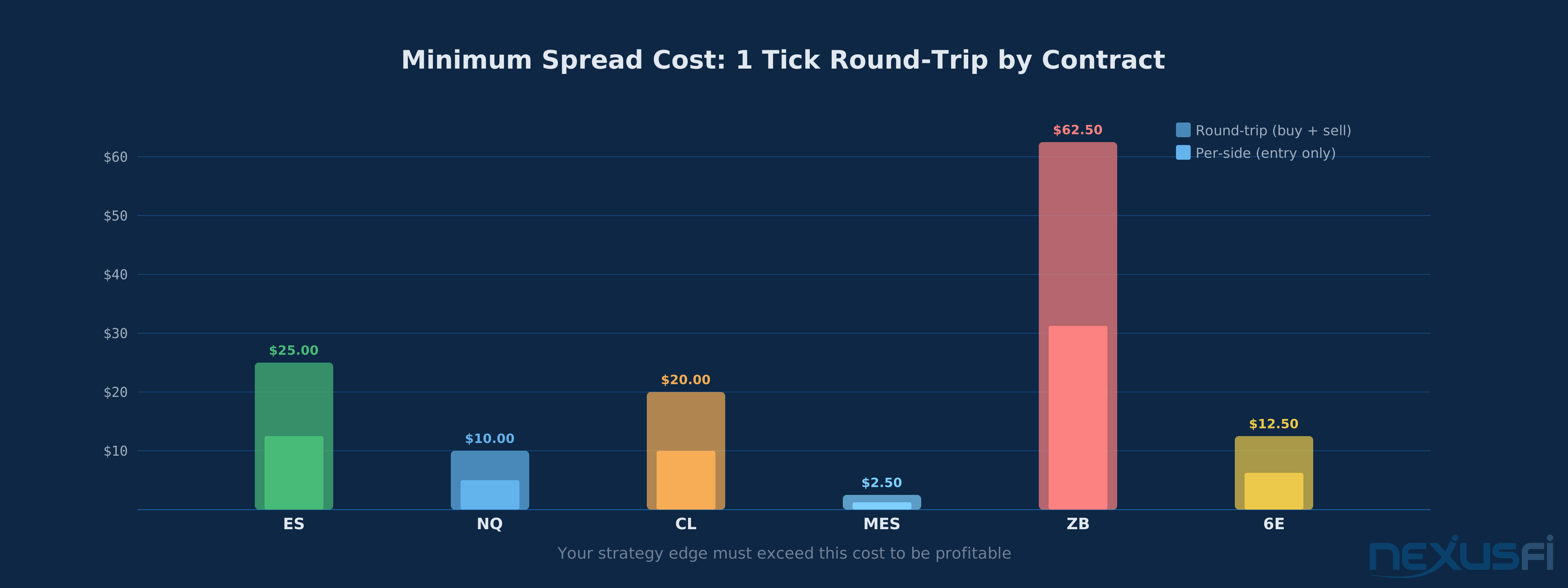
Minimum Spread Cost = 1 tick x tick value x 2 (round trip)
ES: 1 tick = $12.50 per side = $25.00 round-trip minimum CL: 1 tick = $10.00 per side = $20.00 round-trip minimum NQ: 1 tick = $5.00 per side = $10.00 round-trip minimum MES (Micro E-mini S&P): 1 tick = $1.25 per side = $2.50 round-trip minimum
Every strategy you build needs an edge that exceeds this cost. If your average winner is 3 ticks on ES, that's $37.50 — but you're paying at least $12.50 in spread costs just to enter (more if spreads widen). Your real edge is smaller than it looks.
How Spreads Actually Behave #
In liquid markets like ES, NQ, and CL during regular trading hours, spreads typically sit at one tick — the minimum. The order book is deep enough that competitive quoting keeps spreads at the floor. But during off-hours, around major news events, or in less liquid contracts, spreads can blow out to 2, 3, 5+ ticks.
Expected slippage vs order size (@fluxsmith)
Tick Value and Risk Management #
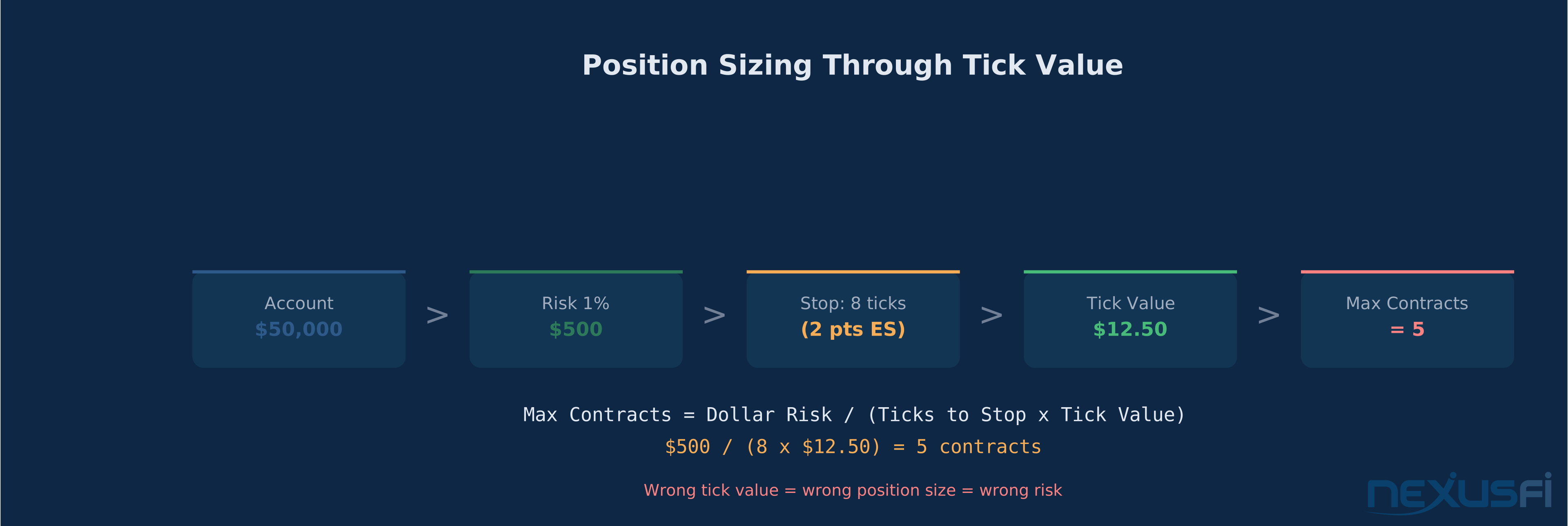
Position Sizing Through Tick Value #
Tick value is the P&L ruler. Every risk calculation flows through it:
Dollar risk per trade = Number of ticks to stop x Tick value x Number of contracts
If your stop on ES is 8 ticks (2 points) and you're trading 3 contracts: 8 ticks x $12.50 x 3 contracts = $300 risk
If your account is $50,000 and you risk 1% per trade ($500), you can afford: $500 / (8 x $12.50) = 5 contracts maximum
The Tick Value Table: Major Futures Contracts #
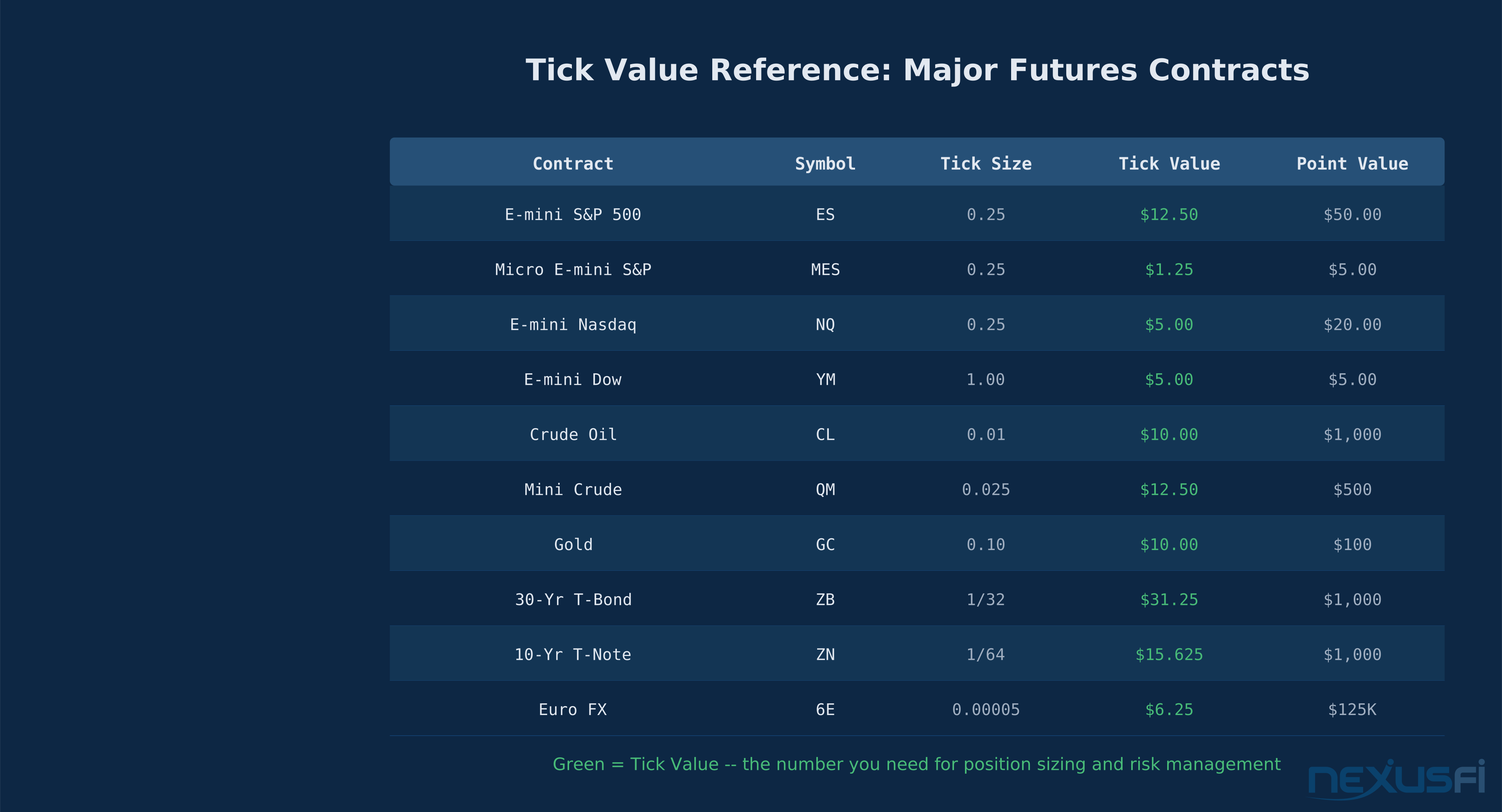
Know these numbers cold. This table is the single most important risk management reference for futures traders.
| Contract | Symbol | Tick Size | Tick Value | Ticks/Point | Point Value |
|---|---|---|---|---|---|
| E-mini S&P 500 | ES | 0.25 | $12.50 | 4 | $50.00 |
| Micro E-mini S&P | MES | 0.25 | $1.25 | 4 | $5.00 |
| E-mini Nasdaq 100 | NQ | 0.25 | $5.00 | 4 | $20.00 |
| Micro E-mini Nasdaq | MNQ | 0.25 | $0.50 | 4 | $2.00 |
| E-mini Dow | YM | 1.00 | $5.00 | 1 | $5.00 |
| Crude Oil | CL | 0.01 | $10.00 | 100 | $1,000.00 |
| Mini Crude Oil | QM | 0.025 | $12.50 | 40 | $500.00 |
| Gold | GC | 0.10 | $10.00 | 10 | $100.00 |
| 30-Year T-Bond | ZB | 1/32 | $31.25 | 32 | $1,000.00 |
| 10-Year T-Note | ZN | 1/64 | $15.625 | 64 | $1,000.00 |
| Euro FX | 6E | 0.00005 | $6.25 | 20,000 | $125,000.00 |
CL vs QM (crude oil) tick size/value, margins (@Big Mike)
Treasury Contracts: The Fractional Tick Exception #
Treasury futures (ZB, ZN, ZF, ZT) deserve special mention because their tick sizes are expressed in fractions of 1/32 of a point — a convention inherited from the bond market's historical quoting style. CME Group's Introduction to Treasuries course explains how each contract's delivery grade, contract factor, and minimum price fluctuation interact to produce the pricing mechanics you see on screen.
And @matthew28 expands: "ZT: The minimum price fluctuation is one-eighth of 1/32nd, so priced in 1/256ths of a tick or 0.00390625. ZF: The minimum price fluctuation is one-quarter of 1/32nd, so priced in 1/128ths."
ZT and ZF questions please ...... (@vpd1952)
This fractional convention is confusing for new traders but makes sense when you understand that bond prices are quoted in 32nds historically. A ZB price of "143-16" means 143 and 16/32 points, or 143.50 in decimal. The tick moves in increments of 1/32 ($31.25 per tick).
What Happens When Exchanges Change Tick Size #
Tick size changes are rare but impactful. When they happen, they reshape the trading environment in ways that can break strategies, alter execution costs, and shift competitive dynamics between market participants.
The 6E (Euro FX) Reduction #
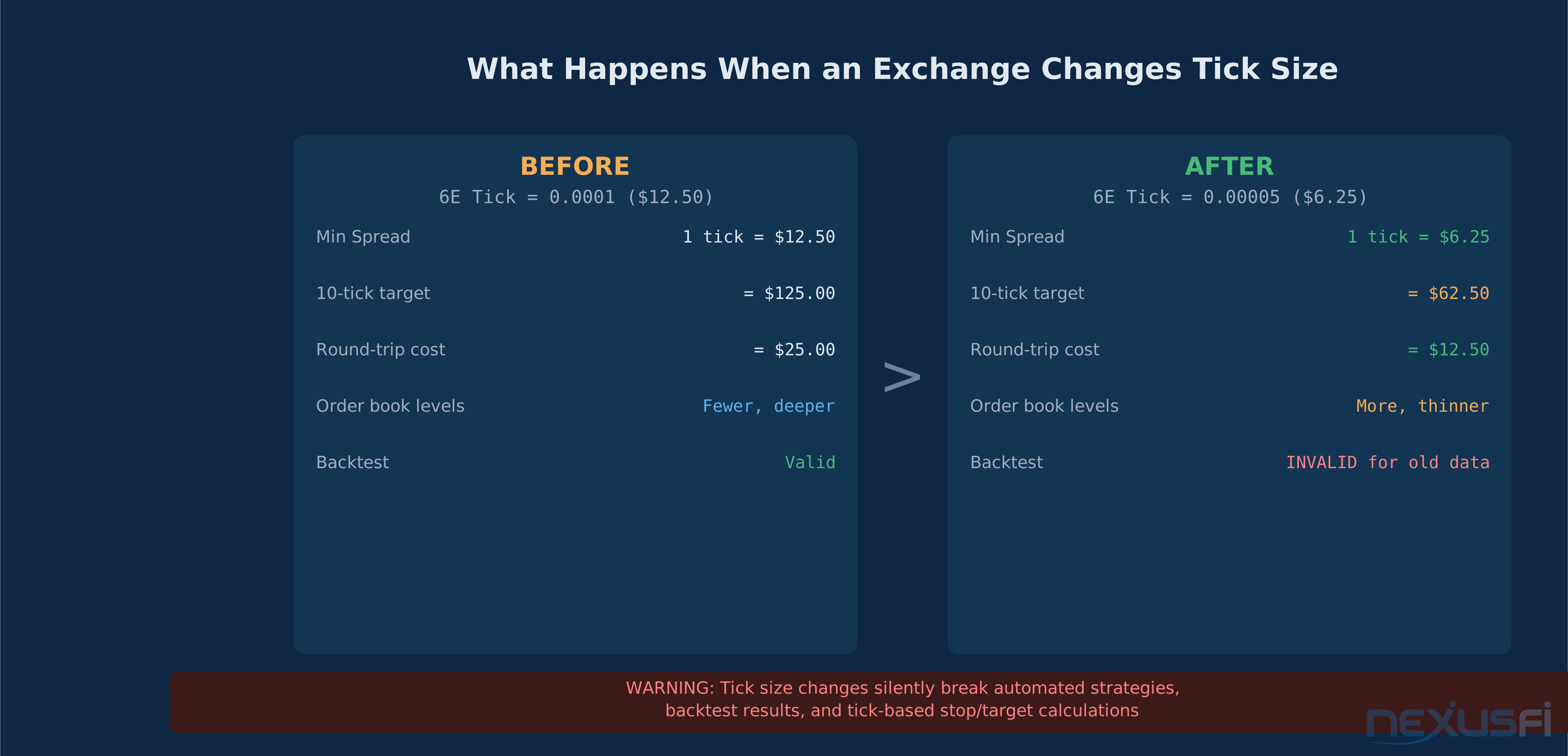
In 2016, CME halved the tick size on 6E from 0.0001 ($12.50) to 0.00005 ($6.25), as documented in the current CME FX Product Guide [11]. The community reaction on NexusFi captured the practical implications perfectly.
The key insight: the monetary value of a given price distance doesn't change, but the number of ticks changes. A move that was 20 ticks becomes 40 ticks. A spread that was 1 tick ($12.50) could now potentially be 1 tick ($6.25) — cutting minimum spread costs in half.
CME reducing tick size of 6E EURUSD futures (@matthew28)
What Improves After a Tick Size Reduction #
Tighter minimum spreads: If the old tick constrained spreads above their natural equilibrium, a smaller tick allows competitive quoting to compress spreads toward fair value. For actively traded contracts, this directly reduces retail execution costs.
Better price discovery: More granular pricing means the market can reflect information more precisely. Instead of jumping by $12.50 increments, price can move in $6.25 steps — providing a higher-resolution signal.
Improved execution granularity: Limit orders can be placed at more precise levels. You can position closer to the current mid without necessarily crossing, potentially improving fill quality for patient traders.
What Can Break After a Tick Size Change #
Backtesting becomes unreliable: Historical data was generated under the old tick grid. If your backtest assumes the current tick size applies to 5 years of history, every spread calculation, every fill simulation, and every slippage estimate is wrong for the pre-change period.
Automated order logic can malfunction: Systems that calculate prices in ticks (stop 4 ticks below entry, target 8 ticks above) now reference different dollar amounts. The code might work fine syntactically while producing entirely different risk profiles.
Depth may fragment: Smaller ticks mean more price levels for liquidity to distribute across. Instead of thick depth at each level (because there are fewer levels), you might get thin depth spread across many levels. This can increase execution uncertainty for larger orders.
Queue dynamics shift: Market makers and HFTs who relied on queue position at specific price levels now face a restructured order book. The competitive equilibrium between participants gets reset.
Robots Unleashed - a beginners algotrading path (@FastNCurious)
Practical Application: The Tick Size Checklist for Traders #
Before Trading Any Contract #
- Look up the tick size on the exchange website — CME Group publishes full specs on their contract specifications pages [10], the canonical source for tick size, multiplier, and trading hours for every listed product
- Calculate tick value — tick size x multiplier gives you the dollar amount per minimum move
- Compute your per-trade risk in ticks — translate your dollar risk tolerance into the number of ticks you can afford as a stop
- Verify your platform settings match — wrong tick size in a platform causes incorrect P&L display, wrong stop placement, and order rejections
- Check the tick-to-dollar conversion for your strategy — a "10-tick target" means $125 on ES but $50 on NQ. Same number of ticks, different money.
When an Exchange Announces a Tick Size Change #
- Recalculate all tick-based parameters in dollar terms — stops, targets, and trailing amounts all need conversion
- Audit automated order logic — any code that uses hard-coded tick counts needs review
- Re-run backtests with split data — use old tick size for historical periods, new tick size for forward testing
- Monitor spread behavior after implementation — the market needs time to find its new equilibrium
- Watch for depth fragmentation — if you're used to seeing 500 contracts at the best bid on ES, a tick change could redistribute that across more levels
Cross-Contract Comparison #
When comparing contracts (ES vs NQ, CL vs QM), always translate to dollar terms:
Microstructure Implications for Execution Quality #
Spread Cost vs. Slippage: They're Not the Same Thing #
Most retail traders lump spread and slippage together. They're distinct costs:
Spread cost: The price you pay for immediacy by crossing from bid to ask (or vice versa). It's predictable, it's visible on the order book, and it's bounded by the tick size.
Execution slippage: The difference between where you expected to fill and where you actually filled. This comes from insufficient depth, market movement during your order's life, and queue position effects. It's unpredictable and unbounded.
Tick size affects both but differently:
- It sets the minimum for spread cost (always >= 1 tick)
- It shapes the probability distribution of slippage (through depth structure and price granularity)
Depth Distribution and Fill Probability #
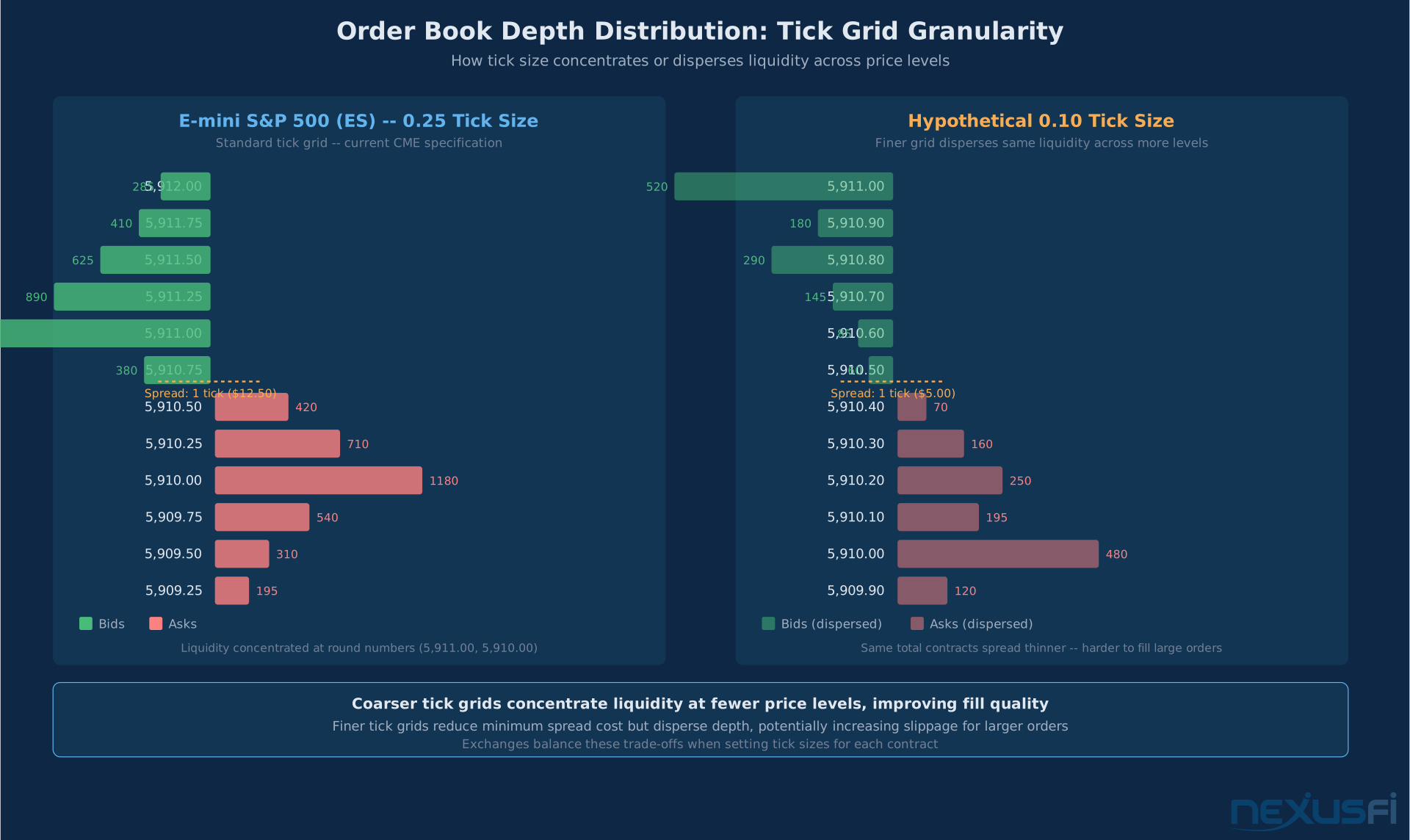
On a coarse tick grid (fewer price levels), liquidity concentrates at each level — you might see 2,000 contracts at the best bid on ES. On a finer grid (more price levels), that same liquidity spreads across more levels — maybe 400 contracts at each of 5 adjacent price points.
For small retail orders (1-10 contracts), this difference barely matters — you'll fill at the best price either way. For larger orders or fast-moving markets, depth distribution becomes critical.
The Minimum Edge Requirement #
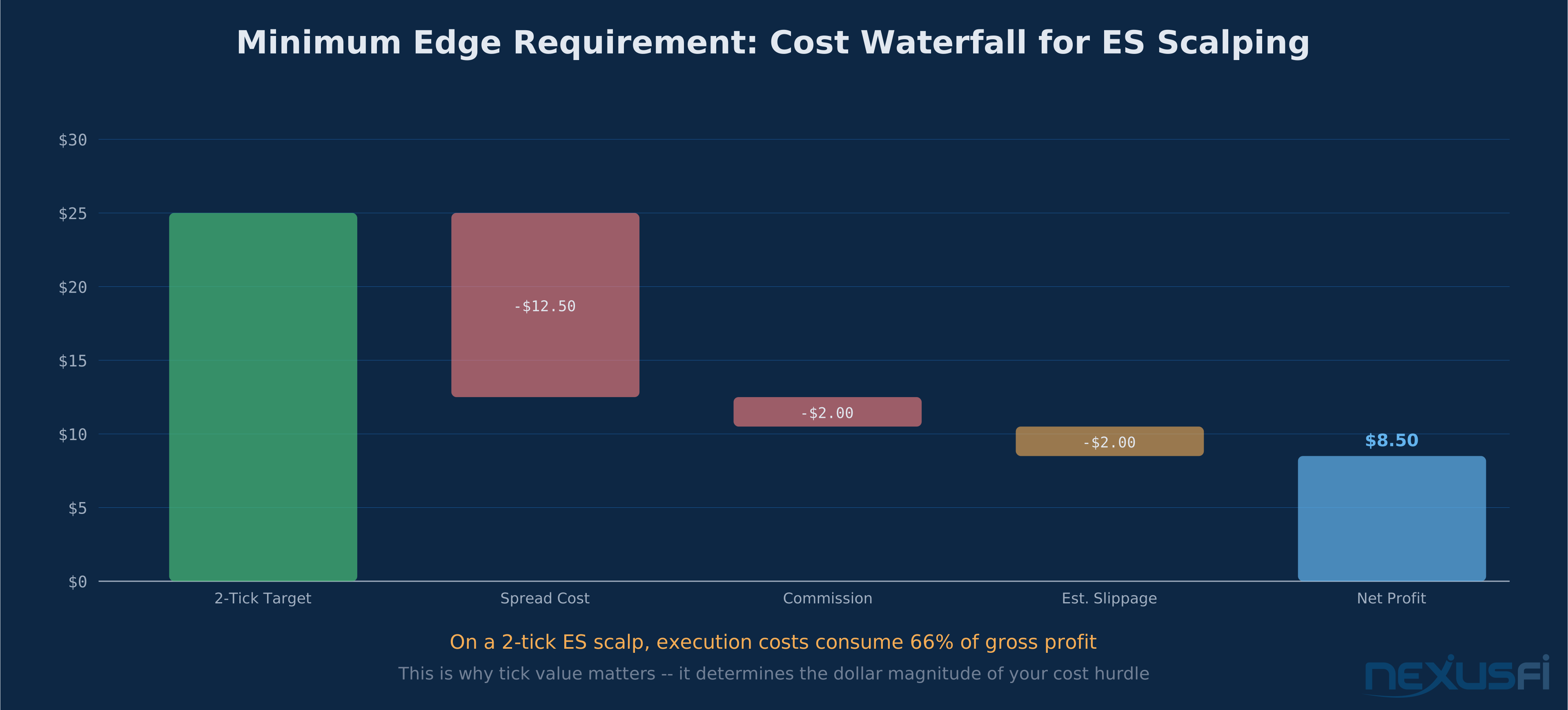
Required edge per trade > Spread cost + Commission + Slippage + Adverse selection cost. If this math doesn't work, the strategy doesn't work — no matter how good the signal.
Your strategy's expected profit per trade must exceed total execution costs. Tick value determines the dollar magnitude of spread cost. A 1-tick spread on ES costs $12.50. On MES it costs $1.25. Same market, same percentage move, very different dollar threshold your edge needs to clear.
For scalping strategies working in 1-3 tick profit targets, this math is unforgiving. A 2-tick target on ES ($25) minus 1-tick spread ($12.50) minus commission (~$2) leaves only $10.50 per side. That's a 50% cost-to-target ratio. The strategy needs a win rate well above breakeven just to survive costs.
Contract Specification Ecosystem #
How Specs Interact #
Tick size doesn't exist in isolation. It's part of a specification ecosystem that includes:
- Trading hours: When the contract trades (and when spreads widen during low-liquidity sessions)
- Position limits: Maximum contracts an account can hold
- Margin requirements: Capital required per contract (initial and maintenance)
- Settlement method: Cash-settled vs. physically delivered
- Contract size: How much of the underlying one contract represents
- Expiration cycle: Monthly, quarterly, or other patterns
All of these interact. A larger contract size with the same tick size means higher tick value, which means higher minimum spread cost, which means you need a larger edge per trade. Micro contracts (MES, MNQ, MCL) exist specifically to give smaller accounts access to the same markets with proportionally reduced tick values.
The Micro Contract Solution #
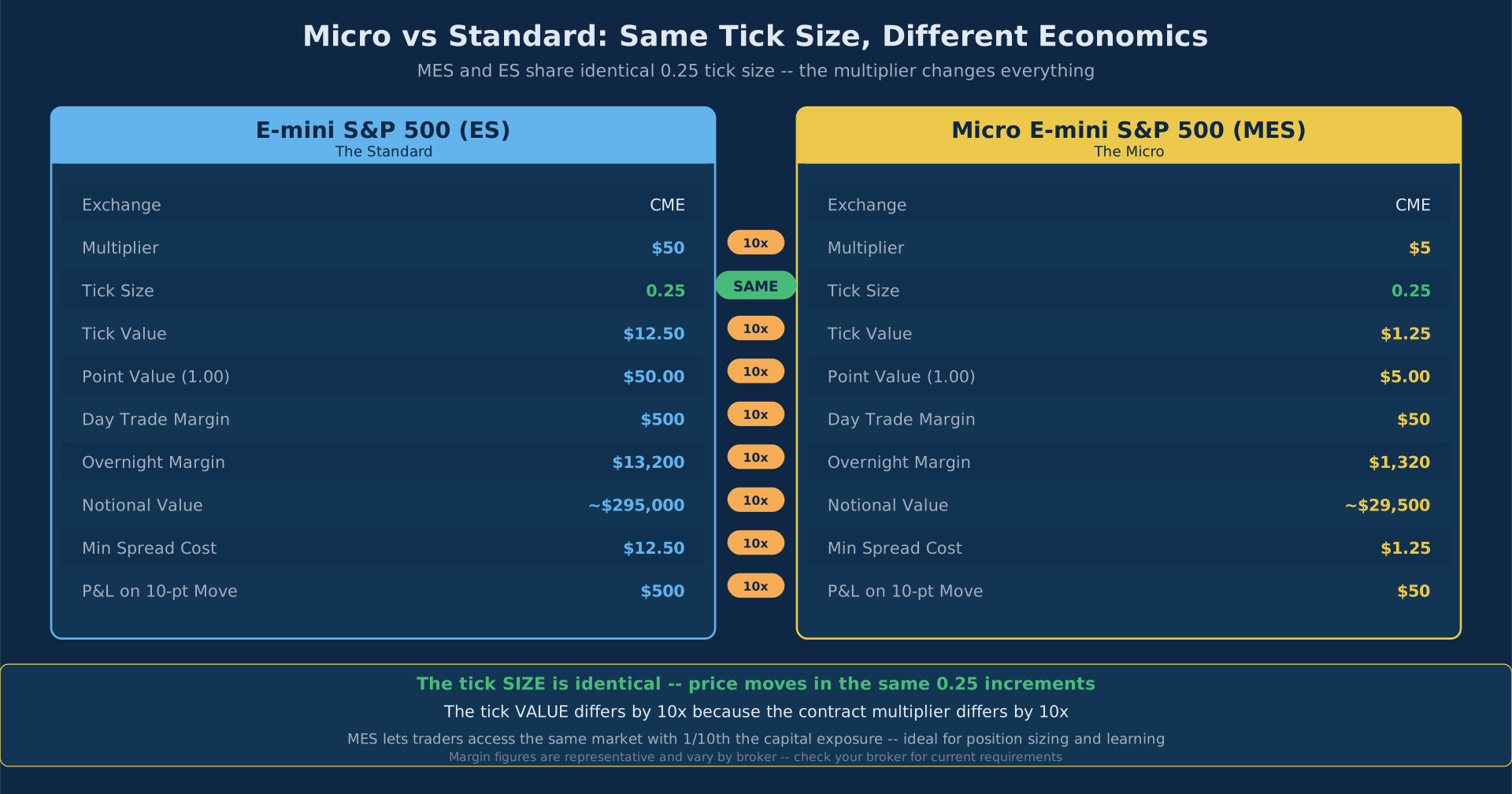
When CME launched micro futures in 2019, they solved a specific problem: retail traders wanted to trade the S&P 500 and Nasdaq futures but couldn't afford the tick value or margin of the full-size contracts. MES kept the same tick size as ES (0.25) but reduced the multiplier from $50 to $5, cutting the tick value from $12.50 to $1.25.
Same price discovery. Same chart. Same market hours. But 1/10th the capital impact per tick. This is how exchanges address the needs of different participant categories without fragmenting the underlying market — micro contracts reference the same index, providing price alignment while offering appropriate risk scaling.
Common Mistakes and How to Avoid Them #
Mistake #1: Confusing Ticks and Points #
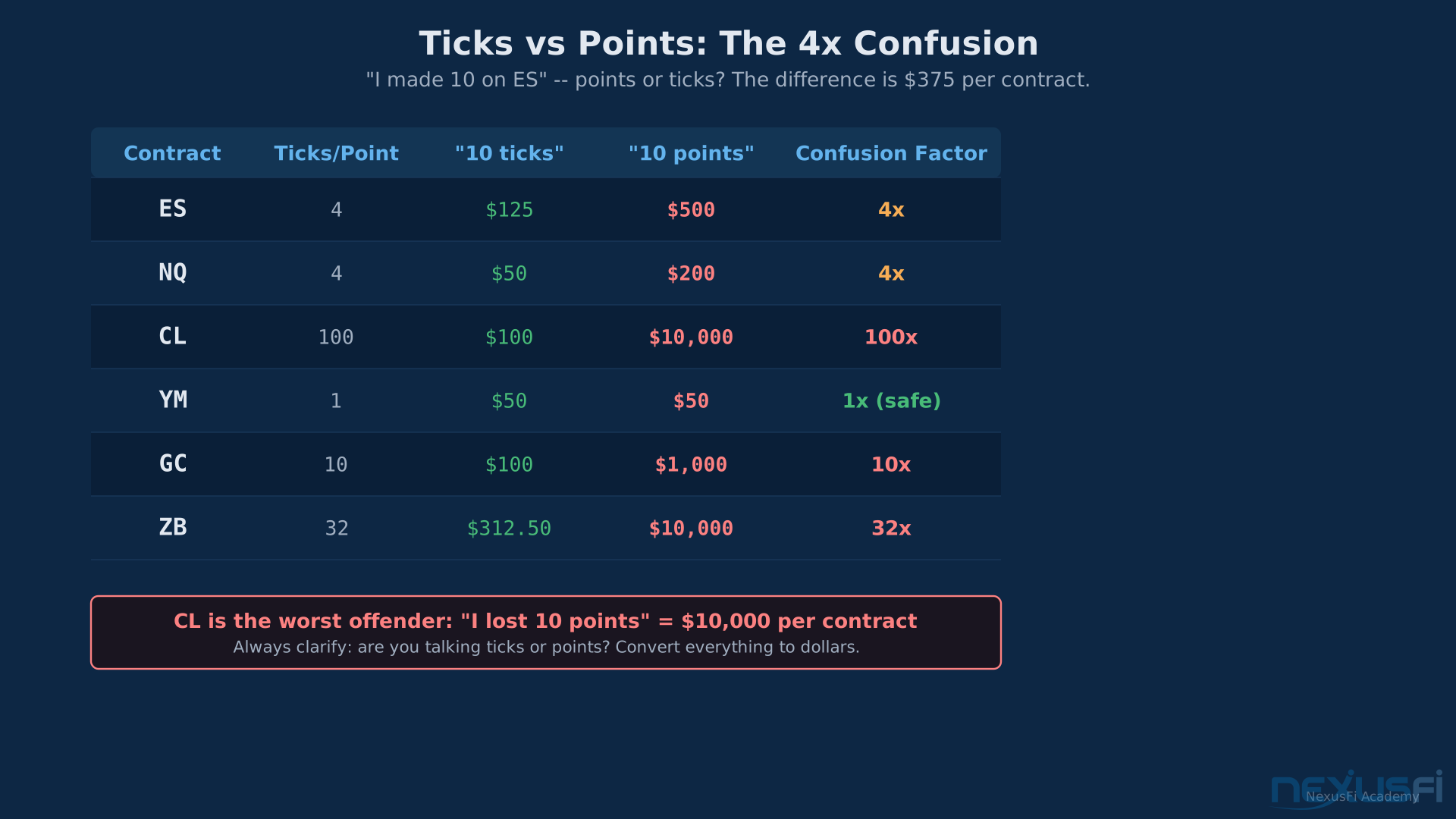
On ES, 1 point = 4 ticks. A "10-point move" is 40 ticks ($500 per contract). A "10-tick move" is 2.5 points ($125 per contract). When someone says "I made 10 on ES today," clarify whether they mean points or ticks — it's a 4x difference.
For YM (E-mini Dow), 1 point = 1 tick. There's no ambiguity. Each point is $5.
For CL, 1 point = 100 ticks ($1,000). A "dollar move in crude" sounds modest — it's $1,000 per contract.
Mistake #2: Using Tick Counts Across Contracts #
A "4-tick stop" is $50 on ES, $20 on NQ, $40 on CL, $5 on MES. Never compare strategies across contracts in tick terms. Always convert to dollar risk or percentage of account.
Mistake #3: Ignoring Tick Size in Backtests #
Historical backtests that don't account for tick-size constraints produce inflated results. If your backtest fills you at prices that can't exist on the tick grid, or assumes 0-spread fills, the real-world performance will disappoint.
Mistake #4: Forgetting About Off-Hours Spread Widening #
The 1-tick minimum spread that holds during regular hours often doesn't hold during globex evening sessions or around major news. If your strategy operates during these periods, your actual spread cost can be 2-5x the minimum. Factor this into expectancy calculations.
Mistake #5: Not Recalibrating After Tick Size Changes #
When CME changed the 6C tick size in 2016 or the 6E tick size in 2015, traders using fixed tick-count parameters in their algorithms suddenly had different dollar risk profiles. Any hard-coded tick-based logic needs immediate review after exchange specification changes.
The Measurement Framework #
If you want to evaluate how tick size affects your trading (or compare execution quality across contracts), track these metrics:
Spread Metrics:
- Average bid-ask spread during your trading hours (in ticks and dollars)
- Spread distribution (what % of time is spread at 1 tick vs. wider?)
- Effective spread (what you actually paid vs. what was quoted)
Execution Metrics:
- Fill rate for limit orders at specific tick offsets from mid
- Market order slippage distribution
- Partial fill frequency and average fill size
Cost Metrics:
- Total execution cost per round trip (spread + slippage + commission)
- Cost as percentage of average trade P&L
- Cost per tick of profit target (the ratio that determines minimum viable edge)
Summary #
Tick size defines the resolution of futures price movement. Tick value translates that resolution into dollars. Contract specifications create the structural framework within which all trading occurs.
Know your tick value cold for every contract you trade. This is the single most important number for risk management.
For retail futures traders, the practical takeaways:
- Calculate costs in dollars, not ticks. A "2-tick target" means nothing without the tick value context.
- Your minimum edge must exceed spread + commission + slippage. Tick value determines the dollar magnitude of that hurdle.
- When exchanges change tick sizes, immediately audit everything — stops, targets, algorithms, and backtests.
- Use the tick size table from the exchange website as your source of truth — platform defaults can be wrong, especially for newer contracts.
The exchange sets the rules. The tick grid is the playing field. Your job is to understand exactly how that grid translates into dollars for every position you take.
Knowledge Map
Prerequisites
Understand these firstGo Deeper
Build on this knowledgeReferences This Article
Articles that build on this topicCitations
- — Minimum tick movement vs 1 contract value (2011) 👍 2“Go to the source, which is the exchange If you look for accurate information, you should always go to the source of that information. The products for which you asked the tick size and tick value are traded at CME, NYMEX and ICE.”
- — MultiCharts, MultiCharts, MultiCharts... (2011) 👍 4“Until MultiCharts adds dictionary support for Zen Fire/Rithmic, you have to just do it manually. Be sure to voice your concerns to MultiCharts --- go to their project management site, MultiCharts Project Management and tell them you really need a sym...”
- — CL vs QM (crude oil) tick size/value, margins (2009) 👍 38“So a friend (George) and I were chatting via Skype today, and it got me looking at QM (emini) again compared to CL. I first looked at QM several months ago when I stopped trading ES and started trading CL.”
- — Expected slippage vs order size (2010) 👍 8“Slippage occurs with market orders only. If you use limit orders there will be positive slippage. In case you enter a market order, there are different cases to consider: What causes slippage? (a) Your order size exceeds the number of contracts avail...”
- — Wrong tick size? (2022) 👍 1“https://www.cmegroup.com/markets/interest-rates/stirs/30-day-federal-fund.contractSpecs.html MINIMUM PRICE FLUCTUATION 1/2 of one basis point (0.005) = $20.835 Beginning at 5:00 p.m.”
- — ZT and ZF questions please ...... (2020) 👍 2“You have the Interest Rate tick value incorrect for ZT. They are both $7.8125 according to CME data sheets ZT - The minimum price fluctuation is one-eigth of 1/32nd, so priced in 1/256ths of a tick or 0.00390625 - https://www.cmegroup.”
- — CME reducing tick size of 6E EURUSD futures (2016) 👍 3“I don't see that this makes any difference in how it is traded or whether one chooses to trade the 6E or E7. A stop of say 0.2 cents will still have the same monetary value, it will just be a a 40 tick move instead of a twenty tick move. And a 0.”
- — Grantx intro (2016) 👍 1“Futures works in something called ticks. It is analogous to pips in Forex but they have a fixed $ value. The ES for example moves in ticks of 0.25. This means that the price will move from 2182.00 to 2182.25 to 2182.50 when moving up for example.”
- — Robots Unleashed - a beginners algotrading journey (2021) 👍 2“Agree never really understood QM. At half the size of CL it doesn't give the granularity you would like (E7 (USDEUR), J7 (USDJPY), QO (GC), QI (SI) are all half size contracts as well so guess that was the trend years ago) and the tick size is horrib...”
- — E-mini S&P 500 Futures Contract Specifications (2024)
- — CME FX Product Guide 2026 (2026)