



Nikkei 225 (NKD) Futures: The Complete Trading Guide for US Evening Sessions
Overview #
The Nikkei 225 futures contract (NKD) is CME Group's gateway to Japanese equity markets — a cash-settled index future on the world's third-largest stock market, denominated in Japanese yen, and traded nearly 24 hours a day on CME Globex. For US traders, NKD represents something ES and NQ can't: a liquid, institutional-grade equity future that comes alive during US evening hours, offering eight more hours of trading opportunity after the American cash session closes.
But NKD is not just "Japan's S&P 500 with a time zone shift." It carries a layer of complexity that trips up traders who approach it with only US futures experience: the yen denomination means every position has implicit currency exposure, the Bank of Japan can move the contract 500 to 1,000 points in an afternoon with a single policy surprise, and the correlation with ES that seems stable in calm periods can evaporate entirely when Japanese macro data dominates. NexusFi member eventtrading captured the character well: "NKD is a powerhouse; he'll lead the US market as well as follow. Yesterday DJI fell 700+ points and it all started with NKD in Tokyo — he opened at the high of the day and never looked back."
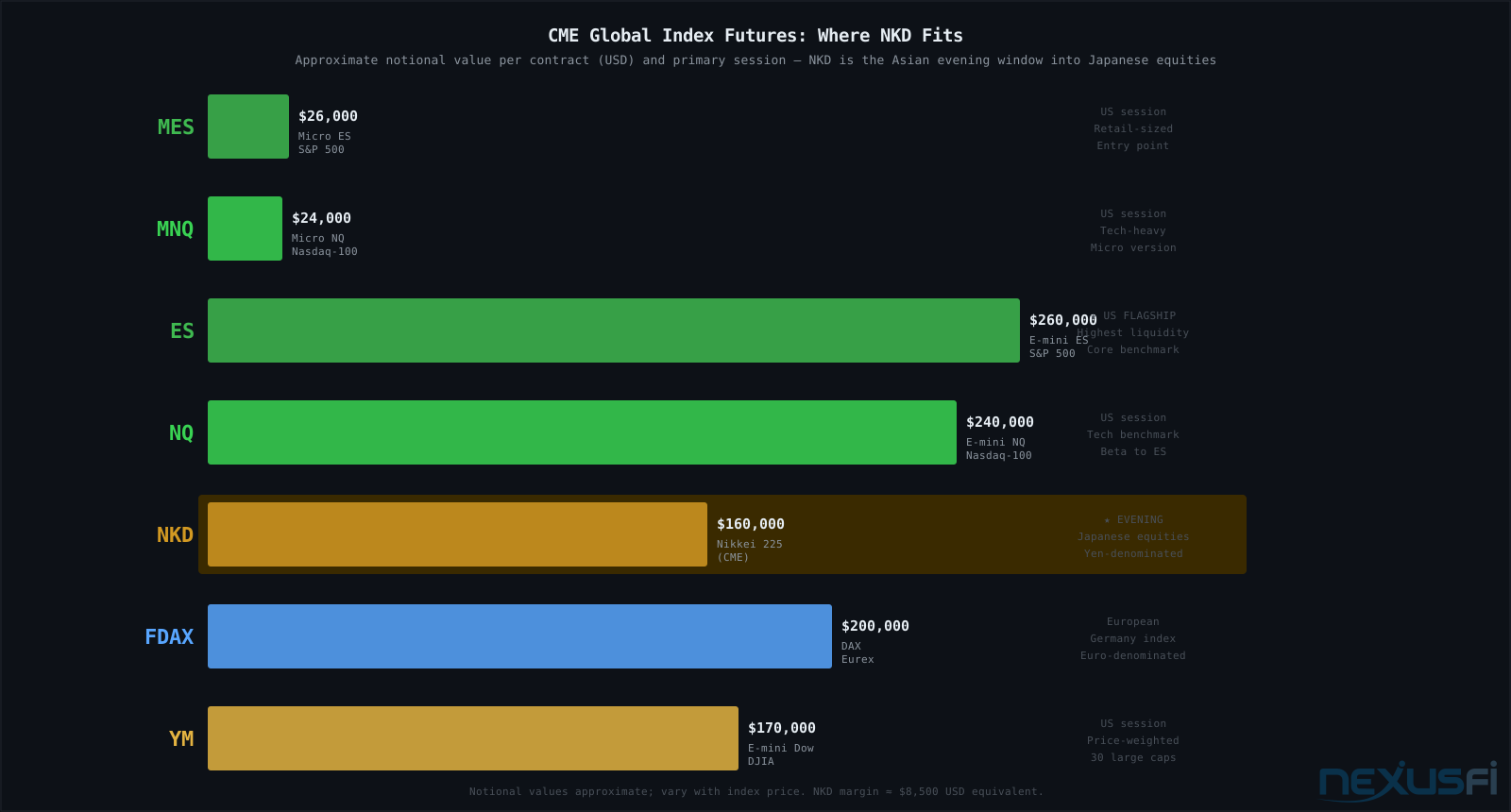
This guide covers everything you need to trade NKD from the US: contract specifications, the critical USD/JPY relationship, market drivers, the choice between CME NKD and the more liquid Osaka MJNK, correlation dynamics with ES and NQ, session-specific strategies, and the risk management framework the yen layer demands.
What Is the Nikkei 225? #
The Nikkei 225 is Japan's benchmark stock index, tracking 225 large companies listed on the Tokyo Stock Exchange. Unlike the S&P 500 (which is market-cap weighted), the Nikkei 225 is price-weighted — like the Dow Jones Industrial Average. A higher-priced stock influences the index more than a lower-priced one, regardless of company size. This means a single stock with a high share price, like Uniqlo parent Fast Retailing or Tokyo Electron, can drive large Nikkei moves.
The index covers Japan's largest companies across multiple sectors: semiconductors (Tokyo Electron, Advantest), automotive (Toyota, Honda), technology (Sony, SoftBank, Fujitsu), retail (Fast Retailing), and financials (Mitsubishi UFJ, Nomura). The price-weighted structure creates volatility characteristics different from the cap-weighted US indices — a sharp move in one expensive stock can produce larger index point swings than an equivalent move in a hundred cheaper stocks.
CME NKD Contract Specifications #
The CME NKD contract gives US traders direct exposure to the Nikkei 225 without needing a Japanese brokerage account. Key specifications:
Contract size: ¥100 × the Nikkei 225 index level. At a Nikkei level of 38,000, one contract represents ¥3,800,000 (approximately $26,500 USD at ¥143/USD).
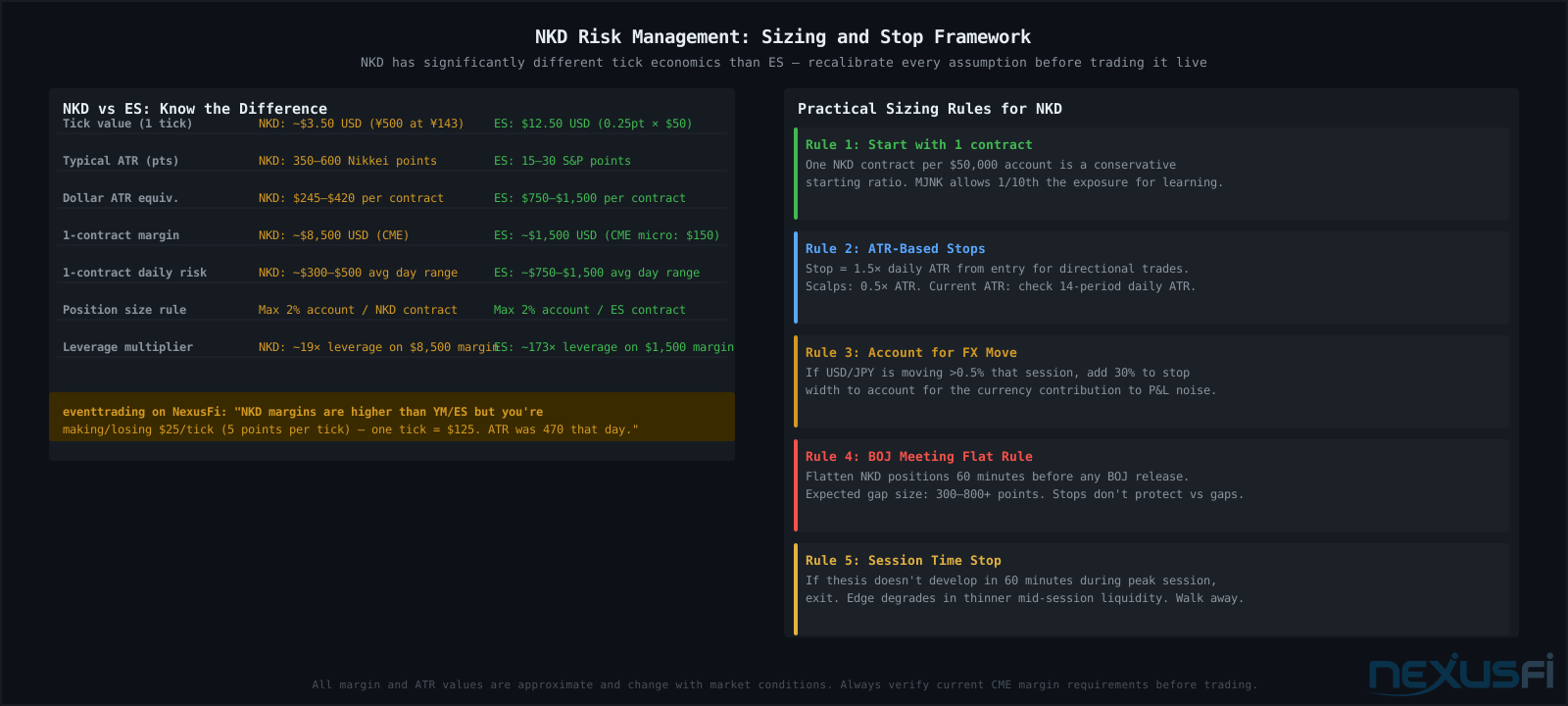
Tick size and value: 5 Nikkei points = ¥500 per tick per CME Micro E-mini Nikkei 225 contract specifications. At ¥143/USD, that's approximately $3.50 per tick. Note that this is much smaller in dollar terms than an ES tick ($12.50) — but NKD's larger daily point range means the dollar volatility still accumulates quickly. A 500-point move equals ¥50,000 or approximately $350.
Settlement: Cash-settled in Japanese yen based on the official Nikkei 225 closing price. Unlike physically-delivered commodity futures, there are no delivery obligations — positions are simply marked to the settlement price.
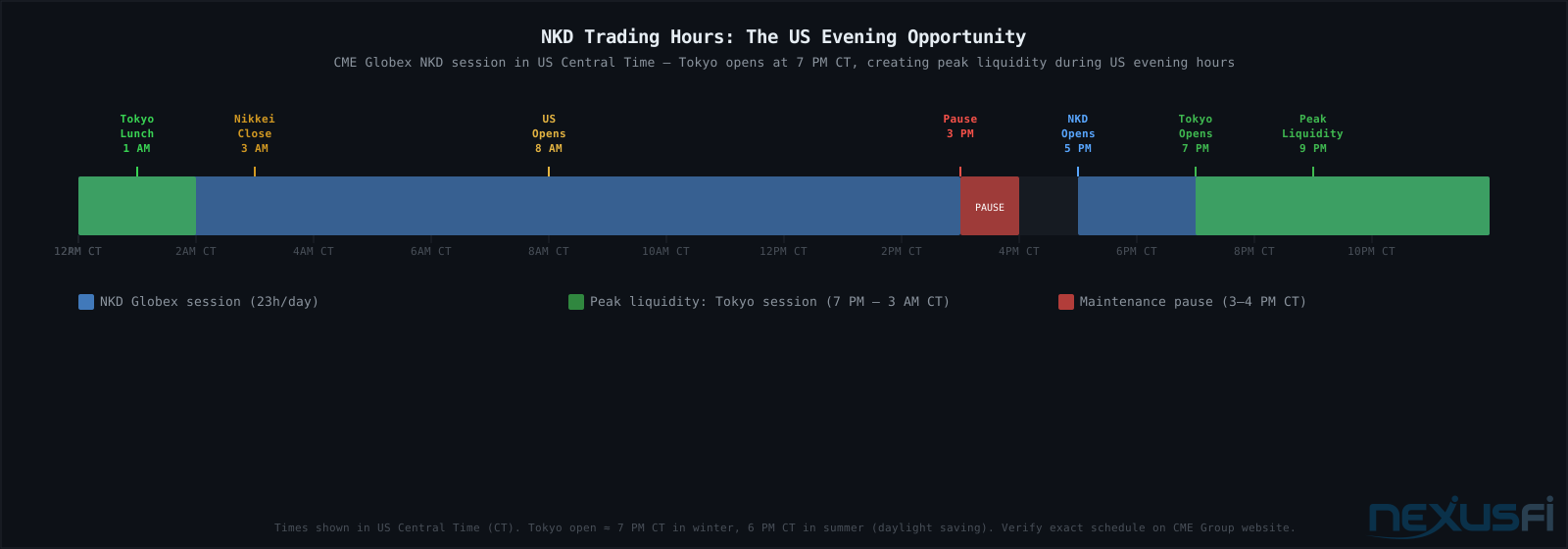
Trading hours: CME Globex provides nearly 23 hours of continuous trading: 5:00 PM CT to 3:00 PM CT (next day), with a 60-minute maintenance pause from 3:00 PM to 4:00 PM CT daily.
Expiration: Quarterly contracts (March, June, September, December), expiring the Thursday before the second Friday of the expiration month, with final settlement against the Nikkei 225 special quotation (SQ) price.
Margin requirements: Initial margin runs approximately $8,000--$10,000 USD equivalent (varies with CME's dynamic margin model). Always verify current requirements at CME Group's Micro E-mini Nikkei 225 page before trading — they adjust with volatility regimes.
CME NKD vs Osaka MJNK: Choosing the Right Contract #
Many experienced NKD traders eventually migrate to the Osaka Exchange Mini-Nikkei contract (MJNK) instead of or in addition to the CME NKD. The two contracts are economically similar but serve different purposes.
The CME NKD is designed for institutional hedging and US-dollar-based portfolio exposure. Settlement is handled through CME's clearing infrastructure, and the contract is accessible through any CME-connected broker. Volume runs several thousand contracts per day — sufficient for most retail-sized positions but thin by institutional standards.
The MJNK (CQG symbol: MJNK) trades on the Osaka Exchange, part of Japan Exchange Group (JPX). It is, by a significant margin, the most liquid futures contract in Asia: volume regularly exceeds one million contracts per day — comparable to ES in the US. NexusFi member and experienced Asian session trader josh — who trades the Nikkei three to five evenings per week — describes the depth:
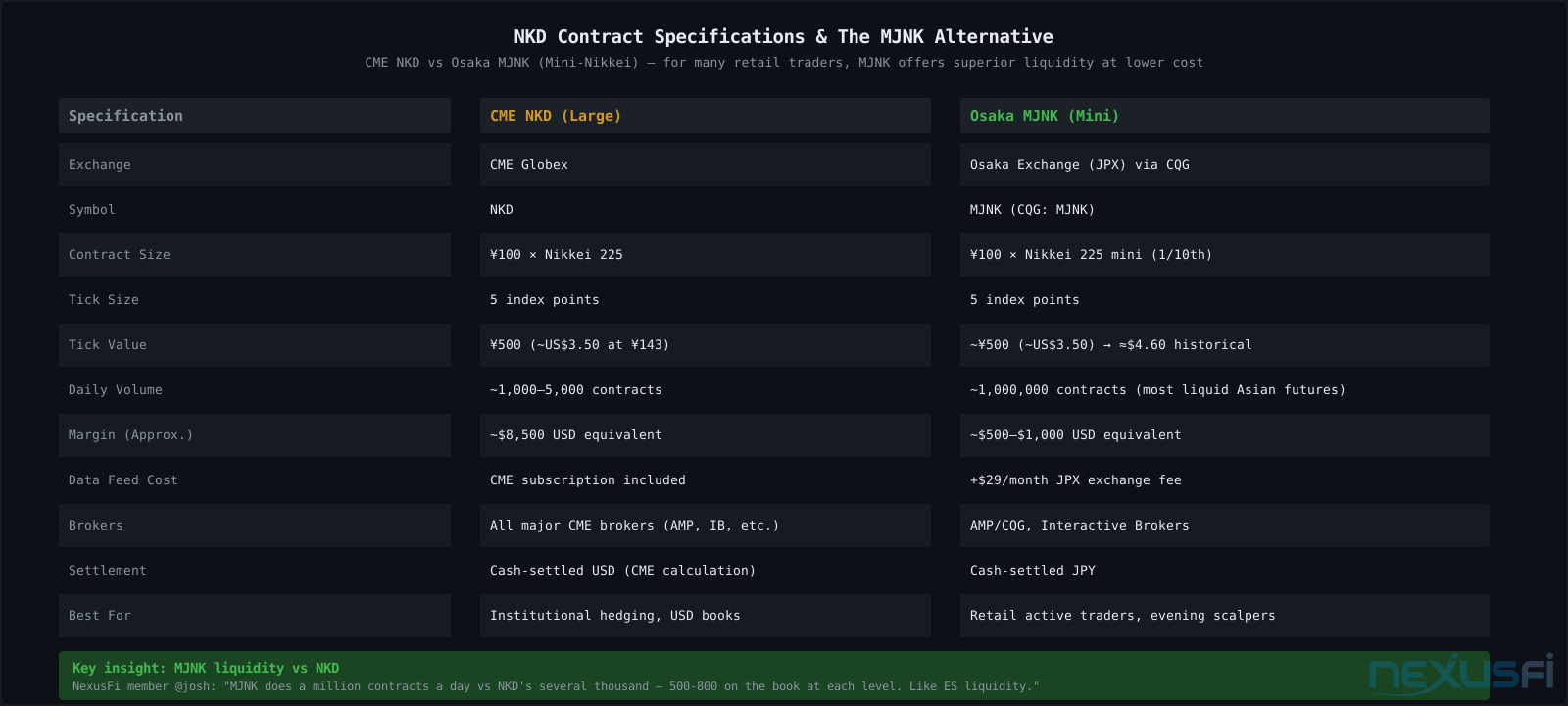
The tradeoff: MJNK requires a JPX data subscription (typically $29/month additional) and is accessible primarily through CQG-connected brokers like AMP Futures and Interactive Brokers. The lower margin requirement (~$500--$1,000 vs $8,500+ for NKD) makes it far more practical for retail traders who want to learn the Nikkei without large capital requirements.
Practical guidance: If you are trading from the US and want to learn the Nikkei market, MJNK at a CQG broker (AMP Futures is commonly used on NexusFi) is generally the better starting point due to liquidity and lower capital requirements. Migrate to CME NKD if you need USD-settlement or institutional-grade reporting.
For US retail traders learning NKD, MJNK at a CQG broker (AMP Futures) is the better starting point: superior liquidity (1M+ contracts/day vs NKDs several thousand), $500 margin per contract vs NKDs $8,500+, and $4.60 per tick makes position sizing far more manageable for smaller accounts.
The Yen Connection: The Layer Most Traders Miss #
NKD is quoted and settled in Japanese yen. This creates a fundamental difference from trading ES or NQ: every NKD position is simultaneously an exposure to both Japanese equities AND the USD/JPY exchange rate. Miss this layer and you'll be regularly surprised by results.
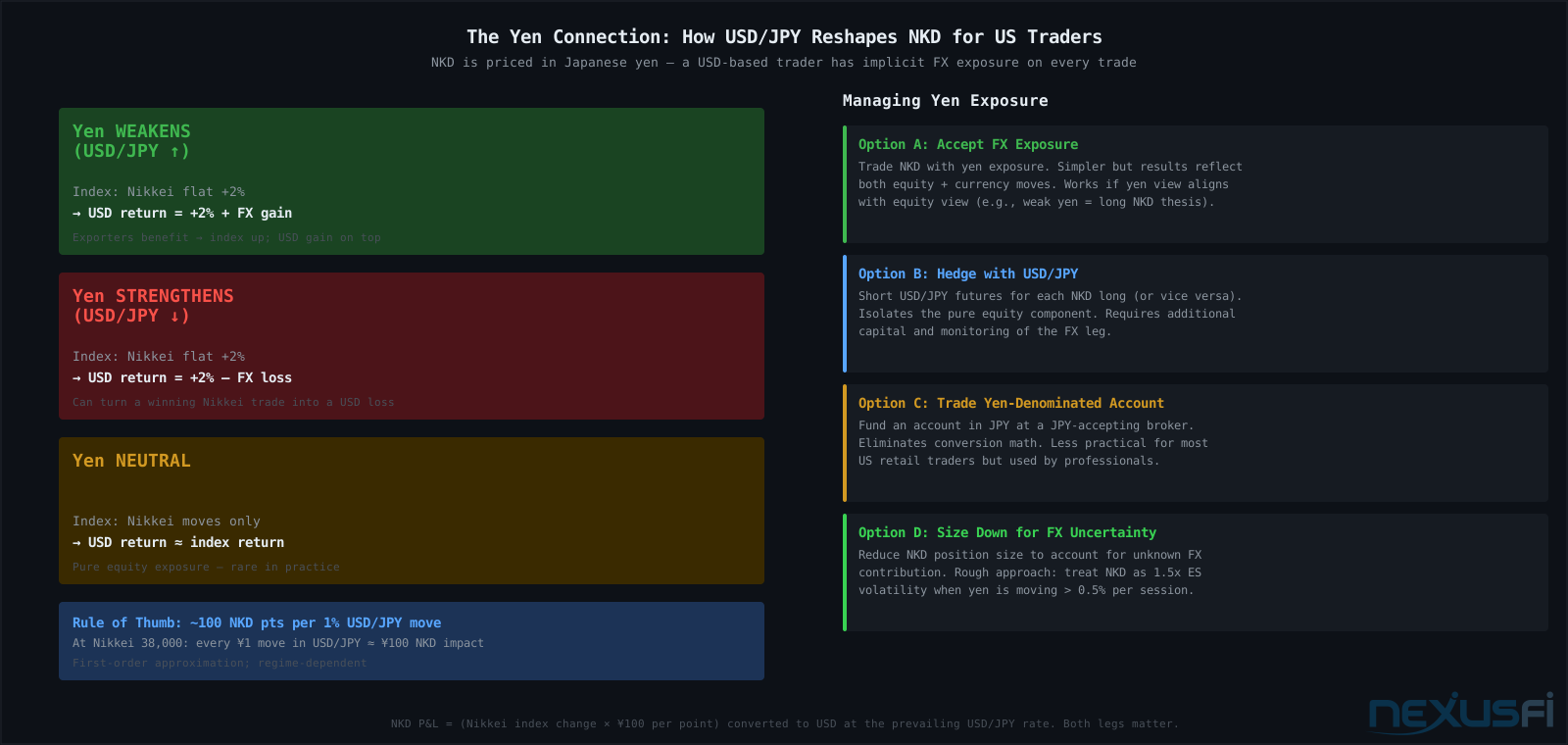
The mechanism works like this: if you hold one NKD long contract overnight and the Nikkei rises 200 points, your gain in yen terms is ¥20,000 (200 points × ¥100 per point). But your actual USD gain depends entirely on where USD/JPY settles when you close. Research from the New York Fed's Liberty Street Economics found that roughly half of Nikkei movements can be ascribed to USD/JPY changes — when yen weakens, Japanese exporting firms' dollar-denominated earnings rise, driving the index higher. If the yen strengthened (USD/JPY fell), your USD return is reduced, possibly to zero or negative even on a winning Nikkei trade.
The rule of thumb: every 1% move in USD/JPY corresponds to approximately 100 Nikkei points of impact at current index levels. With Nikkei around 38,000--40,000, a 0.5% yen move (~70 points in USD/JPY terms) can match the entire NKD day range. Yen moves are not noise — they are the second P&L leg.
The relationship between yen and NKD also has a fundamental driver: Japanese exporters (Toyota, Sony, Honda) earn revenue globally but report in yen. A weaker yen inflates their reported earnings, driving the index higher. Conversely, a sudden yen strengthening pressures exporter stocks, which make up a large portion of the Nikkei's weighting. This creates a self-reinforcing dynamic: USD/JPY moves and NKD index moves often align directionally.
Options for managing yen exposure:
- Accept it: Trade NKD with full yen exposure. Simpler but results reflect both equity and currency moves. Works if your yen view aligns with your equity view.
- Hedge with USD/JPY futures: Short USD/JPY futures for each NKD long to isolate pure equity exposure. Requires additional capital and active management of the FX leg.
- Size down: Treat NKD as having 1.5× the effective volatility of ES when yen is active. Reduce position size proportionally.
- Use yen-denominated accounts: Some brokers allow JPY-funded accounts, eliminating the conversion math entirely -- most practical for professional setups.
For US traders looking to express a pure yen view without the equity layer, the Japanese Yen futures contract (6J) on CME is an alternative. As NexusFi member srgtroy noted in the "Is trading NKD the best choice for evening trading?" thread: "USD/JPY or 6J can have some decent moves in the Asian session — sometimes it's like watching the grass grow, other times not." The 6J offers pure FX exposure when you have a yen directional view but want to avoid the Nikkei equity component entirely.
Key Market Drivers #
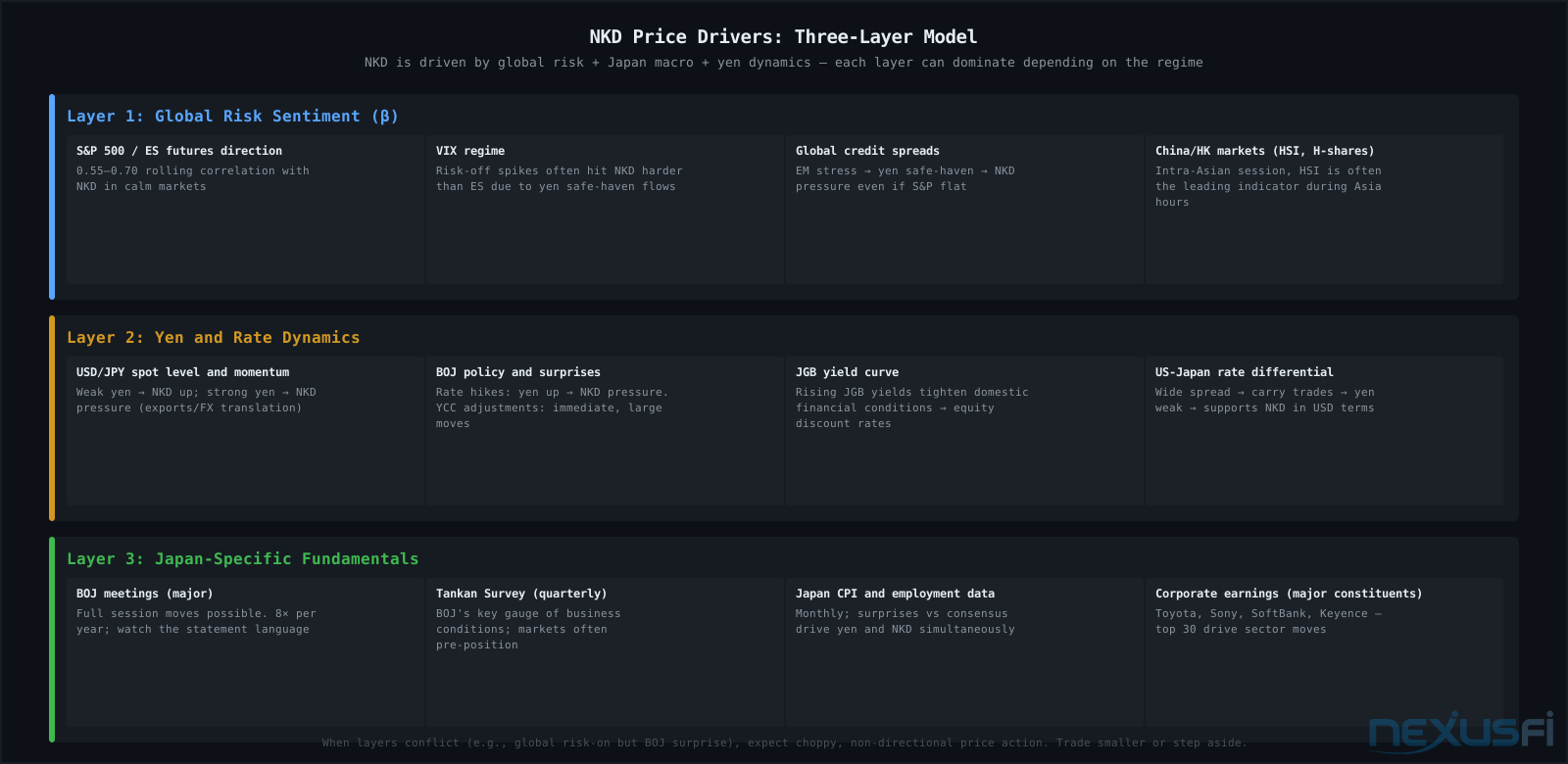
NKD is driven by three overlapping layers: global risk sentiment, yen and rate dynamics, and Japan-specific fundamentals. Each layer can dominate depending on the regime, and when they conflict, expect choppy non-directional price action.
Layer 1: Global Risk Sentiment
During broad risk-on or risk-off periods, NKD tracks global equities closely. The rolling 30-day correlation with ES typically runs 0.55--0.70 in normal markets, rising above 0.80 during strong trending periods. In these regimes, NKD responds to the same drivers as US indices: Fed policy surprises, earnings season momentum, macro growth data. For US-based ES traders, this layer is familiar ground.
One distinctive Asian market signal worth monitoring: the Hang Seng Index (HSI) from Hong Kong often leads NKD during the Asian session. josh from NexusFi, who trades the Nikkei three to five evenings per week, noted: "Currently, when the HSI futures open at 8:15 ET, it's the #1 driver, and both US futures and Nikkeis are taking cues from it. Look for the driver: gauge how safe haven assets trade — bonds, yen, bunds, gold." During periods of China-driven risk concerns, HSI can dictate NKD direction more forcefully than ES.
Layer 2: Yen and Rate Dynamics
As discussed above, USD/JPY is the most critical secondary driver. Beyond the spot level, the US-Japan interest rate differential matters: when US yields are much higher than Japanese yields (as they were in 2022--2024), carry trade flows sell yen to buy dollars, keeping the yen weak and providing structural support to NKD in USD terms. Any sudden compression in that differential — from BOJ hikes or US rate cuts — triggers carry trade unwinding, sharp yen appreciation, and NKD pressure.
The Bank of Japan's yield curve control (YCC) policy, periodically adjusted through 2023--2024, created some of the largest single-session NKD moves in years. Understanding the current BOJ policy framework is not optional background research — it is front-line risk management.
Layer 3: Japan-Specific Fundamentals
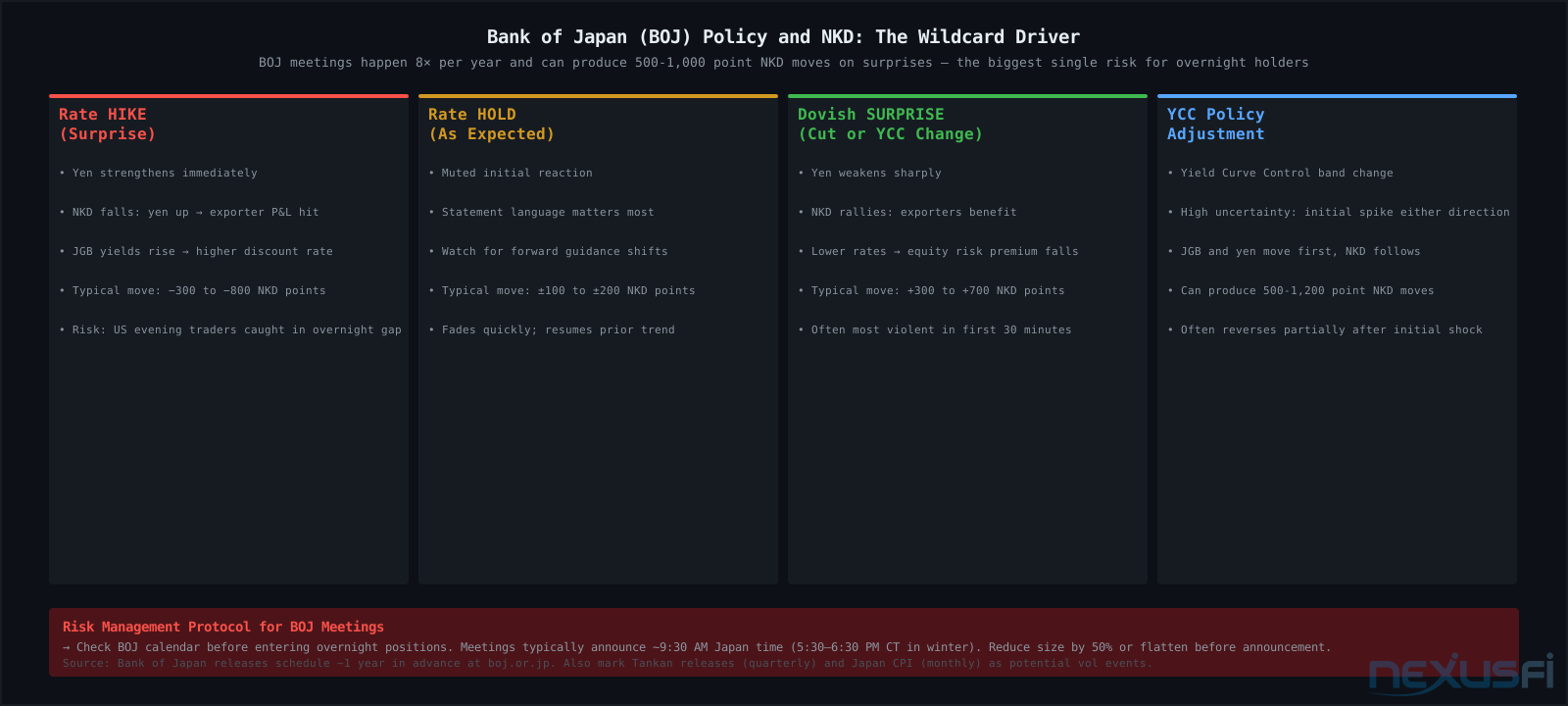
Never hold unhedged NKD positions into BOJ announcements -- gap risk can exceed 500-800+ points and stop orders will not protect you. Flatten 60 minutes before any BOJ release. The December 2022 YCC band adjustment saw Nikkei futures drop 4.3% in five minutes on a policy shift no one expected.
BOJ meetings (8 per year): The most powerful trigger for NKD. Rate decisions, YCC band adjustments, and forward guidance changes can produce 500--1,000+ point moves in one session. The BOJ publishes its meeting schedule approximately one year in advance at boj.or.jp. Mark every meeting date.
Tankan survey (quarterly): The BOJ's key business confidence survey, released in January, April, July, and October. Markets pre-position around consensus expectations. Surprises vs consensus drive immediate NKD moves.
Japan CPI (monthly): Inflation data matters more for Japan now than at any time in decades following the 2021--2024 inflation regime. Higher-than-expected CPI raises BOJ rate hike expectations, which typically strengthens yen and pressures NKD.
Corporate earnings: The top 30 Nikkei constituents (Toyota, SoftBank, Sony, Keyence, Shin-Etsu, Fast Retailing, Tokyo Electron) drive sector-specific moves during earnings seasons (January--February and July--August primarily).
US Evening Session Strategy #
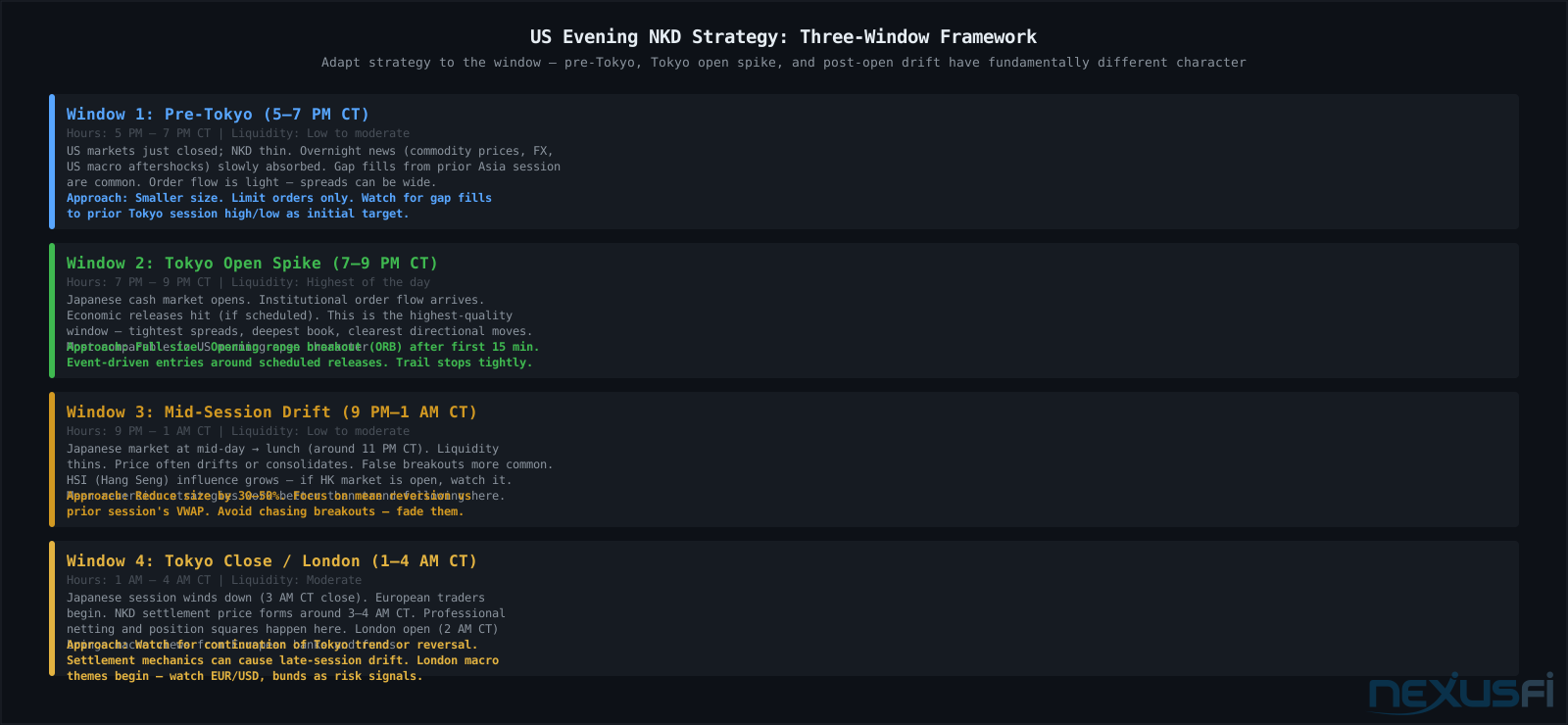
The primary opportunity for US-based NKD traders is the evening session — the period from 5 PM CT to roughly midnight CT that covers the pre-Tokyo period, the Tokyo open, and the first portion of the Japanese trading day. This session has a distinct character from mid-day and requires different strategy approaches in each phase.
Pre-Tokyo Window (5--7 PM CT)
This period opens as US equity markets close. NKD liquidity is thin. Price digests the US close, overnight news (commodity prices, FX, US macro aftershocks), and any gap fills from the prior Asian session. Order flow is light and spreads can be wide. Best approach: smaller size, limit orders only, watch for gap fills to prior Tokyo session extremes as initial targets. Do not chase breakouts in this window.
Tokyo Open Window (7--9 PM CT)
The Japanese cash market opens around 7:00 PM CT (US winter) / 6:00 PM CT (US summer). This is the highest-quality window of the Asian trading day — institutional order flow arrives, scheduled economic releases hit, and the book deepens. This session has comparable character to the US morning open: strongest trend signals, tightest spreads, most reliable technical patterns. Opening range breakout (ORB) strategies work well here: set the range using the first 15 minutes after 7 PM CT, enter breaks of range high or low on pullbacks, and target 1.5× the range width with a stop at the opposite range extreme.
Key session inflection points are worth memorizing before trading live capital. NexusFi Elite member josh — who trades the Nikkei and HSI five evenings per week — maps the Asian session precisely: Japan cash opens at 7 PM CT; China and Hong Kong follow at 8:15 PM CT; Japan goes to lunch at 9:30 PM CT (futures still trade, but thin); HSI futures halt entirely during China's lunch from about 11 PM to midnight CT — expect Nikkei to go quiet in that window; Nikkei closes at 1 AM CT when European bond markets open; European cash equities start at 2 AM CT. Each transition creates a distinct behavioral shift. As josh notes: "It requires this understanding and patience to stick with a trade, and to try to recognize when a move in another market is going to pull another one along."
Mid-Session (9 PM -- 1 AM CT)
The Japanese market goes into its lunch break around 11 PM CT. Liquidity thins much. False breakouts become common and trend-following strategies get punished. This is mean-reversion territory: fade extreme deviations from session VWAP (calculated from the Tokyo open), targeting a return to VWAP rather than a trend continuation. Reduce position size by 30--50% versus the Tokyo open window. Use a 60-minute time stop — if the thesis hasn't played in an hour, exit.
FuturesTrader71 (FT71) — responding to a NexusFi thread about the MJNK contract — noted the contract's volatility character: "Looking at average price per 1-min bar, it looks to trade a VP a lot like crude oil. Seems like it is not for the faint of heart." This characterization captures something important: the rotational violence in NKD during thin hours can exceed what US equity index traders expect.
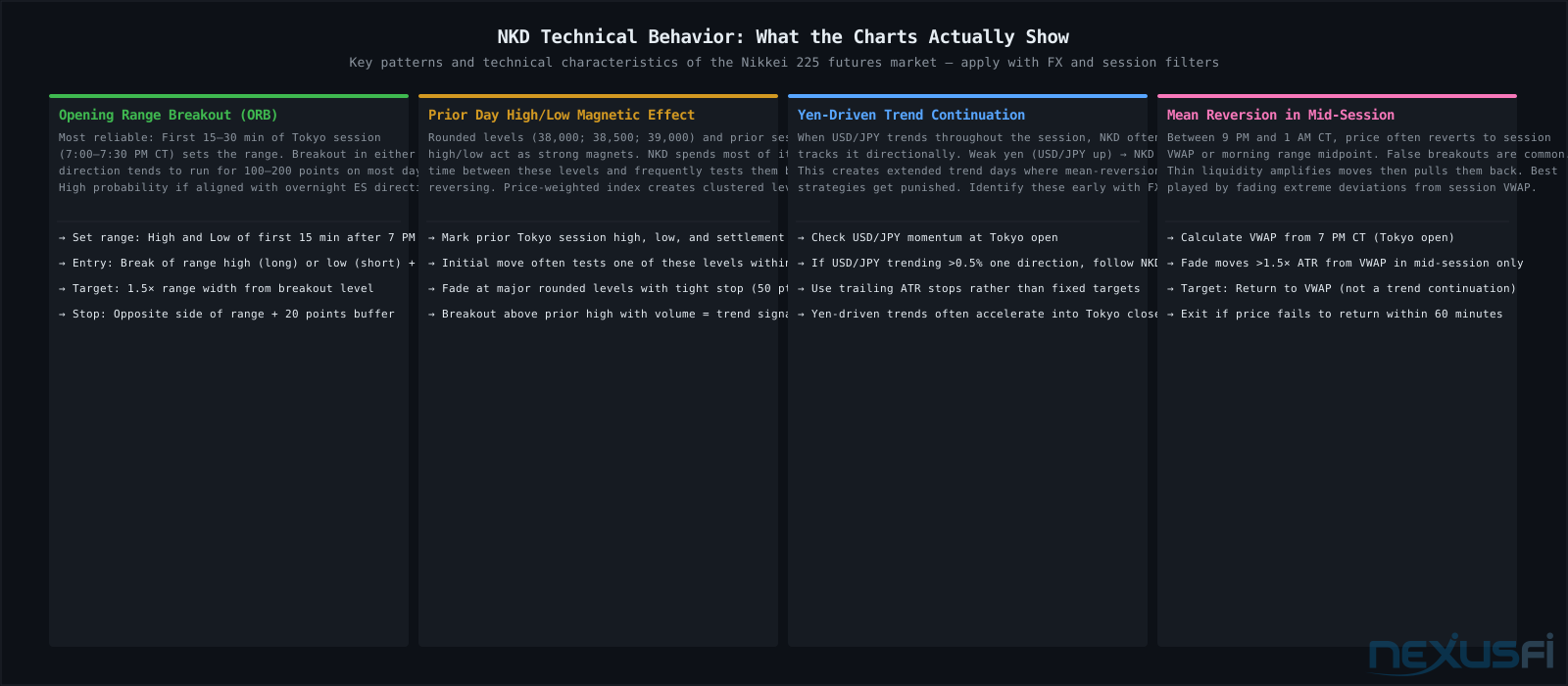
Tokyo Close / London Opening (1--4 AM CT)
The Japanese session winds down around 3 AM CT. Professional position squaring and institutional netting happen here. London opens around 2:00 AM CT, bringing European macro views — watch EUR/USD and German Bunds as risk signals from this window. The settlement price for the NKD official close forms in this window; strategies targeting the settlement reference price are common among arbitrageurs.
Correlation With ES and NQ #
The correlation between NKD and ES is real but not stable. In normal, risk-on market conditions, the rolling 30-day correlation typically runs 0.55--0.70. During strong global equity rallies or selloffs, this correlation can rise to 0.80+. But after a BOJ policy surprise or a sudden yen move, the same correlation can drop to 0.20--0.30 as the Japan-specific currency layer dominates.
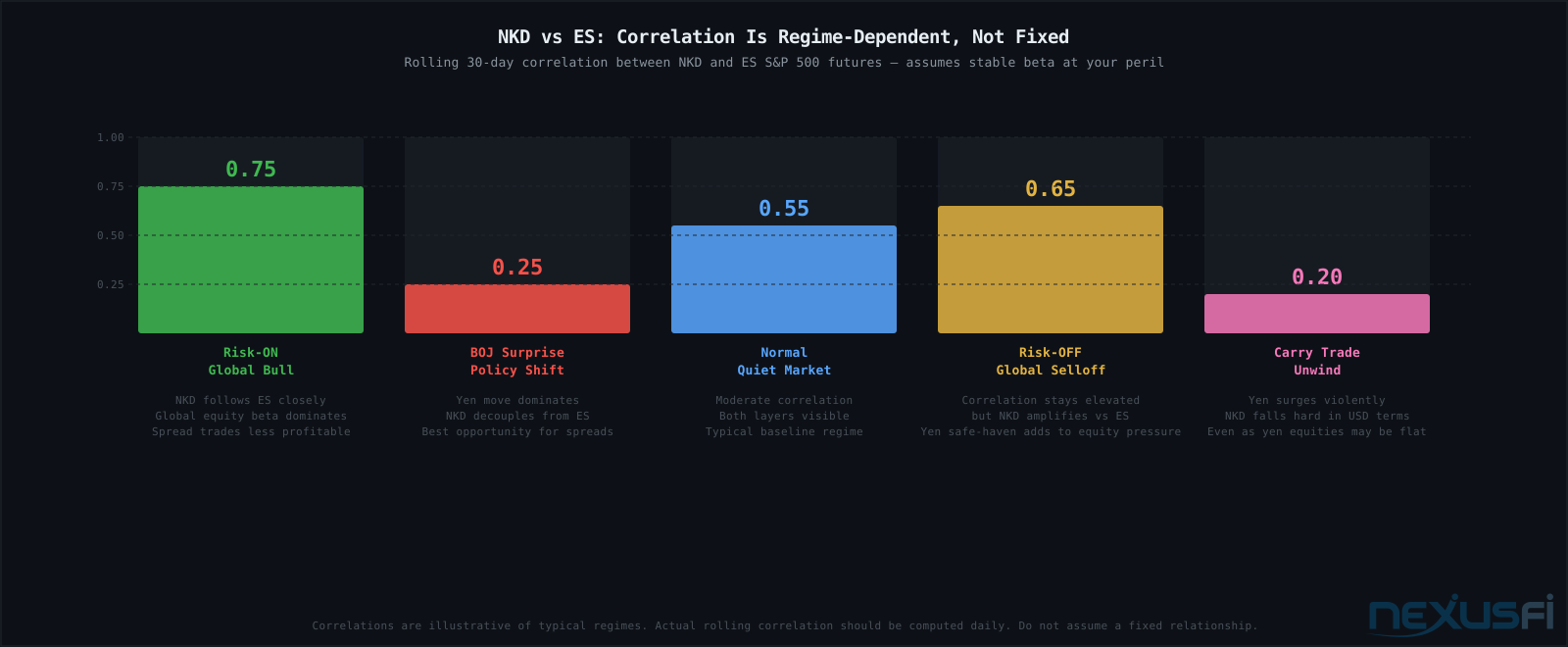
This regime-dependence matters for US traders who use NKD as a correlation-based tool: pairs trades (long ES, short NKD or vice versa) that assume a stable correlation will periodically get hit hard by BOJ-driven decoupling. The appropriate risk management is to use rolling correlation estimates (20--30 day windows) rather than historical averages, and to treat any correlation below 0.35 as a signal to reduce or eliminate spread positions until the regime resolves.
Beta to SPX typically runs 0.8--1.1 in calm periods, dropping below 0.6 during risk-off phases. NKD does not offer the same defensive characteristics as ZB or ZN during equity selloffs — yen safe-haven flows may stabilize NKD from the FX side even as the equity component falls.
Intraday Volatility Patterns #
NKD's volatility profile follows a pattern that mirrors the Japanese trading day and differs much from US futures. The highest volatility occurs in the first 2 hours after the Tokyo open (7--9 PM CT), where daily standard deviation runs 35--50 Nikkei points per hour. This compresses through the Japanese mid-day to 12--18 points per hour during the thin 11 PM to 1 AM CT period, then picks back up modestly around the Tokyo close and London open.
:::info Key Numbers
- Tokyo open window (7--9 PM CT): 35--50 Nikkei points per hour
- Thin mid-session (11 PM — 1 AM CT): 12--18 Nikkei points per hour
- Tokyo close / London open: modest pickup from baseline
- Settlement spike (3--4 PM CT): anomalous daily volatility burst from settlement price formation
:::
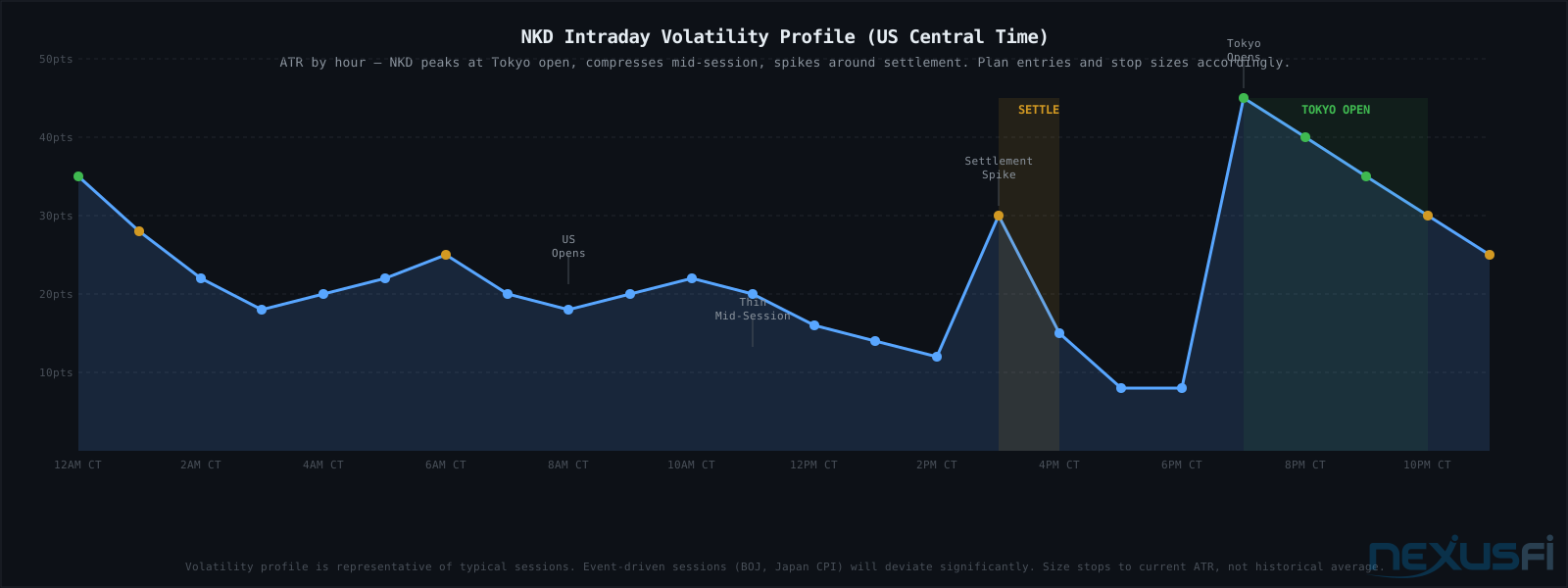
The settlement window (3--4 PM CT) shows an anomalous daily spike — settlement price formation and professional position adjustments create a daily burst of activity before the 60-minute maintenance pause.
Seasonal patterns are meaningful: Q1 (January--March) and Q4 (October--December) show higher volatility from Japanese year-end portfolio rebalancing, earnings activity, and BOJ review periods. July--August and Golden Week (late April to early May) are typically the quietest periods. During these low-volatility windows, widening NKD ATR-based stops reduces false triggering.
Getting Started: Pre-Trade Checklist #
NKD trading requires preparation that ES and NQ experience alone doesn't cover. Complete this checklist before trading live capital:
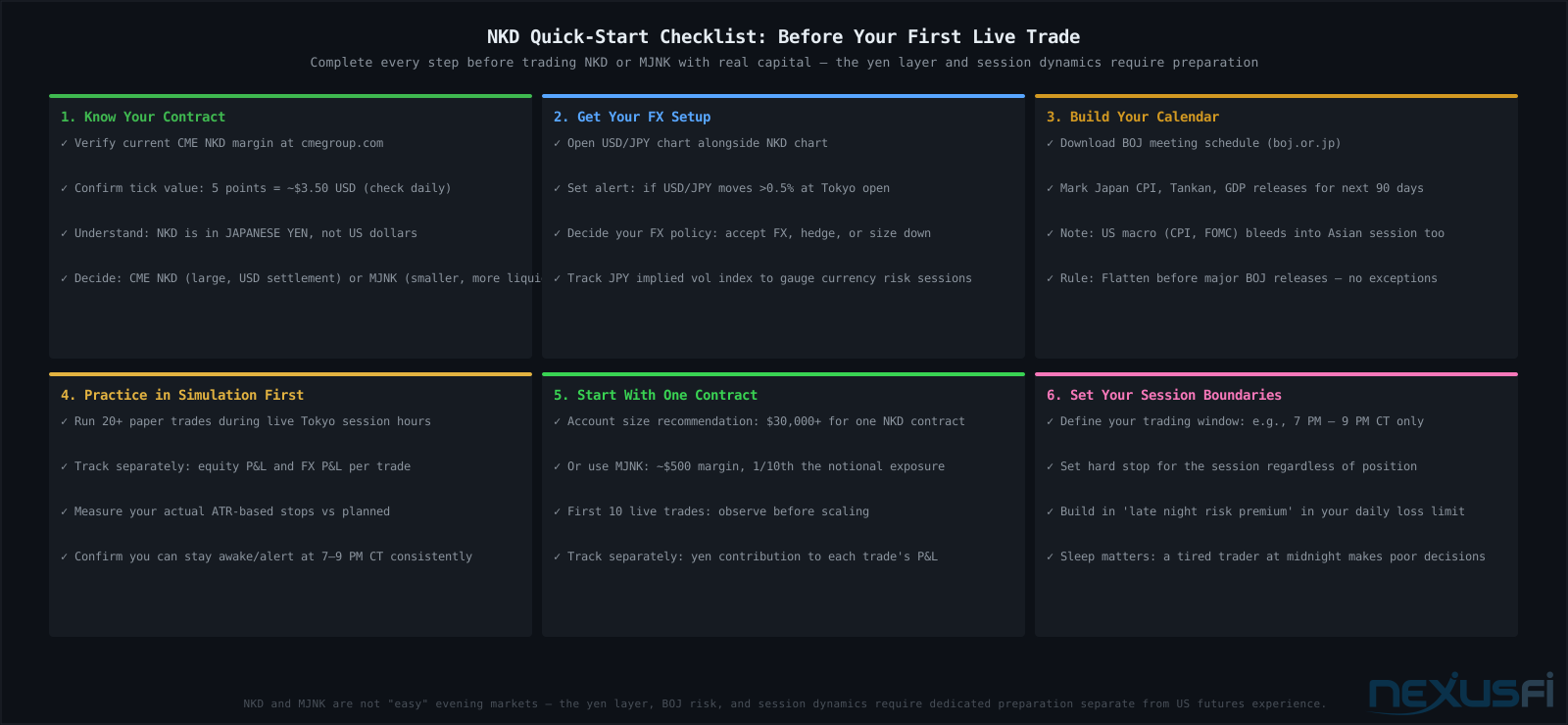
1. Know your contract. Verify current CME NKD margin at cmegroup.com. Understand that the contract is priced in Japanese yen — your P&L is converted to USD at the prevailing rate. Decide whether you're starting with CME NKD or MJNK (for better liquidity at lower margin requirements).
2. Set up your FX window. USD/JPY must be on your screen alongside NKD. Set an alert for USD/JPY moves exceeding 0.5% at the Tokyo open. Track the yen direction before entering any trade.
3. Build your macro calendar. Download the BOJ meeting schedule from boj.or.jp. Mark Tankan releases, Japan CPI, and GDP dates. Apply a firm rule: flatten NKD positions 60 minutes before any BOJ release. Gap risk on BOJ surprises can exceed 500--800+ points — stop orders will not protect you.
4. Paper trade the Tokyo session first. Run at least 20 simulated trades during live Tokyo session hours (7--9 PM CT) before committing real capital. Track your equity P&L and FX P&L separately to understand the yen contribution. Confirm you can maintain alertness and decision quality at those hours consistently.
5. Size conservatively. For the CME NKD, a rule of thumb for new traders is one contract per $40,000--$50,000 account. For MJNK, the lower margin allows learning at approximately $500 per contract, making it much more practical for retail traders.
6. Define your session boundary. Decide which window you're trading — Tokyo open only (7--9 PM CT) is the most practical starting point for US traders. Set a hard exit at the end of that window regardless of position, and build a late-night risk premium into your daily loss limit. Decisions made at midnight under P&L pressure are different from decisions made in a structured session plan.
NKD is not a shortcut to more trading hours. Treated carelessly, it is a way to damage capital built in the US day session. Treated systematically — with the yen layer acknowledged, the BOJ calendar marked, and the session character understood — it is a genuinely useful expansion of the trader's available market.
Knowledge Map
Go Deeper
Build on this knowledgeCitations
- — Is trading NKD Nikkei futures the best choice for afternoon/evening trading? (2018) 👍 1“NKD is a powerhouse; he'll lead the US market as well as follow. Yesterday DJI fell 700+ points and it all started with NKD in Tokyo. His ATR is 470, yesterday's range was 1K give or take. Bottom line: this guy's a monster!”
- — Looking for Toraku Nikkei Advance Decline Indicator (2019) 👍 5“I highly, strongly, hugely recommend MJNK. It does a million contracts a day compared with NKD's several thousand. It's highly liquid -- like ES, with 500-800 on the book at each level. $500 margin per contract, $4.60 per tick.”
- — Osaka Nikkei 225 mini index futures (2014) 👍 1“Mini-Nikkei 225 is the most liquid futures contract in Asia. Tick Value: 1 Tick = 500 YEN or approx. $4.56 USD. This looks really interesting since it is only about $5 per tick and you can trade it at night.”
- — AMA: FuturesTrader71 (FT71) / Morad Askar - Ask Me Anything (2015) 👍 2“I know the NKD contract on the CME is quite a mover. Looking at average price per 1 min bar, it looks to trade a VP a lot like crude oil. Seems like it is not for the faint of heart.”
- — Spoo-nalysis ES e-mini futures S&P 500 (2020) 👍 18“It requires this understanding and patience to stick with a trade, and to try to recognize when a move in another market is going to pull another one along. Japan cash opens at 7:45pm ET; China and Hong Kong start at 9:15pm; Japan goes to lunch at 10:30pm; Nikkei closes at 2am ET.”
- — Spoo-nalysis ES e-mini futures S&P 500 (2022) 👍 10“I've never seen the Nikkei drop so fast, so far. Nikkei futures dropped 4.3% in 5 minutes after the BoJ raised the YCC upper bound -- a huge policy shift no one expected on the week of Christmas. Lots of implications: foreign money parked in USD-denominated assets could come back home.”
- — Is trading NKD Nikkei futures the best choice for afternoon/evening trading? (2014) 👍 4“USD/JPY or 6J can have some decent moves in the Asian session, as can AUD/USD or 6A. Sometimes it's like watching the grass grow. Other times not. IB customers also have access to the Hong Kong market -- Hang Seng Index Futures and possibly China A Shares products.”
- — Cmegroup.com
- — Boj.or.jp
- — Indexes.nikkei.co.jp
- — Libertystreeteconomics.newyorkfed.org