



Japanese Yen (6J) Futures: The Complete Trading Guide
Overview #
In August 2024, the yen carry trade — the most crowded macro position on the planet — blew up in two weeks. The yen ripped 15% against the dollar as billions in leveraged short-yen positions were liquidated simultaneously. Hedge funds that had been quietly collecting yield differential for months were suddenly facing margin calls. The 6J futures contract captured every tick of that move.
The 6J is CME Group's standard yen futures contract — 12,500,000 JPY per contract, roughly $83,000 notional at current rates. The margin requirements are modest relative to that notional, which is exactly what makes the 6J dangerous if you don't respect what moves it.
Three forces dominate yen price action: Japan's massive export economy (weaker yen = higher corporate profits), the Bank of Japan's decade-plus experiment with ultra-loose monetary policy, and the yen's role as Asia's premier safe-haven currency. These forces frequently collide, producing some of the most explosive moves in any major currency.
The 6J gives you regulated, centrally-cleared access to all of this — more capital-efficient than spot forex, with genuine price discovery and deep liquidity around the clock. But the yen isn't just another currency trade. It's a macro instrument. Every position is a bet on the BOJ's next move, the global carry trade, or the market's appetite for risk.
Dollar-yen has produced more margin calls than almost any other major currency pair. The 6J's modest margin requirements hide the fact that a 3% yen move equates to roughly $2,500 per contract — a full margin call on a minimally-funded account. Size for the tail, not the average day.
Contract Specifications #
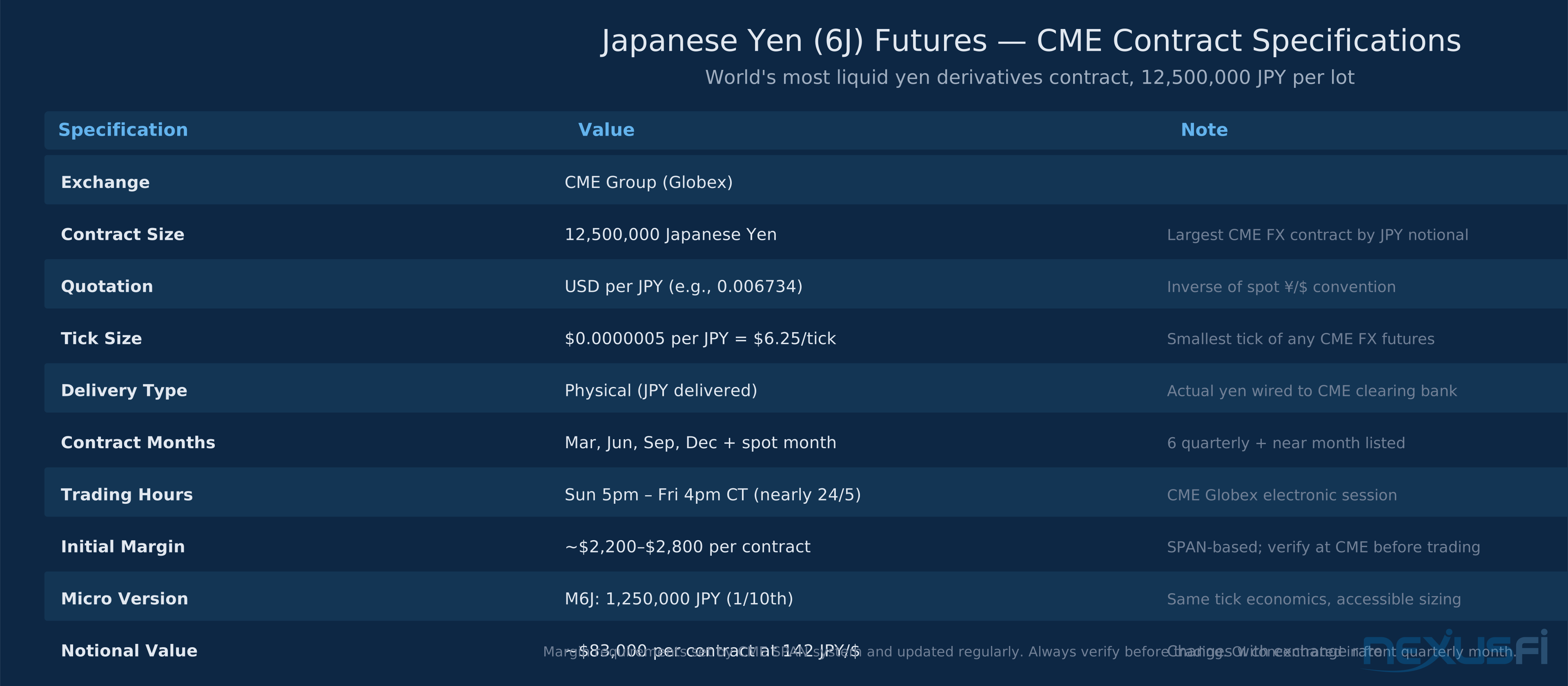
The 6J contract trades on CME Globex under the symbol 6J. It is physically settled in Japanese yen, with delivery occurring at a CME-approved bank.
Contract Size: 12,500,000 Japanese Yen. This is the largest standardized currency futures contract by JPY notional, making each contract represent approximately $83,000 at 150 JPY/USD, or $94,000 at 133 JPY/USD.
Price Quotation: USD per JPY. The 6J trades as USD per yen, not yen per dollar. This means a price of 0.006734 represents 0.6734 cents per yen, or equivalently, approximately 148.5 JPY per dollar. This is the inverse of how the spot forex market quotes USD/JPY.
Tick Size: $0.0000005 per JPY = $6.25 per tick. This is the smallest tick size of any major CME currency futures contract, reflecting the fact that yen prices in USD are very small numbers requiring many decimal places.
Settlement: Physical delivery of Japanese yen. On the last trading day, holders of open positions receive (or deliver) 12,500,000 JPY. Most traders close before delivery; the delivery mechanism ensures the futures price tracks spot.
Trading Hours: CME Globex provides nearly continuous trading from Sunday 5:00 PM CT through Friday 4:00 PM CT, with a 60-minute daily maintenance break. This means the 6J trades during Asian, European, and North American sessions — capturing yen price action driven by events in any timezone.
Contract Months: Six quarterly contracts (March, June, September, December) plus the current spot month. Front-month contracts are most liquid and typically concentrate over 80% of open interest.
Last Trading Day: The trading session prior to the third Wednesday of the contract month.
Settlement Price: Based on the fixing rate from the Bank of Japan at 3:00 PM Tokyo time on the last trading day.
Initial Margin: Approximately $2,200-$2,800 per contract (SPAN-based, subject to frequent adjustment). Hedge margin is lower. Always verify current requirements at cme.com before trading. Full contract specifications are available on the CME Group website.
Micro Contract: The Micro 6J (M6J) trades at 1,250,000 JPY per contract — exactly 1/10th the size of the standard contract. Tick value is $0.625. M6J allows traders to size positions more precisely, especially important given the yen's occasional extreme volatility. One important distinction, as NexusFi member @SMCJB noted, is that the newer M6J is quoted USD/JPY (not JPY/USD like the full-size 6J), meaning margin and P&L are denominated in JPY rather than USD — and the two contracts are not fungible with each other. For traders comparing micro contracts across asset classes, @DaysOff compiled ATR-based daily range comparisons showing that micro currency futures offer dramatically smaller daily dollar ranges ($48-75) compared to micro equity index futures ($305-570 for MES/MNQ), which matters for position sizing and risk management.
Market Context: Why the Yen Moves #
Japan's Economic Structure #
Japan is one of the world's largest export economies, with major industries in automotive (Toyota, Honda), electronics (Sony, Panasonic), and precision manufacturing. Japanese exporters earn revenue in foreign currencies (primarily USD, EUR) but pay costs in yen. When the yen weakens, their yen-denominated profits rise, making them competitive internationally. When the yen strengthens, export competitiveness falls and corporate profits contract.
This structural interest creates a natural constituency that benefits from yen weakness: the export sector, which has historically been highly influential in Japanese government and central bank policy discussions.
Bank of Japan (BOJ) Policy #
The BOJ has operated one of the most distinctive monetary policy regimes of any major central bank. For decades, Japanese interest rates were near zero, and the BOJ pioneered quantitative easing and yield curve control (YCC) before these became global standard responses to economic weakness.
Yield Curve Control (YCC): The BOJ's policy of pegging the 10-year Japanese Government Bond (JGB) yield at or near a specific target (historically 0%, then widened to ±0.5% in 2022 and further adjusted in 2024). When the BOJ maintains YCC while other central banks are raising rates, the interest rate differential creates massive yen-selling pressure as investors move capital to higher-yielding assets.
BOJ Policy Shifts Are High-Impact Events: Any hint that the BOJ is normalizing policy — abandoning YCC, raising the overnight rate, or reducing bond purchases — can trigger violent yen strengthening. The 2022-2024 period saw several such events that moved the yen 2-3% in single sessions.
Safe-Haven Status #
The yen is the dominant safe-haven currency in Asia and one of the top three globally (alongside USD and CHF). During periods of global risk aversion — equity sell-offs, geopolitical crises, credit events — capital flows into the yen even when economic fundamentals don't justify it.
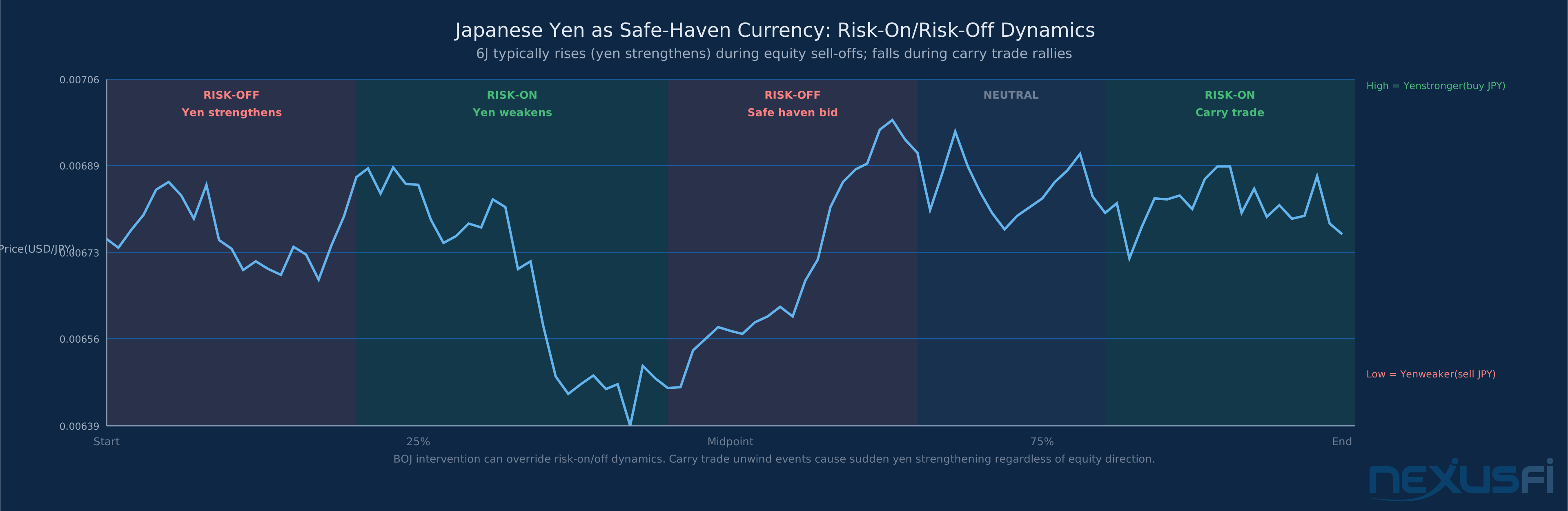
The mechanism is partly the unwinding of carry trades (see below) and partly genuine safe-haven demand from global investors who hold yen as insurance. Japan's current account surplus, its status as the world's largest net creditor nation, and the yen's deep liquidity all contribute to its safe-haven properties. Understanding how the yen's safe-haven flows interact with other asset classes is a core part of managing correlation and portfolio risk in a diversified futures book.
Carry Trade Dynamics #
The Japanese yen has been the world's preferred funding currency for carry trades for over 30 years. The mechanics: borrow yen at near-zero Japanese interest rates, convert to a higher-yielding currency (Australian dollar, Mexican peso, Turkish lira), and invest in higher-yielding assets. The daily interest rate differential becomes daily income.
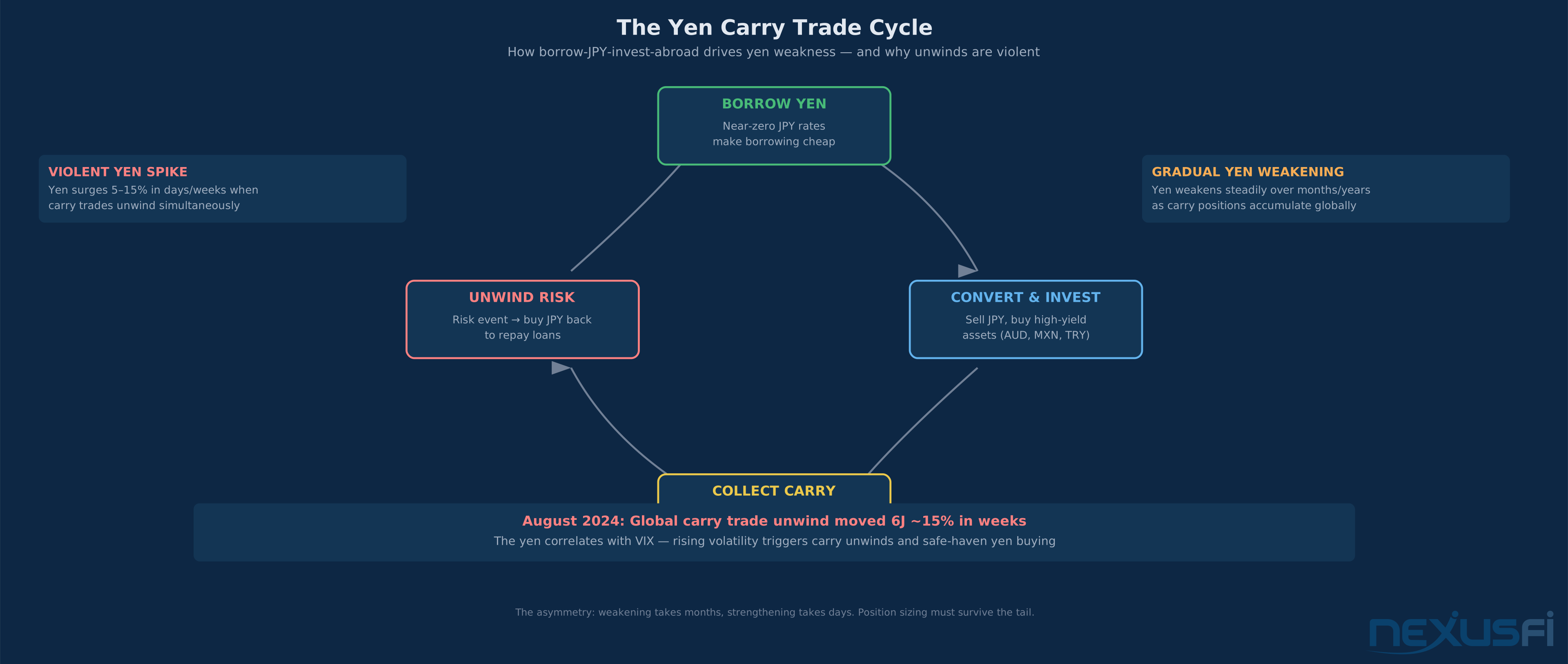
When carry trades are on: Investors borrow yen and sell it, creating sustained yen weakness. The yen weakens gradually over months or years.
When carry trades unwind: Some trigger — a risk-off event, a BOJ policy shift, or a sudden increase in market volatility — causes investors to exit simultaneously. They buy yen to repay their borrowings, causing violent yen strengthening regardless of Japanese economic fundamentals. The 2024 unwinding event in August moved the yen 15% in weeks. NexusFi member @josh broke down the mechanics of this unwind in real time — "you can borrow yen for free, convert it to USD, and leverage that free money into risk assets. When the BOJ hiked to 0.25%, the reflexive cycle forced simultaneous yen buying and risk asset selling," sending VIX to 65 pre-cash on August 5th.
The scale of the global yen carry trade means that unwinding events can be sudden and extreme. The yen's correlation with volatility indexes (VIX) is real — rising VIX consistently predicts yen strengthening as carry positions unwind. For a deeper look at how interest rate differentials drive currency and fixed income markets, see the guide to the Treasury yield curve for futures traders.
Price Drivers and What to Watch #
Interest Rate Differentials #
The most persistent yen driver is the interest rate differential between Japan and other major economies, especially the United States. When U.S. interest rates are much higher than Japanese rates (as they were in 2022-2024), the yen weakens as investors prefer dollar-denominated assets. When the BOJ raises rates or the Federal Reserve cuts, the differential narrows and the yen strengthens.
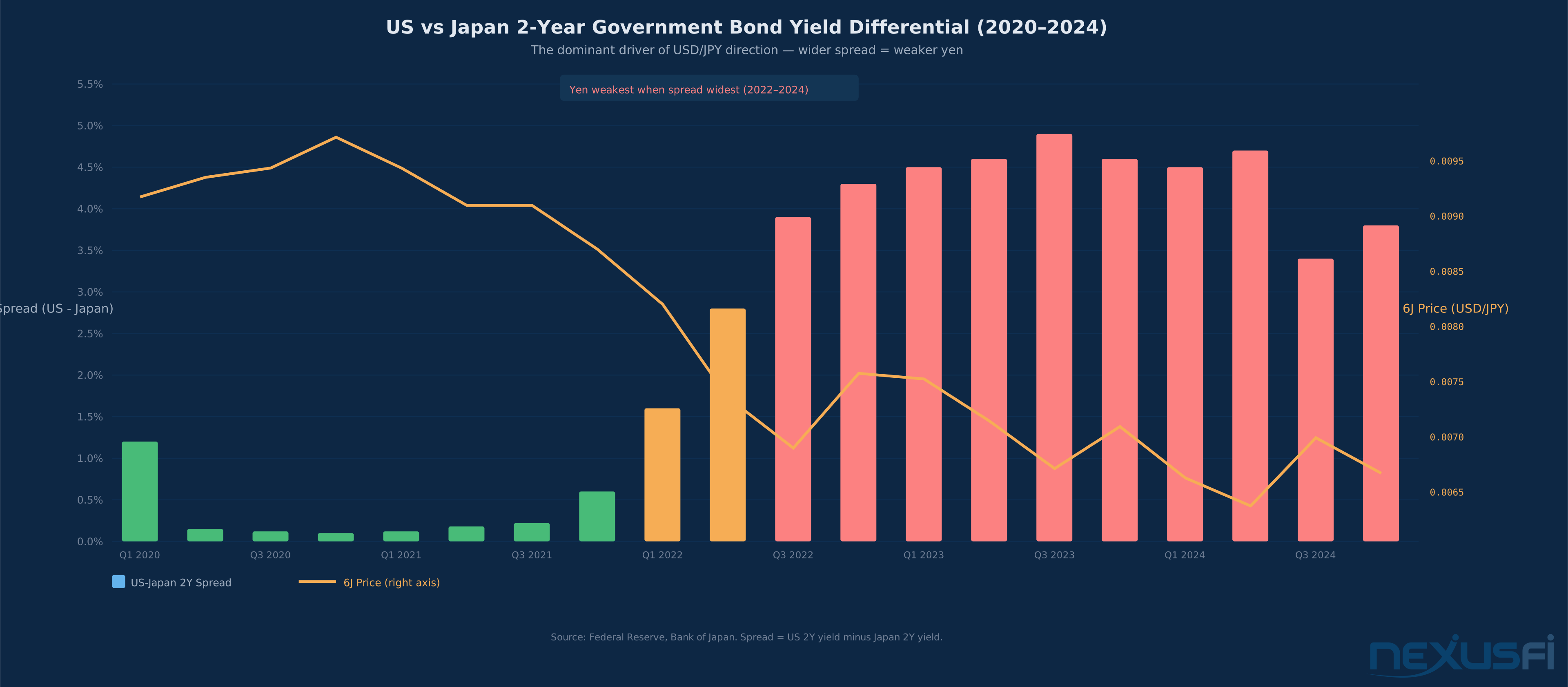
Key differential: The Japan-U.S. 2-year government bond yield spread. When this spread favors the USD by more than 3-4 percentage points, yen weakness is typically persistent.
BOJ Policy Meetings #
Bank of Japan monetary policy meetings occur eight times per year. These are high-impact events for the 6J. Key items to monitor:
- YCC adjustments: Any widening of the allowed JGB yield band or abandonment of YCC is yen-positive
- Overnight rate changes: BOJ raising rates even 10-25 basis points can trigger significant yen moves
- Forward guidance language: Shifts toward "normalization" language cause yen strengthening
- QE/QT decisions: Reduction in bond purchases is yen-positive as it reduces JPY supply
Japanese Economic Data #
While the BOJ's policy is the primary driver, underlying economic data influences BOJ decisions:
- CPI (Consumer Price Index): Japanese inflation above the 2% target increases pressure on BOJ to raise rates
- GDP growth: Stronger growth increases likelihood of policy normalization
- Wage growth: BOJ has explicitly tied rate decisions to wage inflation — watch annual wage negotiations (Shunto)
- Current account: Japan's persistent current account surplus provides underlying yen demand
- Trade balance: Large trade deficits (energy import-driven) create temporary yen selling pressure
U.S. Economic Data and Federal Reserve #
Since the yen's primary driver is the USD/JPY interest rate differential, U.S. economic data matters enormously:
- Non-Farm Payroll (NFP): Strong U.S. jobs data → USD strengthens → 6J falls
- CPI: Higher U.S. inflation → Fed hikes → USD strengthens → 6J falls
- Fed announcements: Rate cuts → USD weakens → 6J rises
- Recession indicators: U.S. recession fears → risk-off → 6J rises (safe-haven demand) even as Fed cuts
Ministry of Finance (MOF) Intervention #
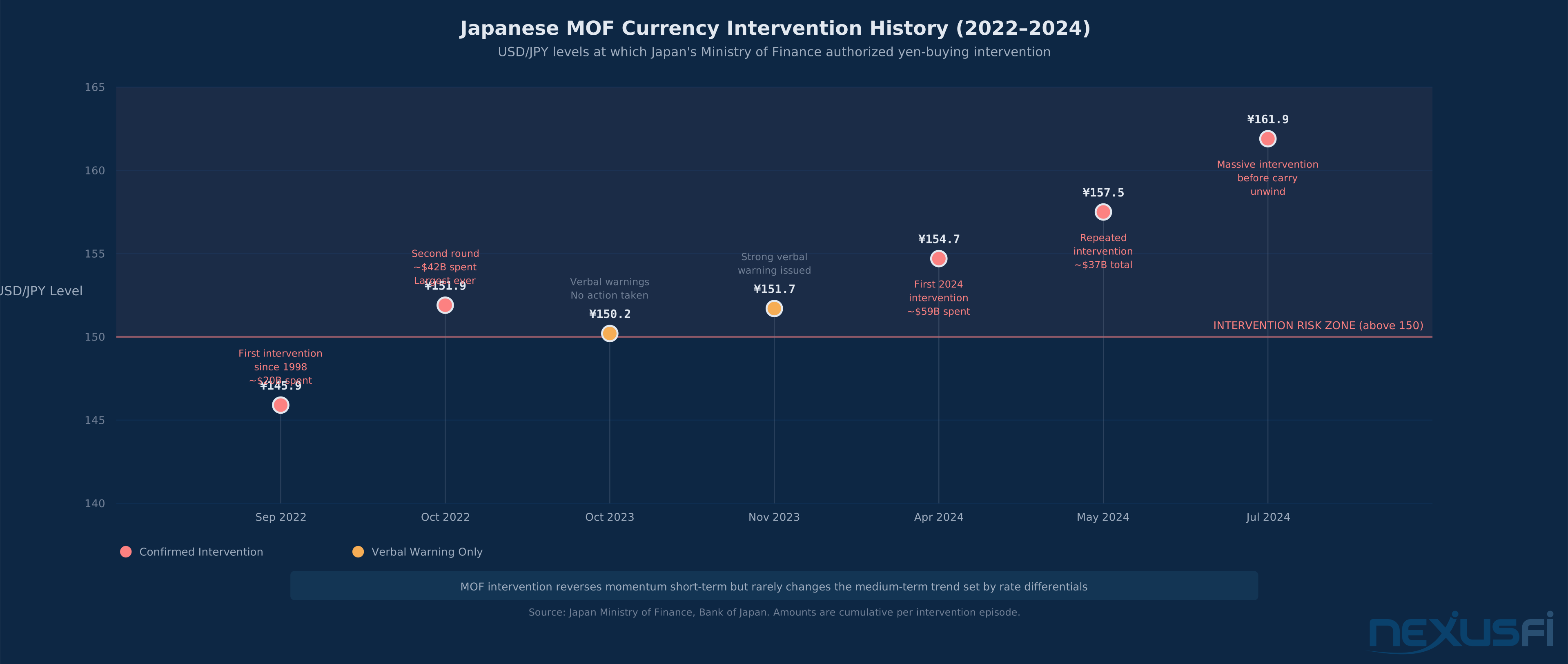
The Japanese Ministry of Finance (not the BOJ) can authorize intervention in currency markets when the yen moves "in a disorderly fashion" — their phrase for "too weak too fast." Intervention typically involves MOF ordering the BOJ to buy yen in the spot market.
Intervention characteristics:
- Typically occurs when USD/JPY approaches round-number levels (145, 150, 155)
- Most effective at reversing short-term momentum but less effective at changing the medium-term trend
- Can be unsterilized (new JPY created) or sterilized (offset by bond operations)
- Often preceded by "verbal intervention" — official warnings that create uncertainty before action. As @josh observed during the 2023 yen defense cycle, tracking the rhetoric escalation from "monitoring closely" to "decisive action" gives traders a real-time gauge of intervention probability
Trading implication: When the yen is extremely weak and MOF officials are making verbal intervention warnings, the market builds in a risk premium for sudden reversal. Shorting the yen in this environment requires wider stops.
MOF intervention is deliberately unpredictable — that's the point. Japan has over $1 trillion in foreign exchange reserves and has historically been willing to spend tens of billions in a single intervention campaign. If you're short the yen near multi-decade extremes and a senior MOF official says "we are watching movements with a sense of urgency," treat that as a direct warning to reduce position size.
Reading 6J Price Action #
The Inverse Convention #
The 6J price moves inversely to what most traders intuitively expect if they're used to thinking in USD/JPY terms.
If you trade spot forex and think in USD/JPY, the 6J will feel backwards until it clicks. When financial news says "dollar-yen hit 150," that's a weak yen — and the 6J chart will be near its lows. When they say "yen surged to 130," the 6J chart is near its highs. Train yourself to think "6J up = yen stronger" and the inverse convention stops being confusing.
- 6J price rising = USD per JPY increasing = yen strengthening (or USD weakening)
- 6J price falling = USD per JPY decreasing = yen weakening (or USD strengthening)
At 150 JPY/USD: 6J price = 1/150 = 0.006667 At 140 JPY/USD: 6J price = 1/140 = 0.007143 (6J higher = yen stronger) At 160 JPY/USD: 6J price = 1/160 = 0.006250 (6J lower = yen weaker)
Session Characteristics #
Tokyo session (8pm-5am ET): Highest yen volatility of the day. BOJ announcements, Japanese economic releases, and MOF statements all occur here. Liquidity is good but spreads can widen during off-peak periods. NexusFi member @tradentravel documented a dedicated 6J journal trading the Tokyo session using CCI for trend identification and VWAP bands for context — a practical example of how the Tokyo session offers real edge for traders who commit to its particular rhythm.
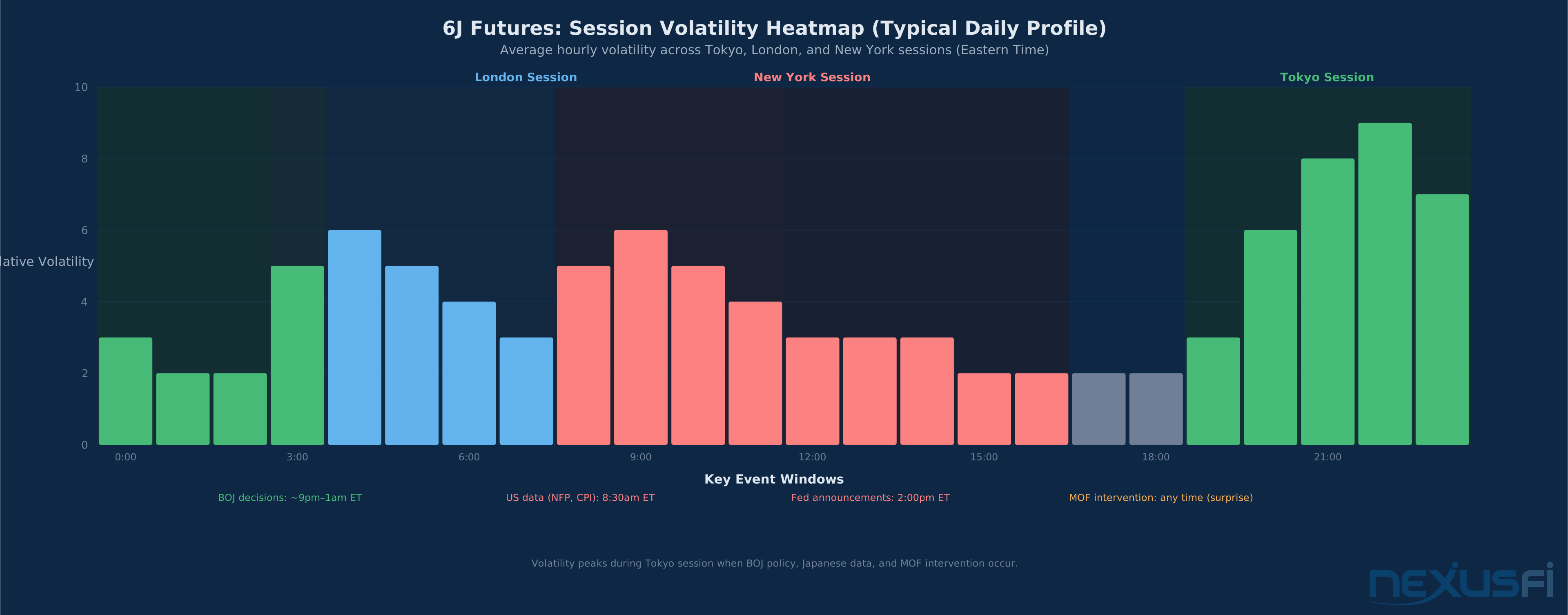
London open (3am-6am ET): European banks add liquidity. Often continues or reverses Tokyo trends based on European risk appetite.
New York session (7am-5pm ET): U.S. data releases (8:30am NFP, CPI, etc.) create sharp moves. When U.S. and Tokyo sessions overlap briefly, liquidity is at its peak.
Key times to watch: BOJ decisions typically announced around 11am-3pm Japan time (9pm-1am ET). U.S. data at 8:30am ET. Fed announcements at 2pm ET.
Correlations #
@UC Trading's 6J analysis thread demonstrates how volume profile and TPO charts can identify buyer and seller dominance within the contract's characteristic multi-session ranges — using B-shape profiles and range breakout patterns to read where the market is building value.
Negative correlation with risk assets: 6J tends to rise when equities fall (risk-off yen buying). This correlation strengthens during extreme market stress.
Positive correlation with gold (GC): Both are safe-haven assets. In genuine risk-off episodes, both tend to strengthen simultaneously.
Negative correlation with AUD: The Australian dollar is a risk-on currency that benefits from carry trades funded in JPY. When yen strengthens, AUD often weakens.
Positive correlation with VIX: Higher VIX (volatility) is associated with yen strengthening as carry trades unwind and safe-haven buying accelerates.
Practical Trading Approaches #
Carry Trade Positioning #
The directional bias in yen is often the carry trade — if Japan has near-zero rates and the U.S. has 4-5% rates, the carry math favors yen weakness. Systematic traders who want exposure to this can short 6J (buy USD/JPY) and hold for weeks or months, collecting the yield differential indirectly through futures pricing.
However: carry positions are exposed to sudden violent reversals. Position sizing must account for the fat tail risk of carry trade unwinds.
BOJ Positioning #
Trading BOJ policy shifts requires reading the signals before official announcements:
- Watch JGB yields — if the 10-year JGB yield is persistently testing the YCC cap, the BOJ is under pressure to adjust
- Monitor inflation data — sustained CPI above 2% increases normalization pressure
- Track BOJ governor speeches for language shifts toward "normalization" or "appropriate adjustments"
A position before a BOJ surprise announcement can produce significant gains, but the timing is imprecise and the risk of a "wait-and-see" statement is high.
Safe-Haven Pairs Trading #
The 6J's safe-haven properties create consistent patterns around risk events that are well-documented in intermarket analysis. During equity sell-offs:
- Long 6J / Short AUD (or other risk currencies) captures the risk-off rotation
- Long 6J / Short equity futures hedges directional exposure while isolating yen safe-haven premium
Seasonal Patterns #
March-April (Japanese fiscal year-end): Japanese corporations repatriate foreign profits into yen, creating systematic yen demand. A modest seasonal yen-strengthening tendency exists in this window — a pattern that aligns with broader seasonality trading strategies in futures.
Summer (June-August): Lower liquidity, but this is when the largest carry trade unwinds have historically occurred (2007, 2008, 2015, 2024).
Year-end (November-December): Mixed — some repatriation flows but also window-dressing in U.S. equities that can strengthen the dollar.
Risk Factors Specific to the 6J #
BOJ surprise risk: Policy surprises are the most dangerous for yen positions. The BOJ has moved rates with almost no prior market preparation in some historical cases.
Intervention risk: MOF can intervene at any time without warning. Yen positions at 30-year weakness levels face elevated intervention risk.
Carry trade unwind speed: When carry trades unwind, they can move the yen 3-5% in hours. Leverage must be sized for these tail scenarios.
Carry trade unwinds don't give you time to think. In August 2024, the yen moved 3% in a single session and 15% over two weeks. Correlations went to 1 — every risk asset sold off simultaneously, every funding currency position unwound at once. If your short-yen sizing assumes normal daily ranges, you're one VIX spike away from a margin call.
Geopolitical risk in Asia: Tensions in the Taiwan Strait, Korean peninsula, or broader regional events can trigger sudden yen safe-haven flows.
Dollar liquidity crises: During USD liquidity crunches, the yen may temporarily weaken despite risk-off conditions (as USD demand dominates), which is counterintuitive and dangerous for long-yen positions.
Using Micro 6J (M6J) for Precision #
The Micro 6J allows traders to express yen views at 1/10th the size of the standard contract. Practical uses:
- Scaling into positions: Build a 1-full-contract view across 10 micro contracts, adding at different entry points
- Fine-tuning hedge ratios: When hedging a non-round JPY exposure, micro contracts allow precise sizing
- Learning the contract: Beginners can trade M6J to understand the yen's behavior without the capital commitment of a standard contract
- Expressing partial views: When uncertain but wanting some exposure, M6J provides proportional participation
Decision Framework #
| Scenario | Action | Key Monitor |
|---|---|---|
| BOJ policy normalization signals | Long 6J (yen strengthening) | JGB 10-year yield, BOJ statements |
| Wide U.S.-Japan rate differential | Short 6J (yen carry) | Fed funds rate vs BOJ overnight rate |
| Global risk-off event | Long 6J (safe-haven demand) | VIX level, equity futures |
| MOF verbal intervention at extreme | Reduce short 6J exposure | Yen level vs 30-year range |
| Carry unwind signals | Exit short 6J quickly | AUD/JPY, cross-asset volatility |
The 6J futures contract gives any trader access to the yen market in a standardized, transparent format with genuine price discovery and deep liquidity. Whether you're expressing macro views on Japanese monetary policy normalization, managing currency risk on Asian equity positions, or exploiting the yen's safe-haven properties during global volatility events, the 6J provides the tools — but requires a thorough understanding of the forces that make the yen one of the most macro-sensitive currencies in the world.
Knowledge Map
Go Deeper
Build on this knowledgeReferences This Article
Articles that build on this topicCitations
- — Carry trade unwind mechanics during August 2024
- — Cessation of Micro JPY - M6J vs MJY fungibility differences
- — JPY/USD 6J analysis using volume profile and TPO charts
- — 6J trading journal - Tokyo session with CCI and VWAP
- — Micro currency futures ATR and daily range comparison
- — BOJ intervention rhetoric and FX implications
- — CME Group - Japanese Yen Futures Contract Specifications
- — Bank of Japan - Monetary Policy Framework