



Overnight Risk and Gap Management: The Decision Framework Every Futures Trader Needs Before the Close
Overview #
Overview #
Every futures trader eventually faces the same question: do I hold this overnight or flatten before the close? The answer isn't as simple as "always flatten" or "always hold." It depends on your position, the margin mechanics, the event calendar, and your own risk tolerance — a combination that changes with every single trade.
Overnight risk is the exposure you carry when holding a futures position through a session close, a weekend, or a scheduled news event. In equities, overnight gaps are common and somewhat predictable. In futures, the situation is more complex than equities because Globex trading provides near-continuous price discovery on weekdays, compressing traditional "overnight gaps" into weekend opens and event-driven moves.
This isn't a topic that gets enough serious attention. Most educational content treats overnight risk as a footnote — a brief mention of "don't hold over the weekend" without explaining why, when exceptions make sense, or how to size positions when you do decide to hold.
The Overnight Risk Framework #
Think of overnight risk as a spectrum, not a binary. On one end, you're holding a single MES contract through a Tuesday night with no scheduled economic releases — that's minimal risk. On the other end, you're holding a full-size CL contract over a weekend with an OPEC meeting scheduled for Monday — that's borderline reckless without proper sizing.
The framework breaks down into three tiers:
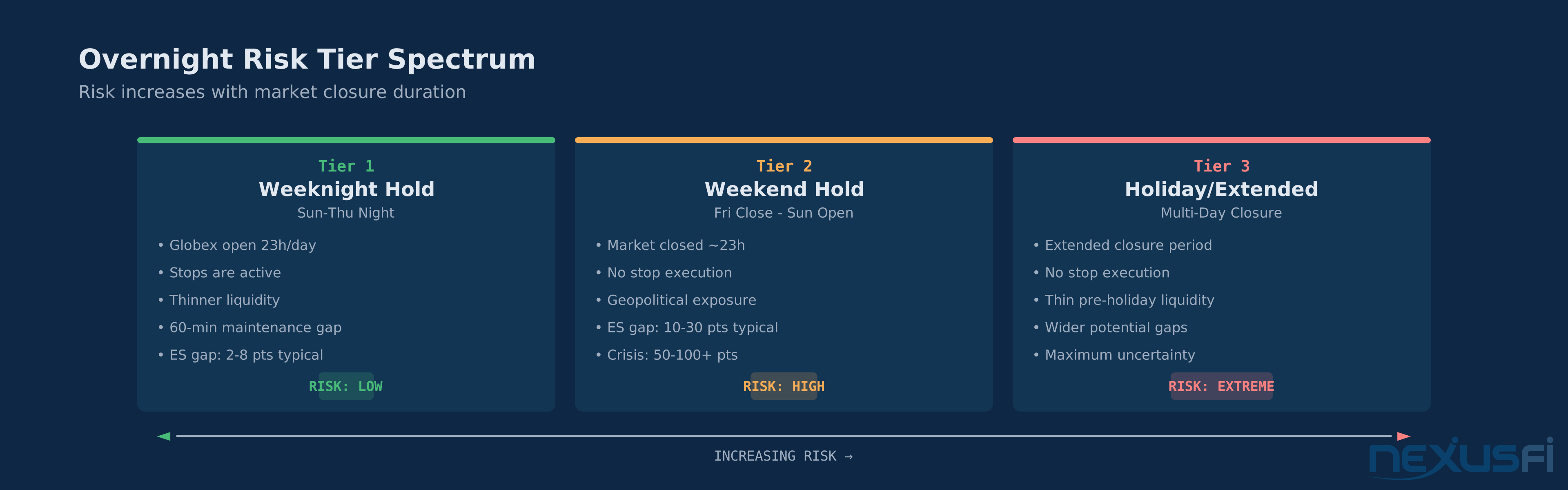
Tier 1 — Weeknight Holds (Low-Moderate Risk): Holding a position from one weekday session to the next. Globex runs nearly continuously Monday through Friday, so price discovery doesn't stop. Gaps are typically small (2-8 points on ES). The primary risks are thin overnight liquidity leading to slippage, and unexpected geopolitical or international economic developments. Most professional traders are comfortable with Tier 1 holds if the position is entered from strength and sized appropriately for exchange margin requirements.
Tier 2 — Weekend Holds (Elevated Risk): Holding from Friday's close through Sunday's Globex open. Markets are closed for roughly 47 hours (or less with CME's expanded weekend sessions). Two full days of news, geopolitical events, and global developments can occur with no ability to exit. Weekend gaps on ES typically range 10-30 points, but can exceed 80 points during crisis periods. Tier 2 requires much reduced position size, wider stops, and a compelling directional thesis to justify the exposure. The default for most traders should be flat over the weekend.
Tier 3 — Holiday and Event Holds (High Risk): Holding through extended closures (Thanksgiving, Christmas, New Year's) or through major scheduled events (FOMC rate decisions, NFP, CPI). Extended holiday closures can mean 3-4 days without market access. Scheduled events create predictable volatility spikes where gaps and slippage are amplified. Tier 3 should be reserved for experienced traders with small positions relative to account size, or avoided entirely. The asymmetry of risk-to-reward rarely justifies the exposure.
Key Concepts #
Gap Mechanics in Futures
A gap in futures occurs when the opening price of a new session differs from the closing price of the previous session. Unlike equities where gaps happen every single day between 4:00 PM and 9:30 AM, most futures "gaps" during the week are small because Globex trading fills most of the price discovery overnight.
The real gaps happen on Sunday opens and after extended closures. When the market is truly closed and news breaks, the reopening price reflects everything that happened during the closure — all at once, in a single price jump.
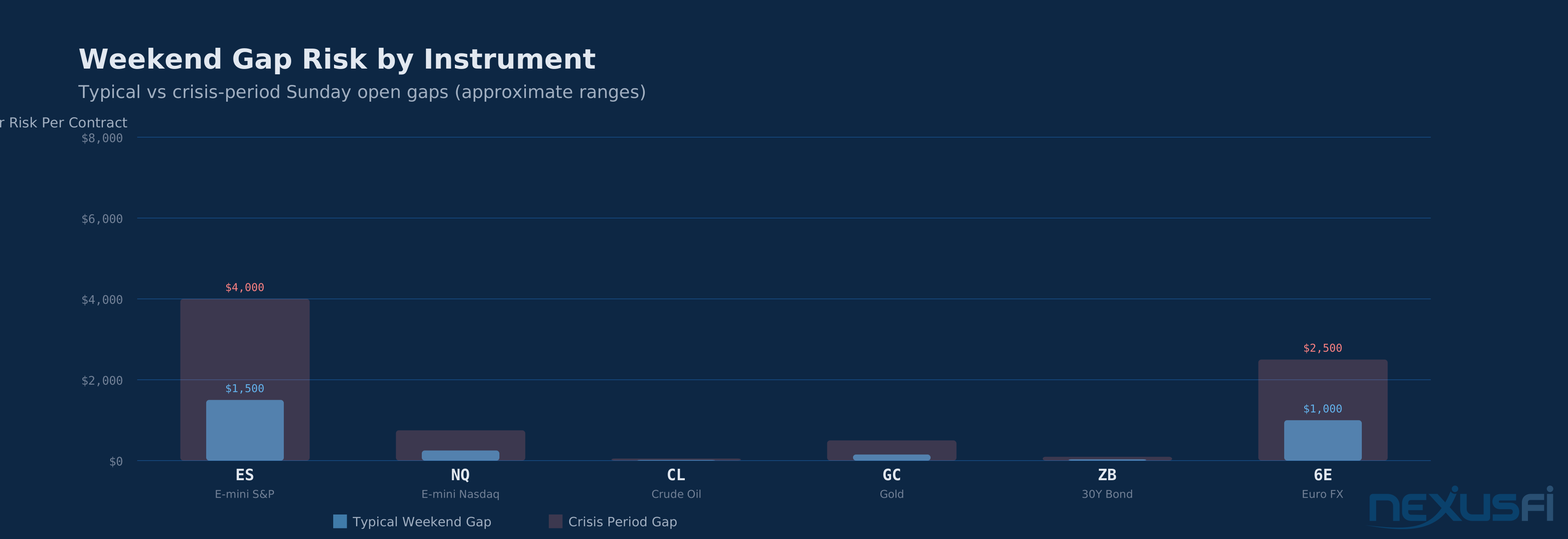
Gap size varies dramatically by instrument and market regime. ES gaps on a typical Sunday open range from 5-15 points ($250-$750 per contract). During crisis periods — think COVID lockdown announcements in March 2020 or geopolitical escalations — Sunday gaps can exceed 100 points ($5,000+ per contract). Crude oil (CL) is even more volatile, with weekend gaps routinely exceeding $1.50-2.00 per barrel and crisis gaps reaching $5.00+ ($5,000 per contract).
For a deeper dive into gap trading itself — including gap fill probabilities, opening gap strategies, and how to trade the initial balance after a gap — see Gap Trading in Futures.
The Margin Tier System
Understanding margin tiers is non-negotiable for overnight risk management. There are three distinct levels, and confusing them has ended more accounts than bad trade ideas.
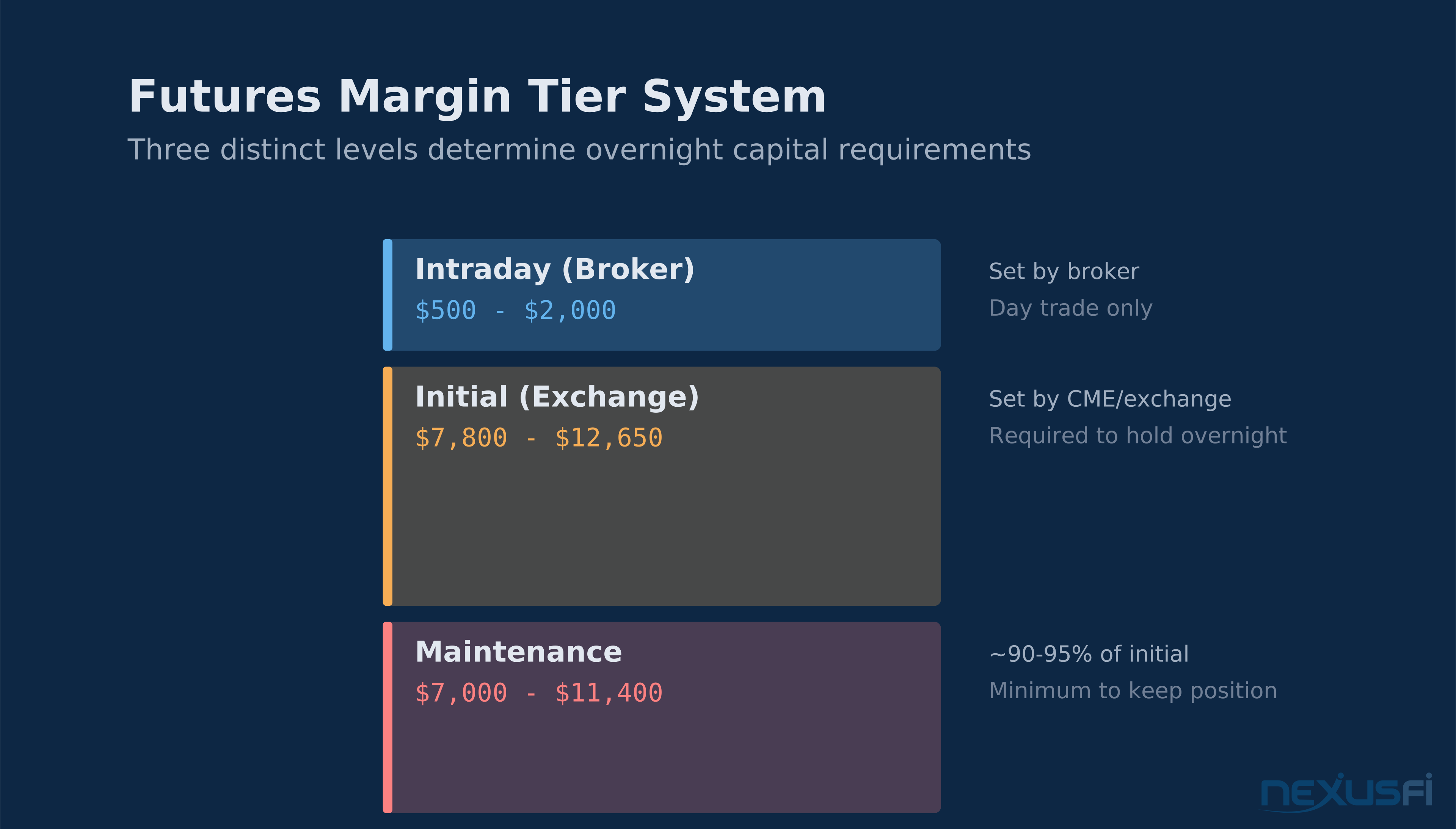
Intraday (Broker) Margin: Set by your broker, not the exchange. Can be as low as $50-500 per contract for micros, $500-2,000 for full-size. Only applies to positions opened AND closed within the same trading session.
Initial (Exchange) Margin: Set by the CME or relevant exchange. Required to open a position that will be held past the session close. For ES, currently around $12,650. For CL, approximately $7,800. [11] This is the "price of admission" for overnight holds.
Maintenance Margin: The minimum equity you must maintain to keep an overnight position open. Typically 90-95% of initial margin. Drop below this and you get a margin call — your broker will either demand additional funds or liquidate your position, often at the worst possible time.
[3] The exchange defines a "trading day" from 5:00 PM CT to 4:00 PM CT the following day — and any position open during the settlement period at 3:00 PM CT must meet exchange margin requirements.
For the full mechanics of how margin calls and maintenance requirements work, see Futures Margin Requirements and Broker Margin Considerations.
Stop Loss Behavior During Gaps
Stop orders don't protect from gap slippage. Your stop loss order does NOT guarantee your exit price. A stop order becomes a market order when triggered — if the market gaps past your stop on a Sunday open, you get filled at the first available price, which could be much worse than your intended stop level. This is the most dangerous misconception traders carry into overnight holds: they assume their stop is a hard ceiling on losses. It isn't. Size overnight positions assuming your stop might fill meaningfully past the intended level.
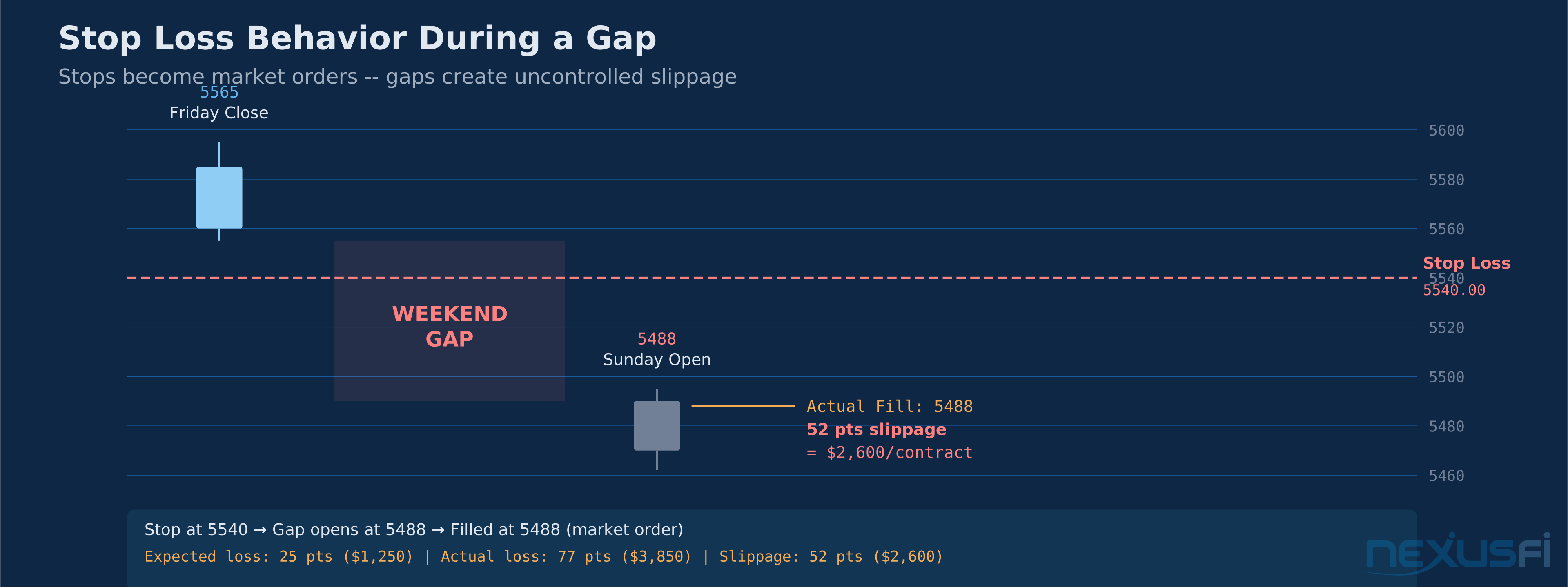
CME offers a "Stop Order with Protection" that limits how far past the stop price your fill can occur. But protection has limits.
The practical implications: during a weekend gap, your stop might protect you from the initial limit move, but if the situation deteriorates further during RTH when limits widen, you could face losses well beyond your original stop. For a full breakdown of stop mechanics, see Stop Loss Strategies for Futures.
The Overnight Session (Globex/ETH)
Globex — the CME's electronic trading platform — operates nearly 24 hours a day from Sunday 5:00 PM CT through Friday 4:00 PM CT, with a brief maintenance window each afternoon. This continuous operation is what makes futures overnight risk at the core different from equities. You're not locked in — you can exit your position during the overnight session. But the conditions are materially different from RTH.
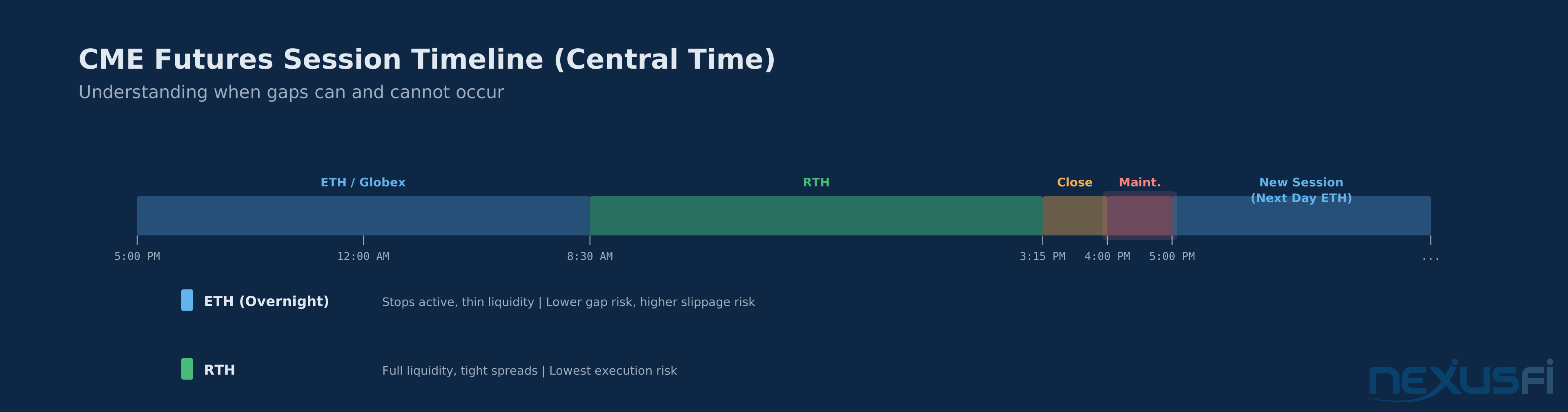
Overnight sessions have distinct characteristics that affect risk:
Thinner liquidity: Order book depth drops 60-80% compared to RTH. This means larger spreads, more slippage, and faster price moves on smaller volume. A 10-lot market order that barely moves ES during RTH could move it 2-3 ticks overnight.
Different participants: Asian and European institutions drive overnight flow. Their priorities and information sets differ from US session traders. Major economic releases from Japan (BOJ), Europe (ECB, European PMI), and UK drive overnight moves in index futures through correlation.
Price discovery continues: Overnight isn't dead time — it's when markets digest international developments, process after-hours earnings, and position ahead of the next RTH session. Some of the largest moves in ES happen between 2:00 AM and 5:00 AM CT when European markets open.
For more on session dynamics, see Futures Trading Hours and Sessions.
The Hold-or-Flatten Decision Framework #
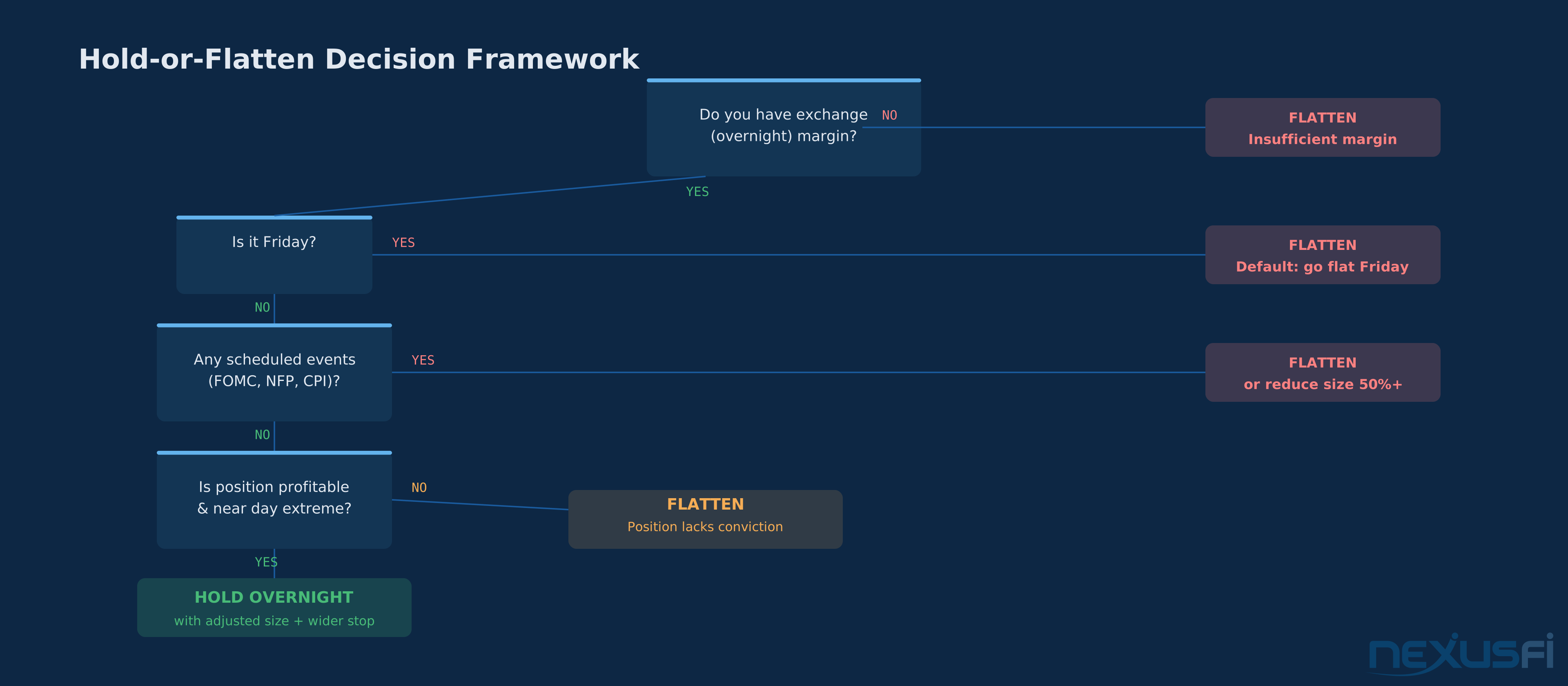
This is where overnight risk management becomes a tradeable methodology. The decision isn't about gut feel — it's about running through a systematic checklist that accounts for position quality, event risk, margin, and market structure.
Setup 1: The Strength Hold
Position of strength, not hope. As @Big Mike (NexusFi founder) explains: "You should only hold overnight from a position of strength. For example, being long or short near the extremes of the day. The closer your position is to the closing price, the less it makes sense to hold overnight." [5] The corollary: if you're near the middle of the day's range at the close, you have no edge — flatten.
Entry criteria: Position entered near the day's high or low, with favorable market structure (trend day, strong close into extremes). Open profit provides a buffer against adverse overnight moves.
Stop placement: Below the day's midpoint or POC for longs, above it for shorts. This gives the position room to breathe overnight while defining a clear invalidation level.
Size adjustment: Reduce position size to account for the wider stop. If your RTH stop is 8 points on ES, your overnight stop might need to be 15-20 points. Cut size proportionally to keep dollar risk constant.
Invalidation: If the overnight session reverses to fill the day's range and returns to the middle, the strength thesis is gone. Exit the position — don't wait for your wider stop to get hit. The trade was predicated on follow-through from the day's trend, and a reversal to the midpoint signals that follow-through isn't materializing.
Setup 2: The Event Fade
Holding through scheduled events (FOMC, NFP, CPI) is a separate animal entirely.
Entry criteria: No open position going into the event. Wait for the initial reaction, identify the first swing high/low (points A and B in post-event price action), then trade the reaction once one of those levels breaks.
Stop placement: Behind the opposite swing point of the initial reaction.
Target: VWAP from the event candle, or the pre-event balance area. Event reactions often retrace 50-100% of the initial move.
Invalidation: If the initial reaction doesn't create clean swing points within 15-30 minutes, the event didn't generate a tradeable move. Stand aside.
Setup 3: The Weekend Flatten
The default position for most traders should be flat going into the weekend.
When to flatten: Friday before 3:00 PM CT. Don't wait until the close — liquidity thins considerably in the final 30 minutes and spreads widen. Get out while the order book is still deep enough for clean execution.
When weekend holds are justified: Only when ALL of these conditions are met: (1) position is at a significant profit, (2) position sizing accounts for maximum historical gap, (3) no major scheduled events over the weekend, (4) position is in the direction of the larger trend, and (5) you can afford to lose the maximum gap amount without it affecting your trading capital meaningfully.
Weekend gap math — ES example. Maximum historical ES Sunday gap: ~80 points = $4,000 per full contract. On a $50,000 account: 1 contract = 8% of capital at risk from gap alone. Two contracts = 16%. Five contracts = 40%. Professional risk guidelines typically cap single-position exposure at 1-2% of account — gap risk at standard sizing exceeds that by 4-8x. Either size down dramatically, or flatten before Friday's close.
The Decision Checklist
Before holding any position overnight, run through these questions:
- Exchange margin covered? Account must meet exchange initial margin, not just intraday broker margin.
- Event calendar clear? FOMC, NFP, CPI, BOJ, ECB -- check US and international scheduled releases.
- Holding from strength, not hope? Profitable position at the day's extreme only. Never hold a loser hoping for rescue.
- Stop wide enough for overnight? Widen from RTH levels. If the required stop size makes dollar risk unacceptable, reduce size or flatten.
- Is it Friday? Default to flat. The bar for weekend holds is dramatically higher than a Tuesday overnight.
1. Do I have exchange margin? If your account only covers intraday margin, you can't hold overnight — period. Your broker will liquidate the position at the session close. Verify your account equity against the current exchange initial margin requirement for your instrument before planning any overnight hold.
2. What's the event calendar? Check for FOMC, NFP, CPI, PPI, GDP, retail sales, and any Fed speaker schedules. Check international events too — BOJ decisions, ECB press conferences, and UK employment data all move US futures overnight. The CME economic calendar and ForexFactory are standard tools for this.
3. Am I holding from strength or hope? If your position is underwater and you're hoping the overnight session will bail you out, that's not a trade thesis — that's gambling. Flatten losing positions before the close. Only hold positions that are profitable and entered at favorable levels.
4. Is my stop wide enough for overnight conditions? RTH stops don't work overnight. Widen your stop to account for thinner liquidity and wider price swings. If that wider stop makes the risk unacceptable, reduce size or flatten.
Default Rule: When in doubt, flatten before the close. The question should never be "do I have a reason to close this position?" — it should be "do I have a compelling reason to HOLD this position overnight?" If you can't articulate that reason clearly, you already have your answer.
5. Is it Friday? Default to flat. The bar for holding over the weekend is dramatically higher than holding overnight on a Tuesday. You need a compelling reason to hold, not a compelling reason to flatten.
When Overnight Holds Fail #
Overnight risk management isn't foolproof. Understanding where it breaks down is as important as the framework itself.
Black swan events bypass all frameworks: The 2015 Swiss franc unpegging [12] (CHF gapped 30% in seconds), the 2020 oil futures going negative, the 2011 Japanese earthquake — these events make mockery of historical gap ranges and position sizing models. No amount of planning fully insulates you from tail risk events. The only complete protection is being flat, which isn't always practical or desirable.
Liquidity evaporation amplifies gaps: During extreme events, the thin overnight order book can move prices much further than the underlying news justifies. The initial gap often overshoots, then partially retraces during RTH as full liquidity returns. This creates a paradox: your stop gets hit at the worst possible price, and the market then comes back to where you would have been comfortable holding. Understanding this pattern doesn't prevent the loss, but it does argue for using wider stops with smaller size rather than tight stops with larger size overnight.
Correlated risk multiplies exposure: Holding ES long AND NQ long overnight isn't diversification — it's concentrated equity index risk. These instruments correlate above 0.90 in most environments. A single adverse overnight event hits both positions simultaneously. True diversification for overnight holds means holding uncorrelated instruments (e.g., ES long and ZB long), though even those correlations break down during crisis events.
Broker liquidation timing matters: When margin is breached, brokers liquidate at market — they don't wait for optimal fills. Different brokers have different liquidation policies: some liquidate immediately at the maintenance margin breach, others provide a brief grace period of 15 minutes to a few hours before executing. Some liquidate your entire position; others liquidate only enough contracts to restore your account to maintenance margin. The practical difference matters: a broker with a grace period gives you time to wire funds or manually reduce exposure before the liquidation fires; a broker that liquidates immediately does not. Know your specific broker's policy before your first overnight hold — call support and ask directly: "If my margin is breached at 2 AM, do you liquidate immediately or give me time to respond? Do you liquidate my full position or only enough to restore margin?" Most brokers document liquidation procedures in their margin risk disclosure agreements, but calling support gets a faster, unambiguous answer. Forced liquidation at 3:00 AM CT in thin liquidity is one of the most expensive experiences in futures trading — and it is entirely avoidable with 15 minutes of research done before your first overnight hold.
Mean reversion bias is dangerous for overnight holds: Big Mike also notes an important nuance: "holding just one day is really difficult to make a profitable trade out of. You need to hold the same position for 3 days or more, because of the mean reverting nature of the market." [5] The overnight gap might go against you, and then the mean reversion pull brings it back over subsequent sessions. But surviving long enough for mean reversion to work requires position sizing that accounts for the maximum drawdown during those 3+ days — not just the first overnight move.
Practical Application #
Position Sizing for Overnight Holds
The core principle: size your position so the maximum reasonable gap won't take you below your daily or weekly risk limit. Here's the math:
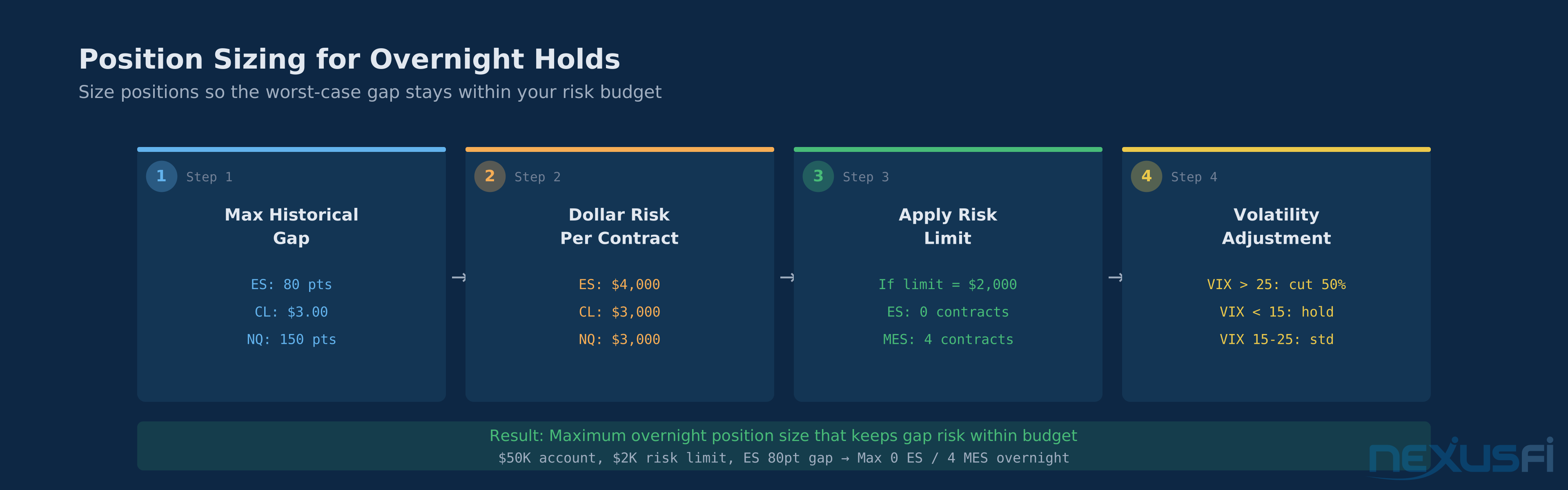
Step 1: Determine maximum historical gap for your instrument. For ES, look at Sunday opens over the past 2-5 years. Typical range: 10-30 points on normal weeks, 50-100 points during crisis periods. Use the 95th percentile as your planning number.
Step 2: Calculate gap risk per contract. ES at 80-point max gap = $4,000 per contract. CL at $3.00 max gap = $3,000 per contract.
Step 3: Apply your risk limit. If your maximum acceptable overnight loss is $2,000 and ES gap risk is $4,000 per contract, you can hold a maximum of 0.5 contracts — which in practice means you either hold one contract and accept the higher risk, or use MES micros (where the same 80-point gap costs $400 per contract, allowing 5 MES contracts within the $2,000 risk limit).
Step 4: Factor in current volatility. During high-VIX environments (>25), historical gap ranges underestimate actual risk. Cut size further. During low-VIX environments (<15), historical ranges overestimate risk slightly, but don't use this as a reason to increase size — low-VIX environments are where complacency builds and tail events catch traders off guard.
For the full position sizing methodology, see Position Sizing Methods for Futures.
Pre-Session Risk Checklist
Run this every day before the session, and again at 3:00 PM CT before deciding whether to hold:
Morning (Pre-Market):
- Check overnight price action -- did your instrument make a significant move during Asian/European hours? Any major levels broken?
- Check the economic calendar for today AND tomorrow
- Check international developments (Asian and European session movers)
- Calculate your current position risk if you held overnight
Afternoon (3:00 PM CT Decision Point):
- Is tomorrow's calendar clean? Any Fed speakers, economic releases, or international events?
- Is it Friday? Default to flat.
- Is my position profitable and near the day's extreme? Hold candidate.
- Is my position marginal or underwater? Flatten.
- Do I have sufficient margin for exchange requirements? Confirm.
- Would a 2x ATR adverse move overnight still leave me within my risk budget? If not, reduce or flatten.
Hedging Overnight Exposure
When you want to maintain a directional bias but limit overnight gap risk, consider these approaches:
Options hedge: Buy a protective put (for long positions) or call (for short positions) on the same underlying or a correlated product. The premium is the cost of insurance. This works best when VIX is low (cheaper options) and your position is large enough to justify the transaction costs.
Correlated market offset: If you're long ES overnight and concerned about gap risk, a small short position in a correlated product (SPY options, or a smaller NQ position) can reduce net exposure. This isn't a perfect hedge — correlations shift during extreme moves, and the hedge itself introduces additional execution risk and margin requirements.
Size reduction instead of hedging: The simplest approach. Cut your position by 50-75% before the close, keep a "core" position that represents acceptable overnight risk, and plan to re-enter at the next session's open if the thesis is still valid. This costs nothing except the potential opportunity of being fully positioned for a favorable gap.
The CME 24/7 Trading Impact
CME Group expanded Globex trading hours to near-continuous 24/7 operation in late 2025. [10] [13] This much changes the overnight risk environment:
Weekend gap risk is substantially reduced because markets stay open through Saturday and Sunday. However, thinner weekend liquidity means wider spreads and potentially more volatile price action during traditionally off-hours. Stops execute but may face significant slippage in thin weekend markets.
The framework still applies — the tiers shift from "market closed" risk to "thin liquidity" risk, but the core principles of position sizing, event awareness, and strength-based holding remain unchanged. Weekend sessions under 24/7 trading behave more like extended overnight sessions than traditional weekend closures.
Prop Firm Overnight Rules
If you're trading a funded account, your overnight decision might already be made for you. Most prop firms (Apex, Topstep, Earn2Trade, Take Profit Trader) either prohibit overnight holds entirely or require reduced position sizes. Check your specific firm's rules before assuming you can hold:
- Some firms require flat before the daily close -- no overnight holds permitted under any circumstances
- Some allow overnight holds but at 50% max position size
- Some prohibit holding through major economic events regardless of direction
- Weekend holds are almost universally prohibited or severely restricted
For complete prop firm rule analysis, see Prop Firm Risk Rules and Drawdown Mechanics and Consistency Rules in Funded Trading.
Knowledge Map
Prerequisites
Understand these firstGo Deeper
Build on this knowledgeReferences This Article
Articles that build on this topicCitations
- — Novice approaching DAX and S&P500 micro futures (2023) 👍 2“I have seen over the course of 20+ years trading massive gaps down from Friday close to Sunday open. Some of which would wipe out trading accounts.”
- — CL vs QM (crude oil) tick size/value, margins (2011) 👍 4“CL gapped $1.55 on last Sunday's electronic open. If your stop for a long position wasn't at least $1.55 from Friday's close... guess what? It got jumped.”
- — What's this confusion with margins? (2021) 👍 8“Positions held after the exchange-defined close are subject to CME margin rules. If you are going to hold overnight, you are in CME territory. Otherwise, you are in unregulated broker-land.”
- — Holding futures overnight (2021) 👍 2“There's no way that the Sunday open could create losses greater than the maintenance margin, as that margin is greater than the losses that would be incurred from a limit up/down move.”
- — Spoo-nalysis ES e-mini futures S&P 500 (2015) 👍 14“You should only hold overnight from a position of strength. For example, being long or short near the extremes of the day.”
- — Making a Living with the Micros (2021) 👍 11“I was FLAT going into the news at 2:00 pm ET. I have learned the hard way that I must not trade the news, but just the REACTION to the news.”
- — Holding futures overnight (2021) 👍 2“An over-weekend hold is Sooooo much riskier than a weekday overnight hold because while the market is closed and stops can't pull you out when many world events take place.”
- — Spoo-nalysis ES e-mini futures S&P 500 (2015) 👍 18“For all the weeks since Y2K, when there is an FOMC, non-OPEX FOMC weeks had only 43% winners with average weekly returns of -0.12%.”
- — Catastrophic Loss Days (2018) 👍 1“The other major risk is holding over closed periods where the market could gap up or down significantly on events over the closed period.”
- — CME Group Launches 24/7 Futures Trading (2025) 👍 2“The elimination of weekend gaps removes a major source of gap risk, but also means markets never truly close.”
- — E-mini S&P 500 Performance Bond / Margin Requirements (2026)
- — Swiss franc soars as Switzerland abandons euro cap (2015)
- — CME Group to Offer Around-the-Clock Trading for Cryptocurrency Futures and Options (2025)