



HKEX and the Hang Seng Index Futures: Asia's Most Global Derivatives Market
Most traders think of HSI as "that Hong Kong market." That's underselling it badly.
The Hang Seng Index futures aren't a local market for Hong Kong traders. They're a global macro instrument disguised as an Asian equity product. When the Fed pivots, HSI moves. When Nasdaq gaps down, HSI follows. When Washington announces China tariffs, HSI reacts — often before the US market catches up with the news.
Trading the Hang Seng puts you at the intersection of US risk appetite, China policy, and Hong Kong-specific news flow simultaneously. That's either a tremendous opportunity or a recipe for getting hurt by factors you didn't anticipate. Which one it is depends entirely on whether you understand what you're actually trading.
This is the complete guide to HKEX Hang Seng Index futures — how the contracts work, when and why HSI moves, what the evening session relationship with US markets really means, and how retail traders can approach this market with strategies that actually hold up under real conditions.
Overview #
HKEX (Hong Kong Exchanges and Clearing Limited) is one of the world's largest exchange operators by market capitalization. It operates the Hong Kong Stock Exchange, Hong Kong Futures Exchange, and the London Metal Exchange (acquired in 2012). HKEX sits at the boundary of East and West financial markets — regulated under Hong Kong law, deeply connected to mainland China's economy, but operating in a dollar-pegged, internationally accessible currency and legal system.
The Hong Kong Futures Exchange lists two primary Hang Seng Index futures contracts: the full HSI and the retail-accessible Mini-HSI (MHI). These aren't niche contracts. They're among the most liquid index derivatives in Asia, trading significant daily volume across both day and evening sessions. And unlike pure regional index products, they react to global macro forces in real time — making them genuinely useful for traders anywhere in the world who want exposure to Asian market hours.
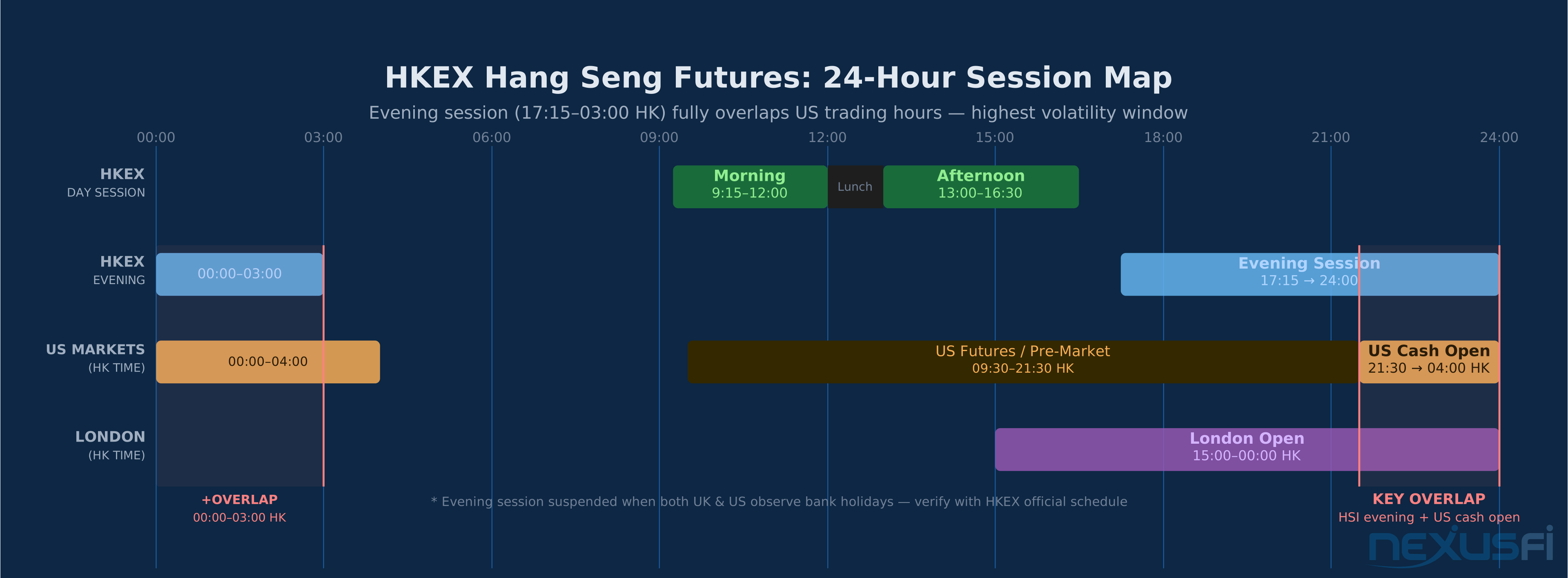
The key fact to absorb before anything else: during the HKEX evening session (5:15 PM — 3:00 AM HK time), the entire US cash equity session is live and driving HSI prices. HSI isn't just a Hong Kong product — it's a real-time read on global risk appetite that happens to be denominated in HKD.
What HKEX Is and Why It Matters #
HKEX's footprint extends far beyond Hong Kong. The 2012 acquisition of the London Metal Exchange made HKEX the operator of the world's primary industrial metals pricing venue. For index futures traders, though, the core product is the Hang Seng Index — Hong Kong's benchmark equity index since 1969.
The exchange operates on HKATS (Hong Kong Automated Trading System), a fully electronic platform with market access for international participants through approved FCMs and introducing brokers. For US-based traders, several FCMs offer Mini-HSI access, making the contract genuinely accessible — though the data and brokerage setup takes some deliberate configuration.
Why does HKEX matter for futures traders outside Asia? Because it fills a gap: a highly liquid, globally sensitive index contract that's active when US markets are open (in the evening session) AND when they're closed (in the morning session). ES and NQ traders who want overnight macro exposure, or traders specifically looking for Asia-Pacific market structure, find HSI one of the few instruments that actually serves those needs.
The Hang Seng Index: What You're Actually Tracking #
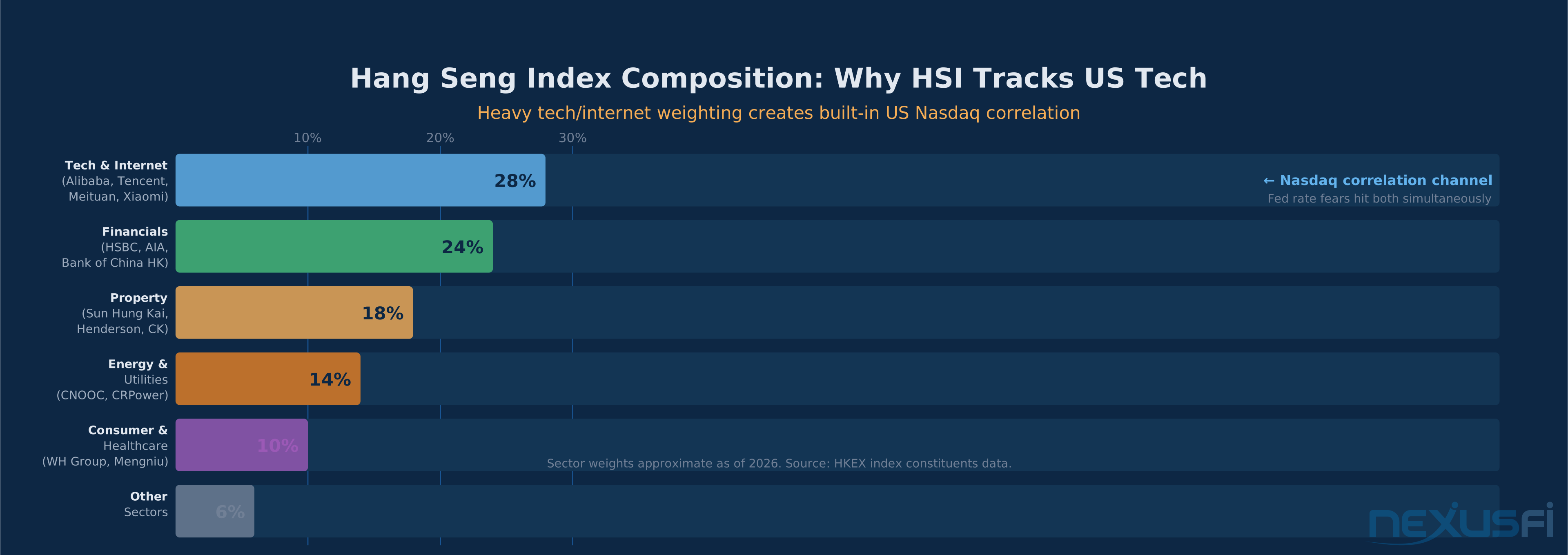
The Hang Seng Index tracks approximately 82 constituent companies listed on the Hong Kong Stock Exchange, representing roughly 55-65% of total market capitalization. As of 2026, the composition is heavily weighted toward:
Tech and internet firms (approximately 28%): Alibaba, Tencent, Meituan, JD.com, Xiaomi, Kuaishou. These names have direct US market correlation — when Nasdaq sells off on rate fears, this HSI segment moves in the same direction, often simultaneously.
Financial services (approximately 24%): HSBC, AIA Group, Hang Seng Bank, Bank of China (Hong Kong). These names are sensitive to Hong Kong interest rate expectations, which track US rates given the USD peg, and to China credit conditions.
Real estate and construction (approximately 18%): CK Hutchison Holdings, Sun Hung Kai Properties, Henderson Land Development. The Chinese property sector's ongoing adjustment since 2021 has made this segment a source of specific HK/China divergence from US markets.
Energy and utilities (approximately 14%): CNOOC, China Resources Power, China Gas. These track global energy prices and China industrial demand.
Consumer and healthcare (approximately 10%): WH Group, Mengniu Dairy, Johnson & Johnson HK.
This composition drives everything you see in HSI behavior. The 28% tech/internet weighting is why HSI tracks Nasdaq — these names are at the core repriced by the same risk factors (US rates, tech multiples, regulatory sentiment toward Chinese tech). The property weighting is why HSI sometimes diverges sharply from US markets when China-specific news hits. Both dynamics operate simultaneously. Understanding which one is driving the current session is the core skill.
The Two Contracts: HSI and Mini-HSI #
HKEX offers two primary index futures contracts on the Hang Seng Index:
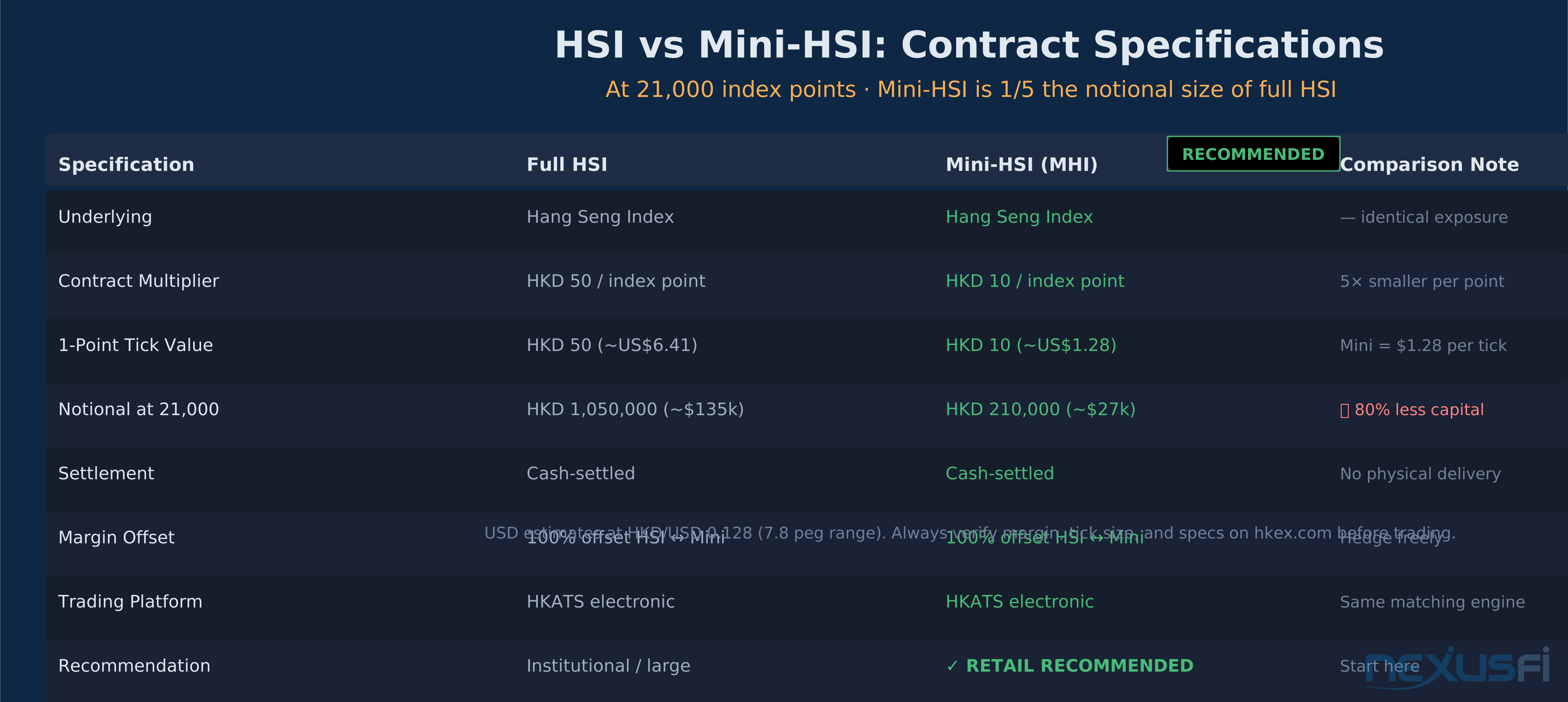
HSI Futures (Full Contract)
- Multiplier: HKD 50 per index point
- Minimum tick: 1 index point = HKD 50 (~US$6.41 at 7.8 peg)
- At 21,000 points: HKD 1,050,000 notional (~US$135,000)
- Designed for institutional traders, market makers, and portfolio hedgers
Mini-HSI Futures (MHI)
- Multiplier: HKD 10 per index point
- Minimum tick: 1 index point = HKD 10 (~US$1.28 at 7.8 peg)
- At 21,000 points: HKD 210,000 notional (~US$27,000)
- The retail-accessible version — 1/5 the size of full HSI
For retail traders, Mini-HSI (MHI) is the only practical starting point. One full HSI contract at current index levels represents over $135,000 in notional exposure. One Mini-HSI represents roughly $27,000. The difference between accidentally holding through a 100-point adverse move — HKD 5,000 on full HSI (~US$641) vs HKD 1,000 on Mini (~US$128) — is the difference between a rough day and a serious account event.
HKEX provides a 100% margin offset between HSI and Mini-HSI contracts. Long 1 full HSI + short 5 Mini-HSI = approximately net-zero exposure. This offset lets institutional traders and sophisticated retail accounts hedge across contract sizes without posting margin for both sides of the hedge.
Both contracts are cash-settled. No physical delivery of any underlying basket. Settlement references the official HSI settlement price at expiry. Contract months follow a quarterly cycle with near-term monthly expiries also available. Always trade the front month for maximum liquidity unless you have a specific reason to roll early.
Always verify the current contract specifications on HKEX directly before trading. Margin requirements change with volatility regimes and HKEX policy updates.
Session Structure: Two Markets in One #
This is where HSI trading gets genuinely interesting — and where traders who don't understand the structure get into trouble.
HKEX Hang Seng futures trade in two distinct sessions:
Morning Session: 9:15 AM — 12:00 PM (HK time) Afternoon Session: 1:00 PM — 4:30 PM (HK time) Evening Session: 5:15 PM — 3:00 AM (HK time)
The evening session runs for 9 hours and 45 minutes. It starts at 5:15 PM Hong Kong time — that's 5:15 AM Eastern in the US. The evening session closes at 3:00 AM Hong Kong time, which is 3:00 PM Eastern in the US.
Look at what that means in practice: the entire US cash equity session (9:30 AM — 4:00 PM ET) falls within the HKEX evening session. When JPMorgan reports earnings, when CPI data drops, when the Fed surprises markets — HSI futures are open and trading in response.
The evening session is suspended when both the UK and US simultaneously observe bank holidays. Check the HKEX holiday calendar for specific dates.
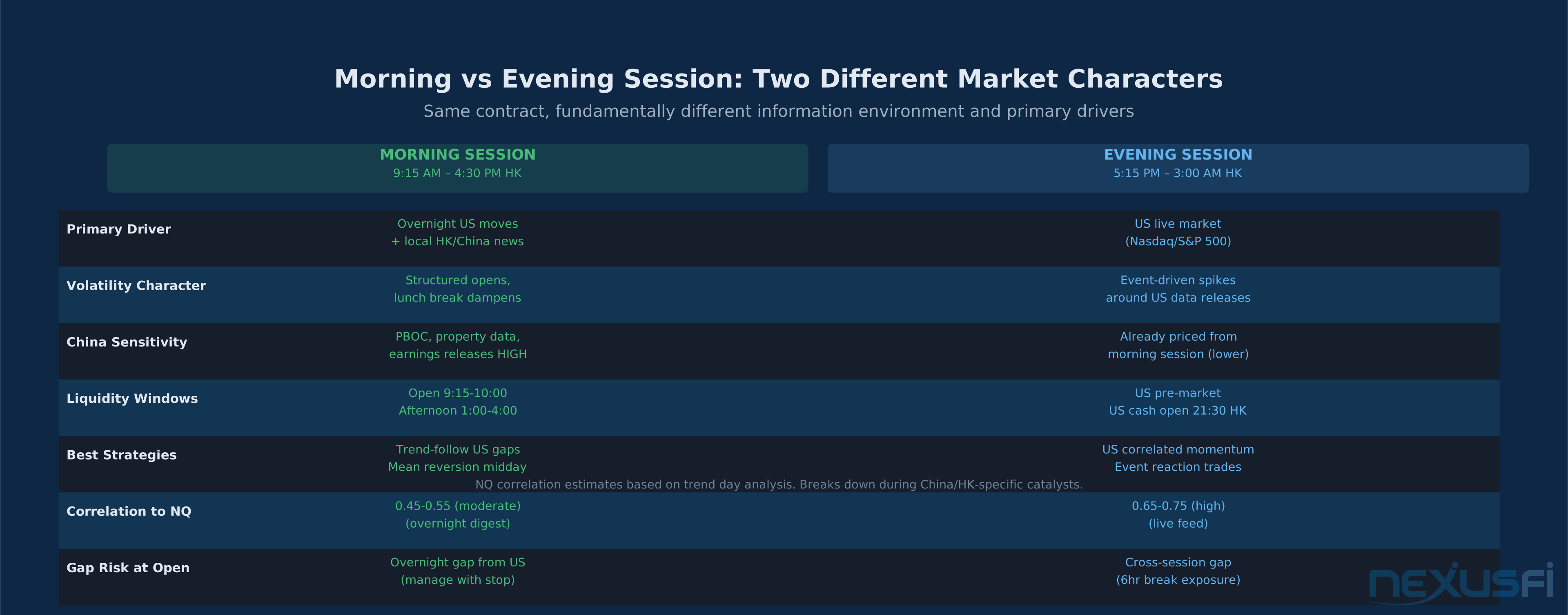
Morning session character: Local Hong Kong and mainland China news flow dominates. Stocks react to earnings, IPOs, corporate announcements, property market data, and Chinese economic releases. Liquidity is generally strong during both morning and afternoon sessions, with typical lunch-hour thinning. The morning session is digesting last night's US moves plus any HK/China news that broke before trading hours.
Evening session character: US market sentiment takes over. HSI becomes highly sensitive to Nasdaq and S&P 500 futures direction, Fed communications, US jobs data, and global risk appetite. If ES futures are rallying after hours because of tech earnings, HSI will likely follow. If there's a surprise FOMC statement, HSI prices in the reaction during the evening session before the US cash market even opens.
That two-directional influence is the whole point. Understanding which session you're trading — and what forces drive it — is the prerequisite for any consistent approach.
Order Flow and Liquidity: What the DOM Shows You #
Liquidity in HSI futures isn't uniform. It bunches at predictable times and thins out at others. Getting this wrong costs money in slippage and bad fills.
Highest liquidity windows:
- First 30-45 minutes of the morning session (9:15--10:00 AM HK)
- Around the US open (21:30 HK / 9:30 AM ET)
- Major economic data releases (CPI, NFP, FOMC)
- Active period of the evening session during US market volatility
Lower liquidity periods:
- Lunch break transition (noon to 1 PM)
- Early evening session before US pre-market activity picks up
- Final 30 minutes of the evening session (2:30--3:00 AM HK)
The DOM in Mini-HSI behaves like other index futures you may already trade, with important differences. Resting bid/ask depth near the best price tends to be thin compared to ES or NQ — this is a less liquid market. Large resting orders near obvious technical levels can create short-term support/resistance effects, but they may be withdrawn instantly when tested. Don't confuse size on the DOM with committed intent.
For deeper background on reading DOM order flow in live futures markets, the depth of market guide applies directly to HSI.
NexusFi member @Godzilla documented his adaptation process in the "HSI Index Futures Scalping Experiment" journal thread:
@josh, another active participant in the same thread, found significant performance on mean-reversion approaches: in May 2020 he documented a 385-tick gross trade on Mini-HSI, noting "after commissions the net was 293 ticks — this shows the pretty big overhead of the mini HSI." The commission and spread impact on scalping approaches is real: a 2-tick spread on Mini-HSI costs HKD 20 (~US$2.56) round-turn, which on a 10-tick target eats 20% of gross before commissions. See: https://nexusfi.com/showthread.php?t=50250&p=788724#post788724
The practical lesson: build your minimum viable target around the bid-ask spread as a real cost. Tick-scalping approaches that work in ES (where the spread is often 1 tick on a $12.50 tick value) face different economics in Mini-HSI.
The US Correlation: The Most Important Thing to Understand #
This section matters more than any other in this guide. Get it wrong and everything else breaks down.
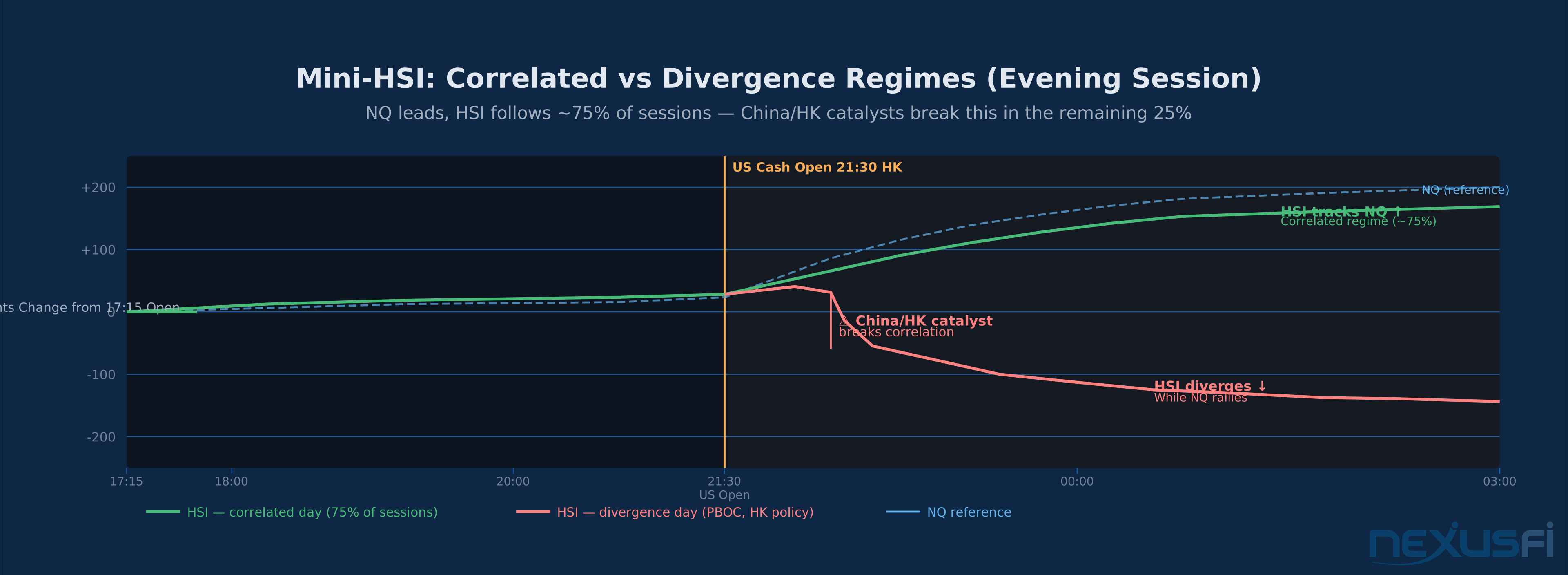
HSI futures behave like a global macro proxy during the evening session. The correlation to US equity index futures — especially Nasdaq (NQ) — is strong. In well-defined trend sessions, HSI follows NQ direction with a short lag. When US tech is strong, HSI tends to lift. When US equity futures gap down on bad CPI data, HSI responds in real time.
The correlation is real and it's the basis for the most common retail strategy in HSI: use US market direction as a filter before taking directional positions.
But here's what gets people hurt: the correlation breaks.
When HK-specific or China-specific catalysts hit — PBOC reserve ratio changes, Chinese internet regulation announcements, Hong Kong political developments, mainland property sector news — HSI can move sharply in one direction while NQ and ES go the opposite direction or sit flat. A trader positioned for the correlated follow-through suddenly has the wrong trade with a gap against them.
The correlation isn't constant. It's regime-dependent. In risk-on/risk-off sentiment swings driven by US macro data, HSI tracks US markets closely. In policy or geopolitical events specific to China and Hong Kong, correlation evaporates.
Understanding the framework for cross-market relationships helps here. The inter-market analysis guide and intermarket analysis strategies both cover reading multi-market correlations — the same framework applies to HSI's relationship with NQ.
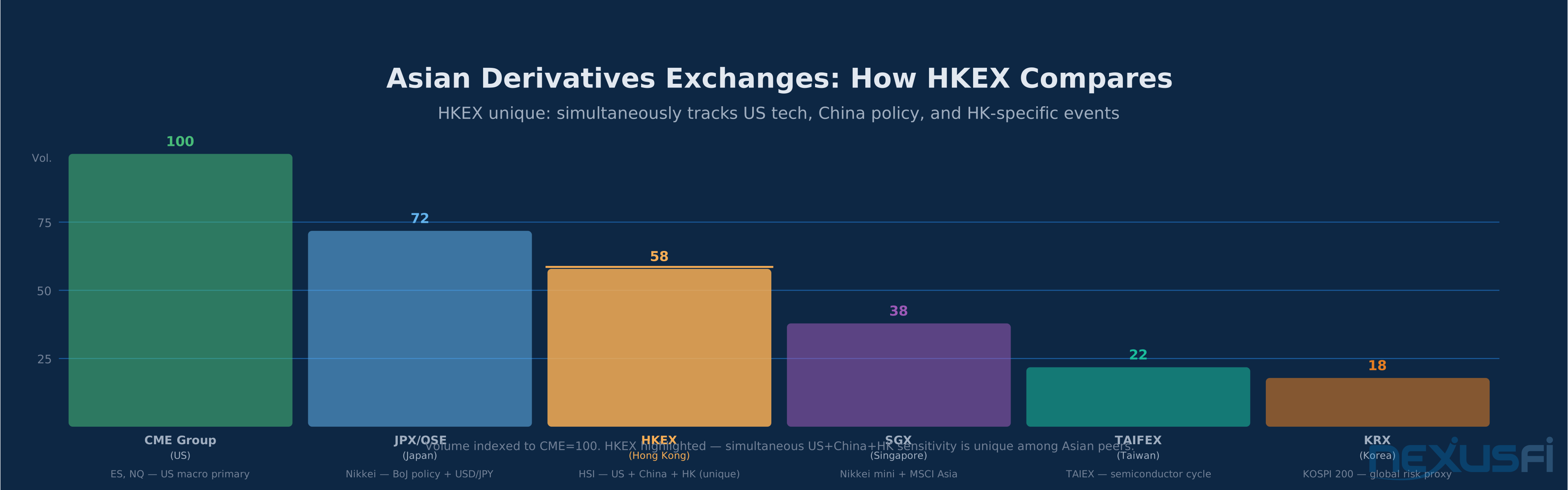
For context on how HSI fits alongside other Asian index futures: the Nikkei 225 futures guide covers the NKD contract, which represents Japan's benchmark index and trades during similar hours. JPX and SGX are HKEX's closest peers — SGX in particular lists mini-Nikkei products that compete for overnight trader attention.
The practical filter: Before taking a directional HSI trade in the evening session, confirm that US futures (ES or NQ) are not fighting your direction AND that there's no China/HK-specific headline in play that could override the US sentiment. Both conditions have to be clear. One without the other is not sufficient.
NexusFi member @Trembling Hand, who's been trading HSI through AMP Futures, highlighted the practical setup considerations for US-based traders accessing HKEX: platform choice, data feed, and understanding the interaction between HK day session and US overnight context all matter before the first trade. See: https://nexusfi.com/showthread.php?t=59377&p=879473#post879473
Four Trading Strategies That Work #
These aren't theoretical frameworks. They're approaches that map to what HSI actually does across its session structure.
Strategy 1: Evening Session Momentum Follow-Through
This is the simplest and most reliable HSI approach for traders already familiar with US index futures.
Setup: US equity futures establish a clear directional move pre-market (after 4 PM ET). No major China/HK trigger is in play. HSI evening session opens with follow-through in the same direction.
Entry: Wait for the first 15-20 minutes of the evening session to establish direction (5:15-5:35 PM HK). If HSI gaps in the same direction as US futures and holds above the gap, enter on a pullback to the gap area with limit orders.
Stop: 1.0-1.5x the session's current ATR below the gap or below a clear structural level. Never use a fixed-tick stop — use volatility context.
Target: Partial at 1R, trail remainder to VWAP.
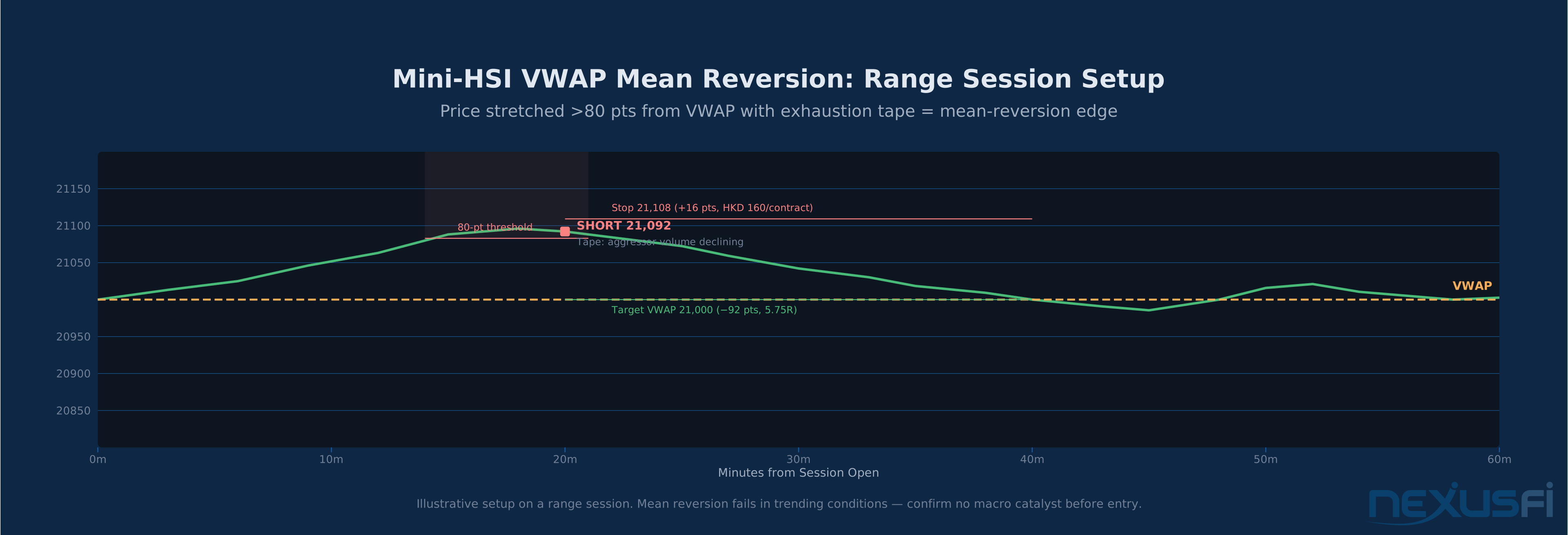
Strategy 2: Mean Reversion Off Session Extremes
Works in range-bound conditions with no significant macro trigger.
Setup: The morning or afternoon session has been trendless, oscillating around VWAP. Price stretches to a significant distance from VWAP (typically 1.5x the average session range). Tape shows declining aggressor volume at the extreme.
Entry: Limit order at or near the extreme, watching for a completed selling or buying tail. Stop just beyond the extreme.
Target: Back to VWAP or the center of the session range.
Warning: This strategy has a higher failure rate than momentum following. It kills traders who apply it without strict stops in sessions that are actually trending. The key filter: if there's a macro trigger driving direction, don't fade the move. Range conditions only.
The battle-back implies staying with the session's momentum character once it was identified. See: https://nexusfi.com/showthread.php?t=50250&p=790095#post790095
Strategy 3: Reaction Trading After US Catalysts
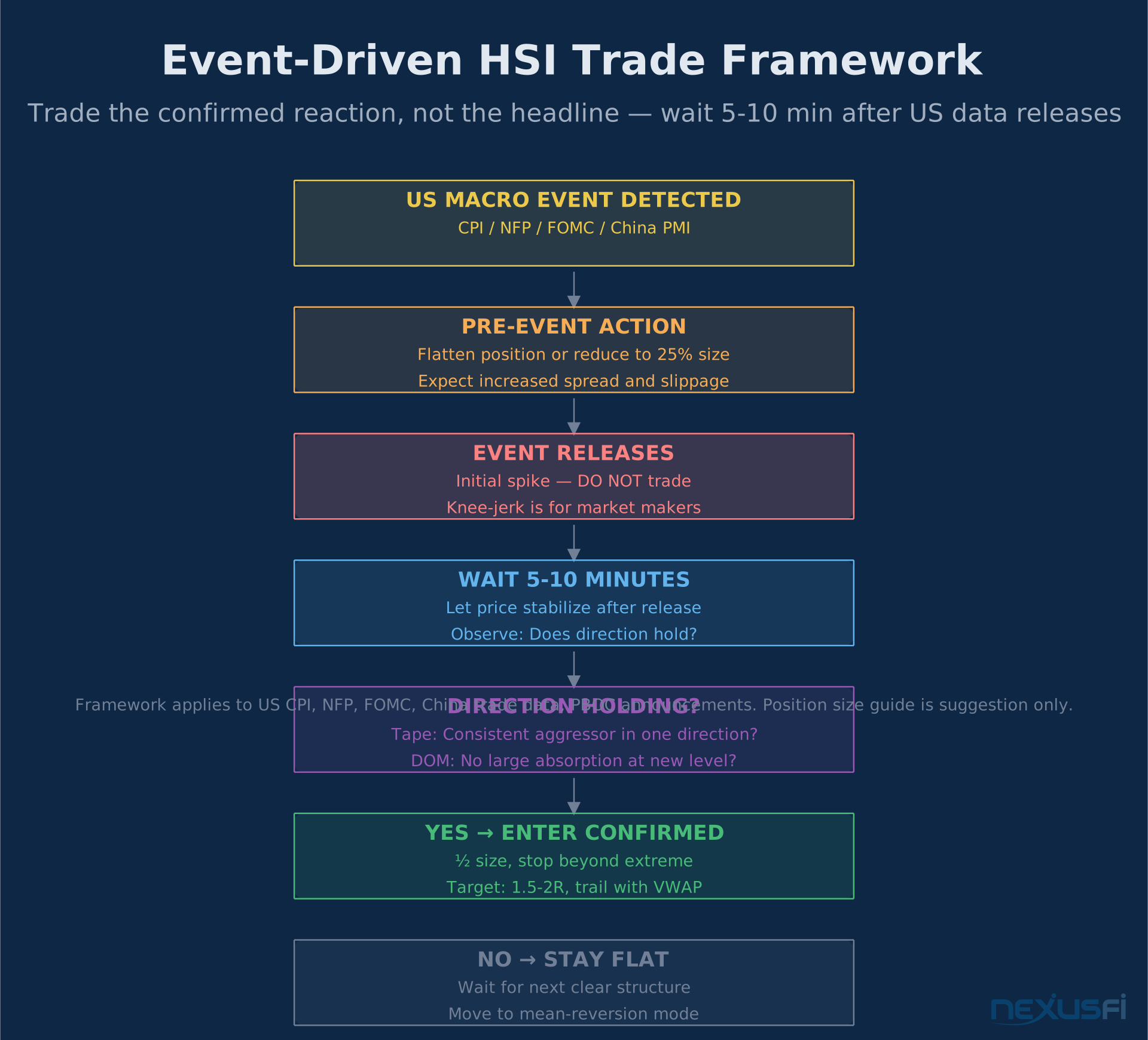
The event-driven setup is counterintuitive: you're intentionally NOT trading through the trigger. You trade the aftermath.
Setup: Major US economic data (CPI, NFP, FOMC) is imminent. HSI evening session is live.
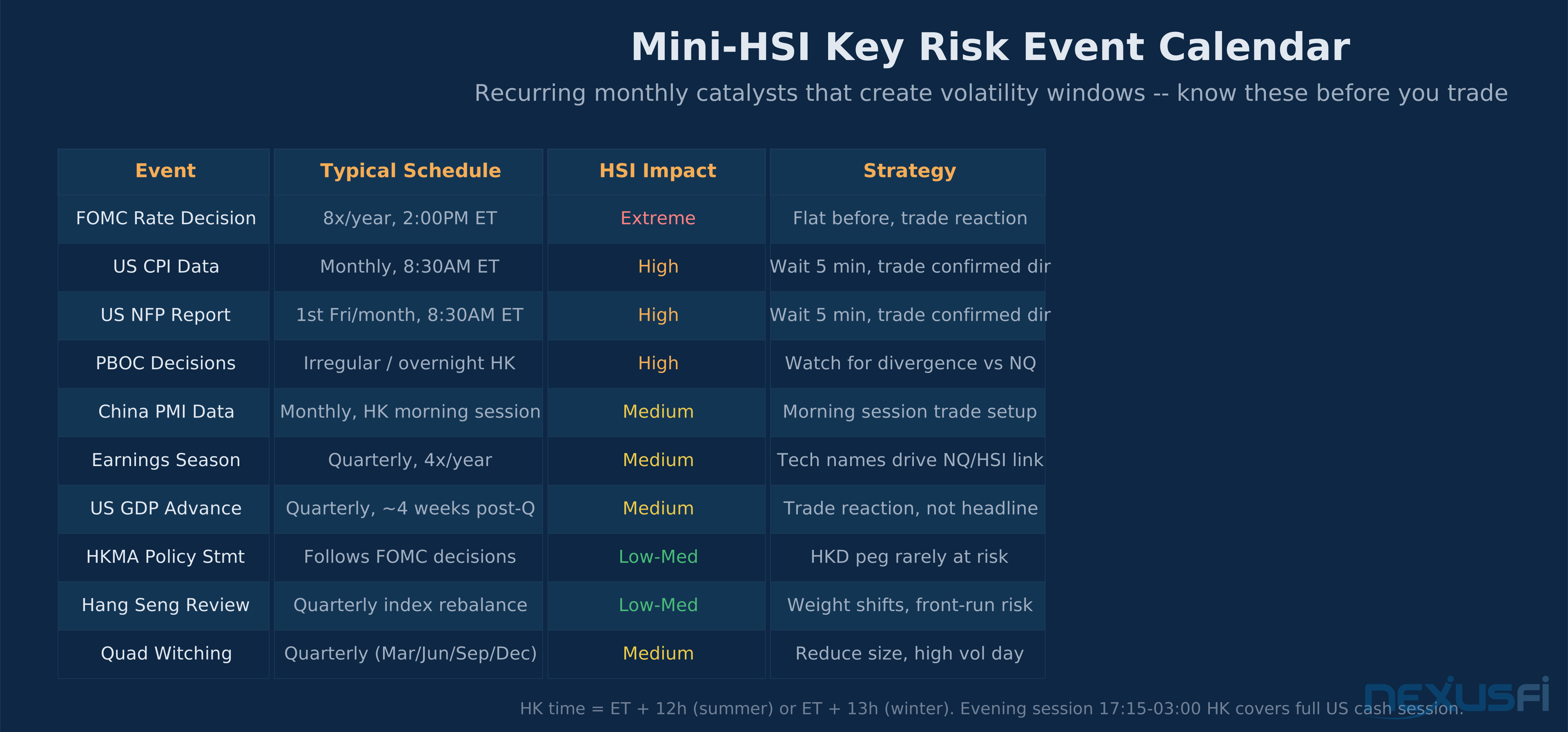
Before the event: Reduce position size or go flat. The initial spike is for market makers, not retail traders.
After the event: Wait 5-10 minutes after the release. Let the initial "knee-jerk" move complete. Then assess whether the post-event direction is holding. If price stabilized and order flow confirms the initial direction, enter in the confirmed direction.
The key rule: trade the reaction, not the headline. The headline gets you into the spike. The reaction gets you into the confirmed new direction. This applies to HSI especially because the market is pricing US data from 5,000 miles away and momentum traders pile in fast.
Strategy 4: Day Session Gap Analysis from Overnight Context
For the morning session, the prior evening's US close sets the stage. If HSI evening session closed strongly (near session highs), the next morning session often opens with follow-through or consolidation near those highs. If the evening closed on the lows, the morning frequently opens below prior day support.
The overnight inventory guide covers this framework for US index futures. The same dynamic applies to HSI: the prior session creates inventory positions that morning traders either build on or fade when the full local session opens.
Risk Management for HSI: The Numbers Matter #
Let's be precise about actual dollars and cents, because HSI risk management has some mechanics that surprise traders coming from US index futures.
Tick value reality check:
One tick (1 index point) in Mini-HSI = HKD 10. At the HKD/USD peg rate of approximately 7.8 (HKMA maintains 7.75-7.85 range), that's roughly US$1.28 per tick.
Compare to ES: 1 tick (0.25 points) = US$12.50. Or NQ: 1 tick (0.25 points) = US$5.00.
Mini-HSI is a smaller instrument per tick than US index futures. That doesn't mean the risk is smaller — it means you need to think about position size differently.
Position sizing with ATR:
A typical average true range (ATR) for HSI in normal market conditions runs 150-300 points per session. In volatile conditions (major US data days, China policy announcements), intraday ranges can spike to 500+ points.
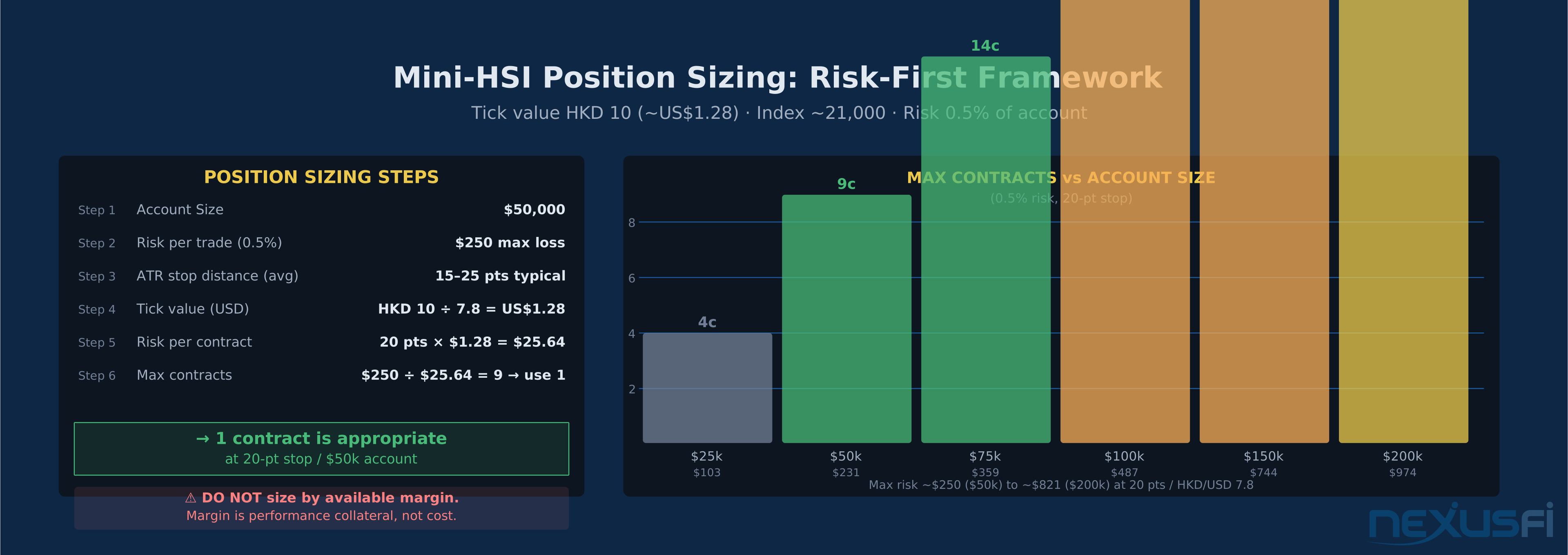
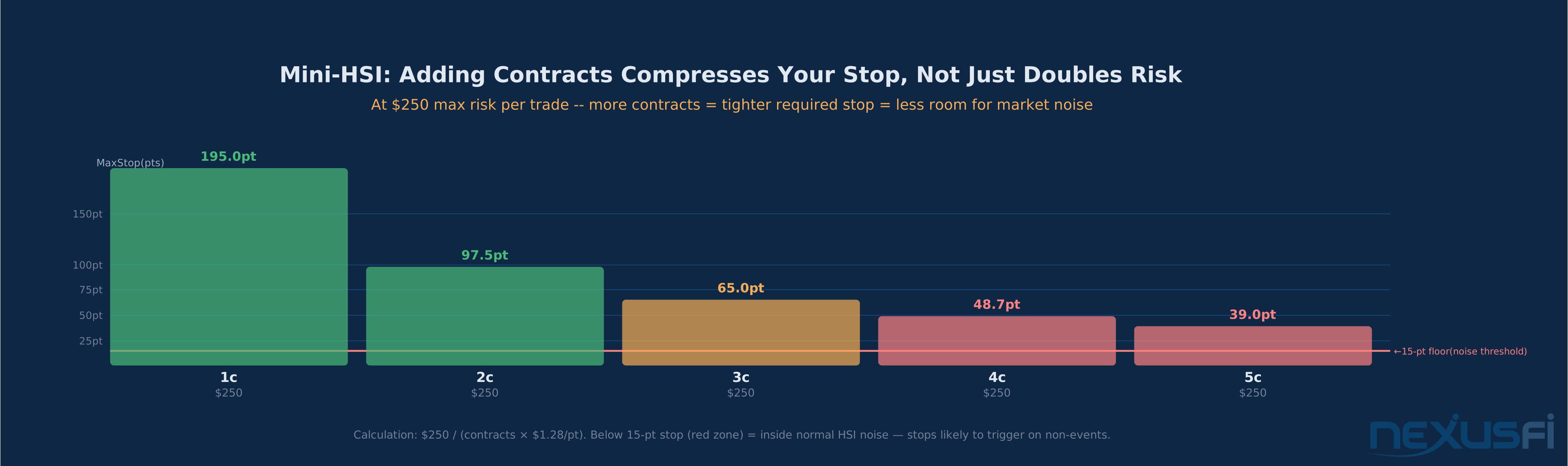
Using a 20-point stop in Mini-HSI costs HKD 200 (~US$25.64) per contract. For a $50,000 account risking 0.5% per trade ($250), that theoretically supports 9-10 contracts. In practice, 1-2 contracts is the appropriate size for most retail traders at that account level, because stop-out risk compounds quickly when positions are oversized relative to the account's tolerance for multiple losing trades.
Adding more contracts doesn't just increase your profit potential — it compresses the effective stop distance you can use at the same dollar risk. At $250 risk per trade, 2 contracts forces a 9.5-point stop; 1 contract allows a 19-point stop, which is the difference between normal HSI noise and a real structural level. For complete ATR-based sizing methodology, the volatility-based position sizing guide applies directly.
Margin is performance collateral, not the cost of the trade. If a Mini-HSI contract requires HKD 20,000 (~US$2,564) in initial margin, that's a temporary collateral hold that returns when you close. The actual trade cost is commission + spread + slippage + P&L impact of price movement. Sizing based on available margin instead of acceptable dollar risk is the single most common failure mode in futures trading, and HSI is no exception.
Currency risk:
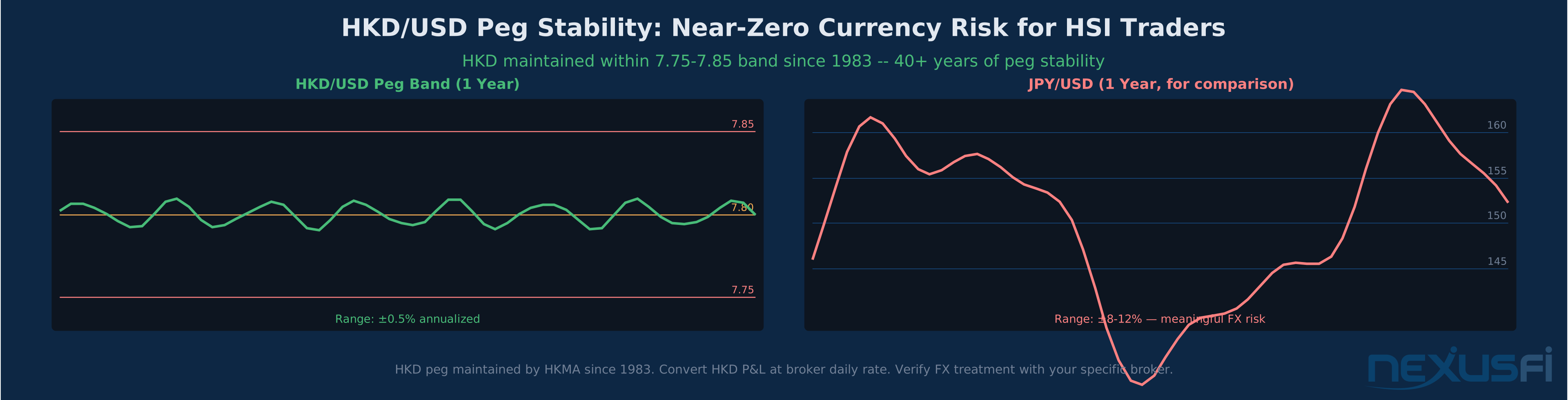
Your HSI P&L is denominated in HKD. Most brokers offering Mini-HSI to international clients automatically convert daily P&L to your base currency (USD for US traders). The HKD peg to the USD (7.75-7.85 range, maintained since 1983 by the HKMA) means currency risk is minimal — but not zero. Confirm with your specific broker how they handle HKD P&L conversion.
Gap risk:
Holding Mini-HSI positions overnight or through session breaks exposes you to gap risk. If major news breaks during the lunch break (12-1 PM) or between the evening session close (3 AM HK) and the next morning open (9:15 AM HK), your stop won't protect you from the opening gap. Size overnight positions so — the overnight risk and gap management guide covers this framework for all futures products.
Getting Access to Mini-HSI #
Not every futures broker offers HKEX products to international retail clients. The clearing infrastructure for accessing Hong Kong Futures Exchange requires FCM relationships with HKEX member firms.
In the US market, several FCMs offer Mini-HSI access to retail clients, often through relationships with clearing brokers or direct HKEX clearing membership.
Key questions to ask any broker before opening an account for HSI trading:
- Are Mini-HSI (MHI) futures available, not just full HSI?
- What is the commission per contract (both ways)?
- Is intraday margin different from overnight margin for HSI products?
- How does the broker handle HKD P&L conversion?
- What data feed covers HKATS (HKEX's electronic platform)?
- Are there any account minimums specific to HKEX products?
The data feed question matters more than most people expect. HKEX market data fees differ from CME fees. You need real-time HKATS data to trade HSI properly — delayed data in a market that can move 100 points in 30 seconds is not workable. @Godzilla's setup was Sierra Chart with CQG data feed, which he documented in the very first post of his HSI journal. That combination is well-tested for retail HSI trading:
How HSI Fits a Multi-Market Portfolio #
You don't have to trade HSI exclusively. For many traders, Mini-HSI works best as a satellite position — something you trade in the Asian session while your primary US index futures exposure is managed separately during RTH.
The relationship between HSI and US index futures also creates hedging possibilities. If you're long ES or NQ positions and concerned about overnight risk from China-specific events, a short Mini-HSI position during the evening session provides partial offset — capturing exposure to exactly the China/HK risks that might pressure your long US equity position without fully closing the trade.
This isn't tight arbitrage (the correlation isn't consistent enough), but it's a meaningful risk management tool for traders who hold overnight US index positions and want some protection against HK/China-specific tail risk.
For a full-picture view of the global exchange environment: CME Group as the dominant US derivatives exchange, JPX as Japan's primary derivatives venue, and SGX as Singapore's hub — HKEX sits at the intersection of all three in terms of cross-market influence and trader attention.
The Bottom Line #
HKEX Hang Seng Index futures give you something the major US exchanges can't: a highly liquid Asian market that stays open through US trading hours and responds to global macro forces in real time.
Mini-HSI is the right starting contract for retail traders. The tick value (~US$1.28) makes it accessible. The structure mirrors what you'd find in any major index futures contract. The risk management principles — volatility-based sizing, stop placement relative to ATR, pre-session preparation — are the same ones you'd apply to ES or NQ.
The difference is the information environment. You're tracking two things simultaneously: US equity sentiment and China/Hong Kong policy flow. When those are aligned, HSI gives you clean directional trades. When they diverge — and they do diverge — you need to recognize that the trade you thought you had no longer exists.
Start with the evening session. Learn how HSI responds to US market moves on normal days before you try to work through the more complex dynamics of the HK day session and China news flow. Paper trade for a few weeks while you watch how the market behaves around US data releases. The mechanics will feel familiar quickly. The nuances take longer.
The market has been there since 1986. The traders who've figured it out built their process around respect for what this market actually is: not a local Hong Kong product, but one of the world's best real-time reads on global risk appetite.
Key Specifications Reference #
HKEX Trading Hours (HK Local Time)
- Morning Session: 9:15 AM — 12:00 PM
- Afternoon Session: 1:00 PM — 4:30 PM
- Evening Session: 5:15 PM — 3:00 AM
- Last trading day hours may differ — verify on HKEX.com
Mini-HSI Quick Specs
- Underlying: Hang Seng Index
- Multiplier: HKD 10 per index point
- Min tick: 1 index point = HKD 10 (~US$1.28 at 7.8 peg)
- Settlement: Cash-settled
- Margin: Set by HKEX and broker — verify before trading
Sources and References
- HKEX Mini-HSI product page: hkex.com.hk
- Orient Futures Singapore HSI guide: orientfutures.com.sg/glossary/hkex-hang-seng-index-futures
Knowledge Map
Prerequisites
Understand these firstGo Deeper
Build on this knowledgeReferences This Article
Articles that build on this topicCitations
- — The HSI Index Futures Scalping Experiment (2020) 👍 8“A little daily journal to track my HSI trading. Why: make myself accountable and proof of method. Set-up: Platform - SierraChart64 + CQG datafeed.”
- — The HSI Index Futures Scalping Experiment (2020) 👍 3“I went back and reviewed my losses and concluded buying the breakouts were killing me so after a swift uppercut to myself I've banished [them].”
- — The HSI Index Futures Scalping Experiment (2020) 👍 4“I was trading the mini HSI and got 385 ticks. After commissions the net was 293 ticks. This shows the pretty big overhead of the mini HSI.”
- — The HSI Index Futures Scalping Experiment (2020) 👍 4“Weekly results 23-27 March 2020: 23-Mar-20 +108tics - was down at the start and battled back. 24-Mar-20 +135tics. 25-Mar-20 +69tics.”
- — The HSI Index Futures Scalping Experiment (2020) 👍 4“stronger...hop onboard that train and make your target -- don't be greedy this a scalping strategy not a position strategy.”
- — Trading on HKEX through AMP - general questions - ES -> HHI/HSI (2023)“I've traded the HSI since 2007 from Australia! The futures opens auction is at 9:14. And trading starts at 9:15. You can see the match price from 9:00 am (All Hong Kong local time).”
- — Overnight Session ES Trading (2011) 👍 20“followed by the Hang Seng stock index in Hong Kong. These are the two primary Asian markets. When they have the floor, they not only set the tone for the next day's trading in US stocks, but they push and pull.”
- HKEX — Mini-Hang Seng Index Futures -- HKEX Official (2026)
- Orient Futures — 5 Things to Know About HKEX Hang Seng Index Futures -- Orient Futures Singapore (2024)