



VIX Futures: The Complete Trading Guide to the Volatility Index Contract
Overview #
The VIX
Here's the thing about VIX: you can't trade it directly. The index itself is a calculation, not a security. What you can trade are VIX futures (/VX on Cboe Futures Exchange), and that distinction matters more than most traders realize. VIX futures don't track spot VIX. They track where the market expects VIX to be at a specific future date, plus a risk premium baked in by the options complex. Get that relationship wrong and you'll wonder why your position is bleeding while the VIX number on your screen barely moved.
This guide covers the complete /VX ecosystem
Key Concepts #
VIX Index
VIX Futures (/VX)
Term Structure
Contango
Backwardation
Roll Yield
Volatility Risk Premium (VRP)
SOQ (Special Opening Quotation)
Mini VIX (/VXM)
How VIX Is Calculated #
The VIX calculation starts with a broad strip of out-of-the-money SPX puts and calls. Cboe selects two expiration dates that bracket 30 calendar days, then runs the following process:
- Select the strike range
- Weight by contribution
- Calculate implied variance
- Interpolate to 30 days
- Convert to volatility
What this means in practice: VIX is driven by the entire SPX options surface, not just at-the-money implied vol. Put skew matters enormously. When institutional investors bid up downside protection (SPX puts), VIX rises even if at-the-money vol holds steady.
The VIX responds to SPX option demand in a way that creates an asymmetric relationship with the S&P 500. A 2% S&P drop often spikes VIX by 4-6 points, but a 2% S&P rally might only compress VIX by 1-2 points. This asymmetry exists because put demand is structural
Reminiscences of a Bean Trader or Why These Ain't Yo Daddy's Beans No-Mo (@tigertrader)
VIX Futures Contract Specifications #
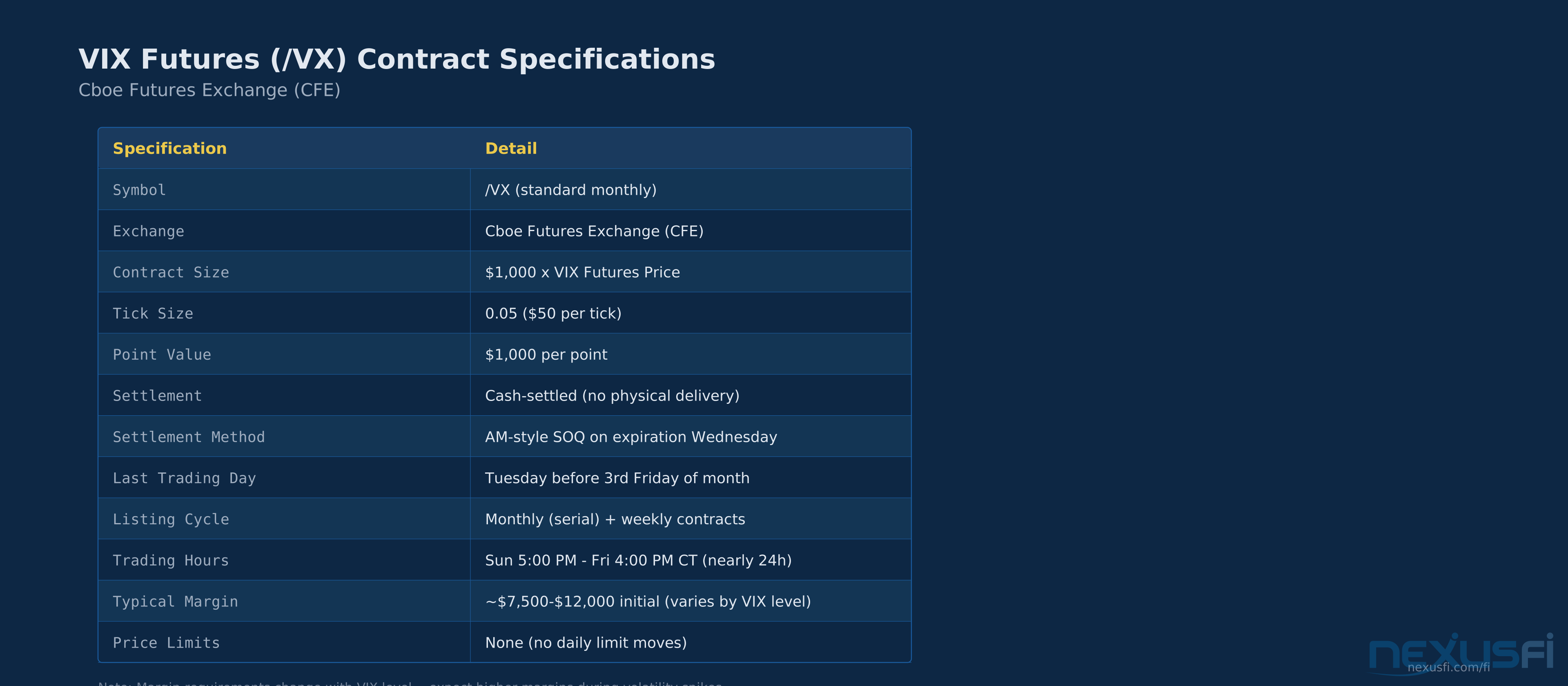
The standard Cboe VIX futures contract (/VX) is the benchmark volatility derivative:
- Underlying: Cboe VIX Index
- Exchange: Cboe Futures Exchange (CFE)
- Multiplier: $1,000 per VIX point
- Tick size: 0.05 index points
- Tick value: $50 per tick
- Settlement: Cash-settled to VRO (VIX settlement value)
- Expiration: Monthly, typically on a Wednesday, 30 days before the next month's standard SPX options expiration
- Trading hours: Sunday 5:00 PM to Friday 4:00 PM CT (nearly 24 hours on weekdays)
- Margin: Varies with VIX level, but expect $8,000-$15,000+ per contract depending on regime
Run the math on sizing: at VIX = 20, one /VX contract carries $20,000 notional exposure. A 3-point adverse move costs you $3,000. A crisis-style 10-point spike (VIX going from 20 to 30) costs $10,000 per short contract. That's a 50% wipeout on typical margin. Position sizing is the single most important risk decision in this market.
Mini VIX Futures (/VXM) offer the same exposure at 1/10th the size
Settlement Mechanics #
VIX futures settlement is where most retail traders get surprised, and it's worth understanding in detail because it creates real execution risk.
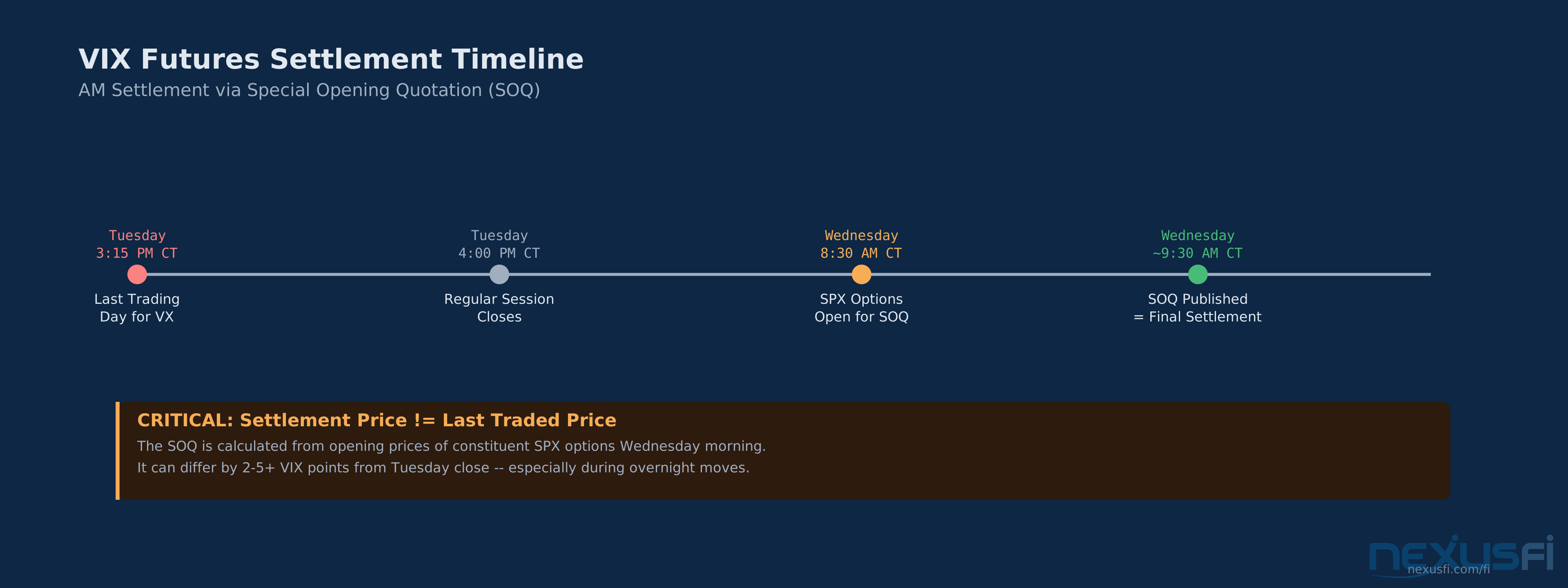
The final settlement value is the VRO
- On the Wednesday of expiration, SPX options used in the VIX calculation go through a special opening auction
- Market makers and institutions submit opening orders for these SPX options
- The opening prices are used to calculate the official VIX settlement value
- All expiring VIX futures contracts settle to this single number
The critical issue: the SOQ can deviate much from where VIX closed the day before. The opening auction is a separate event from continuous trading. Large hedging flows, delta-neutral adjustments by market makers, and the mechanics of the opening rotation all inject volatility into the settlement print.
In practice, settlement gaps of 0.50-2.00 VIX points are routine, and in stressed markets, they can be larger. If you're short one /VX contract and settlement comes in 2 points higher than expected, that's $2,000 you didn't plan for.
The rule: don't hold positions through settlement unless you explicitly want the settlement exposure. Roll or close before the last trading day if settlement mechanics aren't part of your strategy.
Term Structure: Contango vs. Backwardation #
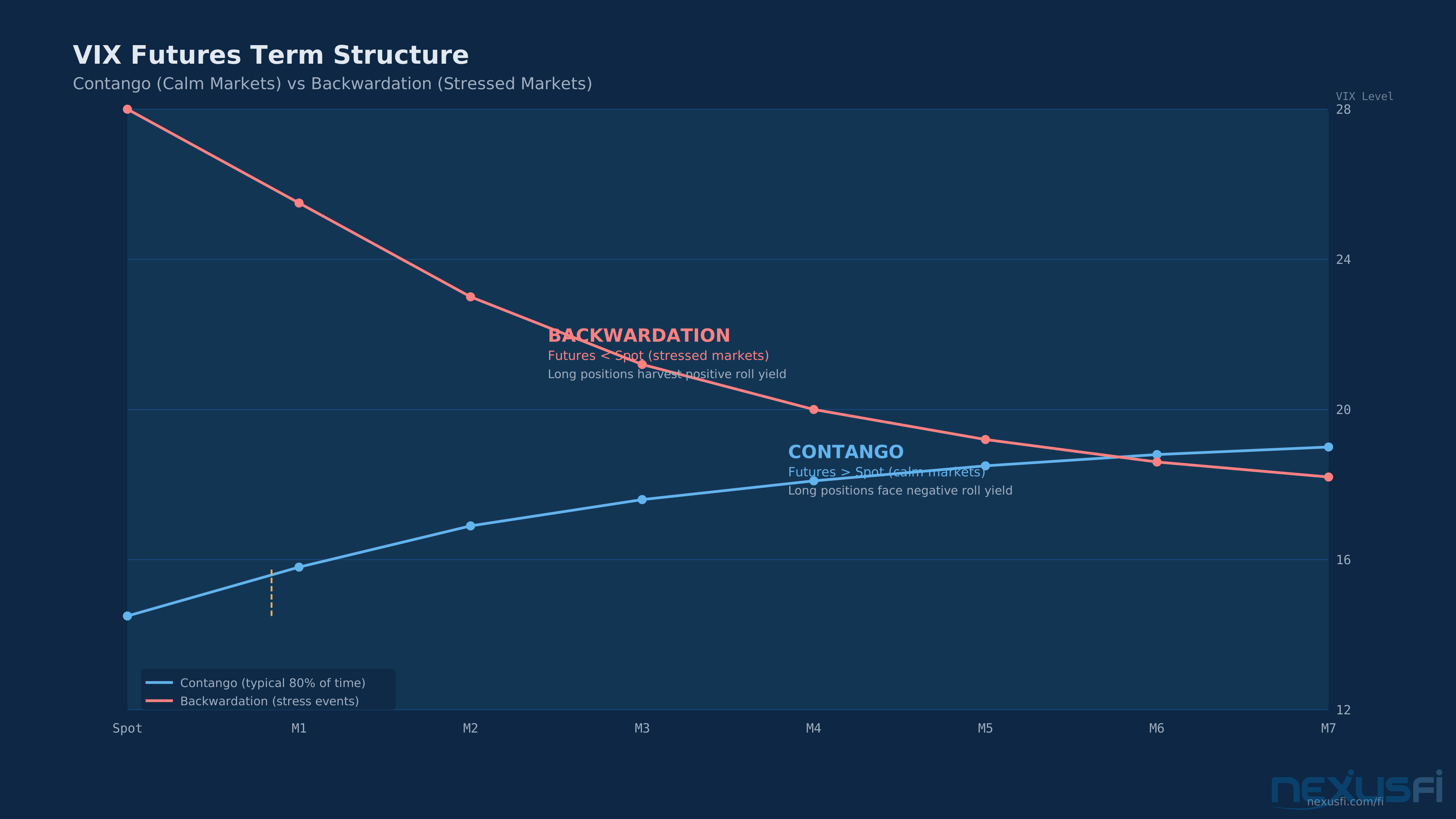
The VIX term structure is the single most important chart for VIX futures traders. It tells you more about your expected P&L than the spot VIX number ever will.
Contango (Normal Market #
In contango, each successive VIX futures month trades higher than the one before it. Front-month might be at 16, second month at 17.5, third at 18.5.
Why this is the default state:
- Mean reversion pricing
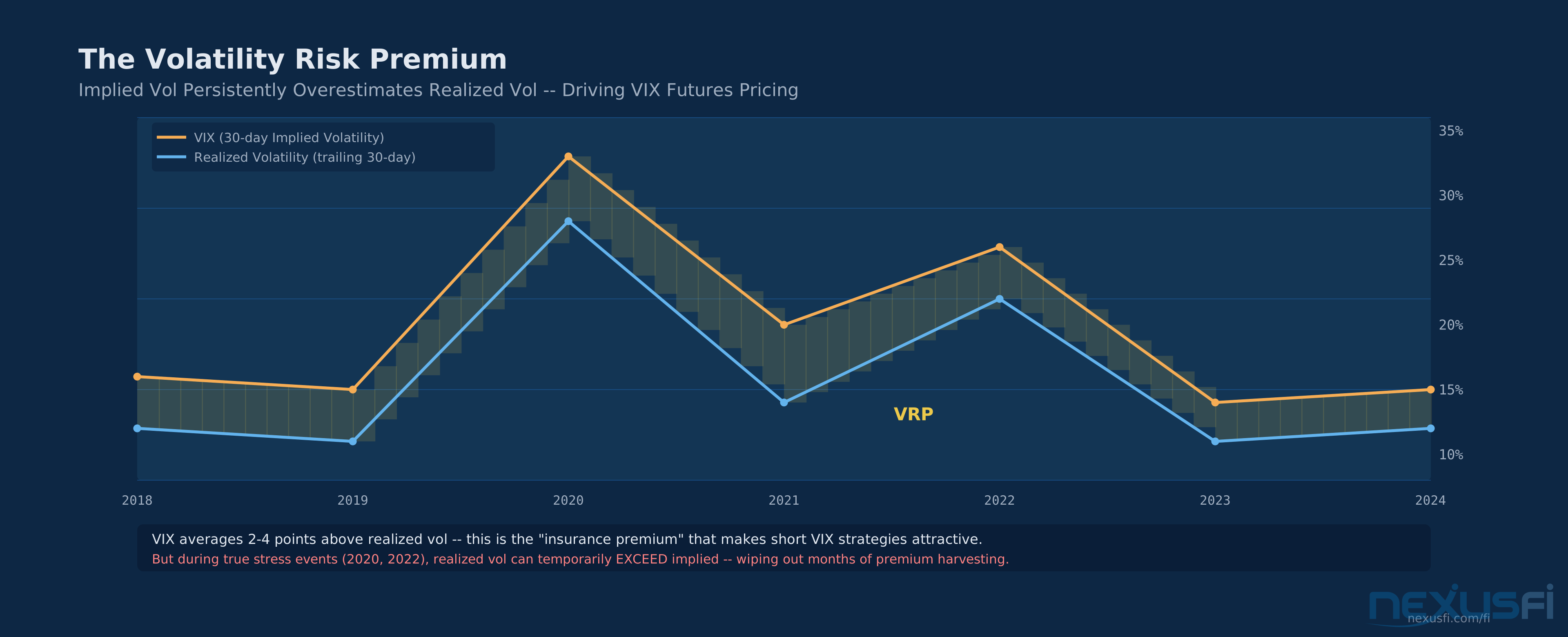
- Volatility risk premium
- Hedging demand
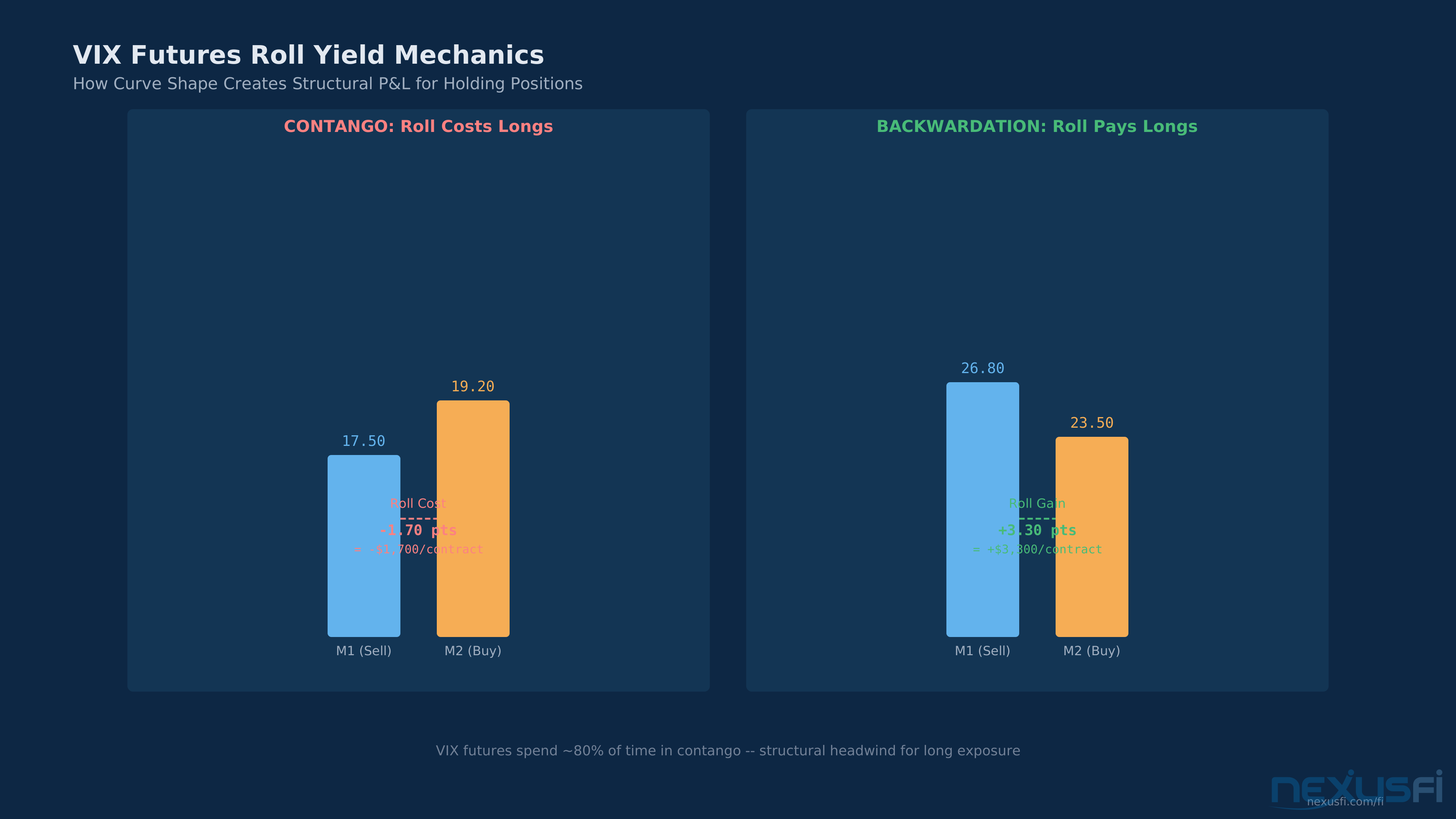
The practical consequence: in contango, long VIX futures positions bleed value every day. Your front-month contract gradually converges toward spot VIX as expiration approaches, and you're losing money even if VIX stays flat. This "negative carry" is the number one reason retail VIX longs get destroyed.
Reminiscences of a Bean Trader or Why These Ain't Yo Daddy's Beans No-Mo (@tigertrader)
Backwardation (Crisis State) #
In backwardation, the curve inverts
Backwardation signals:
- Extreme fear in equities (rapid selloff, systemic risk event)
- Expectation that current elevated volatility will normalize (but not yet)
- Massive near-term put buying that distorts the front end
During the COVID crash in March 2020, VIX hit 82 while back-month futures were in the 40s. That's extreme backwardation
For long-vol traders, backwardation can actually be favorable because you're rolling into cheaper contracts. But timing the entry is everything. Getting long VIX at VIX 60 during a backwardation episode can still lose money if vol normalizes faster than you expect.
VIX Spot vs. VIX Futures: The Relationship #
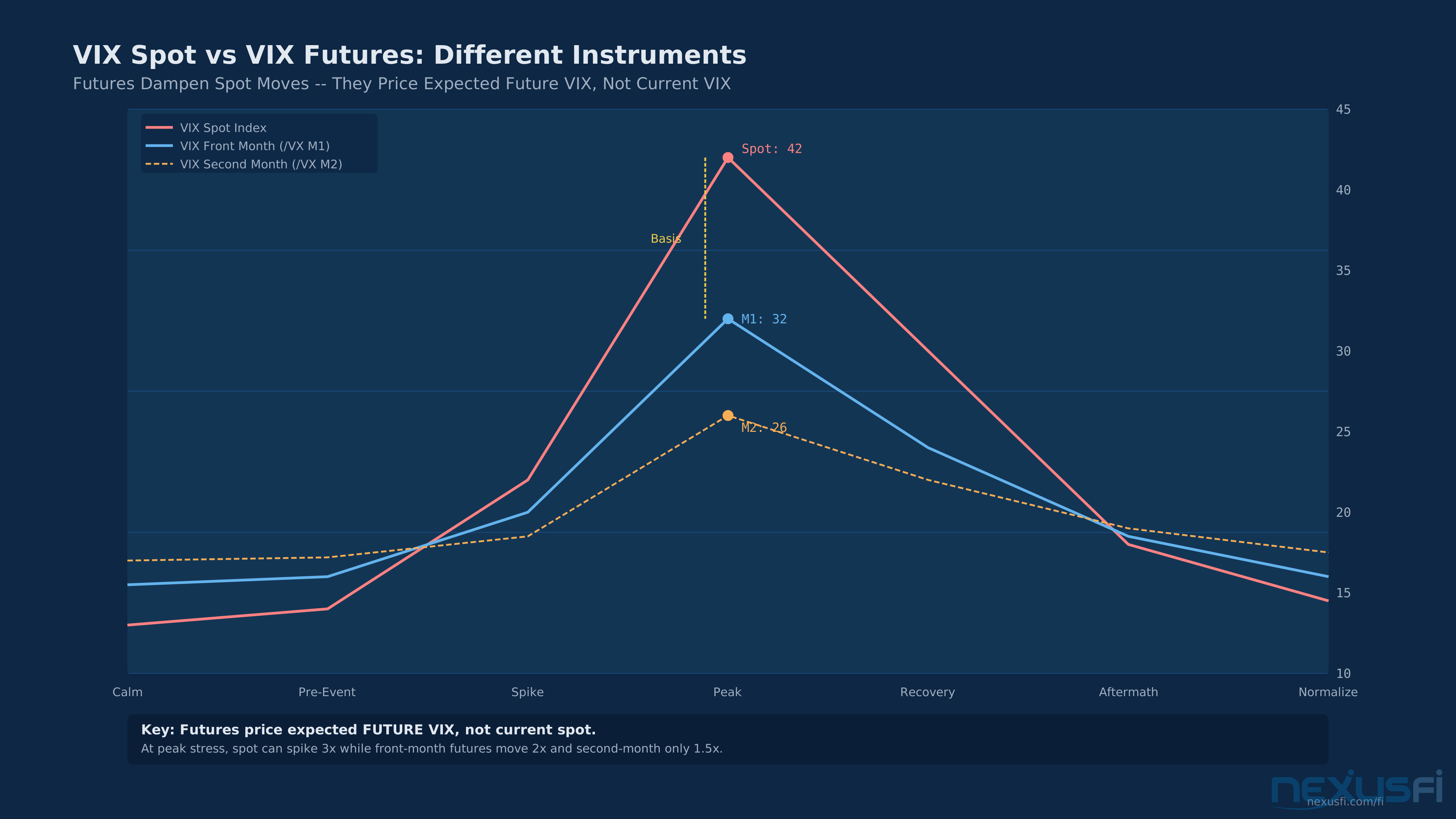
One of the most common mistakes: assuming VIX futures track spot VIX. They don't, and the disconnect is systematic.
Key Dynamics #
- Spot VIX is a snapshot. It reflects the current 30-day implied volatility from SPX options, updated in real time
- VIX futures are an expectation. They price where VIX will settle at a future date, including risk premium and term structure effects
- The gap between them is not random. It's driven by VRP, hedging demand, and mean-reversion expectations
In calm markets, VIX futures typically trade 2-5 points above spot VIX. In stressed markets, the relationship can flip
What This Means for Trading #
A 3-point spike in spot VIX might move front-month /VX futures by only 1.5-2 points. The further out you go on the curve, the less responsive futures are to spot moves. This dampening effect means you need spot VIX to move much more than your futures position's breakeven to profit from a directional long-vol trade.
Conversely, a spot VIX collapse from 25 to 18 might only compress front-month futures from 22 to 19
Practical Trading Strategies #
Directional Trades (Level Bets) #
The simplest approach: get long /VX if you expect volatility to spike, short if you expect it to compress.
Long VIX works when:
- Clear macro trigger approaching (rate decisions, geopolitical escalation, earnings season)
- Term structure is relatively flat or in backwardation (reduced roll cost)
- Spot VIX is well below its long-term average (~20)
- You have a defined time horizon and exit plan
Short VIX works when:
- VIX is elevated after a stress event and mean-reversion is likely
- Contango is steep (positive roll yield working for you)
- No imminent catalysts on the horizon
- You use strict position sizing and stop losses
The catch with directional VIX: timing is everything, and the curve works against you on both sides. Long-vol traders bleed in contango. Short-vol traders face unlimited loss potential during crashes. Naked directional VIX is a difficult game.
Curve Trades (Term Structure Bets) #
More sophisticated and often more forgiving than outright directional bets.
Calendar spreads
Calendar spreads reduce your directional exposure and let you trade the shape of the curve rather than betting on where VIX lands. Institutional desks live in this space.
When curve trades work best:
- Regime transitions (calm → stressed, or stressed → normalizing)
- Extreme curve shapes (very steep contango or deep backwardation)
- Around roll dates when structural flows distort relative pricing
Portfolio Hedging #
VIX futures are a natural hedge for equity portfolios because VIX and the S&P 500 are negatively correlated. When stocks drop, VIX rises. But the hedge ratio isn't stable
Best practices for VIX hedges:
- Size to your portfolio's risk, not a fixed dollar amount
- Use VIX call spreads rather than outright futures to cap the negative carry cost
- Roll your hedge before expiration to avoid settlement risk
- Accept that the hedge has a cost
VRP Harvesting (Short Volatility) #
Selling volatility to collect the risk premium is the foundation of many institutional strategies. The trade is simple in concept: short VIX futures, collect the contango roll, and profit from VRP. In practice, it requires iron risk discipline because the losses when it goes wrong are convex
Risk controls for short-vol strategies:
- Define maximum loss before entry
- Use stops or hedge with VIX call spreads to cap tail risk
- Reduce size before known catalysts (elections, central bank decisions, geopolitical events)
- Monitor the term structure daily. If contango flattens rapidly or inverts, that's your signal to reduce or exit
Risk Management #
This section matters more than everything above combined. VIX futures are unforgiving of sloppy risk management.
The Five Risks That Kill VIX Traders #
1. Over-leverage. At $1,000 per point per contract, small VIX moves produce large P&L swings. A 5-point move against you on 3 contracts is $15,000. Size so.
2. Gap risk. VIX can jump 5-15 points overnight on equity shocks, geopolitical events, or liquidity withdrawal. You cannot stop out of a gap. Your "stop at VIX 25" means nothing if VIX opens at 35.
3. Settlement risk. SOQ settlement can diverge materially from the prior close. If you're holding into expiration without planning for this, you're gambling.
4. Correlation breakdown. In extreme selloffs, everything correlates to 1.0. If you're short vol and long equities, both positions lose simultaneously. Your "hedge" fails when you need it most.
5. Roll decay. In contango, long positions bleed steadily. It's not dramatic
Risk Controls Checklist #
- Define max loss per trade and per portfolio before entry
- Use position sizing that tolerates a 10-point overnight gap
- Prefer spreads over naked positions when possible
- Avoid holding through settlement unless intentional
- Monitor curve shape daily, not just spot VIX level
- Use limit orders during volatile sessions
- Stress test positions using worst-case curve shifts, not just spot moves
- Know your margin requirements and how they scale with VIX levels
When VIX Futures Make Sense #
VIX futures are well-suited for:
- Short-horizon tactical trades with defined entry/exit
- Portfolio hedging with explicit cost budgets
- Curve/spread trades that isolate structural dynamics
- Expressing volatility regime views with tight risk management
VIX futures are poorly suited for:
- Passive long-term holding (the roll will destroy you)
- Small accounts without room for drawdown
- Traders who don't monitor positions daily
- "Set and forget" speculation
Practical Application #
Pre-Trade Checklist #
Before any VIX futures trade, answer these questions:
- What is the current term structure? Pull up the full VIX curve. Is it contango, backwardation, or flat? How steep?
- Am I trading level, slope, or curvature? Know which dimension you're betting on
- What's my max loss? Define it in dollars before entry. Not after
- How does my holding period interact with the curve? If you're holding for weeks in steep contango, your breakeven is much further than you think
- What happens at settlement? If expiration is within your trade horizon, plan for SOQ mechanics
- Is a spread safer than outright? In most cases, yes. Calendar spreads reduce directional risk while still expressing your view
- What's the VVIX telling me? High VVIX/VIX ratio means vol products are expensive. Low ratio means they're cheap relative to realized conditions
Position Sizing Framework #
Start with the worst-case scenario:
- Max adverse move assumption: 15 VIX points (covers most non-crisis scenarios)
- Dollar risk per contract: 15 x $1,000 = $15,000
- Account risk tolerance: 2-5% of account per trade
- Position size: Account equity x risk tolerance / dollar risk
For a $100,000 account risking 3%: $3,000 / $15,000 = 0.2 contracts. Round to zero or use Mini VIX. This math is why most retail accounts should use /VXM or VIX options rather than full-size /VX.
Monitoring and Exit #
Once in a position:
- Check term structure shape at the start of each session
- Monitor the front-month / second-month spread for signs of regime change
- If the curve flattens rapidly when you're short vol, that's a warning signal
- Don't anchor to your entry price. Anchor to the curve dynamics that supported your thesis. If those change, exit
- Be honest about whether your original thesis is still intact. Hoping is not a strategy
Knowledge Map
Go Deeper
Build on this knowledgeReferences This Article
Articles that build on this topicCitations
- — VIX and Volatility General Discussion (2020) 👍 12“Options prices and VIX are probability, they are sentiment that look to the future.”
- — VIX and Volatility General Discussion (2020) 👍 3“Never hold VIX options into settlement.”
- — Trading the VIX (2012) 👍 5“You can't actually trade the index itself.”
- — Reminiscences of a Bean Trader (2014) 👍 15“Contango roll mechanics.”
- — VIX and Volatility General Discussion (2021) 👍 2“Term structure regime signal.”
- — Spoo-nalysis ES e-mini futures S&P 500 (2012) 👍 5“VIX and credit spread divergence.”
- — Implosion of XIV the inverse VIX ETN (2018) 👍 7“XIV implosion aftermath.”
- — Lady Vol Primer: Trading Volatility Journal (2018)“Predatory flow in VIX futures.”
- — Spoo-nalysis ES e-mini futures S&P 500 (2020) 👍 5“COVID VIX curve inversion.”
- — Spoo-nalysis ES e-mini futures S&P 500 (2020) 👍 14“Middle of VIX curve signals.”