



DAX Futures (FDAX/FDXM): The Complete Trading Guide to Germany's Benchmark Index Contract
Overview #
Overview #
The DAX futures complex — traded on Eurex as the FDAX (standard contract) and FDXM (mini contract) — represents your ticket to one of the world's most active equity index derivatives markets. Germany's DAX index tracks the 40 largest companies listed on the Frankfurt Stock Exchange's XETRA segment, and the futures market is every bit as liquid, volatile, and trade-able as its American counterparts — just on a different clock.
The core appeal: the DAX has its own European personality. During the first two hours after the XETRA cash market opens at 09:00 CET, this market leads. It doesn't follow ES. German economic data, ECB commentary, European geopolitical events — these drive DAX in ways that simply don't move the S&P. That independence is what makes the DAX worth trading.
After 14:30 CET when New York opens, the picture changes. The DAX increasingly becomes a satellite of US index futures, amplifying ES direction with a European accent. As @Fat Tails put it in the NexusFi Elite Circle: "After 2:00 PM DAX becomes a satellite of the US index futures. Move up to R1, failed retest, breakdown to pivot R1 and the move back to R2 in the evening, everything follows the US session." [1]
Understanding that session split is the foundation of trading FDAX successfully. Master the European-led morning and the US-correlated afternoon, and you have access to eight hours of substantive trading opportunity.
Key Concepts #
DAX Index: The Deutscher Aktienindex tracks the 40 largest and most liquid companies on the Frankfurt Stock Exchange, weighted by free-float market capitalization. As of 2021, the index expanded from 30 to 40 constituents. Major components include SAP, Siemens, BASF, Deutsche Telekom, Volkswagen, and Allianz — a mix of technology, industrial, chemical, automotive, and financial companies that makes the DAX sensitive to global economic cycles.
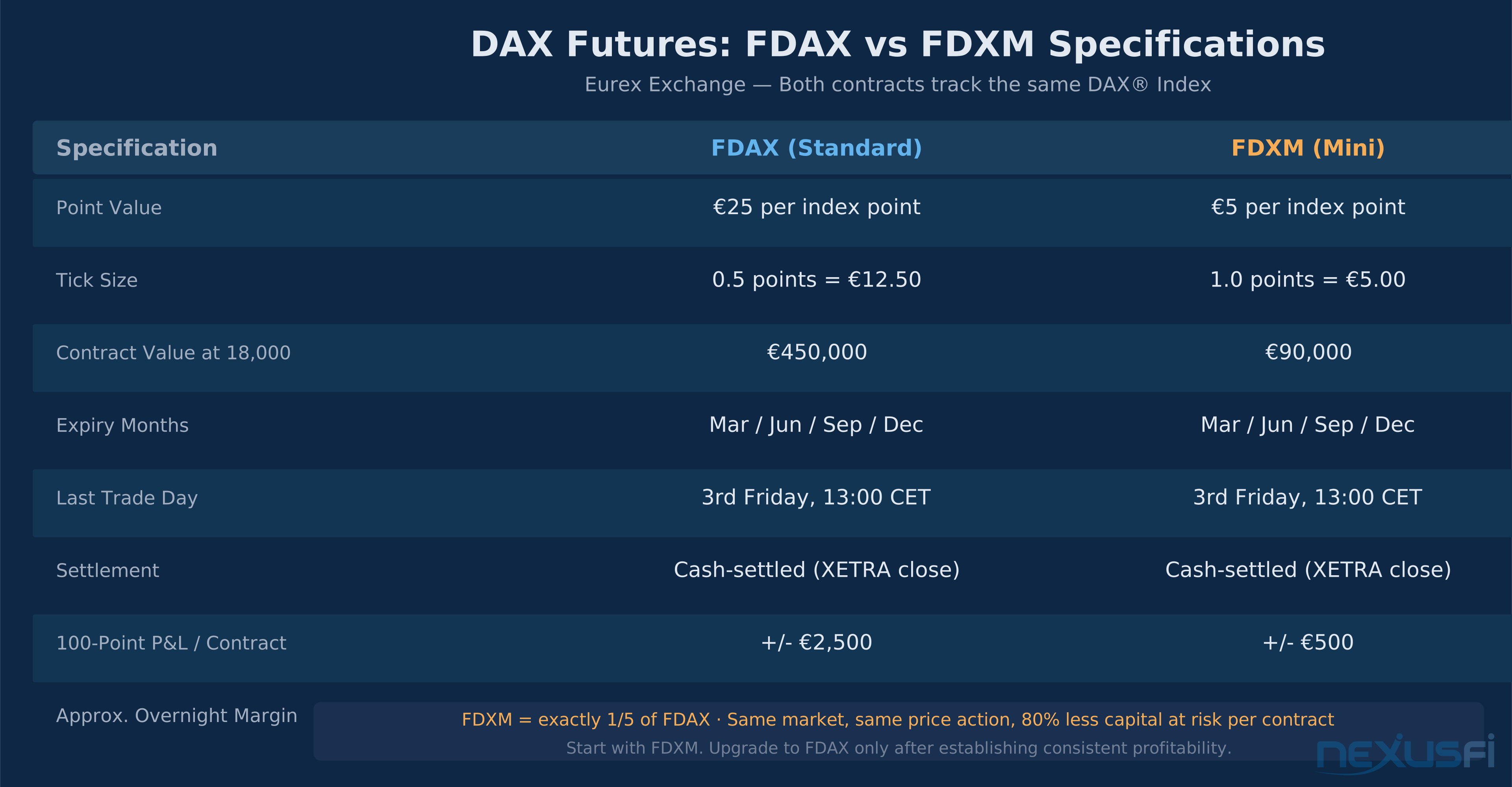
FDAX: The standard DAX futures contract traded on Eurex. Multiplier is €25 per index point. With the DAX index trading above 18,000 points in 2024-2025, a single FDAX contract has notional value exceeding €450,000. This is a serious contract. Margin requirements typically run €15,000-€25,000 for initial overnight margin.
FDXM: The Mini DAX futures contract. The FDXM carries a €5 per point multiplier — exactly one-fifth of FDAX. When @choke35 first reported the rumors of a mini DAX contract, the community immediately understood the gap it would fill: "there are lots of reasons that would militate for FDAX minis: 20-35k € margin for the full-sized FDAX, massively shrunken volume during the last 5 years, bad liquidity of the full-sized FDAX." [2]
Eurex: Deutsche Börse's derivatives exchange, based in Frankfurt. Eurex operates the T7 electronic trading system and is one of the world's largest derivatives exchanges by volume. The FDAX was one of the first major futures contracts traded electronically in Europe. Eurex settlement is cash-based — no delivery of shares.
XETRA: Deutsche Börse's electronic cash equity trading platform. As @Fat Tails explained: "The primary stock exchange, which is XETRA is open from 9H00 AM CET to 5H30 PM CET. You may consider the XETRA session as the regular session for the FDAX, as it corresponds to the opening time of the underlying market." [3]
Point Value: One point of DAX futures movement equals €25 (FDAX) or €5 (FDXM). The FDAX tick is 0.5 points = €12.50 per tick. The FDXM tick is 1.0 point = €5.00 per tick.
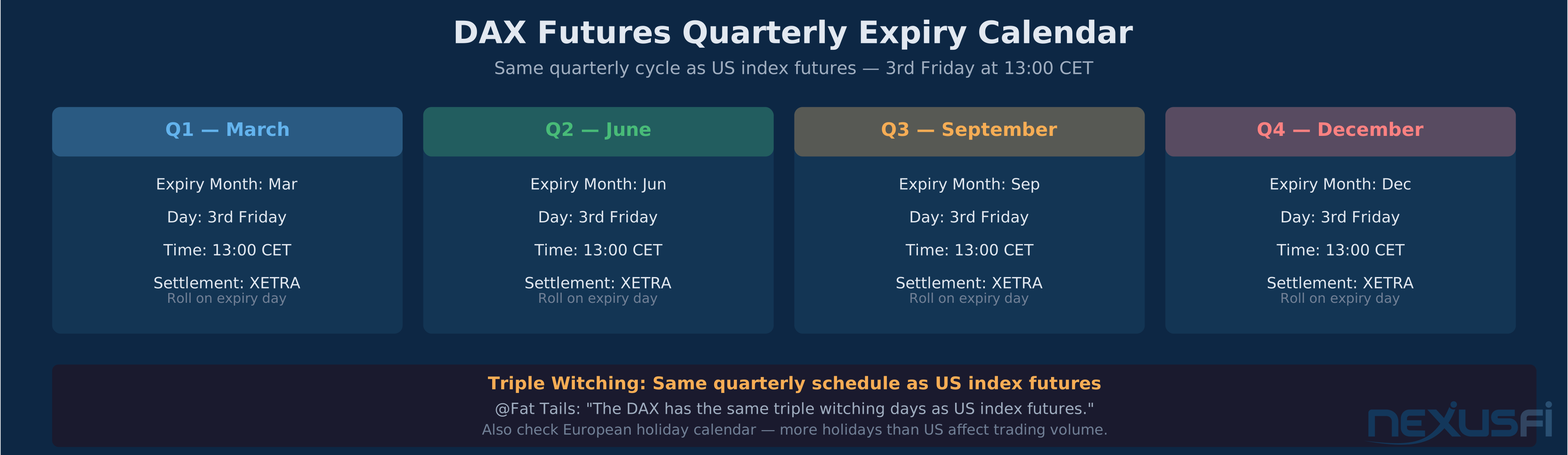
Quarterly Expiry: DAX futures expire on the third Friday of March, June, September, and December at 13:00 CET. Volume typically remains in the front-month contract until expiry day. As @Fat Tails documented: "The FDAX futures contracts expire on the third Friday of March / June / September / December at 1:00 PM CET (Central European Time). Volume only shifts to the new contract on the expiry date." [4]
Contract Specifications #
The DAX futures complex offers two primary contracts for active traders:
FDAX — Standard DAX Futures
• Exchange: Eurex (Frankfurt)
• Underlying: DAX® Index
• Contract Value: €25 × DAX Index Level
• Minimum Price Fluctuation: 0.5 index points = €12.50
• Settlement: Cash-settled to XETRA closing auction price
• Expiry Months: March, June, September, December (quarterly)
• Last Trading Day: Third Friday of expiry month at 13:00 CET
• Trading Hours: 01:15 to 22:00 CET
• Core Session: 09:00 to 17:30 CET
FDXM — Mini DAX Futures
• Exchange: Eurex (Frankfurt)
• Underlying: DAX® Index (same underlying as FDAX)
• Contract Value: €5 × DAX Index Level
• Minimum Price Fluctuation: 1 index point = €5.00
• Settlement: Cash-settled to XETRA closing auction price
• Expiry Months: March, June, September, December (quarterly)
• Last Trading Day: Same as FDAX
Note the tick size difference: FDAX trades in 0.5-point increments, FDXM in 1.0-point increments. This means FDXM has coarser price granularity, which matters for tight scalping setups.
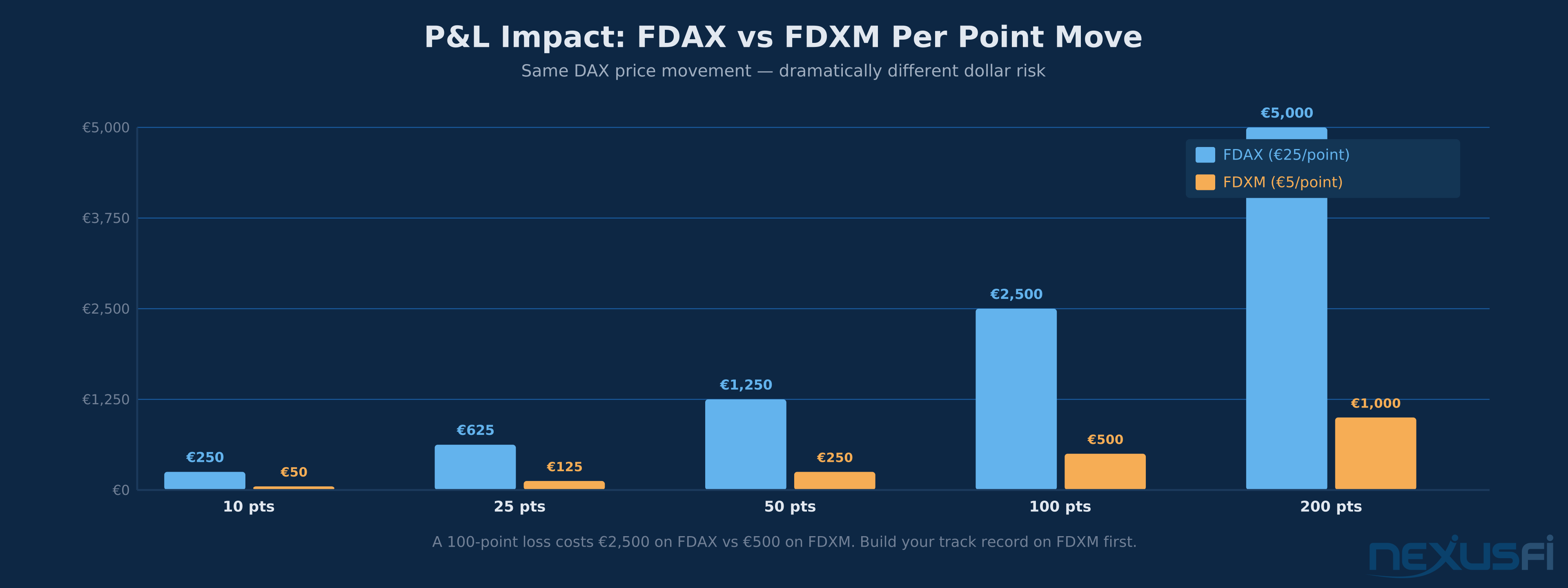
Quick P&L math for FDXM: A 10-point move in the DAX = €50 profit or loss per FDXM contract. A 50-point day-trade win = €250 per contract. A 100-point loss = €500 per contract. Straightforward.
Quick P&L math for FDAX: A 10-point move = €250 per contract. A 50-point swing = €1,250. A 100-point stop = €2,500. This is why margin requirements are significant and why proper position sizing is non-negotiable.
Trading Hours and Session Structure #
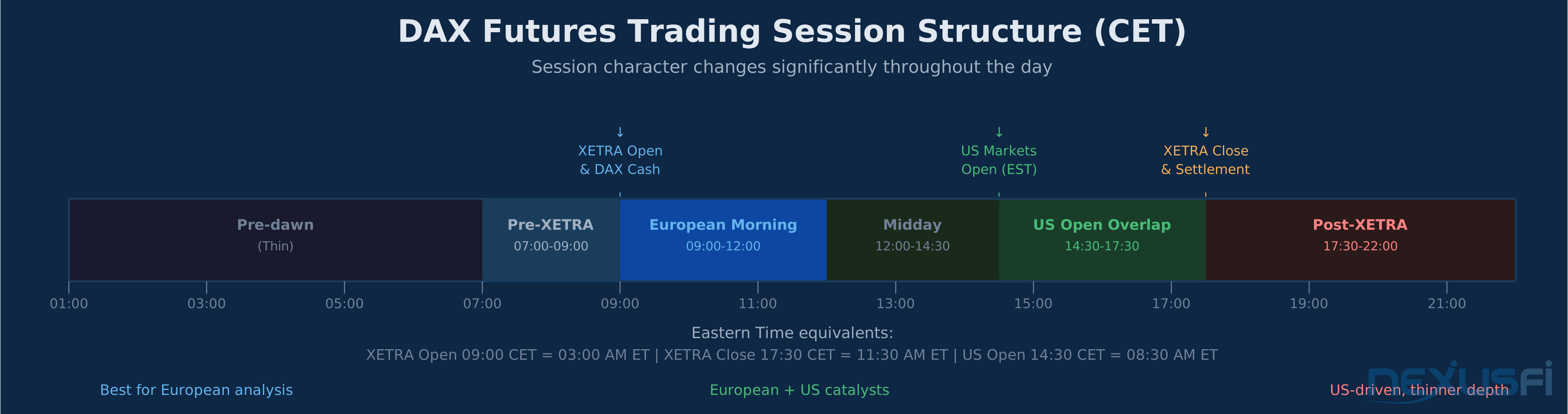
The DAX futures market runs from 01:15 to 22:00 CET, but treating all those hours equally is how you bleed slow-motion capital. The sessions have distinct character.
Pre-XETRA (07:00--09:00 CET)
European institutional desks are positioning before the cash market opens. US futures are in overnight/early session. This period typically sees moderate volume and price action that reflects overnight news and positioning. The first 30--60 minutes after 07:00 often establish the day's opening bias.
XETRA Open and Morning Session (09:00--12:00 CET)
The opening print. XETRA cash market starts at 09:00 CET after a 3-minute opening auction. This is where the DAX has its most independent price action — primarily European-driven, with German and European economic data releases (German CPI, IFO Business Climate, European PMI) driving the early directional move. Volume is high, spreads are tight, and the market is responsive to European-specific catalysts.
The Deetee journal is an excellent example of systematic European session trading: "Today the future contracts roll-over at 13:00 and IFO at 10:00. FDAX Gap: Down gap. Gap closed during IB: No. Position price at 9:30: below prior day HL." [5] That structure — gap analysis at open, IB development, position relative to prior day range — is core DAX morning methodology.
European Midday (12:00--14:00 CET)
Liquidity typically thins. Institutional flow pauses while European participants break for lunch. The market often consolidates, chops within the morning's established range, and punishes aggressive positioning. @michaelleemoore's approach handles this directly: "I am just scalping FDAX based on FESX behavior at known areas of support/resistance... Three contracts and three or four trades and the day is nearly made before I go to sleep." [6] Three or four trades in the morning. Then done.
US Open Overlap (14:30--17:30 CET)
At 14:30 CET, US markets open. This is when the DAX becomes simultaneously a European instrument and a global risk proxy. US economic data — FOMC announcements, non-farm payrolls, CPI — hits during this window, and DAX reacts to US news just as ES does.
@Miesto captured the dynamic precisely: "When you look at the stock index futures like FESX, FDAX, YM, ES, NQ and RTY then what strikes is how they all behave the same, they all go up and down together most of the time. Especially in the EU morning when Europe (FDAX/FESX) seems more leading." [7]
European Close and Afternoon (17:30--22:00 CET)
XETRA closes at 17:30 CET. After the close, DAX futures continue trading but with reduced depth and European participation. This session is US-influenced and typically sees continuation or reversal of the US session's midday trend. Most European-based DAX specialists don't trade this window.
Holiday Calendar: The DAX has more holidays than US markets. Always check the Eurex holiday calendar — German federal holidays and European Union holidays can catch US traders off guard.
Market Correlation and Global Context #
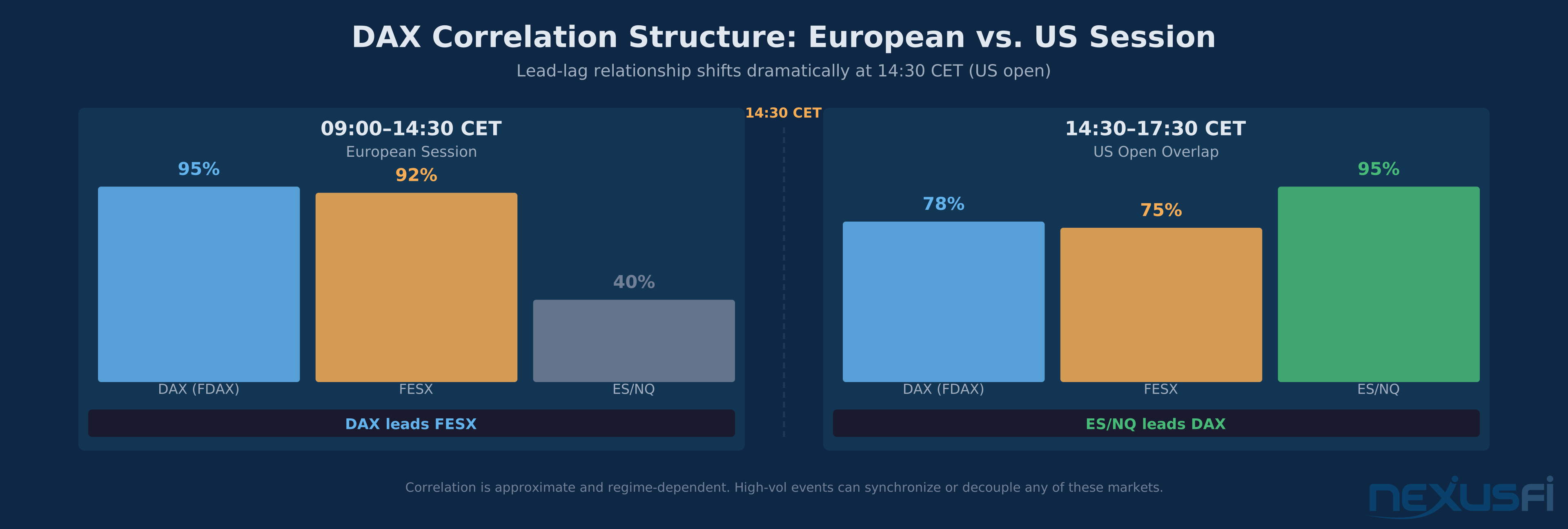
The DAX occupies a specific position in the global equity index hierarchy: it correlates meaningfully with US indices (ES, NQ, YM) but maintains European independence during the morning session. This dual nature creates both opportunities and traps.
European Correlation: The FDAX's closest European sibling is the FESX (Euro STOXX 50 futures) — the pan-European blue-chip index. FDAX and FESX move together more than 90% of the time intraday. When FDAX is lagging FESX at key support, that divergence can signal a setup. @michaelleemoore's scalping approach explicitly uses "FESX behavior at known areas of support/resistance" to time FDAX entries. [6]
US Correlation: Before 14:30 CET, FDAX is primarily European. After 14:30 CET, the S&P dominates. During US data releases, it's basically a 1:1 correlation event.
Bund Correlation: German government bond futures (FGBL — "the Bund") trade on Eurex with the same hours as FDAX. In risk-off environments, when FGBL rallies (yields fall), DAX typically sells off. Monitoring the Bund provides context for FDAX moves that pure chart analysis misses.
EUR/USD Impact: Germany's industrial base is export-heavy. A stronger euro reduces euro-translated earnings of DAX components like Volkswagen, BASF, and Siemens. A weaker euro boosts them. This creates a secondary correlation where significant EUR/USD moves can shift DAX relative to other European indices.
The practical application: use ES and NQ as regime indicators. When both move strongly in one direction, DAX typically amplifies beta. When they diverge, DAX may show idiosyncratic behavior driven by EUR/USD and rate expectations.
Risk Management and Position Sizing #
The FDAX is not the place to learn futures trading. At €25 per point with a DAX that regularly moves 100+ points in a session, a single unmanaged trade can consume an entire account if improperly sized. Start with FDXM until your edge is established.
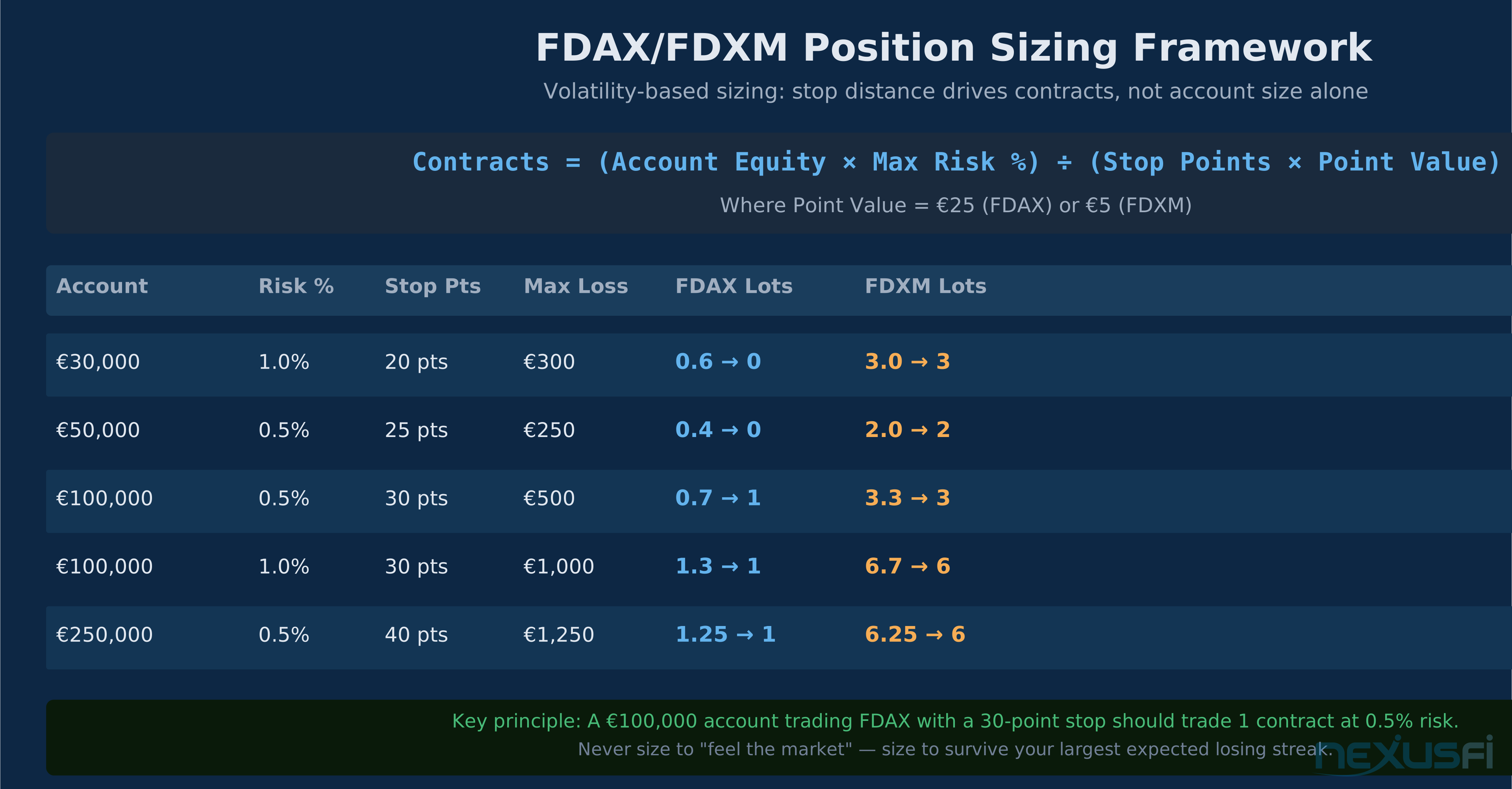
The fundamental sizing formula:
Contracts = (Account × Max Risk %) ÷ (Stop Distance × Point Value)
For FDXM: A €30,000 account, 1% max risk = €300, 25-point ATR-based stop, €5 point value → Contracts = €300 ÷ (25 × €5) = 2.4 → 2 contracts. For FDAX: A €100,000 account, 0.5% risk = €500, 25-point stop, €25 point value → Contracts = €500 ÷ (25 × €25) = 0.8 → 1 contract.
ATR-Based Stops: A fixed 20-point stop means something different on a 40-point day versus a 150-point FOMC day. If 14-period ATR on your trading timeframe is 30 points, your stop should be 1.0-1.5× ATR = 30-45 points. When volatility expands, your stop and position size adjust automatically.
FDAX has high margin because it's volatile and the general view is absolutely NOT to start trading with FDAX. At €25 per point, a 100-point adverse move costs €2,500 — on a market that regularly moves 200+ points per session. Start with FDXM until your edge is established across multiple market regimes. This is the community consensus from hundreds of documented trading journals on NexusFi.
The FDXM as Training Ground: @OldGerman documented exactly this progression: "I trade FDXM, the small FDAX future. The FDXM allows me to apply a simple fixed ratio money management and this is very important." [8] He started with FDXM for system development and calibration, then scaled based on account growth.
The Margin Reality: @choke35's report noted "20-35k € margin for the full-sized FDAX" [2], which remains approximately accurate for overnight margin. Intraday margin at many brokers is lower — but this doesn't change the P&L math. A 100-point adverse move is €2,500 whether your broker required €5,000 or €20,000 to open the position.
As @jtrade noted: "FDAX has a high margin because it's volatile and the general view is absolutely NOT to start trading with FDAX." [9] That advice holds. Start with FDXM.
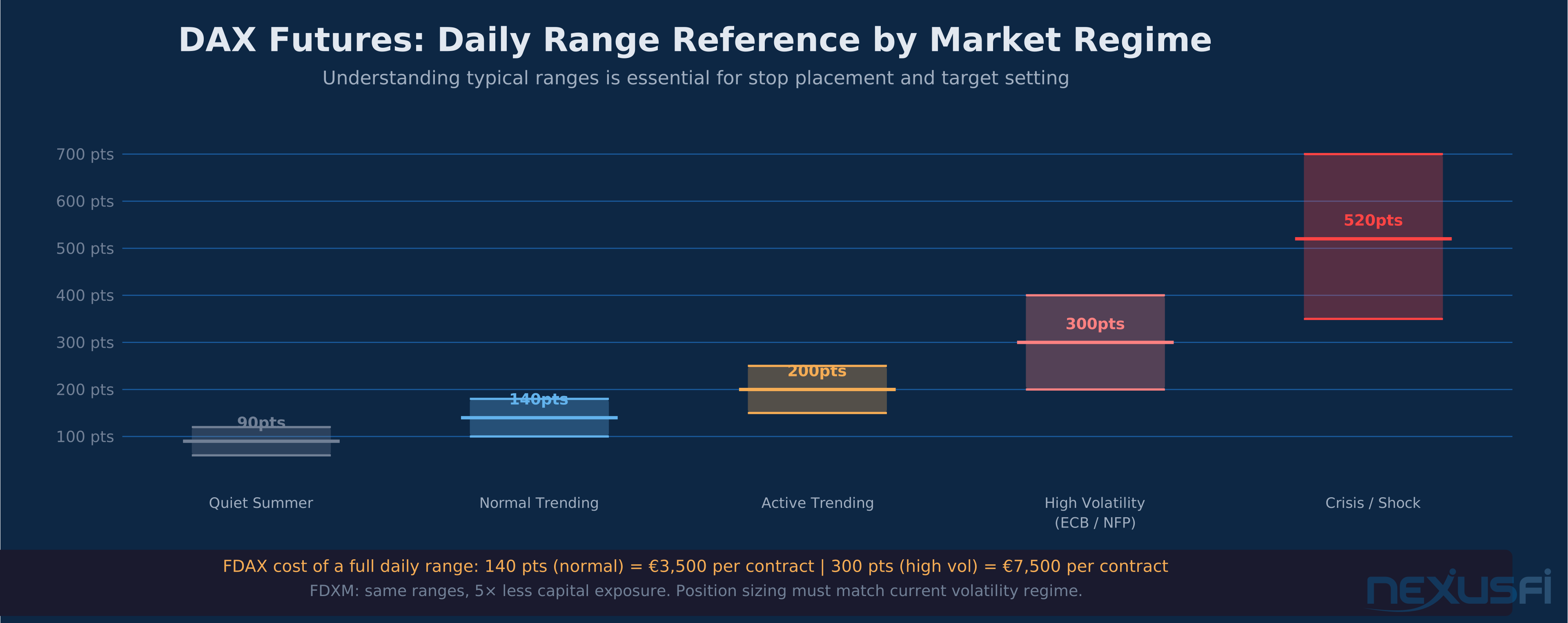
Daily Volatility Context: The DAX's average daily range is typically 100-200 points. In quiet periods, expect 80-120 points. During ECB policy surprises or US macro shocks, the range can reach 300-500 points. A 1% DAX move at 18,000 points = 180 points = €4,500 on a single FDAX contract. That needs to be in your mental model before you enter any position.
Trading Approaches for DAX Futures #
The DAX attracts a diverse community of active traders — scalpers, day traders, and systematic traders — each exploiting different aspects of the market's structure.
Gap Analysis at the Open: The pre-XETRA DAX futures price frequently differs from the prior XETRA close. This gap, when it opens the cash market, creates the first trade opportunity of the day. Gap analysis requires knowing whether the gap is a continuation signal or a fade opportunity. The Deetee journal documents this systematically: every morning session begins with gap direction, whether it was closed during the Initial Balance, and opening position relative to prior day levels.
Initial Balance and Range Expansion: The first hour of XETRA trading (09:00--10:00 CET) establishes the Initial Balance. The Initial Balance high and IB low become key reference levels throughout the session. When the DAX breaks out of the IB after 10:00 CET on above-average volume, it often signals a trend day. When it stalls and reverses, it signals a range day. This Market Profile-derived framework applies cleanly to FDAX.
VWAP-Based Scalping: @michaelleemoore's approach is representative of many European session scalpers: "D-high, D-low, vwap, eth vwap, etc. work brilliantly. Three contracts and three or four trades and the day is nearly made before I go to sleep." [6] Daily VWAP and overnight VWAP serve as dynamic support/resistance.
FESX-DAX Relative Analysis: Trading DAX based on FESX behavior at support/resistance filters out false moves. When FESX is holding a key level and DAX is testing the same area, the combined technical weight creates higher-probability setups than either market alone. This requires watching both charts simultaneously.
Systematic/Automated Trading: @OldGerman's journal documents a systematic approach: "A maximum of one trade is executed daily. Not every day but about in 150 days a year. I trade FDXM... My system is running on a VPS in Chicago. Entries are about 10.25 to 11.00. The exit is at 15.50." [8] The systematic entry and time-based exit removes discretionary uncertainty. FDXM enables position sizing through fixed-ratio money management.
Pa Dax's Price Action Framework: @Pa Dax maintained a multi-year journal trading FDAX price action: "The risk reward and overall action per day is so much greater than the Bund. It's a beast and very little people trade it consistently profitable. It's the ultimate challenge for me." [10]
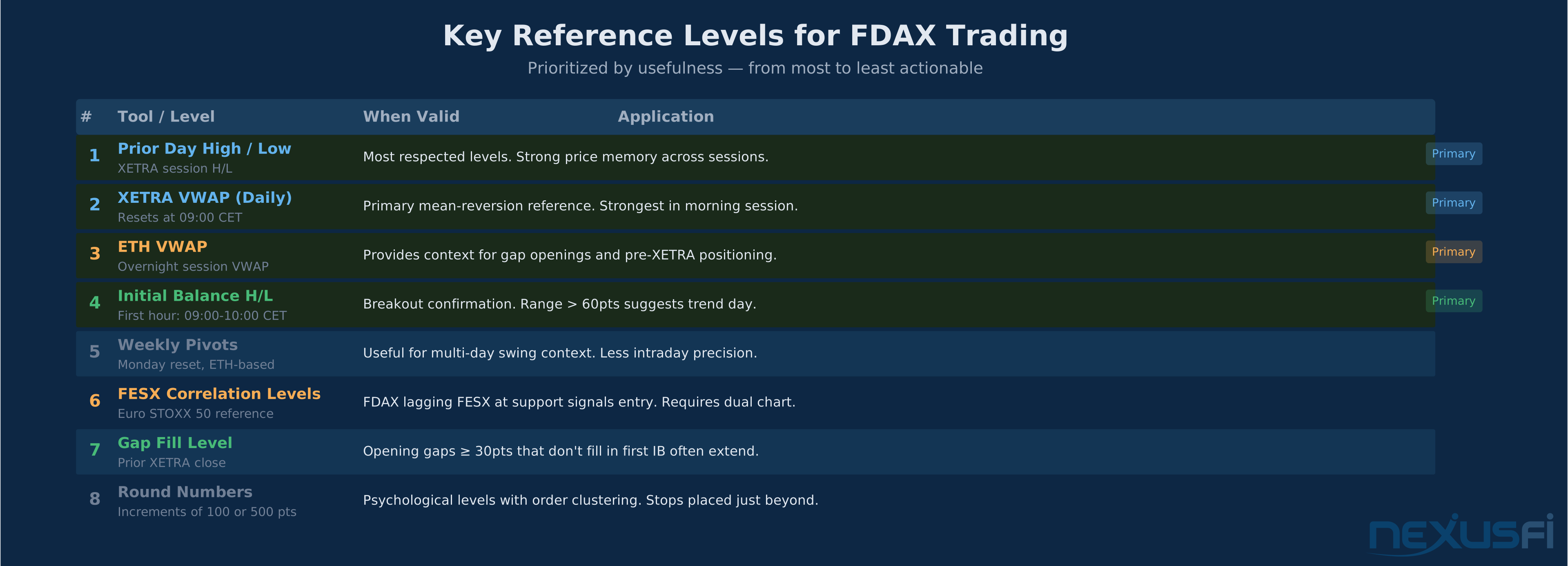
Chart Session Setup and Time Reference #
One of the most common mistakes new FDAX traders make is plotting sessions incorrectly. US traders accustomed to 9:30 AM ET opens need to reframe entirely.
The Fat Tails session framework [1]: FDAX divides into three sub-sessions in CET:
• 1st session: 08:00--09:00 CET (pre-XETRA)
• 2nd session: 09:00--17:30 CET (XETRA hours — the RTH equivalent)
• 3rd session: 17:30--22:00 CET (post-XETRA / US-influenced)
The "regular trading hours" equivalent for FDAX is the XETRA session, 09:00--17:30 CET. Your daily VWAP, daily pivots, and opening range should be anchored to this session. ETH VWAP covers the full extended session.
For US traders in Eastern Time: the XETRA session runs from 03:00 AM ET to 11:30 AM ET. For Pacific coast traders: XETRA opens at midnight and closes at 8:30 AM PT.
Economic Calendar Integration #
The DAX's event environment overlaps with but is distinct from the US calendar that ES traders follow. Know both.
Key European releases that move FDAX:
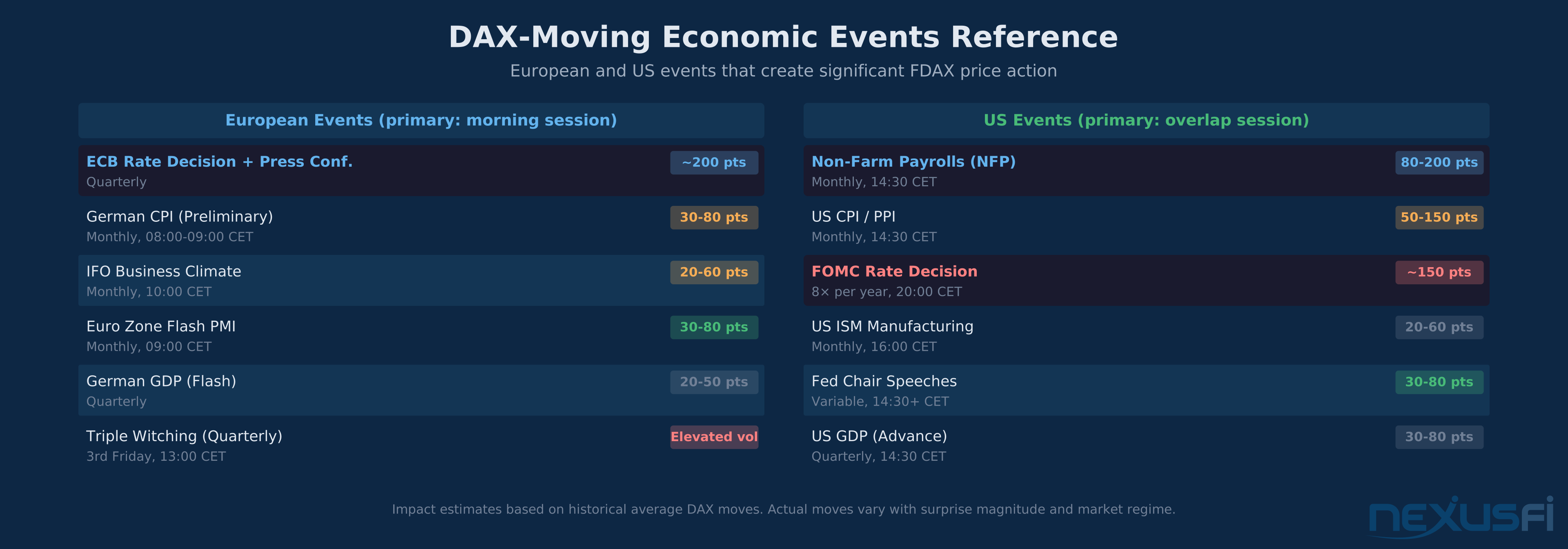
• IFO Business Climate (monthly): Germany's primary business sentiment survey. Significant beats or misses frequently cause 50+ point initial reactions.
• German CPI/PPI: Inflation data from Europe's largest economy, with ECB policy implications.
• Euro Zone PMI (flash, monthly): Manufacturing and services sentiment for the bloc. DAX correlates with PMI trend.
• ECB Rate Decisions and Press Conferences: The European equivalent of FOMC. These create some of the most significant intraday moves of the quarter.
• German GDP and Industrial Production: Quarterly and monthly data that moves the underlying economic outlook.
US events that impact FDAX during overlap:
• Non-Farm Payrolls (first Friday, 14:30 CET)
• FOMC announcements (20:00 CET — after XETRA close but during FDAX trading)
• US CPI/PPI (14:30 CET)
• Fed speakers (variable times)
Triple Witching: As @Fat Tails documented: "The DAX has the same triple witching days as US index futures." [4] Options expirations on the third Friday of each month create elevated volume, especially in the hours surrounding the 13:00 CET futures expiry.
FDXM vs. FDAX: The Progressive Path #
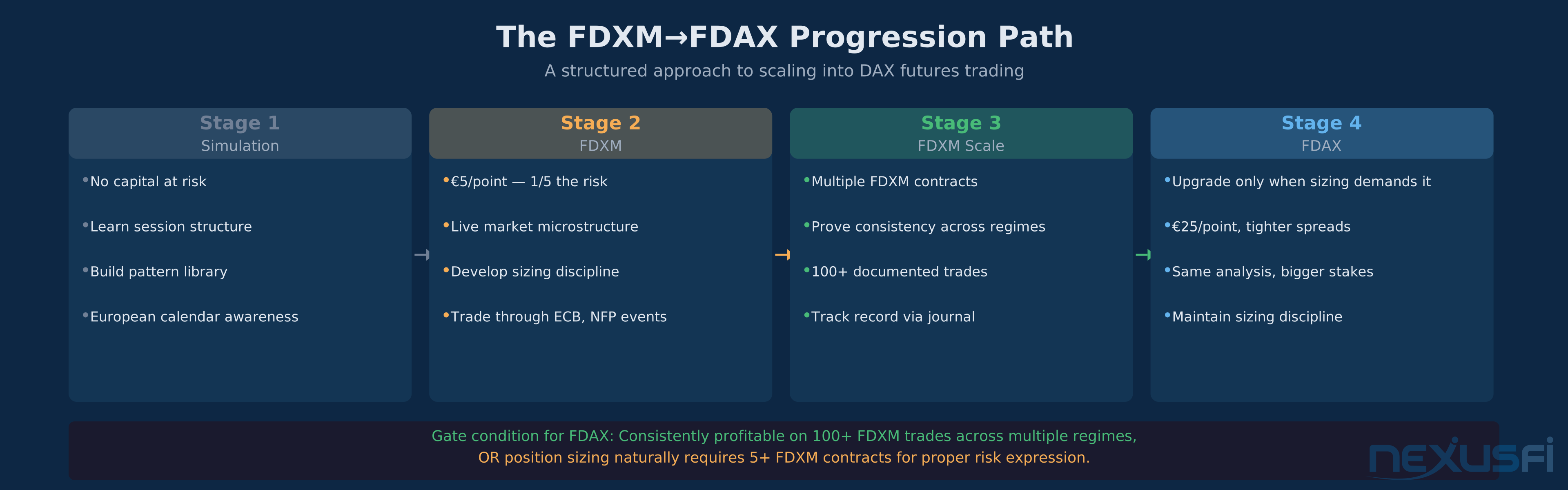
For traders coming to DAX from CME products, the natural starting question is: FDXM first, or go straight to FDAX? Start with FDXM. Full stop.
The market microstructure is identical. The price action is the same. The analytical approaches work equally. What's different is only the euro-per-point value — and that difference matters enormously during the learning phase. A 50-point session in which you were wrong four times before getting the trend right will cost €250 on FDXM versus €1,250 on FDAX.
@OldGerman's journal is instructive: after three years of system development, he moved to FDXM futures and documented his results publicly. [8] @Pa Dax similarly wrote: "The risk reward and overall action per day is so much greater than the Bund." [10] The attraction of DAX volatility should wait until you can demonstrate consistent profitability at FDXM size first.
Upgrade to FDAX when:
• Consistently profitable over 100+ FDXM trades across multiple market regimes
• Position sizing formula naturally suggests contract sizes that make FDXM inefficient (needing 5+ contracts)
• You've traded through at least one high-volatility European event at FDXM size and maintained discipline
Practical Platform Requirements #
Trading FDAX and FDXM requires a platform with genuine Eurex support, not just a price feed. The requirements are distinct from CME futures platforms.
Data Feed: You need real-time Eurex data, which typically requires a separate exchange data subscription. The quality of your Eurex feed — especially depth-of-market (DOM) data — matters much. Providers with direct Eurex connectivity include Rithmic, CQG, and TT.
Margin and Currency: FDAX and FDXM are Euro-denominated contracts. If your account is in USD or GBP, currency fluctuation adds a layer of P&L variability. Many European-focused traders maintain Euro-denominated accounts to eliminate this noise.
Order Types: For DAX scalping approaches, stop-limit orders are preferable to stop-market orders during thin-liquidity periods. FDAX can gap through stop-market triggers during data releases, filling at much worse prices.
Key Takeaways #
DAX futures offer a genuinely distinct trading opportunity: eight hours of European market exposure, one of the world's most liquid equity index derivatives, and a market that maintains its own character before the US session dominates.
The FDXM makes the entry point accessible. €5 per point, one-fifth the risk of FDAX, same market microstructure. Use it until you've built a real edge in European session trading.
The core edge in FDAX comes from understanding the session split: pre-09:00 CET for positioning, 09:00-12:00 CET for European-driven setups, 12:00-14:30 CET for reduced exposure, and 14:30+ CET for US-correlated continuation or reversal.
The FDAX community on NexusFi — @Fat Tails, @jtrade, @Pa Dax, @OldGerman, @Deetee, @michaelleemoore — represents years of documented experience with the European session. Their journals and posts are among the most detailed primary sources available on what actually works in this market.
Knowledge Map
Prerequisites
Understand these firstGo Deeper
Build on this knowledgeReferences This Article
Articles that build on this topicCitations
- — Correct Sessions for Your Charts (2010) 👍 16“FDAX relates to the XETRA market segment of Deutsche Börse. The Xetra market opens at 9:00 AM and closes at 5:30 PM, so for FDAX you need to divide the day into three sub-sessions.”
- — Mini FDAX - FDXM from Eurex (2015) 👍 19“20-35k € margin for the full-sized FDAX, massively shrunken volume during the last 5 years, bad liquidity of the full-sized FDAX (e.g. an order of 5 contracts regularly causes slippage and partial fills). At the moment, the following specs are discussed: 5€ per point (instead of 25€ per point for the full-sized contract).”
- — FDAX pit hours (2012) 👍 10“The primary stock exchange, which is XETRA is open from 9H00 AM CET to 5H30 PM CET. You may consider the XETRA session as the regular session for the FDAX, as it corresponds to the opening time of the underlying market.”
- — DAX - No Trade Days (2013) 👍 8“The FDAX futures contracts expire on the third Friday of March / June / September / December at 1:00 PM CET (Central European Time). Volume only shifts to the new contract on the expiry date.”
- — Deetee's DAX Trading Journal (time based) (2021) 👍 2“Today the future contracts roll-over at 13:00 and IFO at 10:00. FDAX Gap: Down gap. Gap closed during IB: No. Position price at 9:30: below prior day HL.”
- — Daily TPO homework for DAX and NQ (2018) 👍 3“I am just scalping FDAX based on FESX behavior at known areas of support/resistance. D-high, D-low, vwap, eth vwap, etc. work brilliantly. Three contracts and three or four trades and the day is nearly made before I go to sleep.”
- — Deetee's DAX Trading Journal (time based) (2022) 👍 4“When you look at the stock index futures like FESX, FDAX, YM, ES, NQ and RTY then what strikes is how they all behave the same, they all go up and down together most of the time. These markets are correlated. Especially in the EU morning when Europe (FDAX/FESX) seems more leading.”
- — The little DAX does not want to sleep yet (2017) 👍 14“I trade FDXM, the small FDAX future. The FDXM allows me to apply a simple fixed ratio money management and this is very important. A maximum of one trade is executed daily. Not every day but about in 150 days a year.”
- — Any FDAX traders here? (2010) 👍 6“FDAX has a high margin because it's volatile and the general view is absolutely NOT to start trading with FDAX. If your live results are not comparable with sim, stop live trading immediately and revert to sim & address what most likely will be the psychological issues getting in the way.”
- — PA Dax CL, ES and Bund Price Action Trading Log (2018) 👍 6“The risk reward and overall action per day is so much greater than the Bund. Deep in my heart I know I want to be a successful dax trader. It's a beast and very little people trade it consistently profitable. It's the ultimate challenge for me.”
- Eurex Exchange — DAX Futures (FDAX) Product Specifications (2024)
- — Comparing Index Futures (2015) 👍 3“Risk is based on volatility not on margin requirements. Position sizing should be based on risk, not margin requirement. To determine trade size I look at the mean and standard deviations of the true range of the last 100 business days.”