



Volatility in Futures Trading: The Meta-Variable That Determines Everything Else
Overview #
Volatility is the meta-variable of trading. Not the chart pattern, not the indicator, not the setup — the volatility regime you're operating in determines which setups work, how wide to set your stops, how many contracts to trade, and whether your edge even exists today.
Most traders treat volatility as background noise. That's backwards. Volatility is the signal. Everything else — price levels, support and resistance, moving average crossovers — gets filtered through it. A 10-point pullback in ES means something completely different when the daily ATR is 8 points versus when it's 35 points. The math is obvious, but the behavioral implications run deeper: the strategy that made money last week might be the fastest route to a blown account this week if the volatility regime shifted and you didn't notice.
In futures specifically, volatility has teeth. The leverage inherent in futures contracts means a volatility expansion can hit an underprepared account with violence. The ES e-mini trades at $50 per point — a 15-point intraday range versus a 60-point intraday range is a 4x difference in P&L swings on the same position size. Size down wrong, you're leaving money on the table. Size up wrong into a volatile session, and one stop-out can wipe a week of gains.
This article covers what volatility actually is in futures markets, how it behaves, how to measure it, and how to build it into your trading framework — stops, position sizing, strategy selection, and regime identification. Start here. Everything else in your trading plan depends on getting this right.
Key Concepts #
Historical Volatility (Realized Volatility) #
Historical volatility — also called realized volatility — is a statistical measurement of past price movement. Computed as the annualized standard deviation of daily returns over a trailing window (typically 10, 20, or 30 days), it's backward-looking by definition. That makes it useful for understanding what the market has been doing but not directly predictive of what it will do next.
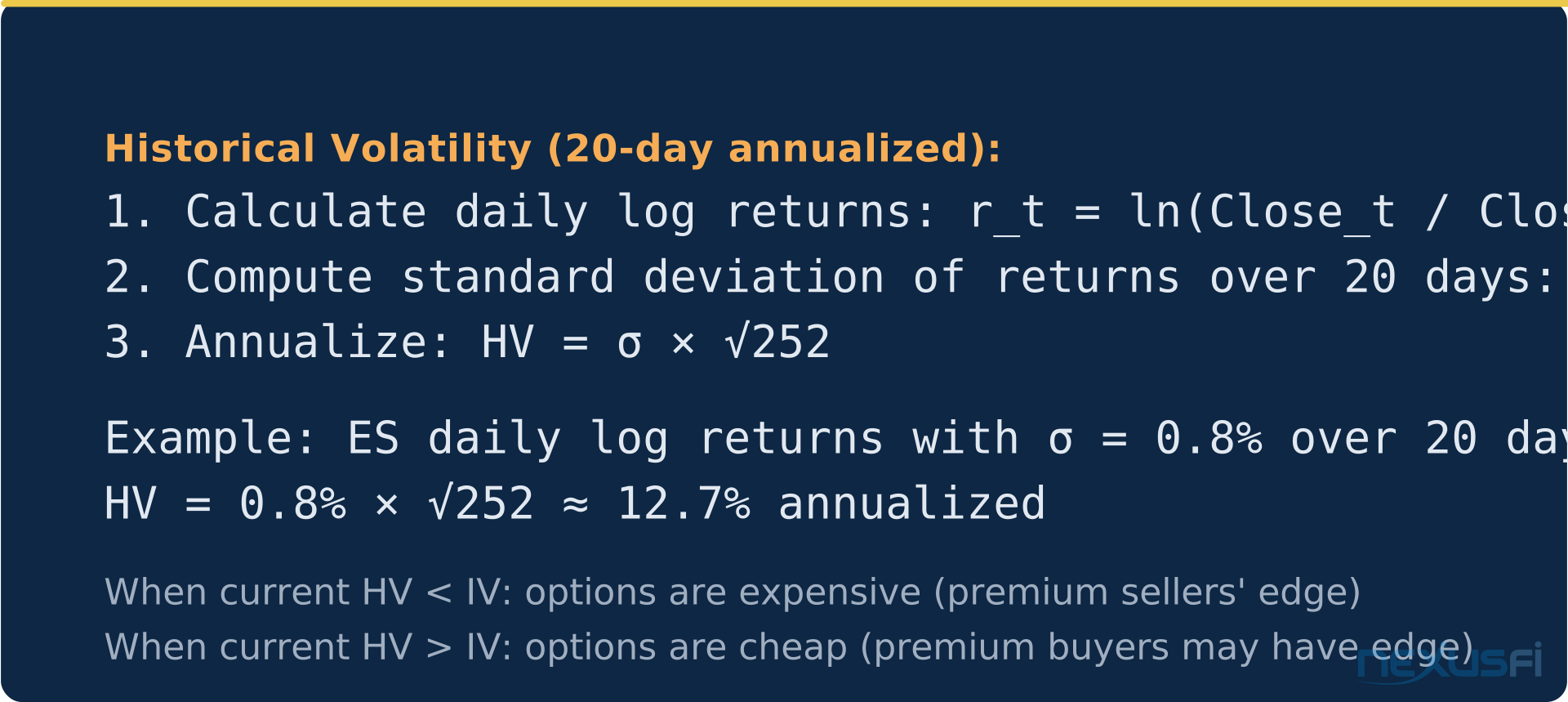
For practical futures trading, you'll encounter historical vol in two forms. First, as the actual calculation: if ES has moved an average of 0.8% per day over the past 20 sessions, you have a rough measure of current realized volatility. Second, embedded in the ATR (Average True Range), which is a simpler, trader-friendly proxy for recent price volatility calculated without annualization.
Historical volatility describes the past. The market doesn't owe you the same volatility tomorrow that it delivered yesterday — but volatility does cluster, so recent realized vol is a reasonable starting estimate for near-term expectations.
[1]
Implied Volatility (IV) #
Implied volatility is different. Instead of measuring what the market has done, it measures what the options market expects the market to do. IV is derived from options prices — specifically, it's the volatility input that would make an options pricing model (Black-Scholes or similar) produce the current market price of that option.
When options are expensive relative to historical patterns, IV is high — the market is pricing in uncertainty and risk. When options are cheap, IV is low — the market is complacent. IV is forward-looking, which makes it more useful for regime identification, but it's also noisy and can reflect market sentiment rather than actual realized volatility expectations.
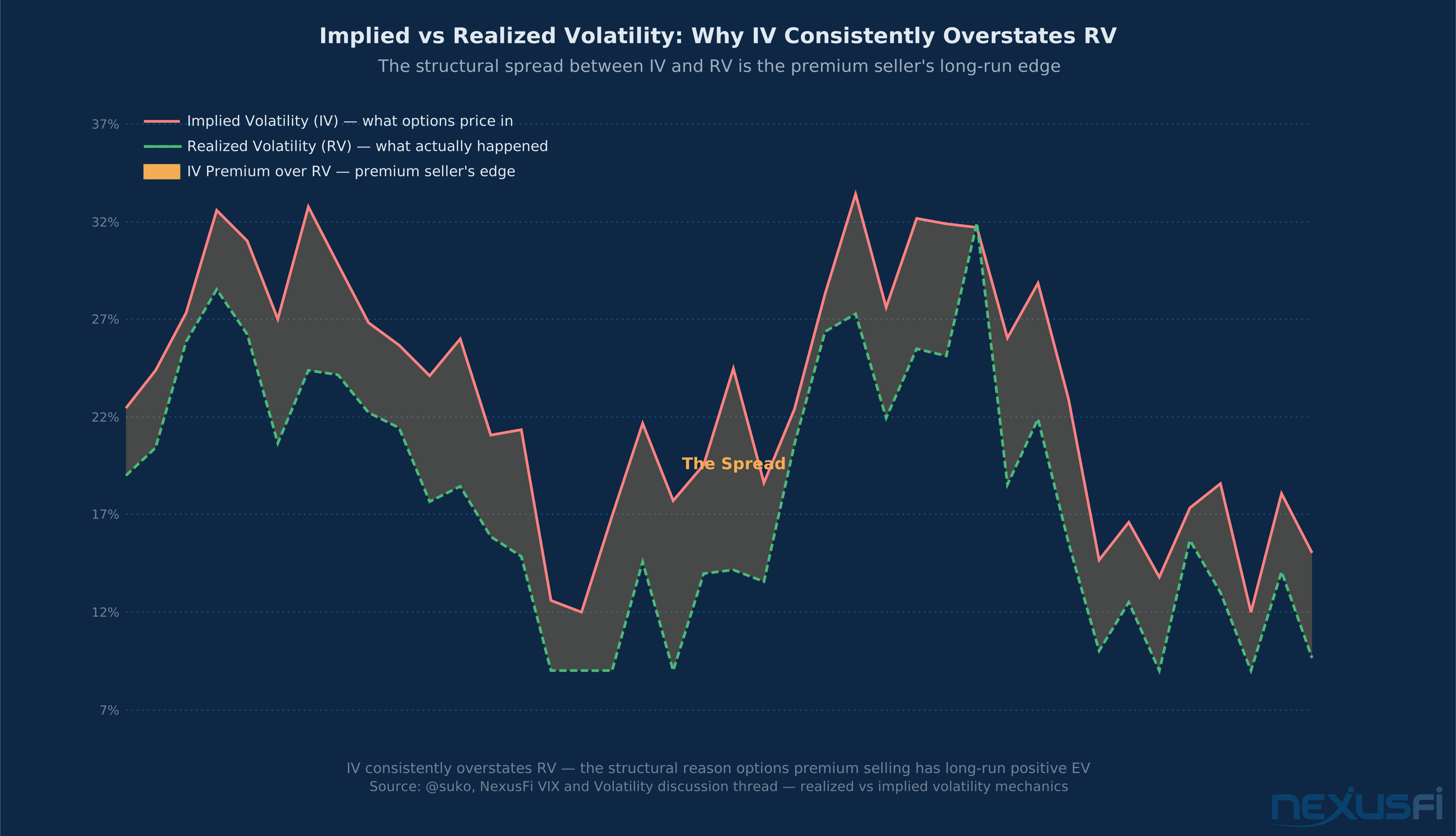
The critical relationship: implied volatility consistently overstates realized volatility. This isn't a secret — it's the structural reason premium sellers have an edge over time. When you sell an options premium priced at 25% IV and the market realizes only 18% volatility, that spread is your edge.
VIX: The Fear Gauge #
The VIX is the CBOE Volatility Index, computed from S&P 500 options prices to measure 30-day expected volatility in annualized terms. Per the official Cboe VIX methodology, the calculation aggregates weighted SPX put and call prices across a wide strike range, with each option weighted inversely proportional to its strike squared — replicating variance swap exposure to isolate pure volatility [10]. A VIX reading of 20 implies the market expects the S&P 500 to move approximately 20%/√12 ≈ 5.8% over the next 30 days, or about 1.25% per day.
For ES and NQ futures traders, VIX is the single most important external volatility indicator. It provides context for what regime you're in before you even look at a chart.
VIX is an index, not a tradeable product. VIX futures are based on expected VIX levels at futures expiration — not the VIX spot itself. @suko's breakdown is definitive: "VIX options are not the VIX, they are basically VIX options on futures. This is an unfortunate nomenclature confusion that has brought many a person to grief." [1]
ATR: The Practical Volatility Ruler #
Average True Range is the most useful volatility tool for active futures traders. Unlike IV or VIX, ATR is calculated directly from your futures contract's price data. It measures the average range of each bar (accounting for gaps via the true range, which incorporates the prior close into the high-low measurement) over a rolling window, typically 14 periods.
A 14-period ATR on an ES daily chart of 15 points means the contract has been moving an average of 15 points per session over the past 14 days. That single number drives stop placement, position sizing, target setting, and whether a given setup is worth taking at all.
How Volatility Works in Futures Markets #
Volatility Clustering: It Doesn't Appear and Disappear Randomly #
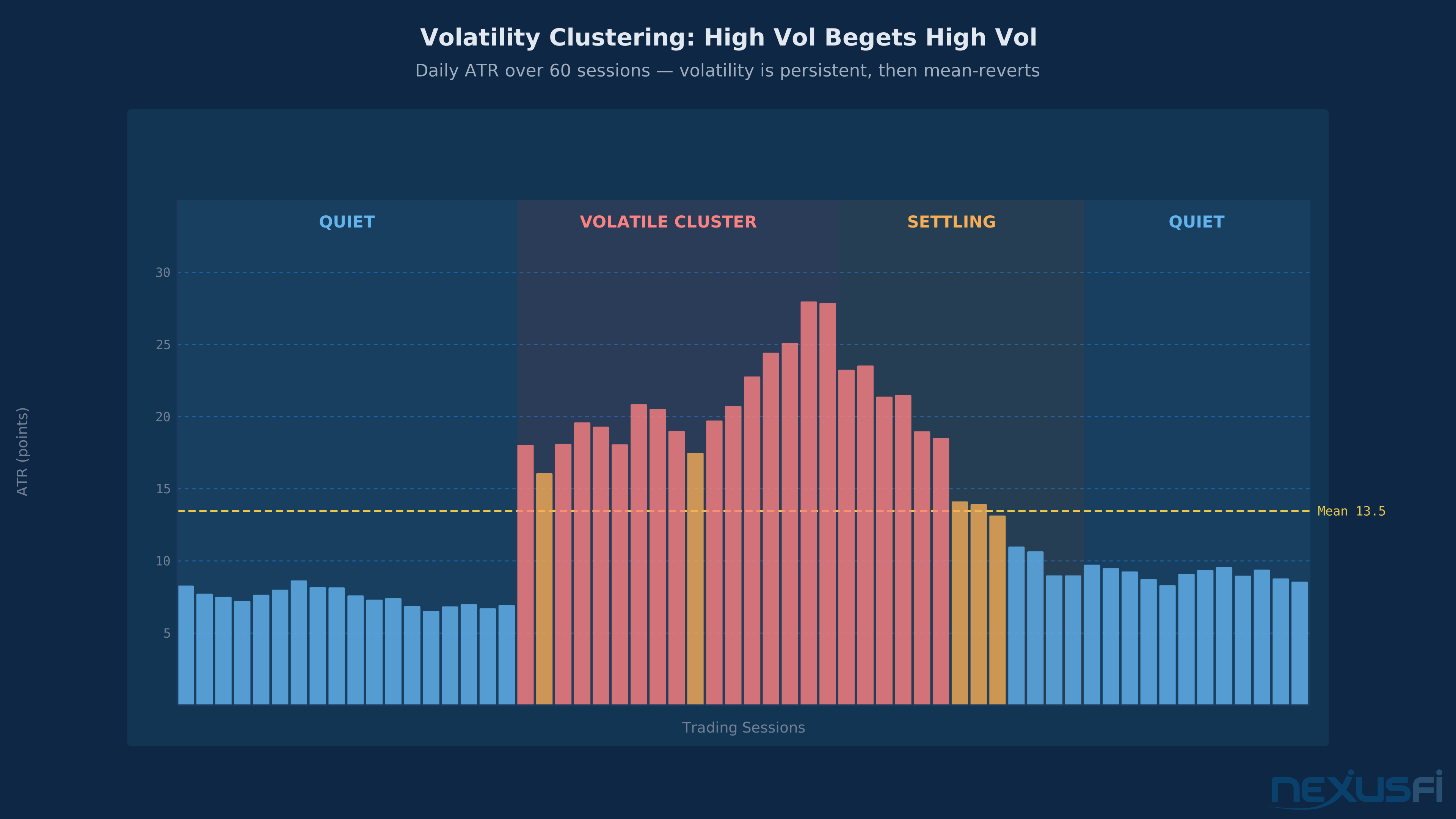
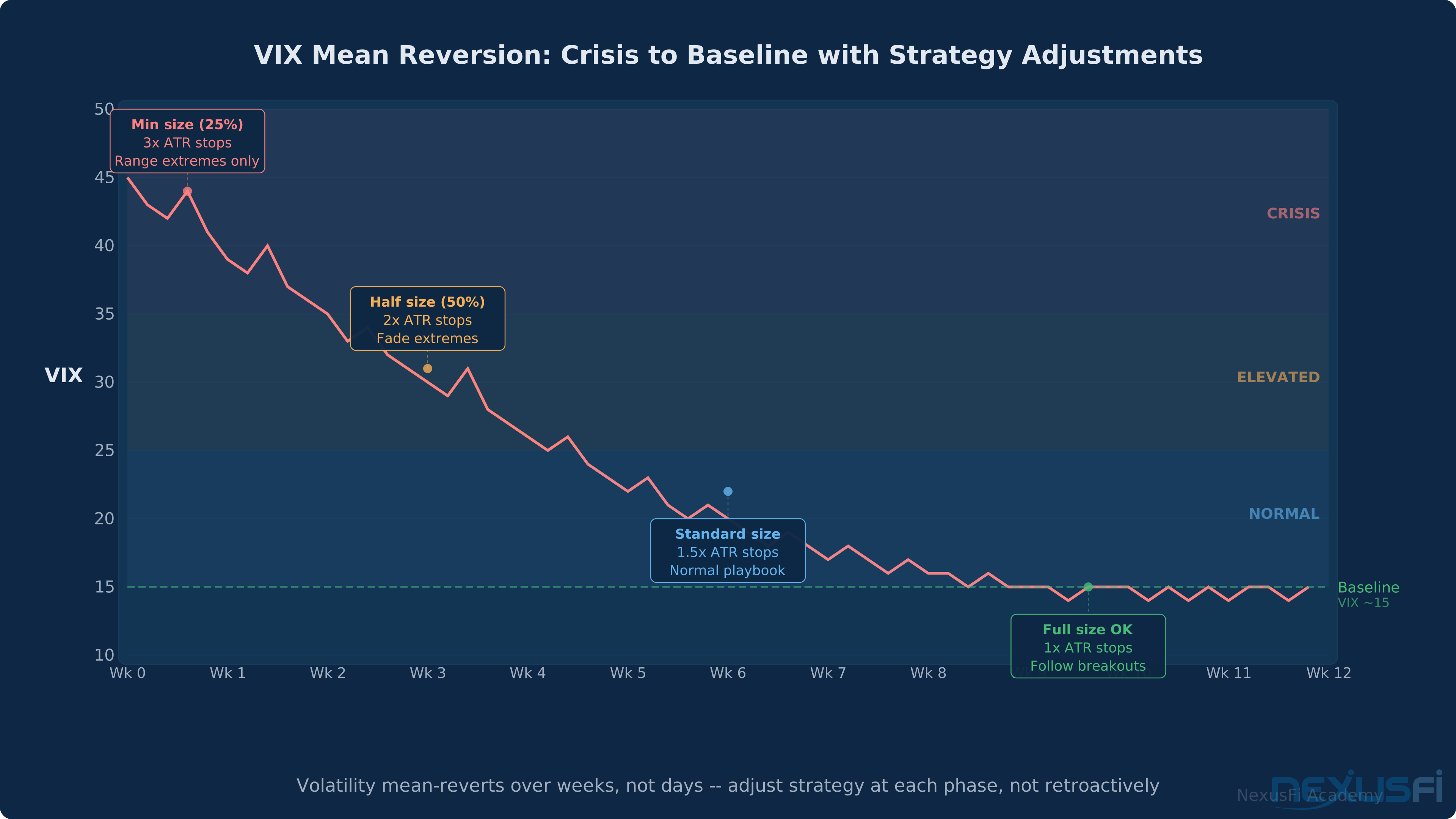
The most important structural property of volatility is clustering. High volatility follows high volatility. This isn't just anecdotal — Robert Engle's ARCH/GARCH framework, which earned him the 2003 Nobel Prize in Economics, mathematically formalized it: today's variance is conditional on recent past variances, so large price moves predict more large moves in the near term [11]. When a market erupts — a Fed surprise, a CPI print, a geopolitical shock — the elevated volatility doesn't immediately subside. It persists for days or weeks, then gradually mean-reverts back to baseline.
[2]
What this means practically: when you see a volatility spike, don't assume tomorrow will look like last Tuesday. The volatility cluster is likely to persist. Reduce size, widen stops to match the new environment, and wait for the cluster to pass before returning to normal parameters.
Mean Reversion: Volatility Returns to Its Long-Run Average #
While volatility clusters in the short run, it mean-reverts in the long run. As Engle emphasized in his Nobel lecture on risk and volatility, the core insight is that "we can change our behavior to avoid" risks once we understand their dynamics — optimal behavior means taking worthwhile risks while properly measuring the risks themselves [12]. A period of extreme volatility (VIX 40+) will eventually give way to lower volatility. A period of extreme complacency (VIX 11-12) will eventually give way to higher volatility. This is one of the most reliable properties of financial markets.
The practical implication: don't extrapolate. A calm market that's been quiet for three months is accumulating pressure, not proving that low volatility is permanent. The traders who size up into a quiet ES because "it's never moved more than 8 points this month" are the ones who blow up the first time a 25-point day arrives.
Volatility and Price Direction Are Not the Same Thing #
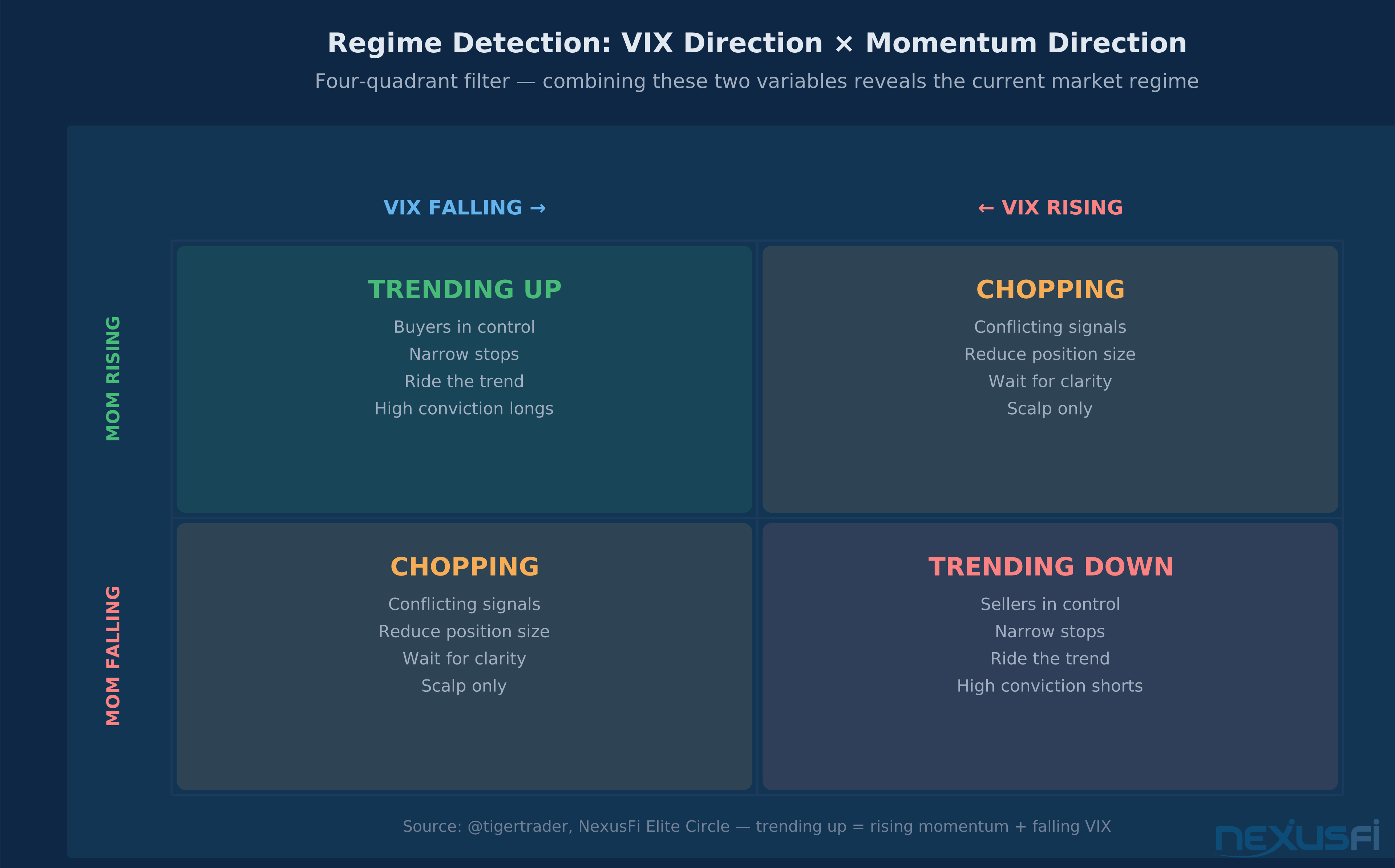
This distinction trips up newer traders constantly. You can have high volatility in a trending market, high volatility in a chopping market, low volatility in a trending market, and low volatility in a chopping market. Volatility measures the size of price moves. Direction is separate.
@tigertrader built a simple two-variable regime filter from this insight, shared in the Spoo-nalysis thread: "trending up — rising momentum/falling vix. trending down — falling momentum/rising vix. chopping around — rising momentum/rising vix, falling momentum/falling vix." [3]
This matters because your stop placement, target size, and follow-through expectations change based on both variables. Check both before committing to a directional bias.
Volatility and Range Estimation #
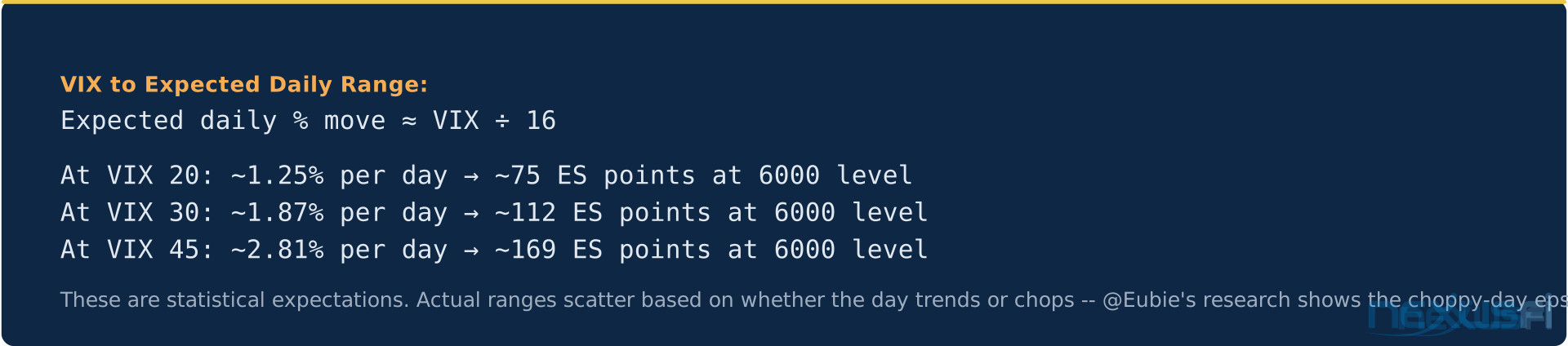
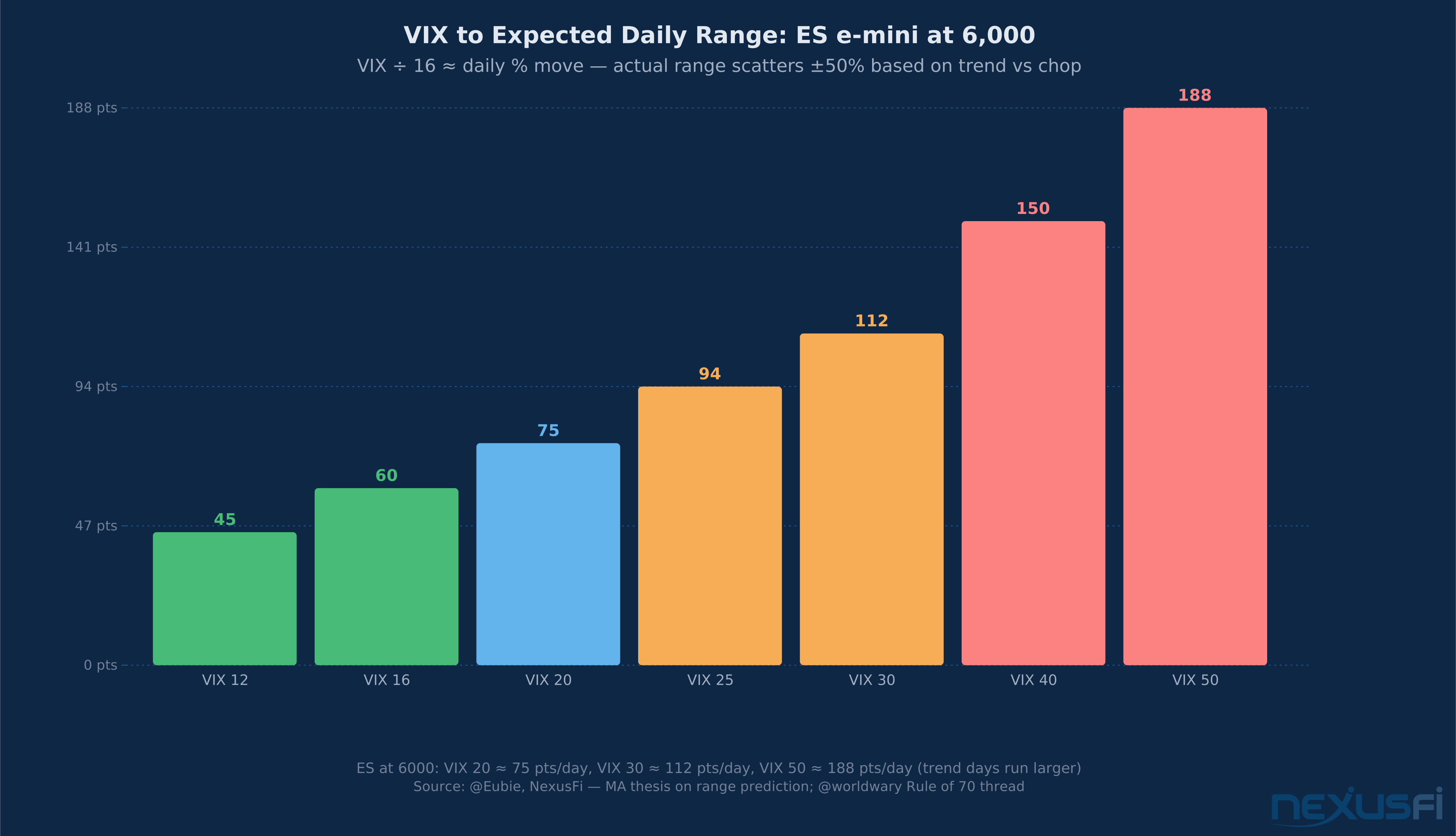
One of the most practical applications of VIX for intraday traders is estimating the expected daily range of the ES. The rough math: divide the VIX by 16 (the square root of 256 trading days) to get the daily expected percentage move. A VIX of 20 implies roughly 1.25% daily expected move in the S&P 500.
But range estimation has limits. @Eubie, who wrote his MA thesis on range prediction, explains why: "If both days were to have the same realized volatility, the choppy day would have a much smaller range than the trendy one... the daily range is composed of the true volatility, as captured by VIX, plus some random term that is approximately half as large as the size of true volatility." The R-squared on VIX-to-daily-range prediction sits around 65% — useful directional guidance, not a precise forecast. [4]
High vs Low Volatility Regimes #
Understanding volatility is table stakes. Knowing how to trade differently in each regime is the edge.
@worldwary's post in the NexusFi Trading Journals is the clearest articulation of regime-specific behavior from the community:
High Volatility Regime (VIX > 20, ATR > 150% of 30-day average) #
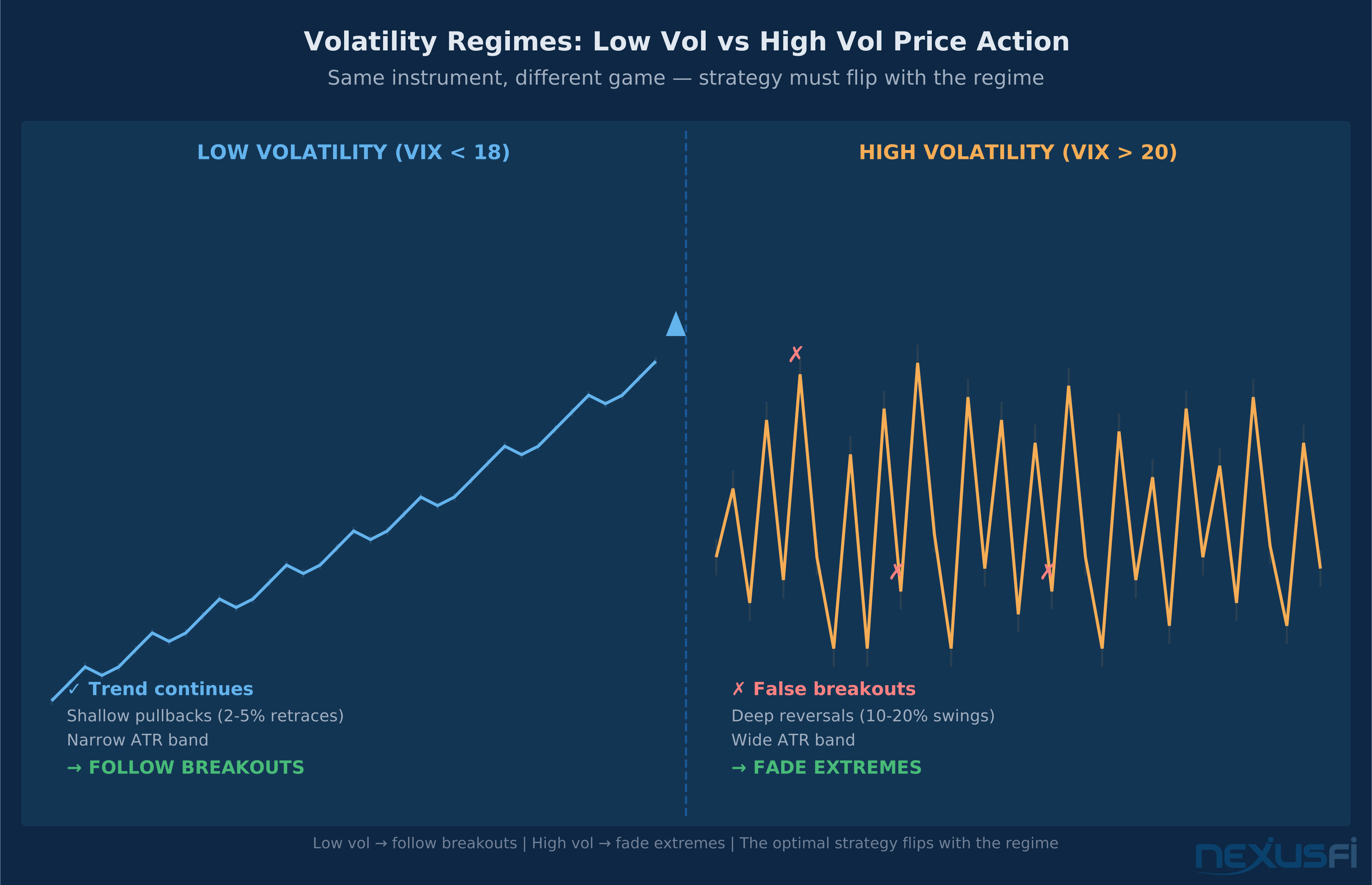
In high volatility, the market breathes wider. Daily ranges expand. Intraday reversals multiply. False breakouts — where price pushes through a key level, triggers retail stops and momentum chasers, then reverses hard — become the dominant pattern rather than the exception.
What works: Fading extremes. When ES pushes into the day's upper extreme on elevated volume and the move starts stalling, the short-side fade has positive expected value. The wider range means there's actual distance for the trade to work. Mean-reversion setups perform well because the wide swings create genuine "too far, too fast" conditions.
What fails: Following breakouts. When price breaks above a consolidation zone during a high-vol session, the initial burst often exhausts itself quickly and reverses. The breakout-follow strategy that cleaned up during last month's quiet period now chases entries at the worst possible prices and stops out repeatedly.
Stop placement: You need wider stops. A 1× ATR stop that worked perfectly in a 10-point ATR environment will get noise-stopped repeatedly in a 25-point ATR environment. Minimum 1.5× ATR, often 2× ATR for intraday stops in elevated vol.
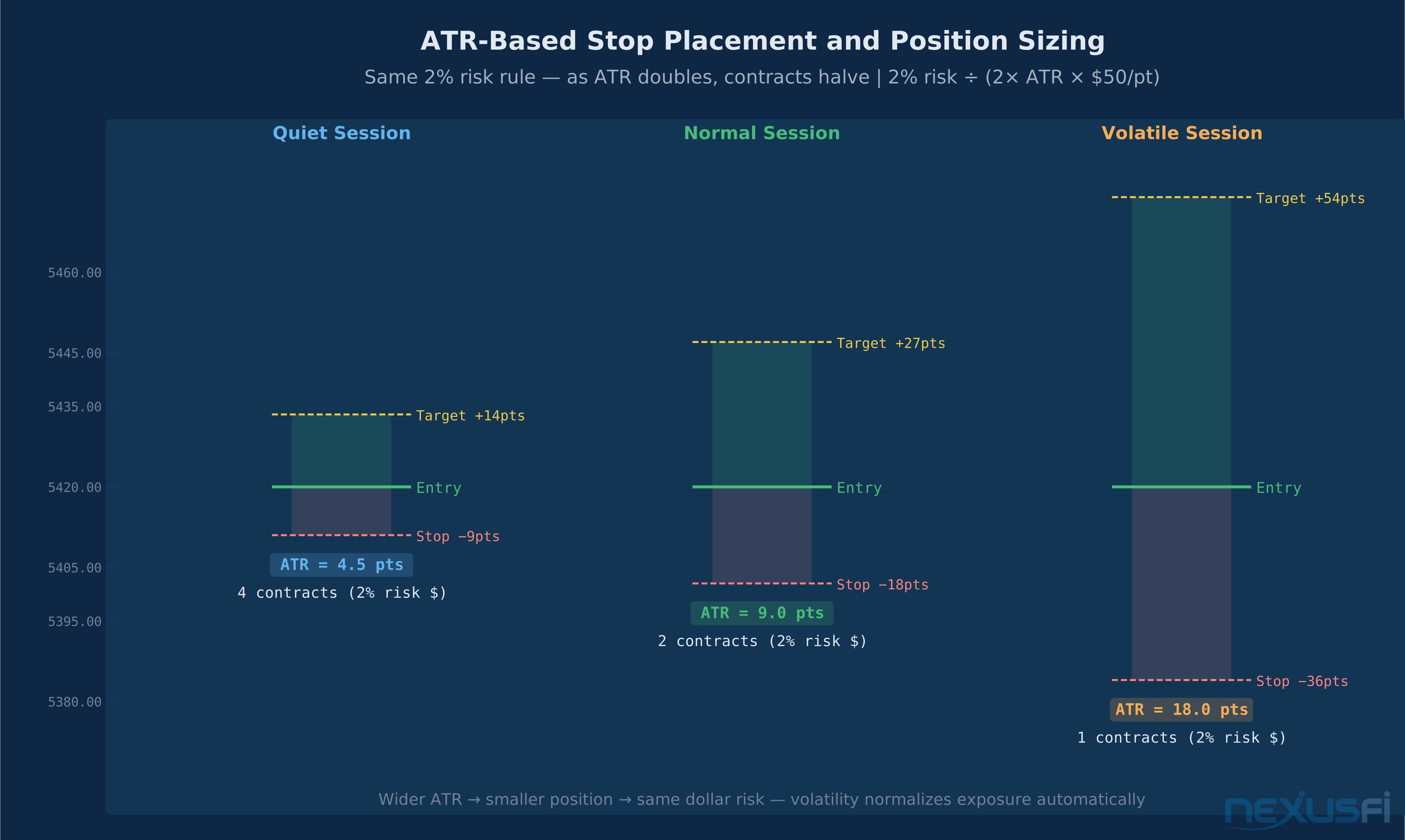
Position sizing: Smaller. The ATR-based sizing formula handles this automatically — when ATR doubles, position size halves for the same dollar risk. The behavioral challenge is accepting the reduction.
Daily stop-loss: Set a hard daily maximum loss before the session. High-vol days can generate loss cascades. A firm daily stop-loss at 2-3× your normal daily loss limit prevents one bad day from becoming a catastrophic week.
Low Volatility Regime (VIX < 18, ATR < 80% of 30-day average) #
In low volatility, the market moves steadily. Daily ranges compress. False breakouts diminish. When a level breaks, price tends to continue in that direction with only shallow pullbacks before resuming.
What works: Following breakouts. When ES clears a prior session high with volume confirmation in a low-vol regime, the tendency is for the move to extend — not reverse. Entry-on-breakout with tight stops below the breakout level catches the bulk of the move.
What fails: Fading. The mean-reversion fade that worked beautifully in the volatile period now fights a market that simply doesn't produce the deep reversal needed for the trade to pay off. You fade a 5-point push in ES during a VIX 12 environment, and it grinds another 12 points against you without looking back.
Stop placement: Tighter. Low ATR means you can use 1× ATR stops and still be outside the noise. Closer stops mean better risk/reward and fewer stress points on winning trades.
Position sizing: Larger. The tighter stop distance means you can take more contracts for the same dollar risk. This is where low-vol periods build account equity — not just because the market is calmer, but because the math of position sizing works in your favor.
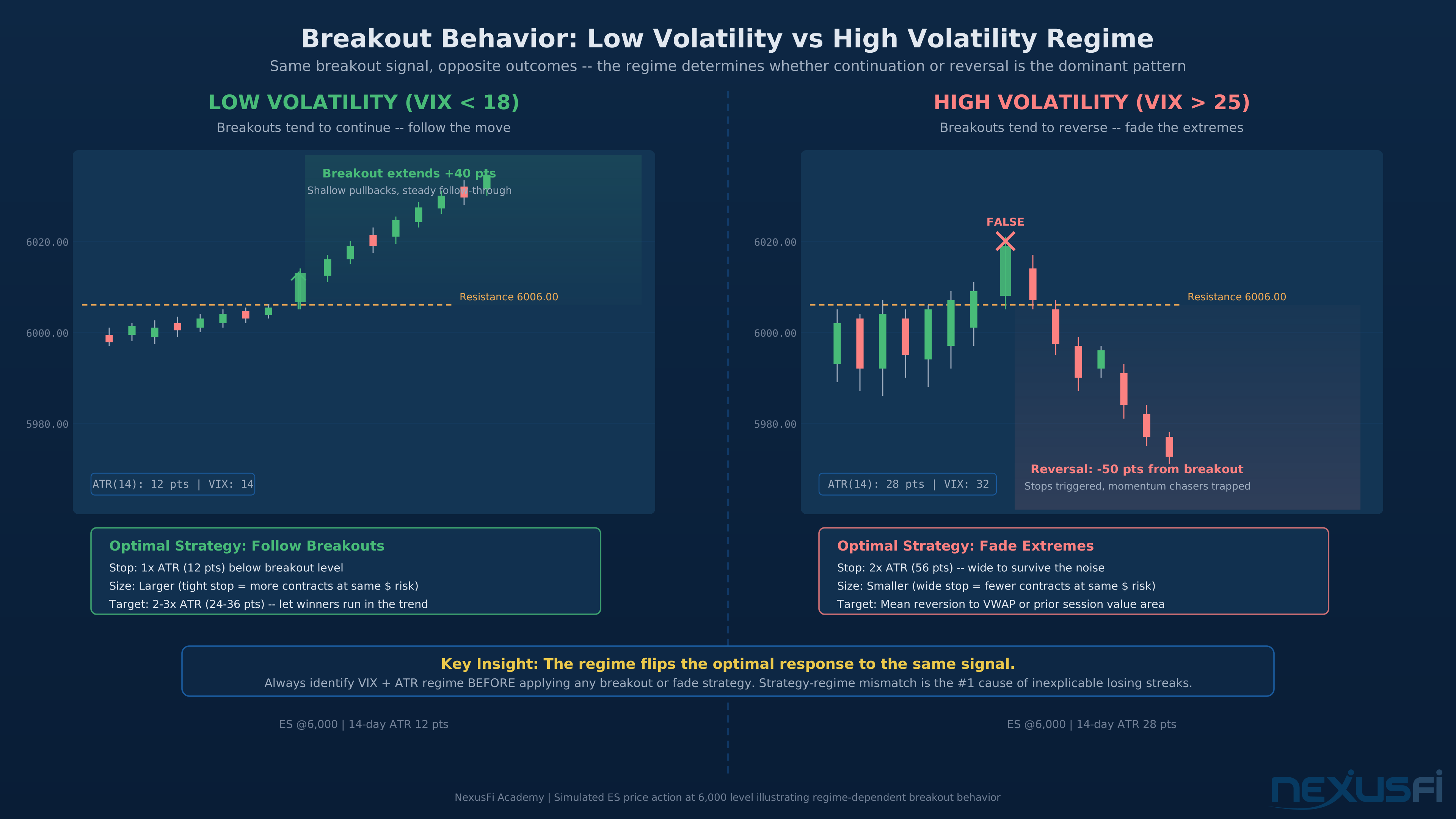
The single most dangerous thing in trading is successfully using a high-vol strategy during a low-vol period — or vice versa. Early luck masks the regime mismatch until the strategy fails catastrophically. Always identify the current regime before defaulting to your standard playbook.
Measuring Volatility: Your Toolkit #
ATR: Non-Negotiable #
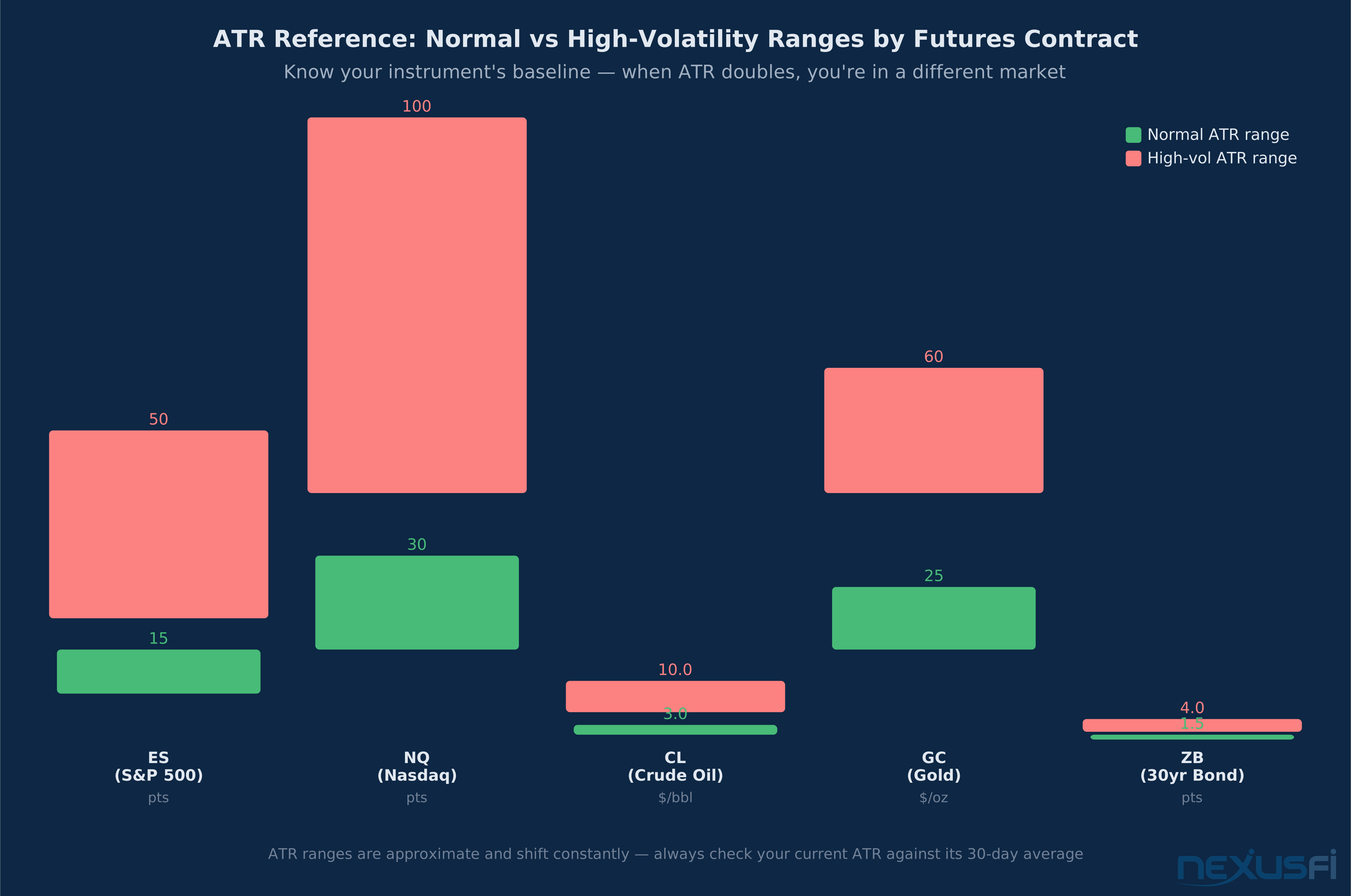
Every futures trader needs ATR visible on their chart. Use a 14-period ATR as your baseline. Check it before every session. Know what's normal for your instrument.
Reference ranges (shift constantly — always check your current ATR):
- ES (S&P 500 e-mini): 8-15 points/day in routine conditions, 20-50+ during high-vol events
- NQ (Nasdaq 100 e-mini): 15-30 points/day normal, 40-100+ during high vol
- CL (Crude Oil): $1.50-$3.00/barrel normal, $5-$10+ during high vol
- GC (Gold): $15-25/oz normal, $40-60+ during high vol
- ZB (30-yr Treasury Bond): 0.75-1.5 points normal, 2-4+ during rate shock
[8]
When your instrument's ATR doubles compared to its 30-day average, you're in a volatility expansion. Treat it as a different market.
VIX Levels as Regime Context #
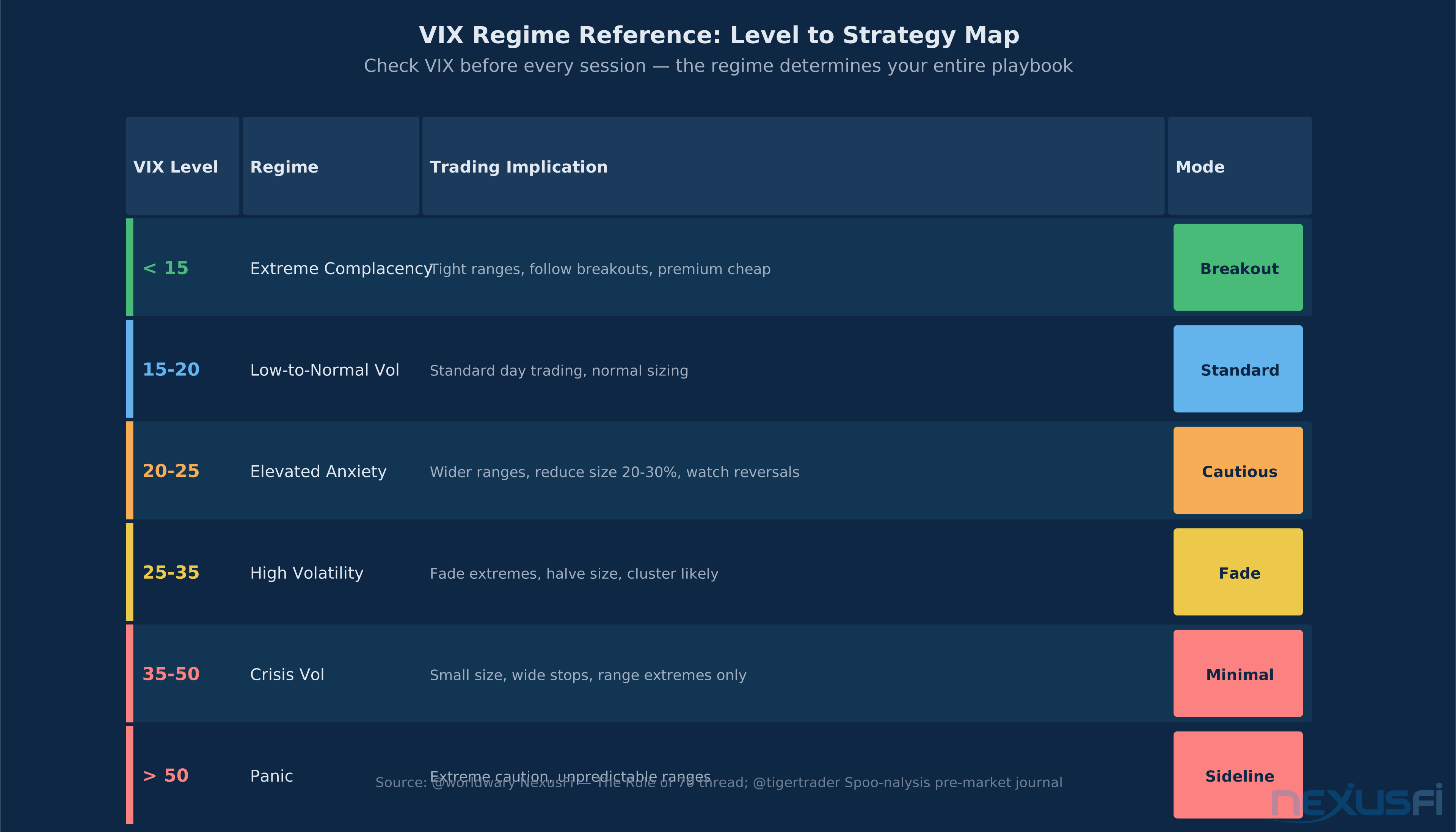
For equity-index futures traders:
| VIX Level | Market Regime | Trading Implications |
|---|---|---|
| < 15 | Extremely complacent | Tight ranges, follow breakouts, premium very cheap |
| 15-20 | Low-to-normal vol | Normal day trading, standard sizing |
| 20-25 | Elevated anxiety | Wider ranges, reduce size 20-30%, watch for reversals |
| 25-35 | High vol | Active clustering, fade extremes, halve normal size |
| 35-50 | Crisis vol | Small size, wide stops, focus on range extremes only |
| > 50 | Panic | Extreme caution, minimum size, ranges unpredictable |
Realized Volatility Calculation #
For comparing to implied volatility:
Commodity-Specific Volatility Measures #
VIX is equity-centric. For commodity futures traders:
- OVX (CBOE Crude Oil Volatility Index) — for CL traders
- GVZ (CBOE Gold Volatility Index) — for GC traders
- TYVIX (Treasury Volatility Index) — for ZB/ZN traders
Don't apply equity-market VIX regime logic directly to commodity futures without checking the commodity-specific vol indicators. The regimes may be completely decoupled.
Practical Application: Building Volatility Into Your Framework #
Stop Placement Using ATR #
The standard framework: stops at 1.5× to 2× ATR from entry. At 1× ATR, you're inside the normal daily noise. At 3× ATR, the risk/reward math rarely works.
ES example, normal conditions (ATR = 12 points):
- 1× ATR stop: 12 points — too tight, frequent stop-outs on routine pullbacks
- 1.5× ATR stop: 18 points — reasonable for intraday swing trades
- 2× ATR stop: 24 points — appropriate for wider swing entries near key levels
ES example, high-vol conditions (ATR = 28 points):
- 1.5× ATR stop: 42 points — minimum for meaningful holds
- 2× ATR stop: 56 points — appropriate for higher-conviction setups
The stops don't change based on your comfort level — they change based on the instrument's current behavior.
Position Sizing: The ATR Formula #
@tigertrader's position sizing framework from the NexusFi Psychology forum: "Your account value is $100,000, the ATR of the ETF is 3, and the ETF trades at $100. You set your risk at 2% of your capital on any given trade — $2,000 in this case. And you choose to use a 2 ATR stop... We now have the absolute value of our stop, which is $6. Divide the 2% risk capital ($2,000) by $6 and we get our position size of 333 shares." [5]
Applied to futures:
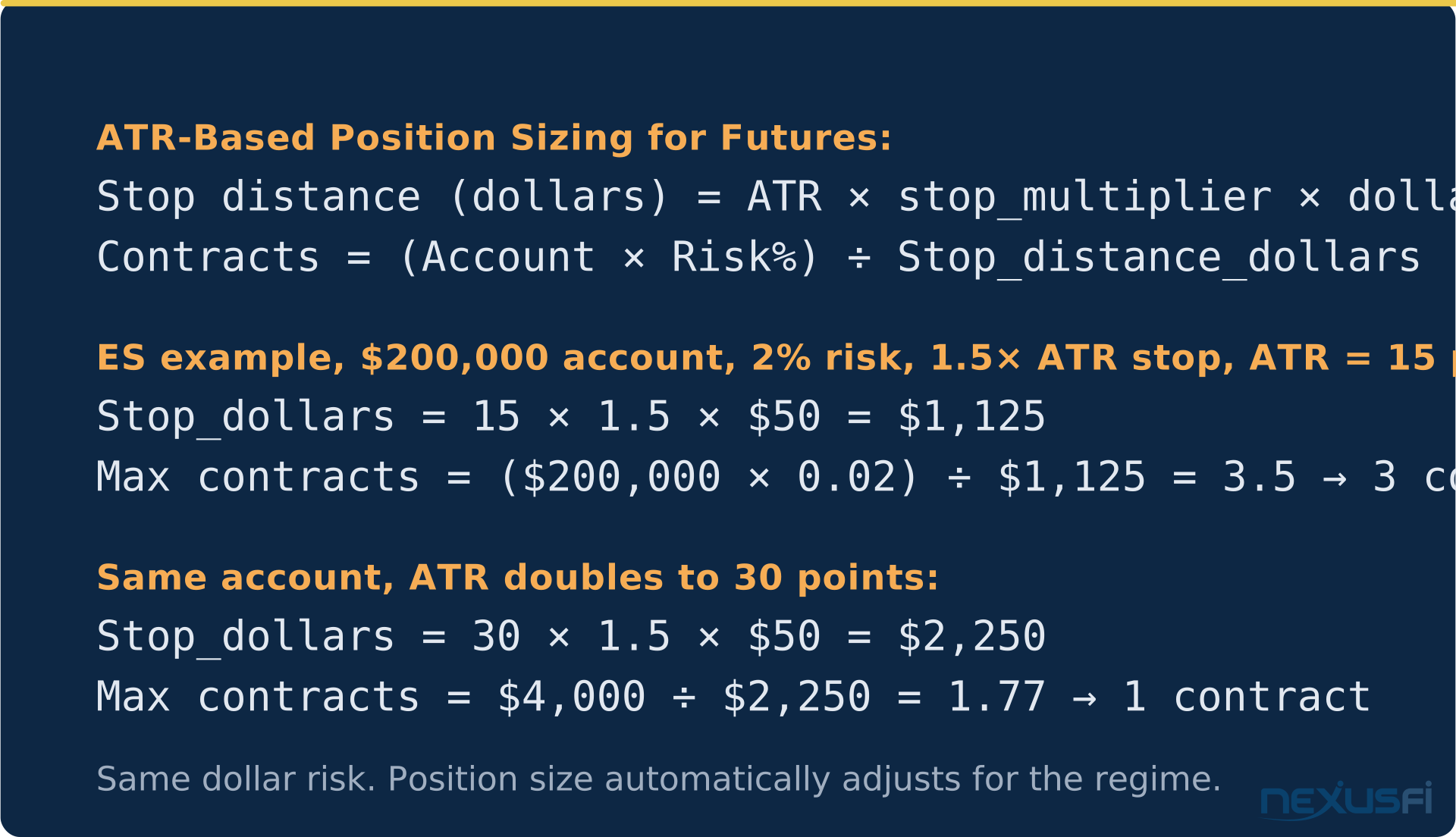
The community debate on ATR-based sizing runs deep. @OccamsRazorTrader raises a key nuance in the Emini Index forum: "Most longer term futures traders use volatility based position sizing. Using an indicator like ATR, and multiples of, gives you a ball park of the amount the market needs to move to stop you out of your trade. Calculate the stop level — use a total dollar risk amount (2% of account is common) and divide the total dollar risk by the trade risk to get the number of contracts to trade." [9]
Strategy Selection Decision Framework #
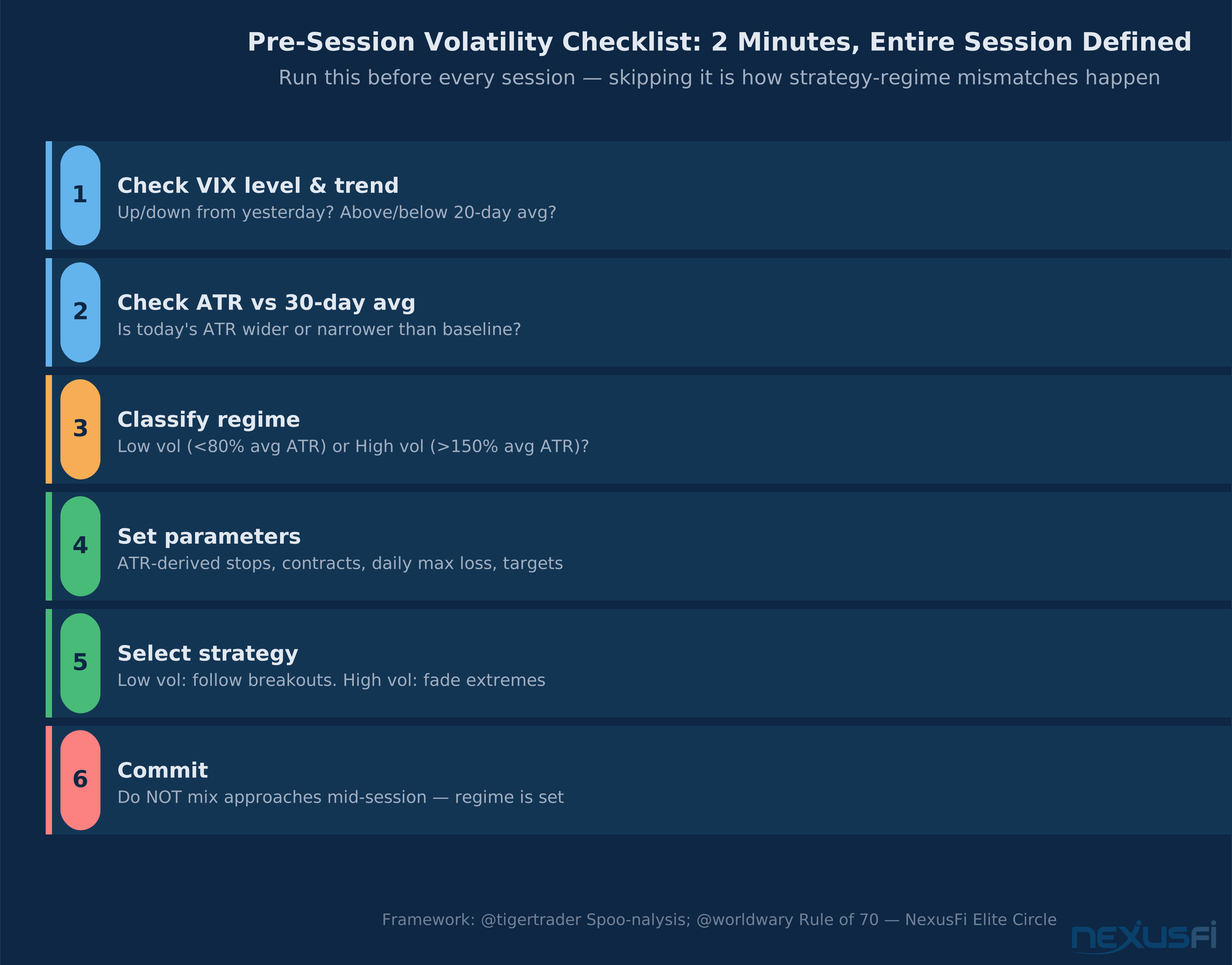
The pre-session checklist for regime identification:
- Check VIX level and trend: Up from yesterday? Up from 20-day average?
- Check your instrument's ATR: Wider or narrower than its 30-day average?
- Check VIX direction + momentum direction: Which of @tigertrader's four quadrants applies?
- Classify the regime: Low vol (follow breakouts, tight stops, larger size) or high vol (fade extremes, wide stops, smaller size)
- Set your parameters: ATR-derived stop distance, position size, daily max loss, targets
- Commit to the regime's strategy: Don't try to run both approaches simultaneously
This takes 2 minutes. It determines how you'll trade for the entire session.
@worldwary's VWAP Journal captures the regime-switch discipline practitioners use: "I don't make incremental adjustments based on how volatility changes day to day. Instead, I have a basic idea how the market should act under normal conditions, and then I change my tactics if volatility becomes unusually high or low. Usually these volatility changes will persist for some time, like weeks or months." [7]
Scaling In During Volatility Expansions #
When ATR is expanding in real time — visible as each day's range exceeds the previous day's — reduce position size proactively. Don't wait for a loss to force the adjustment. @tigertrader's framework suggests adding to winning positions in 0.5 ATR increments when in the flow, but the same logic applies in reverse: when ATR expands and you're not aligned with the regime, scale down in increments rather than all at once.
When Volatility Misleads: Limitations #
Gaps Distort ATR #
When a major event causes an overnight gap — Fed surprises, geopolitical shocks, earnings gaps — the ATR calculation will be distorted by the gap component of the true range. The next few ATR calculations will be artificially elevated. The gapped ATR doesn't necessarily reflect the intraday trading range you'll experience once the session opens.
Practical fix: mentally adjust ATR by removing the overnight gap component. If ES gapped 25 points overnight and the intraday range was 12 points, use 12 points as your effective intraday ATR for stop placement, not the 25+ true range that incorporates the gap.
Vol Compression Before Events #
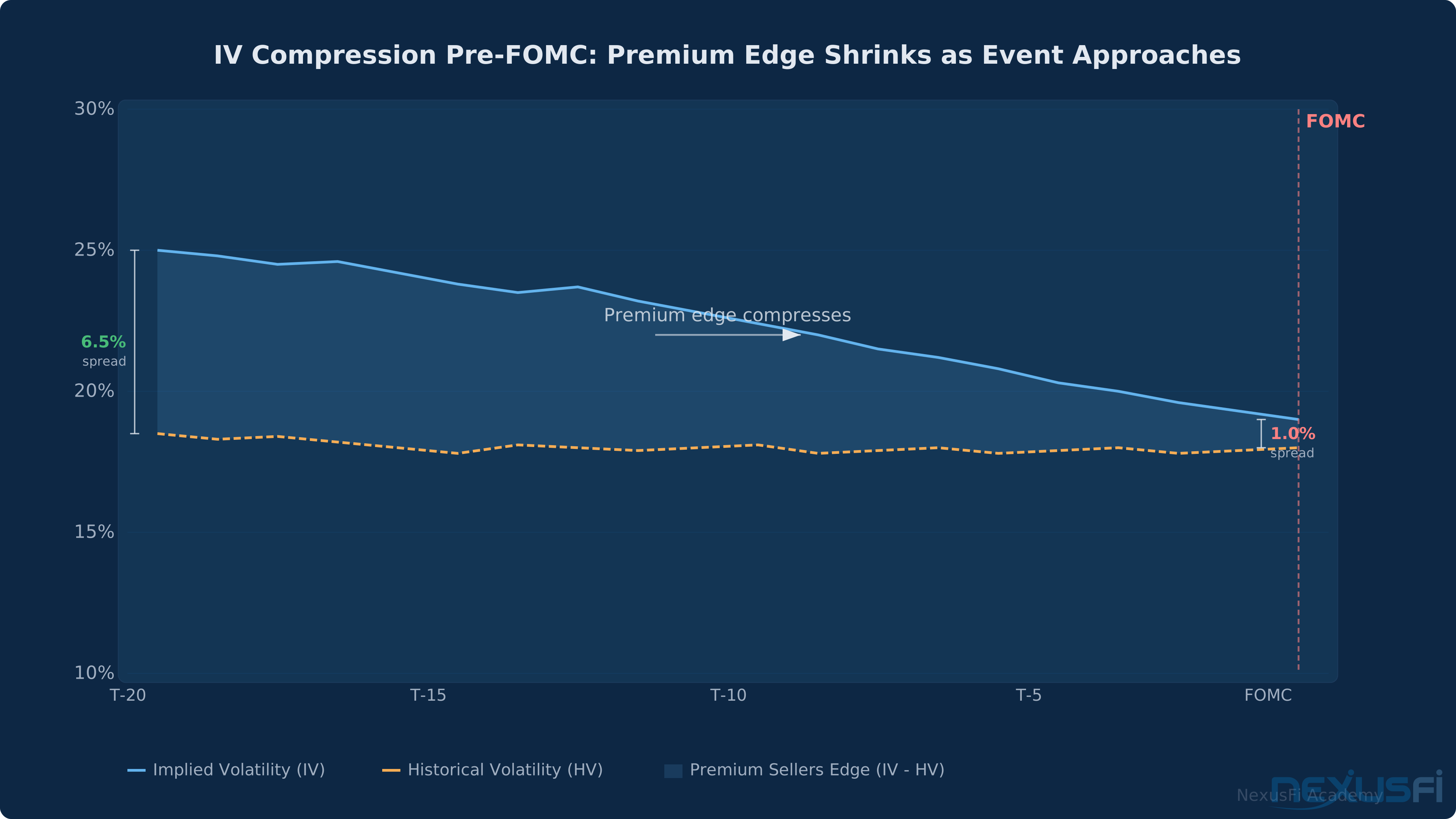
Implied volatility tends to compress in the final hours before major scheduled releases (FOMC, NFP, CPI). This doesn't mean the market expects no move — it means options players have positioned and are waiting. The actual realized vol on the announcement can be a multiple of pre-event implied vol, especially if the print surprises. Don't assume quiet pre-event conditions will persist into the release window.
Low Volatility is Not Stability #
A VIX of 11 doesn't mean the market is safe. It means options are cheap, complacency is high, and the next volatility expansion — when it comes — will be larger and faster than most traders are prepared for. The quietest periods in market history have been followed by some of the most violent expansions. Low VIX is risk accumulation, not risk reduction.
Volatility Disconnect Between Correlated Instruments #
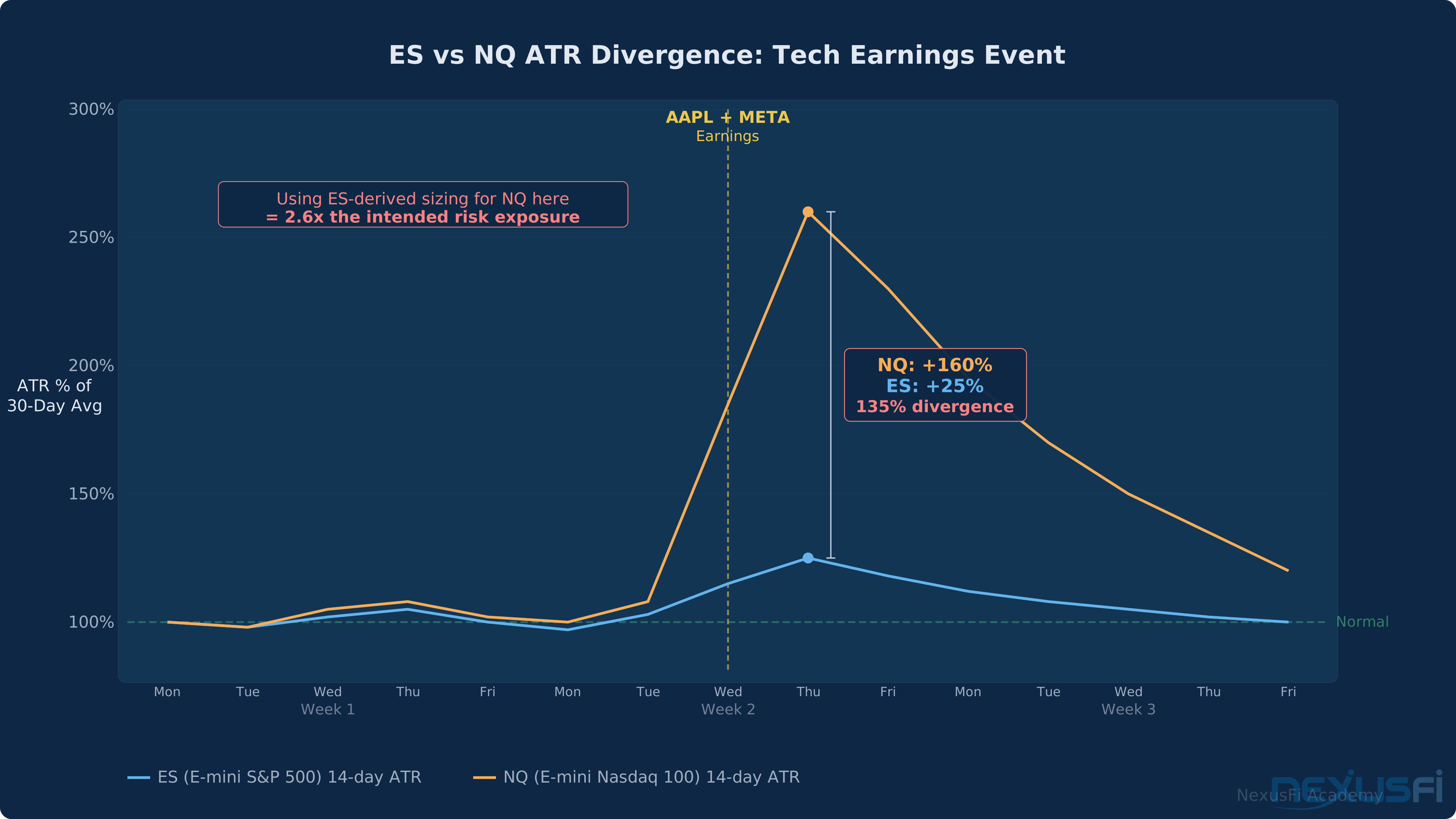
ES and NQ usually move together, but their volatility can diverge meaningfully during sector-specific events. A technology earnings shock can spike NQ volatility while ES remains relatively quiet. Your ES ATR and NQ ATR need to be checked independently. Applying ES-derived position sizing to an NQ trade during a tech vol spike is a sizing error.
Volatility is the foundation every other element of your trade plan rests on. Historical vol tells you what has happened. Implied vol tells you what the market expects. ATR is your practical tool for stops and sizing. VIX is your regime compass. Use all four, check them before every session, and adjust your strategy to match the regime — not your preference.
Integration with Complementary Tools #
Volatility doesn't work in isolation. Here's how it connects to the other frameworks you're using:
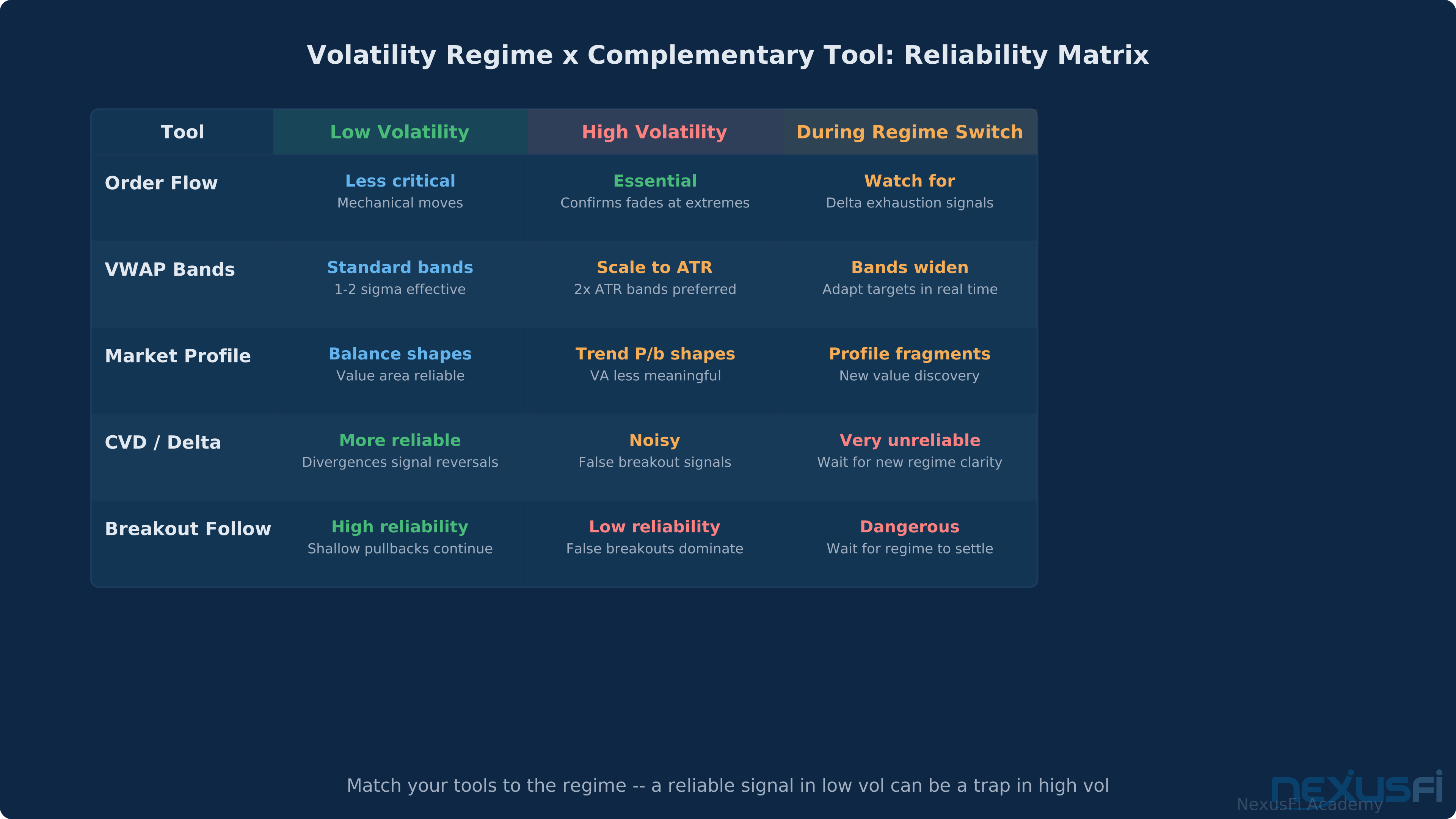
Order Flow + Volatility: In high-vol environments, footprint charts and delta analysis become essential confirmation tools. A fade setup that looks clean on price alone may have 20:1 bid absorption happening at the target level that confirms it. In low-vol environments, order flow matters less — the moves are more mechanical and less driven by aggressive participant behavior.
VWAP + Volatility: VWAP deviation bands can be scaled to ATR. Instead of using fixed standard deviation bands (1σ, 2σ), some traders use ATR multiples: 1× ATR above/below VWAP as the first zone, 2× ATR as the extended zone. This automatically adapts VWAP targets to the current volatility environment.
Market Profile + Volatility: In high-vol sessions, single prints form faster and the profile shape tends toward trend (P or b shape) rather than balance (bell curve). The value area is less meaningful as a trading reference on high-vol trend days because price is discovering new value, not reverting to established value.
Delta Analysis + Volatility: CVD (Cumulative Volume Delta) divergences are more reliable in low-vol environments. In high-vol conditions, the aggressive delta moves can exhaust quickly and reverse — what looks like a strong momentum signal may be a false breakout in disguise.
Knowledge Map
Prerequisites
Understand these firstGo Deeper
Build on this knowledgeReferences This Article
Articles that build on this topicCitations
- — VIX and Volatility General Discussion (2020) 👍 7“Realized volatility is stock movement as recorded, also known as Historical volatility. VIX options are not the VIX, they are essentially VIX options on futures.”
- — Paps pre open prep (2017) 👍 3“As is the case with volatility it shows properties of persistence and mean reversion as opposed to trending and mean reversion.”
- — Spoo-nalysis ES e-mini futures S&P 500 (2014) 👍 8“trending up - rising momentum/falling vix. trending down - falling momentum/rising vix. chopping around - rising momentum/rising vix, falling momentum/falling vix”
- — Using VIX for Hi-Lo range estimate (2024) 👍 8“If both days were to have the same realized volatility, the choppy day would have a much smaller range than the trendy one. The R-Square of range prediction is around 65%.”
- — NYSE TICK AND ADD (2011) 👍 8“Your account value is $100,000, the ATR is 3. You set your risk at 2% of your capital. 2 ATR stop. Divide the 2% risk capital by the stop and we get our position size.”
- — The Rule of 70 (2011) 👍 2“High Volatility (VIX 20+): Faster trade, large number of intraday reversals, tendency for false breakouts. Low Volatility (VIX 18 or lower): Slower trade, small number of intraday reversals, tendency for price to keep moving in the direction of a breakout.”
- — VWAP Journal (2012) 👍 5“I don't make incremental adjustments based on how volatility changes day to day. High Volatility: fade the extremes. Low Volatility: trade in the direction of the trend.”
- — Dynamic Trailing Stop and Profit using ATR (2015) 👍 4“ATR allows us to normalise volatility across a wide range of instruments. Whenever you use ATR as a stop, your stop will be closer during periods of low volatility and wider during periods of high volatility.”
- — Do you change your strategy based on volatility? (2022) 👍 2“Most longer term futures traders use volatility based position sizing. Using an indicator like ATR gives you a ball park of the amount the market needs to move to stop you out.”
- — Volatility Index Methodology: Cboe Volatility Index (2024)
- — GARCH 101: The Use of ARCH/GARCH Models in Applied Econometrics (2001)
- — Risk and Volatility: Econometric Models and Financial Practice (Nobel Lecture) (2003)