



Inter-Market Analysis for Futures Traders: Using Correlations Between ES, Bonds, the Dollar, and Global Markets
Overview #
Every futures market is connected. ES doesn't move in isolation — it's responding to pressure from Treasury yields, the dollar's strength, what NQ and YM are doing, and what equity markets in Europe and Asia did overnight. Traders who monitor only their primary instrument are working with a fraction of the available information.
Inter-market analysis is the practice of reading these relationships to improve trade quality. Not to predict the future — but to understand the current environment: is this a risk-on or risk-off day? Are bonds confirming what equities are doing? Is the dollar's strength creating headwind for the next ES rally? Is NQ diverging from YM in a way that makes ES choppy?
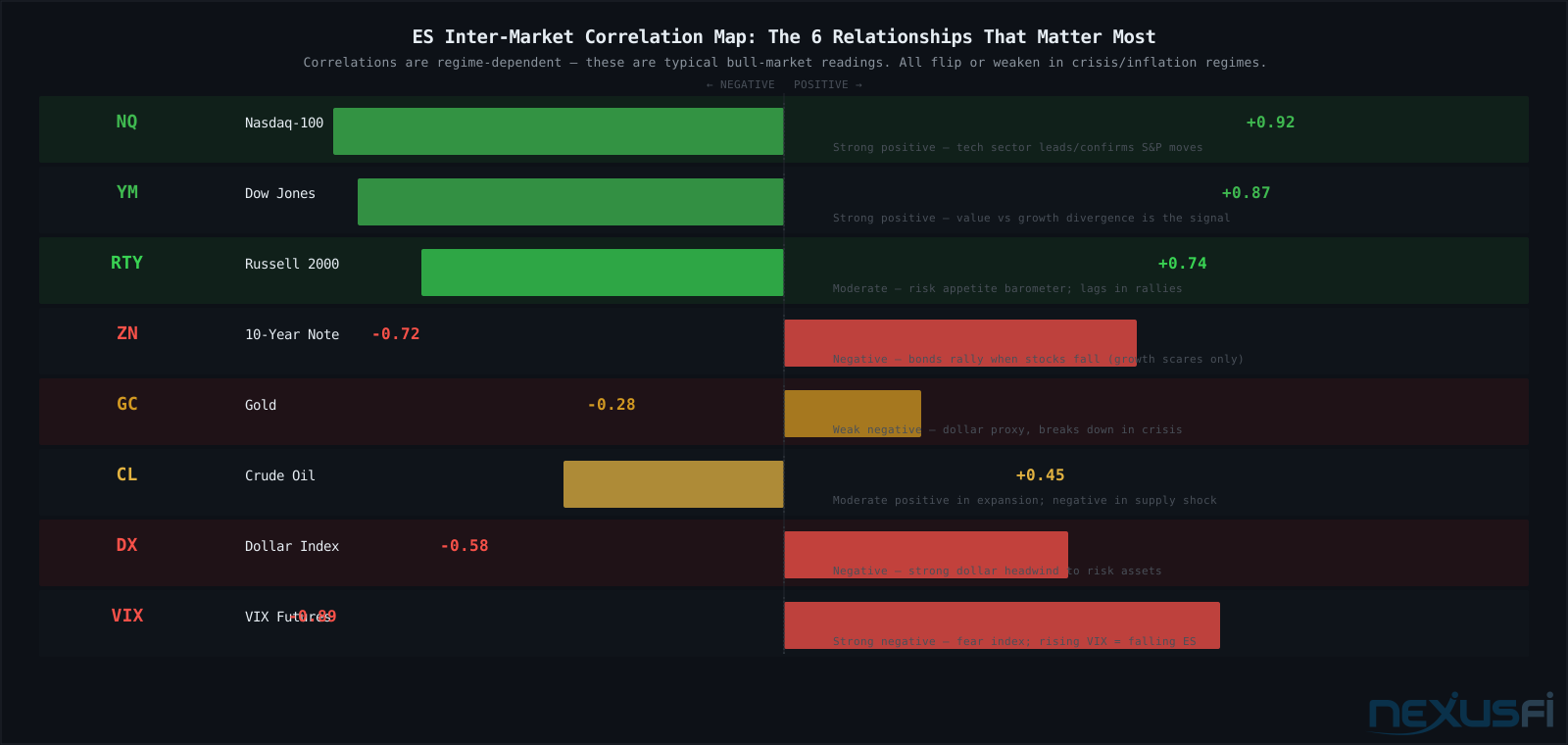
@Fat Tails laid out the practical framework for ES traders: "I want to trade ES mini futures, and I believe that I should have additional information, not just price and volume, so I would think first about the underlying market (Tick and TRIN), the option market (put/call ratio, ISEE, VIX), other index futures (YM, NQ, TF), the dollar index (DX), interest rates (bonds), and interbank rates (LIBOR/TED-spread as a measure of risk aversion)."
These relationships aren't static. They evolve with the macro regime, shift during crises, and sometimes invert completely. The skill isn't memorizing correlation numbers — it's understanding why each relationship exists and recognizing when it's operating normally versus breaking down. @Fat Tails first catalogued this taxonomy [source] in a 2010 thread on intermarket analysis resources that remains the benchmark starting point for ES traders approaching cross-market analysis.
The Core Principle: Correlations Are Dynamic #
The most dangerous mistake in inter-market analysis is treating correlations as fixed.
This isn't a warning to abandon inter-market analysis — it's a warning to use it correctly. Correlations that exist for months tend to be macro-regime driven. Day-to-day fluctuations in correlations are noise. The skill is distinguishing between a regime-level relationship (persistent, tradable) and a session-level anomaly (ephemeral, don't fight it).
The word "lagged" is key. When one market moves and another hasn't responded yet, that gap is the edge.
Equity Index Relationships: ES, NQ, YM, and RTY #
The four major US equity index futures — ES (S&P 500), NQ (Nasdaq-100), YM (Dow), and RTY (Russell 2000) — are highly correlated but not identical. The divergences between them are often more useful than any individual contract.
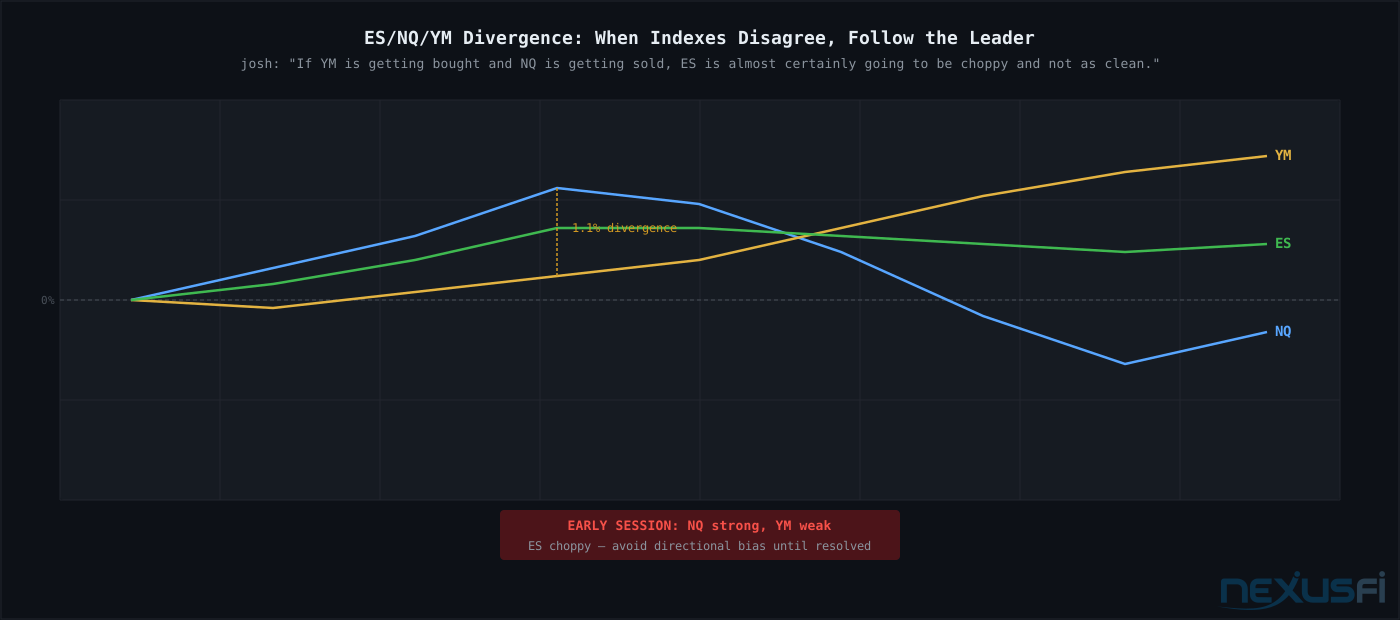
The practical framework for equity index divergence:
- NQ leads ES up: Tech momentum is driving. Valid for momentum-following longs, but suspect if tech is concentrated in a few names (AAPL weighting effect).
- YM leads ES up: Value/cyclical strength. More broadly supported rally. Often more sustainable than tech-led moves.
- NQ strong, YM weak (or vice versa): Index rotation. ES will chop. @josh's advice: trade the cleaner instrument (YM if value is leading, NQ if tech is leading) rather than fighting ES chop.
- RTY diverges from ES: Small-cap risk appetite is different from large-cap. RTY leading = risk-on; RTY lagging = large-cap defensiveness creeping in.
When you have directional conviction but ES looks choppy because of NQ/YM divergence, a simple solution is to trade NQ or YM directly instead. @josh: "Sometimes we think things are too easy, but that's what I try to do these days. If the setup is there, if it's clean, and experience says you have an edge here, take it."
The inter-market edge is also visible in divergences.
When one index makes a new high while another makes a new low simultaneously, the weaker index is usually the better short and the stronger is the better long.
The Bond-Equity Relationship #
The relationship between Treasury futures (ZN, ZB, ZT) and equity futures (ES, NQ) is the most important inter-market relationship for futures traders to understand — and the most regime-dependent.
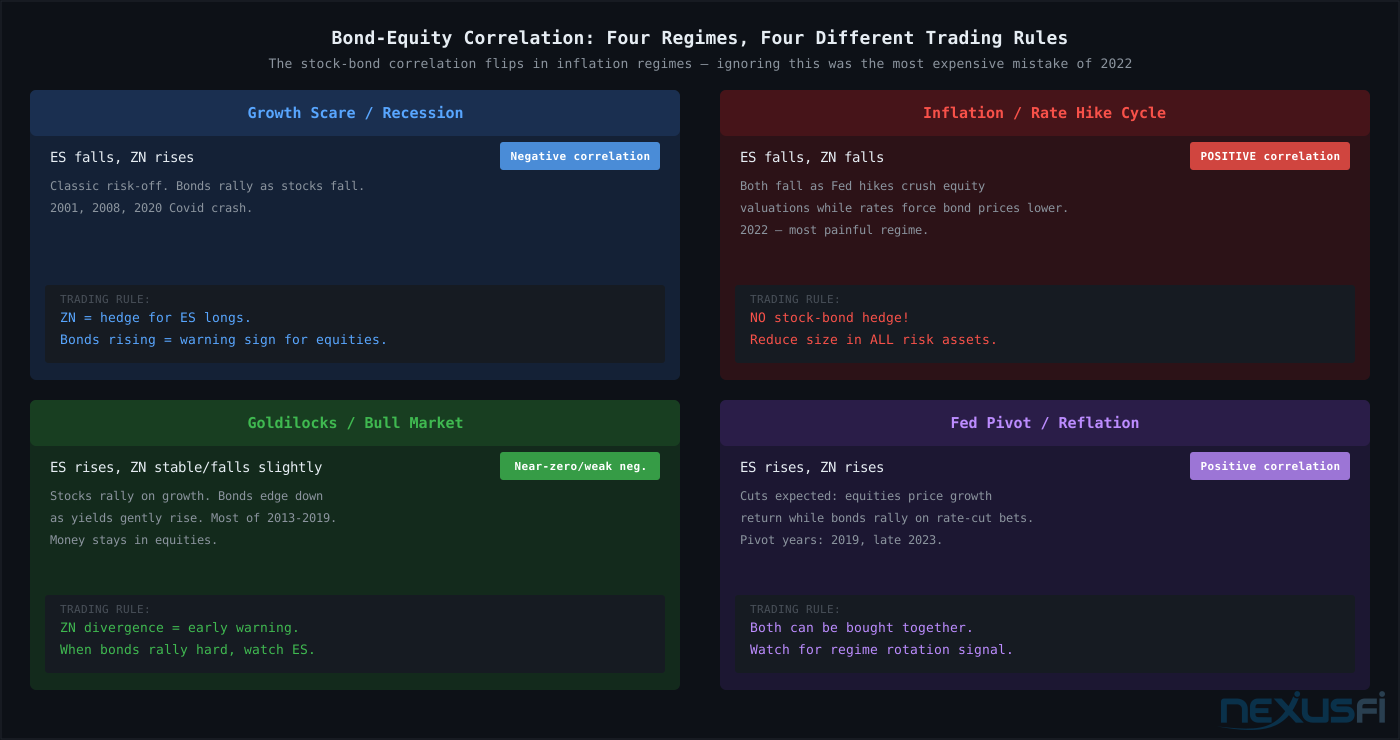
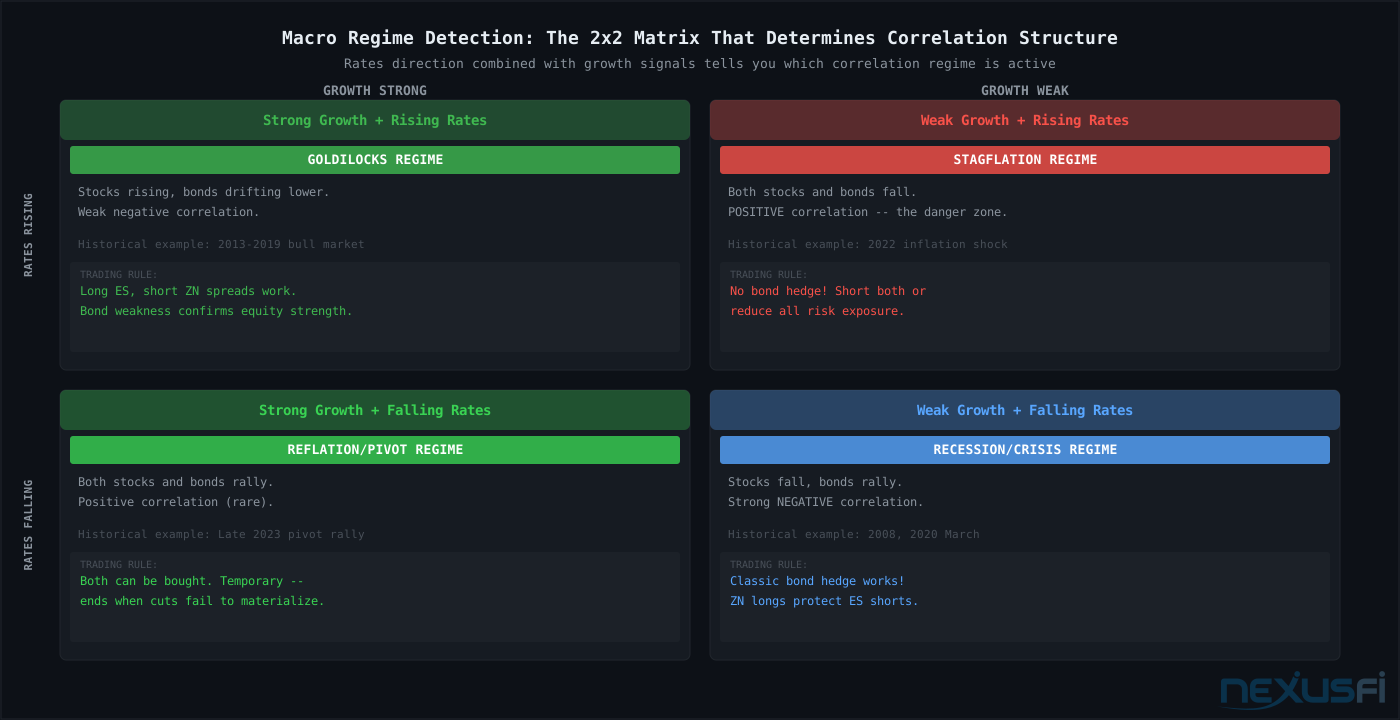
The four bond-equity regimes every trader must know:
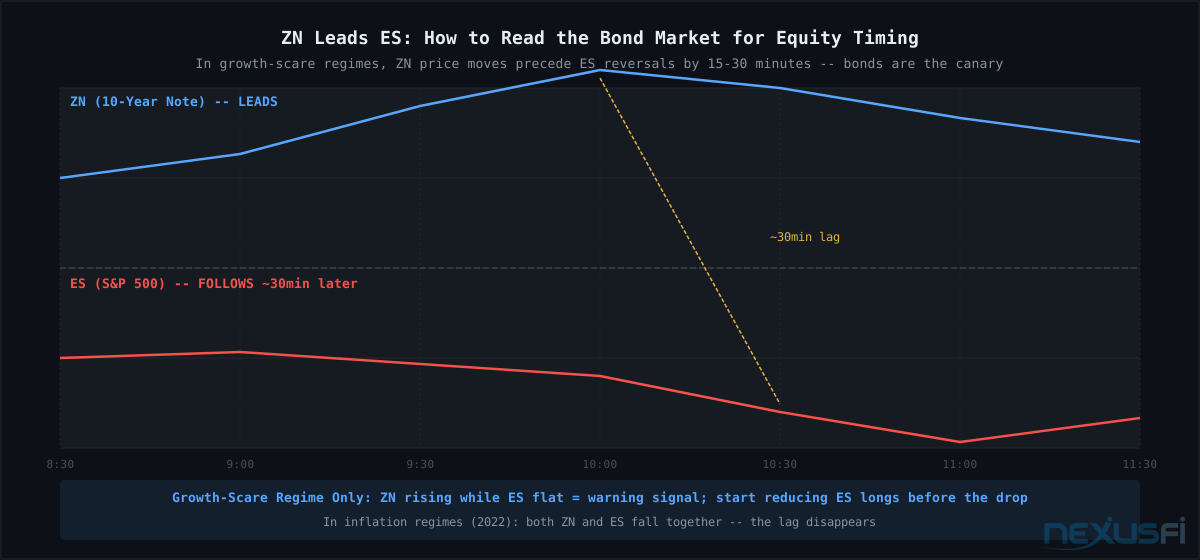
Growth Scare / Recession: Stocks fall, bonds rally. The classic negative correlation. When the market fears a recession, money flows to the safety of Treasuries. ZN rising while ES falling is the textbook pattern — and the regime where "buy bonds to hedge your equity long" actually works. 2001, 2008, 2020 March.
Inflation / Rate Hike Cycle: The regime that burned many traders in 2022. Both stocks AND bonds fall simultaneously. The Fed is hiking to fight inflation, which means Treasury prices fall as yields rise (bearish ZN) while higher rates crush equity valuations (bearish ES). The traditional bond hedge fails completely. In this regime, you can't hedge your ES short with ZN — both need to be on the short side of your position.
Goldilocks / Bull Market: Stocks rally while bonds drift slightly lower. The 2013-2019 regime for much of the time. Money is in equities, rates drift gently higher as growth is priced in, but not so high as to threaten valuations. The relationship is weak but slightly negative — bonds don't rally with stocks, but they don't crash either.
Fed Pivot / Reflation: Both assets rally together. When the Fed signals rate cuts, equities price future growth while Treasuries rally on lower expected rates. This was late 2023 briefly. The positive correlation is temporary — it ends when the Fed either doesn't cut or cuts less than expected.
Identifying which regime you're in is the prerequisite for using bonds as a trading signal. If you're in a growth-scare regime, ZN rising is a warning for your ES longs. If you're in an inflation regime, ZN rising with ES falling is just two bad things happening simultaneously — not a hedge.
The Dollar and Commodities: DX, GC, and CL #
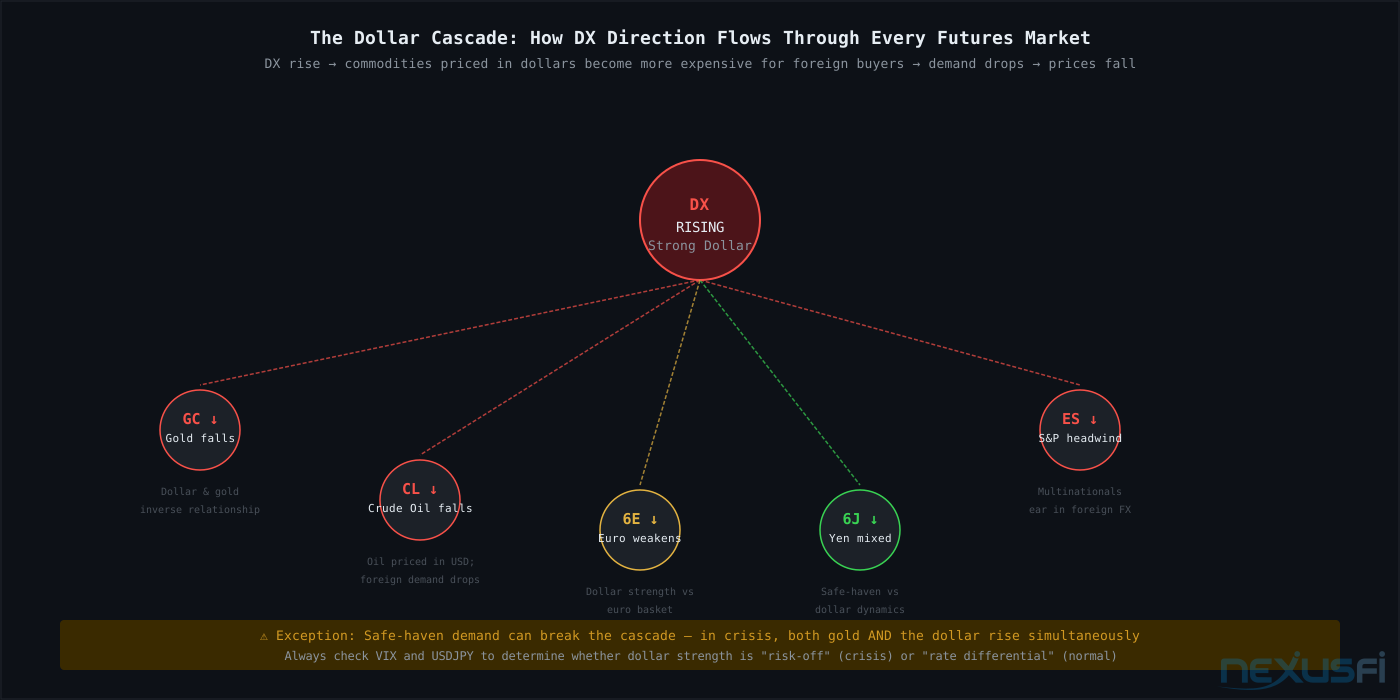
The dollar index (DX) is the master key for commodity futures. Most major commodities — gold, crude oil, copper, agricultural futures — are priced in US dollars. When the dollar strengthens, it takes fewer dollars to buy the same quantity of commodity, which typically pushes dollar prices lower. This mechanical relationship creates a mostly negative correlation between DX and GC, CL, and other commodities.
For ES, the dollar's effect is indirect but real. S&P 500 companies earn a large portion of revenue overseas. When the dollar strengthens, foreign earnings translate back to fewer dollars — a headwind for multinational earnings (Apple, Microsoft, Caterpillar, etc.). Over longer horizons, sustained dollar strength is a headwind for ES. Sudden dollar spikes on geopolitical events can create immediate ES weakness as traders price in earnings risk.
Three exceptions to the dollar cascade: (1) Crisis demand — both gold AND dollar can rise in a true panic (Lehman, March 2020), driven by different safe-haven flows; (2) Supply-side oil — CL can rise WITH a strong dollar if the move is OPEC-driven, not demand-driven; (3) Rate-differential dollars — Fed-hiking dollar strength is different from crisis-flight strength, and affects EM/commodities differently. The DX-GC relationship is the most reliable for day traders — gold is liquid and responsive; a sudden dollar spike with gold not following often reveals a regime-level break worth investigating.
Currency Correlations: Yen and AUD as Risk Proxies #
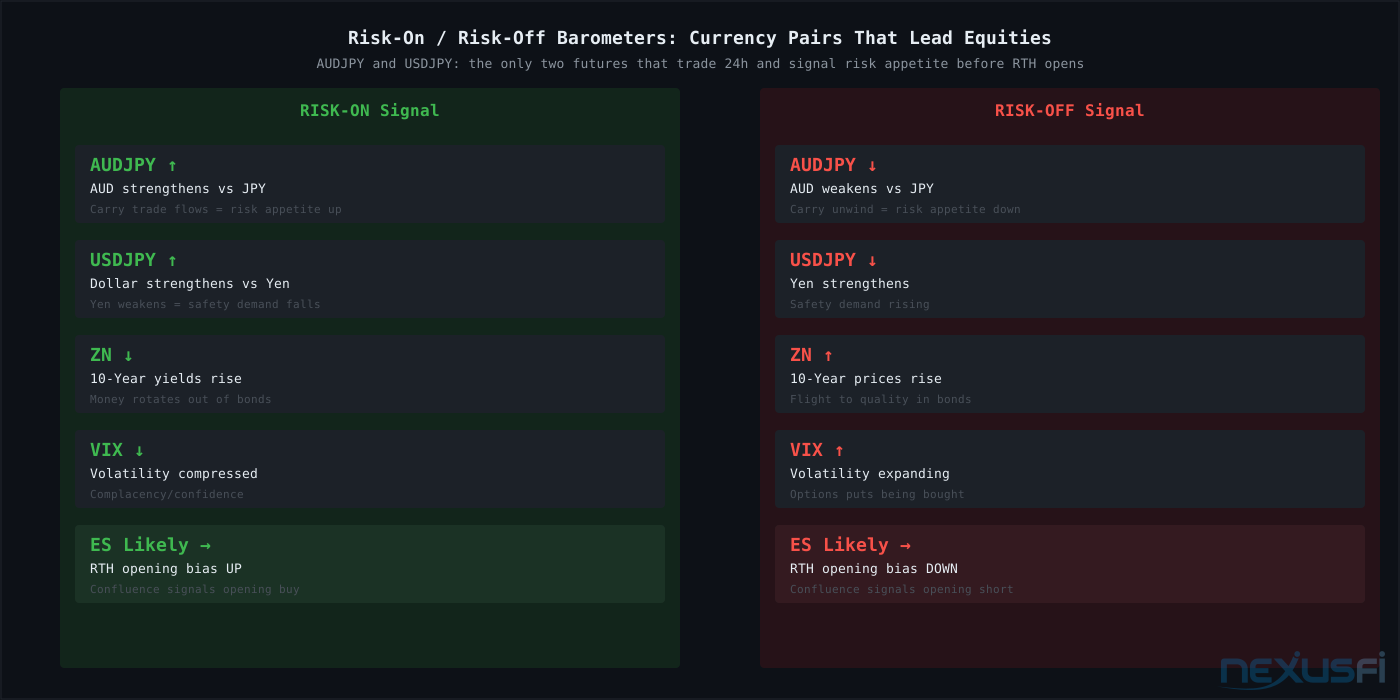
Of all the currency futures, two are most useful for equity traders: AUDJPY (Australian Dollar vs Japanese Yen) as a risk barometer, and USDJPY (Dollar vs Yen) as a policy/safety indicator. Neither of these contracts is directly traded by most equity futures traders — but watching their price action provides early warning signals that price into equity markets 30-60 minutes later during RTH overlap.
Why AUDJPY works as a risk barometer:
The Australian dollar is a commodity currency — it strengthens when global growth is expected to be strong (demand for Australian commodities rises). The Japanese yen is a safe-haven currency — it strengthens when risk appetite falls (Japanese institutions repatriate overseas investments). When AUDJPY rises, AUD is being bought over JPY, meaning traders are choosing growth exposure over safety. When AUDJPY falls, the opposite is happening.
Because both AUD and JPY markets trade 24 hours, AUDJPY can signal a risk-off shift during Asian session hours — before US equity futures markets see the full impact at RTH open. Monitoring AUDJPY overnight gives a head start on reading the morning's risk tone.
USDJPY and the yen carry trade:
When the yen strengthens (USDJPY falls), it often signals carry-trade unwinding. The classic yen carry trade involves borrowing cheap yen to invest in higher-yielding assets. When that trade unwinds — either because yen rates rise, risk spikes, or the position becomes crowded — USDJPY falls and the assets that were funded by yen (ES included) also fall. The August 2024 yen carry unwind was a textbook example: USDJPY dropped sharply, triggering a rapid 8%+ ES selloff in days.
VIX and the Fear Gauge #
VIX futures correlate around -0.85 to -0.92 with ES in normal regimes. For day traders it's a confirmation tool: VIX rising with ES falling confirms the move. VIX rising while ES is sideways warns of a coming selloff — puts being bought before price acts. VIX falling while ES stalls at resistance = complacency, often seen at tops. VIX spiking while ES recovers = short-covering, fragile rally. When VIX and ES diverge intraday, the divergence typically resolves toward the VIX signal — options traders reprice risk faster than futures.
European and Global Markets as Leading Indicators #
DAX (FDAX) and Euro Stoxx 50 (FESX) trade before US RTH opens, and sometimes price in events before ES catches up.
— when European indices were forming double bottoms ahead of the SPX swing low, watching the FESX and FDAX gave advance warning. If DAX and FESX are both making new highs while ES consolidates, that's bullish divergence; if European markets sell off while ES holds, ES strength is likely fragile. See the DAX futures guide for the European index in detail. Asian markets — especially Nikkei NKD, which correlates with USDJPY — complete the overnight picture.
When Correlations Break: Regime Changes #
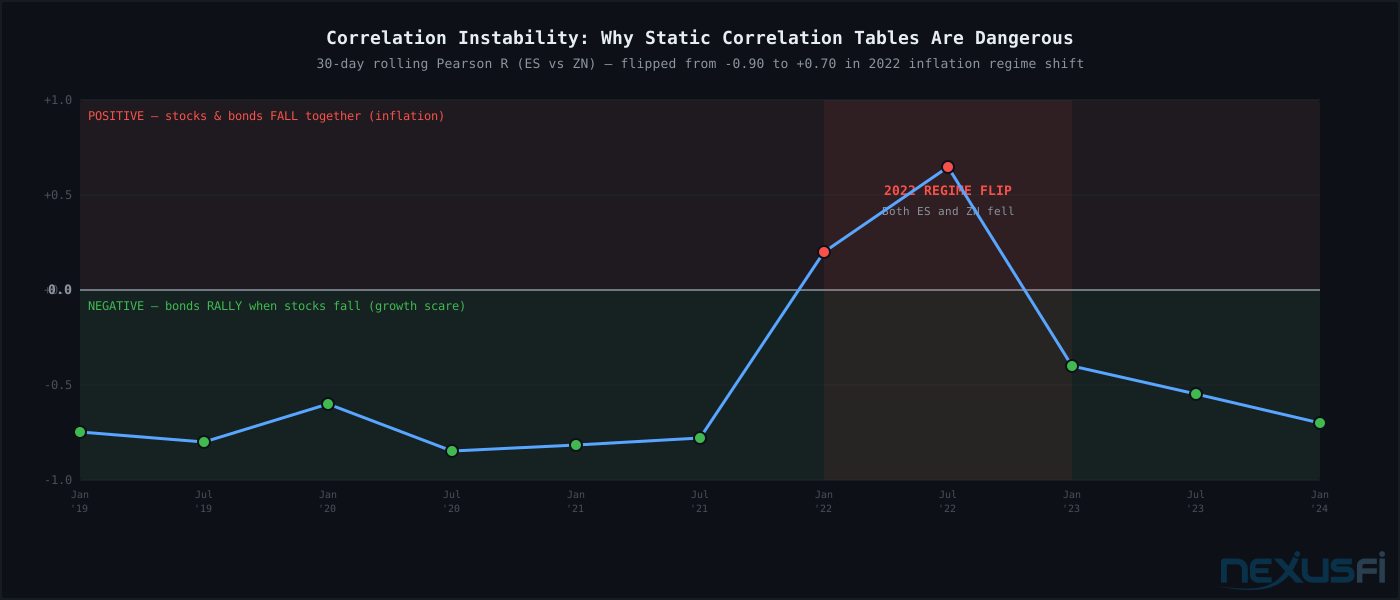
2022 was the single most instructive year for inter-market correlation discipline in a decade. The stock-bond correlation flipped from deeply negative (bonds rally when stocks fall) to much positive (both fall together). Traders who had internalized "ZN up = ES hedge" got hurt badly — buying bonds to hedge equity longs in 2022 meant losing on both legs simultaneously.
The mechanism: the Fed was hiking aggressively to fight inflation. Rising rates mean Treasury prices fall (ZN bearish). Rising rates also compress equity valuations via higher discount rates (ES bearish). Both assets fell from the same cause — aggressive monetary tightening. The correlation that had held for 20 years broke in under a quarter.
How to detect regime changes before they fully materialize:
- Monitor rolling correlation: Track 20-day and 60-day rolling correlation between your primary instrument and its key counterpart. When the 20-day starts deviating from the 60-day, the regime may be shifting.
- Watch the central bank narrative: Inflation regime vs. growth regime is the single biggest driver of correlation structure. Fed pivot language → regime shifts.
- Look for correlation breakdowns in real time: When bonds and stocks rally simultaneously on the same news, or fall simultaneously on the same news, that's a red flag for the normal inverse relationship -- investigate before trading it.
Practical Framework for Daily Use #
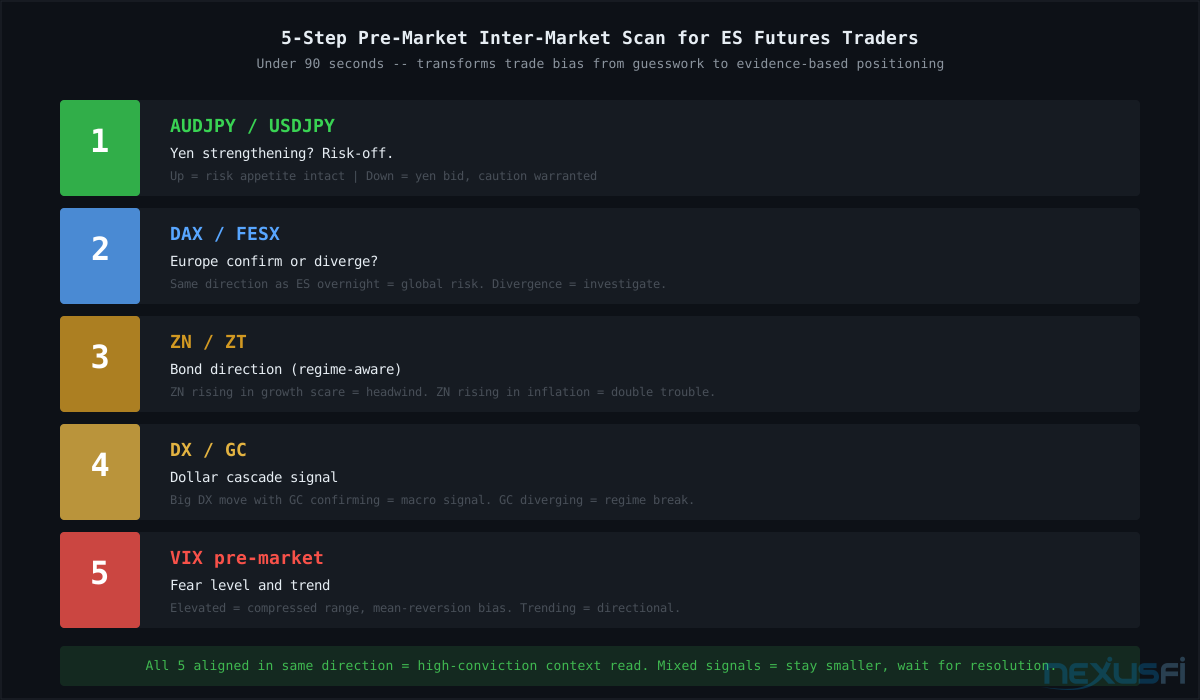
Five-step morning checklist for ES traders: (1) AUDJPY/USDJPY from Asia — up = risk-on, down = caution; (2) DAX/FESX — confirming or diverging from overnight ES? (3) ZN direction — read in the context of current regime (growth-scare vs inflation, same ZN move has opposite meaning); (4) DX and GC — big dollar move with gold confirming = regime signal; gold diverging = dig deeper; (5) VIX pre-market — elevated VIX compresses ES range and shifts the edge toward mean-reversion. If bonds, dollar, AUDJPY, and VIX all point the same direction, that's a high-conviction context read. Don't fight the ensemble.
Putting It Together #
Inter-market analysis rewards patience and consistency. It won't tell you the exact price where ES reverses — that's what technical analysis and order flow are for. What it does is tell you whether the macro environment is aligned with or working against your trade.
The most important principle: focus on understanding causality, not just correlation. @MacroNinja: "Because it can be confusing to see if the correlations are lagging or leading indicators, focus instead on understanding what is causing each of those respective instruments to move." When you understand that AUDJPY is falling because Japanese institutions are repatriating money due to geopolitical risk, you can assess whether that matters for your next 30-minute ES trade. When you don't know why something is moving, the correlation number is just noise.
Start with the relationships that matter most for your primary instrument. For ES traders: NQ/YM divergence, ZN direction (in the right regime), VIX level, and AUDJPY as the overnight signal. Add DX and European indices once the core four are instinctive. The goal is pattern recognition — not running correlations on a spreadsheet, but intuitively reading when instruments are confirming versus when they're diverging in ways that matter.
For the complete supporting knowledge: Market Internals and Breadth Indicators covers TICK, ADD, and VOLD for intraday confirmation. ZT Futures and ZB/ZN Futures explain the bond side. Gamma Exposure and Dealer Hedging covers how options flow creates additional structure. Together they give you the complete cross-market picture that separates institutional traders from retail.
Knowledge Map
Go Deeper
Build on this knowledgeReferences This Article
Articles that build on this topicCitations
- — Correlations and Inverse correlation ES (2015) 👍 11“you really have to understand the nuances across everything: yen, bonds, equities, and the US dollar”
- — Spoo-nalysis ES e-mini futures S&P 500 (2014) 👍 3“cross asset correlations can be highly predictive especially when there is a lagged correlation”
- — Spoo-nalysis ES e-mini futures S&P 500 (2015) 👍 10“you can't trade bonds in a vacuum... a more-than-cursory understanding of the credit markets is a prerequisite”
- — Spoo-nalysis ES e-mini futures S&P 500 (2011) 👍 6“Follow the Real Leader -- it makes more sense to focus on the European equity indices”
- — Spoo-nalysis ES e-mini futures S&P 500 (2024) 👍 6“If YM is getting bought and NQ is getting sold, ES is almost certainly going to be choppy”
- — Spread / Pairs Trading - the allure and the reality (2013) 👍 4“intermarket relationships can be useful. Sometimes they are obvious, sometimes they are not”
- — Spoo-nalysis ES e-mini futures S&P 500 (2013) 👍 3“these correlations fluctuate quite a bit over time... a strategy that is working well in 2012 may provide absolutely no edge in 2014”
- — Intermarket Analysis Resources? (2010) 👍 3“I want to trade ES mini futures... I would think first about: the underlying market, the option market, other index futures, the dollar index, interest rates”