



German Bund Futures (FGBL): The Complete Trading Guide to Europe's Benchmark Rate Contract
Overview #
If you want clean, liquid exposure to ECB monetary policy without touching equities, there's one instrument that belongs in every global macro trader's toolkit: Euro-Bund Futures, ticker FGBL. This is Germany's 10-year government bond futures contract, traded on Eurex in Frankfurt — and it's the benchmark for European sovereign rates the same way ZN is the benchmark for US rates.
FGBL is massive. Open interest regularly exceeds 1,000,000 contracts. Daily volume frequently tops 700,000 contracts during active sessions. The bid-ask spread runs 1 tick for most of the European trading day. You can trade size in FGBL that would move a US Treasury market — the depth is that good.
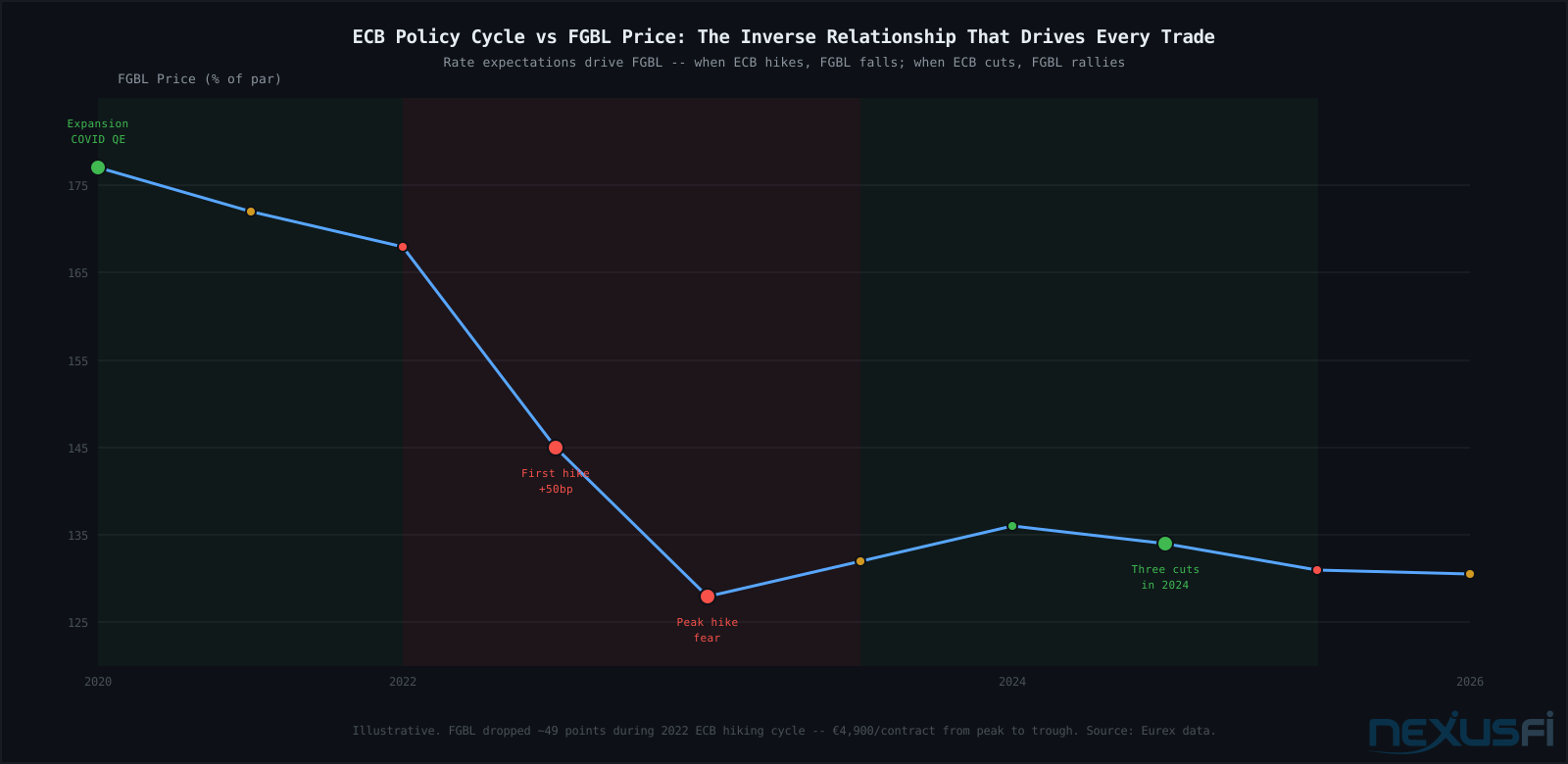
Understanding FGBL requires understanding one core relationship: bond prices move INVERSELY to yields. When ECB rate hike expectations rise, FGBL falls. When cut expectations build, FGBL rallies. The 2022 ECB hiking cycle — the fastest rate increase in the ECB's history — sent FGBL from ~177 to ~128, a €4,900 per contract move. That's not a rounding error. That's a career-defining trade, or a career-ending mistake, depending on which side you were on.
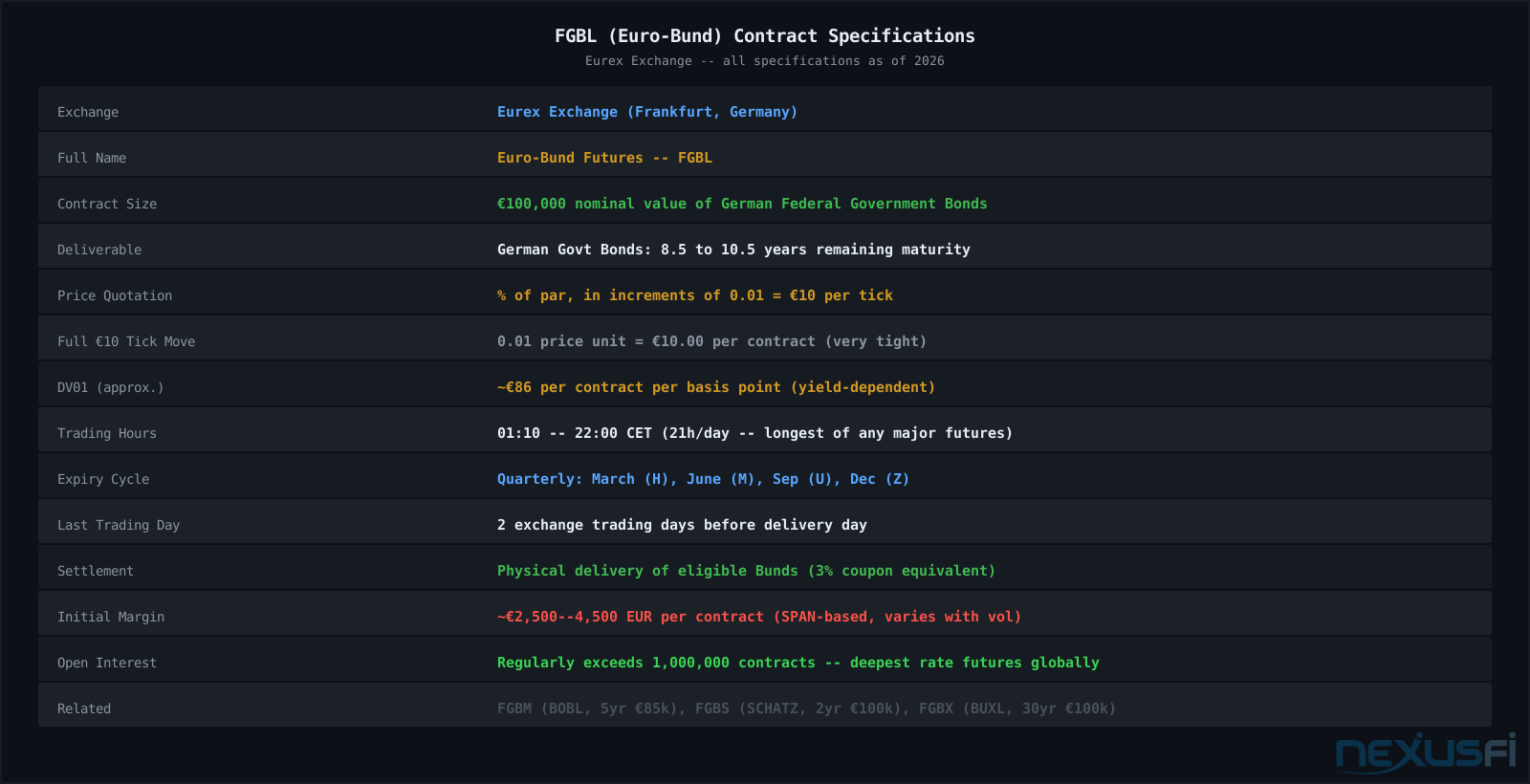
FGBL at a glance: €100,000 notional, 0.01 tick = €10, ~€86 DV01 per basis point, 21 hours of trading daily, 1-tick bid-ask in the European morning. One of the most liquid rate instruments on the planet.
The NexusFi community has a rich history trading European rate futures. As @FGBL07 documented across years of daily Bund analysis in our Treasury forum: the auction principles traders use on ES — POC, Value Area, session types, volume profile structure — translate directly to FGBL with minimal adjustment.[1] Different instrument, same market structure math.
Key Specifications #
FGBL is standardized by Eurex Exchange. These are the specs every Bund trader memorizes before placing the first order:
The math you need before you trade:
FGBL quotes in percentage of par, to two decimal places. A price of 131.45 means 131.45% of €100,000 notional = €131,450 in bond equivalent value. Each 0.01 increment (one tick) is worth €10 per contract. A 50-tick session range (common on active days) means €500 of P&L swing per contract — before leverage.
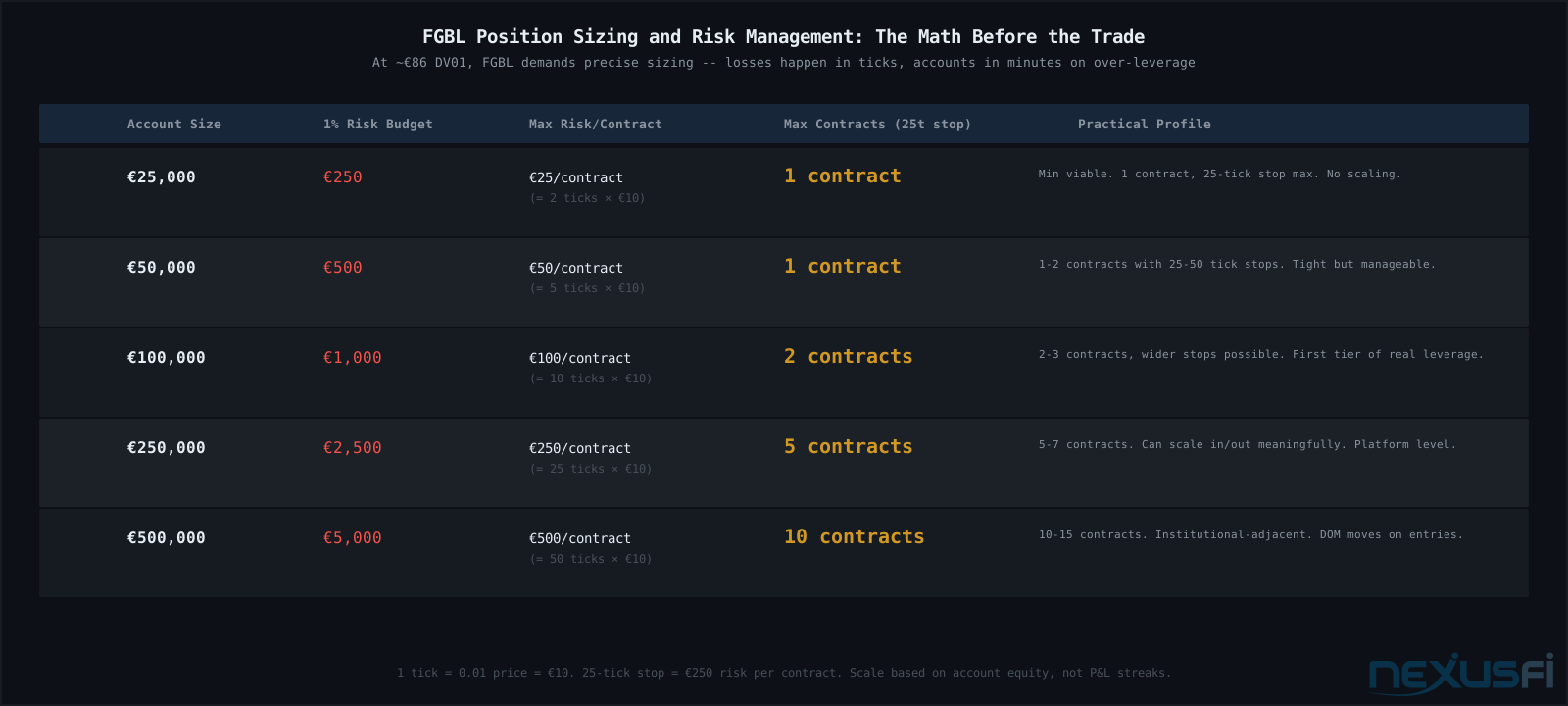
The DV01 (dollar value of a basis point — here, euro value) runs approximately €86 per contract. That means a 10-basis-point yield move — which happens on a busy ECB day in under a minute — moves FGBL roughly €860. An intraday 50bp yield swing during a crisis scenario would move FGBL ~€4,300. This is real risk per contract, and it demands respect from the first trade.
FGBL P&L calculation: Contracts × Ticks × €10/tick = P&L Example: 5 contracts × 15 ticks × €10 = €750
DV01 exposure: Contracts × ~€86/bp = total BPV exposure Example: 3 contracts × €86 = €258 per basis point
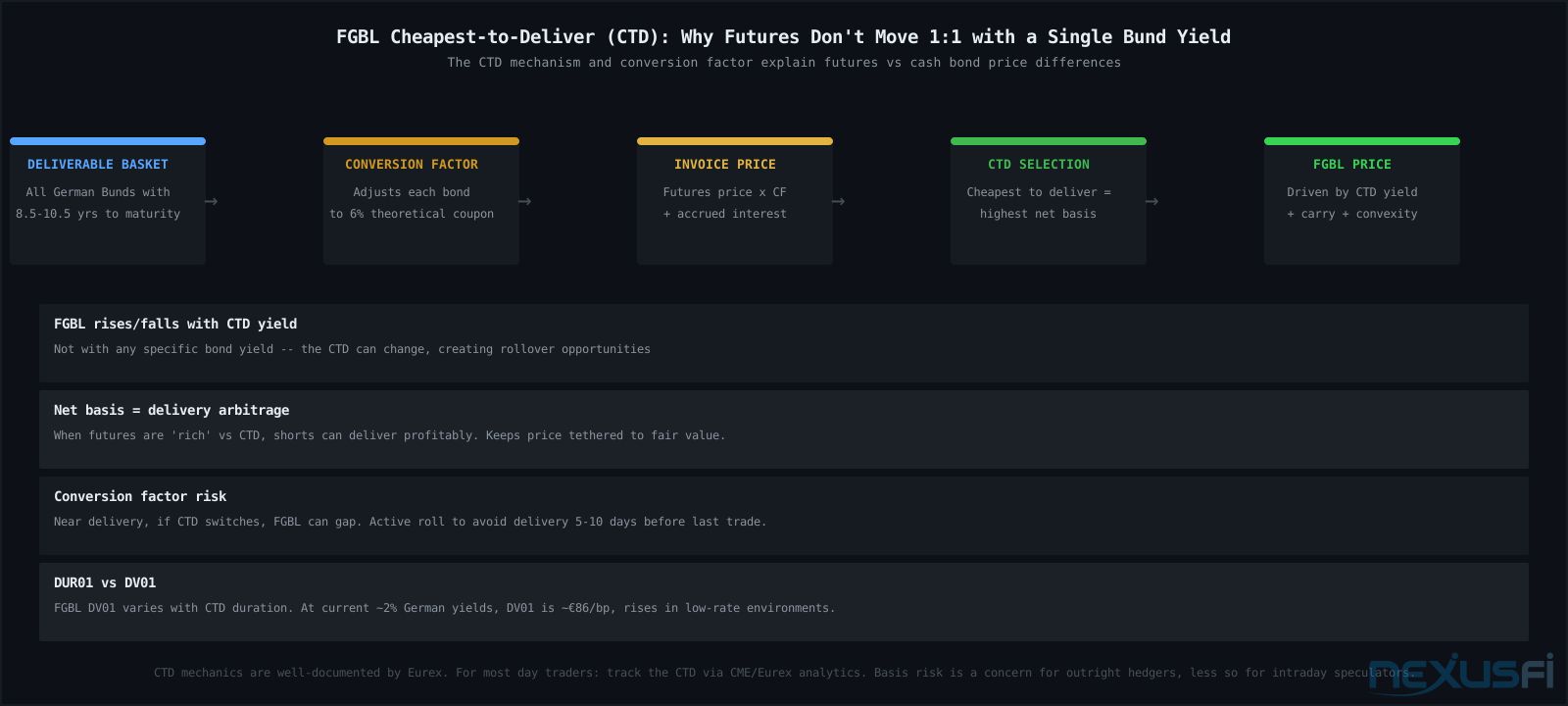
The deliverable instrument is German Federal Government Bonds (Bundesanleihen or Bunds) with 8.5 to 10.5 years remaining to maturity at delivery. Eurex uses a cheapest-to-deliver (CTD) mechanism with a 6% theoretical coupon — the same concept as US Treasury futures, just applied to the German rate market.
Initial margin currently runs approximately €2,500-4,500 per contract depending on volatility (Eurex recalculates SPAN margins daily). During crisis periods — think 2011 Eurozone debt crisis, 2022 energy shock — margins can jump 50-100% overnight. Size so.
How FGBL Works: Contract Mechanics #
FGBL is structured identically to US Treasury futures with one key difference: this is a European rate market, so the central bank is the ECB, the reference economy is the Eurozone (led by Germany), and the primary data calendar runs on Central European Time.
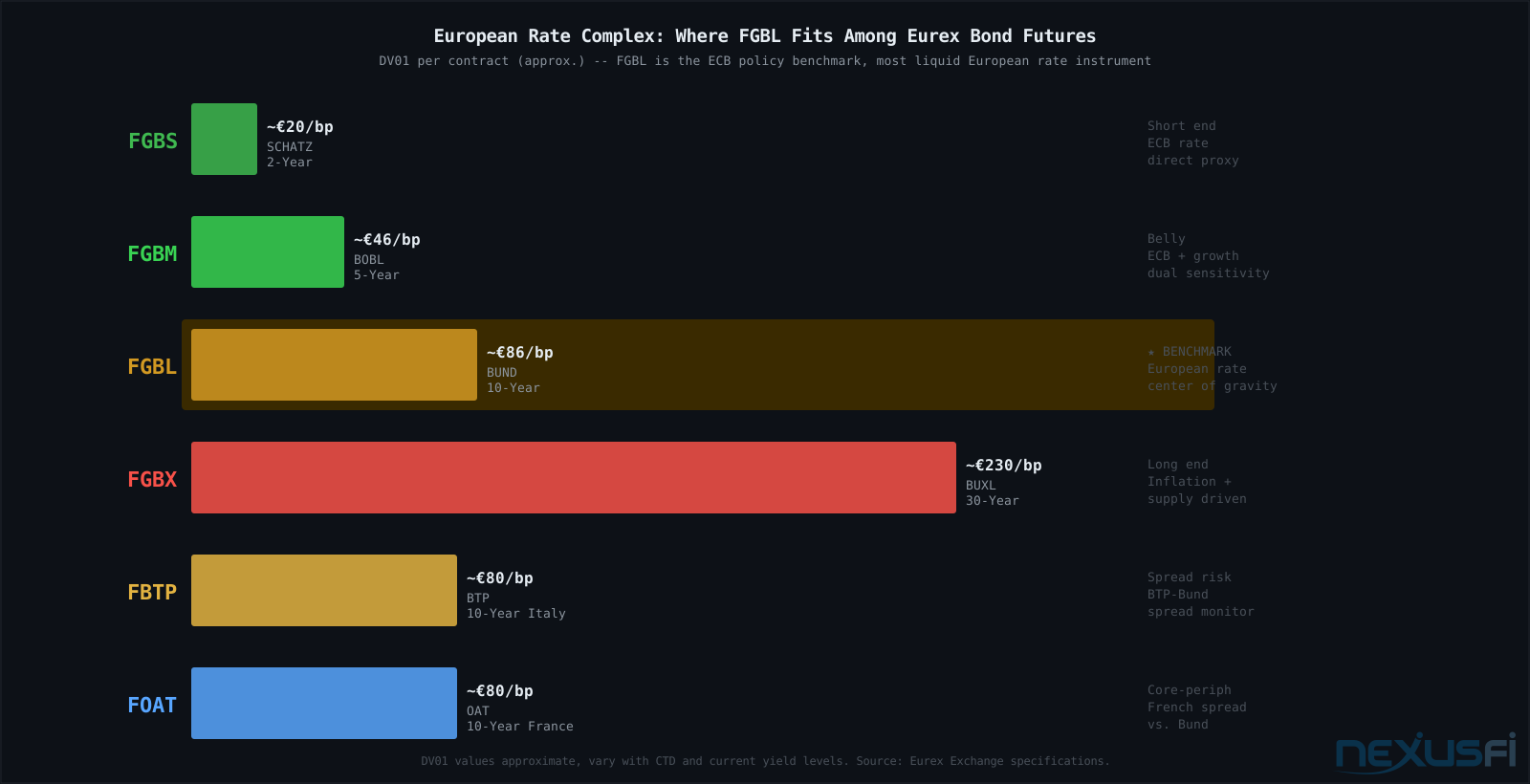
The contract family on Eurex covers the full German yield curve:
- FGBS (SCHATZ) -- 2-year German government bonds, €100,000 notional, ~€20 DV01. The front end. Closest to ECB deposit rate expectations.
- FGBM (BOBL) -- 5-year German government bonds, €100,000 notional, ~€46 DV01. The belly. Dual sensitivity to ECB rates and medium-term growth.
- FGBL (BUND) -- 10-year German government bonds, €100,000 notional, ~€86 DV01. The benchmark. This is where global macro flows show up, where ECB policy is priced, where European duration risk trades.
- FGBX (BUXL) -- 30-year German government bonds, €100,000 notional, ~€230 DV01. Long end. Pure inflation expectations and supply/demand dynamics.
Physical delivery occurs in March, June, September, and December (the standard quarterly cycle). Most traders roll to the new front month well before expiry — typically 5-10 business days before the last trading day. The active contract is the one with the highest open interest and volume, which shifts decisively to the new front month during the roll window.
Settlement is physical delivery of eligible Bunds (not cash-settled). In practice, less than 2% of contracts go to delivery. You roll or close. But the CTD mechanism matters for understanding why FGBL price doesn't move exactly 1:1 with the 10-year Bund yield — the futures price reflects the cheapest bond you'd deliver, adjusted for the conversion factor.
Rolling FGBL: watch the calendar spread (old front vs new front). When the roll goes negative (you pay to roll), you're paying carry. When positive, you're receiving it. Understanding the roll economics prevents getting caught by settlement and helps you time entries around roll window inefficiencies.
What Moves FGBL: The Driver Hierarchy #
Not all inputs move FGBL equally. After observing the instrument across economic cycles, the driver hierarchy looks like this — in order of immediate price impact:
1. ECB Rate Decisions and Press Conferences (highest impact, most predictable timing)
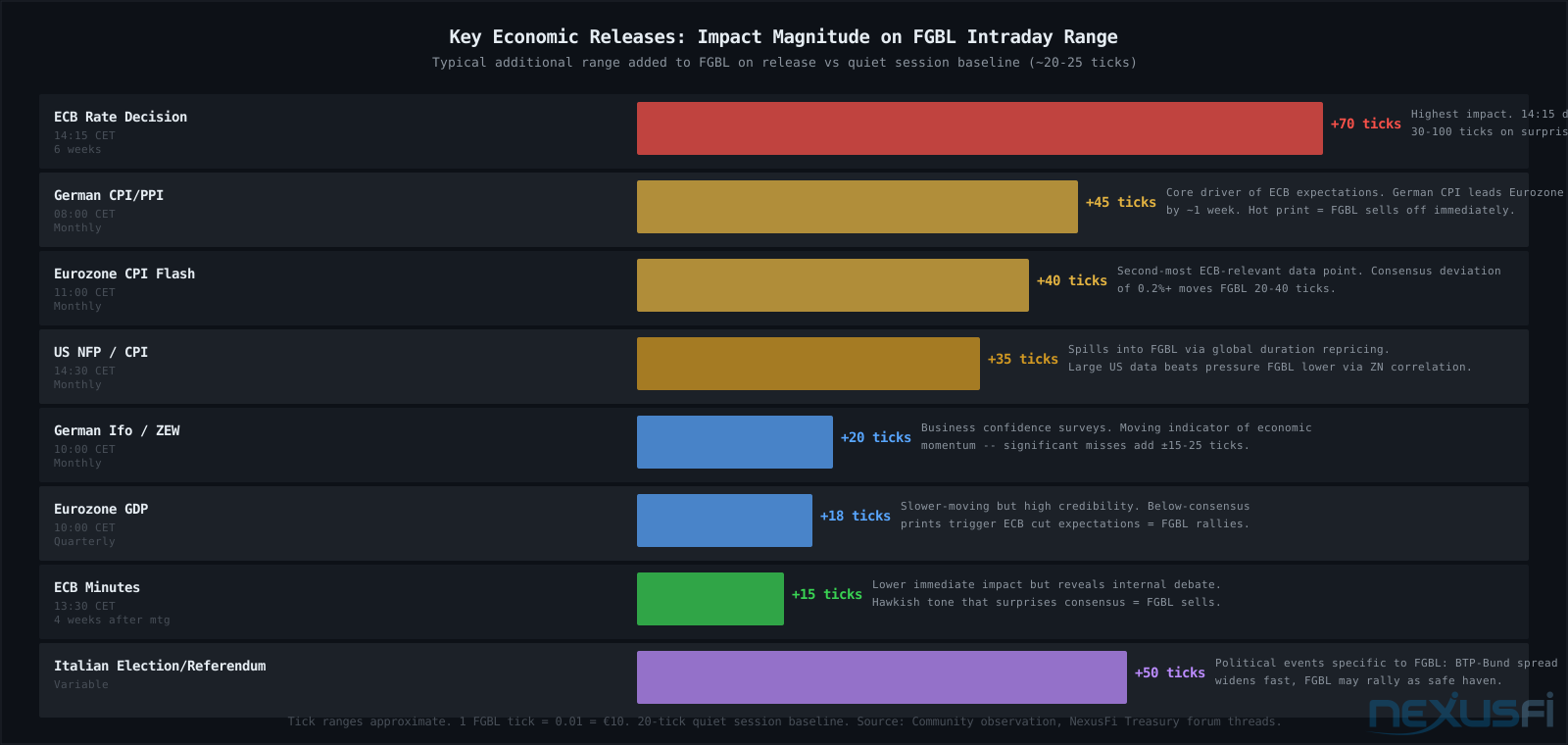
ECB meetings happen every six weeks. The rate decision hits at 14:15 CET. The press conference with ECB President Lagarde starts at 14:45 CET. Between these two events, FGBL regularly moves 30-60 ticks on expected decisions and 80-150 ticks on surprises. Trade the press conference more than the decision itself — guidance on the path matters more than the current rate.
2. German and Eurozone Inflation Data (monthly, highest surprise potential)
German CPI releases at 08:00 CET on the second-to-last business day of the month. Eurozone CPI Flash hits at 11:00 CET near month-end. Both move FGBL immediately — a 0.2% deviation from consensus on German CPI routinely adds 20-40 ticks to the day's range. German inflation data leads Eurozone CPI by roughly one week, so you're often getting signal before the official Eurozone number.
3. BTP-Bund Spread — The Eurozone Credit Risk Monitor
This is FGBL-specific: the spread between Italian 10-year BTP yields and German Bund yields measures Eurozone credit stress. When this spread widens sharply — above 200 basis points — FGBL trades on both ECB expectations AND safe-haven demand. During the 2011-2012 Eurozone debt crisis, the BTP-Bund spread hit 550 basis points. FGBL was simultaneously being sold (rising German yields from ECB tightening fears) and bid (safe-haven from Italian collapse). Understanding which force dominates in real time is the hardest skill in Bund trading.
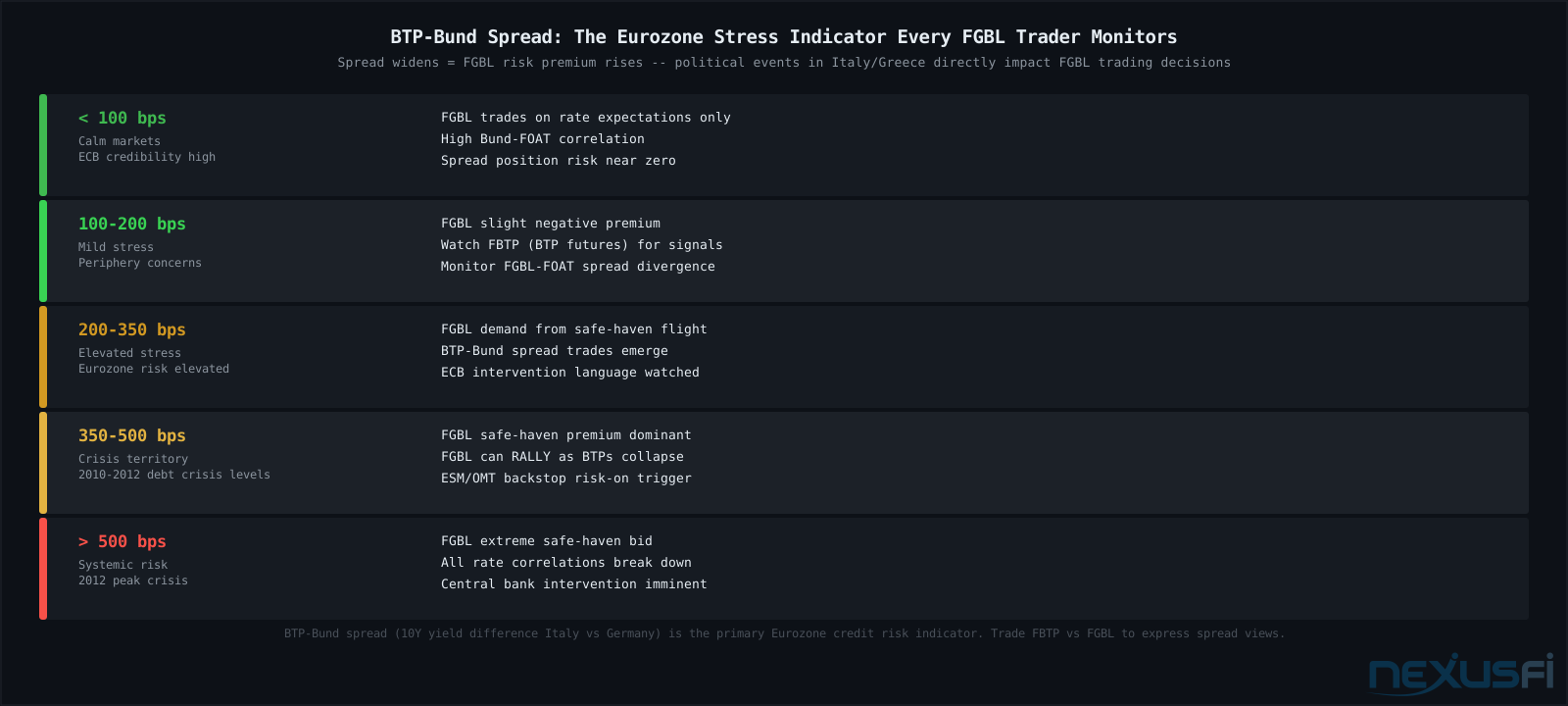
Don't confuse BTP-Bund spread widening with FGBL directional bias. In early 2022, Italian bonds were being sold on inflation fears (BTP-Bund spread widening) WHILE German Bunds were also being sold (ECB hike expectations). Both bond markets went down. The spread widened because Italy fell faster — not because Germany rallied. Context matters.
4. US Data Spillover (14:30 CET releases)
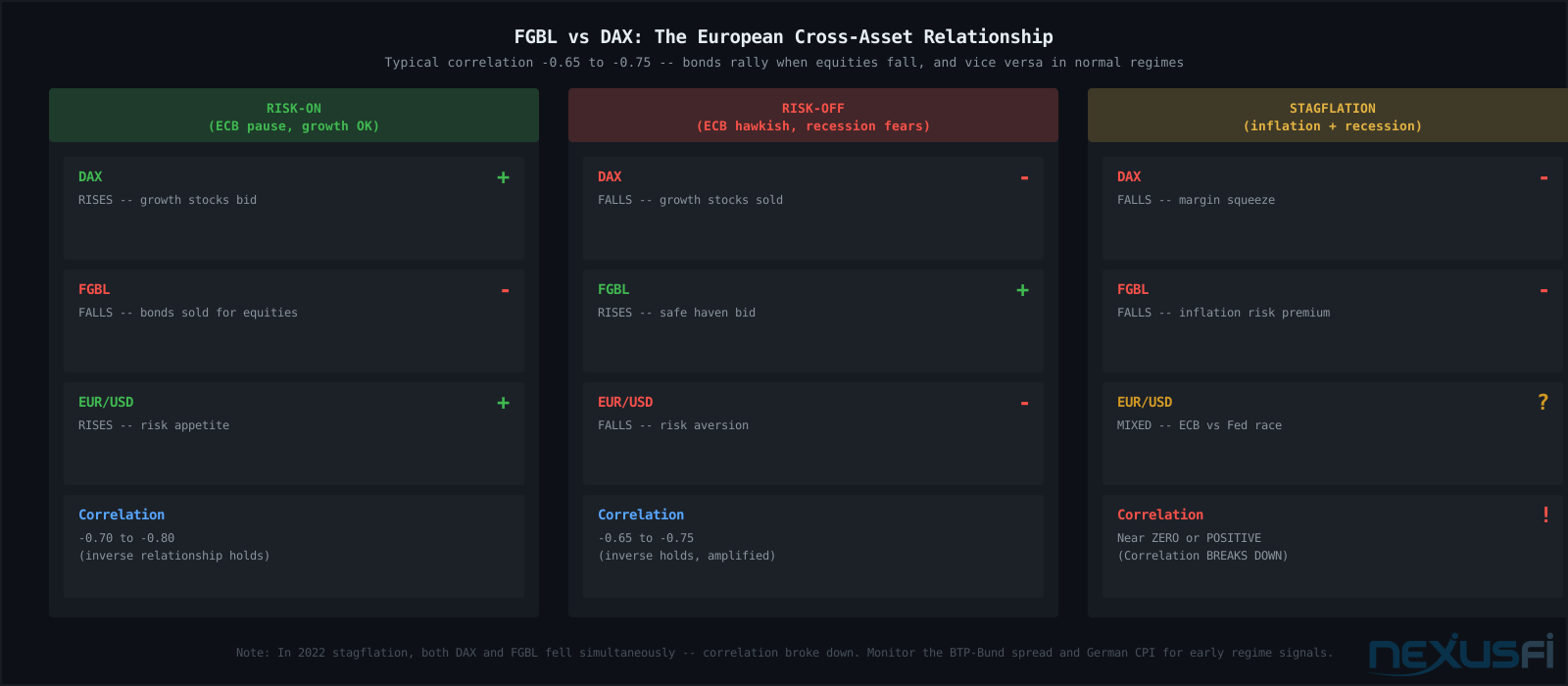
US NFP, CPI, and FOMC decisions move FGBL. The ZN-FGBL correlation means American macro shocks spill immediately into European rates. A hot US CPI print at 14:30 CET triggers Fed hawkishness expectations, pushes ZN down, and FGBL follows within seconds. The correlation isn't 1:1 — FGBL moves maybe 60-70% of ZN's move on pure US data — but it moves.
@MARS, who maintained one of the most detailed Bund analysis threads in our forum, noted the ECB-specific behavior clearly: "Very strange day, the stock market rallied and the Bund did not want to go lower... reactive Buyers strongly getting into the market when such level was reached."[2] That's the FGBL character — it has its own level structure that sometimes overrides the equity correlation entirely.
Session Structure and Liquidity #
FGBL trades nearly 21 hours per day on Eurex (01:10-22:00 CET). But that doesn't mean 21 hours of usable liquidity. The session has a clear structure:
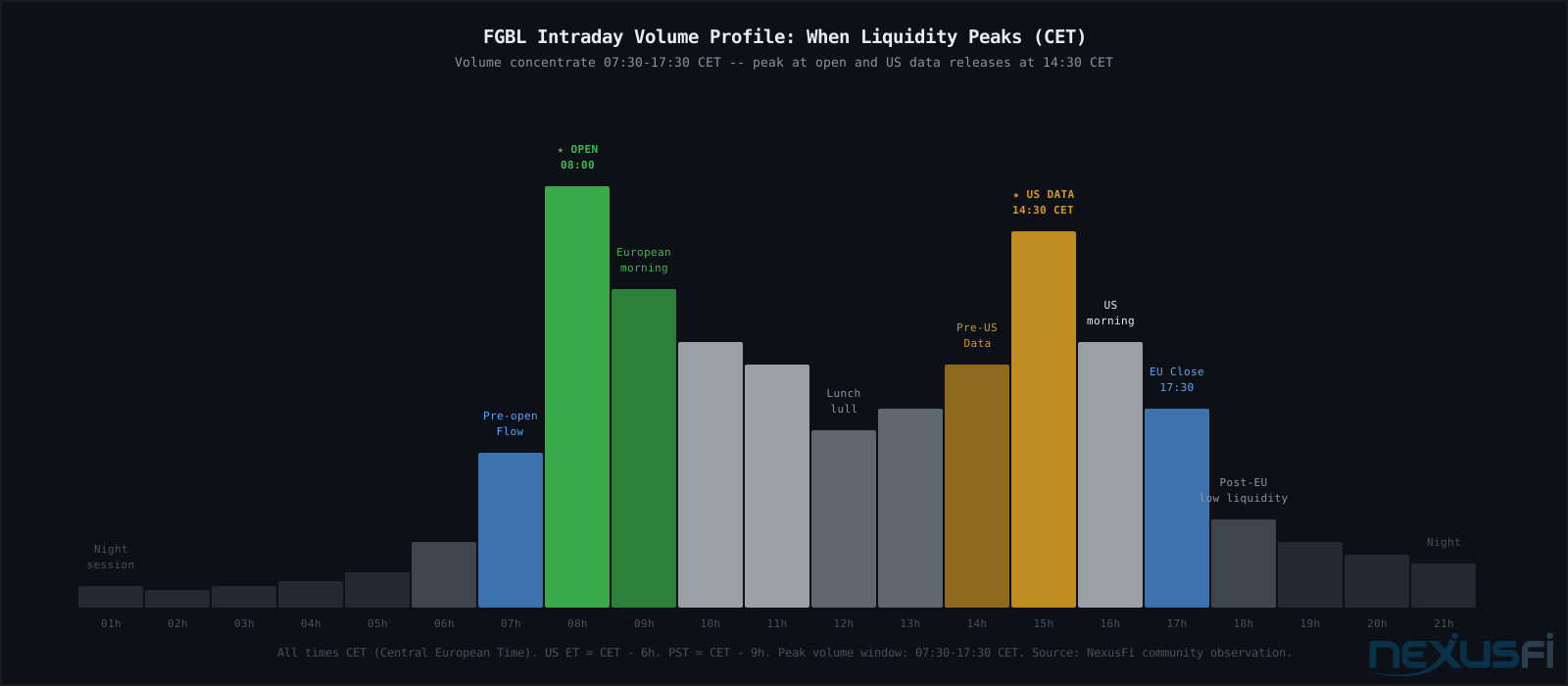
Core trading window: 07:30-17:30 CET
This is when institutional flow is live. The 08:00 CET open sees the biggest volume surge — Frankfurt banks, insurance companies, pension funds establishing duration positions as European credit markets open. Volume is typically 3-4x the night session baseline in the first 30 minutes.
The 14:30 CET window is the second daily volume surge. This is when US economic data lands. NFP, CPI, retail sales, ISM — all release at this time. If there's a US data release today, FGBL will have a second high-volume event at exactly 14:30 CET. Position so.
European lunch (12:00-13:30 CET): lowest volume of the day
Volume drops 30-40% during the European lunch hour. Spreads widen slightly. Moves become less reliable. Many professional European traders step away during this window. If you see a breakout happening at 12:30 CET with thin volume, it's often a false start — the afternoon session tests it when volume returns.
Night session (22:00 CET - 01:00 CET): avoid unless you have a clear trigger
Volume is minimal. Spreads widen to 2-3 ticks. Large orders can gap the market much. Unless you're trading Asian session reaction to a US event or hedging overnight news risk, the night session is not where FGBL edge is found.
US traders: FGBL's core session runs 01:30-11:30 AM ET. The European open corresponds to your pre-market. US data at 8:30 AM ET = 14:30 CET. You can trade FGBL on US data releases and catch the European carry-through, or focus on the ECB calendar events that happen overnight for US time zones.
As @nestor2022, who ran a dedicated Bund scalping thread, emphasized the liquidity depth: "I rely almost solely on the DOM to trade the Bund. The Bund's tight bid-ask and deep book make DOM reading more reliable than many US instruments."[7] For DOM traders, FGBL's book depth during European hours is deep — size fills cleanly in a way that ES requires Elite membership to access on volatile days.
FGBL vs ZN: When to Use Each #
US traders familiar with ZN (10-Year Treasury Note futures) often ask: why trade FGBL? And when should I use one over the other?
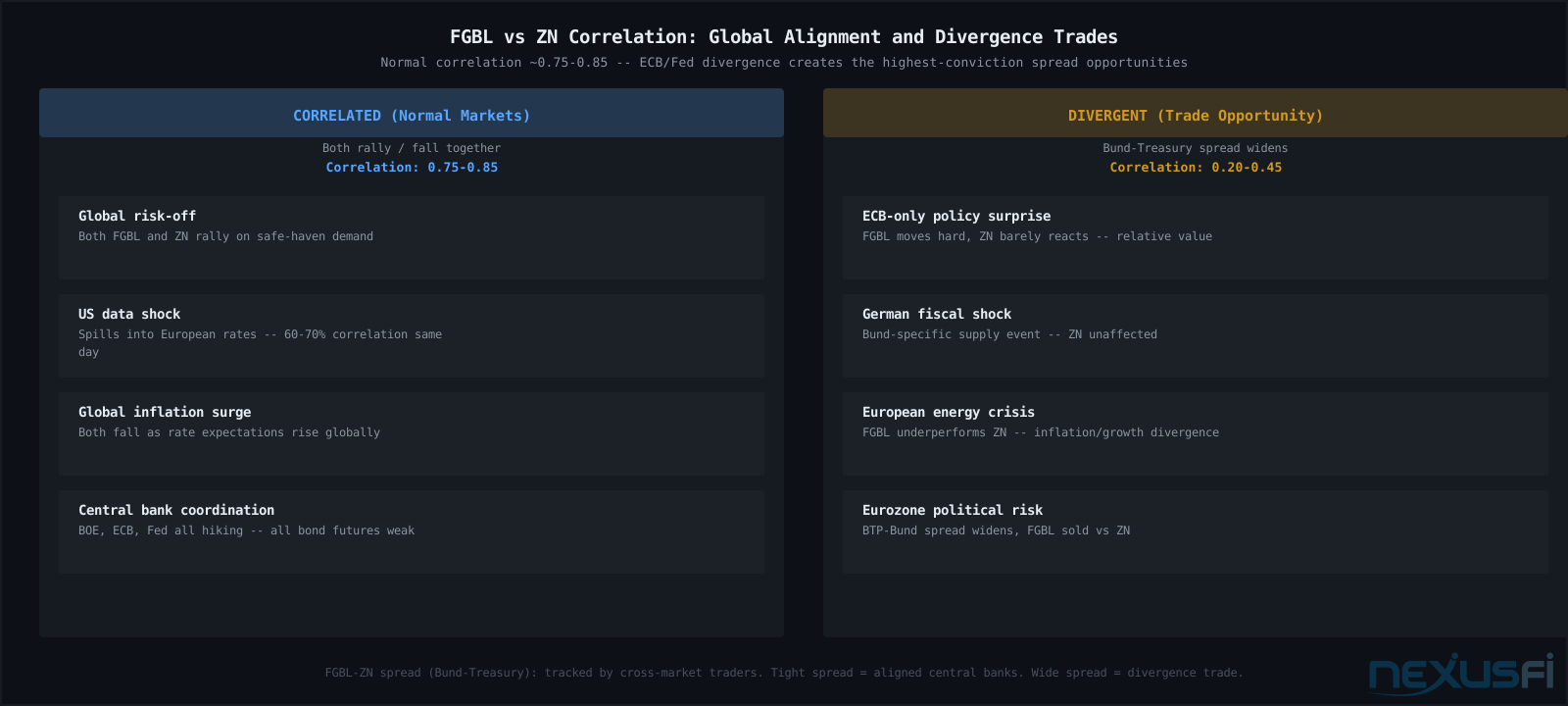
In normal risk-off or global macro regimes, FGBL and ZN move together with ~0.75-0.85 correlation. Both rally on global growth fears, both fall on inflation shocks. For these trades, use whichever has better liquidity at your trading time. During European hours, FGBL is more liquid than ZN. During US hours, ZN is more liquid than FGBL.
The interesting trades come from divergence. FGBL and ZN diverge sharply when:
- ECB-specific policy events -- An ECB rate decision or hawkish/dovish pivot moves FGBL hard while ZN barely reacts. This is the cleanest trade: long FGBL / short ZN (or vice versa) to bet on ECB path vs Fed path independently.
- European political risk -- Italian elections, French credit stress, Brexit negotiations. These events compress FGBL spreads vs periphery while ZN is unaffected.
- German fiscal shocks -- Unexpected German bond supply events, German constitutional court rulings on fiscal rules. Pure FGBL story, ZN untouched.
- Energy price divergence -- European energy crisis events hammer European growth expectations, compress FGBL relative to ZN.
[3] The technical structure is the same — the market-specific drivers are the difference.
Use FGBL for European session rate trades and ECB-specific macro plays. Use ZN for US session rate trades and Fed-specific macro plays. Trade the spread between them when you have a view on ECB vs Fed policy divergence — that's where the cleanest risk-adjusted edge often lives.
Spread Trading the European Curve #
FGBL is the anchor of European curve spread trades. These strategies remove outright directional ECB risk while capturing changes in the shape of the yield curve — how different maturities move relative to each other.
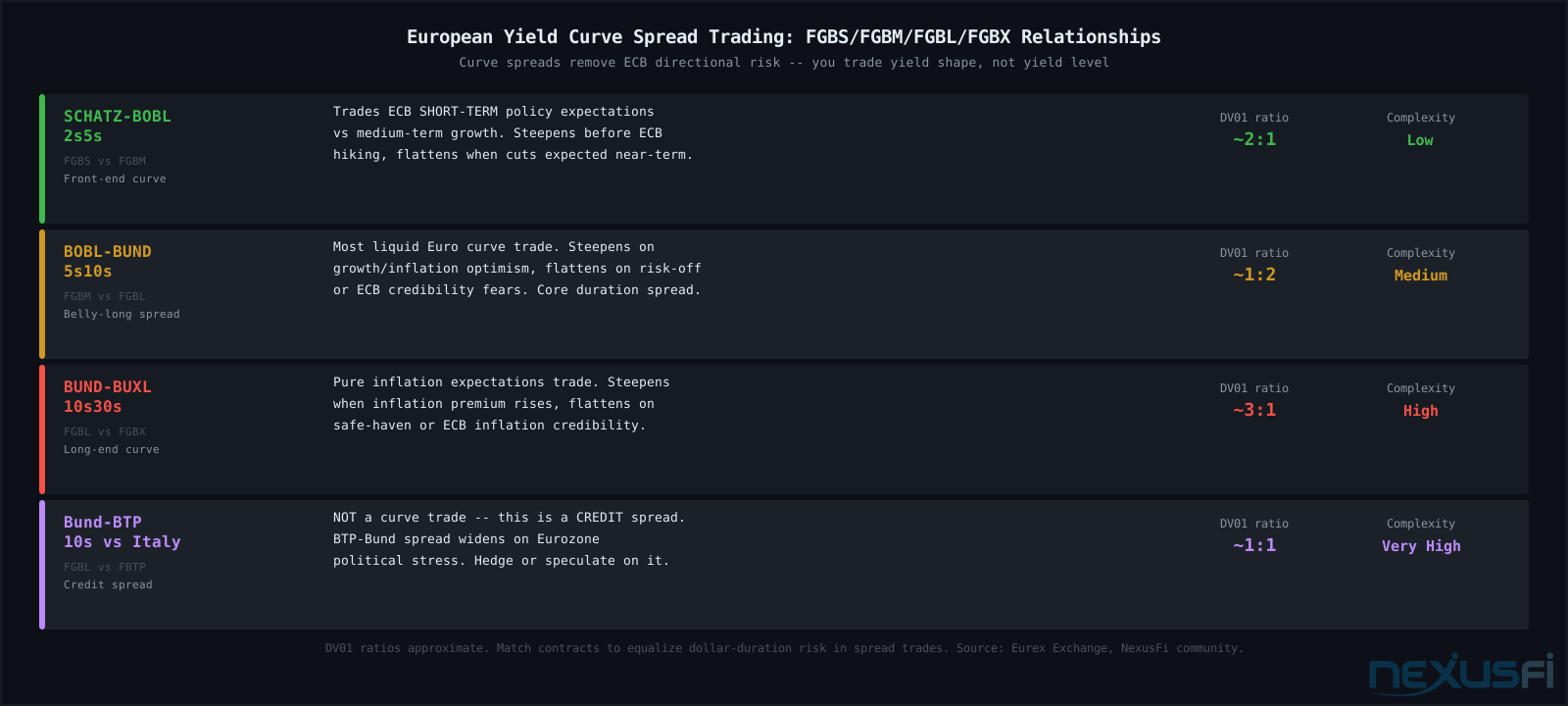
The most liquid Euro curve spreads:
BOBL-BUND (5s10s): The Core European Curve Trade
FGBM vs FGBL. This spread steepens when the market believes ECB will cut rates (long end rallies relative to the belly), and flattens when hiking fears dominate. The DV01 ratio is approximately 1 FGBL : 2 FGBM to achieve duration-neutral positioning (since FGBL has roughly 2x the DV01 of FGBM). Get the ratio wrong and you're running outright duration, not a spread.
SCHATZ-BUND (2s10s): The Steepener/Flattener Play
FGBS vs FGBL. A classic macro trade. The curve steepens heading into rate cuts (2s yield falls faster than 10s) and flattens during hiking cycles (2s rise faster than 10s as they price upcoming short-term rate increases). The 2022 hiking cycle saw aggressive 2s10s flattening even in Europe. Curve flatteners in early 2022 were one of the highest-conviction macro trades available.
Curve spreads sound like "lower risk" because you're long and short simultaneously. They're not. A 2s10s curve trade during a crisis can move 100bps in a week — that's massive. During the 2020 COVID shock, curves flattened then steepened violently in 10 trading days. Curve spreads remove directional risk but not curve risk, and curve risk can be extreme.
Practical Trading with FGBL #
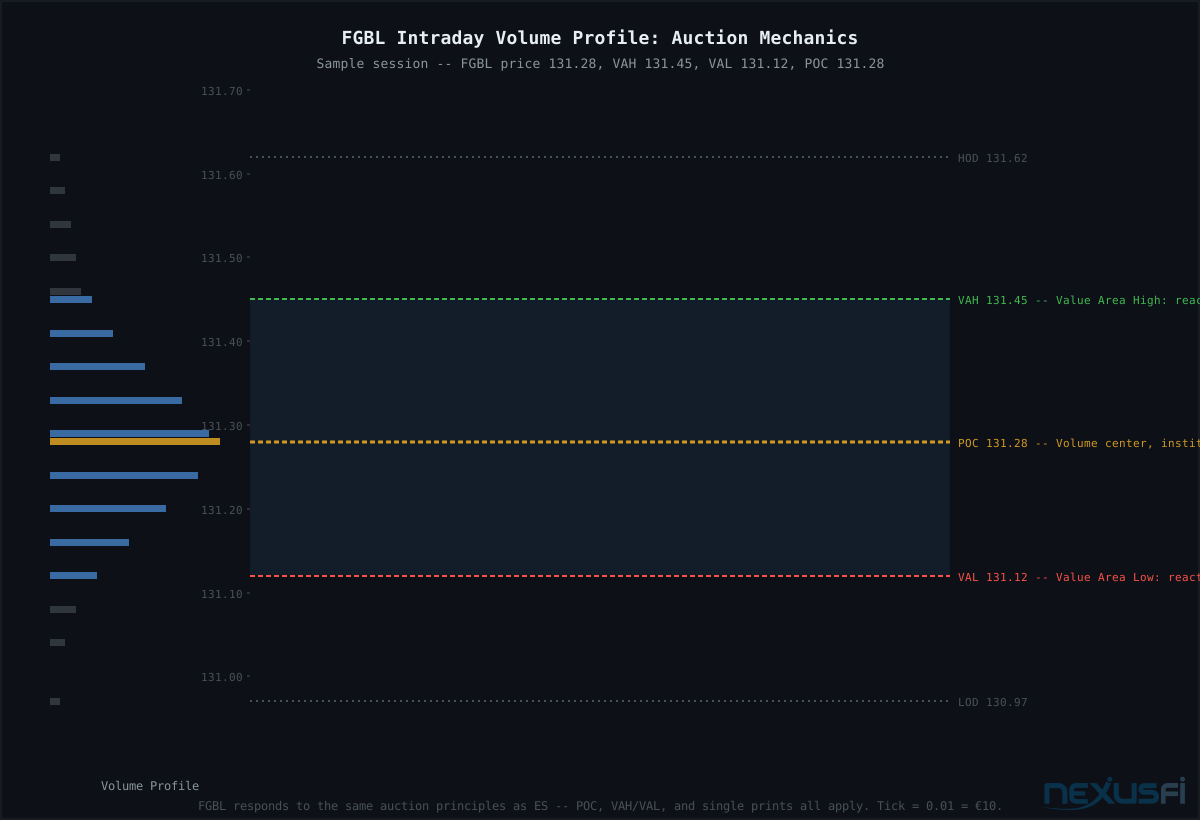
FGBL responds to the same auction market theory framework used on ES and other index futures. The volume profile structure translates directly, as
Balanced vs Imbalanced Sessions
FGBL sessions split into the same archetypes as equity index futures:
- Balanced session -- No major ECB event, Eurozone data in-line with consensus, BTP-Bund spread stable. Profile builds cleanly around POC. VAH and VAL are reactive trade locations. Success rate for VAH fades in a balanced session: ~60-65%.
- Discovery session -- Major ECB meeting, CPI surprise, political shock. Profile is single-print heavy, trending directionally. Do NOT fade VAH in a discovery session. The risk profile inverts.
The session type identification happens in the first 30-60 minutes. Watch volume relative to 20-day average. If the first 30 minutes trades above 125% of the average 30-minute volume, you're likely in a discovery or high-impact event session. Reactive strategies fail in these conditions.

A Specific Setup: Reactive Seller at FGBL VAH
In a balanced European session (no ECB event, in-line data, stable BTP-Bund spread):
- Entry: Short FGBL at VAH on the 2nd or 3rd test, after the first test fails to hold above VAH
- Stop: 12-15 ticks above VAH (€120-150 risk per contract)
- Target 1: POC -- typically 12-20 ticks below VAH, risk-reward approximately 1.3:1
- Target 2: VAL -- 30-40 ticks below VAH, risk-reward 2:1+ (scale out at POC, runner to VAL)
- Invalidation: First 30-minute bar closes above VAH by more than 5 ticks, or volume spikes >150% of average on the upward break
This is an identical structure to ES VAH fades — same auction theory, different numbers. The success rate in balanced sessions runs 60-65% based on community observation data.[8]
FGBL DOM Reading
FGBL has unusually deep DOM during European hours. The order book is multiple thousands of contracts deep at best bid/offer, with meaningful size 5-10 ticks away. This makes DOM reading more reliable than on many US instruments. As @nestor2022 emphasized — and he traded this exclusively — watching DOM absorption and iceberg orders at key levels provides entry timing that charts alone don't give you.[7]
Specific DOM signals in FGBL:
- Bid stacking 3+ levels deep at a support that's held twice -- suggests institutional accumulation
- Rapid offer absorption at resistance with volume spike and then size pulled -- watch for reversal
- Thin book (orders pulled from best bid/offer) before a data release -- smart money clearing the decks, increase caution
Gotchas and Practical Considerations #
Broker and Platform Availability
Not every broker offers Eurex access. Interactive Brokers is the most commonly used by retail traders for FGBL (confirmed by multiple threads in our Brokers forum). Margin requirements at IB are expressed in EUR, not USD — budget for currency conversion costs if your account is USD-based. AMP Futures also offers Eurex routing for US-based accounts.
The Time Zone Problem
FGBL's core hours (07:30-17:30 CET) translate to 01:30-11:30 AM ET for East Coast US traders. The European open at 08:00 CET = 02:00 AM ET. Unless you're trading the US data spillover after 8:30 AM ET (14:30 CET), capturing the European morning session requires a schedule adjustment. This filters out many US-based traders and is actually a feature for those who can trade it — the competition pool skews more institutional, less retail noise.
Tax Treatment (US Traders)
FGBL futures are regulated by CFTC as Section 1256 contracts — same as US futures. You get 60/40 tax treatment (60% long-term, 40% short-term capital gains) regardless of holding period. Keep this in mind when comparing FGBL P&L to equity or FX P&L from a tax perspective.
Currency Risk
FGBL is denominated in EUR. If you're trading from a USD account, your FGBL P&L will be in EUR and subject to EUR/USD exchange rate conversion. A week where you make €2,000 on FGBL but EUR/USD drops 1% loses you some of those gains in USD terms. For significant size, manage your EUR exposure separately or trade from a EUR-denominated account.
The BOBL as a Starter Instrument
FGBM (BOBL) is FGBL's 5-year cousin. It has lower DV01 (~€46 vs ~€86), which means each basis point move costs half as much. Many traders learn the European rate market by trading BOBL first — same auction structure, same ECB sensitivity, smaller absolute risk per contract. @MARS maintained a dedicated BOBL analysis thread and structured it identically to the Bund thread: "Every post shall be organized as: what happened during the trading day, POC and value with comparisons with previous days and HVNs."[6]
FGBL key takeaways for practical trading: (1) Know the ECB calendar — the next meeting date is more important than any chart pattern. (2) Check the BTP-Bund spread before entering — widening above 200 bps changes the risk profile of even "balanced session" setups. (3) The core window is 07:30-17:30 CET — outside this window, spreads widen and moves are less reliable. (4) The same volume profile framework (POC, VAH/VAL) that works on ES works on FGBL with equal or better reliability in balanced sessions.
Citations #
- @FGBL07 -- Bund Future 16/11, NexusFi Treasury Notes and Bonds forum
- @MARS -- Bund Future 16/11, NexusFi Treasury Notes and Bonds forum
- @joeyk -- German Bund Traders, NexusFi Treasury Notes and Bonds forum
- @kkfx -- German Bund Traders, NexusFi Treasury Notes and Bonds forum
- @corbeste -- Bund Future 16/11, NexusFi Treasury Notes and Bonds forum
- @MARS -- BOBL FUTURE TRADING, NexusFi Treasury Notes and Bonds forum
- @nestor2022 -- Scalping the Bund with orderflow (DOM reading), NexusFi Trading Journals
- @rosho01 -- bund futures - intra day trading journal, NexusFi Trading Journals
- @FGBL07 -- Bund Future 16/11 (session analysis), NexusFi Treasury Notes and Bonds forum
- Eurex Exchange -- Euro-Bund Futures (FGBL) Product Specifications, 2026
Knowledge Map
Go Deeper
Build on this knowledgeReferences This Article
Articles that build on this topicCitations
- — Bund Future 16/11 (2013) 👍 7“Well above average volume and range. PoC (= 143.20) and VA are the highest of the last 20 days. Market opened with a small gap up and after a fast initial move up traded for more than an hour around the level of 142.87.”
- — Bund Future 16/11 (2013) 👍 5“Very strange day, the stock market rallied and the Bund did not want to go lower. While the resistance in the 143.00 level has been tested again the low was the same than yesterday with reactive Buyers strongly getting into the market when such level was reached.”
- — German Bund Traders (2013) 👍 6“I scalp ZN and ZB using orderflow pretty much taught by John Grady. I look at the bund and ES for correlation too. The Bund responds to orderflow reads just like ZN -- bid/ask pressure tells the story.”
- — German Bund Traders (2013) 👍 7“Spread trading between Bund and related instruments requires careful DV01 matching. The curve is a separate beast from outright duration -- you're trading yield shape, not yield level.”
- — Bund Future 16/11 (2013) 👍 4“Still grinding away at the POC of the Jan balance area, with lower volume and range. The Bund respects the same auction principles as US instruments -- the profile structure sets up the same reactive trades at VAH and VAL.”
- — BOBL FUTURE TRADING (2014) 👍 5“Opening a thread dedicated to BOBL future trading. Every post organized as: what happened during the trading day, POC and value with comparisons with previous days and HVNs. BOBL responds cleanly to the same auction framework.”
- — Scalping the Bund with orderflow (DOM reading) (2015) 👍 10“I rely almost solely on the DOM to trade the Bund. Static DOM explanation is pointless -- you need to see it live. The Bund's tight bid-ask and deep book make DOM reading more reliable than many US instruments.”
- — bund futures - intra day trading journal (2016) 👍 3“Trading the Bund intraday with volume profile. The Bund's POC establishes quickly after the European open and holds well through most sessions -- much more reliable than overnight data suggests.”
- — Bund Future 16/11 (2013) 👍 4
- Eurex Exchange — Euro-Bund Futures (FGBL) Product Specifications (2026)