



YM (E-mini Dow) Futures Trading Strategies: The Complete Playbook for Trading the Price-Weighted Index
Overview #
The YM is the redhead stepchild of the equity index futures world. ES gets all the attention, NQ gets the momentum traders, and the YM quietly does its thing — grinding through 250-400 points a day, respecting round numbers, and handing edge to traders who understand what actually drives a price-weighted index.
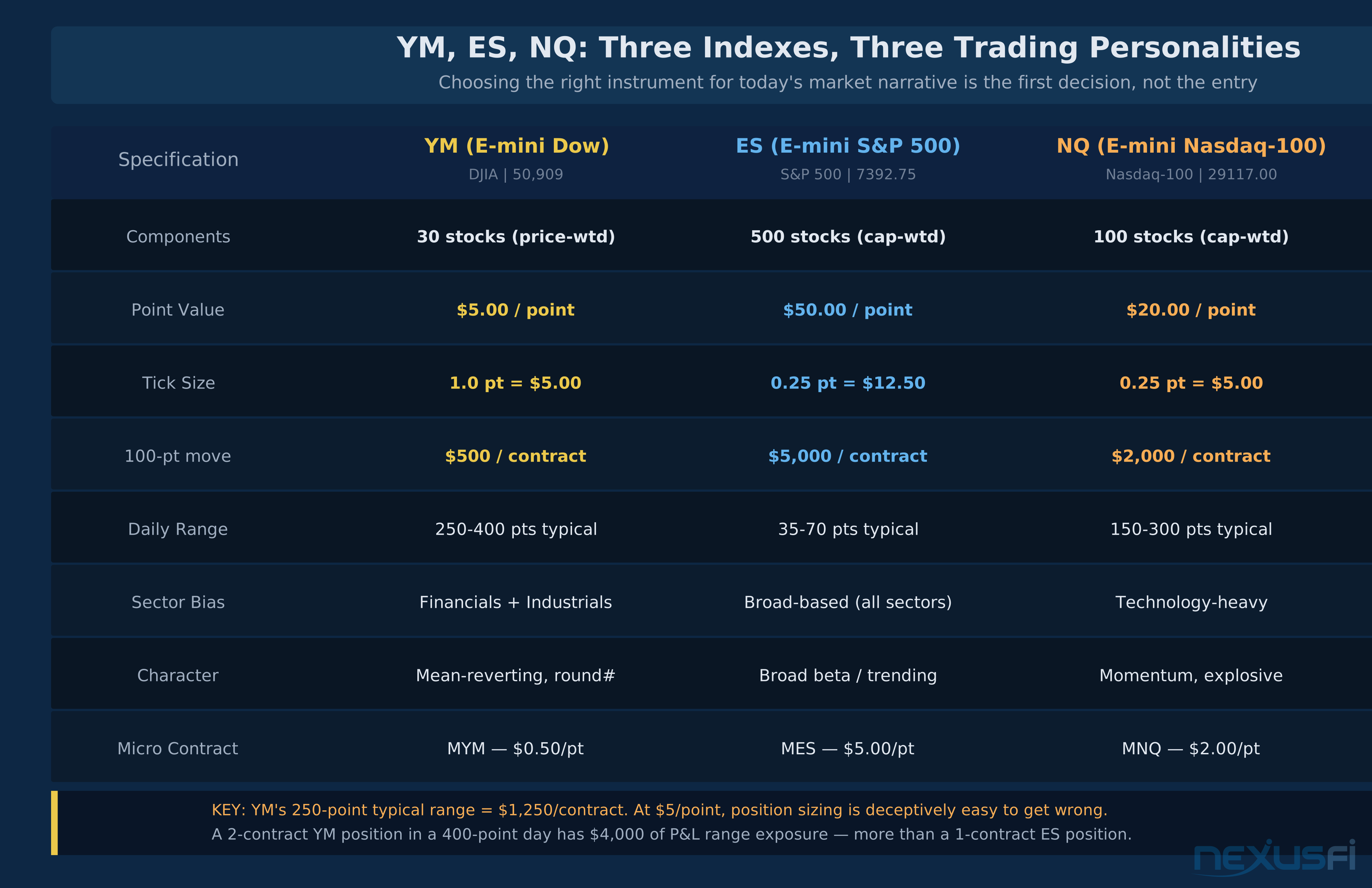
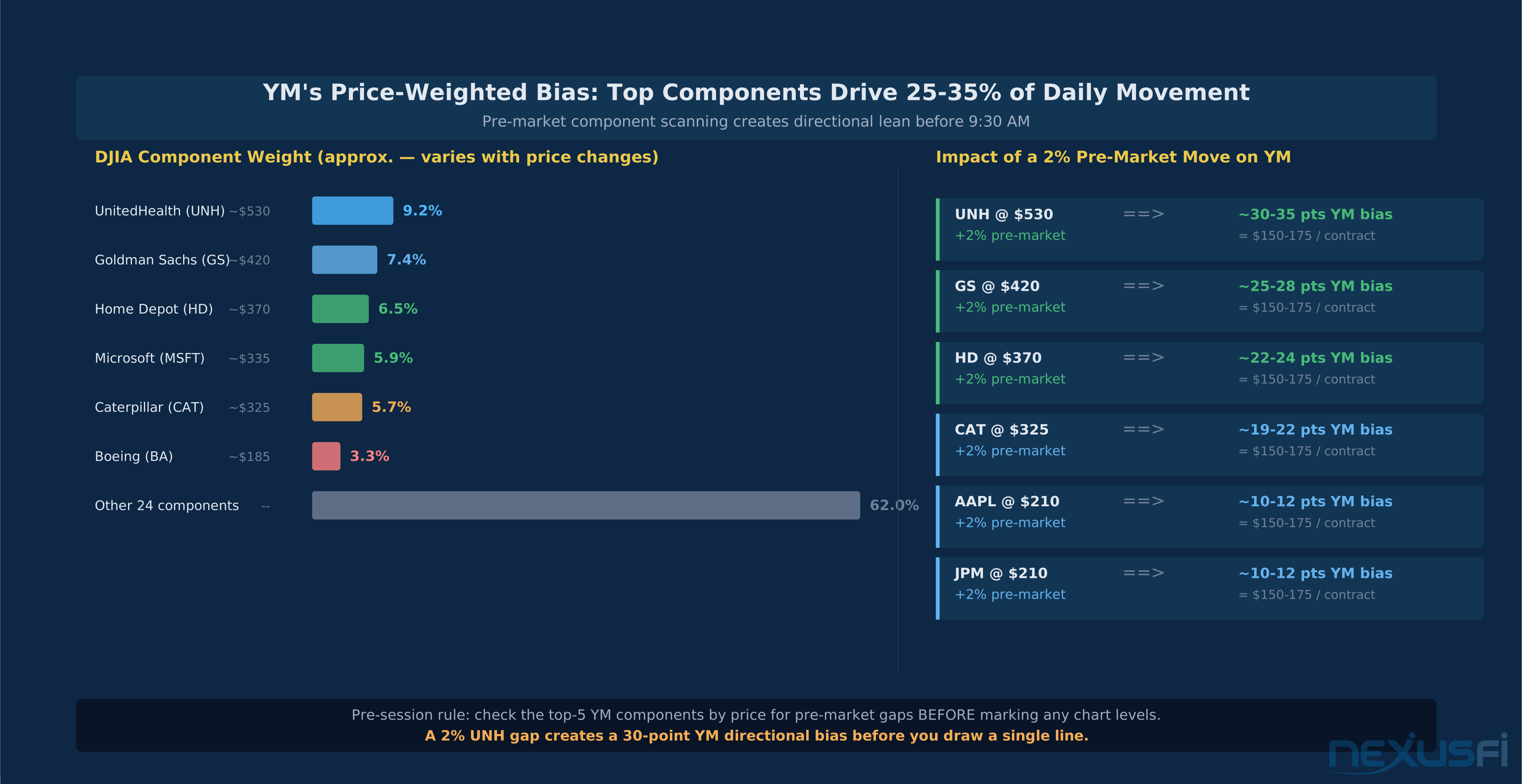
YM tracks 30 stocks. Price-weighted. That means UnitedHealth Group at $530+ has roughly 50 times the influence on the index as a $10 stock — not because UNH is 50 times as economically important, but because its share price is 50 times higher. A 2% pre-market gap in Goldman Sachs creates a 30-point YM bias before the opening bell. The same 2% move in JPMorgan — with similar assets under management — adds fewer points because JPM trades at a lower price. This isn't a flaw. It's the defining characteristic, and once internalized, it becomes a usable edge.
This article covers the complete YM day trading playbook: the 15-minute pre-session routine, four core setups (ORB-Retest, VWAP Reversion, Reference Level Fade, Trend Continuation), session segmentation, using YM as a market regime filter against ES and NQ, spread trading mechanics, market internals integration, and risk management specific to YM's $5-per-point structure.
Why YM Trades Differently #
Every equity index futures trader eventually confronts this decision: ES, NQ, YM, or RTY. If you trade the Dow, you've already made a choice that most of your peers haven't — and it shapes everything about how you need to approach the market.
YM tracks 30 stocks. Price-weighted. That means UnitedHealth Group, trading at $500+, has roughly 50 times the influence on the index as Walgreens at $10 — not because UNH is 50x as economically important, but because its share price is 50x higher. A 2% gap-up in Goldman Sachs creates a 50-point YM bias before the opening bell. The same 2% move in JPMorgan Chase — a bank with similar assets — adds fewer points because JPM trades at a lower price.
This isn't a flaw. It's the defining characteristic of the instrument, and once you understand it, it becomes a usable edge. YM's price-weighted structure means the contract responds disproportionately to a small set of high-priced components: typically UnitedHealth, Goldman Sachs, Boeing, Caterpillar, and whichever other high-priced names sit at the top of the divisor-weighted ranking at any given moment. The top five components drive roughly 25--35% of all daily YM movement. That's actionable information if you track it.
YM carries far less technology concentration than NQ or ES. When AI chip stocks drive NQ 2%+ on NVIDIA earnings, YM might gain 0.4%. When industrials rally on manufacturing data, YM can outperform NQ by 1.5% in a session. The DJIA's financial/industrial/healthcare-heavy composition makes YM the relative outperformer during value rotation and the underperformer during tech momentum. That regime assessment — daily, before trading — determines whether YM is the right instrument.
The top 5 YM price-weighted components drive 25-35% of all daily YM movement. Tracking pre-market gaps in UNH, GS, HD, CAT, and MSFT gives a directional lean before the chart even opens. No other equity index futures contract has this degree of concentration risk — and that concentration is the edge.
[1] That observation cuts to the core of why YM belongs on every index futures trader's screen, even if they primarily trade something else.
The Pre-Session Setup Routine #
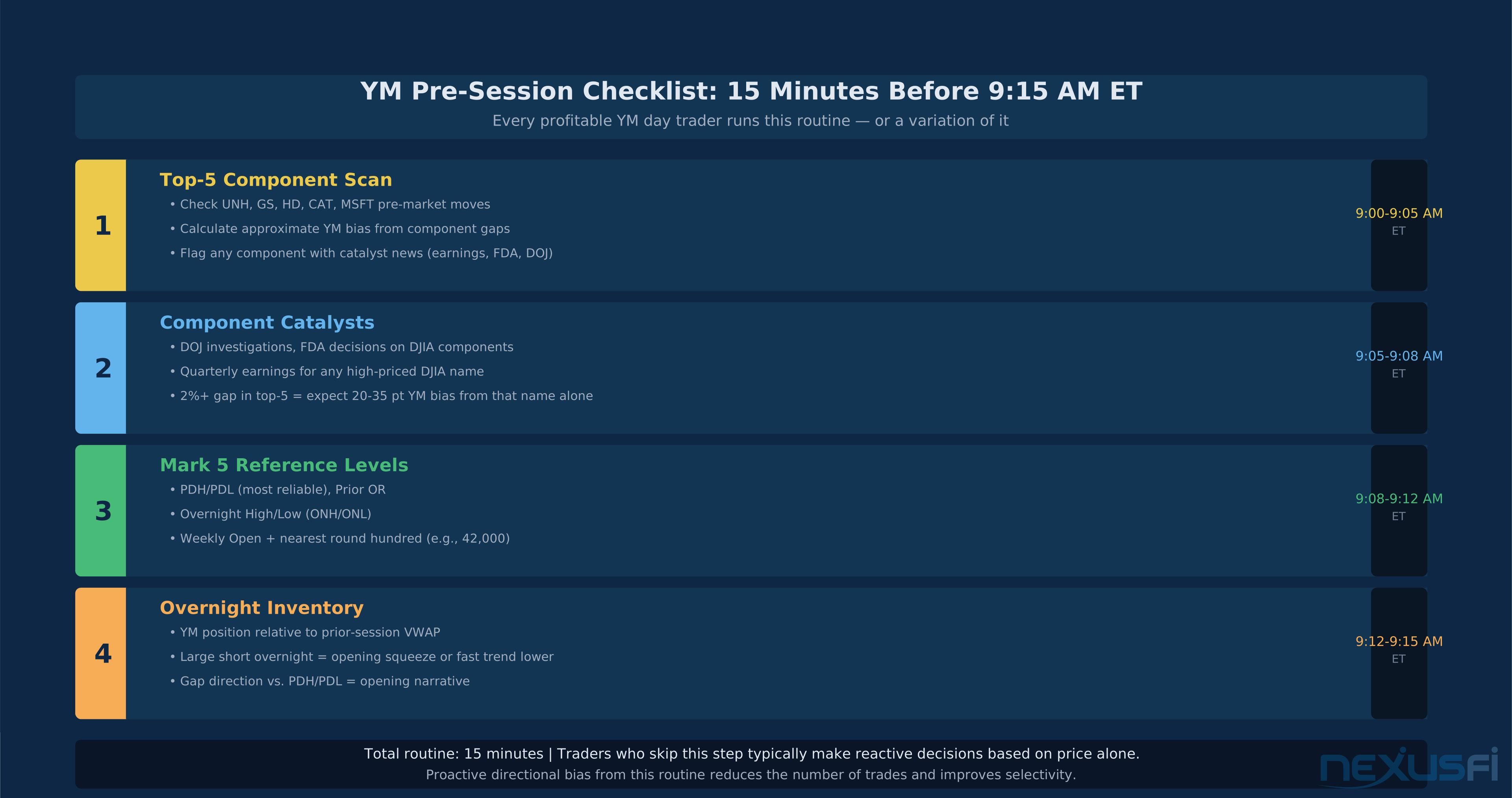
YM requires more pre-market preparation than ES because component-driven moves arrive before the open. This 15-minute routine should complete before 9:15 AM ET:
Step 1 — Components (9:00-9:05 AM): Scan top-5 YM price-weighted components (UNH, GS, HD, CAT, MSFT) for pre-market gaps. A 2% UNH gap = ~30-35 point YM directional bias before the bell. This is your directional lean before drawing a single level.
Step 2 — Catalysts (9:05-9:08 AM): Flag component earnings, FDA decisions, DOJ announcements, or contract awards affecting any high-priced DJIA name. A 3%+ pre-market gap in a top component overwhelms OR structure — know this before the open.
Step 3 — Reference levels (9:08-9:12 AM): Mark five key levels in reliability order: PDH/PDL, prior OR, ONH/ONL, Weekly Open, nearest round hundred. These are the magnetic levels for the session.
Step 4 — Overnight inventory and gap (9:12-9:15 AM): YM position relative to prior-session VWAP. Large short overnight inventory = opening squeeze or fast trend lower. Gap above PDH with bullish component trigger = ORB-long setup. Gap below PDL with negative news = potential trend day short. @bobarian learned stop placement from this dynamic: "Short into sd2/yhod/ONH — I find I get into trouble trading RTH intrarange. Typical risk is 8 ticks." [2]
Gap above PDH with bullish component trigger and confirming internals = high-conviction ORB-Long. Same gap with no trigger and mixed internals = trap. They look identical on the chart. The 15-minute routine tells them apart.
Session Segmentation: When to Trade #
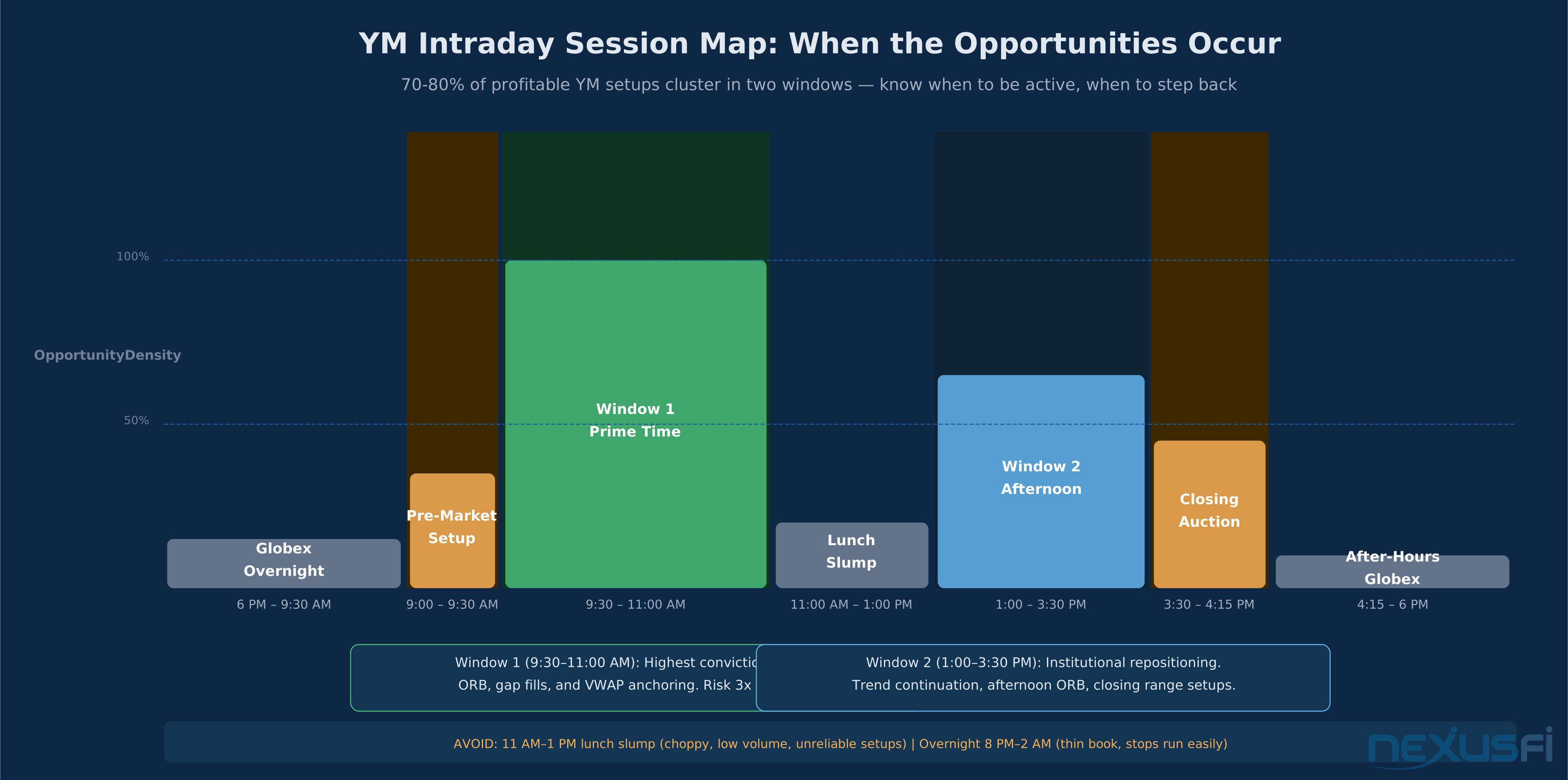
Roughly 70-80% of high-quality YM setups occur in two defined windows — knowing when NOT to trade is the first discipline:
Window 1 (9:30-11:00 AM ET): The prime session. Volume highest, ranges widest (150-250 points typical). OR formation, gap fills/extensions, VWAP anchoring, and the day's first institutional trend all emerge here. One window to trade — make it this one.
Window 2 (1:00-3:30 PM ET): Institutional rebalancing and trend continuation. Strong when the morning established a clear directional trend — afternoon pullbacks to the 20-EMA offer continuation entries. After 3:00 PM, MOC imbalances create erratic flow.
Avoid 11:00 AM-1:00 PM (Lunch Slump): Volume drops, order book thins. Setups produce half-range moves or false breakouts. Exception: VWAP Reversion works here. Otherwise, hands off.
Globex caution (pre-8 PM, post-2 AM): Minimal volume, thin order book. Stops run 3-5 ticks beyond intent. Widen stops or size down for overnight holds.
The Four Core YM Setups #
Setup 1: Opening Range Breakout with Retest (ORB-R)
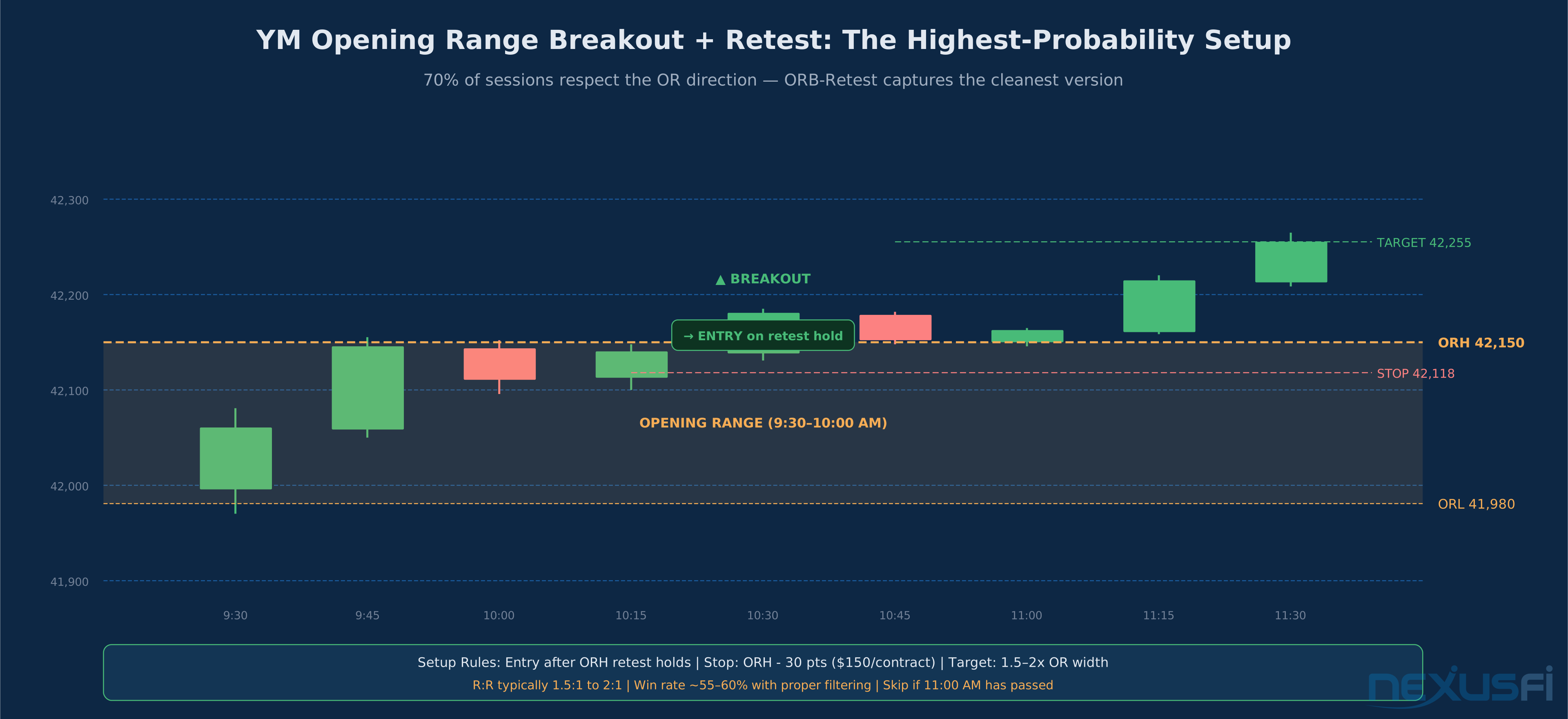
The ORB-Retest is YM's highest-probability intraday setup. Define the Opening Range as the high and low of the first 15-30 minutes. When price breaks above ORH or below ORL, wait for the pullback. The pullback is the filter: accepted breakouts hold the level on retest. Failed breakouts fall back into the OR.
Entry: Price breaks ORH/ORL cleanly by 20+ points, pulls back within 10-15 points of the breakout level, stabilizes (sideways 2-3 bars or higher low for longs). Enter on the next 5-min close that holds the breakout level. Stop: Below retest low (longs) or above retest high (shorts) plus 25-30 points. Never use the opposite OR boundary as stop. Target: 1.5x OR width from breakout. 130-point OR implies 195-point target from ORH. Scale out at 1.5x, let runner go to PDH/PDL in the trade direction.
Filters: No ORB-R after 11:00 AM. Skip if a major DJIA component has a 3%+ pre-market gap. Skip if internals (NYSE TICK, ADD — see Market Internals guide) contradict direction. @Inletcap filtered entries precisely this way: "NYSE Tick unable to get above +600" killed even clean-looking breakouts. [3] On trend days, price won't retest — it just keeps going. Don't chase. On choppy range days, multiple ORH re-tests signal VWAP Reversion conditions instead.
ORB-Retest win rate: 55-60% with regime and internals filtering. Without filtering: 45-48%. The internals check adds 7-12 percentage points — the difference between positive expectancy and a breakeven grind.
Setup 2: VWAP Reversion
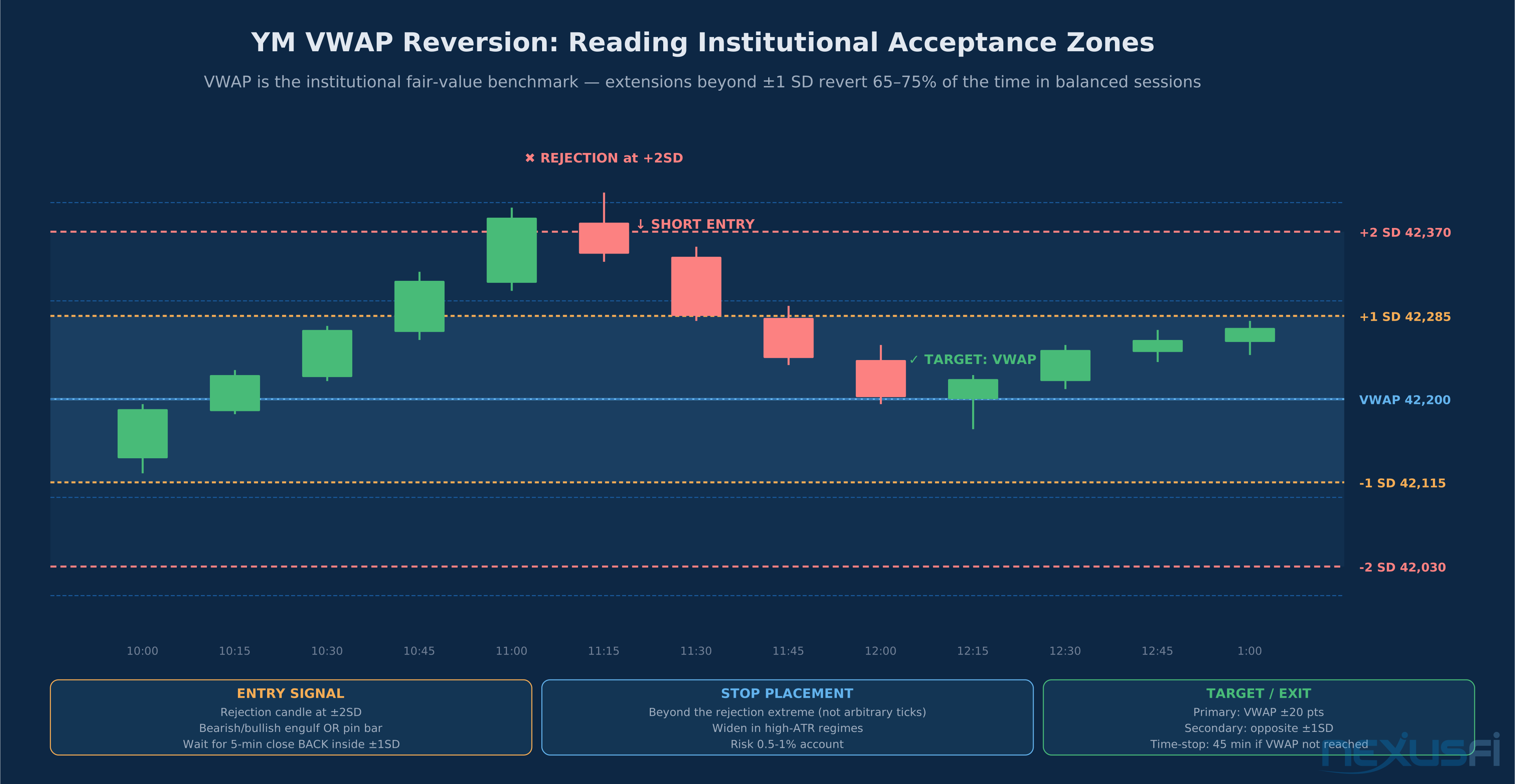
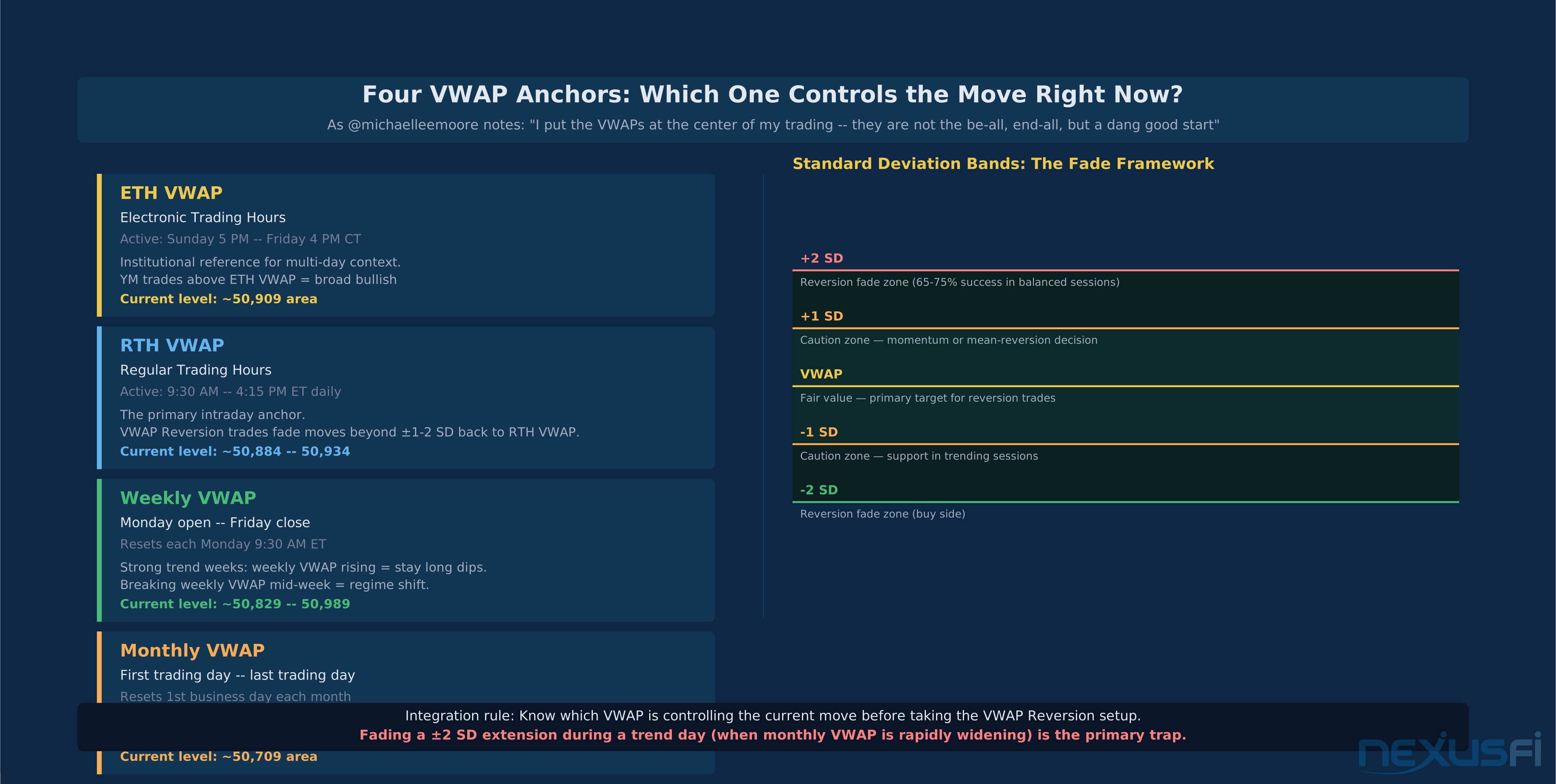
VWAP is the institutional fair-value benchmark. When YM extends beyond ±1 SD, retail and momentum players are overextended — institutional players wait to fade them. Low edge on trend days when price breaks ±2 SD and holds.
Entry: Price reaches ±2 SD. Reversal candle forms at the extreme. Price closes back inside ±1 SD on a 5-min bar. Enter next bar in the reversion direction. Stop: Beyond the rejection candle extreme — not arbitrary ticks. Target: VWAP ±20 points. Time-stop: 45 minutes. If price hasn't reached VWAP in 45 min, close at market — no multi-hour holds. Best time: 11 AM-1 PM (the VWAP Reversion exception to "avoid lunch").
When it fails: Trend days. When YM is in a one-directional move on a major trigger, the ±2 SD extension is momentum, not overbought. Filter: if price has been beyond ±1 SD for two consecutive 15-min periods, you're in a trend — abandon the reversion thesis.
Setup 3: Reference Level Fade
PDH, PDL, overnight high/low, and round hundreds (e.g., 42,000, 42,100) attract institutional liquidity. The Reference Level Fade captures the rejection at key levels — institutional players know where stops cluster above and below these numbers.
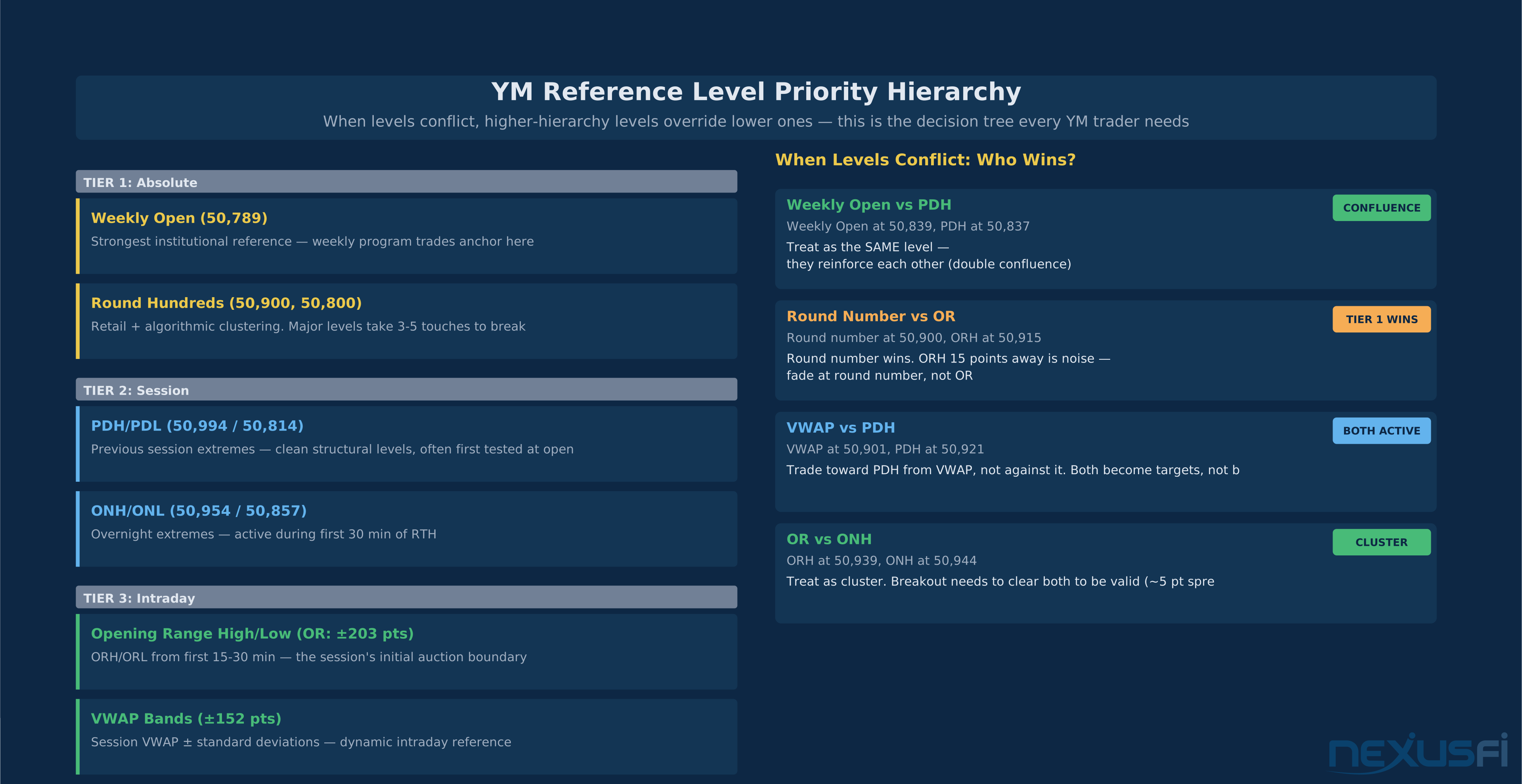
Entry: Price makes 2-3 tests of PDH, PDL, ONH, ONL, or round-hundred level without clean break-through. Reversal pattern (engulfing, doji, pin bar) on 3-5 min chart. Enter on break of reversal candle in the fade direction. Stop: 40-50 points beyond entry or pattern extreme. Target: 75-100 points or the next major reference level. Don't fade levels being taken out systematically on high volume — that's accumulation, not rejection.
As @BroncoSlade condensed years of YM experience: "I enter these trades using nothing more than the Support area of the day before and market internals. No indicators, pivot points or Fibonacci lines. Just the reaction of traders at this Support area." [4] The reaction is the signal — not the level.
Setup 4: Trend Continuation (Impulse-Pullback-Resume)
Window 1 establishes 200+ point directional bias by 11:30 AM. Window 2 enters the pullback. Entry: Strong AM trend, afternoon pullback to 20-EMA on the 15-min chart or prior swing high (now support). 2-3 bar consolidation or higher low. Enter on confirming candle. Stop: Below pullback low plus 25-30 points (tighter than ORB because conviction is higher). Target: OR-to-AM-high range projected forward. Many YM trend days reach 350-500+ points — don't close the position at 100 if internals are confirming continuation.
When it fails: False AM break — if price didn't hold above ORH by 11:30 AM, Window 2 trend continuation doesn't exist. Afternoon macro reversals (FOMC minutes, late catalysts) run stops quickly. Maintain daily loss limits regardless of setup quality.
YM as a Market Context Filter #
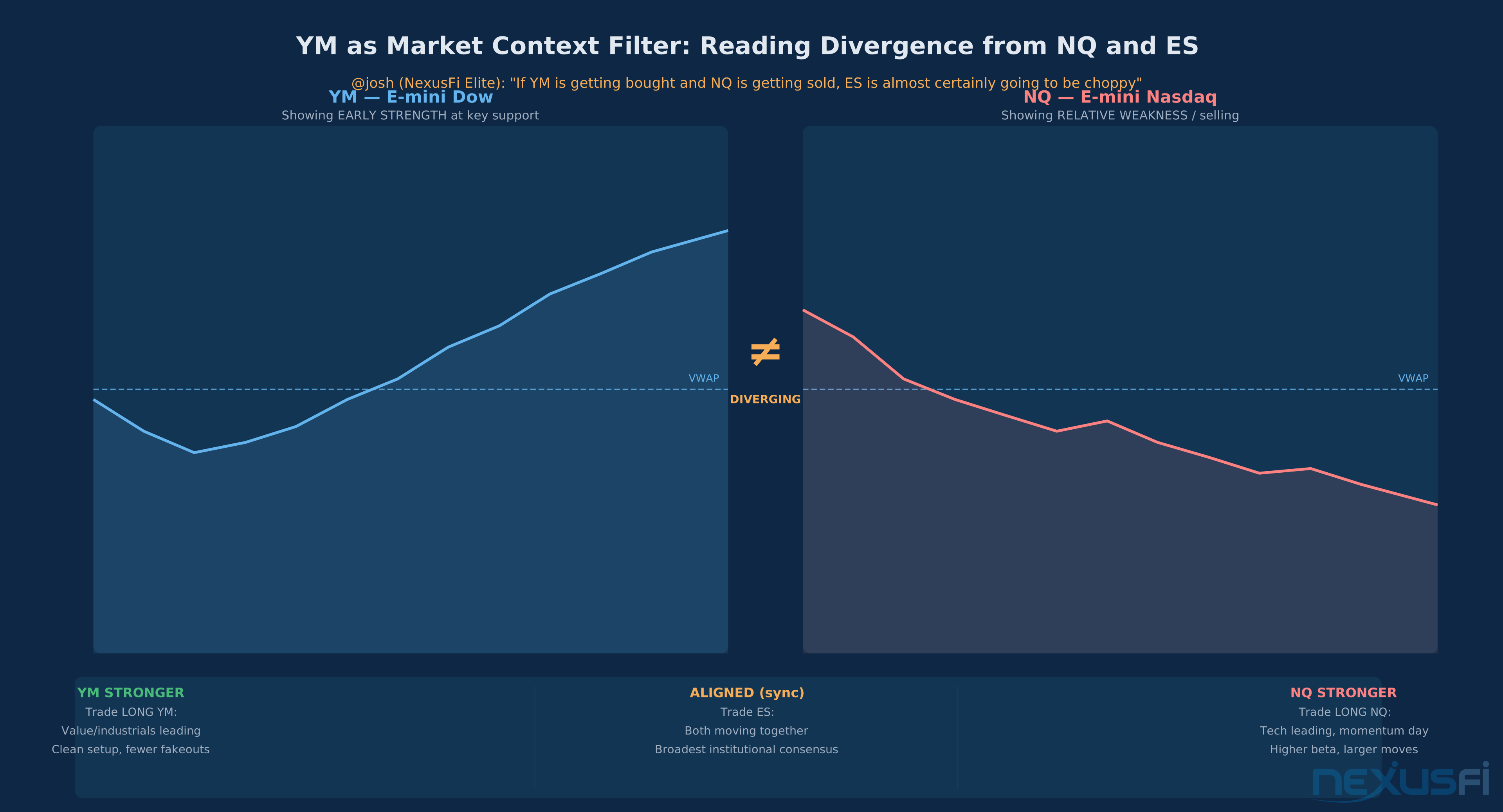
Even if you don't trade YM, it belongs on your screen. The relationship between YM, ES, and NQ is one of the most reliable real-time signals for reading the equity market's underlying structure.
When all three are moving in the same direction and at similar percentage rates, the market is in "broad consensus" mode — all boats rising or falling together. ES setups are cleanest here. When YM diverges from NQ, you have a sector rotation story playing out in real time.
YM leading NQ higher: Value rotation — financials, industrials, healthcare outperforming tech. This regime tends to produce cleaner, slower moves that are easier to trade. YM setups work well; NQ setups tend to fail in the direction of the move (NQ is lagging, so trend-following NQ longs struggle).
NQ leading YM higher: Technology momentum — typically AI/semiconductor driven, earnings-driven, or Fed-cut-anticipation driven. NQ setups work well. YM setups tend to be choppy. @josh documented this dynamic precisely: on Feb 2, 2023, "NQ was up 4% while ES was up less than 2%, with YM negative." In those sessions, trading YM longs on technical setups when NQ is the clear leader is a mistake. [1]
YM and NQ diverging in opposite directions: This is the spread trading opportunity (see next section) and the ES-will-be-choppy signal. When ES traders see this and ignore it, they're trading into the most unpredictable condition in equity index futures.
Spread Trading: YM/NQ and YM/ES #
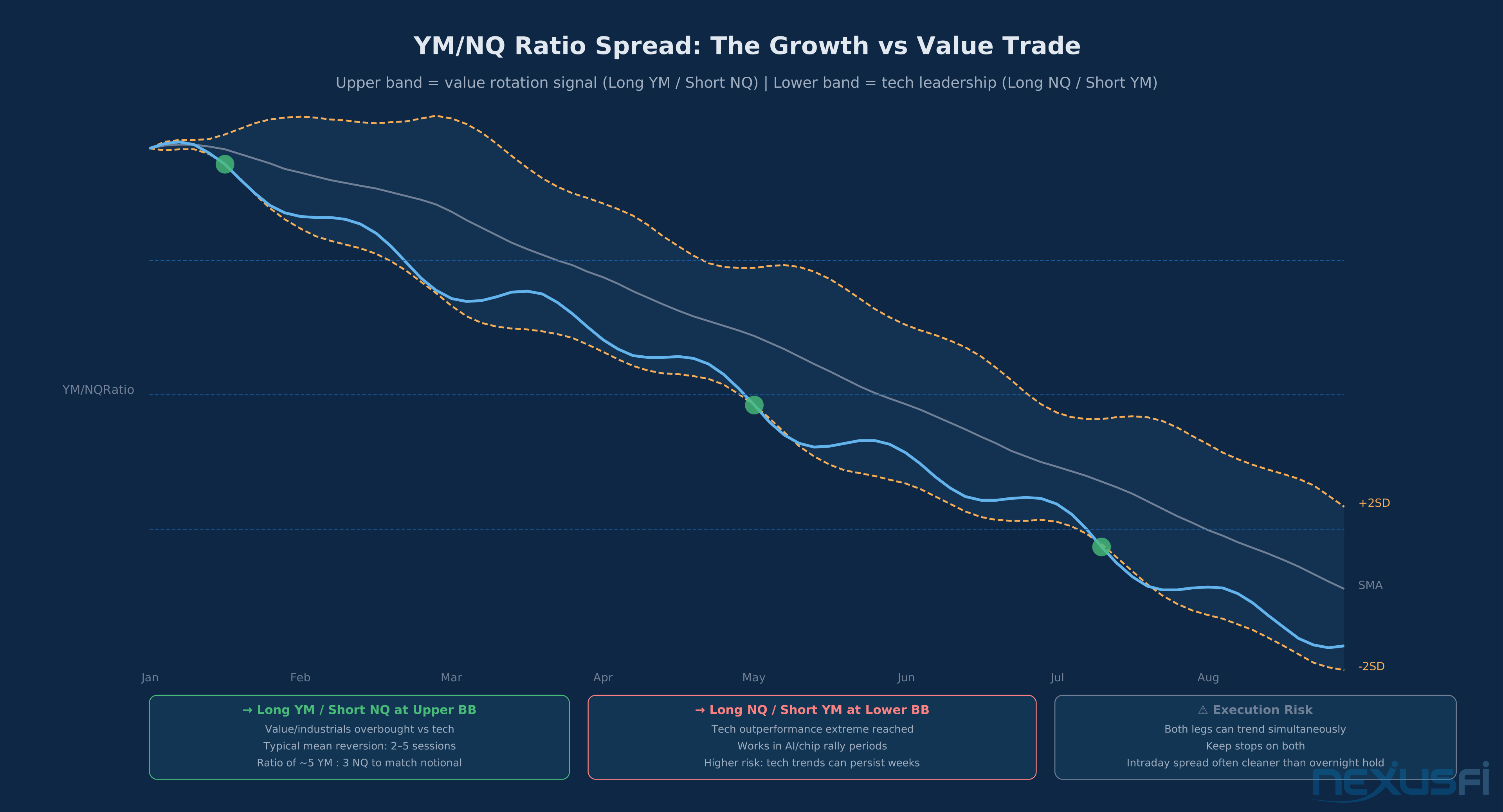
The YM/NQ ratio oscillates around a mean driven by value stocks vs growth/tech relative performance. At statistical extremes, it tends to revert. Match notional exposure approximately 5 YM to 3 NQ contracts (~$210k vs ~$350k notional). Upper 2 SD Bollinger Band on a 20-day lookback = value expensive relative to tech, long NQ/short YM. Lower band = value cheap, long YM/short NQ.
YM/ES Spread: Tighter and more correlated. YM temporarily diverges from ES when a high-priced DJIA component moves on idiosyncratic news. Ratio typically corrects within 2-5 sessions. Tighter execution required after transaction costs.
Execution reality check: @josh learned the hard way: "I had to admit I just don't have the stomach to watch both legs of the spread go against me... What I may do is consider just intraday spreading." [6] Multi-day spread holds carry significant leg risk. Intraday spreading within one session is lower risk. CME's inter-commodity spread credits reduce margin by 60-80% vs independent positions.
Integrating Market Internals #
No YM setup should be traded in isolation from broader equity context. NYSE TICK, ADD, and VOLD are the three primary internals every YM trader needs.
NYSE TICK: NYSE stocks upticking minus downticking. Above +800 = broad buying, breakouts have stronger follow-through. @Inletcap filtered setups precisely this way: "NYSE Tick unable to get above +600" killed an otherwise-clean breakout. "When price crossed VWAP — NYSE Tick was printing -600." [3]
ADD (Advance-Decline): Advancing minus declining NYSE stocks. ADD positive and rising = broad participation, confirms YM breakouts. ADD negative while YM rises = breadth divergence, often precedes reversal.
VOLD (Volume Advance-Decline): Dollar-weighted ADD. Large positive VOLD = institutions buying advancers. VOLD/ADD divergence (many stocks advancing on light volume) = thin breadth warning — dip buys less likely to hold.
Integration rule: Never trade YM against all three internals simultaneously. One negative internal is manageable. All three opposing means wait for confirmation — even perfect chart structure yields to institutional pressure.
Risk Management for YM #
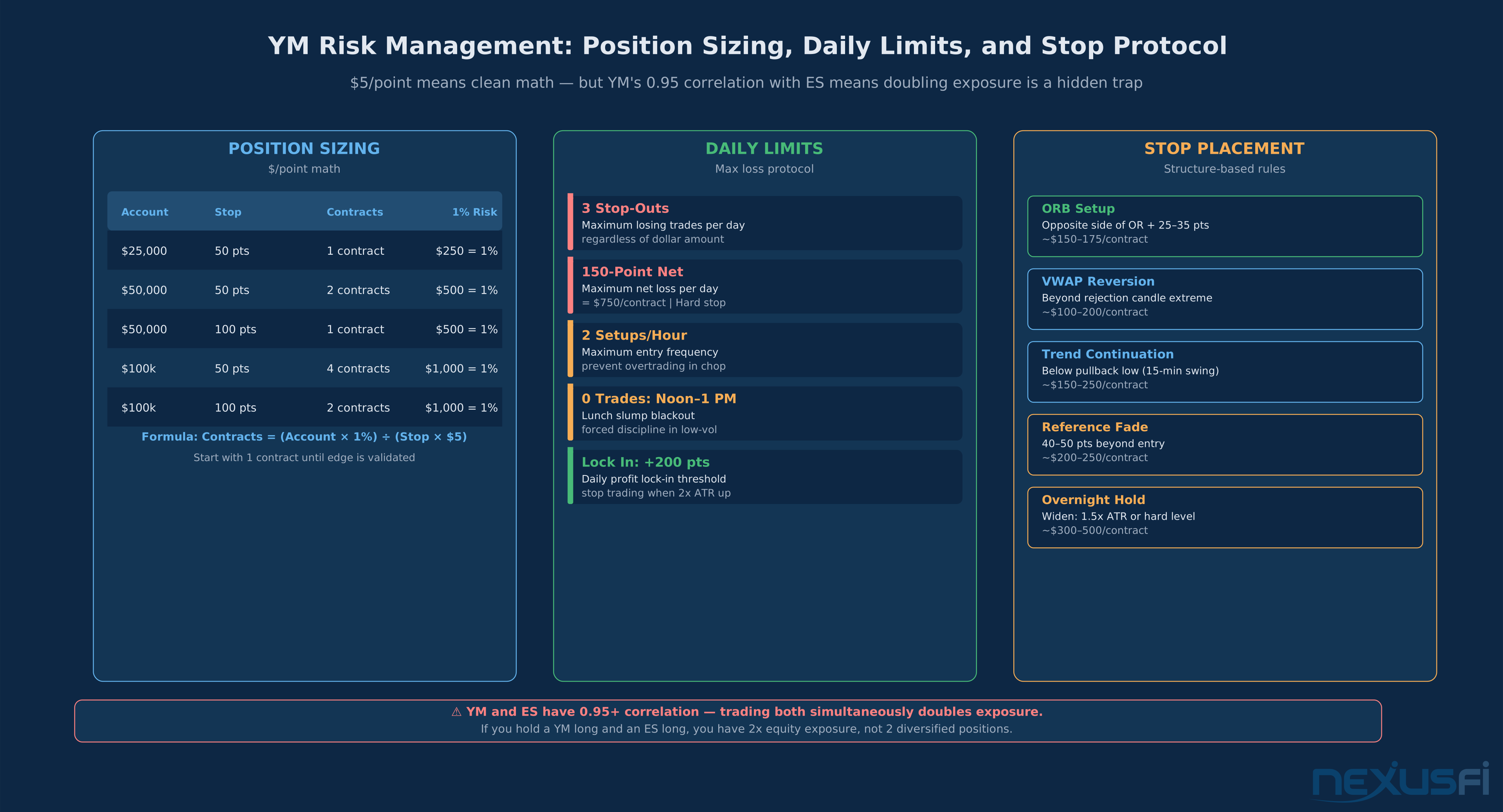
YM's $5-per-point structure makes position sizing mathematics clean. A 50-point stop costs $250 per contract. A 100-point stop costs $500. On a $50,000 account risking 1% per trade, the maximum stop on a single YM contract is $500 — which corresponds to a 100-point maximum stop or tighter sizing with a wider stop.
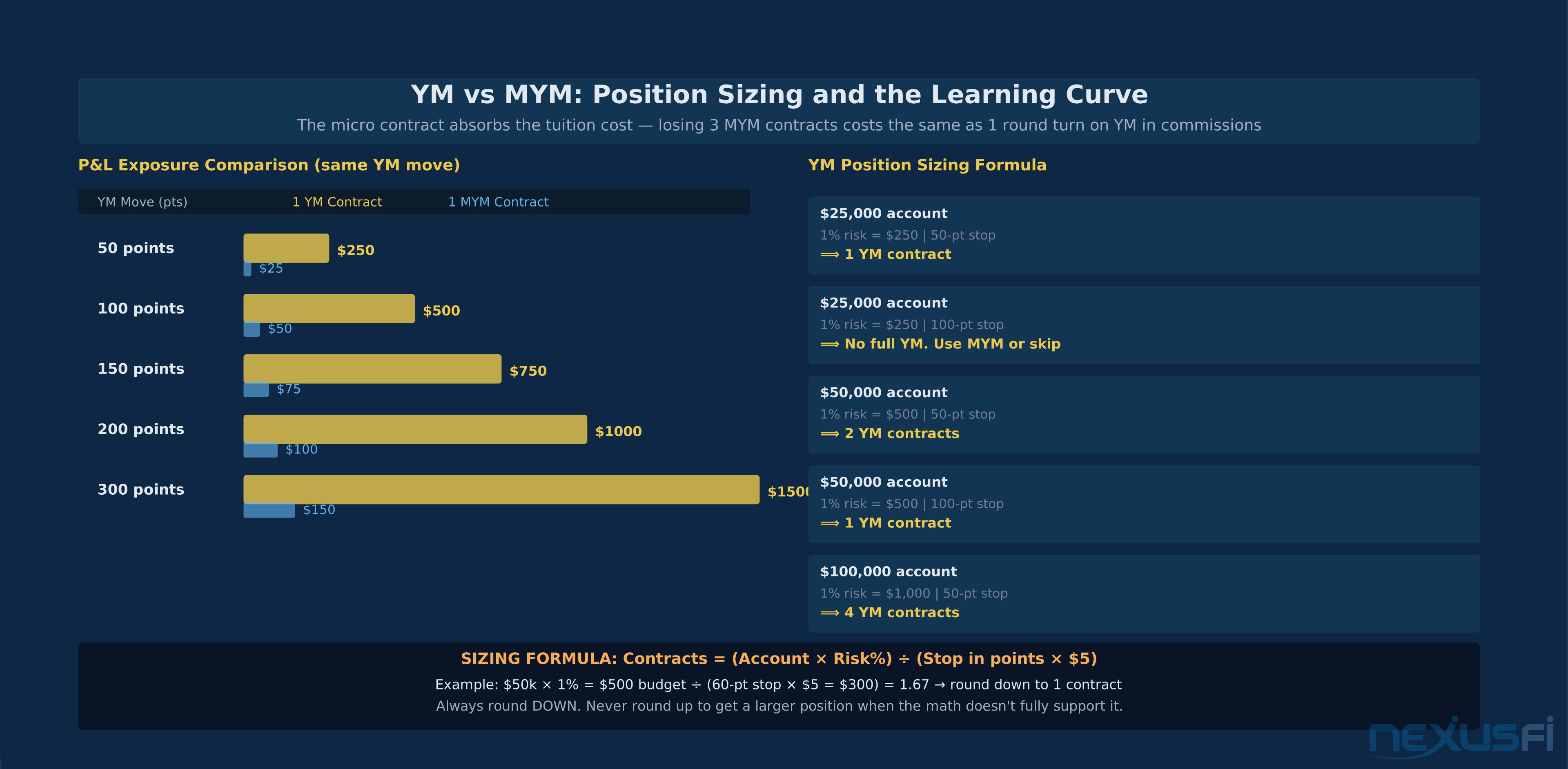
The sizing formula: Contracts = (Account × Risk%) ÷ (Stop in points × $5). For a $50,000 account, 1% risk, 50-point stop: $500 ÷ $250 = 2 contracts. For the same account with a 100-point stop: 1 contract only.
Correlation warning: YM and ES have 0.95+ correlation. Holding one ES long and one YM long = 2x equity exposure, not diversification. Treat them as the same instrument for position sizing.
Daily loss limits: Three stop-outs OR 150 points net, whichever comes first. After the third stop-out, close the platform. The 150-point hard limit is $750/contract — a day of controlled losses is recoverable. An uncontrolled session is account-ending.
Structure-based stops only: Place stops at structural features: (a) below retest low on ORB, (b) beyond rejection candle on VWAP Reversion, (c) below pullback low on Trend Continuation, (d) beyond pattern extreme on Reference Level Fade. "30 points below my entry" is not a structure-based stop unless there's a structural reason for that exact level.
When YM Doesn't Work #
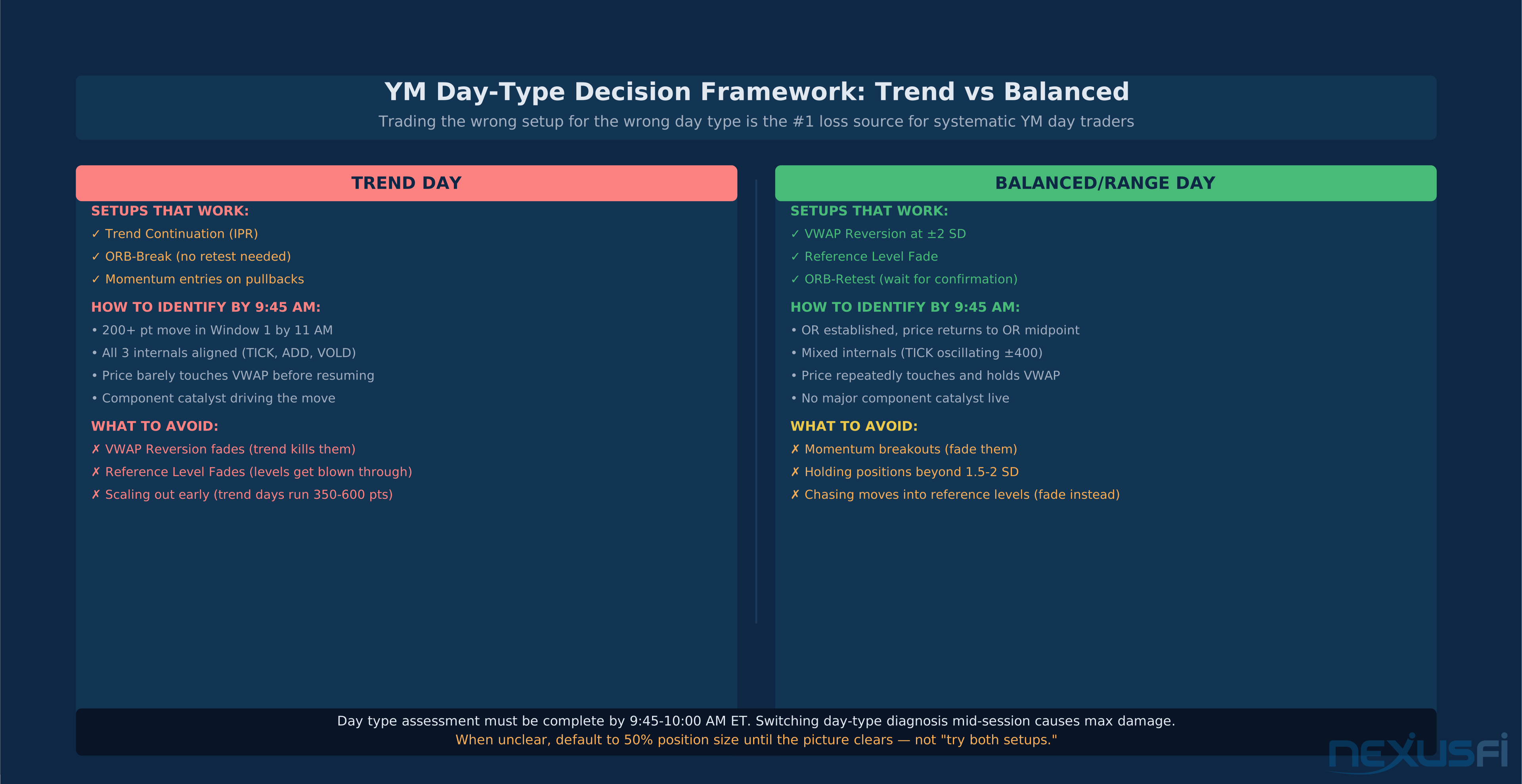
Technology momentum regimes can be identified by 10:00 AM: NQ up 1.5%+ with clear tech trigger while YM is flat or negative. When you see this, stop trading YM directionally for the session. Every YM reversal will be fighting institutional order flow directed at NQ.
Tech momentum: When NVIDIA, Apple, Microsoft are driving the equity complex, YM lags persistently. Trading YM mean reversion expecting it to "catch up" in these regimes is a slow bleed. If NQ leads by more than 1.5% on the session from clear tech catalysts, YM is the wrong instrument that day.
Component gap risk: A DOJ investigation against UNH or a Boeing safety incident can gap YM 200+ points while ES moves 15. Only protection: position sizing and not holding YM through known catalysts (earnings, regulatory decisions) for major high-priced components.
Scalping: @Fat Tails made the economic case: "MYM/YM is not great for scalping. NQ averages about 4x the value per point. The spread and cost to trade YM often does not justify scalping if the YM target is only 10-15 points." [7] YM's edge starts at 30-point targets.
Component ex-dividend dates and thin overnight: Multiple DJIA components going ex-dividend simultaneously can gap YM 30-50 points mechanically. Between 8 PM and 2 AM ET, thin order books mean stops run 3-5 ticks beyond intent — widen or size down for overnight holds.
Framework for Daily Trade Selection #
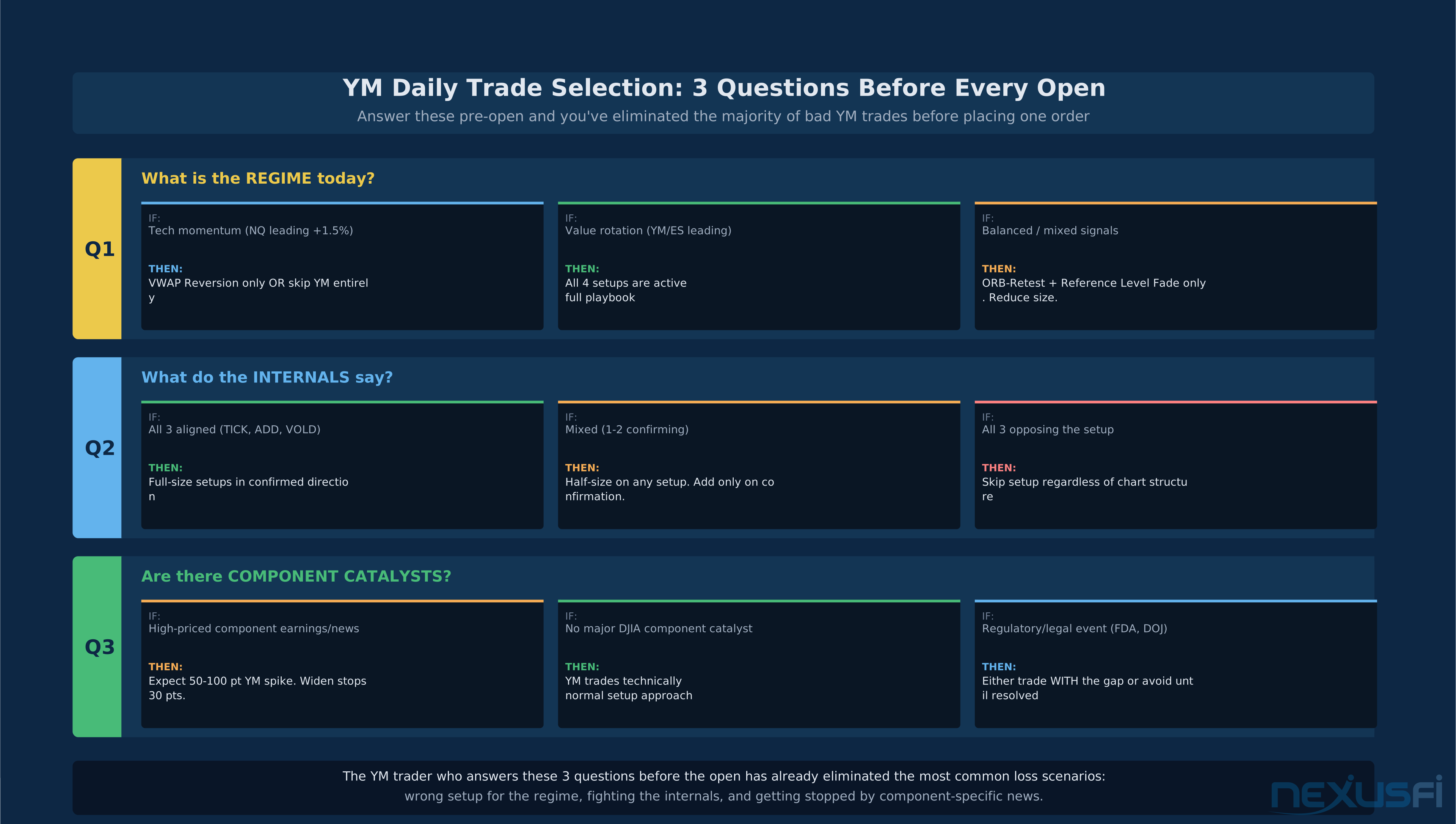
Three questions before every YM open:
Q1 — Regime? Tech momentum (NQ leading) — VWAP Reversion only or skip YM. Value rotation (YM/ES leading) — all four setups active. Balanced/mixed — ORB-R and Reference Level Fade only.
Q2 — Internals? All three (TICK, ADD, VOLD) aligned — full-size in confirmed direction. Mixed — 50% size. All three opposing — skip regardless of chart structure.
Q3 — Component catalysts? High-priced DJIA component earnings/news — expect impulsive YM moves, widen stops. No trigger — YM trades technically.
Building Your YM Routine #
The traders who make YM work consistently share one characteristic: they've built a routine that looks the same every day, regardless of market conditions. The routine doesn't guarantee profit — nothing does. But it ensures that the process is consistent, which allows for accurate diagnosis when things go wrong.
A minimal viable routine for YM day trading: 15 minutes pre-market to mark levels and check components — Window 1 (9:30--11:00 AM) active trading — 11:00--1:00 PM hands off (VWAP Reversion only if clearly applicable) — Window 2 (1:00--3:30 PM) re-engagement — log every trade with entry reason, result, and post-mortem. Track which setups you're taking and which are producing positive expectancy. YM's four core setups don't all have equal win rates in all regimes — and your own execution of each will vary. The log is how you identify your actual edge rather than the theoretical one.
[8] One good trade at a time, in the right window, in the right regime, with the correct position size — that's the YM playbook reduced to its essence.
Knowledge Map
Go Deeper
Build on this knowledgeCitations
- — Spoo-nalysis ES e-mini futures S&P 500 (2024) 👍 6“If YM is getting bought and NQ is getting sold, ES is almost certainly going to be choppy and not as clean. I'm using YM as kind of a 'non-tech' proxy.”
- — The Scalper's Journey (2017) 👍 4“Short into sd2/yhod/ONH. I find I get into trouble trading RTH intrarange. Typical risk is 8 ticks. Typical target is 15 ticks.”
- — InletCap's Random Collections (2016) 👍 34“NYSE Tick unable to get above +600. When price crossed VWAP -- NYSE Tick was printing -600 (think force or strong move on big black candle).”
- — Time Bandits. A Simple Trading Plan for the E mini Dow YM (2011) 👍 2“I entered these trades using nothing more than the Support area of the day before and market internals. No indicators, pivot points or Fibonacci lines. Just the reaction of traders at this Support area.”
- — Pairs trading (2019) 👍 4“YM and ES has different sectoral weightages and that's why the spread between them converges or diverges. When trading this spread, especially check the Tech, Industrial and Utility sectors.”
- — Spoo-nalysis ES e-mini futures S&P 500 (2023) 👍 3“I had to admit that I just don't have the stomach to watch both legs of the spread go against me. What I may do is consider just intraday spreading.”
- — Using VWAP in your trading (2010) 👍 14“MYM/YM is not great for scalping. NQ averages about 4x the value per point move. The spread and cost to trade YM often does not justify scalping if the YM target is only 10-15 points.”
- — YM day trading with price action - My Journey (2013) 👍 5“The aim of this journal is to be publicly accountable for my trades, progress and mistakes or relapses. Through regular reviews, I aim to develop the patience and skill to take 1 good trade at a time.”
- — VWAP for stock index futures trading? (2019) 👍 29“I put the VWAPs at the center of my trading -- they are not the be-all, end-all, but a dang good start. I watch ES, then take trades on YM and NQ, depending on which will give me the most mileage on that particular day. I have four vwaps on my chart -- ETH, RTH, Weekly and Monthly.”
- — YM day trading (2018) 👍 7“My background consists in 4 years learning about mainly futures and options. I day trade the E-mini Dow Futures. The size of my trades is 1 contract per every $12,500. The strategy is based on support and resistance from prior days, VWAP, and price action confirmation before entries.”
- — Opening Range Revisited...Still Relevant? (2021) 👍 9“While the pits are dead, in the equities markets there is still a huge rush of orders beginning right on the dot of the New York Stock Exchange open at 9:30 ET. That makes the US RTH open important for the equity futures. The opening range still defines the initial auction structure for the session.”