



Overnight Inventory and Globex Sessions: Reading the Market's Pre-RTH Story
Overview #
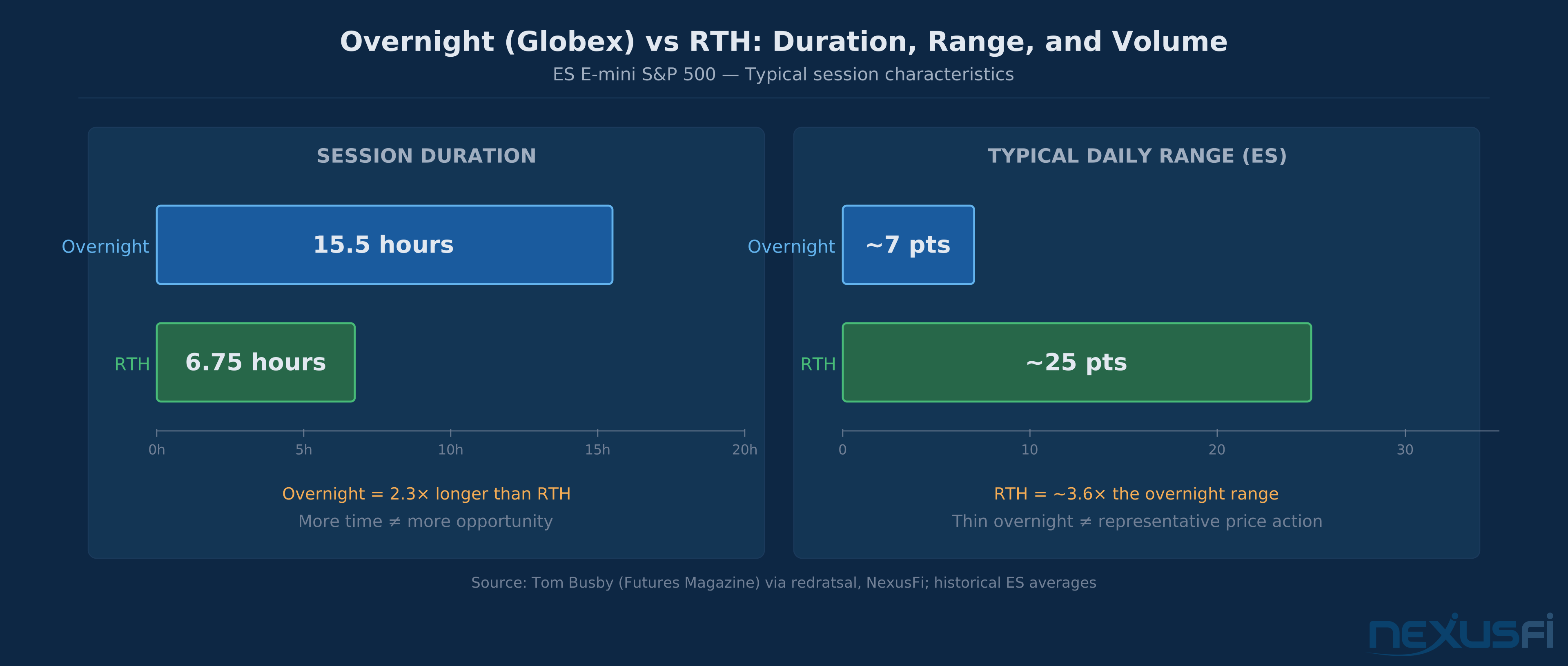
Every futures market has two lives. There's the regular trading session — the RTH window where most retail traders operate, where volume is thick and price action is decisive. And then there's everything else: 15.5 hours of electronic trading on CME Globex where institutions hedge portfolios, algorithms react to global news, and the market quietly decides where it wants to open the next day.
That overnight period isn't noise. It's context. The positions accumulated during the Globex session — who's long, who's short, where the most volume traded, how far price drifted from fair value — these create a structural bias that often determines the first 30-60 minutes of the next RTH session. Traders who can read overnight inventory correctly walk into the open with a directional hypothesis. Everyone else is just reacting.
Overnight inventory refers to the net positioning and price context established during the Globex electronic session — the collective exposure carried by market participants between one RTH close and the next RTH open. It's not a single published statistic. It's a probabilistic bias you infer from multiple signals: where price closed relative to the prior settlement, how volume was distributed, which side of the market controlled the final hours of the overnight window, and how far price drifted from the overnight point of control. Get the read right and you have a directional framework before the opening bell. Get it wrong and you'll be fading moves that aren't reversals.
The Globex Session #
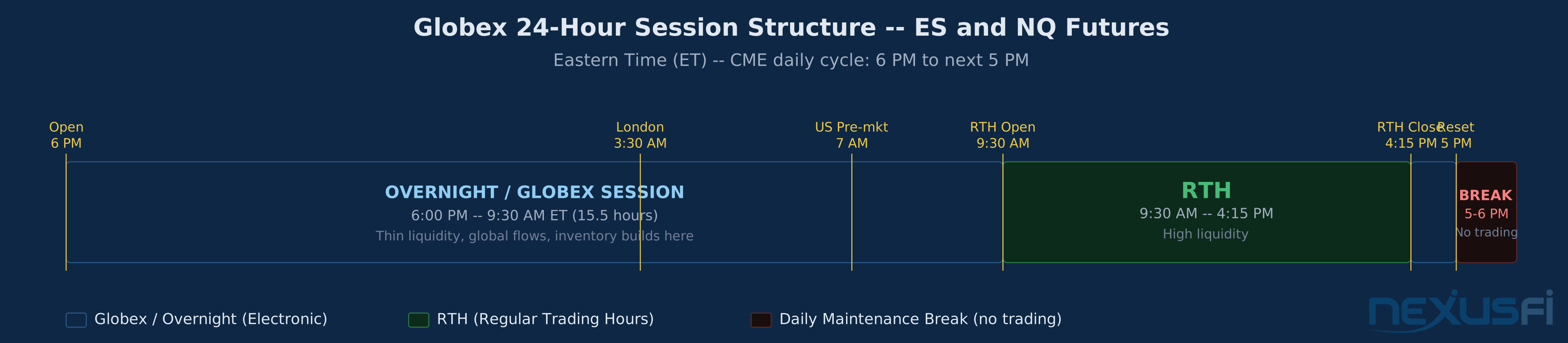
CME Globex is the electronic trading platform that keeps futures markets running nearly 24 hours a day, five days a week. For equity index futures like the ES and NQ, the daily cycle looks like this: the new Globex day opens at 6:00 PM ET, runs continuously through the next day's RTH session (9:30 AM to 4:15 PM ET), continues for a brief post-market window (4:15 PM to 5:00 PM ET), then halts for a one-hour maintenance break from 5:00 PM to 6:00 PM ET before the next cycle begins.
That 5:00-6:00 PM window is important. During the daily maintenance period, CME clears stale orders, recalculates margins, and publishes official settlement prices. It's not just a technical pause — it's a hard institutional reset. Any order book depth you were watching evaporates. The settlement price established during this window becomes the primary reference that overnight traders use to judge whether inventory is accumulating net long or net short.
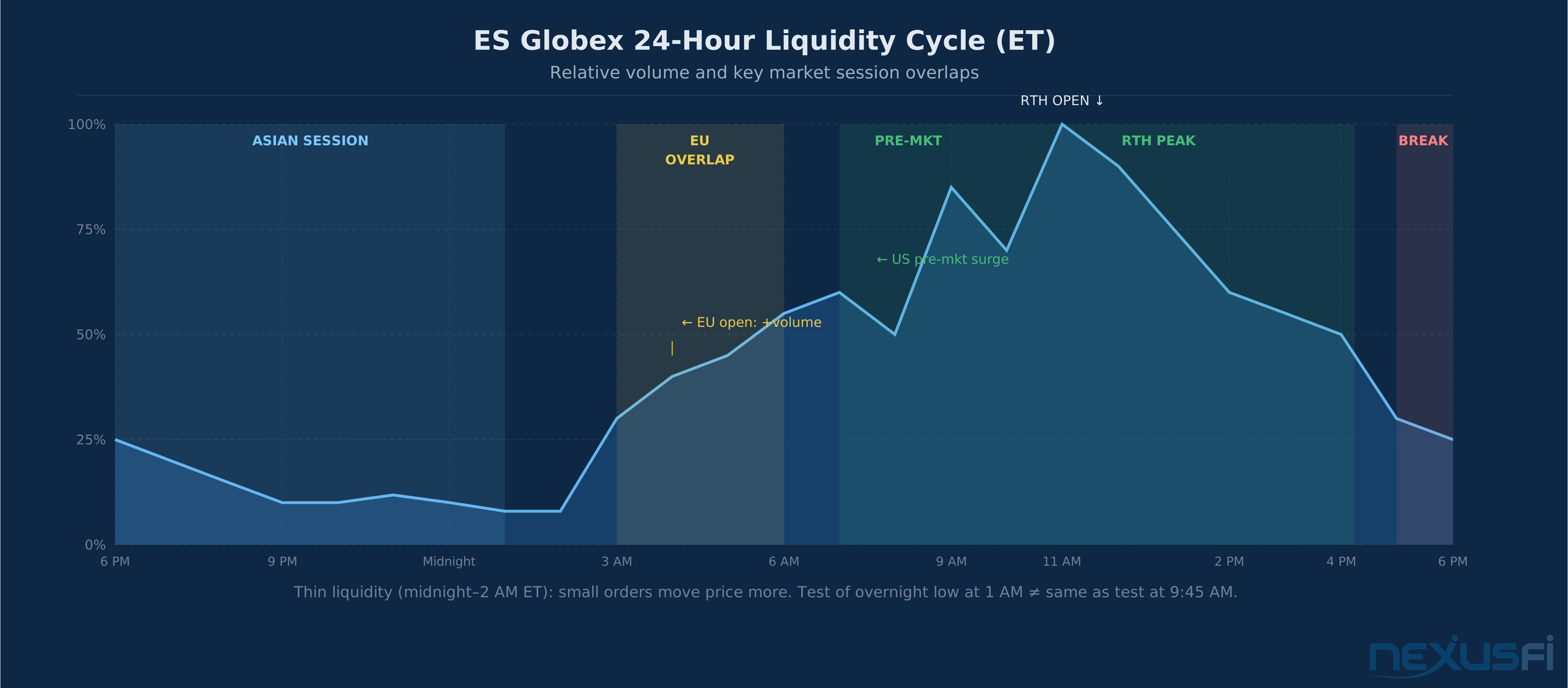
The Globex session has different liquidity regimes depending on the time of day. The two most notable periods are the European trading overlap (roughly 3:00-4:30 AM ET, when London cash markets open and volume picks up) and the US pre-market window (7:00-9:30 AM ET). The middle of the night — say 11:00 PM to 2:00 AM ET — is typically the thinnest. Price can move more easily on smaller orders, which is why overnight "tests" of key levels can be deceptive. A break of the overnight low at 1:00 AM on 3,000 contracts is very different from the same break at 9:45 AM on 30,000.
[5] That's the window that matters — 15+ hours of price discovery that sets the context for RTH.
What Overnight Inventory Actually Means #
The word "inventory" comes from how traders think about market positioning. If the market spent most of the overnight session trading above the prior RTH settlement, participants who bought during that session are sitting on paper profits. They're "long inventory" — they hold positions acquired at higher prices that the market has endorsed. If price then sells off at the RTH open, those longs need to decide whether to hold or liquidate. That liquidation pressure is what creates the bearish undertow when overnight inventory is long and the RTH open fails.
Conversely, if the market spent the overnight session below settlement, shorts accumulated inventory at lower prices. A RTH gap-up that can't sustain becomes the fuel for a continuation down as those shorts take profits or get stopped at their planned levels.
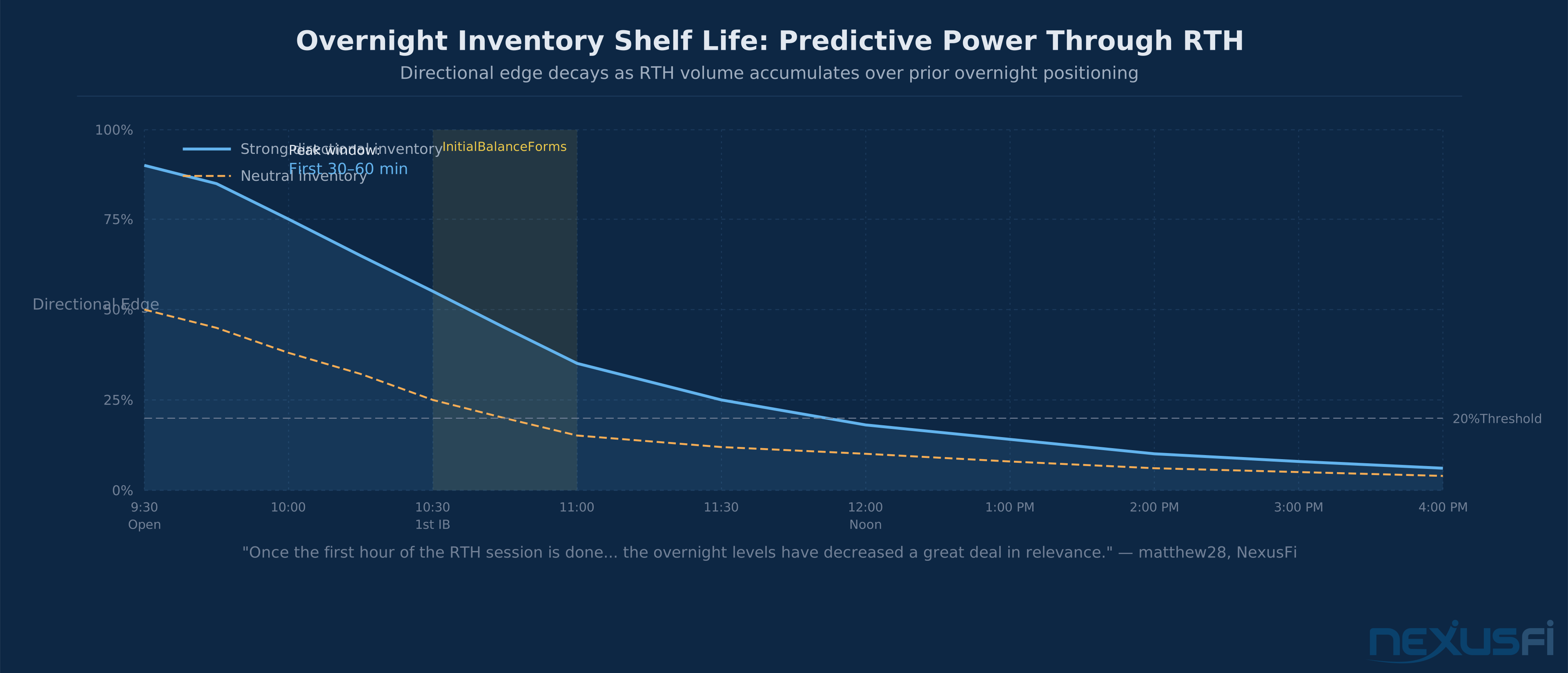
The key insight, explained directly by @matthew28 in the "How important is overnight inventory" thread: "If the majority of the overnight volume is above the Settlement then inventory is long and vice versa. If the volume is balanced around the Settlement the inventory is neutral... I like to note where the overnight volume POC was if it is very prominent, and where the overnight high and low are but that's it. I tend to think once the first hour of the RTH session is done and you have an IB high and low to watch and an hour of actively traded volume has gone through, then the overnight levels have decreased a great deal in relevance." [1]
That last point matters: overnight inventory has a shelf life. It's most predictive in the first 30-60 minutes of RTH. Once the initial balance forms and RTH volume dominates, overnight context fades. Don't over-rely on overnight levels into the afternoon session.
@"The correlation between overnight and subsequent daytime changes is approximately -7.2%. From 1993 to 2008, the bullish trend over those 15 years has been the result of the overnight market, while the daytime market has been timidly flat."
The session transitions article covers how behavior changes between Globex and RTH in detail. What matters here is how the overnight period accumulates that inventory bias and how to read it.
Key Overnight Reference Levels #
Before every RTH open, mark these five levels on your chart. They're not suggestions — they're the structural framework that price will react to within the first hour of trading.
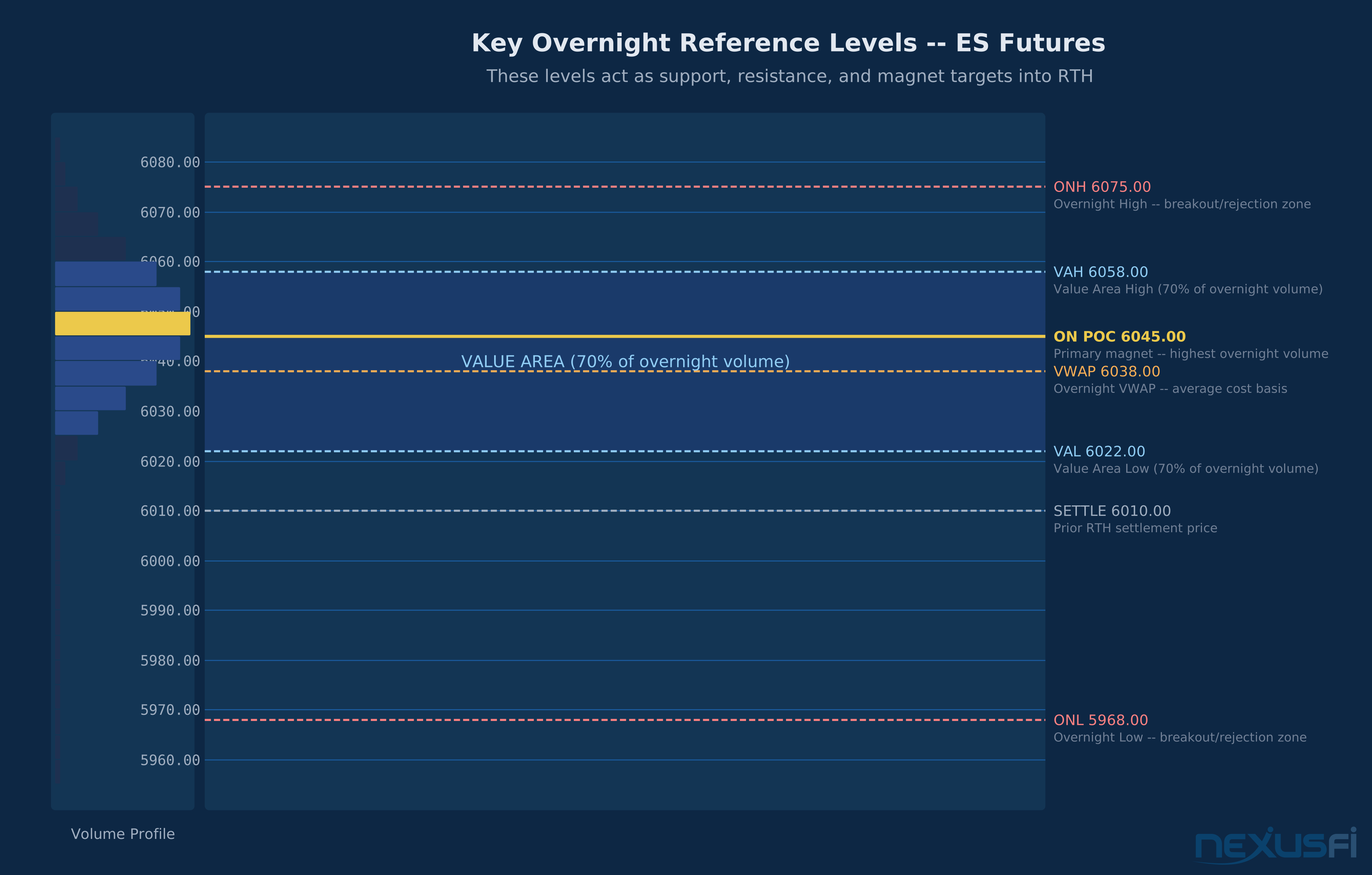
Overnight High (ONH) and Overnight Low (ONL) are the session's extremes. These represent the farthest price traveled during the thin liquidity window. Stop orders accumulate just beyond these levels — breakout traders go long above ONH, breakdown traders short below ONL. When price tests ONH or ONL at the RTH open, you're testing a liquidity pool, not just a price level. Rejection at ONH with weak delta is one of the cleaner fade setups in the playbook.
The Overnight Point of Control (ON POC) is the price with the highest volume concentration during the overnight session. If the overnight session is 15 hours of negotiation between buyers and sellers, the POC is where they agreed most. When RTH opens, price gravitates toward the ON POC like a magnet — especially in the first 20-30 minutes. This is true whether the open is above or below the POC, because in both cases there are participants on the wrong side of that level looking to liquidate or reduce exposure near the reference price where they originally traded.
The Overnight Value Area (VAH/VAL) is the price range where approximately 70% of overnight volume transacted. Opening outside the value area is a meaningful signal. If price gaps above VAH at the open, you're starting the day in territory the overnight market rejected as too expensive relative to where most business was done. That doesn't guarantee a reversal, but it creates a disposition: the market needs to prove acceptance above VAH or it'll rotate back to value. Opening inside the value area is neutral — the market is starting where overnight participants found fair.
Overnight VWAP represents the average price weighted by volume across the Globex session. It's the cost basis for the aggregate overnight participant. If price opens above overnight VWAP at RTH, longs from the overnight session are in profit and may take them. Below VWAP, longs are underwater. The VWAP is most useful as a real-time reference during the opening minutes — if price can't hold above overnight VWAP after a gap-up, the gap is losing conviction.
Prior RTH Settlement is the benchmark price for measuring overnight inventory direction. Settlement occurs during the 4:00-5:00 PM ET window (the specific calculation varies by contract) and represents the institutional reference price for margin calculations. Price closing above settlement suggests net long inventory; below suggests net short. The gap between settlement and the RTH open price is your gap size.
Reading the Inventory Bias #
Determining inventory bias requires reading three converging signals, not just price location. When all three align, you have a conviction read. When they conflict, classify as neutral.
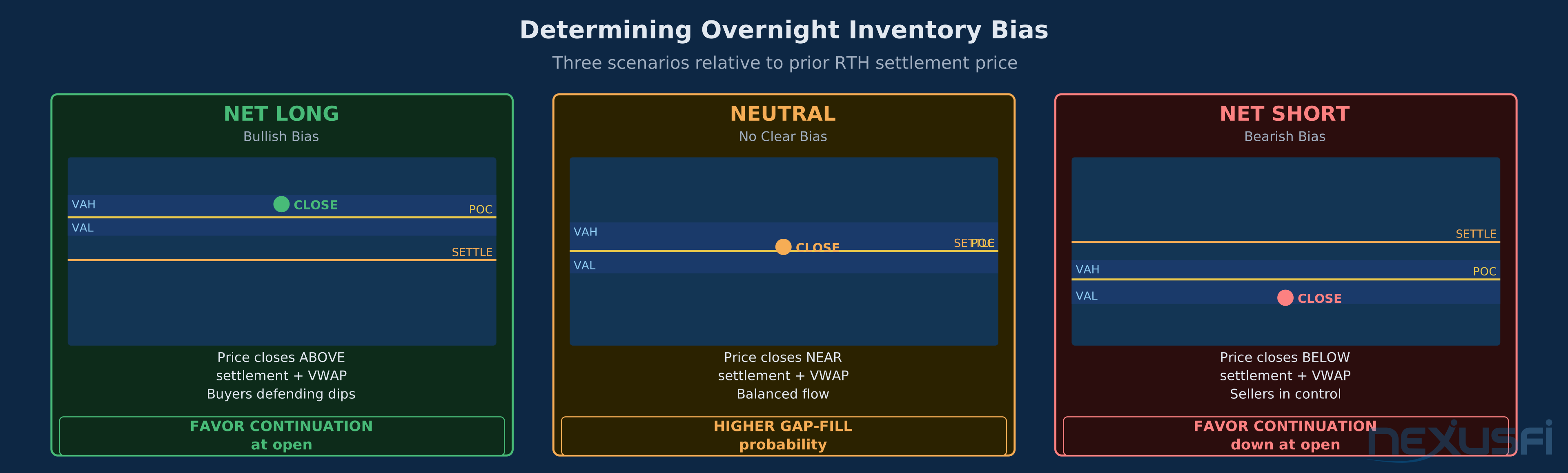
Signal 1 — Price location relative to overnight VWAP and POC. If Globex closes with price above both overnight VWAP and the overnight POC, the session's buyers are in profit. That's net long inventory. If price is below both, bears carried the night. If price is hovering near VWAP and POC with neither side decisively winning, inventory is neutral.
Signal 2 — Volume delta over the final 1-3 hours of Globex. The overnight session has an important feature: the closer you get to the RTH open, the more the order flow reflects genuine positioning rather than automated hedging. Look at your footprint chart or CVD (Cumulative Volume Delta) for the last hour before RTH. Positive delta with price holding above key levels confirms the bullish bias. Negative delta with price failing to reclaim levels confirms bearish bias. This is the strongest real-time signal available to retail traders.
Signal 3 — Where price is relative to settlement. Simple but effective. If Globex closes well above the prior RTH settlement, the overnight market endorsed higher prices. If it closed well below, the market was net bearish relative to where it settled. "Well above" means the gap between settlement and the Globex close is meaningful — at least a third of the prior day's average daily range, not just a tick or two.
That conditional framing — "if it does not" — is the entire game. The inventory bias gives you the lean, but the opening price action tells you whether the bias is confirming or failing. You don't commit to the trade until you see the early RTH order flow. A strong inventory read with weak opening delta is a fade setup in the making, not a momentum trade.
How Overnight Inventory Shapes the RTH Open #
The overnight session creates a structural setup for RTH. Here's how that plays out in practice.
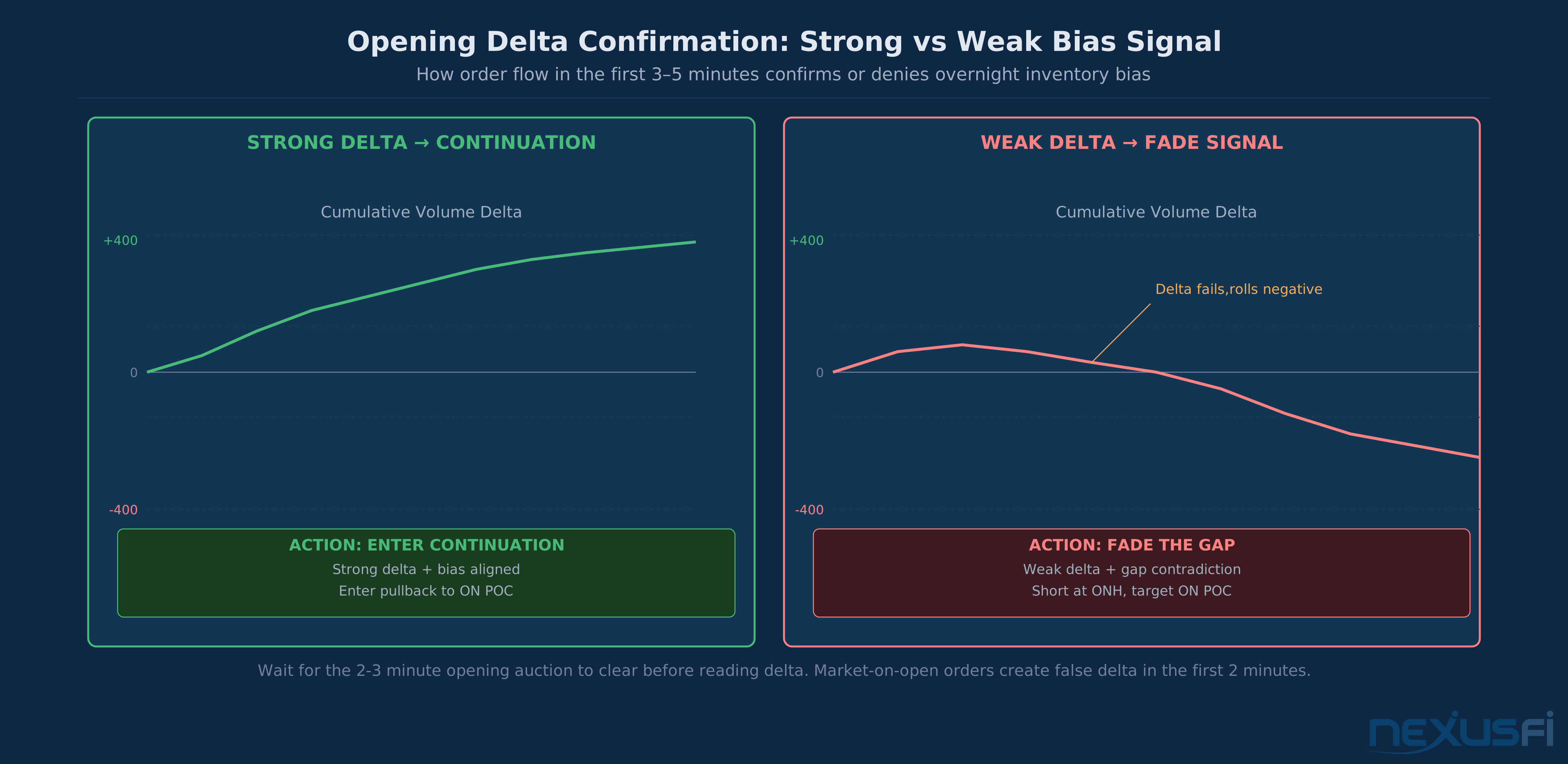
When inventory is strongly net long: Buyers accumulated positions above settlement during the night. At the RTH open, those positions are profitable. The question the market needs to answer is whether new buyers (RTH participants) will continue to push price higher or whether overnight longs take profits and weaken the move. A gap-up with strong opening delta extending beyond the overnight high confirms the continuation. A gap-up that stalls and rolls over at the overnight high with weak delta tells you overnight longs are distributing — that's the fade setup.
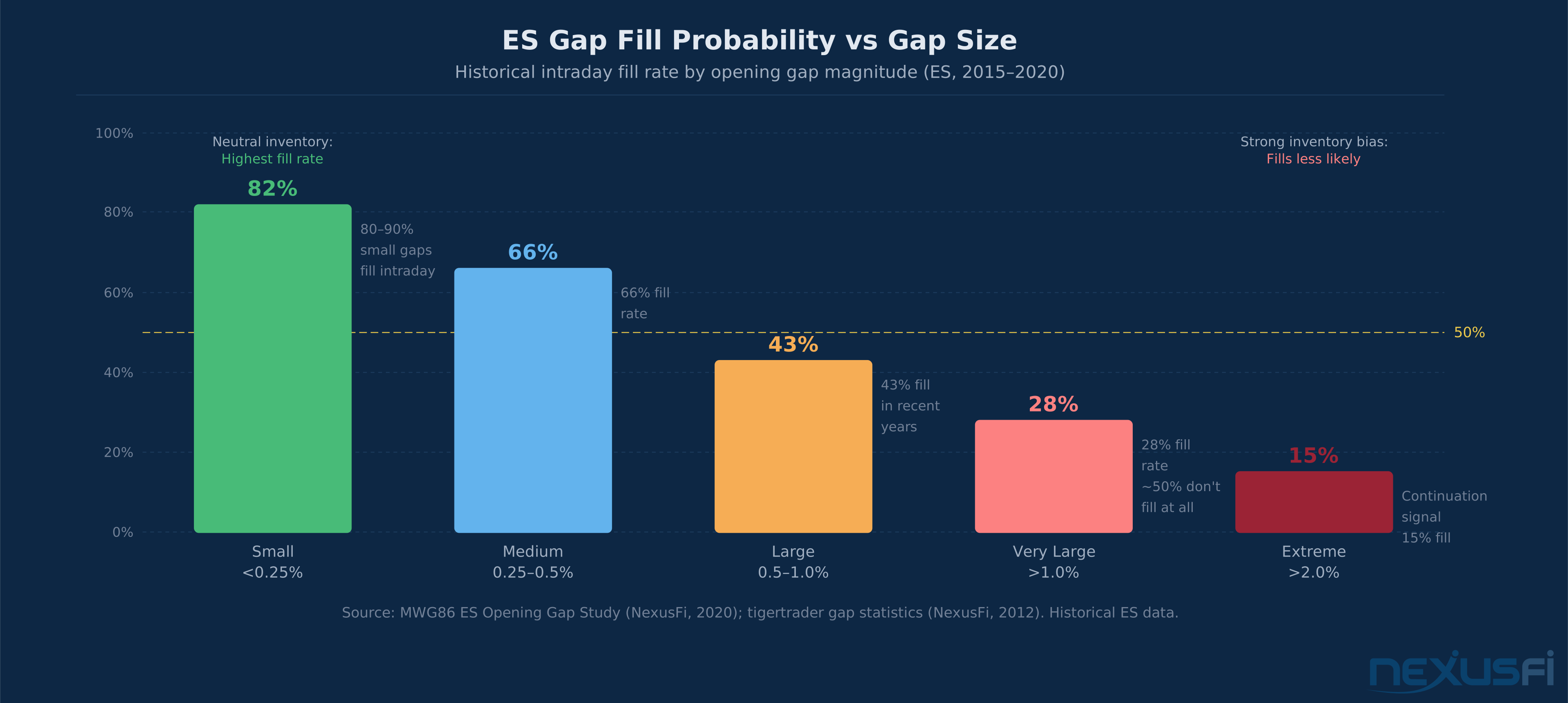
When inventory is neutral: The overnight market didn't reach a consensus. Price spent most of the night rotating around the VWAP and POC without directional commitment. In this case, the gap-fill probability is highest because there's no strong conviction either way. The RTH open will often oscillate toward the overnight POC in the first 15-30 minutes regardless of the gap direction.
When inventory is strongly net short: Bears controlled the overnight session. A gap-down at the RTH open puts overnight shorts in profit. Whether RTH sustains the move down or reverses is the key question. Same read, opposite direction — strong delta extending below the overnight low is the continuation signal, weak delta recovering to the overnight POC is the fade.
The correlation between inventory bias and opening behavior is real but not deterministic. Research on equity index futures (ES, NQ) suggests that strong net long inventory correlates with higher probability of an up-gap and short-term continuation in the first 30 minutes, while neutral inventory produces the highest gap-fill rates. But "higher probability" doesn't mean "guaranteed." The opening order flow confirmation is not optional — it's the difference between probabilistic trading and guessing.
Trading Strategies Using Overnight Inventory #
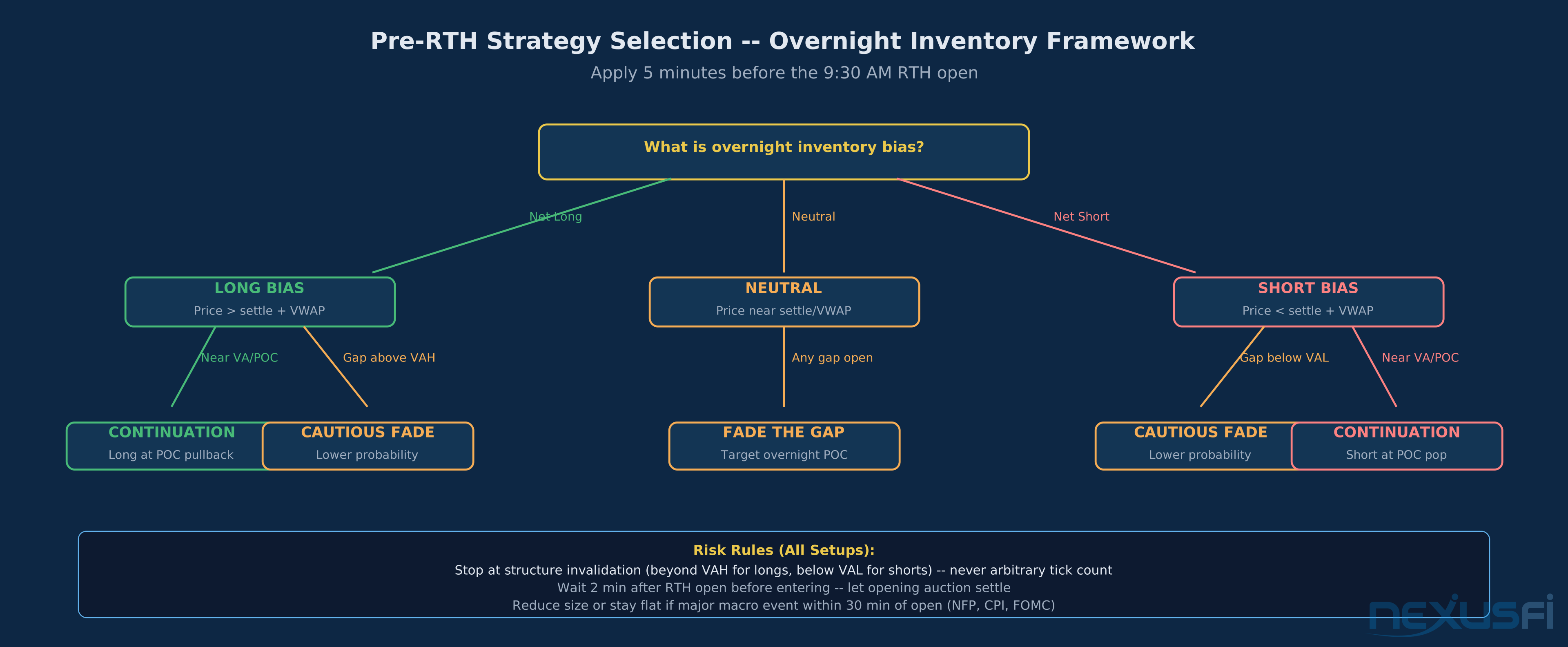
Strategy selection isn't about having a default approach — it's about having a conditional framework. The overnight inventory read tells you the lean, the opening price location tells you the setup, and the first-minute order flow tells you whether to act.
Fade the Gap
The fade setup is best when: overnight inventory is neutral or contradicts the gap direction, the gap moves price away from overnight value (POC and VA), and the opening delta is weak in the gap direction. Under these conditions, the gap is likely poor structure — price moved into an area where little overnight business was done, and the market will rotate back toward value.
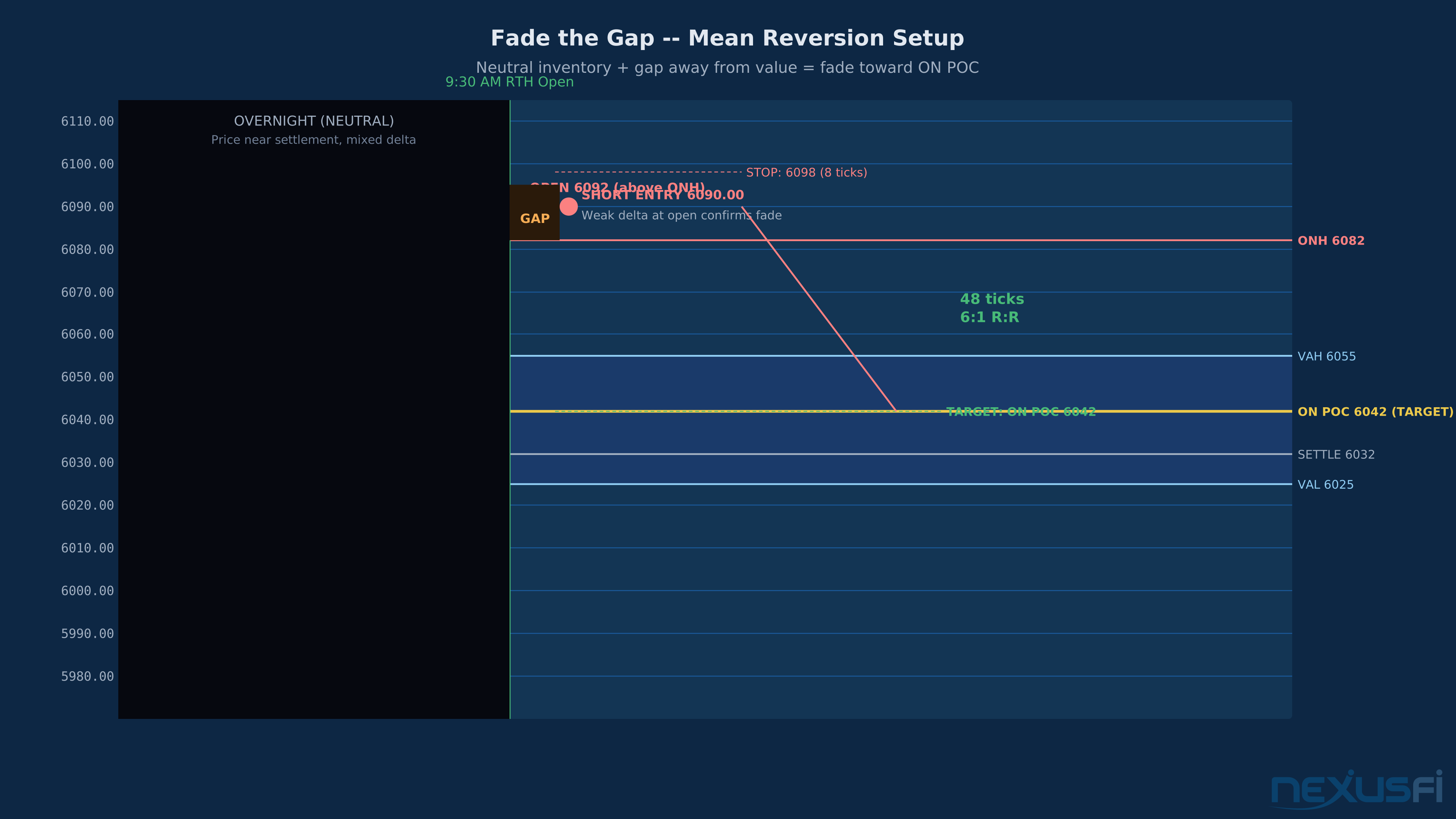
The entry rule: don't fade the gap at the open price. Wait for the market to attempt continuation and fail. You're looking for price to test the ONH (or ONL for a gap-down) with weak delta, then turn. Entry is on the rejection, not the gap itself. Stop goes just beyond the ONH/ONL — if price accepts above that level with volume, the gap is extending, not failing, and your thesis is wrong. Target is the overnight POC as the primary fill level, with the VA boundaries as secondary targets.
[3] The "PASS" is the key insight — not every gap has a clean fade setup. The conditional filters matter more than the strategy itself.
Continuation with the Inventory Bias
The continuation setup works best when: inventory is strongly directional, price opens within or near the overnight value area (not gapped far beyond it), and the opening delta confirms the directional bias. This is a trend-day setup. The overnight participants are in profit, and RTH buyers (or sellers) are piling on.
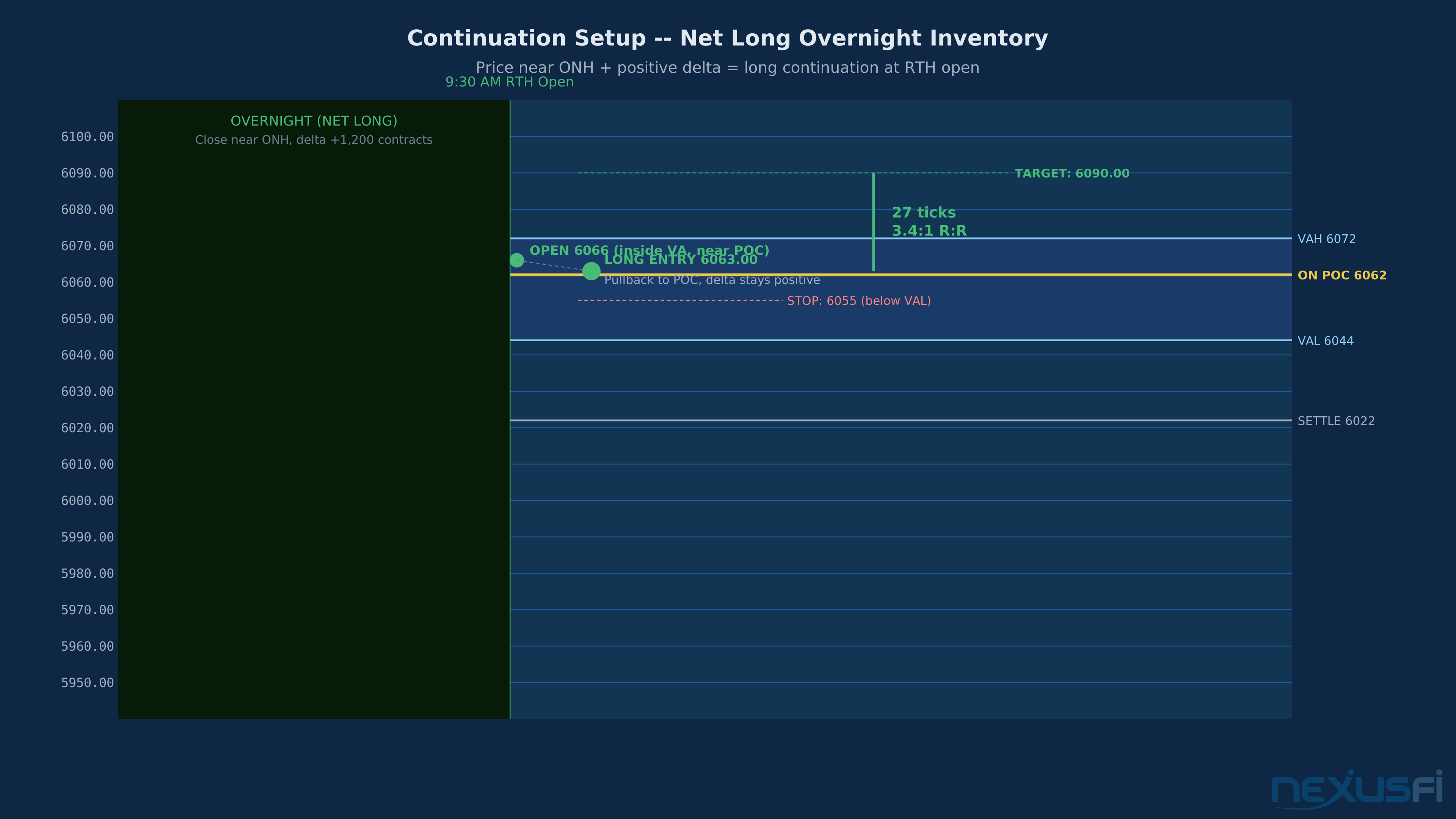
The entry rule: wait for an early RTH pullback to the overnight POC or VWAP. If the bias is truly strong, buyers (or sellers) will defend the POC on that first test. Entry is on the POC support/resistance with delta confirmation. Stop goes below the VAL (for longs) or above the VAH (for shorts) — if price accepts through the value area boundary with volume, the continuation thesis has failed. Target is an extension beyond the overnight high (or low), typically the next daily reference level or a measured move from the opening range.
The first 2 minutes of RTH are noise. Opening auctions have erratic delta as market-on-open orders clear. Don't enter until the initial spike settles — typically after 2-3 minutes. Then assess whether the early delta is confirming the inventory bias.
Risk Management Across All Setups
Stops go at structure, not at arbitrary tick counts. For a long continuation, your stop is below the overnight VAL — if price accepts there, the value framework has shifted and your trade thesis is wrong. For a fade, your stop is beyond the ONH (or ONL) — if price accepts there, the gap is extending, not reversing. Neither of these is a fixed number of ticks from entry. They're logical invalidation points.
Position sizing: 1-2% of trading capital per trade in normal conditions. Cut that in half when inventory bias is weak or contradictory, and when macro events (NFP, CPI, FOMC) are scheduled within 30 minutes of the RTH open. Economic releases can override overnight inventory bias completely — the bias becomes less predictive when a scheduled trigger is imminent.
The Pre-RTH Morning Routine #
Most overnight Globex volume is institutional — portfolio hedging, macro reactions to global data, and market-making in thin overnight conditions. Weight delta in the final 1-2 hours before RTH more heavily than anything that happened at midnight.
The overnight inventory read should take five minutes, not thirty. Before every RTH open: mark the five overnight levels (ONH, ONL, overnight POC, VAH, VAL, overnight VWAP, prior settlement); assess inventory bias using the three-signal framework (price vs. settlement, price vs. VWAP/POC, final-hour delta); note the gap size and direction relative to inventory bias; then plan conditional scenarios — "if price opens above VAH with strong delta, I'll look for continuation; if it opens above ONH with weak delta and rolls, I'll fade." Plan the conditions, not the trade.
The macro calendar check is the final step. Any economic release within 30 minutes of the RTH open (NFP, CPI, FOMC, ISM, jobless claims) can override the overnight inventory bias entirely. Reduce conviction proportionally when a scheduled trigger is imminent.
[6] Overnight inventory as one layer, not the only layer.
When Overnight Inventory Fails #
Overnight inventory bias is predictive, not deterministic. Here's when it fails most consistently.
Macro data overrides. Any scheduled release in the 7:00-10:00 AM ET window (before or shortly after RTH open) can completely reset the overnight narrative. A strong NFP with the ES gapping 25 points higher overnight means nothing if the actual number misses and turns the gap into a waterfall at 8:30 AM.
The first two minutes of RTH. Opening auctions create erratic order flow. Delta reads from the first 2-3 minutes of RTH often don't reflect actual directional positioning — they're matching market-on-open orders that were queued the prior day. Wait for the opening spike to settle before making trade decisions based on opening delta.
Citations #
- @matthew28 -- How important is overnight inventory -- Emini and Emicro Index
- @Private Banker -- Spoo-nalysis ES e-mini futures S&P 500 -- The Elite Circle
- @thegapguy -- Emini gap fill strategy data, books? -- Emini and Emicro Index
- @mfbreakout -- Trading Futures with Context -- Elite Trading Journals
- @Fat Tails -- Overnight Session-Exact Time -- Traders Hideout
- @Inletcap -- InletCap's Random Collections -- Elite Trading Journals
- @tigertrader -- The Difference Between Night and Day -- Emini and Emicro Index
- @redratsal -- Overnight Session ES Trading -- Emini and Emicro Index
- @tigertrader -- Trading The First Hour (Spoo-nalysis) -- The Elite Circle
- @MWG86 -- ES Opening Gap Study/Stats -- Elite Trading Journals
NexusFi Elite Members get access to the full discussion threads where these concepts were developed — including exclusive analysis, real trade journals, and live market commentary from experienced futures traders. Learn more about Elite Membership.
Knowledge Map
Prerequisites
Understand these firstGo Deeper
Build on this knowledgeReferences This Article
Articles that build on this topicCitations
- — How important is overnight inventory (2018) 👍 2“If the majority of the overnight volume is above the Settlement then inventory is long and vice versa. If the volume is balanced around the Settlement the inventory is neutral.”
- — Spoo-nalysis ES e-mini futures S&P 500 (2012) 👍 4“My interpretation of the ON inventory is its generally weak/low volume. Using the ON inventory on a big gap move will help you with trade location at the open as well.”
- — Emini gap fill strategy data, books? (2020) 👍 3“Fade = a mean reversion trade where I short 'up' gaps or buy 'down' gaps (i.e. trade against the overnight futures bias).”
- — Trading Futures with Context (2012) 👍 4“Overnight inventory very long -- meaning majority the price action during Globex session was above yesterday settled price. Expectation is NY session should open up strong and take out Globex session highs within 5-15 minutes at the open.”
- — Overnight Session-Exact Time (2015) 👍 4“For me the overnight session starts after the break that follows the end of the contractual trading day and ends with the start of the regular trading hours of the next business day. Therefore the overnight session for index futures is the period from 5:00 PM Central to 8:30 AM in the morning.”
- — InletCap's Random Collections (2016) 👍 45“Pre market analysis is done and all we know is what's happened in the past and a few key price levels. I faded the open to the long side: 1) Center of gravity is above (magnet) affording a potential 15+ pt target range...”
- — The Difference Between Night and Day (2011) 👍 10“The correlation between overnight and subsequent daytime changes is app. -7.2%... From 1993 to 06/2008, the bullish trend over these 15 years has been the result of the overnight market, while the daytime market has been timidly flat.”
- — Overnight Session ES Trading (2011) 👍 20“Unlike the day market in the E-mini S&P, which has an average range of about 25 points, the night market will move only about seven points, on average, in a 16-hour period. Patience is a necessary quality for traders participating in the overnight Globex market.”
- — Trading The First Hour (Spoo-nalysis) (2012) 👍 10“~50% of all large opening gaps do not fill, which implies market is seeking value at higher/lower levels. 80-90% of relatively small gaps will fill, which suggests that equities have little reason to be repriced.”
- — ES Opening Gap Study/Stats (2020) 👍 5“When price has gapped lower at the open less than 1% below the prior day close, this gap has been filled at some point during the day 43% of the time. If the gap lower is greater than 1.0%, the probability of closure falls significantly.”
- — Spoo-nalysis ES e-mini futures overnight inventory assessment (2016) 👍 5“As of this writing, overnight inventory is net long with the RTH session approaching, giving up some of the overnight run up.”