



Key Reference Levels in Futures Day Trading: PDH, PDL, VAH, VAL, POC, and the Overnight Range
Overview #
Every experienced futures day trader arrives at their platform before the market opens with the same task: build the map. Before a single order is placed, before a single chart is analyzed for momentum or pattern, the map defines where the market has been, where liquidity is concentrated, and where price is most likely to react.
That map is built from reference levels — the key prices from prior sessions and higher timeframes that active traders mark on their charts every morning. Previous day high and low. Value area high and low. Point of control. Overnight range. Weekly and monthly extremes. These are not indicators or signals. They are coordinates. They tell you where the market has accepted price, where it has rejected it, and where unfilled orders may still be waiting.
This article covers each reference level category, explains how they behave as support and resistance, and gives a practical framework for prioritizing them when they conflict — which they always do.
This article covers structural reference levels used in discretionary and semi-systematic futures day trading. For order flow confirmation tools used to trade these levels, see Footprint Charts: Reading the Bid-Ask Volume Inside Every Price Bar and Depth of Market (DOM): Reading the Order Book in Futures Trading. For the foundational volume profile framework these levels derive from, see Volume Profile: Reading the Market's Structural Blueprint at Every Price Level.
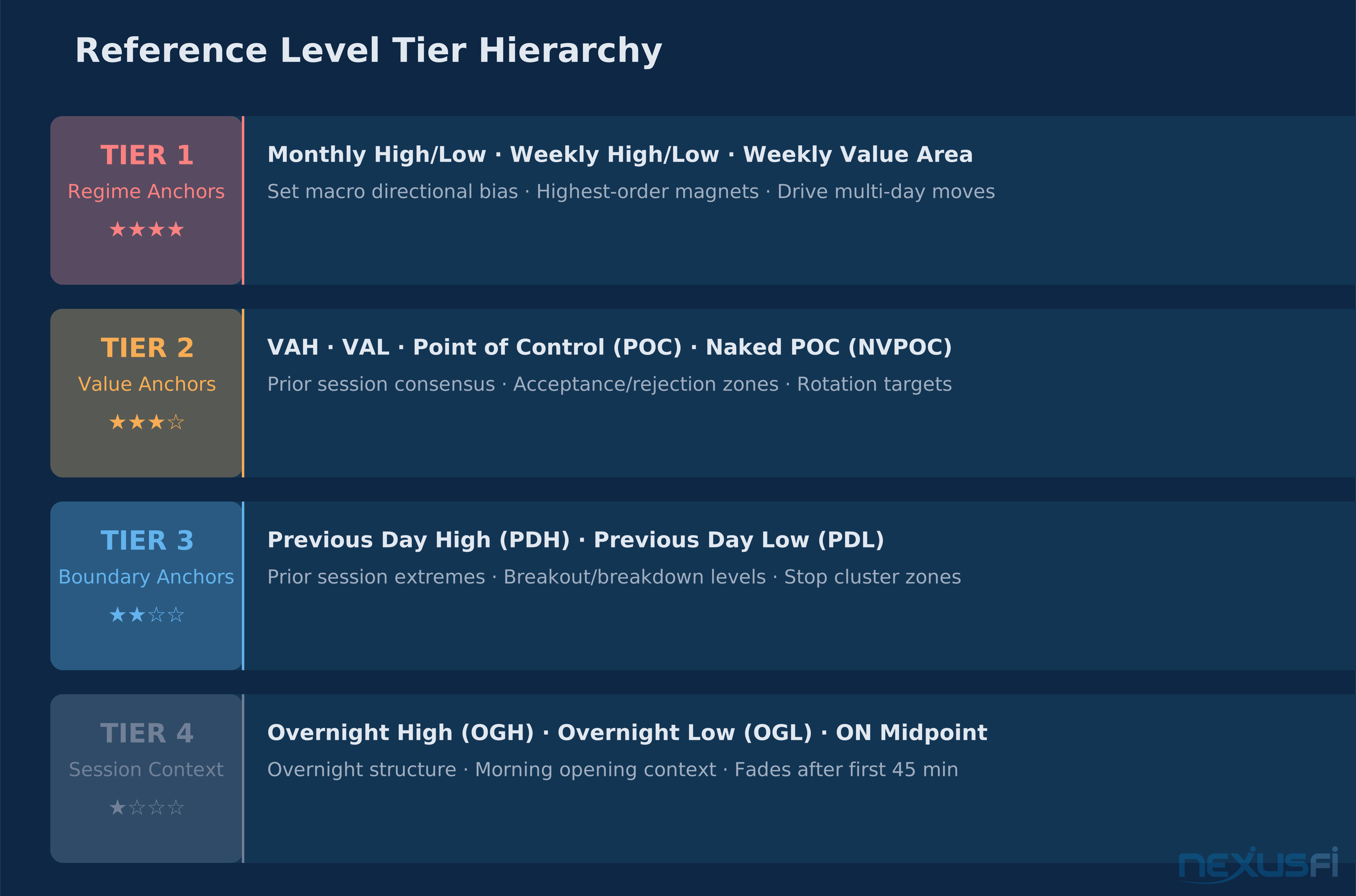
The framework organizes reference levels into four tiers based on strength and persistence. Higher-tier levels set the regime and provide the dominant magnets; lower-tier levels define the immediate session structure and entry zones. Understanding which tier each level belongs to — and how to resolve conflicts when two levels disagree — is the practical core of pre-market preparation.
Why Reference Levels Work: Liquidity and Memory #
Reference levels are not arbitrary lines. They exist because markets have memory — specifically, because orders do.
When price traded at 5,800 on the ES yesterday and 30,000 contracts changed hands in that range, many of those traders still hold positions anchored to that price. Some are long and hoping for a return to that level to exit at breakeven or scratch a trade. Some are short and watching to see if price will revisit and offer them an opportunity to add. Market makers who absorbed order flow there remember the imbalance. Algorithms tracking prior-session structure will trigger orders near those prices.
This accumulated interest does not disappear when the session closes. It persists. It creates zones where the market is likely to behave differently than in thin, uncontested space — where limit orders cluster, where stops hide, where institutional players defend positions.
Academic research in market microstructure supports this directly. A study of order book dynamics published in Physica A found that limit orders cluster heavily at previously high-volume price levels, creating persistent price barriers where the best quotes reside for disproportionate amounts of the trading day. The clustering is driven by traders anchoring their orders to familiar prices where significant business previously occurred — exactly the memory effect that makes reference levels work.
The higher the volume that traded at a specific price, and the more recently that volume traded, the stronger the "memory" at that level. This is why the Point of Control from the prior session carries more weight than a random swing high from three weeks ago. It is not just a chart marking — it represents where the most buyers and sellers actually did business.
Tier 1 -- Regime Anchors: Weekly and Monthly Levels #
Weekly and monthly reference levels function differently from session-to-session structure. They represent the outer boundaries of how far the market has traveled over longer time horizons, and they carry proportionally more weight precisely because more participants — including institutional traders, options market makers, and systematic funds — anchor their risk models to these levels.
Weekly High and Low (WH / WL): The extreme prices reached during the current or prior calendar week. When a weekly high is tested, significant order flow from multiple participant types converges at a single price. Breakouts above weekly highs often trigger large stop-runs and can drive multi-hour moves. Failed breakouts — where price pokes above the weekly high and immediately reverses — are among the highest-probability reversal setups available to day traders.
Monthly High and Low (MH / ML): The highest and lowest prices of the current month to date. These levels matter most for trend context. If the ES is trading above the monthly high established at the start of the month, the macro bias is clearly bullish, and counter-trend short trades carry additional risk. Monthly levels also function as natural profit targets for multi-day moves and as strong decision points when price approaches them intraday.
Weekly and Monthly POC and Value Area: More sophisticated traders also track the Point of Control and Value Area from prior weekly and monthly profiles — the most accepted prices over those longer periods. These composite-level anchors are especially relevant in slow, range-bound markets where the weekly or monthly structure dominates intraday behavior.
Weekly and monthly levels are best used as regime filters and destination targets rather than entry levels themselves. A day trading plan might read: "Bias is bullish because price is above the weekly high from last week. My target for today's long trades is the monthly high at 5,950."
The practical rule: higher timeframe levels define where significant order flow is concentrated. When an intraday setup develops in the vicinity of a weekly or monthly level, it warrants higher conviction and should be traded more aggressively than the same setup at an intraday reference.
Tier 2 -- Value Anchors: VAH, VAL, and Point of Control #
The Value Area and Point of Control from the prior session form the structural core of most professional traders' daily maps. These levels derive from the prior session's volume profile and represent where the market actually accepted price — not just where it traded briefly, but where real volume concentrated. The framework originates from J. Peter Steidlmayer's Market Profile methodology, developed at the Chicago Board of Trade in the 1980s. Steidlmayer defined the Value Area as the price range encompassing approximately 70% of a session's activity — a threshold corresponding roughly to one standard deviation in a normal distribution — separating the zone of genuine trade facilitation from the exploratory extremes.
Value Area High (VAH): The upper boundary of the price range that contained 70% of the prior session's volume. The VAH represents the upper edge of accepted value. When price is at or above the VAH, it is trading at or above where the prior day's consensus sat. In a balanced market, this level frequently acts as resistance from above and a reversion target from below.
Value Area Low (VAL): The mirror image of the VAH. It represents the lower boundary of the prior session's value. Price at or below the VAL is trading outside accepted value to the downside. In normal market conditions, the VAL acts as a strong support level and a mean-reversion target when price has gapped down or sold off sharply.
Point of Control (POC): The single price that traded the highest volume in the prior session. The POC is the gravitational center of the prior session — the price at which the most buyers and sellers met. Markets tend to revisit POC levels frequently, both within sessions and across multiple days.
How value area levels behave:
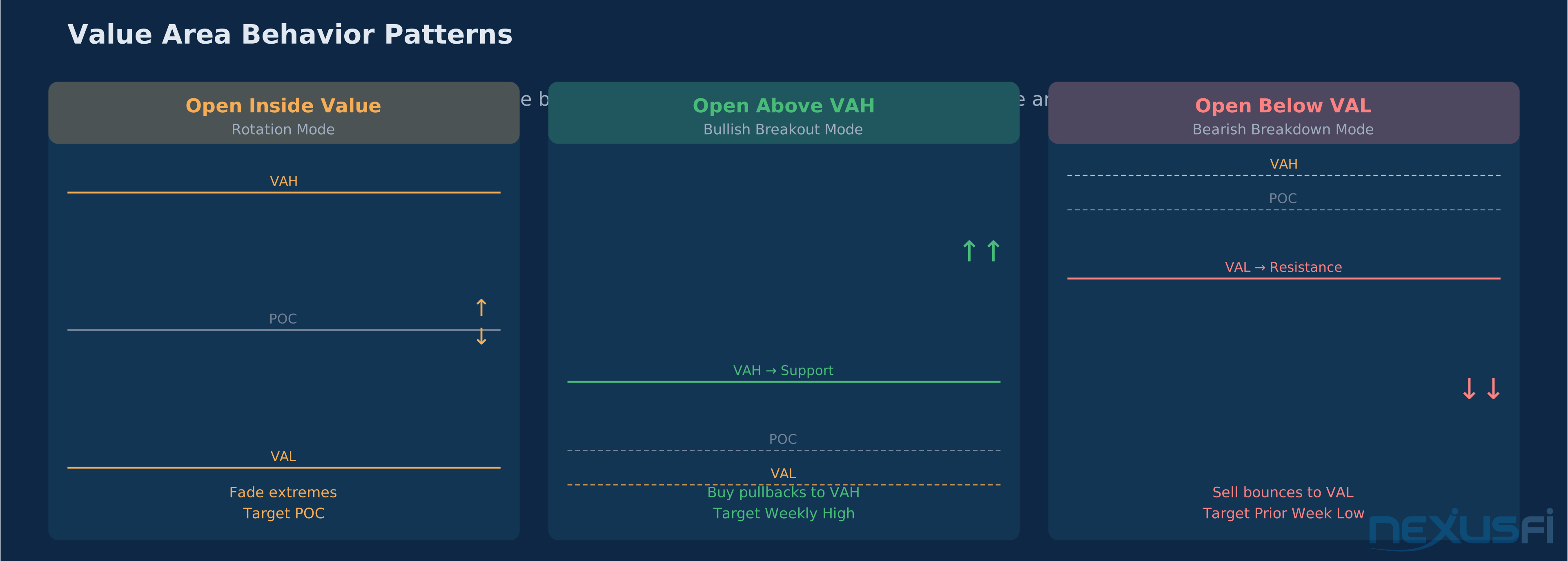
When price is inside the prior value area (between VAL and VAH), markets tend to rotate. Traders who bought at VAL expect a return to POC and VAH; traders who sold at VAH expect a return to POC and VAL. The POC acts as the midpoint magnet. This rotation behavior is a strong edge for mean-reversion traders: fade extremes of the value area when price shows rejection.
When price is outside the prior value area, the market is signaling a potential revaluation. The critical question is whether price will accept and hold outside the value area (indicating new value forming) or reject and return (indicating a failed breakout). The first two 30-minute bars after the RTH open provide the primary evidence for which scenario is unfolding.
Value Area Rule of Thumb
- Price opens above VAH and holds → bullish; VAH becomes support for pullback entries; target is prior-week VAH or monthly high
- Price opens below VAL and holds → bearish; VAL becomes resistance; target is prior-week VAL or monthly low
- Price opens inside value area → rotation likely; POC is the center magnet; fade extremes at VAH and VAL
Naked POC: The Market's Unfilled Magnet #
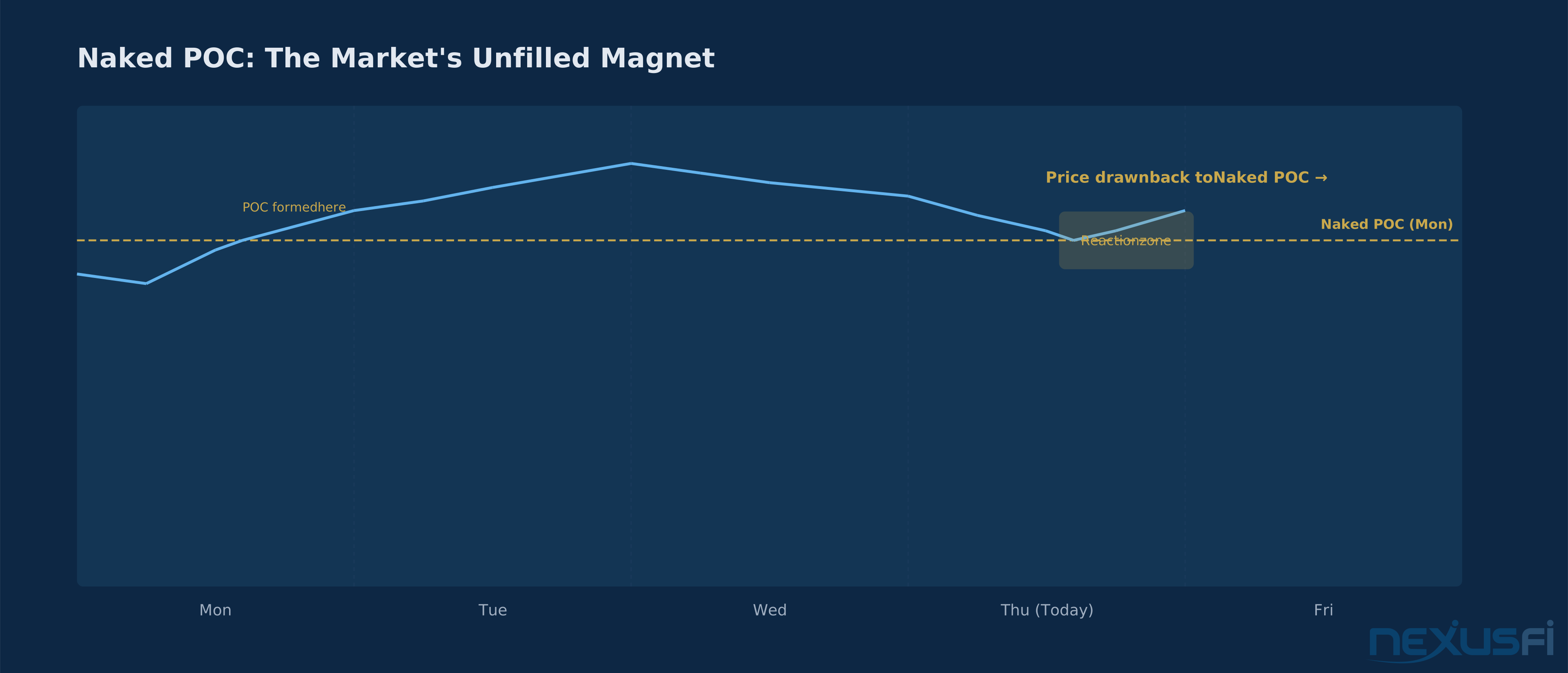
The Naked POC (sometimes written as NPOC, or Naked Volume Point of Control / NVPOC when tracking volume-weighted profiles) is the single most powerful reference level in active futures trading.
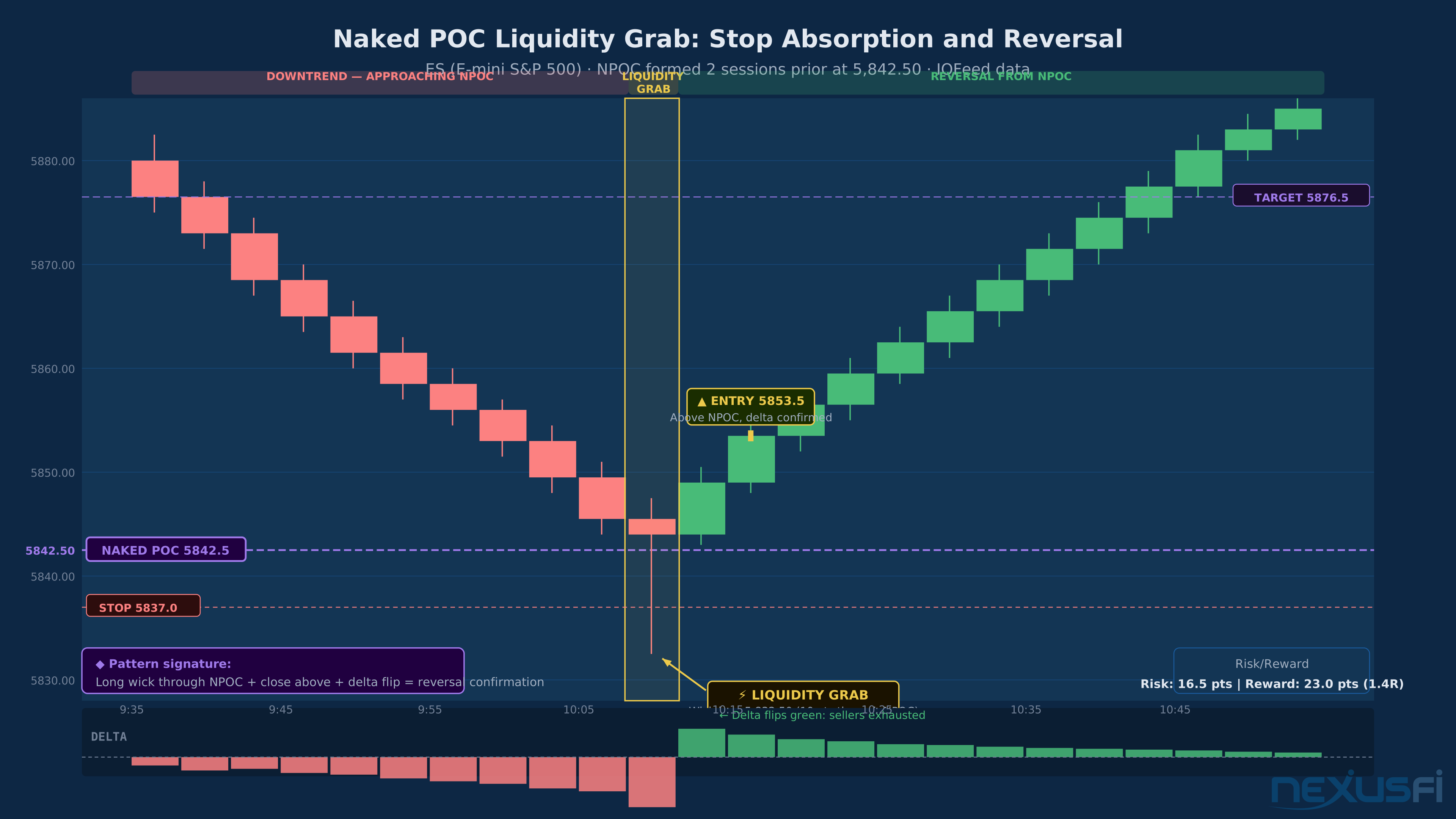
A POC becomes "naked" when it has not been revisited since the session it formed in. Yesterday's POC at 5,800 becomes a naked POC if today's session never trades back to 5,800. It extends forward in time, waiting. When price eventually returns — whether tomorrow or three months from now — that naked POC will almost always produce a significant reaction.
The reason naked POCs are so powerful is structural. A POC represents maximum prior acceptance — the price where the most buyers and sellers found common ground. When that price is left behind without being revisited, there is an imbalance in the market's "accounting." Professional algorithms that track prior-session structure will drive price toward these unfilled zones to test whether the acceptance still holds or has been superseded.
Practical application of naked POCs:
- Nearest naked POC below current price acts as a downside magnet and a potential support level. If price gaps above a naked POC without revisiting it, that naked POC becomes a target for the next move down.
- Nearest naked POC above current price acts as an upside target. Traders who have been long since below the naked POC may look to take profits there.
- Liquidity grab at naked POC: One of the most consistent patterns in professional futures trading. Price approaches a naked POC from one side, produces a sharp, fast move through the level, absorbs the stops and resting orders concentrated there, and then reverses. The reversal side of the naked POC becomes a high-probability entry.
The most recent naked POC carries more weight than older ones. If yesterday's naked POC conflicts with one from three weeks ago, yesterday's is the primary target.
Tier 3 -- Boundary Anchors: Previous Day High and Low #
The previous day's high and low (PDH and PDL) are perhaps the most widely watched reference levels in futures day trading. Unlike the value area levels, which represent where volume concentrated, PDH and PDL represent the extreme boundaries that the market reached during the prior session — where buying or selling finally overwhelmed the other side.
These boundary levels function differently from acceptance anchors like the POC. At the POC, the market found consensus and paused. At the PDH or PDL, the market reversed. That reversal represents a decision point — buyers exhausted, sellers stepped in — and those same participants are watching to see what happens when price returns.
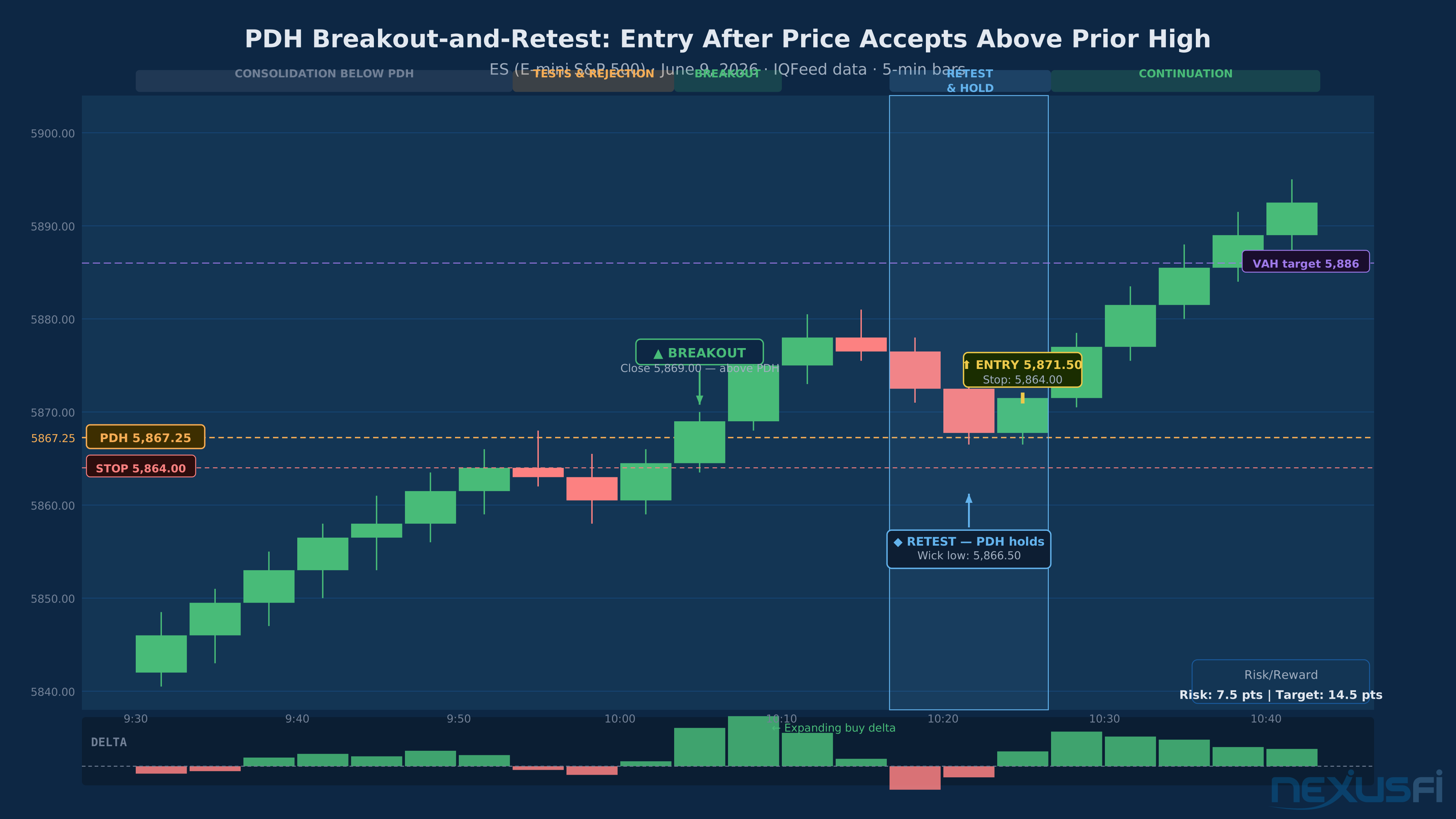
PDH as resistance: When price approaches the prior day's high from below, it encounters a zone where sellers previously prevailed. Whether those sellers remain active, or whether new buyers have entered with sufficient conviction to push through, determines whether the PDH acts as a cap or becomes support after a breakout.
PDL as support: The symmetric scenario. Price falling toward the prior day's low encounters the level where buyers previously stopped the decline. A clean bounce confirms the level is still relevant; a decisive break suggests the bearish case is gaining ground.
Breakouts and retests: The most reliable PDH/PDL setups involve a breakout followed by a retest. Price breaks above PDH with strong delta and expanding volume, then pulls back to test the broken level (now potential support), and holds. This break-and-retest pattern offers a defined entry, a clear stop (below the former PDH/PDL), and a natural target at the next reference level higher.
A note on gap opens: When the RTH session opens with a gap above PDH or below PDL, the gap itself becomes the immediate structure. A gap above PDH that holds into the first 15-30 minutes confirms the gap and suggests the market is accepting the new level; failure and return into the prior session's range (gap fill) is a common early-session pattern, especially in index futures on moderate-volume days.
Tier 4 -- Session Context: The Overnight/Globex Range #
Futures markets trade nearly 24 hours a day, and the overnight session (Globex session in CME terminology) from the prior close to the RTH open creates its own high and low. These overnight reference levels provide critical context for how the morning is likely to unfold.
Overnight High (OGH) and Overnight Low (OGL): The highest and lowest prices reached between the prior RTH close (approximately 16:00 CT) and the current RTH open (09:30 CT). These levels concentrate overnight liquidity and frequently become the first reference the market tests after the open.
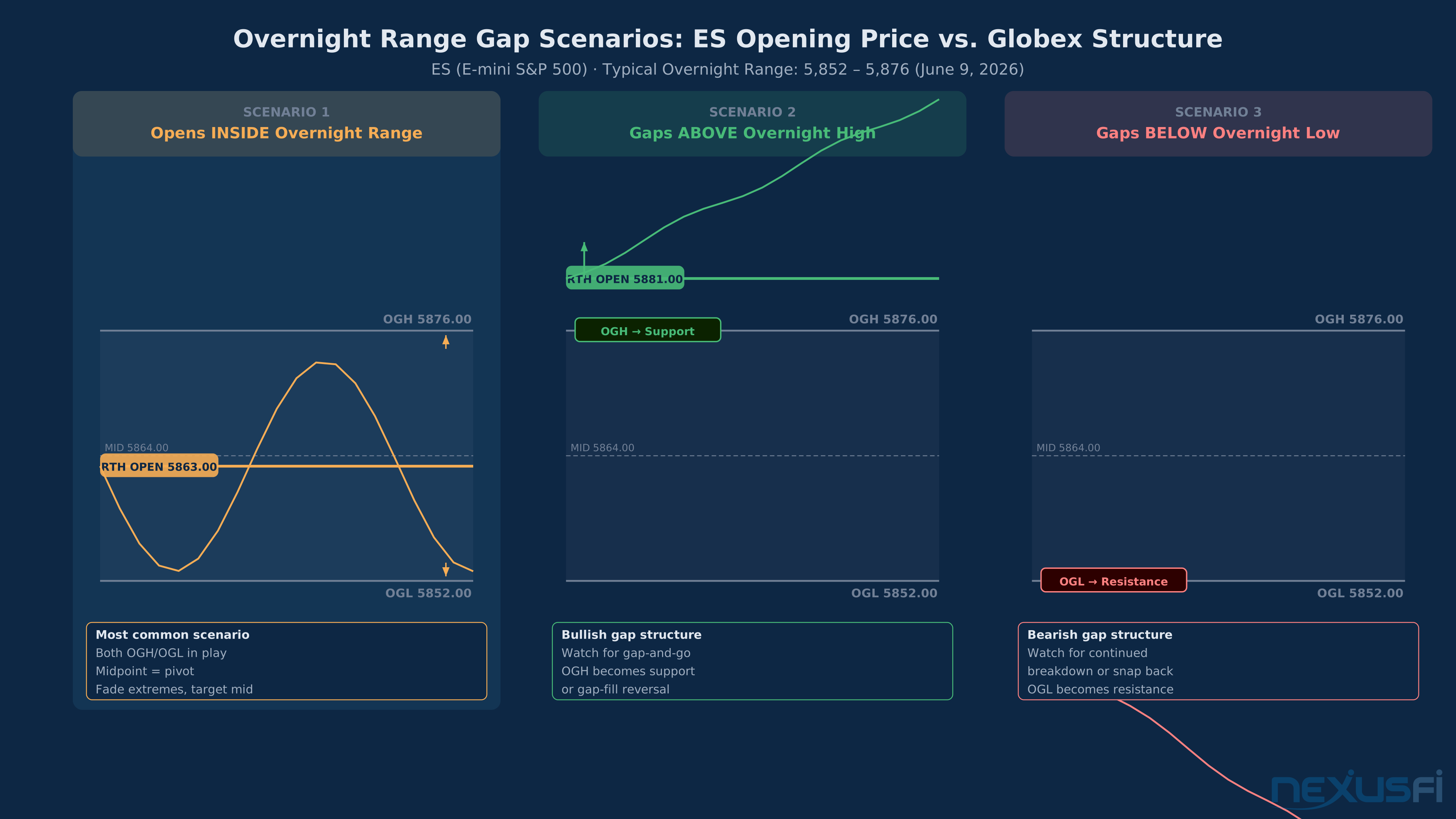
Gap scenarios relative to the overnight range:
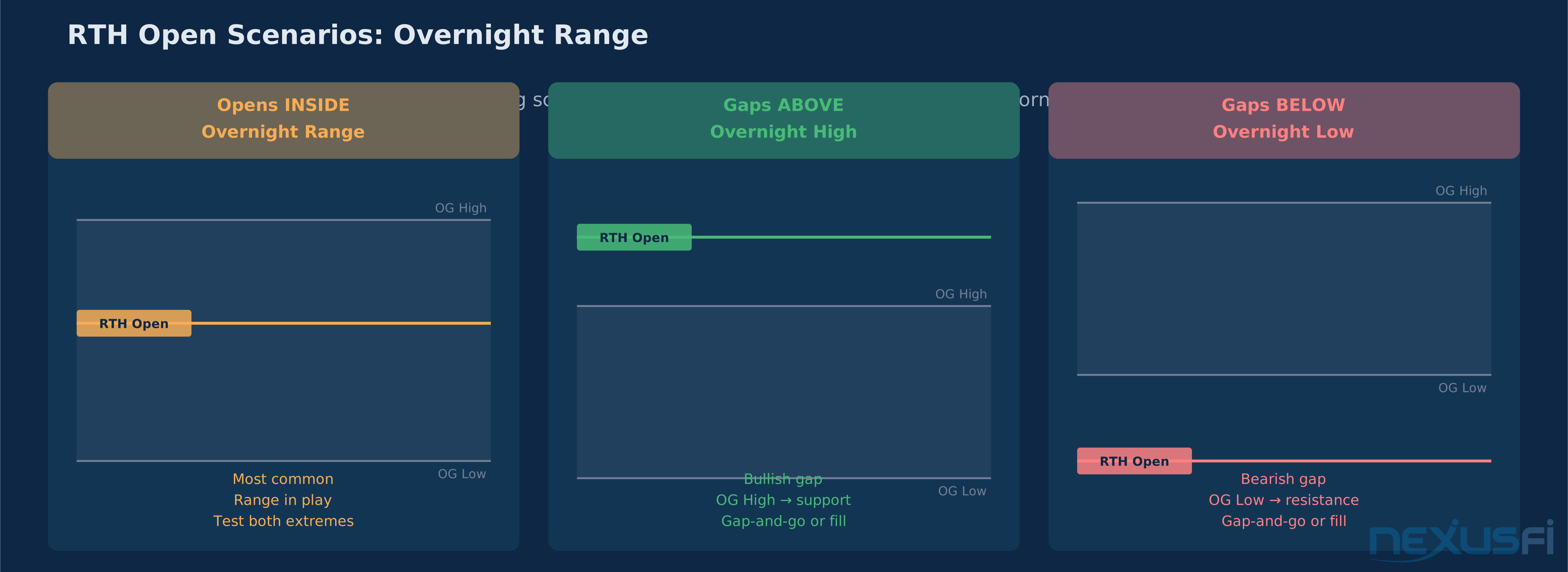
- RTH opens inside the overnight range: The most common scenario. The overnight range is "in play" — price is likely to test at least one extreme of the overnight range before establishing a directional move.
- RTH gaps above the overnight high: The market is expressing morning bullish momentum that exceeded what was established overnight. The overnight high may become support if the gap holds.
- RTH gaps below the overnight low: The reverse scenario. The overnight low becomes resistance from below.
The overnight range midpoint: Professional traders, especially in CL (crude oil), also track the midpoint of the overnight range as a fair-value pivot for the morning session. If price is above the overnight midpoint at the open, the overnight tone is bullish; below, bearish.
The overnight range matters most in the first 30-45 minutes of the RTH session. Once the Initial Balance (the first hour of RTH trading) establishes, the overnight range becomes less operationally relevant, though the overnight high and low often persist as relevant reference points for the full day.
Time decay of overnight levels: Unlike higher-tier reference levels that persist for days or weeks, overnight levels are largely operationally relevant only for the current session. Once a new overnight session begins, yesterday's overnight levels become part of the broader price history rather than active trading references.
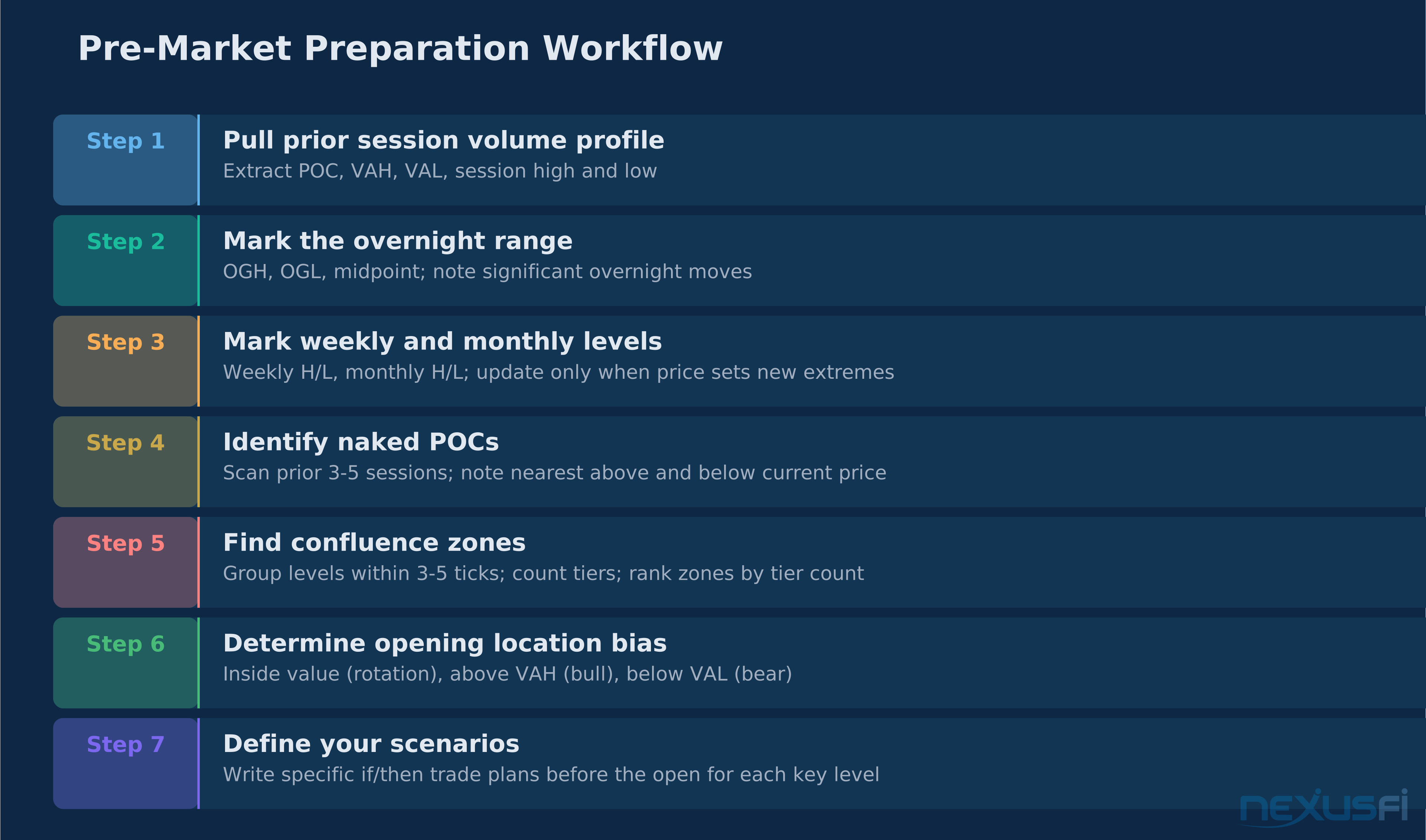
Building the Pre-Market Level Map Step by Step #
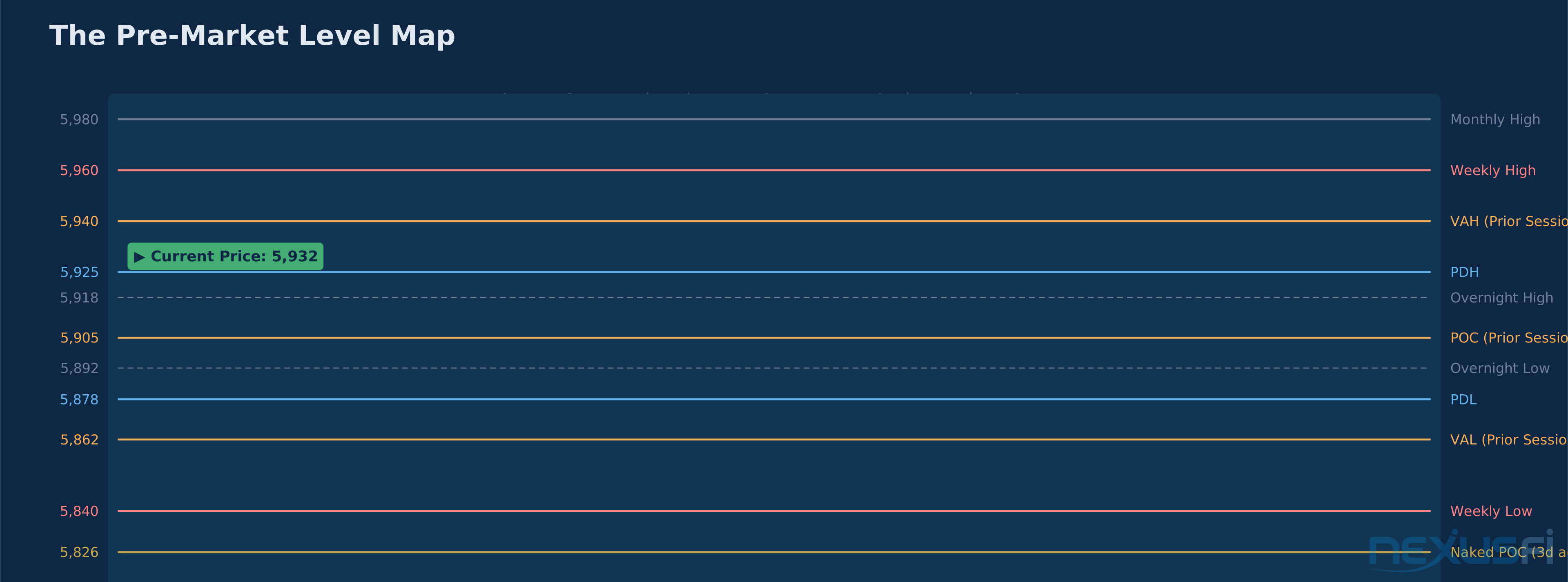
Professional futures traders build their daily map in the 60-90 minutes before the RTH open. The process is systematic and follows a consistent sequence.
Step 1: Pull the prior session's volume profile
From your charting platform, load a volume profile for the previous RTH session. Extract:
- POC (mark as naked if price has not returned to it since the session closed)
- VAH and VAL
- Session high and low (PDH and PDL)
Step 2: Mark the overnight range
Note the high and low of the Globex session from the prior close to the current time. Calculate the midpoint. If the market has already made a significant move in the overnight session (e.g., on macro news), that move may define the first structural target for the RTH open.
Step 3: Mark weekly and monthly levels
Note the current week's high and low. Note the current month's high and low. These do not need to be plotted fresh every day — they update only when price sets new weekly or monthly extremes. Keep them visible at all times.
Step 4: Identify any naked POCs
Scan prior session profiles for POCs that price has not revisited. Many charting platforms have indicators that extend naked POC lines forward automatically. At minimum, check the prior 3-5 sessions. Note the nearest naked POC above and below current price — these are the highest-priority magnets.
Step 5: Identify confluence zones
Look for areas where multiple levels cluster within a few ticks. If the prior day's PDH at 5,920 and the current weekly high at 5,922 are within 2 points of each other, treat them as a single combined zone, not two separate levels. Confluence zones are the highest-probability areas for significant reactions.
Step 6: Determine opening location bias
Where does price open relative to the map?
- Inside prior value (between VAL and VAH): Rotation likely; fade extremes toward POC
- Above prior VAH: Bullish; watch for pullback-to-VAH entry; target prior week VAH or weekly high
- Below prior VAL: Bearish; watch for bounce-to-VAL entry; target prior week VAL or weekly low
- Above PDH: Gap-up; watch for either gap continuation or gap fill
- Below PDL: Gap-down; symmetric scenario
Step 7: Define your scenarios
Write down (or annotate on the chart) what you expect to happen at each major level. "If price pulls back to VAH at 5,895, I look for buying delta and a long toward PDH at 5,920." "If price breaks below PDL at 5,870 on increasing volume, I expect a move toward the naked POC at 5,845." Having scenarios written before the open prevents reactive decision-making during fast market conditions.
How Levels Behave: Acceptance vs. Rejection #
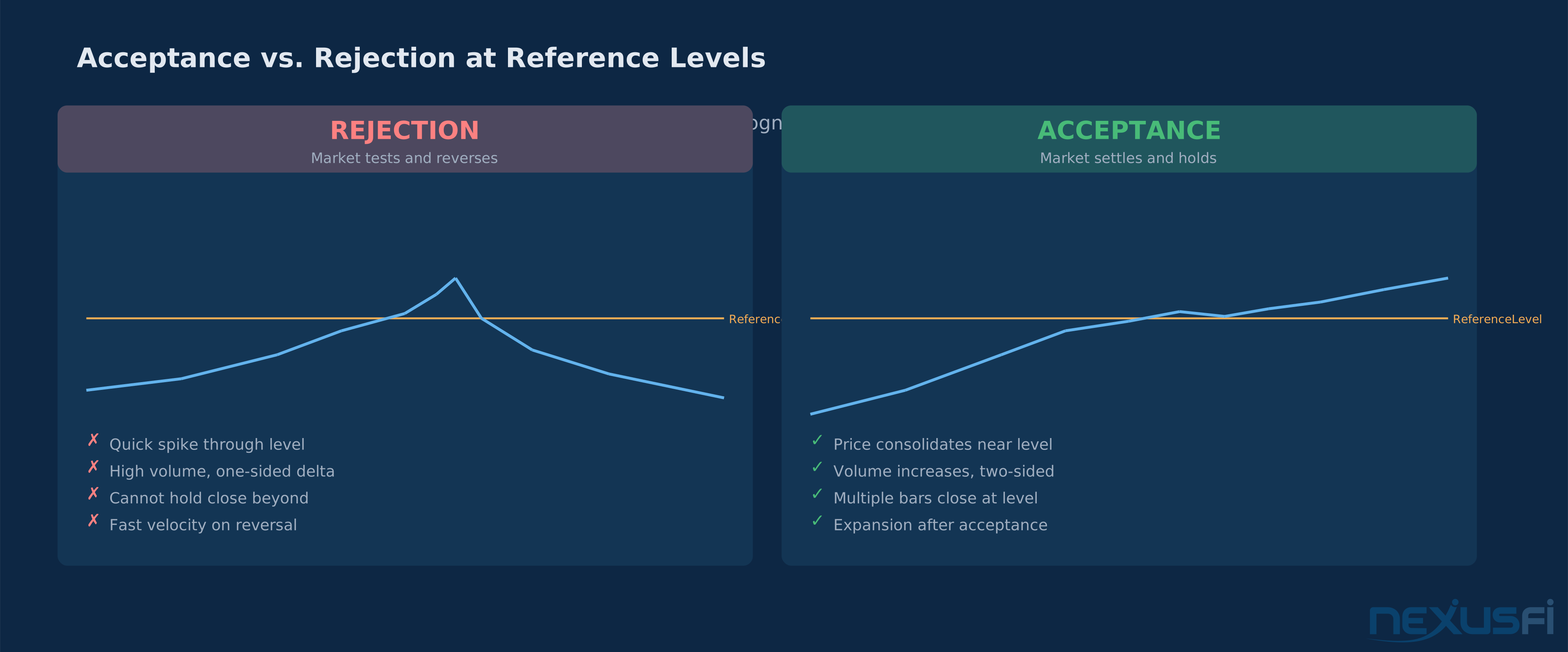
The most important skill in reference level trading is distinguishing between acceptance (the market is comfortable at this price and will likely stay) and rejection (the market is testing this price but will not hold it).
Signs of acceptance at a level:
- Price settles and consolidates near the level rather than bouncing sharply away
- Volume increases as price approaches the level, with neither side dominating
- Multiple bars close near the level (the market is "discovering" value here)
- Order flow tools (footprint, delta) show balanced two-sided activity
Signs of rejection at a level:
- Price pokes briefly through the level and reverses quickly (a "wick" or "liquidity grab")
- High volume but with strong one-sided delta (aggressive selling at a resistance level, aggressive buying at a support level)
- The level cannot hold a single close beyond it even on multiple tests
- Expansion away from the level after the test (increasing velocity in the reversal direction)
The acceptance/rejection distinction applies to all reference levels, but the signature looks different depending on level type:
Value area edges (VAH/VAL): Rejection at VAH in a pullback to value typically looks like a single aggressive bar up through VAH, a pause or reversal at the level, and then a return toward POC. Acceptance through VAH looks like multiple bars closing above it, with volume expanding and delta positive.
POC: Acceptance at POC looks like the market settling and rotating around the level. Rejection from POC looks like a sharp move in one direction after touching POC.
PDH/PDL: The cleanest breakouts show a strong close above PDH, a brief pause (the pullback), and then continuation. Rejection from PDH is a sharp reversal after touching or slightly penetrating the level.
Resolving Conflicting Levels: The Priority Framework #
In practice, multiple reference levels will often fall within a few points of each other, creating potential conflict about which level "wins." The following hierarchy provides a practical decision framework.
The General Rule: Timeframe wins
When a higher-tier level conflicts with a lower-tier level, the higher-tier level takes precedence for directional bias and target selection. The lower-tier level may still be useful for entry timing.
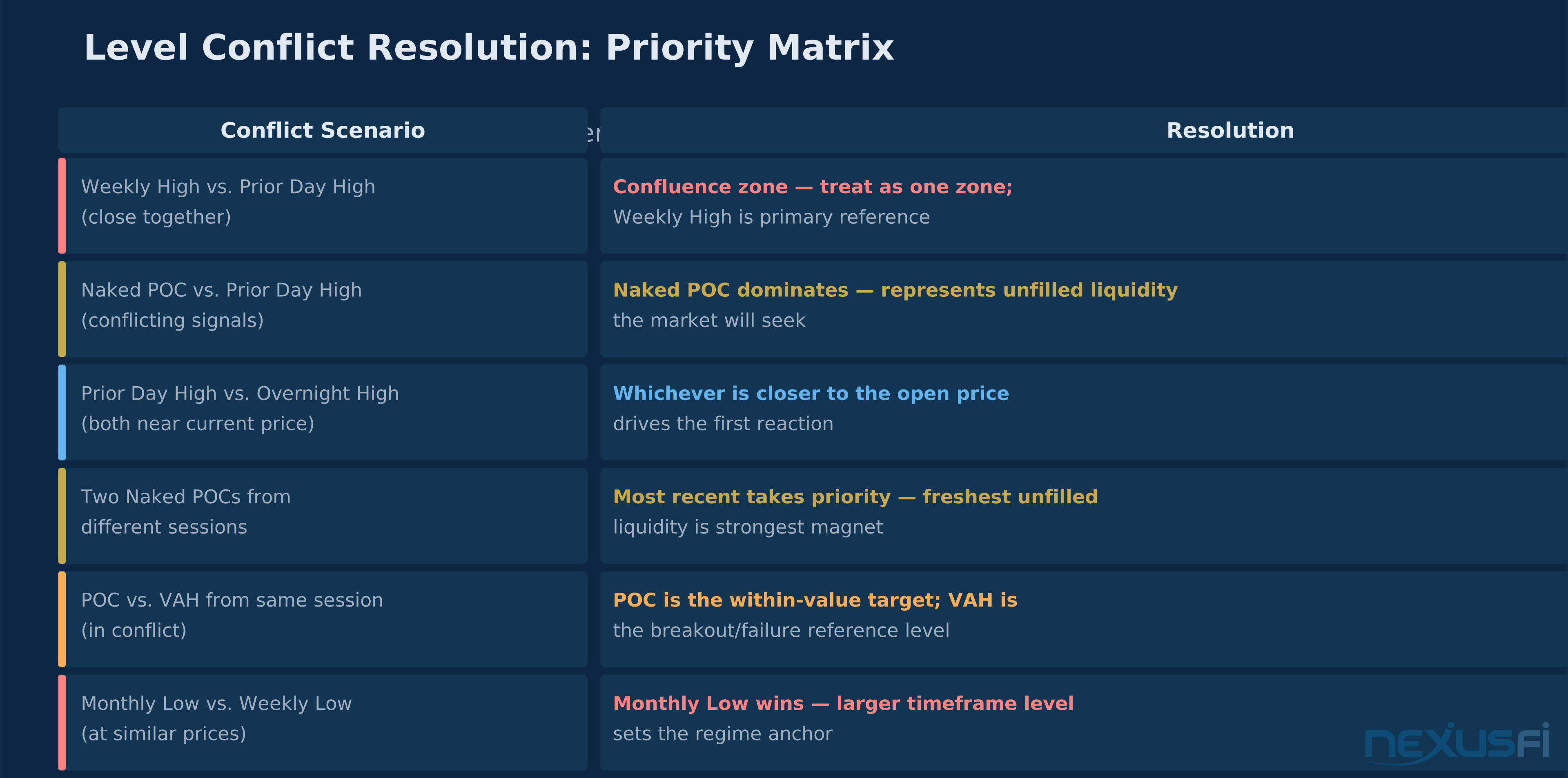
| Conflict | Resolution |
|---|---|
| Weekly High vs. Prior Day High (close together) | Treat as a single confluence zone; weekly high is the primary reference |
| Naked POC vs. PDH (in conflict) | Naked POC dominates — it represents unfilled liquidity that the market will seek |
| PDH vs. Overnight High | Whichever is closer to the opening price drives the first reaction |
| Two Naked POCs from different sessions | Most recent takes priority (freshest liquidity) |
| POC vs. VAH (both from same session) | POC is the target within value; VAH is the break point |
The Proximity Principle
When levels are at different prices but all within a tradeable range, the level nearest to current price typically dominates intraday behavior. Higher-tier levels take over as the session progresses and price travels further from the open.
Dynamic Re-evaluation
Reference levels lose relevance when decisively broken. If price breaks above PDH with strong volume and holds, PDH transitions from resistance to support. If price breaks below VAL and accepts (closes below on multiple bars), VAL transitions from support to resistance. Continuously re-evaluating which levels remain active versus which have been "consumed" by price action is essential for avoiding the common error of defending a broken level.
Confluence Zones: Where Levels Cluster #
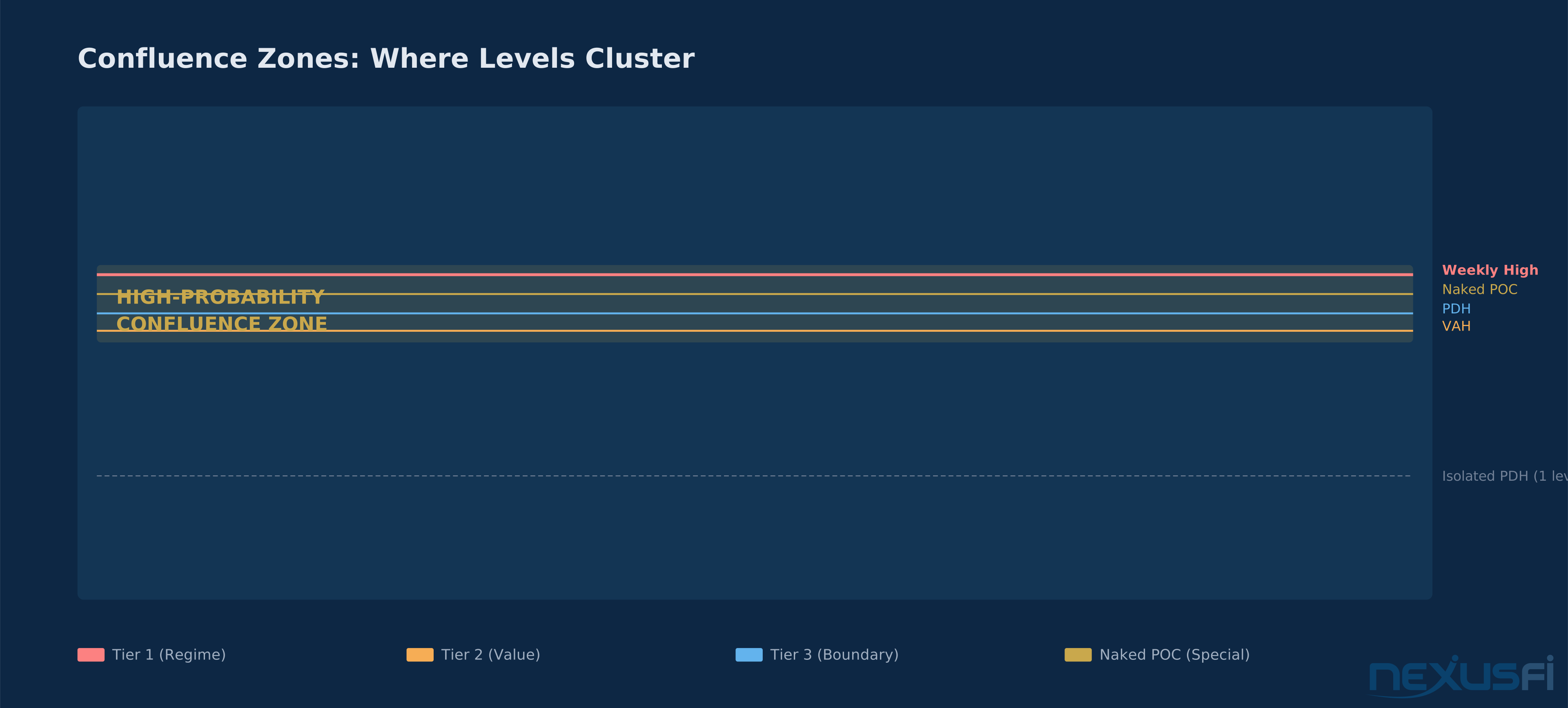
The single most reliable characteristic of high-probability reference level setups is confluence — multiple levels from different categories clustering within a few ticks of each other.
When the prior day's PDH at 5,920 aligns with the current weekly high at 5,922 and a naked POC from four sessions ago at 5,918, that three-point zone carries far more weight than any individual level. Institutional participants, algorithms, and discretionary traders who each track different reference sets will all be focused on approximately the same price. The resulting concentration of orders creates a zone that is very likely to produce a significant market reaction.
How to identify confluence zones:
- Sort your reference levels by price
- Group levels that fall within 3-5 ticks (in ES terms; adjust for other instruments) of each other
- Count the number of levels in each group and their tier designations
- The group with the most levels, especially from higher tiers, is your highest-priority zone
Types of confluence that carry extra weight:
- Naked POC + PDH: Unfilled liquidity meeting a prior boundary — very strong resistance from below
- Weekly High + Current Session VAH: Two tier-1/tier-2 levels at the same price — major decision zone
- PDL + Overnight Low: Two boundary levels at the same price — reinforced support that, if broken, signals serious weakness
- Monthly Low + Naked POC below current price: A downside magnet with two significant magnets at the same level
:::note Confluence does not guarantee a reaction in either direction. It means the reaction, when it comes, is likely to be larger and more reliable than at an isolated level. Always wait for order flow confirmation before committing to a position at a confluence zone. :::
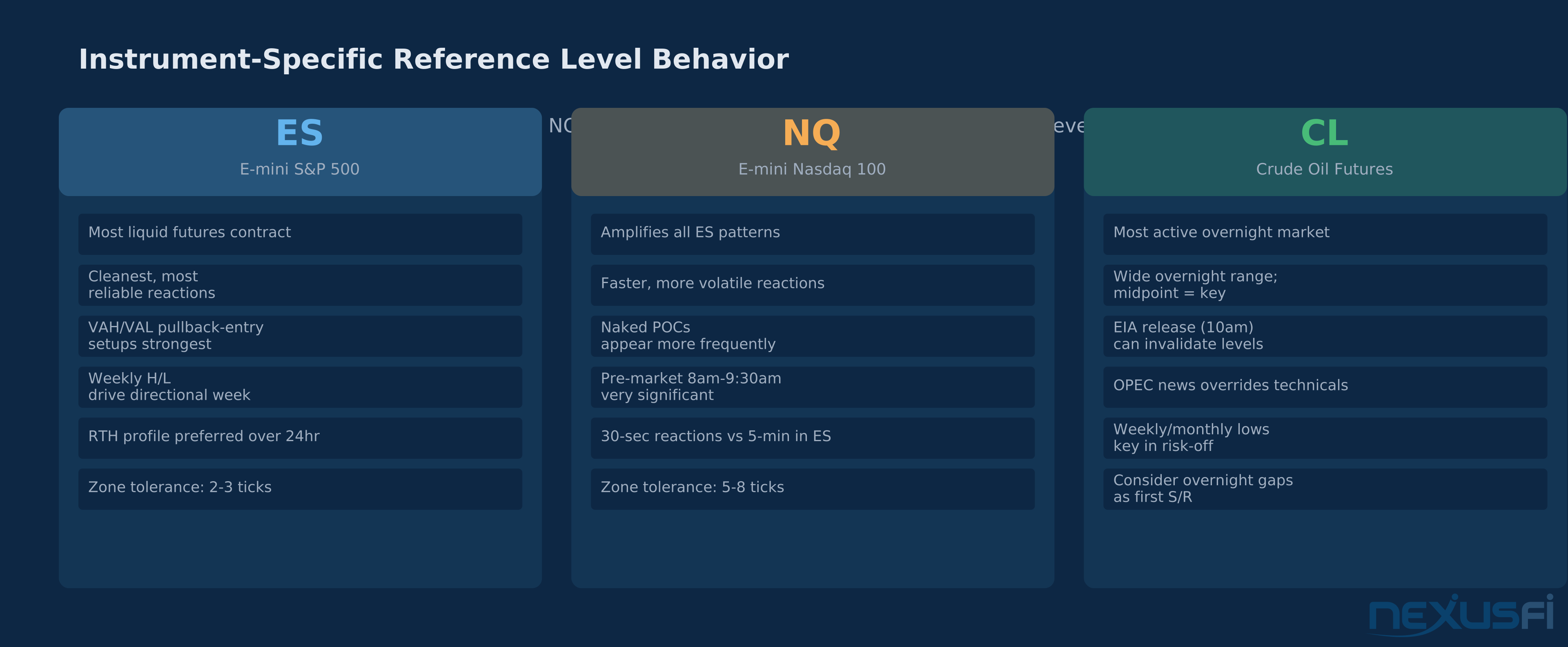
Instrument-Specific Application #
ES (E-mini S&P 500)
The ES is the most liquid futures contract in the world, and reference levels tend to produce clean, reliable reactions. Key characteristics:
- Prior value area levels (VAH/VAL) produce the most consistent pullback-and-entry setups
- Weekly highs and lows act as powerful magnets and frequently define the week's directional move
- Gap opens above PDH are common on macro news; the first 15 minutes determine whether the gap is sustained
- RTH profiles (09:30-16:00 CT) are more reliable than full 24-hour profiles for establishing VAH/VAL/POC levels
NQ (E-mini Nasdaq)
NQ amplifies all of the ES patterns. The same reference levels apply, but:
- Reactions are faster and more volatile — a level that holds for 5 minutes in ES may hold for only 30 seconds in NQ
- Naked POCs appear more frequently because NQ's volume profile is often skewed, leaving the POC away from the center
- Pre-market activity (08:00-09:30 CT) in NQ is especially significant; major moves before RTH open can redefine the effective overnight range
- Wider zone tolerances (5-8 ticks vs. 2-3 ticks in ES) are appropriate given higher tick-to-tick volatility
CL (Crude Oil)
CL has the most active overnight market of the three major index/commodity futures:
- The overnight range for CL is frequently wide due to Asian and European trading; the midpoint of the overnight range deserves its own line
- Fundamental events (EIA inventory release at 10:00 CT, OPEC reports) can rapidly invalidate prior-session value areas — reference levels formed before a major fundamental event carry less weight
- Weekly and monthly lows are especially potent during risk-off environments
- Prior session POC and VAH/VAL may be less stable than in ES/NQ when significant new information entered the market overnight
Common Mistakes and How to Avoid Them #
Mistake 1: Treating all levels equally
The single most common error is placing PDH, POC, VAH, weekly high, and overnight high all in the same mental category and assuming they are equally important. They are not. Apply the tiered priority framework. When in doubt, the higher timeframe level wins.
Mistake 2: Trading levels mechanically without confirmation
A reference level is a zone of potential. It is not a guaranteed reversal. The market will often poke through a level, absorb resting orders, and then move away quickly. Trading mechanically by placing a limit order at every reference level, without watching for acceptance or rejection signals, will produce a long series of small losses.
Mistake 3: Defending broken levels
When a reference level is decisively broken — price closes beyond it with strong volume and delta — that level has changed character. It transitions from support to resistance or vice versa. Continuing to trade it as if it were still active is a significant source of losses for developing traders.
Mistake 4: Overloading the chart
It is possible to plot too many levels. With PDH, PDL, VAH, VAL, POC, overnight high, overnight low, weekly high, weekly low, monthly high, monthly low, and multiple naked POCs all on the chart simultaneously, the chart becomes noise. Prioritize by tier and by proximity to current price. If a level is more than two standard daily ranges away from current price, consider hiding it until price approaches.
Mistake 5: Ignoring the session's developing structure
Reference levels from prior sessions are the starting point, not the complete picture. Within each session, the Initial Balance (first hour), the developing value area, and the current session's POC all provide real-time structural information that can supplement or override prior-session references. A prior-session naked POC that becomes the current session's POC is a very different setup than one that price merely touches and moves away from.
Knowledge Map
Go Deeper
Build on this knowledgeReferences This Article
Articles that build on this topicCitations
- — Volume Profile and Footprint discussion (2014)“POC = Point of Control, the price where the most volume of the session traded. VA = Value Area, the area in which 70% of the volume traded (VAH = Value Area High, VAL = Value Area Low). Both of the above also have "naked" extensions. A line is naked until price trades at this level again.”
- — Making a Living with the Micros (2022)“The Value Area is the range of prices that incorporates 70% of the prior day's volume. VALUE is the area where the buyers and sellers tend to agree on price, and is usually a big magnet. The Point of Control (POC) is the price that had the most number of contracts traded.”
- — VPOC indicator where can I find please? (2013)“Naked point of controls: these are the point of controls of prior sessions which have not been revisited or taken out. The market profile originally did not use volume -- as this was not easily available -- but so called time price opportunities or TPOs representing 30-minute segments of the session.”
- — Trading Futures with Context (2016)“VPOC acts as a magnet, it's a "balance" point where CL found a balance in the past. The Volume Point of Control (VPOC) stands for the most commonly traded volume based price closest to the center of the range. Significance of VPOC is that this is the price that saw the most acceptance by both buyers and sellers.”
- — DTs Pre Market Prep (2015)“Be aware that speculators seem to be playing intraday levels again so watch yesterdays high/low, value high/low and overnight high/low. Watch for overall pace of the market and any early volume building that would indicate a range day.”
- — Trading Futures with Context (2016)“Price is so far from y'day Value that I will put more emphasis on ACD OR and the WOR prices for now and see what plays out. My levels I am watching, along with y'day high/low, globex high/low and weekly OR [opening range].”
- — Spoo-nalysis ES e-mini futures S&P 500 (2023)“POCs tend to be magnets. There are theories as to why that make sense, but since we can't poll the world to find out what each trader thinks, let's just say it tends to work, and leave it at that. Don't get greedy.”
- — GomMP Market Profile indicator (2014)“I figured out a simple way to automatically plot the previous session's POC, VAH, VAL, and VWAP levels onto the current session. The values are now also exposed for the purposes of scanning, strategies, and automation.”
- — Making a Living with the Micros (2022)“Context is everything. If we're at PDH (prior day high) in an uptrend with bullish delta, that's a very different trade than if we're at PDH in a downtrend with sellers showing up.”
- — Trading Futures with Context (2016)“Tracking where price opens relative to the prior day value area is one of the most useful habits a trader can build. It immediately tells you the day's probable regime without any other analysis.”