



Session Transitions in Futures Markets: What Changes When the Clock Hits RTH and Why Your P&L Cares
Overview #
Every futures market runs on a clock, and the transitions between sessions — overnight Globex to Regular Trading Hours, RTH close to overnight reopen — are where the market's personality changes most dramatically. The participant mix shifts. Liquidity doubles or halves. Spreads compress or blow out. Price discovers a new equilibrium in minutes.
Most retail traders treat these transitions as background noise. They shouldn't. The RTH open is the single most important microstructure event of the trading day for equity index futures. Understanding what happens at session boundaries — and why — gives you a structural edge that has nothing to do with indicators or chart patterns.
Every futures market runs on a clock, and the transitions between sessions — overnight Globex to Regular Trading Hours, RTH close to overnight reopen — are where the market's personality changes most dramatically.
This article breaks down how futures sessions work at CME Group, what happens to price action, liquidity, and order flow during transitions, and how to trade around them without getting run over.
Key Concepts #
Regular Trading Hours (RTH) — The primary trading session when the majority of institutional volume flows. For CME equity index futures (ES, NQ), RTH runs from 9:30 AM to 4:00 PM Eastern, aligned with the NYSE cash session. For energy (CL) and metals (GC), the RTH window varies but centers on US business hours.
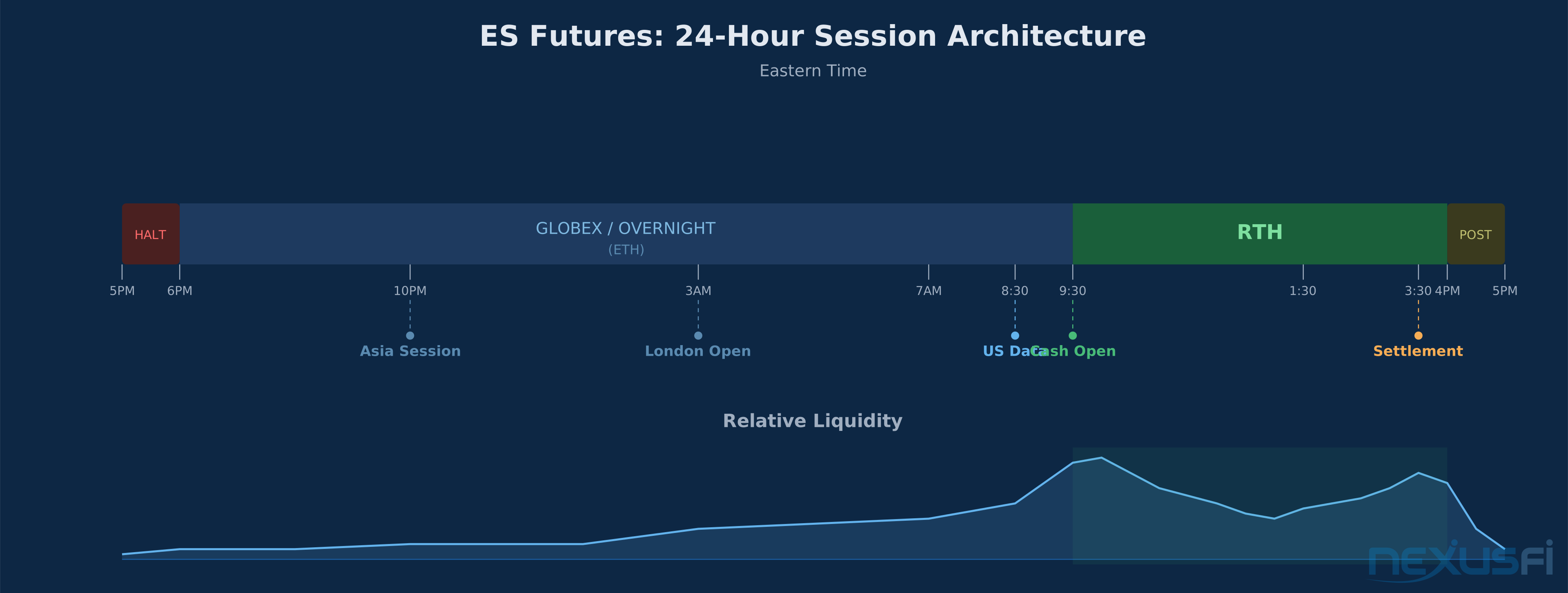
Electronic Trading Hours (ETH) / Globex — The extended session that runs outside RTH. For ES and NQ, Globex opens at 6:00 PM Eastern and runs until the next day's 5:00 PM close, with a daily maintenance halt from 5:00-6:00 PM. The overnight portion — from the evening open through the next morning's RTH start — is what traders call the "overnight session."
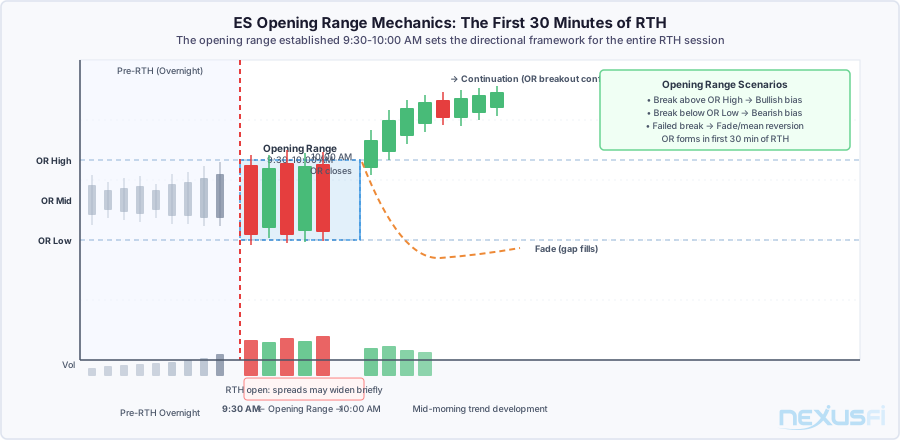
Opening Range — The price range established in the first 5-30 minutes of RTH. This range functions as a reference point for the rest of the session. Market Profile traders call it the "Initial Balance" — the first hour of RTH trading that establishes the day's value framework.
Overnight Inventory — The net directional position accumulated during the overnight session. If the market rallied 20 points overnight on thin volume, that's long overnight inventory. Inventory correction at the RTH open is one of the most reliable session-transition patterns in equity index futures.
Settlement Price — The official daily reference price set by the exchange during a defined window. For ES, the daily settlement is calculated near the RTH close. Settlement drives mark-to-market calculations, margin calls, and institutional hedging flows — all of which concentrate volume into specific time windows.
Liquidity Regime — The combination of order book depth, bid-ask spread, and participant mix at any given time. Sessions don't just change the clock — they change the liquidity regime entirely. A market order that slips half a tick during RTH might slip two full ticks at 2 AM.
The Session Architecture #
ES and NQ (Equity Index Futures) #
These contracts are the most session-sensitive in the CME ecosystem because they're tethered to the US cash equity market. All session times follow CME Group's official published schedules (see CME Group's trading hours for current hours and holiday adjustments).
| Window | Time (Eastern) | Character |
|---|---|---|
| Evening Open | 6:00 PM | Globex reopens after maintenance. Thin book, Asia flow beginning |
| Asia Session | 8:00 PM - 3:00 AM | Moderate liquidity, macro-driven, CTA and global macro dominant |
| London Open | 3:00 AM | European institutional flow enters, liquidity improves |
| Pre-Market Ramp | 7:00 - 9:30 AM | Liquidity builds as US participants position ahead of cash open |
| US Data Window | 8:30 AM | Major economic releases (NFP, CPI, GDP). Can reprice the entire overnight range in seconds |
| RTH Open | 9:30 AM | Liquidity shock. Cash market aligns. Institutional MOO flow hits |
| Opening Range | 9:30 - 10:00 AM | Aggressive price discovery. Opening range established |
| Mid-Morning | 10:00 AM - 12:00 PM | Volume normalizes. Trend continuation or mean reversion plays out |
| Lunch Lull | 12:00 - 1:30 PM | European desks close. Thin period. VWAP gravitational pull |
| Afternoon Push | 1:30 - 3:30 PM | Volume rebuilds. Late-day institutional execution targets |
| RTH Close / Settlement | 3:30 - 4:00 PM | Settlement-driven flow. Portfolio hedging unwinds. MOC orders |
| Post-RTH | 4:00 - 5:00 PM | Reduced depth. Repricing begins for overnight |
The critical insight: 9:30 AM is not just a time — it's a regime change. The participant mix shifts from overnight macro traders to US equity-centric institutions. Liquidity doesn't just increase — it transforms.
CL (Crude Oil) #
CL runs on a different rhythm because global supply/demand dynamics don't respect US market hours.
| Window | Time (Eastern) | Character |
|---|---|---|
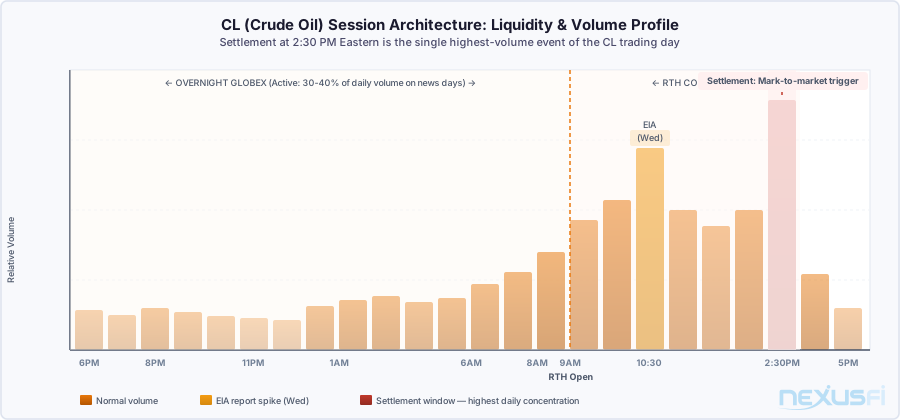
| Overnight | 6:00 PM - 9:00 AM | Active but headline-driven. Geopolitical events move price |
| RTH Open | 9:00 AM | Flow increases but less binary than ES/NQ |
| EIA Window | 10:30 AM (Wed) | Weekly inventory report. Massive volume spike |
| Settlement | 2:30 PM | Highest daily volume concentration. Institutional mark-to-market |
| Post-Settlement | 2:30 - 5:00 PM | Flow drops sharply after settlement completes |
CL's overnight session is genuinely active — not a ghost town like ES at 2 AM. Asia's energy demand, Middle East geopolitics, and European refinery operations all drive real price discovery during off-hours.
GC (Gold) #
Gold is the most globally continuous of the major CME contracts.
| Window | Time (Eastern) | Character |
|---|---|---|
| Asia/London | 6:00 PM - 8:30 AM | Smooth participation from global demand. Less dramatic transitions |
| RTH Open | 8:30 AM | US institutional flow enters. Liquidity improves |
| COMEX Floor | 8:30 AM - 1:30 PM | Core RTH. Tightest spreads, deepest book |
| Post-RTH | 1:30 - 5:00 PM | Gradual thinning as US exits |
GC transitions are the smoothest of the four. Global demand for gold creates more evenly distributed participation, so the "liquidity cliff" at session boundaries is less severe. That said, US hours still dominate volume.
How Transitions Shape Price Action #
The Liquidity Regime Change #
When RTH opens on ES or NQ, three things happen simultaneously:
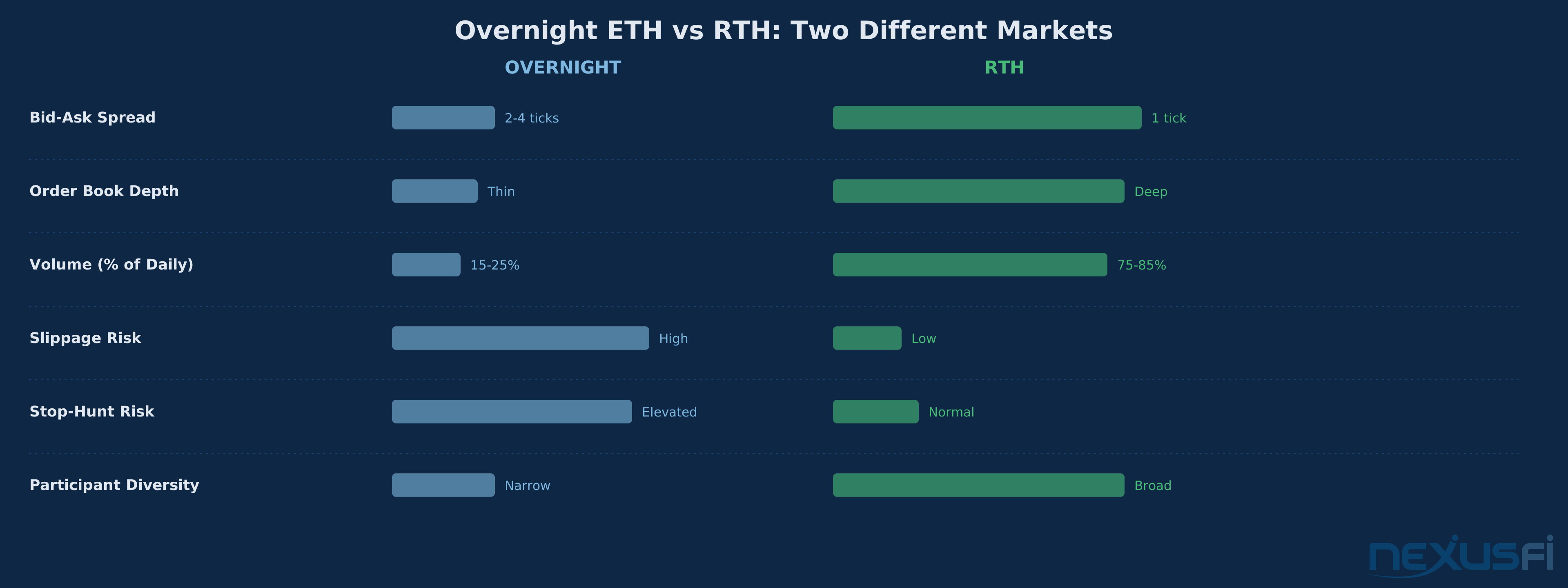
- Order book depth doubles or triples. The resting limit order book gets replenished by US-based market makers, prop firms, and institutional desks that only operate during cash hours.
- Bid-ask spread compresses. An overnight ES spread of 0.50-0.75 points tightens to 0.25 points within minutes of the cash open.
- The participant mix rotates. Overnight activity is dominated by global macro funds, CTAs, and algorithmic market makers. At 9:30, US equity-linked hedgers, index arbitrageurs, and execution desks enter. These participants have different mandates, different time horizons, and different views on fair value.
The result: price can reprice violently even without new information. The overnight auction ran with one set of participants. The RTH auction runs with a different, larger set. Their disagreement about fair value creates the opening range volatility.
Overnight Inventory Correction #
This is one of the most studied patterns in equity index futures. Here's how it works:
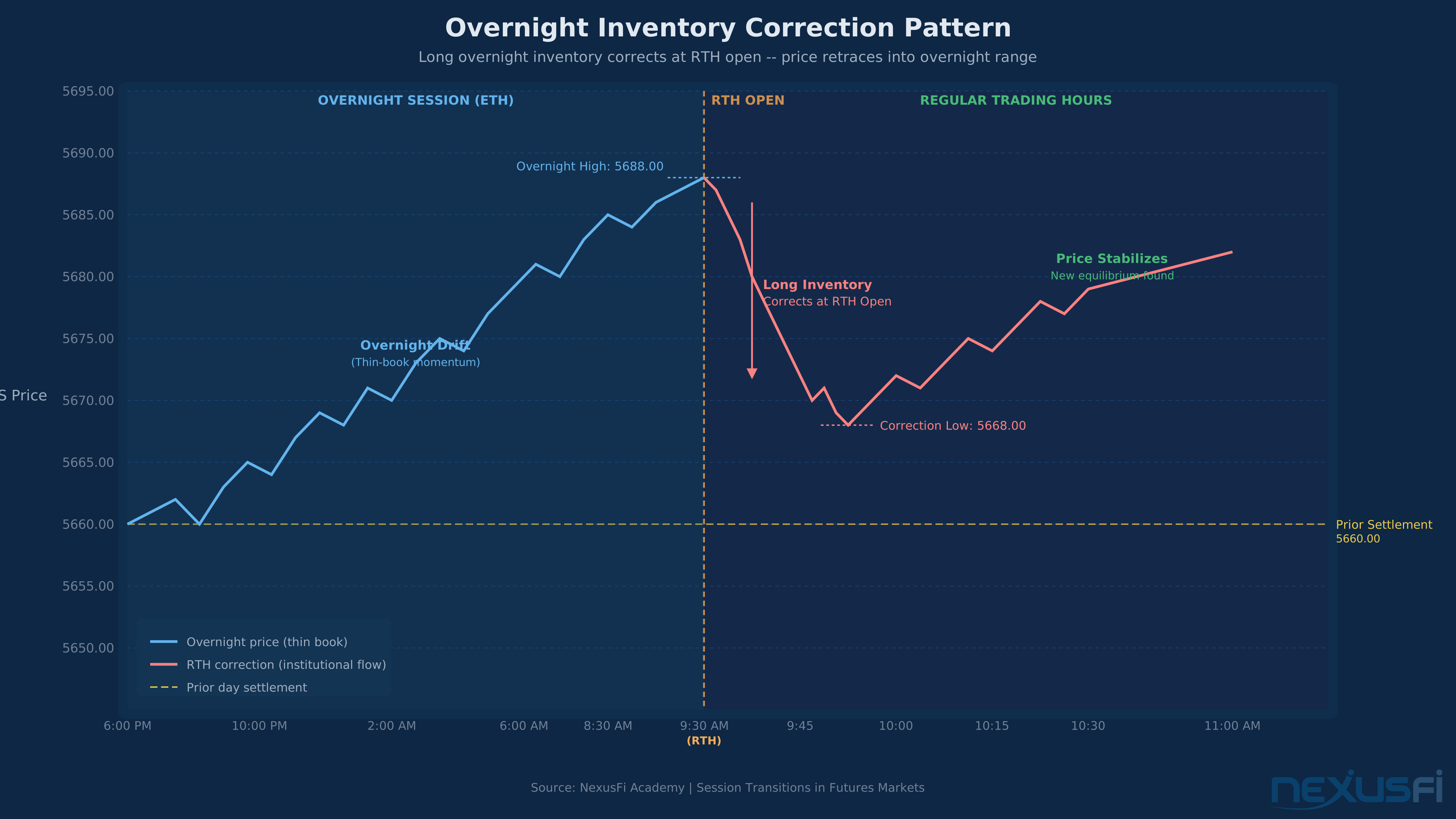
If the market drifted 15 points higher overnight on moderate volume, that's long overnight inventory. When RTH opens, institutions that didn't participate in the overnight move look at the current price, compare it to yesterday's settlement, and decide whether they agree. If they don't — if the overnight rally was driven by thin-book momentum rather than genuine buying interest — they sell into the open.
The pattern: When overnight inventory is heavily one-directional, expect correction in the first 15-30 minutes of RTH. Not always a full reversal, but a pullback into the overnight range.
— when overnight inventory is clearly directional at the RTH open, the probability-weighted expectation is correction back toward value within the first 30 minutes. This framework of reading overnight positioning against RTH flow has been a reliable context for day trading setups across market conditions. @Private Banker expanded on the mechanics in NexusFi's Spoo-nalysis thread, noting the overnight inventory is "generally weak/low volume" — a critical nuance when weighing whether overnight moves deserve respect or skepticism at the RTH open.
The exceptions: when overnight moves are driven by genuine catalysts (Fed surprise, geopolitical event, major earnings), the inventory doesn't correct — it extends. The key is volume. If the overnight move happened on elevated volume with improving depth at each new price — the kind of distribution Volume Profile makes visible — that's real demand, not thin-book drift.
Overnight directional drift on normal volume = expect 15-30 minutes of correction at the RTH open. Elevated overnight volume with improving depth at each price level negates this pattern — that's real demand, not thin-book drift.
Gap Opens: Reading the Auction #
A "gap" between the overnight close and RTH open isn't really a gap — it's the price at which the new liquidity regime finds equilibrium, a concept central to Auction Market Theory. Here's how to read them:
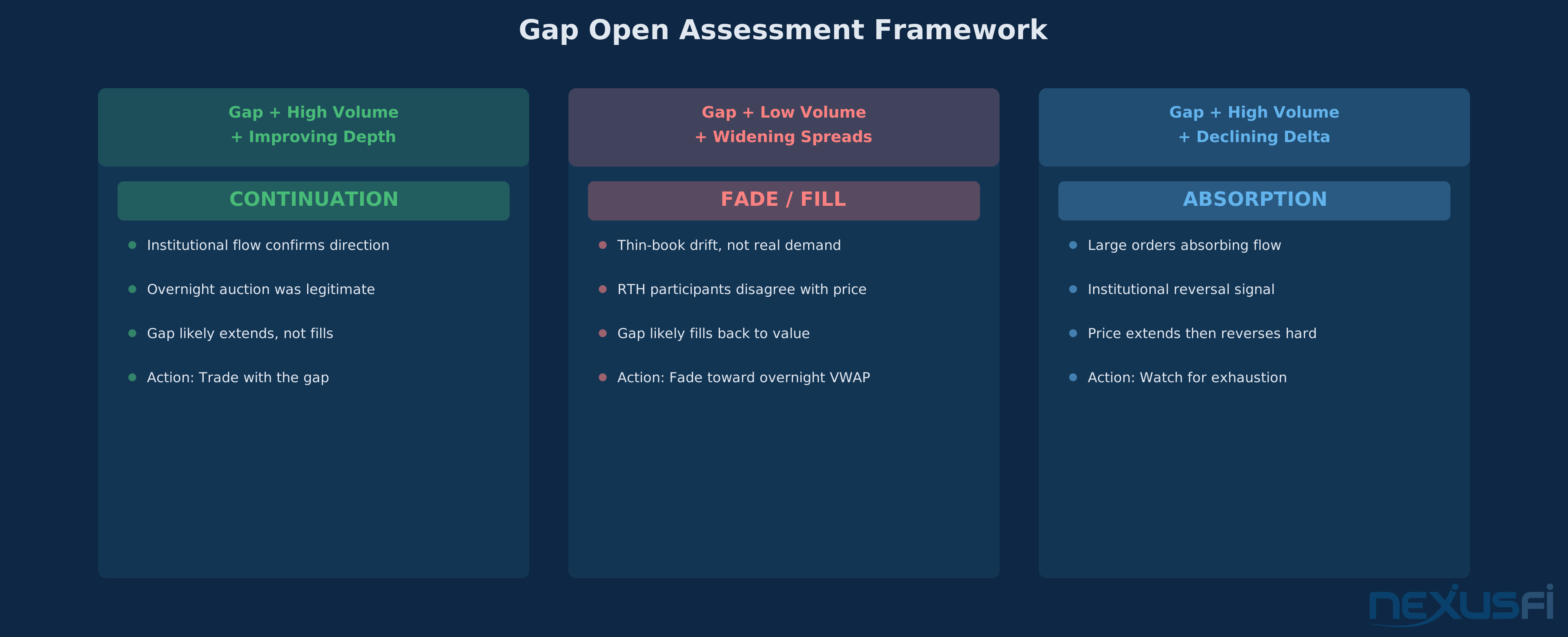
Gap + expanding volume + improving depth = continuation. The new participants agree with the overnight direction and add to it. The gap doesn't fill.
Gap + thin volume + widening spreads = fade. The overnight move overextended on thin liquidity. RTH participants disagree with the price, and the gap fills.
Gap + high volume but declining delta = absorption. Price pushes to a new level, but aggressive selling (or buying) is being absorbed by large resting orders. This is institutional absorption — a potential reversal signal. As @tpredictor documented in NexusFi's stop hunts discussion (post #702917), "Most stop runs also occur during lower liquidity periods, i.e. overnight" — reinforcing that overnight price extensions on thin books are mechanically different from RTH moves.
The opening range concept developed in Mark Fisher's The Logical Trader (John Wiley & Sons, 2002) gives structure to this: if price breaks above or below the opening range established in the first few minutes, it suggests that RTH participants have chosen a direction. NexusFi discussions on the opening range approach confirm that these concepts remain relevant even as markets evolve.
— a sentiment echoed across instrument types, from ES to CL.
Volume and Liquidity Patterns by Session #
The Volume Smile #
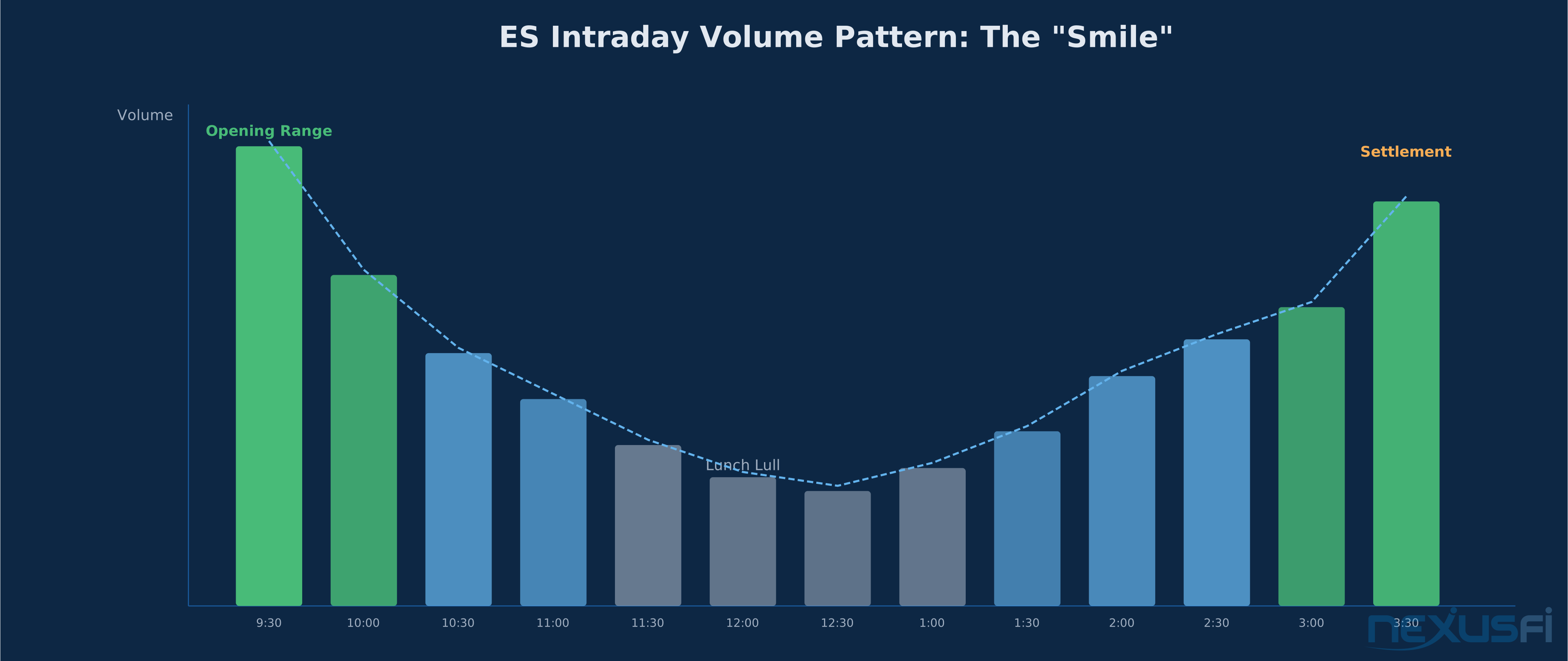
ES and NQ volume follows a predictable intraday pattern:
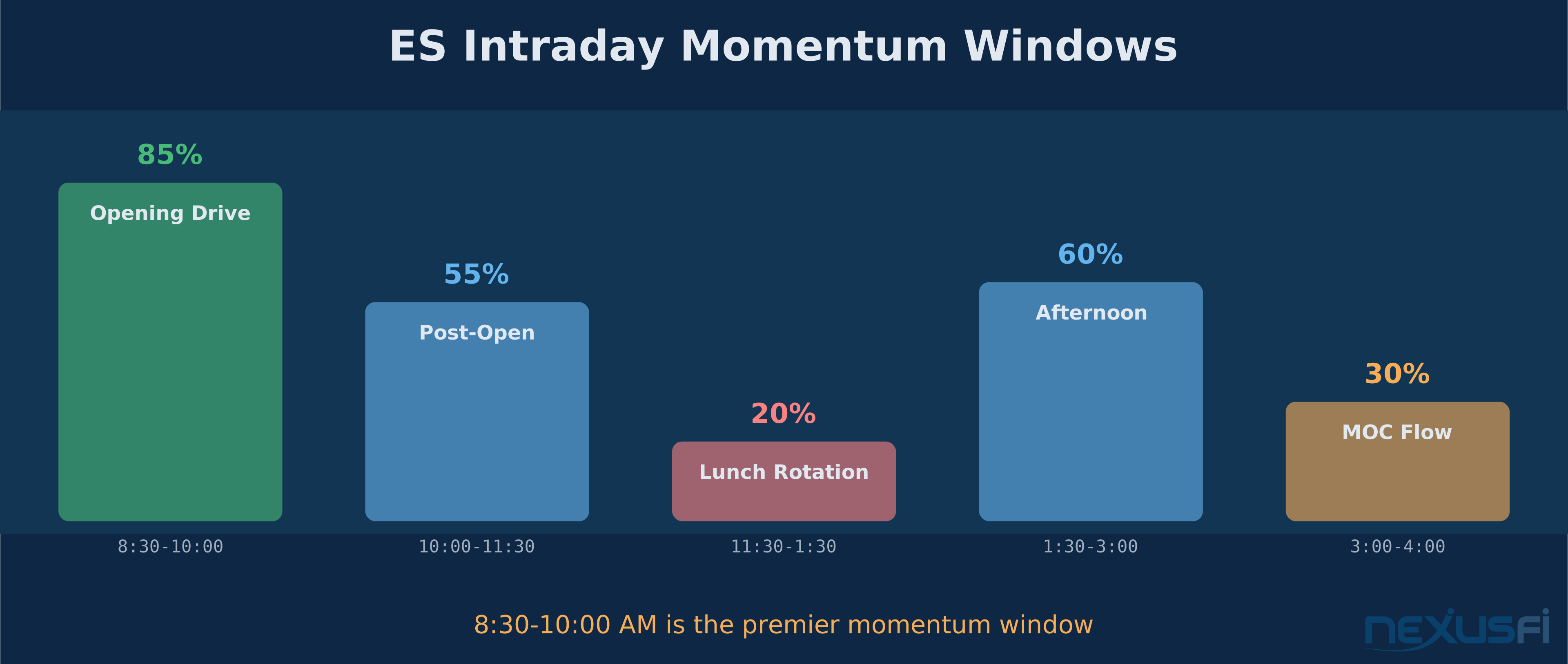
- 9:30-10:00 AM: Highest volume of the day. Opening range establishment.
- 10:00-11:30 AM: Moderate. Trend development or chop.
- 11:30 AM-1:30 PM: Lowest volume. European close, US lunch. "Watching paint dry" territory.
- 1:30-3:00 PM: Volume rebuilds. Afternoon institutional execution.
- 3:30-4:00 PM: Second volume spike. Settlement-related flow, MOC orders.
This creates a U-shaped or "smile" pattern. The transitions at 9:30 and 3:30 are the volume peaks because that's when the largest participants are most active.
Overnight Volume: Not All Dead Air #
Overnight volume in ES runs about 15-25% of the total daily volume. That's not nothing — it's enough for legitimate price discovery, but thin enough that a single large order can move price multiple ticks.
— a 3:1 range difference despite the overnight running more than twice as long. @Fat Tails added a structural connection in the overnight inventory thread: "for ES the test of the opening range of the night session always is a test of yesterday's close as well" — which means the overnight high/low and prior RTH settlement are rarely independent reference points.
The overnight session has its own internal rhythm:
- 6:00-8:00 PM Eastern: Post-close positioning. Moderate activity.
- 8:00 PM-3:00 AM: Asia hours. Quietest period for US equity futures.
- 3:00-7:00 AM: London session. Liquidity improves much.
- 7:00-9:30 AM: Pre-market buildup. Increasing volume as US data releases approach.
For CL and GC, overnight volumes are proportionally higher because these markets have genuine global participant bases. CL overnight can run 30-40% of daily volume on active news days.
Spread Behavior Around Transitions #
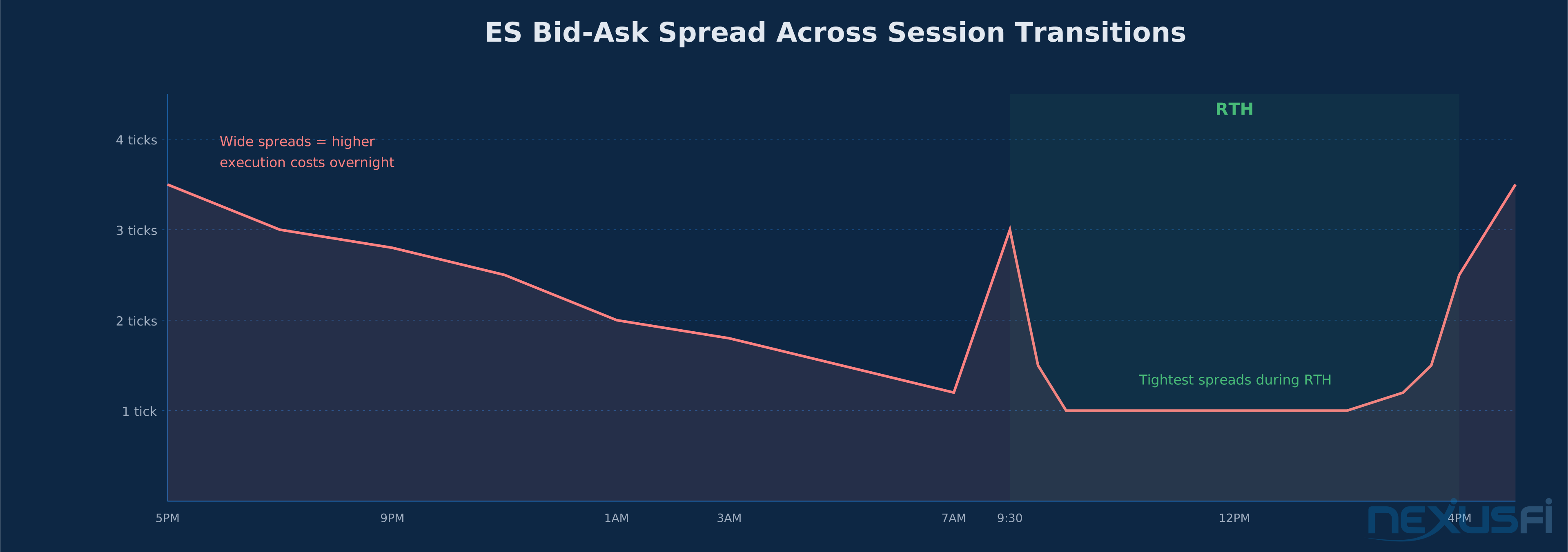
The bid-ask spread is the single best real-time indicator of a liquidity regime change:
- ES overnight: 0.50-1.00 point spread (2-4 ticks)
- ES RTH: 0.25 points (1 tick) — sometimes sub-tick with depth at the inside
- ES around RTH open/close: Can widen to 0.50 briefly during the transition itself
If you trade with market orders, this matters directly. A market order that crosses a 1-tick spread costs $12.50 per ES contract. A market order crossing a 4-tick spread costs $50. That's a $37.50 per-contract tax for trading at the wrong time.
A market order crossing a 4-tick overnight spread costs $50 per ES contract vs. $12.50 during RTH's typical 1-tick spread. That $37.50 per-contract difference is a hidden tax on overnight execution — and it compounds fast with size.
Institutional Participation Patterns #
Who's on the other side of your trade changes dramatically across sessions.
| Time Window | Dominant Participants | Typical Behavior |
|---|---|---|
| Overnight ETH | Global macro, CTAs, HFT market makers | Tactical, momentum-driven, thinner book. Quote management dominates |
| Pre-RTH (7:00-9:30 AM) | HFT signal processing, early institutional | Positioning around data releases, pre-open hedging |
| RTH Open (9:30-10:00 AM) | Full institutional, MOO flow, prop desks | Aggressive price discovery, opening range contest |
| Mid-Morning (10:00 AM-12:00 PM) | Broad institutional | Trend continuation or failure testing |
| Lunch (12:00-1:30 PM) | Reduced — European exit | Thin, VWAP-gravitational, potential for traps |
| Afternoon (1:30-3:30 PM) | Institutional execution desks | TWAP/VWAP algorithms, systematic rebalancing |
| Close (3:30-4:00 PM) | Settlement hedging, portfolio rebalancers | Concentrated flow, MOC orders, magnet effects |
| Post-RTH | Transitional | Reduced depth, inventory unwind, overnight positioning begins |
The key takeaway: during RTH, you're trading against the full weight of institutional America. During overnight, you're trading against a smaller, more tactical participant set. Neither is easier — they're different games.
Settlement Windows and End-of-Day Flow #
Settlement creates its own microstructure event. For ES, the daily settlement price is calculated during the closing minutes of RTH and drives:
- Mark-to-market calculations: Every futures position gets repriced against settlement. This determines daily P&L and margin requirements.
- Margin calls: If settlement moves against you enough, your broker issues a margin call before the next session.
- Hedging rebalances: Institutional hedgers adjust positions based on settlement-driven portfolio values.
- Options settlement: Options on futures use settlement prices for exercise calculations.
The practical effect: the last 30 minutes of RTH often show "magnet" behavior where price gravitates toward levels that matter for settlement-related flows. Market makers prioritize their own hedge-matching during this window, and price stability takes a back seat.
For CL, the settlement window at 2:30 PM Eastern is the single most concentrated volume period of the day. Institutional traders mark their books to this price. Avoid naive entries during the final minutes of CL settlement unless your strategy explicitly trades that flow.
Practical Application: Trading Around Transitions #
Execution Tactics at the RTH Open #
If you trade the open:
- Accept that the first 1-5 minutes will be volatile and spreads may be wider than normal
- Use limit orders with price bands rather than market orders
- Size down — if your normal position is 4 contracts, trade 2 during the opening range
- Watch for delta divergence: if price pushes to a new high but aggressive sell delta is increasing, that's absorption
If you don't trade the open:
- Wait 5-15 minutes for the book to stabilize
- Use the opening range as your reference: above the high is bullish context, below the low is bearish
- The opening range breakout (or failure) often sets the directional bias for the entire RTH session
Managing Overnight Risk #
Holding positions overnight:
- Expect wider stops to account for thin-book volatility
- The overnight session tests levels that RTH established. Prior RTH high/low, VWAP, and round numbers are common magnets
- Stop cascades are more likely overnight because the book is thinner — a cluster of stops at an obvious level gets triggered faster
Stop cascades are amplified overnight. Thinner order books mean a cluster of stops at an obvious level gets triggered faster, each fill pulling price into the next cluster. Size your overnight stops wider than RTH stops, or reduce position size to compensate.
- Consider reducing size before the overnight session if your strategy is RTH-calibrated
Trading the overnight:
- ES/NQ overnight requires more caution due to thinner books. Size so
- CL and GC overnight sessions have deeper books and are more tradable
- Be aware that headline risk is asymmetric at night — moves can be larger per unit of volume because there's less resting liquidity to absorb flow
Order Type Selection by Session #
| Session | Recommended Order Type | Reason |
|---|---|---|
| RTH (steady state) | Market or limit | Full book, tight spreads, minimal slippage |
| RTH Open (first 5 min) | Limit with price band | Wider spreads, fast moves, slippage risk |
| RTH Close (last 15 min) | Limit | Settlement flow can distort fills |
| Overnight (general) | Limit only | Thin book, wider spreads, stop-hunt risk |
| Around data releases | Limit or no trading | Spreads blow out, depth vanishes momentarily |
Building Session Awareness into Your Routine #
Before the RTH open, answer these questions:
- What did the overnight session do? Check the overnight high, low, and closing price relative to prior RTH settlement. Is inventory long, short, or balanced?
- Was overnight volume normal? Elevated overnight volume suggests a real trigger. Normal or low volume suggests mechanical drift.
- Where are the key levels relative to RTH open? Prior RTH high/low, overnight high/low, VWAP from overnight, and any major support/resistance.
- What's the macro context? Data releases, Fed speakers, geopolitical developments. These override session mechanics.
- What's my plan if the gap fills vs. extends? Have both scenarios mapped before the bell rings. React, don't decide in real-time.
The Bottom Line #
Session transitions aren't just a change on the clock — they're a change in who's trading, how much depth is in the book, and what the market considers fair value. The RTH open is a daily liquidity shock that reprices the overnight auction against the full weight of institutional flow. The RTH close concentrates settlement-driven activity into a narrow window. The overnight session runs a different game with different participants and different rules.
Map your trading around these transitions. Know when the book is thick and when it's thin. Understand that a gap isn't a gift or a threat — it's an auction repricing that you can read if you know what to look for. Adjust your order types, position sizes, and expectations to match the liquidity regime you're operating in.
The clock doesn't just tell you the time. It tells you what kind of market you're trading in.
Knowledge Map
Prerequisites
Understand these firstCitations
- — Spoo-nalysis ES e-mini futures S&P 500 (2012) 👍 4“The ON inventory is generally weak/low volume. But in the case of today, the market was balanced within the previous RTH”
- — dctrade69 Daily Context Journal (2019) 👍 14“the market has been traded below y'day value. Two scenarios: push lower and continue the bearish move or reject the overnight inventory and push back to value”
- — Daytrading ES & NQ (2023) 👍 3“we open near the top of the on range with long overnight inventory (oni) -- There should be medium term inventory which is still short -- My gap rule applies: i do not follow large gaps early”
- — What's the implication of the overnight inventory (2011) 👍 6“for ES the test of the opening range of the night session always is a test of yesterday's close as well”
- — Overnight Session ES Trading (2011) 👍 20“the Globex market moves slowly. Unlike the day market in the E-mini S&P, which has an average range of about 25 points, the night market will move only about seven points, on average, in a 16-hour period”
- — Stop Hunts - Are they really what the name entails? Or is there more to them? (2019) 👍 10“Most stop runs also occur during lower liquidity periods, i.e. overnight. One way this manipulation can occur is if a liquidity provider controls enough liquidity both sides of the market.”
- — Opening Range Revisited...Still Relevant? (2020) 👍 11“I use the opening in my trading everyday. It gives context, just like VWAP does, and it determines the initial direction of my trades”