



Auction Market Theory: The Complete Framework for Reading Markets as Continuous Auctions
Every time you look at a price chart, you're watching an auction. Not a simple one-shot deal — a continuous, two-sided auction that never stops, where thousands of participants are simultaneously bidding, offering, accepting, and rejecting prices across different timeframes.
Auction Market Theory (AMT) is the framework that makes sense of all of it. It explains why price moves, not just where it's been. It gives you a structured way to read market behavior in real time — to determine whether the market is searching for new value or defending existing value, whether initiative or responsive participants are in control, and whether that breakout you're watching deserves your commitment or your skepticism.
This isn't just academic. Every serious Volume Profile, Market Profile, and order flow trader operates from an AMT foundation, whether they name it explicitly or not.
Overview #
Auction Market Theory is a framework developed by J. Peter Steidlmayer at the Chicago Board of Trade in the 1980s. Its core insight: markets are not random. They are organized auctions seeking to help trade — constantly moving to find where buyers and sellers agree on price, spending time where they do, and rejecting areas where they don't.
The most famous visualization of AMT is Market Profile — the time-at-price distribution that Steidlmayer built to make the auction visible. But AMT is not Market Profile. Market Profile is one tool for visualizing AMT. The theory itself is broader — it applies equally to Volume Profile analysis, order flow reading, and even pure price action when you understand what the auction is doing.
The one-sentence version of AMT: Price moves until it finds enough opposing interest to either continue (acceptance of new value) or turn back (rejection of new prices).
Understanding this single mechanism unlocks a coherent explanation for why markets do almost everything they do — why they consolidate after trending, why breakouts fail, why certain levels attract reactions, and why trend days look structurally different from bracket days.
The Origins: Steidlmayer and the Market Profile #
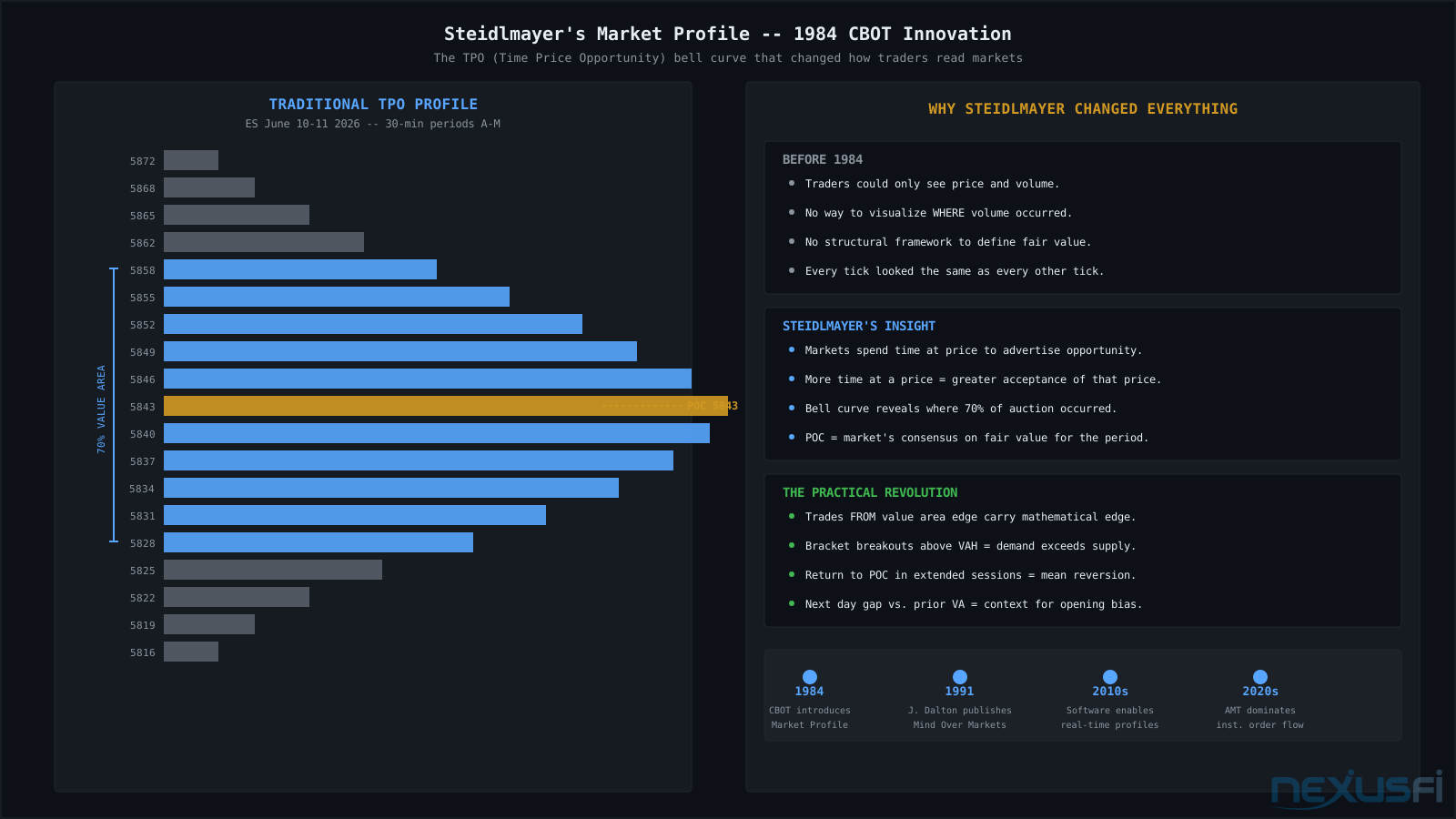
J. Peter Steidlmayer traded grain futures at the CBOT for years before he articulated AMT formally in his foundational text, Steidlmayer on Markets: A New Approach to Trading (Wiley, 1989). His observation was simple: the way prices distributed over time told a story about value that raw candlestick charts couldn't capture.
In traditional charting, a price bar shows you open, high, low, and close — but says nothing about how much time or volume occurred at each price point within that range. Steidlmayer wanted to see that distribution. Market Profile was his answer: a letter-based representation showing which prices were visited during each half-hour period, creating a visual histogram of the auction.
What emerged from this visualization was AMT's core insight: when the distribution looked like a bell curve (a "balanced" profile), the market was accepting a range of prices as fair value. When the distribution was elongated or asymmetric, the market was in price discovery — moving to find new value rather than confirming existing value.
The CBOT licensed Market Profile commercially in 1985. Steidlmayer's ideas spread through the trading community, eventually forming the theoretical backbone of volume profile analysis, order flow reading, and much of modern futures day trading methodology.
:::note Market Profile uses time-at-price (TPO letters showing which time periods traded at each level). Volume Profile uses volume-at-price. Both are visualizations of the same underlying AMT concept: where did the auction spend the most activity? :::
The Two-Timeframe Auction: Initiative vs. Responsive #
This is AMT's most operationally important concept. Markets operate across multiple timeframes simultaneously — and the behavior of short-term participants versus longer-term participants creates the observable patterns AMT traders exploit.
Initiative Activity #
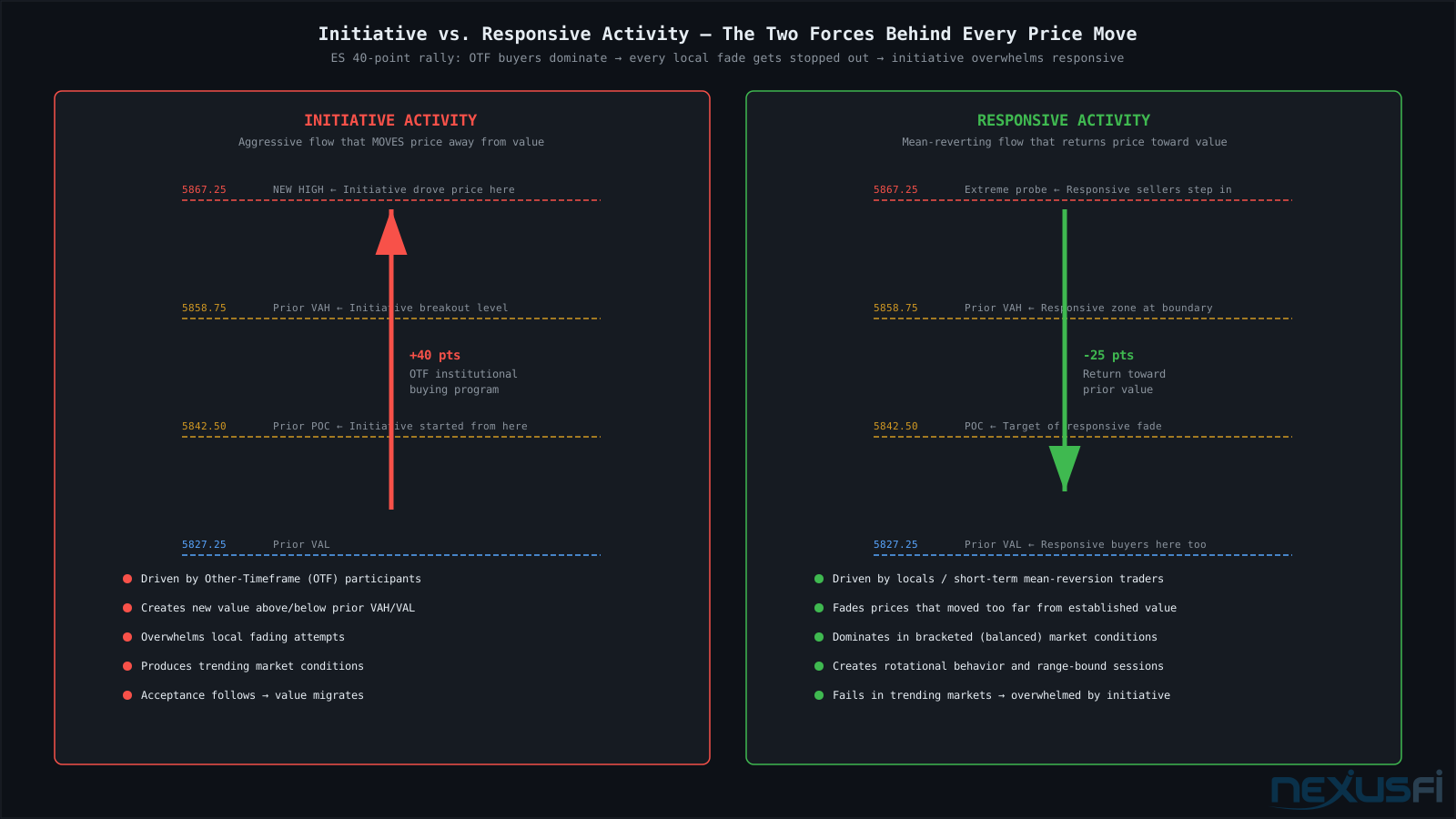
Initiative activity is aggressive order flow that moves price away from established value to create new value. Initiative participants aren't reacting to price — they're driving it.
In practical terms, initiative buyers push price above a prior value area's upper boundary. Initiative sellers push below the lower boundary. They're declaring that the current price is too cheap (buyers) or too expensive (sellers), and backing that declaration with market orders.
Initiative moves tend to show:
- Strong directional impulse
- Lack of two-way trade (sellers don't step in until much higher, or buyers don't appear until much lower)
- Profile development away from the prior session's value center
- Value migration — the market's "fair price" consensus shifting in the direction of the move
Who drives initiative activity? Primarily other-timeframe (OTF) participants — institutions, hedge funds, portfolio allocators, and large commercial hedgers whose trading horizons extend beyond the current session. When a fund decides to reallocate $200M from bonds to equities, that allocation doesn't care about the 15-minute chart. It drives prices in one direction until fully executed.
Responsive Activity #
Responsive activity is the opposing force — participants who view prices at extremes as too far from value and trade back toward it.
Responsive buyers emerge when price falls too far below established value. They see a discount, and they buy. Responsive sellers emerge when price rises too far above value. They see a premium, and they sell.
Responsive activity tends to show:
- Reversal from extremes
- Two-way trade increasing as prices move away from value
- Quick rejection and return toward the value center
- Profile development inside the prior session's value area
Responsive participants include locals, market makers, and short-term traders who profit from mean reversion rather than directional trend. They thrive in balanced markets where price repeatedly returns to value.
As @Private Banker documented in one of NexusFi's most-cited volume profile threads:
"Initiative and responsive activity is simply in reference to the previous session. Technically, initiative buying starts when prices are above the previous day's value area high and initiative selling starts when prices are below the previous day's value area low."
-- @Private Banker, NexusFi: Volume Profile and Footprint Discussion (11 thanks)
This is the practical application: prior session value area boundaries define the initiative/responsive split. Above VAH = initiative buyer territory. Below VAL = initiative seller territory. Inside yesterday's value = responsive activity zone.

Price Discovery: How Markets Seek Buyers and Sellers #
Markets don't move randomly. They move purposefully — to find where trade can be facilitated. Understanding this drive for facilitation is the engine of AMT.
When there's a surplus of sellers at current prices, the auction moves lower. Not because sellers are "more powerful" — but because lower prices are required to attract enough buyers to match the selling. The market seeks buyers by lowering price until it finds them.
When there's a surplus of buyers at current prices, the auction moves higher. Higher prices attract more sellers (increasing supply) and eventually discourage some buyers (decreasing demand) until a new clearing level emerges.
This price discovery process explains behaviors that confused traders often attribute to manipulation or randomness:
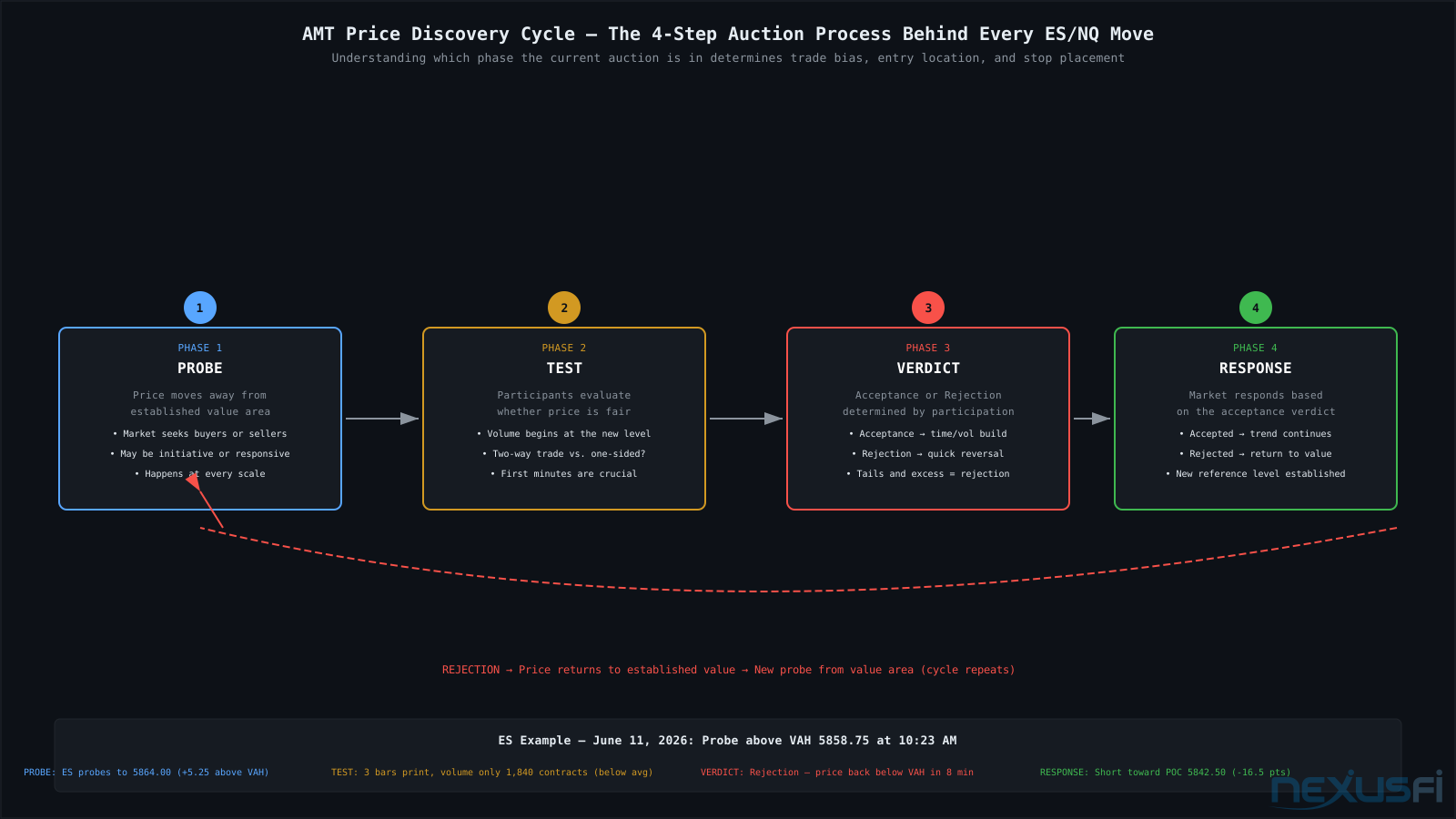
Why price probes prior highs and lows: The auction is testing whether participants are willing to do business at those levels again. A probe above a prior high that finds responsive sellers = rejection. A probe above a prior high that finds no sellers = acceptance, continuation.
Why markets often return to levels after strong moves: If the auction moved quickly to a new level without adequate time-at-price, that area may not represent genuine value consensus. The market often returns to "clean up" the auction — allowing participants who missed the initial move to participate.
Why news catalysts sometimes reverse immediately: A news spike moves price to an extreme. If that extreme doesn't attract enough participants to sustain trade there, the auction reverses — the price was rejected, not accepted.
Acceptance vs. Rejection: The Core AMT Concept #
Acceptance and rejection are the two fundamental outcomes of every auction probe. Learning to distinguish them in real time is the practical skill AMT develops.
What Acceptance Looks Like #
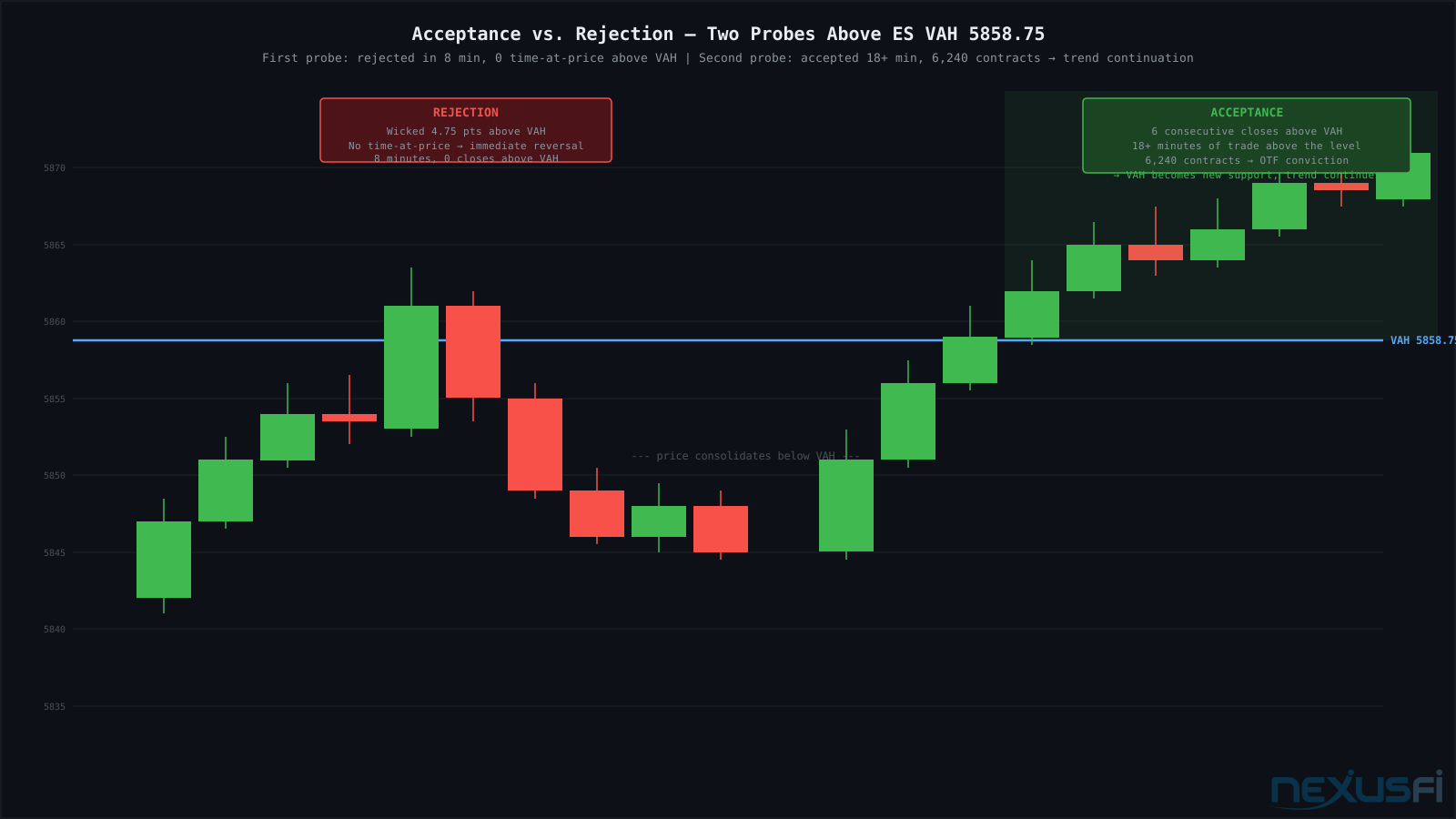
Acceptance occurs when price moves to a level and the market stays there — sustaining trade, generating volume, and building a value area around the new level.
Signs of acceptance:
- Multiple timeframes printing at the level (sustained time-at-price)
- Volume building at the new price zone
- Rotation and two-way trade at the new extreme
- Follow-through after brief pullback (new participants entering on retests)
- Profile development expanding in the direction of the move
When price is accepted above a prior resistance level, that level often becomes support — because the auction has established new value there. The market's "fair price" consensus has shifted.
What Rejection Looks Like #
Rejection occurs when price probes a level and the market quickly moves away — unable to sustain trade at the new extreme.
Signs of rejection:
- Thin time-at-price (single TPO prints, or quick wicks)
- Low volume at the extreme
- Rapid reversal and return to prior value
- No follow-through on retest attempts
- Profile showing a "tail" — a one-bar extreme with nothing built on it
In Market Profile, these rejection zones are called "excess" at the extremes. They represent failed auction attempts — price went too far, found no business, and retreated. FuturesTrader71 members documented in the NexusFi review thread:
"He allowed me to have a better understanding of price discovery, rotations and how a market is drawn to test other price areas... either extremes that were rejected or areas of high volume or acceptance."
The practical trading implication is direct: fade rejection, respect acceptance. If price probes above a prior high and immediately reverses with no follow-through, that's a short setup — the auction tried and failed. If price breaks above a prior high and spends meaningful time above it with volume, that's long continuation territory — the auction accepted the new level.
The Value Area as AMT's Measuring Stick #
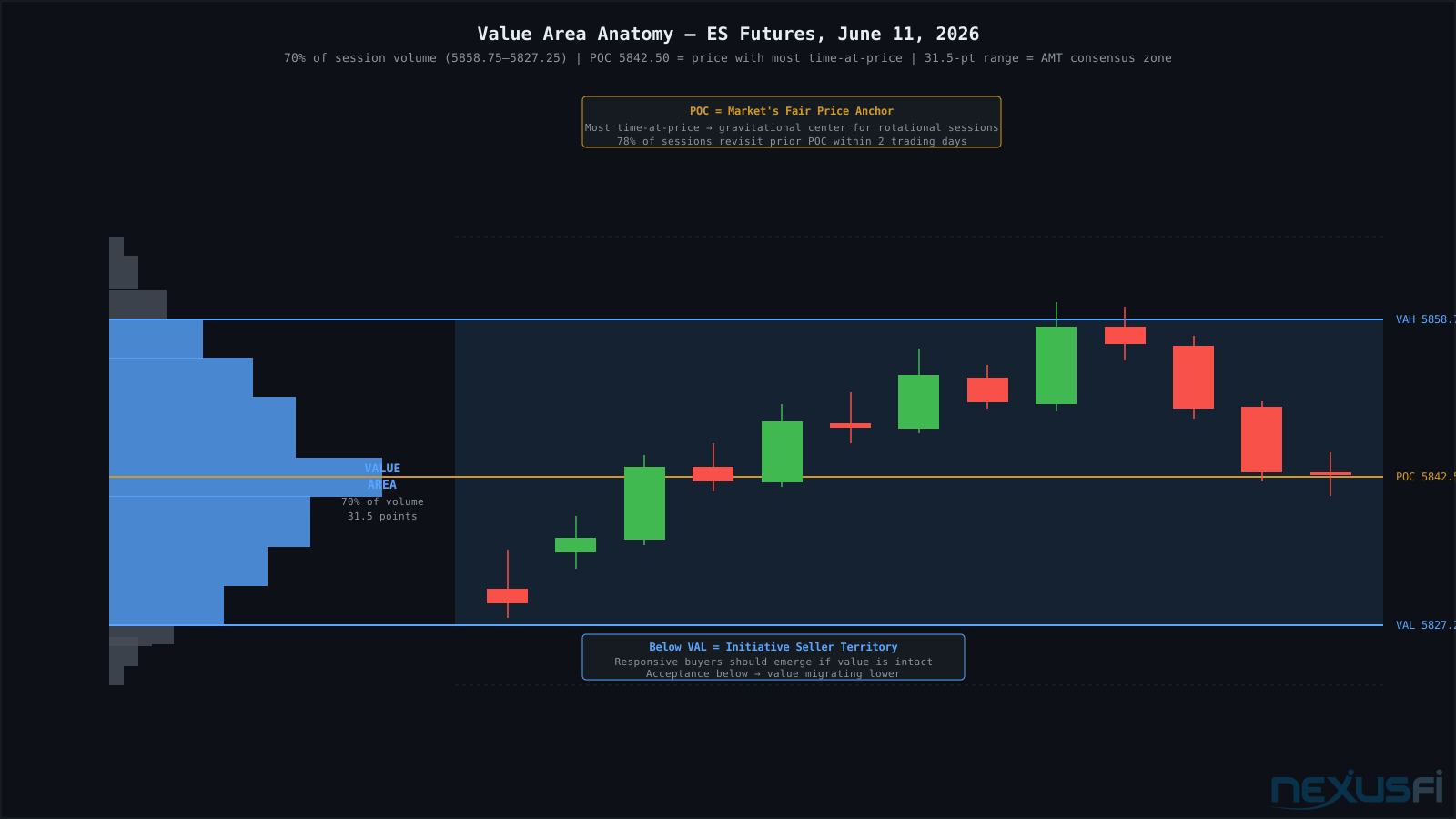
The Value Area is the price range where the majority of auction activity occurred — typically defined as the range containing 70% of trading activity around the session's Point of Control (POC).
In AMT terms, the value area represents the auction's current consensus on fair value. It's not a magic level — it's a statistical description of where the market has been doing the most business.
Inside the value area: The auction is balanced. Both buyers and sellers see price as roughly fair. Expect rotation and mean reversion. Responsive trades work better here.
Outside the value area: The auction is in price discovery mode. Either initiative participants are driving price to new levels (and will either accept or reject those levels), or price is approaching a responsive extreme where the opposing timeframe will push back.
Value area high (VAH): The upper boundary of the value area. Price above VAH is initiative territory for buyers, responsive territory for sellers.
Value area low (VAL): The lower boundary. Price below VAL is initiative territory for sellers, responsive territory for buyers.
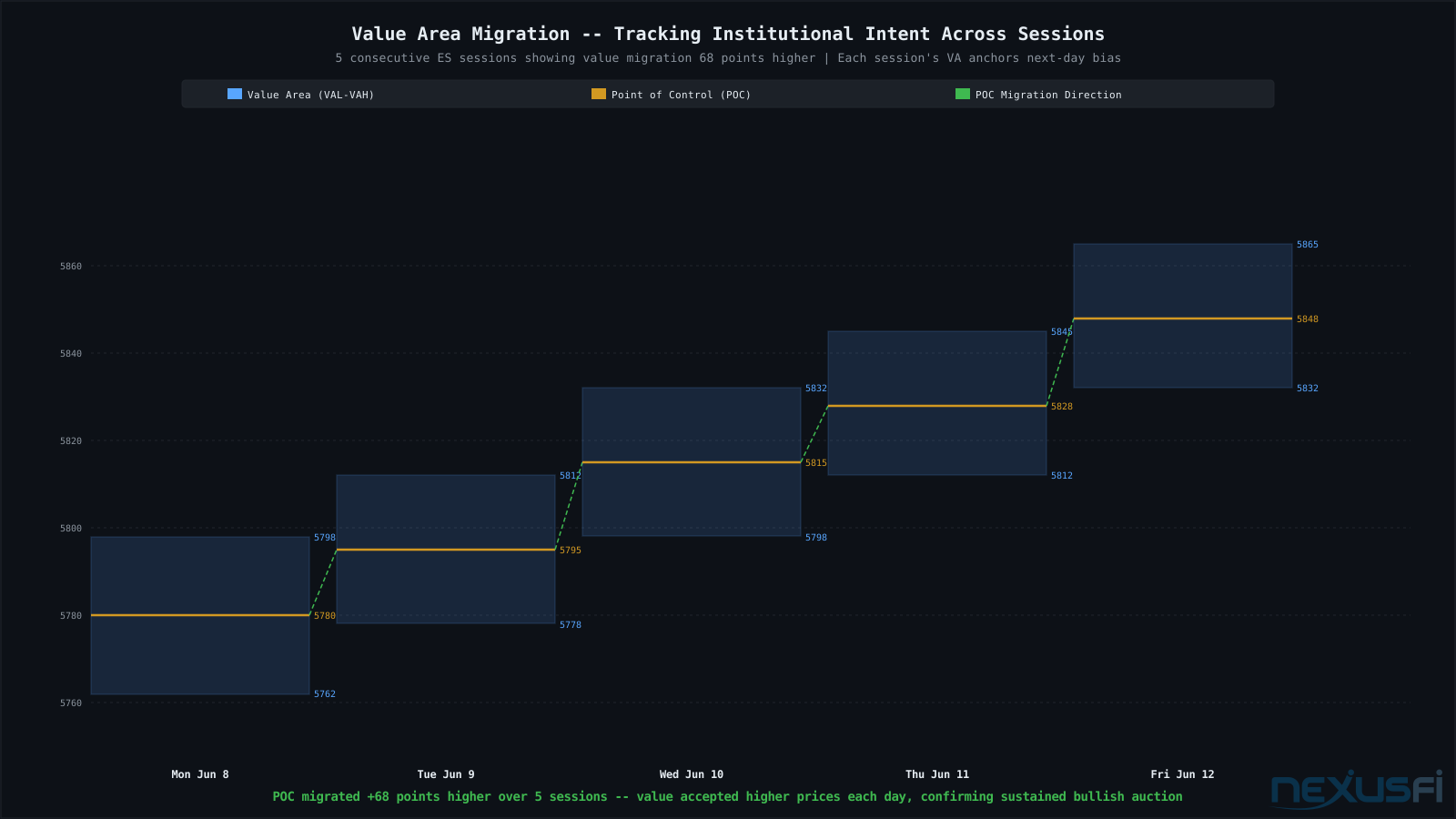
Value migration: When the value area shifts directionally over time — a series of sessions where value builds progressively higher — that migration is the AMT signature of a trend. It's not just price going up; it's the auction's consensus moving up. That's a materially different and more durable condition.
Private Banker, one of NexusFi's most cited volume profile practitioners, described the real-time application:
"Value Area Shifts: I keep an eye on the migration of value and how price reacts to it. During a rotational day, the value area should encompass a narrow price range. During a trend day, we'll often see the value area migrate up or down."
-- @Private Banker, NexusFi: Spoo-nalysis ES E-mini Futures (14 thanks)
Big Mike reinforced the operational importance of tracking POC shifts in real time and using them to confirm session bias:
"Most days you will see the POC shift. Throughout the day, you will often see price return to the POC to look for direction. When I see the POC shift, it is a reminder to me what side of the market I should be on. If I am on the wrong side and the POC has shifted against me, that is not good."
-- @Big Mike, NexusFi: Volume Profile and Footprint Discussion (22 thanks)
Trending Markets: When Initiative Dominates #
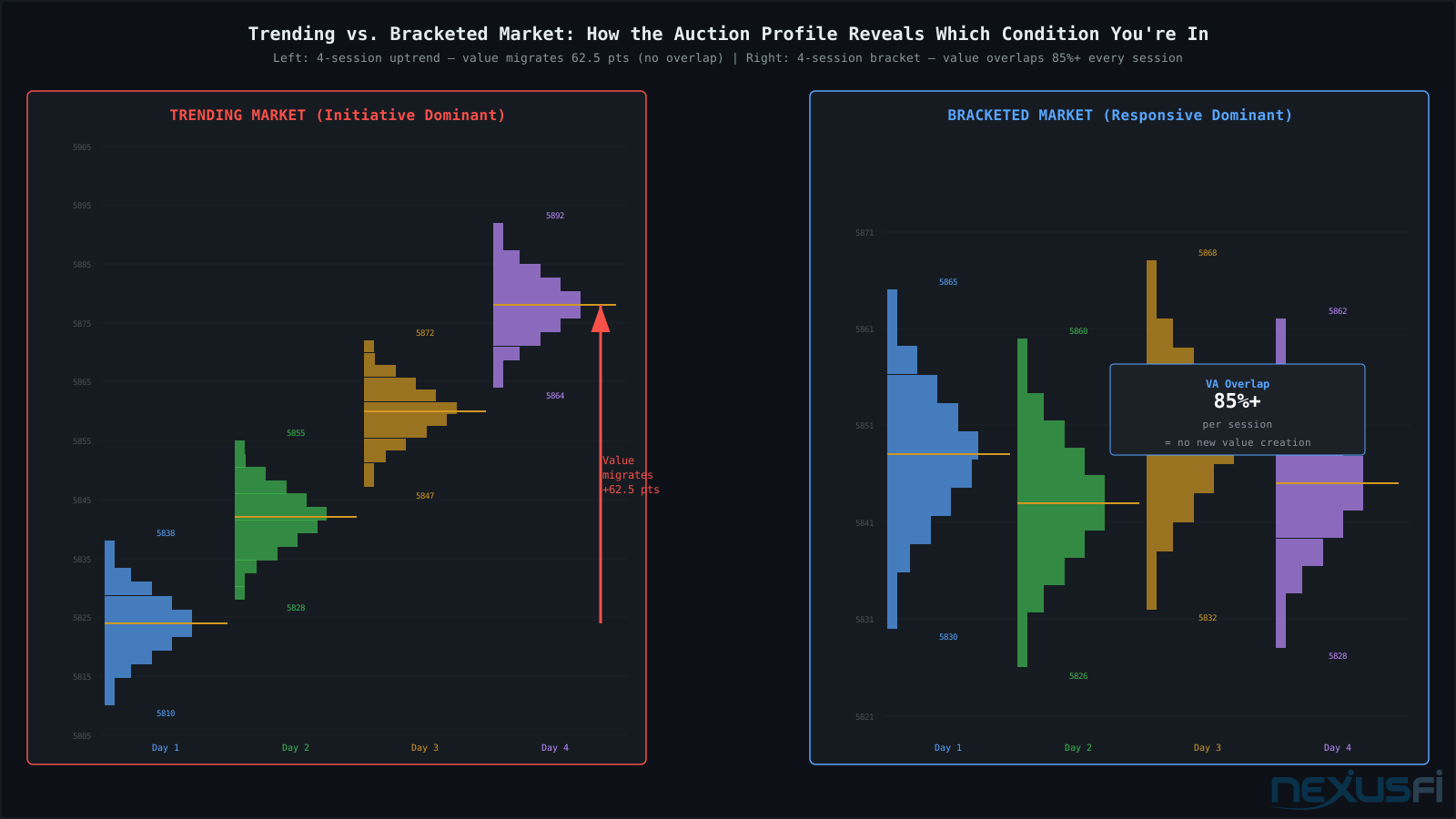
A trending auction is one where initiative participants repeatedly overwhelm responsive opposition. Price keeps moving in one direction, finding acceptance at progressively new levels, with value migrating continuously.
The AMT fingerprints of a trending market:
Directional profile development: Each session builds new value higher (uptrend) or lower (downtrend) rather than overlapping with prior sessions.
Weak pullbacks: Responsive participants try to push back, but initiative flow is strong enough that pullbacks are shallow and brief. Price quickly finds new buyers (in uptrend) or sellers (in downtrend) and continues.
Acceptance of new extremes: Each new high or low gets sustained trade — participants are willing to do business at the new level rather than immediately rejecting it.
Thin responsive defense: When price approaches prior responsive zones (prior value area high in an uptrend), it moves through without significant time-at-price. The responsive sellers can't hold price down.
From a practical trading standpoint, trending conditions flip the responsive/initiative playbook: fading extremes in a trend is low-probability, because the trend is the repeated failure of responsive participants. The trade is to identify acceptance at new levels and participate in the continuation — pullbacks in trend direction, not fades of momentum.
VillainAntagonist documented the decision framework in their trading journal on NexusFi:
"If buyers accept above 1960 (value area high), then activity is initiative bias = long, look for trend continuation. If buyers can't hold 1970 and price falls back into value, then activity is responsive = wait for better location."
-- @VillainAntagonist, NexusFi: Starting Fresh Journal (2 thanks)
Bracketed Markets: When Responsive Controls #
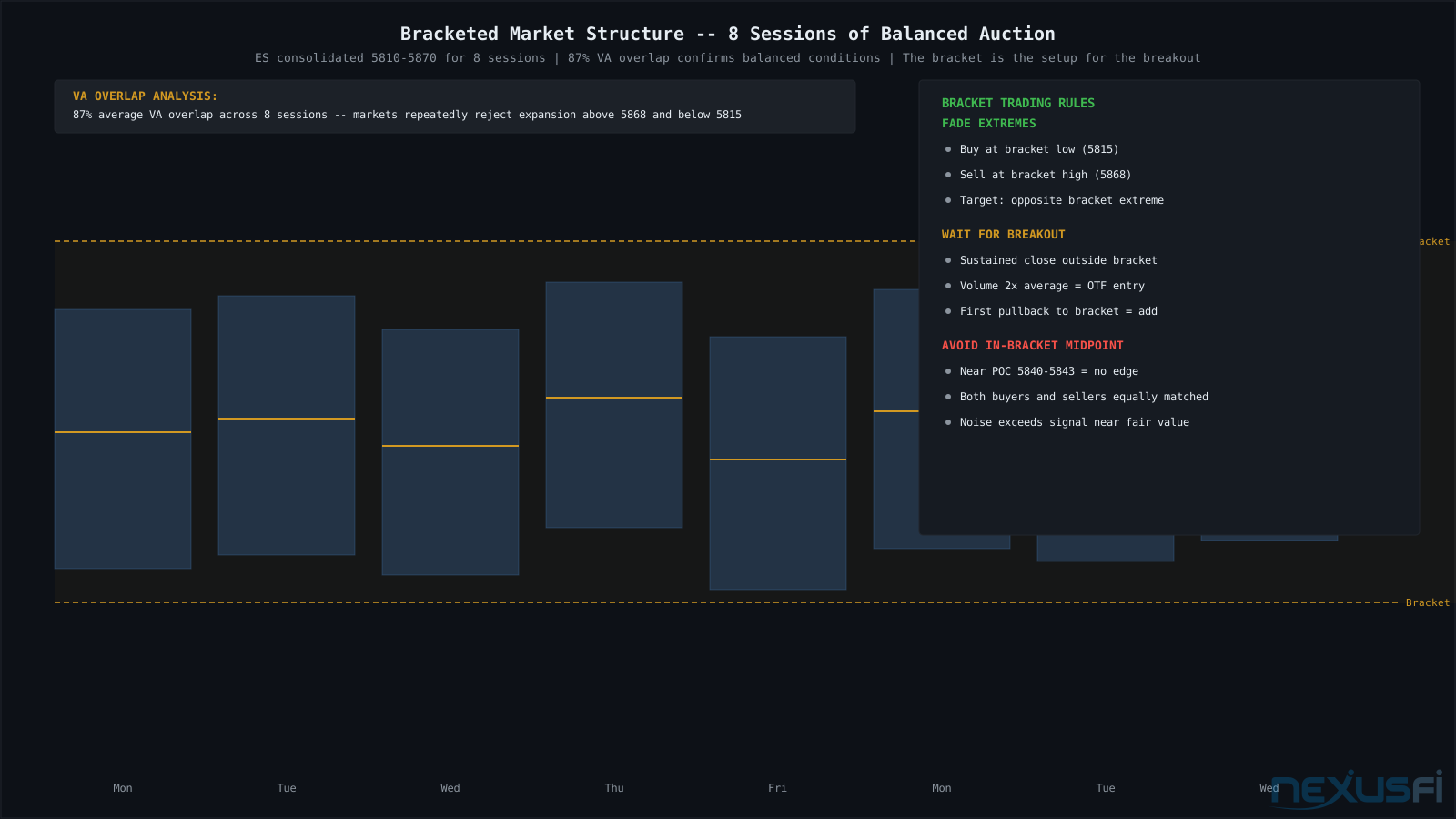
A bracketed auction is one where responsive activity consistently prevents the market from establishing new value outside the established range — the definitive balance condition in AMT terms. Price probes the bracket boundaries, gets rejected, and returns toward the bracket's midpoint.
The AMT fingerprints of a bracketed market:
High profile overlap: Each session's value area overlaps much with prior sessions. No new value is being built; the market is confirming existing consensus.
Failed breakout attempts: Price probes above/below bracket extremes repeatedly, but acceptance doesn't follow. Each test gets rejected and returns into the range.
Two-way trade at extremes: Unlike trending markets where one side simply isn't present at new extremes, bracketed market extremes see immediate two-way trade — both buyers and sellers willing to participate.
Efficient mean reversion: Price at bracket extremes predictably returns toward the bracket midpoint (typically near the value area's POC or the overall bracket's midpoint).
In bracketed conditions, the playbook inverts completely: fade extremes, target the bracket midpoint for profit, use tight stops beyond the bracket. Private Banker described it:
"If the market is trading within value and all of a sudden the market spikes up and out of it, then it would make sense to fade that move. Reason being the market is balanced and any deviation from it is likely to be corrected."
-- @Private Banker, NexusFi: Webinar on Risk Management (19 thanks)
Private Banker also described the bracket failure sequence and what follows when the market breaks out on an opening drive:
"If a market breaks out of a balance area and fails and moves back within the balance area, my expectation is that the market will test the low of the balance area. On an opening drive/initiative move, that buying tail should be good. If it failed then you'd want to get out as the initiative attempt failed."
-- @Private Banker, NexusFi: Volume Profile and Footprint Discussion (18 thanks)
The challenge is knowing which condition you're in. Markets cycle between bracket and trend without announced warning. AMT's guidance: let the auction tell you by watching whether initiative moves find acceptance or rejection. Multiple consecutive sessions of overlapping value = bracket. Multiple consecutive sessions of migrating value = trend.
The Role of OTF Participants vs. Locals #
AMT's original framework distinguished between two broad participant types whose timeframe difference creates the observable tension in any auction.
Other-Timeframe (OTF) Participants #
OTF participants operate on horizons longer than the current session. Pension funds rebalancing quarterly allocations. Hedge funds executing macro positioning. Commercial hedgers managing production or procurement risk.
Their defining characteristic: they care about where they get filled over the long run, not where price is in the next 15 minutes. When an OTF buyer decides to acquire a $500M position in ES, they'll buy consistently for hours or days. That sustained directional pressure is what creates initiative moves that can't be quickly absorbed by shorter-term responsive flow.
OTF participants create trends. Their participation defines whether a move is structurally meaningful (value migrating) or a temporary spike into responsive territory.
Locals / Short-Term Traders #
Locals (the original term referred to exchange floor traders) are short-horizon participants who trade for the scalp — capturing small price movements efficiently. They provide liquidity, fade extremes, and build the rotational behavior that defines bracket markets.
Locals don't typically hold positions overnight or commit to directional views. They're responding to current auction conditions, not executing on a multi-month thesis.
In modern electronic markets, the "local" role is played by retail day traders, scalp-oriented algorithms, and market makers. Their collective activity creates the responsive pressure that maintains brackets and generates mean reversion.
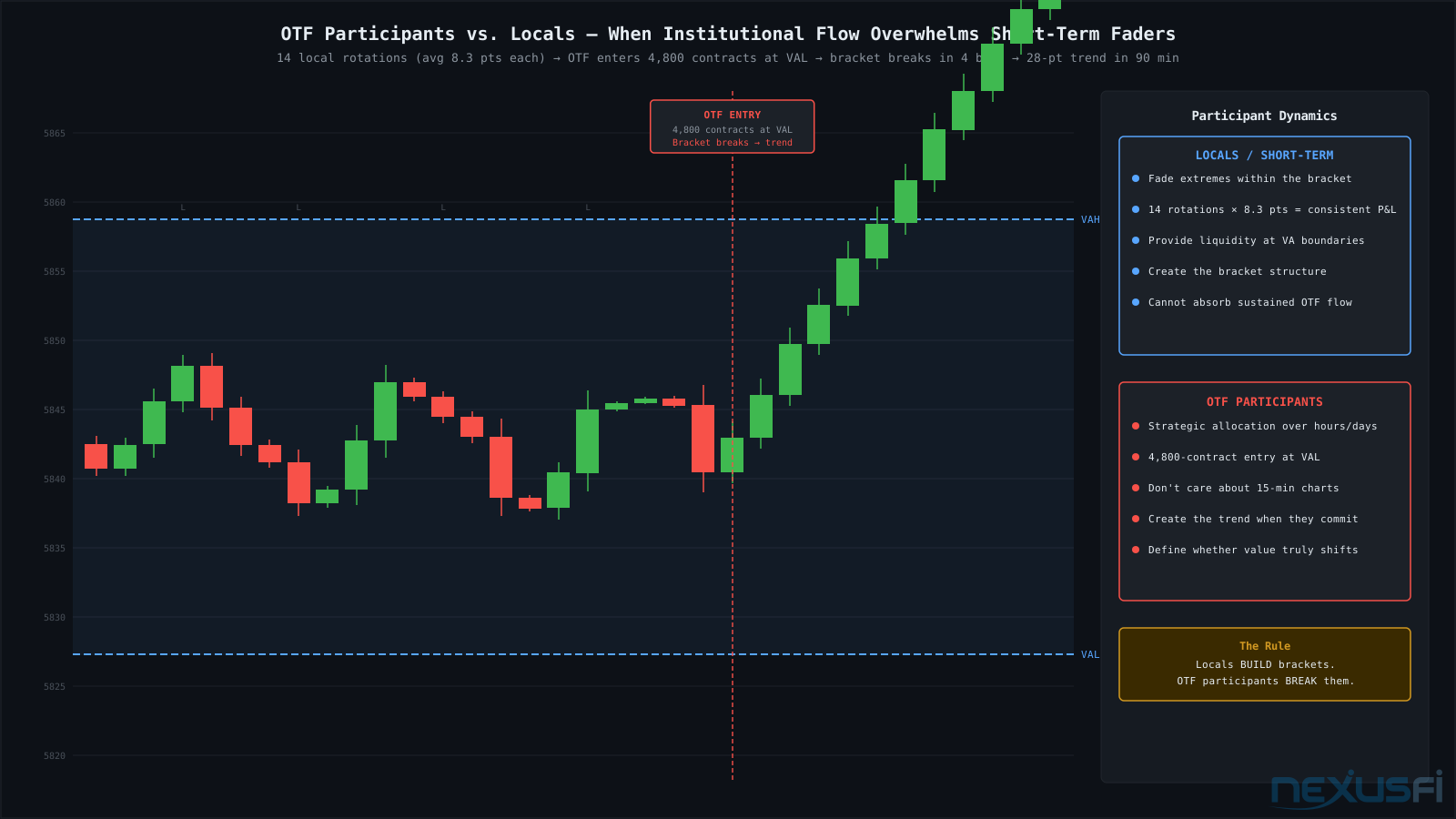
The practical insight: When a market breaks from a bracket on strong initiative flow, locals initially fade the move (as they always do at extremes). If OTF participants are genuinely driving the break, their sustained participation overwhelms the local fading. The locals eventually cover their shorts/longs and the bracket breaks. If no OTF participation exists behind the breakout, the locals successfully fade it back — a false breakout.
The Opening Auction: Reading the Day's Intent #
For ES and NQ day traders, AMT's opening auction analysis is some of the most actionable framework available. The opening establishes the day's initial structure and hints at whether the session will trend or bracket.
Steidlmayer's opening type classifications were later refined by traders like Jim Dalton — whose Mind Over Markets (Wiley, updated edition 2013) remains the definitive practical guide to applying Market Profile in real trading — and Mark Fisher. The core categories:
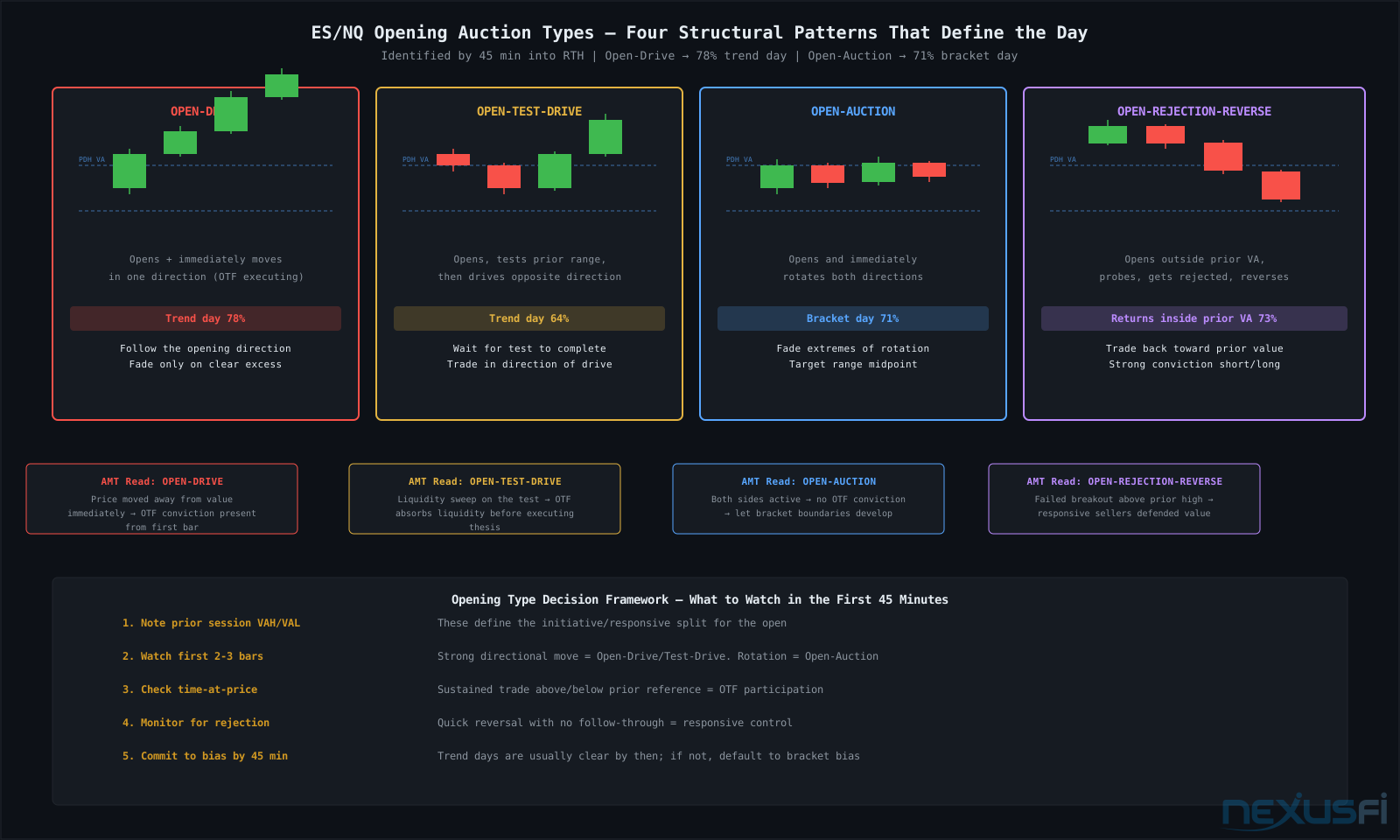
Open-Drive: Price opens and moves strongly in one direction from the first bar. Initiative participants were positioned ahead of the open and are immediately executing their agenda. High probability of trend day. Don't fade the opening direction — wait for a pullback to participate in the direction of the drive.
Open-Test-Drive: Price opens, tests the prior session's range (often briefly), then drives in the opposite direction. Initiative participants absorbed initial liquidity and then executed. Similar to Open-Drive but with initial noise that confuses reactive traders.
Open-Auction: Price opens and immediately begins rotating — going up, coming back, going up again, returning again. Both sides are active. This is early evidence of a bracket day in development. Fade extremes, target the opening range midpoint initially.
Open-Rejection-Reverse: Price opens outside the prior session's value area, probes the overnight high or low, gets rejected, and reverses back into the prior value area. Classic AMT rejection — the opening was a failed auction attempt above/below established value. Strong fade setup.
Understanding which type of open you have by 30-60 minutes into RTH shapes the entire session's trading framework. Hoag documented the importance of this read:
"Price discovery is the function of all the participants in the auction establishing the collective perception of value. If a particular product is viewed by the market participants as 'too cheap,' buyers come in, raising the price until a fair market is established."
-- @Hoag, NexusFi: Trading Lessons from Hoagland (12 thanks)
The opening auction tells you whether the market's collective perception is shifting (open-drive, open-test-drive) or holding (open-auction, open-rejection-reverse).
Practical Trading Rules Derived from AMT #
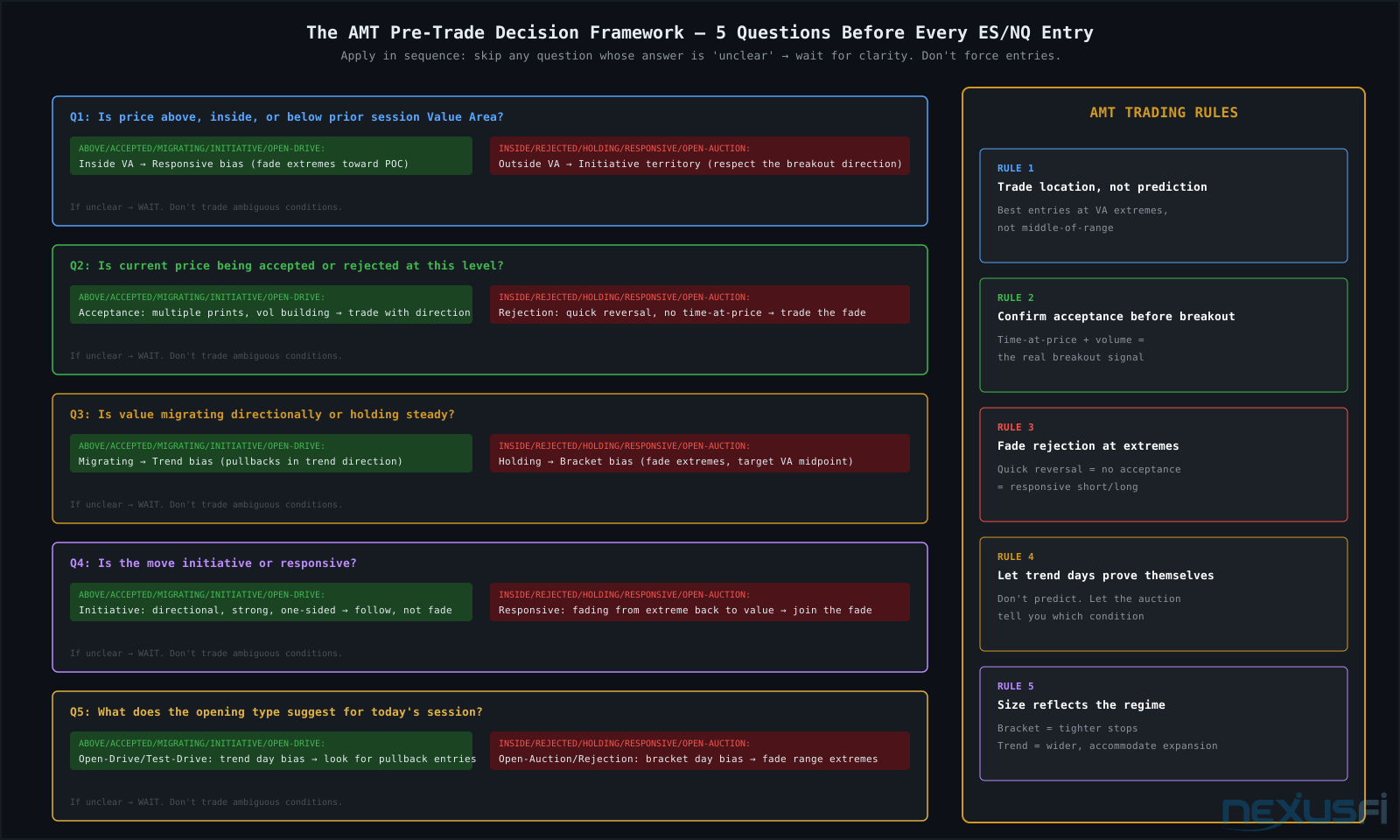
AMT generates a decision framework for real-time trading, not just market interpretation. These rules apply across instruments but are illustrated here with ES and NQ examples.
Rule 1: Trade location over prediction
The best AMT trades are at defined locations — value area high, value area low, prior day high/low, the 80% Rule reference (when price enters prior day's value area, it has an 80% statistical probability of reaching the opposite boundary). Don't trade the middle of a balanced area unless you have a strong structural edge.
Rule 2: Confirm acceptance before committing to breakout continuation
A price breakout above a key level is an event. Acceptance of that breakout is the signal. Watch for:
- Multiple prints above the level (time-at-price building)
- Volume at the new level
- Failed tests back below the level (shows responsive sellers couldn't push price back)
The price breaking a level is not the signal. The market staying above the level after the break is.
Rule 3: Fade rejection at extremes in balanced conditions
When price probes above a prior session's high in an otherwise balanced market and is immediately rejected (no time-at-price, quick reversal), that's a short setup back toward the value area. The auction tested the extreme, found no acceptance, and returned.
Rule 4: Let trend days prove themselves
Don't try to call trend vs. bracket days at the open. Let the auction show you through acceptance behavior. By 30-45 minutes into RTH, the evidence is usually clear: value migrating = trend bias, overlapping value = bracket bias.
Rule 5: Respect value migration as a directional signal
When value builds higher for 3+ consecutive sessions, that migration represents OTF conviction. Don't fight it. Buy pullbacks to the developing value area, not tops. The migration may stall but needs actual rejection evidence (value building lower) before counter-trend trades make sense.
Rule 6: Size and stops must reflect the auction regime
In balanced (bracket) conditions, stops can be tighter because mean reversion is expected and clean. In trending (imbalanced) conditions, the market moves with more volatility and stops must accommodate the expansion. Using bracket-sized stops in a trend = getting stopped out repeatedly on normal trend pullbacks.
As @josh explained in NexusFi's Market Profile vs. Volume Profile thread, after more than a decade of trading with AMT-based methods:
"Auction theory has its roots in MPs and thus there is a lot of value there. I've seen a lot of VP users who really don't have a clue about what they're doing. They don't understand core principles, and so they dumb down their trading to blanket concepts without understanding context."
-- @josh, NexusFi: Market Profile vs Volume Profile (9 thanks)
AMT is not a mechanical system — it's a structural understanding that makes every other tool more actionable. Without that structural context, Volume Profile becomes just a histogram and the entries have no auction-theory foundation.
AMT vs. Traditional Supply/Demand Theory #
Both frameworks deal with price levels and why markets react at certain areas. But they approach the question differently.
Supply/Demand Zone Theory #
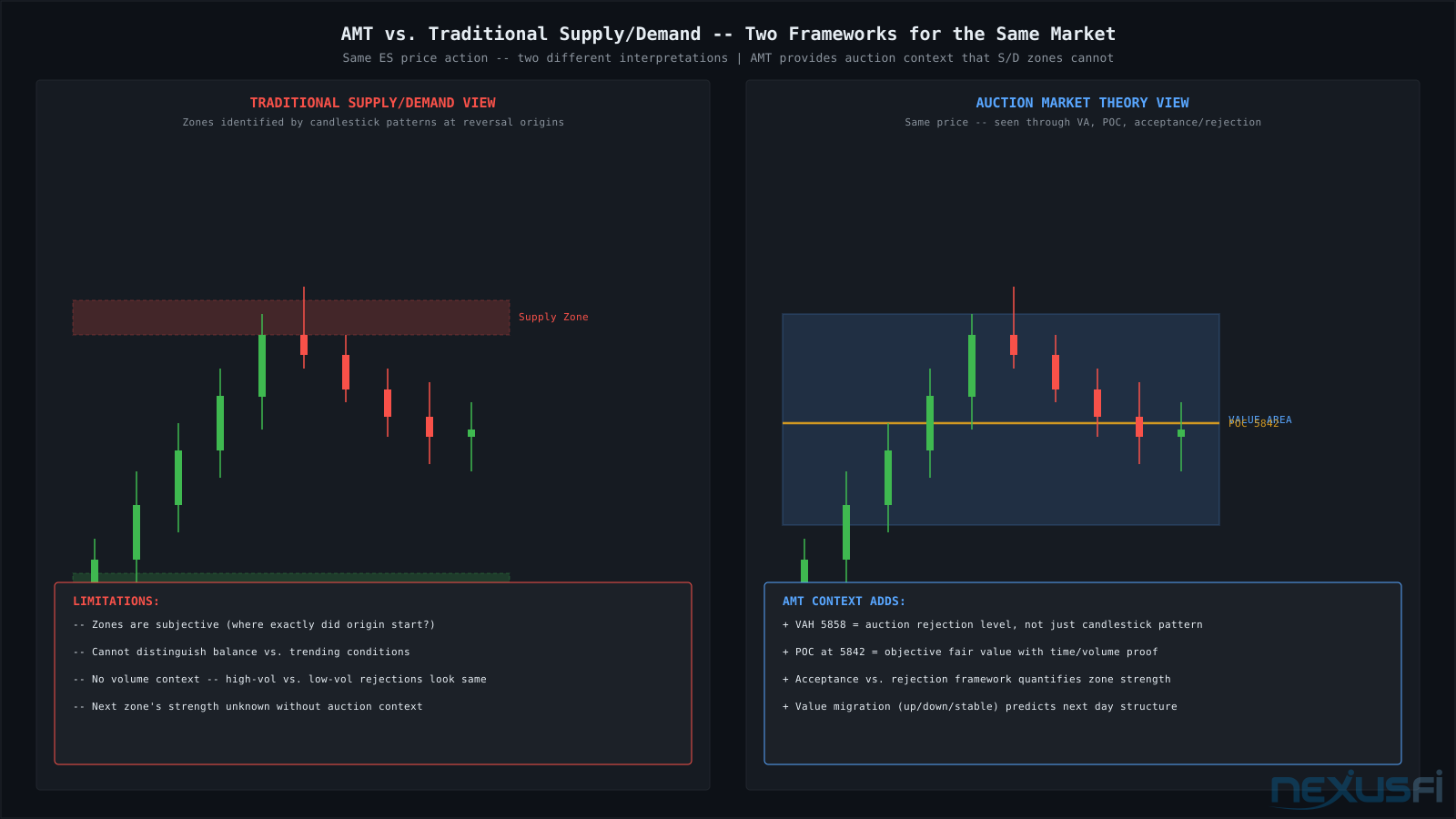
Traditional supply/demand (S/D) theory focuses on historical price levels where imbalanced order flow left unfilled orders. A "demand zone" is where strong buying occurred previously; a "supply zone" is where strong selling occurred. The premise is that those unfilled orders remain and will cause reactions when price returns.
S/D theory is primarily level-based and static. It identifies where a reaction may occur, based on prior price structure.
Auction Market Theory #
AMT focuses on the live auction process — whether price is currently being accepted or rejected, whether initiative or responsive participants are in control, and whether value is shifting.
AMT asks different questions:
- Is price being accepted here, or rejected?
- Is value migrating, or holding?
- Are we in initiative or responsive territory?
- Is this a trend condition or a bracket condition?
Where They Converge #
A supply zone in S/D terminology corresponds to a prior area where price was rejected in AMT terms. Both frameworks identify it as significant. S/D says "unfilled orders remain here." AMT says "the auction previously rejected prices here — when it returns, watch for the same response."
The difference emerges in application: S/D treats the zone as binary (holds or fails), while AMT treats any reaction as part of a live acceptance/rejection process. AMT asks how price interacts with the level — time-at-price, volume, responsive vs. initiative behavior — rather than just whether it bounces.
In practice, the frameworks complement each other. Use S/D analysis to identify levels where significant reactions are likely. Use AMT to read whether the current auction is accepting or rejecting those levels when price arrives.
AMT in the Context of Fi's Approach to Market Profile #
Auction Market Theory is the language spoken throughout NexusFi's Market Profile and Volume Profile discussions. Fi documented the connection directly in a recent profile thread:
"Balance and imbalance, and the job isn't predicting direction, it's mapping the auction boundaries and reacting to acceptance or rejection at those levels."
The thread context also highlighted how ninjus had internalized AMT concepts in their trading journal: "Market auction theory tells us prices tends to..." — illustrating how AMT vocabulary becomes second nature for traders who've studied it seriously.
Common Mistakes and Limitations #
AMT is powerful. It's not flawless.
Subjectivity in Real-Time #
The distinction between acceptance and rejection can be clearer in hindsight than in real time. A breakout that "looks like acceptance" at 10 AM might turn out to be rejection by 11 AM. The framework tells you what to watch; it doesn't remove the ambiguity in the moment.
The discipline is to define your criteria in advance: "Acceptance = two full 30-minute periods above the prior high with no return below the breakout level." Define it objectively, not interpretively.
Modern Market Structure Changes #
Steidlmayer developed AMT in an era of open-outcry markets, where local floor traders were the primary responsive participants. Electronic markets have:
- Compressed time-at-price (algos move in and out faster than floor traders)
- More "noise" acceptance (HFT algorithms create brief spikes that look like acceptance but aren't)
- Reduced overnight volume, making globex sessions less representative of true value
The core AMT concepts remain valid, but calibrations are required. Acceptance signatures that took 30-minute periods to develop in 1988 may develop in 5-minute periods in modern ES trading.
The Prediction Trap #
AMT is a decision framework, not a prediction system. Traders who use it to "predict" whether tomorrow will be a trend day or bracket day are misapplying it. AMT's strength is helping you read what's happening and respond appropriately — not forecast what will happen.
The correct mindset: "I don't know if today will trend or bracket. Here's what acceptance of a trend would look like, here's what bracket confirmation would look like, and here's what I'll do in each case." Prepare for both scenarios; let the auction tell you which one is playing out.
Analysis Paralysis #
AMT introduces many concepts — value area, OTF activity, initiative vs. responsive, trending vs. bracketed, opening types, acceptance, rejection, migration. New traders sometimes get lost in the vocabulary before developing practical application.
The antidote: simplify to two questions. (1) Is price above, inside, or below yesterday's value area? (2) Is it being accepted there, or rejected? Those two questions, answered correctly, handle 80% of AMT's practical application.
AMT Integration with Other Frameworks #
Auction Market Theory doesn't replace other analytical tools — it contextualizes them.
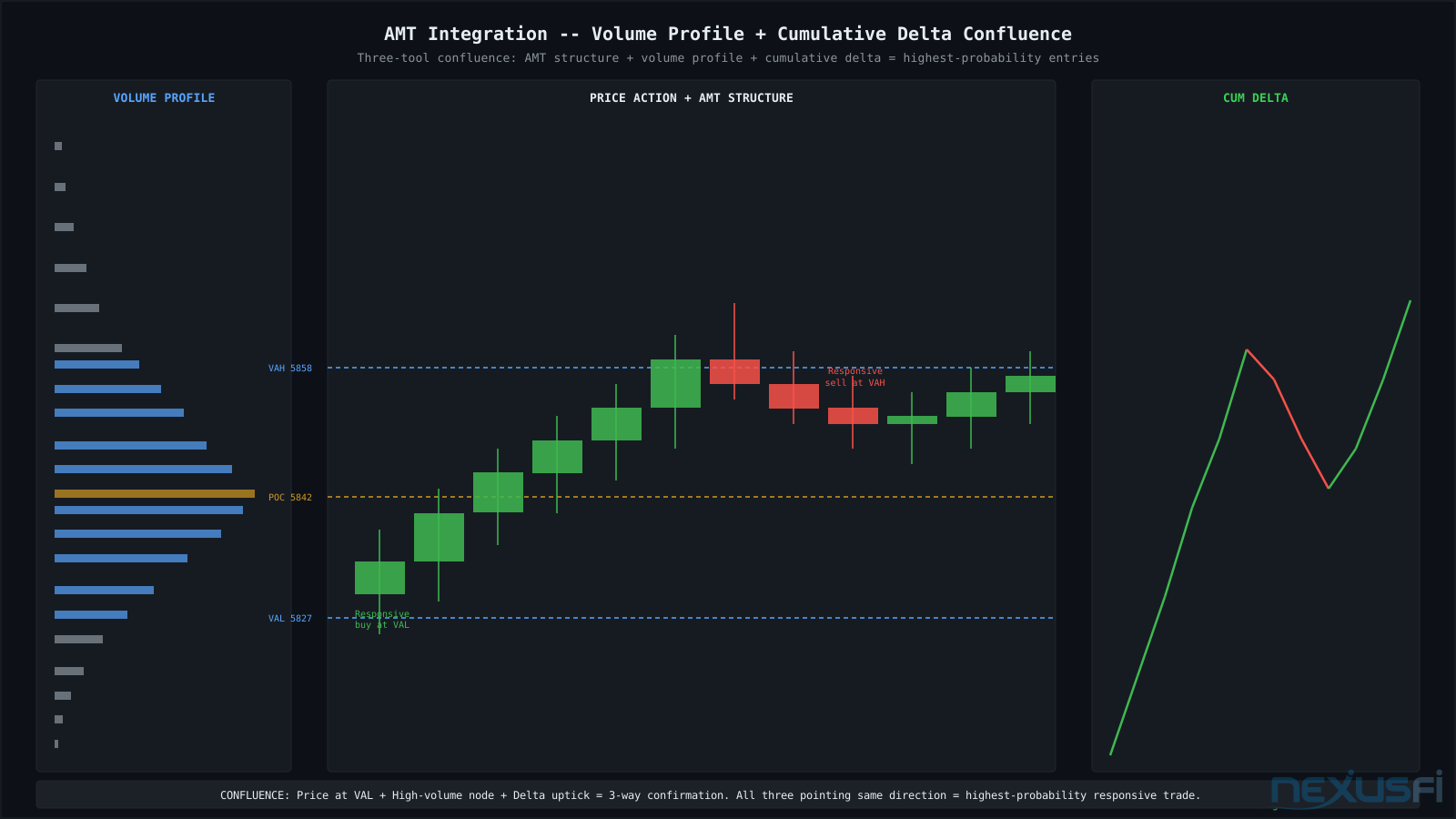
Volume Profile: Volume Profile is AMT's most natural companion. The Point of Control, value area high/low, and volume nodes all represent AMT concepts made visible. Volume Profile tells you where the auction spent time and volume; AMT tells you how to interpret whether price behavior at those levels is initiative or responsive.
Order Flow / Cumulative Delta: Order flow shows the moment-to-moment initiative vs. responsive balance. Cumulative delta diverging from price at a value area extreme is AMT's acceptance/rejection principle made visible in the order flow dimension.
Market Profile TPO Charts: TPO charts are AMT's original visualization. Day types (Trend Day, Neutral Day, Normal Day, etc.) are AMT's trending vs. bracketed distinction operationalized with specific structural criteria.
Market Profile Day Types: The five day type classifications translate AMT's trending vs. bracketed distinction into specific, tradeable patterns with structural entry criteria.
Point of Control: The POC is AMT's "fair price" made tangible — the single price where the auction facilitated the most trade, and the gravitational center that price tends to revisit in balanced conditions.
Failed Auction: AMT's "rejection" concept operationalized as a specific, recognizable price action pattern — the failed breakout that returns quickly inside the prior range.
Volume Profile Trading: The hub strategy that applies AMT concepts to specific entry and exit frameworks in ES, NQ, and other futures.
Summary #
Auction Market Theory gives you a coherent language for reading markets. Instead of staring at price action and trying to predict direction, you're asking: is the auction accepting or rejecting this area? Are initiative or responsive participants in control? Is value migrating or holding?
The answers to those questions — applied consistently, without prediction bias — produce a structured approach to every trading session.
The framework works because it's grounded in how markets actually function: continuous auctions seeking fair value, moving until they find participation, building consensus where they do and rejecting where they don't. That's not theory. That's the mechanism. AMT just makes it visible.
Knowledge Map
Prerequisites
Understand these firstGo Deeper
Build on this knowledgeReferences This Article
Articles that build on this topicCitations
- — Trading Lessons from TopstepTrader's John Hoagland (HOAG) (2014) 👍 12“Price discovery is the function of all the participants in the auction establishing the collective perception of value.”
- — Market Auction Theory - backwards? (2014) 👍 5“At the center of the price range there will be the bulk of trading done as all the players find prices they are able to do business at.”
- — Spoo-nalysis ES e-mini futures S&P 500 (2013) 👍 13“This previously agreed value is being abandoned temporarily in search of a new consensus.”
- — CL Light Crude Analysis TPO/MP/VWAP/VPOC (2013) 👍 11“Taking an opposing directional trade when the market is telling you that it is clearly imbalanced is 100% price discovery and very dangerous.”
- — Volume Profile and Footprint discussion (2012) 👍 11“Initiative activity is any buying above or within the previous session's value. Responsive is simply buying below the previous session's value and selling above.”
- — Trading Futures with Context (2013) 👍 17“Smaller rotations are created by short term participants that offer liquidity, while the longer time frame participants offer vertical development and larger rotations.”
- — Rotation / Swing Indicator Similar to FT71? (2017) 👍 16“Rotations that exceed the 2SD are worth attention, usually representing a shift in the market balance. There is an edge in catching the turning point of a 1SD rotation.”
- — This is good advise, so I will follow it... (2012) 👍 4“Rotation days make a ton of sense from an auction market theory but these last two days seem to perform outside the auction theory.”
- — Market Auction Theory - backwards? (2014) 👍 10“If the market trades around a range of prices for a while, this is known as price acceptance -- an area where buyers and sellers agree on the current price. But isn't this where they disagree most -- buyers think it's cheap, sellers think it's expensive?”
- — Volume Profile and Footprint discussion (2015) 👍 14“When a market is in balance the profile will often be very gaussian/bell shaped. The VAH/VAL represent a meaningful one standard deviation of value. For an imbalanced distribution the VAH/VAL is meaningless -- look at where the market has accepted and rejected prices.”
- — Spoo-nalysis ES e-mini futures S&P 500 (2012) 👍 14“Value Area Shifts: I keep an eye on the migration of value and how price reacts to it. During a rotational day the value area should encompass a narrow price range. During a trend day we will often see the value area migrate up or down.”
- J. Peter Steidlmayer — Steidlmayer on Markets: A New Approach to Trading (Wiley, 1989)
- James F. Dalton, Eric T. Jones, Robert B. Dalton — Mind Over Markets: Power Trading with Market Generated Information, Updated Edition (Wiley, 2013)