



Multi-Timeframe Analysis for Futures: The Top-Down Framework That Puts Context First
Overview #
You see a bullish 5-minute setup on ES. Everything lines up — clean pullback, solid structure, delta confirming. You take the trade. It gets steamrolled. Two hours later you pull up the daily chart and realize you were buying straight into a multi-day downtrend the 5-minute chart never showed you.
That's the problem multi-timeframe analysis solves.
MTA is the practice of reading a market across several timeframes simultaneously — weekly, daily, 4-hour, 1-hour, 5-minute — so that every trade decision carries context from the charts that matter most. It's the difference between pulling a trigger on a 5-minute setup you fully understand and pulling a trigger because the 5-minute chart looked compelling in isolation.
The concept sounds simple. In practice, most traders either skip it entirely or implement it so loosely that it does nothing. This article gives you a complete, operational framework: which timeframe does what, how they connect, how to handle conflicts, and how ES and NQ traders use MTA in the real world.
Why Context Changes Everything #
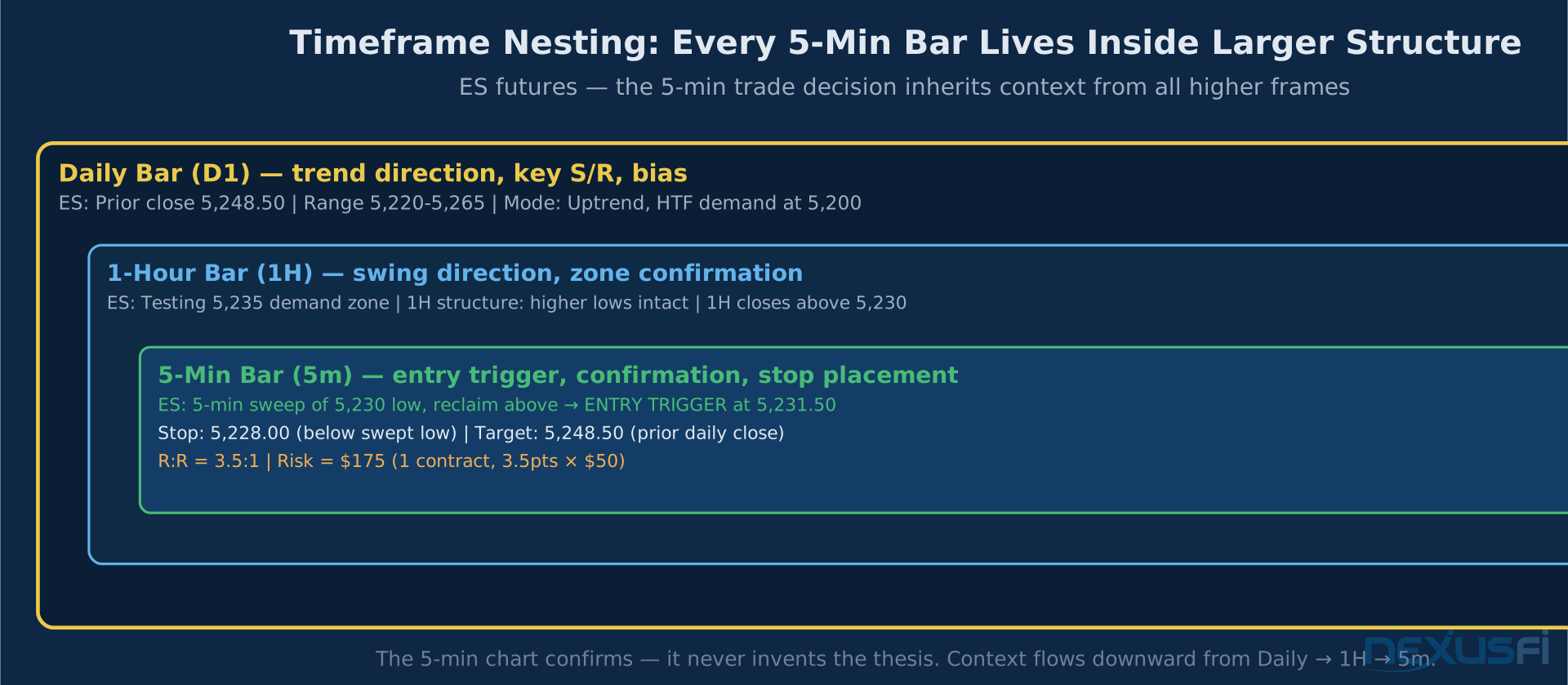
Every 5-minute candle exists inside a 1-hour move, which exists inside a 4-hour swing, which exists inside a daily trend. Ignoring that hierarchy doesn't make it disappear — it just means you're trading without knowing which layer your setup is actually playing in.
Here's the problem: a bullish 5-minute setup looks identical whether it's a low-risk pullback entry in a raging daily uptrend or a counter-trend bounce that's about to get steamrolled. The 5-minute chart can't tell you which it is. Only the higher timeframes can.
That's the shift MTA creates: from reacting to price to understanding what price is doing inside a larger structure.
@dctrade69's Elite Trading Journal, "Trading Futures with Context," ran for over 10,000 replies — one of the most engaged threads in NexusFi's history — built entirely on applying higher-timeframe context to every intraday trade. The thread title says it all. Context is the work.
Trading Futures with Context (@mfbreakout)
The Standard Timeframe Stack #
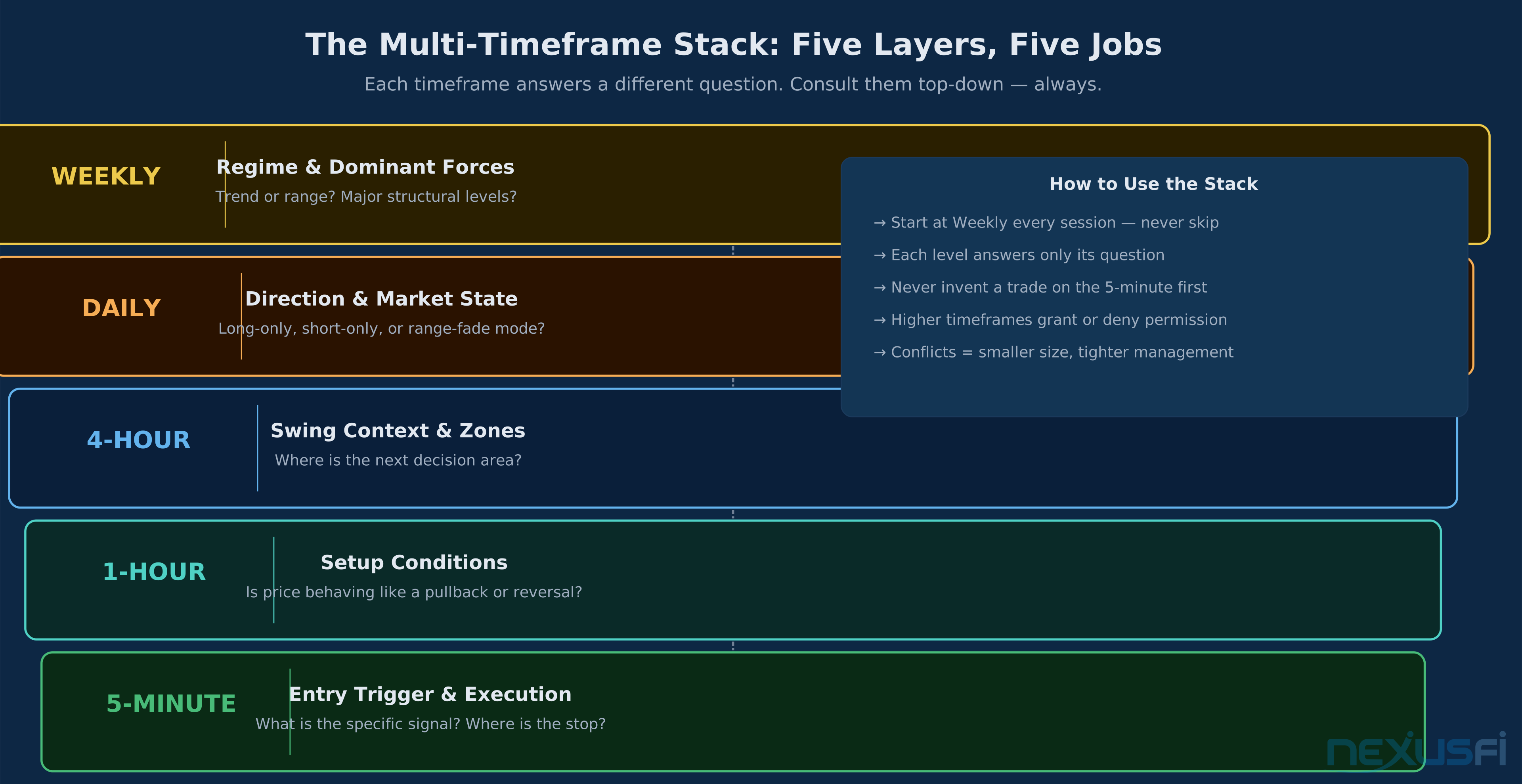
There's no universal law saying you must use exactly these timeframes, but the Weekly/Daily/4H/1H/5min stack is the most commonly used framework among futures day traders and swing traders. Here's why it works:
Each level is roughly 4-6x the size of the level below it (weekly = 5 trading days, daily = 1 day, 4H = 4 hours, 1H = 1 hour, 5min = 5 minutes). That ratio keeps adjacent timeframes meaningfully different — close enough that they're describing the same market behavior, far enough that each adds a new layer of resolution.
The five-level stack:
| Timeframe | Role | Primary Question |
|---|---|---|
| Weekly | Regime and dominant forces | Are we trending or ranging? What are the major structural levels? |
| Daily | Direction and market state | Long-only, short-only, or range-fade mode today? |
| 4-Hour | Swing context and tradeable zones | Where is the next decision area? Where does risk become smallest? |
| 1-Hour | Setup conditions and timing | Is price behaving like a pullback or a reversal? |
| 5-Minute | Entry trigger and execution | What's the specific signal? Where's the stop? |
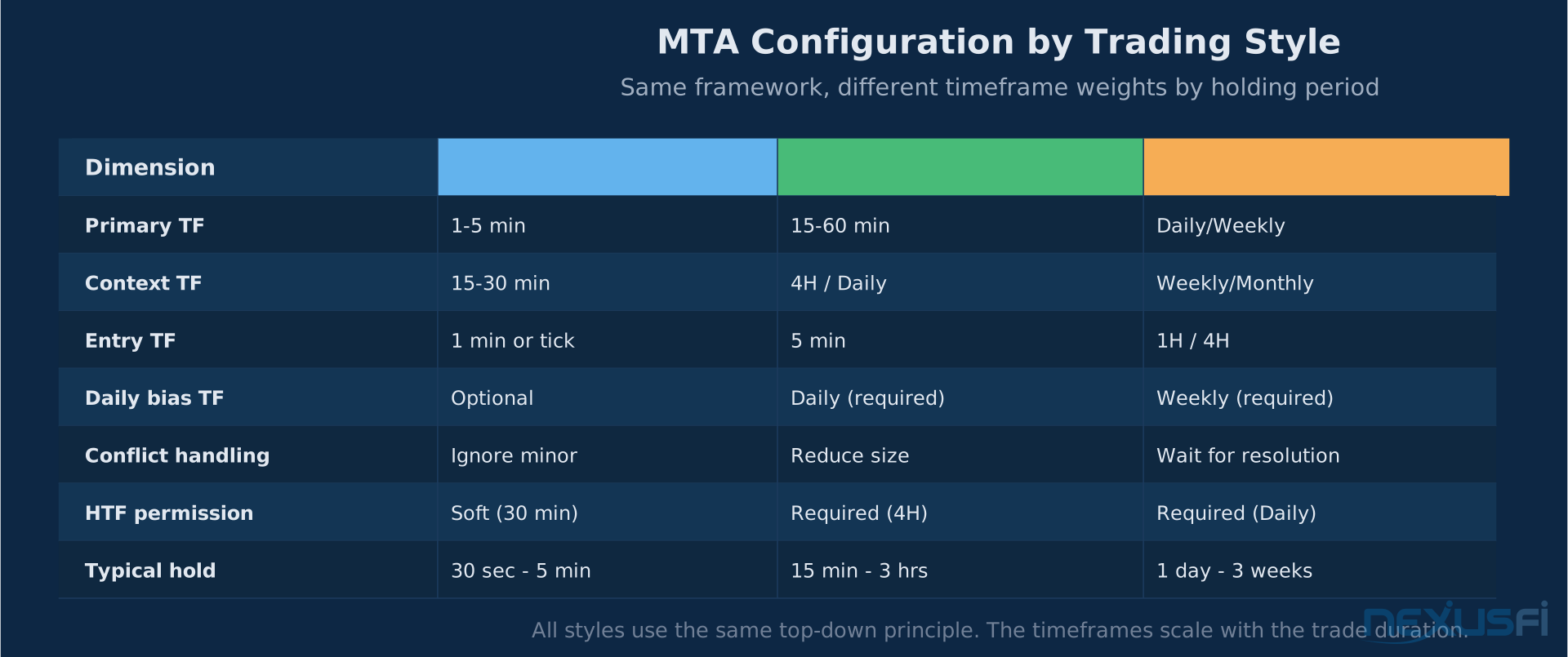
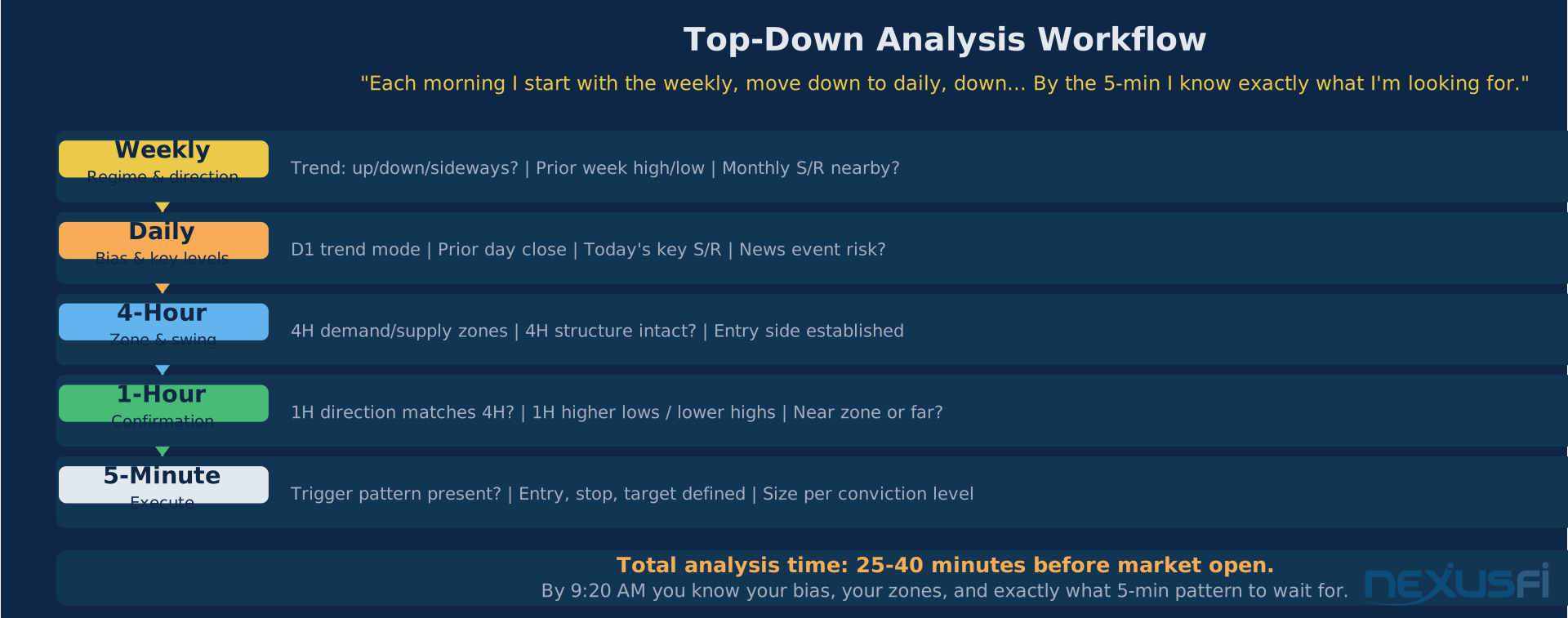
For pure day trading, you can compress this to Daily/4H/1H/5min and use the weekly only for background awareness. For swing trading, all five levels matter. The key is that each timeframe has a specific job, and you consult them in order — top to bottom, never bottom to top.
How Higher Timeframes Grant Permission #
The most important concept in MTA is that higher timeframes don't just provide context — they grant or deny permission for lower timeframe entries.
In a clear higher-timeframe (HTF) uptrend, you're long-biased on every pullback that comes to a defined HTF support level. Shorts are either off the table or treated as quick counter-trend scalps at major HTF resistance — not core positions. The HTF structure has determined what you're allowed to do.
@Big Mike described his own top-down process in his Elite Trading Journal:
"Each morning I start with the weekly, and move down to the daily, down to the 500k [volume chart, roughly equivalent to a 4-hour chart], and then ultimately the 100k [1-hour equivalent]. By the time I hit the 100k I know exactly what I am looking for."
Signals from multiple time frame charts (@Allistah)
That phrase — "I know exactly what I am looking for" — is the result of working top-down before the session opens. By the time you reach the 5-minute chart, you shouldn't be asking "what should I trade?" You should be asking "is the setup I already identified forming yet?"
"By the time I hit the 100k I know exactly what I am looking for." — Big Mike on the result of working top-down before the session opens
The Permission-Location-Trigger Model #
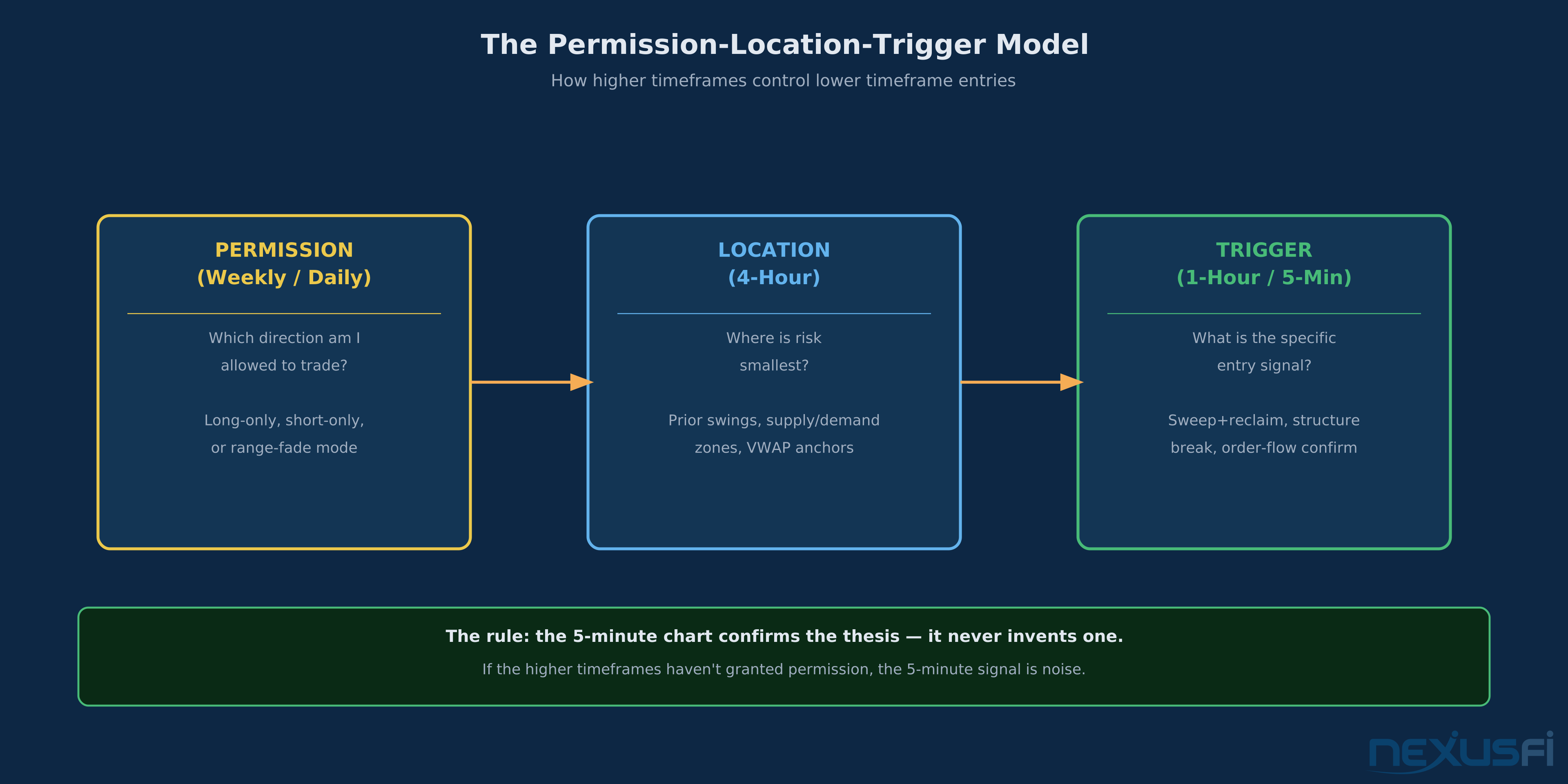
Three concepts drive how HTF context connects to LTF entries:
Permission (Bias): From Weekly/Daily, determine which side you're allowed to trade and whether the market is trending or range-bound. This is non-negotiable. If the Daily is bearish and price is in a clear downtrend, taking speculative longs on 5-minute signals is swimming against a current you can't see.
Location (Where): The 4-hour chart defines where risk is smallest — the zones where your entries will have meaningful structural backing. These include:
- Prior swing highs and lows (structural support/resistance)
- Supply and demand imbalance areas
- Volume Profile levels — Point of Control, value area edges
- VWAP anchors from significant session opens
- Prior day high and low
A 5-minute long entry is dramatically higher conviction when it occurs at a 4H demand zone that also sits at the rising Daily 20-period EMA. Same entry, same setup pattern — completely different risk profile depending on location.
Trigger (How): The 1-hour and 5-minute charts provide the actual entry mechanics once price has reached the HTF zone:
- The 1-hour confirms whether the pullback is deep enough and whether structure is being respected
- The 5-minute delivers the precise signal — a sweep of local liquidity, a break of minor structure, order-flow confirmation (bid stacking, delta divergence, aggressive absorption)
The critical rule: the 5-minute chart confirms the thesis. It doesn't generate one. If you're watching the 5-minute chart and asking "what should I trade?", you've inverted the process.
The 5-minute chart confirms the thesis. It doesn't generate one. If you're asking "what should I trade?" on the execution timeframe, you've inverted the entire process.
Reading Each Timeframe Correctly #
Weekly: Regime and Dominant Forces #
The weekly chart tells you whether the market is trending, ranging, or at a major inflection. You're looking at months of structure, so the questions are big:
- Are higher highs and higher lows intact on the weekly? That's an uptrend. The burden of proof is on any bearish thesis.
- Is price in a multi-month range between two major weekly levels? Then you're in a range-trading environment on the daily and below.
- Are we at a weekly extreme — testing a major high that held for 6 months, or breaking through a level that held for 2 years? Those are structural events that redefine the game.
For ES and NQ, the weekly chart also captures macro forces. Earnings cycles, Fed policy shifts, geopolitical shocks — these show up on the weekly as momentum or structure breaks before the full move plays out on daily and below.
NQ nuance: NQ transitions between momentum regimes faster than ES. A weekly NQ chart can go from uptrend to distribution in weeks. Check weekly structure on NQ more frequently than you'd check it on ES.
Daily: Direction and Market State #
The daily chart is where you make your biggest decision: which mode am I in today?
- Long-only: Daily uptrend intact, price above key daily moving averages, no major overhead resistance. Bias is long on pullbacks.
- Short-only: Daily downtrend, price below key levels, no major support close beneath. Bias is short on rallies.
- Range-fade: Daily price stuck between two defined levels, no directional conviction. Fade the edges, don't chase breakouts.
The daily also shows you the major magnets for intraday price: prior day high and low, prior day close, overnight range extremes, and anchored VWAPs from significant market events. Price tends to visit these levels on the way to anywhere.
Tuglife's trading journal. Focused on profitability. (@Tuglife)
That visual — a 5-minute candle nested inside a 1-hour bar, inside a daily bar — is the right mental model. Every LTF move has a context you can see if you look up the stack.
4-Hour: The Swing Context and Zone Selection #
The 4-hour chart is the bridge. It takes the daily-level direction and translates it into specific areas where intraday trades make structural sense.
On the 4H chart, you're mapping:
- Swing structure: Higher highs/higher lows (uptrend), lower highs/lower lows (downtrend), or failed breakout patterns (range)
- Decision zones: Where did the last significant 4H push start from? Where did the correction stop? Those are your candidate entry zones.
- Prior structure levels: 4H chart consolidation zones often become support/resistance on the next visit
A key use of the 4H chart: defining what a pullback "should" look like in the current trend. If the 4H structure shows a series of shallow pullbacks that held at the 4H 20-EMA, and price is currently pulling back toward that level, that's your zone. If a 1H or 5-minute signal confirms at that zone, you have a structured entry.
The 4H also tells you when you're NOT in a tradeable environment. If the 4H chart shows a sloppy, overlapping structure with no clear direction, that's range-mode on the intraday frames. Reduce size and trade only the clearest setups at the extremes.
1-Hour: Setup Conditions and Timing #
The 1-hour chart is your pre-entry assessment. By the time you're watching the 1-hour, you know the direction (daily), the target zone (4H), and the permission (both HTFs agree). The 1H tells you whether the mechanics are playing out correctly:
- Is the pullback to the 4H zone orderly — a gentle retrace — or is it impulsive and heavy, suggesting the trend might be failing?
- Is price forming a base at the zone (consolidation after a move, suggesting absorption) or just briefly touching it before continuing to fall?
- Is the 1H structure intact (higher lows still forming in an uptrend) or is it starting to break?
The 1H also anchors your intraday VWAP analysis. The 1H chart is the right frame to see when price has moved far enough from VWAP to create a reversion opportunity, or when a VWAP reclaim is establishing a new intraday trend.
Trade type determination on 1H:
- Pullback/continuation: 1H shows a retrace that's holding above the last significant 1H swing low, structure intact
- Sweep-and-reverse: 1H shows price pierce below a level, lose momentum, and reclaim — stop hunt that failed
- Breakout continuation: 1H shows price breaking through a level that held multiple times, now pulling back to re-test it from above (or below for shorts)
5-Minute: Entry Trigger and Execution #
The 5-minute chart is where you do the actual trading. By now, the entire case has been built:
- HTF says direction ✓
- 4H zone identified ✓
- 1H confirms the mechanics ✓
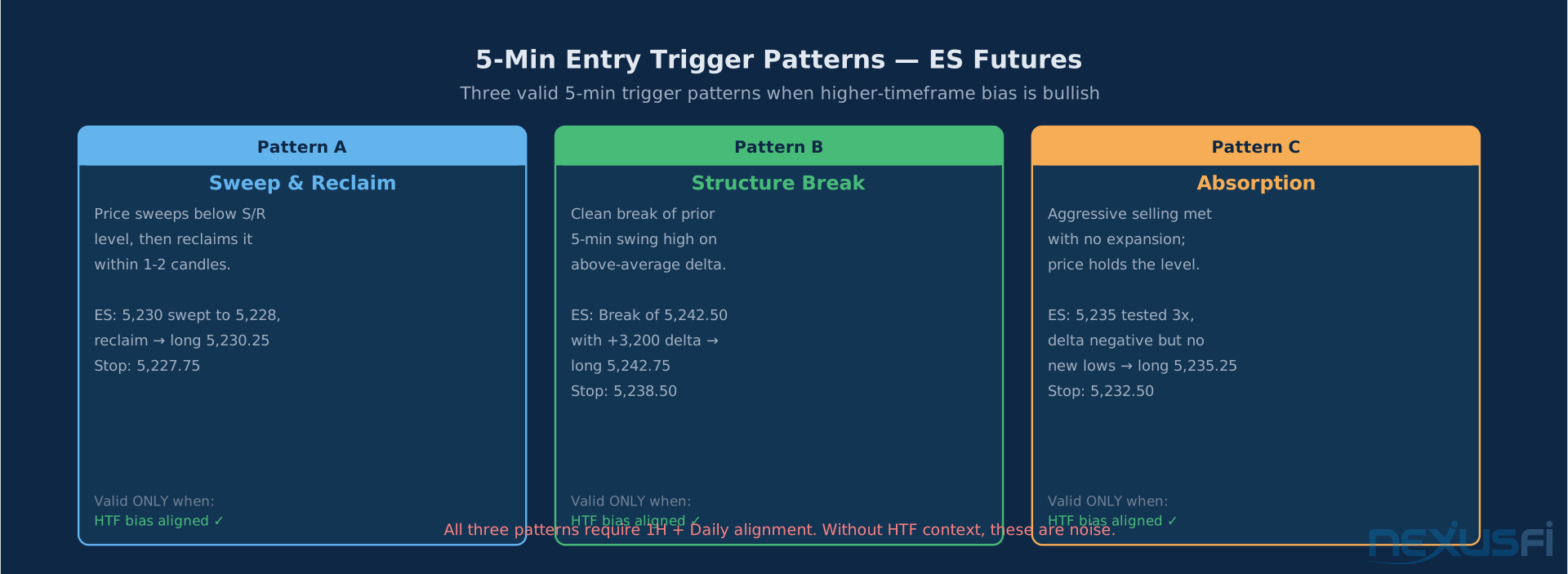
On the 5-minute, you're looking for one of four specific signal types:
The 5-minute chart also defines your specific stop placement: the level is clear (below the recent swing low, below the zone), the distance is calculable, and position size follows directly from risk management rules.
Critical discipline: if the 5-minute chart isn't showing a clean signal when price reaches the HTF zone, don't force it. The zone is valid. The timing is wrong. Wait.
Three Unified Frameworks for ES and NQ #
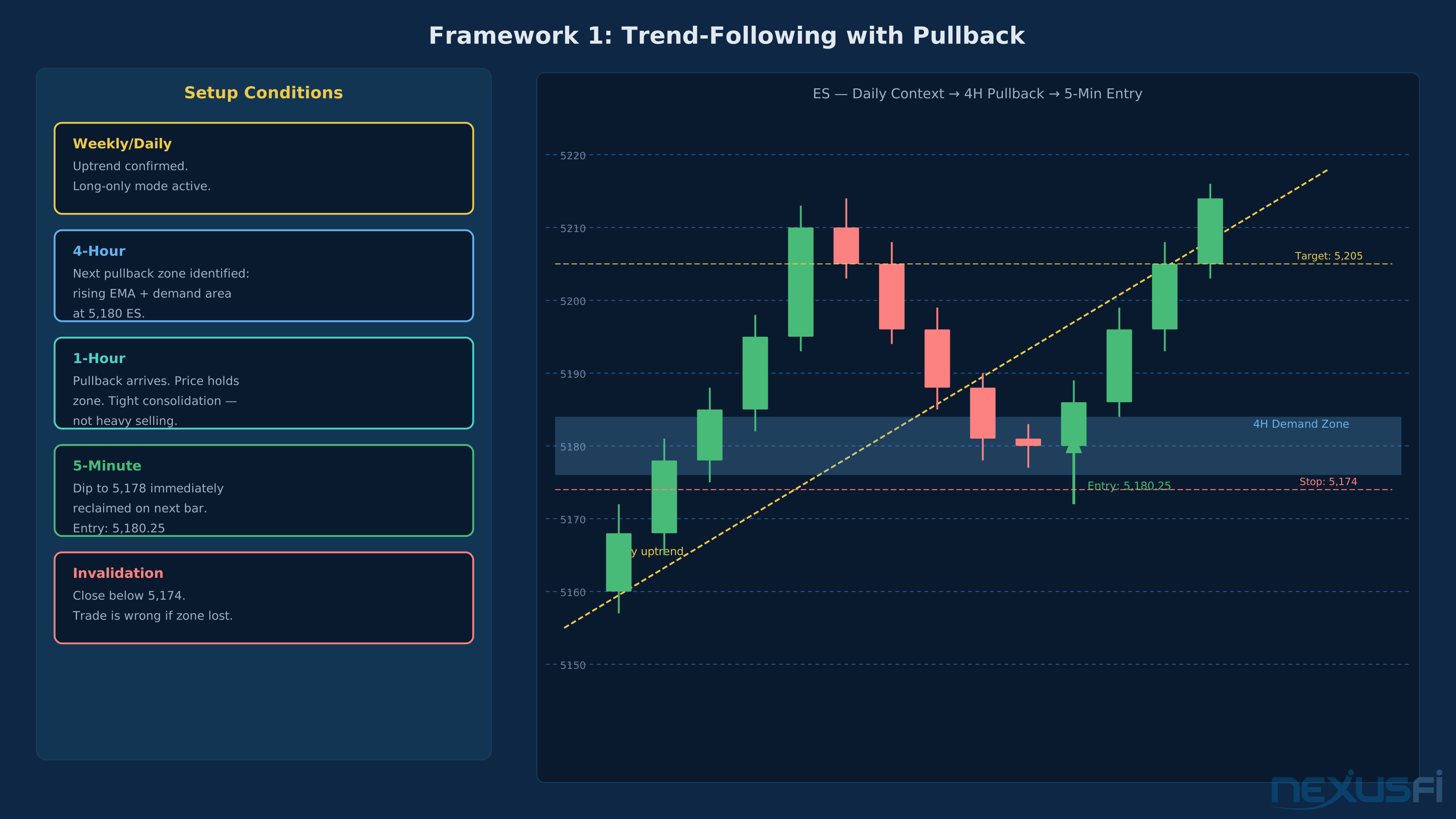
Framework 1: Trend-Following with Pullback #
The highest-probability setup in MTA for trending markets.
Setup conditions:
- Weekly and daily confirm a clear uptrend (or downtrend for shorts)
- 4H shows the next pullback zone — prior breakout area, rising EMA, demand imbalance
- 1H shows the pullback to that zone is holding, building a base
- 5-minute shows the entry trigger: local sweep and reclaim, or 5-minute structure break to the upside after the correction
Invalidation: loss of the 1H/4H zone; a 5-minute candle that accepts below (or above) the key level on closing basis
ES example: Daily uptrend intact. 4H identifies pullback to rising 20-EMA at 5,180 ES. 1H base forming at that level — tight consolidation, not heavy selling. 5-minute shows a brief dip below 5,178, immediately reclaimed on the next bar. That's your entry. Stop at 5,174 (below the wick). Target: 5,205 (next 4H resistance).
NQ version: Same logic, but NQ needs wider buffers on the stop because intraday sweeps are more aggressive. The same setup on NQ might have the stop 8 points below the zone instead of 4, with position size adjusted so.
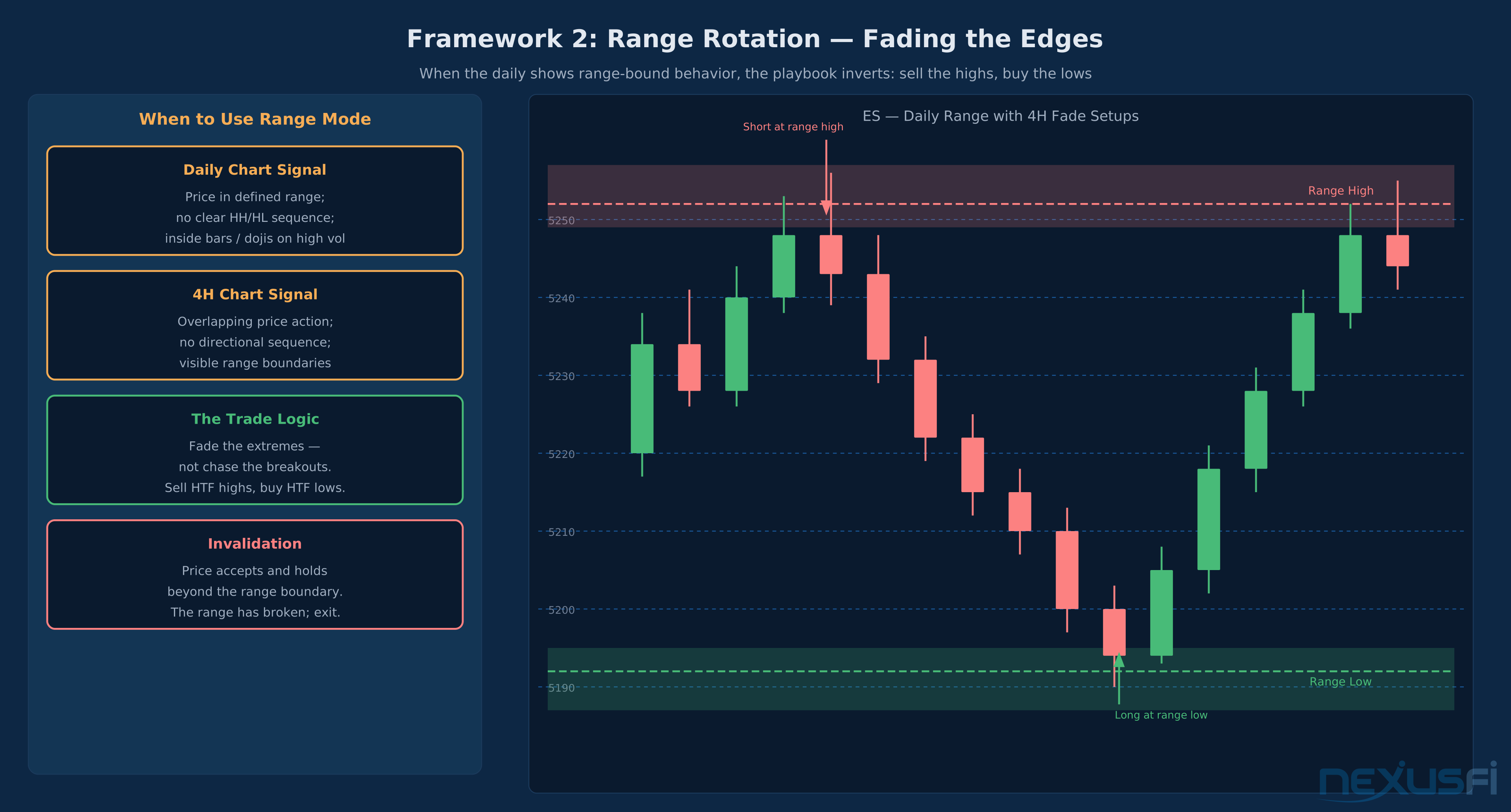
Framework 2: Range Rotation (Fading the Edges) #
When the daily and weekly show range-bound behavior, the trade logic flips: you're not looking for trend continuation, you're fading the extremes.
Setup conditions:
- Daily price inside a defined range, no directional conviction
- 4H locates the range boundaries — the specific level where range highs and lows are consistently forming
- 1H shows price sweeping into the boundary with diminishing momentum (smaller candles, reduced volume)
- 5-minute shows a failure to sustain beyond the boundary — sweep, rejection, reclaim inside the range
Invalidation: a 5-minute close and acceptance beyond the range boundary. That's the signal the range might be breaking; get out.
Reality check: range-mode is where most traders lose money by trying to trade trend-following setups that don't exist. MTA helps you recognize range environments early (daily structure becomes sloppy, 4H shows overlapping price action with no directional sequence) and adjust the playbook so.
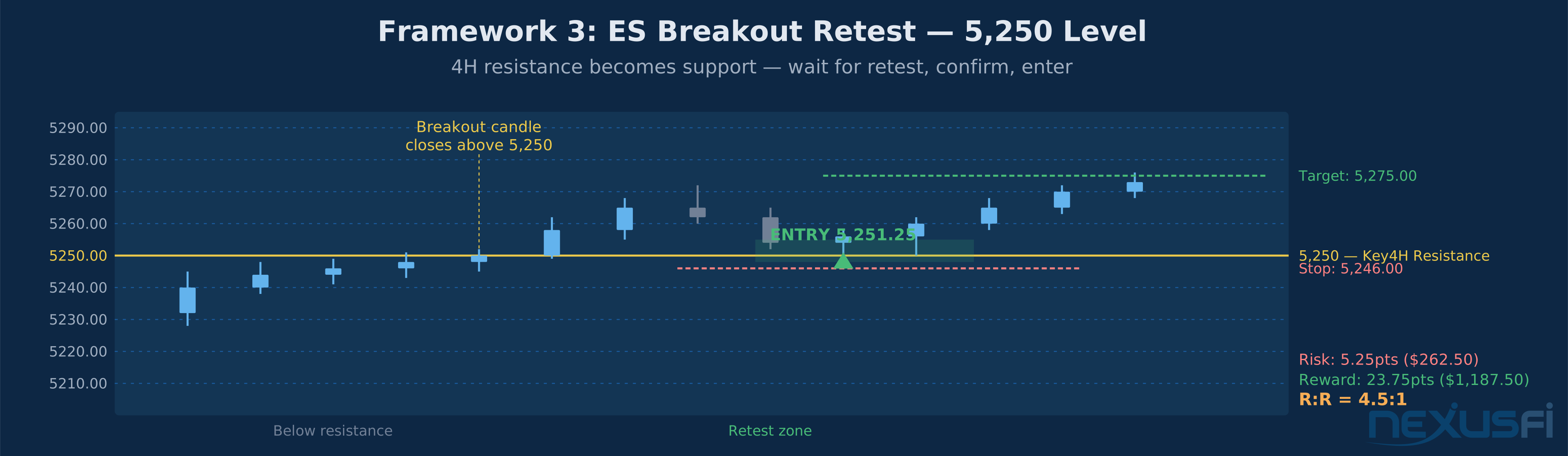
Framework 3: Breakout Continuation (Reclaim and Run) #
A breakout occurred. Daily and 4H confirm it with momentum. Now price is pulling back to re-test the breakout level — the classic "breakout retest" or "reclaim."
Setup conditions:
- Daily/4H show a clean break of a significant level with closing acceptance
- Price has pulled back to re-test the broken level from above (for longs)
- 1H shows the pullback is holding and the reclaim is happening — price is accepting above the level, not just touching it
- 5-minute provides the entry as the 1H reclaim stabilizes: a 5-minute hold above the level, possibly a 5-minute structure break to the upside
Invalidation: failure to accept on reclaim — price gets back below the broken level on a closing basis. The break failed; be flat or be short.
ES example: 5,250 was a major weekly resistance level that ES finally broke through on a strong daily close. Price pulls back to re-test 5,250 over the next two sessions. On the 1H, price dips to 5,248, holds, and starts building a base. 5-minute shows a break of 5-minute structure to the upside after two hours of base formation. Entry 5,252, stop 5,244. Target: next weekly resistance at 5,310.
Handling Timeframe Conflicts #
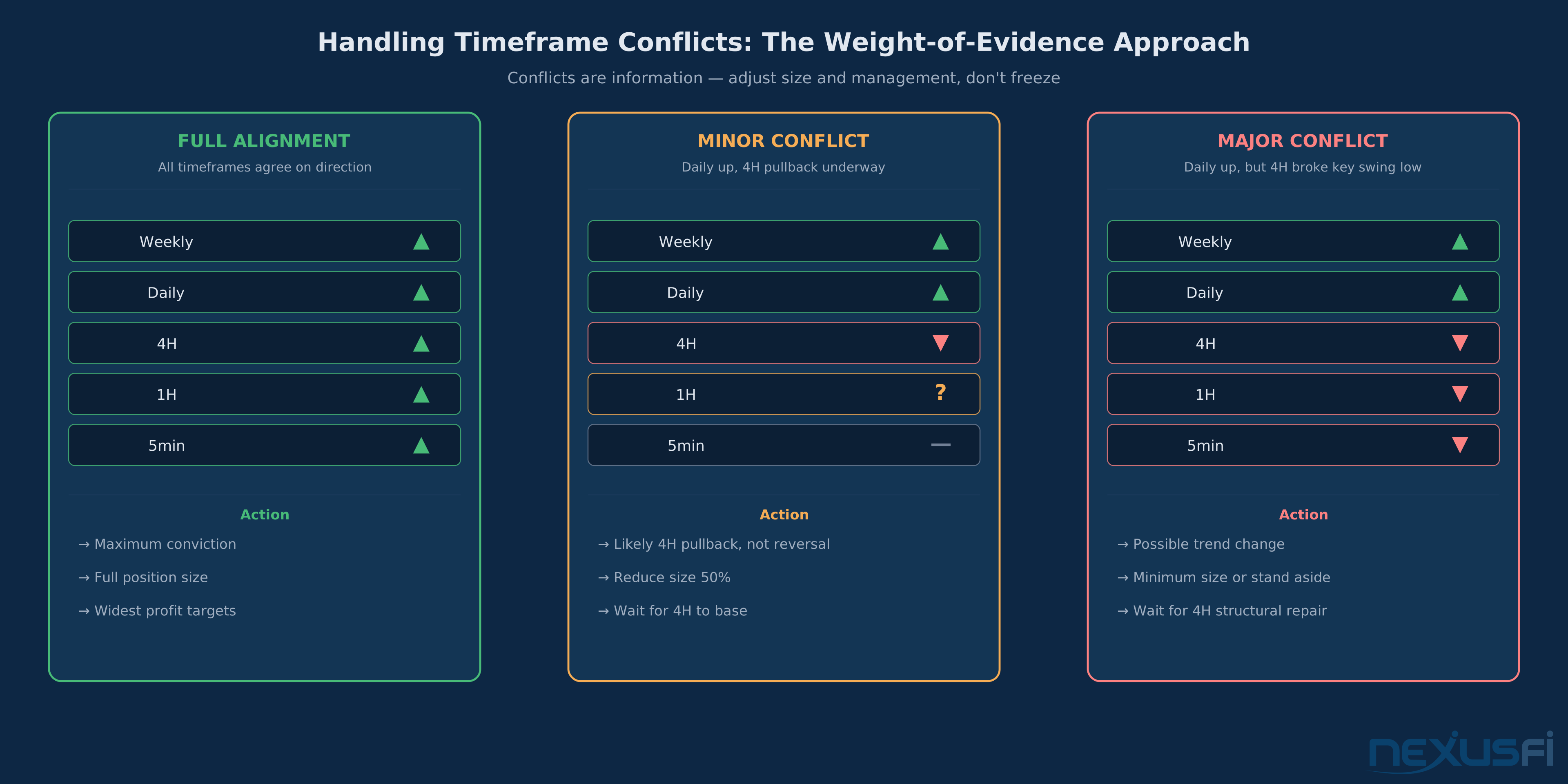
Real markets don't always cooperate. The most common conflict: the daily is bullish but the 4H is in a correction, and you don't know whether the 4H move is a pullback or a reversal.
Here's how to think about it:
Daily up, 4H down: This is almost always a pullback within the daily trend — unless the 4H break is decisive (closes through a significant 4H swing low). Stay bullish biased but reduce size and be more selective about 5-minute entries. Wait for the 4H to show signs of bottoming (base formation, absorption) before adding conviction.
4H bullish, 1H bearish: The 1H move is likely a minor pullback within the 4H trend. Don't fight it — the 1H bears have a short-term edge, but the trade opportunity is the 1H drop serving up the 5-minute long entry at the 4H zone.
All timeframes aligned: Highest conviction, maximum size (within your risk rules), widest targets. These setups are rare — maybe 10-15% of your trades — but they should represent a disproportionate share of your P&L.
The practical message: MTA is not about waiting for perfect alignment. It's about understanding the weight of evidence and sizing appropriately.
Conflict means smaller size and tighter management. Alignment means press it. MTA isn't about waiting for perfection — it's about reading the weight of evidence and sizing so.
Trend Trading Journal (@three86)
The ability to zoom out quickly when you feel uncertain is the practical implementation of this conflict-resolution process. If you're confused on the 5-minute, look at the 1-hour. Still confused? Look at the 4-hour. The confusion usually has a structural answer one timeframe up.
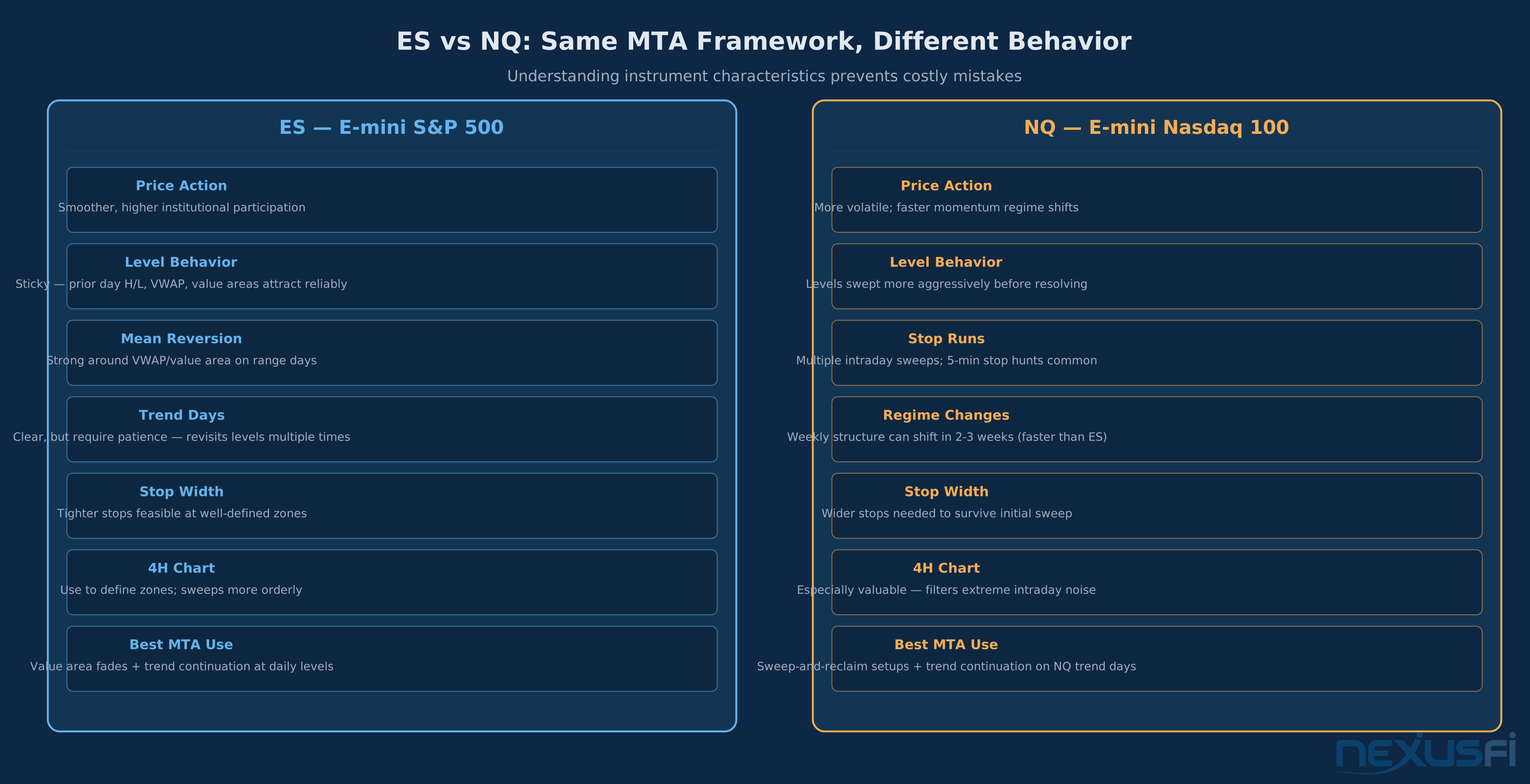
ES vs. NQ: How the Same Framework Plays Differently #
Multi-timeframe analysis works the same way on both instruments, but the two contracts behave differently enough that practical application diverges.
ES: Smoother, Stickier Levels #
ES (E-mini S&P 500) has the deepest liquidity of any futures market. Institutional participation is massive — every hedge fund, sovereign wealth fund, and prop desk is in this market. The result is smoother price action with levels that tend to be "sticky":
- Prior day high and low on the daily chart function as reliable magnets. Price frequently tests them before deciding direction.
- VWAP on the 4H/daily acts as a strong mean — ES often oscillates around it on rotation days rather than trending persistently.
- Value areas from Volume Profile define where institutions consider fair value. Price spends time here; moves away from the value area have a higher probability of returning.
- The Point of Control (POC) is a specific magnet. ES traders watch the current session's POC as a gravitational center throughout the day.
The practical effect: ES trend-following trades need patience. The market will revisit levels that seem "obvious" support or resistance multiple times before resolving. The 4H zone might take 2-3 sessions to fully play out.
ES-specific MTA tip: On days where the daily chart shows indecision (inside day, doji on high volume), treat the prior day's high and low as range extremes for the 4H framework. The "decision zone" for the 4H is wherever price tests those levels.
NQ: More Volatile, Faster Regime Changes #
NQ (E-mini NASDAQ 100) is driven by tech mega-cap stocks. The result is faster moves, more aggressive sweeps, and quicker regime changes:
- Weekly NQ can shift from momentum uptrend to distribution in 2-3 weeks, much faster than ES. Check the weekly NQ structure more frequently.
- Intraday sweeps of obvious levels are more common and more violent. The "5-minute wick that sweeps the level and reclaims" is bread and butter on NQ — it happens multiple times per session.
- Stop runs are more frequent. Level-based entries on NQ need a slightly wider buffer for the initial sweep before the real move starts.
- Order-flow signals matter more on NQ at the 5-minute level. The combination of footprint charts and time & sales on NQ shows the aggressive buyers and sellers more clearly than on ES.
NQ-specific MTA tip: The 4H chart is especially valuable on NQ because it filters the extreme intraday volatility. An NQ trade that looks terrifying on the 5-minute — "it just went 40 points against me" — often looks like a normal pullback to a 4H support level. Context from the 4H prevents panic-closing during the sweep.
Trading Futures with Context (@mfbreakout)
Trend days on NQ are especially well-suited to MTA: the daily and 4H point clearly in one direction, and every 1H/5-minute pullback to a rising level is an opportunity. The key is having the daily and 4H context before the session opens so you don't get confused by the inevitable intraday noise.
Session Context: The Missing Layer #
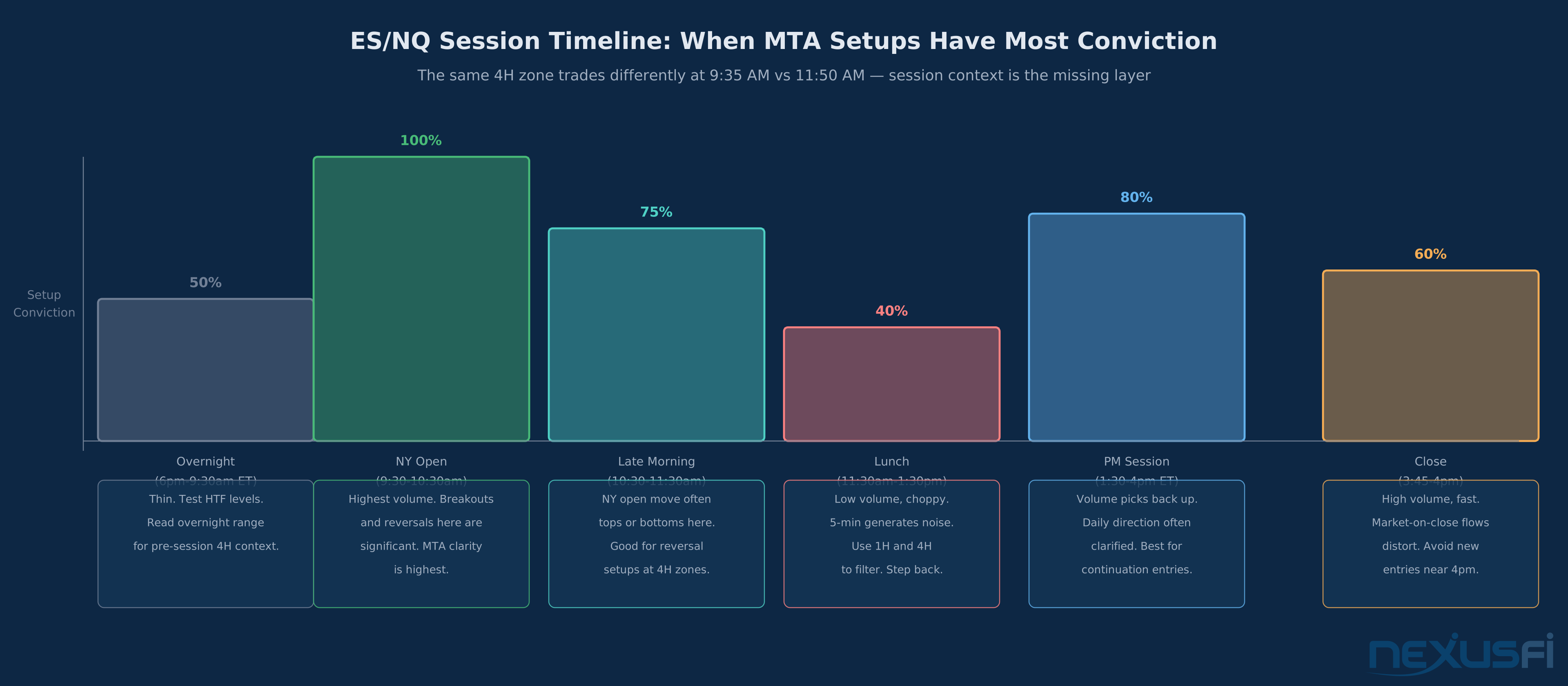
MTA works, but it works even better when you add a session overlay. ES and NQ aren't the same market at 9:32 AM, 11:45 AM, and 3:00 PM — the participants, volume, and behavior change dramatically.
Key session transitions for ES and NQ:
- Pre-market/overnight: Thin, can gap. Daily and weekly levels often tested during overnight. Read the overnight range as part of your 4H setup assessment in the morning.
- NY Open (9:30 AM ET): Highest volume of the day. Breakouts and reversals here are significant. The initial balance — the range formed in the first hour — defines the anchor for the rest of the day.
- Mid-morning (10:30 AM - 11:00 AM ET): Often reversal territory. The NY open move frequently tops or bottoms here. MTA entries taken at this time benefit from the 4H context of whether the open move looks like a real trend or a range extreme.
- Lunch (11:30 AM - 1:30 PM ET): Lower volume, choppy. The 5-minute chart generates false signals; the 1H and 4H become more important for filtering. Many traders simply step back during this window.
- PM Session (1:30 PM - 4:00 PM ET): Volume picks back up. The afternoon often clarifies the daily direction — either the morning trend continues or it reverses. The daily chart's close is established here.
The practical application: your 4H zone analysis should incorporate where you are in the session. A pullback to a 4H support level at 2:00 PM has more conviction than the same setup at 11:45 AM when volume is thin and the market is prone to chopping.
The Learning Curve and Where Traders Go Wrong #
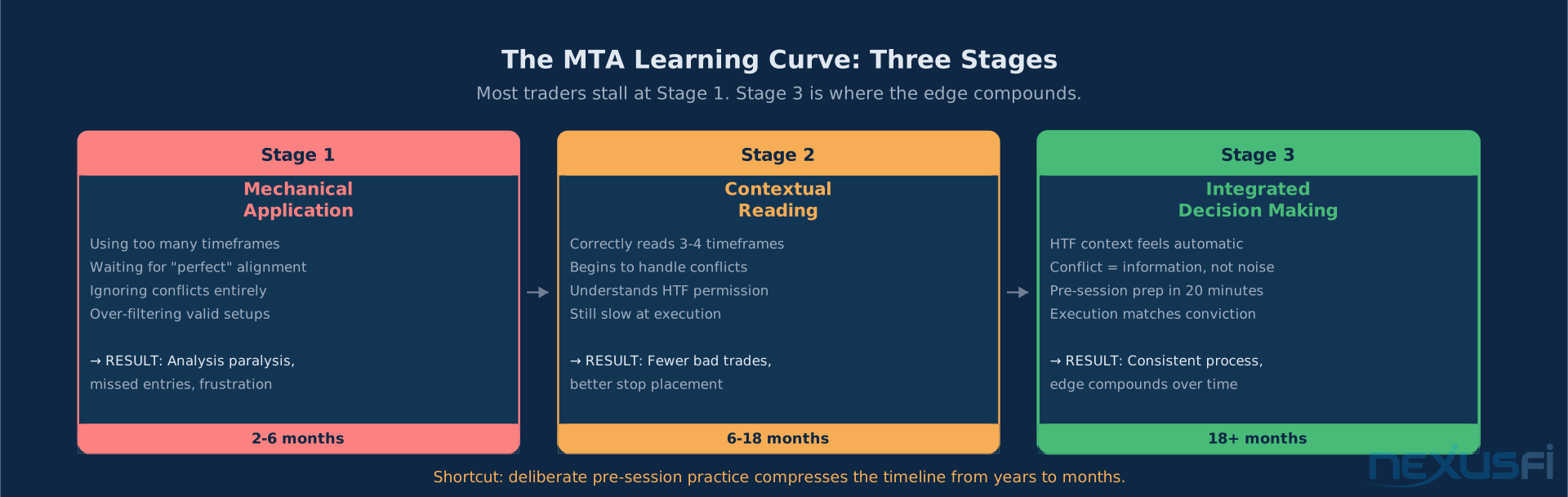
There's a predictable learning curve with MTA, and each stage has its characteristic mistakes.
Early stage: You add multiple timeframes to your charts but still make decisions based primarily on the lowest timeframe you're watching. The higher charts are decoration. The most common failure here: you see something compelling on the 5-minute chart and immediately work backward to justify it on the higher frames. This isn't MTA — it's confirmation bias with extra steps. Build the case from the top down every single time.
Middle stage: You start consulting the higher timeframes but treat them as equal votes. When three timeframes say one thing and two say another, you're confused and miss setups because "not everything aligned." The fix: stop waiting for perfect alignment. The practical standard is Daily says yes, 4H says this is the zone, 1H says the mechanics are right, 5-minute says now. If the weekly conflicts but the daily is clear, that's usually tradeable with appropriate sizing.
Later stage: You understand that each timeframe has a specific role and question. You consult them in order. When they conflict, you adjust size — you don't freeze or override. The process is fast because it's structured. But late-stage traders still make characteristic mistakes: ignoring session effects (the best 4H setup in the world is still a bad entry at 11:50 AM ET when ES volume has dried up and both sides are paper-trading), using the 5-minute for the stop (your stop should be defined by the HTF logic — if the 4H zone is 10 points wide, your stop is below that zone, not at some arbitrary 5-minute level), and not defining invalidation before entry (every trade needs a specific answer to "at what point has this trade idea proven wrong?").
The common thread across traders who document this learning curve in the NexusFi journals: the breakthrough isn't learning a new indicator or signal. It's accepting that the 5-minute chart is the last input, not the first.
The Pre-Session Workflow #
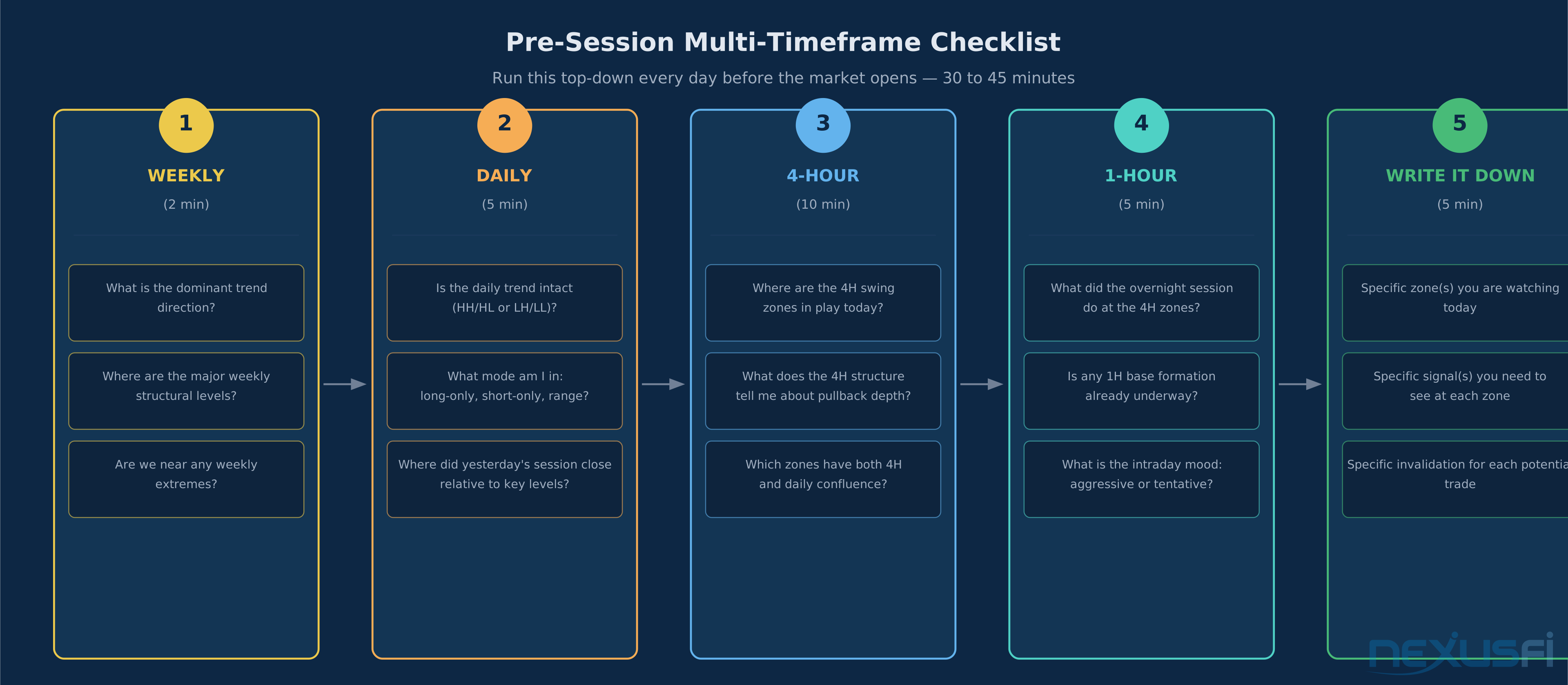
Put MTA into practice with a structured pre-session routine:
Before the market opens (30-45 minutes):
- Weekly chart (2 minutes): What is the trend? Where are the major weekly levels? Any weekly extremes that could generate big moves?
- Daily chart (5 minutes): Is the daily trend intact? Where did the last session close relative to key levels? What's the daily mode — trending or range?
- 4-Hour chart (10 minutes): Map the 4H zones. Where does price become most interesting for your daily-level bias? What levels are in play today?
- 1-Hour chart (5 minutes): What did the overnight do? How did price behave at any of the 4H zones that came into play overnight? Is there a base formation already underway?
- Write it down (5 minutes): The specific zones you're watching, the specific signals you're waiting for, and the specific invalidation for each. This is your trading plan for the session.
@RushTrading's ES Market Prep posts in the Harmonics With Volume Trade Journal show this process in action — a systematic weekly top-down before the session:
"ES Market Prep - Sep 19. Top-down analysis to prepare for the coming week. Monthly Chart - 10 months of one-time framing higher."
Harmonics With Volume Trade Journal (@RushTrading)
The top-down prep doesn't need to be elaborate. It needs to be consistent and structured — the same questions in the same order every session.
Execution Checklist: Before Every Trade #
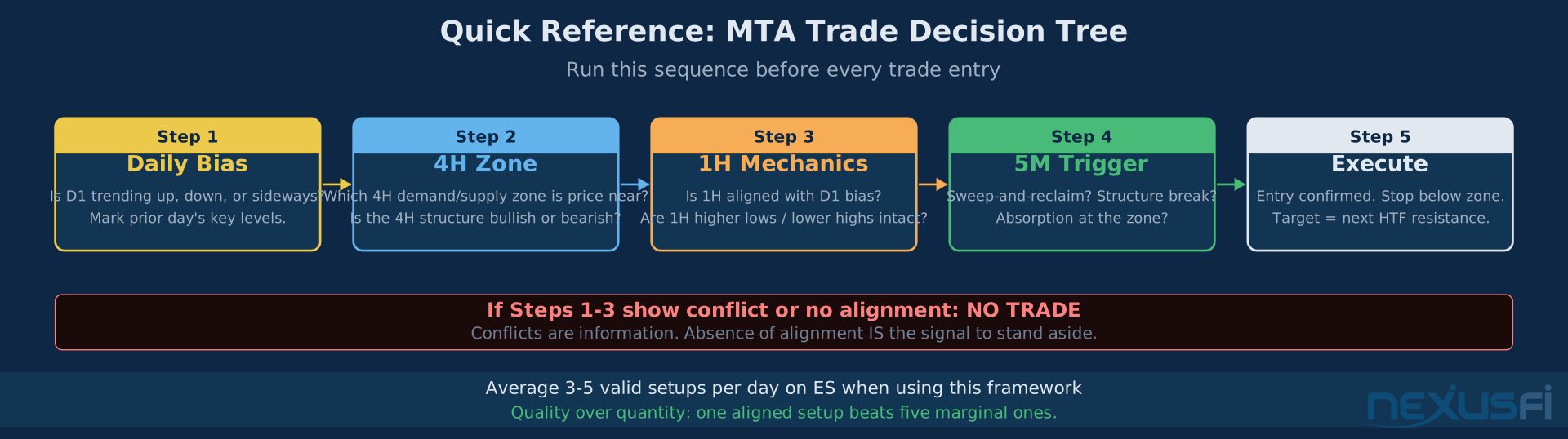
When you reach the 5-minute trigger, run through this quickly:
- Weekly/Daily permission: Which side am I allowed to trade? Am I in trend or range mode?
- 4H location: Is price at or near a meaningful 4H zone? Is there structural backing for this entry?
- 1H mechanics: Is the pullback behaving correctly? Is structure intact? Is the 1H giving me a reason to trust the zone?
- 5-minute trigger: Is there a specific, clear signal — not just "the chart looks like it's going up"?
- Invalidation: Where does the trade prove wrong, and how much does that cost me?
If any of these produce "unclear" or "no," the answer is either wait or skip. The framework only works if you're disciplined about what counts as a setup.
Why the Framework Works: The Statistical Argument #
MTA isn't mysticism. It works because of a simple statistical reality: trades in the direction of higher-timeframe trends, entered at higher-timeframe support/resistance levels, have a higher probability of working than trades that ignore that context.
The reasons:
- More participants trade the same higher-timeframe levels: institutional traders who can move price are watching the same daily and weekly levels. When price hits those zones, their orders create the reactions that make the trades work.
- Trend persistence: higher-timeframe trends persist for reasons that have nothing to do with chart patterns — fundamentals, positioning, momentum. Trading with a confirmed daily trend means you're on the right side of those forces.
- Risk definition: knowing that your stop is at the HTF zone gives you natural, defensible risk boundaries. Stops at arbitrary tick distances get hunted; stops at structural HTF levels are where the trade genuinely is wrong.
The council of trading professionals consulted for this article converged on a single formulation: "The greatest practical value of MTA in ES/NQ is risk management — it prevents you from overstaying a counter-trend lower-timeframe move that is doomed by the higher-timeframe trend."
Not signal generation. Risk filtering. Every trade you skip because it fights the daily tre
Knowledge Map
Prerequisites
Understand these firstGo Deeper
Build on this knowledgeReferences This Article
Articles that build on this topicCitations
- — Trailer Park Capitol (2022) 👍 4“I will now be looking to better understand what the ES is doing on a weekly basis. To facilitate this, I have set my charts up in a way that I can 'watch the week play out'. I had a lot of support from my weekly chart.”
- — Trading Futures with Context (2014) 👍 20“I talk with a few traders that participate on here. Context is the framework I use to discuss with them what is happening in any market.”
- — Signals from multiple time frame charts (2012) 👍 3“Each morning I start with the weekly, and move down to the daily, down to the 500k, and then ultimately the 100k. By the time I hit the 100k I know exactly what I am looking for.”
- — Tuglife's trading journal (2020) 👍 6“Here's the same idea with the Daily, Weekly, Monthly beside a 5 minute candlestick inside a 60 minute candle. I like the 'granularity' of the smaller timeframes inside the larger time structures.”
- — Trading Futures with Context (2014) 👍 18“Hey guys, NQ gave us an old fashioned trend day today. I am posting my chart a bit different again to try and show the things I talk about about the levels that I'm trading.”
- — Trading Futures with Context (2014) 👍 18“CL turned out to also be a trend day today, so similar situation to NQ for me. Fantastic structure today in the NQ. Level to level with pullbacks and re-entry possibilities all the way down today.”
- — Trend Trading Journal (2023) 👍 1“I have 9months as weekly bars, 3months as daily, 1week as hourly, and 12 hours as 1minute bars. I also have another small chart that is zoomed in and at times I need a very granular view, other times I need a bigger view.”
- — Harmonics With Volume Trade Journal (2021) 👍 3“ES Market Prep - Sep 19. Top-down analysis to prepare for the coming week. Monthly Chart - 10 months of one-time framing higher.”
- — Trailer Park Capitol (2022) 👍 6“I've paired down my selection to the weekly, daily, 4- and 1-hour charts. This is how they are laid out. On my left monitor is the higher timeframe context.”
- — Trading Futures with Context (2014) 👍 7“Fantastic structure today in the NQ. Level to level with pullbacks and re-entry possibilities all the way down today. Overnight we had hung around the weekly levels and that set the context for the day session.”
- — RG's Emini Journal (2017) 👍 6“Divergence in the market took NQ and ES/YM in 2 different directions. Relative strength in safe haven instruments are moving higher indicating some caution in the near-term.”