



Equity Curve Trading: Using Your Own Performance Data to Manage Risk
Overview #
Equity curve trading uses your own cumulative performance data — your running net profit and loss record — to decide when to trade full size, when to scale down, and when to stop entirely. Rather than relying on gut feel about whether you are in a slump, you apply a systematic filter to your P&L curve and operate in one of three defined risk modes.
The discipline emerged from Van Tharp's insight that you are not trading the market — you are trading your own edge, and your edge varies over time. When the equity curve is rising, your edge is active. When it is falling, something has changed: regime mismatch, execution drift, or random variance. You usually cannot tell which in real-time. But you can act on the signal: protect capital while you figure it out.
This article covers the complete framework: the three-mode risk ladder, moving average selection, drawdown threshold architecture, Kelly fraction adjustments, the whipsaw critique, and the resume rules most traders forget to define.
Every trader eventually hits a losing streak and asks the same question: is this normal drawdown, or is my edge gone? Equity curve trading answers that question with data instead of gut feel. Rather than guessing whether to size down or sit out, you apply a systematic filter to your own cumulative P&L — your equity curve — and let it tell you what mode to operate in.
The core idea is deceptively simple. Your equity curve is a line chart of your running net profit or loss over time. Apply a moving average to that line. When your curve is above the average, trade normally. When it crosses below, cut your size or stop entirely. You're trend-following your own performance instead of the market.
Done well, equity curve trading converts the vague feeling of "I'm in a slump" into a written rule: when X happens, I do Y. That conversion is the entire point. It removes the most dangerous thing in trading — discretionary size decisions made mid-drawdown when emotions are running hot.
Why Your Equity Curve Matters More Than Individual Trades #
Most traders obsess over entry signals. Better entries, better exits, better indicators. Equity curve trading inverts this focus. It says: the quality of your entries isn't the only variable. Your current relationship to your edge matters just as much.
Markets cycle through regimes. Trend-following strategies crush it during trending conditions and bleed during choppy, mean-reverting periods. Mean-reversion strategies do the opposite. Even the best edge-based system will generate periods of sustained drawdown — not because the strategy is broken, but because the current regime doesn't fit its design.
Equity curve trading captures this reality. A declining equity curve signals one of three things: regime mismatch, execution drift, or random variance. You usually can't tell which in real-time. But you can act on the signal: reduce risk while you figure it out. You don't need to diagnose the problem before protecting your capital.
Van Tharp, whose work forms much of the intellectual foundation for equity curve trading, stated it this way: you are trading your equity curve, not the market. Your returns are what you control. Your edge is what you protect. The equity curve MA filter is how you enforce that protection systematically.
The Three-Mode Risk Ladder #
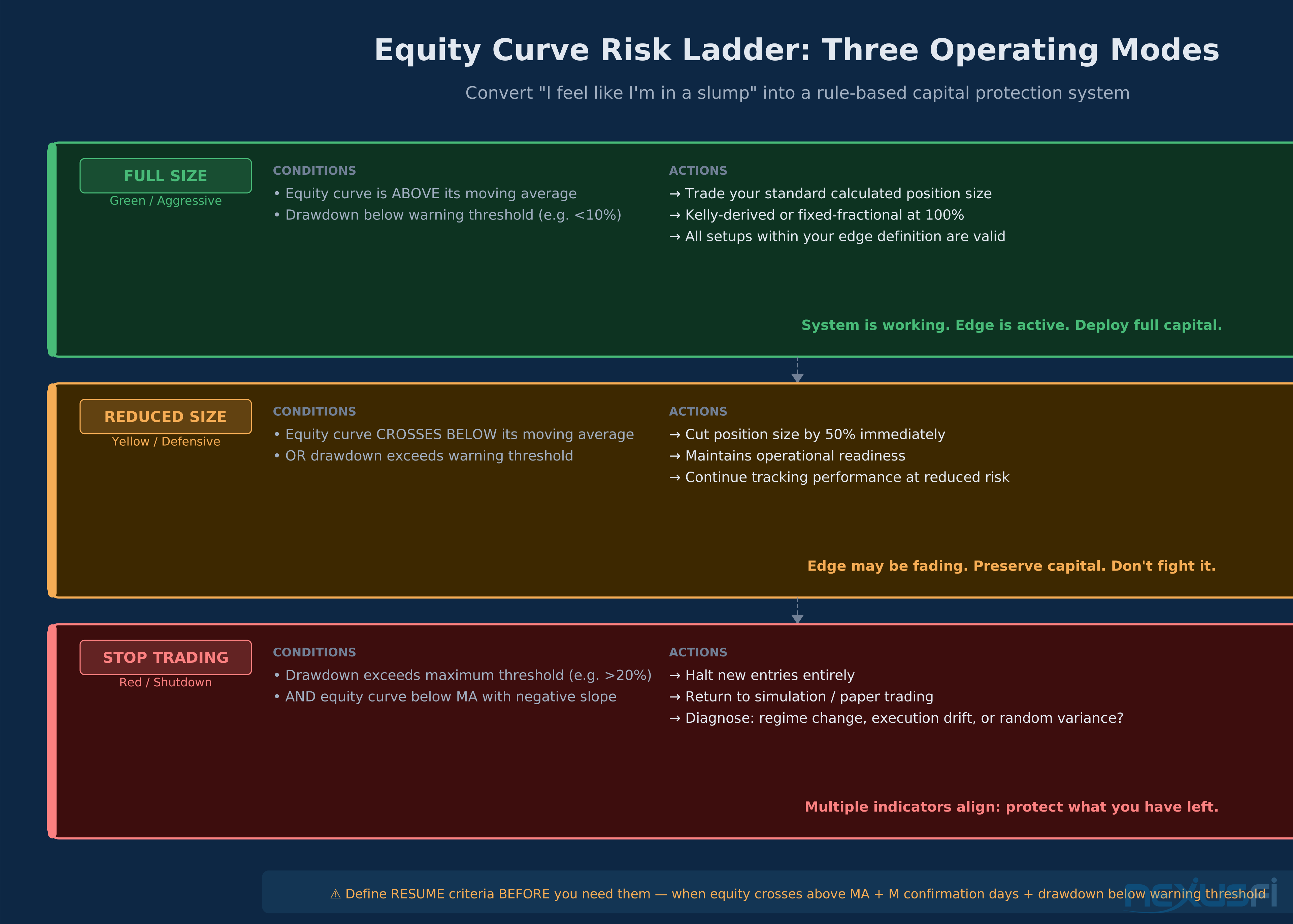
The foundation of equity curve trading is a clear three-mode framework. Each mode has specific entry conditions, specific actions, and a specific purpose.
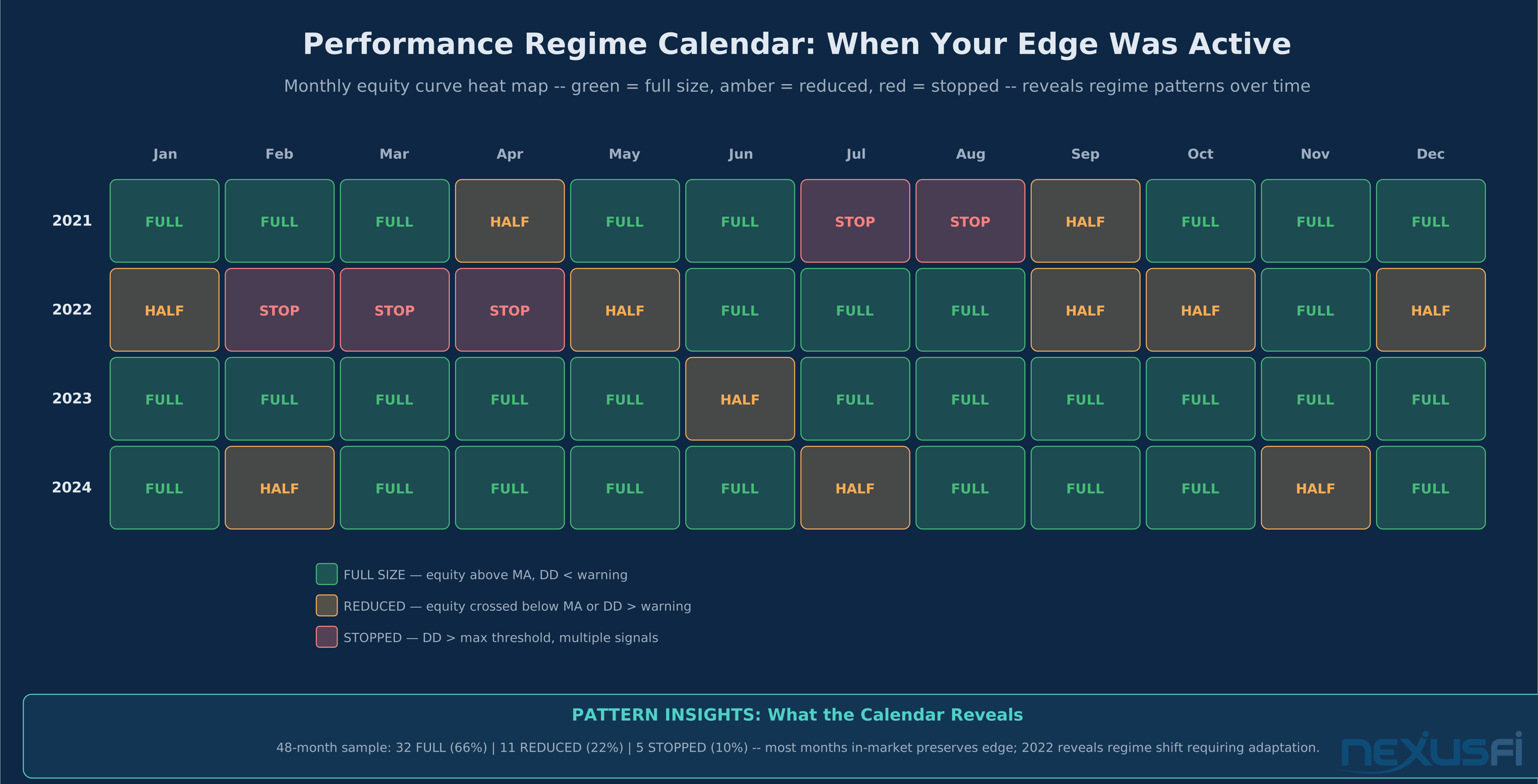
Full Size (Green / Aggressive). Your equity curve is above its moving average and your drawdown from peak is within normal bounds — typically below 10-15%. Trade your standard calculated position size. If you use fixed-fractional risk (risking 1-2% per trade), apply it normally. If you use Kelly-derived sizing, apply the full fraction. This is the mode where your edge is confirmed active and you deploy full capital.
Reduced Size (Yellow / Defensive). Your equity curve crosses below its moving average OR your drawdown exceeds a warning threshold. Immediately cut position size by 50%. Not gradually, not "I'll see how the next few trades go." Immediately, at the crossover. This mode preserves operational readiness — you stay in the market, continue tracking performance, and position yourself to capture the recovery when your edge re-emerges. The 50% reduction is a common starting point; some traders use 25-75% depending on their strategy's normal drawdown depth.
Stop Trading (Red / Shutdown). Your drawdown exceeds a maximum threshold — typically 20-25%, though this depends entirely on your strategy's expected drawdown profile — AND your equity MA state is negative. Halt new entries. Return to simulation. Diagnose whether this is catastrophic variance, regime change, or execution failure. The hard stop is only triggered when multiple indicators align. A single bad week doesn't warrant shutdown. Sustained evidence of edge failure does.
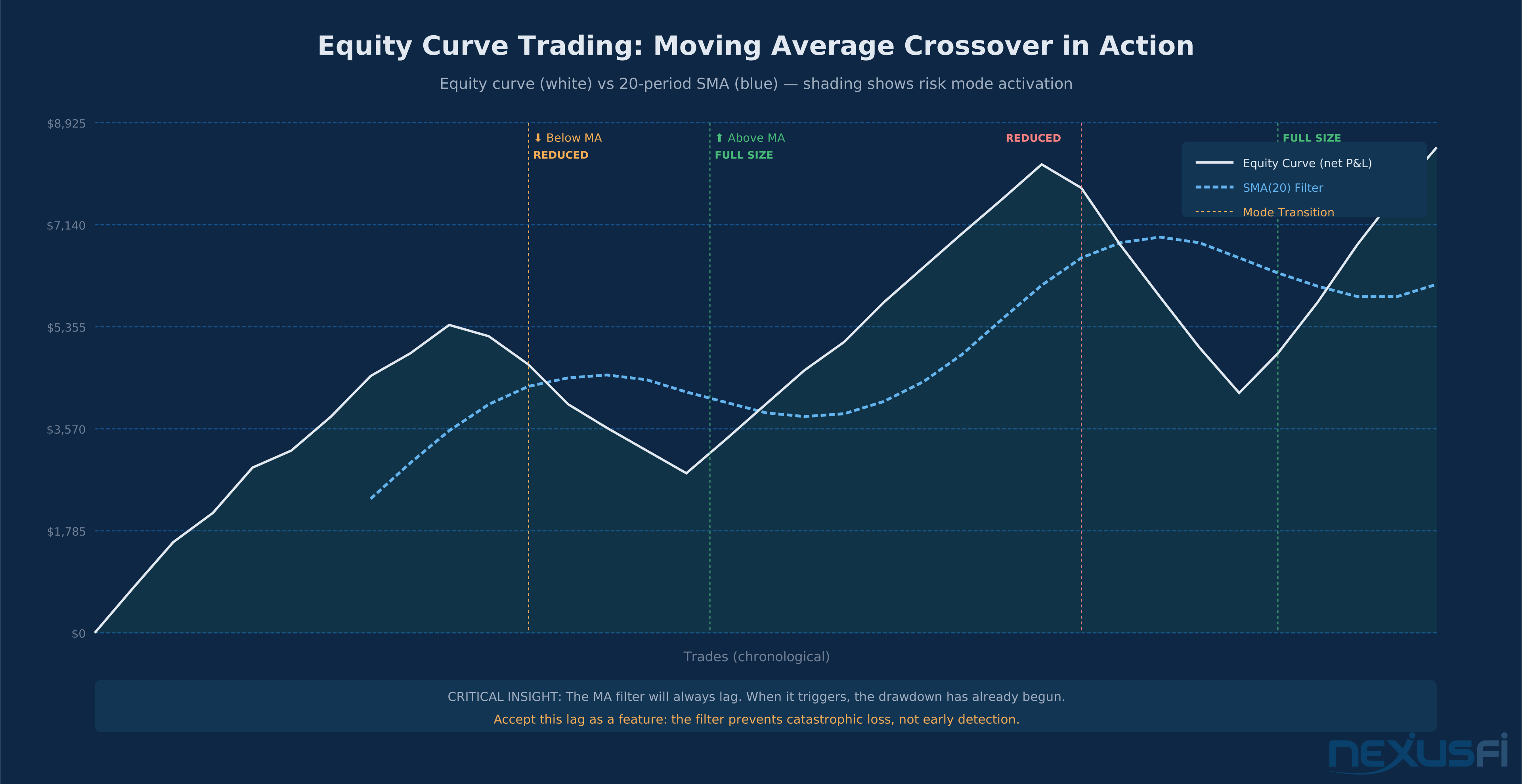
NexusFi members @shodson and @Silver Dragon have documented exactly this kind of tiered approach in their trading journals. In the Walk Forward Experiment thread, @Silver Dragon wrote: "December Changes. Ending test on 3 separate lots and moving back to single lot trading... New lot size will be 9000 when above [equity threshold]" — a direct application of equity curve-driven position scaling. @shodson took it further, exporting backtested trades to Excel to create a per-trade equity chart with an SMA(20) overlay, then using the MA crossover to drive live contract count decisions.
Moving Average Selection: Length and Type #
The moving average applied to your equity curve is not a market indicator. It's a performance smoothing tool. The principles are similar, but the input data and appropriate parameters are different.
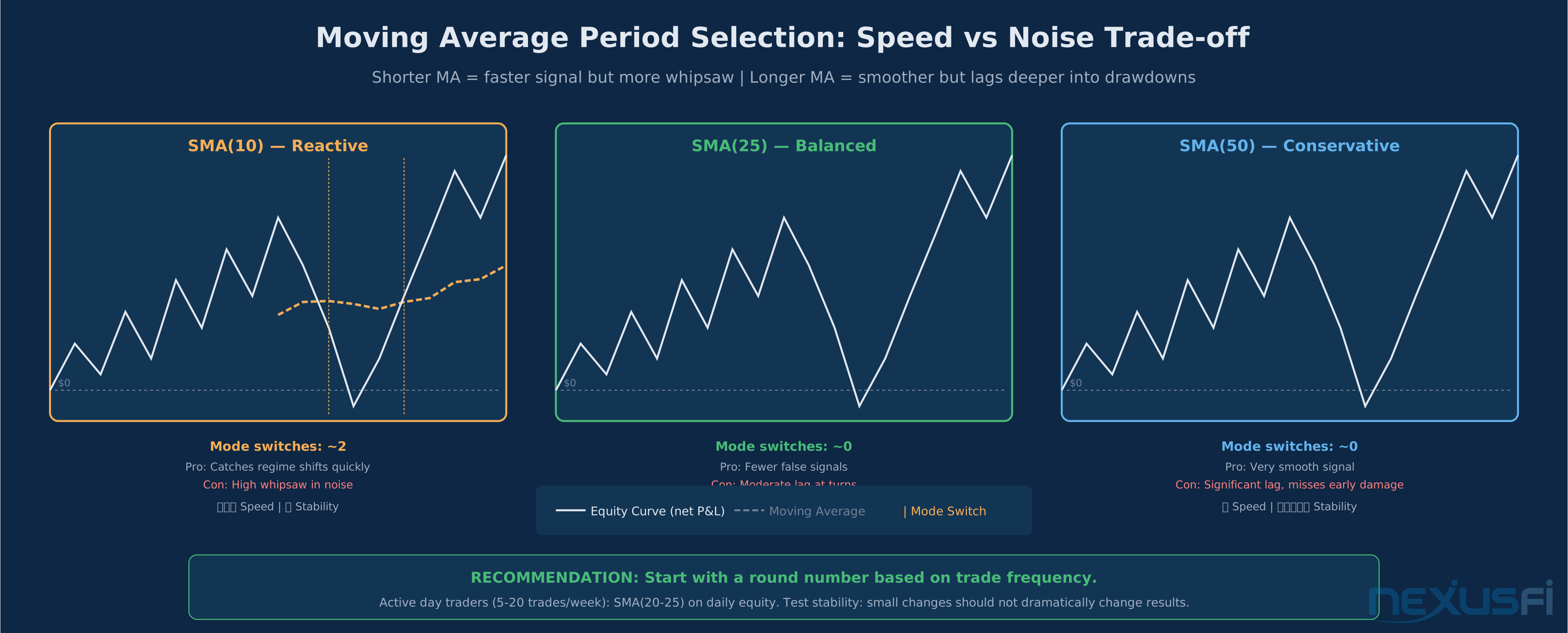
Your equity curve changes one data point per trade (if you're tracking on a per-trade basis) or one point per day (if tracking daily net P&L). The right MA length depends on your trade frequency. A trader who takes 5-10 trades per day needs a much longer MA window than a position trader who takes 3-5 trades per week. The goal is to smooth out noise — the normal variance of individual trade outcomes — without lagging so badly that you're always a month behind.
Common starting points:
- High-frequency traders (20+ trades/week): SMA 50-100 on per-trade equity. This covers 2-5 weeks of trading.
- Active day traders (5-20 trades/week): SMA 20-50 on per-trade equity, or SMA 10-20 on daily equity.
- Swing/position traders (1-5 trades/week): SMA 10-25 on per-trade equity. With few trades, even a 25-period MA represents months of data.
Whether to use a simple (SMA) or exponential (EMA) moving average matters less than you think. The EMA weights recent data more heavily and reacts faster to recent deterioration. Some traders prefer this because it provides earlier warning. Others find it creates more whipsaws. Test both against your own history; neither is universally superior.
One thing is non-negotiable: build your equity curve from net P&L after all costs — commissions, platform fees, slippage, exchange fees. Gross P&L overstates your actual edge and creates an MA filter that's systematically too optimistic.
Drawdown Thresholds: Soft First, Hard Last #
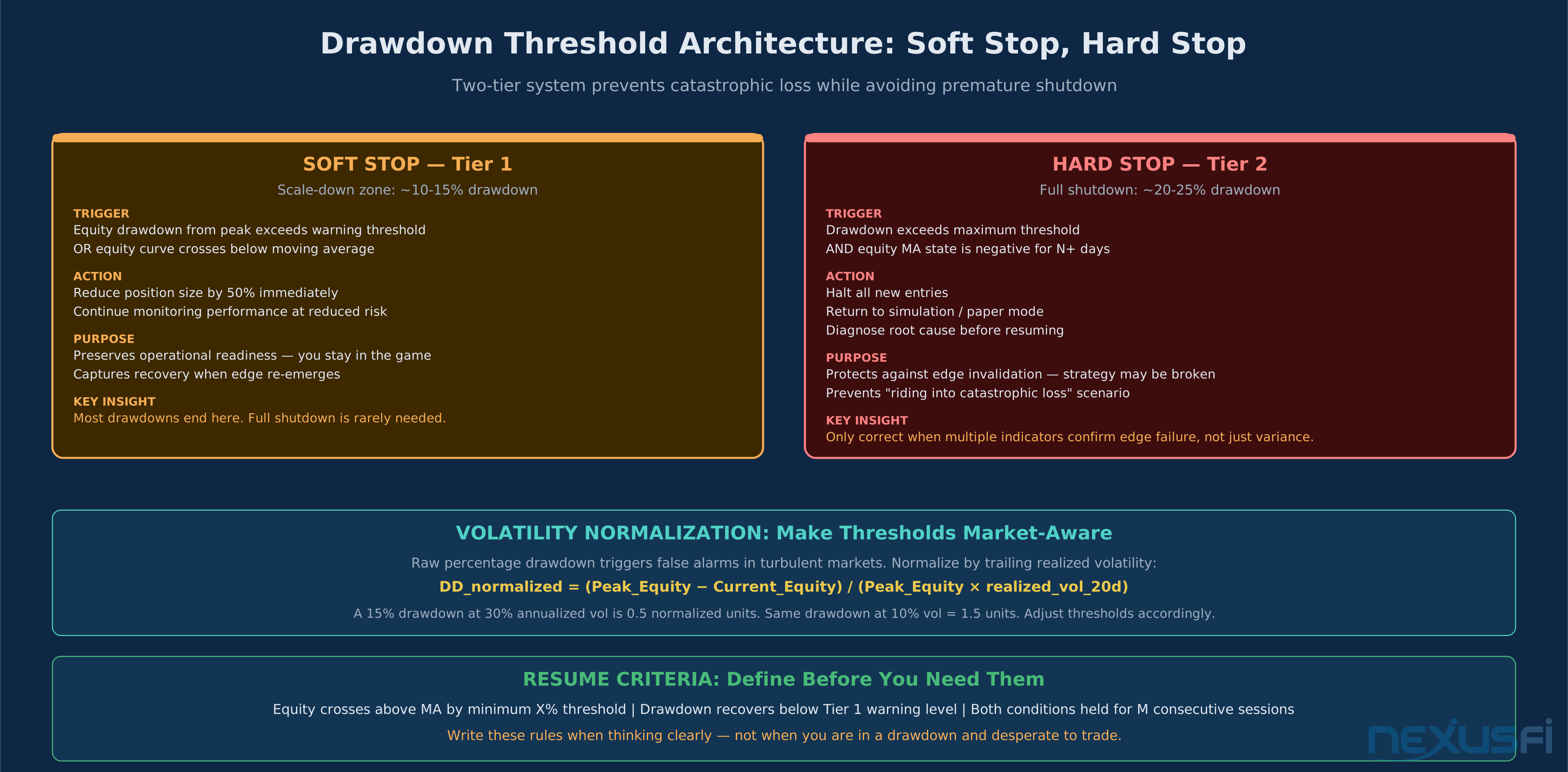
The MA crossover is a regime signal. The drawdown threshold is a capital protection circuit breaker. Both are needed. Neither alone is sufficient.
A soft drawdown threshold — typically 10-15% from equity peak — triggers the first tier of size reduction, regardless of where the equity MA stands. The logic: even if the MA hasn't crossed yet, a 12% drawdown during a period of relatively low volatility is meaningful information. You don't need the MA to confirm what the P&L is already telling you.
A hard drawdown threshold — typically 20-25% — triggers full shutdown. This is your circuit breaker. At 25% drawdown, it mathematically takes a 33% gain just to get back to even. Continuing to trade full size into a deep drawdown compounds the recovery math problem exponentially. The hard stop prevents this.
The critical refinement is volatility normalization. Raw percentage drawdown treats a 15% loss the same whether it occurs during a 20% annualized volatility period or a 40% vol period. In high-volatility environments, 15% may be completely within expected drawdown for your strategy. In low-vol environments, it may signal a genuine problem.
Volatility-normalized drawdown adjusts for this: divide the raw drawdown percentage by trailing realized volatility. If your strategy's expected max drawdown is 20% at 30% annualized vol, and you're currently experiencing 15% drawdown at 45% vol, your normalized drawdown is actually below historical warning levels. The same 15% drawdown at 20% vol is above them.
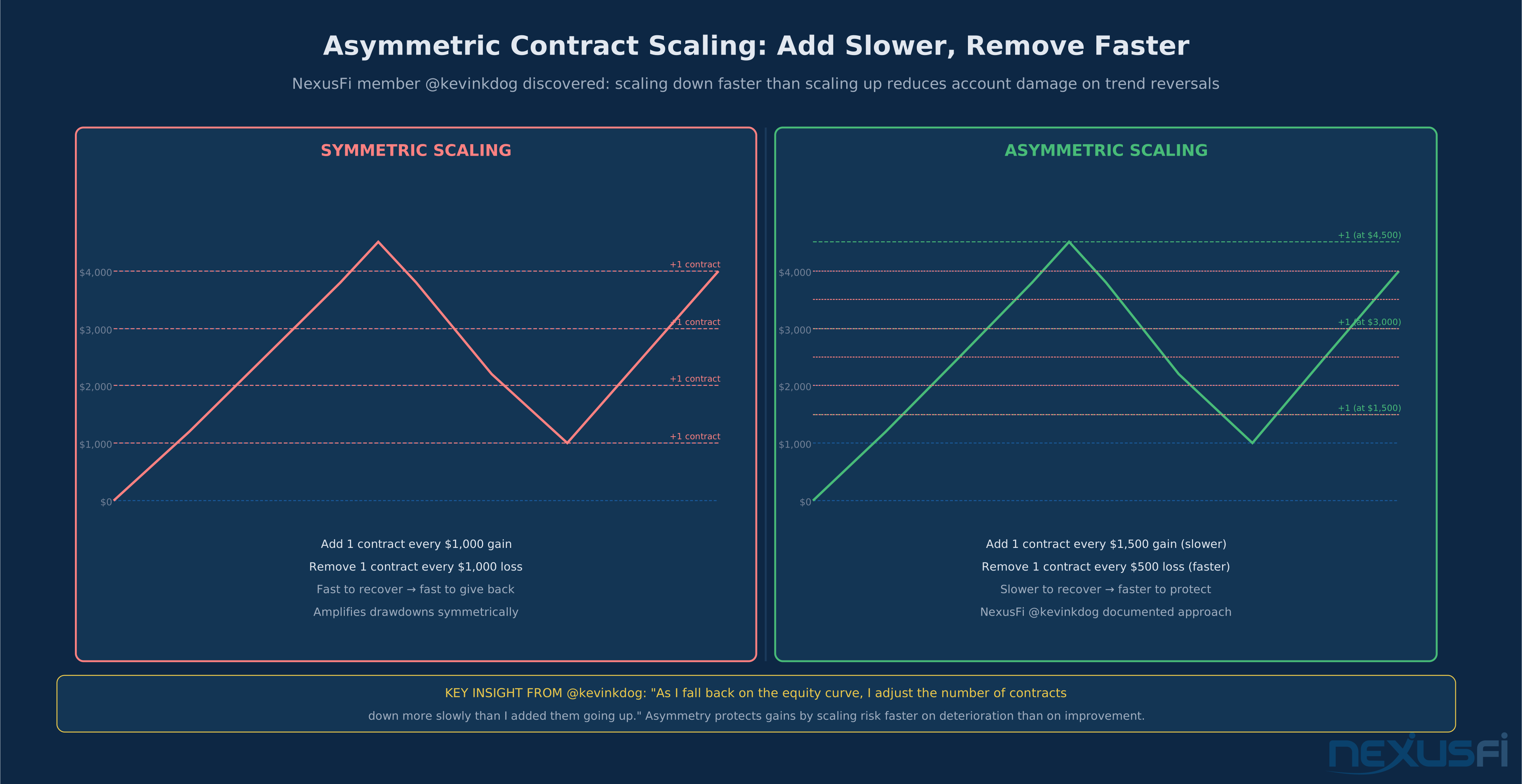
NexusFi member @kevinkdog documented a sophisticated version of this in the Taking a Trading System Live thread. His approach involved a layered contract system: "If my equity falls below $10,114 on a closed day basis, I will revert back to trading one contract... As I fall back on the equity curve, I adjust the number of contracts down more slowly than I added them going up." The asymmetric scaling he describes — adding contracts slower going up than removing them going down — is a built-in behavioral safeguard against giving back gains too quickly.
Kelly Fraction Adjustments Based on Performance #
The Kelly Criterion gives you a mathematically optimal position size based on your win rate and payoff ratio. Full Kelly maximizes geometric growth. The problem: in live futures trading, Kelly calculations are based on estimated win rates and payoffs that change as market conditions change. When performance deteriorates, Kelly suggests increasing risk at exactly the wrong moment — because it's detecting an opportunity to recover, not the fact that your edge estimates may be wrong.
Fractional Kelly addresses the overleverage problem. Half-Kelly (betting 50% of the full Kelly fraction) is a well-established baseline. Quarter-Kelly is common for systematic futures strategies with uncertain edges.
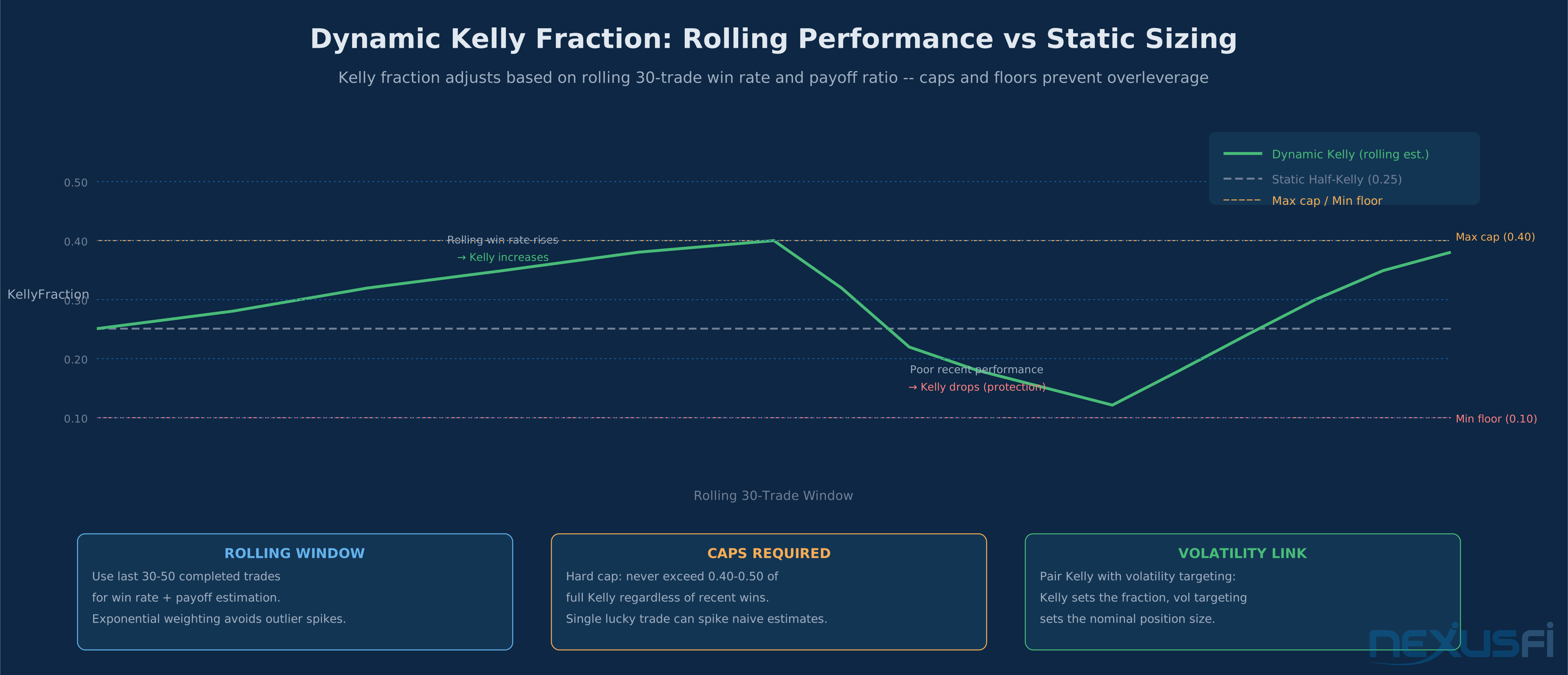
Equity curve-aware Kelly takes this further. Rather than using static historical win rate and payoff estimates, use a rolling window — the last 20-30 completed trades — to dynamically update your Kelly fraction. When recent performance matches your historical expectancy, trade the full fractional Kelly. When recent performance has deteriorated much, the rolling Kelly calculation will naturally suggest smaller sizes. You don't need a separate equity curve filter; the Kelly adjustment incorporates the signal.
The critical implementation detail: use exponentially weighted moving averages (EWMA) for the rolling estimates, not simple averages. A single outlier trade — an unexpected gap or unusually large winner — can spike your EWMA Kelly fraction dramatically. Impose a cap. Never allow the Kelly fraction to suggest more than your normal maximum risk per trade, regardless of what recent math implies.
When Equity Curve Trading Hurts More Than Helps #
Here's the part most articles skip: equity curve trading has real failure modes, and using it uncritically can make your performance worse.
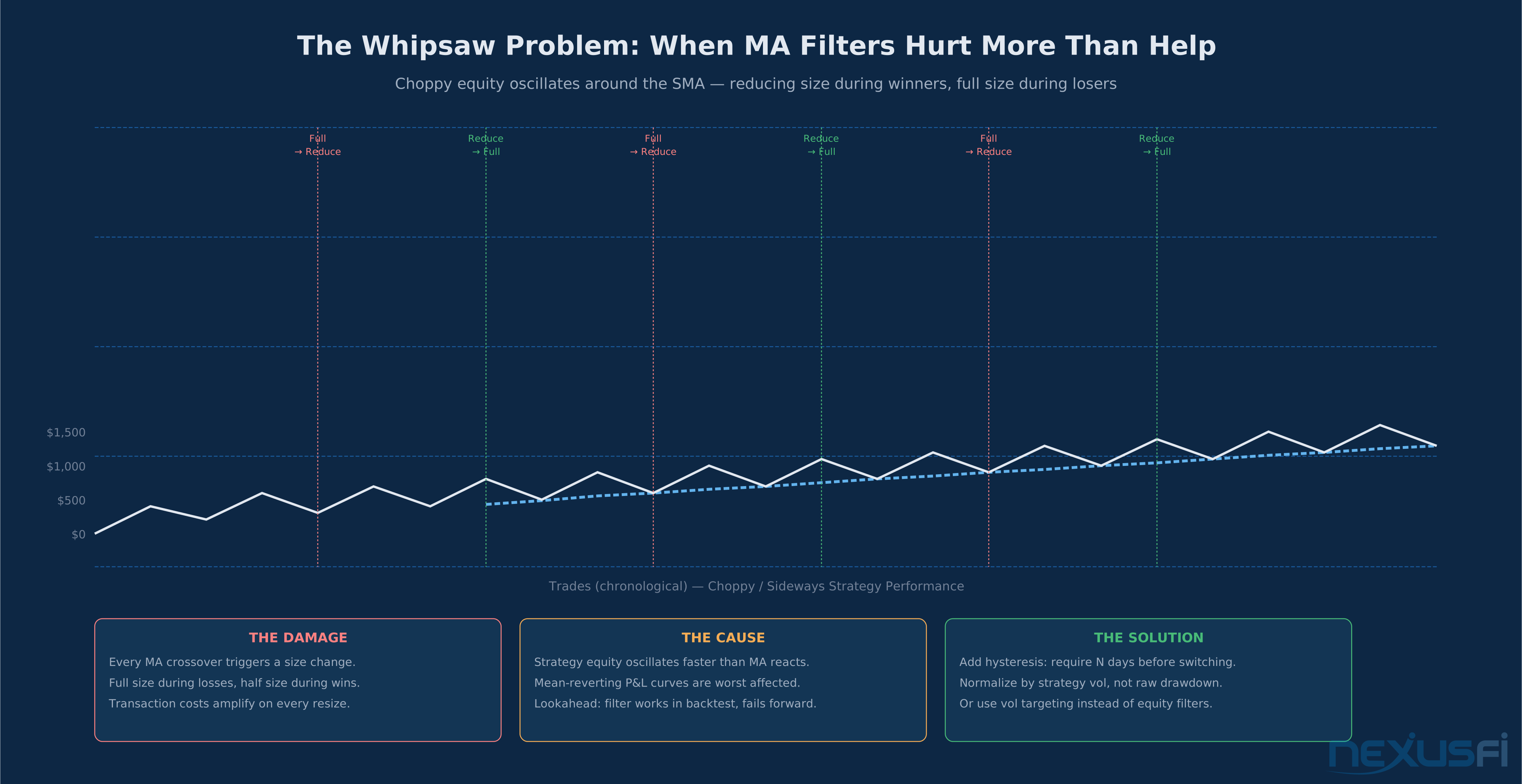
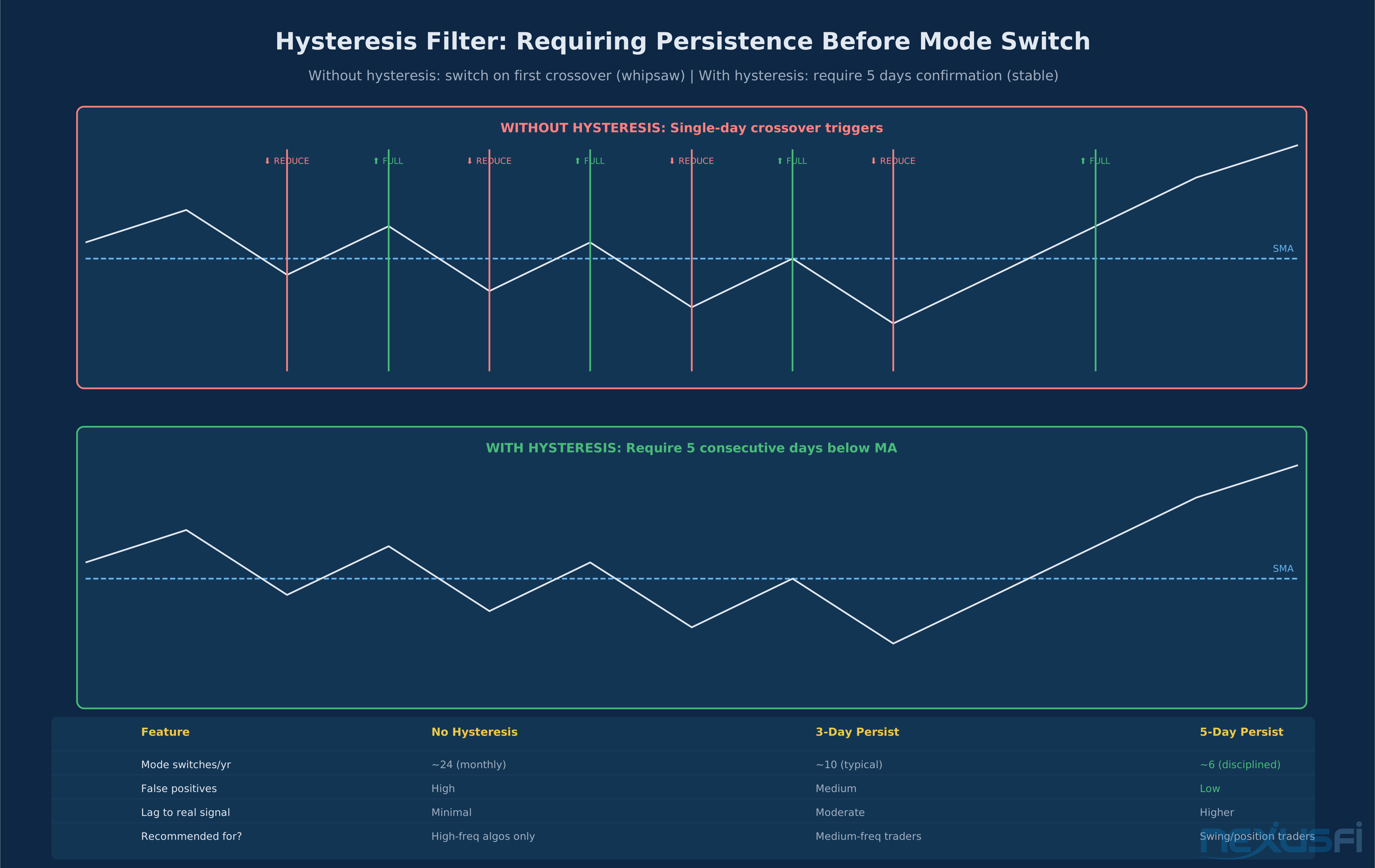
The whipsaw problem. If your equity curve oscillates around its moving average — common when strategies go through choppy, sideways performance periods — you end up reducing size just before winners and running full size into losers. Research by Hsu and Kuan (2021) found that MA filters on equity curves erode returns by 15-30% on average in markets with frequent regime changes. The filter was supposed to protect you; instead it systematically mis-sized every transition.
The fix: add hysteresis. Don't switch modes on the first MA crossover. Require the crossover to persist for N sessions before changing your sizing. This prevents oscillating back and forth on normal variance. The cost: slower reaction when the signal is real. The benefit: far fewer false alarms.
The maximum drawdown exit problem. By the time your equity curve MA filter triggers, you've already experienced meaningful drawdown. If you then fully shut down and re-enter only after the curve has recovered and confirmed above the MA, you've systematically missed the early part of every recovery. You exit at the worst point, re-enter at the best point, and call it "protection."
Viewed in backtest, this looks great. Viewed forward, it's performance chasing applied to your own trading. The academic literature on performance persistence in futures is unambiguous: persistence is weak and fragile after controlling for transaction costs and data-snooping. What looked like "catching regime shifts" in backtest was often overfitting to the specific contours of historical performance.
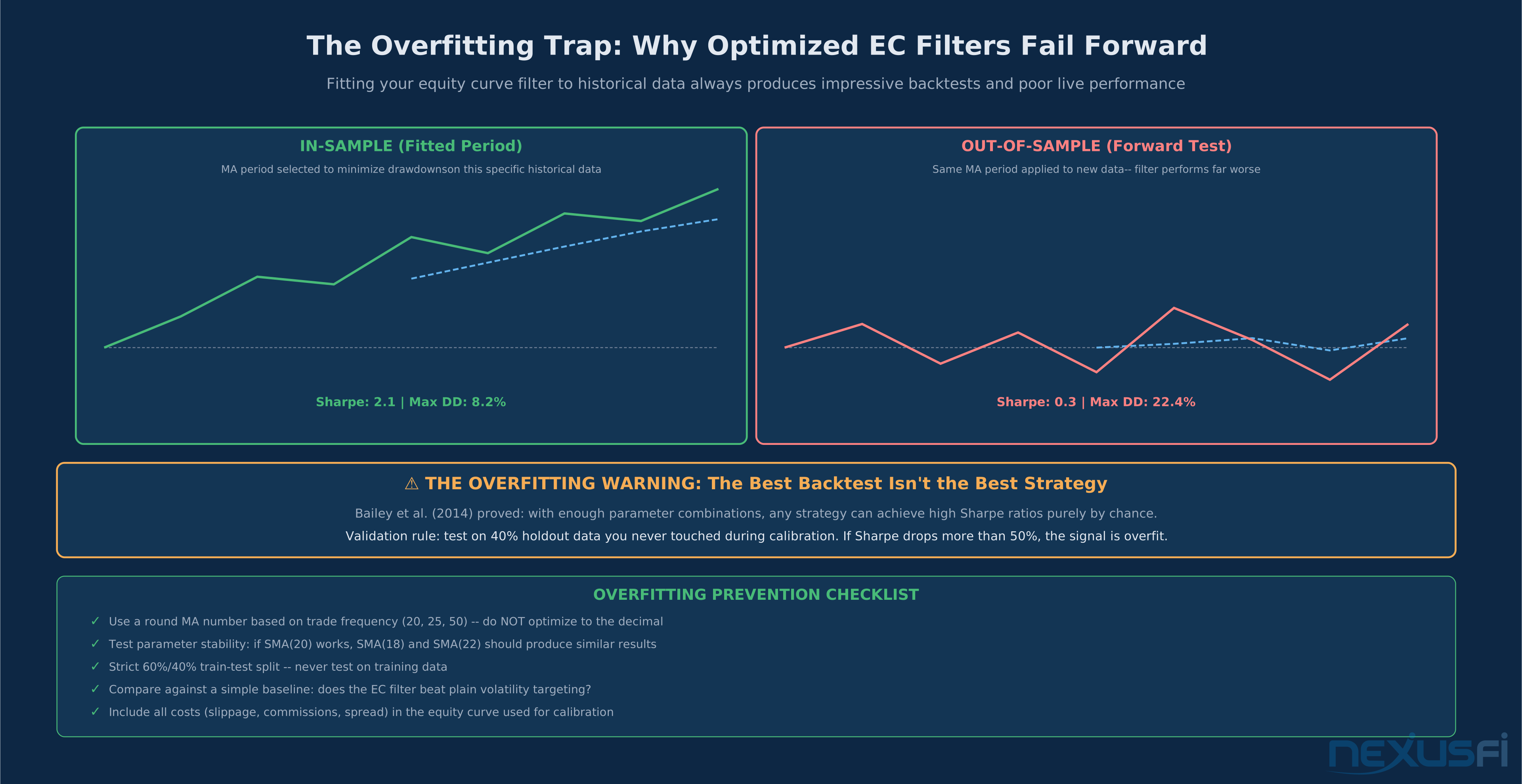
The overfitting trap. Equity curve trading adds parameters to your system: MA length, drawdown thresholds, scaling factors, resume criteria. Every parameter is an opportunity to overfit. You can always find an MA length that would have perfectly protected you in backtest. That MA length almost certainly won't generalize forward.
The solution: keep it simple. One MA parameter, one soft-stop threshold, one hard-stop threshold. Test out-of-sample, not on the data you used to fit the parameters. Compare against a simple baseline — volatility targeting based on realized vol, without any equity curve filter — and ask whether the additional complexity earns its keep after realistic transaction costs.
NexusFi member @TheTrend flagged exactly this concern in the Equity Curve Trading thread: "I don't think the type of moving average is very important. However, I've observed few important features. First, if your system has a high winning % (> 60%), the equity curve will be smoother" — noting that the filter's effectiveness is highly dependent on the underlying strategy's characteristics, not on the filter itself.
The Psychological Case for Equity Curve Trading #
Even if the statistical case for equity curve trading is mixed — and it is — the behavioral case is stronger than most people acknowledge.
Trading through a drawdown without a plan is one of the most psychologically demanding things a trader can do. The mind generates a constant stream of justifications for breaking rules: "just one more trade to get back to breakeven," "the strategy is about to turn," "this time is different." These are not flaws in individual traders. They're documented human cognitive patterns — loss aversion, the disposition effect, recency bias — that operate reliably under conditions of financial stress.
An equity curve risk framework converts these situations into a rule: "when the equity MA crosses below my curve, I drop to 50% size." There's nothing to decide. No willpower required. The rule is the rule. You execute it mechanically and evaluate the situation afterward.
This is the greatest practical benefit of equity curve trading, regardless of whether it produces statistically significant performance improvement. It gives you a script for the hardest moments. It removes discretion from sizing decisions made in the worst psychological conditions.
@DarkPoolTrading captured this dynamic in the Equity Curve Trading thread: "The idea is to stop trading until it has recovered a certain part of the drawdown. e.g.: If the drawdown exceeds 200 points, only start trading once it has recovered 100 points from the max drawdown. The idea being that you wouldn't be trading through the worst of it." This is pure behavioral risk management — protecting the trader from themselves during the most dangerous period.
Turning Off vs. Staying Disciplined: The Governance Question #
The hardest question in equity curve trading: when does a losing period mean "stop trading" versus "stay disciplined and execute the system"?
The answer hinges on whether the losses fall within your strategy's expected drawdown distribution. Every strategy has a drawdown profile: expected maximum drawdown, expected recovery time, expected frequency of drawdown events. If your current drawdown is within that distribution — even at the painful end of it — it's not evidence of edge failure. It's the system working as designed, in an unfavorable variance scenario.
Edge failure looks different. The losses occur in patterns inconsistent with the strategy's design. Entry signals that historically produced edges stop working. Execution quality degrades (slippage, fill rates, spread behavior change). Market microstructure shifts in a way that invalidates the strategy's underlying logic — a trend-following system in a central bank intervention period, or a mean-reversion system during a momentum regime.
The practical framework: turn off when multiple independent signals converge. Drawdown threshold exceeded AND equity MA in risk-off state AND variance ratio analysis shows deterioration in P&L autocorrelation AND, ideally, an identifiable structural reason for the failure. One indicator alone — especially just a drawdown threshold — is too noisy. Multiple converging signals provide more confidence that the signal is real, not just bad variance.
The professional compromise is "minimum viable exposure" rather than full shutdown. Keep a small position — 10-25% of normal size — rather than going fully dark. This maintains operational readiness, keeps your edge-reading current, and prevents the revenge-trading pressure that builds when you've been fully out of the market for weeks. It also captures the regime pivot earlier, when the turn comes.
Building Your Equity Curve System #
Implementation requires three things: a reliable equity curve, a written risk ladder, and defined resume criteria. All three must be in place before you trade the system.
Step 1: Build the equity curve. Track daily net P&L — after all costs — into a spreadsheet or database. Do not use backtest results. Do not use paper trading results. Use only live trading results, with realistic costs included. If you're starting fresh, you have no equity curve yet. Paper trade for 3-6 months with the filter in place before going live, and understand that your initial parameter estimates may need revision as you accumulate real data.
Step 2: Choose your MA period. A 20-period SMA on daily equity is a defensible starting point for active day traders. A 25-50 period SMA for lower-frequency traders. Resist the urge to improve. "What MA period would have worked best on my last 18 months of data?" is a question that produces curve-fit answers. Use a round number based on your trade frequency and test for stability — if small changes to the period dramatically change results, the signal is fragile.
Step 3: Write your risk ladder. Specific thresholds, specific actions. Example: "If daily equity drops below its 20-day SMA, reduce all position sizes by 50% starting the next session. If drawdown from peak exceeds 20%, stop trading new entries and return to simulation. Both conditions in writing, posted where I trade."
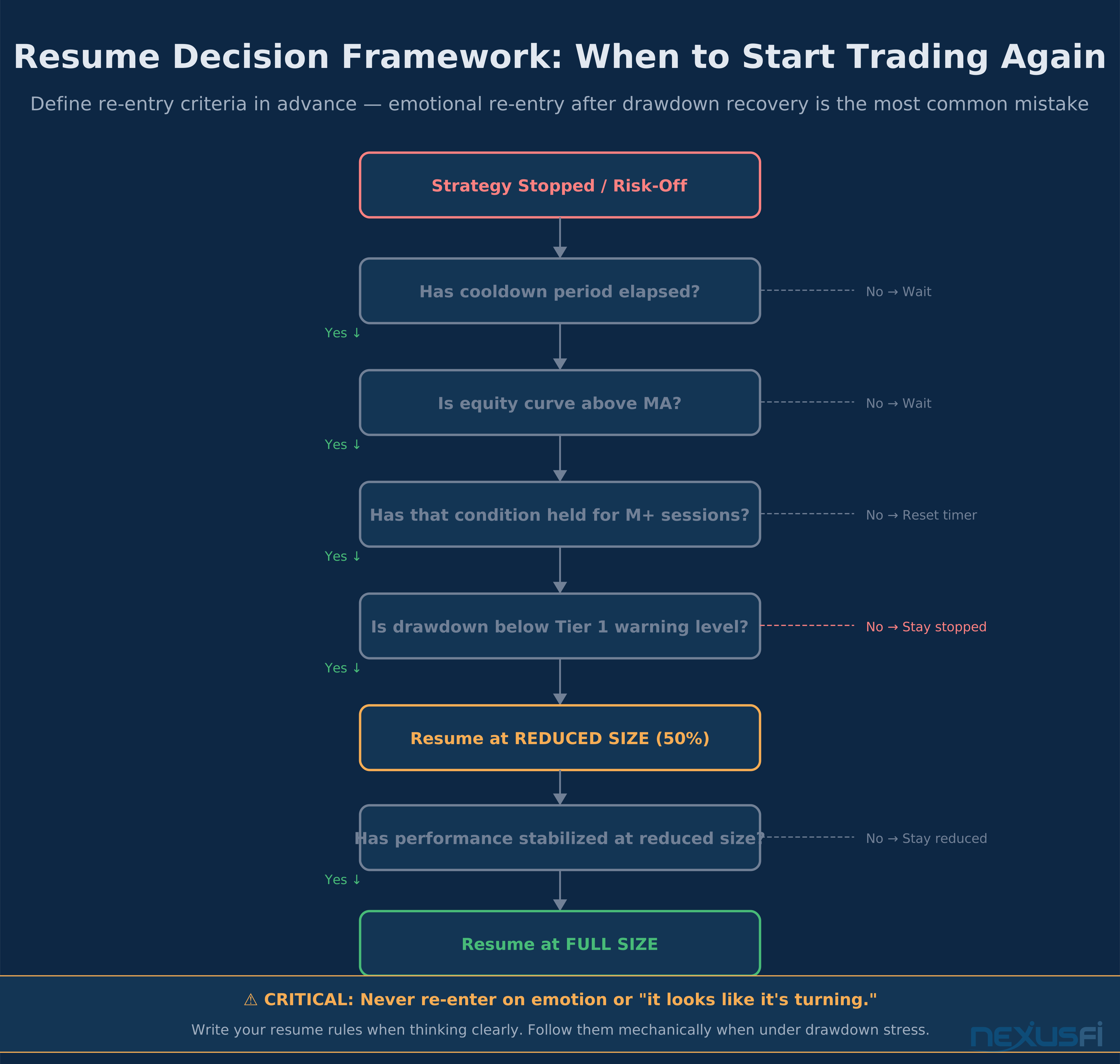
Step 4: Write resume criteria. This is the most frequently neglected step. Example: "Resume full size when equity curve has been above the 20-day SMA for 5 consecutive sessions AND drawdown has recovered below 10%. Resume from stopped status when both of these conditions hold plus I have paper traded for at least 10 sessions with acceptable results."
Step 5: Back-test conservatively. Apply the filter to your own actual trading history. Not to see whether it "would have worked," but to calibrate parameters and understand what signals it would have generated. Expect that some signals would have been correct and some would have been wrong. That's not a bug — it's the nature of any filter operating on noisy data.
Step 6: Walk-forward validate. Take your first 60% of trading history to calibrate parameters. Test on the remaining 40% without touching the parameters. If the filter still produces meaningful capital protection — even if imperfect — it has some forward-looking validity. If performance in the test period is dramatically different from the training period, you've overfit.
Equity Curve Trading vs. Volatility Targeting #
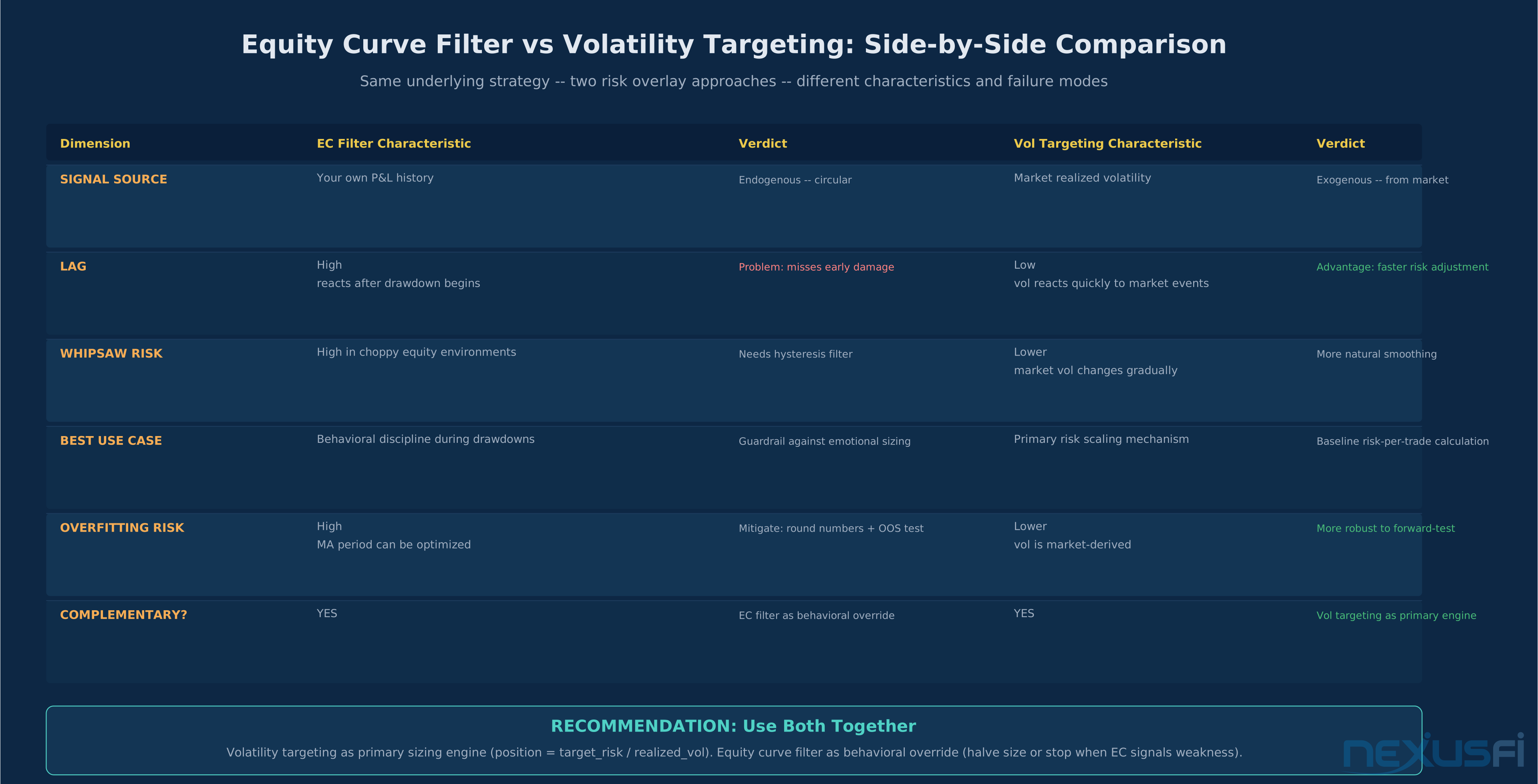
Volatility targeting is equity curve trading's main alternative for dynamic risk scaling. Instead of using your equity curve position as a signal, you use the market's current realized volatility to size positions. High volatility → smaller positions. Low volatility → larger positions. The same capital is always at risk in volatility-adjusted terms.
The evidence for volatility targeting is stronger than for equity curve filters, especially in futures markets. The signal (market vol) is exogenous — it comes from the market, not from your own P&L. This avoids the endogeneity problem that plagues equity curve trading, where the signal and the strategy output are derived from the same data. Volatility targeting is also less likely to create whipsaw because market volatility changes more gradually than equity curve crossovers.
The honest assessment: for most systematic futures traders, volatility targeting provides cleaner, more strong dynamic sizing than equity curve filters. Equity curve trading's primary value is behavioral — the discipline framework — not statistical. Use both if you want: volatility targeting as your primary sizing mechanism, equity curve monitoring as a behavioral safeguard and regime indicator.
The Deeper Point About Performance Persistence #
The academic literature on performance persistence in futures trading delivers an inconvenient conclusion: past performance is a weak predictor of future performance. Moskowitz et al. (2012) found modest short-horizon persistence; later meta-analyses controlling for data snooping find persistence largely disappears after costs. The apparent skill in CTA track records is often better explained by systematic risk premia (trend, carry, momentum) than by manager-specific edge that persists over time.
This has a direct implication for equity curve trading: if your strategy's performance doesn't persist strongly, then using past equity performance to predict future performance is naturally limited. The signal-to-noise ratio is low.
This doesn't mean equity curve trading is worthless. It means the bar for claiming it produces statistical alpha is high. The honest use case is behavioral risk management: using your equity curve as a guardrail against catastrophic loss and emotional decision-making, not as a precise predictor of when your edge is active versus dormant.
That's still enormously valuable. A trader who prevents one catastrophic drawdown with a systematic equity curve rule — the kind that happens when someone keeps trading full size into a broken strategy — has justified the entire framework. The return isn't in the precision of the signal. It's in avoiding the tail events that destroy accounts.
Common Mistakes and How to Avoid Them #
Optimizing the MA period on historical data. The resulting parameter is always overfit. Use a round number based on trade frequency. Test for stability (small changes should produce similar results).
Defining stop rules without resume rules. The most common implementation error. Write resume criteria before you ever need them, when you're thinking clearly.
Using gross P&L instead of net. After commissions, slippage, and fees, many strategies' "edges" disappear. Your equity curve must reflect what you actually made, not what you would have made with zero costs.
Manually overriding the filter "just this once." The entire point is removing discretion from the worst moments. If you override the filter when the rule says to reduce size, you've defeated it.
Applying it to a strategy still in development. Equity curve trading assumes a mature, tested strategy with a known performance distribution. If you're still discovering whether your strategy has an edge, an equity curve filter can mask fundamental problems rather than managing normal variance.
Not accounting for correlated positions. An account-level equity filter doesn't address concentrated risk in correlated instruments. Manage correlation separately. Your equity curve filter protects the account; position-level risk controls protect each trade.
The Practical Bottom Line #
Equity curve trading is not a holy grail. It won't save a strategy without an edge. It won't eliminate drawdowns or guarantee smoother returns. The academic case for it producing statistically significant alpha is thin.
What it delivers is more valuable than alpha: a rule-based framework for the hardest psychological situations in trading. It converts "should I keep trading through this?" into a written procedure. It prevents emotional size increases during losing periods. It gives you permission to sit out when evidence suggests your edge is temporarily inactive.
The three-mode risk ladder — full size when performing, reduced size when struggling, stopped when evidence of edge failure accumulates — is a framework worth building. Not because it will predict markets, but because it will protect you from your own worst decisions when the markets are going against you.
Build your equity curve. Define your modes. Write your rules before you need them. Then follow them mechanically, even when every instinct says this drawdown is different.
It usually isn't. But your rules protect you whether it is or isn't.
Knowledge Map
Prerequisites
Understand these firstCitations
- — shodson's Automated Trading Journal (2012) 👍 3“I exported backtested trades to Excel and created a per-trade equity chart (blue line). I then added a SMA(20) on the equity (red line).”
- — Walk Forward Experiment (2011) 👍 1“December Changes. Ending test on 3 separate lots and moving back to single lot trading. New lot size will be 9000 when above [equity threshold].”
- — shodson's Automated Trading Journal (2011) 👍 2“I have been testing a moving average on my automated system whereby it reduces the number of contracts when it is below the moving average.”
- — Equity Curve Trading (2011) 👍 2“I don't think the type of moving average is very important. However, if your system has a high winning % (> 60%), the equity curve will be smoother.”
- — Taking a Trading System Live (2013) 👍 16“I will take the average, and stop trading when the single contract drawdown reaches the $5K limit.”
- — Taking a Trading System Live (2014) 👍 8“As I fall back on the equity curve, I adjust the number of contracts down more slowly than I added them going up. The net impact is that I add contracts on the way up, and reduce on the way down asymmetrically.”
- — Idea to Decrease Drawdowns (2015) 👍 6“It is kind of like equity curve trading, where you stop trading a system when the equity curve falls below its moving average.”
- — Equity curve trading - possible? (2012) 👍 5“Stop trading until it has recovered a certain part of the drawdown. e.g.: If the drawdown exceeds 200 points, only start trading once it has recovered 100 points from the max drawdown.”
- — IchibomB Futures Trading (2019) 👍 6“I took what you said and designed a trading plan which incorporates a method to stop trading when things start going bad and a method to resume when conditions improve. The equity curve filter made it rule-based instead of discretionary.”