



Volatility-Based Position Sizing: How to Let the Market Tell You How Big to Trade
Overview #
Every futures market has a personality, and that personality changes. ES trades with a 20-point daily range for weeks, then a tariff announcement hits and suddenly it's swinging 80 points before lunch. If you're trading the same number of contracts in both environments, you're not managing risk — you're ignoring it.
Volatility-based position sizing solves a problem that fixed-lot sizing can't: it normalizes your dollar risk across different market conditions and different instruments. Instead of saying "I trade 2 contracts of ES," you say "I risk $500 per trade, and I let the current volatility of the instrument determine how many contracts that buys me."
The concept is straightforward. The math is simple. But the discipline to actually implement it — to trade fewer contracts when the market is screaming and you want to be aggressive — separates professional risk management from account-destroying amateur hour.
Key Concepts #
Average True Range (ATR): The average of true ranges over N periods. True range accounts for gaps by including the distance from the prior close to the current high or low, whichever is greater. ATR(14) on a daily chart gives you the average daily range of an instrument over the past 14 sessions.
Dollar Volatility: ATR multiplied by the instrument's point value. If ES has a 14-day ATR of 40 points and each point is worth $50, the daily dollar volatility is $2,000 per contract. This is the number that matters for position sizing — not the ATR in points.
Volatility-Normalized Risk: Setting position size so that each trade carries approximately the same dollar risk regardless of the instrument or the current volatility regime. Two contracts of ES in a low-vol environment might carry the same risk as one contract in a high-vol environment.
Risk Per Trade: The maximum dollar amount you're willing to lose on any single trade. Common thresholds range from 0.5% to 2% of account equity. This is your input variable — everything else flows from it.
Volatility Regime: The current state of market volatility relative to its historical range. Low-vol, normal-vol, and high-vol regimes each demand different sizing behavior from the formula, and they shift without warning.
How Volatility-Based Sizing Works #
The Core Formula #
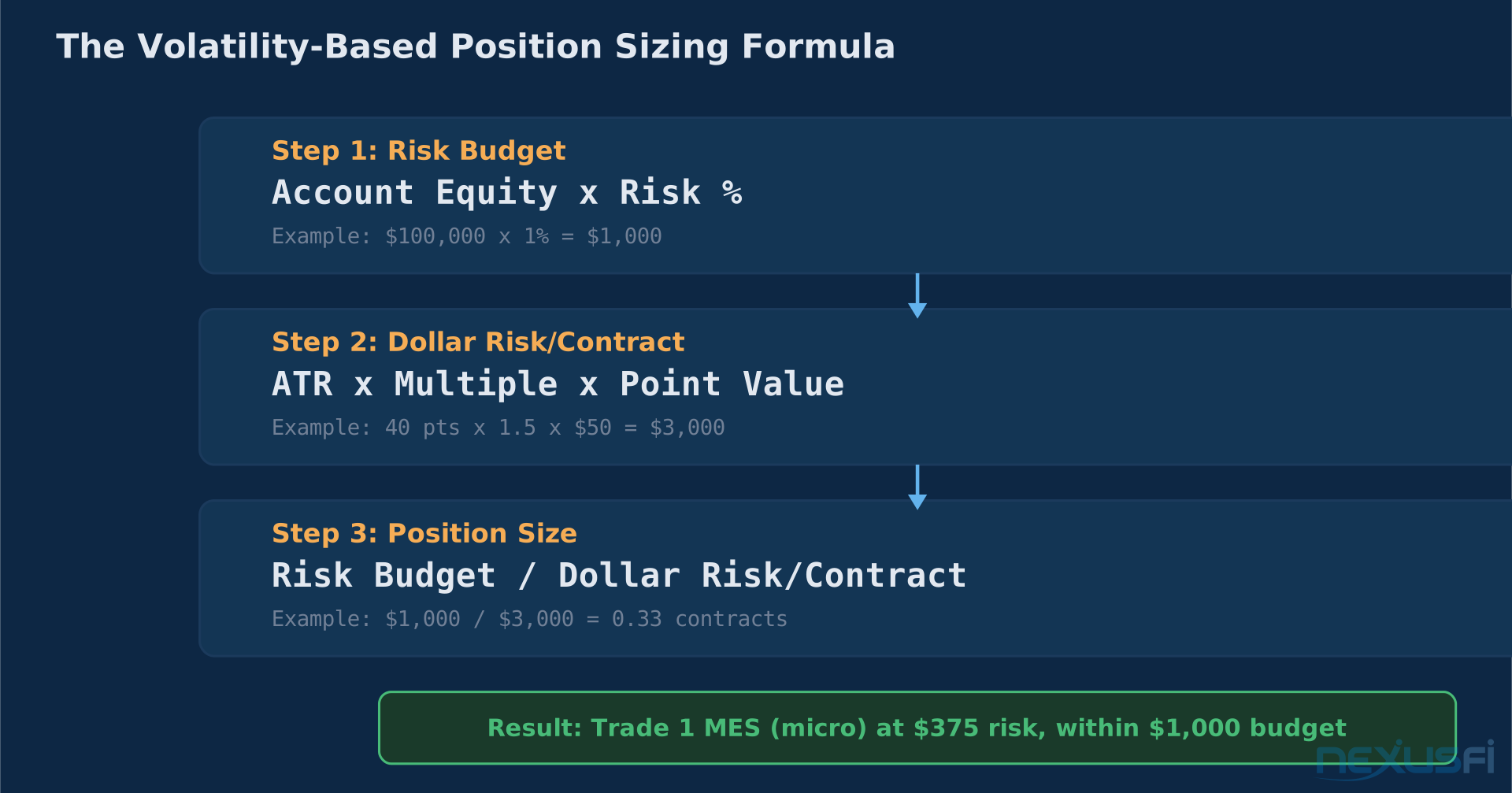
The math is three steps:
Step 1: Determine your risk per trade in dollars. If your account is $100,000 and you risk 1% per trade, your risk budget is $1,000.
Step 2: Calculate the dollar risk per contract using ATR. Dollar Risk Per Contract = ATR × ATR Multiple × Point Value
If you use a 1.5× ATR stop on ES with ATR(14) at 40 points: Dollar Risk Per Contract = 40 × 1.5 × $50 = $3,000
Step 3: Divide risk budget by dollar risk per contract. Position Size = $1,000 ÷ $3,000 = 0.33 contracts
That's less than one contract. In this scenario, you either trade one micro (MES at $5/point, giving $300 risk — within budget) or you skip the trade entirely because the volatility exceeds your risk tolerance at this account size.
Position Size = (Account Equity × Risk%) / (ATR × ATR Multiple × Point Value)
Three inputs you control (equity, risk %, ATR multiple) and one the market sets (ATR). Recalculate before every trade or at minimum weekly.
That result is data. It's telling you something important about the relationship between your account size, your risk tolerance, and the current market environment. Ignoring it doesn't make the risk disappear.
Why ATR and Not Standard Deviation? #
Both measure dispersion, but ATR handles gaps — the overnight move that takes ES from 5400 to 5350 without a single trade between. Standard deviation of close-to-close returns misses this. For futures traders who face gap risk on every session open, ATR captures the actual range of price movement you'll experience.
ATR is also intuitive. When a trader on the NexusFi forums says "ES ATR is 40 handles," everyone immediately understands the expected daily range. Try saying "ES has a daily standard deviation of 0.73%" and watch the blank stares.
Choosing ATR Period and Timeframe #
There's no universally "correct" ATR period, but common choices exist for good reason:
ATR(14) on a daily chart is the default for swing traders and position traders. It smooths out single-day anomalies while staying responsive enough to capture regime changes within 2-3 weeks. As @Fat Tails demonstrated in a NexusFi position sizing tool, using ATR(36) on a 5-minute chart provides finer granularity for intraday sizing, updating the risk calculation with each session's actual volatility rather than relying on daily aggregates ([Post #69126] [1]).
ATR(20) on a daily chart aligns with one calendar month of trading sessions. Some institutional desks prefer this because their risk budgets reset monthly.
ATR(5-10) on intraday charts works for day traders who need sizing that reflects this week's volatility, not last month's. The tradeoff: shorter lookbacks react faster to regime changes but also whipsaw more during transitional periods.
The key insight: ATR period selection is a responsiveness dial. Shorter periods catch volatility shifts faster but generate noisier signals. Longer periods are more stable but can leave you oversized when volatility spikes suddenly.
Practical Application #
Sizing Across Multiple Instruments #
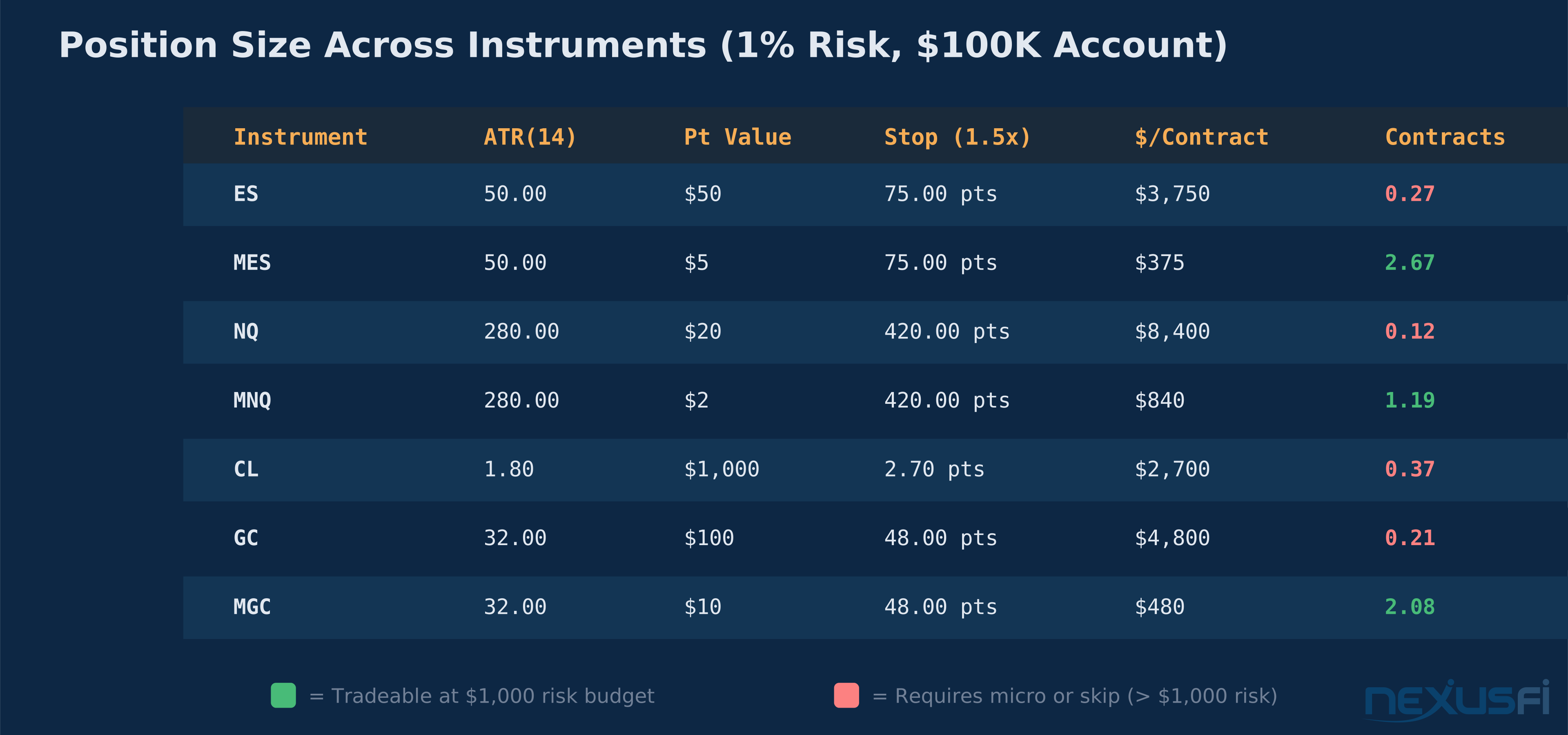
Here's where volatility-based sizing proves its worth. Consider a trader with a $100,000 account risking 1% ($1,000) per trade across three instruments, using a 1.5× ATR stop:
ES (E-mini S&P 500):
- ATR(14) = 50 points
- Point value = $50
- Stop distance = 50 × 1.5 = 75 points
- Dollar risk per contract = 75 × $50 = $3,750
- Position size = $1,000 ÷ $3,750 = 0.27 → Trade 1 MES ($375 risk) or skip
CL (Crude Oil):
- ATR(14) = 1.80 points
- Point value = $1,000
- Stop distance = 1.80 × 1.5 = 2.70 points
- Dollar risk per contract = 2.70 × $1,000 = $2,700
- Position size = $1,000 ÷ $2,700 = 0.37 → Skip or use micro if available
GC (Gold):
- ATR(14) = 30.00 points
- Point value = $100
- Stop distance = 30.00 × 1.5 = 45.00 points
- Dollar risk per contract = 45.00 × $100 = $4,500
- Position size = $1,000 ÷ $4,500 = 0.22 → Trade 1 MGC ($450 risk) or skip
As @Fat Tails laid out in a concrete example on NexusFi: "ES: ATR 5.3 points, stop loss 8 points, risk per contract 8 × $50 = $400 → position size 1 contract. CL: ATR 0.33 points, stop loss 0.50 points, risk per contract 0.50 × $1,000 = $500 → position size 1 contract. GC: ATR 1.9 points, stop loss 2.5 points, risk per contract 2.5 × $100 = $250 → position size 2 contracts" ([Post #103781] [2]). The numbers change with market conditions, but the framework stays constant.
Notice what this system reveals: a $100,000 account can't responsibly trade full-size CL or GC contracts with a 1% risk rule in a high-volatility environment. That's not a flaw in the system — it's the system doing its job. The formula is a mirror that reflects whether your ambitions match your capital.
When Volatility Changes: The Regime Problem #
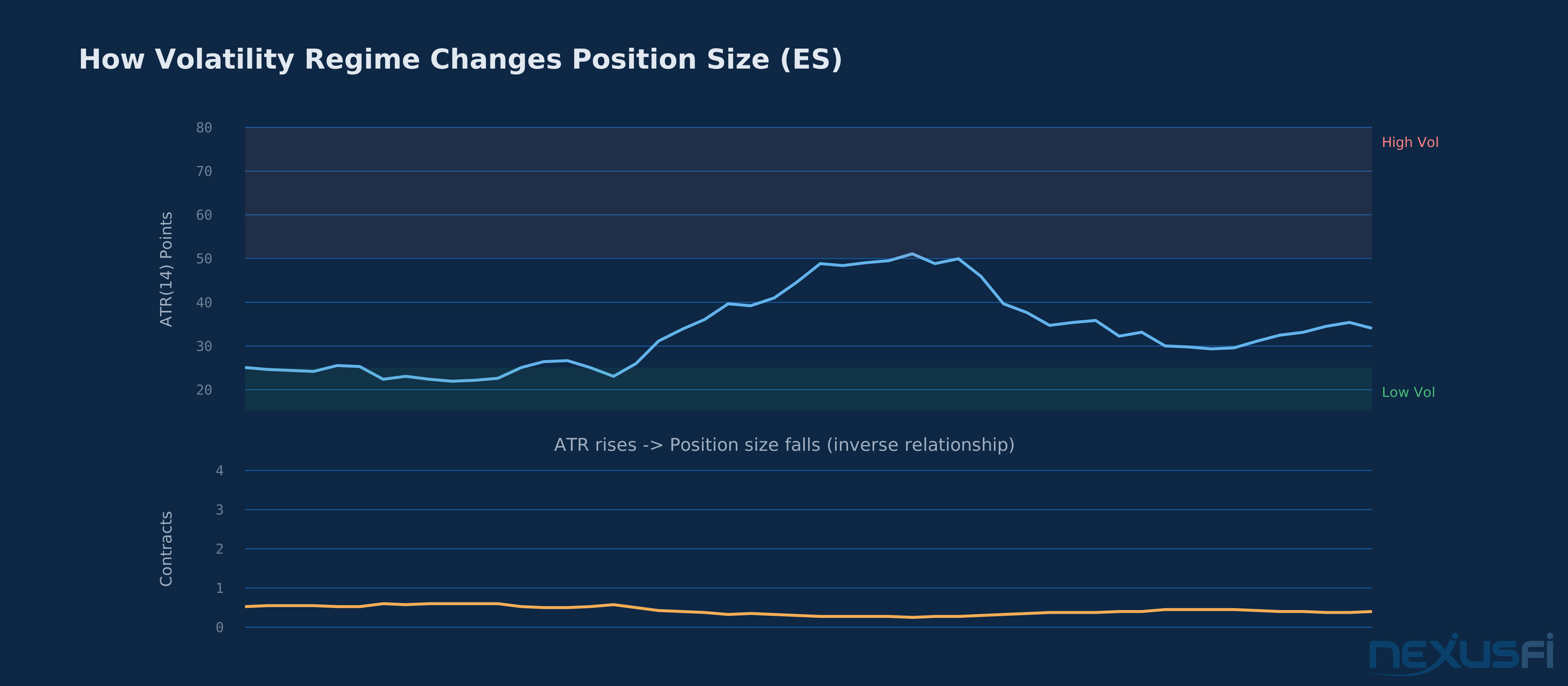
Markets don't stay in one volatility regime. They transition, and those transitions change your position size whether you calculate it or not. The question is whether you adjust deliberately or get adjusted by a margin call. Understanding market regime detection frameworks can help you anticipate these transitions rather than just react to them.
([Post #144902] [3]). That's the formula in action — when ATR triples, position size drops by roughly two-thirds to keep dollar risk constant.
The practical challenge is recognizing regime changes in real time. Several approaches work:
ATR Ratio Method: Compare short-term ATR to long-term ATR. If ATR(5) / ATR(50) > 1.5, you're in an elevated volatility regime. If it's below 0.7, you're in compressed volatility. This ratio updates daily and provides an objective measure.
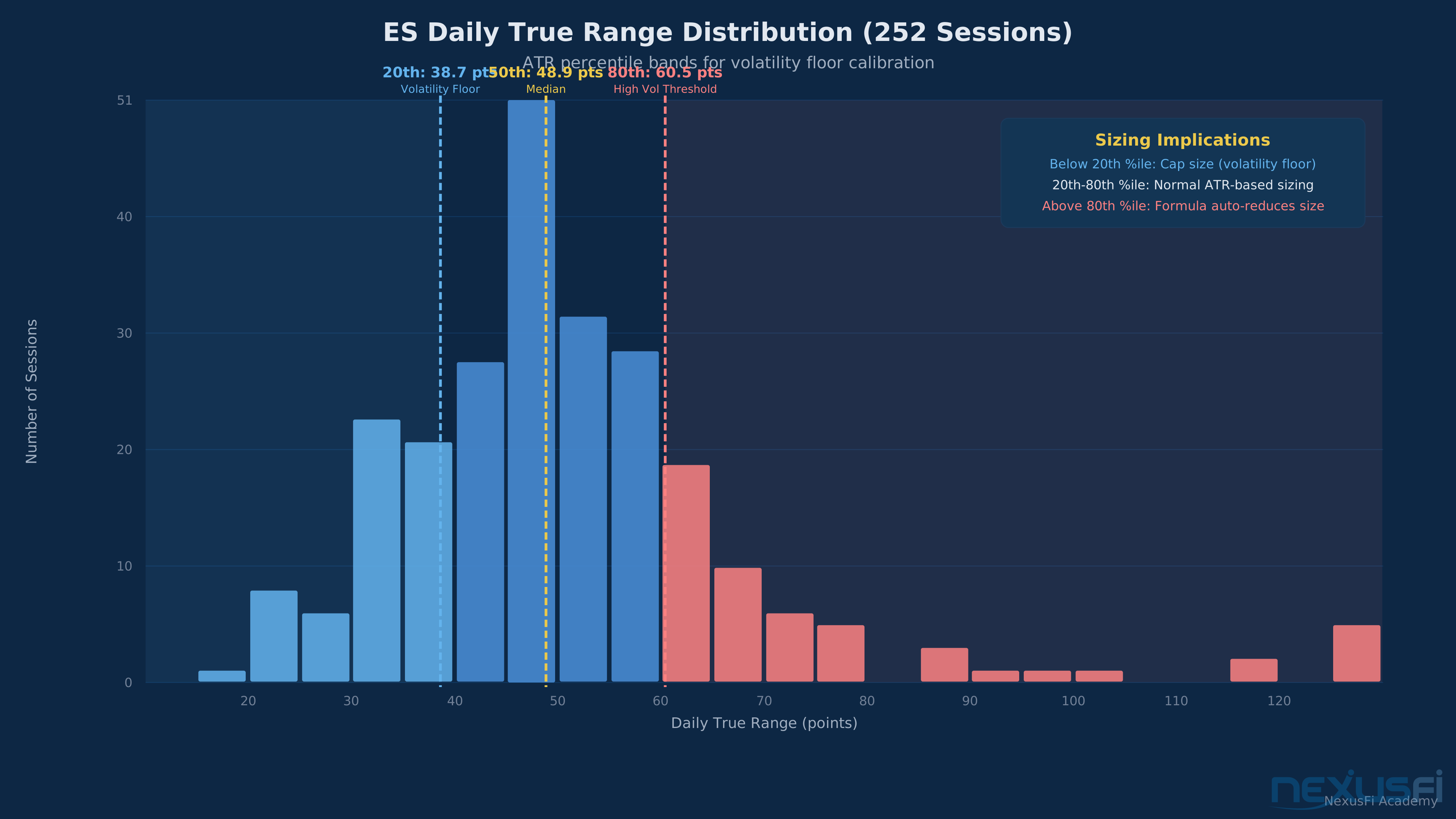
Percentile Ranking: Where does today's ATR(14) fall relative to the past 252 sessions (one year)? Above the 80th percentile = high vol. Below the 20th = low vol. This gives you a normalized measure that works across instruments.
VIX Cross-Reference (for equity index futures): ES, NQ, YM, and RTY traders can use VIX as a regime indicator. VIX above 25 generally coincides with ATR readings that demand smaller position sizes. VIX below 15 often aligns with compressed ranges where the formula allows larger positions.
Adaptive Sizing in Practice #
The volatility-normalized formula automatically adapts. When ATR rises, position size falls. When ATR contracts, position size increases. You don't need a separate "regime detection" system if you're recalculating size before every trade — the ATR does the detection for you.
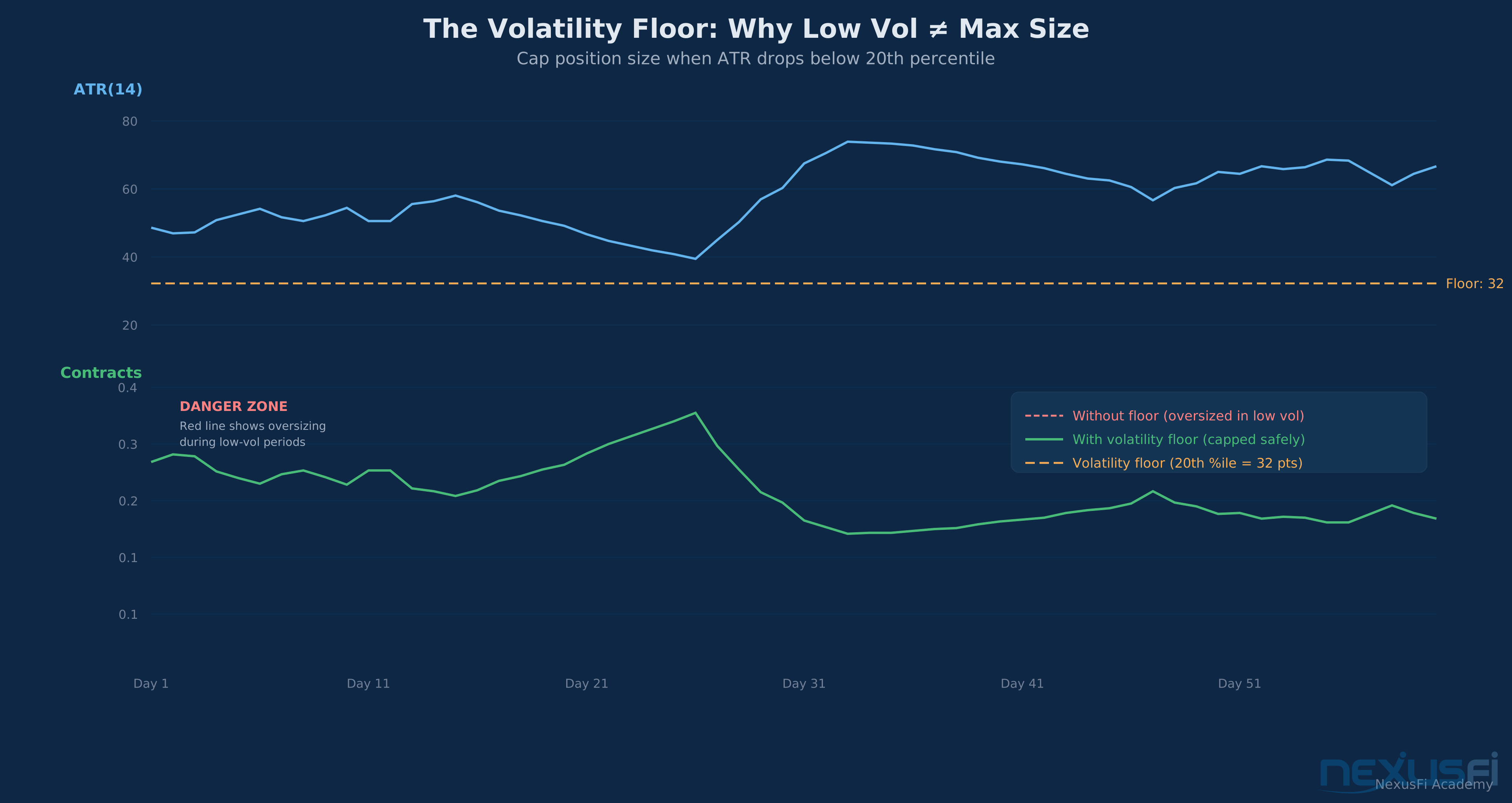
But there's a subtlety that trips up even experienced traders: the formula will tell you to increase size during low-volatility periods, and those quiet periods often precede explosive moves. A 14-day ATR that's compressed to the 10th percentile might be signaling the calm before a breakout, and the formula would have you at maximum position size right when the market is about to gap.
The fix isn't to ignore the formula — it's to apply a volatility floor. Professional desks often set a minimum ATR threshold below which they don't increase size further. If the 20th percentile ATR for ES is 25 points and the current reading drops to 15 points, they cap their sizing at the 25-point level. This prevents the formula from oversizing during abnormally quiet periods.
Set a volatility floor — a minimum ATR threshold (typically the 20th percentile of the past year) below which you stop increasing position size. The formula will tell you to go bigger in quiet markets. The volatility floor is your override for the calm-before-the-storm scenario.
([Post #402043] [4]).
Fixed Dollar Risk vs. Volatility-Adjusted Risk #
Understanding the difference between these two approaches matters because most retail traders use the wrong one.
Fixed Dollar Risk (Common but Flawed) #
"I risk $500 per trade on ES, always." This means you place your stop at 10 points ($500 / $50 per point) regardless of whether ATR is 20 points or 60 points. In a low-vol environment, your stop is 50% of the daily range — reasonable. In a high-vol environment, your stop is 17% of the daily range — you're getting stopped out on normal noise.
The trader then concludes that "the market is choppy" or "my strategy stopped working." No — the market changed and the risk management didn't adapt.
Volatility-Adjusted Risk (Professional Standard) #
"I risk 1% of equity per trade, with stops at 1.5× ATR." This means your stop distance varies with the market, and your position size varies to keep dollar risk constant. In low vol, you might trade 3 contracts with a tight stop. In high vol, you might trade 1 contract with a wide stop. Either way, the dollar at risk is the same.
([Post #612845] [5]). This isn't new theory. It's established practice that most retail traders simply haven't adopted.
@grausch made the connection explicit: "Risk 1% of your capital per trade, then position sizes will become smaller when volatility increases — the effect on your position sizing is exactly the same as using ATR" ([Post #519512] [6]). Stop-based sizing and ATR-based sizing converge when your stops are volatility-derived.
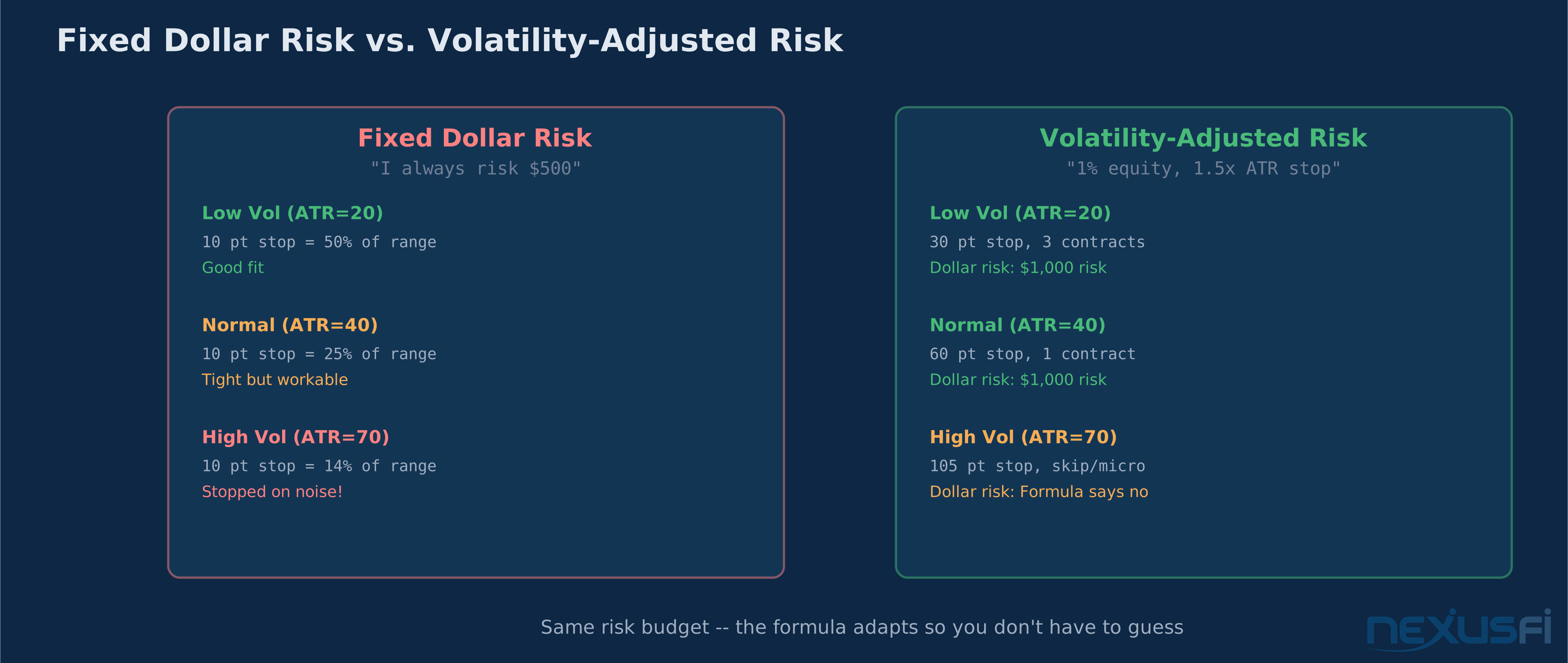
Fixed dollar risk: Same stop distance regardless of volatility. Works in stable regimes, fails when conditions change. Your stop becomes noise in high vol and overly wide in low vol.
Volatility-adjusted risk: Stop distance and position size both flex with the market. Dollar risk stays constant. This is the professional standard because it answers one question correctly every time — how many contracts can I trade without the normal range stopping me out?
Implementation: Step-by-Step Workflow #
Weekly Sizing Review #
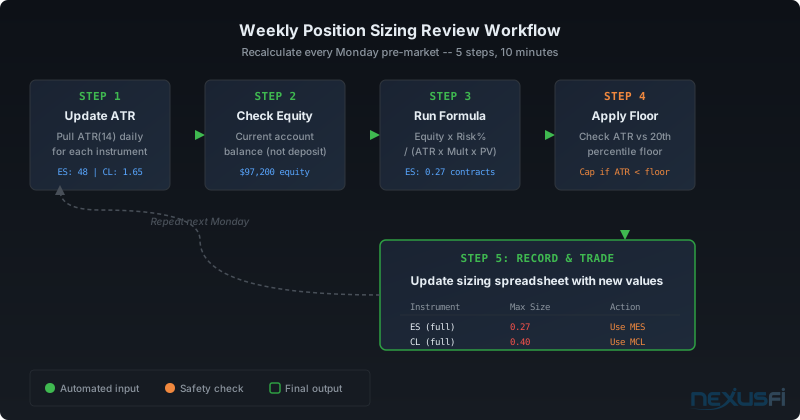
Many professional traders recalculate their position sizes weekly rather than on every trade. Here's why: daily ATR changes are noisy. A single wide-range day can spike your ATR and halve your position size for the next two weeks. Weekly recalculation smooths this out while remaining responsive to genuine regime changes.
([Post #69126] [1]). The weekly cadence provides stability while the ATR component keeps the sizing current.
The Sizing Spreadsheet #
Build a simple spreadsheet (or use a platform tool like NinjaTrader's PositionSizer) with these columns:
| Instrument | Point Value | ATR(14) | ATR Multiple | Stop (Points) | Dollar Risk/Contract | Account Equity | Risk % | Max Contracts |
|---|---|---|---|---|---|---|---|---|
| ES | $50 | 48.00 | 1.5 | 72.00 | $3,600 | $100,000 | 1.0% | 0.28 |
| NQ | $20 | 280.00 | 1.5 | 420.00 | $8,400 | $100,000 | 1.0% | 0.12 |
| CL | $1,000 | 1.65 | 1.5 | 2.475 | $2,475 | $100,000 | 1.0% | 0.40 |
| GC | $100 | 32.00 | 1.5 | 48.00 | $4,800 | $100,000 | 1.0% | 0.21 |
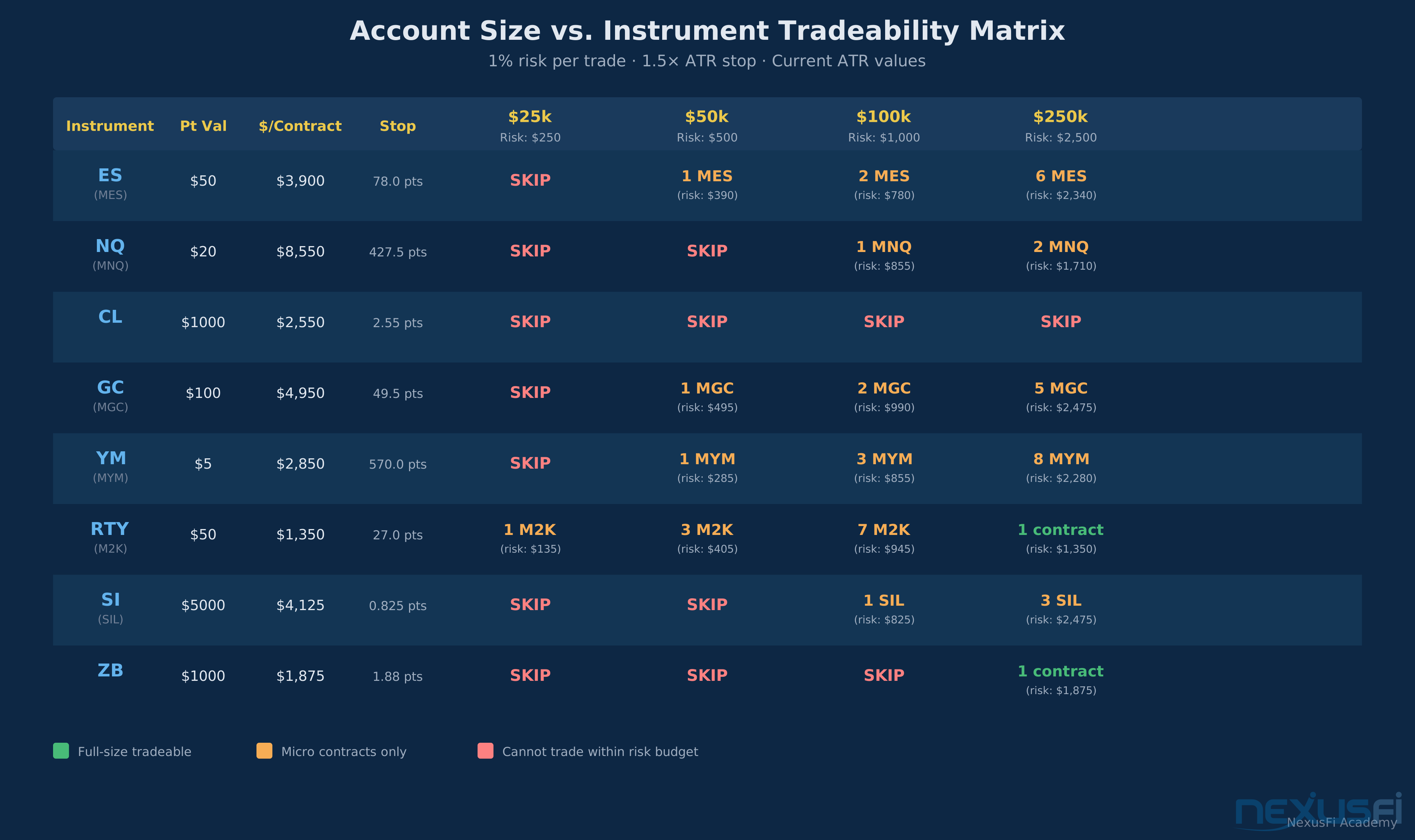
This table tells you instantly which instruments are tradeable at your account size and risk tolerance. If max contracts rounds to zero for full-size contracts, check whether micro contracts bring the trade within budget.
Platform Integration #
Most modern platforms support ATR-based position sizing either natively or through add-ons. NinjaTrader has had community-built PositionSizer tools since 2010, as demonstrated by @Fat Tails' widely-used NexusFi contribution ([Post #69126] [1]). Sierra Chart supports ATR calculations in its spreadsheet study. TradingView's Pine Script can compute ATR-based lot sizes for display on charts.
The implementation pattern is the same regardless of platform:
- Calculate ATR on the desired timeframe
- Multiply by your ATR multiple to get stop distance in points
- Multiply stop distance by point value to get dollar risk per contract
- Divide your risk budget by dollar risk per contract
- Round down (never round up on position size)
Common Mistakes #
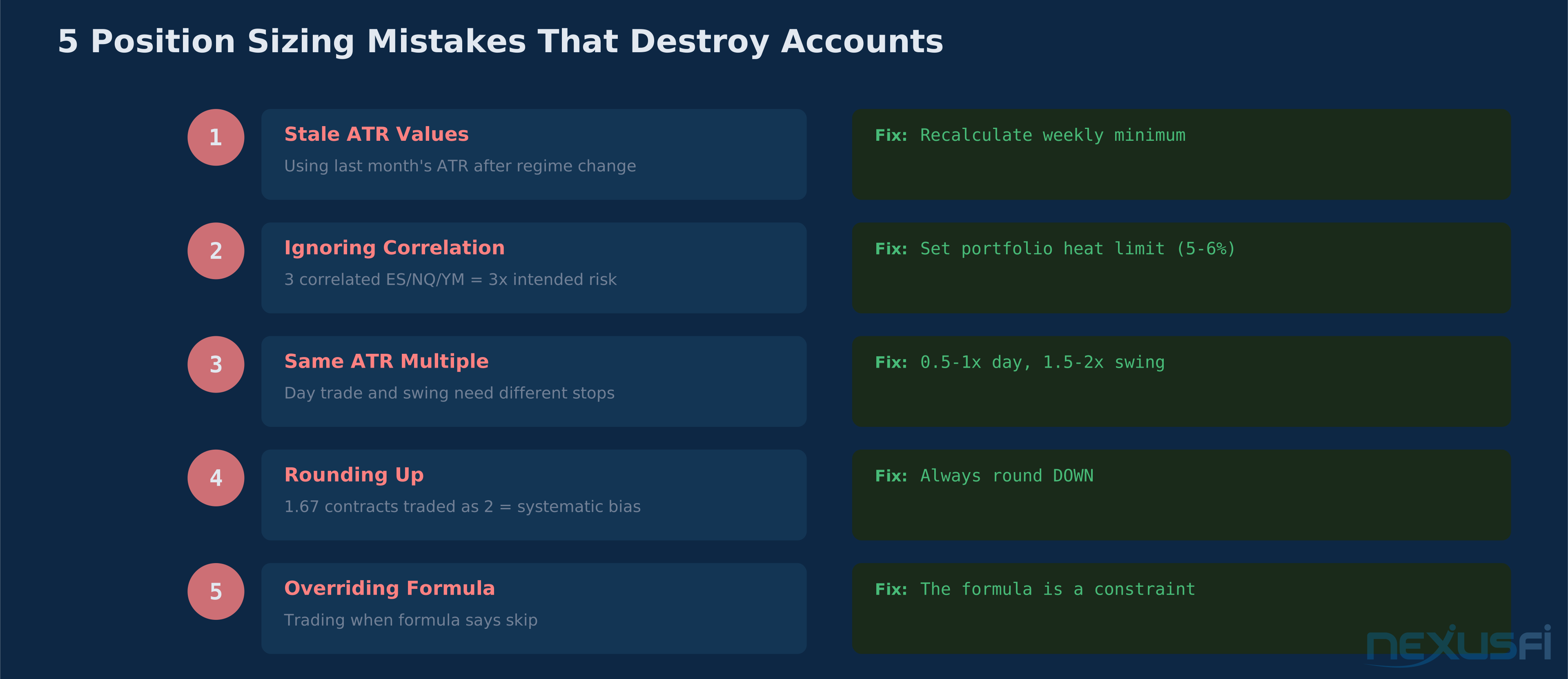
Mistake 1: Using Stale ATR Values #
ATR calculated from last month's data is dangerous during a regime change. If you sized your CL positions using September's calm ATR of 0.80 points and then October's geopolitical crisis pushes ATR to 2.50, your positions are oversized by 3×. Recalculate at least weekly, and recalculate immediately after any move that exceeds 2× ATR.
Mistake 2: Ignoring Correlation Between Positions #
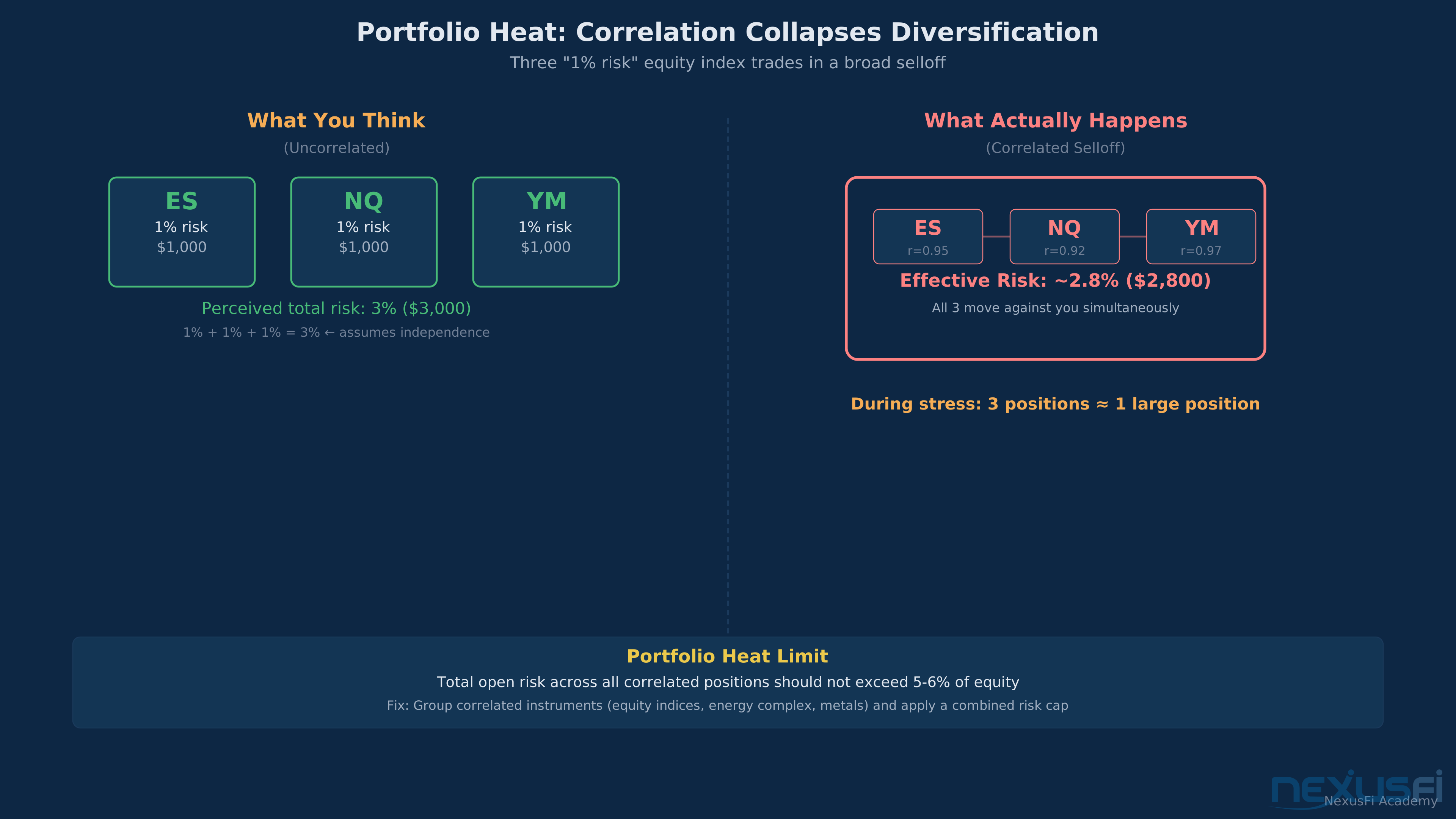
Volatility-based sizing normalizes risk per trade, but it doesn't account for portfolio-level risk. If you're long ES, NQ, and YM simultaneously, you have three highly correlated positions. Your actual portfolio risk is not 1% + 1% + 1% = 3%. In a broad equity selloff, those three positions move in lockstep, and your effective risk is much closer to 3× your single-trade risk.
The fix: apply a portfolio heat limit. If total open risk exceeds 5-6% of equity across all positions, you're overexposed regardless of how well each individual trade is sized.
Mistake 3: Not Adjusting the ATR Multiple for Different Trade Types #
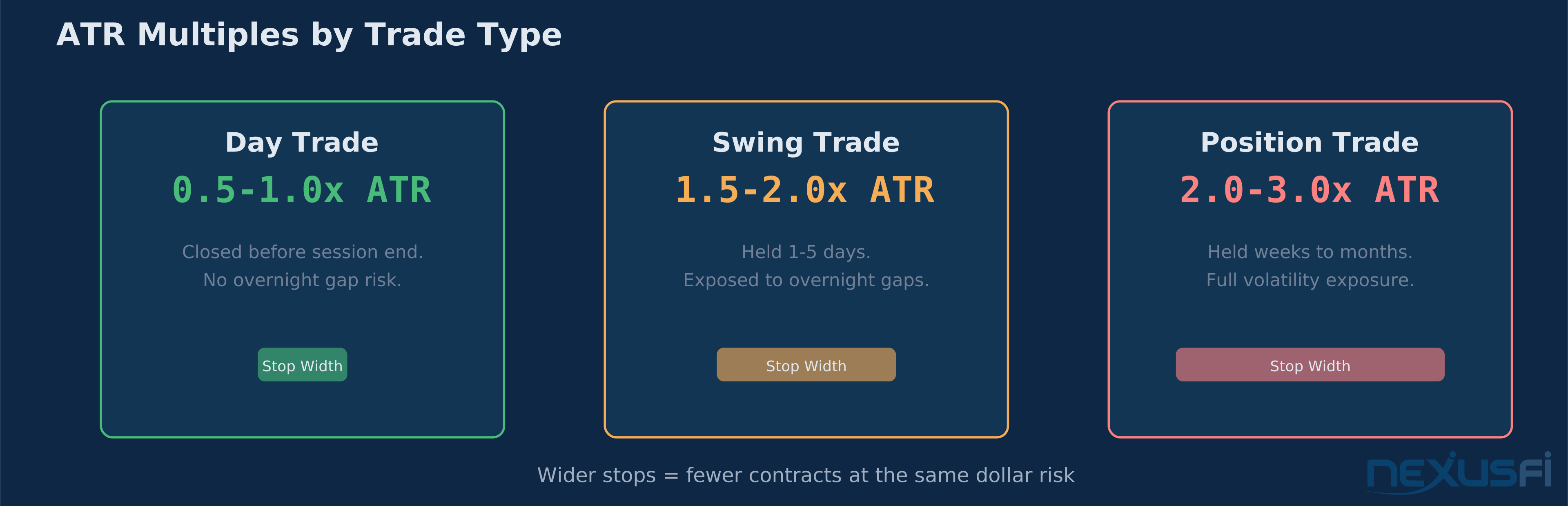
A swing trade held overnight needs a wider stop than a day trade closed before the bell. Using 1.5× ATR for both ignores the fact that overnight gaps add risk that intraday closes don't. Professional traders often use:
- Day trades: 0.5-1.0× ATR
- Swing trades (held overnight): 1.5-2.0× ATR
- Position trades (multi-week): 2.0-3.0× ATR
Mistake 4: Rounding Up #
If the formula says 1.67 contracts, you trade 1 contract, not 2. Rounding up systematically biases your risk upward. Over hundreds of trades, that systematic bias compounds into much more drawdown than your risk model anticipated.
Mistake 5: Overriding the Formula When It Says "Don't Trade" #
When the formula says you can trade 0.3 contracts and no micro is available, the answer is "don't trade this instrument right now." The formula is telling you that the instrument's volatility exceeds what your account can handle at your stated risk tolerance. Trading anyway because "CL looks great here" is the exact behavior the formula exists to prevent.
As @mewddsltd noted on NexusFi:
The formula isn't a suggestion. It's a constraint.
How Professionals Use Volatility-Based Sizing #
Prop Firm Desks #
Institutional prop desks almost universally use volatility-normalized position sizing. Their risk managers set daily P&L limits and maximum position sizes in terms of dollar risk, not contracts. A desk might have a $50,000 daily loss limit allocated across 5 traders. Each trader's maximum position in any instrument is determined by that instrument's current volatility and the trader's allocated risk budget.
This is why funded trader evaluation firms impose daily loss limits rather than contract limits. The evaluation is testing whether you can manage risk in dollar terms, which naturally requires volatility-aware sizing. For the specifics of sizing within funded account drawdown rules, see position sizing for funded accounts.
Managed Futures (CTA) Programs #
Commodity Trading Advisors have used volatility-based sizing since the trend-following programs of the 1980s. The original Turtle Trading system used a "N" value (basically ATR) to normalize position sizes across markets, as documented in Curtis Faith's publication of the original rules ([The Original Turtle Trading Rules] [13]). The principle: 1 unit of corn should carry the same dollar risk as 1 unit of crude oil, and the only way to achieve that is volatility normalization.
([Post #193226] [7]).
The Equity Curve Connection #
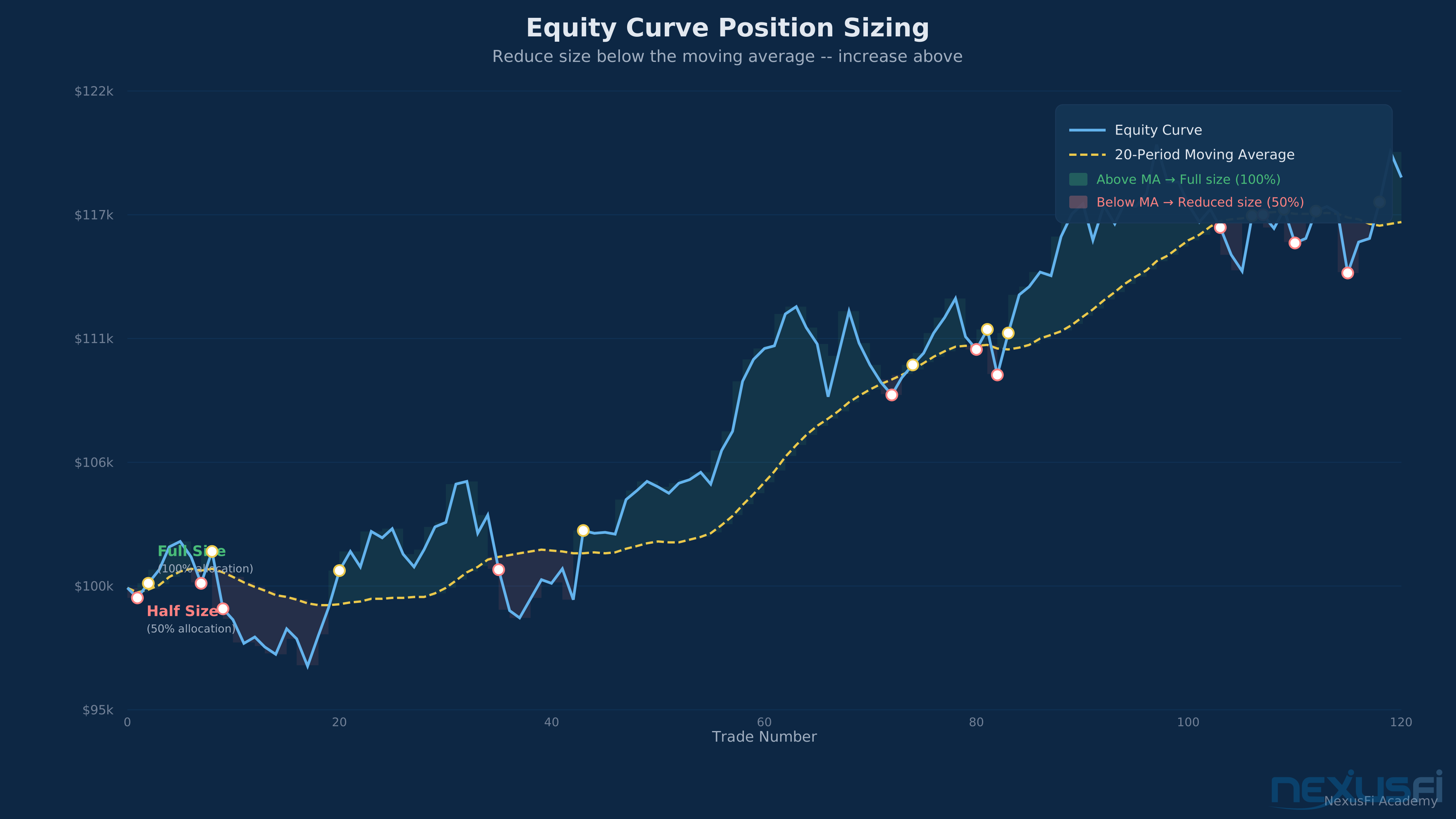
Professional traders often tie position sizing to their equity curve. When the equity curve is above its moving average, they use full-size volatility-adjusted positions. When it drops below, they reduce to half-size or quarter-size. This creates a feedback loop: poor performance automatically reduces exposure, limiting drawdown during strategy underperformance while preserving capital for recovery.
This is an advanced application, but the foundation is the same: volatility-based sizing as the baseline, modified by equity curve position.
The Turtle Trading Heritage #
Van Tharp's Trade Your Way to Financial Freedom ([Van Tharp Institute] [12]) formalized what the original Turtle traders practiced — sizing positions by the market's "N" value (basically ATR) so that 1 unit of corn carried the same dollar risk as 1 unit of crude oil. His key insight: position size should be a function of your risk tolerance and the market's current volatility, never a fixed number disconnected from either variable.
As @MXASJ implemented on NexusFi with a detailed spreadsheet: "Top part is based on how much you are prepared to risk per trade (2% of equity in this case), what the 14 period ATR is for the timeframe you are trading, and what your stop loss point is" ([Post #2223] [8]). One practical caveat from @Trailer Guy via Tharp himself: "you can not calculate risk with a variable stop set up" ([Post #908967] [9]). If your stop methodology changes from trade to trade, the formula needs your actual stop distance, not a theoretical ATR multiple. Consistency in stop methodology makes the formula more reliable.
Building Your Volatility-Based Sizing System #
Everything you need is already in this article. Here's the implementation checklist:
1. Define risk parameters. Set your account equity (actual trading equity, not total deposit), risk percentage per trade (start at 0.5-1% — see position sizing methods for broader comparison), and choose your ATR period and multiple based on your trading timeframe (see How Volatility-Based Sizing Works for period selection guidance).
2. Build the calculator. Spreadsheet, platform indicator, or custom script — any tool that takes four inputs (equity, risk %, ATR, ATR multiple) and outputs contracts. Update at least weekly, as @Fat Tails recommends ([Post #69126] [1]).
3. Set a volatility floor. Cap position size increases during abnormally quiet periods using the 20th percentile ATR threshold described in Practical Application.
4. Set a portfolio heat limit. Total open risk across all positions should not exceed 5-6% of equity (see Common Mistakes, Mistake 2 for correlation risk details). Our futures risk management guide covers portfolio-level considerations in depth.
5. Follow the output. When the formula says trade small, trade small. When it says skip, skip.
([Post #869309] [11]). The formula does the thinking so your emotions don't have to.
The Bottom Line #
Volatility-based position sizing is not complicated. It's arithmetic — three multiplications and one division. But implementing it requires discipline that most traders find harder than any chart pattern or indicator system.
The formula doesn't care about your opinion on the market. It doesn't care that CL "looks perfect" for a long entry. It cares about one thing: given your account size, your risk tolerance, and the current volatility of this instrument, how many contracts can you trade without the normal market noise stopping you out or the potential loss exceeding what you can absorb?
That's not a constraint on your trading. That's the foundation of it.
Knowledge Map
Prerequisites
Understand these firstGo Deeper
Build on this knowledgeReferences This Article
Articles that build on this topicCitations
- — PositionSizer for ninjatrader (2010) 👍 12“ATR(36) of a 5 minute chart as money management stop-loss.”
- — What are "points"? (2011) 👍 2“ES/CL/GC ATR sizing examples with concrete numbers.”
- — ES and the Great POMO Rally (2011) 👍 5“Volatility up 3X, cut size back 1/3.”
- — The PandaWarrior Chronicles (2014) 👍 15“Reduce size in greater volatility, increase in less.”
- — Minimum starting funds to learn to trade (2016) 👍 3“Volatility based constant percentage risk position sizing from 1980s.”
- — Dynamic Trailing Stop and Profit using ATR (2015) 👍 4“Risk 1% per trade, positions shrink when volatility increases.”
- — Concerning risk per trade sizing (2012) 👍 4“2% equity risk, 1.5 ATR stop.”
- — Position Sizing by Van Tharp (2009) 👍 15“2% equity, 14-period ATR, stop loss point.”
- — Is scalping Emini a sustainable trading strategy? (2026) 👍 4“Van Tharp: cannot calculate risk with variable stop.”
- — APEX 300K+: The Journey (2023) 👍 2“Give trade room to move (ATR/volatility) without hitting limits.”
- — Do you change your strategy based on volatility? (2022) 👍 2“Most futures traders use volatility based position sizing.”
- — Trade Your Way to Financial Freedom
- — The Original Turtle Trading Rules