



Harmonic Trading Patterns
Overview #
Harmonic trading patterns are a family of geometric price structures built from specific Fibonacci ratios at each turning point. Unlike traditional chart patterns that focus on approximate shapes, harmonic patterns require precise Fibonacci relationships between legs — making them one of the most rule-based pattern recognition systems in technical analysis. A pattern is either valid or it is not; there is little room for interpretation.
The framework was formalized by H.M. Gartley in 1935 with the publication of Profits in the Stock Market, which introduced the pattern now bearing his name. Scott Carney extended the harmonic concept throughout the 1990s and 2000s, adding the Bat, Butterfly, and Crab patterns and systematizing the Fibonacci ratio requirements for each. Today, harmonic patterns are incorporated into most professional charting platforms as automated recognition tools, though manual identification remains a core skill for traders who want to understand what they are trading rather than what an algorithm draws for them.
This article covers the XABCD structural framework, the four primary harmonic patterns, the mechanics of trading the Potential Reversal Zone (PRZ), and the integration of harmonic analysis with volume profile and order flow. Return to the Fibonacci hub article for the mathematical foundations, or see Fibonacci Retracement and Extension Levels for single-level analysis before studying confluence structures.
The XABCD Framework: Harmonic Pattern Structure #
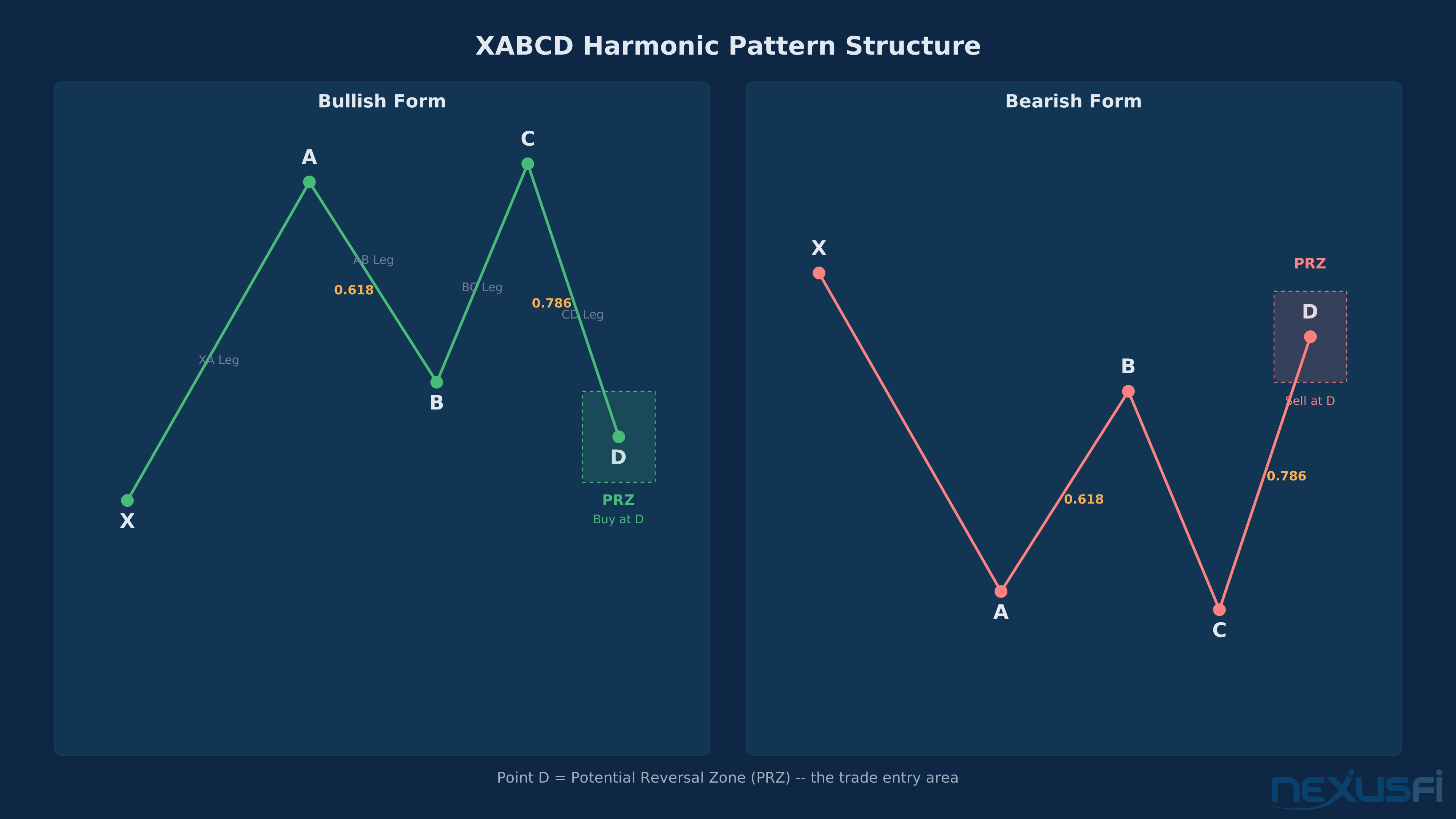
Every harmonic pattern is built from five price points labeled X, A, B, C, and D, connected by four price legs (XA, AB, BC, CD). The pattern is read as a sequence:
- X to A: The initiating swing — the first directional move that anchors the entire pattern
- A to B: The first correction — price retraces against the XA direction
- B to C: The continuation — price moves back in the XA direction
- C to D: The terminal leg — price returns to complete the pattern, creating the trade opportunity
The trade entry occurs at point D, which falls within the Potential Reversal Zone (PRZ) — a price band defined by the Fibonacci targets from multiple legs converging in the same area.
The key difference between harmonic patterns and simple ABCD swings is the requirement that EACH leg maintains specific Fibonacci relationships. This dual-level filtering is what gives harmonic patterns their theoretical edge: a pattern that passes all Fibonacci ratio tests has a higher prior probability of behaving predictably than an arbitrary price structure.
Reading the XABCD Structure #
In a bullish harmonic, the XA leg moves upward, B corrects downward, C continues upward, and D completes the pattern at a lower level — creating a buying opportunity. In a bearish harmonic, the direction is inverted, with D creating a selling opportunity.
What separates harmonic patterns from simple ABCD swings is the dual-level Fibonacci filtering at every turning point. A pattern that passes all ratio tests has a higher prior probability of behaving predictably than an arbitrary price structure.
The critical measurement is always the XA leg, which serves as the reference for the percentage retracements and extensions at points B and D. The BC leg provides secondary confirmation — its retracement and extension targets must also fall within pattern-specific boundaries.
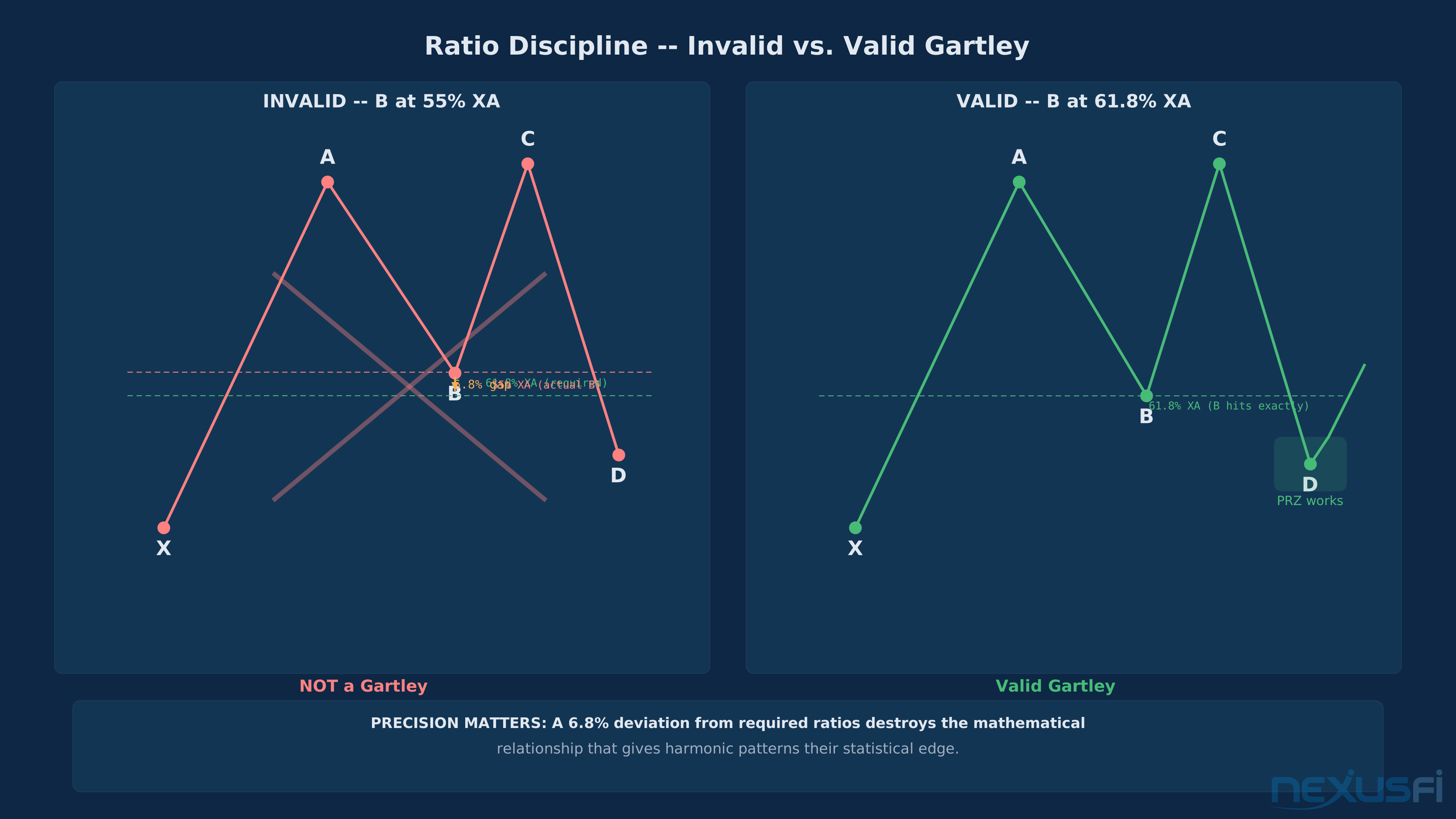
A pattern is considered valid only when all Fibonacci relationships meet the required thresholds for that specific pattern type. A Gartley with B at 55% of XA (instead of the required 61.8%) is not a Gartley — it is an approximate shape that does not carry the statistical properties of the genuine pattern.
The Four Primary Harmonic Patterns #
Gartley Pattern: The Conservative Foundation #
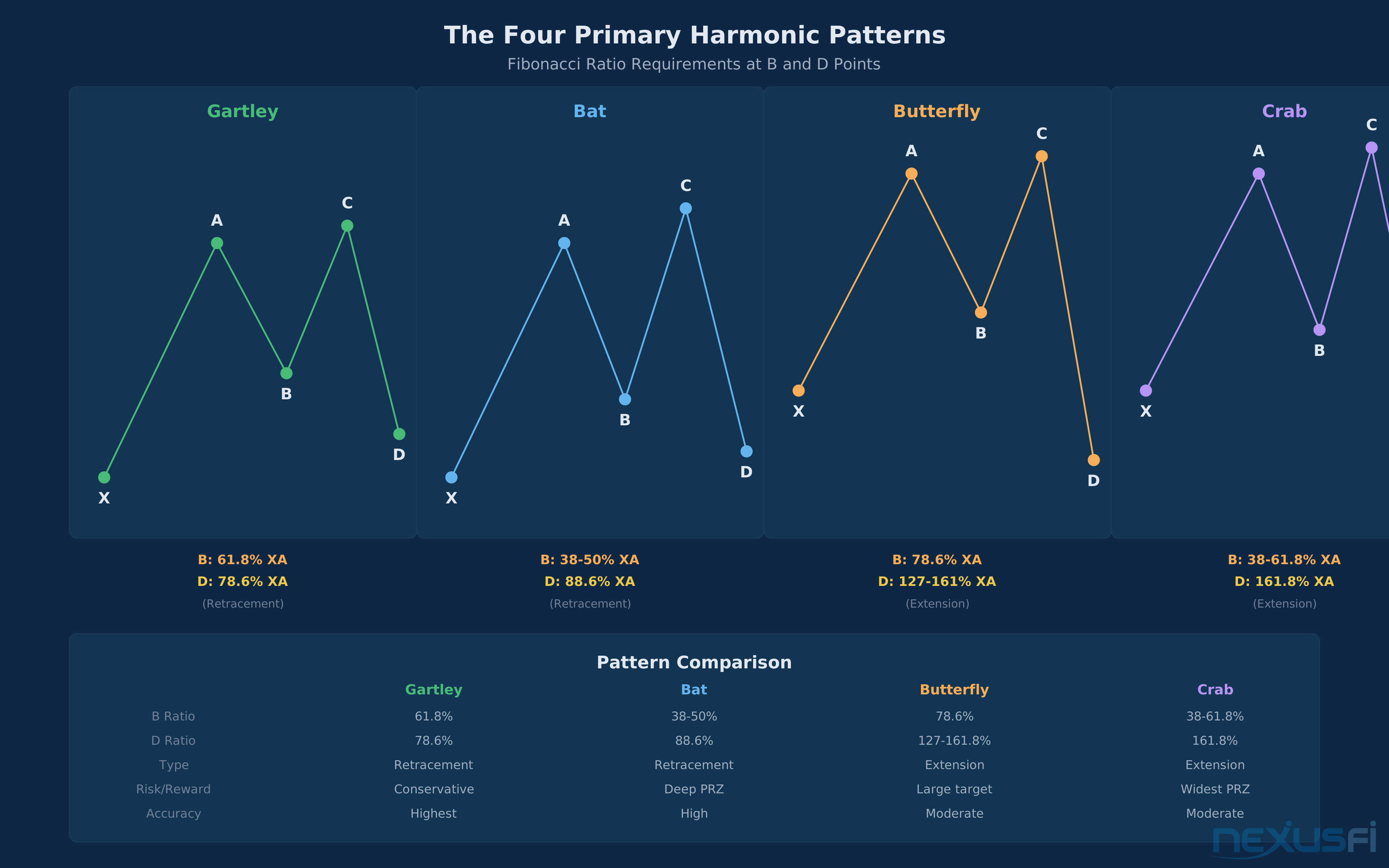
The Gartley pattern, as codified by Carney from Gartley's original work, is the most widely recognized harmonic structure. Its Fibonacci requirements are the strictest and most conservative, resulting in smaller PRZs and — according to pattern proponents — higher completion rates compared to the more extended patterns.
Gartley Fibonacci Requirements:
- Point B: retraces exactly 61.8% of the XA leg
- Point C: retraces 38.2% to 88.6% of the AB leg
- Point D: retraces exactly 78.6% of the XA leg from A (bullish: D is 78.6% of the way from A back toward X; bearish: the inverse)
The 78.6% level is the square root of 0.618 (the golden ratio), making it a derived Fibonacci value rather than a direct ratio. This level appears in Gartley's original work as the key completion point. When price reaches the 78.6% XA retracement after forming a proper B and C, the PRZ is defined by a relatively small range.
The 78.6% level (square root of 0.618) is the key to the Gartley. A B at 60% XA or D at 76% XA is not a Gartley — it is a similar-looking structure with different statistical properties.
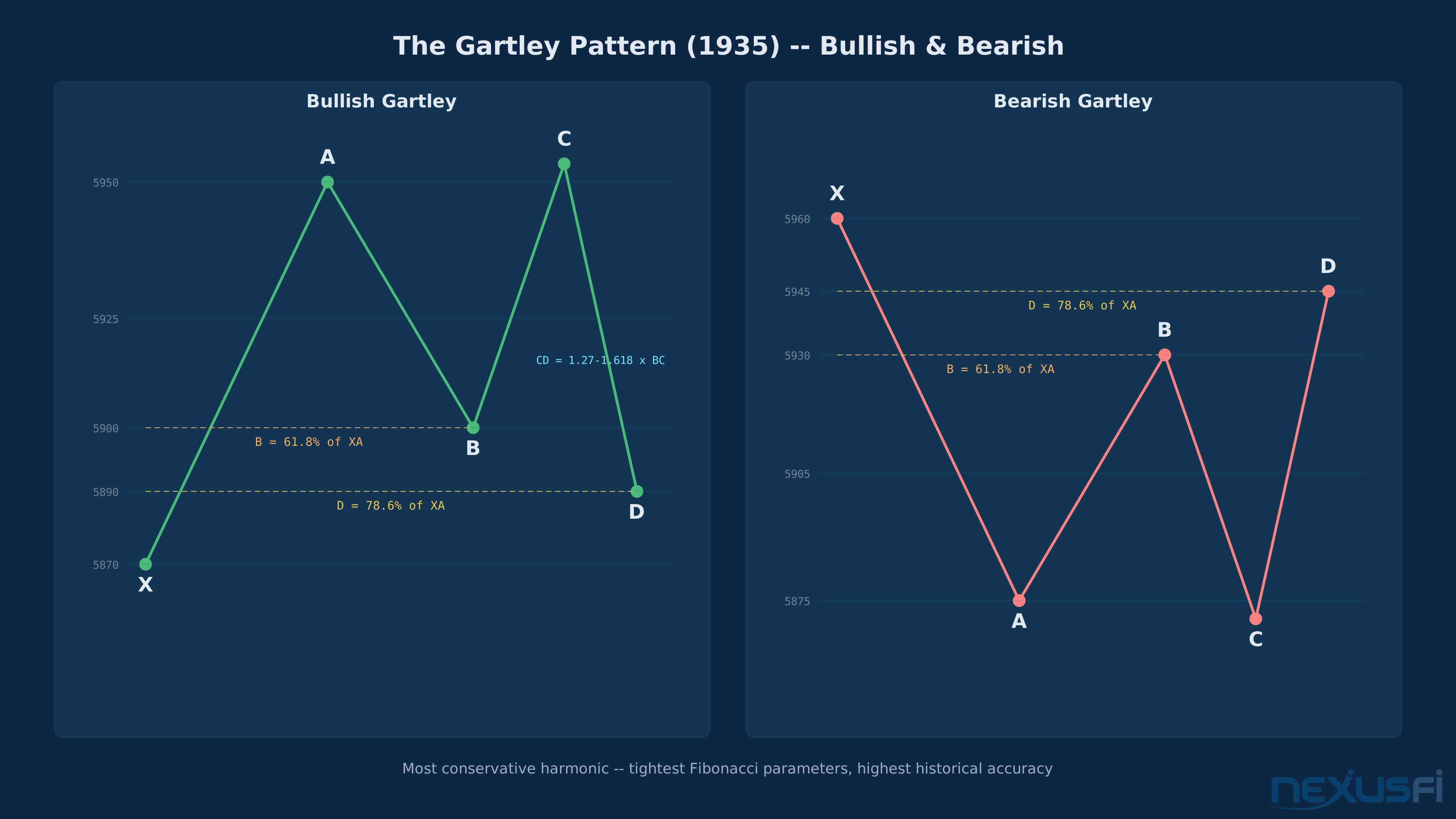
Trading Implications: The Gartley's tight Fibonacci constraints make it a pattern to scan for first. Its completion rate (when all ratios are met precisely) is cited by Scott Carney at above 70% across diverse markets and timeframes, though independent verification is limited. The conservative D target means the trade does not require a massive reversal to generate a positive risk-reward ratio — the 1:2 to 1:3 reward structures that experienced traders target are achievable with the 38.2% to 61.8% target ladder from the XA leg.
The bearish Gartley is sometimes called the "Gartley of Death" or the W pattern in informal usage, reflecting its distinct visual appearance — the bearish version creates a W-shaped structure on the chart.
Butterfly Pattern: Extension Beyond X #
The Butterfly pattern, introduced by Bryce Gilmore and formalized by Carney, departs from the Gartley structure in a critical way: point D extends beyond point X. While all Gartley-family patterns reverse before reaching X, the Butterfly's D completes at a Fibonacci extension of the XA leg — making it an extension pattern rather than a retracement pattern.
Butterfly Fibonacci Requirements:
- Point B: retraces exactly 78.6% of the XA leg (the highest B ratio of any harmonic)
- Point C: retraces 38.2% to 88.6% of the AB leg
- Point D: extends to 127.2% or 161.8% of the XA leg beyond point X
The D extension creates a pattern where price moves beyond the original swing point, often into structural support (bullish) or resistance (bearish) established before the XA leg began. This structural alignment frequently amplifies the reversal reaction at the PRZ.
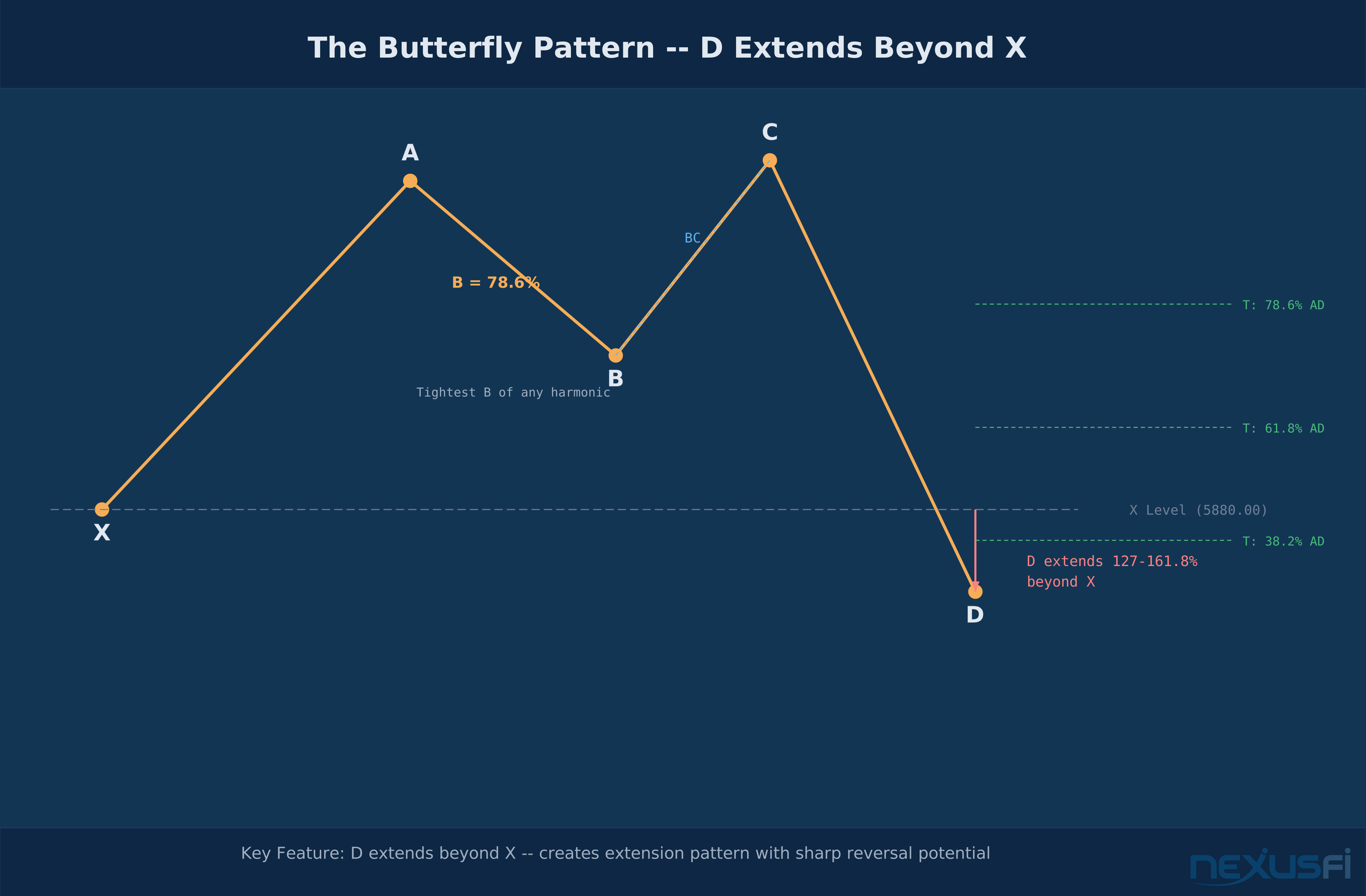
Why the Butterfly Produces Sharp Reversals: When D extends to 127.2% or 161.8% of XA, price has traveled well beyond the original swing — penetrating stops placed by participants who entered on the prior trend. The stop hunt concentrates with the Fibonacci extension at D, creating a liquidity event that frequently produces sharp, impulsive reversals. Traders who understand this mechanism wait for the stop hunt to complete before entering — rather than anticipating where D will print.
The deeper extension also means the Butterfly operates in price territory where fewer participants have existing positions, potentially reducing the counter-trend selling (in a bullish butterfly) that would inhibit the reversal. Clean price action in extended territory, combined with Fibonacci extension confluence, is the Butterfly's structural edge.
Bat Pattern: Deep Retracement, High Accuracy #
The Bat pattern, introduced by Scott Carney in 2001, is characterized by a deep D retracement at 88.6% of XA — the second-deepest D target in the standard harmonic family. The Bat's B ratio requirement is notably different from the Gartley, accepting a shallower retracement at 38.2% to 50% of XA, which creates a more compressed structure.
Bat Fibonacci Requirements:
- Point B: retraces 38.2% to 50% of the XA leg (shallower than Gartley's 61.8%)
- Point C: retraces 38.2% to 88.6% of the AB leg
- Point D: retraces 88.6% of the XA leg
The 88.6% level is the square root of 0.786 (itself the square root of the golden ratio), continuing the derived-ratio theme in harmonic pattern mathematics.
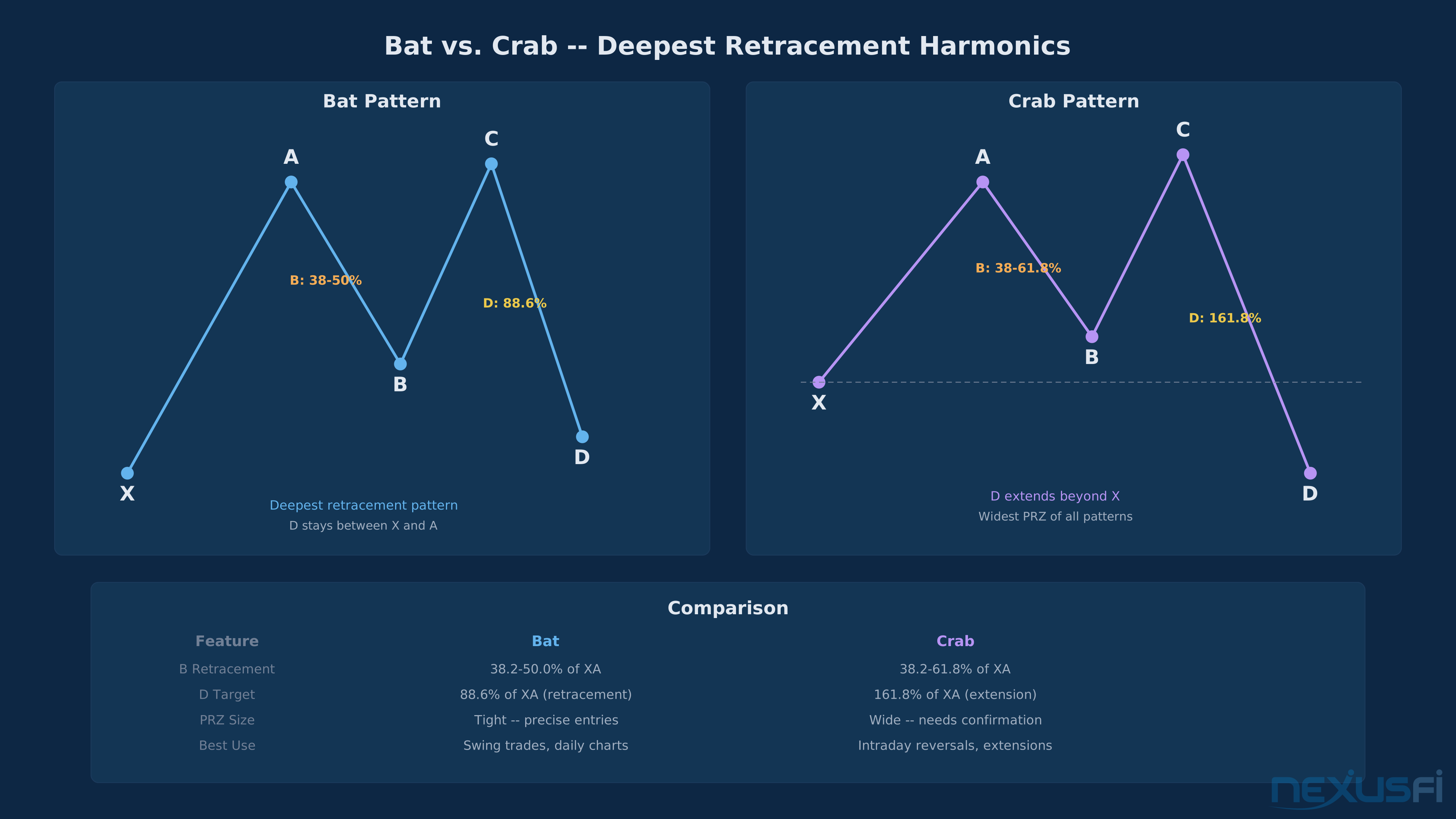
Why 88.6% Creates a Tight PRZ: The 88.6% retracement brings D very close to point X. A bullish Bat with D at 88.6% of XA means price has retraced almost the entire XA impulse leg — producing extreme pessimism at D, where the market appears to have negated the entire upward move. This pessimism is precisely what creates the potential for a sharp reversal: the exhaustion of sellers near a major structural level (X) produces a vacuum that buyers can fill efficiently.
Scott Carney cites the Bat as his preferred harmonic pattern for its narrow PRZ (the 88.6% level is specific enough to create tight stop placement) and historical completion accuracy.
Crab Pattern: Maximum Extension, Maximum Reward #
The Crab pattern, also introduced by Carney in 2001, carries the most extreme Fibonacci extension of any standard harmonic: D at 161.8% of XA beyond point A. This extension produces the widest PRZ of any harmonic pattern but also the largest potential reward, as D is now well beyond X into extended territory.
Crab Fibonacci Requirements:
- Point B: retraces 38.2% to 61.8% of the XA leg
- Point C: retraces 38.2% to 88.6% of the AB leg
- Point D: extends 161.8% of the XA leg from point A
The D extension to 161.8% (the golden ratio itself) creates a pattern where price has traveled very far from its originating structure, frequently reaching significant historical levels — prior all-time highs or lows, major volume nodes from years-old sessions, or institutional accumulation/distribution zones.
Risk Profile Considerations: The Crab's wide extension means stop placement must reflect the extreme market behavior that produced the pattern. A stop beyond X for a bullish Crab can represent a significant percentage of the XA leg — potentially making position sizing difficult for traders with strict per-trade dollar risk rules. This is why experienced harmonic traders often use the actual PRZ width, rather than X, as the stop reference for the Crab — stopping out when price closes beyond the lower PRZ boundary on a closing-price basis rather than using X as the absolute invalidation level.
The Potential Reversal Zone: Mechanics of the D Trade #
The Potential Reversal Zone (PRZ) is the price area where the pattern's Fibonacci targets converge at point D. For a simple two-leg confirmation (XA retracement and CD extension), the PRZ is a single level. For complex patterns with additional ratio requirements, the PRZ is a zone defined by the range of converging targets.
PRZ Entry Methodology #
The cardinal rule of PRZ trading is this: a pattern completion is a possibility, not a certainty. The Fibonacci ratios define where a reversal would make structural sense — not that a reversal will occur. Trading on anticipation of pattern completion before price confirms the reversal is how harmonic traders produce the false precision that gives harmonic analysis a mixed reputation.
A pattern completion is a possibility, not a certainty. Entering on anticipation of D rather than confirmation within the PRZ is the single most common harmonic trading error.
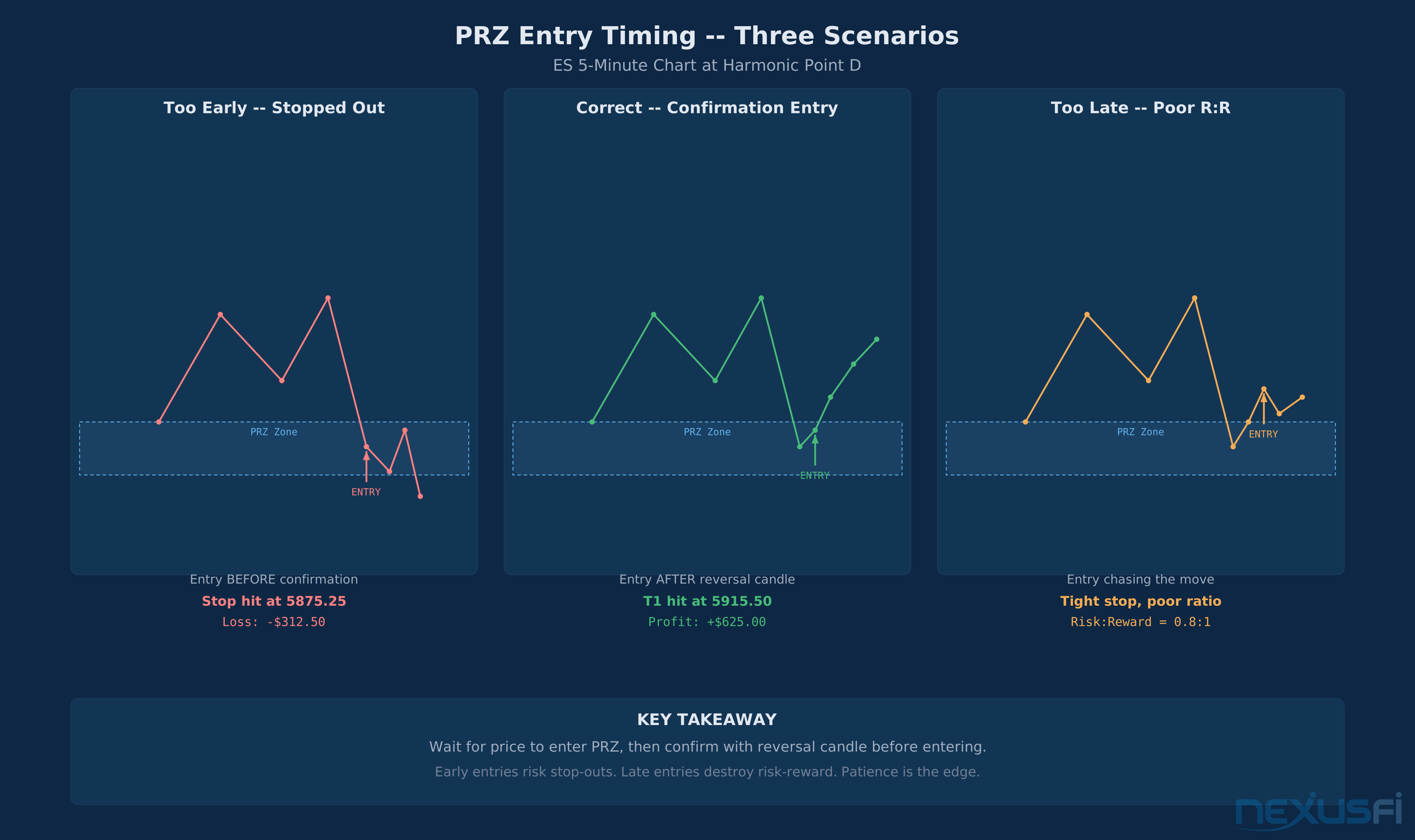
Professional PRZ entry methodology follows a defined sequence:
1. Identify the pattern and compute the PRZ: Measure the XA leg and project the Fibonacci targets required for B, C, and D. Confirm that B and C have formed correctly. Mark the PRZ on the chart — the range of valid D completion prices.
2. Monitor price approach: Watch for price to enter the PRZ. The first touch of the PRZ's outer boundary (farthest from the current price) is the start of the potential reversal window. Do not enter at this point.
3. Wait for confirmation: A confirmation candle is the price behavior within the PRZ that provides evidence of the reversal rather than continuation. Common confirmation signals include:
- A bullish engulfing or pin bar at the lower PRZ boundary (bullish pattern)
- Volume expansion on the reversal candle following a low-volume approach
- Sweep of the PRZ lower boundary followed by recovery within the zone (bullish)
- Delta reversal: heavy selling at the lower PRZ followed by positive delta on the recovery bar
4. Enter after confirmation: For pattern trading, entry can be at the open of the bar following confirmation, or a limit order placed at the PRZ midpoint (for deeper-than-anticipated penetration scenarios). The confirmation requirement is non-negotiable.
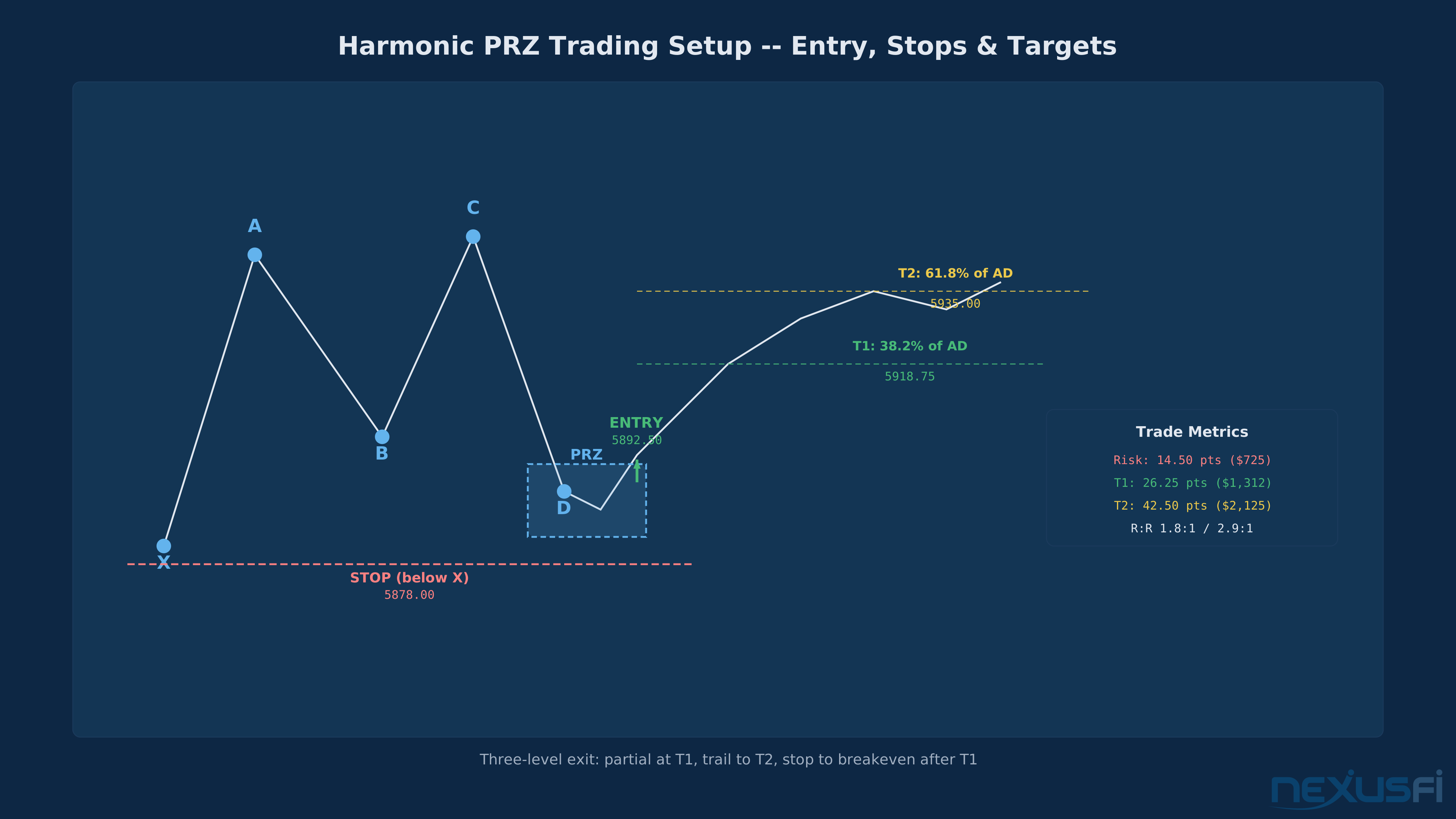
5. Stop placement: The stop is placed below point X for bullish patterns (above X for bearish), representing pattern invalidation. A Bat pattern, where D is at 88.6% XA, permits a tighter stop than a Crab at 161.8% XA — the stop-to-pattern-entry distance should be factored into position sizing explicitly.
Profit Target Ladder #
Harmonic pattern profit targets follow a Fibonacci-based ladder that converts the XA leg into target increments:
- Target 1 (T1): 38.2% retracement of the CD leg from D — the first exit, where 40-50% of the position is typically reduced
- Target 2 (T2): 61.8% retracement of the CD leg from D — secondary exit for a significant portion of remaining position
- Target 3 (T3): Point C — structural reference where the CD leg originated; 100% of CD corrected
- Target 4 (T4): 61.8% of the XA leg from D — for patterns with strong momentum, a deeper target
- Target 5 (T5): Point A — the full XA-leg return; appropriate for patterns with confirmed trend structure
In practice, most traders use a simplified three-tier structure: T1 at 38.2% of CD (move stop to break-even), T2 at 61.8% of CD (reduce remaining to runner), and let the final portion ride with a trailing stop behind each swing high.
Harmonic Patterns in Futures Markets: Specific Considerations #
Harmonic analysis is applicable across all liquid markets, but futures markets present specific structural considerations that affect both pattern reliability and execution.
Session-Based Distortions #
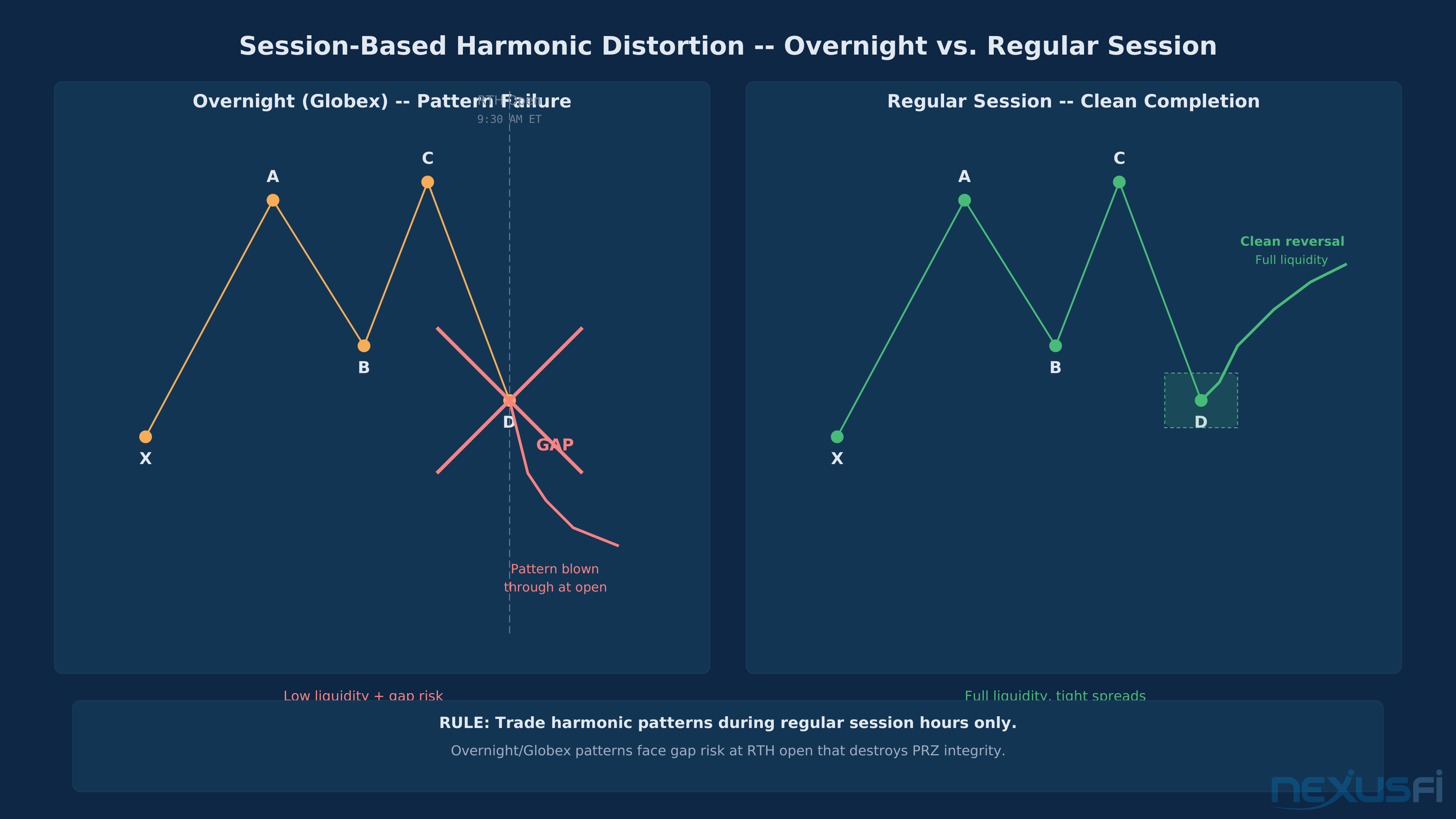
Futures markets trade nearly continuously, but meaningful price action is concentrated during specific sessions. The overnight session (6 PM to 6 AM Eastern for US equity futures) often produces Fibonacci-ratio-compliant price structures that dissolve upon the regular session open. Overnight patterns should be treated with lower conviction than patterns that complete during regular trading hours or span multiple sessions.
For E-mini ES and NQ futures, the CME regular session (9:30 AM to 4:15 PM Eastern) provides the highest-quality harmonic setups. Patterns completing during this window with volume confirmation have the strongest theoretical basis for execution.
Overnight Gaps and Pattern Integrity #
Gap opens (daily open much above or below prior close) can distort harmonic patterns by causing price to skip over the PRZ. When a gap open lands within the PRZ of a developing harmonic, the pattern should be considered triggered — the confirmation requirement is waived only if the gap itself represents a strong reversal signal (large gap against the prior day trend opening within the PRZ).
VPOC and HVN Alignment #
The highest-quality harmonic setups in futures markets are those where the PRZ aligns with volume structure from the Volume Profile. Specific alignment types:
PRZ at VPOC: The Volume Point of Control — the price where the most volume traded in a session — represents the market's fairest value. A harmonic PRZ that aligns with a VPOC (especially a multi-session or composite VPOC) concentrates two independent frameworks on the same price zone. The behavioral basis for the VPOC is institutional accumulation or distribution; the behavioral basis for the harmonic PRZ is Fibonacci ratio positioning. Their convergence creates genuine confluence.
PRZ at High Volume Node (HVN): HVNs below the current price act as support; HVNs above act as resistance. A bullish harmonic with D at a major HVN has both the harmonic reversal expectation and the volume-profile support framework working in the same direction.
PRZ at Low Volume Node (LVN): LVNs represent thin trading areas where price moves quickly and erratically. A harmonic PRZ within an LVN can produce rapid, sharp reversals — but the LVN's thin structure means price can also blow through the PRZ without pausing. LVN-based harmonics require tighter confirmation requirements.
Order Flow Confirmation at D #
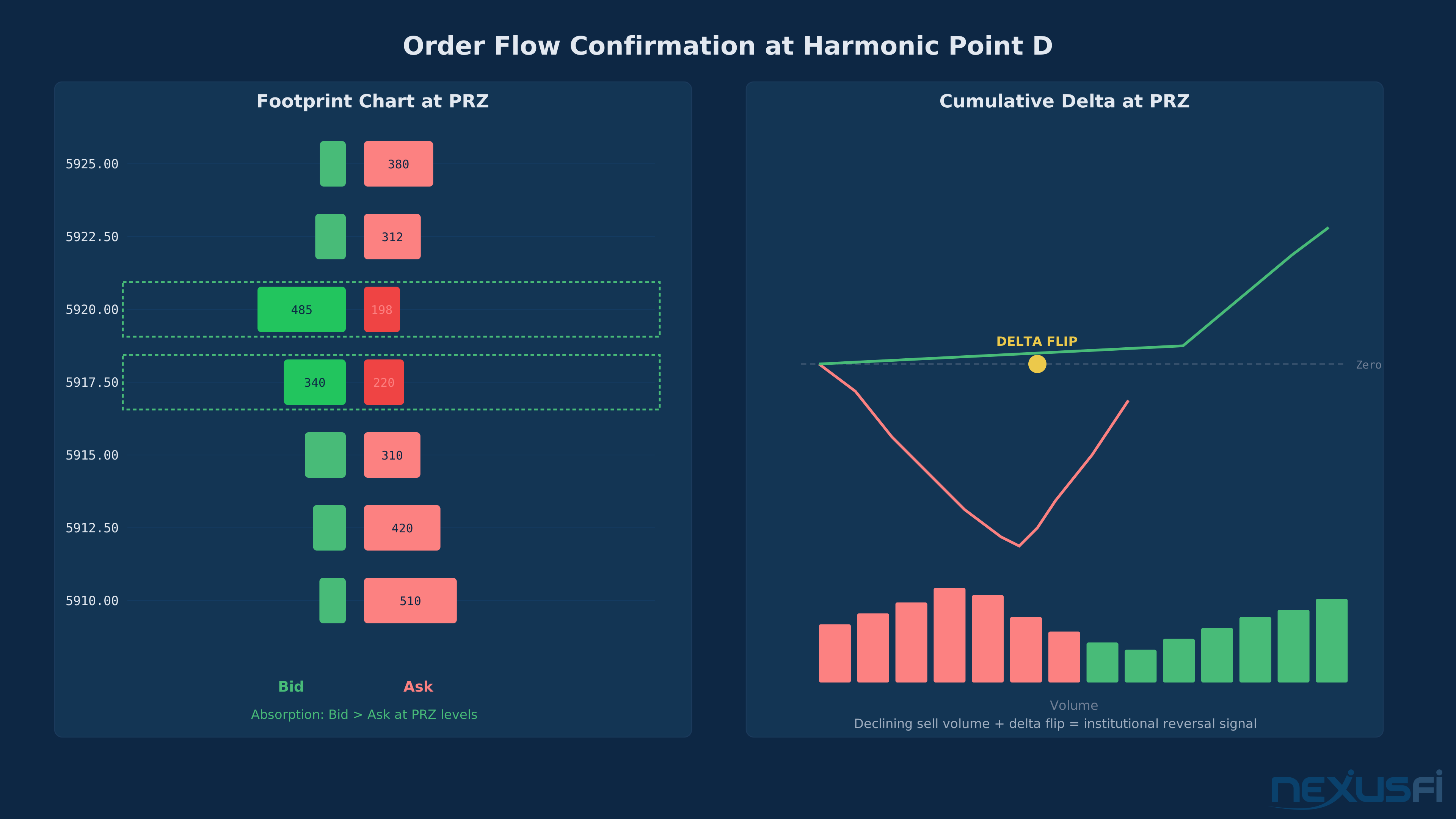
Volume profile sets the context; order flow provides the confirmation. In futures markets, the Level 2 (depth of book) and the time and sales feed provide direct evidence of institutional participation at the PRZ.
Specific order flow signals that confirm harmonic PRZ reversals:
- Large limit order absorption: Iceberg or institutional limit orders consuming market orders at the lower PRZ boundary (bullish) — visible as large volume at the bid with price not moving further
- Delta flip: Cumulative delta (the running total of buyer-initiated minus seller-initiated volume) reversing from negative to positive within the PRZ
- Footprint exhaustion: In footprint chart analysis, a single bar within the PRZ showing declining volume at new lows — the selling is exhausting despite price still declining
- Level 2 wall: Resting bids appearing (or asks pulling away) at the PRZ lower boundary, suggesting institutional participation
These signals require Level 2 access and footprint chart capability — the combination of Sierra Chart's footprint bars with the Rithmic data feed is the standard setup for this analysis in the NexusFi community, based on discussion patterns across hundreds of threads. See the Volume Ladder & Footprint Charts article for detailed footprint methodology.
Pattern Recognition: Software vs. Manual Identification #
Most major charting platforms now include automated harmonic pattern recognition:
NinjaTrader: The Harmonic Pattern Indicator (available through third-party addon providers) scans for all standard patterns in real time. NinjaTrader Brokerage integrates charting with execution, making it practical to set limit orders directly at computed PRZ boundaries. (@NinjaTrader sponsors NexusFi and can be accessed at nexusfi.com/d/platforms/ninjatrader)
Sierra Chart: Manual Fibonacci drawing tools are among the most precise available. The Studies & Data Feed system allows custom ACSIL studies that automate ratio checking. Sierra's footprint bars and volume profile integration make it the preferred platform for combining harmonic patterns with order flow confirmation.
TradingView: Pine Script allows community-written harmonic scanners. The open-source nature means accuracy varies — scripts should be verified against known pattern examples before deployment.
The Case for Manual Identification: Automated recognition tools draw patterns retroactively — the algorithm confirms a pattern exists after all five points have formed. Manual identification allows a trader to monitor a developing pattern in real time: watching B form, projecting C targets, computing the anticipated D zone before price arrives. This advance computation is what makes PRZ trading possible — waiting for D to complete and confirm is only practical when you know in advance where D should print.
The skill is not pattern drawing; it is ratio verification. The trader's job is to confirm that B is at the required percentage of XA, that C is within the allowable BC range, and that the anticipated D falls at a logical price level on the chart — near structural support, volume nodes, or prior highs/lows that have independent significance beyond the Fibonacci math.
Common Failures and How to Avoid Them #
Overfitting Ratio Requirements #
The harmonic community has developed an extensive library of additional patterns beyond the four primary structures — Shark, Cypher, Nenstar, 5-0, and others each with their own ratio sets. The proliferation of patterns increases the risk of overfitting: if there are enough patterns with enough ratio flexibility, almost any price structure can be labeled as a valid harmonic.
Practical discipline: trade only patterns you can recognize without software. The Gartley, Bat, Butterfly, and Crab represent the original validated framework. Additional patterns may carry value, but adding complexity without confirmed edge increase in your specific market and timeframe is a path to curve fitting.
If you cannot recognize the pattern without software, you should not be trading it. Automated recognition draws patterns retroactively — manual identification is what enables pre-computing the PRZ before price arrives.
Trading the Anticipation, Not the Setup #
The most common error in harmonic trading: entering when price approaches the PRZ rather than after confirmation within the PRZ. An approaching pattern is a watchlist item, not a trade. Price that reaches the PRZ is at a decision point. Confirmation within the PRZ is the signal.
Many apparent harmonic failures are actually failures of confirmation discipline. The pattern reached the PRZ, but the trader entered on approach rather than on reversal evidence. The pattern then continued past D, stopping out the position — the trader blames the harmonic analysis when the actual failure was the trade execution.
Ignoring Pattern Context #
Harmonic patterns require a directional context for their reversal to matter. A bullish Gartley forming in a market in a confirmed intermediate-term downtrend has a much lower probability of producing a lasting reversal than the same pattern forming in an uptrend or at a structural low.
Context analysis for harmonic trades should include:
- Trend structure: Is the reversal at D consistent with the primary trend direction, or is it a counter-trend setup?
- Structural levels: Does D align with major support/resistance from a higher timeframe?
- Market regime: Is the current volatility environment favorable for reversal patterns (mean-reverting regime) or continuation (trending regime)?
Integration with the Fibonacci Framework #
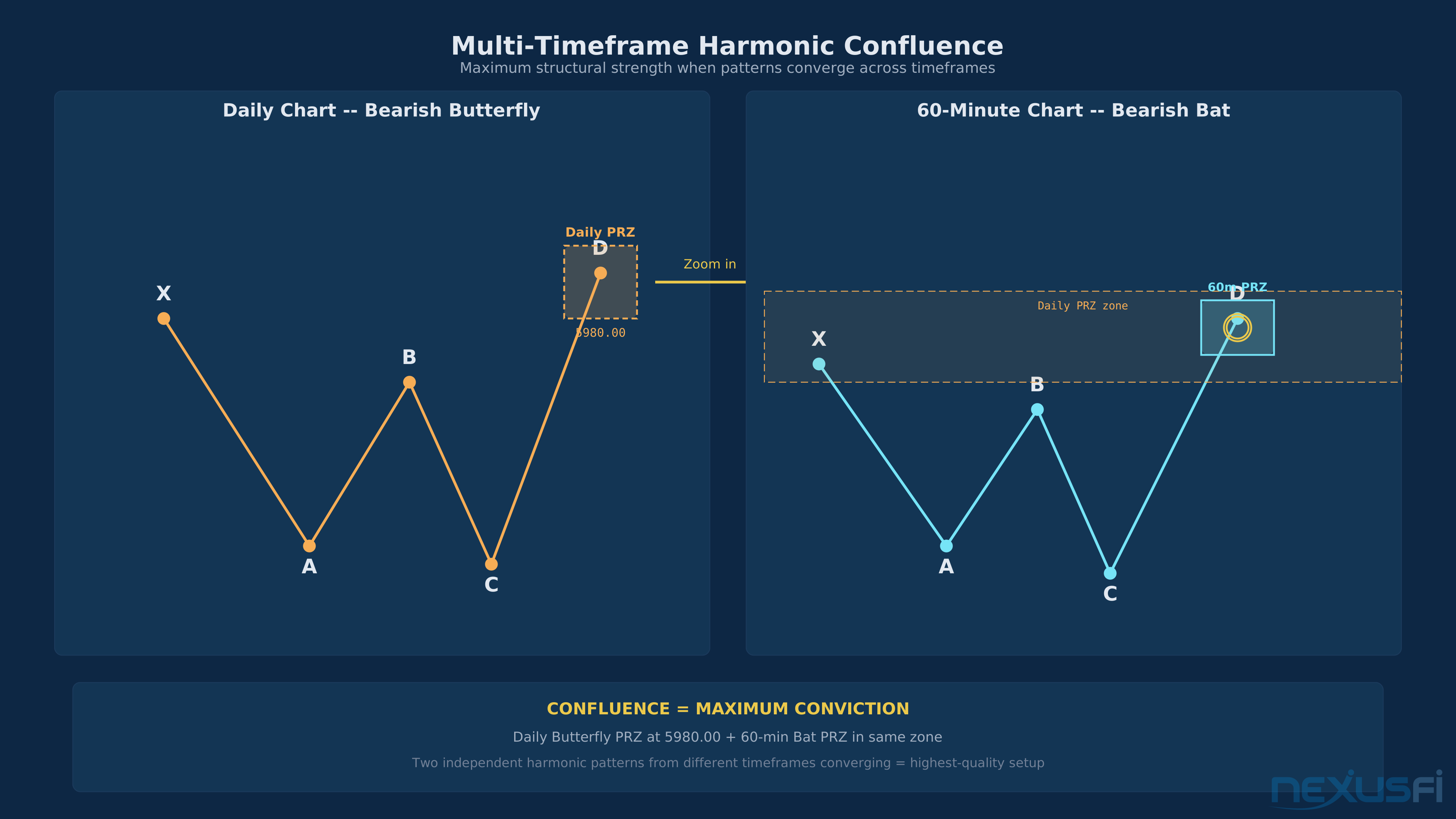
Harmonic trading patterns represent the most structured application of Fibonacci ratios in active trading. For traders building a complete Fibonacci methodology, harmonics integrate most effectively with:
- Fibonacci Confluence and Cluster Zones: PRZ locations often coincide with Fibonacci confluence zones from independent swings. When the harmonic D level overlaps with a multi-swing Fibonacci cluster, the setup reaches its maximum structural strength.
- Fibonacci Time Zones and Cycles: Harmonic patterns have spatial (price) precision but limited temporal specificity. Fibonacci time zones can identify when D is likely to form, adding a time-based filter to the spatial pattern.
- Fibonacci Retracement and Extension Levels: The foundational tool. Understanding individual retracement and extension levels is prerequisite to harmonic pattern analysis.
- Fibonacci Sequence and Golden Ratio in Trading: The mathematical basis for why specific ratios (0.618, 0.786, 1.272, 1.618) appear in harmonic pattern definitions.
The NexusFi community has produced extensive documentation on harmonic trading in practice. Thread t=898 (Harmonic Trading with 166 replies) represents one of the most detailed live-traded discussions of harmonic methodology, covering pattern selection, ratio verification, and PRZ trading execution. Thread t=37501 (Are Fibs useful?, 434 replies) provides a community debate that includes empirical trading results from both harmonic and traditional Fibonacci approaches — essential reading for building a calibrated perspective on when Fibonacci tools add genuine edge versus aesthetic satisfaction.
Summary: What Makes Harmonic Patterns Worth Studying #
The harmonic trading framework offers something rare in technical analysis: a precise, rule-based pattern identification system with defined invalidation criteria. Every harmonic trade comes with a built-in stop (beyond X = pattern failure), a defined entry zone (the PRZ), and a structured target ladder (Fibonacci retracements of the XA leg). The precision creates accountability — a harmonic trader who tracks every trade against the pattern's exact ratio requirements has the data to determine whether the patterns carry genuine edge in their specific market.
That precision is also harmonic trading's primary weakness: the pattern is only as valid as the ratio measurements. Manual error in point selection, ambiguity in swing identification, and the temptation to accept close-but-not-exact ratios all introduce subjectivity that undermines the claimed precision. The discipline to reject patterns that do not precisely meet ratio requirements is the distinguishing characteristic of effective harmonic traders.
For futures traders with access to Volume Profile and order flow tools, harmonic patterns are most valuable as context layers: identifying PRZ zones in advance where volume structure can be monitored for institutional participation evidence. The pattern does not generate the edge — the combination of Fibonacci PRZ precision with volume and order flow confirmation is where durable edge is most likely to reside.
The pattern alone does not produce edge. PRZ precision combined with volume structure and order flow confirmation — that convergence of independent frameworks on the same price zone — is where durable edge lives.
Knowledge Map
Go Deeper
Build on this knowledgeReferences This Article
Articles that build on this topicCitations
- — Harmonic Trading (2009) 👍 36
- — GARTLEY 222 (Geometric Patterns in Trading) (2012) 👍 7
- — GARTLEY 222 (Geometric Patterns in Trading) (2013) 👍 9
- — The Scalper's Journey (2016) 👍 7
- — Harmonics Werewolf Style (2013) 👍 15
- — Are Fibonacci retracements and projections useful? (2015) 👍 22
- H.M. Gartley — Profits in the Stock Market (1935)
- Scott M. Carney — Harmonic Trading: Volume One (2004)