



Fibonacci Confluence and Cluster Zones
Overview #
Fibonacci confluence and cluster zones represent the highest-probability application of Fibonacci analysis in active trading. Where a single Fibonacci level is often too subjective to act on alone, a cluster — formed when multiple Fibonacci retracement and extension levels from independent swings converge in a narrow price band — creates a defensible framework for trade execution.
This article covers the mechanics of identifying confluence zones, a repeatable scoring method for evaluating zone strength, the four primary trading strategies built around clusters, and how to integrate confluence zones with volume profile and order flow tools that experienced futures traders depend on. View the parent hub article on the Fibonacci Sequence and Golden Ratio for foundational context.
Why Single Fibonacci Levels Fail -- and Why Clusters Work #
Every trader who has used Fibonacci tools has experienced the frustration of price stopping at 38.2% on one trade, blowing through 61.8% on the next, and appearing to reverse at 50% with no apparent logic. This inconsistency is the hallmark of treating individual Fibonacci levels as precise support and resistance lines.
The fundamental problem: a single Fibonacci level drawn from one swing is too common. Every active chart contains dozens of plausible swings that project Fibonacci levels across the price axis. When levels are ubiquitous, any individual level has low information value. @Fat Tails addressed this directly in a discussion about Fibonacci probability distributions, noting that individual Fibonacci levels "give you a moderate edge" but "if you use confluence zones you can combine the smaller edges into larger edges" by scanning for all types of support and resistance lines that cluster together.
Clusters solve this problem through convergence. When multiple independent Fibonacci levels — drawn from swings of different magnitudes and timeframes — project to the same narrow price band, that band carries proportionally more information. Multiple independent frameworks agreeing creates a stronger prior for a market reaction. As NexusFi member @srgtroy observed in the long-running Spoo-nalysis ES thread, "fibs work best in confluence" — a principle that experienced futures traders arrive at independently through years of screen time.
The mechanism is behavioral: widespread observation of the same levels creates order clustering. Participants who drew Fibonacci from the daily swing place their limit orders at one level. Those who used the 4-hour impulse leg place their orders at another. When these levels converge, the combined order density in that zone creates the liquidity events that can be profitably traded.
Where a single Fibonacci level is often too subjective to act on alone, a cluster — formed when multiple Fibonacci retracement and extension levels from independent swings converge in a narrow price band — creates a defensible framework for trade execution.
Institutional traders are not drawing Fibonacci grids in the same way, but the underlying dynamics are consistent with institutional behavior. Institutions model where stops and resting orders cluster. Fibonacci levels approximate these areas because many participants watch them. Confluence zones are the visible wrapper around what is at the core a liquidity phenomenon.

The Three-Swing Method: Building a Legitimate Cluster #
Selecting Swings Objectively #
The most common error in Fibonacci confluence analysis is selecting too many swings, or selecting swings post-hoc to justify a desired zone. Both produce confirmation bias, not trading edge.
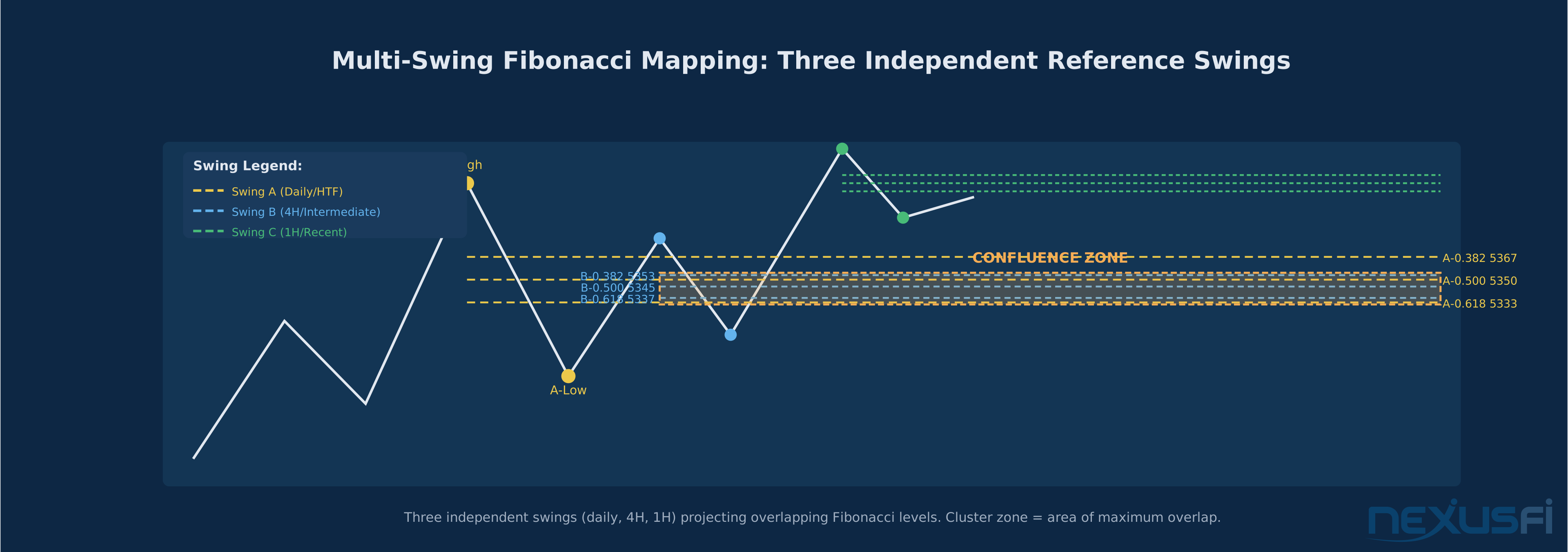
A rigorous method uses exactly three swing types:
Higher Timeframe (HTF) Structural Swing: The dominant directional move on the daily or 4-hour chart. This is your primary reference — the swing that defines the overall trend context. Fibonacci levels from this swing are the most structurally significant.
Trading Timeframe Impulse Leg: The most recent meaningful impulse on your execution timeframe (1-hour or 15-minute). This swing captures the current leg's internal structure and provides more precise Fibonacci projections.
Sub-Swing (Optional): The most recent smaller leg within the trading timeframe impulse. Adds density to the cluster but should only be used when it occurs within the same general price area as levels from the first two swings.
Three swings maximum. If you need more to create a cluster, no genuine cluster exists in that price area. NexusFi member @shodson illustrated this principle in the Fibonacci Cluster thread, showing how a correction wave's extension meeting the larger trend's 50% or 61% retracement level creates exactly the kind of independent-swing convergence that produces actionable clusters.
Defining the Tolerance Band #
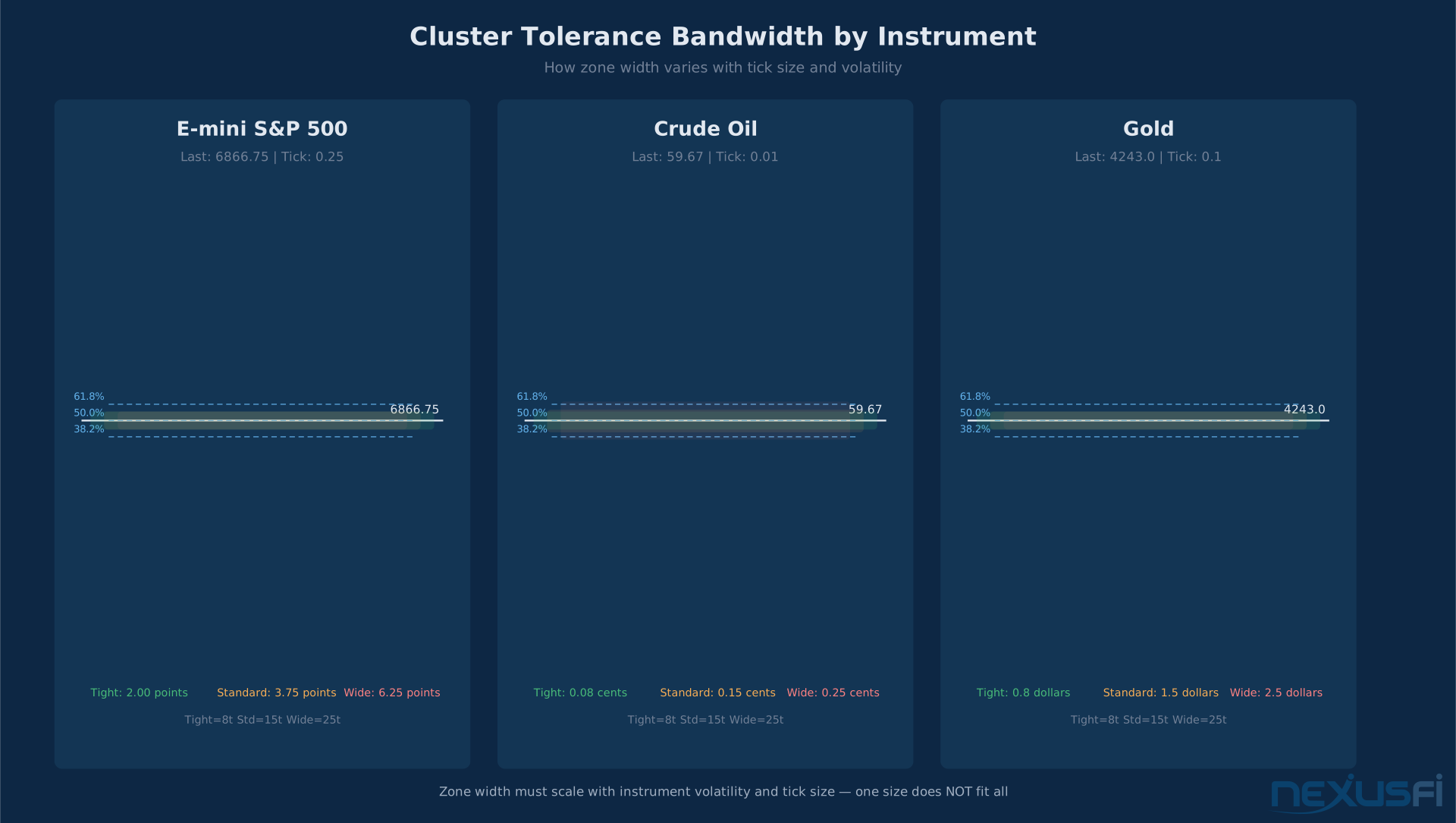
A cluster zone is only meaningful if it fits within a defined bandwidth. Too wide and every price area looks like a cluster. Too narrow and you miss valid zones entirely.
Practical bandwidth calibration by instrument:
| Instrument | Tick Size | Cluster Tolerance |
|---|---|---|
| ES (S&P 500 Futures) | 0.25 | 5--15 ticks (1.25--3.75 pts) |
| NQ (Nasdaq Futures) | 0.25 | 8--20 ticks (2--5 pts) |
| CL (Crude Oil Futures) | 0.01 | 15--30 ticks ($0.15--0.30) |
| ZB (30-Year T-Bond) | 1/32 | 10--20 ticks |
| GC (Gold Futures) | 0.10 | $2--5 range |
ATR-based alternative: define the cluster as ±0.25--0.5 ATR on your trading timeframe. This auto-adjusts to volatility regime changes without requiring manual recalibration.
The Standard Fibonacci Ratios (and Why the Others Are Noise) #
Focus exclusively on these ratios: 0.382, 0.500, 0.618, 0.786 for retracements, and 1.272, 1.618 for extensions.
These six ratios have the most behavioral significance across futures markets. Exotic ratios (0.236, 0.886, 1.414, 2.618 and beyond) add visual complexity without proportional improvement in zone quality. When traders draw 15 levels per swing, every price on the chart appears to be a Fibonacci level — which is analytical noise, not signal.
Confluence Zone Scoring: Making the Subjective Objective #
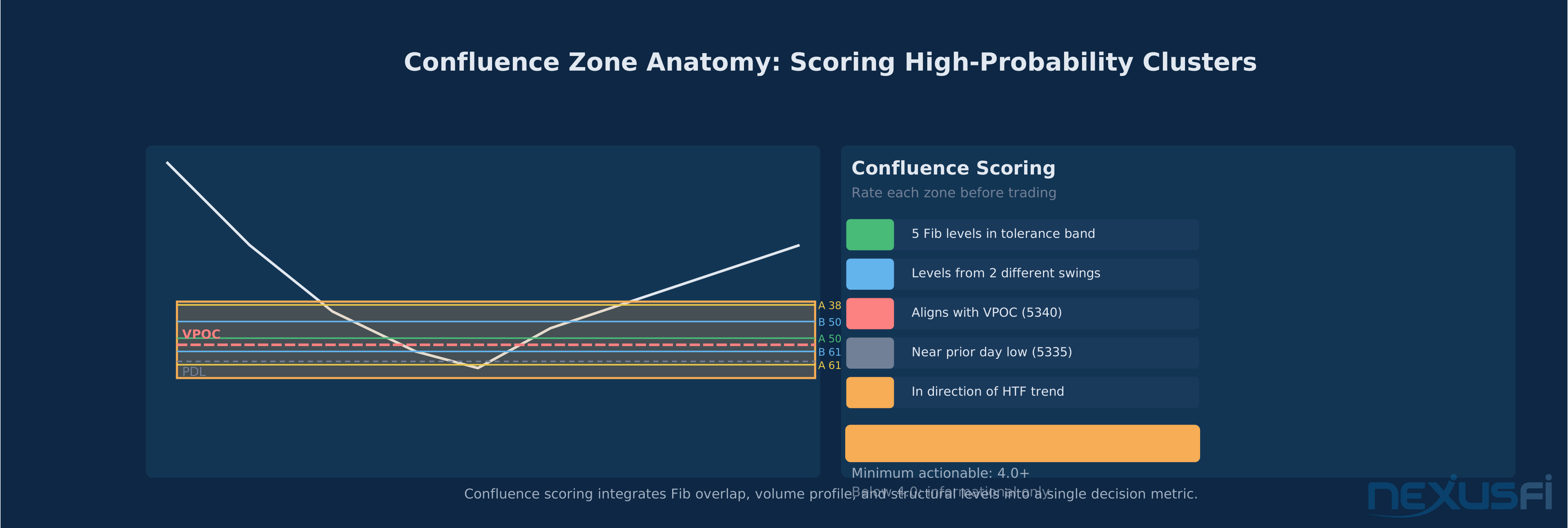
The most valuable discipline in confluence analysis is evaluating every potential cluster against a consistent scoring framework before committing to a trade. Scoring transforms a subjective chart-reading exercise into a repeatable decision process.
The Scoring Framework #
| Factor | Points | Criteria |
|---|---|---|
| Fibonacci levels in zone | +1 per level | Minimum 3 required for any consideration |
| Levels from different swing pairs | +1 | Levels from 2+ independent swings (not same swing, different ratio) |
| Near prior session high/low | +1 | Within 2× tick tolerance of prior day/week high or low |
| Near Volume POC or HVN | +1 | Cluster aligns with Volume Point of Control or High Volume Node |
| Near VWAP or VWAP deviation band | +1 | Cluster near daily VWAP ±1-2σ |
| Aligned with HTF trend direction | +0.5 | Trading cluster in direction of higher timeframe bias |
Minimum actionable score: 4.0+
A score below 4.0 means the zone is informational — worth monitoring, but not worth trading. Below 3.0 means no cluster exists at a quality level worth attention.
What Strong Scores Look Like in Practice #
A score of 6+ (maximum possible) occurs when:
- Five or more Fibonacci levels from three different swings overlap
- The cluster sits at a prior week high that is also the Volume POC
- VWAP passes through or near the zone
- The overall market structure supports trading in the cluster direction
This combination is rare — but when it appears, the trade quality is outstanding. NexusFi contributor Fat Tails documented this type of high-density cluster analysis in thread t=3315, demonstrating that "confluence zones are high probability zones to provoke a reaction" when multiple Fibonacci lines from different reference points add up in a narrow window.
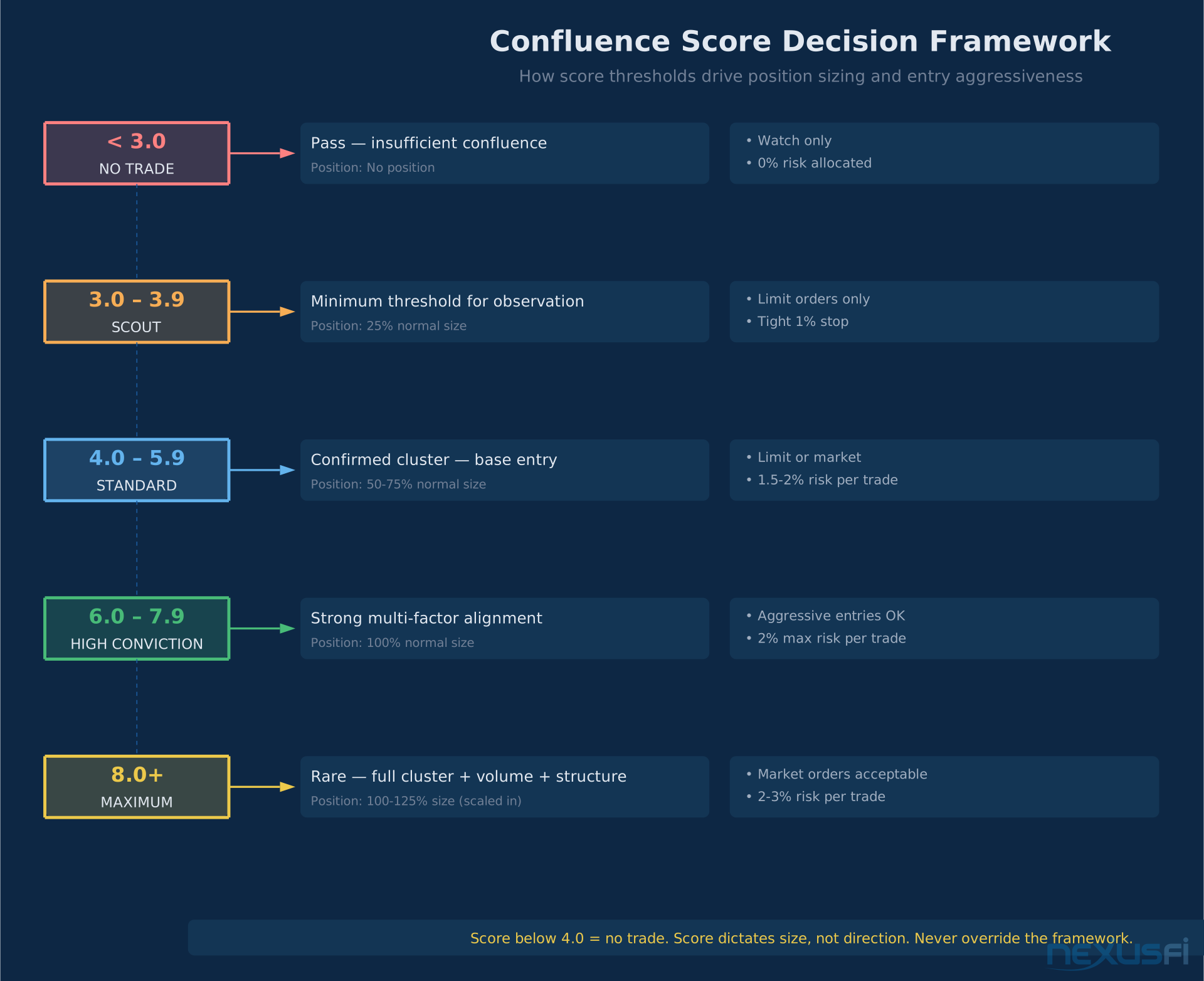
A score of 4.0--5.5 is the workable range for most setups: three to four Fibonacci levels overlapping, with one or two additional structural factors. This represents legitimate confluence and provides the foundation for the strategies below.
Four Strategies for Trading Confluence Zones #
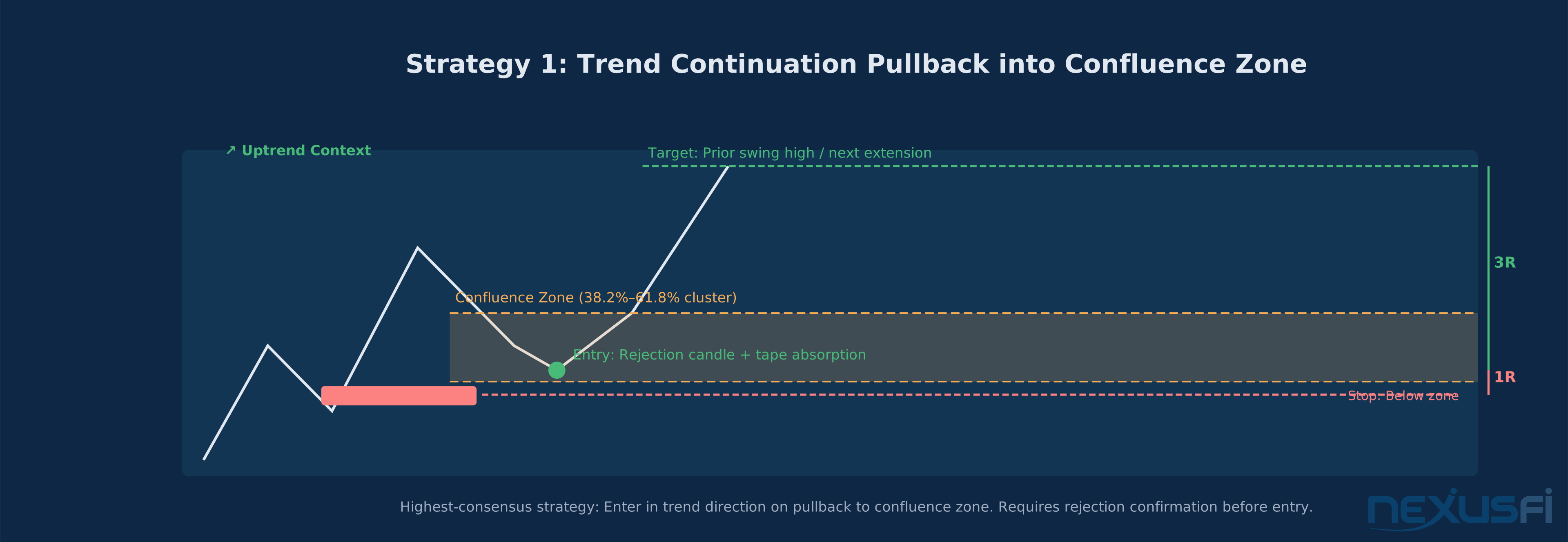
Strategy 1: Trend Continuation Pullback #
Consensus rating: Highest (all experts agree)
This is the most reliable application of Fibonacci confluence — entering in the direction of the established trend when price retraces into a cluster zone.
Setup requirements:
- Clear higher timeframe uptrend (or downtrend for short setups)
- Price has made an impulse leg, then begun a retracement
- Retracement carries price into a confluence zone with score ≥4.0
- Zone aligns with key Fibonacci levels (38.2%--61.8% of the impulse leg)
Execution:
- Map the zone using the three-swing method before price reaches it
- Wait for price to enter the zone — do not enter in anticipation
- Require confirmation: a rejection candle with a meaningful wick, tape absorption (reduce in selling aggression), or micro-structure break (small lower high breaks)
- Enter at confirmation, stop below the zone low plus your volatility buffer
- Target prior swing high (conservative) or the 127.2%--161.8% extension of the impulse (aggressive). As @Dervakon shared in the NexusFi Fibonacci retracements and projections thread, scaling out at the first extension and holding a runner to the second extension is a practical approach — "most of the time they reach those numbers" when the trend structure remains intact
Risk management: Minimum 1:2 risk-reward ratio required. If the target is closer than 2× the stop distance, reduce position size or pass.
Strategy 2: Sweep and Reclaim (Futures-Specific) #
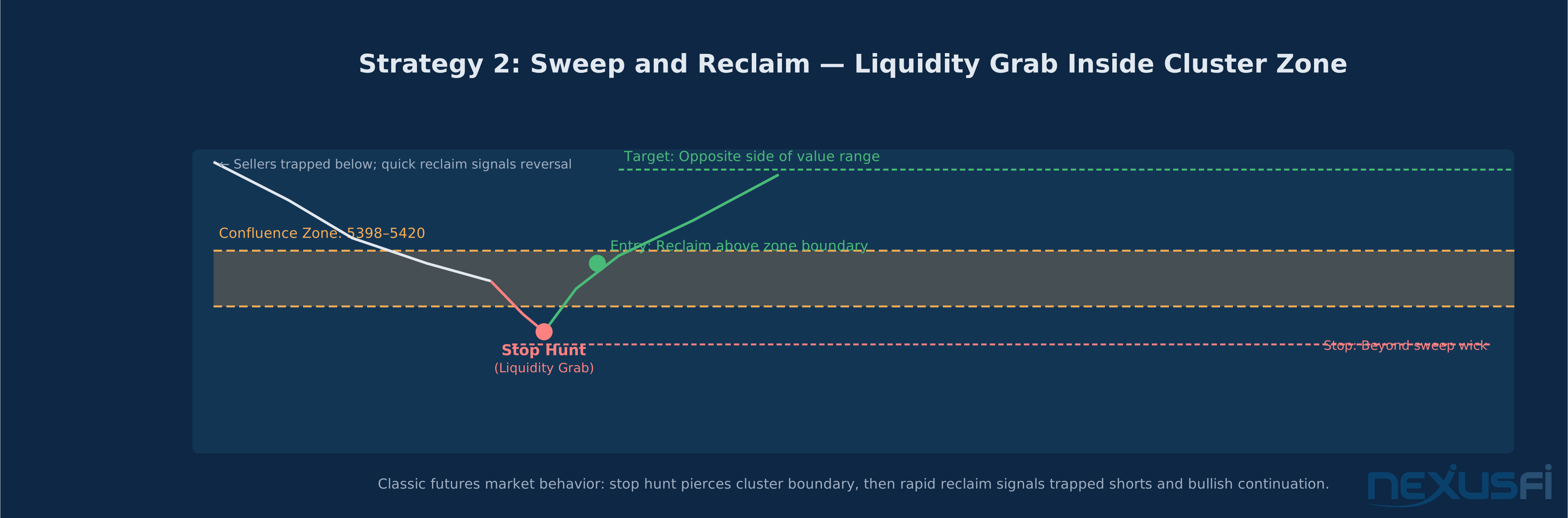
Futures markets regularly exhibit a pattern that retail traders misinterpret as a failed level: price briefly penetrates a well-watched zone, triggering the stop orders clustered just below, then rapidly recovers back inside.
This "stop hunt" or "liquidity grab" is not a failure of the Fibonacci level — it is the market's mechanism for filling institutional orders at the best price while clearing the stop clusters that would otherwise interfere with the move.
Setup requirements:
- Price approaches a confluence zone scoring ≥4.0
- Initial touch fails to produce sustained rejection — price spikes through the zone boundary
- The penetration is brief (1--3 candles) and does not represent genuine price acceptance below
Execution:
- Let price pierce the cluster boundary — this is the stop hunt phase
- Watch for rapid recovery: price snapping back above the zone, especially with a strong candle close
- Enter on the reclaim, not during the sweep — entry comes after the close back inside the zone
- Stop: beyond the sweep wick low (not the zone boundary) plus your buffer
- Target: opposite side of the swing range or nearest structural level
How this helps in futures: The ES and NQ markets have well-documented behavior where obvious levels attract stop density. Market participants with enough size to move the market can access that stop liquidity at extreme prices, then allow the natural equilibrium to reassert itself. The sweep and reclaim is the retail trader's framework for recognizing this institutional behavior and entering in the direction of the subsequent move.
Strategy 3: Breakout-Retest Continuation #
Not every cluster acts as support or resistance. In strongly trending markets, Fibonacci confluence zones frequently act as temporary consolidation areas before price continues in the trend direction. When price accepts beyond a cluster — meaning it closes beyond the zone on multiple candles, not just a spike — the cluster often flips from resistance to support (or vice versa) and provides an opportunity to enter on the retest.
Setup requirements:
- Price consolidates at or near a confluence zone
- A clear directional break occurs: two or more closes beyond the zone boundary
- Price then retraces back to the zone (the retest)
- The zone holds during the retest (no meaningful close back inside)
Execution:
- Mark the zone as broken once you have two or more closes beyond the boundary
- Wait for the retest — price pulling back to the zone from the breakout side
- Enter at the zone boundary, stop back inside the zone
- Target: measured move equal to the consolidation range projected from the breakout point, or the next significant Fibonacci extension
Common error: Entering on the breakout bar itself rather than waiting for the retest. The retest provides both better entry price and confirmation that the zone has genuinely flipped.
Strategy 4: Scaled-In Zone Entry #
For traders with higher conviction setups (score ≥5.5) and wider cluster zones, scaling into the position within the zone improves the average entry price while managing the risk of timing the exact low or high.
Execution:
- First entry: outer edge of the cluster zone (typically at the 38.2% level)
- Second entry: midpoint of the zone (typically near the 50% level)
- Third entry (only with strong confirmation): zone low/high or near the 61.8% level
- Stop: unified stop placed beyond the zone outer boundary plus buffer
- Total position risk stays within your normal per-trade risk parameters regardless of entry count
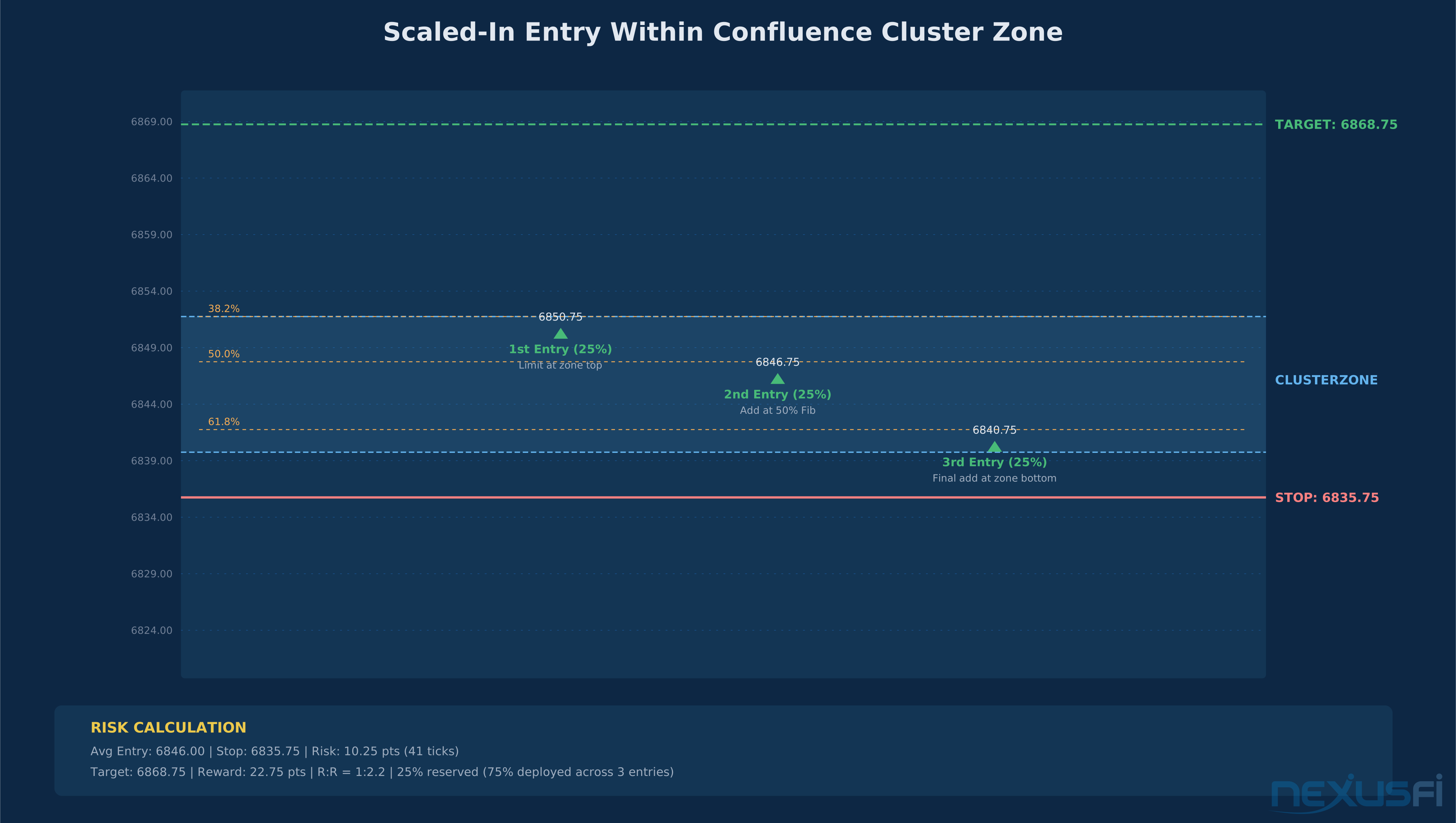
Risk management note: Scaling in increases your commitment as price moves against you. This strategy only works with strict position sizing — the sum of all entries must fit within your maximum per-trade risk, not each entry individually.
Integration with Volume Profile #
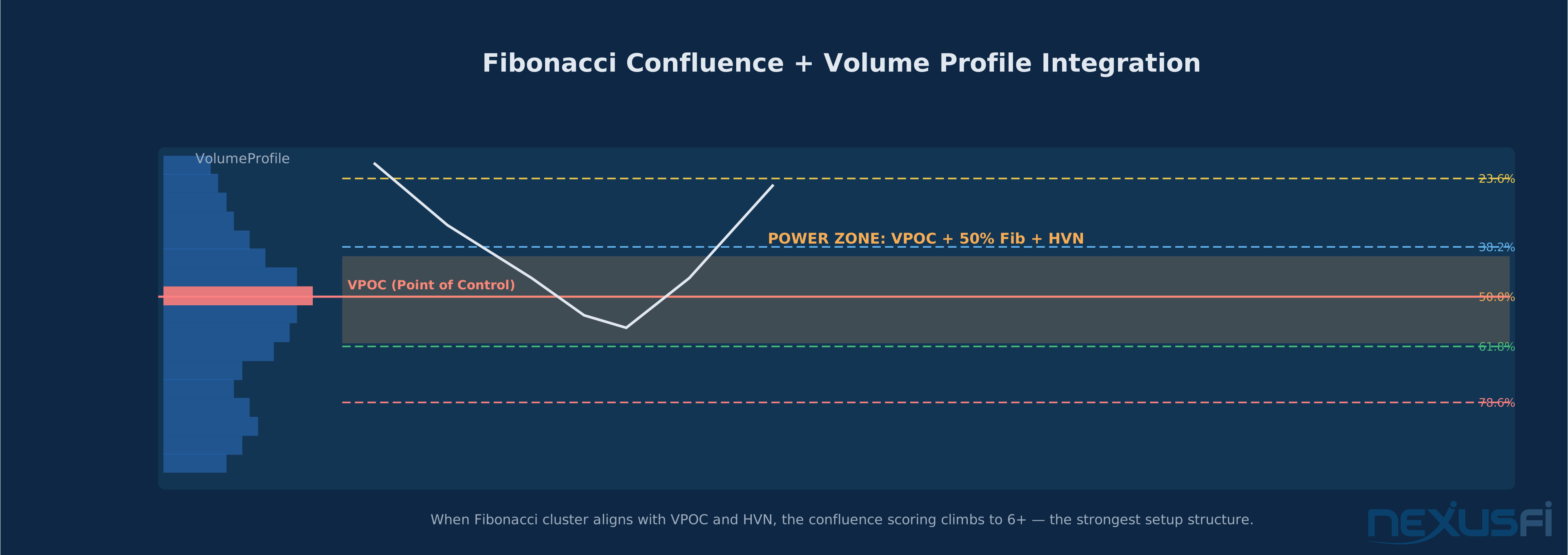
The most powerful confluence setups occur when Fibonacci clusters align with Volume Profile key levels. This combination addresses the core criticism of Fibonacci analysis — that it is purely visual and has no mechanical relationship to order flow — by connecting Fibonacci zones to actual transaction density.
Fibonacci + Point of Control (POC) #
The Volume POC marks the price level where the most volume transacted during a defined period. It represents the "fairest price" as determined by actual market participation, and it tends to act as a magnet — both as support/resistance and as a return-to-equilibrium target after range expansion.
When a Fibonacci confluence zone sits at or near the Volume POC, the cluster score increases by +1 (as per the scoring framework). More importantly, the behavioral argument for the zone becomes dual-layered: both Fibonacci adherents placing orders at the level AND volume profile traders expecting mean reversion to the POC.
Practical identification: In NinjaTrader, Sierra Chart, or any volume profile tool, overlay the session or multi-day volume profile on your chart alongside Fibonacci levels. When the POC falls within your confluence zone tolerance band, add +1 to the zone score and note the alignment in your trade log.
Fibonacci + Value Area #
The Value Area (the range containing approximately 70% of volume) provides an outer boundary reference. When a Fibonacci cluster sits at the Value Area High (VAH) or Value Area Low (VAL), there is a strong behavioral expectation:
- At VAL: buyers who consider VAL to be "fair value" will defend it — their orders add to Fibonacci-driven buying
- At VAH: sellers who consider VAH to be "premium price" will sell — their orders add to Fibonacci-driven selling
Fibonacci + Low Volume Nodes (LVN) #
Low Volume Nodes represent price areas where the market transacted quickly, with little time-price opportunity. These areas often act as thin air for price — fast movement through, with little friction. When a Fibonacci cluster sits just above an LVN, a successful defense of the cluster sends price rapidly through the LVN to the next HVN or POC.
This creates a high-quality risk-reward setup: tight stop below the cluster, rapid price movement through the LVN to the next significant target.
Institutional Context: What the Professionals Actually Do #
The retail narrative around Fibonacci is often mystical — the golden ratio appears in nature, so it predicts markets. This framing is not how professional traders or academics think about Fibonacci.
The honest institutional perspective: Fibonacci levels work because many traders watch them, which concentrates order flow. The self-fulfilling prophecy component is real and sufficient to create tradeable liquidity events, without requiring any mystical relationship between ancient mathematics and modern electronic order matching. Academic research supports this behavioral explanation — Gupta (2011) at Macalester College examined Fibonacci retracements specifically through the self-fulfilling prophecy lens, finding that the widespread observation of these levels by market participants contributes to the order clustering that makes them tradeable.
Where institutional behavior intersects with Fibonacci confluence:
Liquidity mapping: Quantitative funds and execution algorithms model the distribution of resting orders across the price axis. Areas where many retail participants place limit orders and stops create identifiable liquidity pockets. Fibonacci levels — especially well-watched ratios like 61.8% and 50% — concentrate retail order placement. Institutions may execute into these liquidity pockets when they need to fill large orders without moving the market against themselves.
Option hedging flows: For index futures in particular, option market maker hedging can create demand or supply at specific price levels. These levels are sometimes coincident with Fibonacci retracements — the coincidence is partially explained by both options traders and Fibonacci traders anchoring to the same reference points (prior highs, prior lows, overnight ranges).
Self-reinforcing dynamics: The more consistently the community watches a set of levels, the more consistently those levels produce liquidity events, the more traders trust those levels, the more orders cluster there. This is a stable equilibrium that experienced traders should exploit, not explain away.
NexusFi member Fat Tails captured this perspective directly: "I use Fibonacci tools for trading, not because I believe in black magic or the omnipresence of the golden ratio, but because they are a useful tool" — using the indicator for its behavioral properties rather than any metaphysical belief (thread t=3484).
Futures-Specific Considerations #
Index Futures (ES, NQ) #
Index futures are the best fit for Fibonacci confluence analysis due to high retail participation and the consequent self-fulfilling dynamics described above. @Lmess documented a complete Fibonacci trading system for the ES using retracement levels to determine entry, stop, and target — demonstrating how the structured application of Fibonacci levels to index futures produces repeatable setups when combined with clear rules. Key adaptations:
- Session context is critical: The most powerful clusters align with overnight high/low, prior regular trading hours (RTH) high/low, and opening range boundaries. A Fibonacci cluster that also sits at the overnight high carries substantially more behavioral weight.
- VWAP integration is essential: In index futures, VWAP is the institutional benchmark. Fibonacci clusters near VWAP deviations (±1σ, ±2σ) align with mean-reversion behavior common in institutional execution.
- Open type matters: Different RTH open types (gap up, gap down, inside the prior range) create different intraday structures. Fibonacci clusters have higher hit rates when they align with the dominant open type's likely retracement target.
Commodity Futures (CL, GC, ZB) #
Commodity futures have strong directional moves during fundamental events (EIA petroleum reports, crop reports, Fed decisions for bonds). During these events, Fibonacci levels have reduced effectiveness because fundamental order flow overwhelms technical level attraction.
Outside of report events, commodity futures — especially crude oil (CL) and gold (GC) — often exhibit clean swing structures that generate quality Fibonacci setups. The slower, trend-following character of commodities makes Fibonacci continuation setups (Strategy 1 above) especially applicable. @Fat Tails demonstrated this in his detailed CL Light Crude analysis, where a single Fibonacci confluence line was supported by five different Fibonacci projections clustering in the same area — producing the kind of high-density zone that defines quality setups in commodity futures.
Market Regime Filters #
The most important pre-trade filter for Fibonacci confluence strategies is market regime:
Trending regime: Fibonacci clusters act as pullback targets. Expect price to touch the zone and resume the trend. Strategies 1 (pullback) and 3 (breakout-retest) are most applicable. Expect the 38.2%--50% range to hold in strong trends; the 61.8% in moderate trends; 78.6% signals possible trend exhaustion.
Mean-reverting regime: Fibonacci clusters act as reaction points for both buyers and sellers. Both the upper and lower zone boundaries may produce reactions. Strategy 2 (sweep and reclaim) and shorter-duration targets are more appropriate.
Expanding range (breakout) regime: Fibonacci clusters often fail as price moves through multiple levels without sustained reaction. Reduce position sizes, widen stops if trading at all, or wait for regime to stabilize.
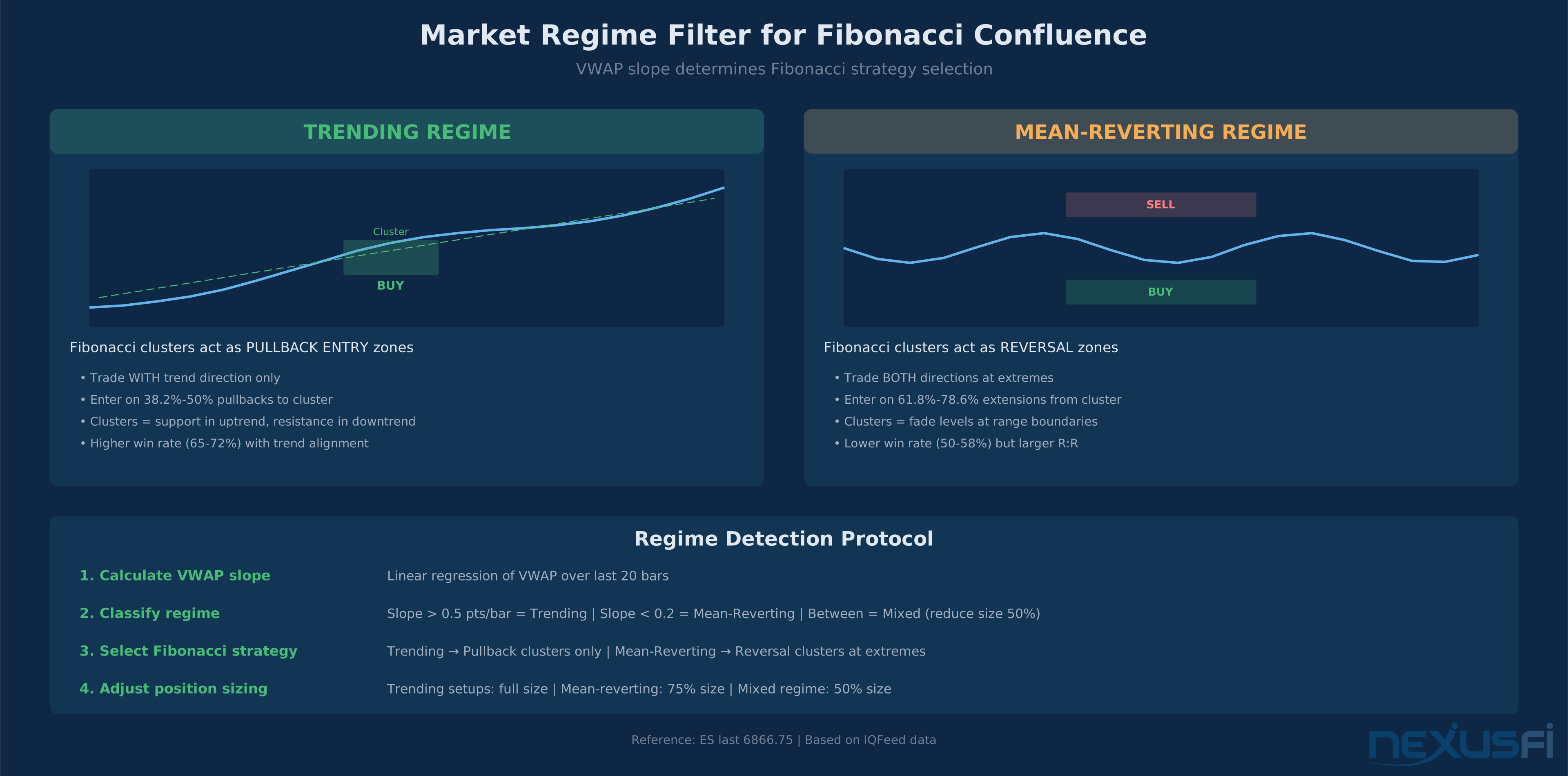
A simple regime filter: VWAP slope (flat = mean-reverting, steep = trending) or the ratio of today's range to the prior 5-day average range (above 1.5× = expansion).
Common Pitfalls and How to Avoid Them #
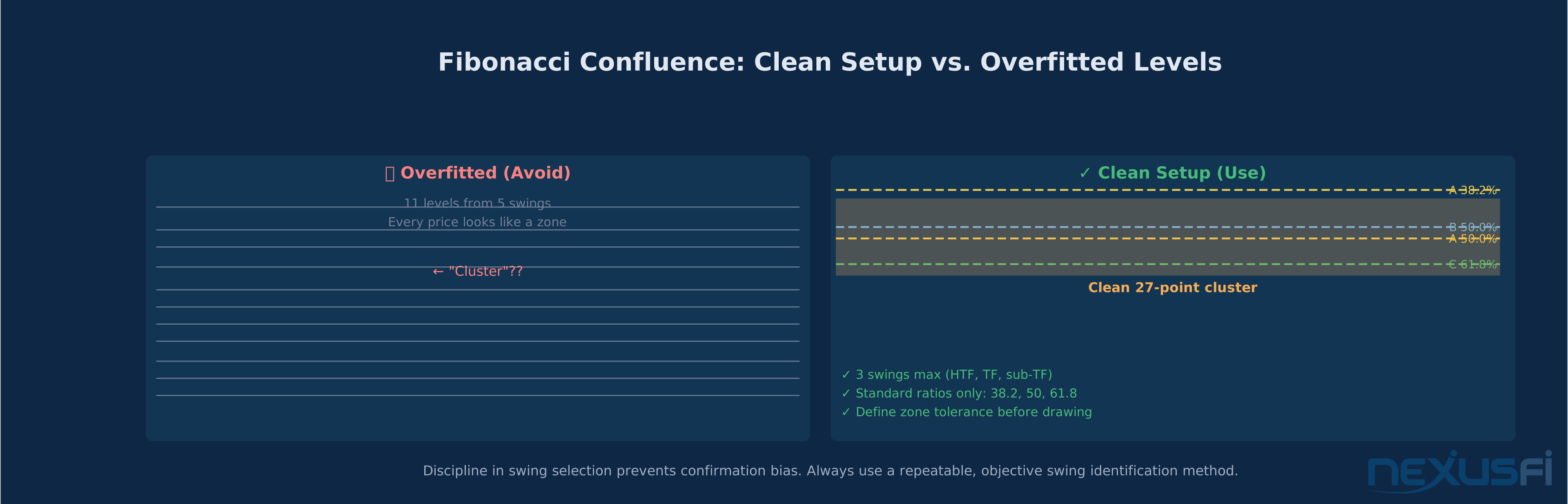
Overfitting: Drawing Too Many Swings #
The most destructive error in Fibonacci confluence analysis. When a trader draws Fibonacci from five or more swings, every price level on the chart is within the "cluster zone." The zone becomes meaningless because it excludes nothing.
Fix: Hard limit of three swings. If adding a fourth swing is required to create a cluster, no genuine cluster exists at that price.
Precision Illusion: Treating the Zone as a Line #
Expecting price to react at a tick-perfect Fibonacci level is a setup for frustration. Markets are driven by participants with different execution systems, position sizes, and trigger levels. The zone is the right mental model — price may react at the zone's outer edge, midpoint, or near the inner boundary.
Fix: Define the zone as a band before drawing any levels. Mark the outer edges as the actionable area and treat price action anywhere within the band as "at the zone."
Confirmation Bias: Remembering the Hits #
Every trader who uses Fibonacci can produce a highlight reel of spectacular confluences producing big reversals. The human memory selectively stores memorable events. The misses — prices slicing through what looked like a perfect confluence zone — are underrepresented in memory.
Quantitative backtesting by Kerobyan (2016) measured whether reversals at Fibonacci levels occur more frequently than chance alone would predict — a rigorous framework every Fibonacci trader should consider applying to their own data. Fix: Track every confluence zone with a score ≥4.0 in a trading journal. Log whether price produced a tradeable reaction. After 50 trades, calculate your actual hit rate at different score thresholds. Use this data to calibrate your minimum actionable score.
Context Neglect: Ignoring Trend and Structure #
A high-scoring Fibonacci cluster in a market context that does not support a reaction is not a trade. The cluster tells you where to look, not whether to trade.
Fix: Before scoring the zone, first determine the higher timeframe trend direction and the session structure context. If these factors do not support a reaction at the cluster, pass regardless of the score.
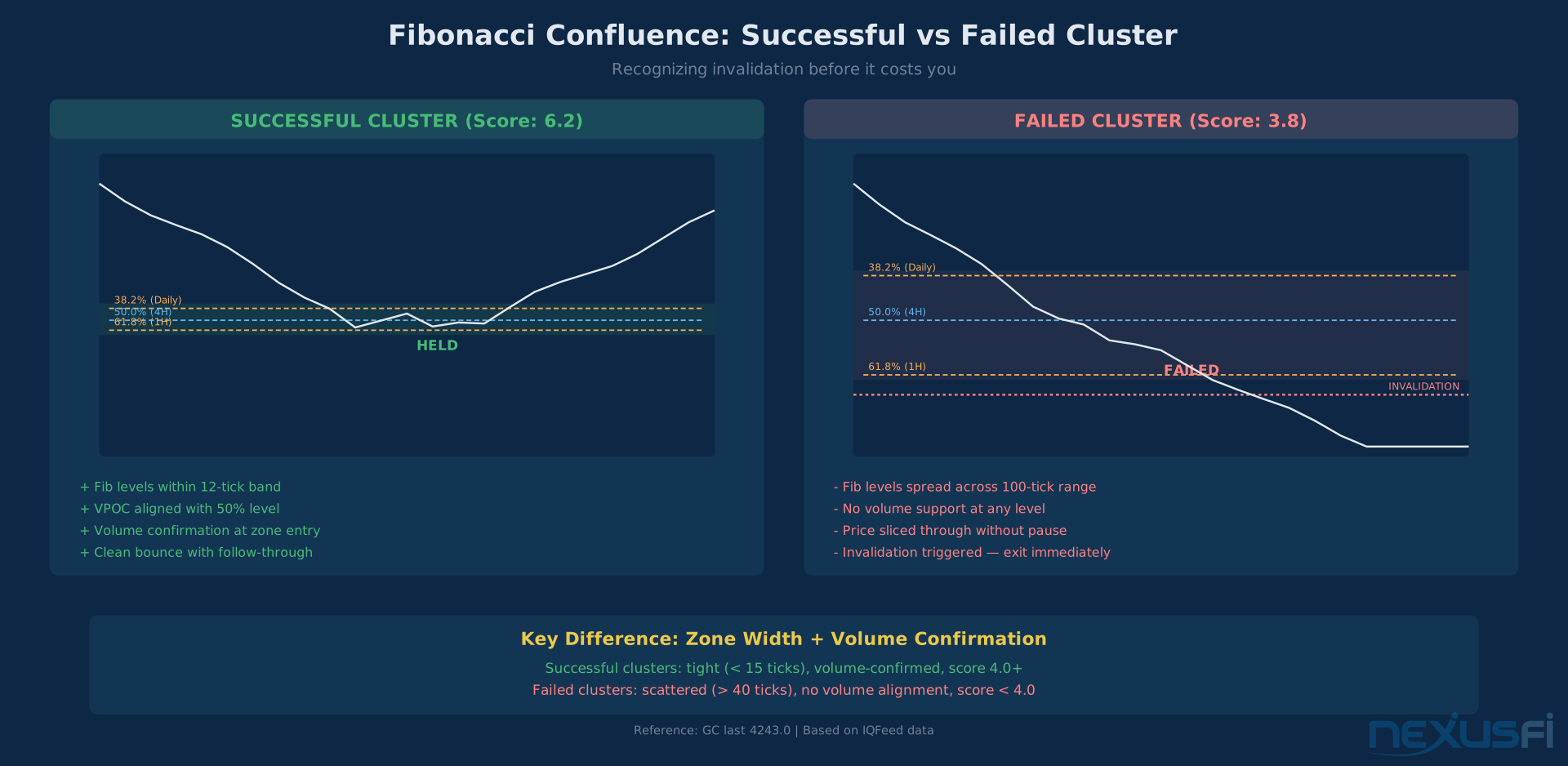
Missing the Invalidation Level #
Every Fibonacci confluence trade needs a specific price where the cluster thesis is wrong. "Below the zone" is not a specific level — it is a region. The invalidation should be a precise price: the closest swing low below the zone (for long trades), or the closest swing high above the zone (for short trades).
Fix: Define the invalidation price before calculating position size. If the invalidation is too far away for your risk parameters, pass on the trade. If it is within range, the stop is placed at the invalidation price plus your tick buffer.
Practical Application Checklist #
Use this checklist before entering any Fibonacci confluence trade:
Zone identification:
- [ ] Three or fewer swings drawn (HTF, TF, optional sub-swing)
- [ ] Only standard ratios used (38.2, 50, 61.8, 78.6 for retracements; 127.2, 161.8 for extensions)
- [ ] Zone tolerance defined (tick-based or ATR-based) before drawing levels
- [ ] Three or more levels fall within the tolerance band
Zone scoring:
- [ ] Calculated score is 4.0 or higher
- [ ] Score accounts for Fib overlap, structural alignment, and volume profile factors
Market context:
- [ ] Higher timeframe trend direction determined
- [ ] Session context noted (gap type, value area position, overnight range)
- [ ] Market regime assessed (trending, mean-reverting, expanding)
Execution readiness:
- [ ] Entry trigger defined (rejection candle, sweep and reclaim, micro-structure break)
- [ ] Stop price defined (zone outer boundary + buffer = specific tick price)
- [ ] Target price defined (minimum 1:2 risk-reward from entry to stop)
- [ ] Position size calculated based on stop distance and account risk parameters
Post-trade:
- [ ] Log the zone score, entry type, and result
- [ ] Track hit rate at each score threshold over time
- [ ] Review misses without confirmation bias — what did the zone look like in advance?
Integration with the Broader Fibonacci Framework #
Fibonacci confluence zones are the primary execution tool in a broader Fibonacci methodology. Understanding the other components of this system deepens the context for why cluster zones behave as they do:
- Fibonacci Retracement and Extension Levels: The foundational tool — how individual retracement and extension levels are drawn and interpreted before confluence analysis is applied.
- Fibonacci Sequence and Golden Ratio in Trading: The mathematical basis and philosophical framework for why Fibonacci ratios appear across markets and trading methodologies.
NexusFi's Fat Tails cluster analysis in thread t=3315 provides detailed technical documentation of the multi-swing cluster identification method, including the specific Fibonacci line types used (retracements, expansions, projections, measured moves) and the algorithm for calculating confluence density. This is required reading for traders who want to implement confluence analysis systematically rather than visually.
Fibonacci confluence and cluster zones transform the subjectivity of single-level analysis into a structured, repeatable decision process. The key insight is not that Fibonacci ratios have predictive power — they do not. The key insight is that the convergence of independent market participants' expectations at a narrow price band creates genuine order clustering. That clustering produces observable, tradeable liquidity events. The confluence zone is how you identify in advance where those events are most likely to occur.
Use the scoring framework to eliminate low-quality setups. Use the confirmation requirement to avoid entering on anticipation rather than evidence. Track your results to calibrate your thresholds. The edge in Fibonacci confluence comes not from the mathematics, but from the discipline of its application.
Knowledge Map
Prerequisites
Understand these firstReferences This Article
Articles that build on this topicCitations
- — Applying Fibonacci Cluster and Confluence Zones (2010) 👍 60“Fibonacci clusters do provide an edge that can be exploited. Fibonacci clusters are leading indicators, they establish support or resistance.”
- — Applying Fibonacci Cluster and Confluence Zones (2010) 👍 16“Confluence zones are high probability zones to provoke a reaction when multiple Fibonacci lines from different reference points add up in a narrow window.”
- — Fibonacci Indicators for NinjaTrader (2010) 👍 16“I use Fibonacci tools for trading, not because I believe in black magic or the omnipresence of the golden ratio, but because they are an efficient tool to establish support and resistance.”
- — Fibonacci Queen (2010) 👍 5“Individual Fibonacci levels give you a moderate edge. If you use confluence zones you can combine the smaller edges into larger edges.”
- — Spoo-nalysis ES e-mini futures S&P 500 (2016) 👍 6“Fibs work best in confluence -- a principle experienced futures traders arrive at independently through years of screen time.”
- — Fibonacci trading system for the ES (2011) 👍 8“A strategy/system for trading the ES that relies on Fibonacci retracements and extensions. Retracement levels used to determine entry, stop and target.”
- — Applying Fibonacci Cluster and Confluence Zones (2010) 👍 3“When a correction wave's extension meets the larger trend's 50 or 61% retracement level, it creates confluence from independent swing measurements.”
- — Are Fibonacci retracements and projections useful? (2015) 👍 3“Most of the time they reach those fib extension numbers, so I scale out a portion of my entry and put my next target at the second extension.”
- — CL Light Crude Analysis TPO/MP/VWAP/VPOC (2013) 👍 7“The Fibonacci Confluence Line relies on 5 different Fibonacci lines that cluster in this area, producing a high-density zone for crude oil futures.”
- Macalester College Economics — Digitalcommons.macalester.edu (2011)
- ForexOp Research — Forexop.com (2016)