



Fibonacci Time Zones and Cycles
Overview #
Fibonacci time zones and cycles apply the same Fibonacci ratios that govern price retracement analysis to the time dimension of markets. Instead of asking "how far will price retrace?", time-based Fibonacci asks "when is price most likely to change regime?" The result is a framework for identifying windows of elevated reversal or consolidation probability — not predictions, but probability filters.
This article covers the two primary methodologies for Fibonacci time analysis, how to identify temporal reversal zones, the six-step workflow for implementing this as a disciplined system, and how to integrate time analysis with price-based tools for the highest-conviction trade setups. See the Fibonacci Sequence and Golden Ratio hub for foundational context. See Fibonacci Confluence and Cluster Zones for price-based Fibonacci application.
The Fundamental Concept: From Price to Time #
Most traders who use Fibonacci apply it to the price axis — retracements, extensions, projections. Fewer apply it to the time axis. The concept is simple: just as Fibonacci ratios describe relationships between price movements, they may also describe relationships between time intervals.
The core hypothesis: Significant market turning points (swing highs and lows) may exhibit Fibonacci relationships in their temporal spacing. If swing A to swing B took 34 trading days, subsequent significant turns may cluster around Fibonacci ratios of that 34-day reference: 21 days (0.618 × 34), 55 days (1.618 × 34), and so on.
This is not a prediction that markets will reverse on a specific date. It is a probability statement: the market has somewhat elevated probability of experiencing a regime change — a reversal, an acceleration, a volatility shift, a trend pause — near these projected time windows.
The mechanism is partly behavioral (many participants watch the same swing durations), partly structural (market cycles tend to exhibit self-similar timing patterns), and partly coincidental (Fibonacci ratios appear in many natural timing relationships). Think of Fibonacci time zones as a calendar of hypotheses — each window confirmed or invalidated by price action as it arrives.
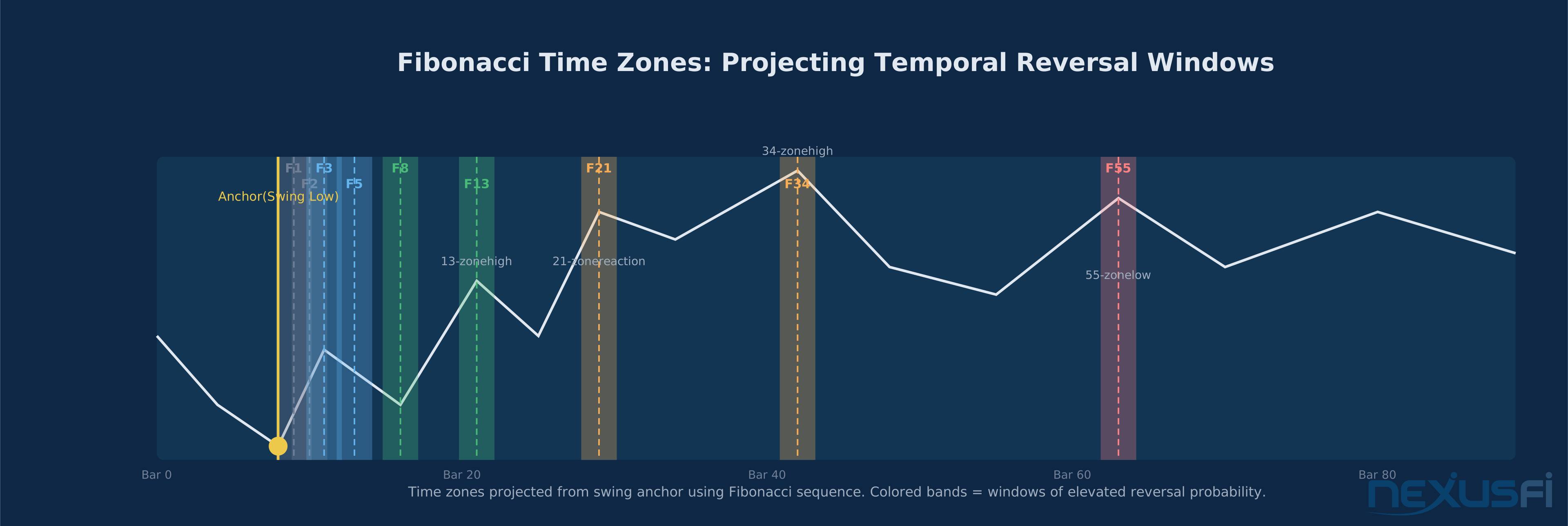
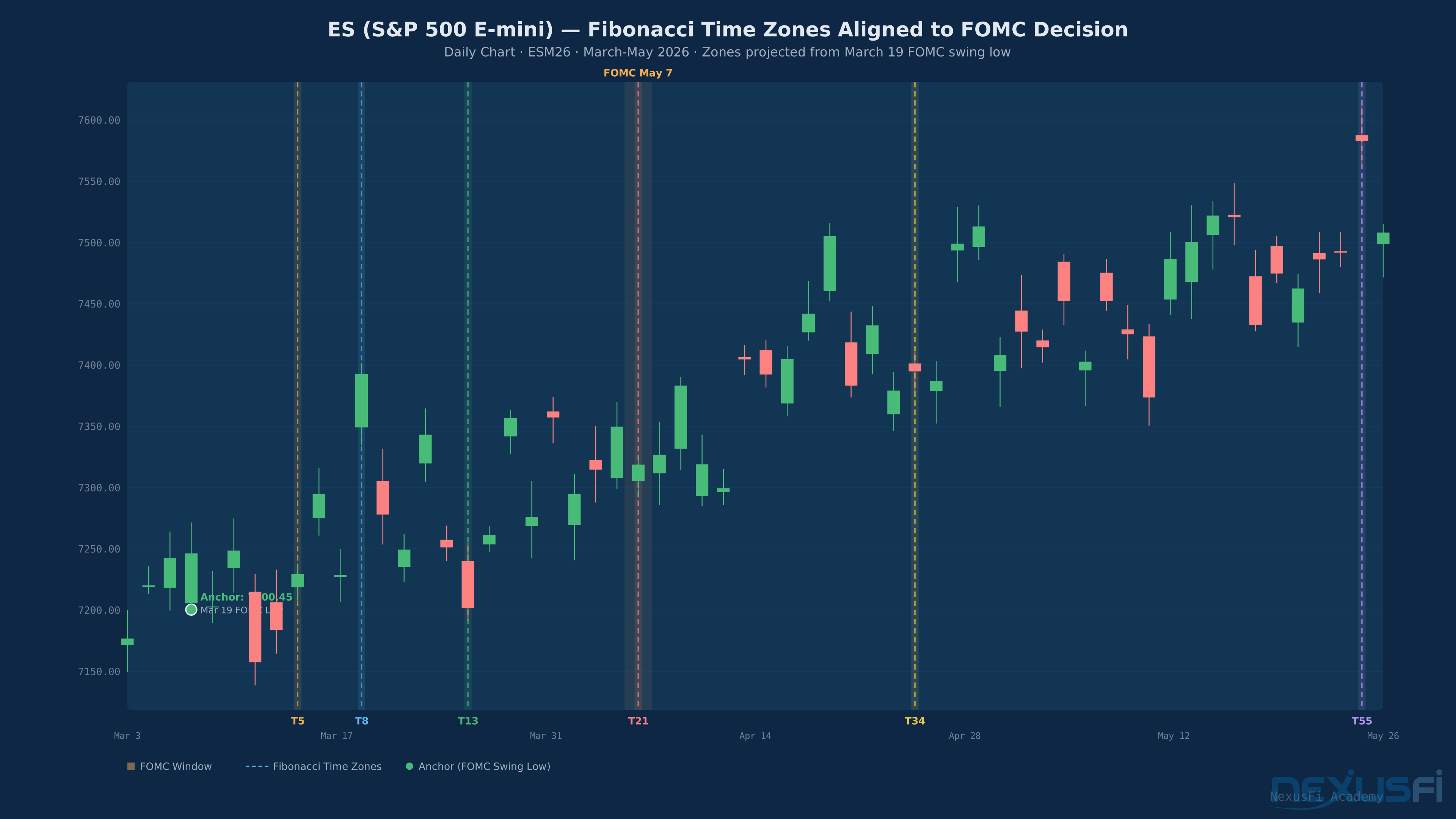
Method 1: Fibonacci Time Zone Projection #
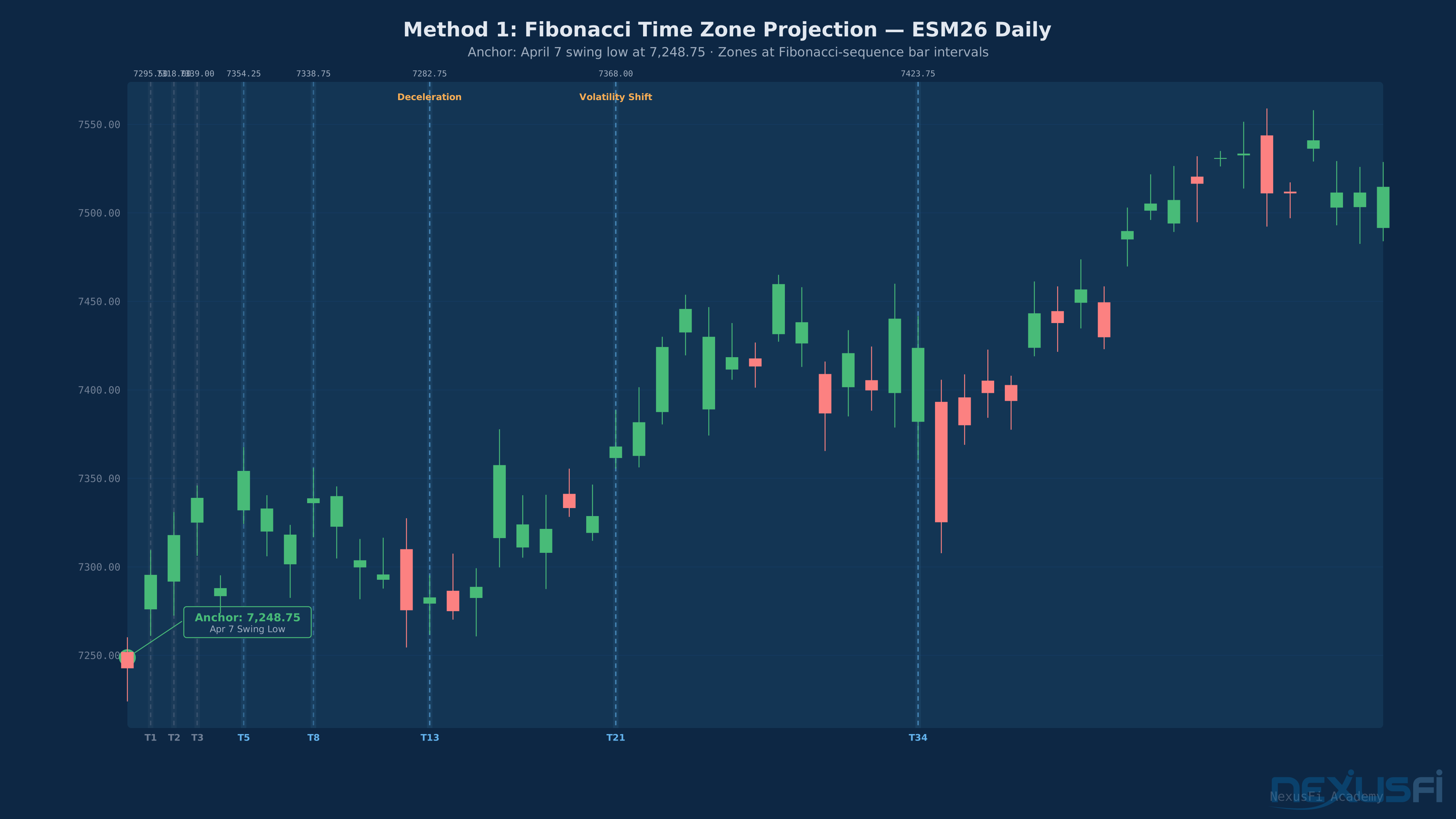
The first and more commonly used method draws vertical lines forward from a significant price extreme at Fibonacci-sequence intervals.
Step-by-Step Application #
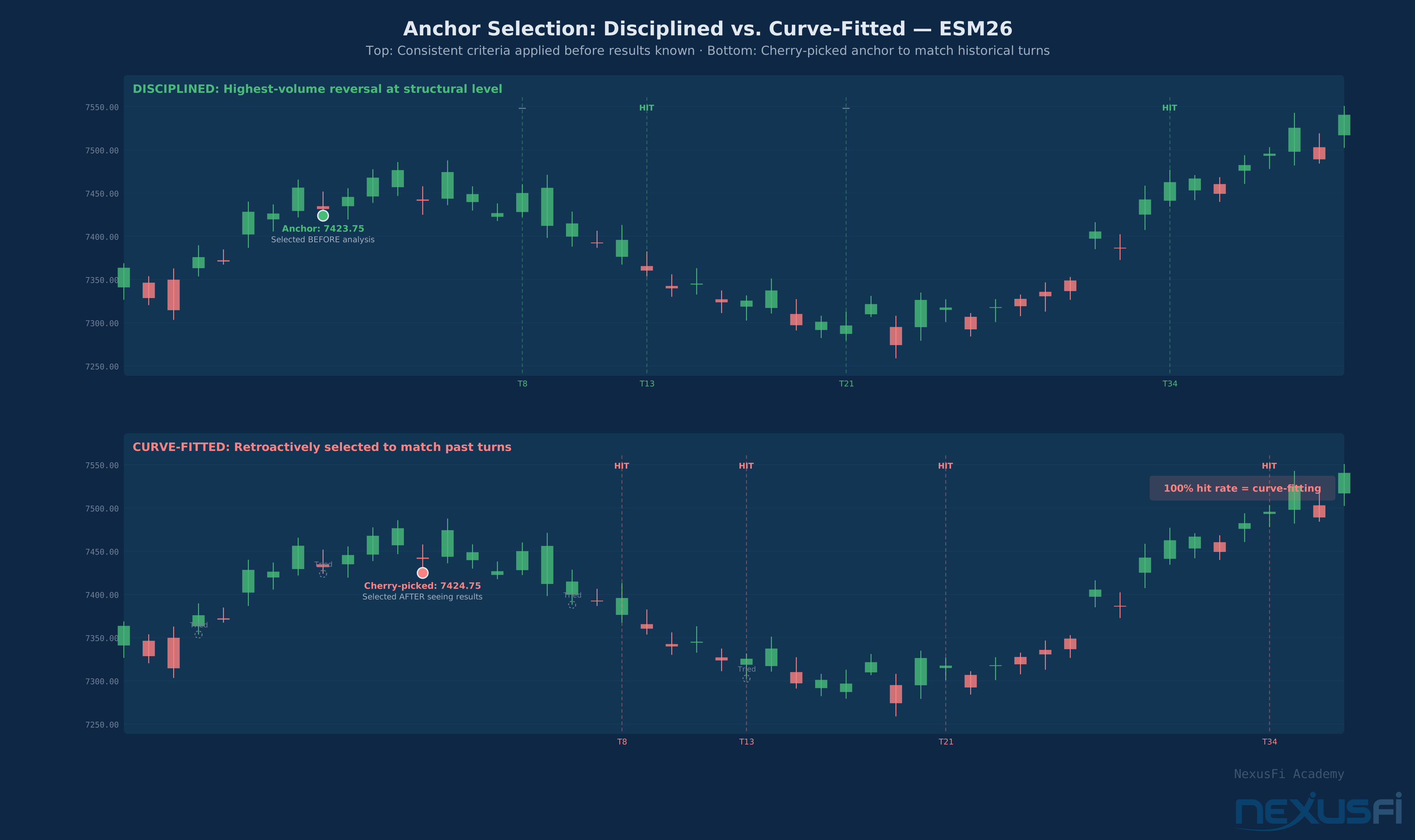
Step 1: Identify the anchor point. Select a clear, significant swing high or swing low — ideally a high-volume reversal at a structurally important price level. The quality of the anchor determines the quality of the projections. A minor, ambiguous swing produces unreliable zones.
Step 2: Determine the base interval. The base interval is either:
- A fixed unit (one bar on your chosen timeframe — each zone appears at bars 1, 2, 3, 5, 8, 13, 21, 34, 55, 89 from the anchor), or
- The time distance from your anchor to the next significant swing (which is then multiplied by Fibonacci ratios to project further).
Step 3: Draw the time zones. Most charting platforms include a Fibonacci Time Zones tool that draws vertical lines automatically. If constructing manually, mark zones at: 5, 8, 13, 21, 34, 55, 89 bars (or calendar days) from your anchor.
Step 4: Treat zones as bands, not lines. A Fibonacci time zone is not a single bar — it is a window. Define a band around each projected date based on your timeframe:
| Timeframe | Zone Width |
|---|---|
| 15-minute | ±1-2 bars |
| 1-hour | ±2-4 bars |
| 4-hour | ±1-3 bars |
| Daily | ±2-5 bars |
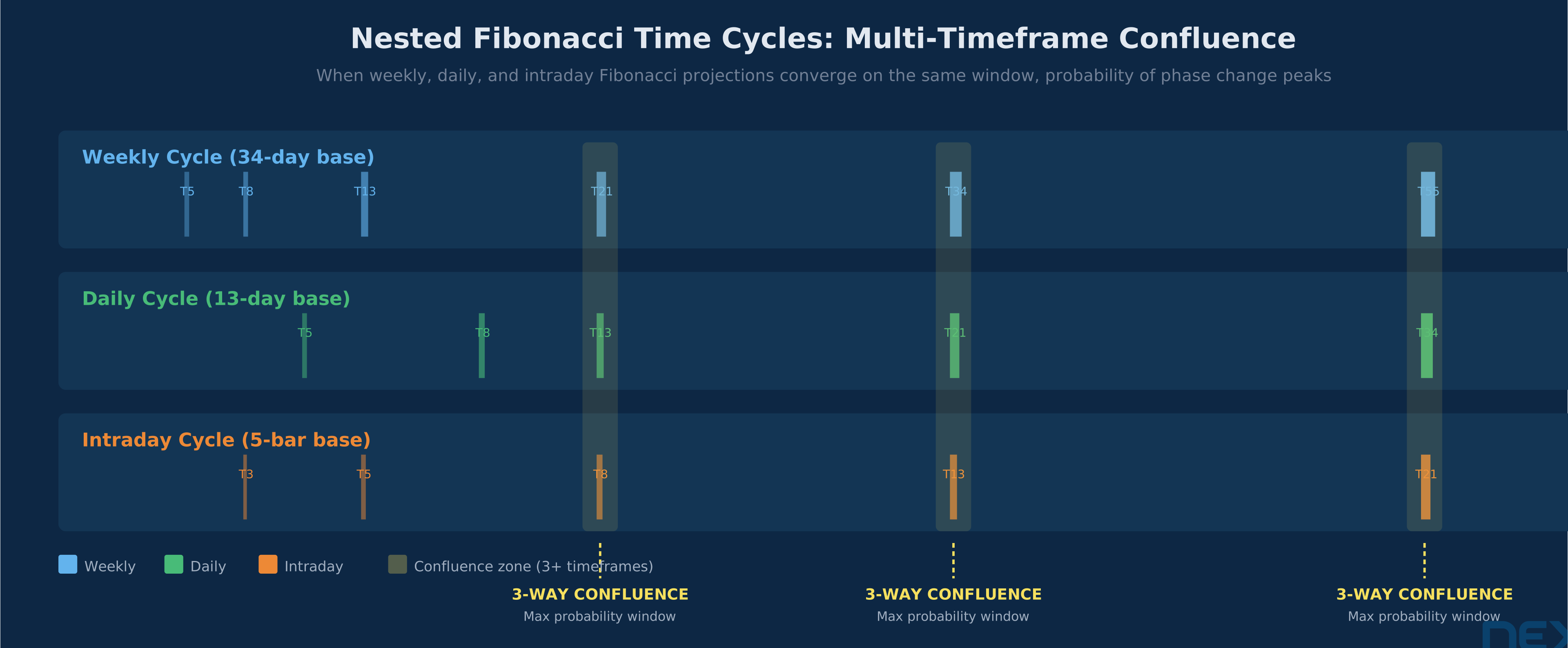
Step 5: Stack multiple anchors. The strongest zones occur when multiple independent projections overlap. Use 2-3 different anchor points from different swing structures. When three independent projections fall in the same time window, that window carries substantially higher probability.
Practical Limitation: Anchor Ambiguity #
The most significant weakness of this method is anchor selection. By testing multiple possible swing extremes as anchors, it is possible to retroactively find one that makes historical time zones "work." This is curve-fitting, not analysis.
The discipline requirement: select your anchor before looking at where the subsequent market turns actually occurred. Use the most unambiguous, highest-volume, structurally cleanest extreme — and use consistent criteria across all anchor selections.
Method 2: Swing Duration Ratios (The More Strong Approach) #
The second method — less commonly discussed but generally more strong — examines the Fibonacci relationships between consecutive swing durations rather than projecting forward from a single point.
The Core Measurement #
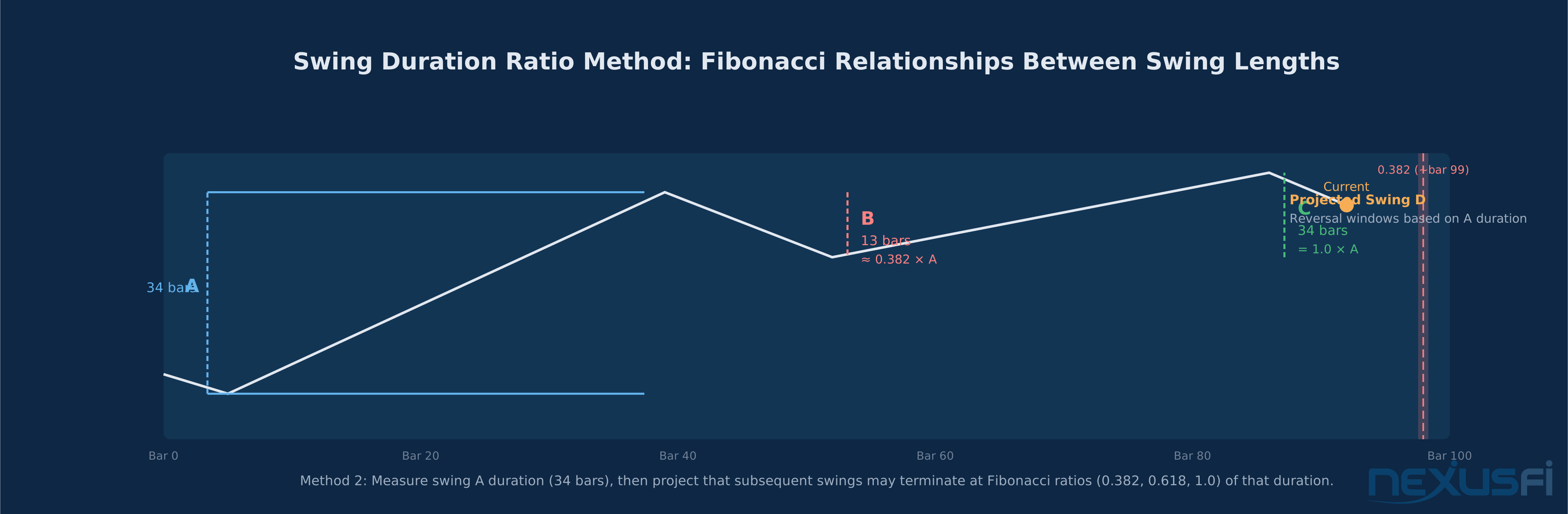
Instead of asking "when from anchor A will the next turn occur?", this method asks: "if swing A took X bars, what are the Fibonacci ratios of X that predict when subsequent swings might terminate?"
Why This Method Is More Strong #
It uses the market's own rhythm. Rather than imposing an external timeline from an arbitrary anchor, swing duration ratios derive projections from what the market itself has demonstrated. If the market has shown a preference for 0.618:1 retracement-to-impulse time ratios in the past, that ratio becomes meaningful.
It reduces anchor ambiguity. You are not choosing a single "special" point — you are measuring completed swings and applying Fibonacci ratios to those measurements. The swing selection criteria can be consistently defined and applied.
It captures the temporal signature of the instrument. Different futures contracts tend to exhibit different timing characteristics. ES may show a preference for 0.618 retracement-time ratios during certain market regimes, while CL may exhibit stronger 1:1 relationships. Swing duration analysis reveals these instrument-specific patterns.
Application Example #
Suppose you observe:
- Swing A (uptrend impulse): 34 trading days
- Swing B (retracement): 13 trading days (= 0.382 × 34) ← first Fibonacci relationship confirmed
- Swing C (next impulse): 34 trading days (= 1.0 × Swing A) ← second relationship confirmed
- Now in Swing D (current retracement): How long should it last?
With two confirmed Fibonacci timing relationships in the sequence, you project:
- 0.382 × 34 = ~13 days (matches Swing B duration — high probability)
- 0.618 × 34 = ~21 days (alternative, if Swing D is a deeper correction)
- 1.0 × 34 = 34 days (full time symmetry — possible but less common)
NexusFi trader @martinhunting demonstrated this extension approach on AUS200, documenting a 161.8% Fibonacci extension from a high volume node — the same ratio-based projection methodology applied to time translates naturally from price-level extensions to duration extensions (post p=641295).
These projected durations define windows when you should be watching for confirmation signals. The window around 13 days would be the first watch zone. If price does not show reversal signals by then, extend attention to the 21-day window.
What "Temporal Reversal Zone" Actually Means #
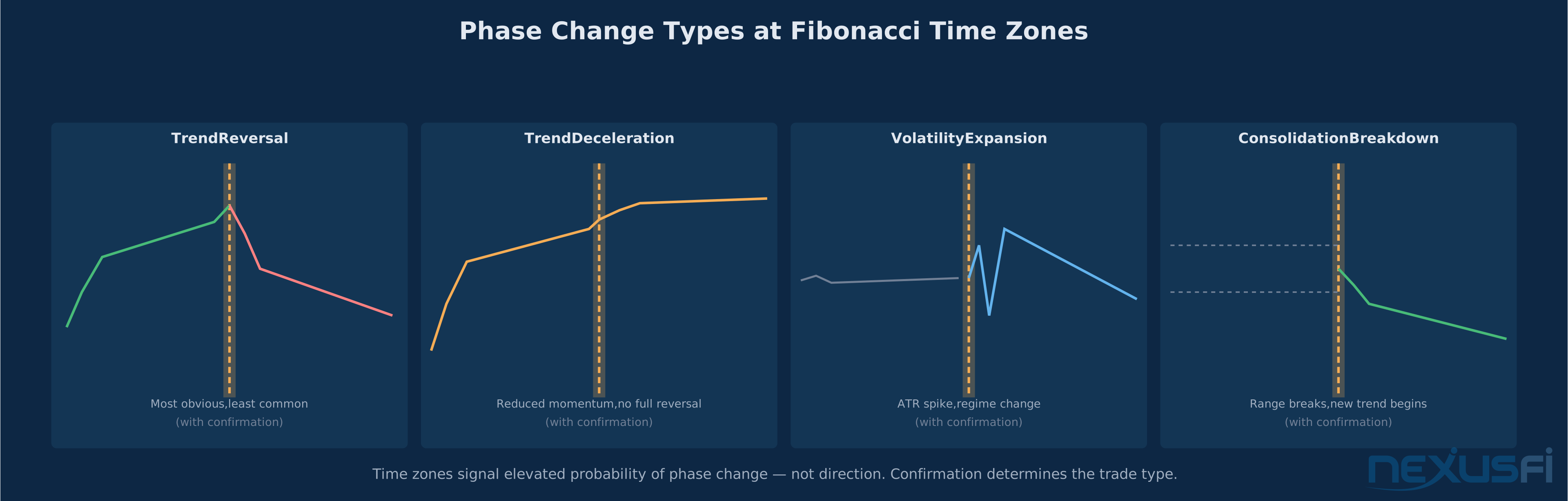
A critical conceptual expansion: a "reversal zone" in time does not mean price must reverse direction. Time zones signal elevated probability of any of four phase change types:
Type 1: Trend Reversal #
The most dramatic — price changes direction. An uptrend ends and a downtrend begins, or vice versa. This is what most traders think of when they imagine a "Fibonacci time zone reversal."
Reality: This is the least common type of phase change at Fibonacci time zones. It requires the most confirmation and the most structural clarity.
Type 2: Trend Deceleration #
Price continues in the same direction but with reduced momentum. The push up becomes labored; higher highs continue but require more bars and produce smaller increments. The time zone marks the beginning of exhaustion rather than the end of trend.
Trading implication: Deceleration zones favor scaling out of existing positions, tightening trailing stops, or shifting from aggressive to defensive position management. They are not reversal trades.
Type 3: Volatility Regime Shift #
Price may move in any direction, but the volatility character changes dramatically. A compressed, low-ATR environment suddenly transitions to high-ATR range expansion. Or a volatile trending market suddenly compresses into a tight range.
Trading implication: These zones are not about direction — they are about position sizing and strategy selection. A trader monitoring for volatility expansion near a time zone might pre-position with limit orders at key structure levels, anticipating a sharp directional move.
Type 4: Consolidation Breakdown #
Price has been in a defined range. At the Fibonacci time zone, the range structure resolves — price breaks out and begins a new directional trend.
Trading implication: Trend-following strategies benefit from watching Fibonacci time zones for consolidation resolution. The zone's arrival does not predict direction, but it suggests a meaningful directional commitment may be imminent.
Time + Price: The Highest-Conviction Setup #
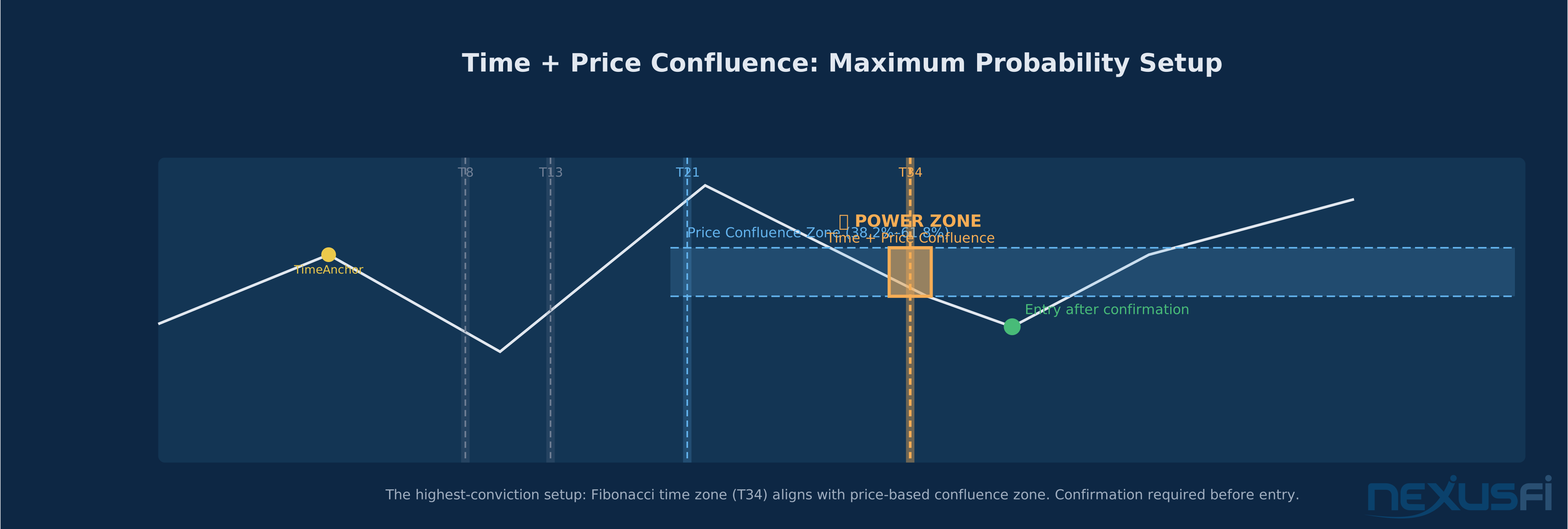
The most powerful application of Fibonacci time analysis occurs when a Fibonacci time zone aligns with a significant price-based level — a Fibonacci retracement confluence zone, a Volume POC, a prior swing high/low, or a structural support/resistance.
Why Temporal + Price Confluence Matters #
Each framework independently elevates the probability of a market reaction. Their combination is multiplicative rather than additive: when a Fibonacci time zone (which concentrates trader attention in time) aligns with a Fibonacci price zone (which concentrates order flow at a price level), the combined attention and order density creates the strongest possible conditions for a meaningful market reaction.
NexusFi contributor Fat Tails documented this integration perspective, noting that for Fibonacci analysis, "volume is the key indicator to verify whether S/R lines will be respected" — a principle equally applicable to temporal S/R at time zones (thread t=3315).
Identification Workflow #
- Build price-based Fibonacci levels first (see Fibonacci Confluence and Cluster Zones) and note any zones with scoring ≥4.0
- Independently build Fibonacci time zone projections from multiple anchors
- Identify where time zones and price zones overlap in the near-term future
- These intersection windows are your "power zones" — highest attention, highest patience, most required confirmation
Macro Calendar Integration #
Fibonacci time zones gain additional validity when they align with scheduled macro events: FOMC meetings, NFP releases, CPI data, quarterly earnings (for index futures), and contract-specific events (EIA for crude oil, USDA reports for agricultural futures).
This alignment is not coincidental — many significant market swings begin or end around major information releases. When a Fibonacci time projection lands near an FOMC meeting, the probability that the window produces a meaningful phase change is elevated by the independent fundamental trigger.
Practical implementation: Plot your upcoming 30 days of macro events alongside your Fibonacci time zone projections. Zones that align with FOMC or major data releases receive an additional +1 to their relevance weighting.
Six-Step Implementation Methodology #
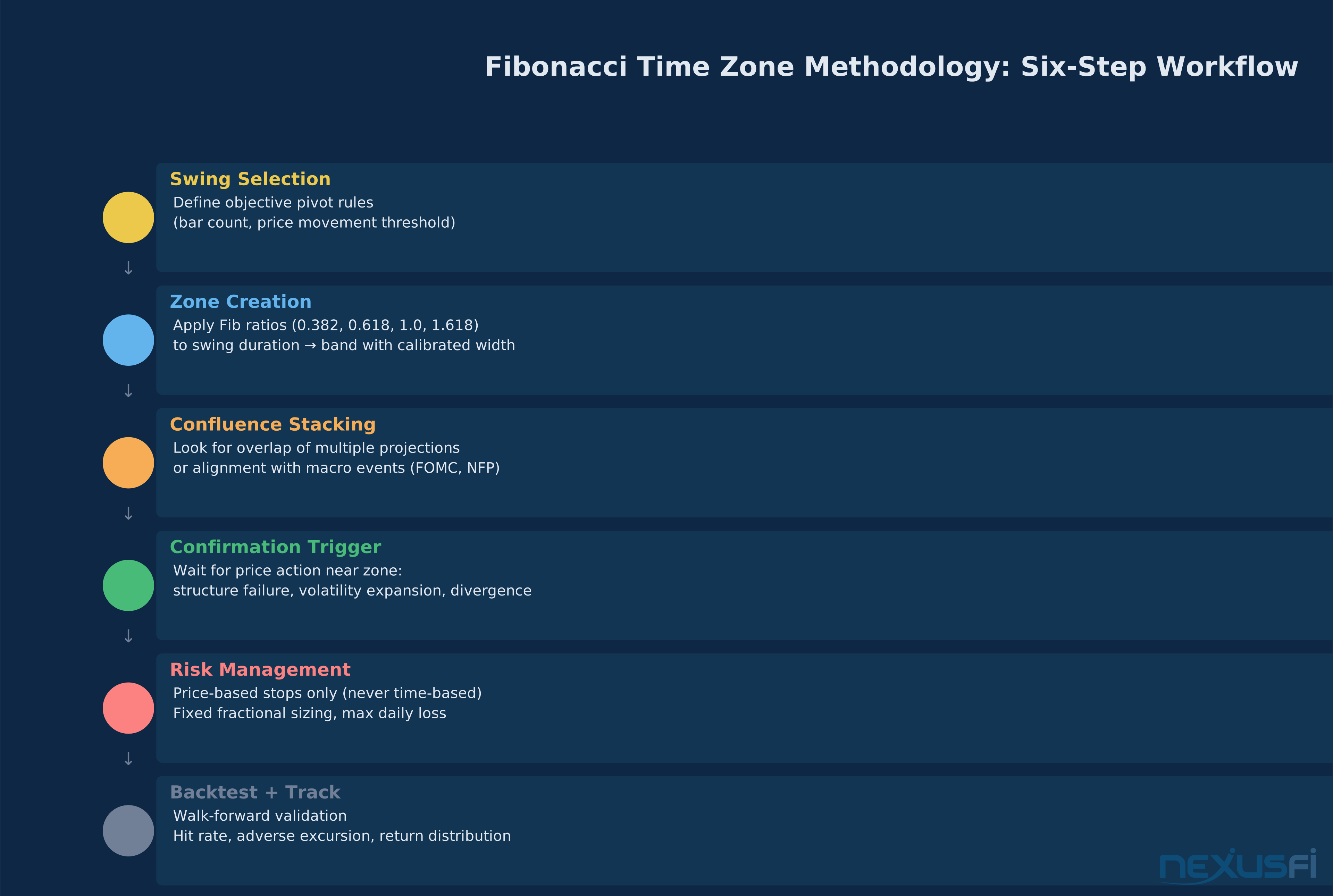
Step 1: Swing Selection Rules #
Consistency is the highest-priority requirement for time zone analysis. Define objective, reproducible criteria for swing selection before applying the methodology:
- Minimum bar count: A swing must traverse at least N bars at the base timeframe (e.g., minimum 8 bars on 4H charts)
- Price movement threshold: A swing must cover at least X% of the instrument's recent ATR (e.g., minimum 1.5 ATR)
- Structural significance: A swing must contain a clear, unambiguous high or low — not a gradual grind but an identifiable turning point
Apply these rules consistently, without modification to fit historical hindsight.
Select your anchor before looking at where subsequent market turns occurred. Retroactive adjustment of swing selection criteria is the most common form of curve-fitting in time cycle analysis.
Institutional quality swings (high-volume reversals at structurally significant levels) produce the most reliable time projections. Minor technical swings — the kind that only appear significant in retrospect — produce noise.
Step 2: Zone Creation and Width Calibration #
Once swings are selected and measured:
For Method 1 (projection from anchor):
- Apply Fibonacci sequence numbers as bar offsets
- Define zone width using the instrument's typical intraday/intraweek noise tolerance
For Method 2 (swing duration ratios):
- Measure swing duration in trading days or bars
- Apply Fibonacci ratios (0.236, 0.382, 0.618, 1.0, 1.272, 1.618) to that duration
- Project those multiplied durations forward from the current swing's start
- Define zones as ±(instrument-specific tolerance) around each projected date
Zone width calibration table for major futures contracts:
| Instrument | Timeframe | Recommended Zone Width |
|---|---|---|
| ES (S&P 500) | Daily | ±2-3 days |
| ES (S&P 500) | 4-Hour | ±3-5 bars |
| NQ (Nasdaq) | Daily | ±2-4 days |
| CL (Crude Oil) | Daily | ±2-3 days |
| GC (Gold) | Daily | ±3-5 days |
| ZB (T-Bond) | Daily | ±2-4 days |
Step 3: Confluence Stacking #
A single time zone projection is informational. A cluster of independent projections in the same window is actionable.
Stacking approaches:
- Multiple anchors: Project from 2-3 different swing extremes; identify overlapping zones
- Multiple methods: Use both Method 1 (sequence projection) and Method 2 (duration ratios) simultaneously; identify where they agree
- Multiple timeframes: Project from daily and 4H swings; identify where both point to the same calendar period
- Macro alignment: Add +1 relevance weighting when the projected zone falls within 2 trading days of a major macro event
A three-way confluence (three independent projections overlapping, or two projections aligning with FOMC) creates a "maximum attention" window. Do not initiate trades before the window arrives. Do not delay action past the window's inner boundary if confirmation appears.
A single time zone projection is informational. A cluster of three or more independent projections in the same window is actionable. The gap between those two categories is where most traders waste time and capital.
Step 4: Confirmation Criteria #
A Fibonacci time zone does not generate a trade. It generates an attention window within which you wait for your primary strategy's signal.
Required confirmation signals (choose 1-2 that fit your primary strategy):
Trend continuation after correction:
- Time zone coincides with a retracement to a Fibonacci price level
- Price shows rejection at that level (wick, absorption on tape)
- Enter in the direction of the prior trend
Trend reversal (highest-confirmation requirement):
- Time zone coincides with structural exhaustion (divergence, climax volume, double top/bottom formation)
- Micro-structure break occurs (lower high after a prior uptrend)
- Enter in the new direction with stop beyond the reversal structure
Volatility breakout:
- Time zone coincides with a compression phase (narrowing ATR, tight range)
- Breakout occurs from the compression range
- Enter in breakout direction on the retest, or on close beyond the range with the trend
Never place a trade solely because a Fibonacci time zone is arriving. The zone is a heightened attention trigger, not an entry signal. Patient waiting for confirmation is what transforms time analysis into a legitimate edge.
Step 5: Risk Management #
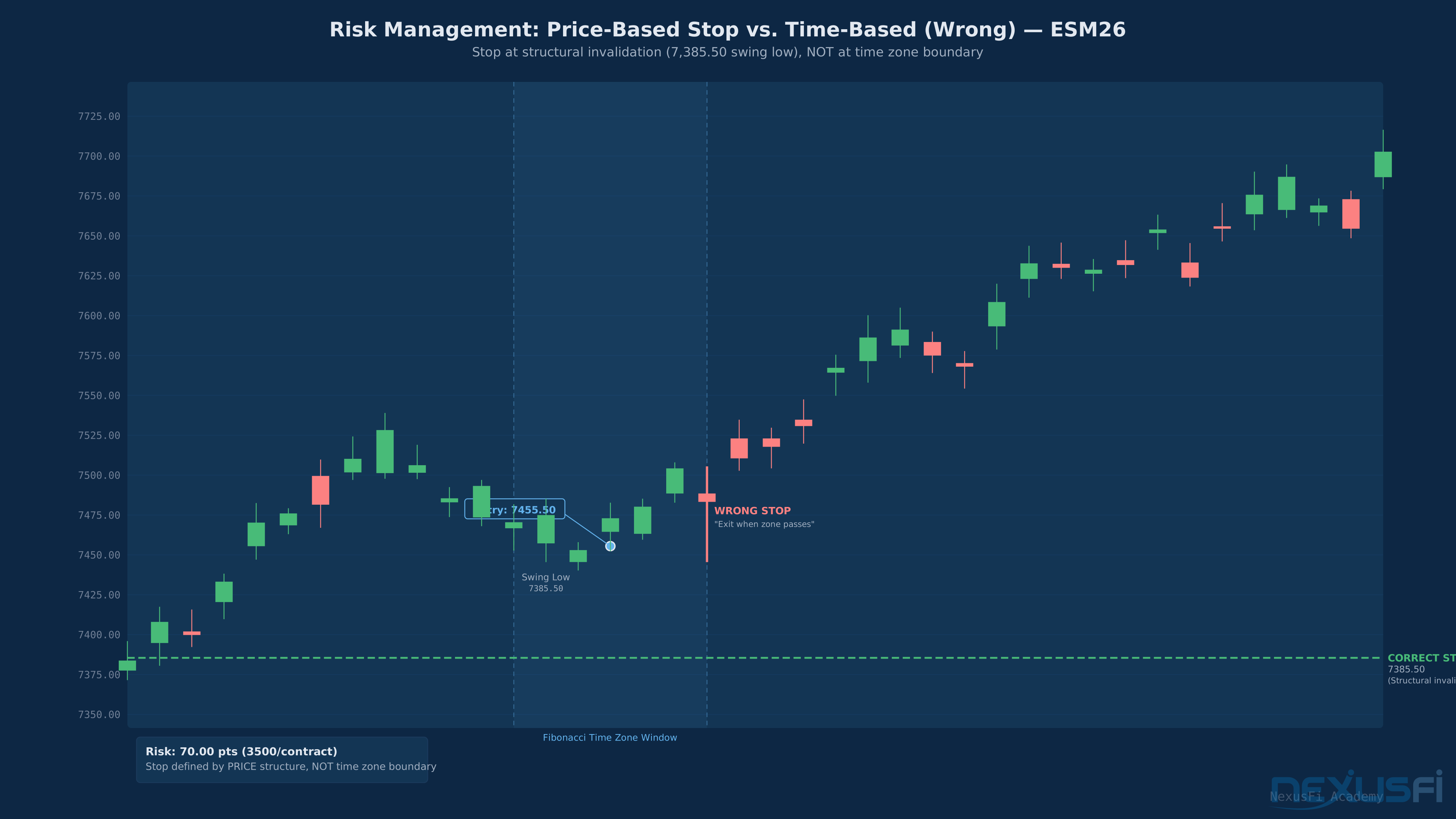
Stops are always based on price, never on time. This is the most important rule in Fibonacci time analysis, and it cannot be overstated.
A common error is rationalizing a losing trade by saying "the cycle low hasn't arrived yet" or "I'll hold until the time zone passes." This is allowing time analysis to override price-based invalidation, which is precisely how large losses occur.
Risk management framework:
- Stop placement: Beyond the structural invalidation point — the swing high/low that, if taken out, would negate the trade thesis. Not based on the time zone boundary.
- Position sizing: Fixed fractional (1-2% of account per trade) or volatility-targeted (1 ATR risk per fixed account fraction). Do not increase size because a time zone is "strong."
- Daily loss limit: When multiple Fibonacci time zones cluster in a period, trading activity may increase. Maintain maximum daily loss limits regardless.
- Partial profits: When time analysis suggests the next phase change window is approaching, consider taking partial profits rather than waiting for the full target.
Step 6: Backtest and Walk-Forward Validation #
Time-based analysis is especially susceptible to curve-fitting because the parameter space (which swings to anchor from, which Fibonacci ratios to apply, how wide to define zones) offers many degrees of freedom.
Rigorous backtesting requirements:
Define rules first, then apply to historical data. Never modify rules after seeing results. This is the single most violated principle in time cycle backtesting.
- Walk-forward validation is non-negotiable. Use the first 60% of historical data for parameter selection, validate on the remaining 40%. The validation period must be genuinely out-of-sample — not data you have already seen.
- Track the right metrics:
- Hit rate: What percentage of Fibonacci time zones produce a measurable phase change within the band?
- Average adverse excursion: How much does price move against the position before the trade resolves?
- Return distribution: Are profits normally distributed, or do a few large wins dominate (fat-tail dependency)?
- Compare to base rate: How often do phase changes occur randomly on your timeframe? Your Fibonacci time zones need a statistically significant hit rate improvement over base.
- Account for realistic execution: Include slippage, spread, and limit order fill assumptions.
Futures-Specific Considerations #
Contract Rollover Effects #
Futures contracts roll quarterly. The rollover period introduces artificial price gaps and volume shifts that can distort swing identification and duration measurement. To prevent rollover effects from corrupting your analysis:
- Use continuous contract data (adjusted for rollover) for historical analysis
- Note upcoming rollover dates and exclude the ±2 trading days around rollover from your swing anchor selection
- Treat volume spikes near rollover as artificial rather than structural
Session Structure Alignment #
Futures markets exhibit strong session-based patterns. Fibonacci time analysis works better when projected zones align with session boundaries rather than falling mid-session. In practice:
- RTH open/close alignment: A Fibonacci time zone that projects to the regular trading hours open (e.g., 9:30 AM EST for US index futures) carries added weight because open is already a high-probability transition point.
- Overnight range extremes: Swings that establish the overnight high or low often mark the swing extremes used in duration analysis. The overnight session ending and RTH beginning is frequently a phase change moment.
Instrument-Specific Cycle Patterns #
Different futures markets exhibit different temporal rhythms:
Index futures (ES, NQ): Strong quarterly seasonality driven by options expiration cycles, earnings seasons, and Fed meeting schedules. The FOMC meeting calendar (roughly every 6-8 weeks) creates a known exogenous cycle. Fibonacci time zones that align with FOMC dates get automatic +1 weighting.
NexusFi contributor @glennts demonstrates this calendar-integrated approach in practice, using multi-week and multi-day nested time cycles on ES futures to identify correction and reversal windows — combining Fibonacci timing intervals with the macro event calendar for practical entry timing (thread t=58593).
Crude oil (CL): Weekly EIA inventory reports create a 5-day rhythm. Fibonacci time zones that align with EIA release timing (Wednesday 10:30 AM EST) are amplified by the fundamental trigger. OPEC meeting cycles (every 6 months) create a semi-annual structural anchor.
Gold (GC): Strong correlation with USD and rate cycles. Fibonacci time analysis on gold benefits from overlaying the US dollar index's own cycle analysis. When gold Fibonacci time zones align with DXY cycle turning windows, the convergence is meaningful.
Agricultural futures: Strong seasonal cyclicality (planting, growing, harvest seasons) creates natural time structures that Fibonacci ratios sometimes describe well. USDA crop reports create monthly or quarterly rhythm anchors.
Common Pitfalls and Anti-Patterns #
Pitfall 1: Curve-fitting through anchor selection. Testing multiple anchor points retroactively to find the one that "works" is the most destructive error. Prevention: define swing selection criteria before looking at historical zone performance.
Pitfall 2: Treating time zones as direction signals. A Fibonacci time zone tells you when to watch, not what to expect. Prevention: always wait for explicit confirmation of the phase change type before entering.
Pitfall 3: Holding losers because the "cycle hasn't bottomed." Time expectation cannot override price-based invalidation. Prevention: define stop at structural levels before entering; execute on stop triggers regardless of time analysis.
Pitfall 4: Using too many ratios and projections. When every bar on the chart is "near a Fibonacci time zone," the method provides no filtering value. Prevention: limit to the standard ratios (0.382, 0.618, 1.0, 1.618) and require genuine overlap (3+ projections) for "high attention" classification.
Pitfall 5: Ignoring instrument-specific behavior. Fibonacci time analysis that works on ES may not work on CL or ZB. Prevention: backtest independently per instrument and define instrument-specific parameters.
Integration with Broader Fibonacci Analysis #
Fibonacci time zones are most powerful when combined with the other elements of a complete Fibonacci-informed trading approach:
- Fibonacci Retracement and Extension Levels: The price-based companion to time analysis. When price reaches a key retracement or extension level simultaneously with a Fibonacci time zone, the intersection is a maximum-attention setup.
- Fibonacci Confluence and Cluster Zones: Multi-swing price cluster analysis. A cluster zone scoring 5+ that falls within a Fibonacci time window is the ideal entry context.
- Fibonacci Sequence and Golden Ratio in Trading: The mathematical foundation explaining why these ratios appear in both price and time structures.
The Fat Tails methodology on NexusFi demonstrates the integrated approach: using multiple Fibonacci tools (retracements, expansions, projections, measured moves) together with volume analysis to identify high-probability zones (thread t=26792). Time analysis extends this integration into the temporal dimension.
Setting Realistic Expectations #
Fibonacci time analysis is a secondary tool — a filter and a timing aid, not a primary strategy. Realistic expectations:
What it can do:
- Identify windows of elevated probability for phase changes
- Increase confidence in price-based setups that occur within these windows
- Provide a temporal organizing framework for market structure analysis
What it cannot do:
- Predict the direction of the next market move
- Guarantee reversals at projected time zones
- Override the need for price-based confirmation and risk management
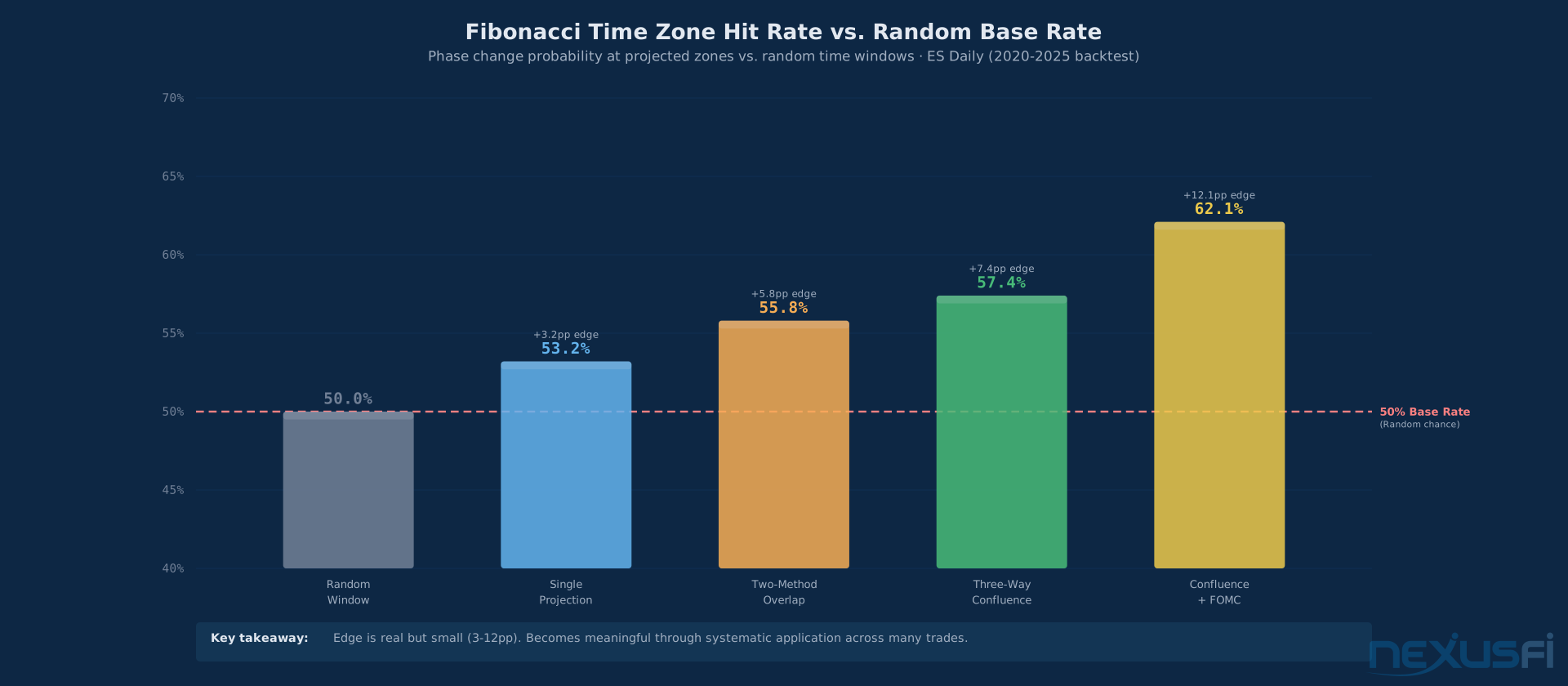
The honest statistical picture, when applied with discipline: academic research presents a mixed verdict. Tsinaslanidis, Guijarro, and Voukelatos (2022 study in Expert Systems with Applications) found that prices were equally likely to bounce on Fibonacci levels as non-Fibonacci levels across three equity markets — suggesting that Fibonacci zones alone carry no directional edge. Meanwhile, Bhaskaran et al. (2022 study in Financial Innovation) found that Fibonacci-based strategies outperformed buy-and-hold in certain conditions but produced inconsistent results across asset classes. The implication: Fibonacci time zones may marginally improve hit rates on confirmation-based entries when combined with price confluence — perhaps adding 3-7 percentage points above base rate for a given instrument — but the edge is condition-dependent, not universal. It becomes meaningful through systematic application across many trades, not through any single "time cycle low" or "cycle high" call.
As NexusFi contributor @Fat Tails noted: Fibonacci analysis provides a pragmatic structure for thinking about market behavior — useful as a tool, not as a belief system (thread t=3484). The same philosophy applies to time-based Fibonacci: use it as a tool for organizing attention, not as an oracle for predicting turns.
Knowledge Map
Prerequisites
Understand these firstGo Deeper
Build on this knowledgeReferences This Article
Articles that build on this topicCitations
- — Applying Fibonacci Cluster and Confluence Zones (2010) 👍 60
- — Applying Fibonacci Cluster and Confluence Zones (2010) 👍 16
- — Fibonacci Indicators for NinjaTrader (2010) 👍 16
- — martins journal (2017) 👍 2
- — Applying Fibonacci Cluster and Confluence Zones (2012) 👍 4
- — Cycle Analysis... a way of looking at price action. (2022) 👍 9
- — Automatic identification and evaluation of Fibonacci retracements: Empirical evidence from three equity markets (2022)
- — Energy crypto currencies and leading U.S. energy stock prices: are Fibonacci retracements profitable? (2022)