



High Volume Nodes & Low Volume Nodes
Volume peaks and valleys in the distribution — where price sticks and where it flies
Overview #
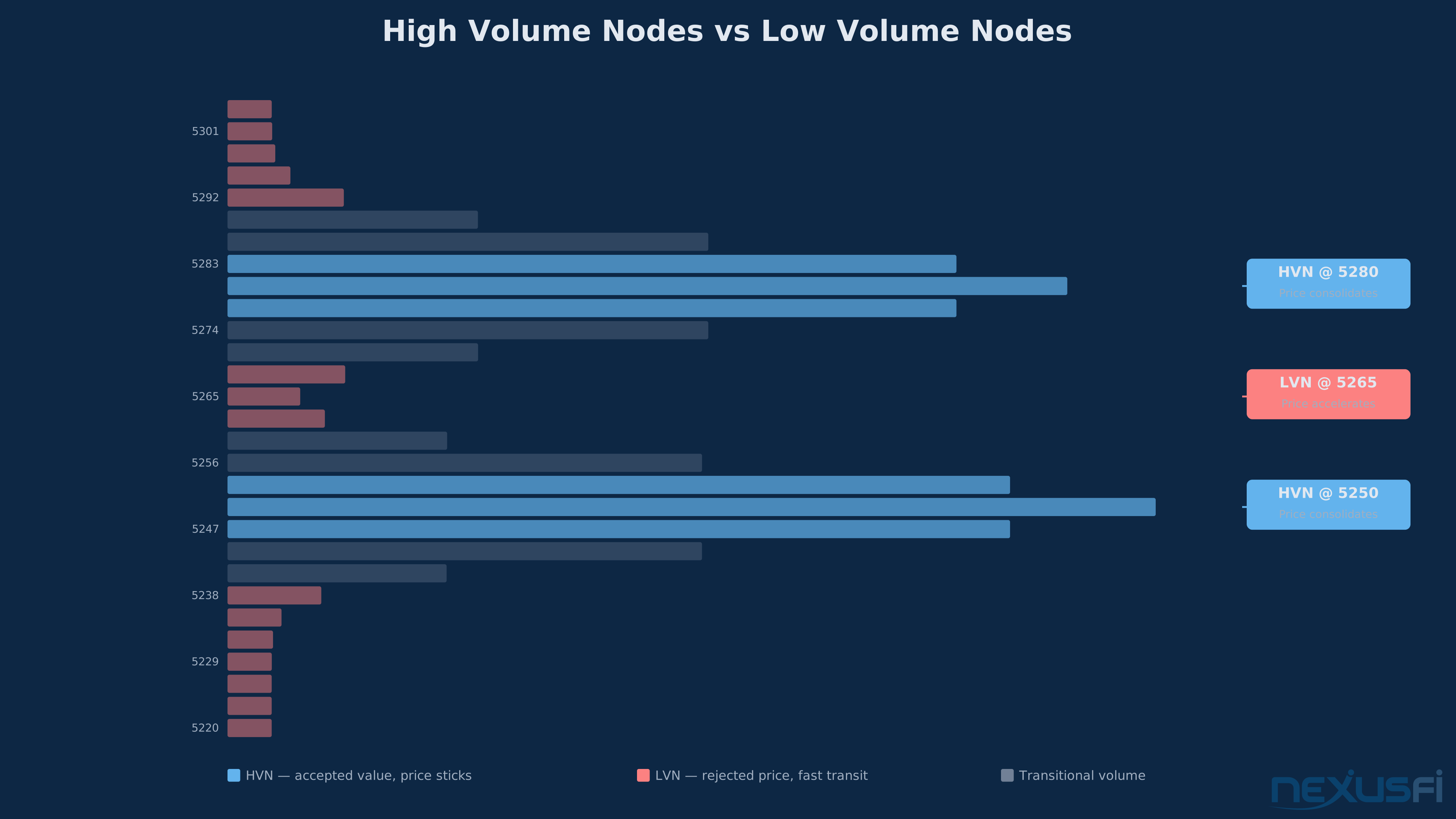
HVNs and LVNs are the peaks and valleys in a Volume Profile distribution. Where volume piled up, you have a High Volume Node — the market found acceptance there, traded back and forth, built inventory. Where volume is thin, you have a Low Volume Node — the market rejected that price and moved through it fast.
These aren't abstract concepts. They're the structural skeleton of every profile you build. Understanding how price behaves differently at nodes versus valleys is what turns a Volume Profile from a pretty histogram into a trading tool.
This article is a deep dive into node mechanics, behavior, and trading applications. For how HVNs and LVNs fit into the broader Volume Profile methodology — trade setups, decision trees, and the balance/imbalance framework — see Volume Profile Trading.
What Nodes Are #
A Volume Profile plots traded volume at each price level. That distribution isn't uniform — it clusters at some prices and thins out at others. The clusters are HVNs. The thin spots between them are LVNs.
HVN (High Volume Node): A contiguous group of price bins where volume is much higher than surrounding bins. Appears as a bulge or peak in the profile histogram. Represents a price zone where two-sided trade occurred — buyers and sellers found agreement.
LVN (Low Volume Node): A contiguous group of price bins where volume is much lower than surrounding bins. Appears as a trough or valley between peaks. Represents a price zone the market moved through quickly without finding acceptance.
How Nodes Form #
HVNs form when:
- Price rotates at similar levels, building volume through repeated passes
- Buyers and sellers find equilibrium — two-sided trade dominates
- Post-trend consolidation creates acceptance at new value
- The market spends time in a range, accumulating participation
LVNs form when:
- One side dominates and price moves through fast
- Breakout from balance leaves thin volume behind
- News or trigger drives directional expansion without rotation
- Overnight gaps skip price levels entirely
Identifying Quality Nodes #
Not every bump in the histogram is a tradeable HVN, and not every dip is a meaningful LVN. Quality matters.
A valid HVN should span at least 3-5 contiguous price levels with elevated volume — a clear plateau, not a single-bin spike. A valid LVN should show a clean trough between adjacent peaks, spanning at least 1-3 price levels of genuinely thin participation.
For a practical threshold: bins in the top 20-25% of the local profile by volume qualify as HVN territory. Bins in the bottom 20-25% qualify as LVN territory. Some traders use a standard deviation approach — HVN if volume exceeds the local mean by 1.0 sigma, LVN if it falls below by 0.8 sigma. Either method works. Pick one, stay consistent.
Single-bin anomalies are noise. A random volume spike at one price level doesn't create structure the market respects. Look for clusters.
HVN Behavior: The Magnet Effect #
At HVNs, price slows down. It rotates. It consolidates. The prior two-sided acceptance creates a zone where resting liquidity concentrates, spreads tighten, and the market finds it comfortable to do business.
That "bell curve" framing is the key insight. An HVN isn't a single price level — it's a zone. Price entering an HVN tends to get trapped in rotation between the edges. The edges of the node offer trading opportunities. The middle is chop.
Why the magnet effect works:
- Prior participants established positions at these prices. They defend them.
- Resting limit orders cluster where volume previously traded.
- Mean-reversion traders target HVNs as "fair value" anchors.
- The market finds two-sided participation easily, so it stays.
Observable behavior at HVNs:
- Time-at-price increases — price sticks
- Delta oscillates near zero (balanced buying and selling)
- Multiple tests of the node edges before any breakout
- Tighter bid-ask spreads as liquidity concentrates
LVN Behavior: The Transition Zone #
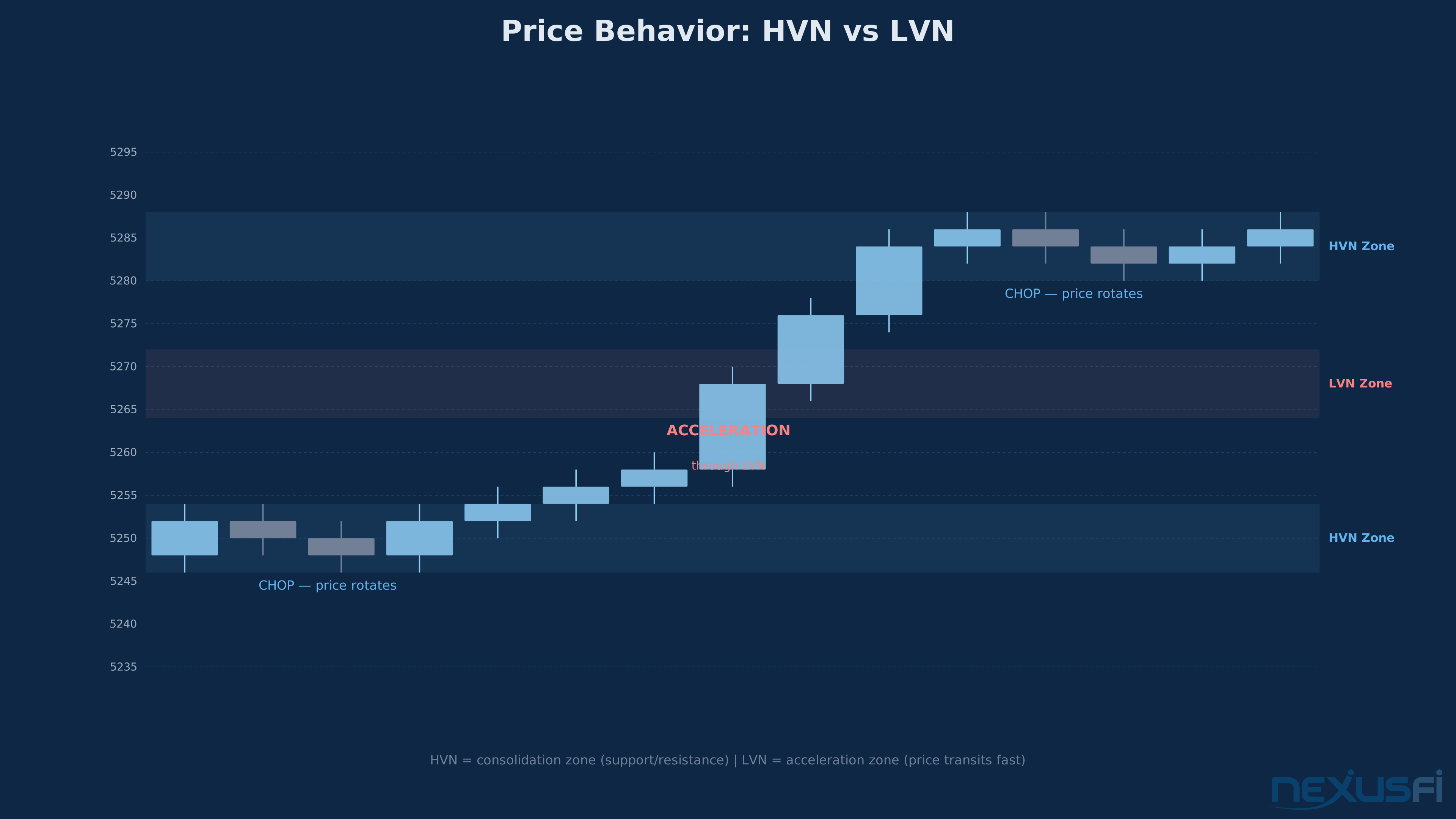
At LVNs, price accelerates. The thin volume represents a price zone the market previously rejected — nobody wanted to do business there. When price returns, it finds a liquidity vacuum and moves fast.
That distinction between "stopping activity" versus "attracting activity" captures the core difference. LVNs stop and deflect. HVNs attract and absorb.
[4] Those are the only two outcomes. Rejection or transit. No rotation, no extended consolidation — that's HVN behavior.
Why price accelerates through LVNs:
- Few resting orders at those prices. Less friction.
- Prior rejection means participants aren't anchored there.
- The vacuum effect — price finds no resistance and travels fast to the next zone of acceptance.
- Aggressive orders face less absorption.
Observable behavior at LVNs:
- Low time-at-price — price passes through quickly
- Directional delta (one-sided flow dominates)
- Wider bid-ask spreads
- Potential for single-print zones (price never revisits)
The First-Touch Effect #
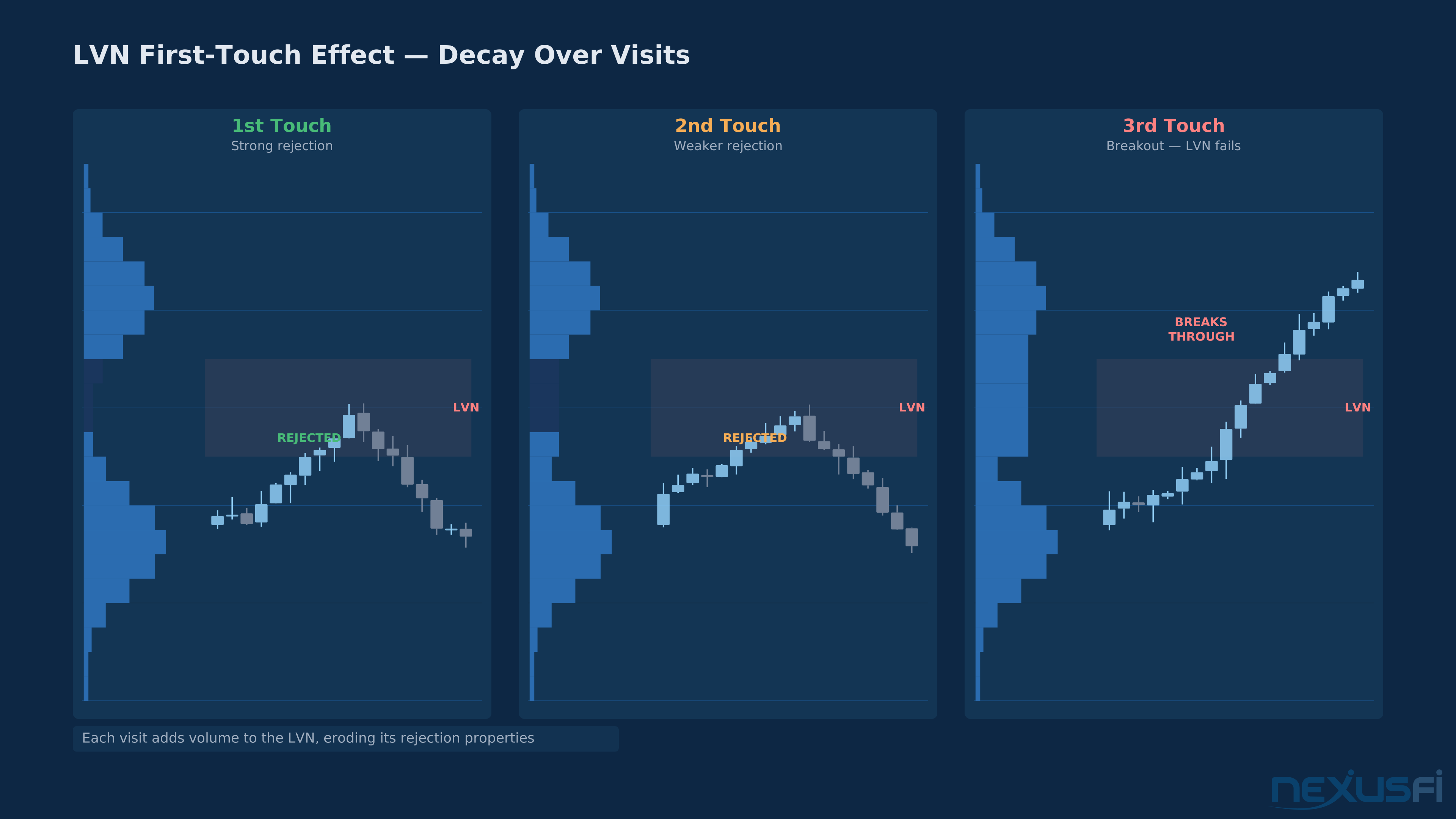
This is one of volume profile's most actionable observations: LVNs act as support/resistance on the first retest, but that effect decays rapidly on subsequent visits.
@cory's rule is explicit — HVNs serve as support and resistance "the first time touched only." [3] The mechanism is straightforward: the initial low-volume trough represents an area of poor acceptance. On first return, the market often respects that boundary. But each visit adds new volume to the trough, gradually filling it in and eroding the structural emptiness that made it meaningful.
The decay hierarchy:
- First touch: Highest rejection probability. The LVN is fresh, the gap is unfilled, and traders expect the boundary to hold.
- Second touch: Materially weaker. New volume has started filling the trough. The "air pocket" is less empty.
- Third touch and beyond: Often fails. The LVN has accumulated enough volume to lose its rejection properties. It's transitioning toward acceptance.
Trading implication: Fade the first touch of a fresh LVN with tight stops. Be skeptical of fading subsequent touches — the structural edge is decaying. If you're still fading the same LVN on the third test, you're trading a level that no longer exists in any meaningful sense.
Trading with Nodes #
At HVNs: Rotation and Fade #
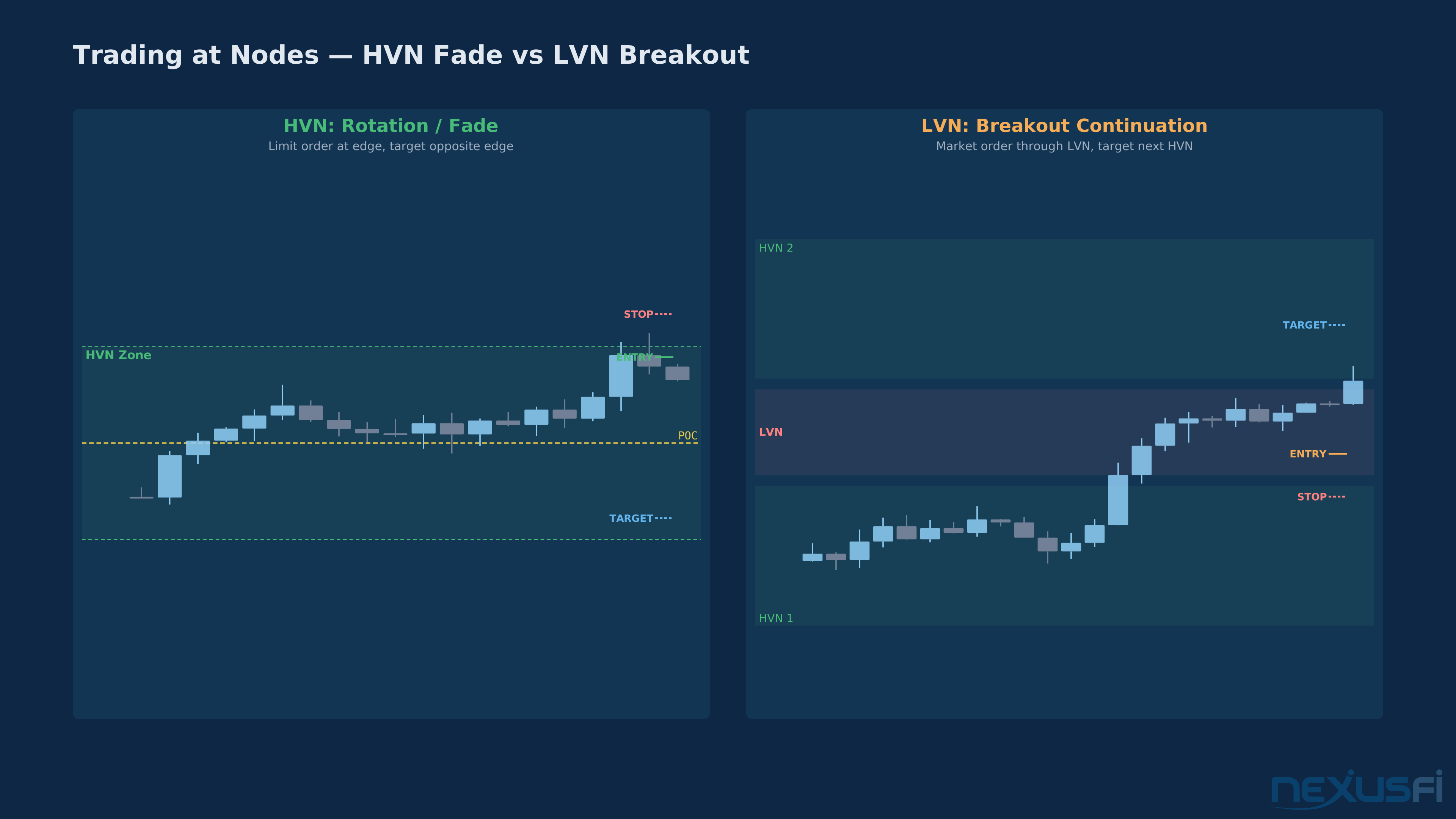
HVNs reward patient, limit-order traders. The node creates a rotation zone — price enters, bounces between edges, and mean-reverts toward the center.
Entry: Limit orders at the HVN edge. Wait for price to reach the upper or lower boundary of the node, then fade back toward the opposite edge or POC. Don't chase entries inside the node — as @Private Banker warns, originating trades in the middle of an HVN puts you in the zone where price is random. [2]
Stop: Beyond the structural edge of the node. If price accepts beyond the HVN boundary with volume building at the new level, your rotation thesis is wrong.
Target: The opposite edge of the HVN, the POC, or an adjacent LVN boundary. In balanced conditions, the POC acts as a natural magnet from either edge.
Order type: Limit orders. HVNs are about patience and absorption. Market orders in the middle of a rotation zone give you the worst possible fill in a zone where direction is random.
At LVNs: Breakout and First-Touch Fade #
LVNs reward two distinct approaches depending on context.
Breakout continuation: When price breaks through an LVN with directional conviction (sustained delta, displacement candles), the expectation is fast travel to the next HVN. Enter with market orders or aggressive limits — waiting for a perfect fill in a fast-transit zone means missing the move. Stop just beyond the LVN edge you entered through. Target the next HVN.
First-touch fade: When price approaches a fresh LVN for the first time, fade the test with tight stops beyond the far side of the trough. Target a return to the prior HVN. This setup has the best risk/reward profile of any node trade — tight stop, clear target, and the first-touch effect working in your favor.
Order type: Market orders for breakout continuation (speed matters). Limit orders for first-touch fades (precision matters).
[5] The advantage over traditional S/R is structural — nodes are defined by actual volume participation, not arbitrary lines drawn on a chart.
Node Lifecycle #
Nodes aren't permanent. They evolve as the market reprices.
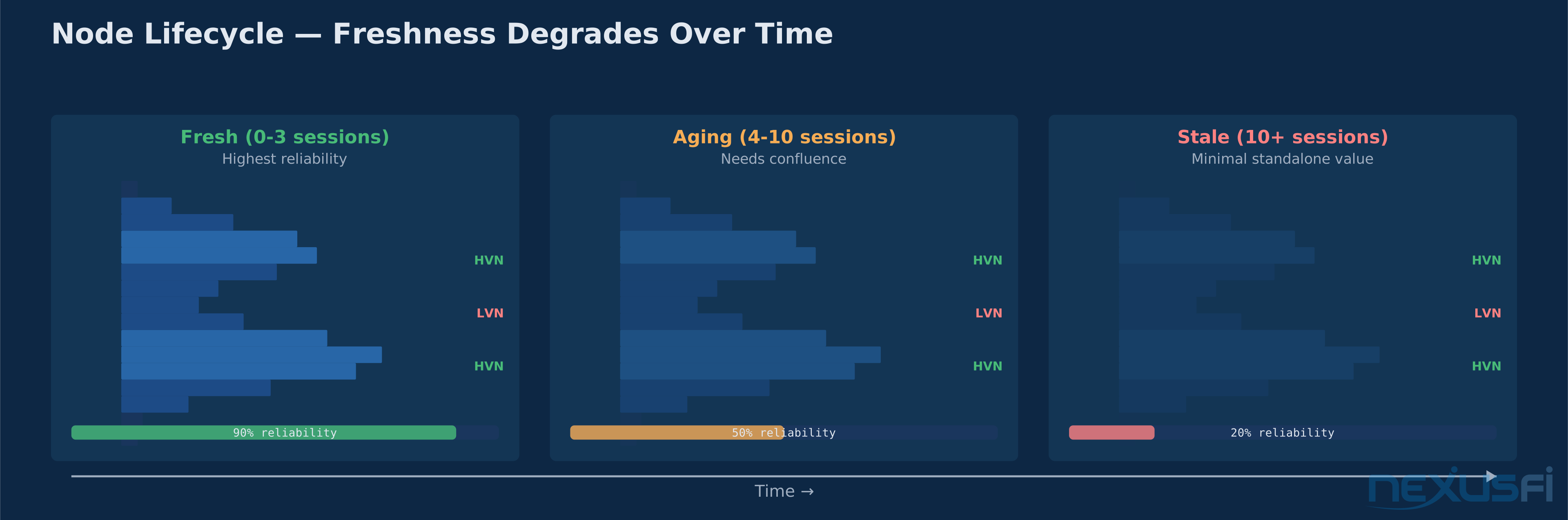
Fresh nodes (0-3 sessions old): Highest reliability. The market retains recent memory of these price levels. HVNs pull price strongly. LVNs reject cleanly. This is when node-based trading works best.
Aging nodes (4-10 sessions old): Degrading influence. Still relevant if price hasn't revisited, but require additional confluence (VWAP alignment, composite structure, order flow confirmation) to trade confidently.
Stale nodes (10+ sessions old): Minimal standalone value. The market has moved on. Exception: major composite HVNs from monthly or quarterly profiles can retain significance for weeks or months because they represent deep structural acceptance.
LVN fill-in: Every time price trades through an LVN, it adds volume to the trough. After 2-3 meaningful visits, most LVNs lose their rejection character entirely. The gap fills in, acceptance builds, and the former LVN becomes an ordinary zone — or even a minor HVN.
HVN migration: Old HVNs don't move. They become irrelevant as the market forms new acceptance zones elsewhere. In a trending market, old HVNs get left behind while new HVNs form at each consolidation. In a bracketing market, HVNs at range extremes strengthen with repeated tests.
Multi-Timeframe Hierarchy #
Not all nodes carry equal weight. Higher-timeframe nodes dominate lower-timeframe nodes.
The hierarchy:
- Composite nodes (multi-day, 3-5 sessions): Primary structural framework. These represent broad consensus across multiple sessions and participant types.
- Prior-session nodes: Reference points for today's trade location.
- Current-session nodes: Tactical execution levels. Useful for day trading but ephemeral.
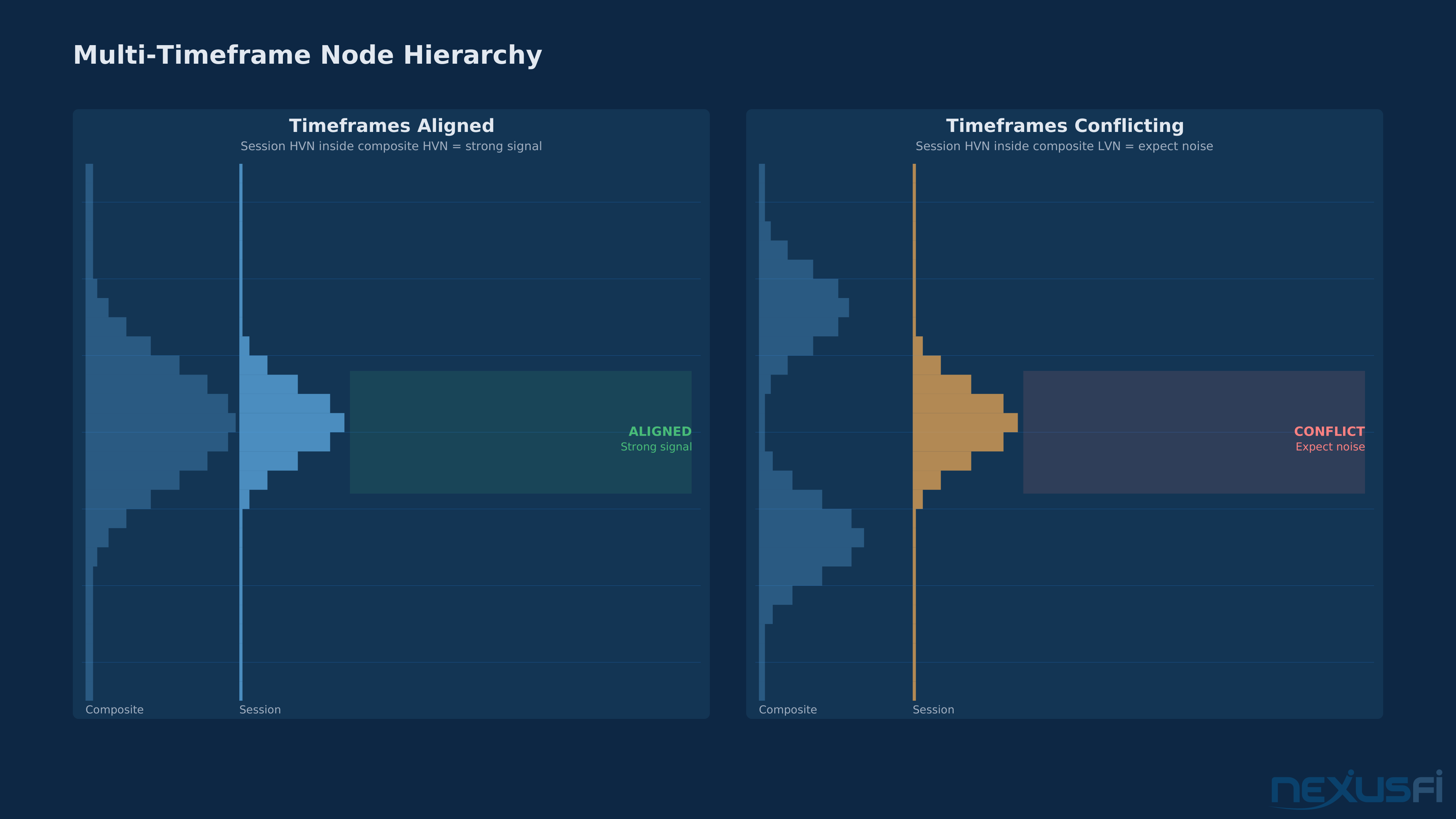
The strongest signal: When multiple timeframes align. A session HVN forming within a composite HVN amplifies the magnetic effect. A session LVN inside a composite LVN creates a clean transit corridor.
When timeframes conflict: Expect noise. A session HVN inside a composite LVN might create a temporary pause, but the higher-timeframe rejection often wins. A session LVN inside a composite HVN might produce a quick intraday move, but the broader acceptance zone typically caps the excursion.
@MWinfrey references @FuturesTrader71's framework: "Low volume nodes test, reject, and move while high volume nodes are an indication of indecision by a lot of traders." [6] That behavioral distinction holds across timeframes — but composite nodes carry more conviction than intraday nodes because they represent deeper agreement.
Practical rule: Trade with the higher-timeframe structure. Use intraday nodes for entry timing within composite context. Don't fade a composite LVN just because a session HVN formed there.
When Nodes Fail #
Nodes are probabilistic, not deterministic. They fail in specific conditions.
HVN magnet effect fails when:
- Strong trigger hits (FOMC, CPI, NFP, EIA inventory data). The information shock overwhelms any prior acceptance structure. A perfectly good HVN that held for three days gets blown through in 30 seconds on a surprise rate decision.
- Trend day with overwhelming initiative flow. On strong directional days, HVNs become stepping stones, not magnets — price pauses briefly, then continues.
- The node is stale. A 3-week-old HVN that hasn't been tested carries less structural weight than yesterday's.
LVN support/resistance fails when:
- The LVN has already been filled by prior visits. Check the volume — if the trough has been partially repaired, the rejection properties are weaker.
- Extreme momentum overrides the barrier. A strong breakout with 3x+ average volume and sustained directional delta can punch through any LVN.
- The LVN formed during thin liquidity (overnight, holiday) and doesn't reflect genuine structural rejection.
Regime sensitivity: Nodes work best in balanced, rotational markets where mean-reversion logic applies. In persistent trends, news-driven expansion, panic liquidation, or short-covering squeezes, node behavior degrades much. The profile still tells you the structure — but the market may not care about structure when it's repricing.
Integration with Other Tools #
Nodes are context, not signals. They tell you where the market has accepted and rejected price. Combining them with other tools tells you whether the market is currently accepting or rejecting.
Nodes + POC: The POC is the ultimate HVN — the single highest-volume price. POC + broader HVN confluence strengthens the mean-reversion thesis. Use the POC as your primary target from node-edge trades.
Nodes + Value Area: VAH and VAL often align with HVN edges. LVNs frequently exist just beyond the value boundaries — rejection corridors where price that leaves value either gets pulled back or accelerates into new territory.
Nodes + VWAP: VWAP near an HVN creates the strongest intraday mean-reversion reference. VWAP sitting in an LVN suggests an unstable equilibrium — expect quick resolution in one direction.
Nodes + Order Flow/Delta: This is the confirmation layer. At an HVN, look for balanced delta (absorption, rotation) to confirm the magnet effect. At an LVN, look for sustained directional delta to confirm breakout continuation. Profile shows where. Order flow shows whether the auction is accepting or rejecting. Together, they answer the only question that matters: is the market agreeing with this price, or leaving?
Instrument-Specific Notes #
ES: Cleanest rotational behavior at nodes. HVN mean-reversion works well in balanced conditions. Composite nodes especially important for multi-day context.
NQ: More prone to violent acceleration through LVNs. Trend days can be extreme. Be cautious fading LVN breakouts without clear rejection confirmation from order flow.
CL: Most event-driven of the three. LVNs can be powerful transition zones, but stale nodes fail quickly on inventory data or geopolitical catalysts. News timing matters more here than in index futures.
Component of Volume Profile Trading
Knowledge Map
Prerequisites
Understand these firstReferences This Article
Articles that build on this topicCitations
- — Learn volume profile guide (2018) 👍 8“Think about what a High Volume Node or Low Volume Node actually means.”
- — Volume Profile and Footprint discussion (2012) 👍 36“High volume nodes have a range that price will trade within and serve as support and resistance on each of its edges.”
- — My Experiments with Market Profile! (2010) 👍 12“Low volume numbers are support and resistance -- they stop activity.”
- — Zach's Log (2019) 👍 5“The move might lose momentum, pause and possibly revert to the Mean.”
- — Spoo-nalysis ES e-mini futures S&P 500 (2016) 👍 3“HVN's and LVN's make more sense than using support and resistance.”
- — Low Volume Areas (LVA) (2013) 👍 17“FuturesTrader71 said the low volume nodes test, reject, and move.”
- — Understanding Volume Profile: High Volume Nodes and Low Volume Nodes (2023)
- — Mind Over Markets: Power Trading with Market Generated Information (2003) (2003)