



Pyramiding in Futures Trading: Building Position Size Into a Winning Trade
Overview #
What Pyramiding Is #
Pyramiding is the practice of adding to a winning position as the trade moves in your favor. Instead of entering your full size at one price, you build the position incrementally — adding contracts at progressively better levels as the market confirms your thesis.
The logic is straightforward: if you're right about direction, why commit maximum capital at maximum uncertainty? Start smaller, let the market prove you right, then add size with the trend working for you. Your initial entry carries the most risk. Each subsequent add happens with a profit cushion already in place.
As one NexusFi community member who's traded this approach for years explained: "I really think that good pyramiding is the key to really make good money." ([CACFUTURE, NexusFi] [1]) That's not just enthusiasm — it's the mathematical reality that pyramiding, done correctly, creates asymmetric payoff profiles.
Why Pyramiding Works Mathematically #
The core advantage of pyramiding is that it creates positive skew in your trade distribution. Here's the math:
Without pyramiding: You enter 10 contracts at 5300. If ES moves to 5350, you make 50 points x 10 contracts = 500 points. If it reverses to 5285, you lose 15 points x 10 contracts = 150 points.
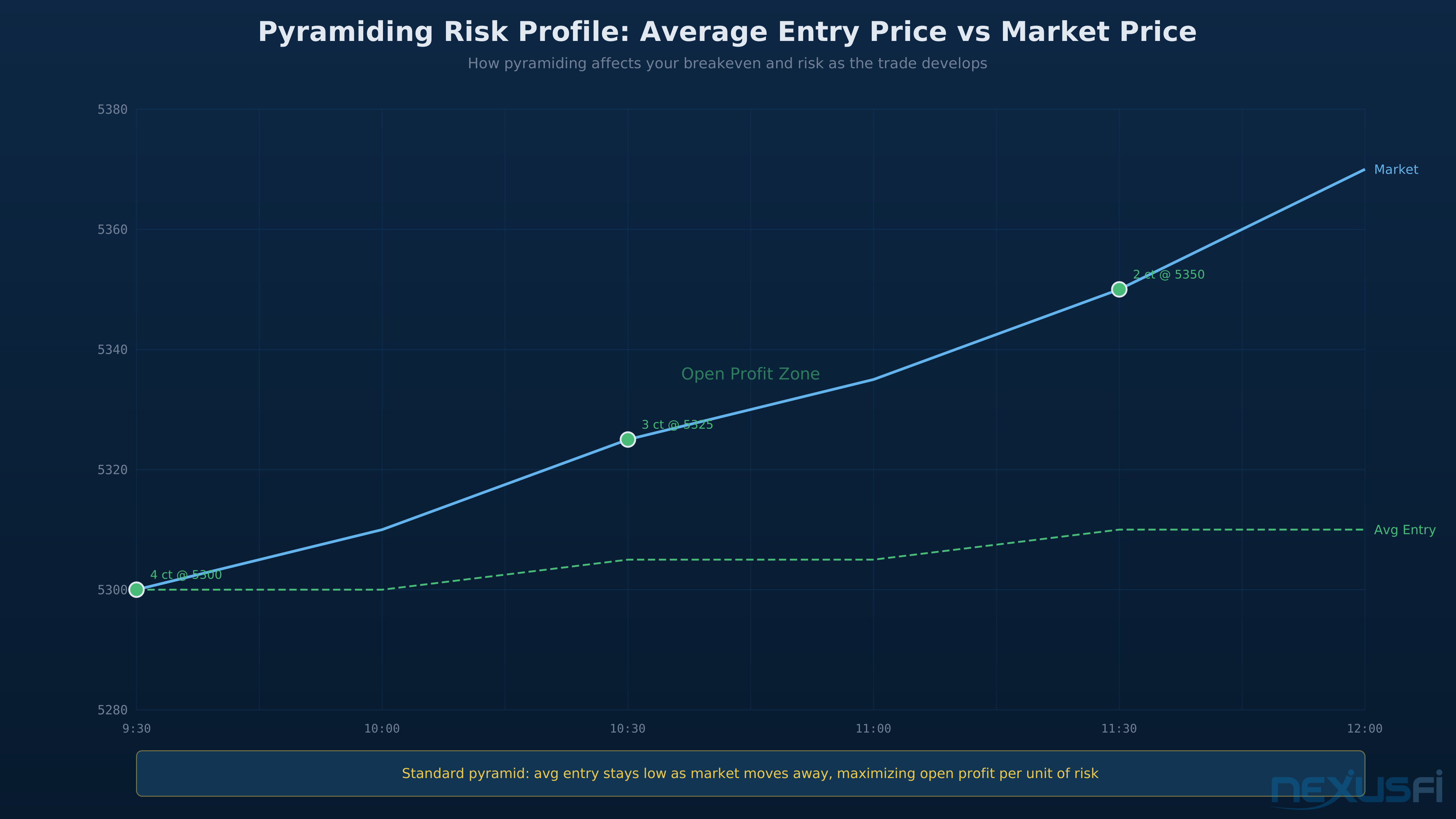
With pyramiding (standard pyramid):
- Enter 4 contracts at 5300
- Add 3 contracts at 5320 (price confirms)
- Add 2 contracts at 5340 (trend extends)
- Add 1 contract at 5350 (momentum continues)
Total: 10 contracts, average entry: 5318. If ES hits 5370: profit = (5370 - 5318) x 10 = 520 points, plus the early contracts earned more individually. If it reverses early at 5310 before any adds: loss = (5300 - 5285) x 4 = 60 points instead of 150.
The asymmetry: your winners get the full 10-contract treatment while your losers only ever see 4 contracts. This is the mathematical foundation that makes pyramiding a positive expectancy enhancement.
As Fat Tails explained in his analysis of the Turtle trading system: "A positive correlation of time series is a prerequisite for pyramiding to work." ([Fat Tails, NexusFi] [3]) Translation: pyramiding works in trending markets. In choppy, mean-reverting conditions, it destroys accounts.
Three Pyramid Structures #
Standard (Decreasing) Pyramid #
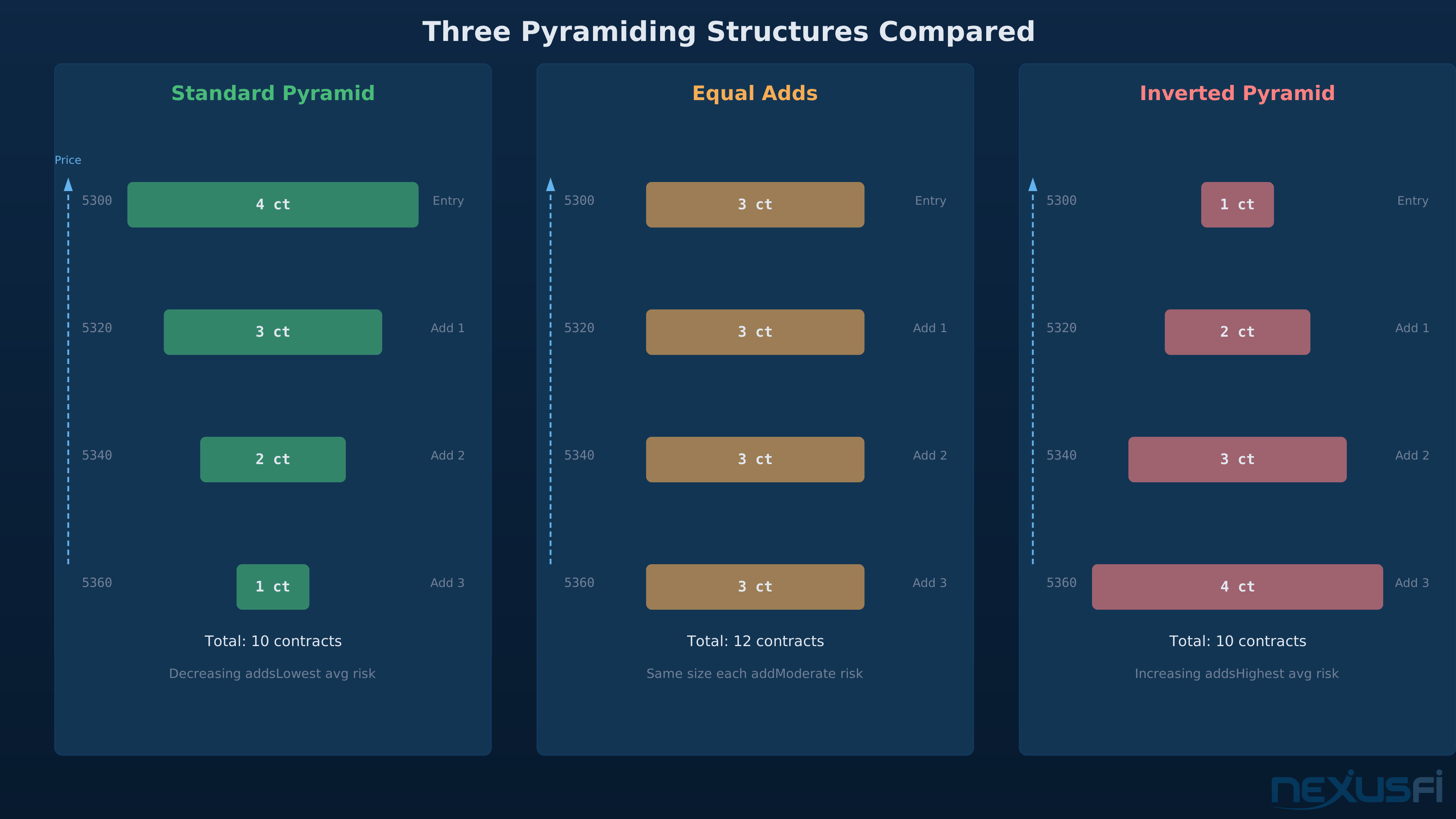
The textbook approach: start with your largest position, then add progressively smaller amounts. If you plan to hold 10 contracts total, the sequence might be 4-3-2-1.
Why it works: Your average entry price stays closer to your initial entry. Each add contributes less to your cost basis. If the market reverses after your second add, you've committed 7 of 10 contracts but your average price is still close to the original entry.
tigertrader captured the principle: "When you are pressing a trade and adding to it, you should be scaling in a pyramid fashion, adding progressively smaller units." ([tigertrader, NexusFi] [2])
Equal Adds #
Same size at each level: 3-3-3 for a 9-contract position. Simpler to execute, but your average entry price moves faster toward the current price with each add.
When it makes sense: Highly liquid markets with strong trend confirmation. The simplicity reduces execution errors and decision fatigue. Fat Tails demonstrated that with proper backtesting, the structure matters less than the entry signals: "If you take half a position only, and add the other half after confirmation..." ([Fat Tails, NexusFi] [4])
Inverted Pyramid #
Add larger amounts as the trade progresses: 1-2-3-4. Your biggest position comes at the highest price. This is the most dangerous structure because your average entry price climbs rapidly, and a reversal from near the top hits your largest allocation.
The danger: An inverted pyramid turns a 20-point reversal from a manageable pullback into a catastrophic loss. The math works against you — your biggest contracts have the smallest profit cushion. Professional traders almost universally avoid this structure.
When to Pyramid: The Decision Framework #
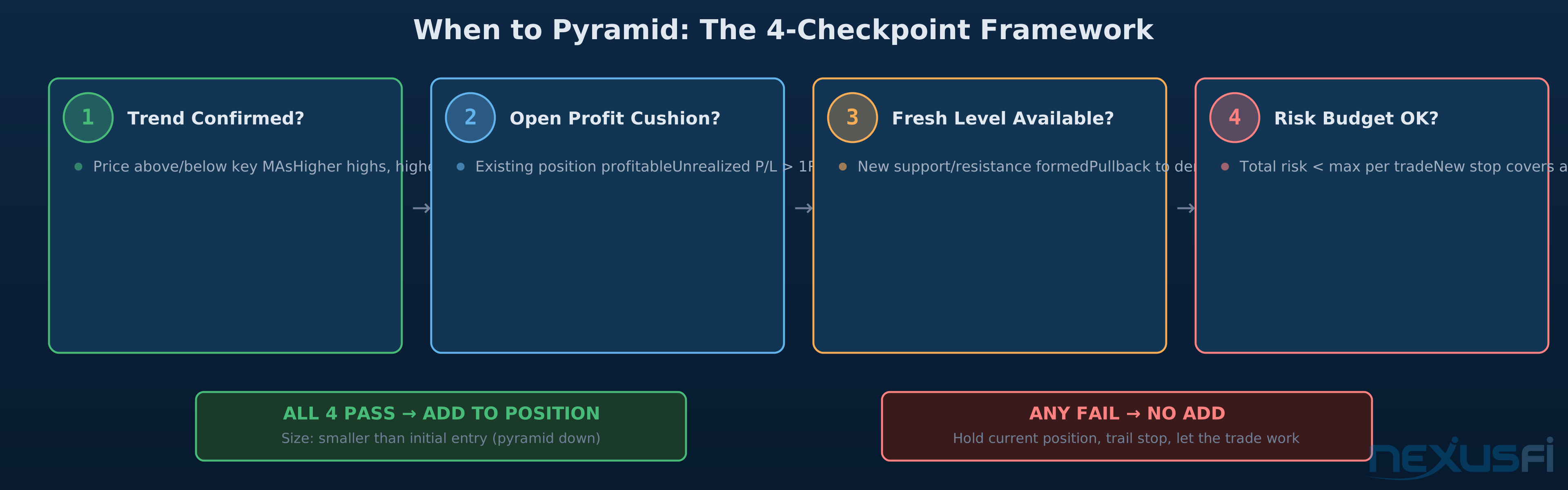
Adding to a position requires four conditions to be true simultaneously:
1. Trend Confirmed: Price structure shows higher highs/higher lows (longs) or lower highs/lower lows (shorts). Volume confirms direction. Key moving averages aligned.
2. Open Profit Cushion: Your existing position is profitable by at least 1R (one unit of initial risk). Your stop has been moved to breakeven or better. Unrealized profit provides a buffer for the new add.
3. Fresh Technical Level: A new support/resistance level has formed since your last entry. Price has pulled back to a demand zone, volume node, or VWAP test. Don't add just because price went higher — add because a new setup formed.
4. Risk Budget Within Limits: Total portfolio risk (including the new add) stays under your maximum per-trade allocation. New stop placement covers all units. Margin requirements are met with room to spare.
If any checkpoint fails, don't add. Hold the current position, trail your stop, and let the trade work. Forcing adds into uncertain conditions is how pyramids collapse.
One experienced trader's approach to systematic adding: "By pyramiding (adding as it goes your way), you can actually keep a constant risk by just adjusting the stops upwards." ([grausch, NexusFi] [6])
Risk Management for Pyramided Positions #
Stop Management #
The golden rule: when you add, move your stop on all existing contracts. Your new stop must make the total position risk acceptable.
- After first add: Move initial stop to breakeven or a small profit
- After second add: Tighten stops on all contracts so maximum total loss equals your original 1R risk
- Trail stops as the trade develops, always covering all units
Maximum Position Size #
Define your maximum contract count before the first entry. Never exceed it. If your plan calls for a 4-3-2-1 pyramid totaling 10 contracts, 10 is the hard ceiling. No exceptions for "it's really working" euphoria.
The Reversal Scenario #
Here's where discipline matters most. You've built a 10-contract position through three adds. The market reverses. What now?
Wrong answer: Hold everything and hope. Or worse, add more (now you're averaging down on a losing position, which is the opposite of pyramiding).
Right answer: Your trailing stop triggers. All contracts exit at the predetermined level. You take the profit from your early contracts, accept the scratch or small loss on recent adds, and move on.
The importance of this discipline: "The importance of holding on to your winners and adding, and how it can lead to asymmetric payoffs!" ([tigertrader, NexusFi] [5])
Common Pyramiding Mistakes #
Mistake 1: Adding to losers. Pyramiding is ONLY for winning positions. If your initial entry is underwater, adding more contracts is averaging down — a completely different (and far more dangerous) strategy. These two approaches look similar but have opposite risk profiles.
Mistake 2: No profit cushion. Adding to a position that's barely profitable gives you no buffer. If you bought at 5300 and price is at 5302, adding contracts means any 3-point pullback puts your entire position underwater.
Mistake 3: Adding without a stop plan. Every add must come with an updated stop for the entire position. If you can't define where your stop goes after adding, don't add.
Mistake 4: Pyramiding in choppy markets. Pyramiding is a trend strategy. In ranging markets, adds get stopped out repeatedly as price oscillates. Check the ADX or a regime filter before committing to a pyramid plan.
Mistake 5: Emotional adding. Adding because you're excited about the trade rather than because the technical criteria are met. The rush of a winning trade is exactly when discipline matters most.
Pyramiding vs. Scale-In: The Critical Difference #
These terms get confused constantly. The distinction matters:
Pyramiding: Adding to a winning position. Each add happens at a worse price than your entry (higher for longs, lower for shorts). You're paying more for additional contracts because the market has proven you right.
Scaling in: Building a position across a range, often adding at better prices (lower for longs, higher for shorts). This is closer to averaging down — you're adding when the trade is moving against you.
Big Mike himself addressed this directly: "Do I add to winning positions? Yes I do. I build a small base..." ([Big Mike, NexusFi] [7])
The math is different. Pyramiding increases average entry cost but does so with a profit cushion. Scaling in decreases average entry cost but increases risk on an unproven thesis.
How Pyramiding Connects to Other Concepts #
- Position Sizing: Pyramiding is a dynamic position sizing method. The initial size is your base allocation; adds are conditional extensions.
- Risk Management: Every pyramid add must fit within your total risk budget. R-multiples apply to the entire pyramided position, not individual entries.
- Trend Following: Pyramiding is the execution arm of trend following. The trend provides direction; pyramiding maximizes the position when the trend is working.
- Drawdown Management: Pyramided positions have unique drawdown characteristics. The trailing stop structure prevents catastrophic drawdowns, but partial position profits can get returned quickly on reversals.
- Stop Loss Strategies: Pyramid stop management requires updating stops across all contracts simultaneously. Trailing stop methodology becomes critical.
Pyramiding is one of the few techniques that genuinely improves your risk-adjusted returns when applied in the right conditions. The conditions are specific: trending markets, confirmed direction, profit cushion, and disciplined structure. Miss any of those, and the pyramid collapses on you.
Knowledge Map
Prerequisites
Understand these firstReferences This Article
Articles that build on this topicCitations
- — Trading Futures with Context (2014) 👍 13“Hello MFB, Hello all, Just to get back on the way I do pyramide, if some of you may find something interesting in it. I really think that good pyramide is the best way to alleviate daily pressure.”
- — Killer Instinct and the Home Run Mentality (2011) 👍 8“You can always adopt a fixed fractional trading strategy where you determine the number of contracts you trade for a defined level of risk.”
- — How advanced mathematics and gaming theory can help you as a trader (2011) 👍 13“Yes, that is correct. The higher win rate is needed to compensate a lower average profit per trade First of all, if price is viewed as random, you would not put on any position at all.”
- — All in all out vs. scaling in and out (2010) 👍 19“If you have a backtested setup, which gives you an edge, scaling in or scaling out does not make sense. You just need to follow the rules that you have backtested.”
- — Spoo-nalysis ES e-mini futures S&P 500 (2022) 👍 17“The importance of holding on to your winners and adding, and how it can lead to asymmetric payoffs! +5 figure trade with 1 lots; and money was left on the table. It can be done if you squeeze your winners, and add judiciously.”
- — Tap In's Corner (2016) 👍 8“One thing I have learnt over time, is that it is crucial to have more than one contract (or batches of shares) when trading. It changes a trade from a right/wrong type scenario into a multi-faceted scenario.”
- — The Elusive Price Action: How to Trade (2011) 👍 13“I can't recall that trading day in particular, so I'll just talk in general. - Do I add to winning positions? Yes I do.”
- — Effectiveness and Risks of Pyramidding (2011) 👍 2“It doesn't matter if you consider unrealized gains as realized gains or not. I am simply explaining to OP that my pyramiding strategy allows me to increase my potential profits on a trade by double, quadruple, etc.”