



Regime Detection for Automated Trading Systems: Classifying Markets Before Deploying Strategy Logic
Overview #
The single biggest killer of automated futures strategies isn't bad math or poor code — it's deploying a trend-following system in a mean-reverting market, or running a range-fade strategy when the market runs directional all day. The strategy wasn't wrong. The regime was.
Markets don't behave the same way every day. @tigertrader, one of NexusFi's most cited contributors, put the baseline reality plainly: "markets are trending only 20% of the time or approximately 4 days a month." That other 80% — the range days, the false breakout days, the chop — methodically destroys trend-following P&L unless the system knows to stand down.
Regime detection is the practice of classifying the current market environment before deploying strategy logic. Done right, it lets a system trade the right playbook for current conditions — or stand aside entirely when no playbook fits. Done wrong (or skipped entirely), it leaves a trader wondering why a strategy that worked for six months suddenly started bleeding.
This article covers the theory, the detection methods, and the implementation specifics for building regime awareness into automated futures strategies. ES (S&P 500 E-mini) is the primary example throughout, but the same framework applies to NQ, CL, ZB, and any liquid futures contract.
The Core Problem: Strategies Are Regime-Specific #
No single strategy works across all market conditions. This isn't a failing of any particular approach — it's a mathematical reality about price series structure.
A momentum breakout system requires price autocorrelation: moves must tend to continue. A mean-reversion system requires negative autocorrelation: moves must tend to reverse. The same entry signal that profits in one regime produces a loss in the other. If your system doesn't know which regime it's in, it's going to deploy the wrong tool constantly.
@tigertrader framed the consequences precisely in NexusFi's Spoo-nalysis thread:
The challenge is recognizing the regime in real time, not in retrospect. Every trader knows what kind of day it was after the close. The automated system needs to classify while the session is still running.
The theoretical backbone comes from statistical finance: stationarity. A price series is stationary when the process generating it remains constant over time. @tigertrader shared an article from trader and author Brent Steenbarger that cuts to the core of why this matters for systematic traders:
Regime detection is basically a stationarity test applied in real time. The question you're asking: are the current market dynamics similar enough to the conditions in which my strategy has edge?
The Four Market States #
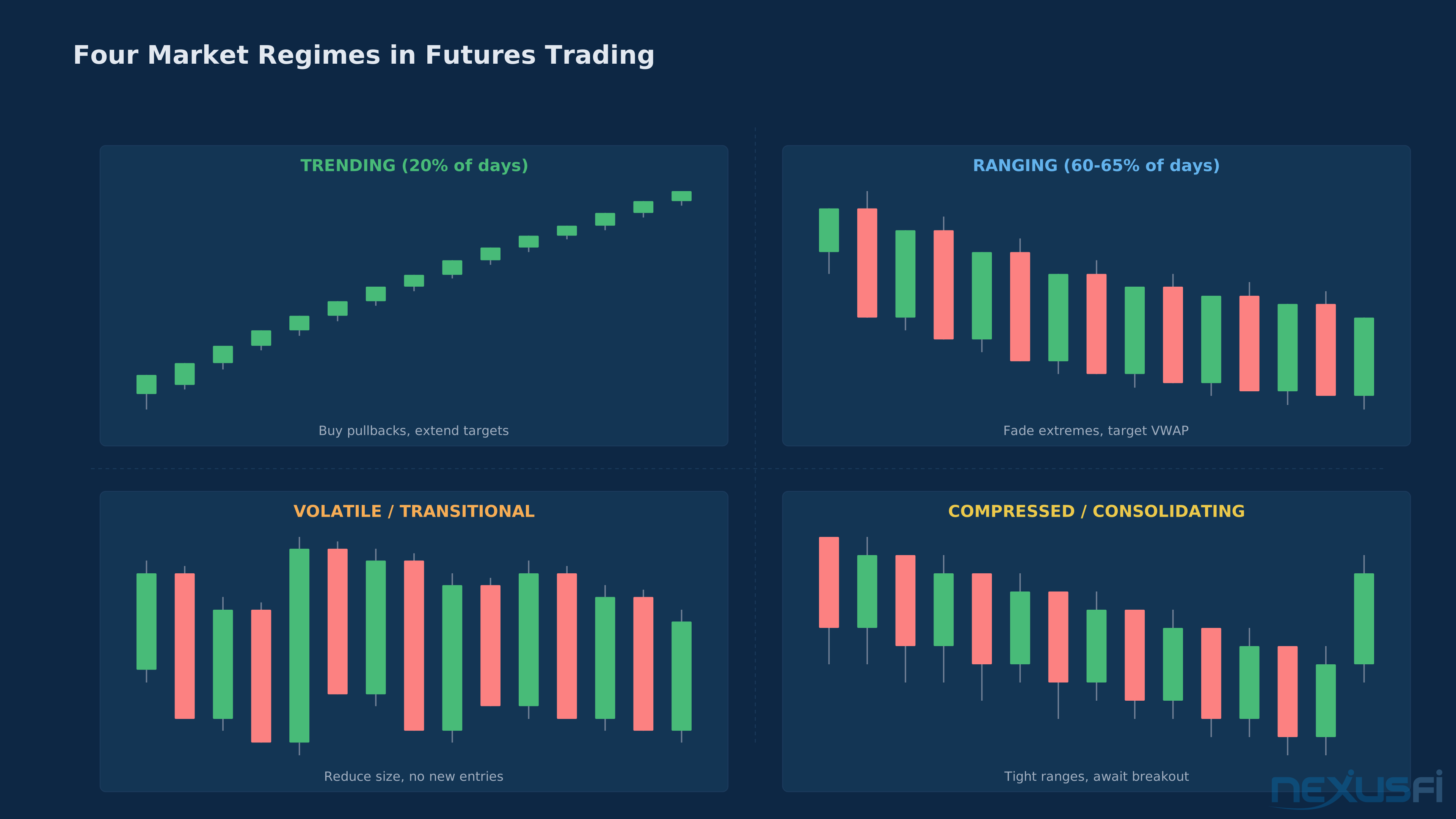
Before you can detect regimes, you need a classification system. Most practitioners use four states:
State 1: Trending — Price moves directionally with sustained momentum. Range expands. Volume is purposeful. Institutional positioning, macro catalysts, or news-driven flow is dominant. In ES, these days typically open above or below VWAP and stay there. Market Profile labels them "trend days" — they account for roughly 14-20% of trading sessions — a frequency confirmed by @tigertrader [10] and consistent across multiple studies. Trend-following systems work here. Mean-reversion fades are punished immediately.
State 2: Ranging (Balanced) — Price oscillates within a defined band. Volume distributes across levels rather than accumulating at one end. The market auctions up, fails to accept higher prices, auctions back down, fails to accept lower prices. This describes the majority of trading sessions — roughly 60-65% in ES. Range-fade strategies work here: sell the upper range, buy the lower range, target VWAP.
@runner, a quantified trader in NexusFi's Elite Journals, put the empirical frequency precisely: "70% (more or less) = rotational / balance days, 30% = trending days." He added a practical day-type classifier: open inside yesterday's RTH range (OAIR) = 80% odds of a rotational day, open outside that range (OAOR) = 80% odds of a trending day. [9] The implication for automated systems: if the system doesn't know which camp today is in within the first 30 minutes, it's operating blind.
State 3: Volatile / Transitional — ATR is expanding but direction is unclear. This appears at regime boundaries: the moment a range starts breaking out but hasn't confirmed continuation, or the moment a trend loses momentum before reversing. Both trend-following (entering the breakout) and mean-reversion (fading the move) fail at elevated rates in this state. Correct posture: reduce exposure, wait for regime to clarify.
State 4: Compressed / Consolidating — ATR is contracting. Range is narrowing. Volume drops. Typically precedes a breakout but can persist for hours. Breakout systems generate false signals here — the range is too tight to cover costs. Trend strategies idle. Short-timeframe mean-reversion can work with compressed profit targets.
The common two-state model (trending or ranging) misses the dangerous transitions. The four-state model forces explicit handling of volatile and compressed regimes — where most automated systems absorb their worst drawdowns.
Detection Methods #
Five families of regime detection work reliably in live futures markets. Most systematic traders combine 2-3 approaches.
1. ADX / Directional Movement System #
The ADX (Average Directional Index), created by J. Welles Wilder in 1978, remains the most widely deployed trend-strength indicator in systematic trading. It measures the degree of directional movement — not price direction itself, but the strength of any existing trend.
How it works: ADX derives from the Directional Movement indicators (+DI and -DI). +DI captures positive directional movement (today's high exceeds yesterday's high — the excess is measured). -DI does the same for downside. ADX is a smoothed ratio of these over N periods, typically 14.
Key thresholds:
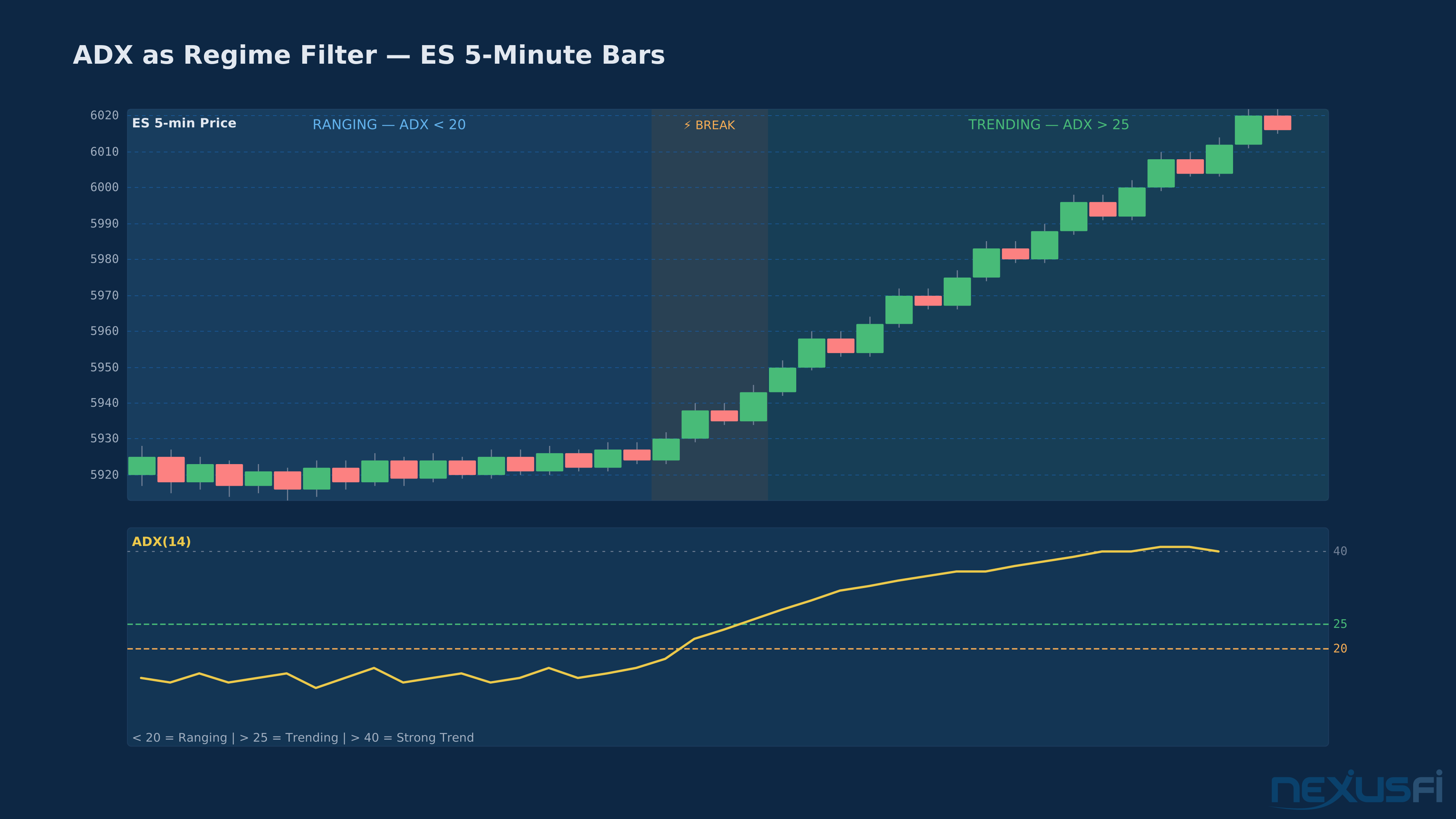
- ADX < 20: No trend present. Mean-reversion systems favored.
- ADX 20-25: Borderline. Low-conviction signals in both directions.
- ADX > 25: Trending conditions. Directional systems have edge.
- ADX > 40: Strong trend. Extend profit targets, widen stops, add to winners.
- ADX declining from above 25: Trend weakening. Reduce trend exposure, don't add.
@Fat Tails, in NexusFi's Elite Quantitative forum, described the Wilder approach:
Implementation note: ADX lags. A reading of 30 today reflects the past 14 bars, not the current moment. For daily or swing systems, this lag is manageable. For intraday automated strategies, use ADX(7) or ADX(5) for faster response, accepting more false signals. The 14-period standard is a balance between signal reliability and responsiveness.
ADX only measures trend strength, not trend direction. A reading of 35 during a strong downtrend looks identical to a reading of 35 during a strong uptrend. Always pair ADX with a directional filter — +DI vs -DI crossing, or price vs a moving average — to avoid entering mean-reversion trades against a trending market.
2. ATR Expansion / Volatility Regime #
Average True Range (ATR) measures the average range per bar over N periods. It's the simplest and most strong volatility regime indicator available.
The logic: Trending markets have expanding ATR. Range-bound markets have stable or contracting ATR. Compressed markets have very low ATR. Volatile/transitional markets have rapidly expanding ATR from a recent low.
Practical implementation on ES 5-minute bars:
- Compute ATR(14) on 5-minute bars
- Compute a rolling 20-session average of ATR(14) as the "baseline"
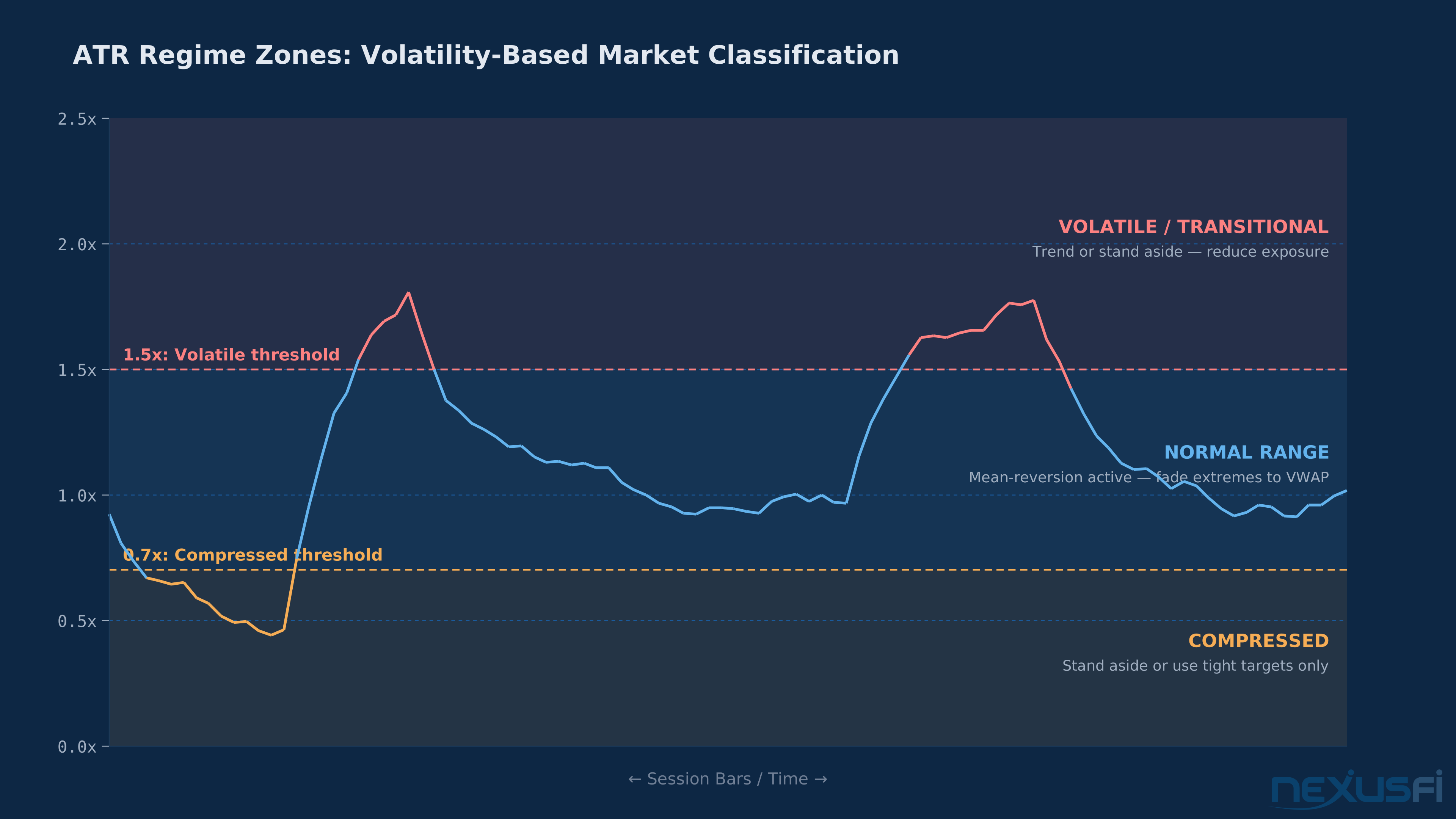
- Normalize: Regime ATR = current ATR / baseline ATR
- Interpretation:
- Regime ATR > 1.5: Elevated volatility — trending or transitional conditions
- Regime ATR 0.8-1.5: Normal range conditions — range-fade strategies apply
- Regime ATR < 0.7: Compressed — mean-reversion with tight targets, or stand aside
@iantg described a range filter approach in NexusFi:
ATR vs ADX combined: ATR tells you how much the market is moving. ADX tells you whether that movement is directional. Use both. High ATR + High ADX = strong trend. Moderate ATR + Low ADX = normal range. Low ATR + Low ADX = compression. High ATR + Low ADX = volatile/choppy — no edge for most strategies.
3. VWAP-Based Day Classification #
VWAP (Volume Weighted Average Price) provides one of the cleanest real-time regime signals available for intraday automated systems. The market's relationship to VWAP reveals the auction structure.
@tigertrader described the classification framework clearly, earning 32 thanks on this post:
Automated VWAP regime signals:
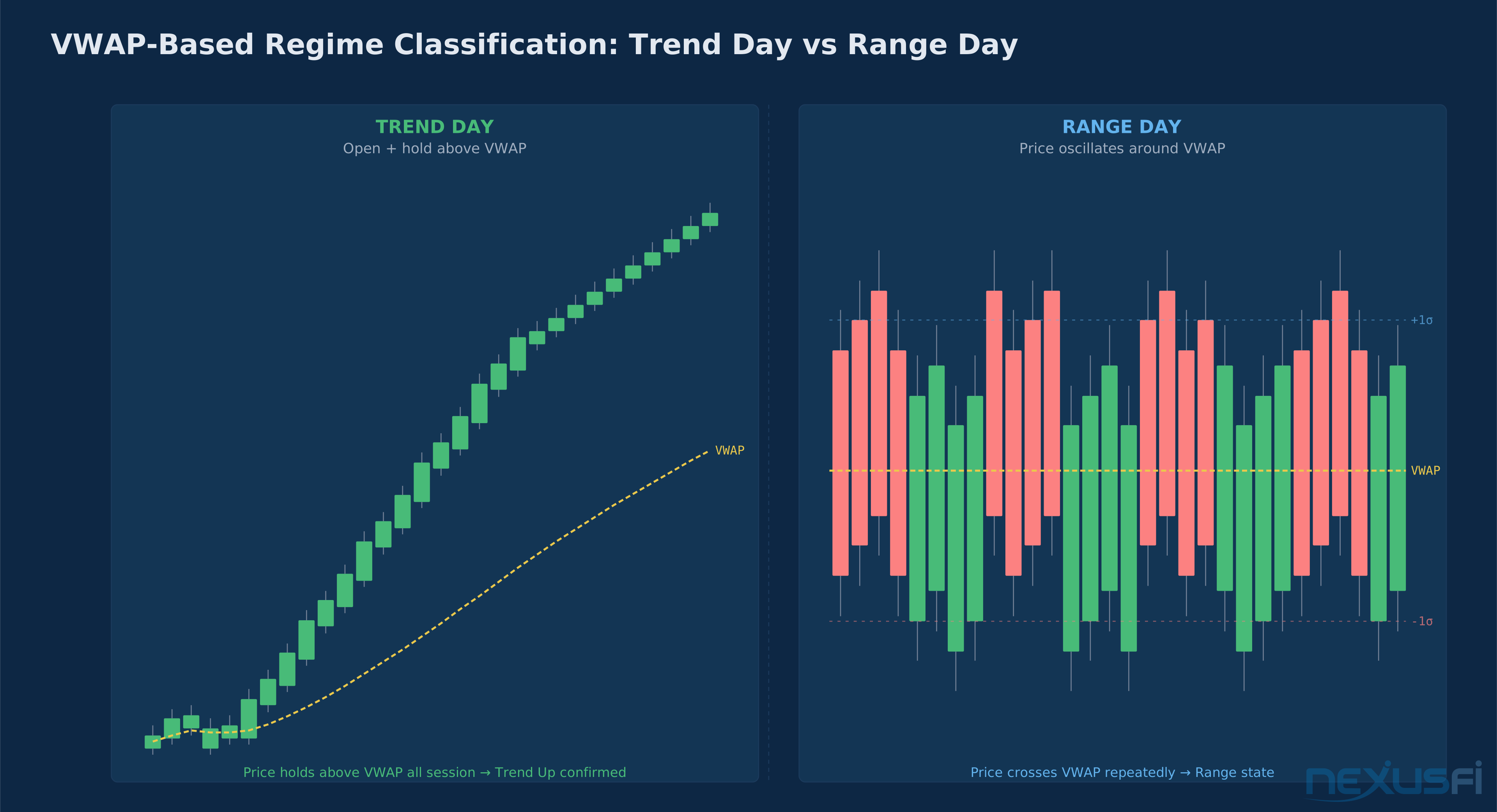
- Price sustained above VWAP + VWAP sloping upward + NYSE TICK consistently positive: Trend Up state
- Price sustained below VWAP + VWAP sloping downward + TICK consistently negative: Trend Down state
- Price crossing above and below VWAP repeatedly + VWAP relatively flat: Range state
- Large VWAP deviation (>2 standard deviations) without acceptance: Volatile state
For automated systems, quantify VWAP slope: compute the difference between current VWAP and VWAP N bars ago, divided by N. If slope exceeds a threshold (typically 0.5 tick per bar on 5-min ES), treat as directional. Below threshold: neutral/range.
@tigertrader on identifying trend vs range days with 25 thanks on this post: "A trend day typically opens higher/lower above/below the VWAP accompanied by a strong/weak $TICK and good/bad breadth, and remains above/below the VWAP all day... On the other hand, a range day will see the market trade above and below the VWAP, often times with perfect symmetry to the VWAP i.e., rally +2SD and break -2SD, always returning to the VWAP." [3]
VWAP-based regime detection adapts to the current day's volume distribution automatically — no fixed parameters to improve. This makes it more strong across changing volatility environments than purely ATR-based approaches. Add it to any intraday automated system as a secondary regime check.
4. Efficiency Ratio (Signal-to-Noise Ratio) #
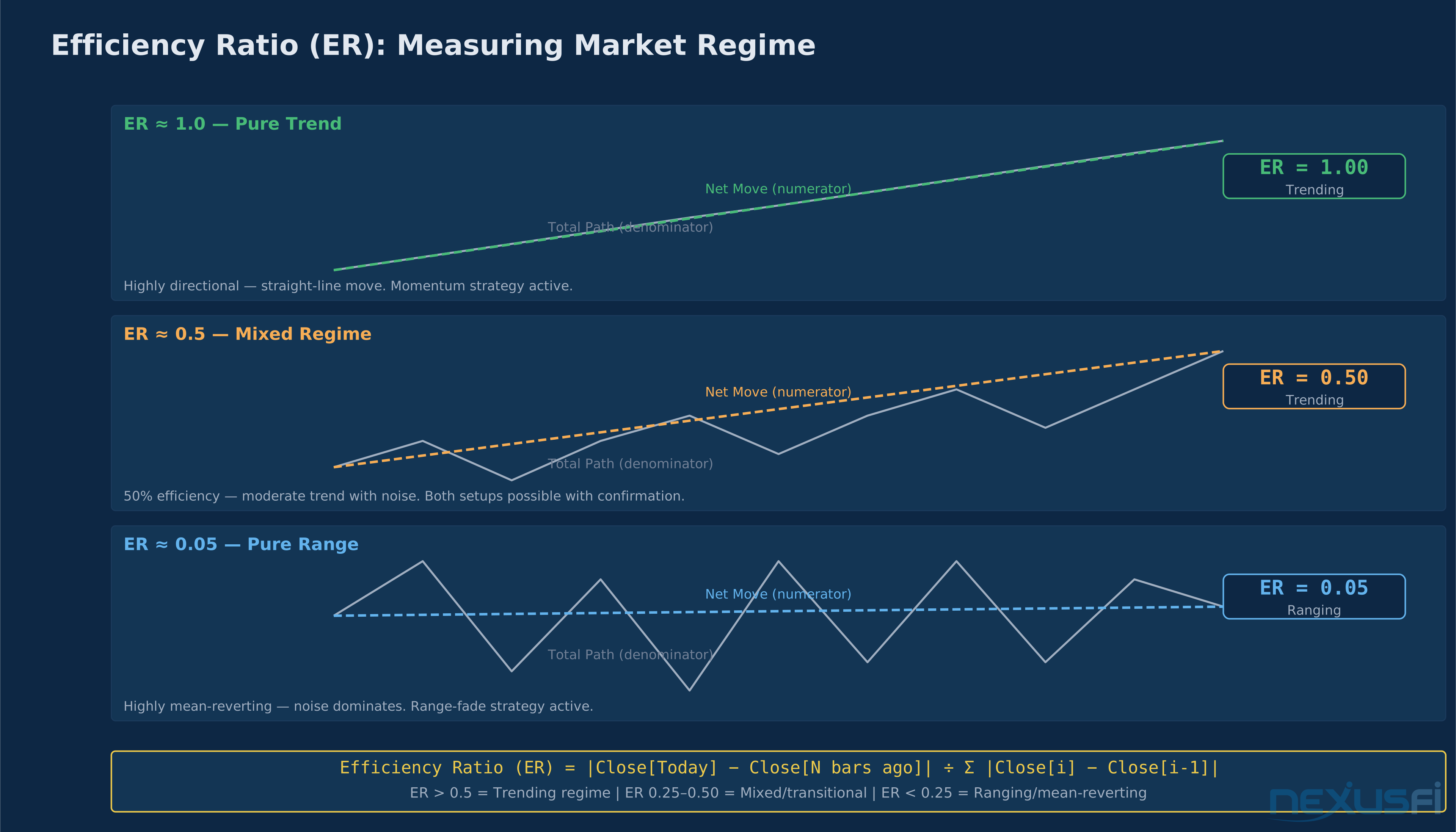
The Efficiency Ratio (ER), also called the Signal-to-Noise Ratio (SNR), measures how much of the market's total movement is directional vs random noise.
The formula:
![Efficiency Ratio = |Close[Today] − Close[N bars ago]| ÷ Σ|Close[i] − Close[i−1]| for i = 1 to N](/a/images/59d7b25a-05cc-7d9d-c9c7-0dd675d58ac4.svg)
@sefstrat described a three-state SNR-based classification system in NexusFi:
Practical thresholds (20-bar window):
- ER > 0.5: Trending — deploy momentum strategies
- ER 0.25-0.50: Mixed/transitional — reduce exposure, confirm with other signals
- ER < 0.25: Ranging — deploy mean-reversion strategies
The ER is the core component of Perry Kaufman's Adaptive Moving Average (KAMA). It's been used in systematic trading for decades precisely because it gives a clean single number for regime strength. Unlike ADX, which can stay elevated after a trend ends, ER responds quickly to regime changes as the lookback window fills with new bars.
5. Autocorrelation Test #
The most statistically rigorous approach tests whether returns are autocorrelated — whether past returns predict future returns.
Positive autocorrelation: recent gains predict continued gains. Trending regime. Negative autocorrelation: recent gains predict imminent losses. Mean-reverting regime. Near-zero autocorrelation: history has no predictive value at the current lookback.
Implementation: Compute the lag-1 autocorrelation of N-bar returns using a rolling 50-100 bar window. If autocorrelation consistently exceeds +0.10: trend regime. Consistently below -0.10: mean-reversion regime. Between -0.10 and +0.10: no clear regime, or wait for another indicator to confirm.
Limitation: This method requires more data and carries higher statistical noise than the simpler methods above. It's most valuable for multi-day regime classification (swing and position systems) rather than intraday detection. For intraday use, combine with ATR or VWAP methods. Autocorrelation tests used in isolation on 30-minute data will produce too many false signals to be actionable. 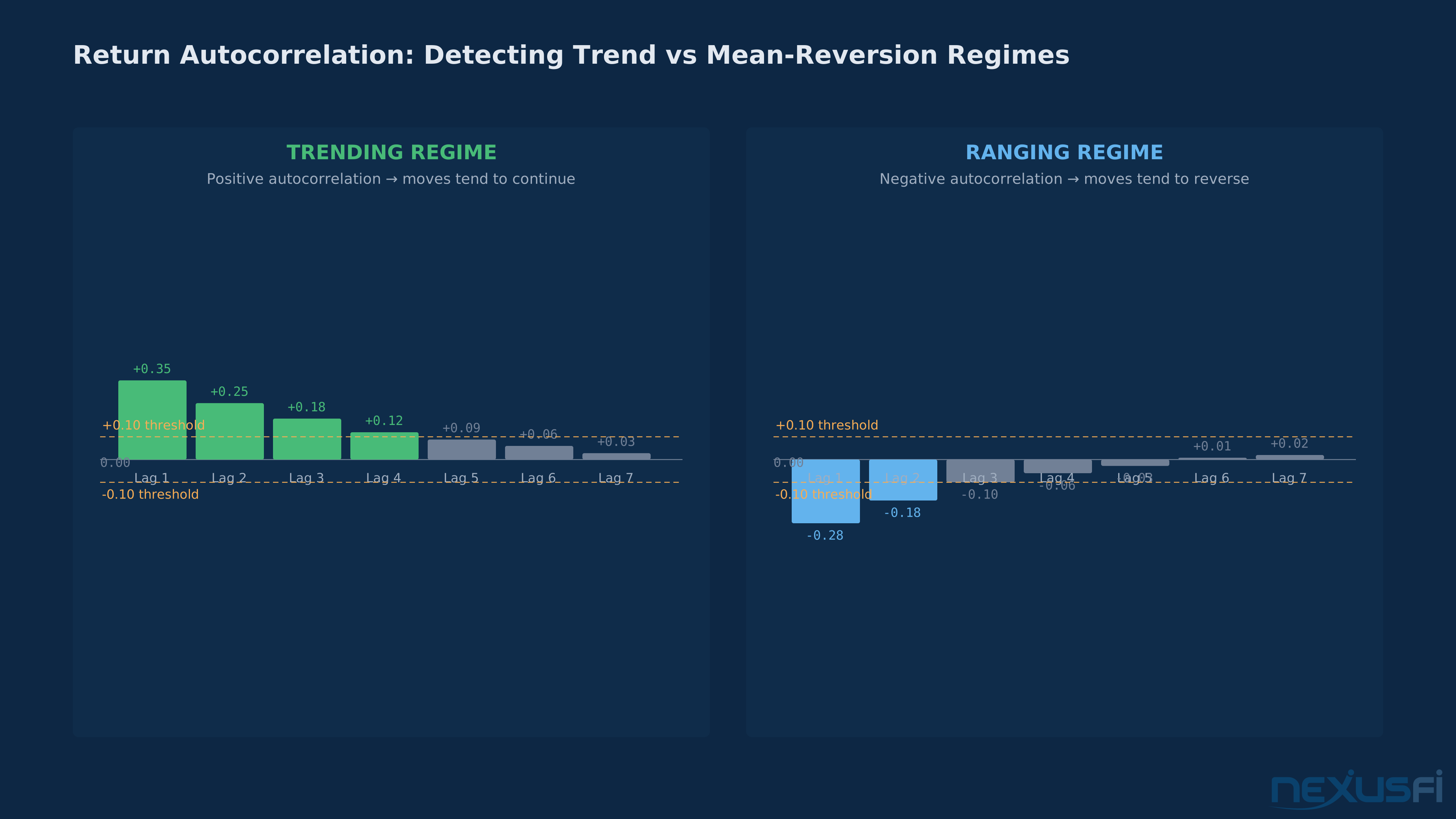
The Strategy Switching Framework #
Detecting the regime is step one. The system then needs to deploy the right strategy and suppress the wrong ones.
Architecture: Two strategy instances running as concurrent modules, each with an enable/disable gate controlled by the regime detector.
RegimeState = Detect(ADX, ATR, VWAP, ER)  # Combined regime signal

if RegimeState == "Trending":
    TrendStrategy.enabled = True
    RangeStrategy.enabled = False
    SizeMultiplier = 1.2   # Trend days reward pressing winners

elif RegimeState == "Ranging":
    TrendStrategy.enabled = False
    RangeStrategy.enabled = True
    SizeMultiplier = 1.0

elif RegimeState == "Volatile":
    TrendStrategy.enabled = False
    RangeStrategy.enabled = False
    SizeMultiplier = 0.5   # Keep existing positions, don't add

elif RegimeState == "Compressed":
    TrendStrategy.enabled = False
    RangeStrategy.enabled = True   # With compressed targets
    SizeMultiplier = 0.75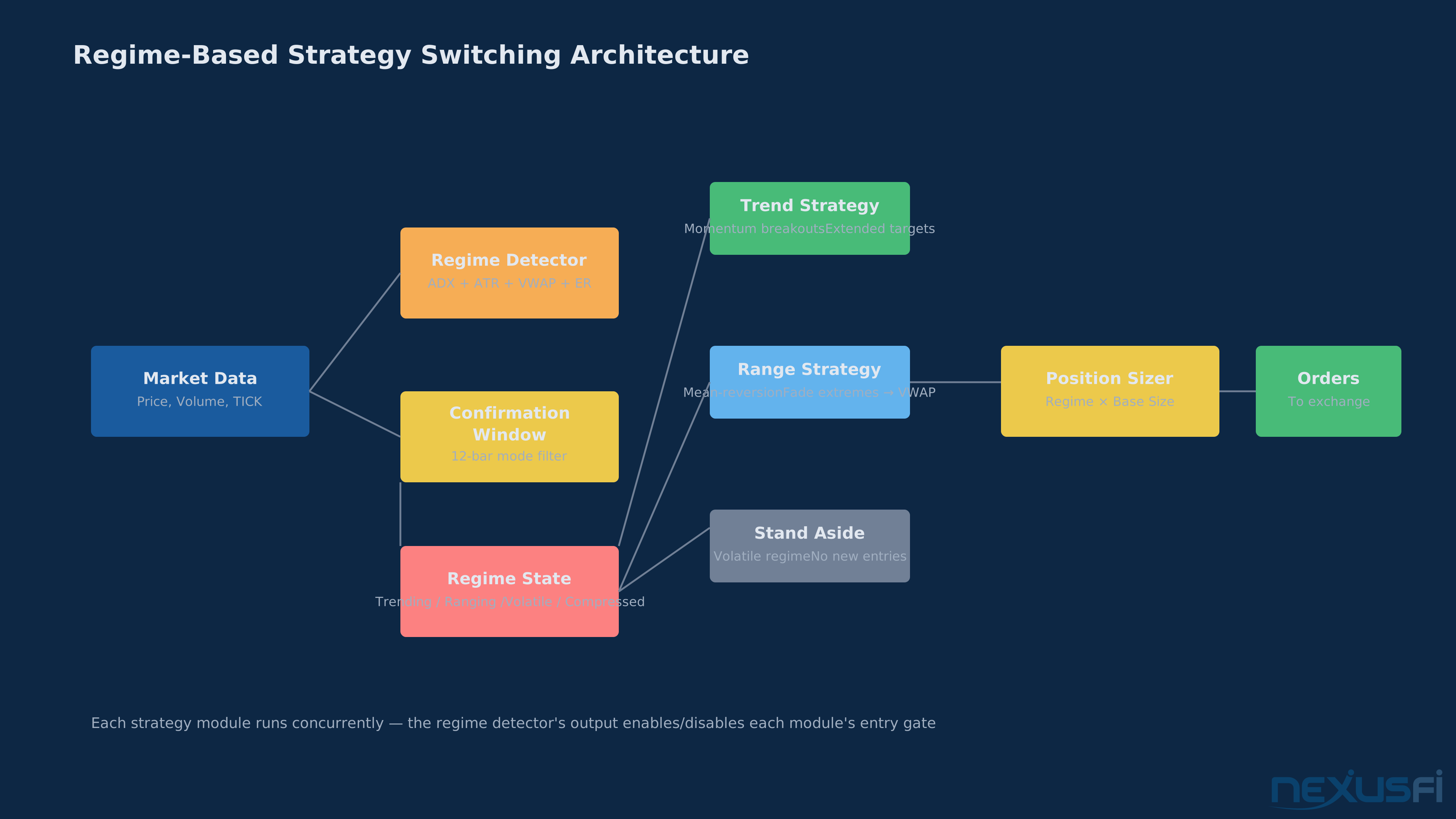
@tigertrader on sizing during trend days (60 thanks, the highest in this citation set): "The 4 days or so a month that the markets have a trend day, I will adjust my hold times and position sizing upward... it is critical that you press on these days, because there are so few of them. Adding to, and milking your winners is one of the most, if not the most, important techniques you can employ for making money." [2]
Critical implementation rule: Don't switch strategy state on each bar. Regime detection must be confirmed before the system commits. Require the regime state to persist for a minimum confirmation window — typically 10-15 bars on a 5-minute chart (50-75 minutes) — before switching. This prevents the system from whipsawing between strategies during the volatile open.
The Confirmation Window #
# Track last 12 bars of regime state (60 min on 5-min chart)
RegimeHistory = rolling_window(RegimeSignal, n=12)

# Confirmed regime = most common state in window
ConfirmedRegime = mode(RegimeHistory)

# Detect active transitions
IsTransitioning = (RegimeHistory[-1] != RegimeHistory[-4])

if IsTransitioning:
    SizeMultiplier *= 0.5  # Half size during regime uncertainty
This forces the system to absorb a few bars of late entry at regime changes. The tradeoff: miss the first 5% of a move to avoid the 20% false starts. That's a good trade.
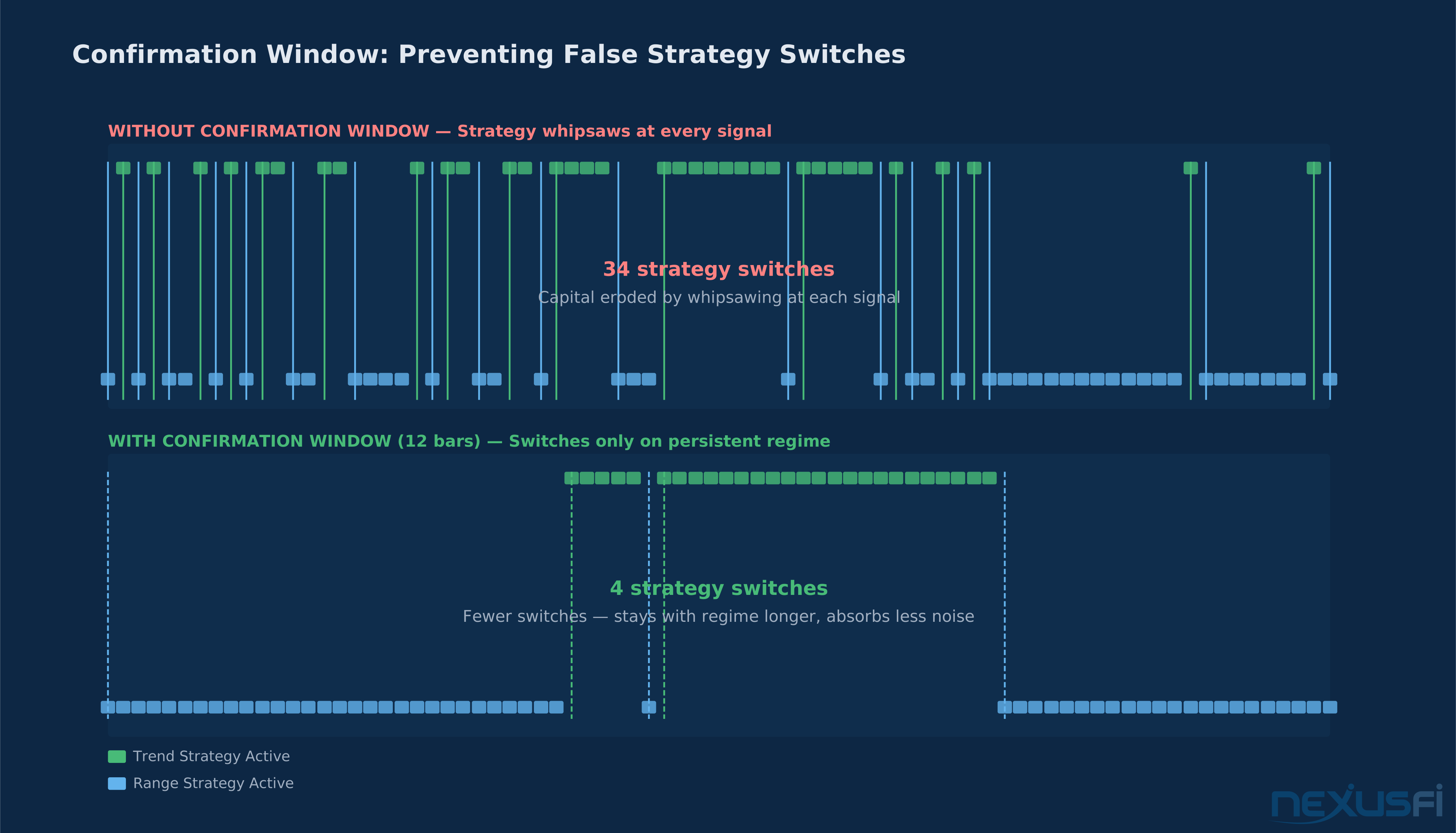
The confirmation window is where most implementations fail. Systems that switch strategies bar-by-bar at every regime signal get chopped up at regime transitions — exactly when the system should be defending capital, not deploying it.
When Regime Detection Fails #
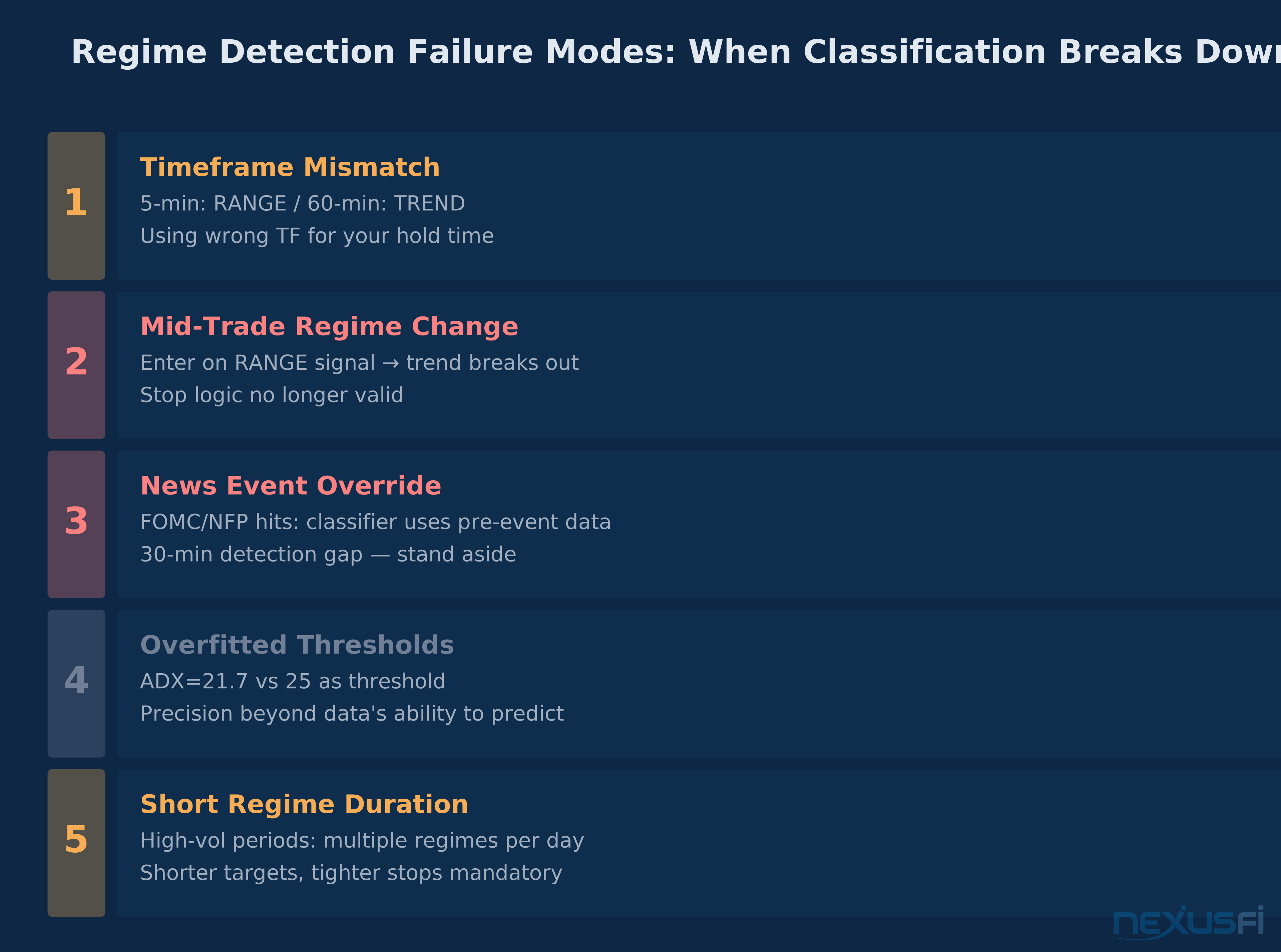
Regime detection doesn't make every strategy profitable. It fails in specific, predictable ways.
Failure 1: Timeframe mismatch — On a 5-minute chart, ES might look like a range. On a 60-minute chart, it's clearly trending. Both readings can be correct simultaneously. The regime that matters is the one matching your holding time. A strategy holding 10 minutes needs 5-minute regime detection. A strategy holding 2-3 hours needs 30-minute or 60-minute detection. Using the wrong timeframe is the most common regime detection error.
@tigertrader on this exact problem: "one must first be able to recognize whether a market is mean reverting or trending, and on what time-frame. this can become very difficult, as these regimes may be present simultaneously on different time-frames." [1]
Failure 2: Regime change during an open trade — The market opens as a range day, the system enters a mean-reversion fade at VWAP +1.5 SD, and by noon the market breaks out directionally and never comes back. The entry was correct for a range day. The regime changed after entry.
The fix: continuous regime monitoring on open positions, not just at entry. When the regime shifts mid-trade, the system should:
- Stop adding to the position
- Move the stop tighter (don't widen it hoping the regime will revert)
- If the position is small and the new regime signal is strong, consider exiting early
Failure 3: News-driven override — A scheduled economic release or unexpected headline can override any detected regime in milliseconds. A market in "Compressed" state — classically a pre-breakout pattern — will get a new starting point the moment an FOMC statement drops. Every indicator (ADX, ATR, VWAP, ER) is computing from pre-event data when the event hits.
Don't enter new positions in the 10 minutes before high-impact economic releases (FOMC, NFP, CPI, EIA inventory). The regime classifier has no edge during this window — it's back-looking by design. The 30 minutes after major news events is equally dangerous: the new regime hasn't accumulated enough bars for reliable detection. Systems that trade aggressively around news absorb disproportionate losses during the detection gap.
Failure 4: Overfitting the classifier — If a researcher discovers that an ATR threshold of exactly 1.37x baseline produced the best backtest results, they've overfit the regime classifier. The difference between 1.3x and 1.4x doesn't reliably indicate a different market state — the precision isn't supported by the data. Use wide bins (trending = ADX > 25, ranging = ADX < 20, with a 20-25 gray zone) rather than precise thresholds. Precise thresholds optimize to historical noise.
Failure 5: Expecting regime persistence — All regime detection assumes that the current regime will persist long enough for a trade to complete. During sustained high-volatility periods (August 2015 China devaluation, March 2020 COVID crash, Aug 2024 Yen carry unwind), regimes shift multiple times per day. The fix: shorter profit targets during high-volatility regimes, tighter stops, and explicit acknowledgment that regime persistence is the key assumption that fails most often.
Practical Application #
Building regime detection into an existing automated system is a multi-step process. This is the sequence that avoids common pitfalls.
Step 1: Baseline your instrument's normal volatility
For ES: compute the 20-session average of ATR(14) on 5-minute bars. This establishes "normal" — typically 3-5 points. From this baseline, you can classify current ATR as elevated, normal, or compressed without needing fixed absolute thresholds.
Step 2: Start with a single regime indicator
Don't implement all five methods simultaneously. Start with ADX(14) on your primary timeframe. Compare historical performance of your strategy filtered by ADX < 20 (range state) vs. ADX > 25 (trend state). If the strategy is regime-specific, you'll see the performance split clearly in the data.
Step 3: Add the VWAP overlay for intraday context
Once ADX provides the baseline classification, overlay VWAP context:
- Trending + price above VWAP: increase long bias, suppress shorts
- Trending + price below VWAP: increase short bias, suppress longs
- Ranging + price at VWAP extremes: take setups in both directions
- Ranging + price at VWAP: no edge, stand aside until price reaches extreme
Step 4: Validate using separate training and testing periods
The regime classifier parameters (ADX threshold, ATR multiplier, ER cutoff) must not be optimized in the same data as the strategy parameters. Use a dedicated training set for the regime filter, freeze those parameters, then test the full system out-of-sample. If the filter looks perfect in-sample but degrades out-of-sample, the classifier has been overfit.
with a time filter alone. [5]
Step 5: Track regime attribution in your trade log
Add a regime field to every trade record: Trending, Ranging, Volatile, or Compressed. After 3-6 months of live trading, compute performance by regime. The filter is working if:
- Trend trades outperform in Trending regime vs other regimes
- Range trades outperform in Ranging regime vs other regimes
- Volatile regime shows the worst per-trade results across both
If profitable trades cluster in the "wrong" regime, the classifier is adding no value — or your strategy is more general than expected.
Step 6: Multi-timeframe alignment (advanced)
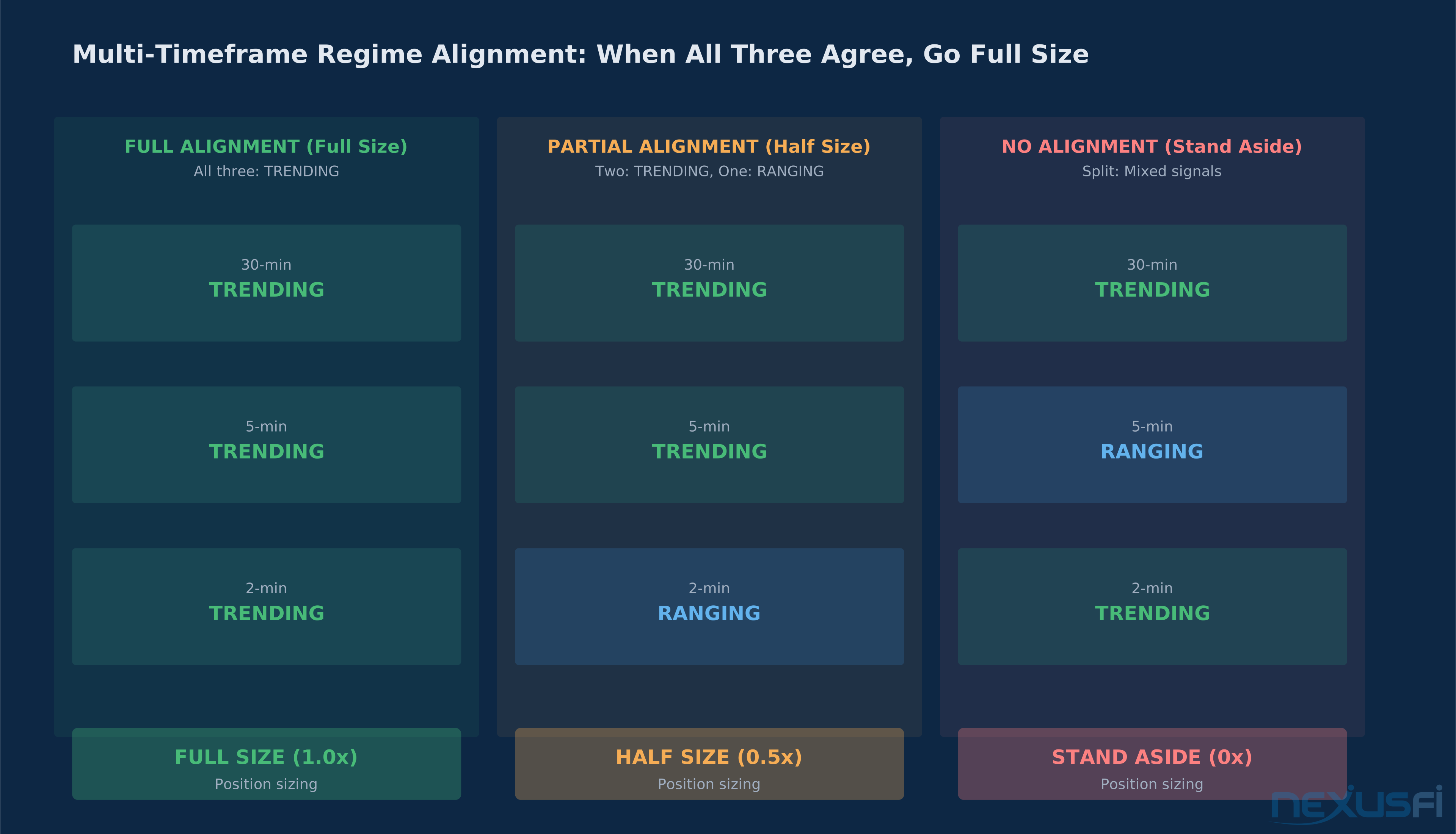
The highest-conviction trades occur when multiple timeframes agree on regime.
A practical implementation: classify regime on three timeframes (30-min, 5-min, 2-min for an intraday system). Only deploy full size when all three agree. Half size when two agree. Stand aside when they disagree. This reduces trade frequency but concentrates capital into high-conviction setups.
The fastest path to implementation: use @iantg's range filter as the initial gate. If the 35-bar range on a 5-minute chart is less than 8 points in ES, the market is compressed — don't take breakout entries. This single rule, implemented in 5 lines of code, eliminates a large portion of false breakout losses before you've built any of the more complex regime machinery.
Knowledge Map
Go Deeper
Build on this knowledgeReferences This Article
Articles that build on this topicCitations
- — Spoo-nalysis ES e-mini futures S&P 500 (2015) 👍 26“Trend following approaches s/b stopped during sideways markets.”
- — THE CLIFFS NOTES VERSION OF MY APPROACH TO TRADING (2010) 👍 60“The 4 days or so a month that the markets have a trend day, I will adjust my hold times and position sizing upward.”
- — I have no edge - Should I throw in the towel? (2020) 👍 25“A trend day typically opens higher/lower above/below the VWAP.”
- — MOMENTUM vs. MEAN (2011) 👍 32“Markets are trending only 20% of the time or approximately 4 days a month.”
- — Common sense trading decisions (2011) 👍 10“A regime -- a period in which the market follows a stable set of rules -- can last for a while.”
- — Building Blocks of a Trading System (1) - Trend Filter (2010) 👍 19“Best trending conditions are found if both the ADX and ADXR stay above 25.”
- — Outside the Box and then some.... (2016) 👍 19“ADX is the only indicator I know of that claims to tell when the market is trending or not.”
- — When NOT to trade (2009) 👍 8“It has 3 different state classifications: trending, ranging, consolidating.”
- — Trading Futures with Context (2014) 👍 13“70% (more or less) = rotational / balance days, 30% = trending days. OAIR = balance/rotational day 80%, OAOR = trending days 80%.”
- — The PandaWarrior Chronicles (2012) 👍 11“Trend days, (in equities) occur only 14% of the time while range days occur 86% of the time. The trick is to be able to identify trend days as early in the trading session as possible and adjust your strategy accordingly.”