



E-mini Dow (YM) Futures: The Complete Trading Guide to the Price-Weighted Index Contract
Overview #
The E-mini Dow
YM controls $5 per index point. With the DJIA near 42,000, one YM contract represents roughly $210,000 in notional value
The Dow is a 30-stock, price-weighted index. Not cap-weighted like the S&P 500 or the Nasdaq-100. Price-weighted. That single difference changes everything about how YM behaves
As @Fat Tails analyzed in that comparison, YM's transaction cost profile sits in a compelling middle ground
This is the contract for traders who want blue-chip equity exposure without tech concentration
Key Specifications #
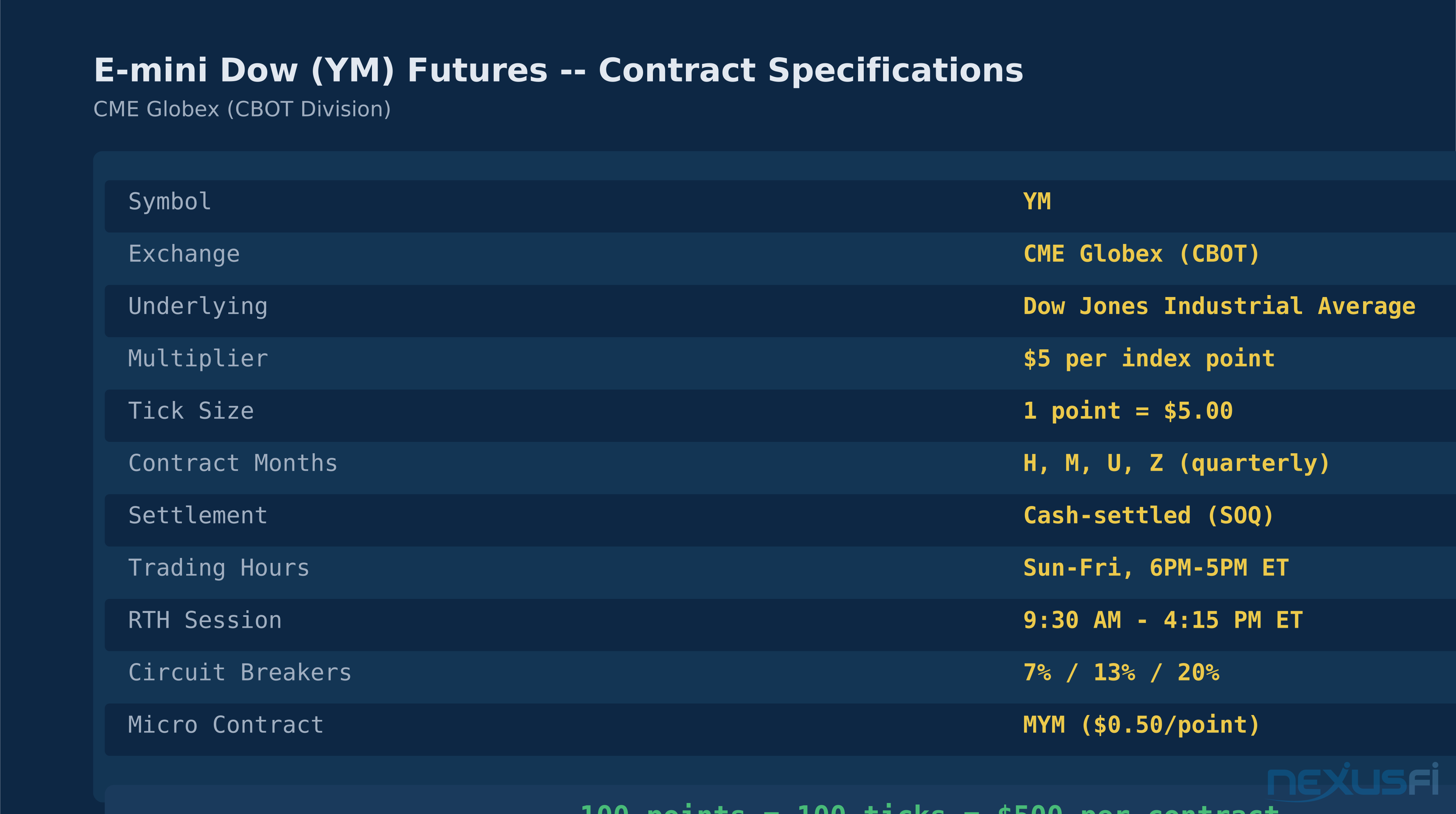
| Specification | Detail |
|---|
|
| Exchange | CME Globex (CBOT division) |
|---|---|
| Underlying Index | Dow Jones Industrial Average (DJIA) |
| Contract Multiplier | $5 per index point |
| Tick Size | 1.0 index point = $5.00 per tick |
| Contract Months | March (H), June (M), September (U), December (Z) |
| Settlement | Cash-settled (SOQ on expiration morning) |
| Last Trading Day | Third Friday of contract month |
| Trading Hours | Sunday-Friday, 6:00 PM - 5:00 PM ET (daily halt 5:00-6:00 PM) |
| RTH Session | 9:30 AM - 4:15 PM ET |
| Daily Price Limits | 7%, 13%, 20% circuit breakers |
| Micro Contract | MYM
The math on YM is about as clean as futures trading gets. One tick equals one point equals $5.00. If YM moves from 42,000 to 42,100, that's 100 points, 100 ticks, $500 per contract. No decimals, no quarter-point conversions.
Margin requirements typically run $7,000-$10,000 per contract for initial margin (CME-published, adjusts with volatility). Many brokers offer reduced intraday margins of $500-$2,000 for day trading. Maintenance margin sits around 90% of initial. Always check current CME performance bond requirements
The Micro E-mini Dow (MYM) trades at one-tenth the size: $0.50 per point with the same 1-point minimum tick. MYM is where smaller accounts start and where position traders fine-tune sizing that YM's $5 increments make too coarse.
How Price Weighting Changes Everything #
Price weighting is the single most important concept for understanding why YM behaves differently from ES, NQ, and RTY. This isn't a minor technical footnote
The Mechanics #
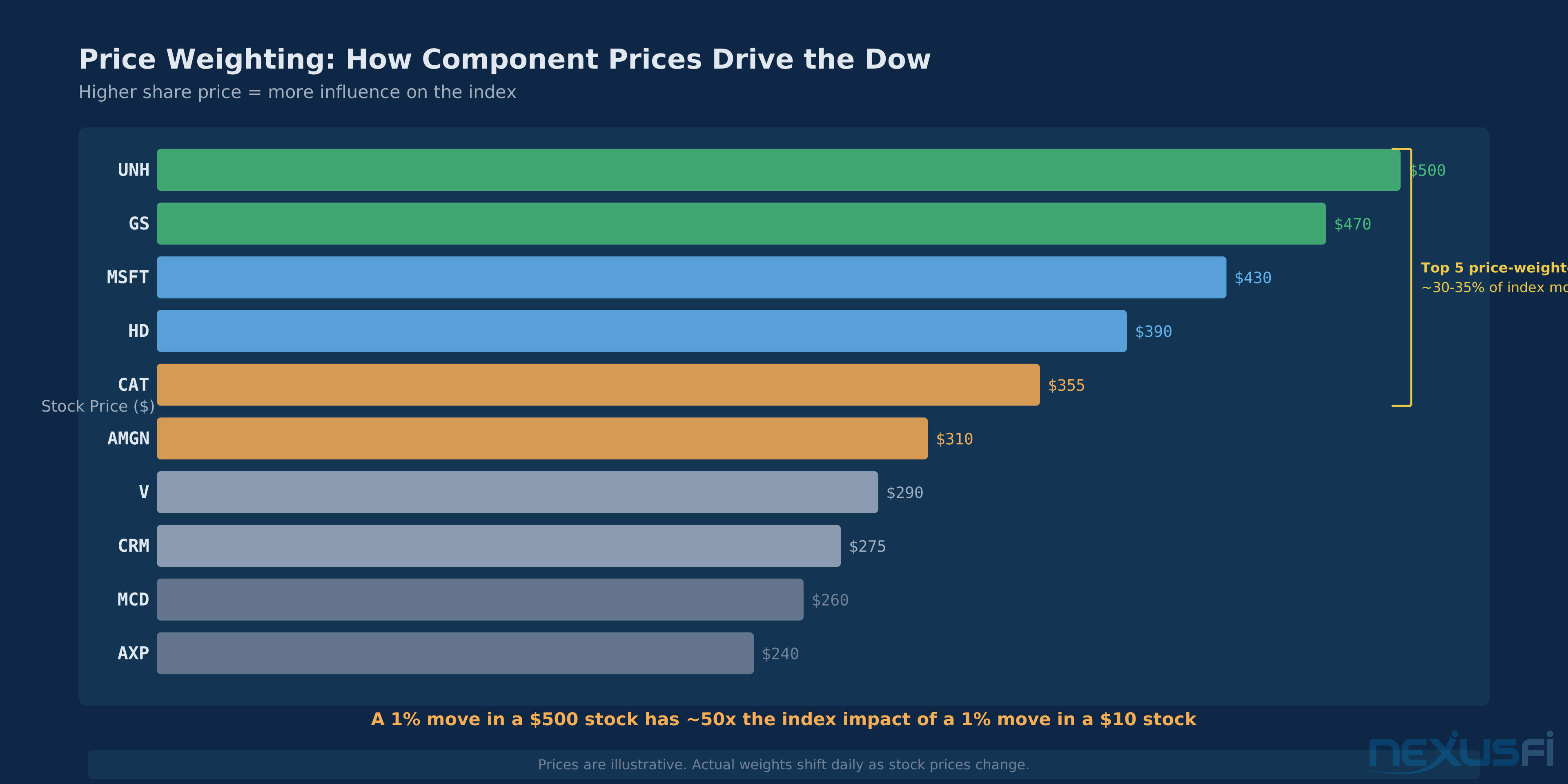
In a cap-weighted index like the S&P 500, each company's influence is proportional to its market capitalization. Apple at $3 trillion dominates. In the DJIA, each component's influence is proportional to its share price. UnitedHealth Group trading at $500 has roughly 50 times the weight of Walgreens at $10
The math runs through the Dow Divisor
What This Means for Traders #
The top 5 highest-priced stocks in the Dow typically account for 30-35% of the entire index's daily movement. A 1% move in UnitedHealth (trading at ~$500) adds roughly 30 DJIA points. A 1% move in Walgreens (trading at ~$10) adds less than 1 point. These are the same percentage moves
This concentration creates a behavioral signature that experienced YM traders learn to read. Before each session, check pre-market activity in the top price-weighted components. If Goldman Sachs gaps 3% on earnings, you already know YM will open with a 50-70 point bias
The comparison that matters: ES reacts to 500 stocks weighted by market cap
Divisor Adjustments and Structural Shifts #
When the DJIA committee swaps components or a stock splits, the Divisor adjusts. These events are rare but significant for YM traders. A high-priced stock splitting 4-for-1 loses roughly 75% of its DJIA weight overnight. If that stock had been a top-5 component, the index's behavioral profile shifts meaningfully
Component changes are even more impactful. When Amazon replaced Walgreens in the Dow in 2024 at ~$180 per share, it immediately became a significant weight in the index, altering YM's sensitivity to e-commerce and cloud computing dynamics. Track these changes
What Moves the Dow #
Macro Drivers #
YM responds to the same macro forces as other equity index futures
Interest rates: The Dow's overweight in financial stocks (Goldman Sachs, JPMorgan, American Express, Visa) means rate expectations move YM distinctively. When the market prices in higher-for-longer rates, NQ often sells off on duration risk while YM's financial components benefit from wider net interest margins. This creates spread divergence that you can trade.
Industrial production: Boeing, Caterpillar, 3M, Honeywell
Component-specific events: Because the Dow is only 30 stocks and price-weighted, a single stock can move the entire index in ways impossible in the S&P 500. A UnitedHealth earnings miss can drag YM 100+ points before any other sector reacts. Boeing's 737 MAX grounding moved the DJIA by over 350 points on its worst day. There's no equivalent dynamic in ES
Sector Dynamics #
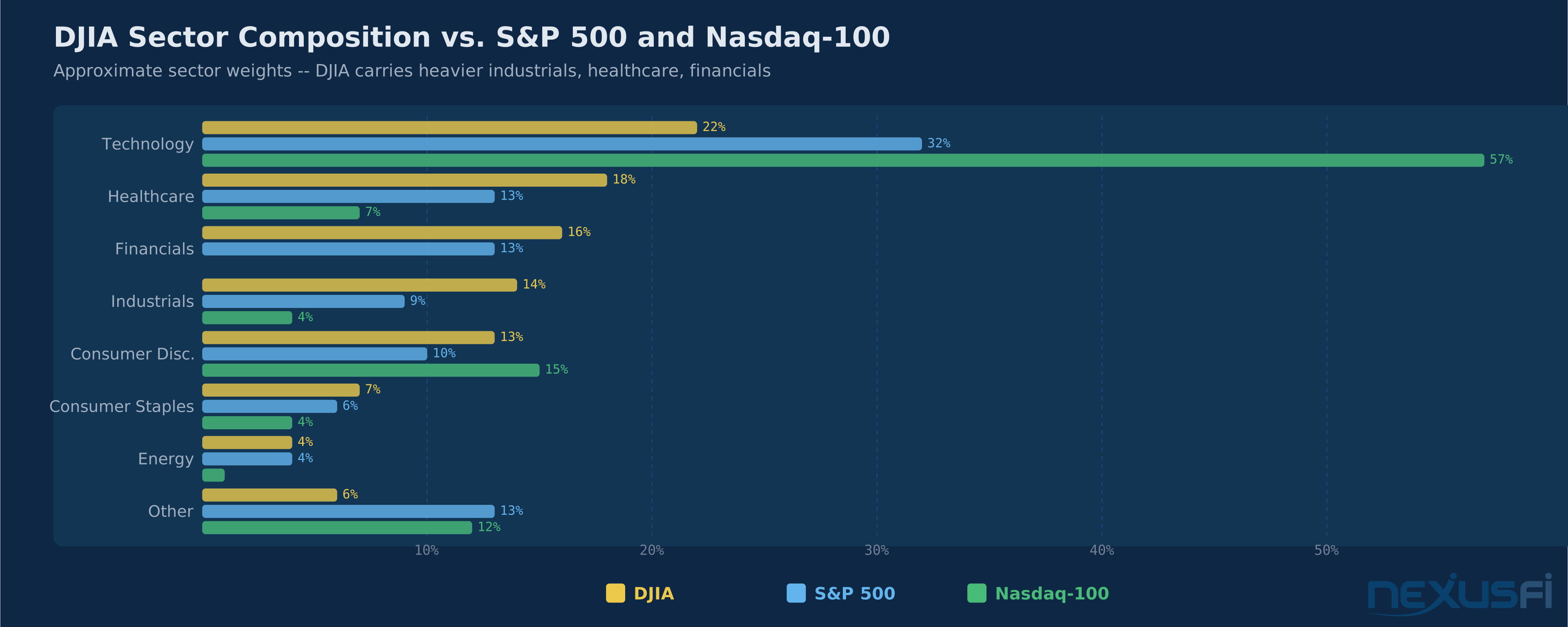
The DJIA's 30-stock composition gives YM a sector profile distinct from any other equity index future:
- Industrials and Financials carry heavier weight than in the S&P 500. Caterpillar, Boeing, Goldman Sachs, JPMorgan
- Technology is present (Apple, Microsoft, Salesforce, Cisco, IBM) but not dominant the way it is in NQ. Tech represents roughly 20-25% of the DJIA vs. 55-60% of the Nasdaq-100.
- Healthcare punches above its weight due to UnitedHealth's high share price.
- Consumer names like McDonald's, Procter & Gamble, and Walmart provide defensive ballast.
This composition makes YM the relative outperformer during "value rotation" periods. When money flows out of growth tech and into industrials, financials, and defensives, YM can hold flat or rally while NQ drops 2%.
Intraday Patterns #
Opening behavior: YM tends to have smaller percentage gaps than NQ. The Dow's defensive components act as overnight stabilizers. But when a top-weighted stock gaps on earnings, the effect is amplified
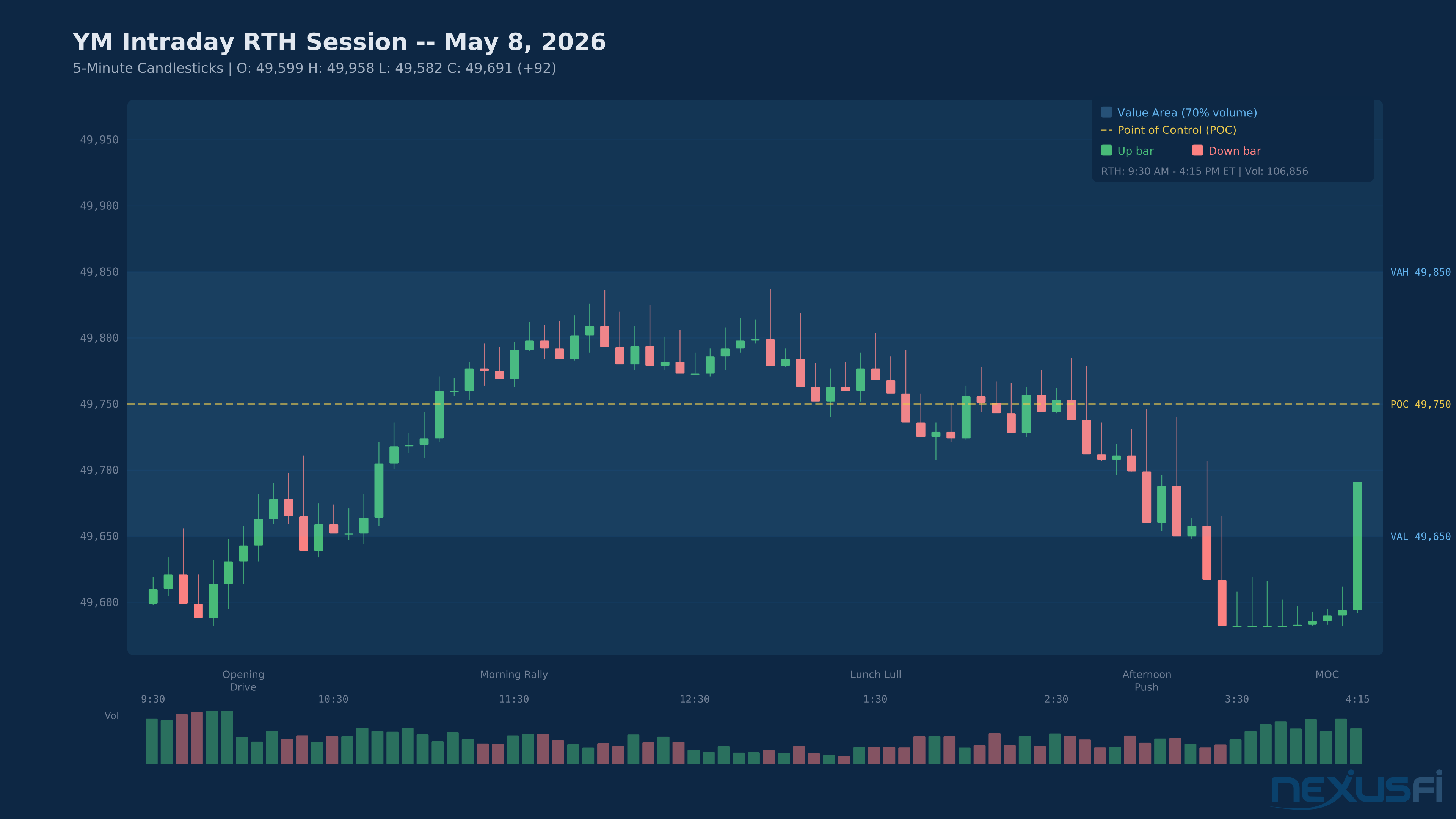
Session rotation: During RTH, institutional flows between growth and value create real-time spread dynamics.
[4] These divergence moments are where YM-specific edge lives.
YM vs. ES vs. NQ vs. RTY #
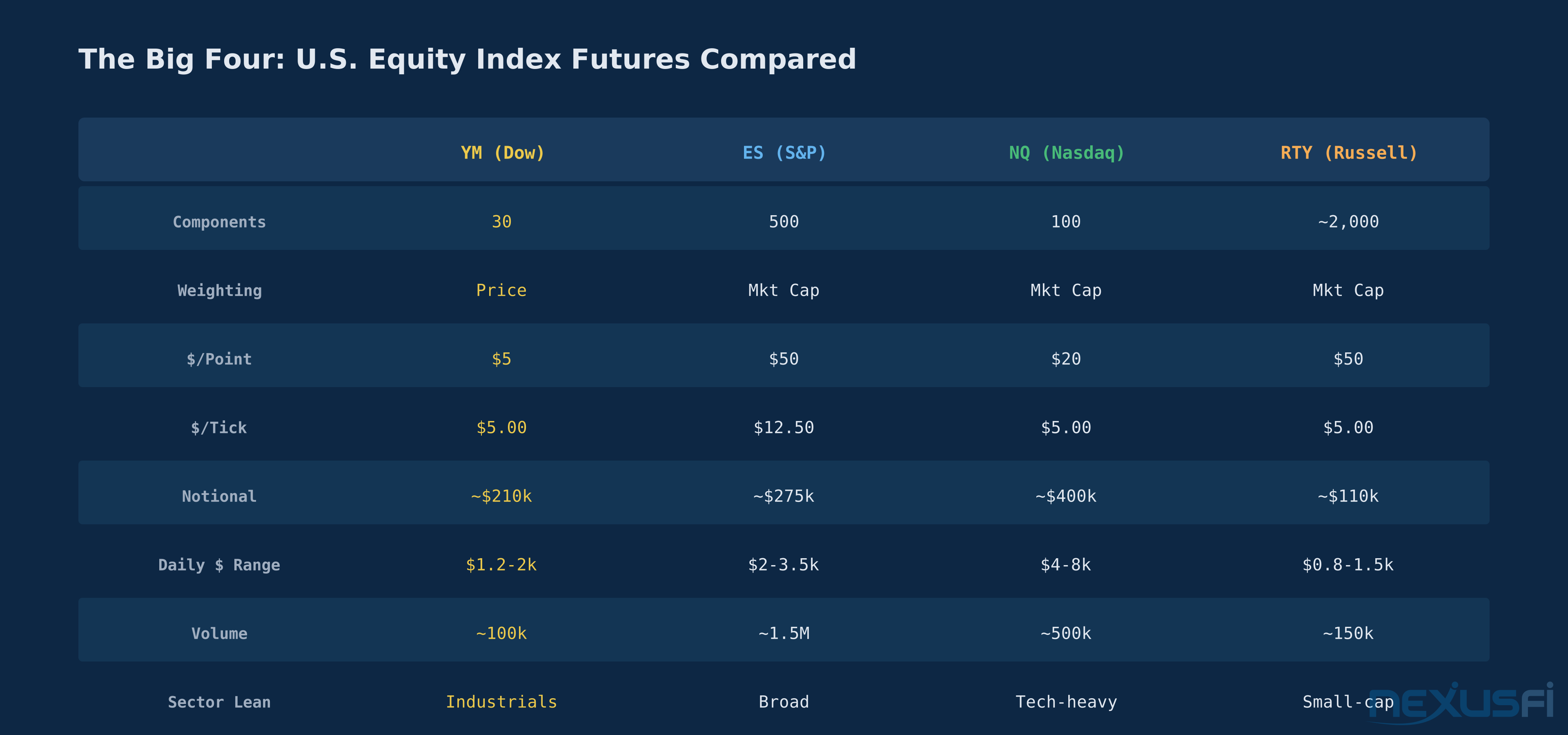
Every trader in U.S. equity index futures faces this choice. Here's the operational reality:
| YM (Dow) | ES (S&P 500) | NQ (Nasdaq-100) | RTY (Russell 2000) |
|---|
|
| Components | 30 stocks | 500 stocks | 100 stocks | ~2,000 stocks |
|---|---|---|---|---|
| $ per Point | $5 | $50 ($12.50/tick) | $20 ($5/tick) | $50 ($5/tick) |
| Approx. Notional | ~$210k | ~$275k | ~$400k | ~$110k |
| Sector Lean | Industrials, Healthcare, Financials | Broad (~30% tech) | Tech-heavy (~55%) | Small-cap blend |
| Typical RTH Range | 250-400 pts | 40-70 pts | 200-400 pts | 15-30 pts |
| Typical $ Range | $1,250-$2,000 | $2,000-$3,500 | $4,000-$8,000 | $750-$1,500 |
| Daily Volume | ~100-150k | ~1.5M+ | ~500k+ | ~150k |
@Botts calculated the daily dollar range across the "Three Sisters" on NexusFi: "NQ = 131.55 x $20 = $2,631. ES = 33.5 x $50 = $1,675. YM = 293.1 x $5 = $1,465.50." [5] YM has the smallest dollar range per contract of the big three, which is either a feature or a bug depending on your strategy and account size.
Choose YM when:
- You want equity index exposure with less tech concentration
- You prefer the $5 tick for entry/exit precision (smaller cost to cross the spread)
- You trade sector rotation (YM vs. NQ spreads, value vs. growth themes)
- You want smaller per-contract dollar risk than ES or NQ
- You trade fundamentals tied to Dow components (industrials, financials, healthcare)
Choose ES when: You need maximum liquidity, broad market exposure, or trade institutional-level size.
Choose NQ when: You want technology exposure, higher volatility, and larger dollar moves per contract.
Choose RTY when: You want small-cap exposure and a contract disconnected from mega-cap tech dominance.
Practical Execution #
Tick Granularity Advantage #
YM's 1-point ($5) tick means the bid-ask spread costs $5 to cross. ES costs $12.50. For a trader placing limit orders, YM's smaller crossing cost compounds into meaningful savings over thousands of trades. On a 500-trade month, the difference in spread cost alone is $3,750.
But this advantage flips for scalpers. @josh made the practical case on NexusFi: "MYM/YM is not great for scalping, IMHO. MNQ and NQ have more bang for the buck in terms of very short moves. YM averages about 1.5x to 2x the range of NQ but NQ is 4x the value per point, so it winds up being about 1.5x to 2x the dollar per point move. So, the spread and cost to trade YM often does not justify scalping if the YM target is only 10-15 points." [7]
The sweet spot for YM is intraday swings targeting 30-150 points ($150-$750 per contract). At that scale, the $5 tick granularity helps entries and exits without the dollar-range disadvantage mattering.
Liquidity and Execution Quality #
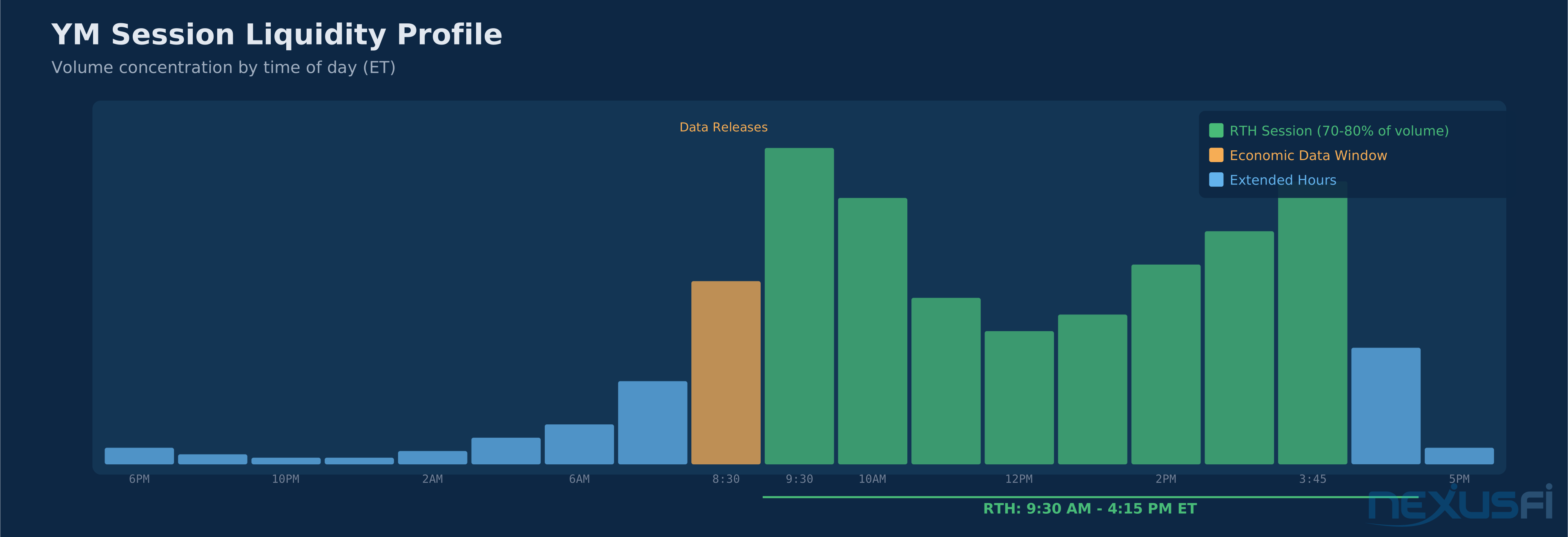
YM trades 80,000-150,000 contracts per day. Single contracts fill instantly during RTH. Market orders on 10-20 lots execute without meaningful slippage during active hours. But the order book is thinner than ES
@Fat Tails' classic NexusFi analysis calculated the cost-to-volatility ratio across index futures: for YM, transaction cost (slippage + commission) eats 6.83% of a typical 15-minute trade vs. 10.25% for ES. "For trades longer than 15 minutes, YM and NQ are also a reasonable alternative," he concluded. [1]
During the overnight session (especially midnight to 5 AM ET), expect wider spreads and thinner depth. Use limit orders. Market stops triggered during these hours can slip 3-5 ticks.
Position Sizing #
At $5 per point, the math is clean. A 40-point stop costs $200 per contract. A 100-point stop costs $500. On a $50,000 account risking 1% per trade ($500), you can trade up to 2 contracts with a 50-point stop or 10 contracts with a 10-point stop.
For finer granularity, use MYM at $0.50 per point. Two MYM contracts approximate $1 per point of exposure, letting you fine-tune sizes that YM's $5 increments make too coarse. Many professional traders use a mix
Spread Trading #
One of YM's most valuable applications is relative value
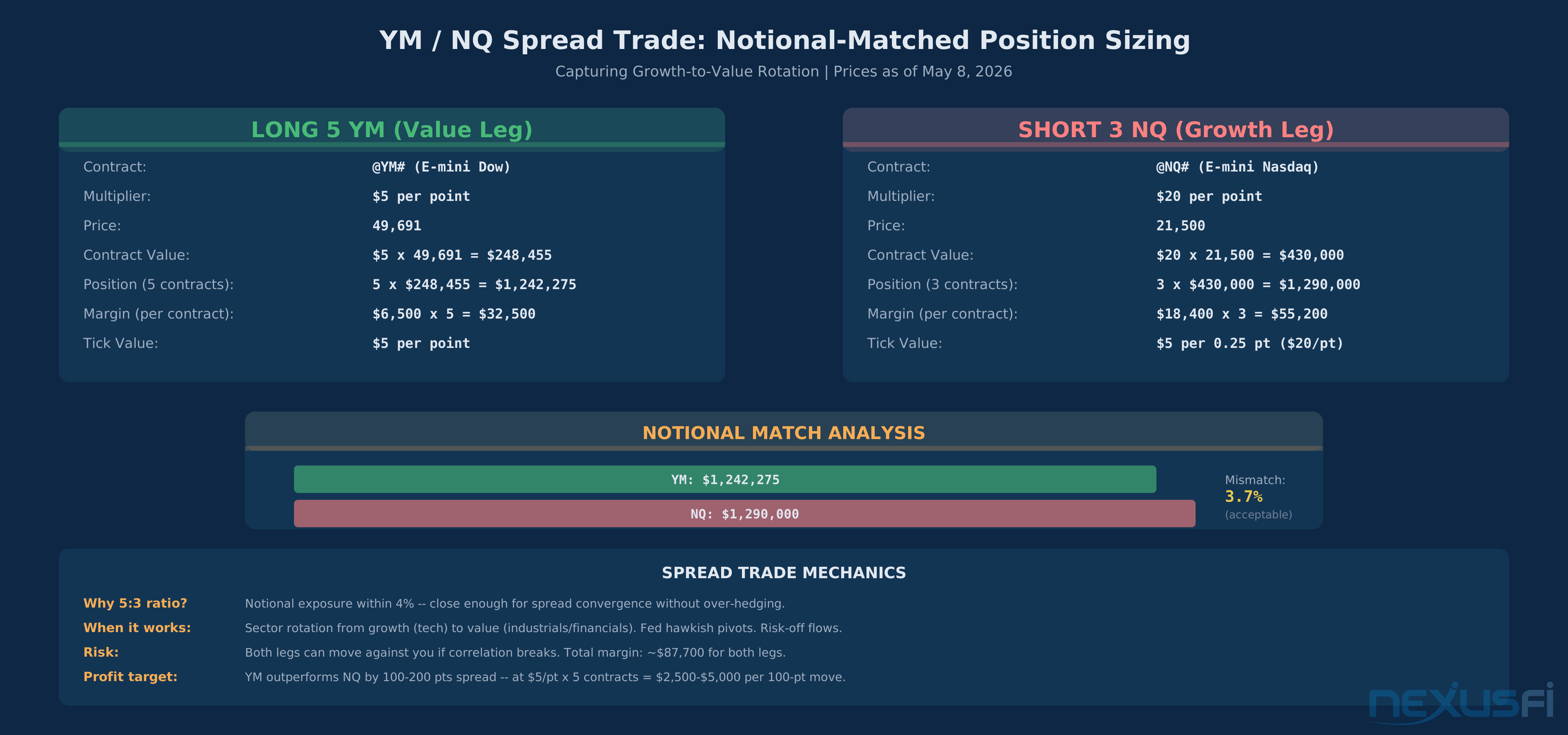
YM/NQ Spread (Growth vs. Value): The typical notional-matching ratio is approximately 5 YM to 3 NQ. When tech outperforms, NQ gains on the spread. When value rotates in, YM gains.
YM/ES Spread: Tighter correlation than YM/NQ, but moves on price-weighting vs. cap-weighting divergence. Works best around Dow component earnings when a high-priced stock moves YM without proportionally moving ES.
CME lists inter-commodity spreads (ICS) that reduce margin requirements. Use the spread order when rolling positions or entering cross-index trades
Rollover #
Contracts expire quarterly (March, June, September, December). Volume migrates 5-8 trading days before expiration. The roll spread reflects interest rate carry minus expected dividends. Use calendar spread orders to roll rather than closing and reopening legs independently.
When YM Doesn't Work #
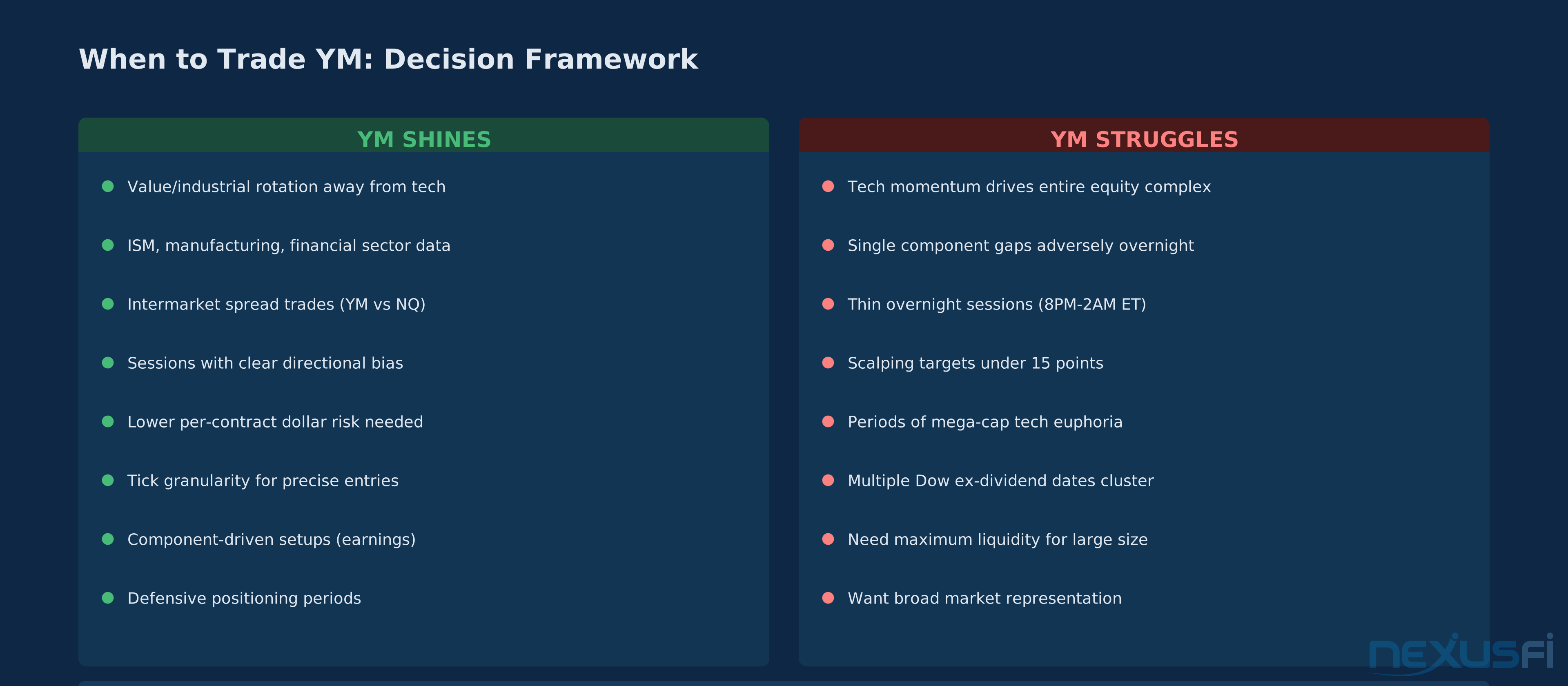
Tech momentum regimes: When mega-cap tech drives the equity complex higher, YM lags persistently. Trading mean reversion expecting YM to "catch up" during legitimate tech leadership is a slow bleed. If NQ leads by more than 1% on the session driven by real tech catalysts, don't expect YM to close the gap intraday.
Single-component gap risk: The same concentration that makes YM interesting makes it vulnerable. A DOJ investigation announcement against UnitedHealth after hours can gap YM 200+ points while ES moves 15. This is unique to price-weighted instruments. The only hedge is position sizing and overnight risk management.
Thin overnight sessions: Between 8 PM and 2 AM ET, YM's order book gets extremely thin. Stops can blow through multiple ticks. If you hold overnight, widen stops or accept the gap-through risk.
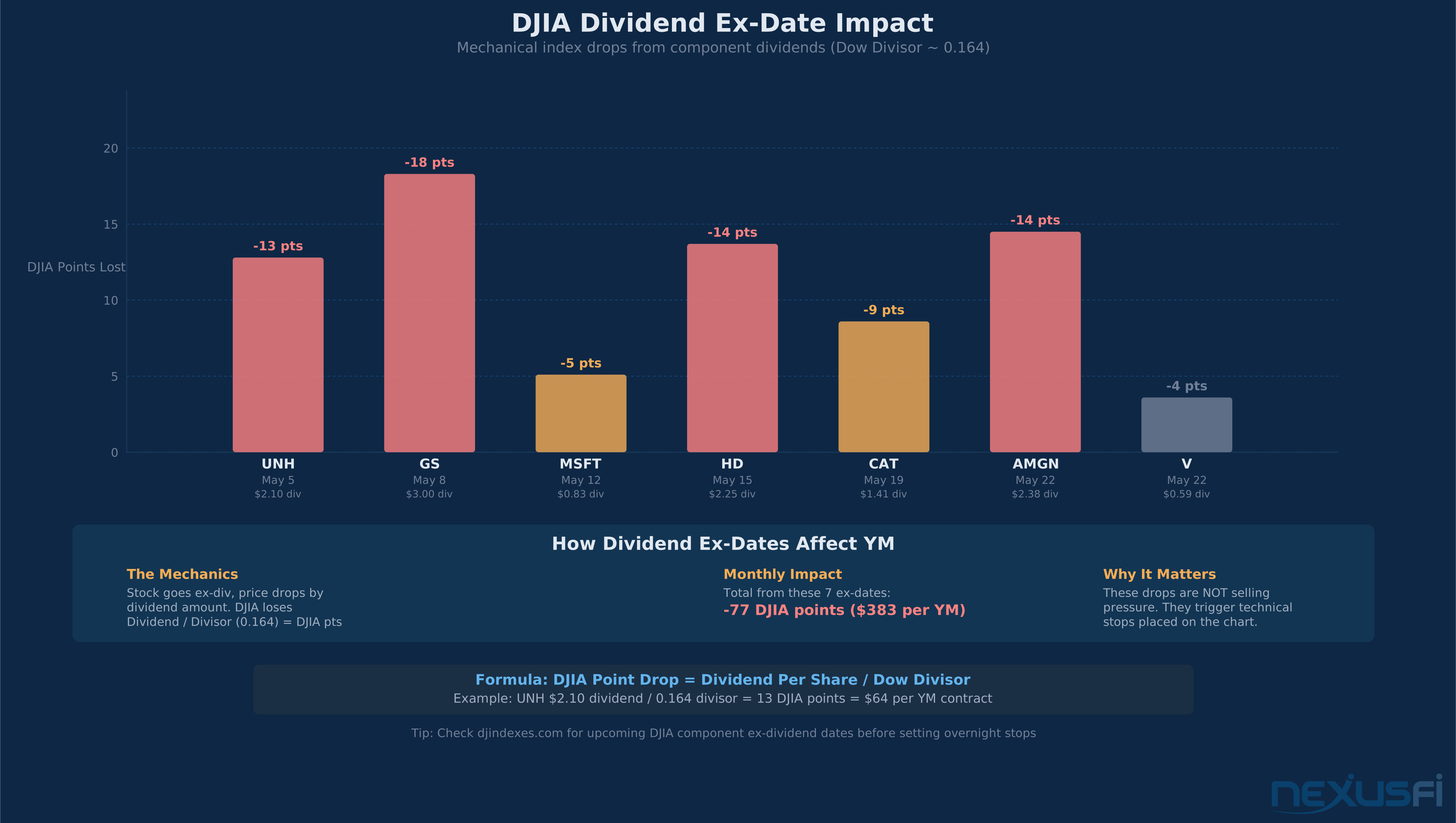
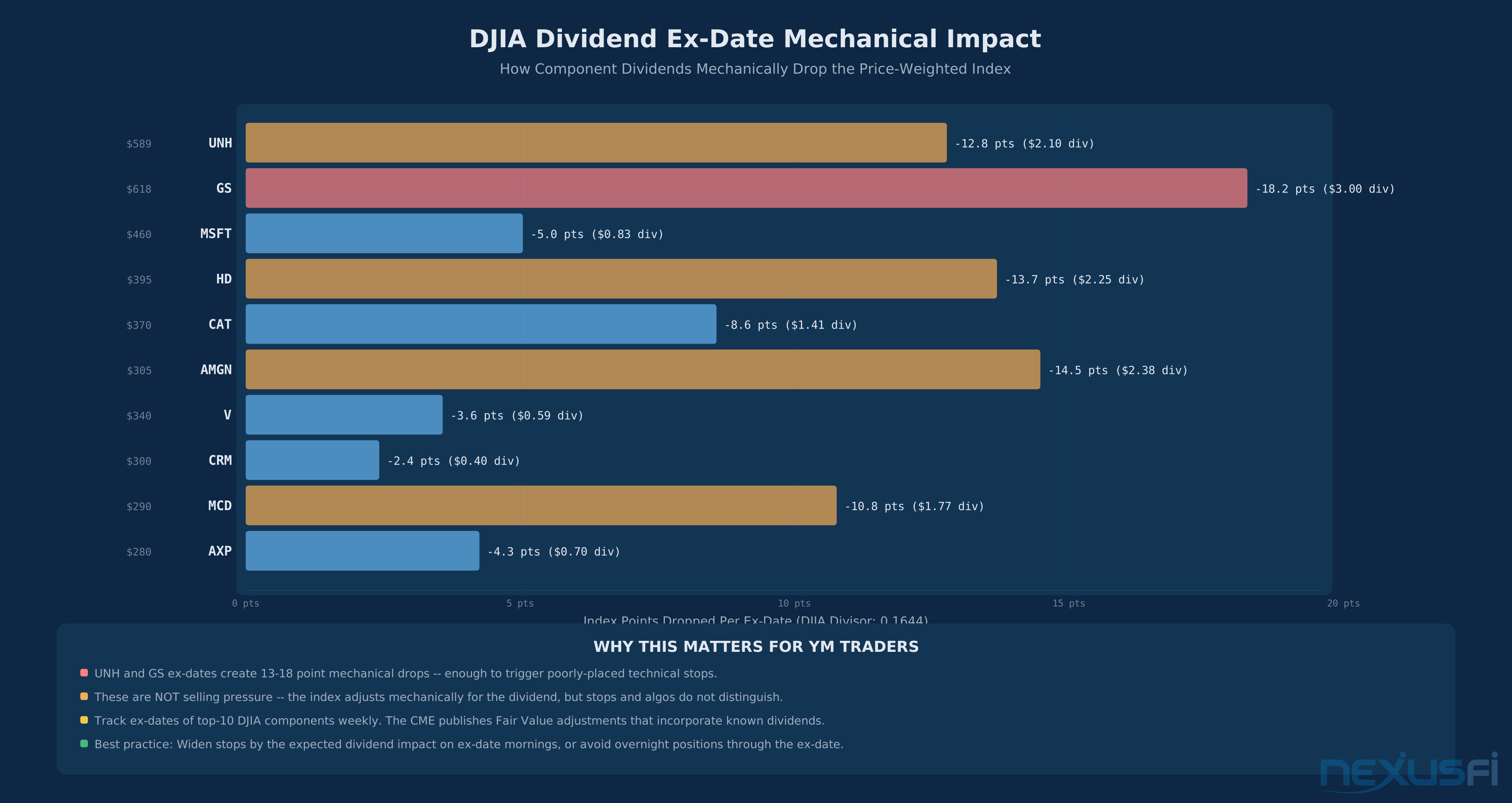
Dividend ex-dates: When multiple high-priced DJIA components go ex-dividend on the same date, the index can drop 30-50 points purely on mechanical adjustment. This doesn't reflect selling pressure, but it shows up on your chart and can trigger technical stops. Check the DJIA dividend calendar daily.
Scalping: As discussed above, YM's dollar-per-point structure doesn't reward scalping targeting under 15 points. NQ and MNQ are better vehicles for very short-term trades.
Getting Started #
For traders moving to YM from ES or NQ, start with MYM to learn how price-weighting creates different behavior. Review the risk management fundamentals before sizing up to full YM contracts. Trade for at least two weeks tracking the top 5 highest-priced Dow components alongside your YM chart. Notice the divergence moments
[8] The simplicity of YM's $5-per-point math, combined with the Dow's household-name components, makes it an intuitive starting point for equity index futures trading.
Before trading YM, spend two weeks tracking the top 5 highest-priced Dow components alongside your YM chart. When UnitedHealth gaps 2% on earnings, watch how it moves YM 25-40 points before the broader market reacts. That's the edge price-weighting gives you — and it's invisible on ES or NQ.
Build a pre-market routine that includes:
- Check pre-market moves on the top 5 price-weighted DJIA components
- Note any Dow component earnings reports (pre-market or post-close)
- Review overnight YM price action for gap direction and magnitude
- Check the economic calendar for macro releases that hit industrials and financials harder than tech
- Compare YM's overnight range to NQ's
See Also #
- E-mini S&P 500 (ES) Futures: The Complete Trading Guide
- E-mini Nasdaq-100 (NQ) Futures: The Complete Trading Guide
- E-mini Russell 2000 (RTY) Futures: The Complete Trading Guide
- Micro E-mini Futures (MES, MNQ, MYM, M2K)
- Position Sizing Methods for Futures Trading
- Intermarket Analysis for Futures Traders
Knowledge Map
Prerequisites
Understand these firstGo Deeper
Build on this knowledgeReferences This Article
Articles that build on this topicCitations
- — Comparing Index Futures (2010) 👍 132“I am trading ES, YM, TF and sometimes FDAX. Often I question myself, which of these is the appropriate instrument to trade. Each of them has a different character.”
- — ES vs NQ/YM (2019) 👍 7“I recently switched to YM, and I like it mainly because of the smaller tick size: 10 ticks in YM = $50, vs. 4 ticks = $50 on ES.”
- — Pairs trading (2019) 👍 4“For equity indices futures spreads, there is a white paper on CMEgroup website. The common spreads are NQ/ES, YM/ES, ES/EMD, EMD/RTY. NQ/ES -- Buy when Tech stocks are expected to outperform the broader markets.”
- — Spoo-nalysis ES e-mini futures S&P 500 (2023) 👍 4“Another trade idea: buy the YM/NQ spread. Dow is -1% on the year, and NDX is up 32% on the year. We've seen massive rotation into tech.”
- — ES vs NQ/YM (2019) 👍 10“I'm not trying to regurgitate what bobwest already observed, but I too recently started trading a different contract.”
- — YM vs. ES (2014) 👍 5“I have found the NQ as a happy middle between then YM and ES. You get the same cost benefits of the YM but without the slippage.”
- — Is the nasdaq micro and mini the best day trading vehicle? (2024) 👍 5“First I'll mention scalping. MYM/YM is not great for scalping, IMHO. MNQ and NQ have more bang for the buck in terms of very short moves.”
- — Time Bandits. A Simple Trading Plan for the E mini Dow YM (2011) 👍 11“Hello Traders. I'm BroncoSlade and this is my first posting on BigMike's Trading Forum.”
- — E-mini Dow Jones Industrial Average Index Futures Contract Specs (2026)
- — Understanding Dow Jones: How the DJIA Is Calculated (2025)
- — Amazon to Replace Walgreens in Dow Industrial Average (2024)