



Trading Bias: How Directional Lean and Cognitive Shortcuts Destroy Futures Traders
Overview #
Picture an ES trader who walks into the session with a bullish thesis built on overnight globex strength and a Fed speaker he read as dovish. Market opens, rotates above the prior day high, and he goes long. Price stalls at a volume node. He holds — the thesis is intact. Delta turns negative. He adds. VWAP breaks. He moves his stop. Three signals against his position, all ignored, and he closes the day down 3R on a trade that should have been a scratch at worst.
The problem was never having a directional lean. Every trader who clicks a button has one. The problem was that the lean became a locked door — no amount of contradictory evidence could open it. The overnight thesis overrode the live market, and by the time loss aversion kicked in, the damage was done.
This is what trading bias actually looks like in practice. Not a textbook diagram of "irrational behavior" but a specific, mechanical failure where cognitive shortcuts hijack the decision process one link at a time.
This article breaks down seven distinct bias types that compound in futures markets, maps the cascade mechanism that chains them together into account-killing sequences, introduces a thirty-second three-question pre-trade check that interrupts the cascade before capital is at risk, and shows how to turn bias from a vague psychological concept into a measurable, data-driven performance metric. The goal is not eliminating bias — that is impossible. The goal is building a process that catches it before it acts.
Key Concepts #
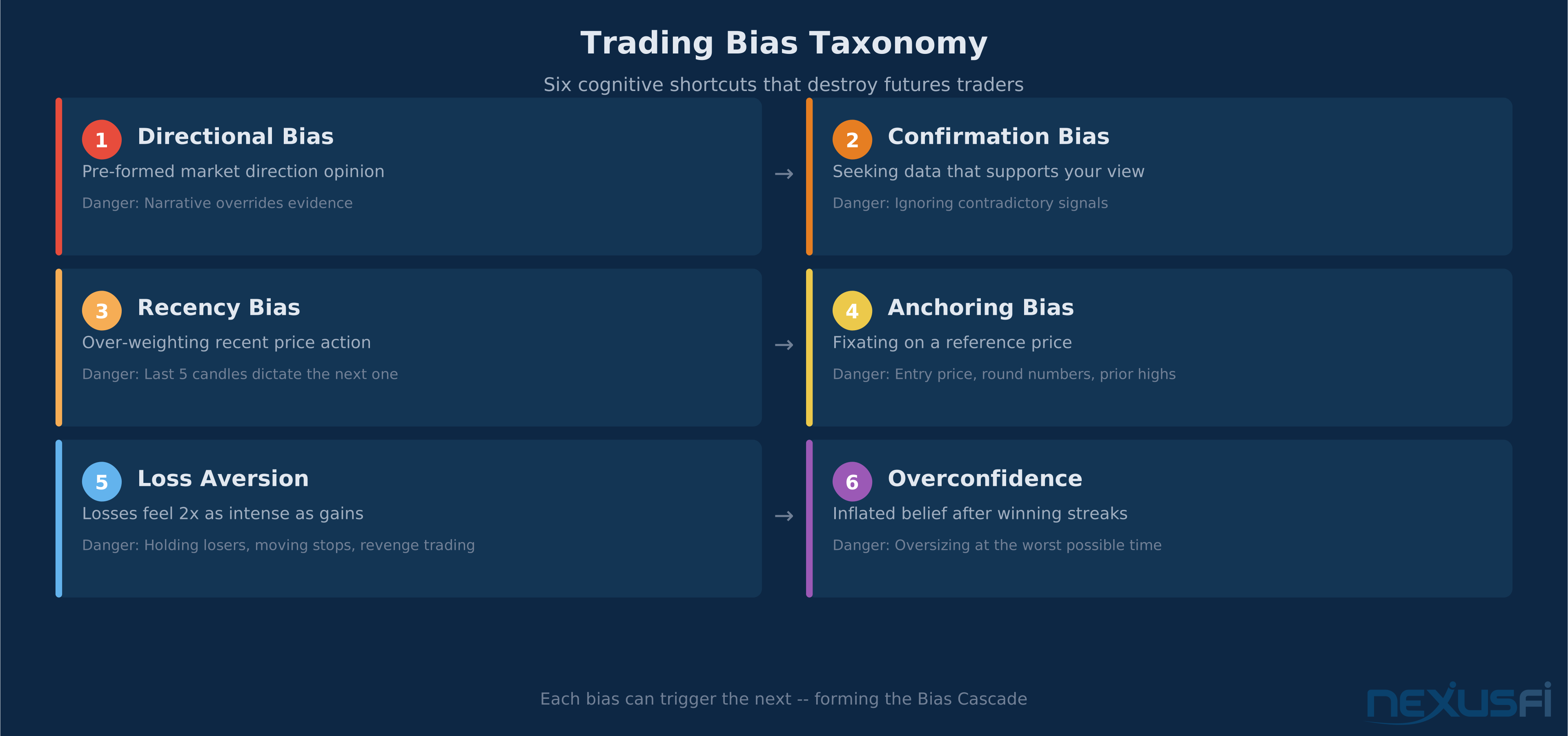
- Directional Bias — A pre-formed opinion about which way the market will move, held before or during a trading session. "I think today is a buy day" is a directional bias. Having one isn't naturally wrong — trading without conviction is gambling. The problem starts when the bias overrides evidence.
- Confirmation Bias — The tendency to seek out, notice, and remember information that supports your existing belief while ignoring or dismissing contradictory evidence. In trading, this means seeing "healthy pullbacks" when the market is actually reversing against you.
- Recency Bias — Over-weighting the most recent price action in your decision-making. After five green candles, the brain expects a sixth. After a sharp sell-off, the brain expects more selling. Neither is necessarily true.
- Anchoring Bias — Fixating on a specific reference price — your entry, a prior high, a round number — and letting it distort your assessment of current conditions. The market doesn't care about your fill price.
- Loss Aversion — The psychological tendency to feel losses roughly twice as intensely as equivalent gains — a phenomenon first documented by Daniel Kahneman and Amos Tversky in their landmark 1979 Prospect Theory paper. In futures, this manifests as holding losers too long, moving stops, and revenge trading after drawdowns.
- Overconfidence — Inflated belief in your own judgment, often following a winning streak. In leveraged markets like ES and NQ, overconfidence leads to oversizing positions precisely when the next drawdown will hit hardest.
- Bias Cascade — The chain reaction where one cognitive bias triggers the next. Directional bias leads to confirmation bias, which feeds recency bias, which creates anchoring, which results in loss aversion. Breaking any link in this chain prevents the full cascade.
Why Bias Hits Harder in Futures #
Every market participant carries biases. The difference is that ES and NQ punish them faster and more severely than most other instruments.
Three structural factors amplify bias damage in index futures:
1. Leverage magnifies mistakes. #
A 2R loss in a stock account is painful. A 2R loss in a futures account with 20:1 margin can wipe out a week's profit in minutes. Loss aversion — the bias that prevents you from cutting losers — becomes existential rather than just uncomfortable.
2. Speed outpaces correction. #
ES and NQ can rotate 20-30 points in seconds during news events or liquidity shifts. By the time your conscious mind recognizes that your directional bias is wrong, the market has already moved 10 ticks against you.
Confirmation bias is when you have a directional bias first, and then look for input to support that bias while ignoring the data.
-- @tigertrader, NexusFi
In fast futures markets, that data changes before you can process it.
3. Order flow shifts are invisible to narrative. #
Your bullish thesis doesn't see the DOM. It doesn't register that aggressive buying has stopped, that ask walls are replenishing, that CVD has gone flat. Bias operates at the narrative level. Futures operate at the microstructure level. These are different speeds of information processing, and the microstructure always wins.
Key Insight: In ES and NQ, leverage doesn't just amplify gains — it turns bias from a minor inefficiency into an account-ending threat. The faster the market, the less time you have to recognize you're wrong.
The Bias Cascade #
The most dangerous aspect of trading bias isn't any single cognitive shortcut — it's how they chain together. Both council experts independently identified the same failure pattern that destroys ES/NQ traders:
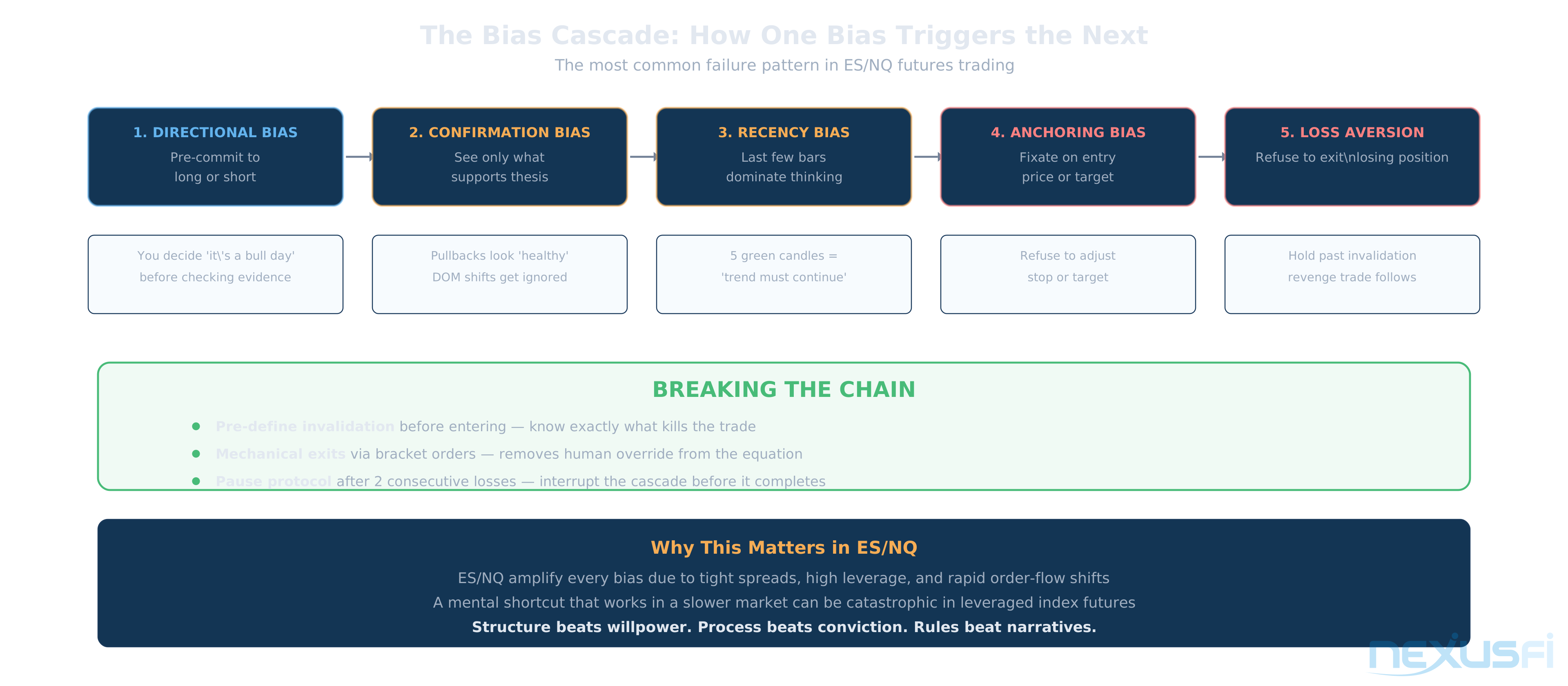
Step 1: Directional Bias — You decide the market is going up today. Maybe the overnight session was strong. Maybe you read a bullish headline. Whatever the trigger, you've committed to a direction before the evidence is in.
Step 2: Confirmation Bias — Now you're watching the chart, but you're only seeing what supports your thesis. Pullbacks look "healthy." Rotation looks like "shaking out weak hands." The DOM shows increasing sell-side aggression, but you interpret it as "liquidity" that will get absorbed.
Step 3: Recency Bias — The last few candles were green. Your recent longs worked. The brain pattern-matches: green candles = more green candles. You add to your position.
Step 4: Anchoring Bias — You're now fixated on your entry price and your profit target. The market has changed structure — what was a breakout is now failing back into range — but your reference point is frozen at where you got in, not where the market actually is.
Step 5: Loss Aversion — Price drops through your planned stop. You don't exit because realizing the loss feels worse than the abstract risk of holding. You widen the stop. You average down. The cascade is complete.
Key Insight: You don't need to eliminate all five biases — you only need to break one link in the chain. A written invalidation level before the trade breaks Step 1, and the rest of the cascade can't follow.
In my opinion the only way to deal with cognitive biases are rules which are always respected. When not trading, setup the rules. When trading apply the rules, but do not question them.
-- @Fat Tails, NexusFi
Breaking any single link in this chain prevents the full cascade. That's why process-based trading works — it inserts friction between the bias and the action.
Directional Bias: The Starting Point #
Directional bias deserves its own section because it's the most common entry point for the cascade, and it's also the most misunderstood.
Having a directional lean is not wrong. Every trader who takes a position has a directional opinion. The question is: did you arrive at that lean through evidence, and — more importantly — did you define what would change your mind?
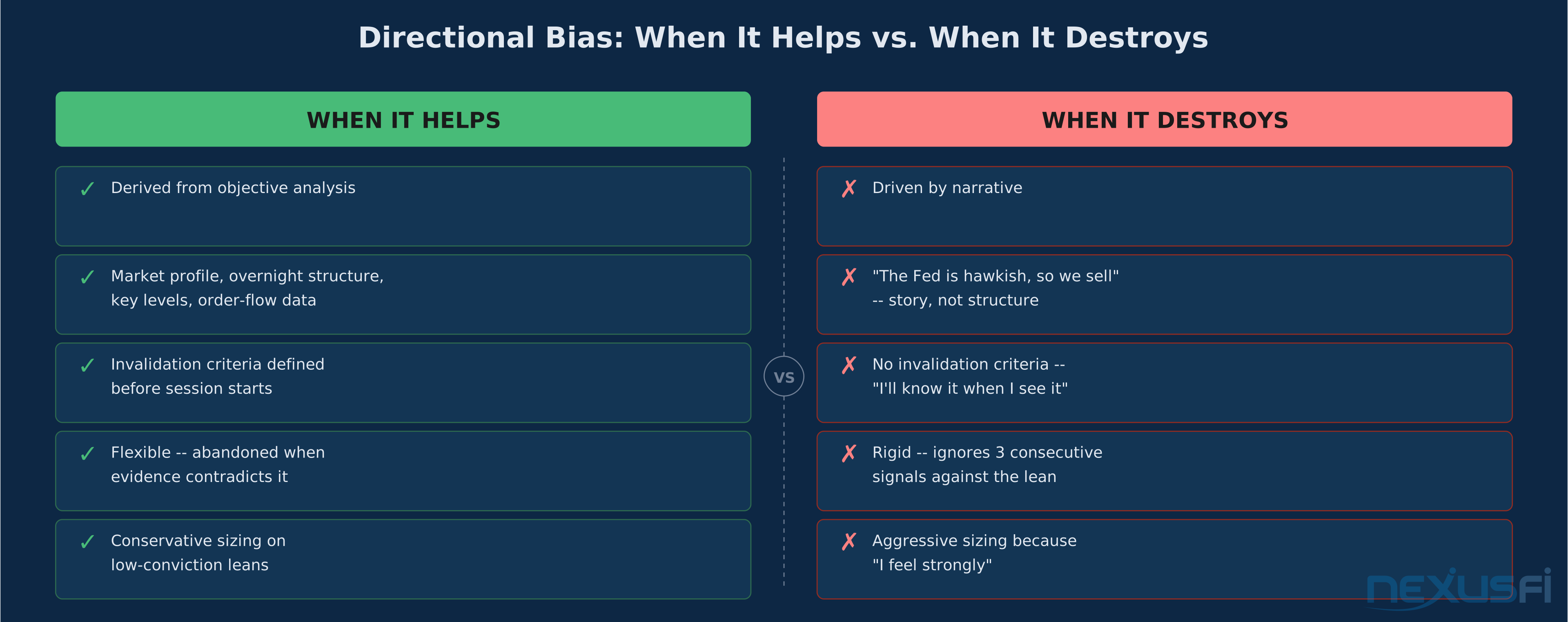
When directional bias helps: #
- It comes from objective analysis (market profile, overnight structure, key levels, order-flow data)
- You've defined specific invalidation criteria before the session starts
- You're flexible enough to abandon it when evidence contradicts it
- You size conservatively when your lean is low-conviction
When directional bias destroys: #
- It comes from narrative ("the Fed is hawkish, so we sell")
- No invalidation criteria exist — you'll "know it when you see it"
- You ignore three consecutive signals against your lean because "the market is wrong"
- You size aggressively because you "feel strongly"
Key Insight: The single question separating a directional thesis from dangerous bias: "What specific price action would make me wrong?" If you don't have a concrete answer before the session starts, you don't have analysis — you have conviction without an exit plan.
As @tigertrader noted in his NexusFi Directional Bias thread:
The goal is to employ objective heuristics in decision making, and not allow stress, cognitive load, emotions, and bias, to non-linearly affect the process.
-- @tigertrader, NexusFi
ES vs NQ nuance: #
ES traders tend to anchor directional bias around institutional levels (VWAP, prior session highs/lows). NQ traders tend to develop directional bias from momentum — the "it's ripping, so it must continue" instinct. Both are the same error dressed in different market clothes.
The Three-Question Bias Check #
Before every trade, answer three questions. Thirty seconds maximum. If you can't answer all three crisply, don't take the trade.
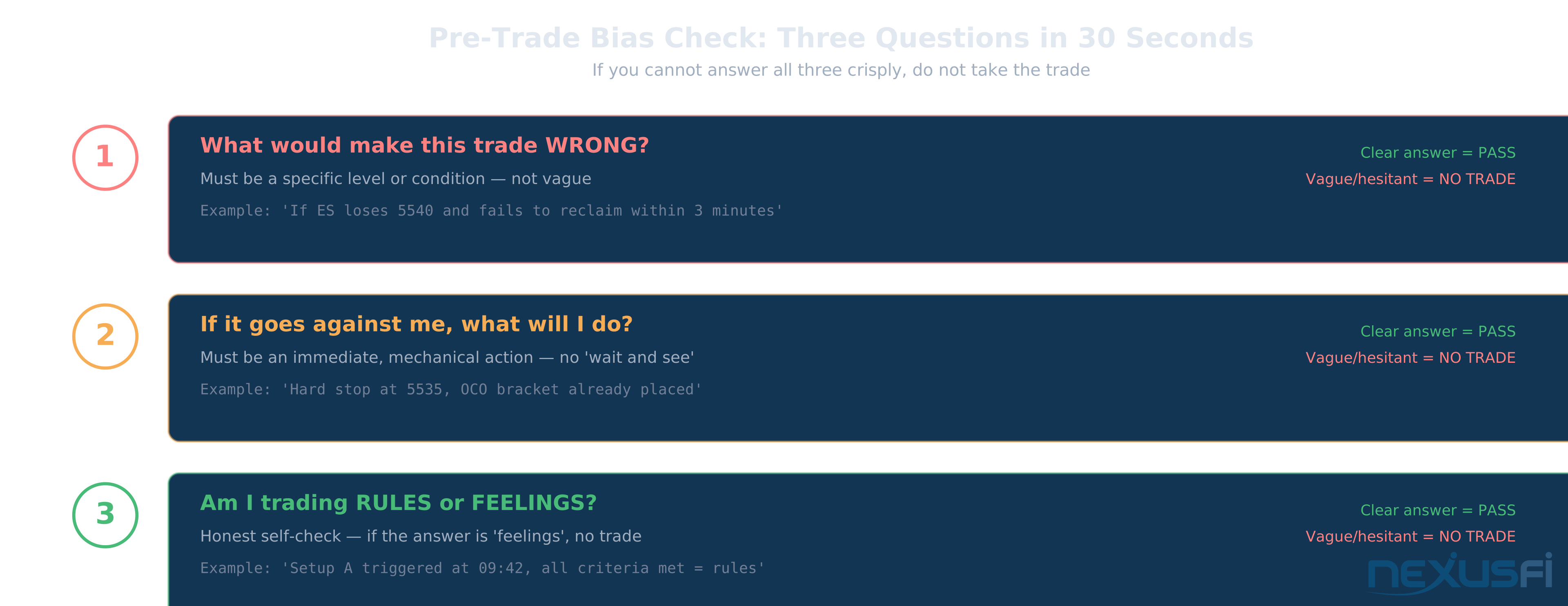
Question 1: What would make this trade wrong? #
The answer must be specific — a price level, a time condition, an order-flow state. "If ES loses 5540 and fails to reclaim within 3 minutes" is specific. "If the market reverses" is not. If you can't articulate what kills your trade, you don't have a trade — you have a hope.
Question 2: If it goes against me, what will I do immediately? #
The answer must be mechanical and already set up. "Hard stop at 5535, bracket order placed" is mechanical. "I'll watch and decide" is an invitation for loss aversion to take control. The moment invalidation happens is the worst possible moment to make a decision — pre-commit.
Question 3: Am I trading rules or feelings? #
This is the honest self-check. If the setup triggered your entry criteria, the answer is "rules." If you're entering because the chart "looks right" or you "feel like" the market is about to move, the answer is "feelings." Feelings-based entries have a negative expectancy over time because they're driven by the very biases you're trying to avoid.
Key Insight: Pre-trade decisions made when you're calm are almost always better than in-trade decisions made when you're stressed and exposed. The three-question check forces pre-commitment at the only moment when your judgment is uncompromised.
Implementation: #
Some traders tape these three questions to their monitor. Others have them as a mandatory journal field before every entry. The format doesn't matter. The habit does. @vmodus documented on NexusFi how he discovered his conviction about a specific pattern was wrong:
It was happening less than half the time. This was pure confirmation bias, where my mind was discarding what it did not want to see.
-- @vmodus, NexusFi
The three-question check catches this before capital is at risk.
Building a Bias-Resistant Process #
The core insight from trading psychology research — articulated well by Daniel Crosby in The Behavioral Investor — is that willpower doesn't work. You cannot think your way out of biases in real time. The only reliable defense is process design — building structures that insert friction between the bias impulse and the trading action.
Key Insight: Willpower depletes under stress — precisely when you need it most. Process design sidesteps willpower entirely. Bracket orders and hard stops don't require discipline in the moment; they enforce discipline before the moment arrives.
Hard risk rules (non-negotiable): #
- Maximum loss per trade (in R-multiples or dollar amount)
- Maximum daily loss (done for the day when hit)
- Maximum consecutive losses before a mandatory pause (typically 2-3)
- Bracket orders on every entry — exits happen mechanically
Bias journal with weekly scoring: #
For every trade, tag it with a "bias flag" — Directional, Confirmation, Recency, Anchoring, Loss Aversion, Overconfidence, or None. After 20+ trades, compute win-rate per bias flag. If any flag shows <30% win-rate, that bias is a quantifiable leak. Block the associated strategy for a week.
The pause protocol: #
When emotional intensity rises — tight-stop anxiety, eagerness to chase, anger after a loss — stop entering for 2-3 minutes. Re-run the three-question check. If the check fails, no trade. This interrupts the bias cascade before it reaches the loss-aversion stage.
Screen-time management: #
Fatigue amplifies every bias. Recency bias worsens when tired. Confirmation bias gets stronger with screen hours. Set fixed trading blocks, schedule breaks, and enforce a maximum screen time per session. The trader who steps away at the right time often outperforms the one who grinds through.
"Both sides" chart preparation: #
Before each session, mark potential setups in BOTH directions. This forces you to consider the bear case even when your lean is bullish, and vice versa. Only commit to a direction when objective criteria trigger — not when your narrative feels strongest.
Measuring Bias: From Psychology to Data #
The shift that separates struggling traders from consistent ones is treating bias as data rather than a character flaw.
The Bias Scorecard: #
Export your trade journal to a spreadsheet. For each trade flagged with a specific bias:
- Compute win rate
- Compute average R-multiple
- Compute max drawdown
- Compare against trades flagged "None" (no bias detected)
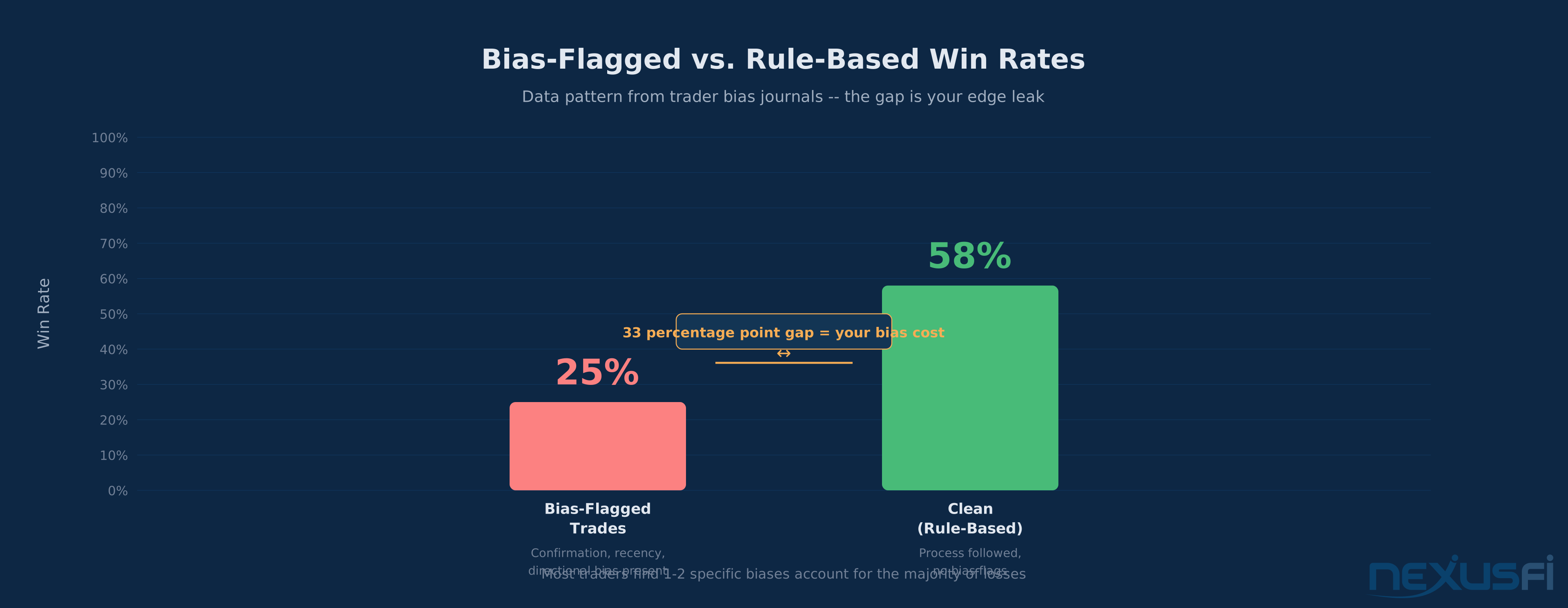
Most traders discover that one or two specific biases account for the majority of their losses. This is actionable information. You can't "fix" being human, but you can identify that your confirmation bias trades have a 25% win rate and your rule-based trades have a 58% win rate — and then make the obvious decision.
Key Insight: One or two biases account for most traders' losses. Your journal already has the data — you just haven't analyzed it yet. When a bias-flagged pattern shows a 25% win rate versus 58% for clean setups, that's not a psychology problem. It's a strategy problem with a specific, fixable solution.
Pattern recognition in your own data: #
- Trades entered within 60 seconds of a large move: likely recency bias
- Three or more same-direction trades in a row with negative expectancy: directional bias
- Stops moved after entry: loss aversion
- Position size increased after a winning streak: overconfidence
- Targets anchored to a prior level rather than current structure: anchoring
Accountability metrics to track weekly: #
- Bias-flagged trade percentage (target: declining over time)
- Rule compliance rate (percentage of trades that followed your complete process)
- Win-rate delta between bias-flagged and clean trades
- Number of "pause protocol" activations (shows you're catching bias before it acts)
This transforms an abstract psychological concept into a concrete performance metric. You're not "working on your mindset." You're reducing the frequency and severity of a quantified risk factor.
Limitations Worth Knowing #
1. You cannot eliminate bias. #
Cognitive biases are features of human cognition, not bugs to be patched. The goal is management through process, not elimination through willpower. Anyone claiming they trade without bias is demonstrating bias blind spot — itself a documented cognitive bias.
Key Insight: The goal was never bias-free trading — it was bias-managed trading. Consistent performers don't think their way out of biases in real time; they have processes that catch bias before it acts. That's an achievable standard. Elimination is not.
2. Bias awareness can become its own trap. #
Over-analyzing every decision for hidden bias leads to paralysis. The three-question check takes 30 seconds specifically to prevent this. If you're spending minutes soul-searching before every entry, you've replaced one problem with another.
3. Journaling only works if reviewed. #
A bias journal that gets filled but never analyzed is a diary, not a tool. The weekly review is the actual mechanism of change — without it, you're documenting problems without solving them.
4. Market regime affects which biases dominate. #
In strong trends, directional bias actually works (the trend IS the correct direction). In ranges, it destroys. Recency bias is more dangerous in choppy markets than in trending ones. Your bias management needs to adapt to regime, not apply uniformly.
5. Social bias exists too. #
Trading communities, Twitter feeds, and Discord servers amplify confirmation and recency bias through consensus. If your directional lean came from reading five bullish posts on social media, that's not analysis — that's herding.
Bias for individual trade outcomes can lead experienced professionals to miss what should be obvious warning signs.
-- @rubyslippage, NexusFi
Knowledge Map
Go Deeper
Build on this knowledgeReferences This Article
Articles that build on this topicCitations
- — Spoo-nalysis ES e-mini futures S&P 500 (2015) 👍 10“not exactly, barf. confirmation bias is when you have a directional bias first, and then look for input to support that bias while ignoring the data that is contrary to your bias; as opposed to objectively analyzing the data and then making a decisio...”
- — Trade management guidance needed (2011) 👍 16“Yes, I know what you are talking about. It is a cognitive bias, which is linked to the fact that you have an open position. Markets are strange animals that suffer from bipolar disorder.”
- — Directional Bias (2014) 👍 11“trendwaves: excellent post above the goal, which is much easier to articulate than to implement is to employ objective heuristics in decision making, and not allow stress, cognitive load, emotions, and bias, to non-linearly affect the process.”
- — Attack of the Robots - An Algo Journal (2022) 👍 6“A few thoughts about bias (and data) I did not plan to post anything this weekend, but I was working on something that highlighted how easily bias can creep into our analysis.”
- — Dear Ruby (2013) 👍 20“When you believe in a trade, it's easy to take a position. There's little or no fear, and usually a bit of excitement as you anticipate a winner.”
- — Random Line Theory (2011) 👍 11“Great thread. I've seen this done live too. It says a lot about technical analysis in my opinion. People in trading have a tendency to buy into a method of analyzing the markets without looking for reason that the chosen methods are valid.”
- — Prospect Theory: An Analysis of Decision under Risk (1979)
- — The Behavioral Investor (2018)