



Cognitive Biases in Trading: The Mental Shortcuts That Cost You Money
Your brain evolved to survive on the savanna. It didn't evolve to trade futures.
Overview #
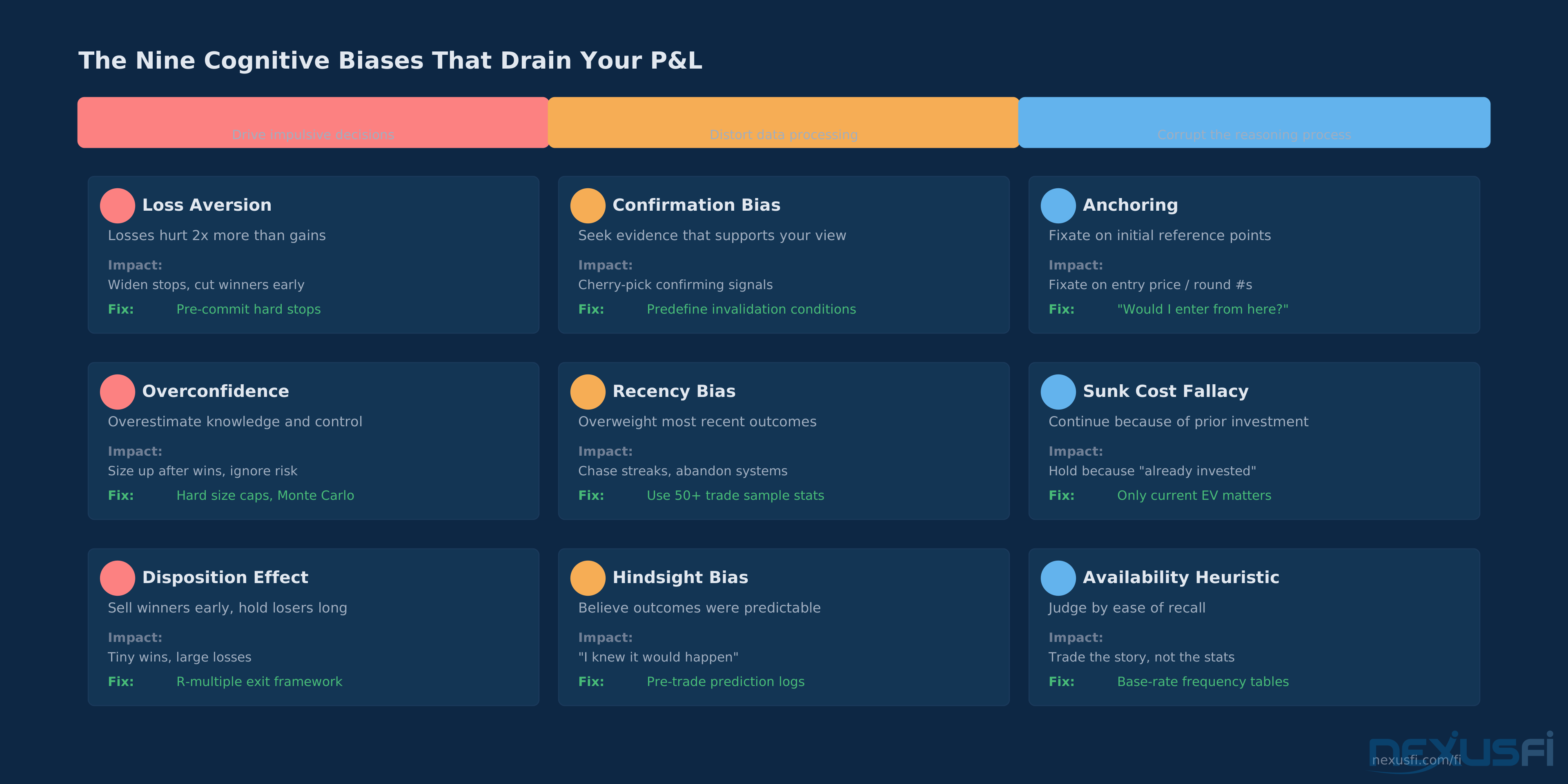
Every trader carries cognitive biases — mental shortcuts that served humans well for millennia but actively sabotage trading decisions. These aren't character flaws. They're hardwired features of how human brains process information under uncertainty. Kahneman and Tversky's prospect theory, Thaler's work on mental accounting, and decades of behavioral finance research have mapped these biases in detail. The findings are consistent and damning: systematic cognitive errors account for more P&L destruction than bad setups ever will.
The problem isn't knowing about biases — most traders can rattle off "confirmation bias" and "loss aversion" from memory. The problem is that biases operate below conscious awareness. You don't catch yourself being biased. You catch yourself rationalizing why the bias-driven decision was actually smart.
The action with the highest chance of gain is most often the action with the lowest expectancy.
This article maps the nine cognitive biases that do the most damage in futures trading, shows how each one manifests in real trading decisions, and provides specific debiasing techniques grounded in behavioral finance research.
The Bias Architecture -- System 1 vs System 2 #
Daniel Kahneman's dual-process model explains why smart traders make dumb decisions. System 1 is fast, automatic, and emotional — it's the brain that flinches when price moves against you. System 2 is slow, deliberate, and analytical — it's the brain that wrote your trading plan last Sunday.
Under normal conditions, System 2 supervises System 1. You see a setup, evaluate it against your criteria, check risk parameters, and execute. But under stress, time pressure, fatigue, or emotional arousal — exactly the conditions that define live trading — System 1 takes the wheel. Your carefully constructed trading plan gets overridden by instinct.
@Fat Tails made this mechanism concrete in a discussion about cognitive biases and trade management on NexusFi: "Once you have your position on, your judgement capabilities will be subject to this cognitive bias. You may not notice short setups. The only way out of this problem is to establish rules, when you are in an unbiased state, and follow those rules during the trading process."
That last sentence is the entire debiasing playbook in miniature. Build the rules when System 2 is in charge. Follow them mechanically when System 1 takes over.
The Nine Biases That Drain Your P&L #
1. Loss Aversion #
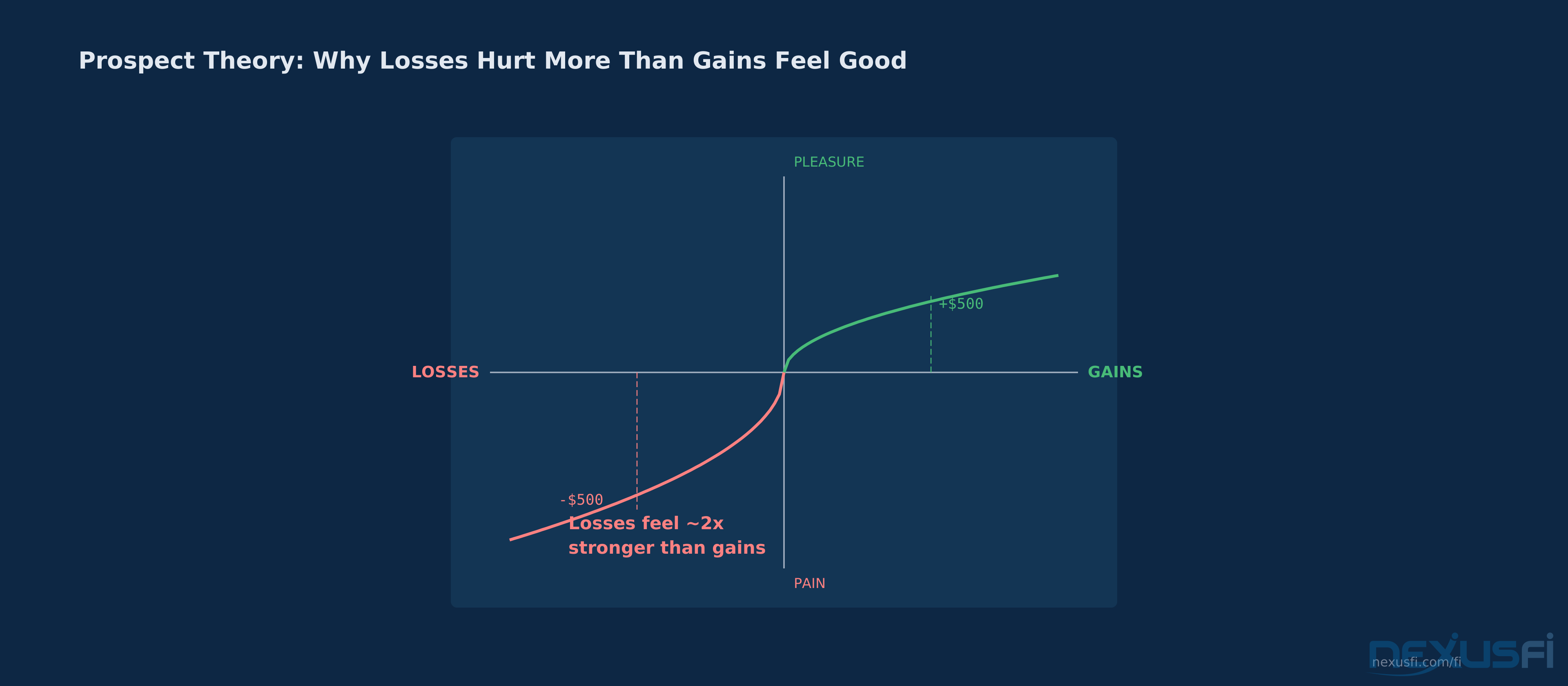
Losses hurt roughly 2x more than equivalent gains feel good. This isn't opinion — it's one of the most replicated findings in behavioral economics, first demonstrated by Kahneman and Tversky's prospect theory in 1979 and confirmed across thousands of subsequent studies.
How it shows up in your trading:
- Widening stops because taking the loss feels intolerable
- Cutting winners early to "lock in" gains before they can become losses
- Avoiding valid setups after a recent loss, even when setup quality hasn't changed
- Refusing to trade at all after a drawdown
@Fat Tails catalogued the progression on NexusFi after watching traders cycle through these stages repeatedly: "There are various stages of dealing with loss aversion. Moving your stop loss a bit further. Doubling your position to make it easier to break-even (Martingale approach). Overtrading and revenge trading. Cutting profits short to avoid that they become losses."
That progression isn't random. Each stage feeds the next. You widen the stop, which creates a bigger loss, which triggers the Martingale impulse, which creates an even bigger loss, which triggers revenge trading. The entire spiral starts with a single refusal to accept a defined risk.
Debiasing: Pre-commit your stops before entry. Place bracket orders (stop + target) simultaneously. Reframe stops as "risk budget consumption" — a business expense, not a personal failure. Track your actual risk per trade against your planned risk. Any deviation is a data point, not a judgment call.
2. Confirmation Bias #
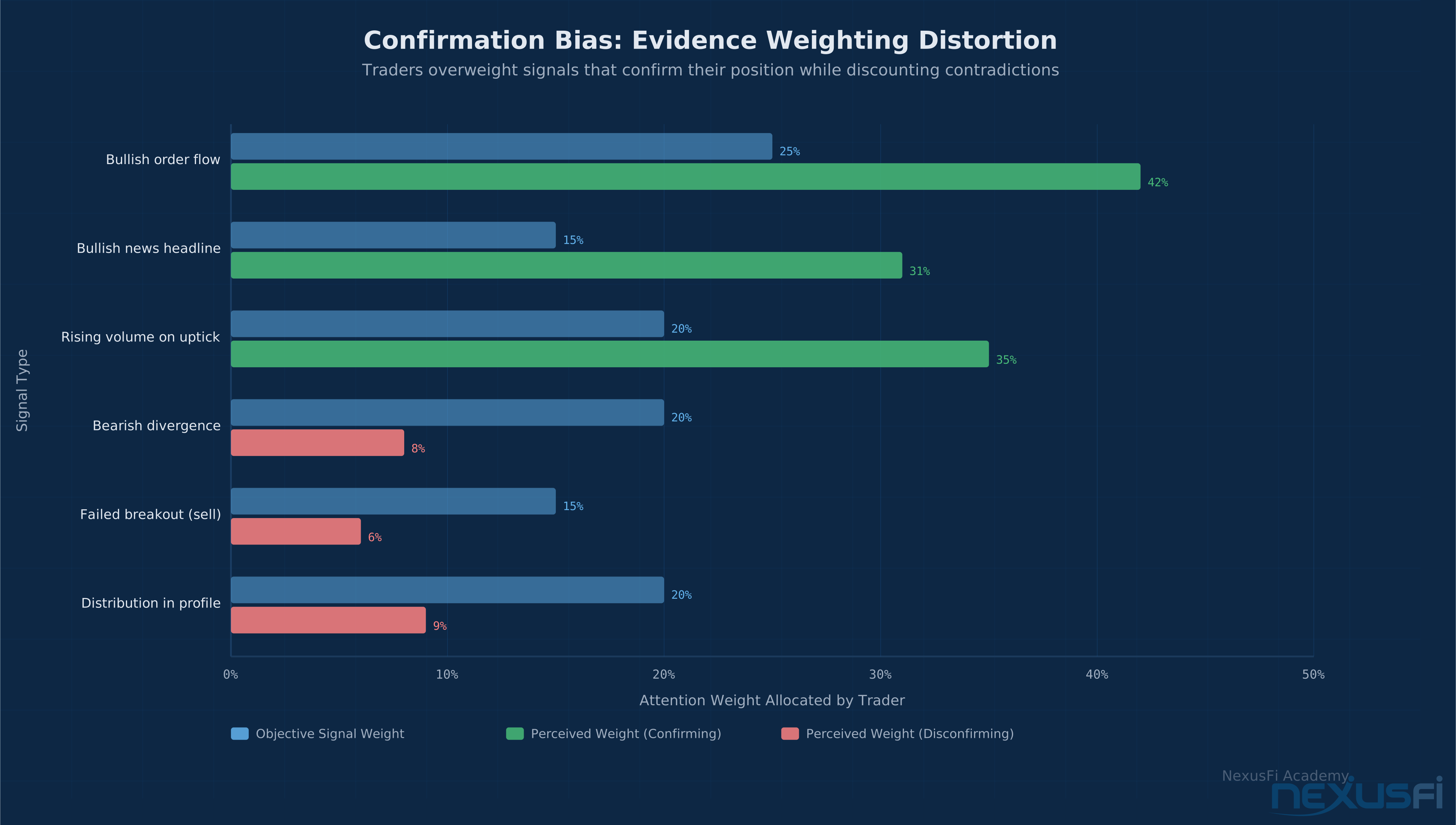
You seek and overweight evidence that supports your existing position while ignoring disconfirming signals. Once you're long ES, every uptick confirms your thesis and every downtick is "noise."
How it shows up:
- Cherry-picking indicators that support your direction
- Interpreting ambiguous price action as confirming your bias
- Ignoring order flow, volume, or macro data that contradicts your thesis
- Selectively reviewing only trades that validate your preferred strategy
This one is especially dangerous because it's invisible. You don't feel biased — you feel right. A trader who's long because of strong payroll data watches the tape weaken, sees failed breakouts, observes distribution patterns in the profile — and dismisses all of it because "the macro picture is bullish."
@Fat Tails connected this directly to the anchoring effect: "Having a long position on will lead you to ignore short setups, as you filter the information through your long biased lenses." The position itself creates the bias. The longer you hold it, the stronger the filter gets.
Debiasing: Before every entry, write down your invalidation condition — the specific price, pattern, or data point that would prove your thesis wrong. Require a "counter-signal check" where you actively look for disconfirming evidence. Keep a two-column journal: bull case vs bear case. If you can't fill the bear column, you're already trapped.
3. Recency Bias #
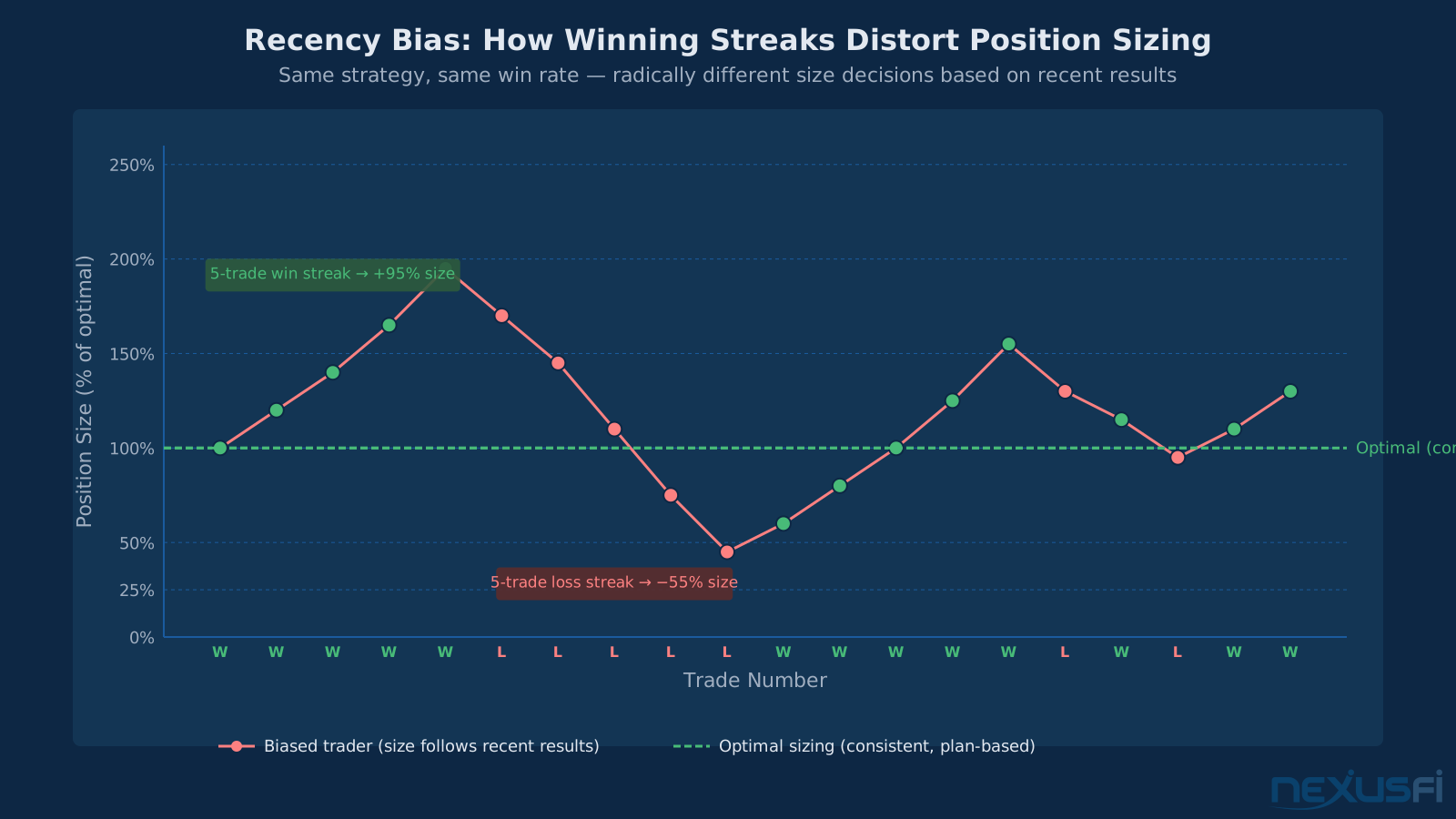
You overweight the most recent information relative to the longer-term base rate. Three winning trades feel like a system that works. Three losses feel like a system that's broken. Neither conclusion has statistical validity at that sample size.
How it shows up:
- Increasing risk after a winning streak because "the market is easy right now"
- Abandoning a tested system after a few losses
- Assuming current volatility regime will persist
- Chasing recent price action rather than reading broader structure
Debiasing: Evaluate strategy performance over 50-100+ trades, not the last 3. Build a regime classification system (trend vs range vs event risk) and size positions according to the regime, not recent results. Use fixed sizing rules that prevent size creep after wins. Implement a mandatory cooldown period after streaks — not because the edge changed, but because your perception of it did.
4. Anchoring #
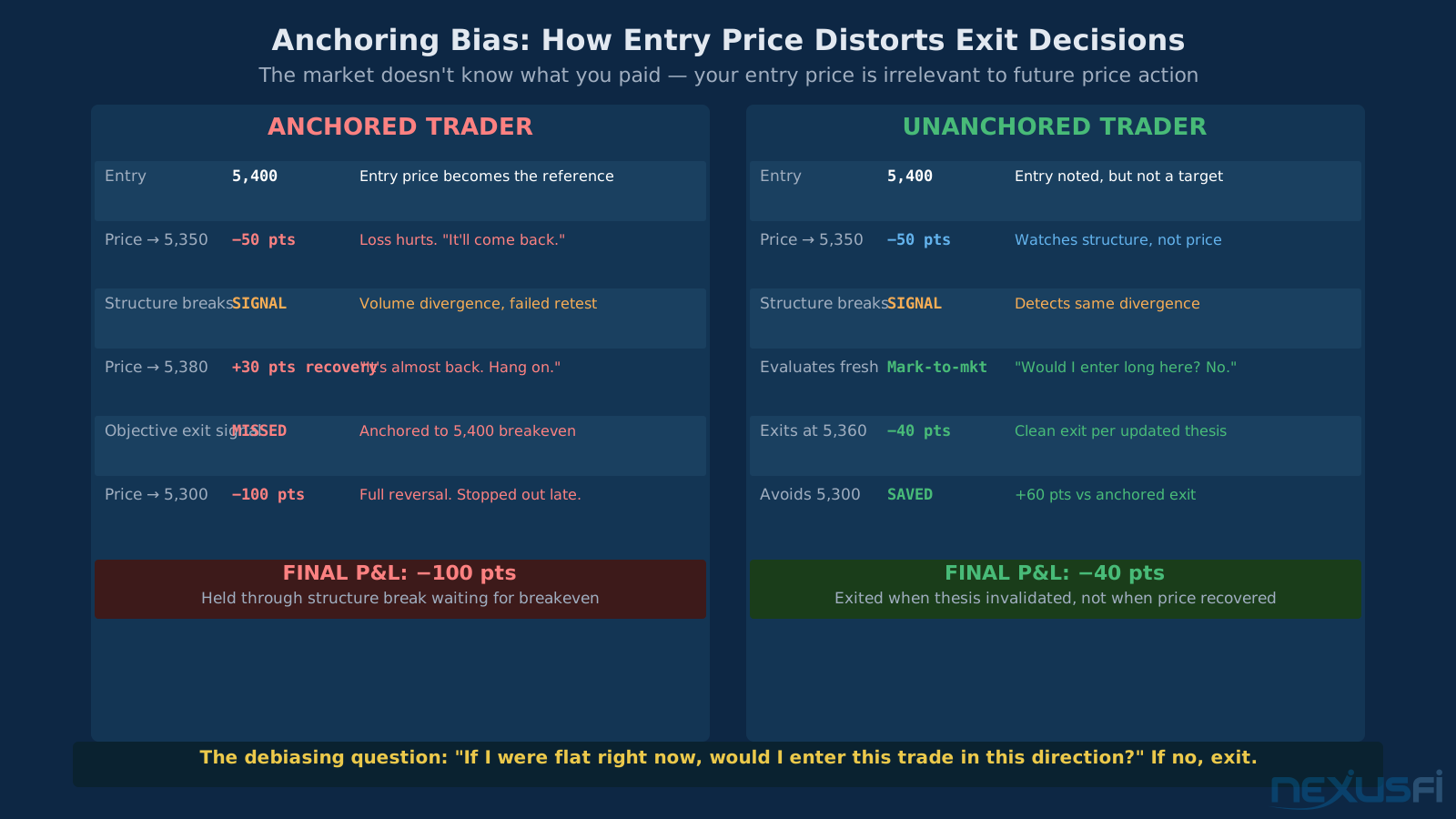
You fixate on an initial reference point — your entry price, yesterday's close, a round number, a prior high — and let it dominate decisions even when the market has moved past it. Your entry price is irrelevant to where the market is going next. The market doesn't know or care what you paid.
How it shows up:
- Refusing to exit until price "gets back to breakeven"
- Setting targets at round numbers because they feel right, not because structure supports them
- Expecting price to return to a prior level because it "should"
- Anchoring to a bias all session because of pre-market analysis
— and he connected the anchoring effect directly to why traders in open positions literally cannot see setups in the opposite direction. The anchor blinds you to contradictory information.
Debiasing: Practice mark-to-market thinking. After any significant new information, ask: "If I were flat right now, would I enter this trade in this direction?" If the answer is no, you're anchored. Use structure-based stops and targets (swing highs/lows, value area boundaries, order flow invalidation) rather than arbitrary price levels.
5. Sunk Cost Fallacy #
You continue a losing course of action because of time, money, or effort already invested. "I've already waited this long — it has to come back." It doesn't have to do anything.
How it shows up:
- Holding a losing trade because you've "already taken the pain"
- Averaging down to "improve the average" entry
- Continuing to trade a failing strategy because of development time invested
- Overtrading to recover commissions or losses
Debiasing: Only current expected value matters. Prior cost is unrecoverable — that's what "sunk" means. Define kill criteria for strategies before you start trading them. When evaluating whether to stay in a trade, apply the same "would I enter from here?" test from the anchoring section. If you wouldn't enter, exit.
6. Overconfidence Effect #
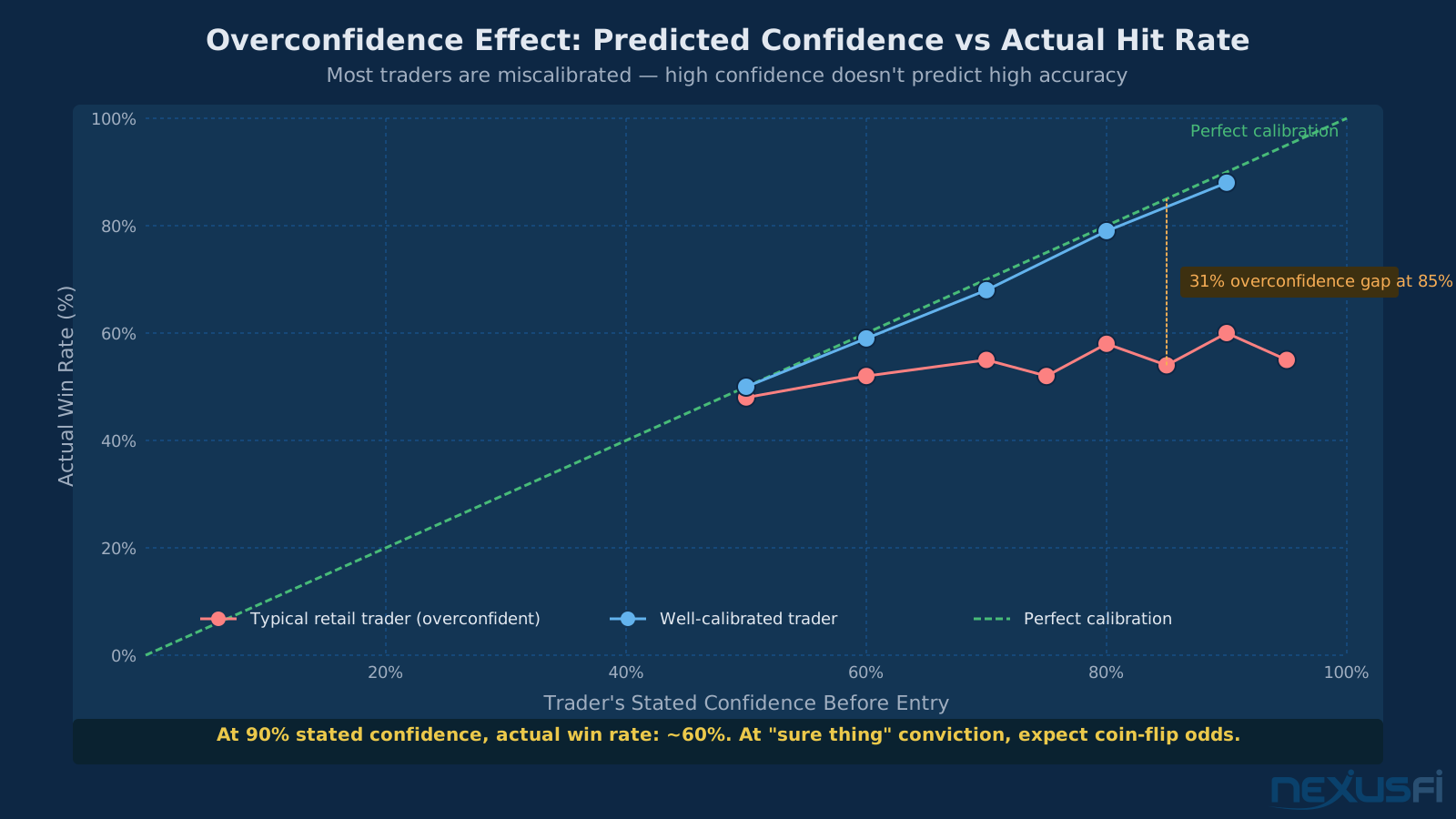
You overestimate your knowledge, predictive ability, and control over outcomes. This is the bias that inflates position size after a winning streak and compresses risk parameters because "this one is a sure thing."
How it shows up:
- Excessive position size after a few wins
- Trading too frequently because you believe you have edge everywhere
- Underestimating slippage, gap risk, and event risk
- Ignoring probabilistic uncertainty in your forecasts
@blew's account blowup on NexusFi is a textbook illustration: "Extreme overconfidence for sure. Basically, I took a few bad trades in a row... then one day I realized I'm down around 15k. So it tilts me, and I take a monster position size and actually win a trade for like 6k. Felt great... Just repeat what I did 2 more times and I'll be good." The 6k win on a monster position reinforced exactly the wrong behavior. The next attempt lost 10k. Then full tilt.
Debiasing: Track forecast confidence against actual hit rate — most traders discover they're badly miscalibrated. Use hard position size caps regardless of conviction. Run Monte Carlo analysis on your actual trade results to see the full distribution of possible outcomes, not just the average. The variance will humble you.
7. Disposition Effect #
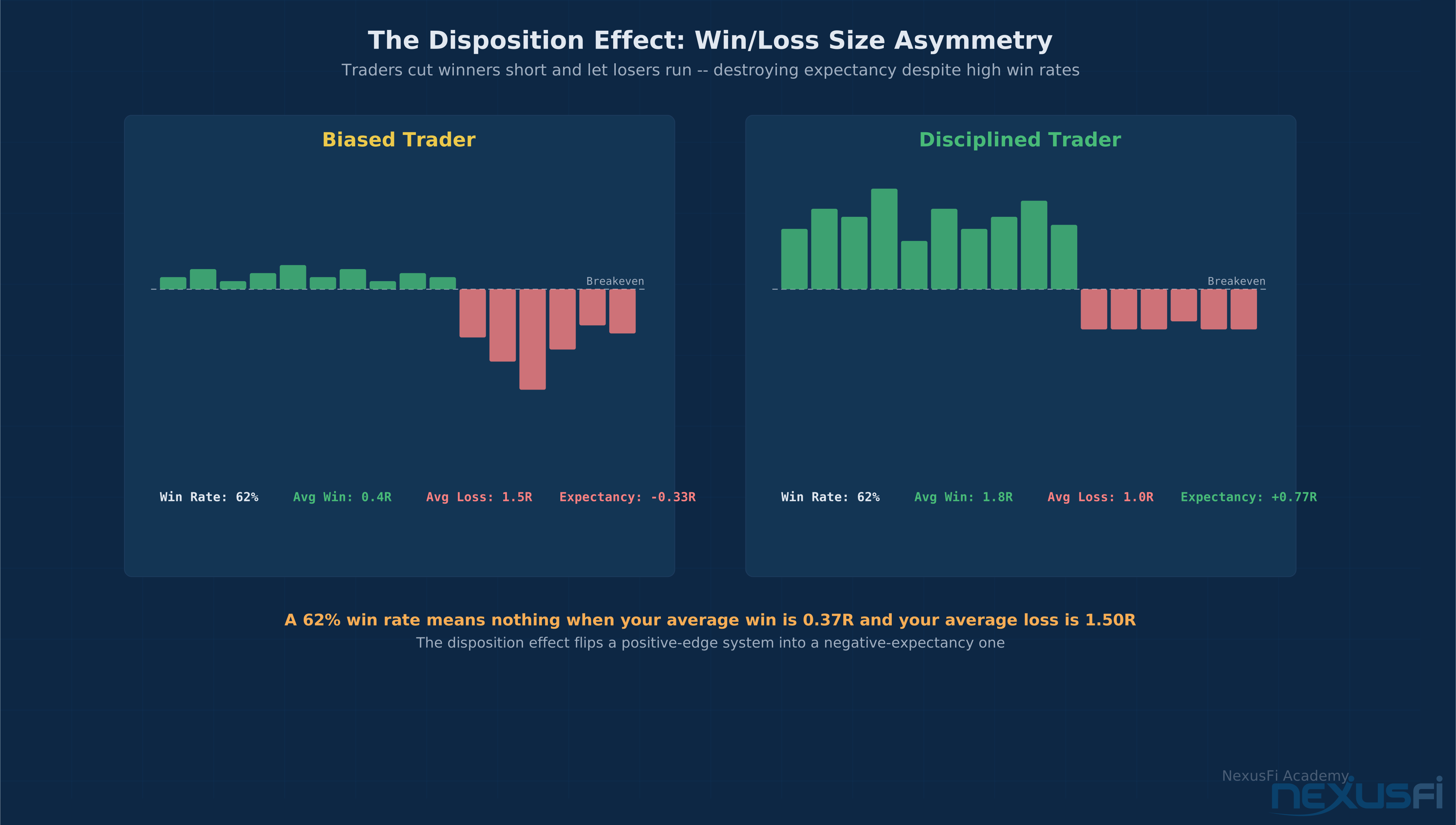
You sell winners too soon and hold losers too long. Thaler documented this pattern extensively. The mechanism is emotional: closing a winner feels good (locking in success), closing a loser feels bad (admitting failure). So you chase the good feeling and avoid the bad one — destroying your expectancy in the process.
The pattern in action — what the plan says vs what the bias does:
| Scenario | Planned Exit | Actual Behavior | Bias Driver |
|---|---|---|---|
| Trade at +1R | Hold for 2R target | Take profit immediately | "Lock in the win before it disappears" |
| Trade at -0.5R | Hold to stop level | Widen stop or add to position | "It has to come back — I'm already down" |
| Trade at +2R (extended run) | Trail stop, let it ride | Tighten stop to breakeven | Fear of giving back any gains |
| Trade at -1R (stop level) | Exit per plan | Remove stop, "give it room" | Refusing to book a realized loss |
The asymmetry is brutal: winners get cut at +0.5R because the profit feels fragile, while losers get held to -3R because the loss feels reversible. Your win rate looks great on paper — 65%, 70% — but expectancy is negative because average wins are a fraction of average losses.
Debiasing: Use R-multiples to evaluate every trade. If your plan says target 2R and stop 1R, grade yourself on execution against the plan, not on the dollar outcome. Build a systematic exit strategy with predefined scale-out levels. Track your average win vs average loss ratio monthly — if your wins are smaller than your losses, the disposition effect is running your exits.
8. Hindsight Bias #
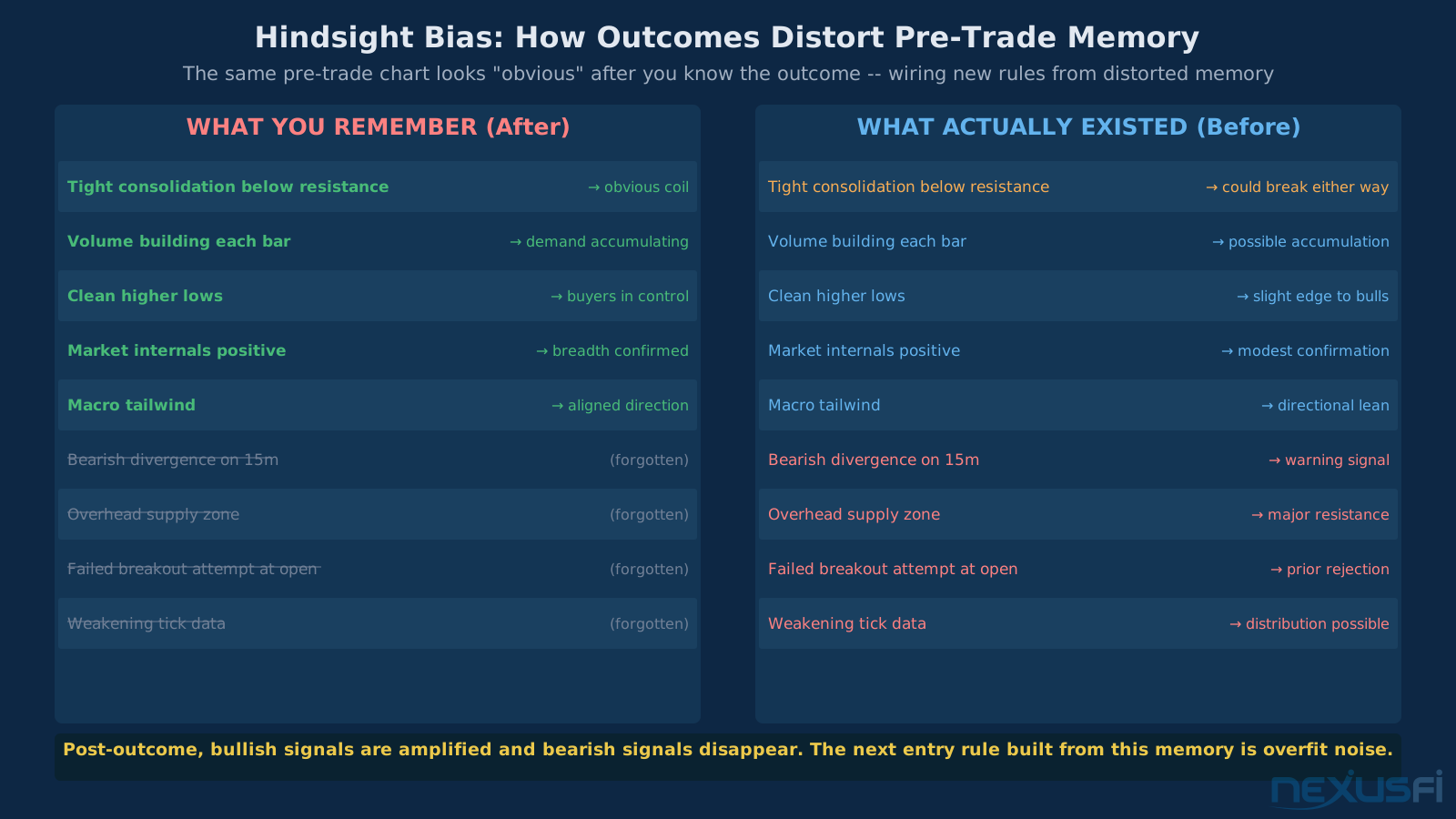
After outcomes are known, you believe they were more predictable than they actually were. "I knew that was going to sell off." If you knew, you would have shorted. You didn't know — you reconstructed the predictability after the fact.
A typical hindsight sequence: You're watching ES consolidate below resistance at 5,680. You have no position — the setup isn't clean enough for your criteria. ES breaks out, runs 30 points to 5,710 in an hour. Your immediate thought: "I knew that was going to break out. The consolidation was tightening, volume was building — it was obvious." But here's the problem: at the time, you also noticed weakening internals, a bearish divergence on the 15-minute, and overhead supply from the prior week. Those details evaporate once you see the outcome. Your brain retroactively edits the pre-breakout picture to make the breakout look inevitable.
The damage compounds when you overcorrect. You change your entry rules to "catch" the breakout next time — and the next consolidation below resistance fakes out and reverses. You get chopped because you built a rule from one outcome, not a pattern from a hundred. Hindsight bias doesn't just distort the past — it corrupts future rule-building by making you over-fit to individual events.
Debiasing: Before every trade, record your thesis and assign a probability estimate. Write down multiple plausible outcomes, not just the one you expect. After the trade, review your pre-trade notes first — before looking at what actually happened. Grade the decision quality separately from the P&L. This preserves the original uncertainty and prevents retroactive distortion.
9. Availability Heuristic #
You judge probability based on how easily examples come to mind. A recent flash crash makes crashes seem more likely. A viral post about a massive breakout win makes breakout trades seem like free money. Neither conclusion follows from a single vivid event.
How it shows up:
- Overreacting to memorable market events (crashes, squeezes, limit moves)
- Believing a rare pattern is common because it was recent or dramatic
- Trading "the story" rather than the statistical frequency
- Overweighting social media examples from other traders
Debiasing: Build base-rate frequency tables for your setups. Track actual occurrence rates and outcomes by setup type, time of day, and volatility regime. When a vivid event dominates your thinking, ask: "Is this statistically typical, or just memorable?" Separate your trading decisions from the narrative.
Bias Interaction Patterns #
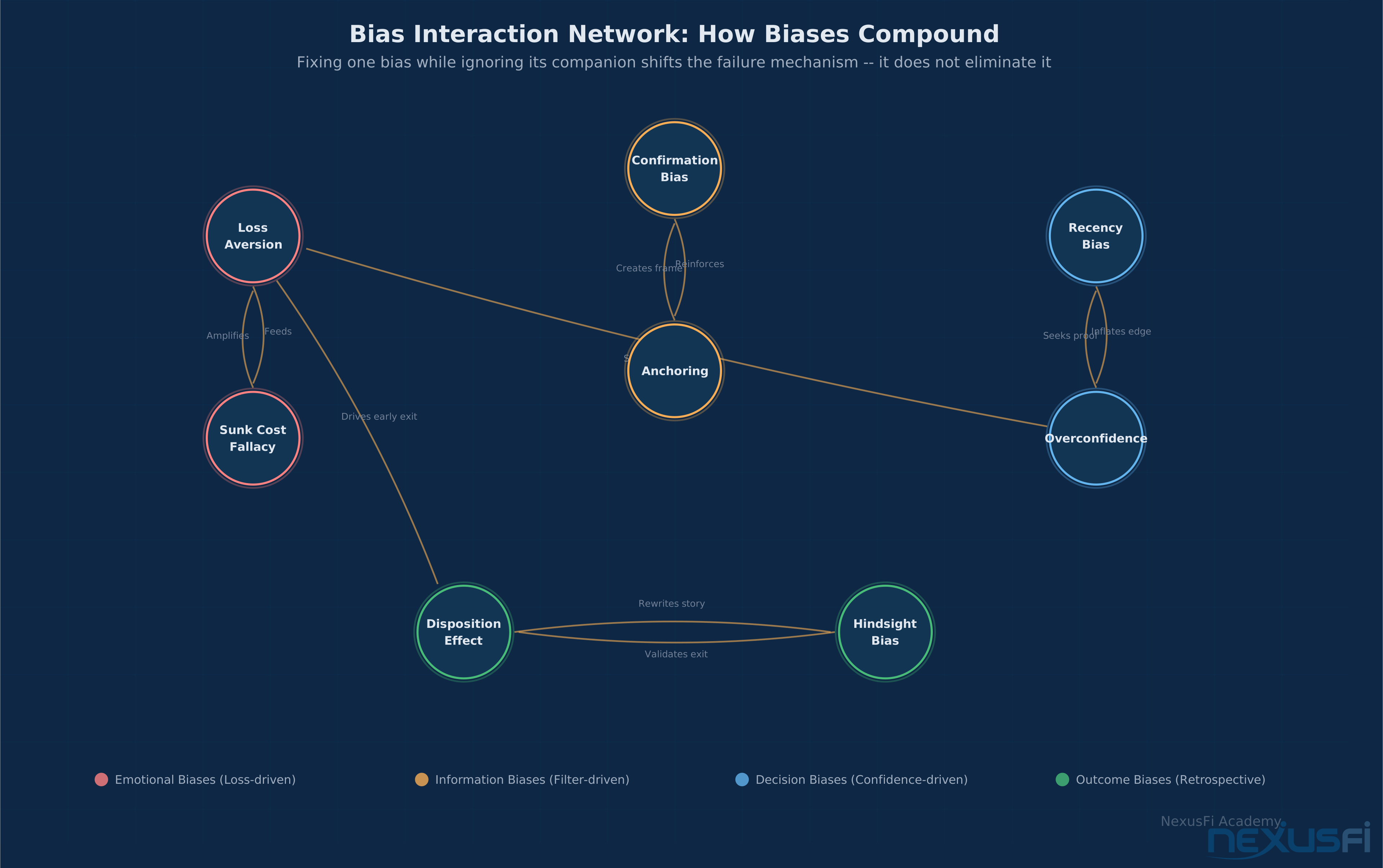
Biases rarely operate alone. They compound, creating feedback loops that accelerate P&L destruction:
- Loss aversion + Sunk cost: You widen your stop because "it has to come back" — the loss aversion makes the stop painful, the sunk cost fallacy keeps you holding
- Recency + Overconfidence: Two winning days lead to 3x position size on day three — recency inflates your perceived edge, overconfidence inflates your size
- Confirmation + Anchoring: You fixate on prior VWAP and only see bullish signals — the anchor creates the frame, confirmation fills it with selective evidence
- Disposition + Hindsight: You take a tiny profit, the trade runs another 2R, and you tell yourself the bigger move was "obvious" — disposition caused the early exit, hindsight rewrites the story
Addressing one bias while ignoring its companion leaves you vulnerable. The trader who fixes loss aversion (by honoring stops) but not overconfidence (by controlling size) simply blows up through a different mechanism. Effective debiasing requires identifying which bias pairs are most active in your trading and building process controls that address both sides simultaneously.
The Debiasing Framework #
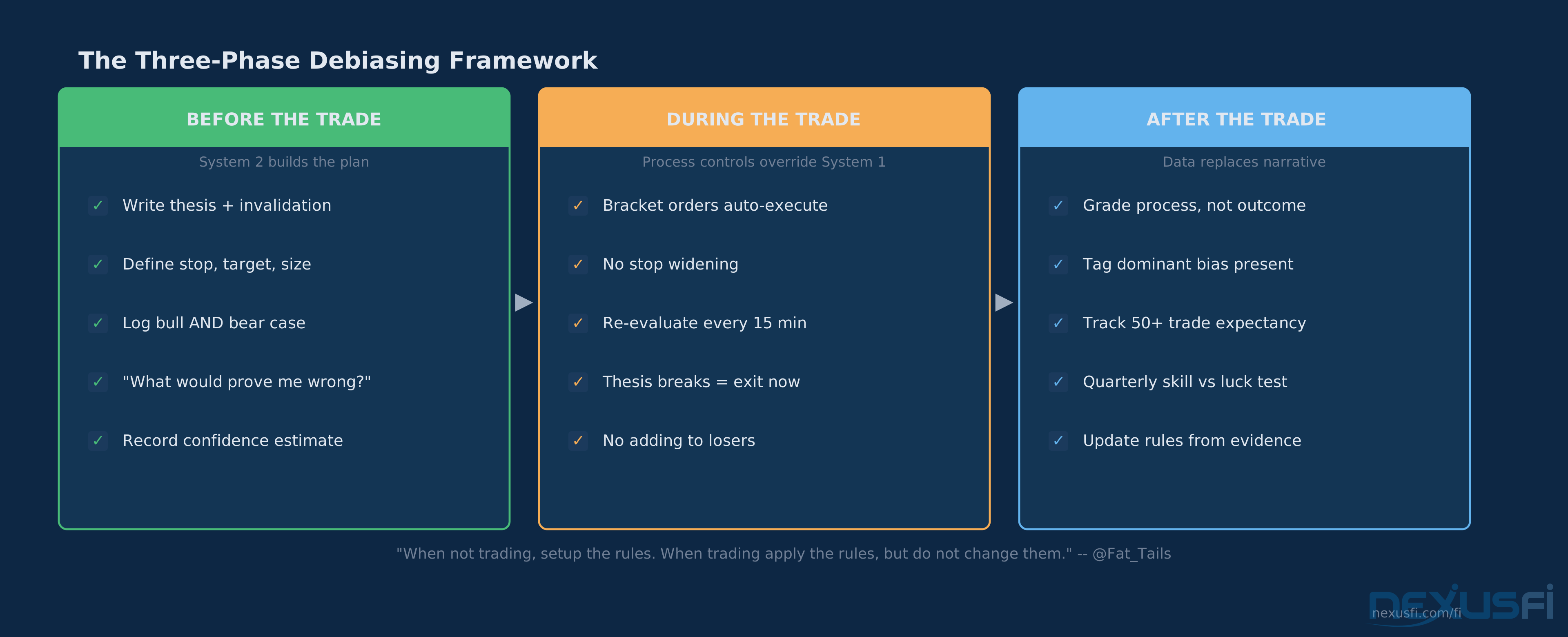
The most effective debiasing tools aren't psychological insights — they're process controls. Pre-commitment, checklists, journaling, and automated exits work because they move decisions from System 1 to System 2.
Before the Trade #
- Write a 1-2 sentence thesis with explicit invalidation condition
- Define stop, target, and position size mechanically (R-multiple or fixed % equity)
- Log bull case AND bear case (two-column format)
- Ask: "What would prove me wrong?" — require at least one answer
- Record your confidence as a probability estimate (e.g., "60/40 this breaks out")
During the Trade #
- Execute via bracket orders — stop and target submitted simultaneously at entry
- No stop widening without a documented, pre-existing rule
- Re-evaluate thesis on fixed intervals (every 15 minutes or per-bar)
- If original thesis breaks: exit immediately regardless of P&L position
After the Trade #
- Review decision quality separately from outcome. A bad process can produce a winning trade. A good process can produce a losing trade.
- Tag which bias was most present during the trade ("moved stop" = loss aversion, "ignored divergence" = confirmation)
- Track rolling expectancy over 50+ trades, not the last 3
- Quarterly: run a skill-vs-luck decomposition on your actual results
Build the rules when you're rational. Follow them when you're not. Every debiasing technique in this article reduces to one principle: make your decisions when System 2 is in charge, then execute them mechanically when System 1 takes over. The rules don't need to be perfect — they need to exist and be followed.
Knowledge Map
Prerequisites
Understand these firstGo Deeper
Build on this knowledgeReferences This Article
Articles that build on this topicCitations
- — Why Smart People Are Actually Dumb (2012) 👍 3“The most important cognitive bias problem in trading is the tendency to maximize the chance of gain rather than gain.”
- — Trade management guidance needed (2011) 👍 16“Once you have your position on, your judgement capabilities will be subject to this cognitive bias.”
- — Did revenge trade today, lost big (2011) 👍 6“There are various stages of dealing with loss aversion. Moving your stop loss a bit further.”
- — I finally blew up an account (2021) 👍 15“Extreme overconfidence for sure. I took a monster position size and actually win a trade for like 6k.”
- — Prospect Theory: An Analysis of Decision under Risk (1979)
- — Mental Accounting and Consumer Choice (1999)
- — Concerning risk per trade sizing (2012) 👍 8“These biases have a way of projecting themselves into other areas of your trading.”
- — Trade management guidance needed (2011) 👍 16“In my opinion the only way to deal with cognitive biases are rules which are always respected. When not trading, setup the rules. When trading apply the rules, but do not change them.”
- — HumbleTrader's next chapter (2022) 👍 2“Recency bias is a big one for me. I'm becoming more mindful of that now and slowly coming up with ways to deal with it.”